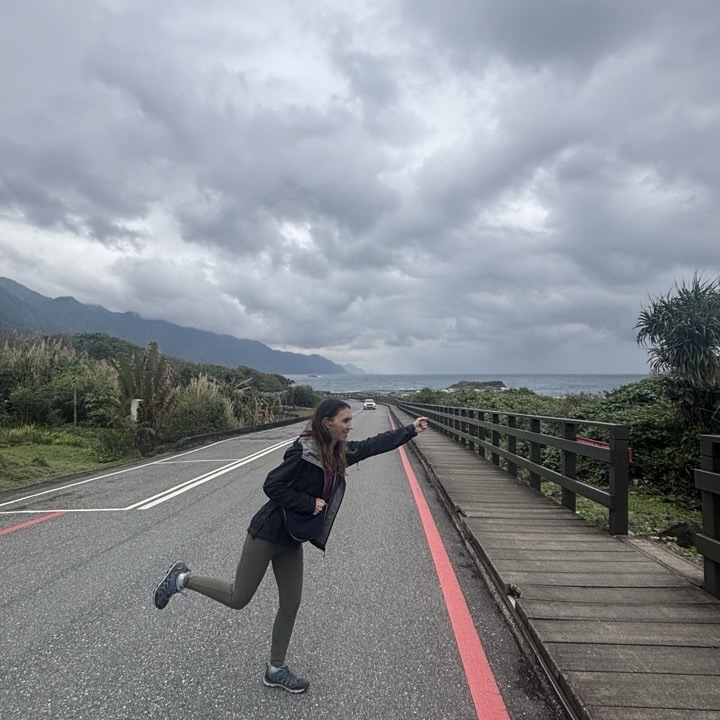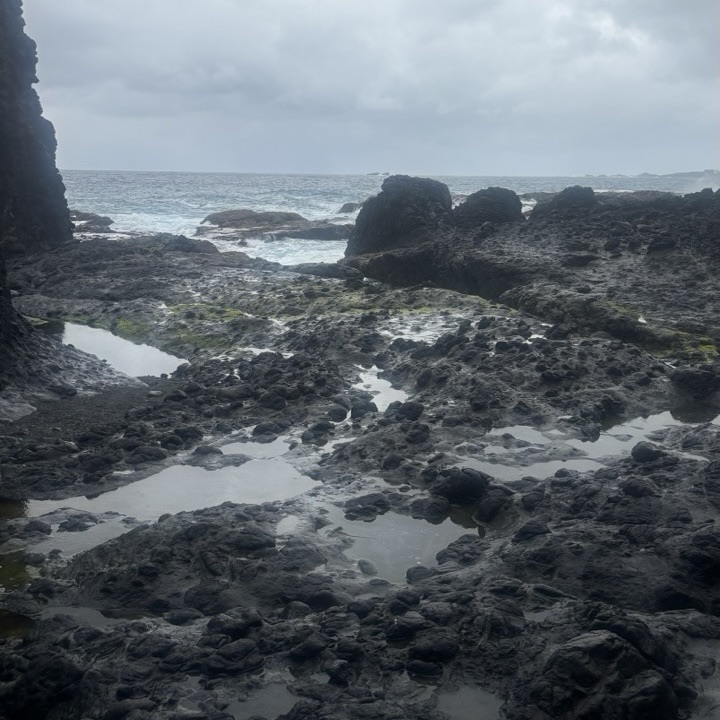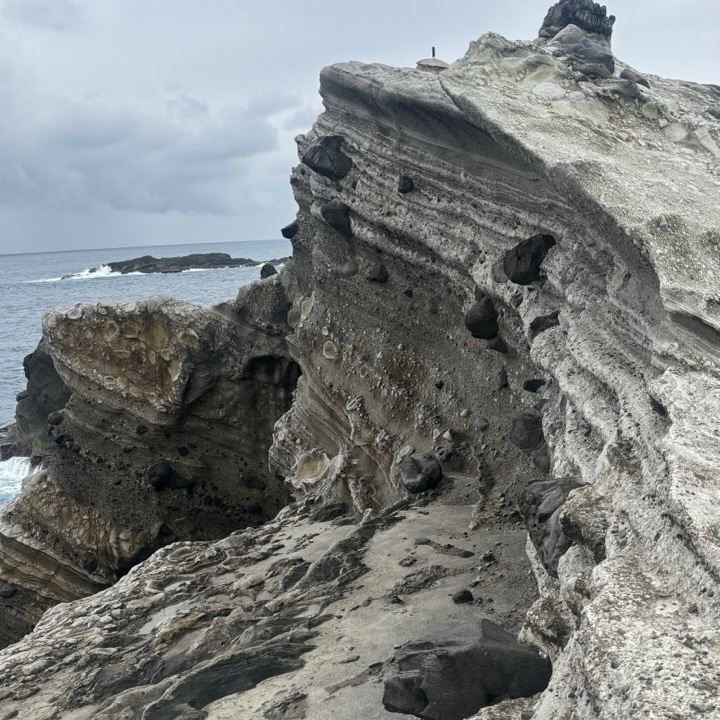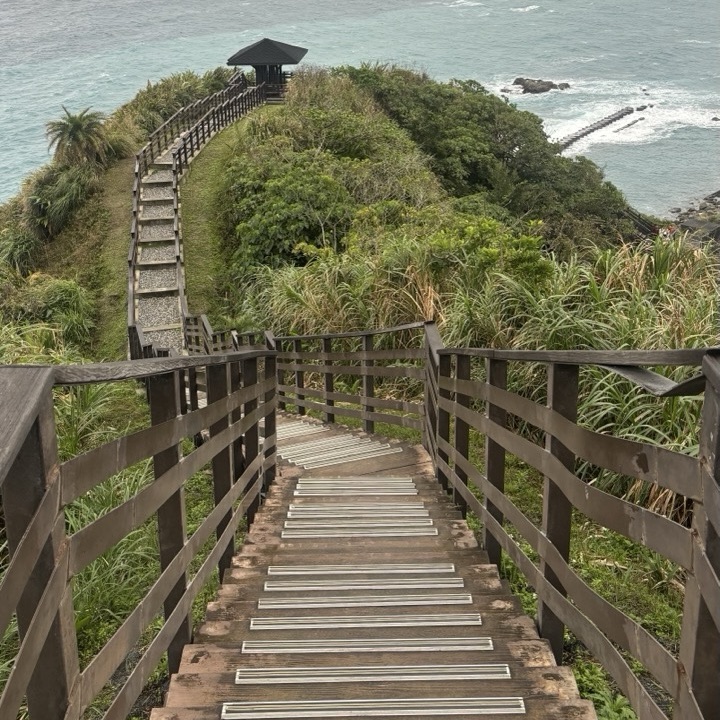
A Walk on a Pirate Island (Cheung Chau, Hong Kong)

People think of Hong Kong as just a busy, crowded city but it’s so much more. There are 263 islands that make up Hong Kong and enough easy day trips to keep yourself busy for weeks. I picked one of them for a day trip, Cheung Chau, otherwise known as Pirate Island, in an attempt to avoid even some of the New Year crowds.
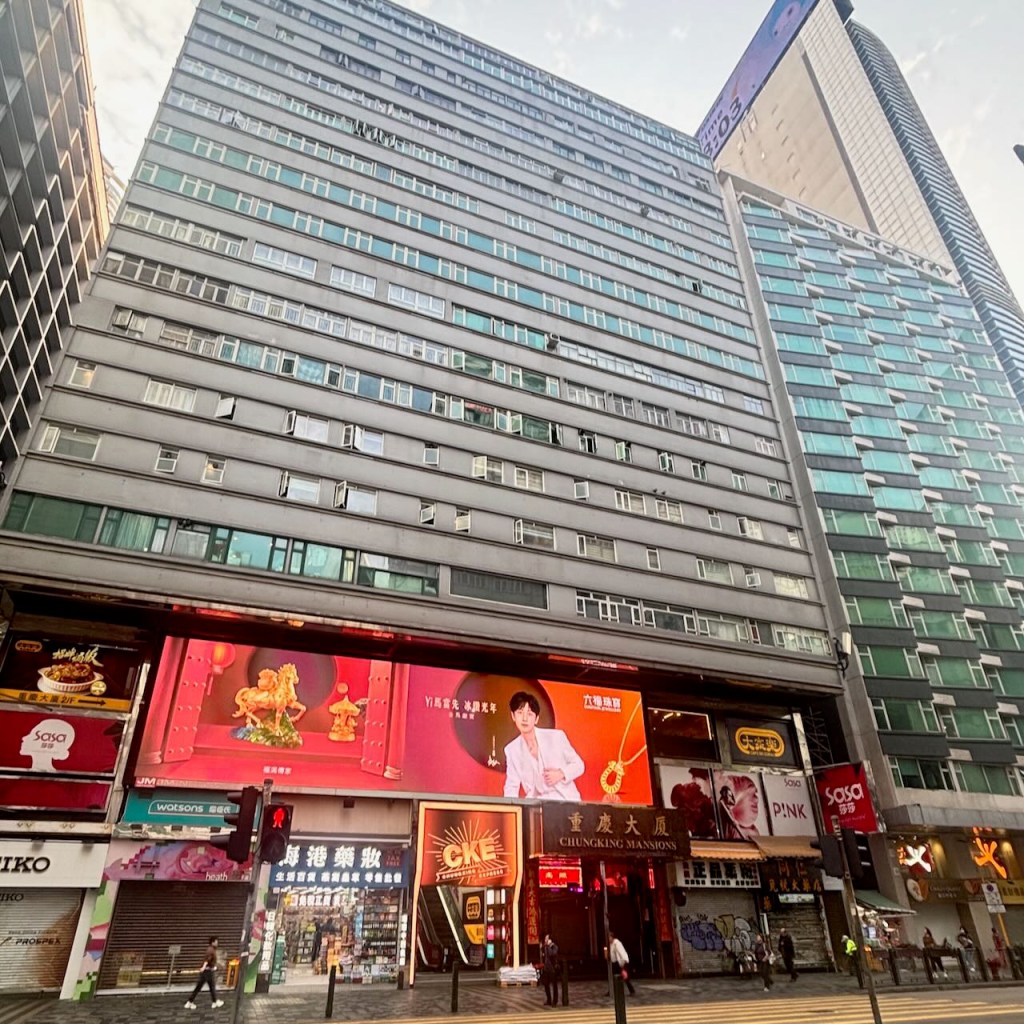
Outside of the Chungking Mansions

First I had to move from my nice hostel The Mahjong to what was the worst accommodation of my entire trip. There were only a few options available at short notice under £100 a night in a central area, and the ‘Unique Hostel’ inside the huge Chungking Mansions block was one of them. The Chungking Mansions was even featured in my DK Hong Kong guide book, so how bad could it be? As it turns out, very bad. You go in through the main entrance into a sort of little India. There are over 100 budget ‘guesthouses’ in this 17 storey building – no exaggeration. The building is split into five blocks, A-E, each having its own elevator. The first challenge is to find your block, through an impossible maze of stalls selling electronics and Indian food and men asking ‘what are you looking for?’.
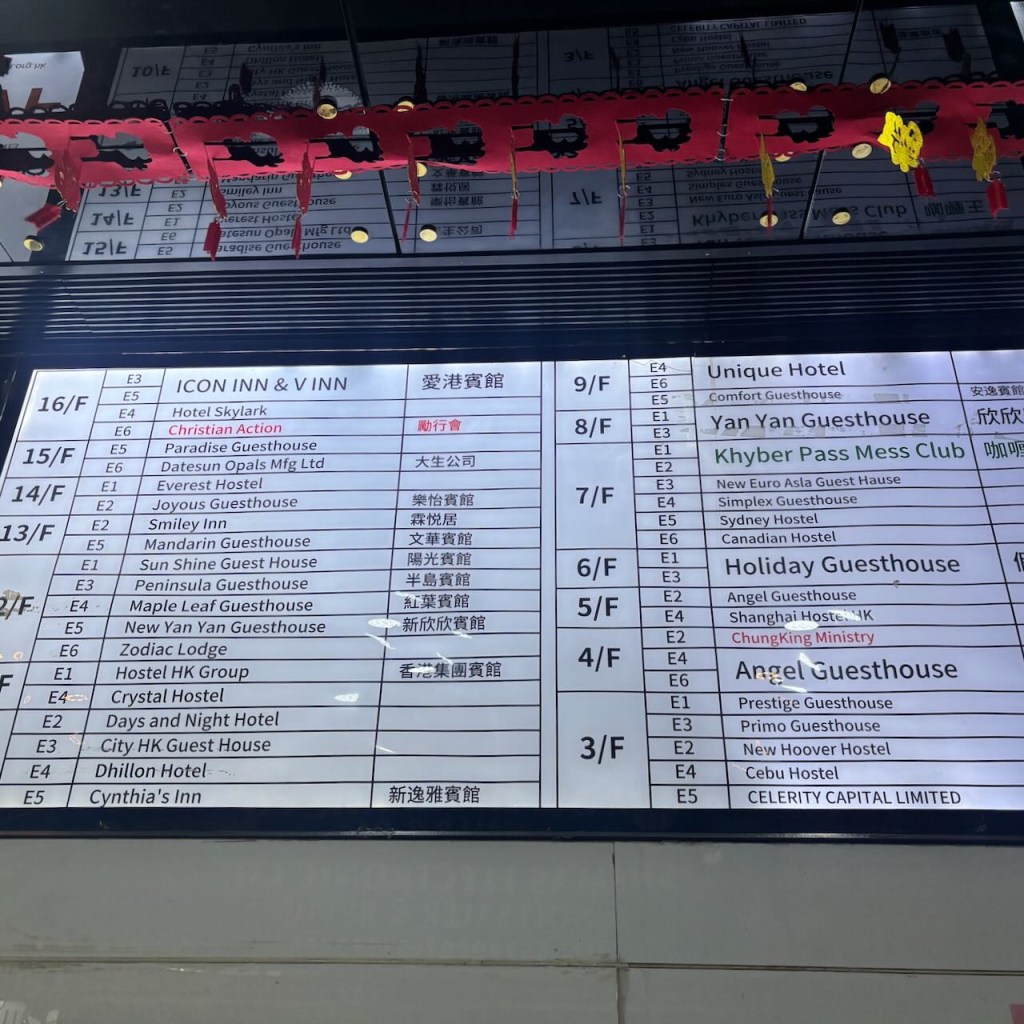
Finding my guesthouse in the Chungking Mansions

When I eventually found my elevator, grateful the queue was only two people deep rather than the twenty people waiting for some of the other lifts, I was shown to my tiny box that I paid about £50 a night for. Just because space is limited in Hong Kong doesn’t mean they have to let it go completely. Yes the shower might need to be over the toilet but the amount of money they must be making, surely they could replace the broken, taped up mirror and the ripped, taped up curtain to cover window which was facing who knows where. It was actually pretty disgusting – I couldn’t turn on the air-con because of the bad smell it produced. They at least provided a towel that they changed daily, albeit a threadbare one.
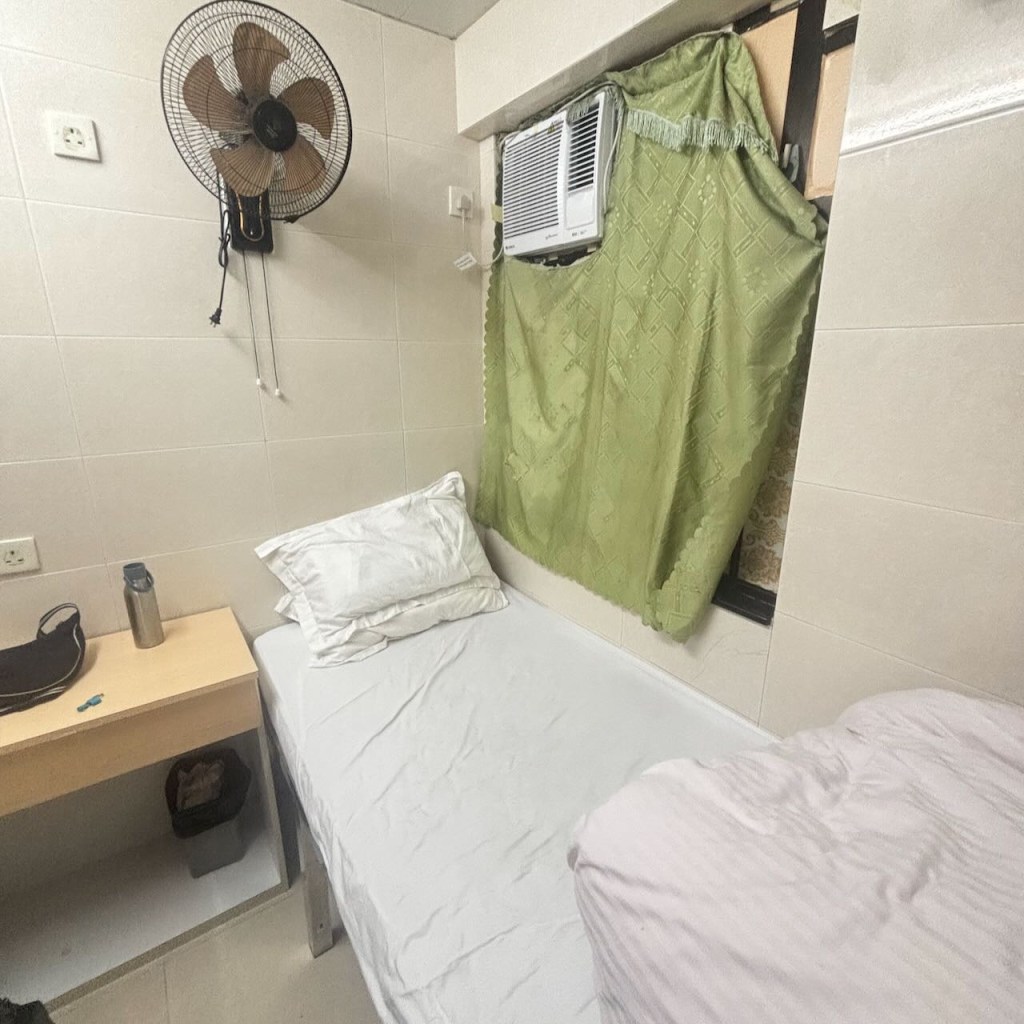
Window to nowhere

Every evening on my way back, I got lost inside trying to find Block E and the right elevator and every night numerous men asked me “what you looking for?” which just made it even more annoying when all you are looking for is the way into your hotel. Once I came out the wrong entrance and got stuck in the back of a food market with a dead rat. The only good thing was the great location and making friends with the Filipino housekeepers. They kept the room spotless and we had some great chats – they recommended I visit their home town of Iloilo in the Philippines.
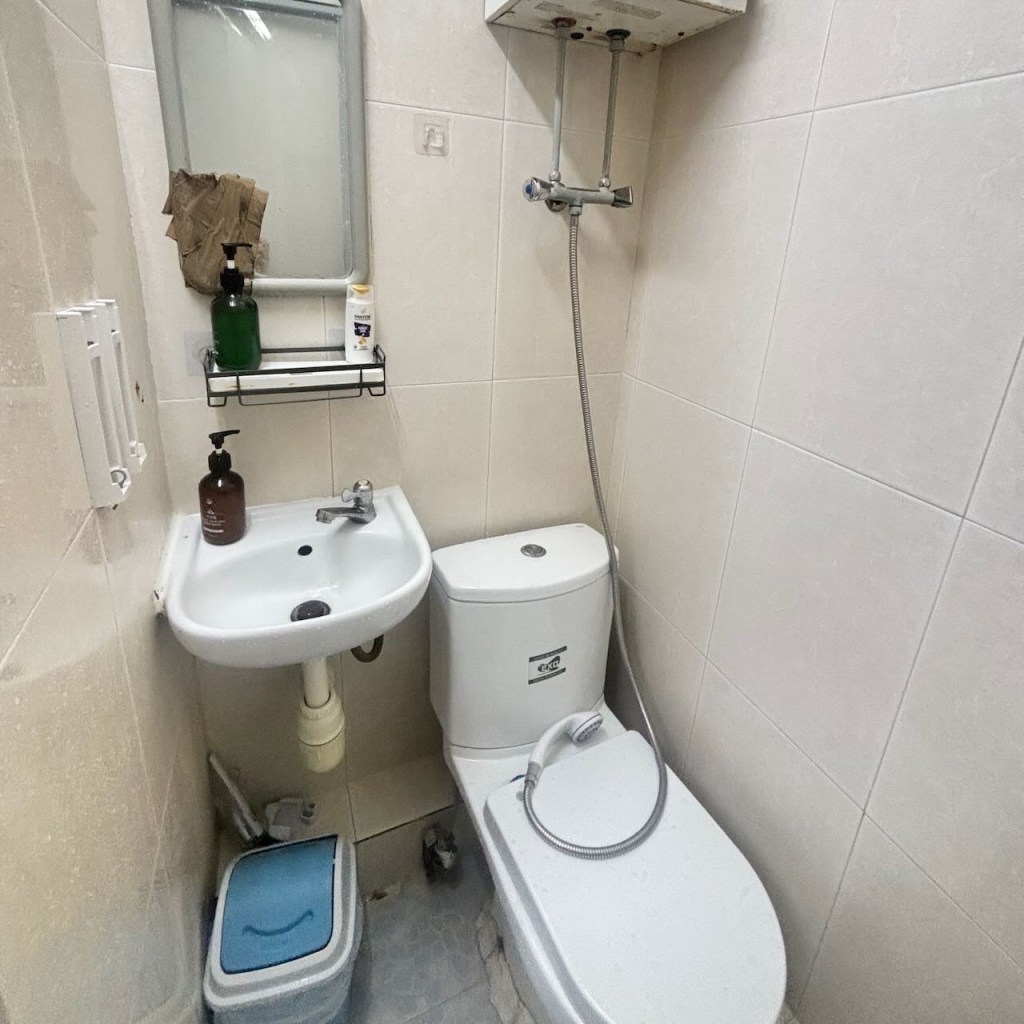
Lovely bathroom

To get to Cheung Chao it’s easy 30 mins on a ferry from Hong Kong Island. The city had warmed up by now and the sun was shining. The ferry arrives at Cheung Chau harbour, a bustling area full of food vendors and lots and lots of bicycles. There are still plenty of fishing boats operating from the harbour. It was a refreshing break from the hustle of central Hong Kong.
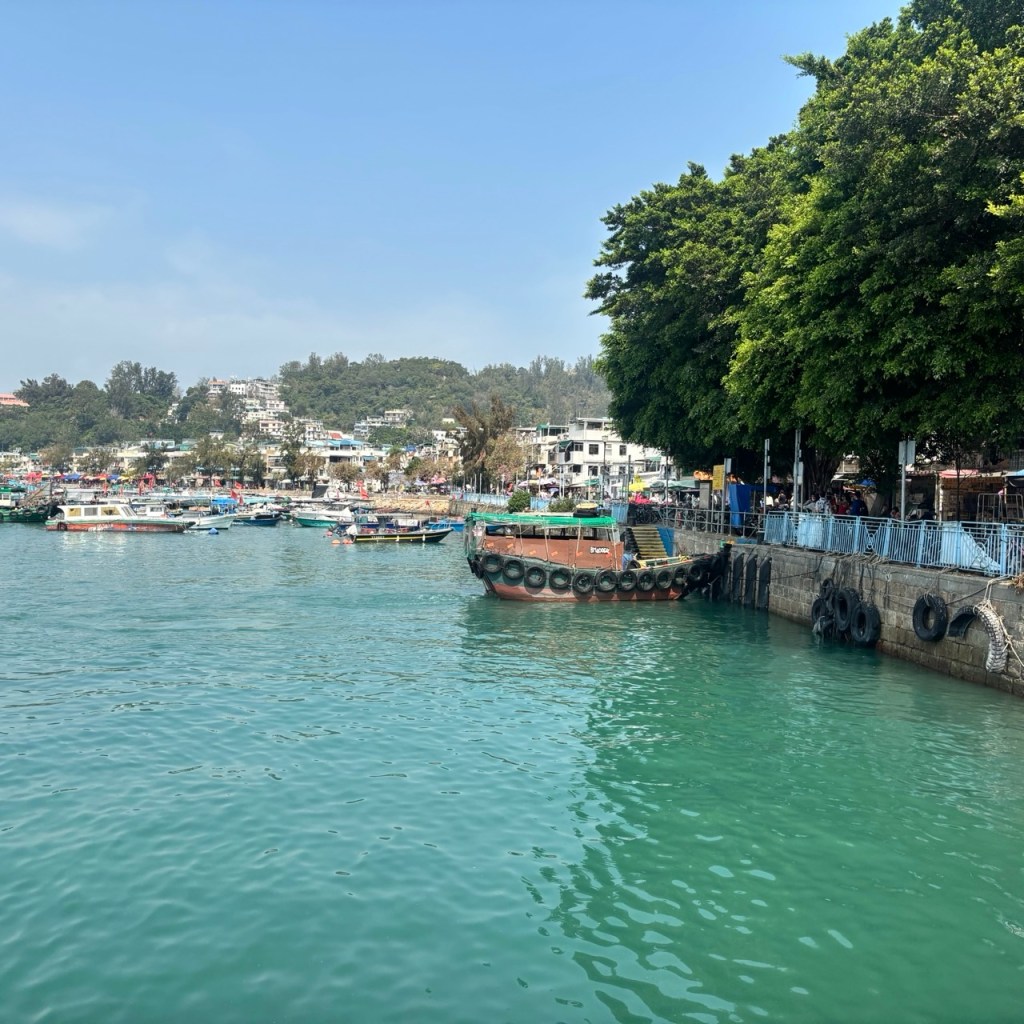
Chung Chao fishing harbour

There are well maintained, signposted hiking trails all over the island so you can quite literally cover it all. Cheung Chao has its own ‘The Peak’, accessible by following the Don Bosco road up the hill, past beautiful colonial houses, sea views and a peaceful cemetery where many of the headstones feature a large photograph of the deceased.
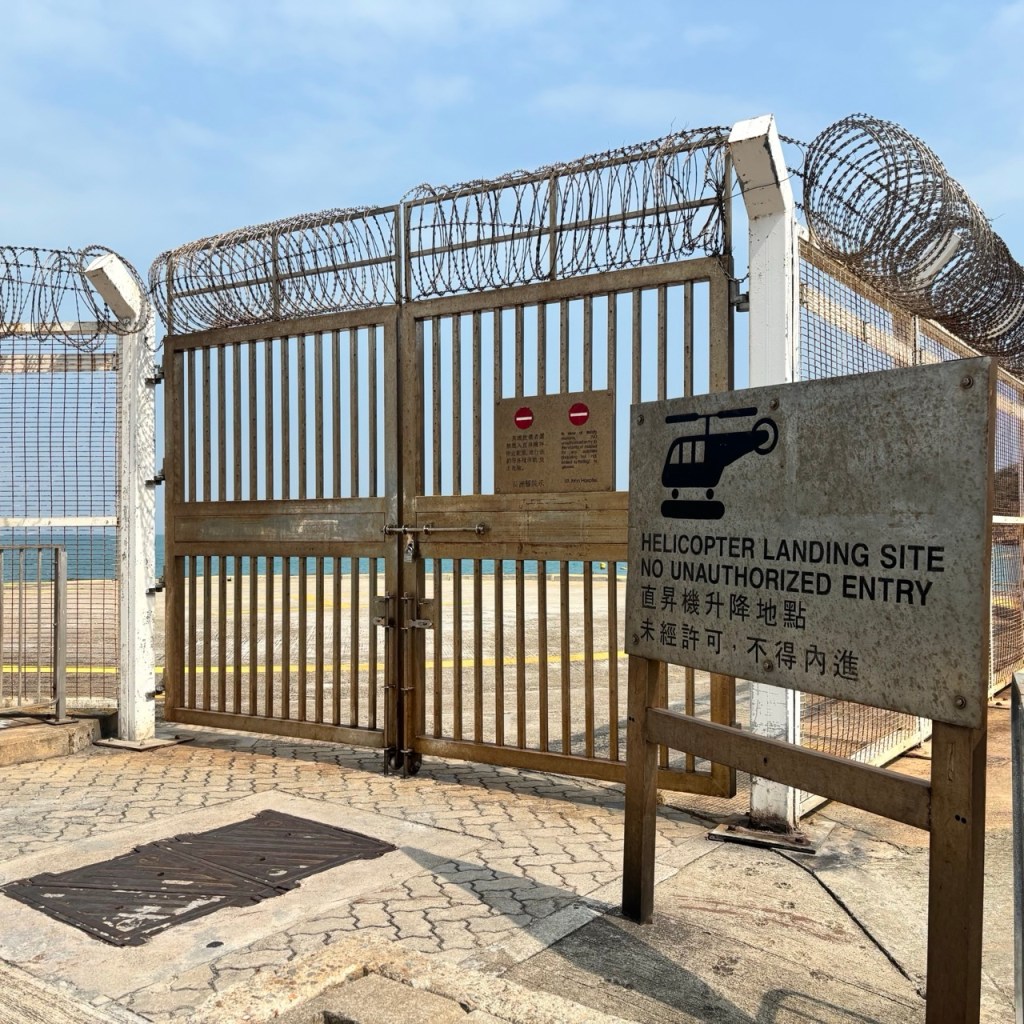
Helicopter pad I stumbled upon

Just across the narrow island from the harbour is the Tung Wan Beach, about a 10 minute walk from west to east. This is considered the ‘best’ beach, although no swimming in off peak season as signs indicated both the lifeguards and the shark nets were not maintained.
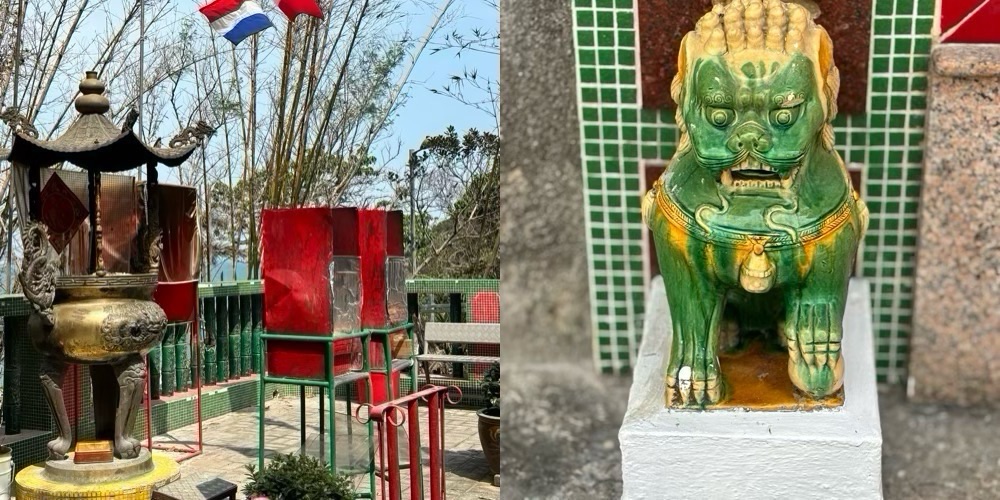
There is always a temple somewhere on the way

Cheung Chao also boasts some ancient rock carvings – apparently nobody knows who carved the markings over 3,000 years ago. I didn’t manage to see them unfortunately as the one area I did find was cordoned off.
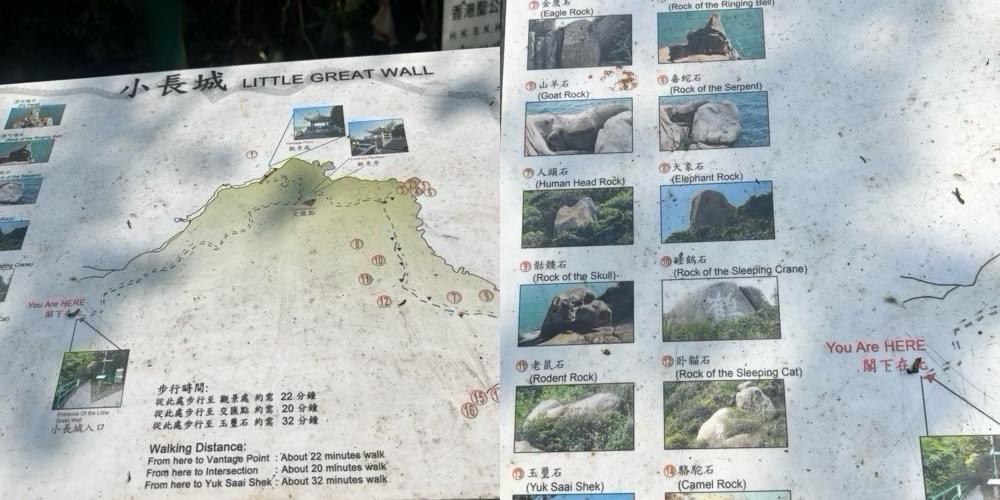
Following the map and rock formations

There is something really exciting about an island being small enough that in a few hours you can walk around it and imagine the pirates who used to frequent the bays.
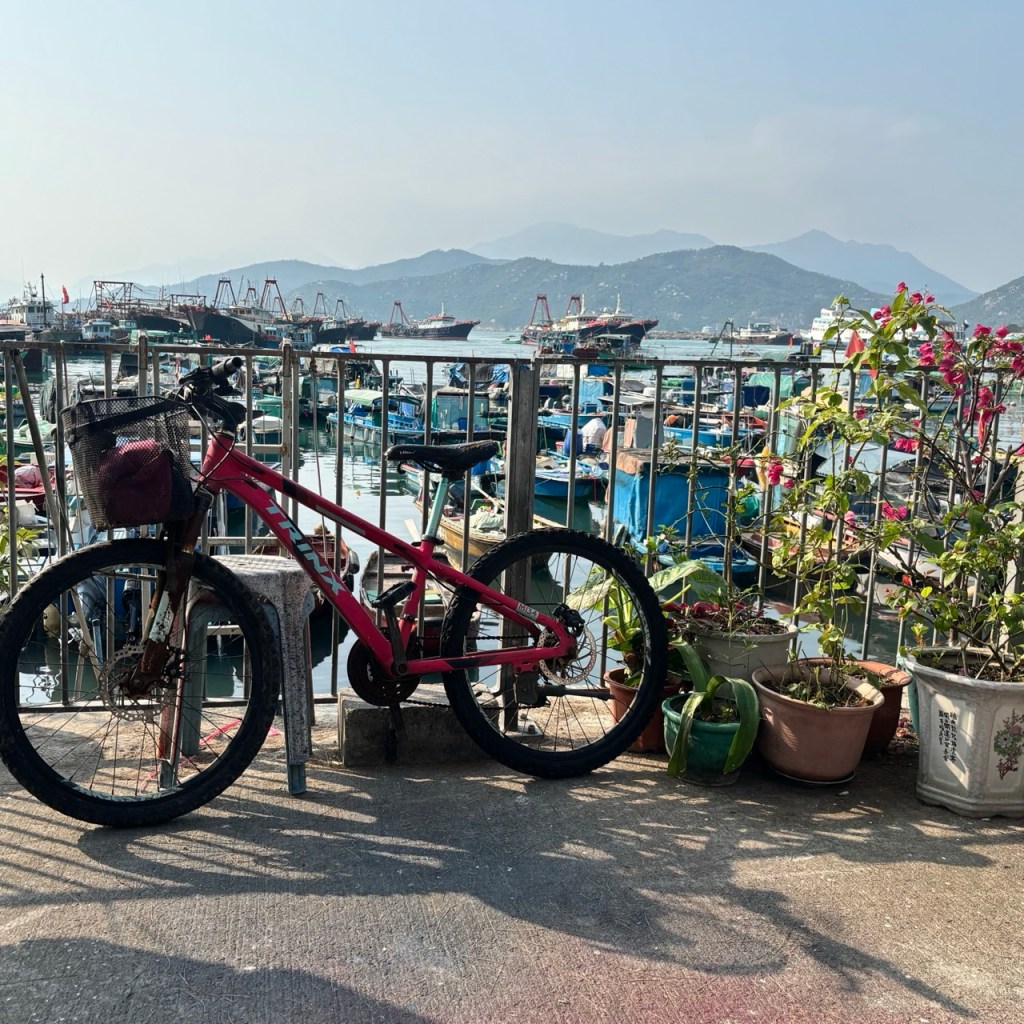
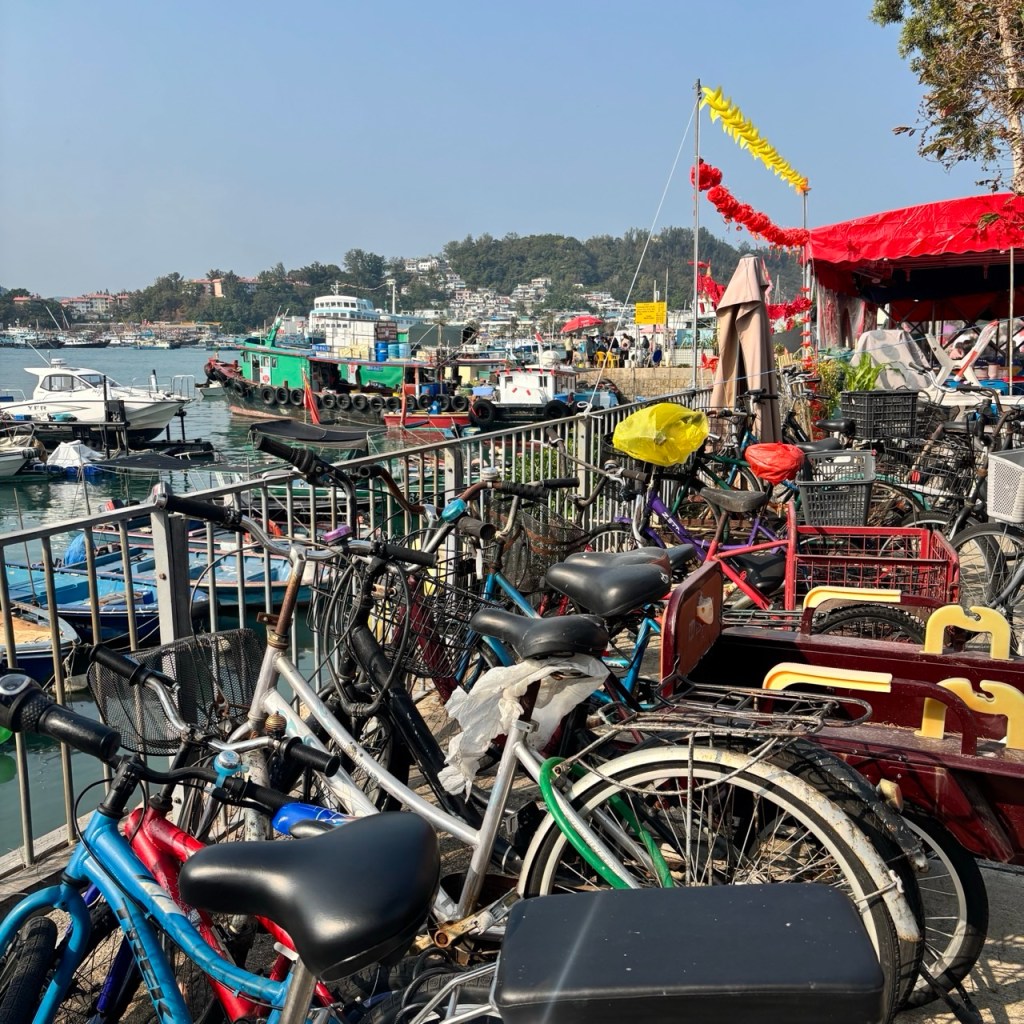
Pretty harbour views
Bicycles are the way to go as there are no cars on Cheung Chao

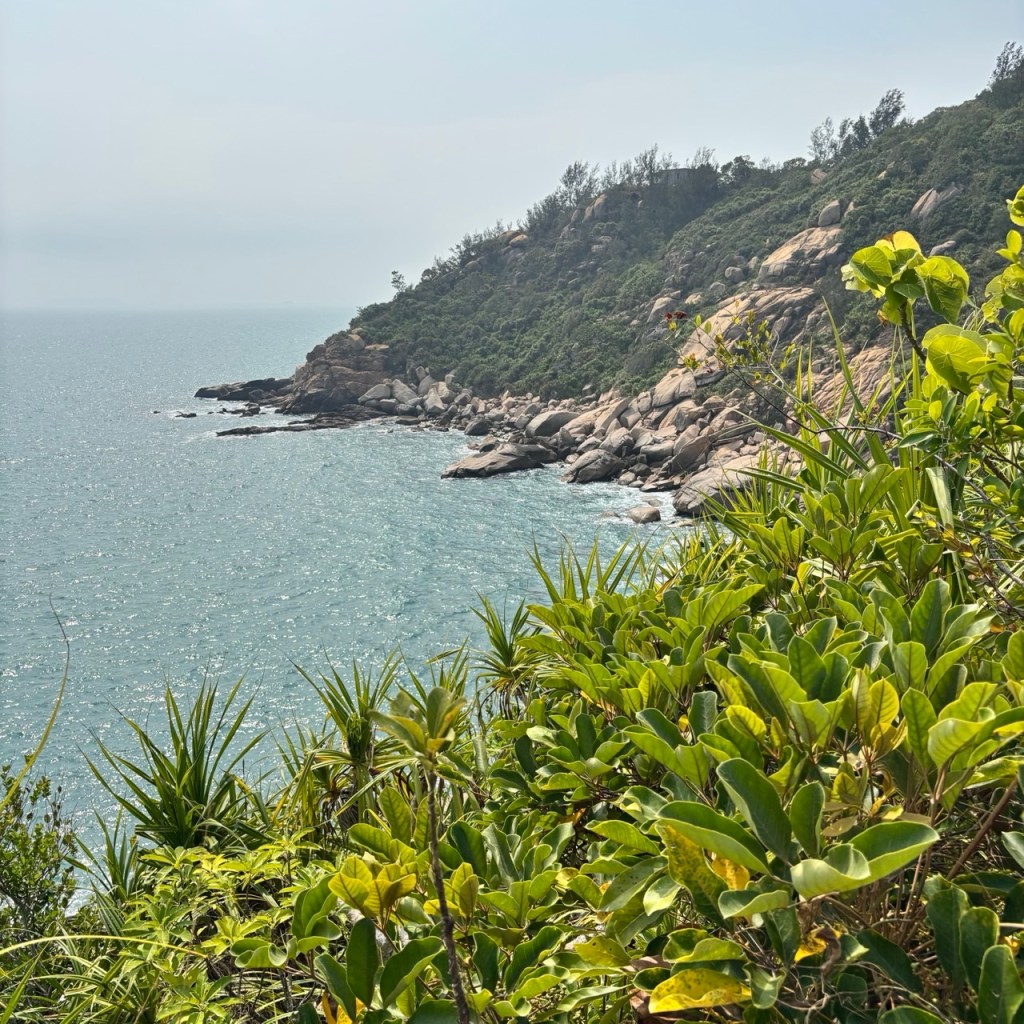
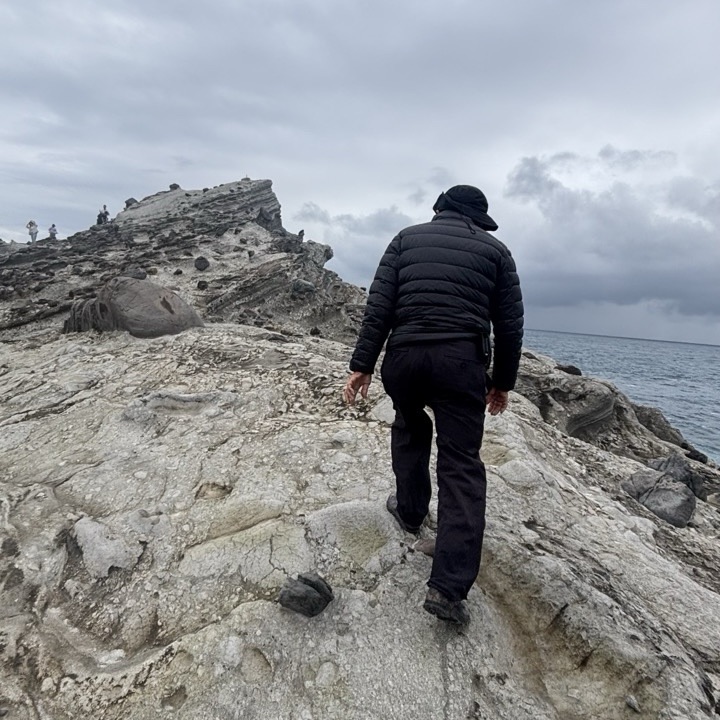
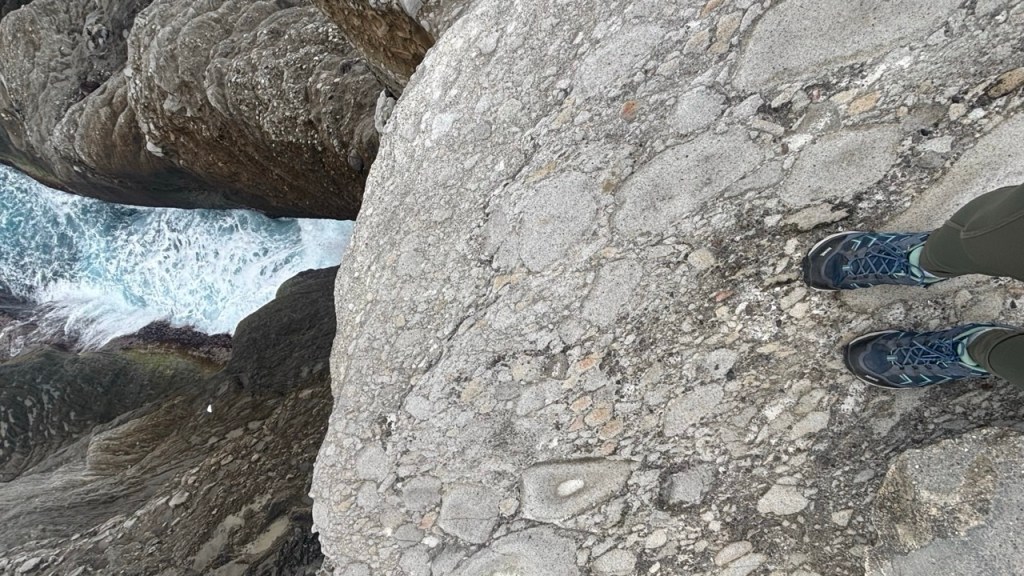
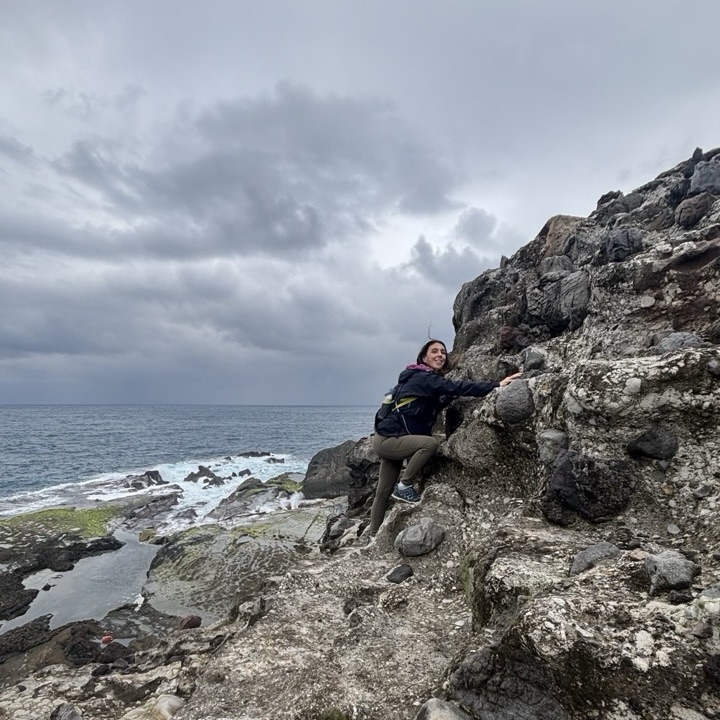
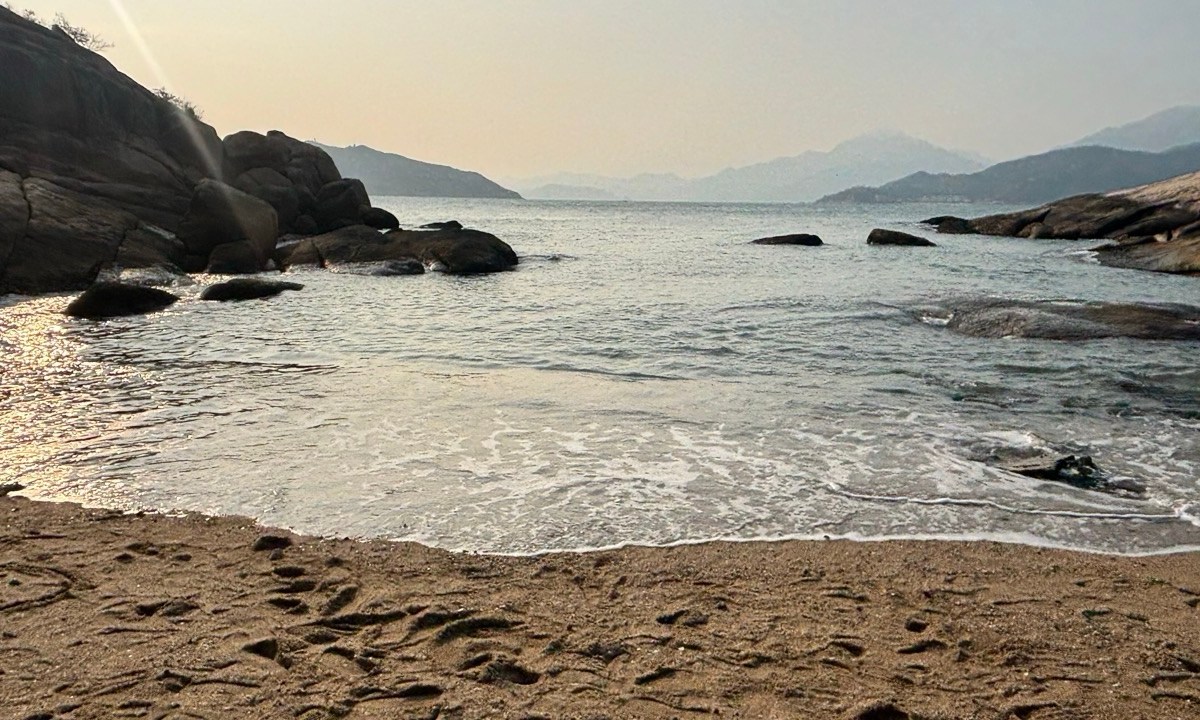
Cheung Chau Island is only 2km long and car free. The name translates to Long Island and it is essentially two big hills connected in the middle. It was unbelievably quiet – I had left all the holiday crowds behind, having most of the hiking paths to myself aside from a few people doing the same route. The beaches are lovely, with little sandy coves covered in rock formations, which does give it the feel of a pirate island.
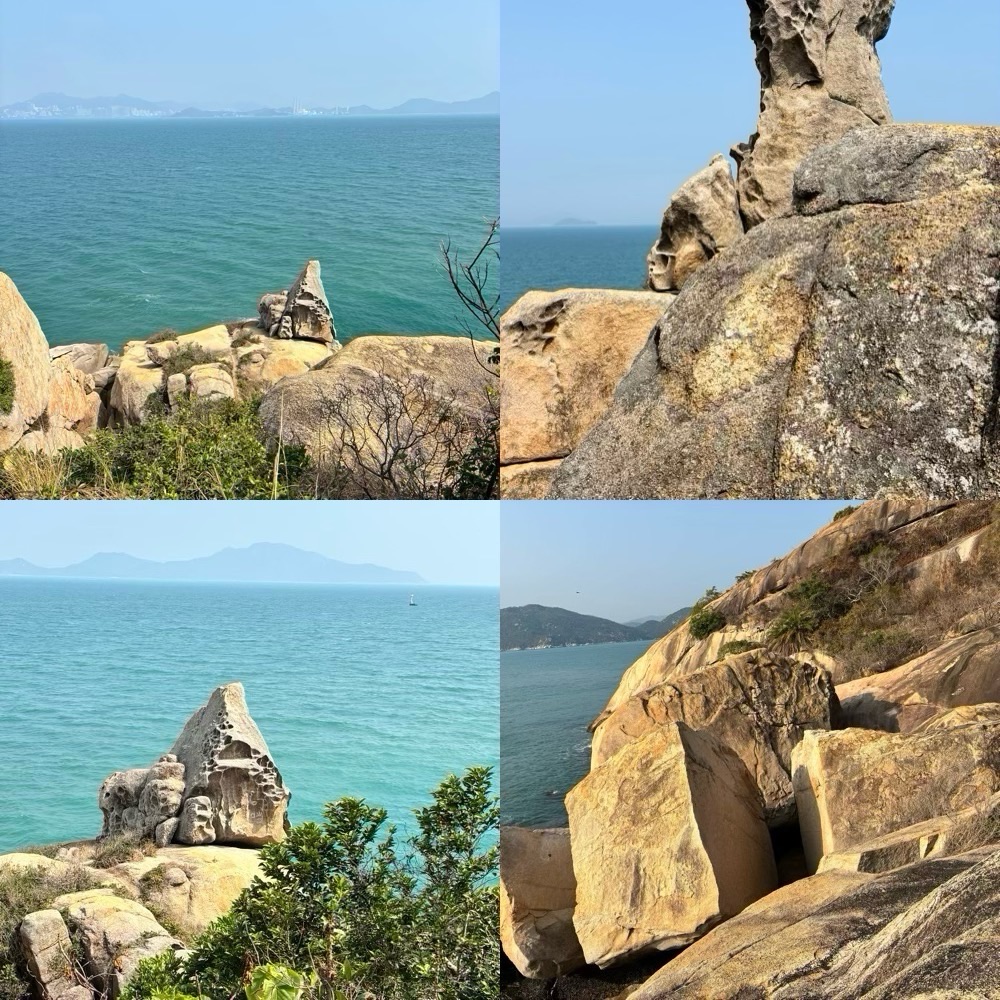
Eagles Head anyone?

The path includes lots and lots of steps up and down the ‘Little Great Wall’ and numerous interestingly named rock formations at every bay. Rock of the Ringing Bell. Eagle Rock. Rock of the Serpent. Human Head Rock. Goat Rock. I don’t think I managed to recognise any of them but it made for a fun guessing game.
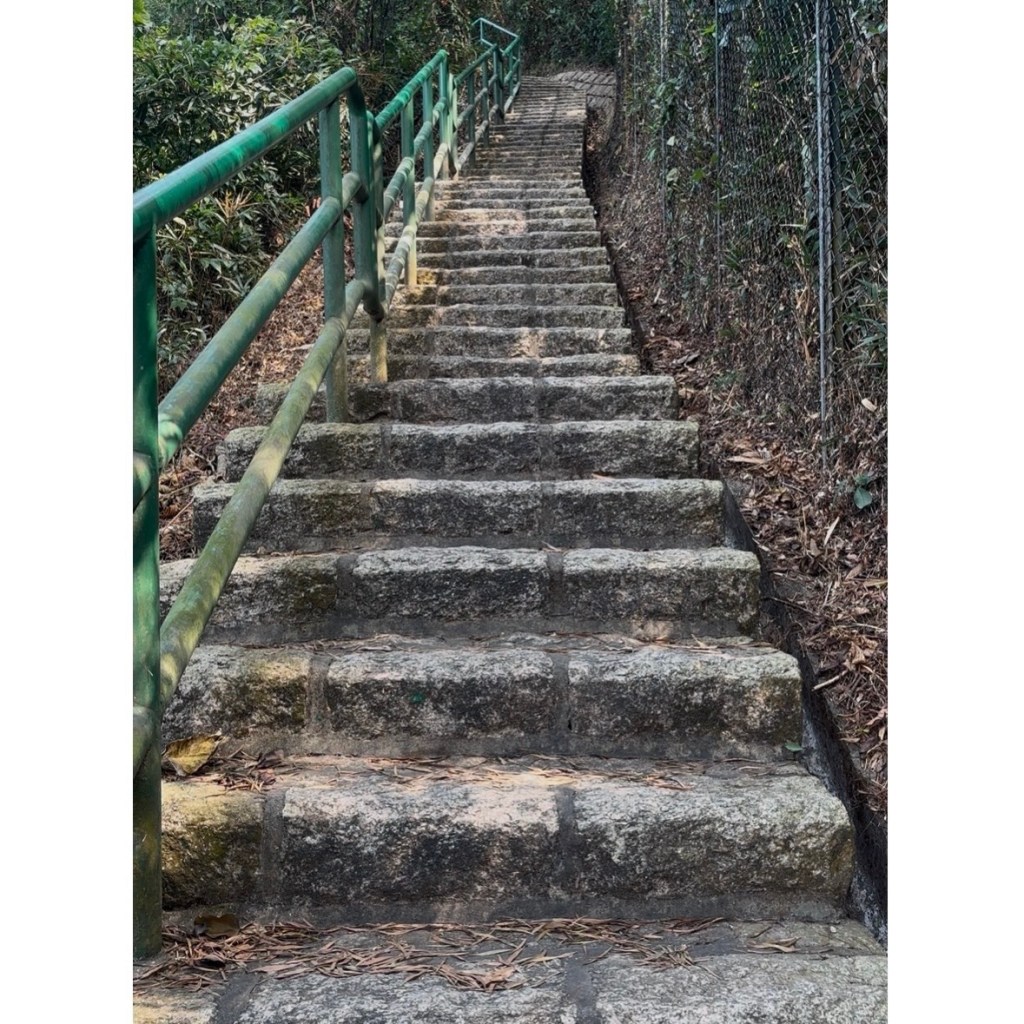
The Little Great Wall

There is a main square with slightly more expensive restaurants, for me this was worth it for the quiet compared to the street market which was getting busy by lunch time. I sat outside and this was the only time in Hong Kong or Taiwan where I was asked for money by a man who approached me, the lone Westerner, at my table. Other people sitting at the tables next to me shook their head to show their disapproval.
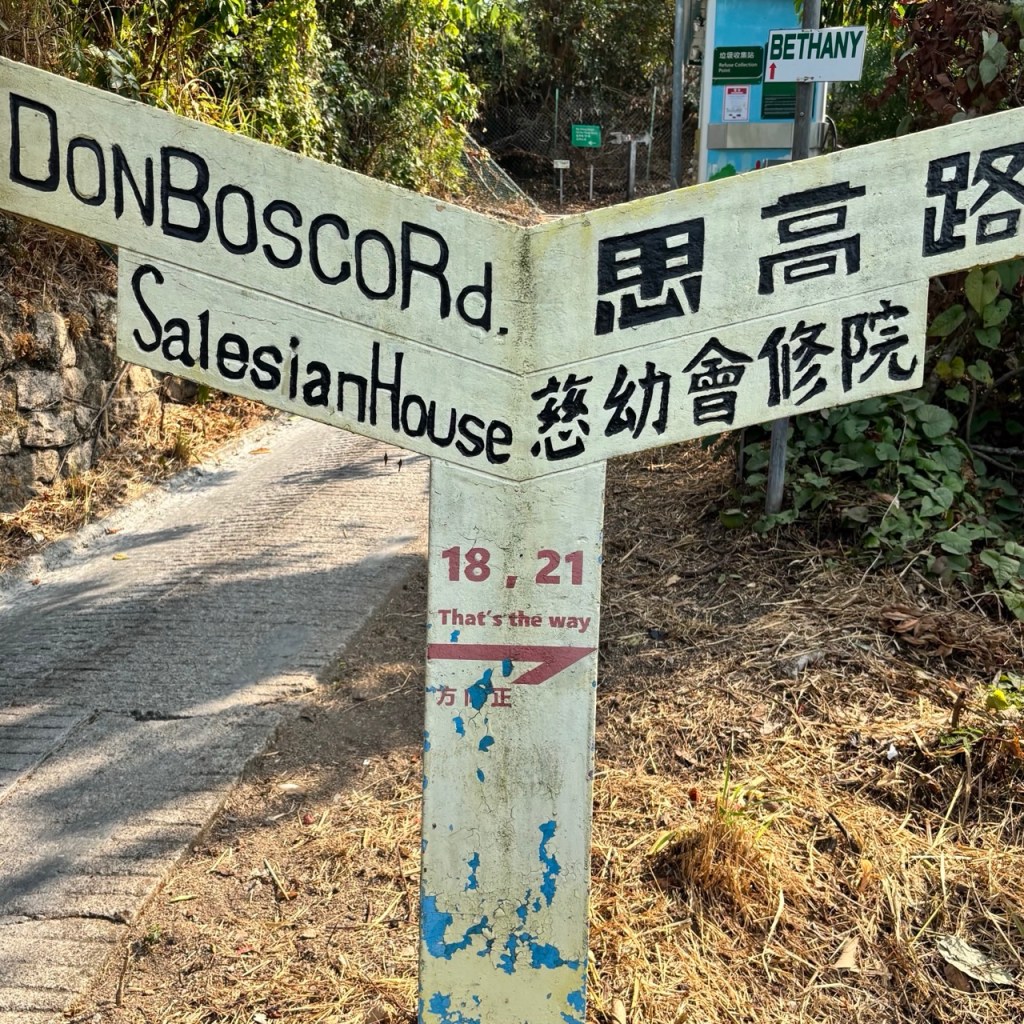
Following the Don Bosco road

In the afternoon I covered the south of the island. Around the corner of a quiet path, I came across a queue of people close to the Pirate’s Cave where the 19th century pirate Cheung Po Tsai stashed his booty. I joined the queue assuming it was to go inside. After about 20 mins I got to the front only to realise people were quite literally disappearing down a tiny hole in the rocks and not coming back. I asked a family ahead of me and they said it was about ten minutes to come out the other side and pitch black. It’s not what I consider a cave – it’s an extremely narrow crevice between rocks that you need to crawl through using a torch. This sounded too claustrophobic so I left, even though this meant embarrassingly having to squeeze back the same way past the growing queue and explain to curious people why I was going the wrong way.
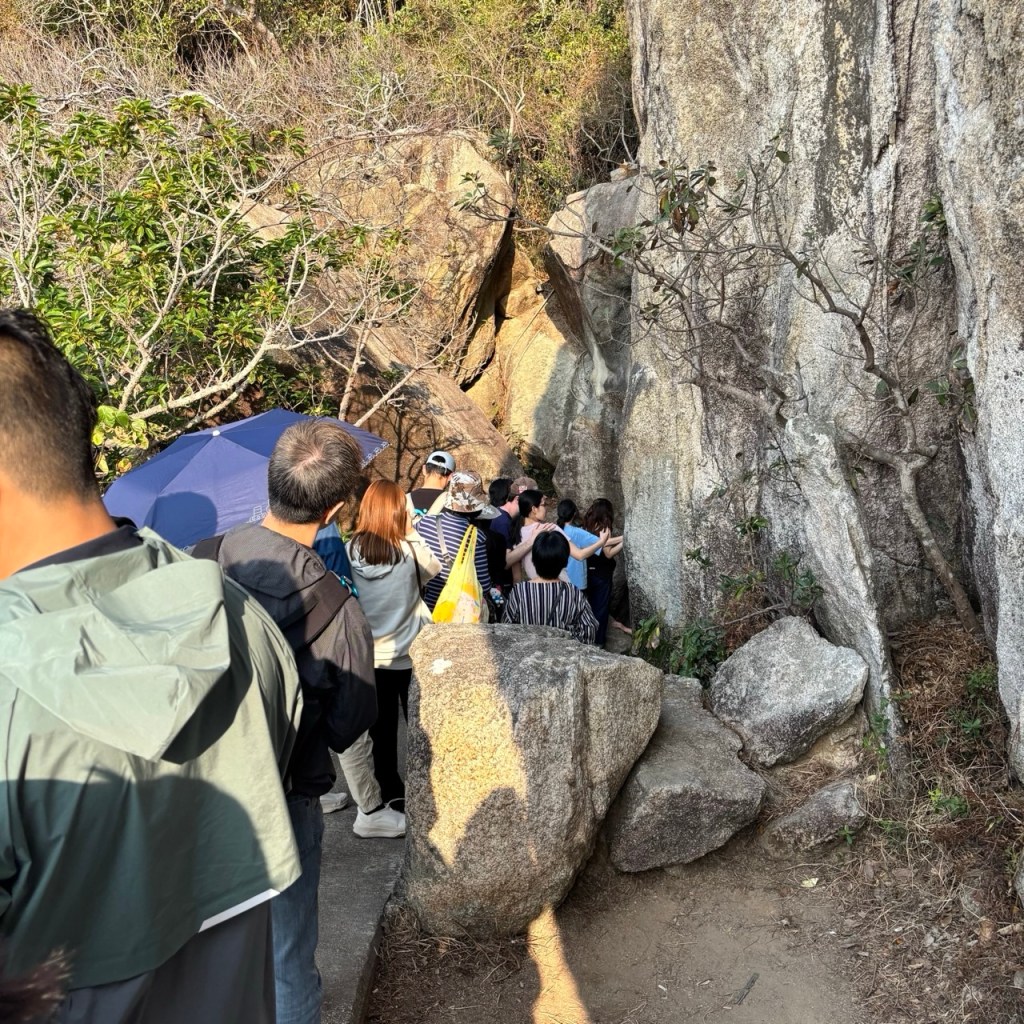
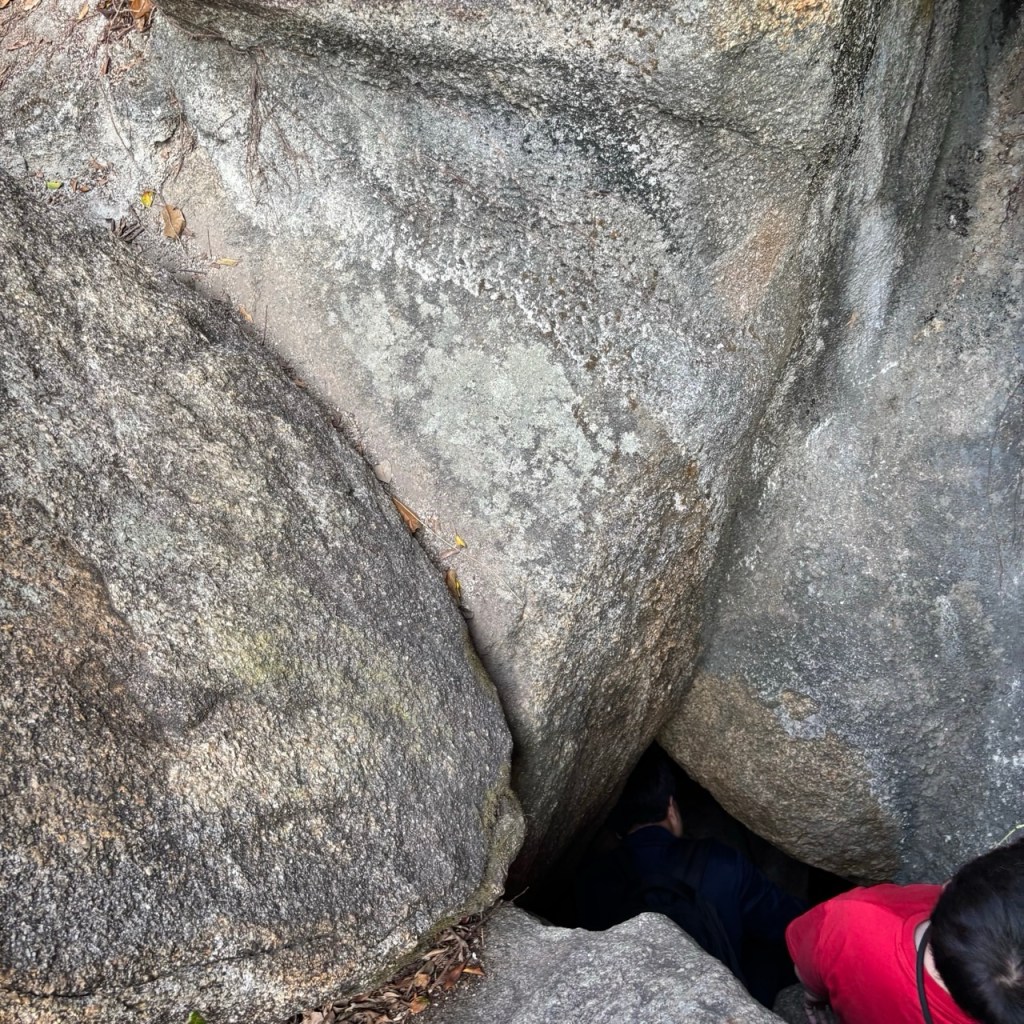
Queue for the ‘cave’
That is a man disappearing deep into the ‘cave’, you can just about see his head
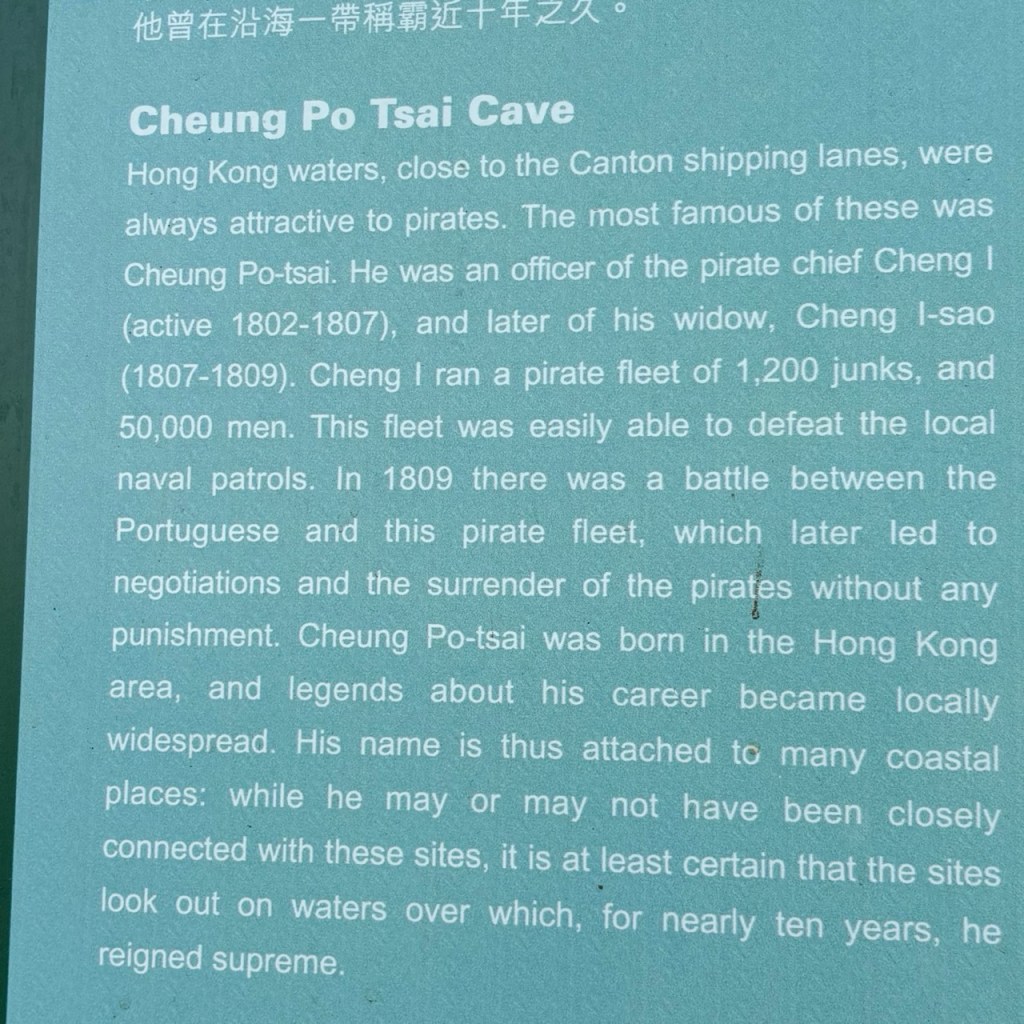
Information on pirate Cheung Po-Tsai

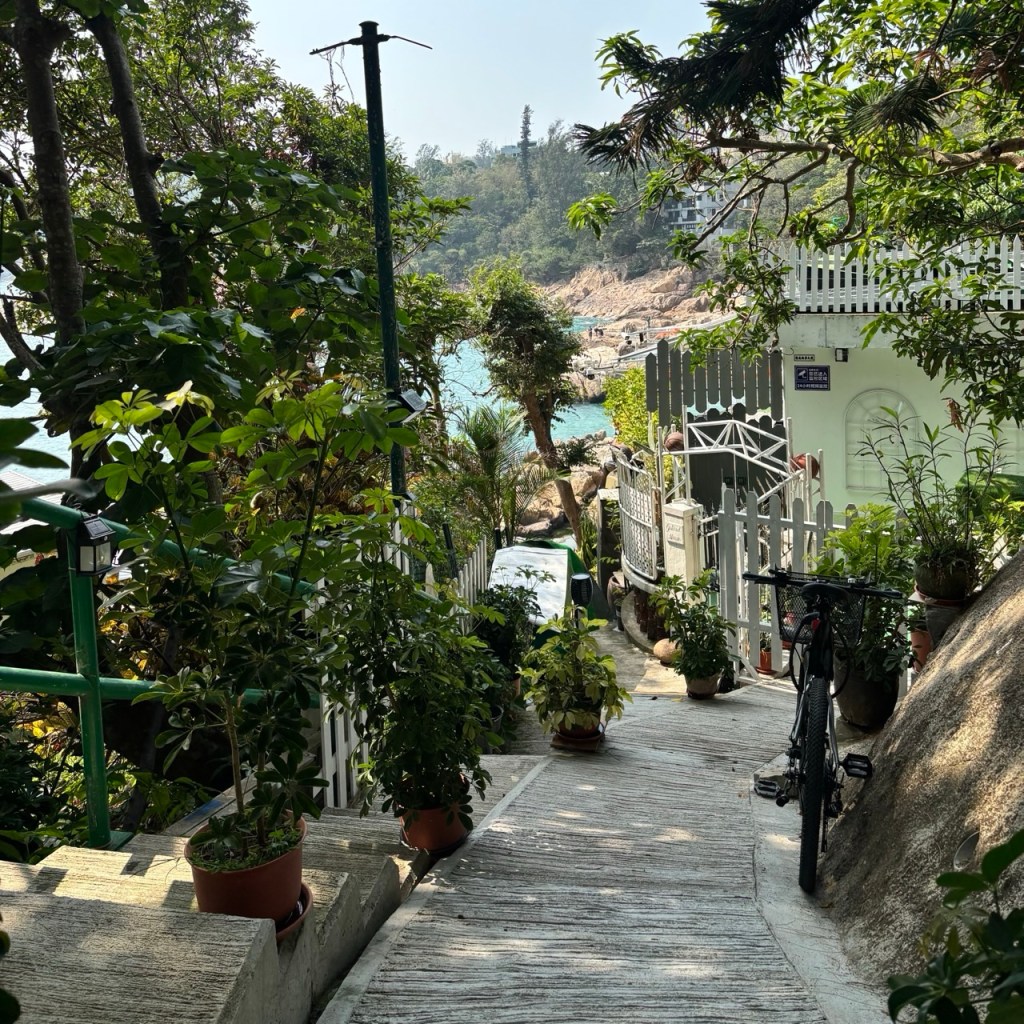
The road was mostly empty again aside from a few dogs lazing in the sun. Following the inland roads is also a good way to get a glimpse of the old Hong Kong, without the visitors. It took me past some lovely houses and narrow streets, up and down numerous steps, with washing hanging out of the windows and bicycles lining the roads. Best of all, there was nobody else there although approximately 20,000 people live here.
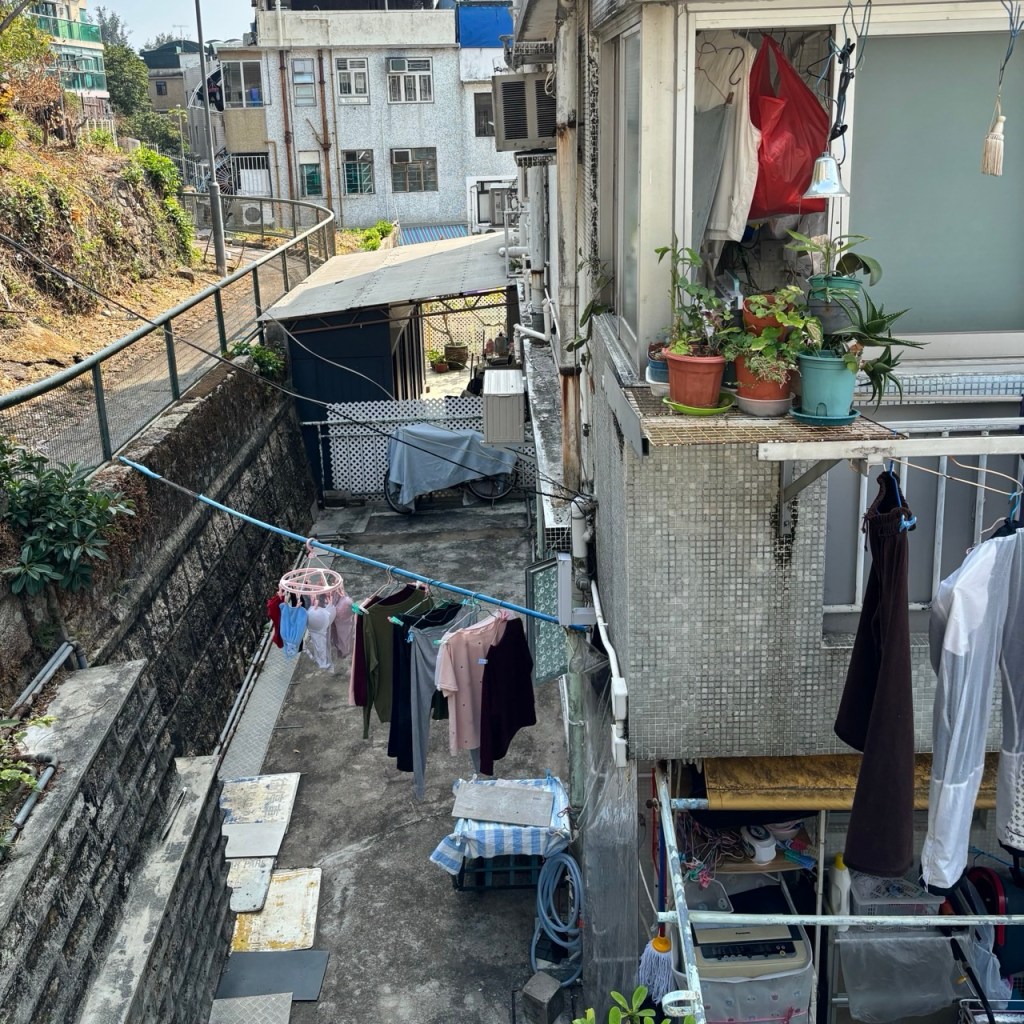
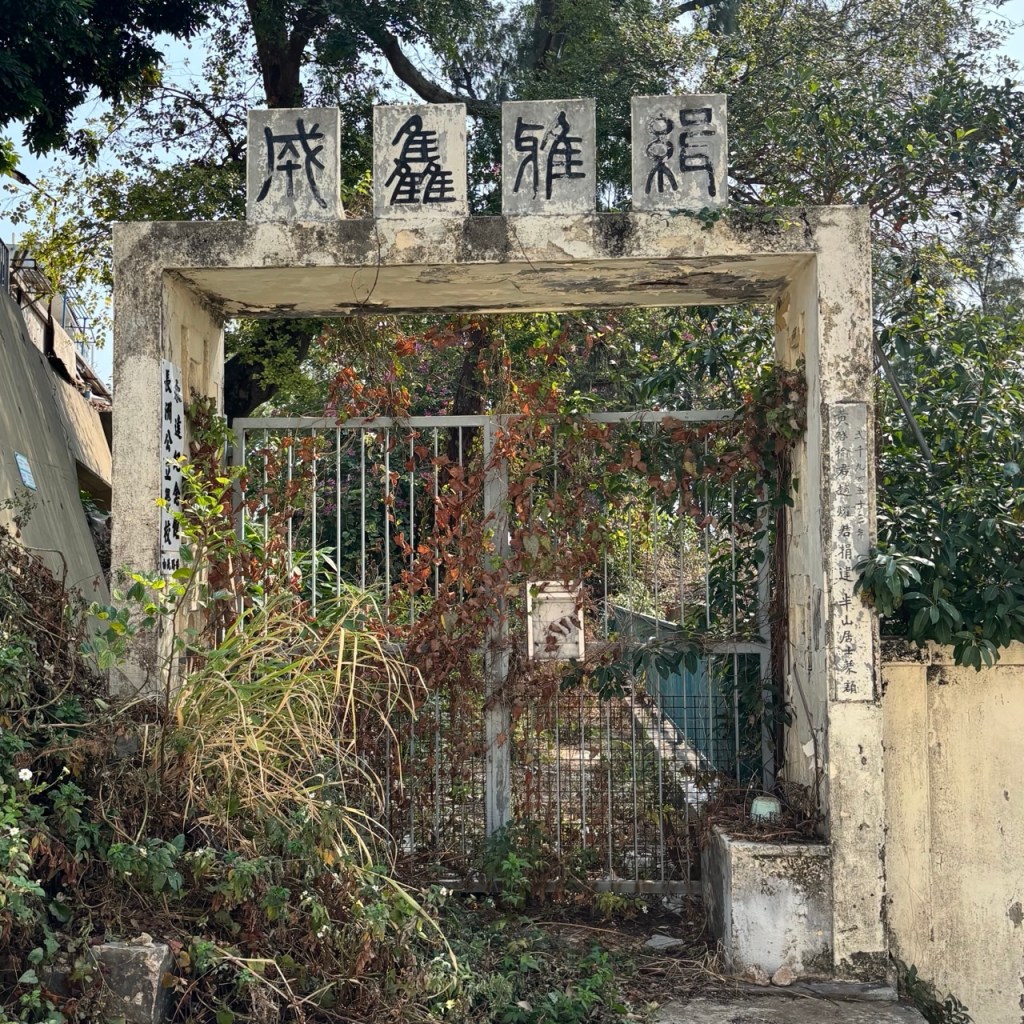
Residential streets
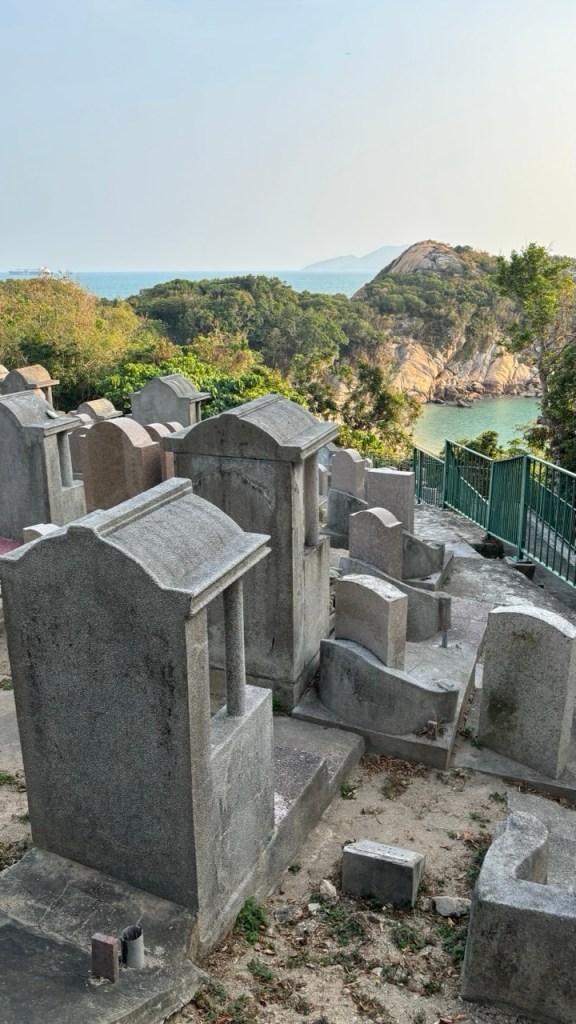
Memorial site
Cemetery at top of hill
Following the road back to the port

I only passed a few people, including an older couple who asked me for directions to the port. They spoke hardly any English and my Chinese is limited to hello and thank you. I tried to explain that the way I had come was the long way and would take at least an hour but I don’t think they understood – they started following me as I continued in the opposite direction on my route around the island. I have uploaded some videos to my YouTube channel here: https://www.youtube.com/playlist?list=PLtRIEKmjnSNjLh8l2Y–ua4B6gHlKhwHj
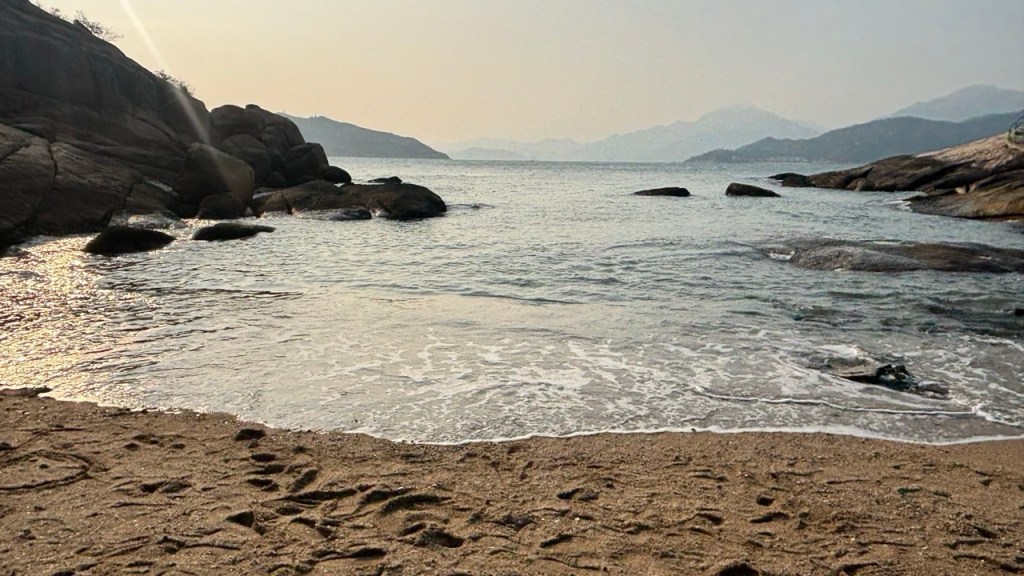
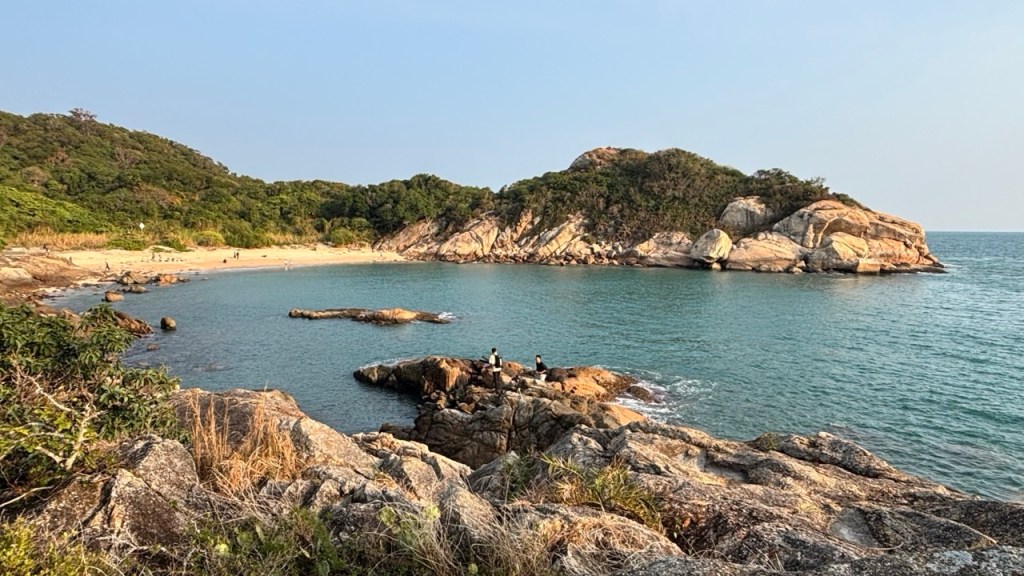
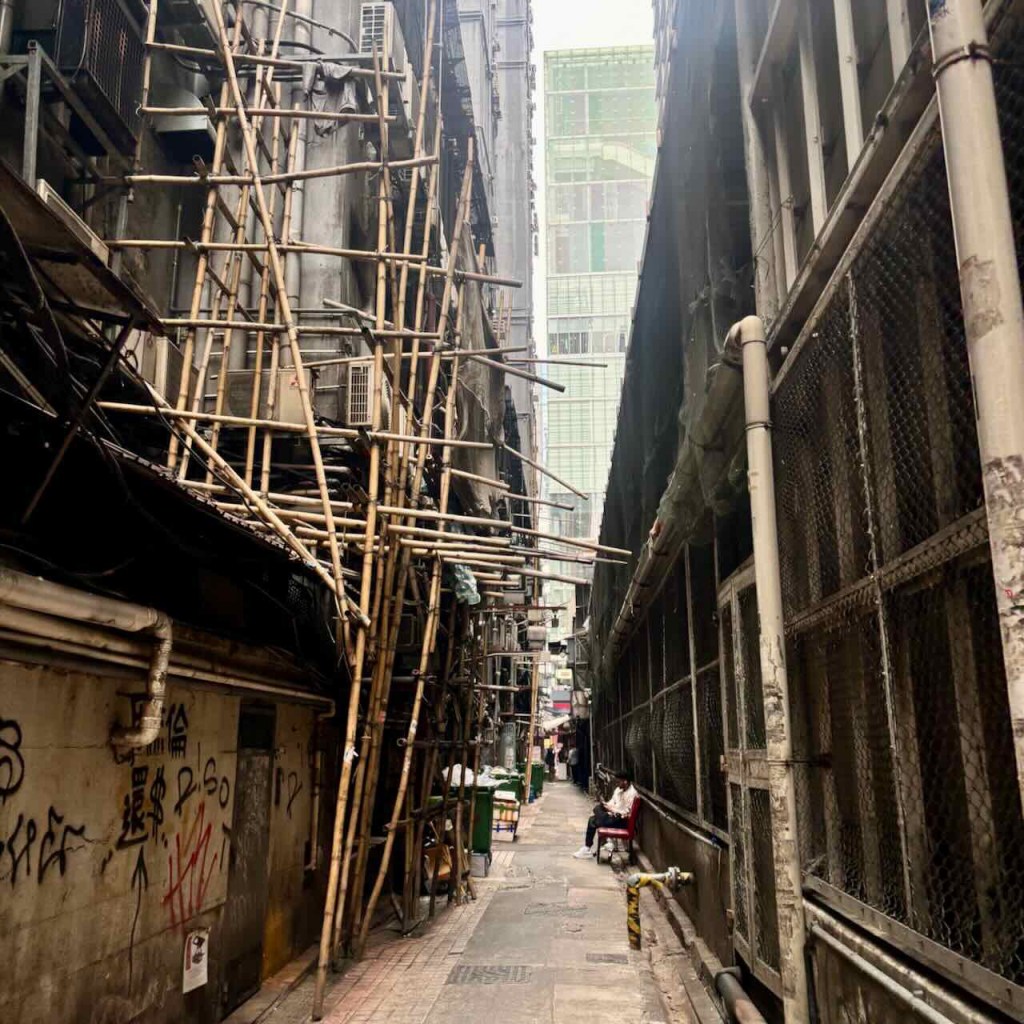
This really is Hong Kong
Pirate coves
Rocky outlooks

I would highly recommend Cheung Chau for a day trip and to walk as much of it as possible. In the evening back on the mainland I did manage to meet up with some people from the Mahjong Hostel to see the Mong Kok area of Hong Kong, but instead of enjoying some company it just irritated me that they didn’t take into account the fact that restaurants close earlier than in Europe and weren’t interested in venturing to any of the other islands, instead leaving it so late to meet that the night market had long packed up. Sometimes I really do prefer travelling alone.
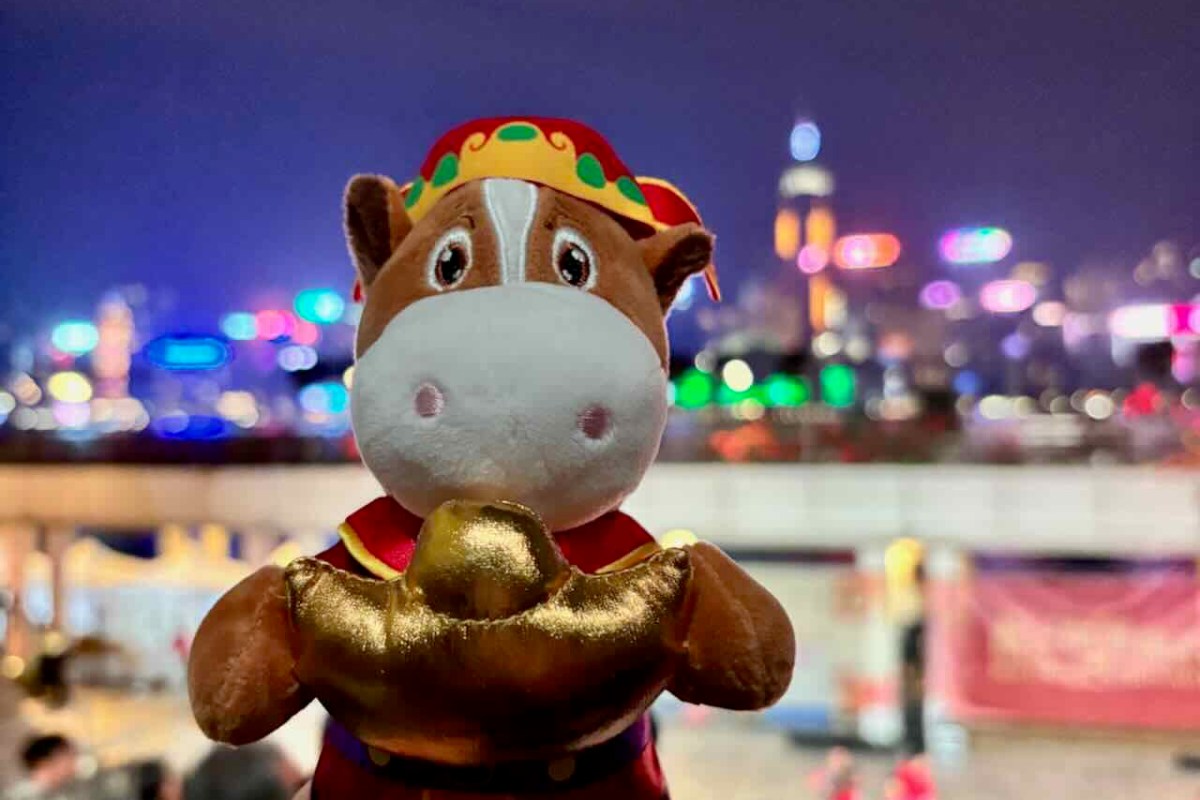
Happy Year of the Horse (Hong Kong)

By pure coincidence I had booked my original flight back to Hong Kong on the eve of the Chinese New Year. Egged on by the 21 year olds in Taipei I had moved my flight home back by another 4 weeks but liked the idea of experiencing my first Chinese New Year in Asia, especially in Hong Kong with it’s famous New Year’s Parade and Fireworks display. Rather than everyone going home for quiet family time as is common in Taiwan, Hong Kong celebrates and it’s easy for tourists to join in. Extending the flight meant I got a full 6 days in Hong Kong. Except my original accommodation was fully booked for the rest of the week. This meant after the first 3 nights in the only good rated proper hostel in the city, The Mahjong, I’d have to leave and find somewhere else.

Back in Hong Kong’s narrow streets

The Mahjong is in the To Kwa Wan district which is an older, quite authentic feeling part of the city and only a few stops on the metro from the Tsim Sha Tsui pier and Hong Kong Central area. Transport is so easy in Hong Kong – again there was a direct and cheap bus to my area.

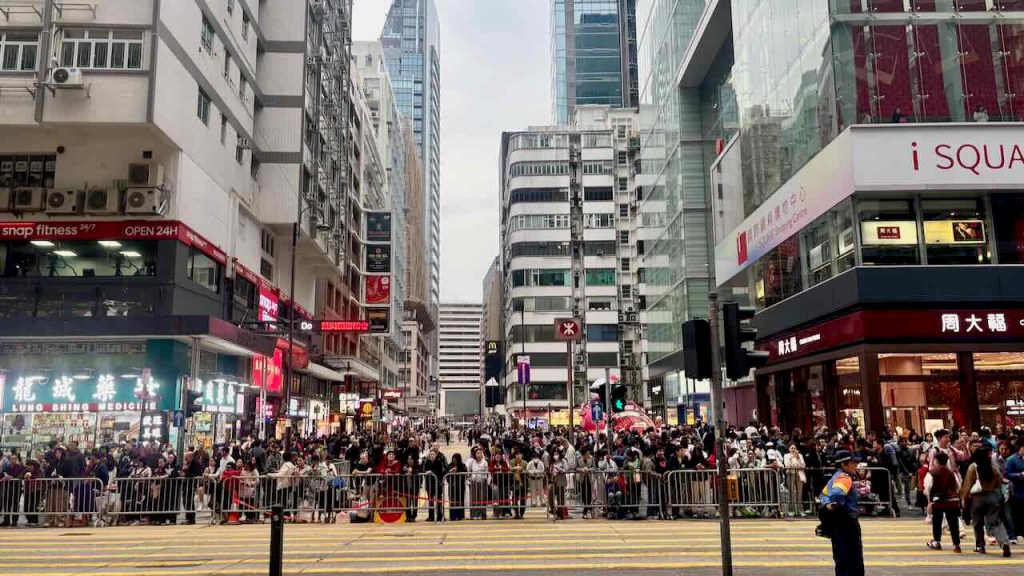
Queues waiting for the Night Parade
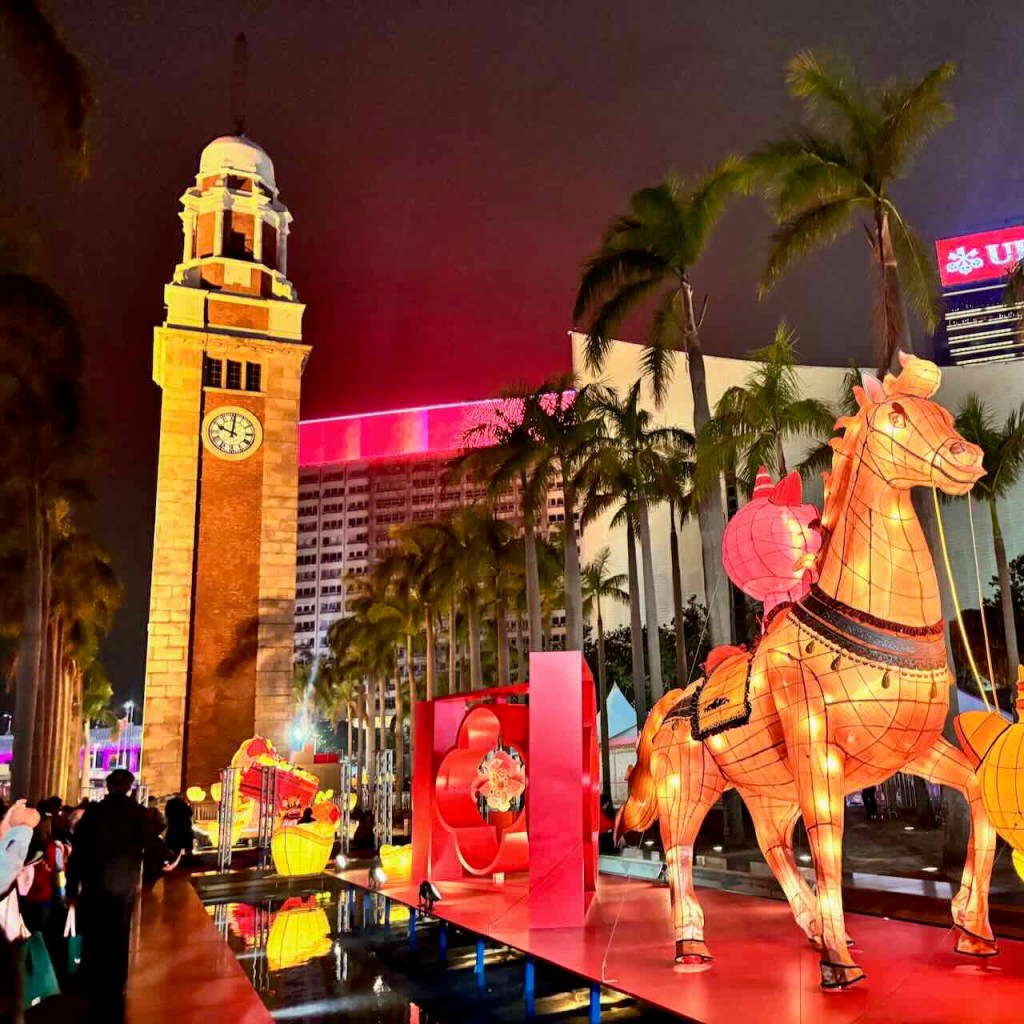
Tsim Sha Tsui harbour lit up

The Mahjong is also a social hostel, with one free proper coffee provided each day and a little lounge. Space is at a premium all over Hong Kong and the building is old, but I really liked it. It was easy to meet people and a few of us made our own WhatsApp Group to try to meet up later for the New Years Parade.

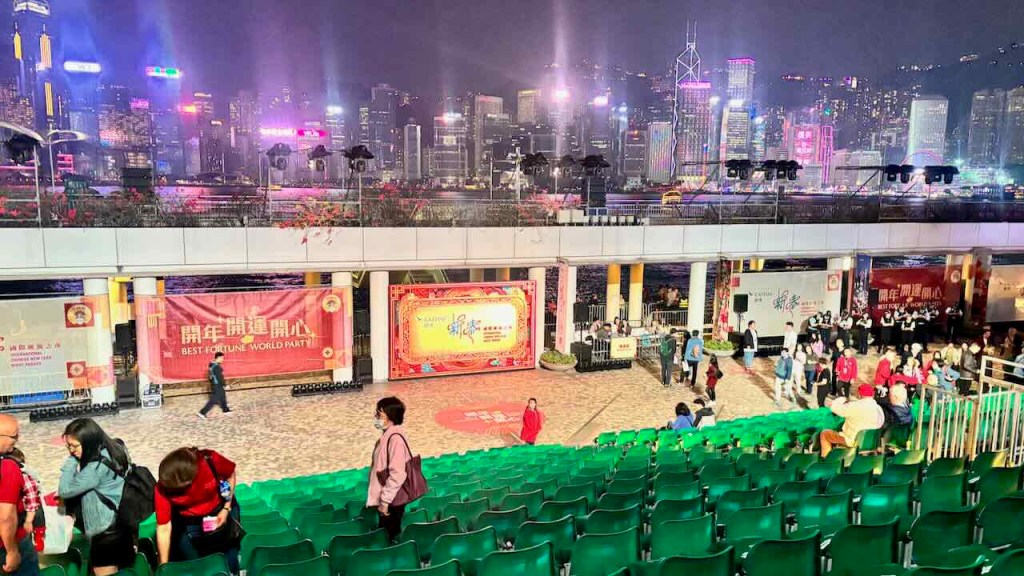
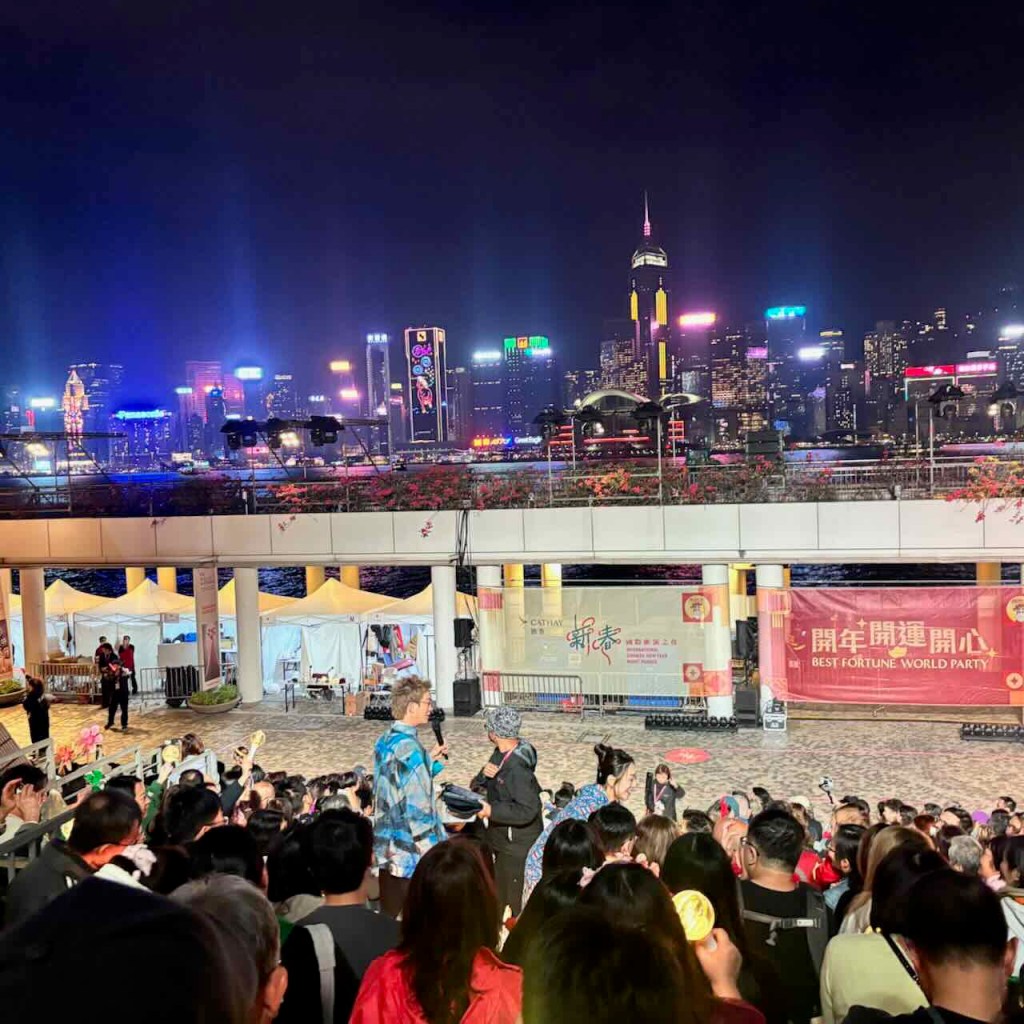
Taking my seat

There are New Year events all week in Hong Kong starting with the Night Parade on 17th Feb, the first day of the New Year. Huge crowds gather around the Tsim Sha Tsui area, which the police cordon off from the early afternoon. I knew there would be crowds with 500,000 people in attendance but I wasn’t prepared for the extent of it. Heading down to the harbour area in the early afternoon I could hardly cross the road. I eventually made it to the tourist information to enquire about the best place to stand, and just like with the golden train ticket in Taiwan, my travel luck kicked in and the lady helping me said they *might* have just one ticket left for a seat in the viewing area where you can watch the entire parade of 9 floats and 46 performance troupes go by. It was too good a chance to pass up. £40 got me another golden ticket and at 6pm I took my seat in Area C.

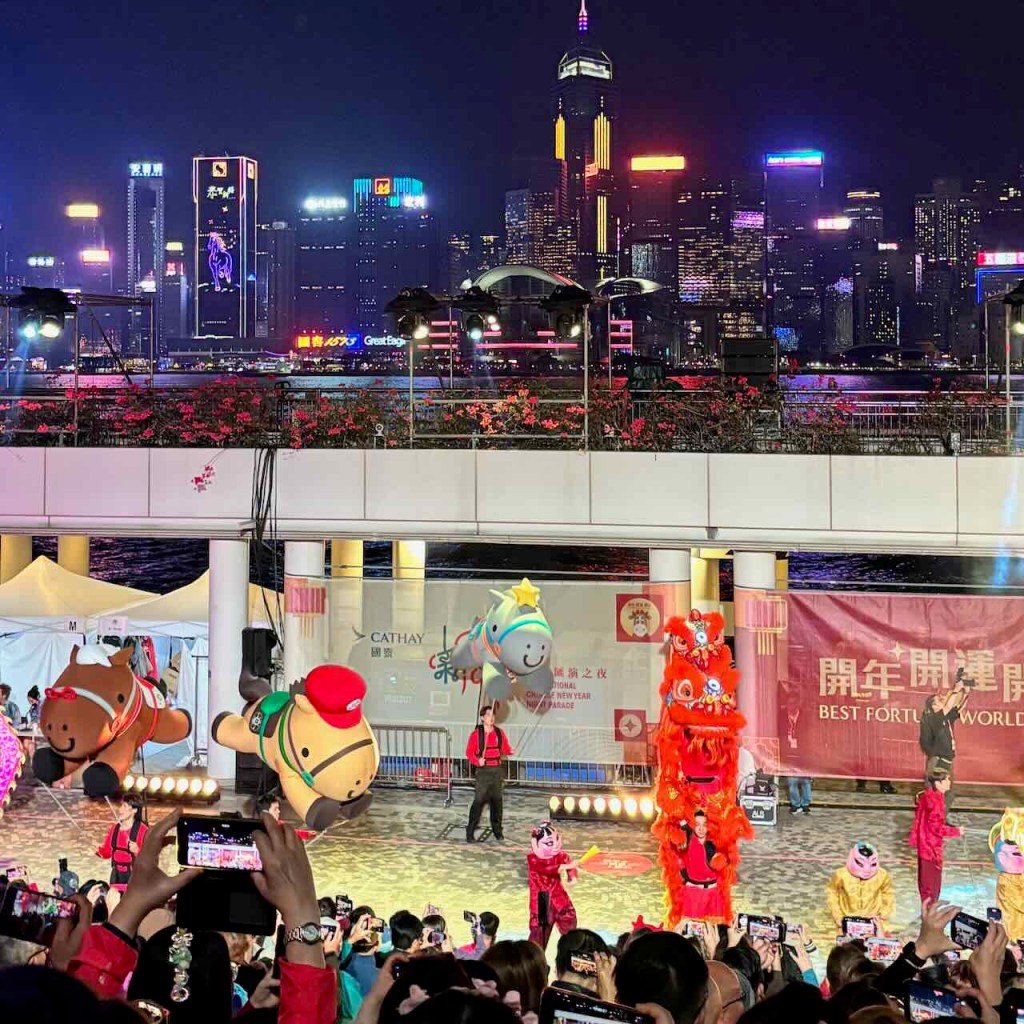
Watching the parade

I passed the time waiting for the gates to open by looking at a selection of people’s photos that were pinned up on a sort of notice board. I thought they might have been the organisers or related to the parade in some way. Every so often people would come and take a look at the board. Only after using Google translate did I find out they were in fact mug shots and this was a police Wanted poster, with most of the descriptions of the crimes being social or journalism type activities. Probably best not to post the photo I took.

One of many gifts in my goody bag
YMCA

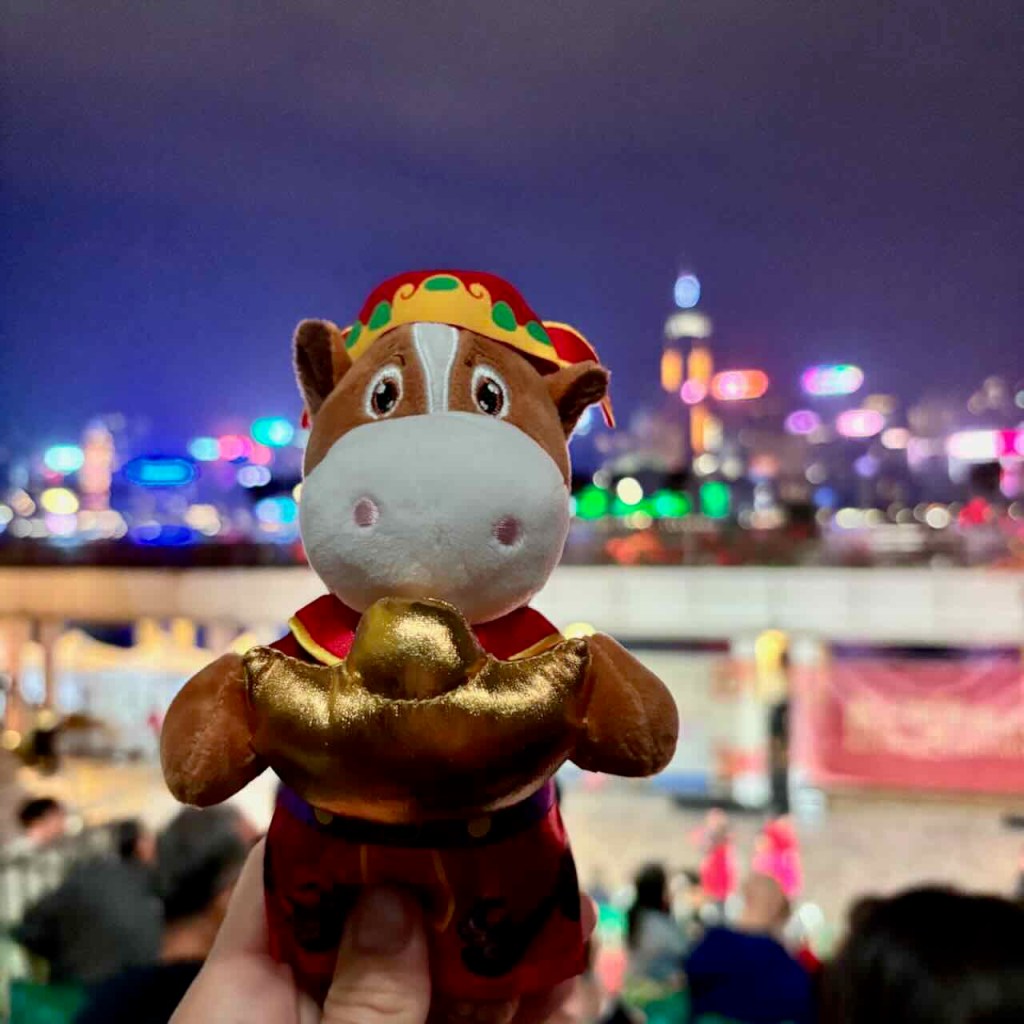
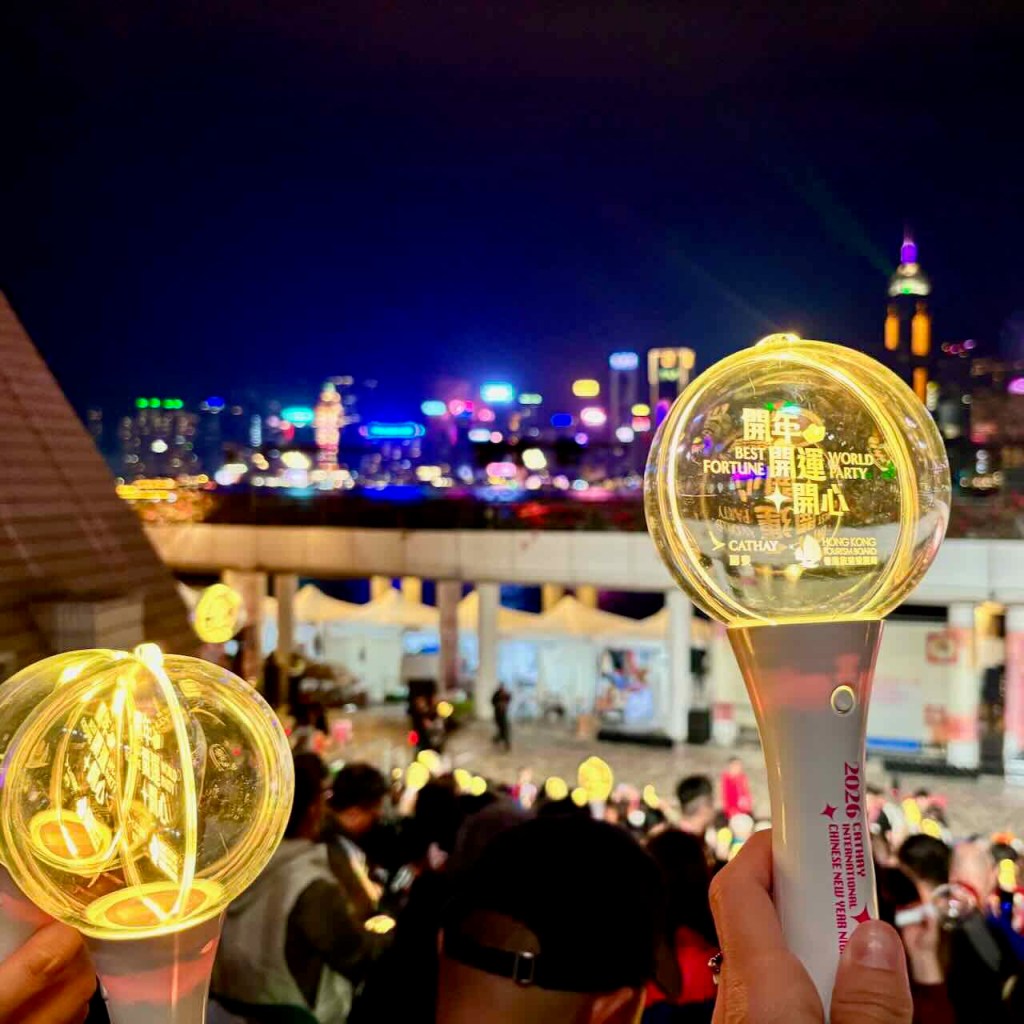
The parade is organised by the Hong Kong Tourism board and sponsored this year by Cathay Pacific Airlines. On the seat was a Horse themed goody bag full of treats including a horse stuffed toy, gold chocolate coins, magnets, cookies, stickers, tote bag … and a bizarre plastic lightbulb that lit up different colours automatically with the parade, for audience members to wave to show our support for the performers.

Lightbulb shaker things
Entertainment

Here is a video of the opening parade: https://youtube.com/shorts/mxCPkwio2Yw?feature=share

Beautiful white horses

It kicked off with two Eurovision type hosts getting the crowd going by asking random people to say a greeting from their own country which was quite awkward when all anyone said was “Happy New Year” and the number of languages were exhausted fairly quickly. This was followed by a long speech from someone on the tourism board.

The host picking on another poor audience member

I was expecting some dragons and dancers but it’s much more than that. It was a bit like a bigger, international and obviously a million times better version of Britain’s Got Talent. I have never experienced anything like this and loved every minute of it.

Some sort of jumping dragon

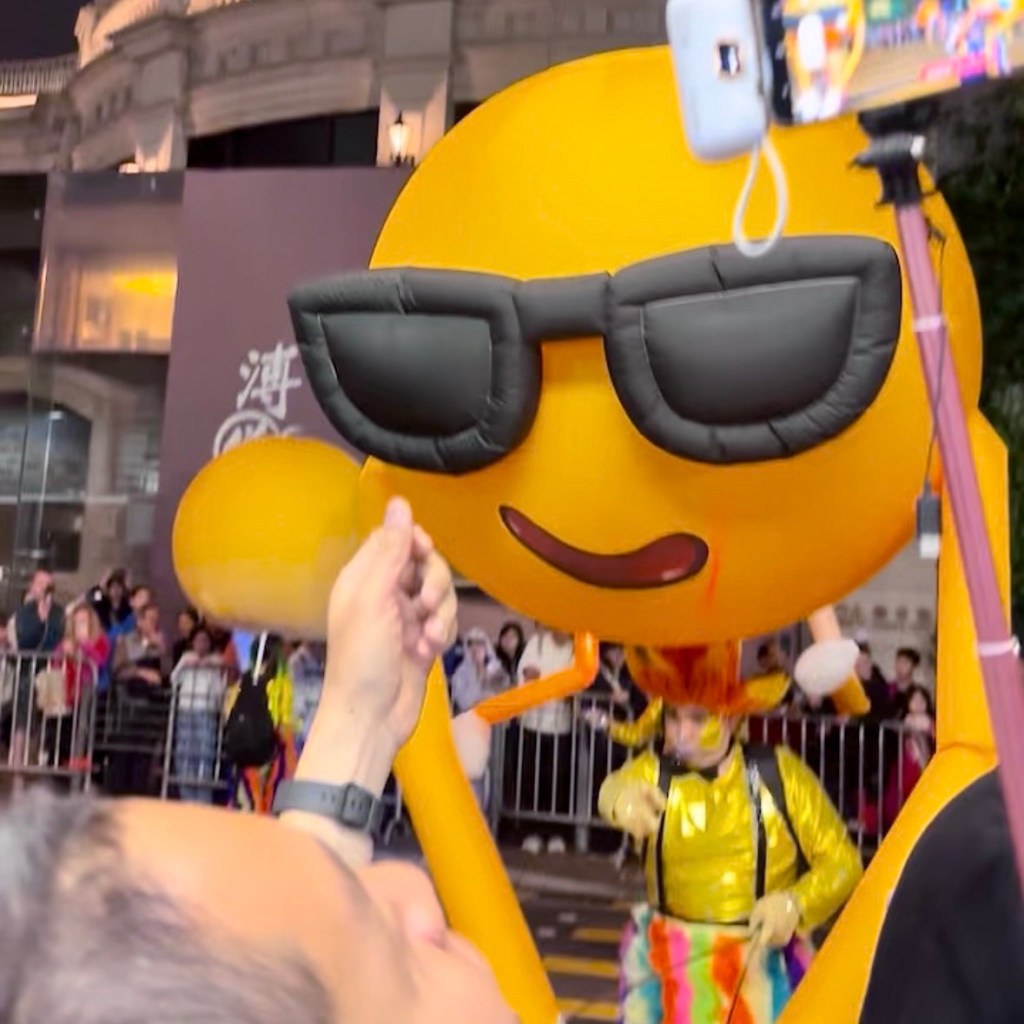
The highlights for me were the beautiful white horses in the Hong Kong Jockey Club’s performance and the “Cromosauro” featuring a 5-metre-tall mechanic dinosaur, although the Emoji Parade from Turkey were funny! The groups ranged from the Spanish Ballet Victor Campos, to the Australian cheerleaders and a European trio of skaters who spun around on a tiny spinning disc doing the headbanger. Not to mention some people on huge bouncing pogo sticks to “you’ve got to move it move it”. The McDonalds and Disney floats not so interesting. All kicked off by the Cathay Pacific airline crew doing their version of YMCA.

Dragon parade

Afterwards I walked around the harbour with the rest of the crowds soaking up the atmosphere and caught the Emoji Parade up close at the end of the procession before hopping on the metro back to the hostel for a good night’s sleep in my pod.

The Emoji Parade
Mystery gift

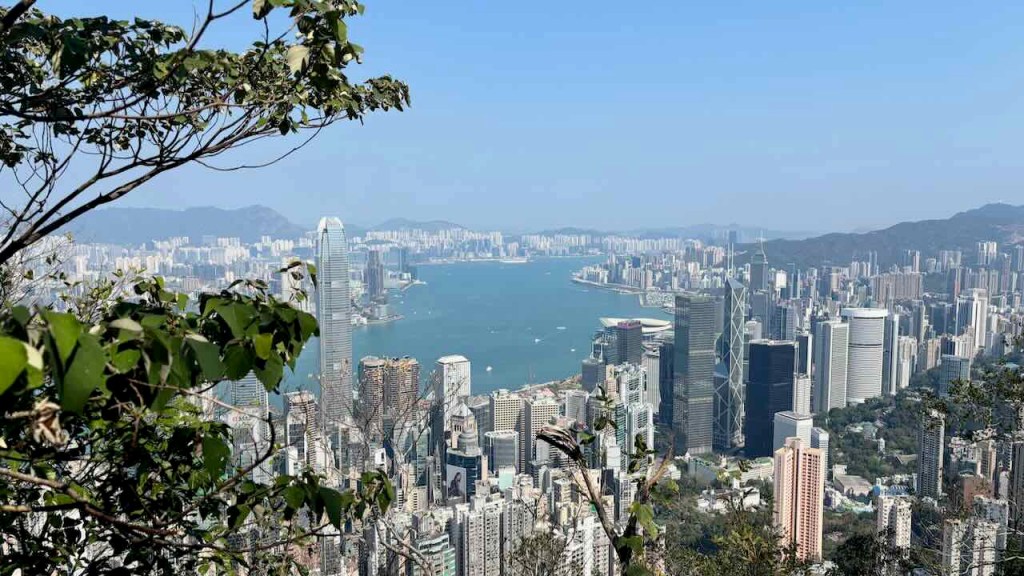
On the second day of the New Year there is the annual fireworks display. There are events on all week. With 6 full days in Hong Kong, there is still so much to do even without the special events. I should have taken the warning from the hostel that it would be very busy everywhere more seriously and got a much earlier start. Instead I set off for The Peak mid morning with another girl from the hostel who also wanted to go there. Victoria Peak is the highest point on Hong Kong Island, overlooking the city and Victoria Harbour. You can choose to hike the 550m up, take the bus or most traditionally ride on the Peak Tram, which everyone wants to do.

Views from The Peak

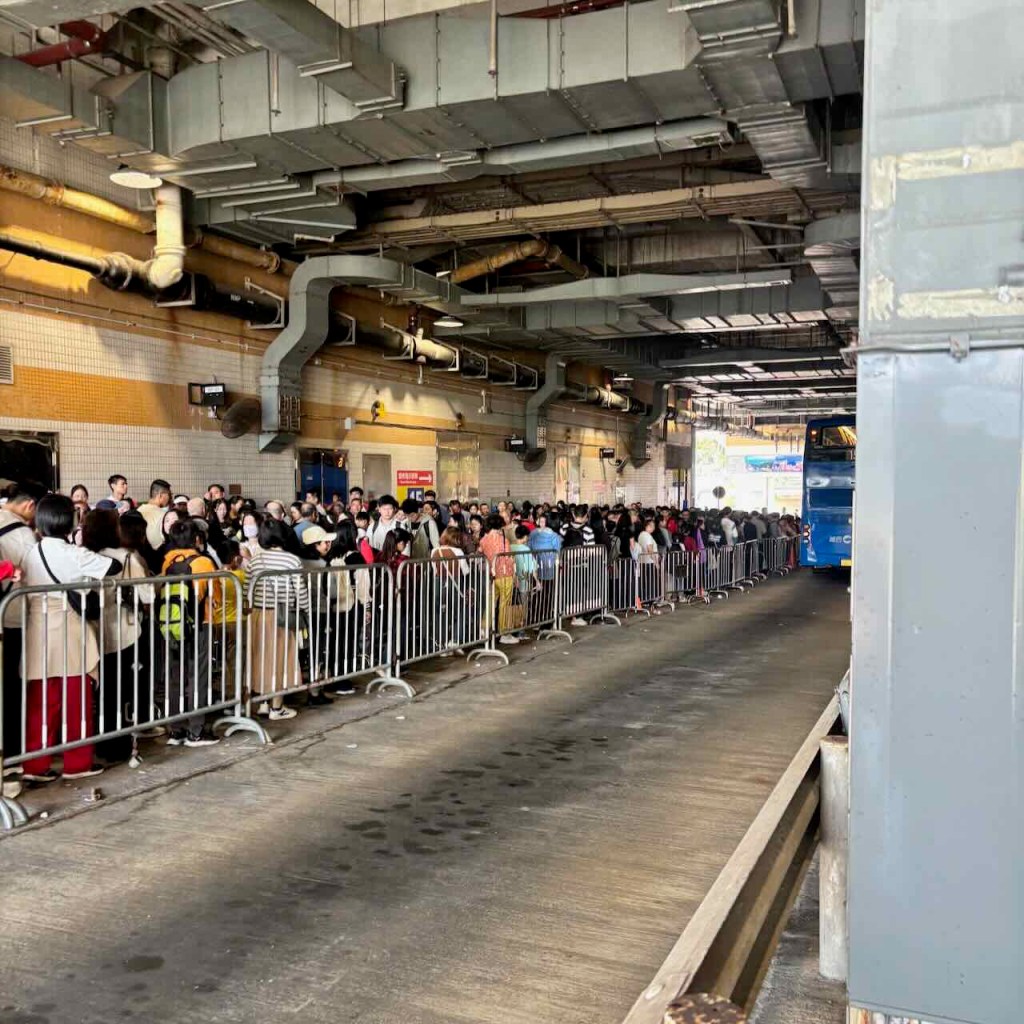
When we got to the ticket entrance, we saw the hundreds of people ahead of us. You have to buy a ticket via a QR code. By the time we tried and failed to find anything close by for a coffee or breakfast, or to get any mobile signal to buy the ticket the queue had got even longer. We waited in this queue for two hours in the sun, starving, but at least there was someone to chat to which passed the time. After all that, people were still pushing and shoving to get a seat. We managed to get a seat with a view – I’d have been pretty annoyed to have waited all that time to be standing in the middle of a packed tram and not even see out the window. The tram goes steeply up the mountain and only takes about 10 minutes. The view is nice but was it worth the 2 hours queuing? I’m not sure!

The way up

By this point the crowds were becoming annoying, not so much the volume of people but the pushing and shoving that entailed. Take the Star Ferry for example- there is a limited number of seats and a limited amount of tickets sold for safety reasons. Therefore if you have a ticket, it’s very likely you’ll get onboard. If you’re standing at the front of the queue then there really isn’t any need to run when the gangway opens or to push me from behind or step on my feet despite me being a foot taller than everyone around me. I actually felt like punching someone but managed to just glare sufficiently for one single person to say sorry.

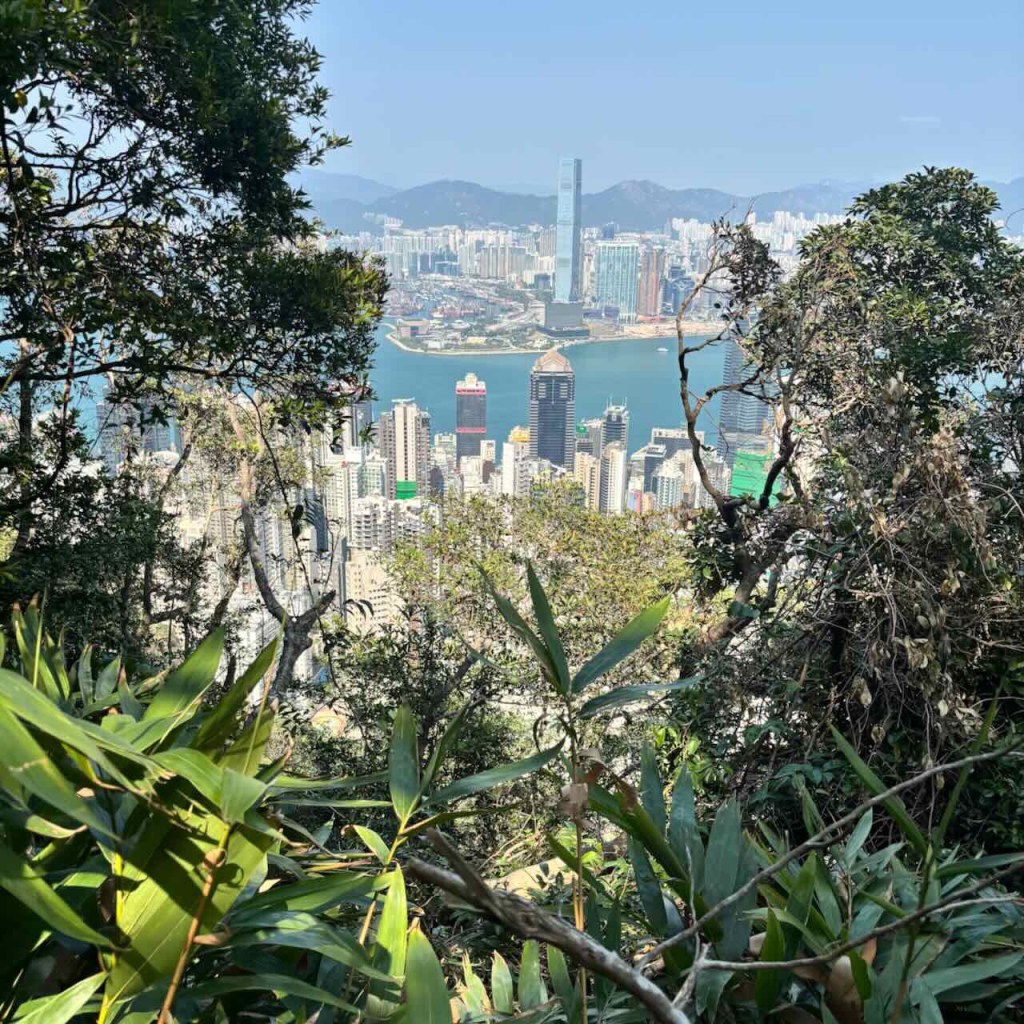
View from the hiking route

It was a great day weather wise and the view from the top was really beautiful. Hong Kong can be quite hazy so you do have to grab the chance to go up on a good day. We were starving by now so had some overpriced dim sum, coffee and ice cream at the top in The Peak Galleria shopping centre then covered the circular ‘hiking’ route that runs around the top. I say ‘hiking’ in inverted commas because the ‘hikes’ are more of what I’d call a stroll.

Queues waiting for the bus down

There isn’t that much to do at the top of The Peak … you can pay to go even higher but the view is almost the same so didn’t justify the extra cost. When it was time to go down in time to find a spot to see the fireworks, we naively thought taking the bus was an option. The queue for the buses was even longer than the tram, snaking around the bus station and down the road. I couldn’t face another two hour queue and more pushing and shoving so we walked the 45 minutes back down instead. It’s a beautiful walk and much faster, although at times it was so steep we had to almost run and it did both of our knees in.

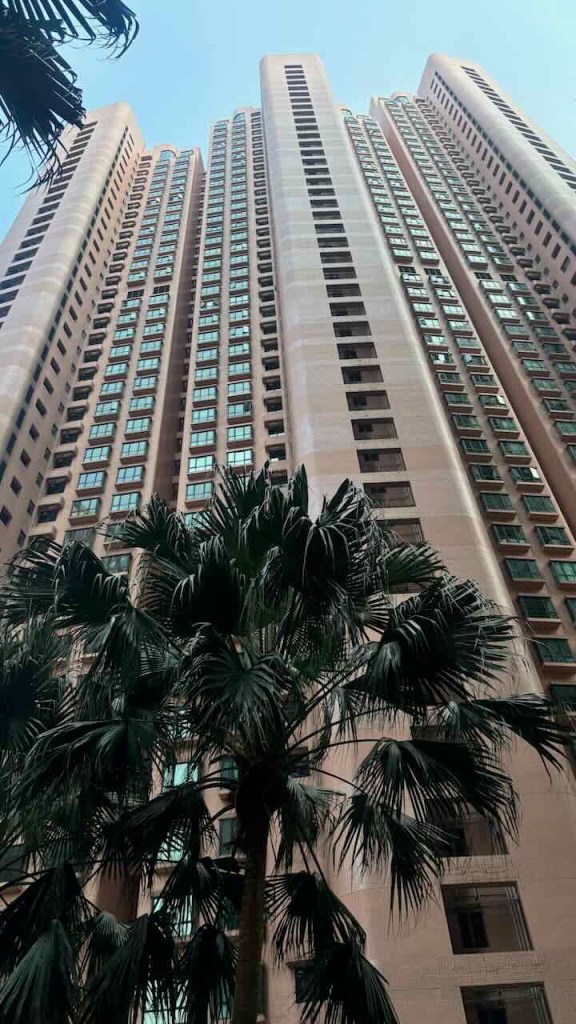
More tall Hong Kong buildings
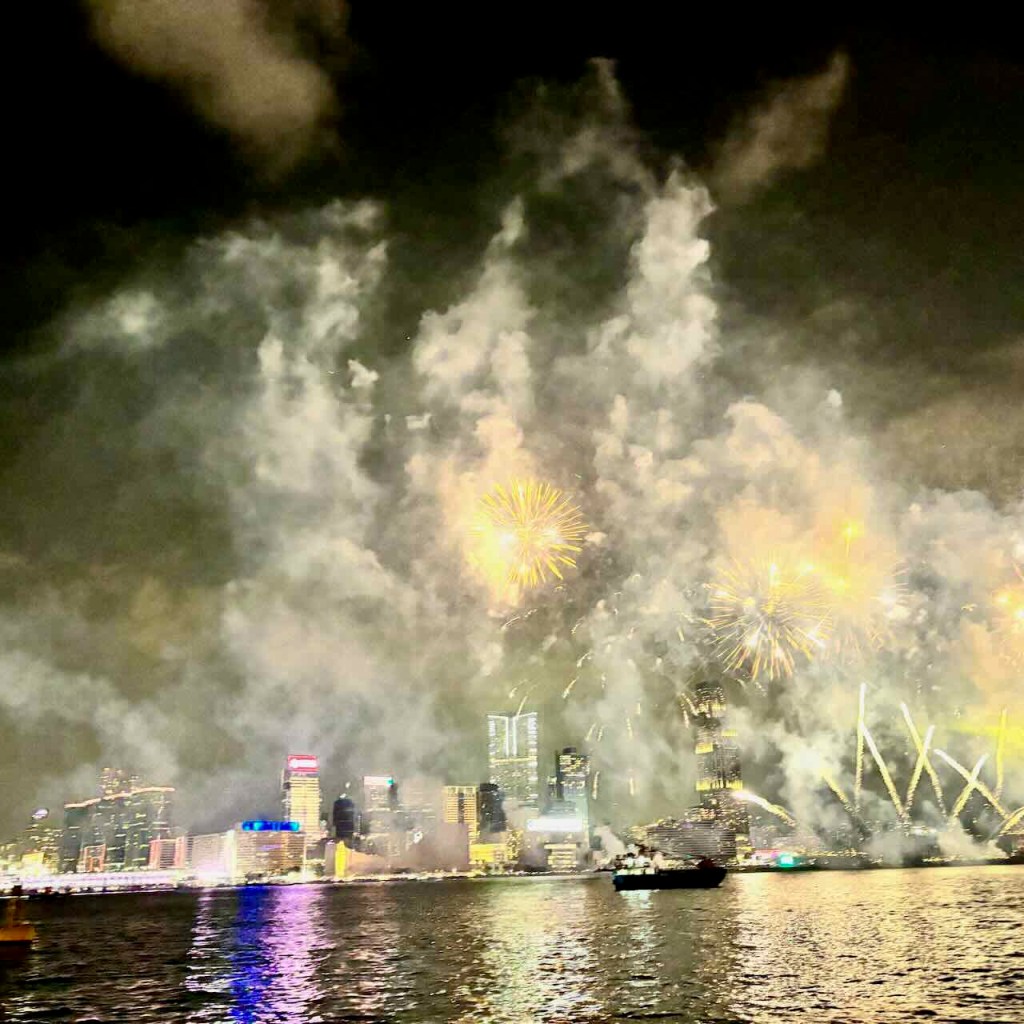
Fireworks!

The road takes you down through the central streets, through a sort of zoo in a park and past the serious hikers on their way up. It’s very cool to go from mountain scenery to skyscrapers within half an hour’s walk. We had a total fail at finding anywhere open for food with a veggie option – I ended up with a wrap from Pret a Manger and the other girl ended up at McDonalds which we decided not to tell anyone about.

More fireworks

There was another fail at finding the other hostel people but a win at finding a brilliant spot to watch the fireworks right on the harbour at the front. Hong Kong knows how to put on a firework display – with fireworks going off from several boats in the middle it was a spectacular ten minutes. It was also incredibly well organised, with no drinking in the crowds or trouble getting home after. In fact I saw a news report a week later with the headline “5 wanted for eating on the metro” along with a CCTV picture of a group of young people sitting on the floor in the underground after the fireworks having a snack. I will leave the rest of my week in Hong Kong to a separate post…

Even more

Games, Goldmines and Getting Down with the Kids (Taipei, Jiufen and Jinguashi)

My second visit to Taipei was just before the Chinese New Year, when accommodation options were limited and more expensive. A lot of businesses close for at least some of the two week period over the new year as people tend to go home to spend the time with their families. For a change of scenery I stayed at one of the top rated hostels in the city, the ‘Meander’ in the Ximen district. Welcome to spacious pod-style beds, fluffy white towels changed daily, clean bathrooms, hairdryers, free proper coffee, breakfast vouchers, a huge common area and a rooftop. Goodbye to being the only Westerner in town. As I checked in around 22.00, a group of 20 somethings were getting dressed up ready to hit the town. Who brings high heels to a hostel?

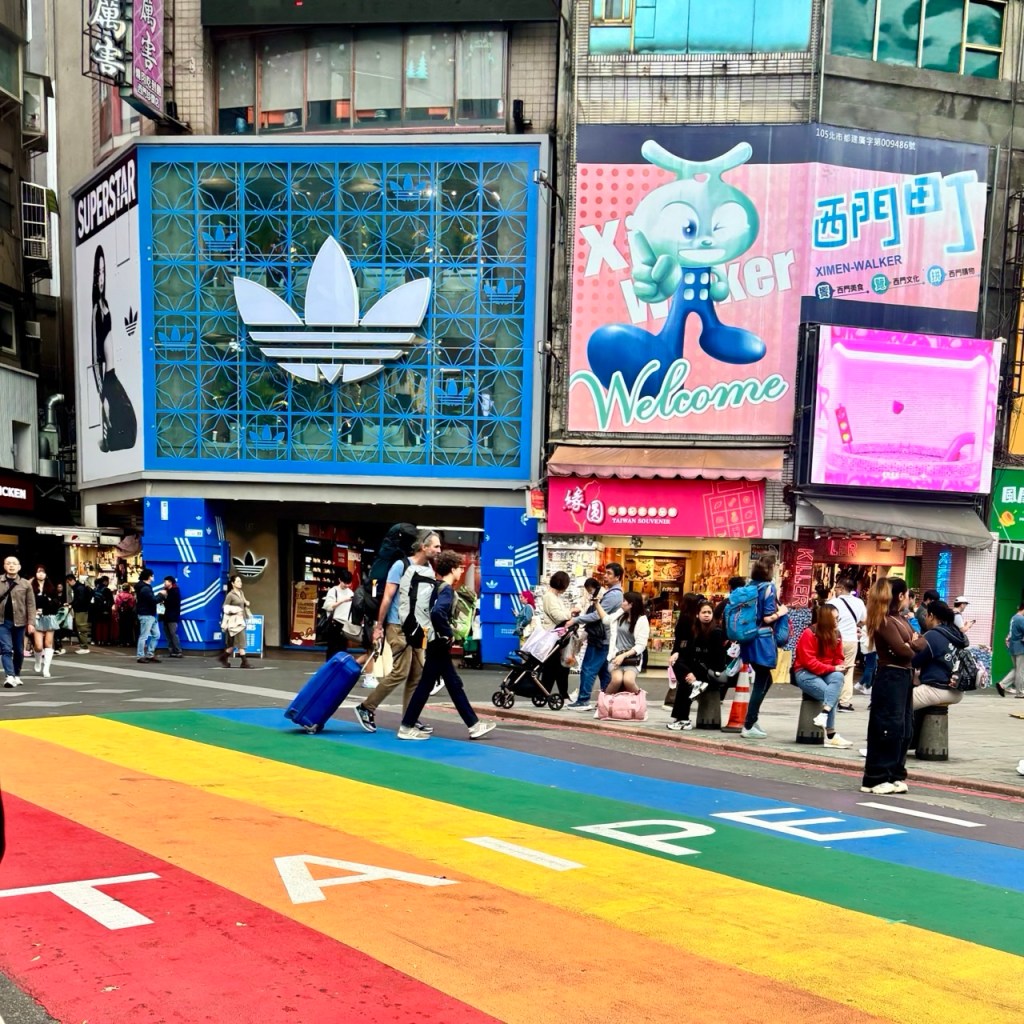
Rainbow Road (Taiwan was the first country in Asia to legalise same sex marriage)

Checking in, I joined the WhatsApp group which has evolved into a life of its own. At this place there is always someone to hang out with. In fact it’s impossible not to be sociable despite most of the crowd being 18-25 on their first trip – it’s almost an enforced level of fun. The WIFI password is ‘havefunhere’. One minute I’m quietly drinking a cup of tea and planning tomorrow’s trip to some temples. The next I’m in the 7-11 convenience store with a group of 21 year olds buying beer and screaming ‘F*ck The President!!!’ at the top of my voice when it’s my turn in aforenamed drinking game. If you can’t beat ’em, join ’em. I got so into winning a version of ‘Spoons’ played with chopsticks (when you have a full hand you have to grab a spoon/chopstick from the pile in the middle and whoever fails to get one is out, there being one less chopstick in the pile than there are players) that I got an actual injury.

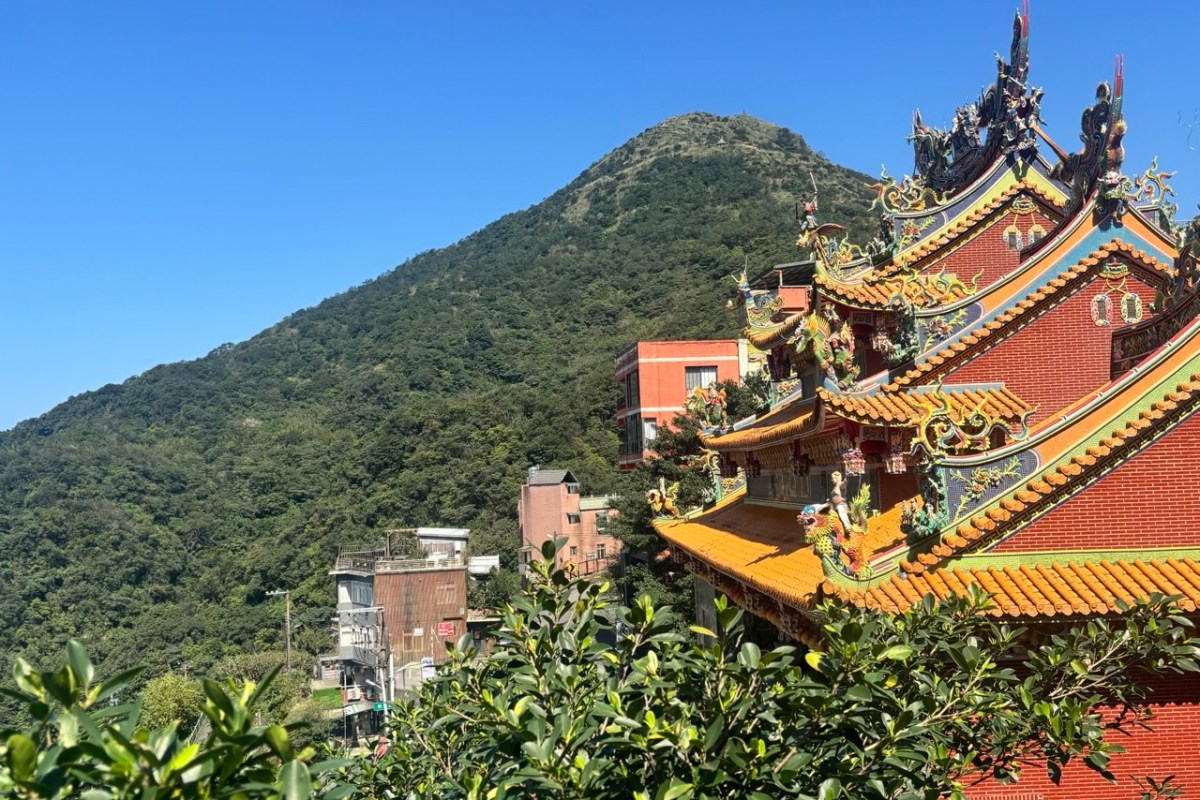
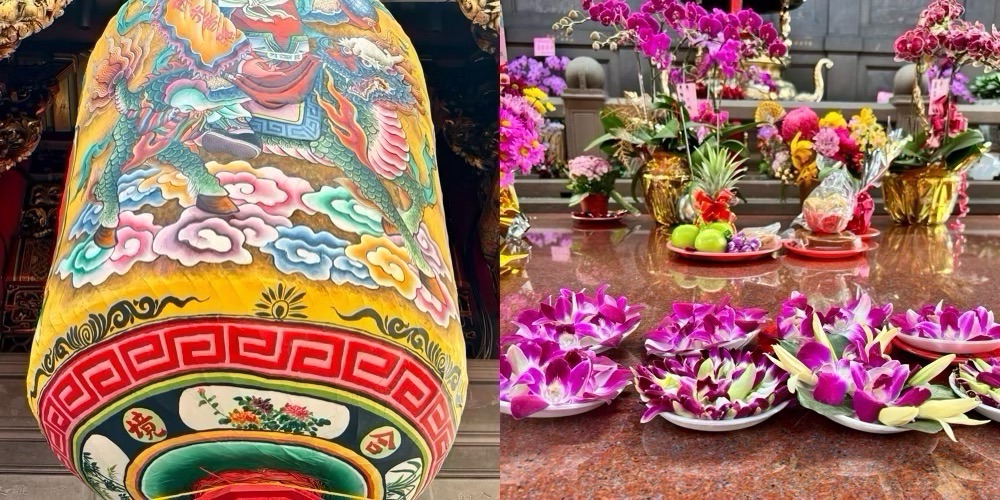
Temple colours

I had a few relaxed days in Taipei, hanging around the hostel drinking coffee and chatting to other travellers, sampling different bubble teas and eating my weight in tofu pudding. Every day I saw the same guy who said he was leaving that day but never made an actual plan to go anywhere so he was still there.

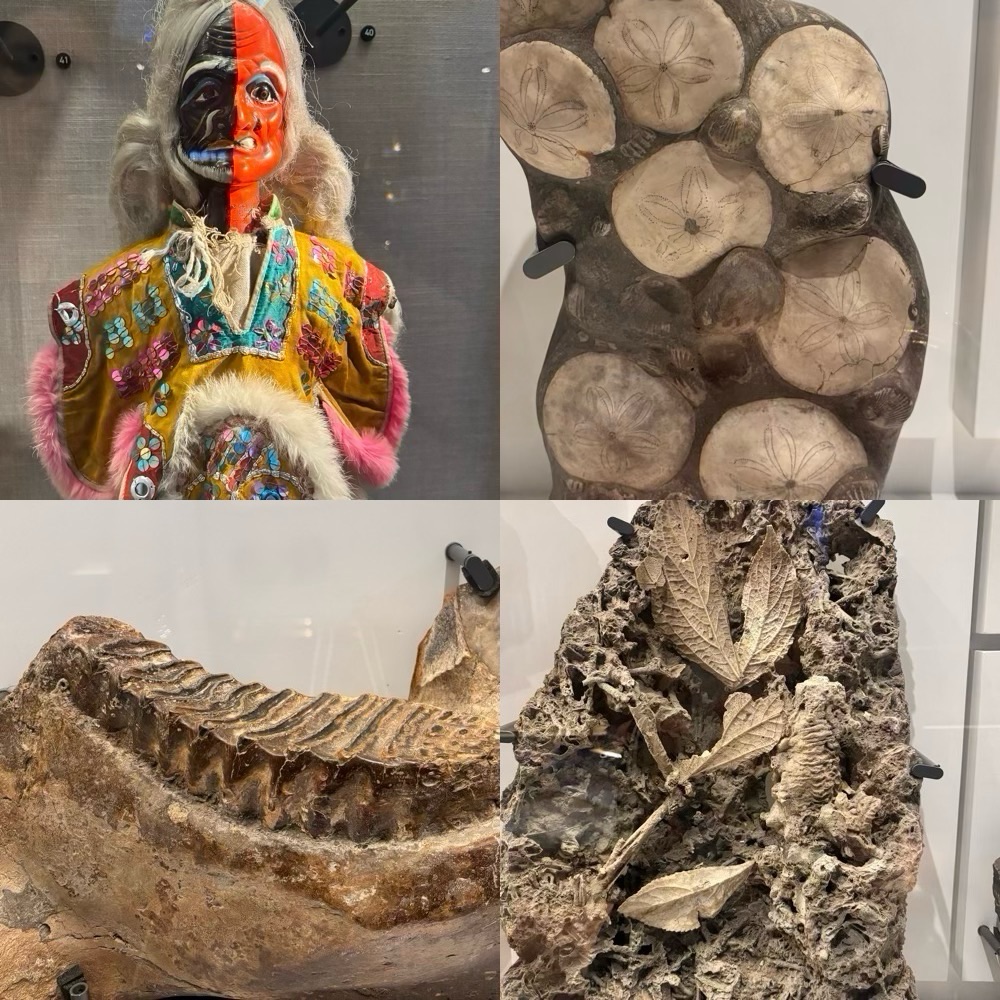
Fossils in the national museum

On the first day I visited the Taipei National Museum and the Daan Forest Park. The museum is really interesting. The main fact that has been drilled into me from visiting Taiwanese museums is that the island was once underwater hence as the mountains rose up from the sea they feature some amazing marine fossils. The ticket includes entry to the nearby National History Museum which itself has a floor dedicated to the old bank vaults. I can’t take in that many museums in one day so missed out a lot of it.

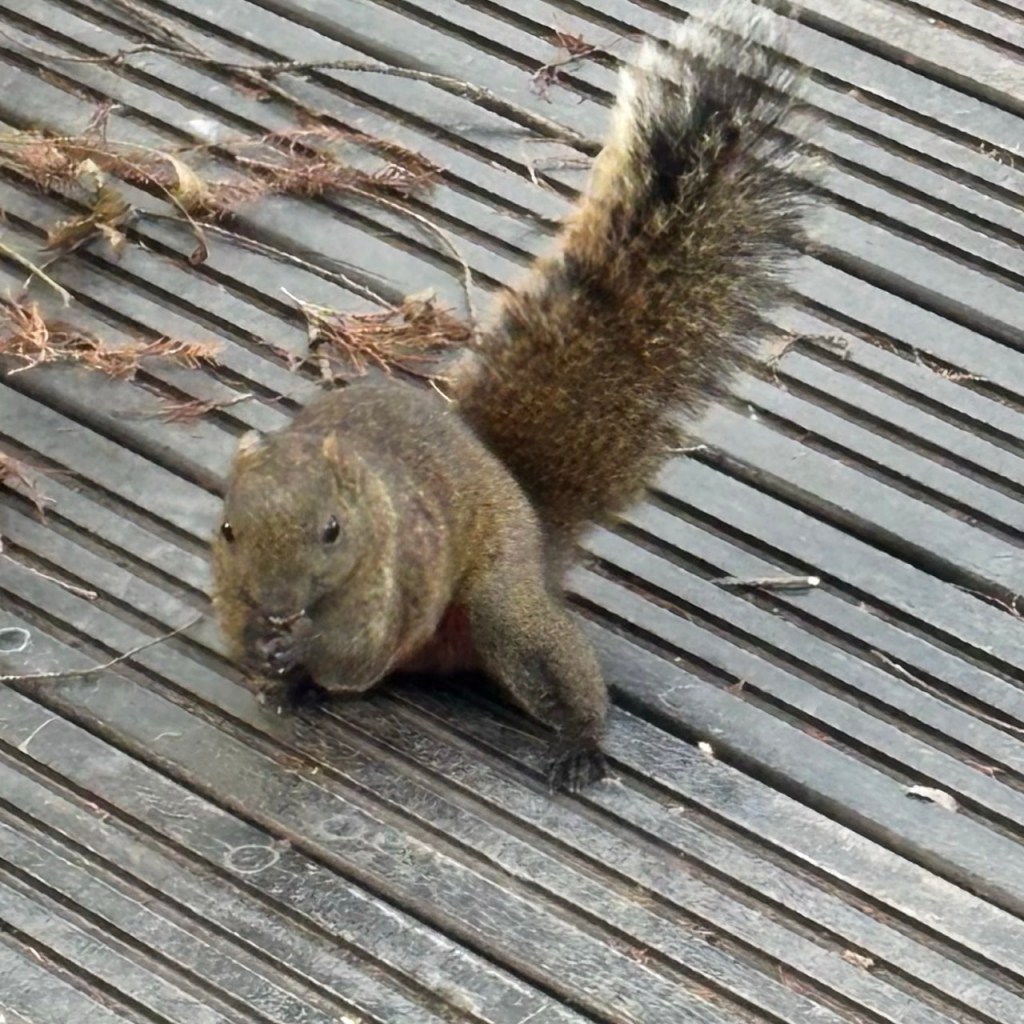
Daan Forest Park resident
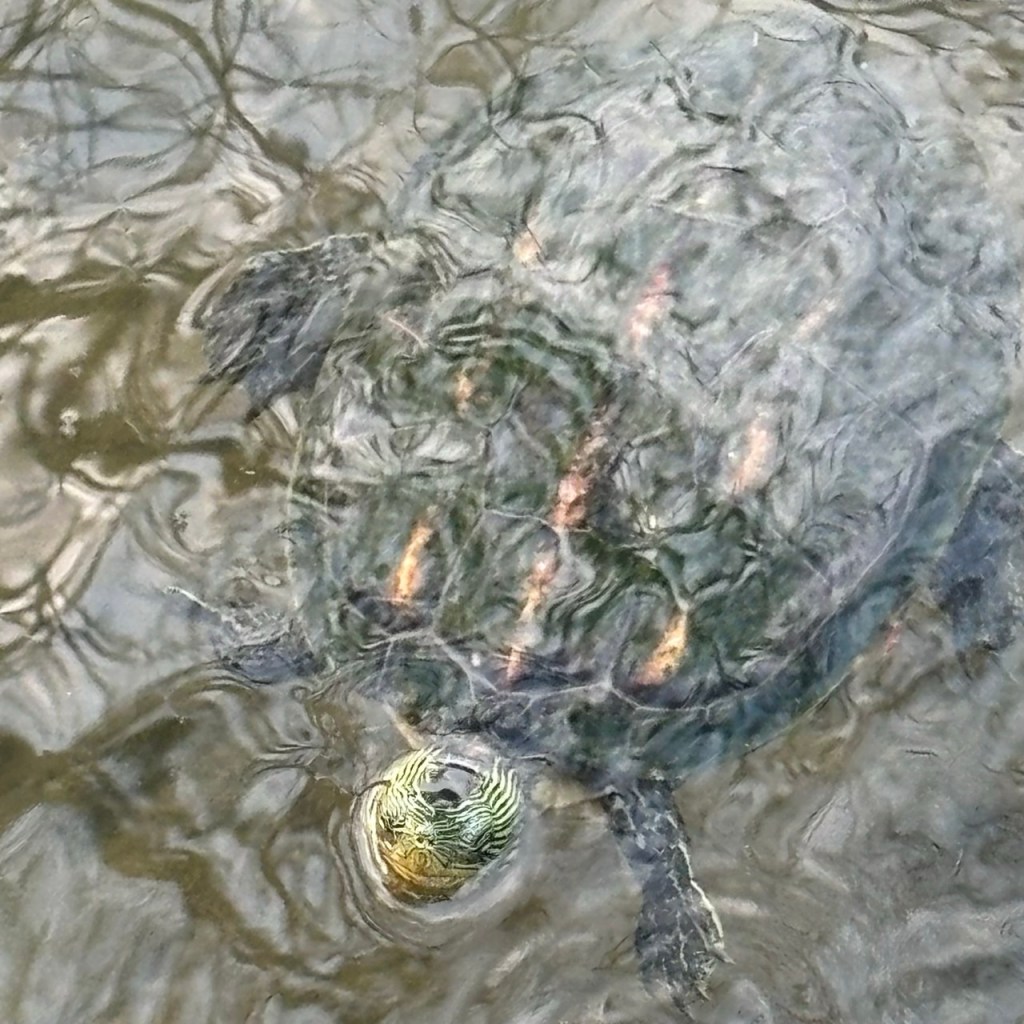
And another

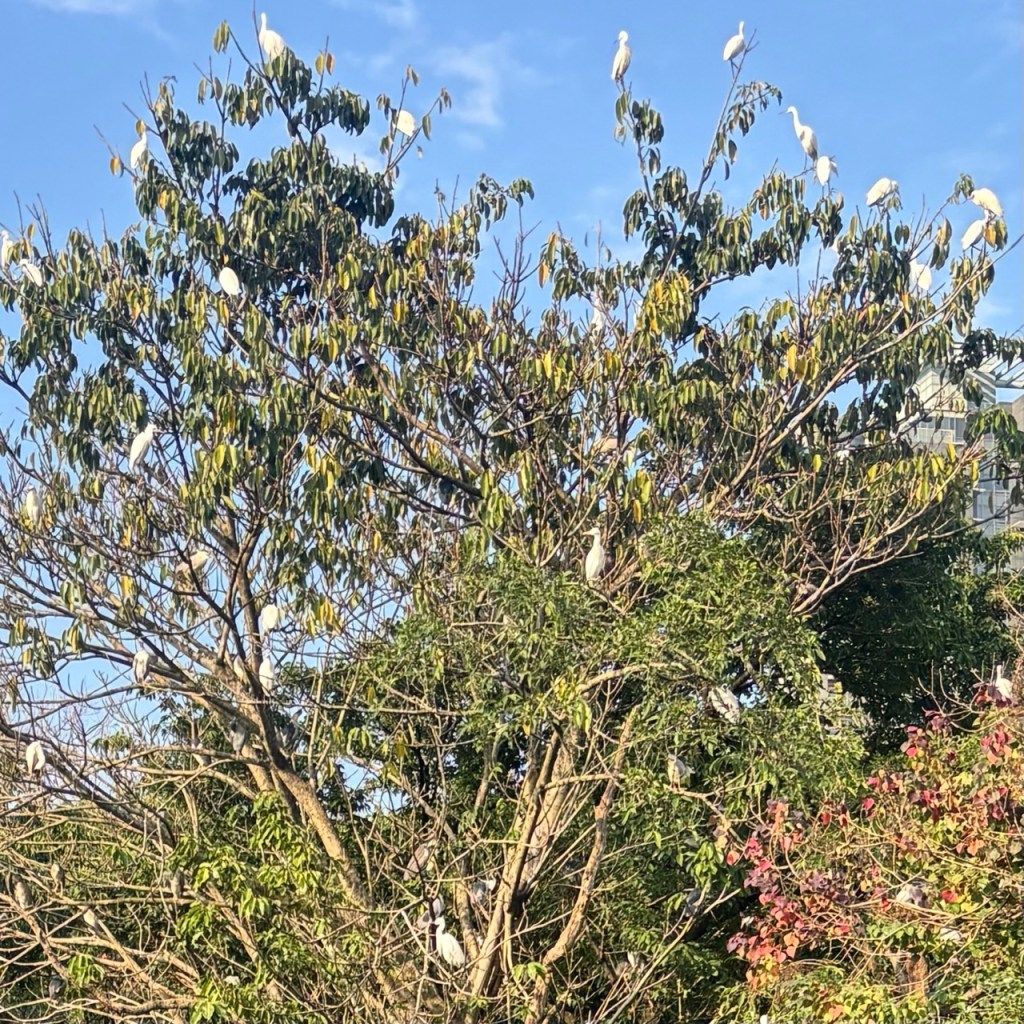
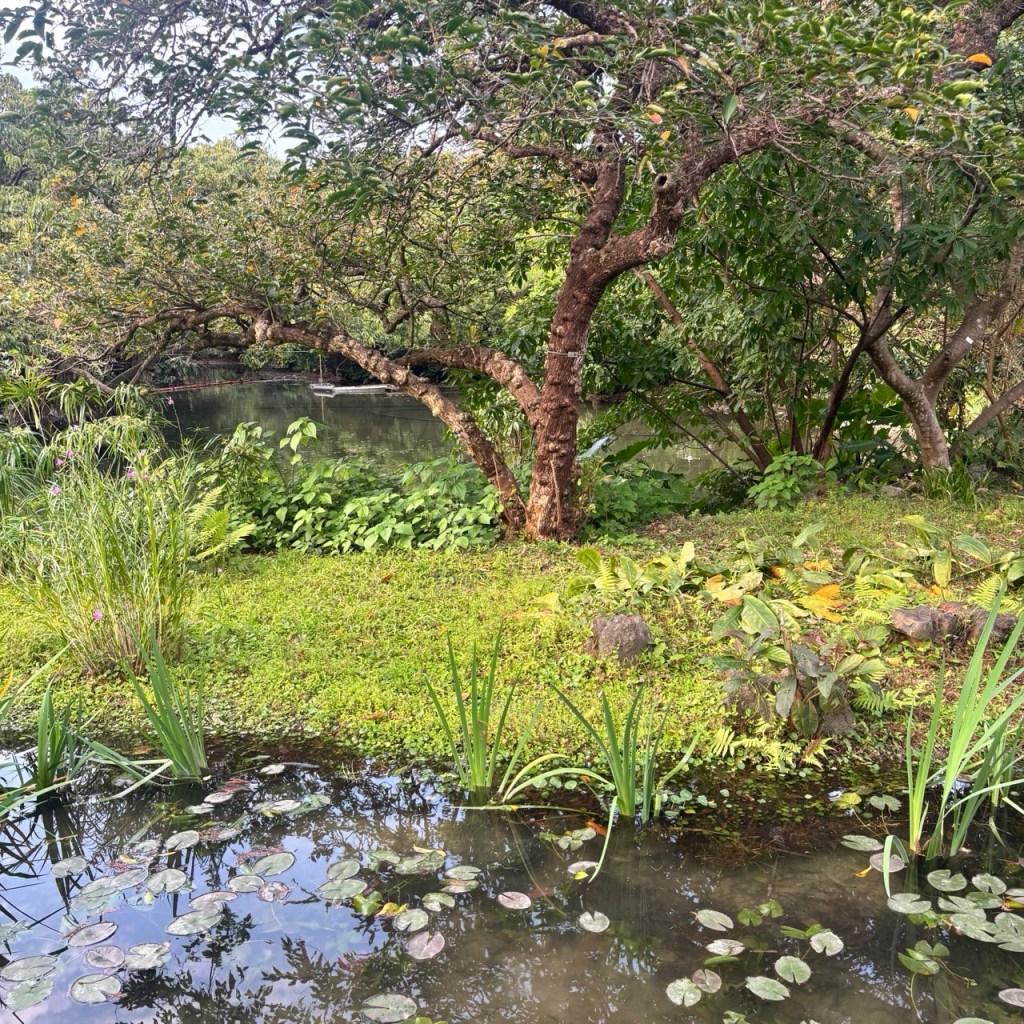
For an antidote to the museums I went for a stroll in the Daan Forest Park, a beautiful, peaceful green space in the student area of the city. At lunchtime it’s full of local people enjoying the wildlife, which includes squirrels hoping to steal your food, turtles swimming around the ponds and herons perched up high in the trees. It’s also a really nice, cool district to wander around with little boutique shops and of course tofu pudding cafes to enjoy.

Daan Park herons
Peace and quiet

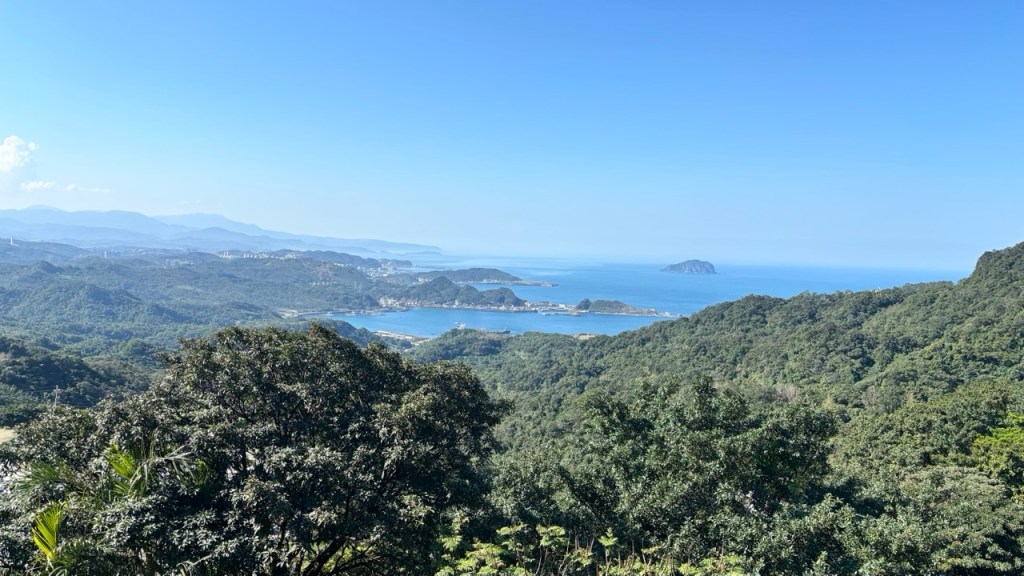
One day trip I wanted to do was a visit to the mountain town of Jiufen and the nearby former goldmine of Jinguashi. Jiufen is an hour’s bus ride away from Taipei and best done on a good weather day for the spectacular views. The hostel 20 somethings couldn’t understand why I didn’t invite anyone to join me via the WhatsApp group.

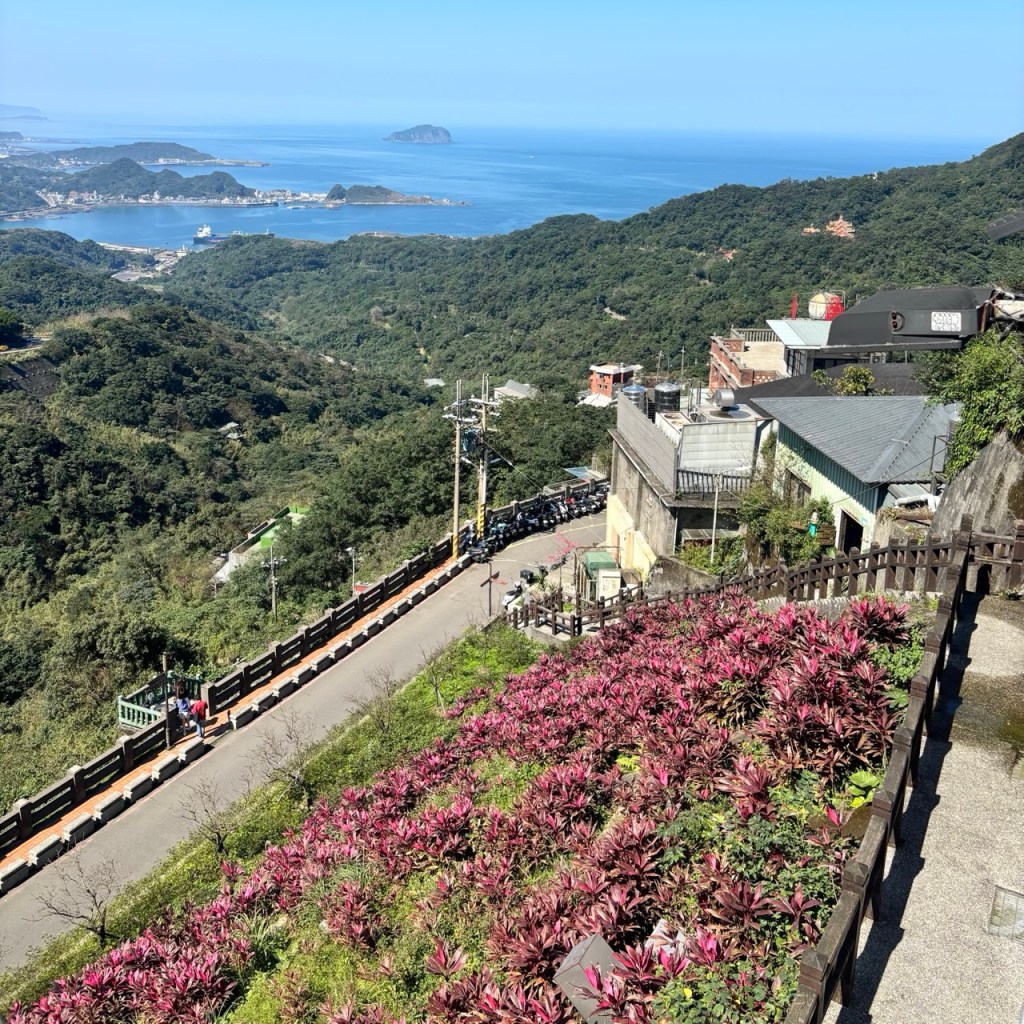
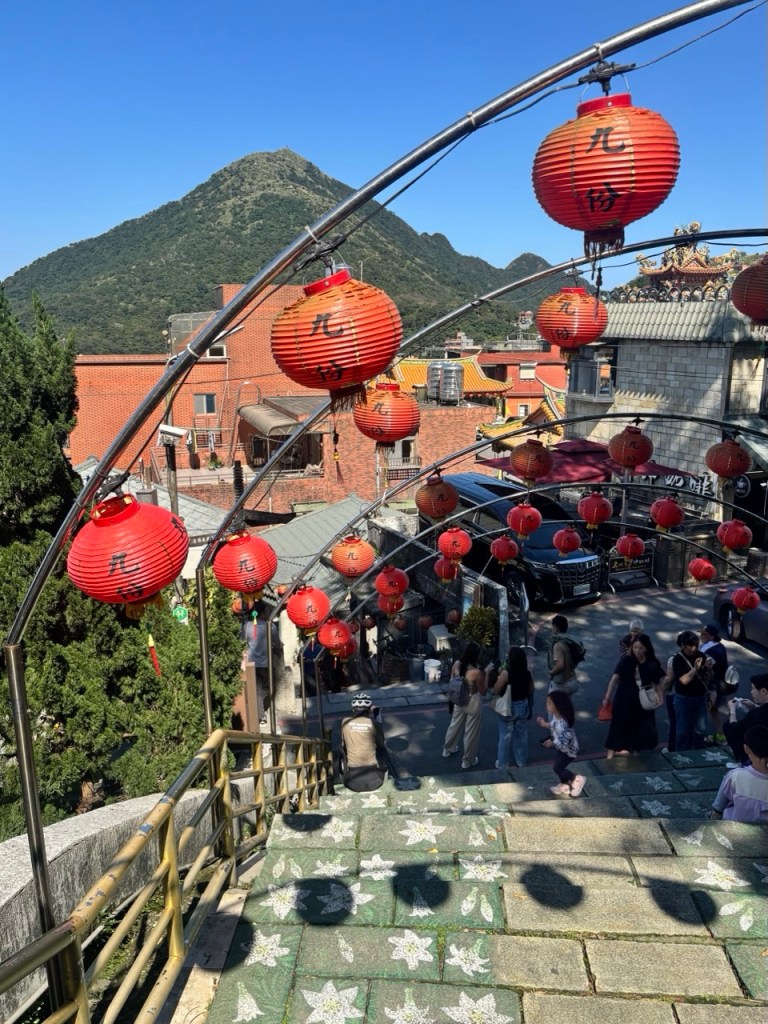
Jiufen – worth the climb
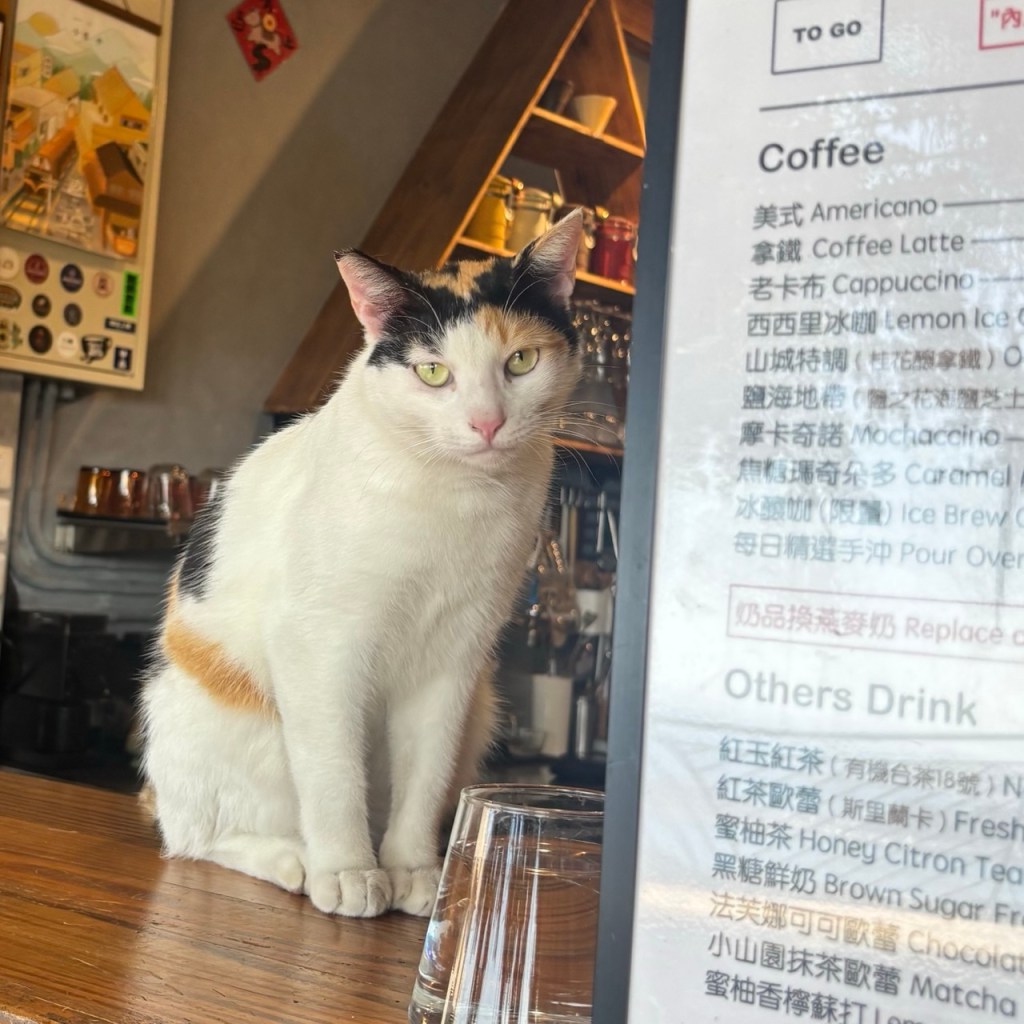
Cafe at top of the hill
More views from the top

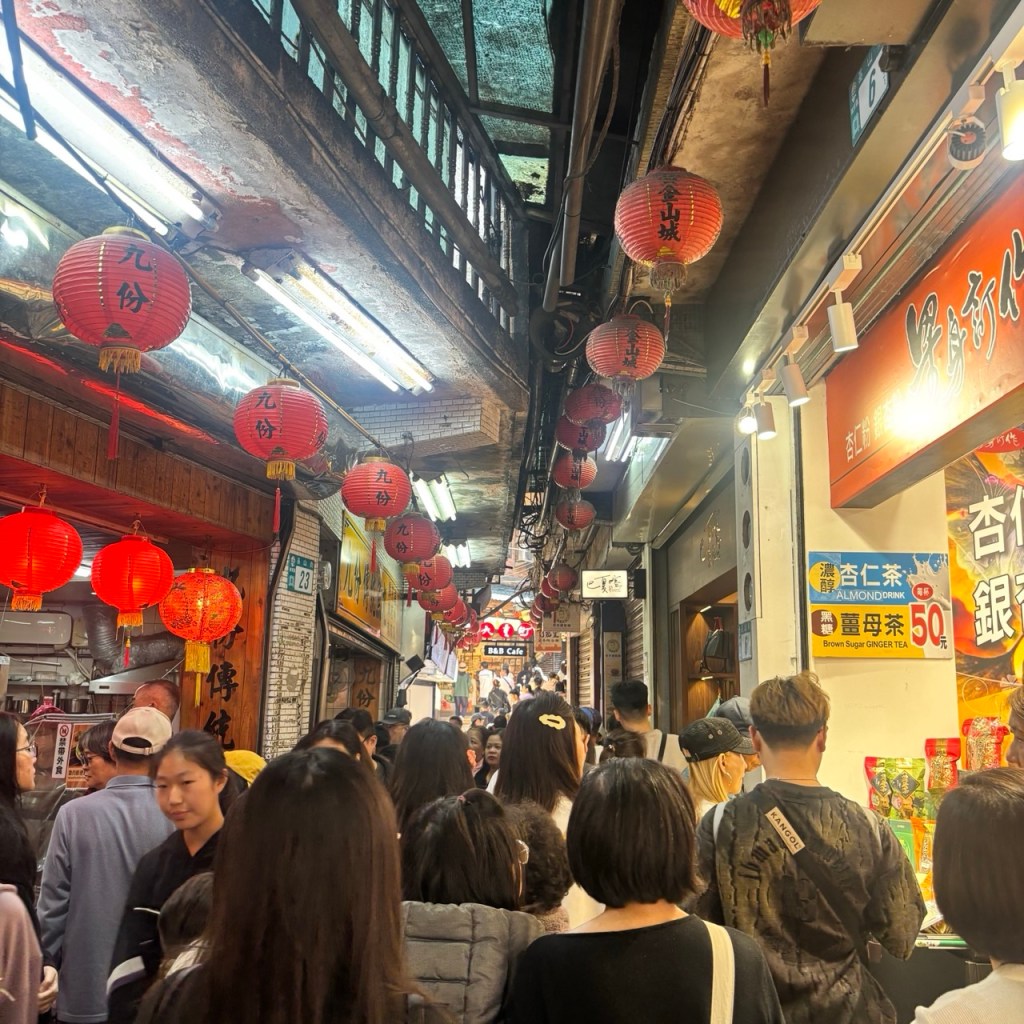
The highlight of Jiufen is the Old Street, an extremely busy and extremely hilly collection of narrow streets filled with food vendors and shops. My Converse were by now literally falling to bits so I swapped them for a new pair of Taiwanese trainers for £11.

Views from the top at Jiufen
Jiufen Old Street crowds

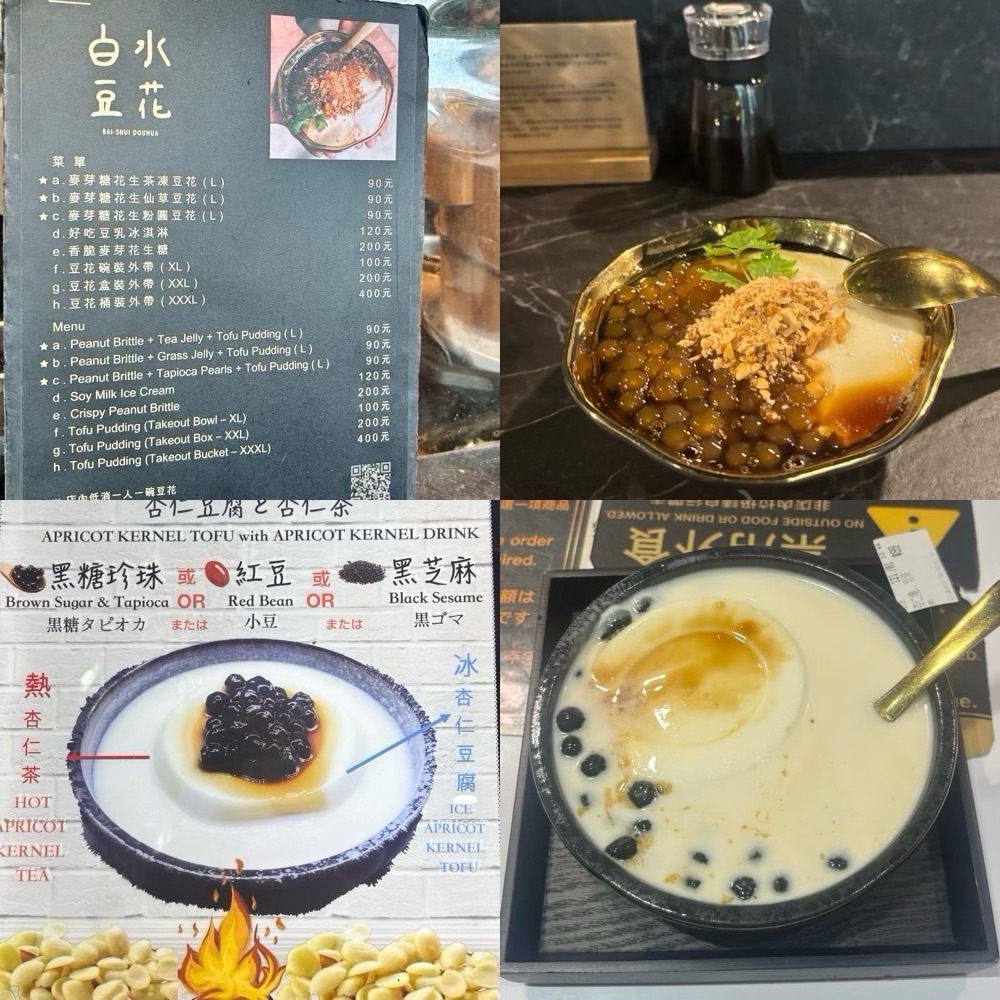
Jiufen is an opportunity to try different snacks including the delicious apricot kernel tofu dessert but be prepared to climb a lot of steps to explore the area. I suppose it is fairly ‘touristy’ but I enjoyed it.

More tofu desserts

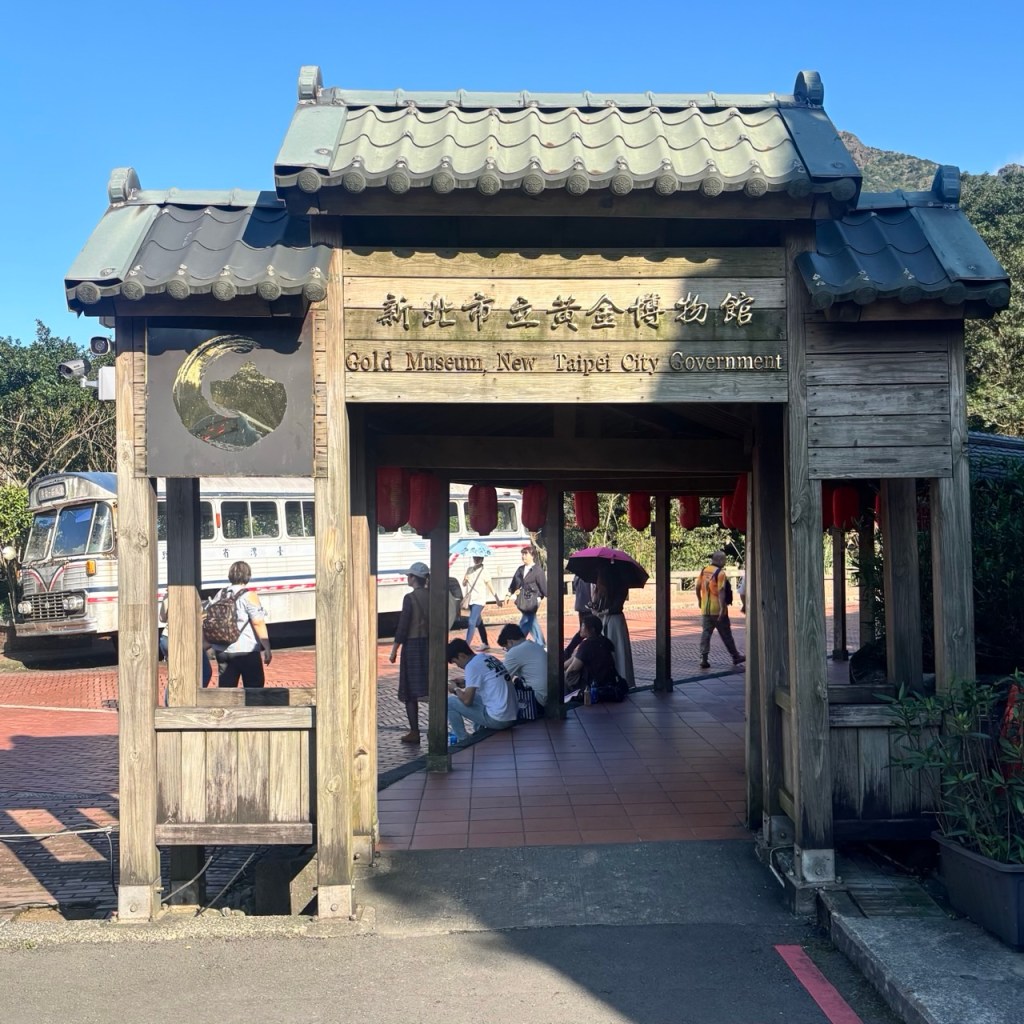
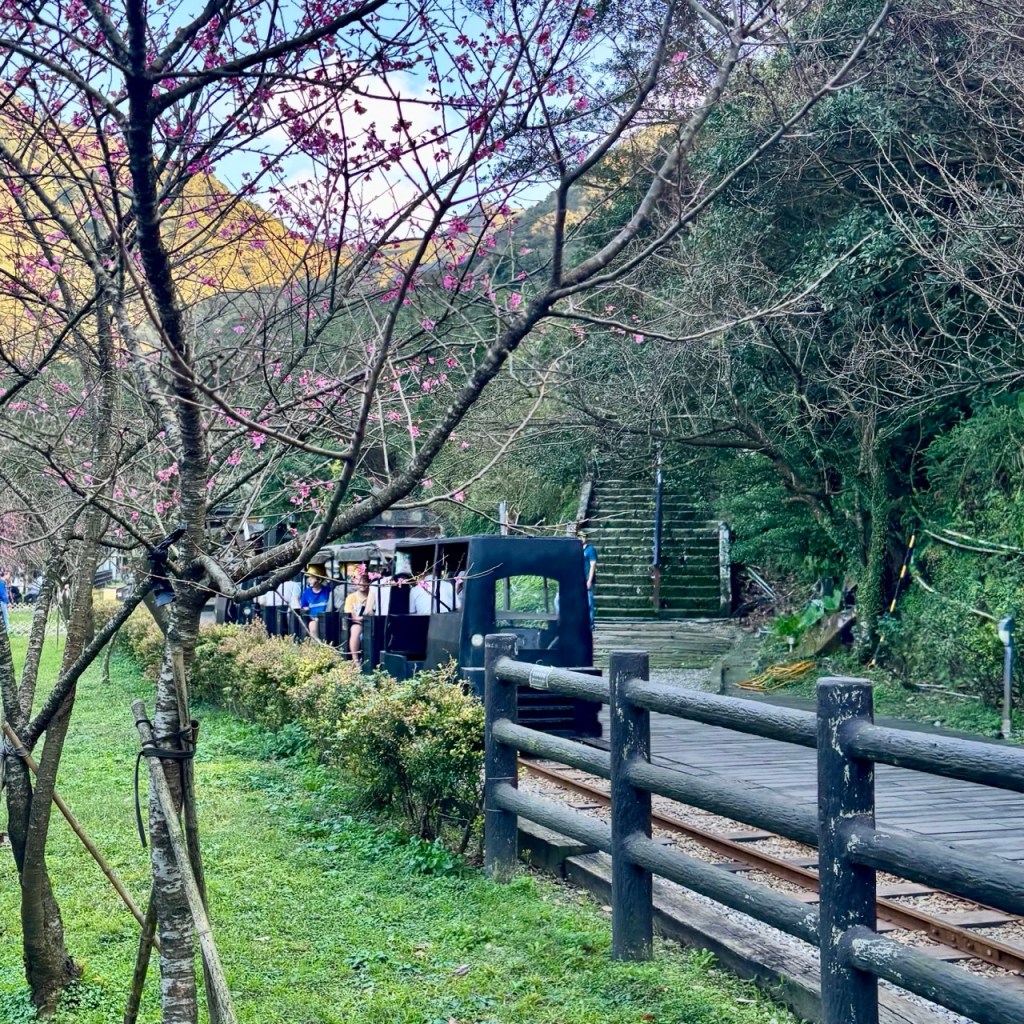
A short bus ride from Jiufen is the old goldmining village of Jinguashi. This actually turned out to be the highlight of the day for me. The visit is centered around the ‘eco’ Gold Mine Museum, which is like a living museum comprising several buildings over the entire 1890s gold and copper mining site.

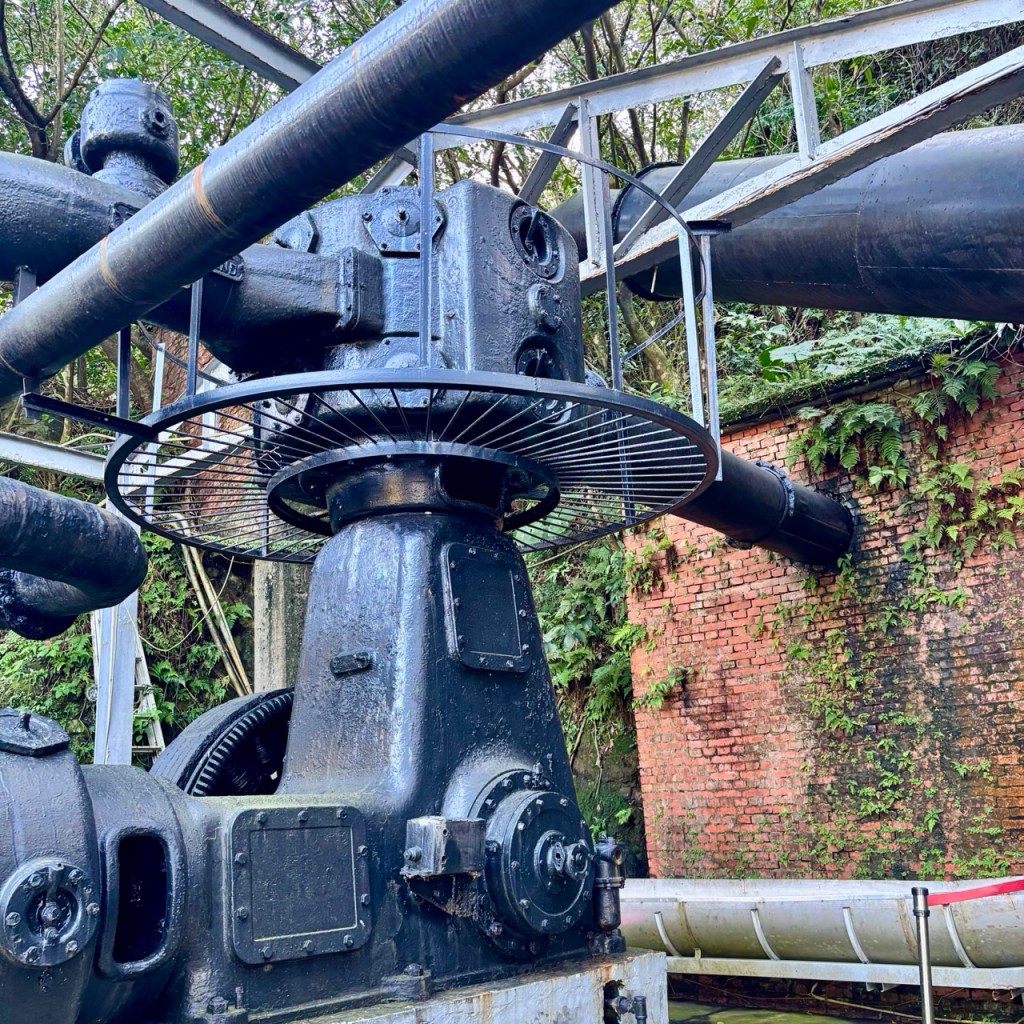
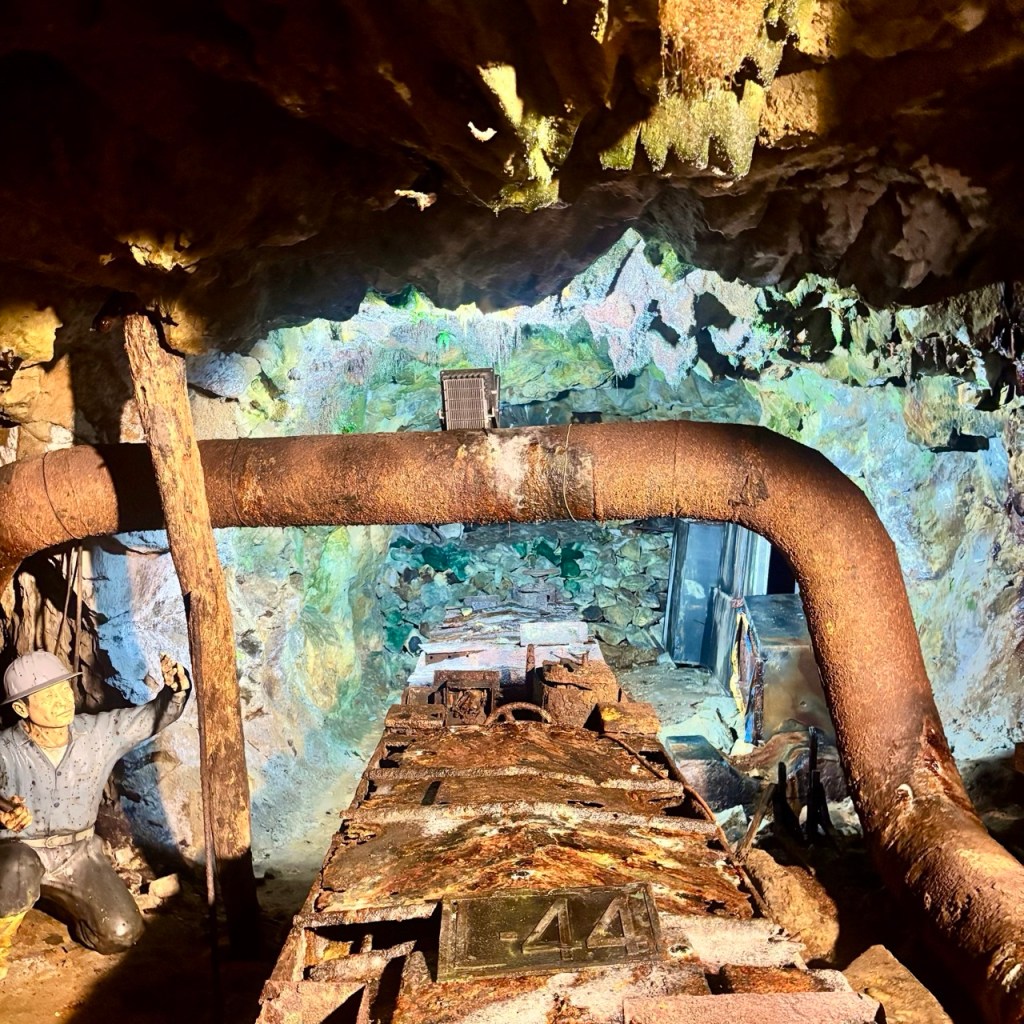
Old mining equipment
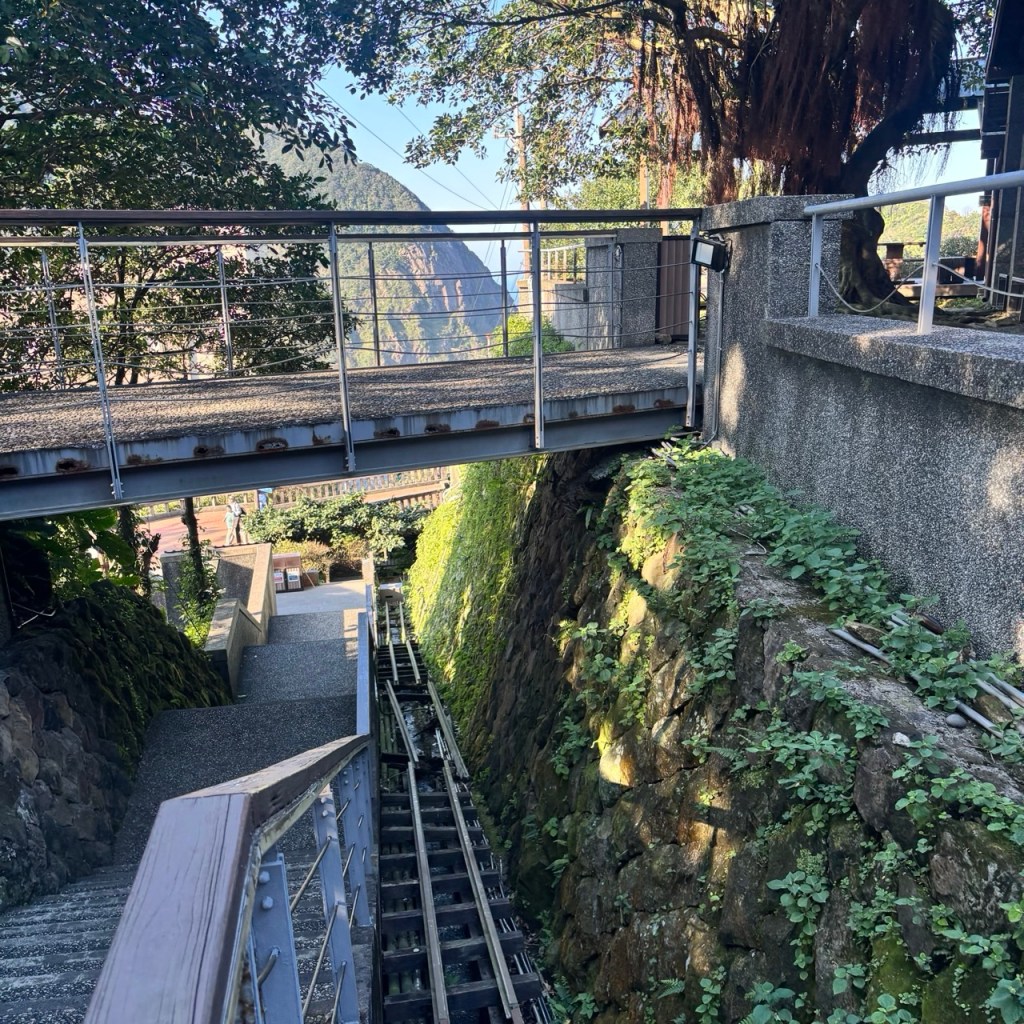
Even more steps

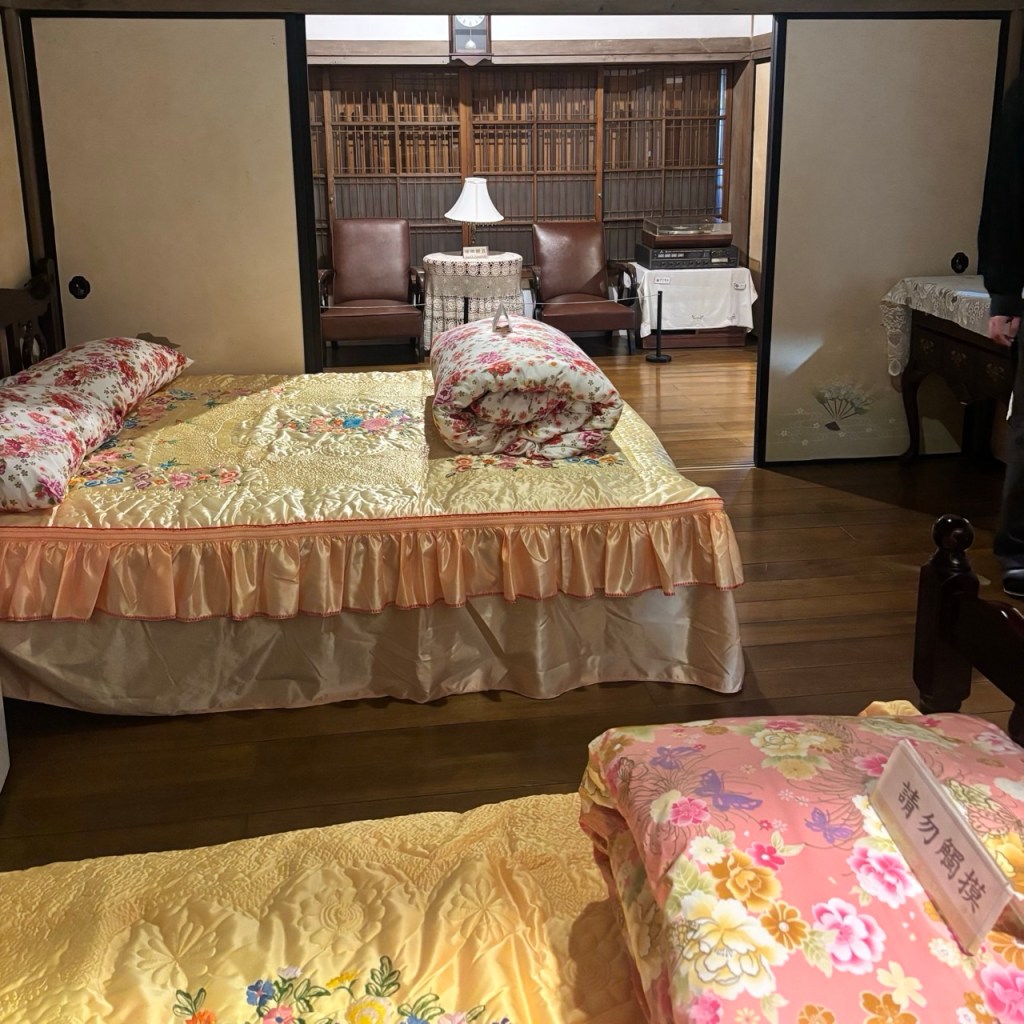
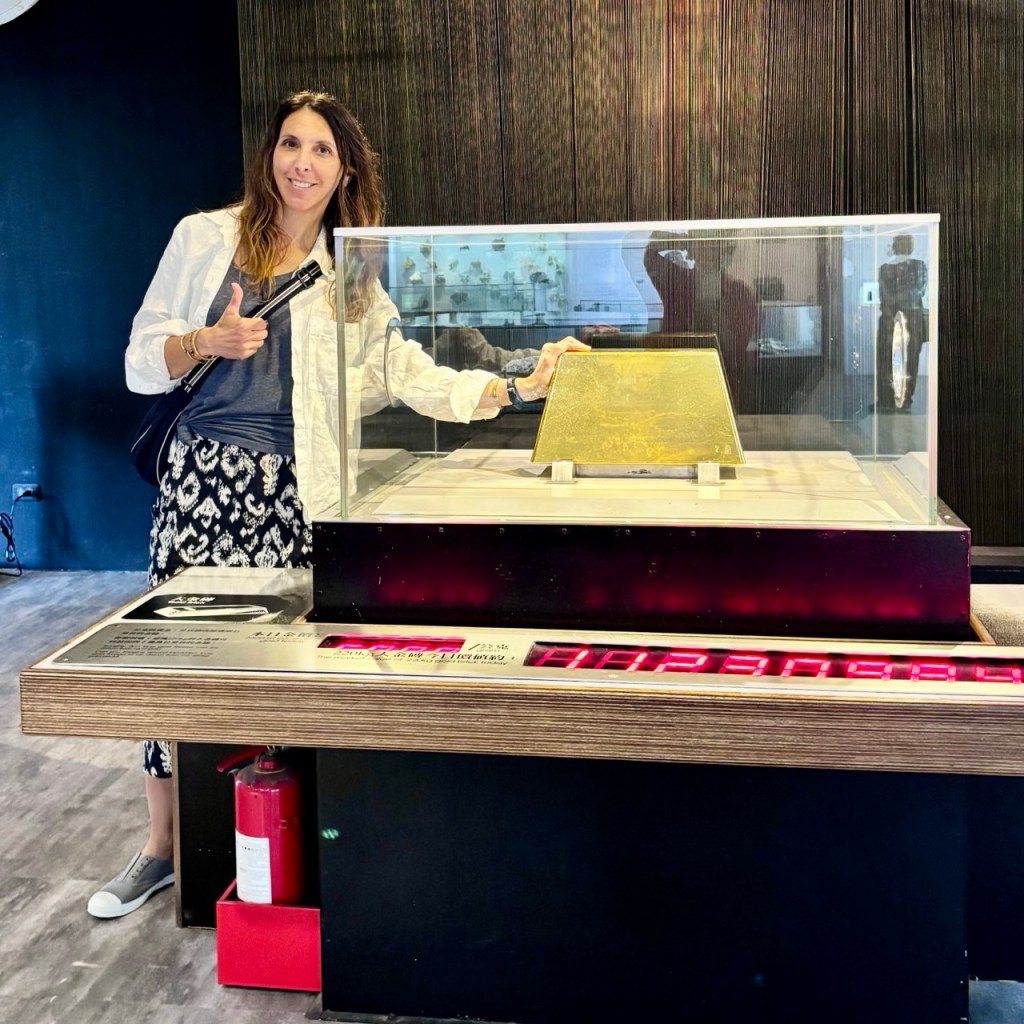
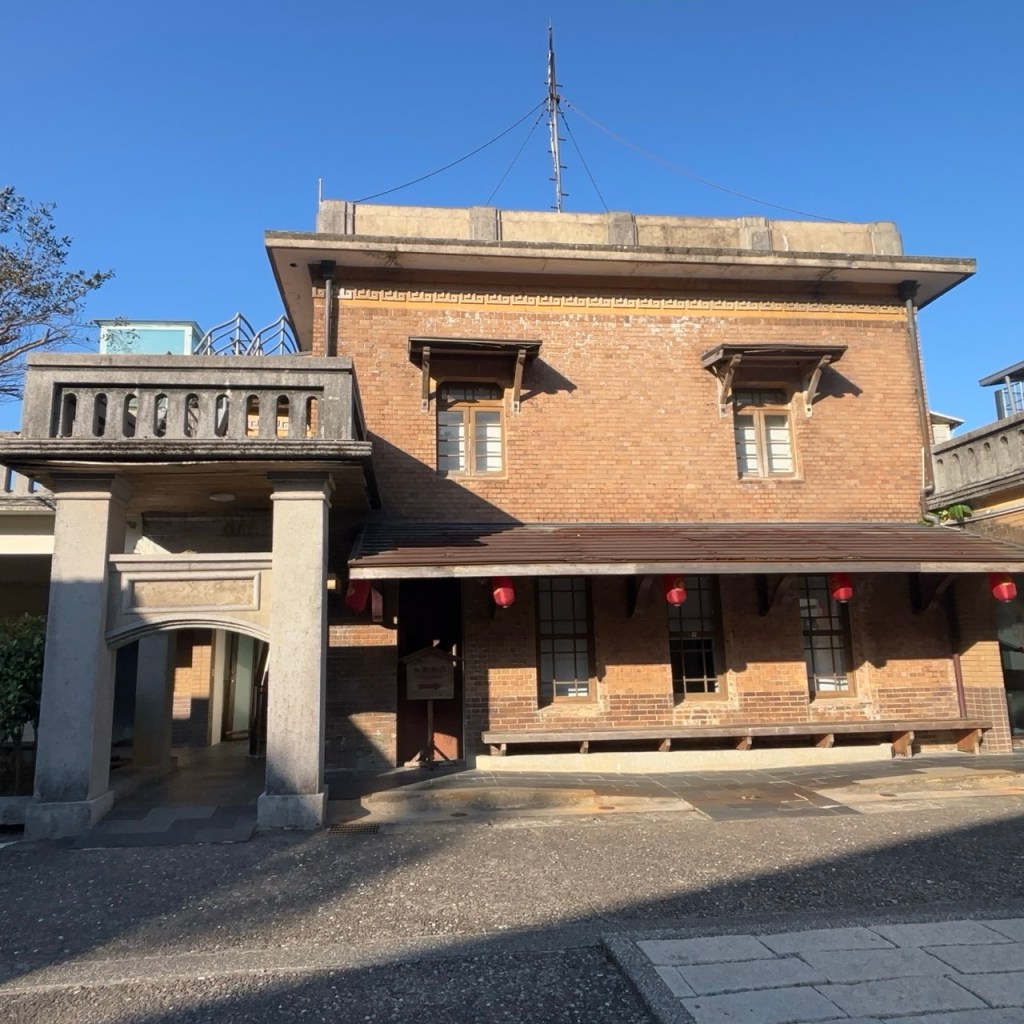
It includes a Japanese house, the actual mines where you can see the original machinery and take a trip inside one of the tunnels either on foot or a little train, and various other little museums, all connected to the village via a footpath over the river. The wealth of the gold rush is clear from the artefacts on display and the chance to touch which was previously the world’s largest gold brick weighing in at 220kg with a market value of over $33 million US dollars at the time of writing. There was a staff member waiting to take my photo with the gold so it would have been rude to refuse.

Inside the Japanese house
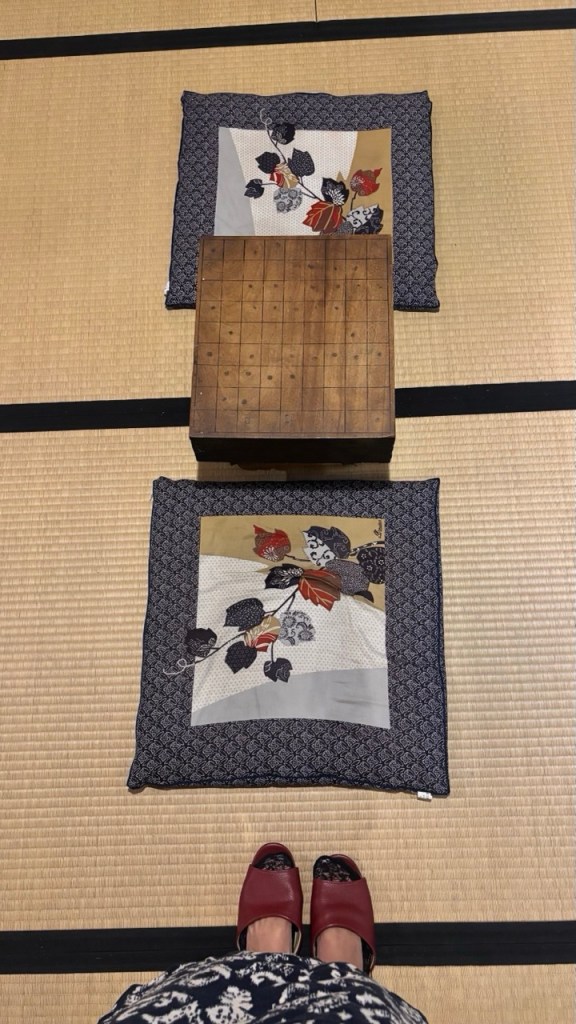
No shoes allowed
The train I tried to buy a ticket for

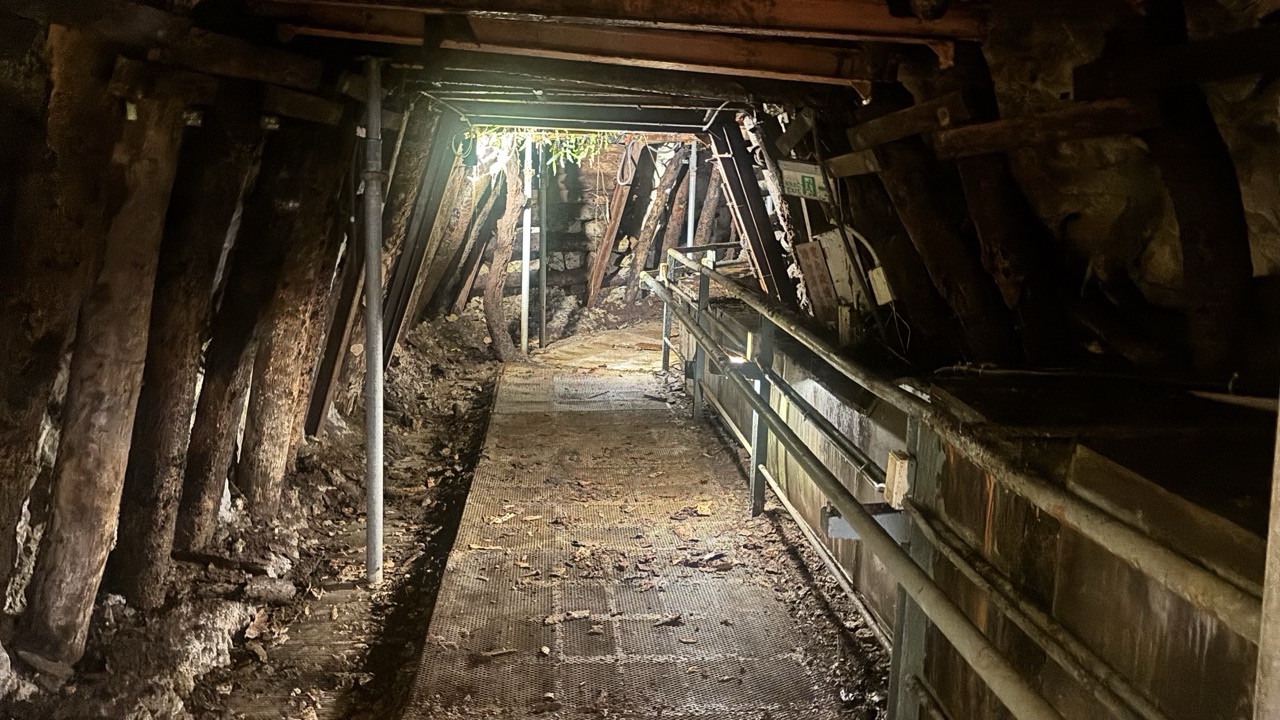
I couldn’t get the ticket machine for the tunnel entry to work with my card, and the queue was building up behind me. Instead of getting annoyed at the tourist, a family behind me stepped in and bought my ticket for me, refusing to take any cash. It turned out not to be a ticket for the little train, but a ticket for an experience where you don a hard hat and walk into the tunnels. I couldn’t really complain seeing as I got the ticket for free.

Inside the tunnel that’s open for tourists
End of the tunnel
Gold Mine
The only other beings I saw in the village
Gold exhibits

After exploring the mine I wandered down to the village as it approached sunset. This gave it a slight eerie feel as it was totally deserted, just empty narrow streets between some fairly dilapidated buildings. There are some hiking trails around including Teapot Mountain but I’d arrived too late in the day to cover them too.

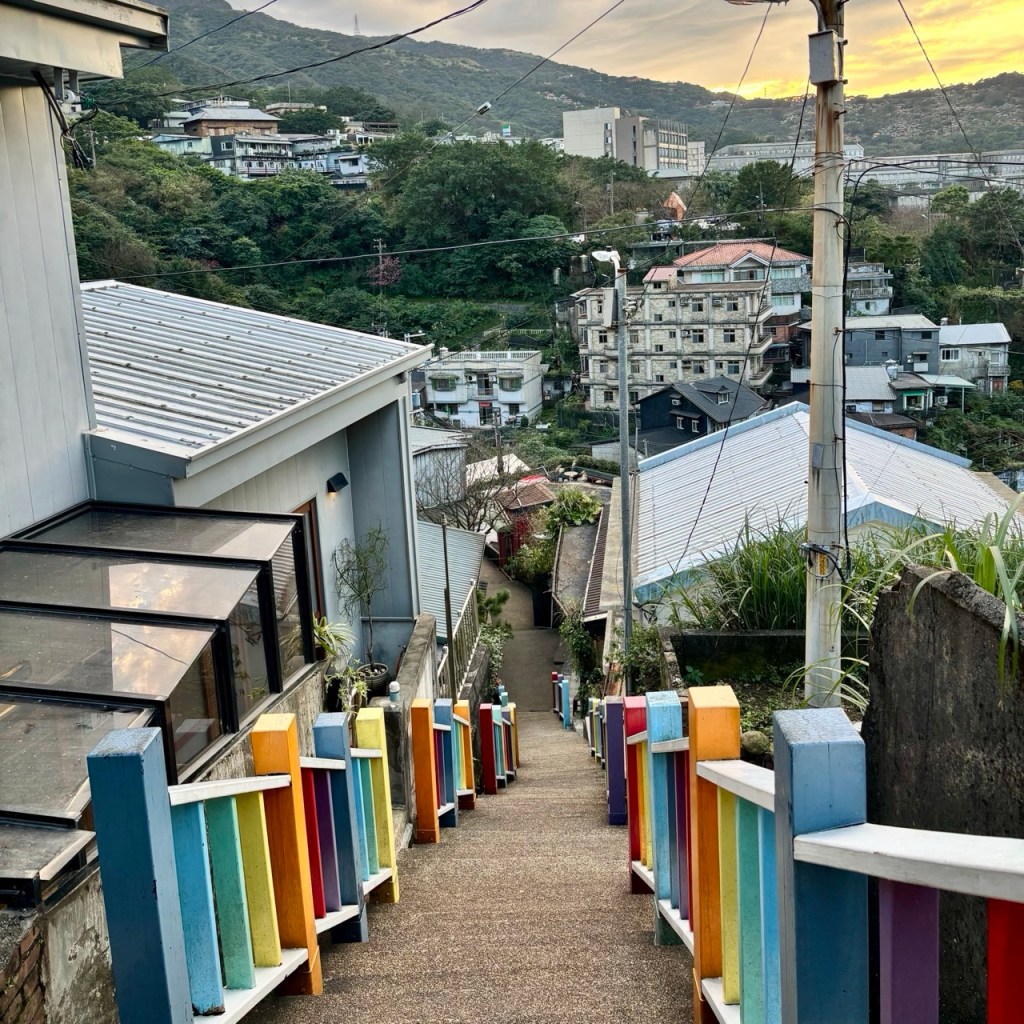
Jinguashi streets
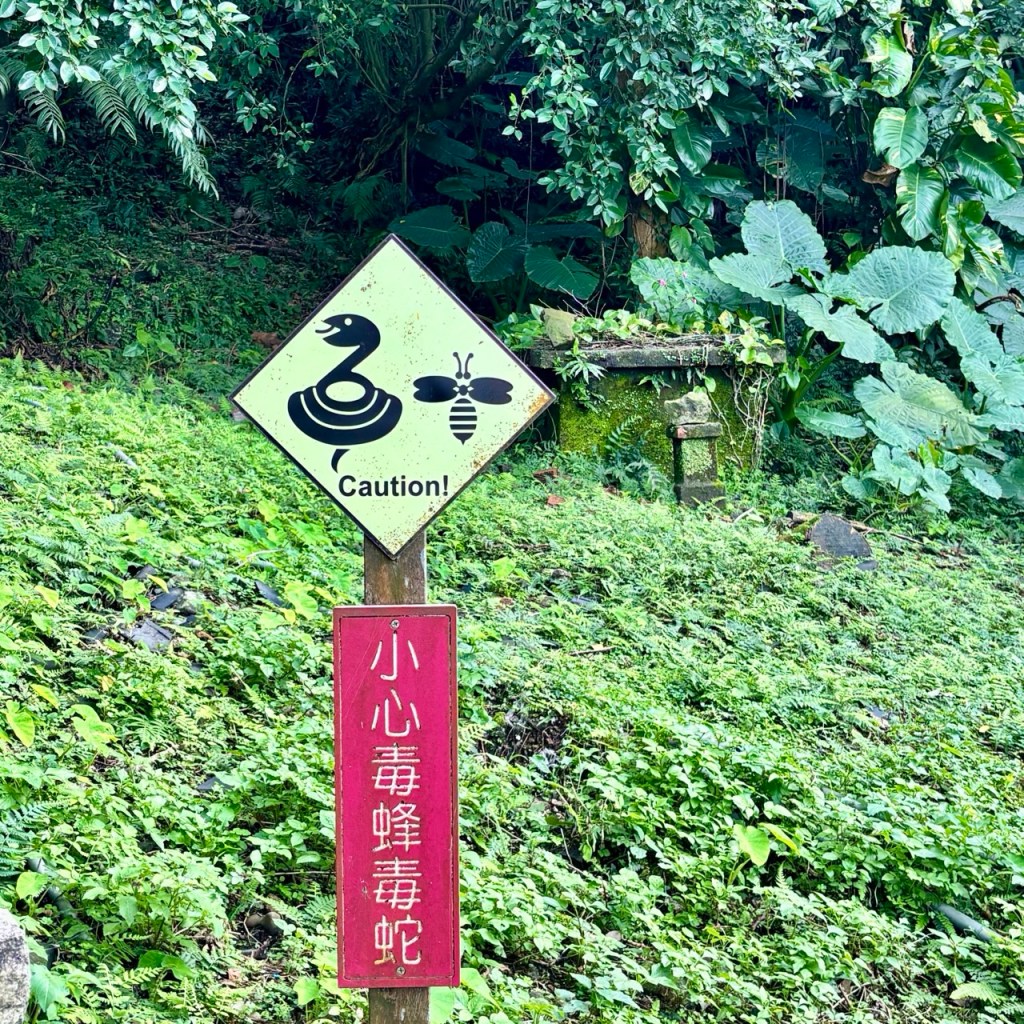
Those pesky dangers again
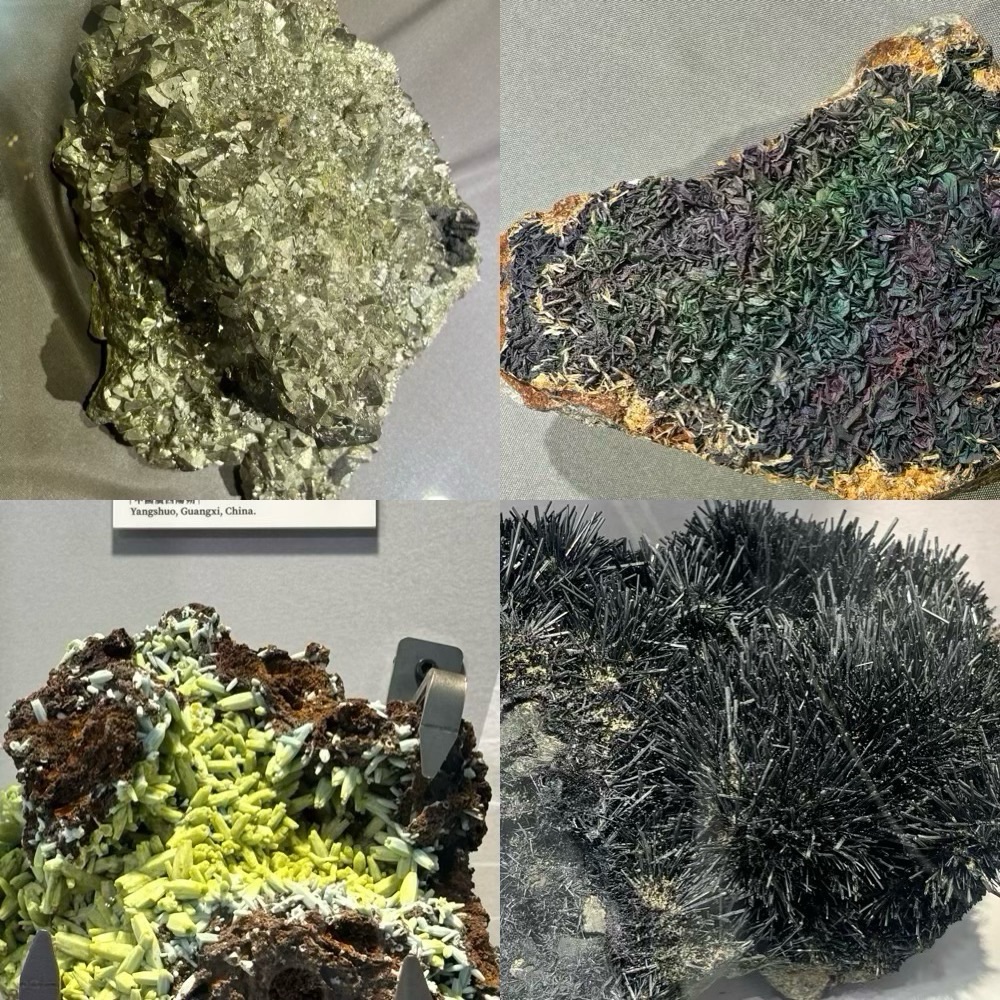
Various crystals on display in the museum
Sun setting over Jinguashi
Museum entrance / bus stop

I didn’t want to miss the last bus back, so not knowing exactly when that would be, I headed back to the bus station and joined a queue of people waiting for presumably the same bus.

The biggest gold block I’m likely to touch!

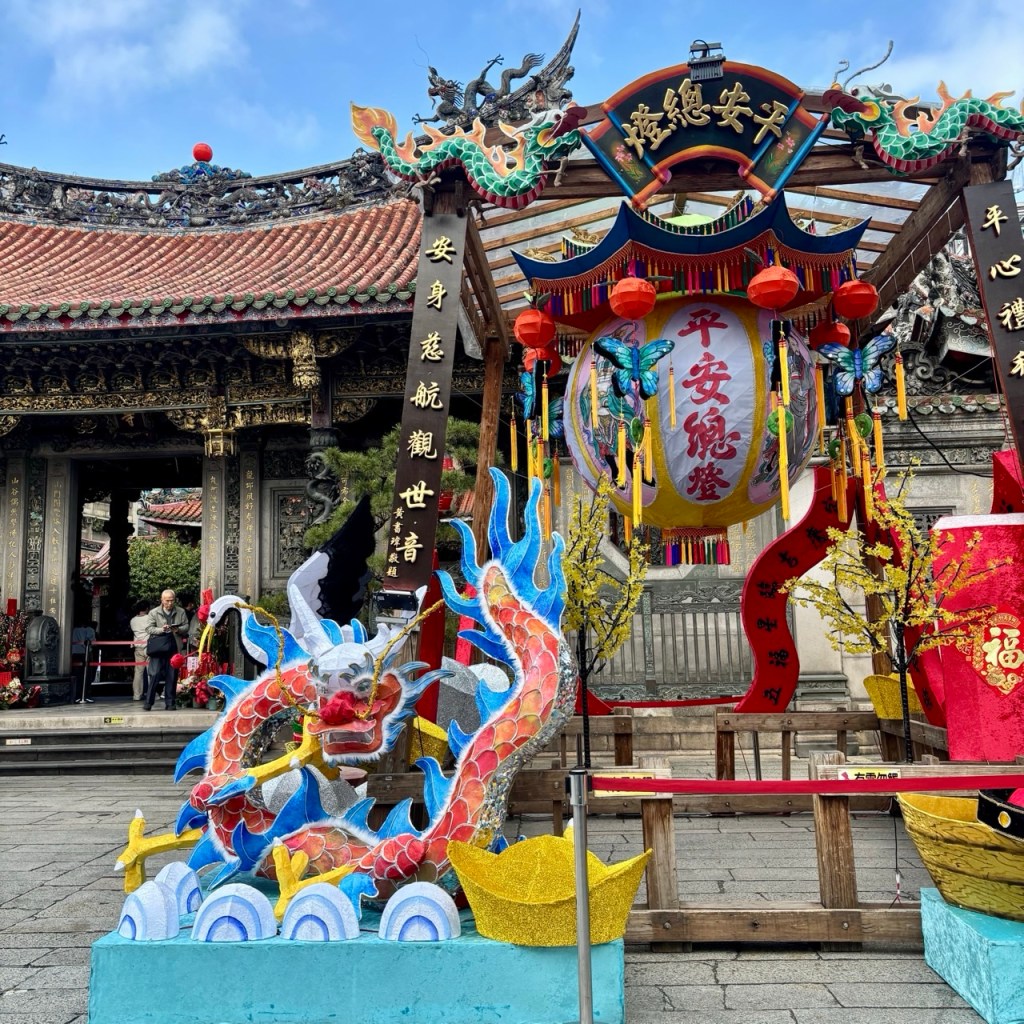
On the eve of the Chinese New Year a lot of smaller shops and restaurants were indeed shut but the malls remained open as did the coffee shop that accepted the hostel’s breakfast vouchers (easy to find, just follow a steady stream of half asleep looking Americans heading to get their coffee). I managed a quick look at the nearby Lungshan Temple but the crowds were getting a bit much.

Lungshan Temple

And that concludes Taiwan Part 1, to be continued after seeing in the Chinese New Year in Hong Kong!

Two Wheels, One Gondola (Me, Myself and I at Sun Moon Lake)

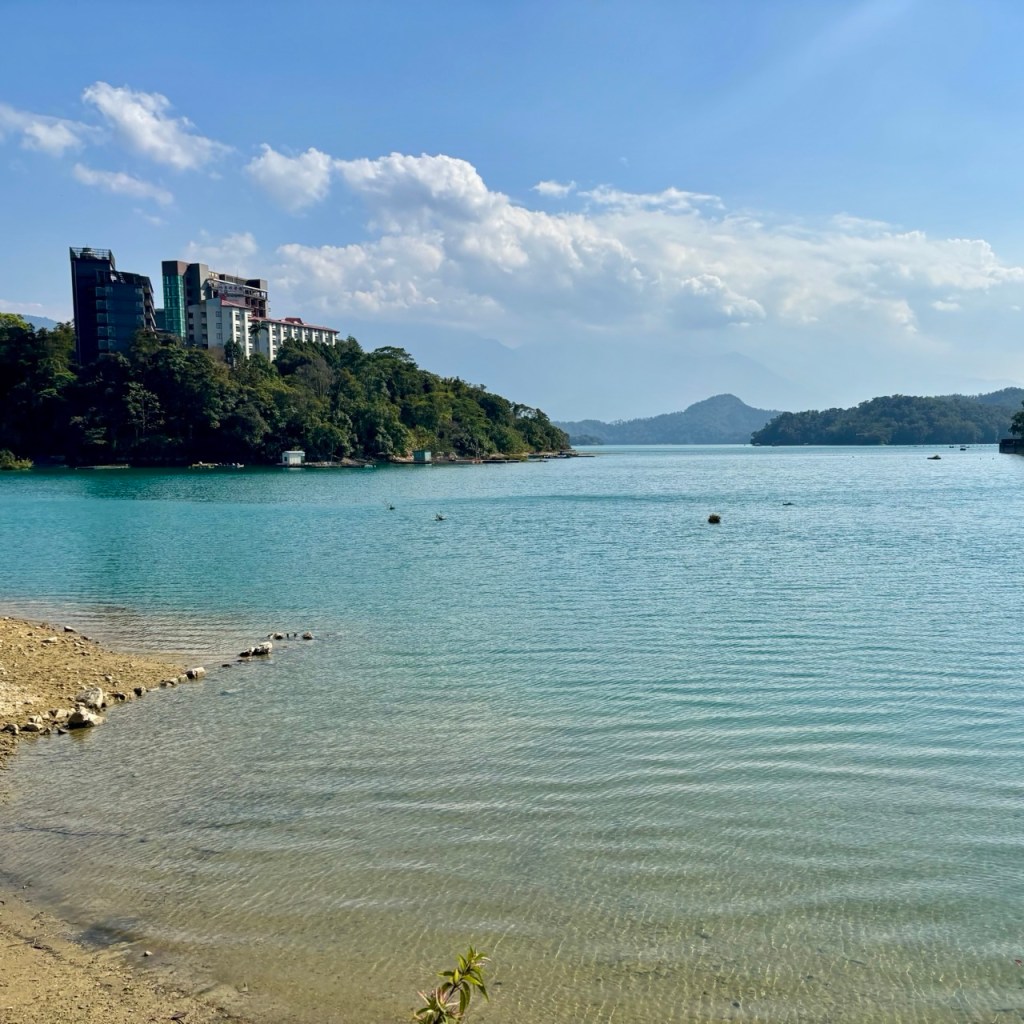
What a mysterious name! I had prebooked the bus from Alishan to Sun Moon Lake after locals told me everything would be booked up for the upcoming Lunar New Year. It wasn’t really necessary as the bus wasn’t full but I actually quite enjoyed having a few days with everything booked and just following my own itinerary! It took about 3-4 hours on a comfy bus with a gorgeous view, to reach the SML bus station. The transport centre was actually on the other side of the lake to my hostel (Owl Hostel) and all buses stop at 17.00. A man approached me and asked “Ita Thao?” I said no, assuming this was the name of someone he was picking up. He asked me again like he really thought it was me. I said no again. After realising there were no buses (it was 17.30) I went to enquire about a taxi. The same man appeared and asked for the address. “Ita Thao!” he said. Turns out that’s the name of the village where the hostels are: he probably thought I was mad or very stupid. But he paired me up with a Chinese woman and her mum and drove us all around to the other side of the lake at half the price of a standard taxi. At the hostel there was another guy checking in who was on the same bus as me and he had paid twice as much so I did feel a bit smug.

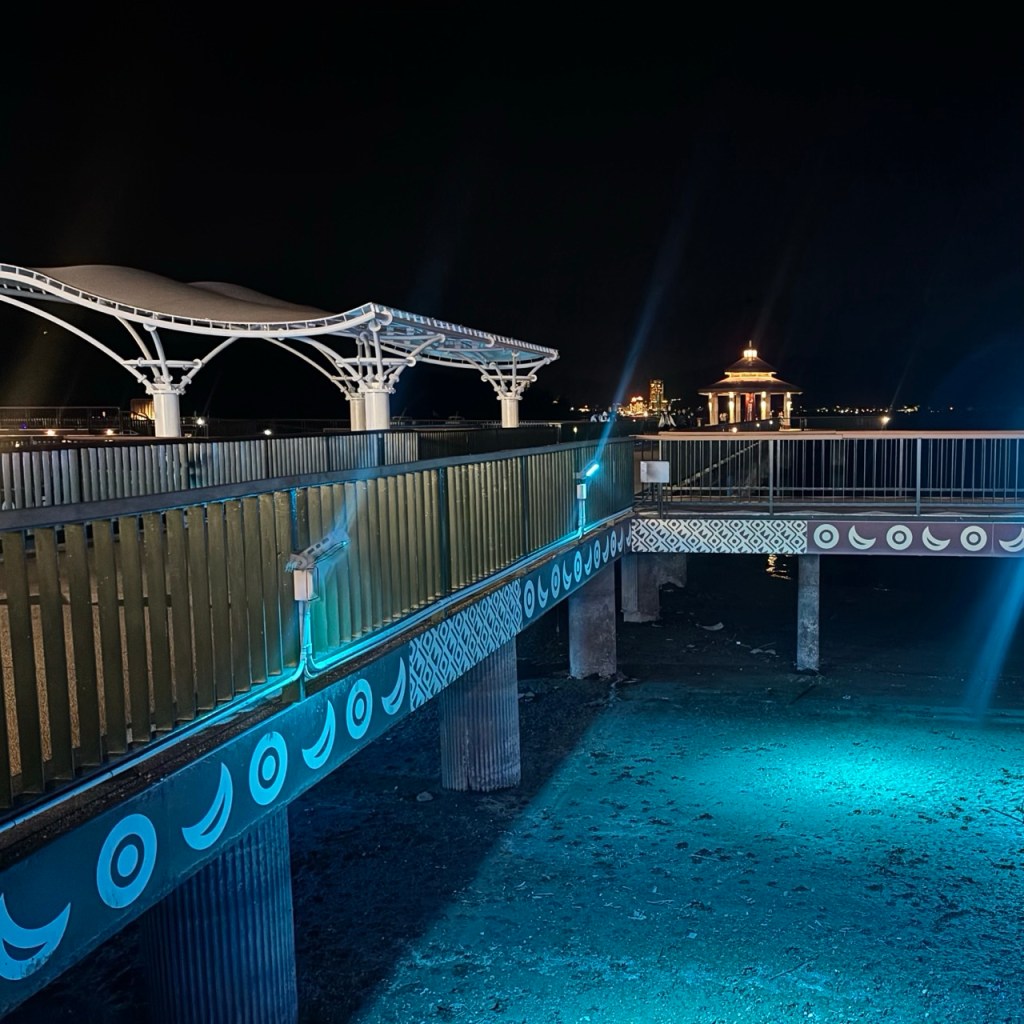
Ita Thao harbour at night

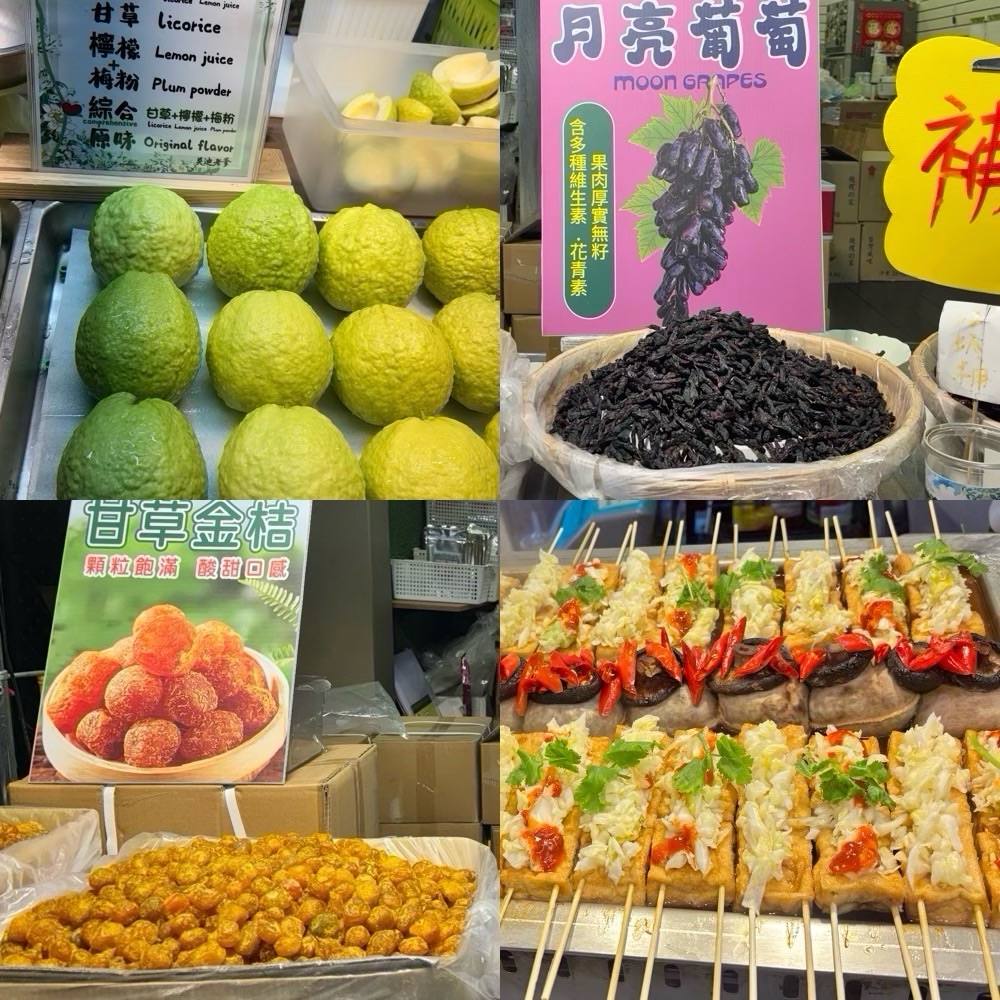
I went to wander around the harbour area where a small night market had set up. I got some vegan tofu sticks with a spicy sauce and a bag of freshly cut liquorice flavoured guava for dinner.

Night market goodies: liquorice guava, moon grapes (not sure what they were), another unknown fruit and BBQ tofu

The Owl Hostel also had free proper coffee and lovely rooftop to enjoy it. It was extremely clean and well organised. You’d expect it to be fully booked but it was really quiet as have been most places so far, although it was the first hostel in Taiwan where I met some other Western travellers to go for dinner or hang out on the rooftop with. Everyone agreed they have had mostly solitary experiences travelling in Taiwan. It’s just not on the usual backpacking route.

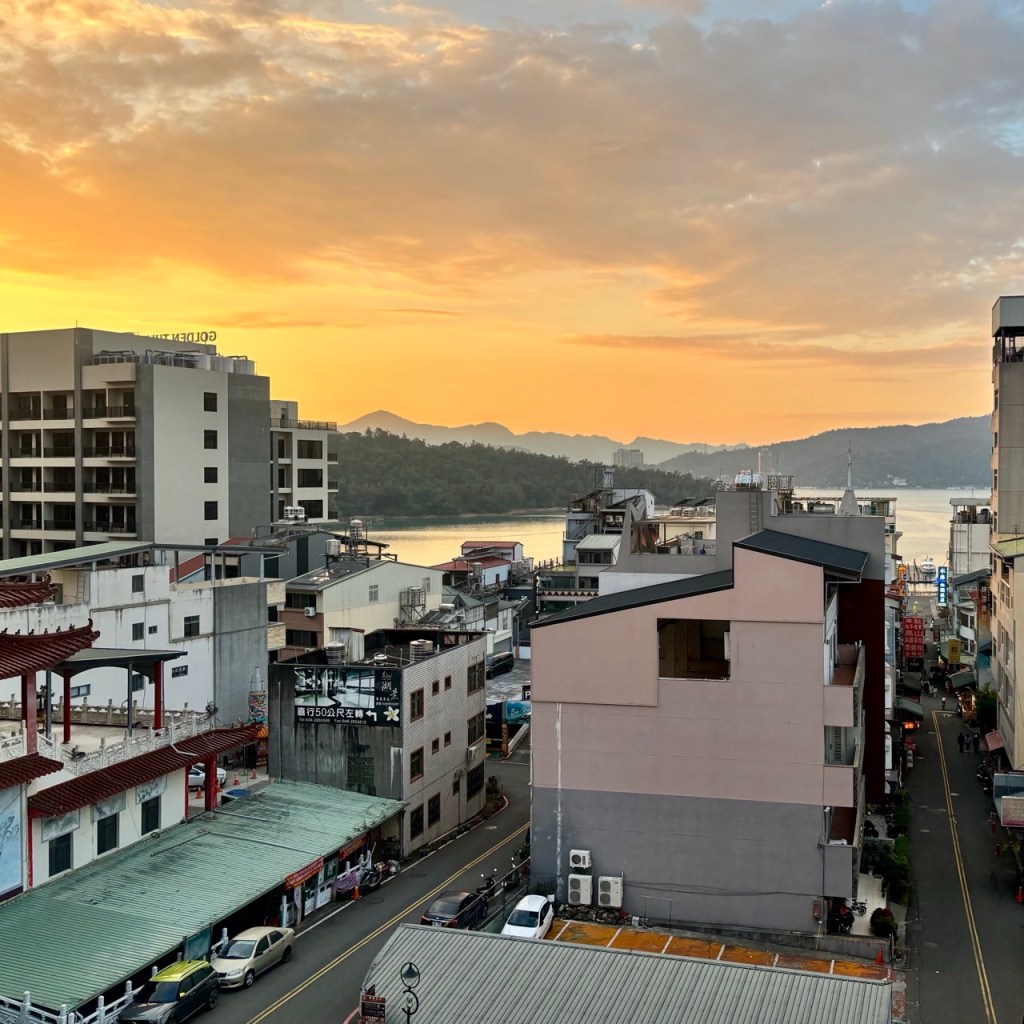
Sunset from The Owl rooftop

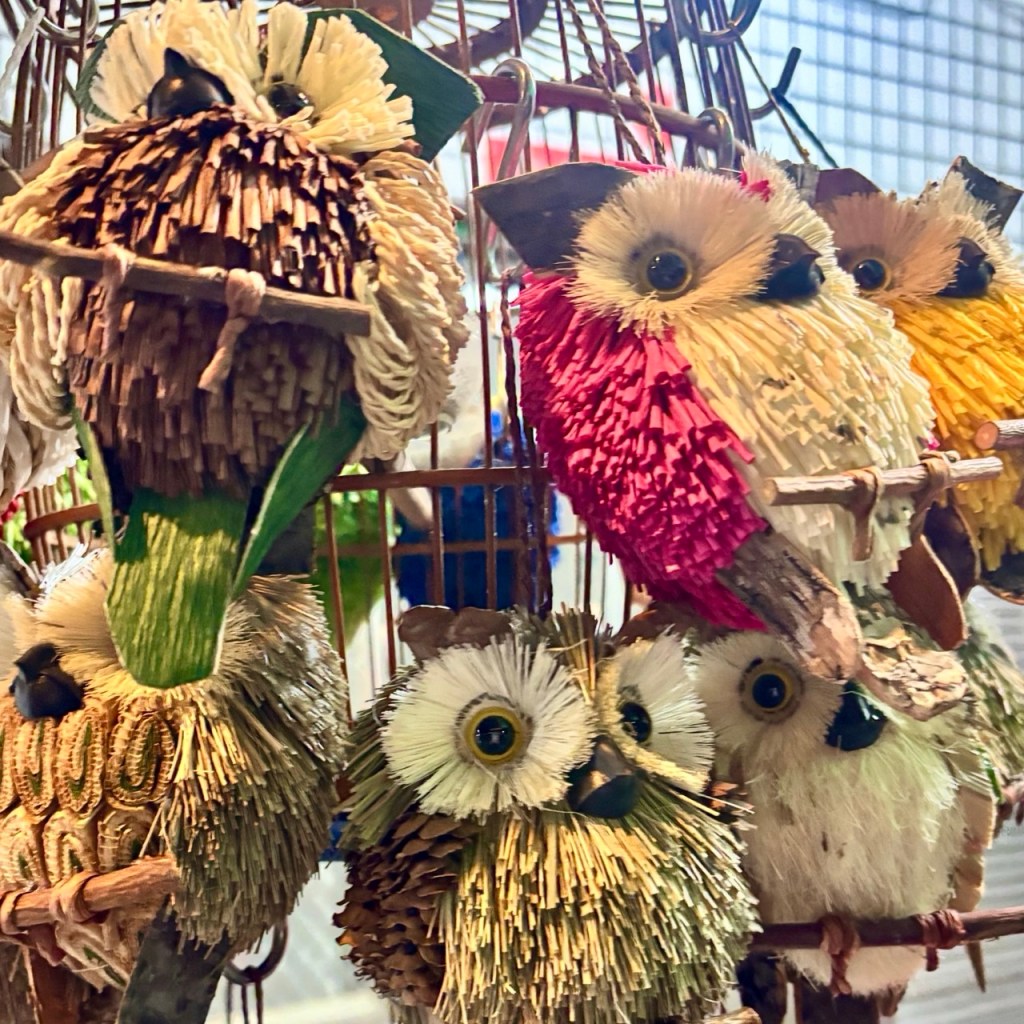
The owl (as in the bird) is significant here. They are considered to be the sacred spirit animal of the Thao indigenous people. Similar to the sunrise and sunset outings in Alishan, a rite of passage at Sun Moon Lake is to hire a bicycle and cycle around the lake. There are also temples and a cable car to keep anyone busy for a couple of days.

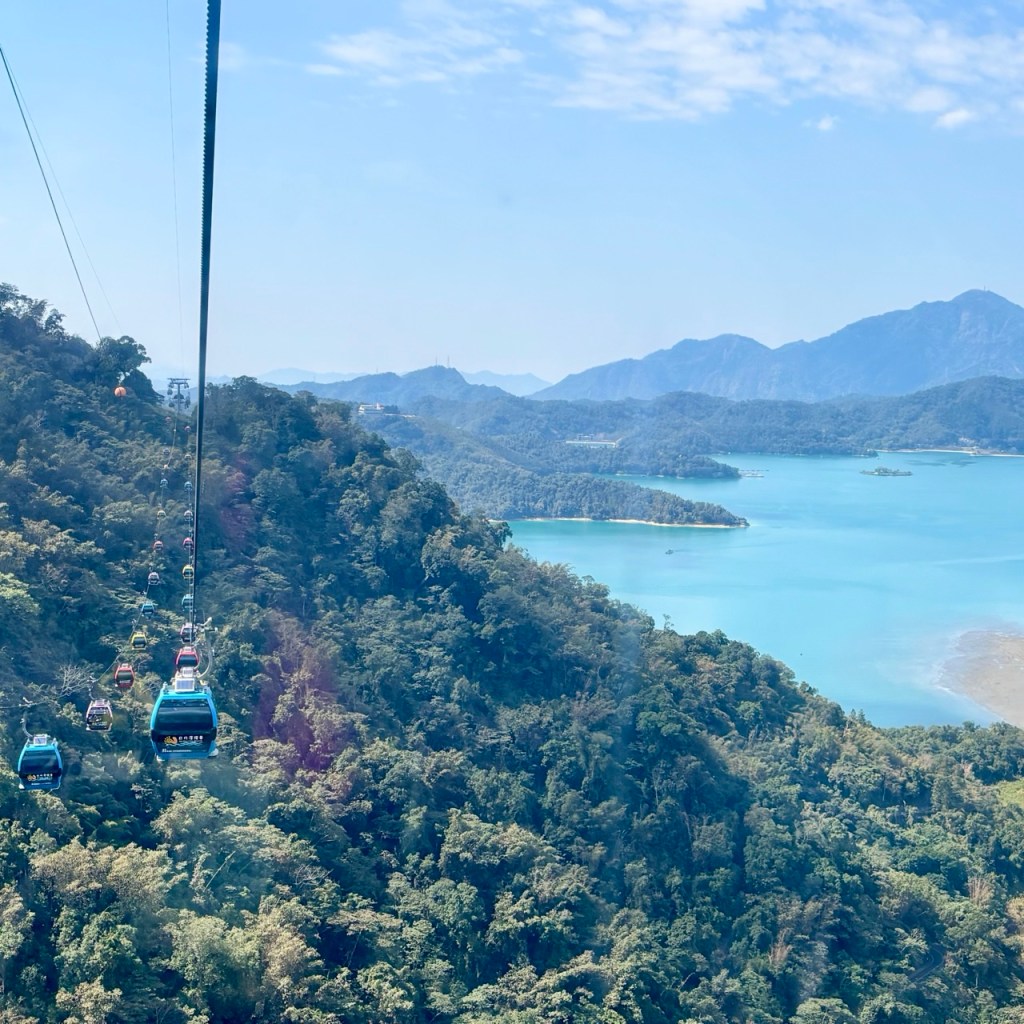
View from the Ropeway

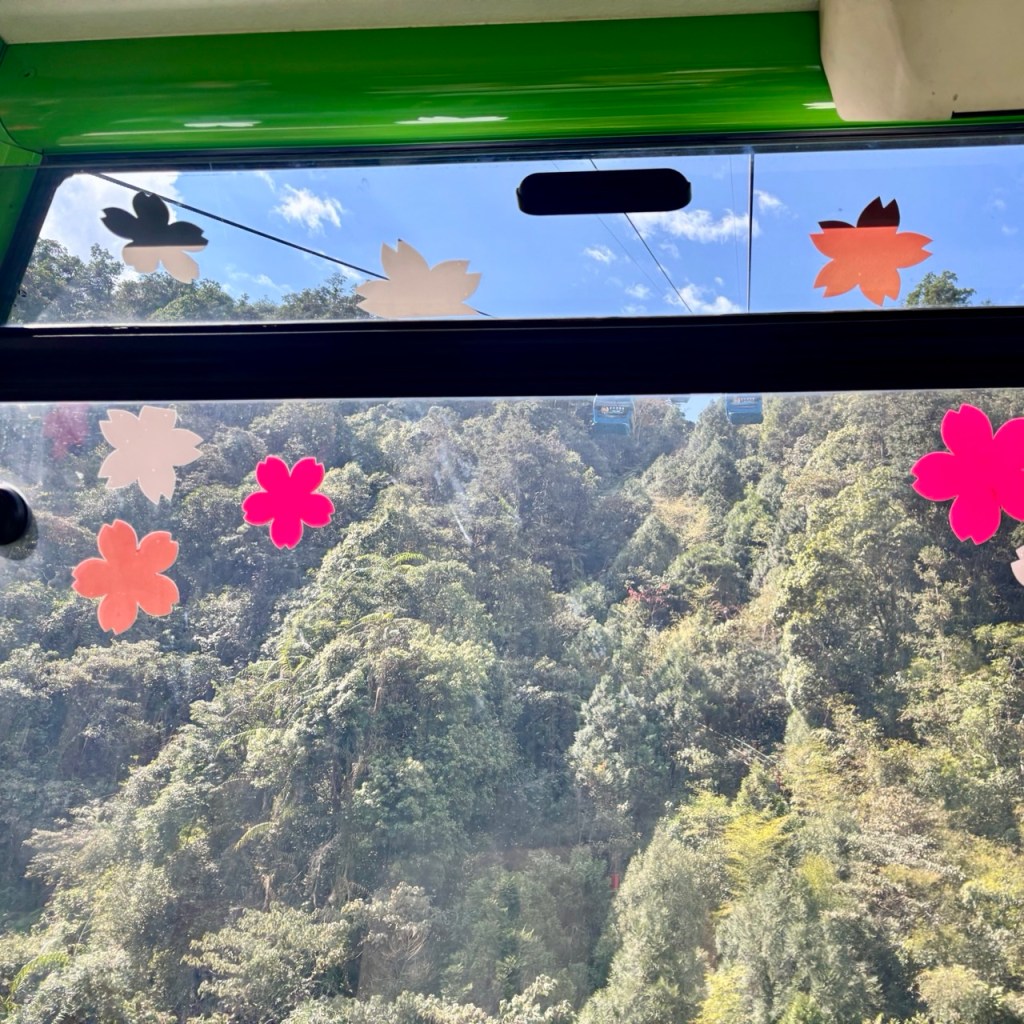
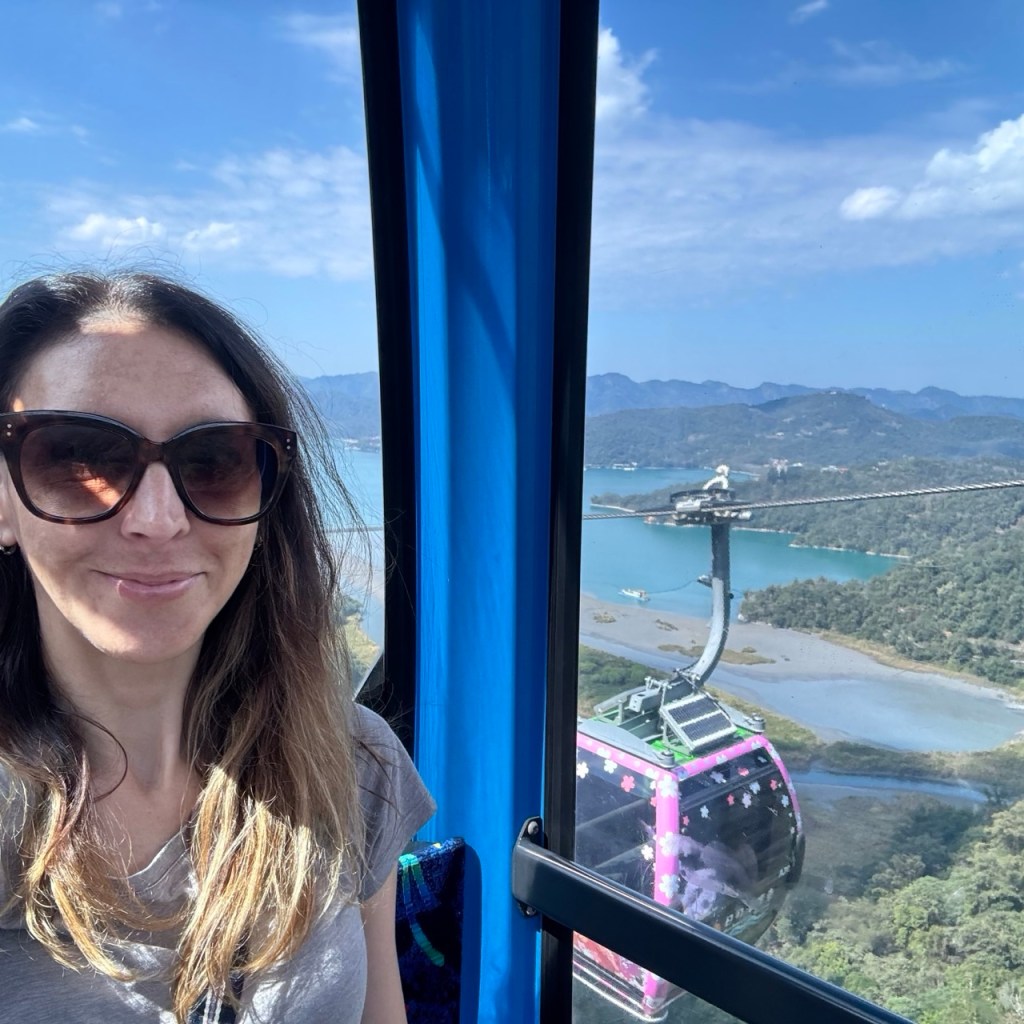
If there is a cable car then I have to take it. The “Sun Moon Lake Ropeway” goes up to the Observation Tower of the Formosan Aboriginal Culture Village. It took solo travel to another level – not only was I allocated my own gondola but I was asked to choose which one I wanted. I chose the one with pink cherry blossom as this was clearly the one the attendant wanted me to pick.

Sakura decorated gondola
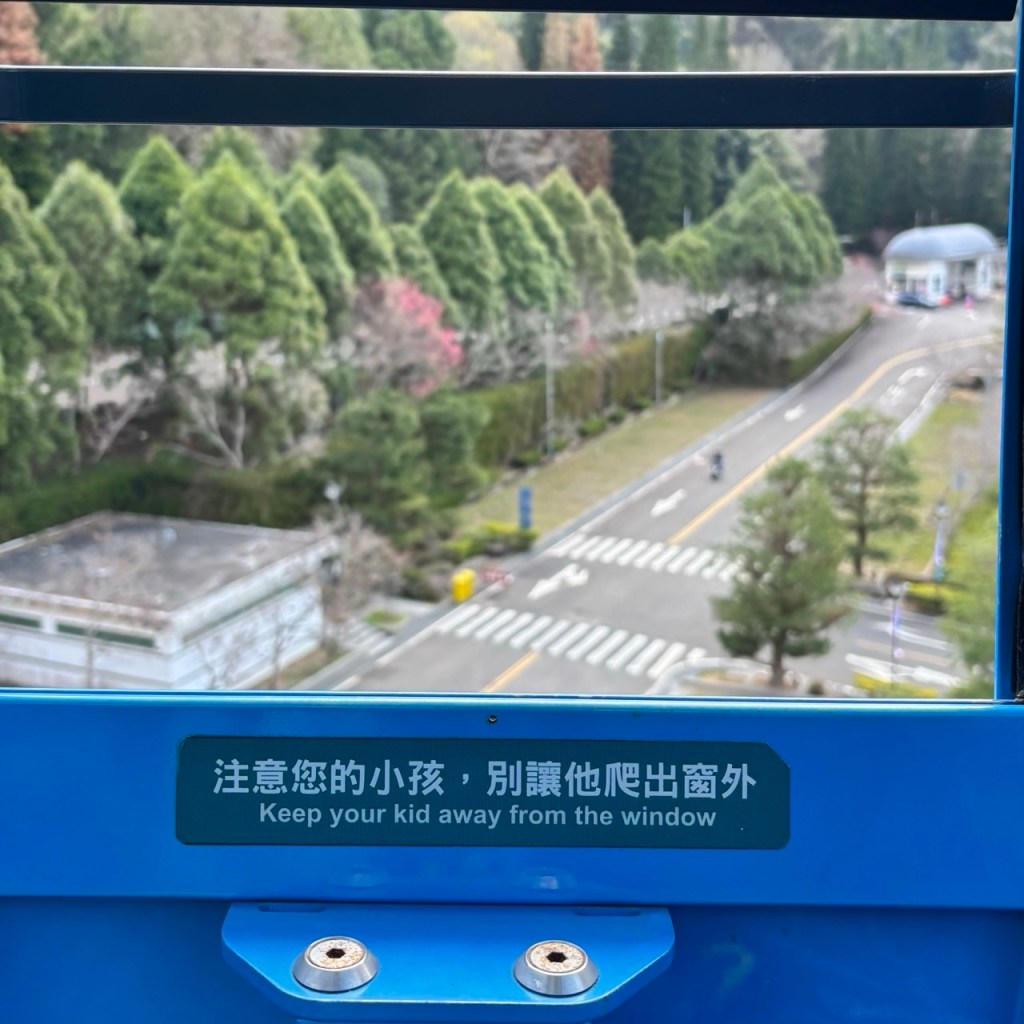
Careful with the kids

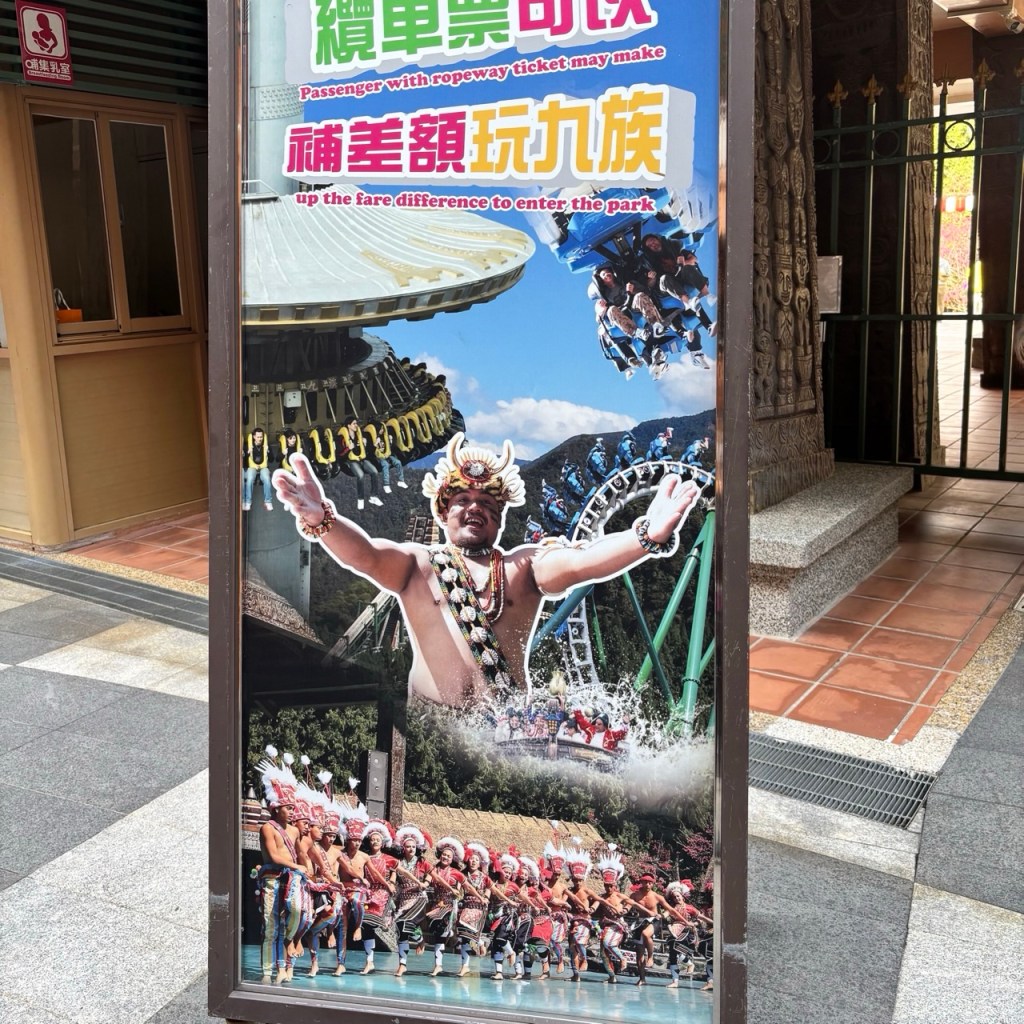
It takes 7 minutes to reach the top, and time goes very slowly when you have it all to yourself. I had expected that there would be at least a viewpoint at the top or something to look at, but it’s literally just a station where you get off, and a turnstile for paid entrance to the ‘Culture Village’ which looked more like a theme park to me. There are fences blocking out the view so other than a few souvenir shops there’s literally nothing to do except turn around and go back down again. I still enjoyed it for the novelty of choosing which gondola I wanted and the views over the lake were beautiful. It felt pretty high up, so probably not one for anyone not keen on heights.

Enjoying the ride
Gondola views

I decided to take the boat over to the other side of the lake instead of cycling the whole circuit, and to treat myself to lunch at a backpacker cafe. I soon changed my mind about not seeing any other Westerners after listening to some annoying, loud American backpackers discussing their latest tattoos and paying over the odds for a coffee.

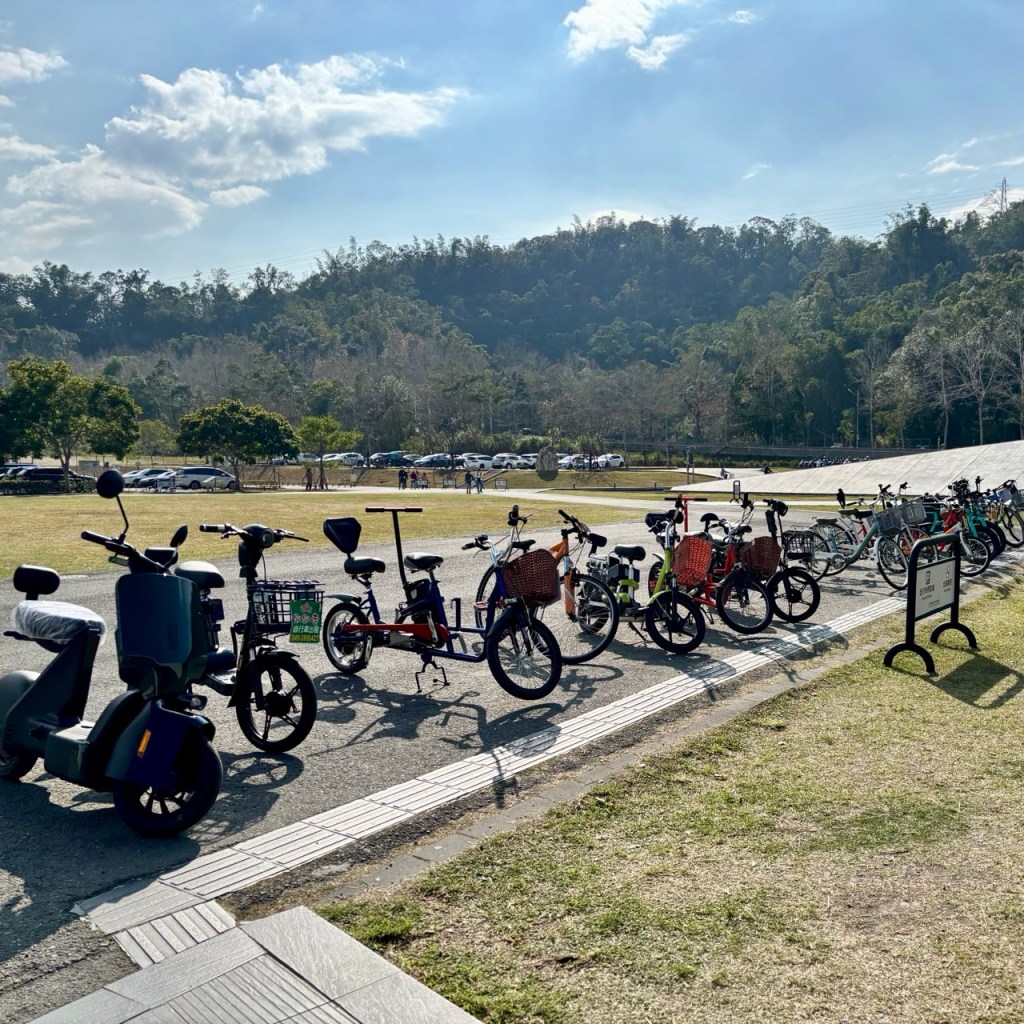
Bike hire

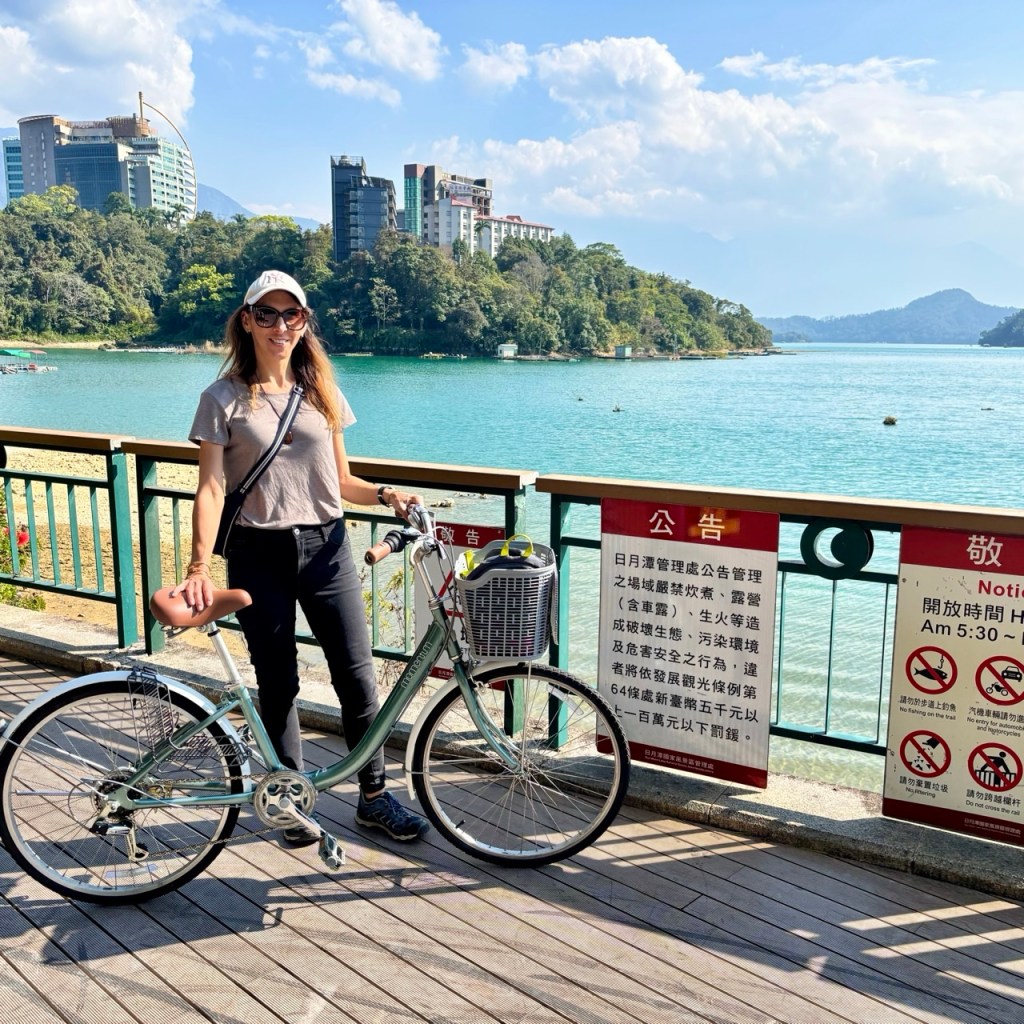
There are bicylce rental places all around the place and it’s easy to negotiate a half day for a really nice bike. I really enjoyed seeing all the other solo travellers whizzing past on their bikes – you can’t really get lost, although I managed to go the wrong way through the town. I had been a bit nervous about cycling with traffic but this soon goes away!

Rest stop
One of the many cycle paths

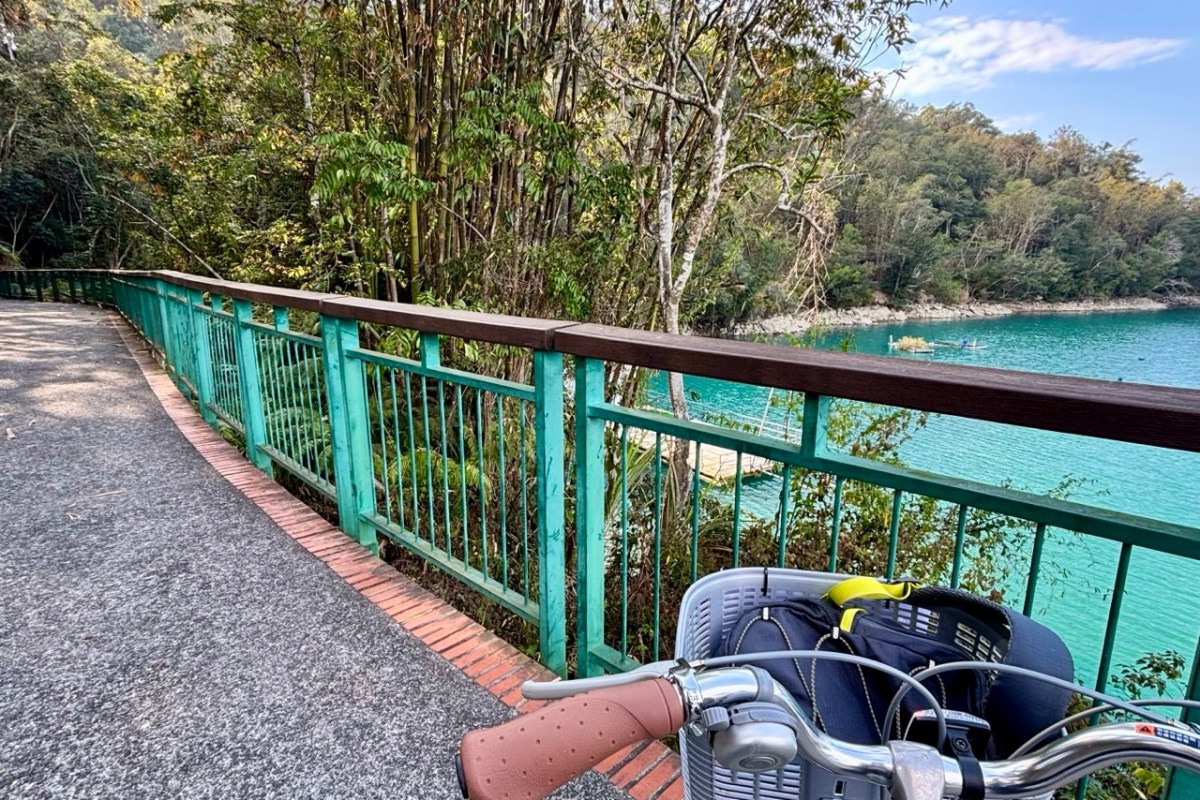
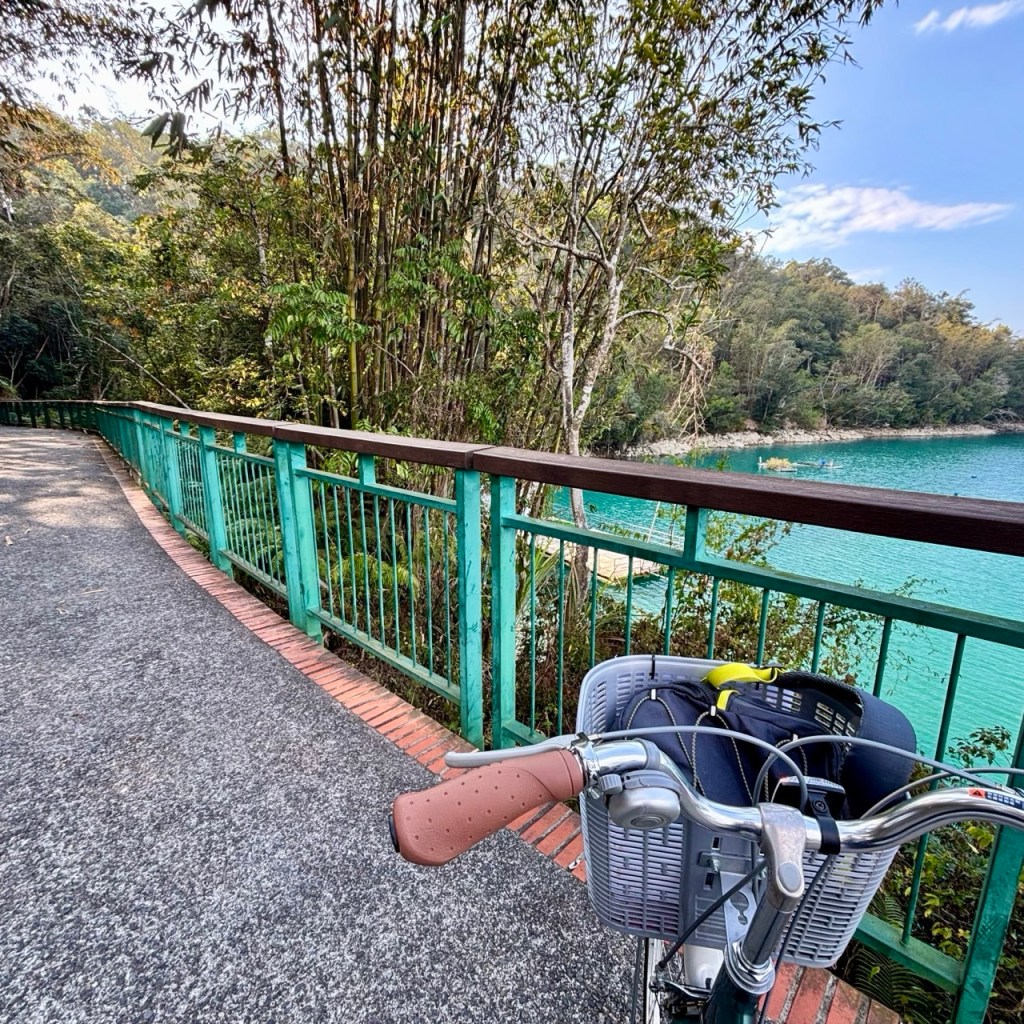
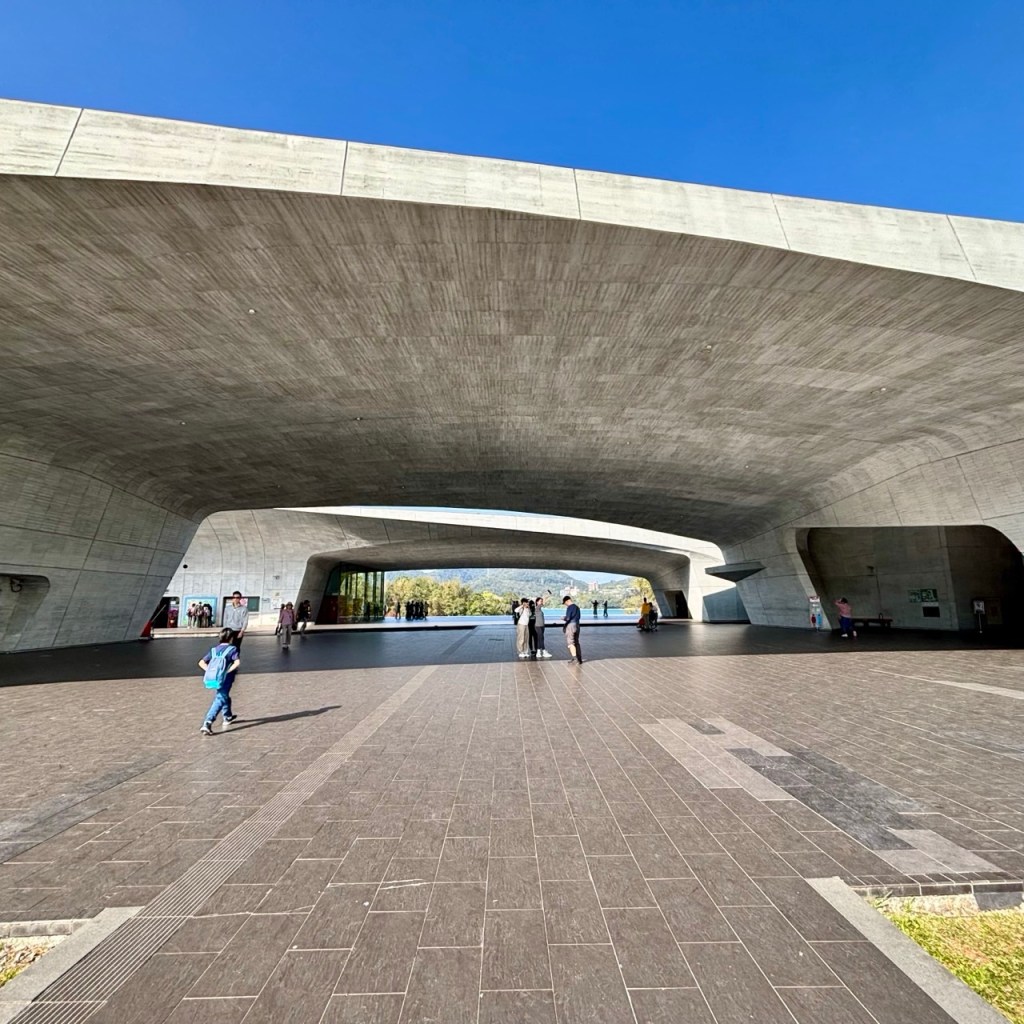
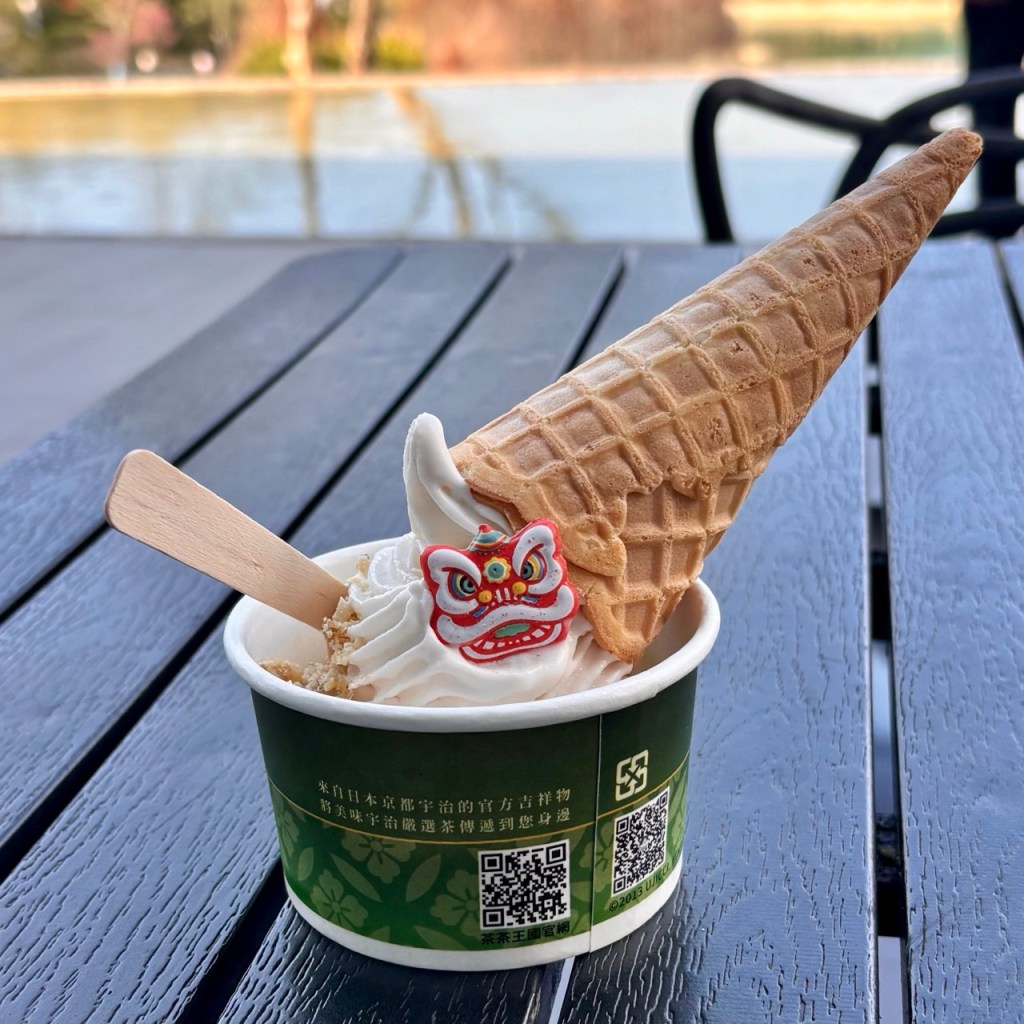
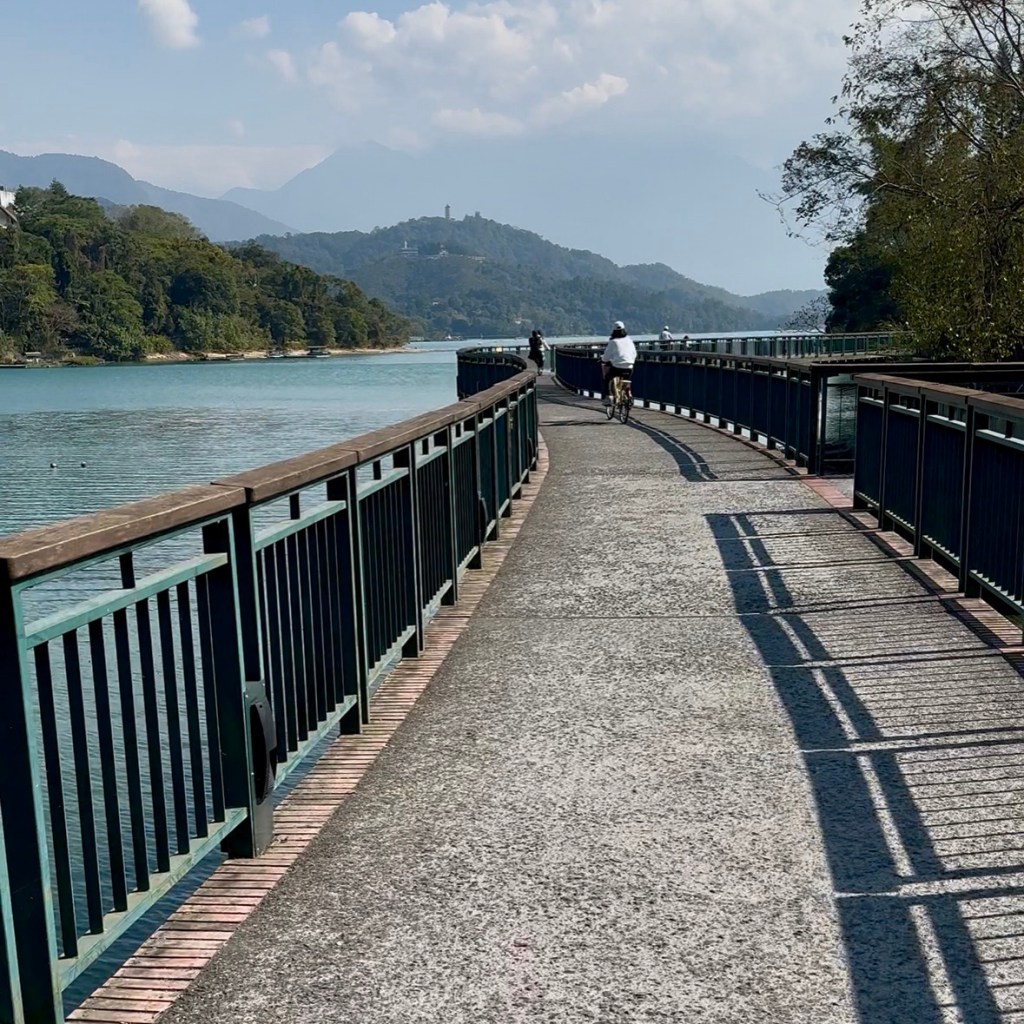
The scenery is really lovely, especially as there’s a dedicated cycle path for most of it over wooden pathways, through some shaded areas but never far from the blue water. It passes the huge Xiangshan “recreation area” with its modern architecture and oat milk ice cream for a little break. There is no need to lock your bike here, in fact you don’t even get a lock with the bike. It’s amazing to just park up, leave the bike (I also left my hoodie just so I’d recognise the bike again), go for a wander and not worry about it being there when you get back.

Recreation centre
Oat milk ice cream

The Xiangshang section of the route’s claim to fame is that it’s listed as one of the “Top 10 Most Beautiful Bicycle Trails in the World” (not sure what the source is for that). This section connects the Shuishe Dam to Visitor Centre, a highlight being the 400m “Waterfront Bikeway” that is elevated above the lake. I probably could have carried on all the way around the full 20 mile loop but I only had the bike for a half a day so got the ferry back across in time for a sunset beer on the roof terrace, some takeaway tofu soup and an evening stroll.

Owls

If I came back to Sun Moon Lake I would stay longer as it’s a nice place to chill for a bit, and there are more temples to visit. But I’d booked my next leg of travel in order to get to Taipei for my flight to Hong Kong for Chinese New Year. The next morning after breakfast at a little stall that sold toast and peanut butter for less than £1 and who gave me a free cup of homemade sweet soya milk to try, I got the bus back around to the transport centre to board my pre-booked bus straight to the Western city of Taichung, to spend the afternoon there before a pre-booked bullet train to the capital.

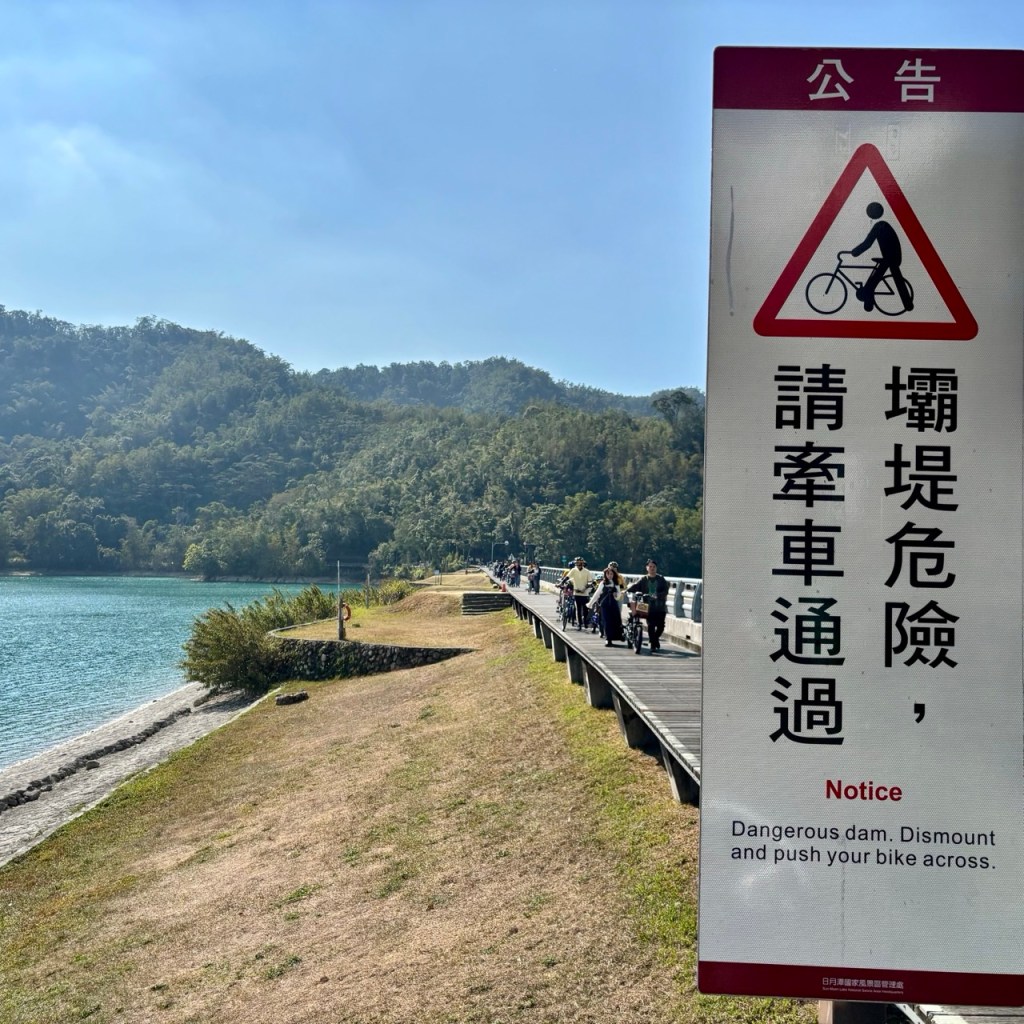
I didn’t notice this sign until I was a quarter of the way in and wondered why everyone was walking

It was Friday 13th and three things went wrong. Firstly after a smooth bus ride there, where by chance I was sitting behind the same Chinese woman and her mum who I had shared a taxi with on arrival (we said hello and waved goodbye), I was halfway to stashing my bag at Taichung train station when I realised I didn’t have my coat. I needed my coat for Hong Kong and for when I got home and it’s the most expensive item I had with me. I practically ran to the tourist information office at the train station who advised me to go in person to the bus depot, but not to worry they had a lost property. This is Taiwan after all, where people leave their laptops on cafe tables while they go to the bathroom. Sure enough after putting my bags in a locker, I explained the situation at the bus depot with the help of Google translate (at first they thought I had missed my bus), they phoned the driver and happily told me “the driver has seen your jacket”. I waited ten mins until he dropped it off.

Where’s my bike?
Elevated cycle route

I didn’t have the energy to see anything of Taitung, it was hot and I was now carrying around a coat so I made the most of some downtime in a cafe. Back at the train station a few hours later, the second mishap occurred – I went to get my bags from the locker and it asked me to enter the passcode from the receipt. The receipt that I didn’t actually take when I closed the locker that morning. There was a rather strict sign stating that there was a fine for losing the code but again I explained the situation and a nice lady opened it up for me with no cost.

Cultural centre or theme park…

Thirdly, I was waiting on the platform that evening for my reserved train and thought it was a bit odd that the train was late – trains are never late here. Despite asking for directions earlier, I had somehow gone to the wrong platform and waited like an idiot for a train that had already departed from the other side. But the guard said no problem, if you miss your reserved train you can just get on the next one in the unreserved carriage. It was actually full this time with everyone going home for the New Year so I had to stand for part of the one hour journey, but I was so grateful to be on it I didn’t care.

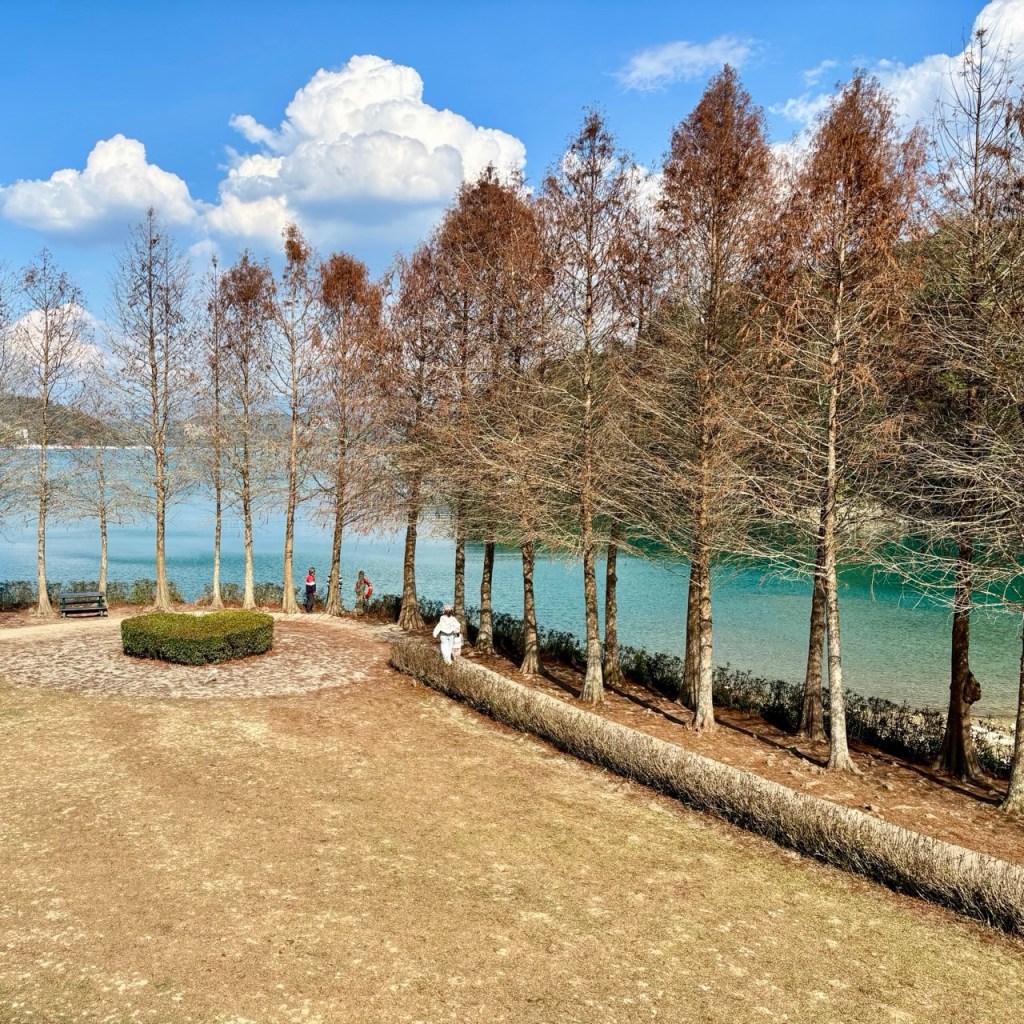
Views around the lake
Trying to cycle and video at the same time

Disasters averted, I arrived back in Taipei after a whirlwind 2 week trip around Taiwan and checked into a party hostel filled with 20 somethings on their first backpacking trip …

The Day I Caught The Train: Sea of Clouds, Giant Trees and Solitude (Alishan National Park)

The next few days of this trip were the ones that needed some advanced planning. Firstly the Alishan National Forest: the most iconic way to get to this forest high up in the mountains in the centre of Taiwan is to ride the scenic Alishan Forest Railway. This is a narrow gauge railway that runs through the Alishan mountains and high-altitude forests. However, getting a ticket for this is like getting a ticket for the Sri Lanka Ella train all over again (throwback to when Original Travel Companion Helen and I tried and failed to even get on the train, being the only ones left standing on the platform after the locals piled in). Tickets are released online 60 days in advance but sell out immediately. A blog called “Taiwan Obsessed” has been invaluable in telling me how to practically do things. It mentioned that you might need to try over 100 times to buy the ticket online (no joke), or a better option might be to buy a bus ticket as a backup and try your luck to get a train ticket closer to the time. To buy the bus ticket, you go to a Family Mart convenience store and use an ATM-like machine, all in Chinese, to print a receipt which you take to the counter and pay for in return for the bus ticket. I managed to do this only by following screenshots from the blog, matching them up to the Chinese text on the machine, of which there were at least 7 screens to click through and some blind faith that I was actually purchasing a bus ticket.

The Journey Up

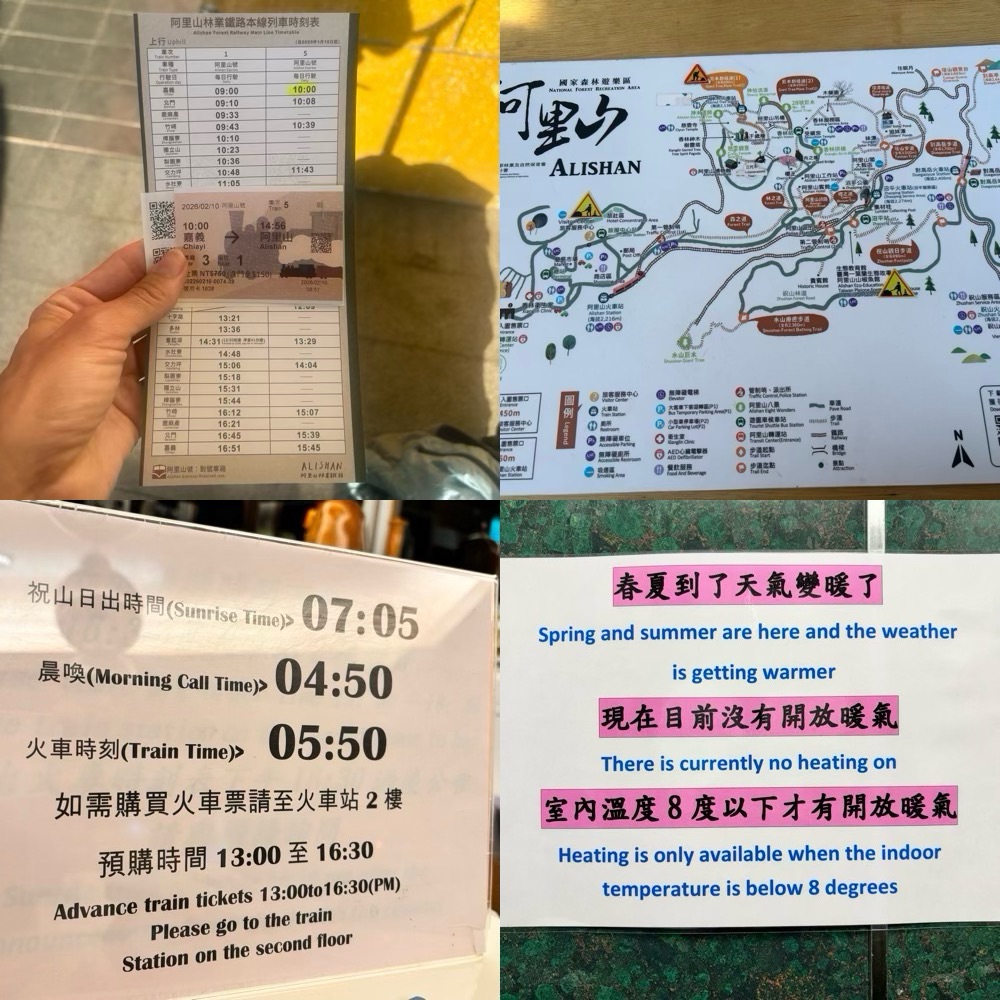
With bus ticket in hand I for once arrived early at the bus stop before the 8.30 departure. I had almost convinced myself that taking the 3 hour bus up to Alishan would be perfectly fine – it’s faster by two hours, cheaper and the scenery would still be beautiful, and the train was probably overrated…. But from the bus stop I could see the Alishan Forest Railway ticket booth. Surely it was worth a try? I ran over and asked the lady if they by any chance had any tickets for the train today. You’re very lucky, she said, we have one window seat left. It takes five hours as it includes a one hour lunch stop at Fenqihu Station. I handed over the money and got my golden ticket. 

Golden ticket, Alishan map, Hotel notices

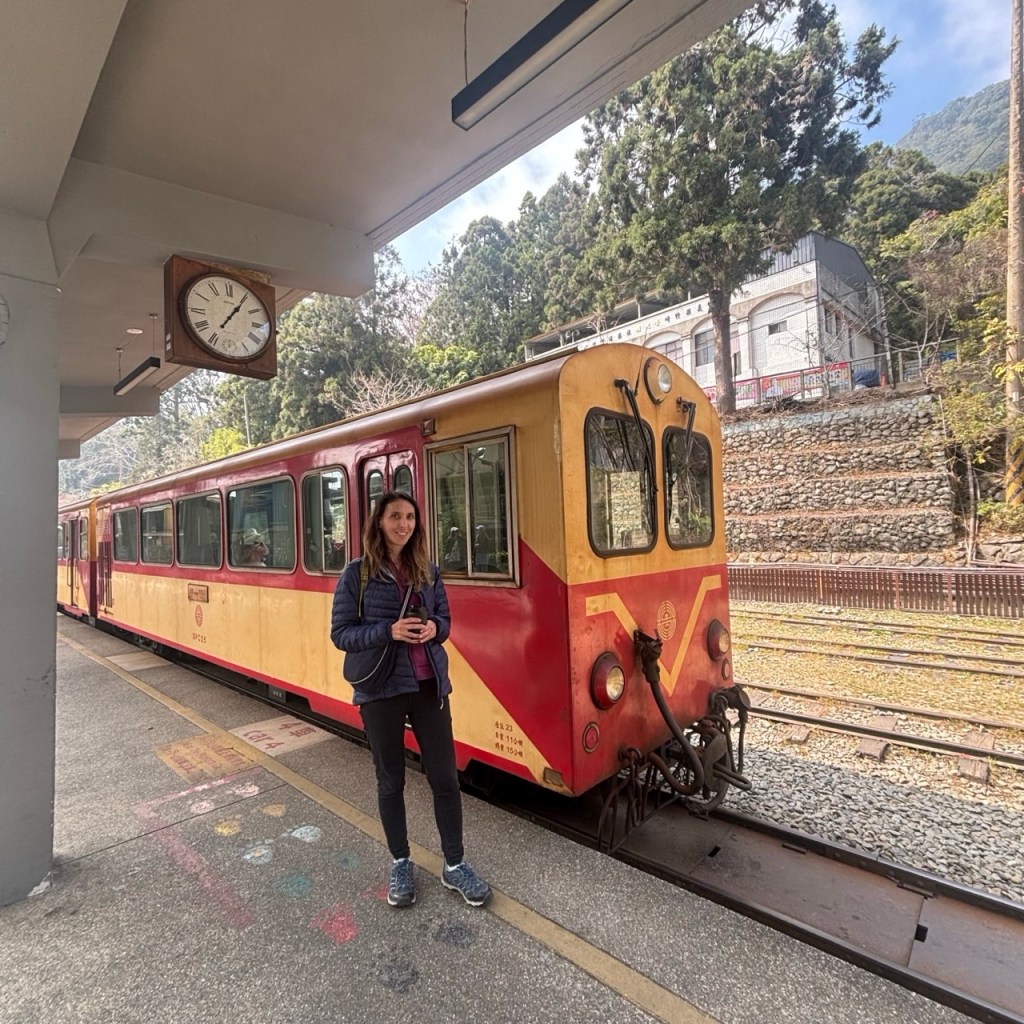
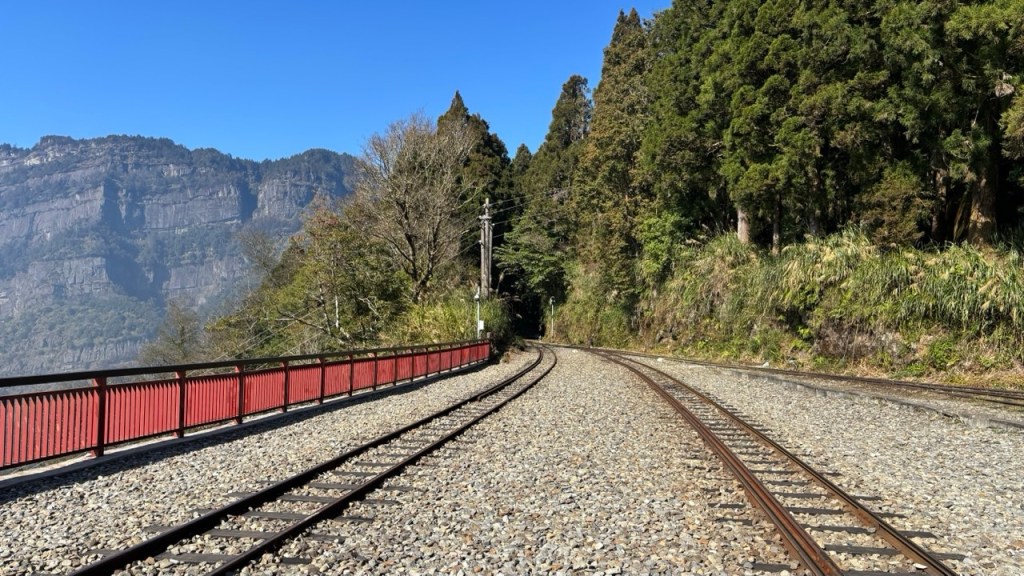
I headed back to the train station and when the ticket attendants asked me “Alishan train?” as they had done every time I passed though, this time I said YES which a huge smile on my face. The historic train trundled into the station at 10.00 and I took my single seat by the window and settled in. It was hands down the best train ride I have ever taken and worth every Taiwanese dollar of the extra £14. The train gradually climbs up from 30 metres above sea level to 2,216 metres, goes through 47 tunnels and over 72 bridges. The narrow gauge railway line alternates between hugging the edge of the mountain (looking out the window was literally looking down into the valleys over the mountain edge) and cutting through the middle via the tunnels. It even has some English commentary. 

Ready to board

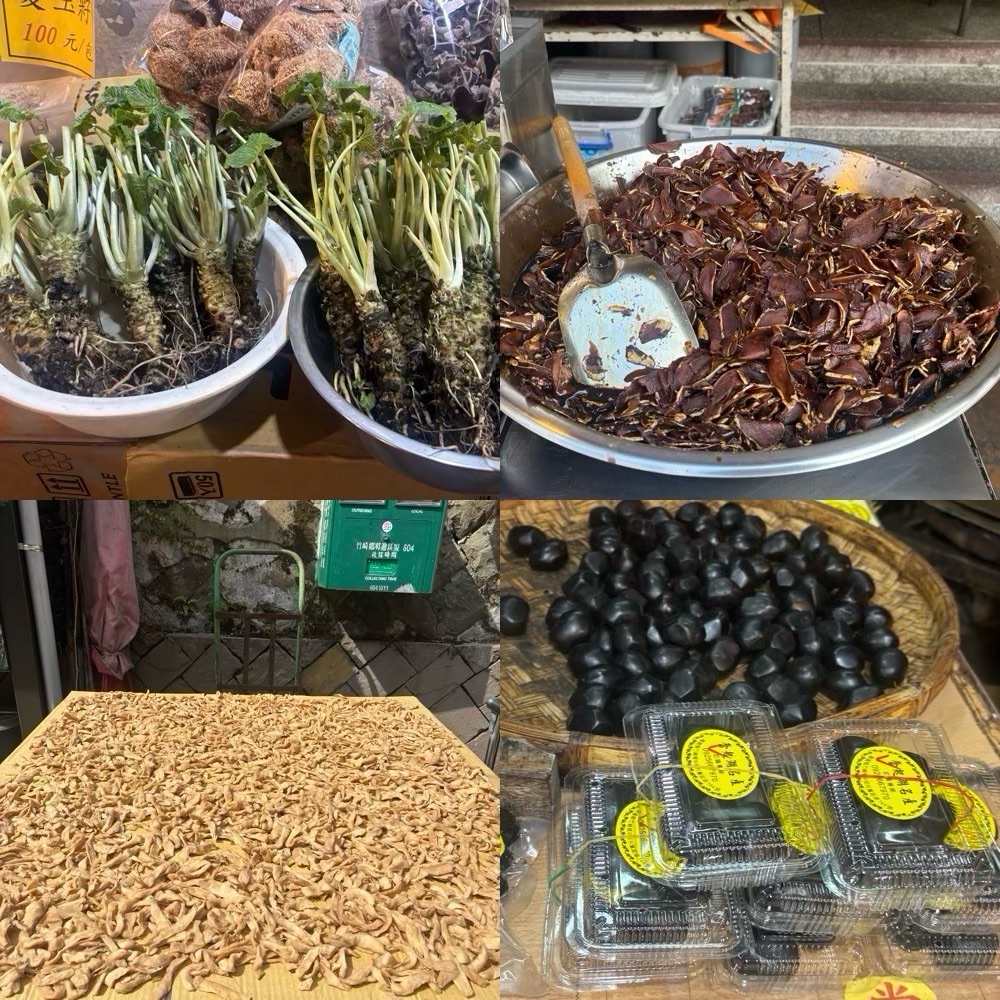
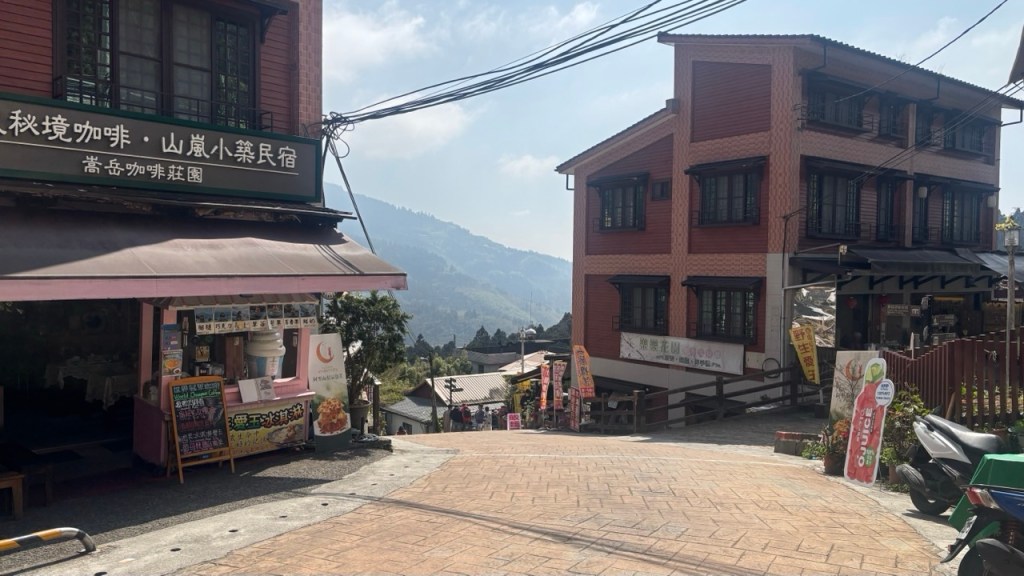
Three hours flew by before we reached Fenqihu Station at an altitude of 1,400 metres. My heart sang as I got off to explore Old Street with its weird and wonderful snacks. I tried the sweetest and most intense ginger tea (see photo below for the ginger being roasted) and picked up the traditional bento box for a picnic lunch looking out over the mountains. It didn’t even feel overcrowded as the train holds just 80 passengers and runs only twice per day. 

Delights at Fenqihu Old Street: Greens, Ginger Tea, More Ginger and Something Unknown
Fenqihu Lunch Spot

Everyone has lunch, followed by coffee and a local donut then gets back on the train for the last two hours of the journey. I had a chat to a girl who didn’t realise it took 5 hours and was doing the world’s shortest day trip – she’d have to get the return bus about 30 minutes after arriving. Alishan does take a bit of advance planning because there are two things that you absolutely have to do. Firstly go to a viewpoint for sunset, and secondly in the morning everyone, and I mean everyone, gets on the train again to a sunrise point close to Zhushan Station to watch the sun come up through the clouds. As well as follow as many trails as possible of course. So staying overnight is the way to go, although accommodation inside the national park is both expensive and pretty poor value compared to the rest of Taiwan.

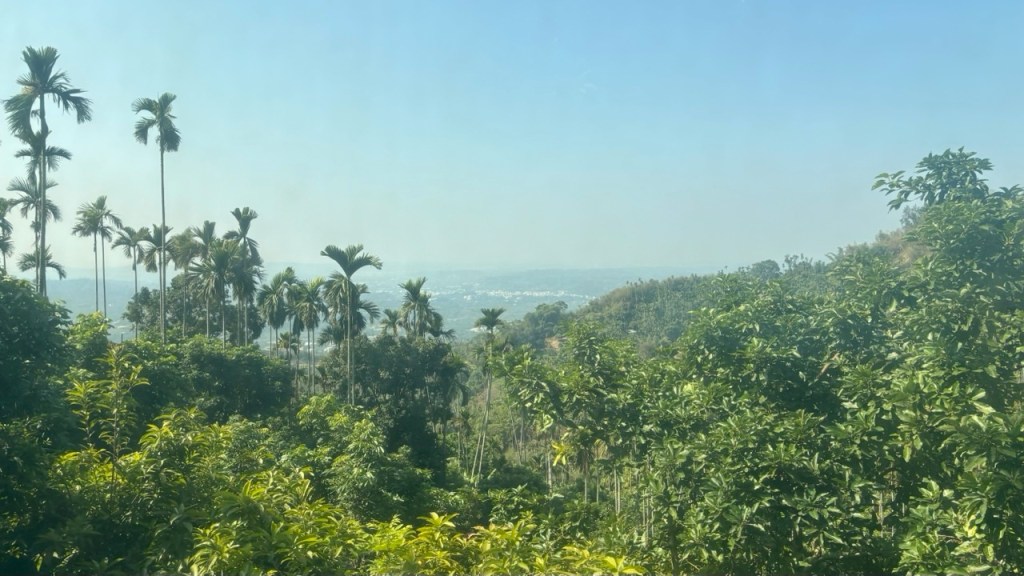
View from the train
Photo Stop
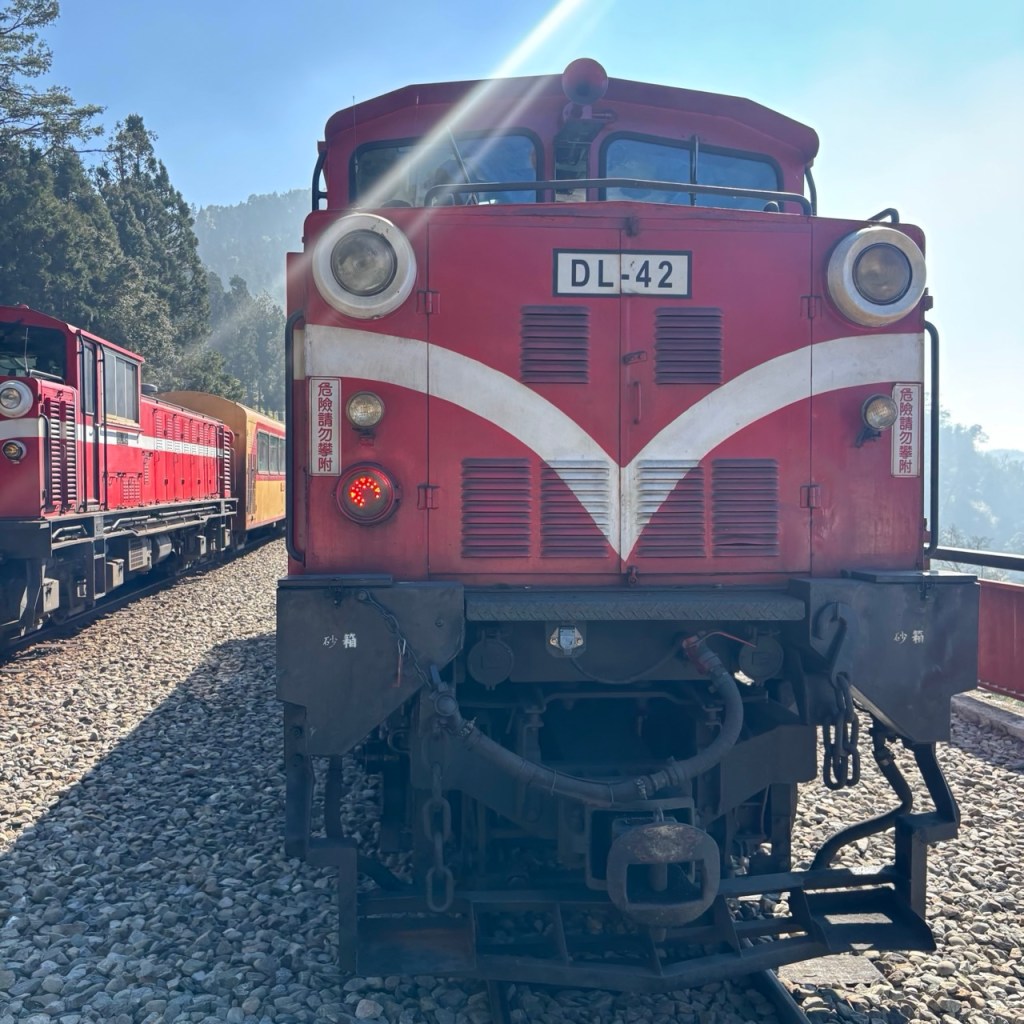
The famous train

I decided to stay one night and absorb the extortionate cost of £70 by eating instant noodles for dinner for a few days and buying my coffee from the highest 7-11 convenience store in the country. Staying inside the park means you can join in the sunrise and sunset trips, and have easy access to all of the trails – sometimes convenience is worth the cost.

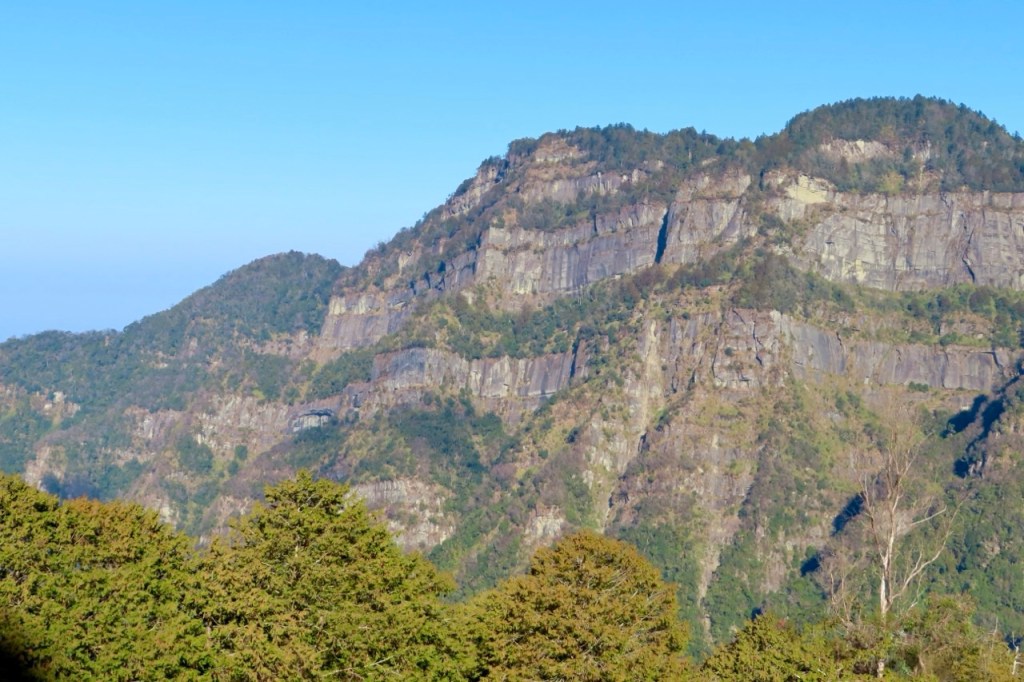
Mountain views

The higher up we went the more interesting the journey got. The bends became a series of switchbacks, as the turns were otherwise too tight for the train. This means the train moves forward into a dead end, then reverses direction until the next switchback when it changes direction again. Arriving at the main station, music was playing from loud speakers and it felt like being at an Alpine lodge.

What goes down must go back up again (with luggage)

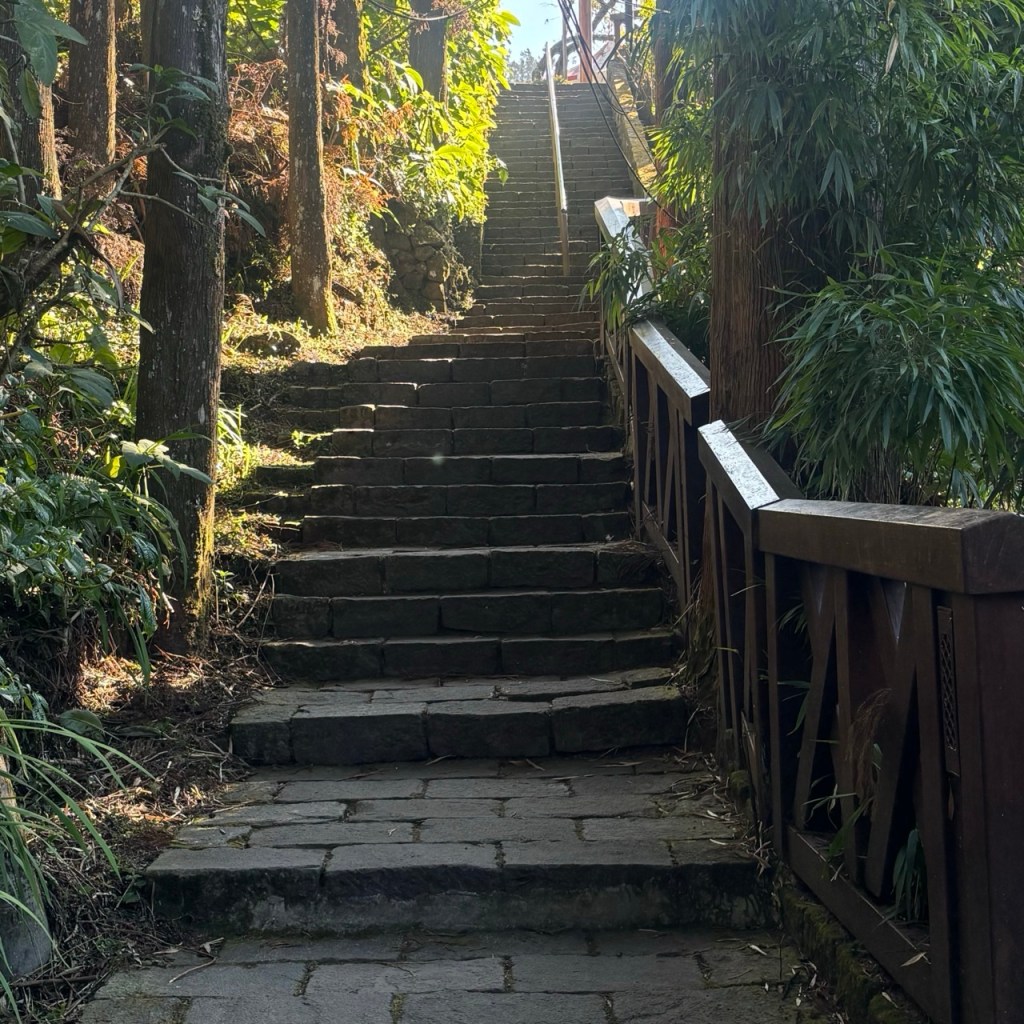
The train ticket includes entry to the park and the hotel area is about a 10 minute walk away,  down some very steep stairs that are a lot less fun to walk up again with luggage. The Gau Shan Ching Hotel was alright considering some of the pretty terrible reviews – yes it’s dated but it’s clean and yes it was very cold (the sign on the wall said the heating is turned on when it reaches 8 degrees!) but it was a chance to wear all of my clothes at once and the novelty factor of a wakeup call for sunrise. I hadn’t known that you have to buy your sunrise train ticket the day before at 16.00 from the train station ticket office (the exact departure time would be confirmed later in the evening to make sure we get there in plenty of time). With sunrise ticket purchased, I wanted to make the most of the couple of hours of daylight left, so armed with a lovely map I jumped on the tourist shuttle bus and headed straight into the park.

The tallest trees

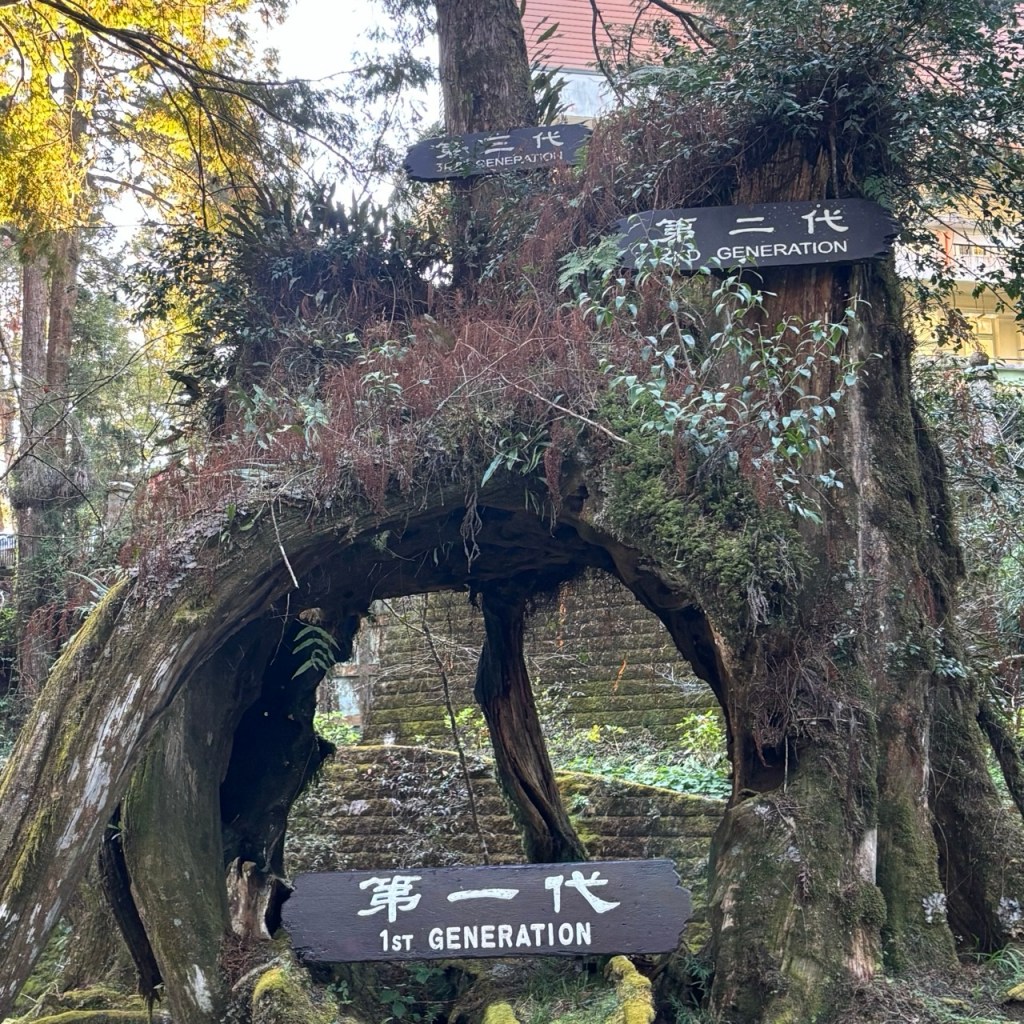
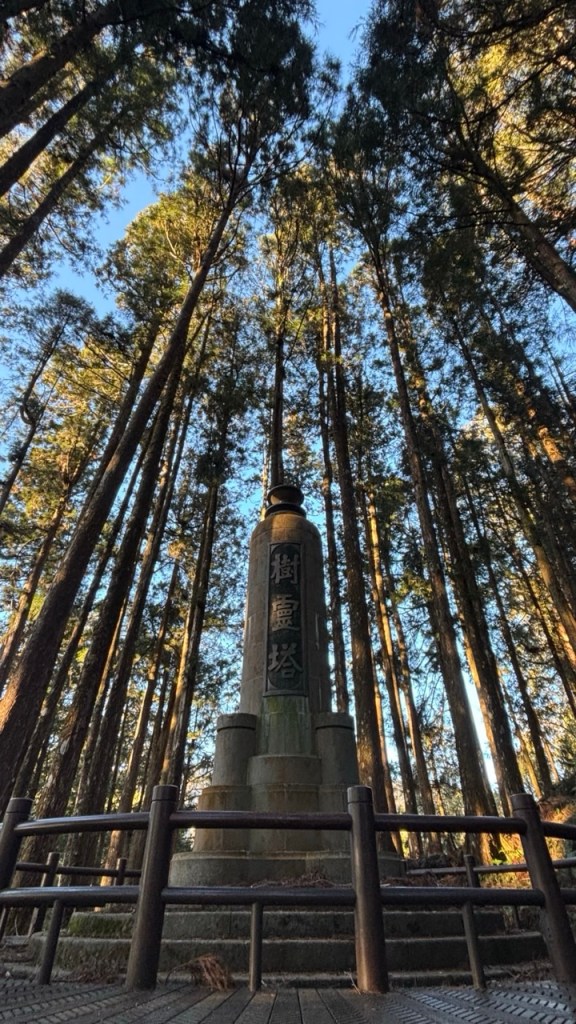
As with everywhere I’ve been in Taiwan, this national park is extremely well organised. You just need to turn up, get a map and make sure you know how to get back out again. Inside the park I was blown away by the size of the trees. They are in fact Giant Trees and it’s impossible to capture their size on camera. There are a number of hikes ranging from shorter strolls along boardwalks to the more challenging which take three hours each way – all have magical sounding names. In fact the whole place is magical. For example, the “Three Generation Trees” and the “Pagoda of the Tree Spirit.”

“3 Generation Tree”

The “3 Generation Tree” is three generations of Cypress trees that have sprouted from the same root. The 1st generation being the roots lying on the ground, estimated to be 1500 years old. 250 years after the first generation died, a seed drifted onto it and grew into the second generation, and the third generation sprouted another 300 years later. And the “Pagoda of the Tree Spirit” was built in 1935 to “comfort the souls” of the 77 loggers who died on the job as well as the spirits of the 100,000 trees that had been felled.

Pagoda of the tree spirit

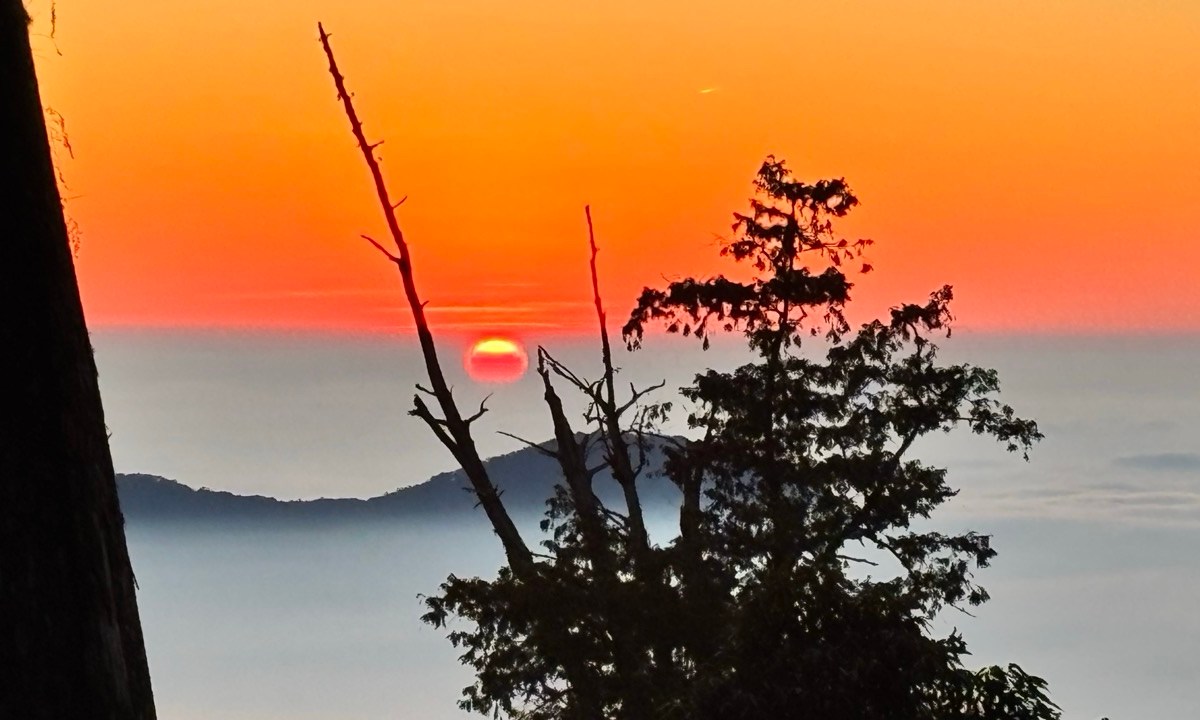
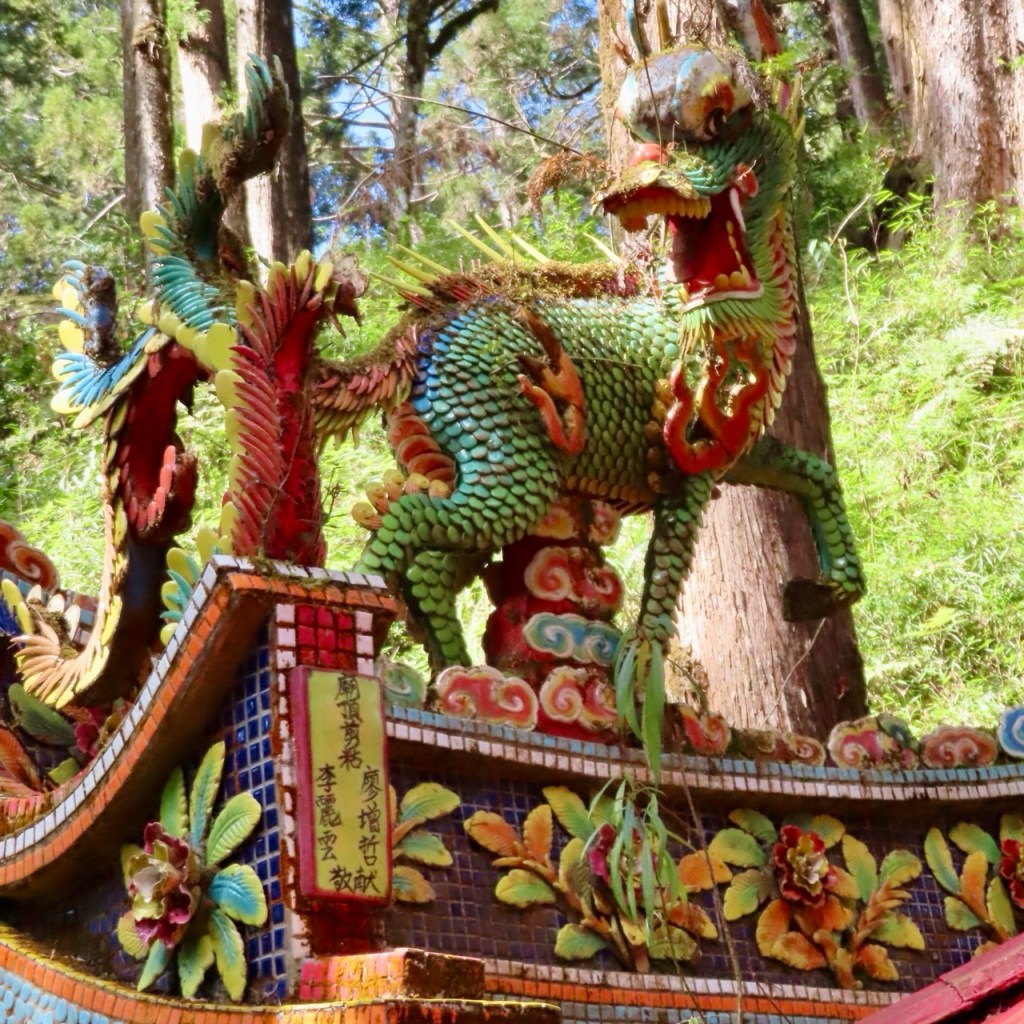
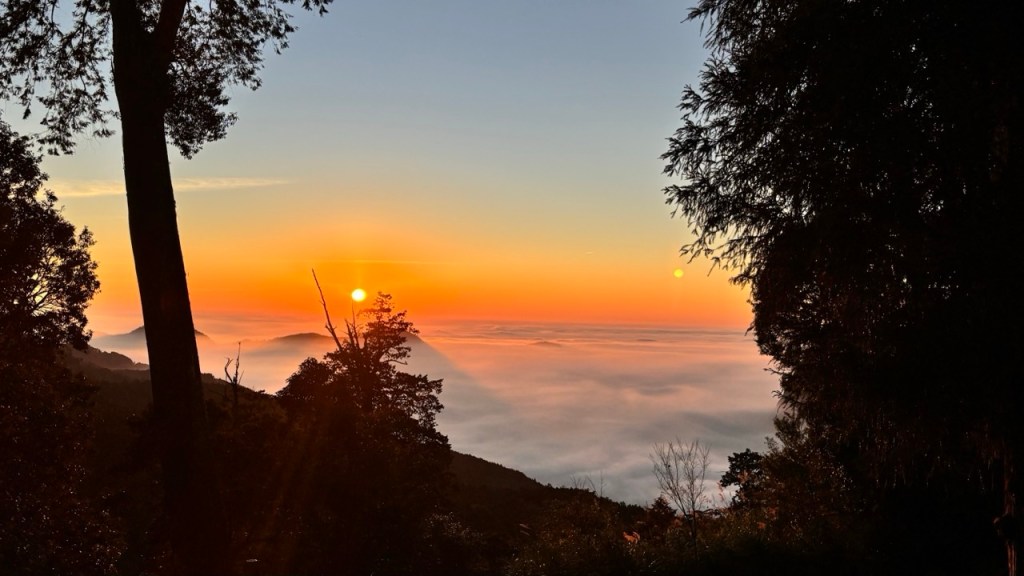
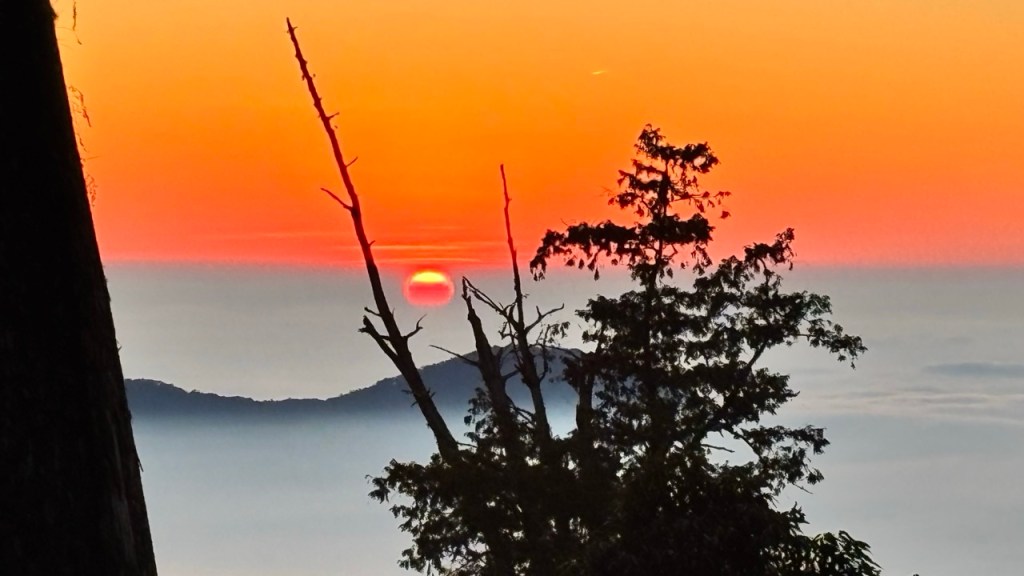
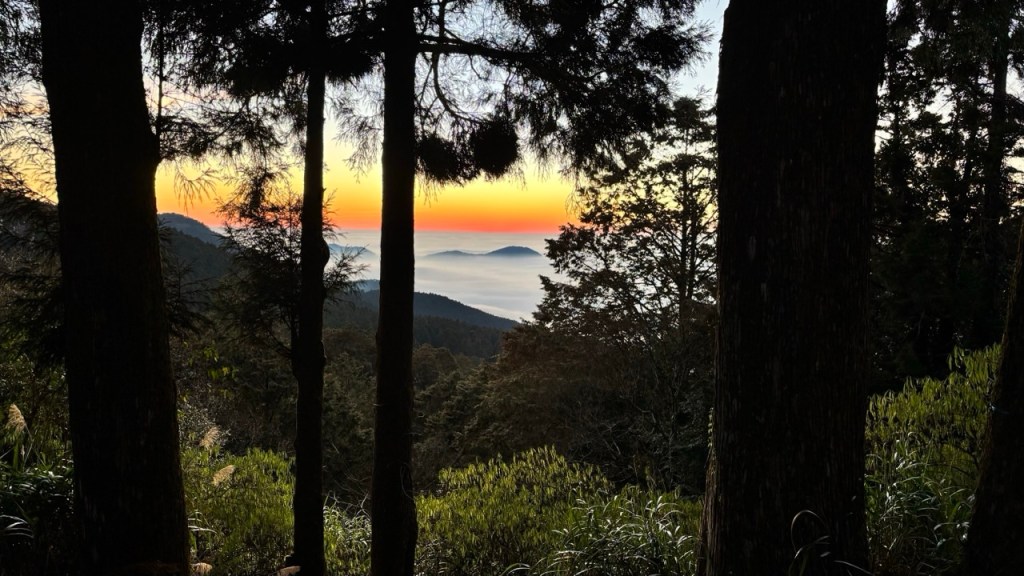
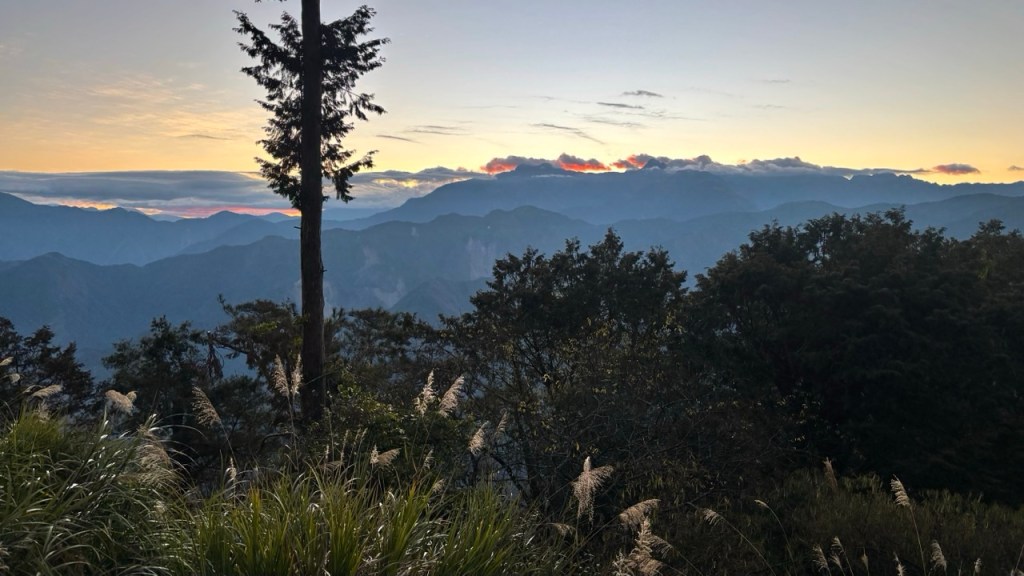
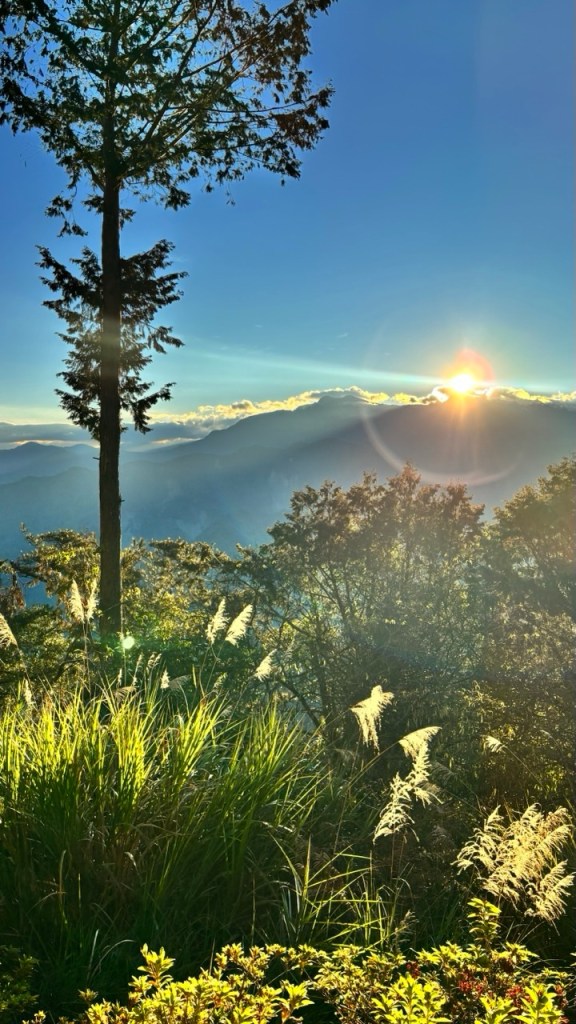
The lady at the information desk gave me a tip on where to watch the sunset, behind the small Ciyun Temple. There were only a few other people there so it was incredibly peaceful (other than a gigantic hornet type creature that the people who were there confirmed came straight for my head). It was also the most stunning sunset I have ever experienced and that is no exaggeration. The clouds form a sea over the forest, and the sun gradually goes down beneath the clouds but is still visible.

Cijun Temple
Sunset
Unedited photo

My photos look like they have been edited or enhanced but they have not – it genuinely looked just like this. Since watching the sunset is a rite of passage at Alishan, it doesn’t matter that you need to walk back through the forest after darkness has fallen.

Another sunset photo, just because

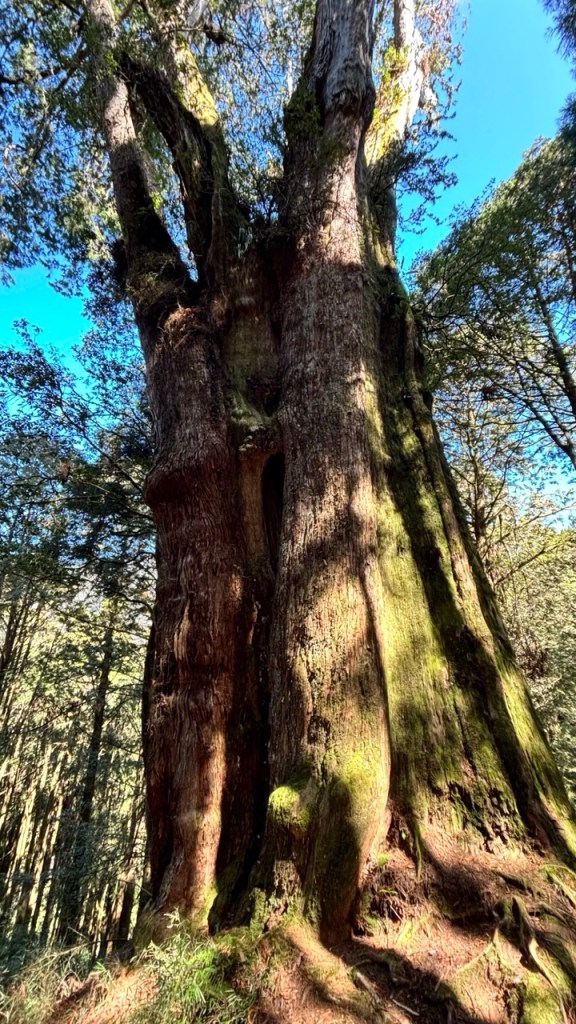
In other facts about Alishan, the Ginkgo tree is considered a living fossil, thought to originate at least 270 million years ago. Its cell-regeneration means that old and young trees remain equally healthy and produce the same fruit, they are also resistant to drought and disease making them close to immortal. One of my favourite trails was the Giant Trees boardwalk which connects 36 ancient, giant Formosan red cypress trees, over 1000 years old. The “number 28 giant tree” is the tallest and oldest tree on the Giant Tree trail. It has a girth of 13.1 meters and is 43.5 meters tall, estimated to be around 1,095 years old. Again it was impossible to capture the size of this on camera. We also have the Sacred Tree (Shenmu) – this 3,000-year-old tree collapsed in 1997 but it’s remnants are preserved near Shenmu Station. And the oldest standing tree, the Shuishan Giant Tree over 2700 years old. There are so many Giant Trees it gets a bit confusing.

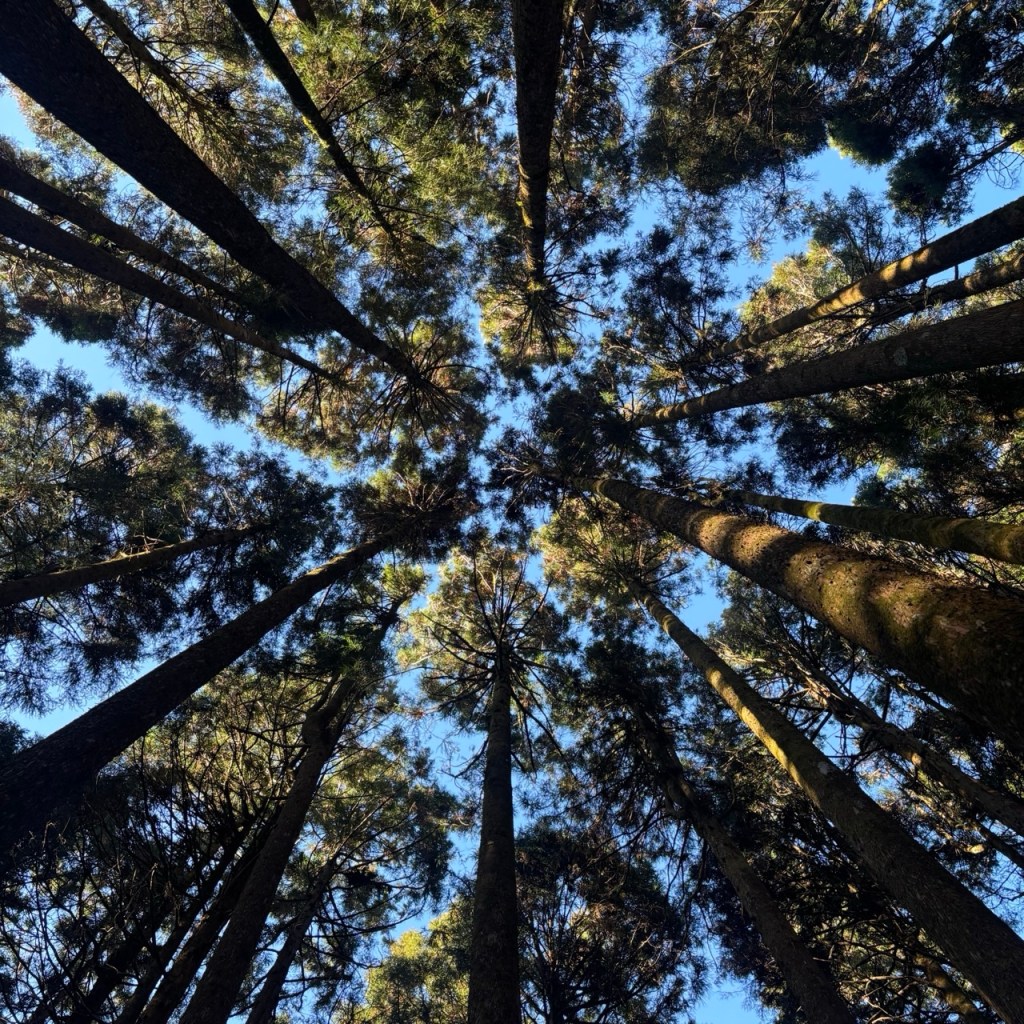
Giant trees

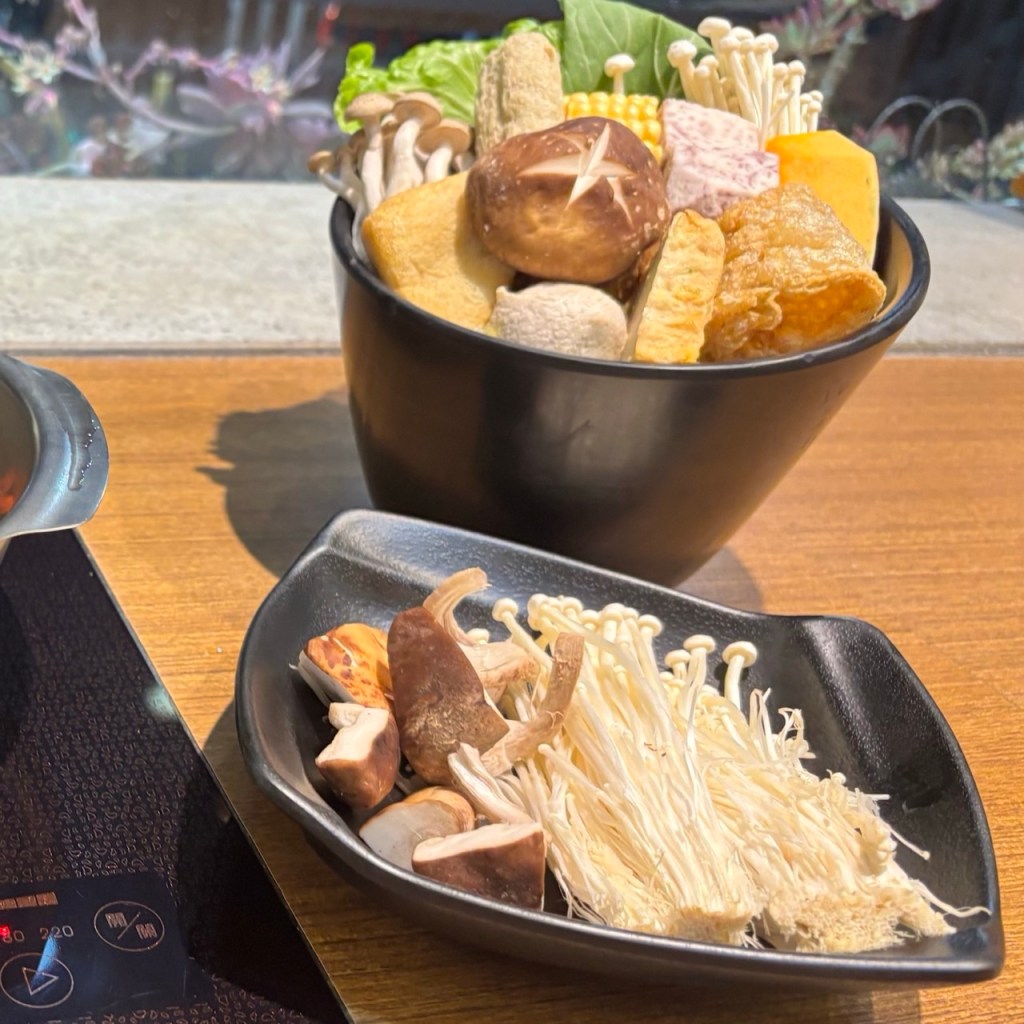
There are several restaurants in the recreation area, also slightly overpriced but convenient. Something I hadn’t tried yet was the Hot Pot and one of the restaurants was serving a veggie version, so perfect for dinner. I sat next to a friendly couple who helped me cook it – the waitress simply turns on the individual stove that everyone has at their table and puts down a plate of various raw vegetables.

Hot pot ingredients
Hot Pot cooking away

I tried to get some sleep before wake up call at 4.30 am, an hour before the train at 5.30 but it was very, very cold. Getting up, I was freezing but it was really fun to head out in the darkness with everyone else, grab a coffee (you’re allowed to drink on a train here unlike on the metro systems) board the wooden train and follow the crowd to the lookout area.

Waiting for sunrise
Worth the wait!

After the sun has risen all the food hawkers open up their stalls serving hot coffee, ginger tea, steaming buns or sizzling Taiwanese pancakes. Being only 6.30 am I decided to walk back and get in another hike before checking out of the hotel, avoiding the crowds who were mostly taking the train back.

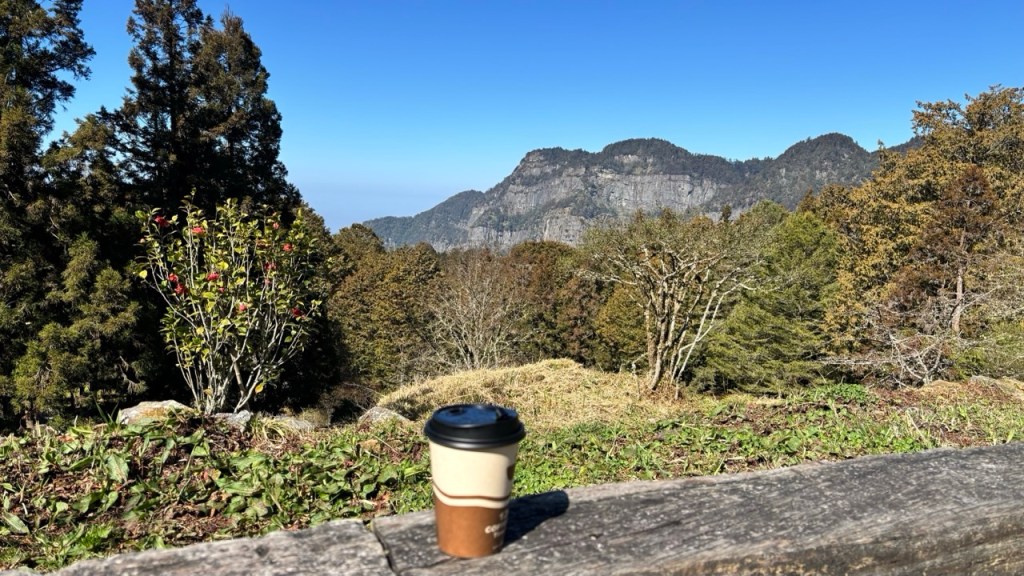
Cheapo coffee with a view

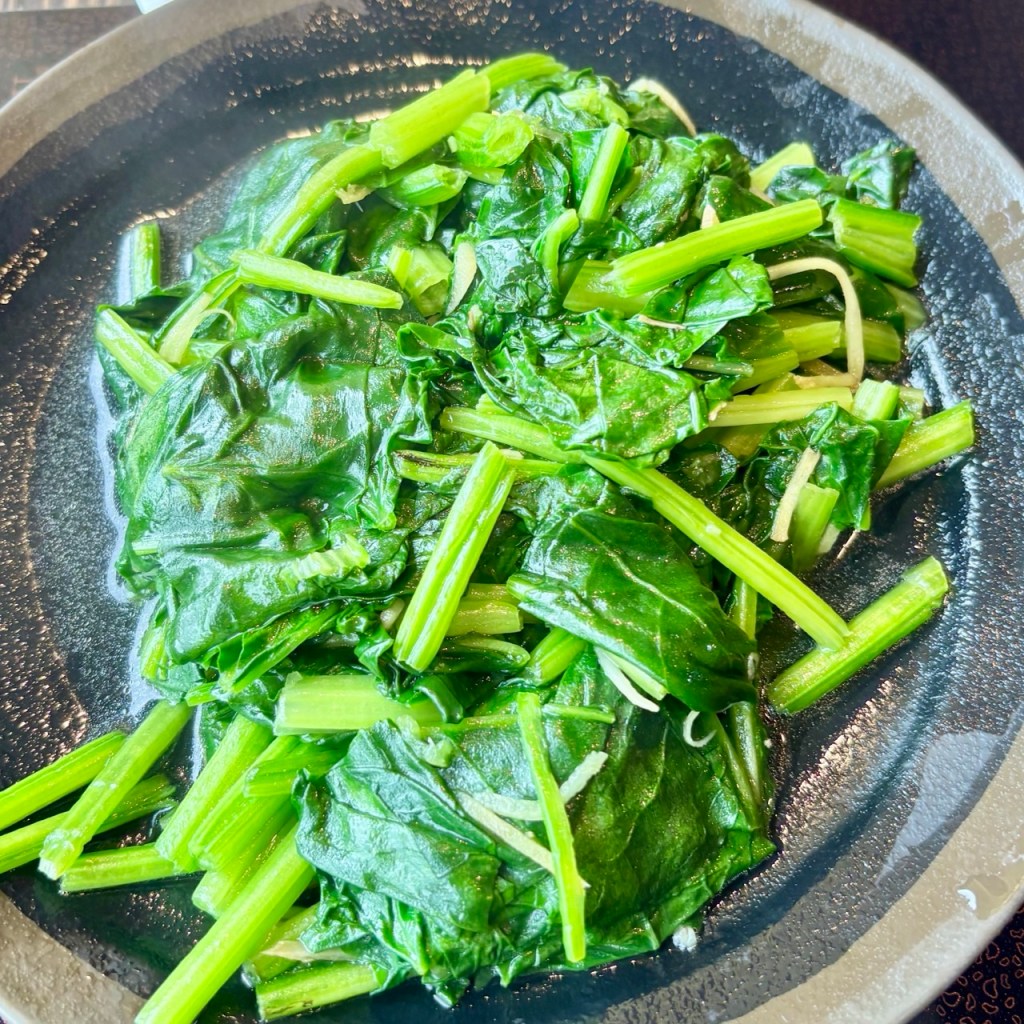
The was also time to try a local snack of two whole sweet potatoes, which makes for a tasty and filling stop gap (but not nearly as delicious as the sweet potato in Japan!). My favourite food in Taiwan has been the spinach and ginger, which a lady at the next table told me is blanched before it’s fried, getting rid of the earthy taste. I have lost count of the times I’ve had lovely conversations when sitting on communal tables.

I could live on this
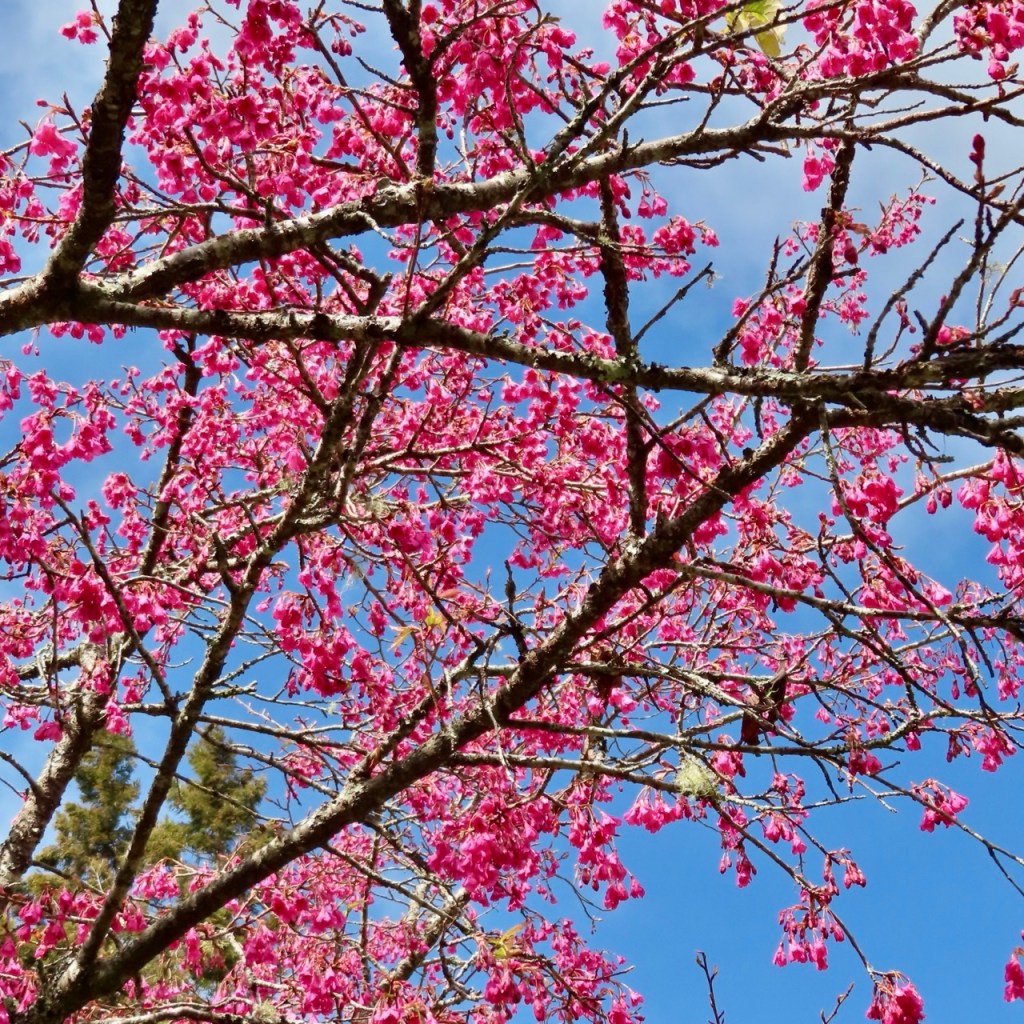
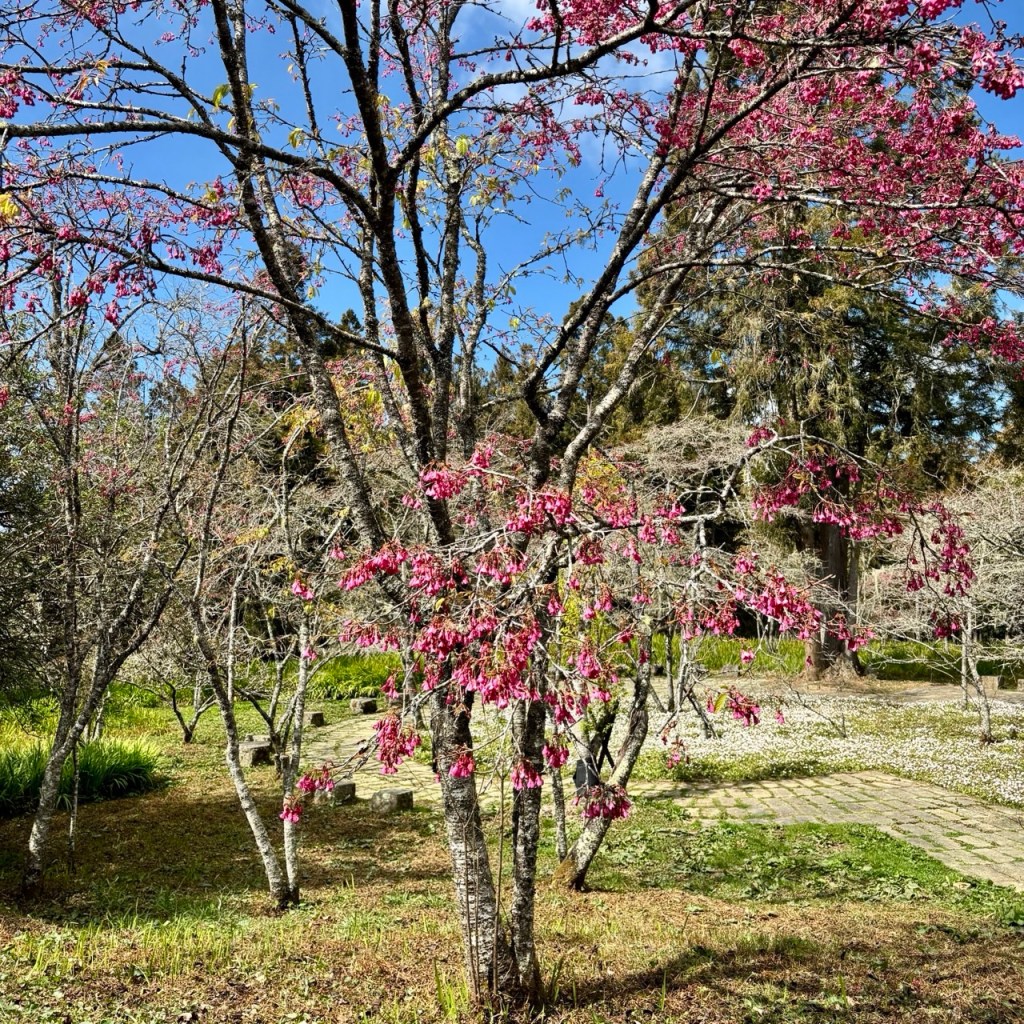
Cherry blossom in bloom
More cherry blossom

Alishan also has the first cherry blossoms in bloom, which is wonderful to see. It has been an almost spiritual experience here, exploring the trails, experience sunrise and sunset mostly on my own – there are plenty of local tourists around at the viewpoints so it never feels isolated, but few Westerners and the majority of the trails are pleasantly empty.

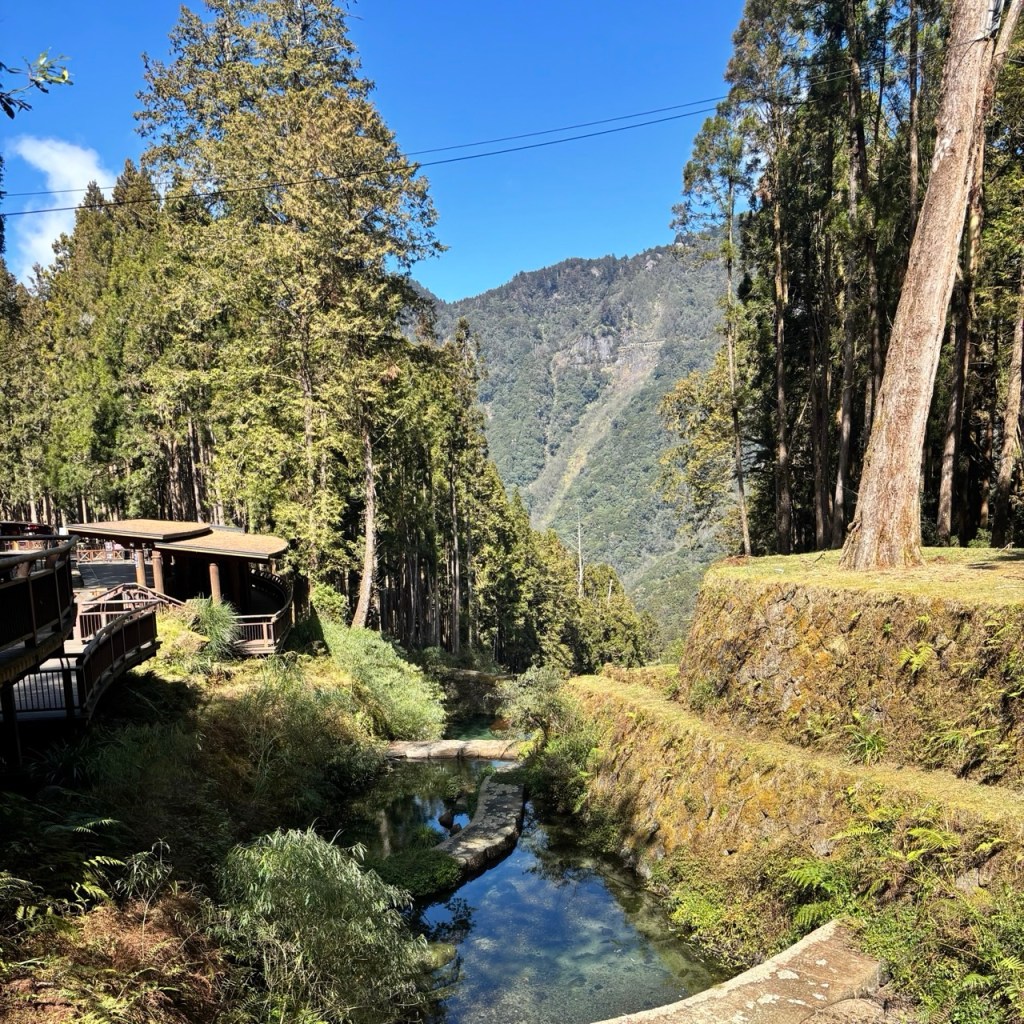
View from one of the hiking routes
Add caption

After two days, all too soon it was time to get the 3pm tourist bus all the way to my next stop – the mysterious sounding Sun Moon Lake …

Taitung: Nature and Neolithics

Taitung was an addition to the itinerary after reading about a national park where you could hike with monkeys and soak in hot springs. I liked Taitung as soon as I got off the train. The sun was shining and there were cute figurines in the garden around the train station. I treated myself to my own room in the lovely Giraffe B&B for £20 a night including breakfast. This got me a beautiful room with two beds, shiny white bathroom and a TV set to BBC news. The housekeeper let me in and asked via Google translate what time I wanted breakfast. It’s located along with the other more budget options close to the train station and regular buses run the 15 minutes to the downtown area.

Taitung welcome committee

Taitung has a lot to offer – I could easily have spent more than the couple of days I had. Close to the downtown area there is a big coastal park where walking and cycling paths connect the beach with the city. Follow the paths further and you reach the massive forest reserve with its lakes and bird watching. It’s a popular cycling route and renting a bike would be really nice. The indigenous culture is also much more visible here – more on that later.

Luxury

To get to the downtown area there are regular buses that take about 20-30 minutes as they literally go all around the houses. Taitung just has a really nice vibe to it. Even the dogs are chilled out. They appear to be street dogs as they are freely wandering around town but they have collars and look cared for.

Local dog
Local cat
Nature in Taichung city
Local hangout by the coastal park

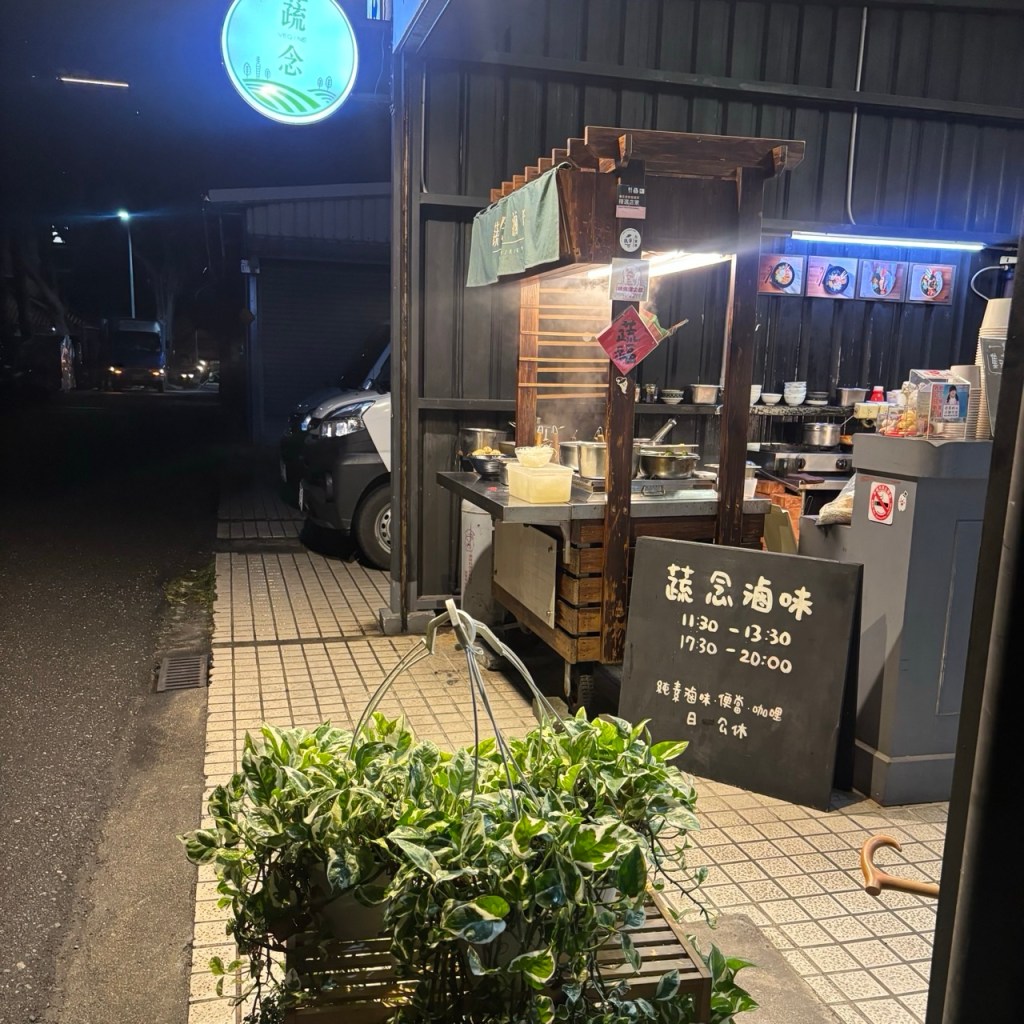
I found a lovely little vegan food stall called Vegine with a limited number of seats where the owner cooks whatever vegetables and noodles you select from the shop and like at many of the stalls, her children took a break from playing to help bring the food to customers. It was so good I went back twice and ordered two lots of the fried tofu. I’d go back again just for that.

Fried tofu
Cycling paths
Vegine

I was about to get the bus back to the B&B when I heard music and discovered a low key night market with a local band playing songs I hadn’t heard before mixed in with some Bon Jovi covers and people from the nearby islands selling local food, crafts and jewellery. Scones filled with hot brown sugar seemed to be the thing. I had wanted to visit the two islands, Green Island and Lanyu (Orchid) Island to learn more about their indigenous culture, but local advice was that it’s too windy in winter and regular boats aren’t running.

Getting off the bus
Entrance to the Jhihben Forest Reserve

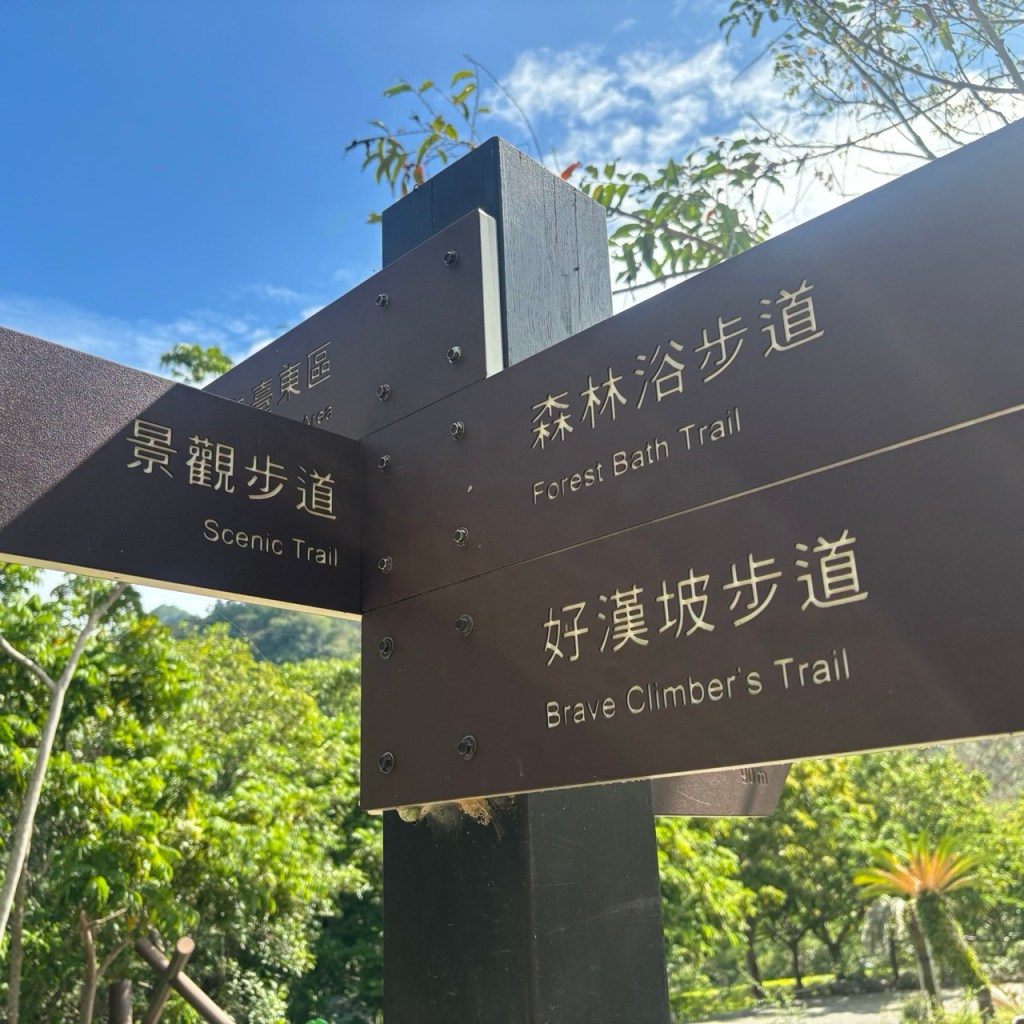
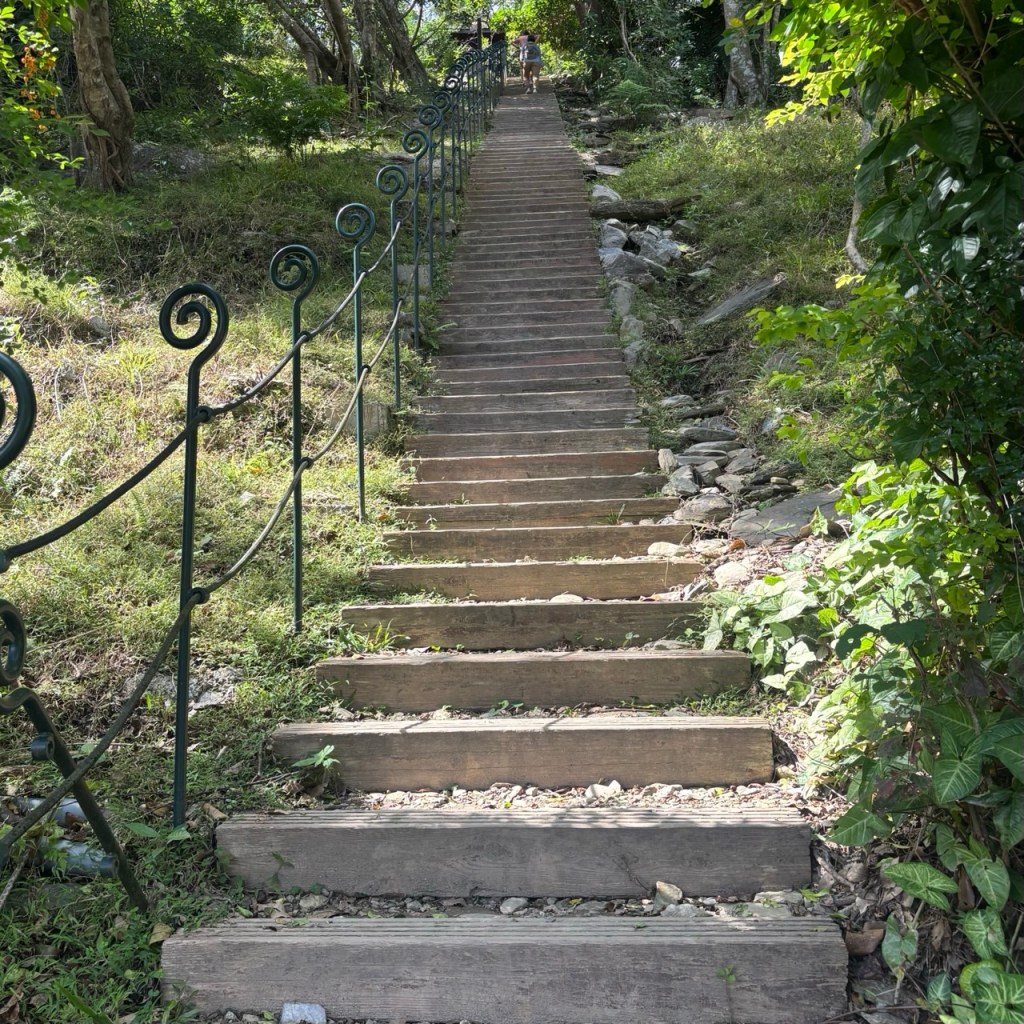
The next day I went down to breakfast at the pre-arranged time to find the housekeeper had already put out a plate of food including a chunk of meat and a salad, neither of which I wanted to eat. I explained I only needed the bread and fruit and set off on a day trip via local bus to the Jhihben Forest Reserve. I hoped to stop at the hot springs in the area on the way back. As was becoming usual, I was the only westerner around, with just a few passengers on the bus but the journey was easy enough. After paying the small entry fee you get given a map with a few aptly named options for hiking, like the ‘Brave Climber’s Trail’ and a key that indicates level of experience and effort required. I went for the ‘Forest Bath’ and ‘Scenic Trail’.

Hiking in Taiwan is amazing because you get the trails almost to yourself but there are enough friendly families around and it’s well organised so it’s very safe. Aside from all of the ‘beware snakes and wasps’ signage. Everyone I passed said ‘Welcome to Taiwan’ – a big reason that travelling in Taiwan in general is so great because it’s not overrun with other visitors, there are no tourist prices and nobody rips you Local people are interested to have a chat and go out of their way to help.

“Brave Climber’s Trail”

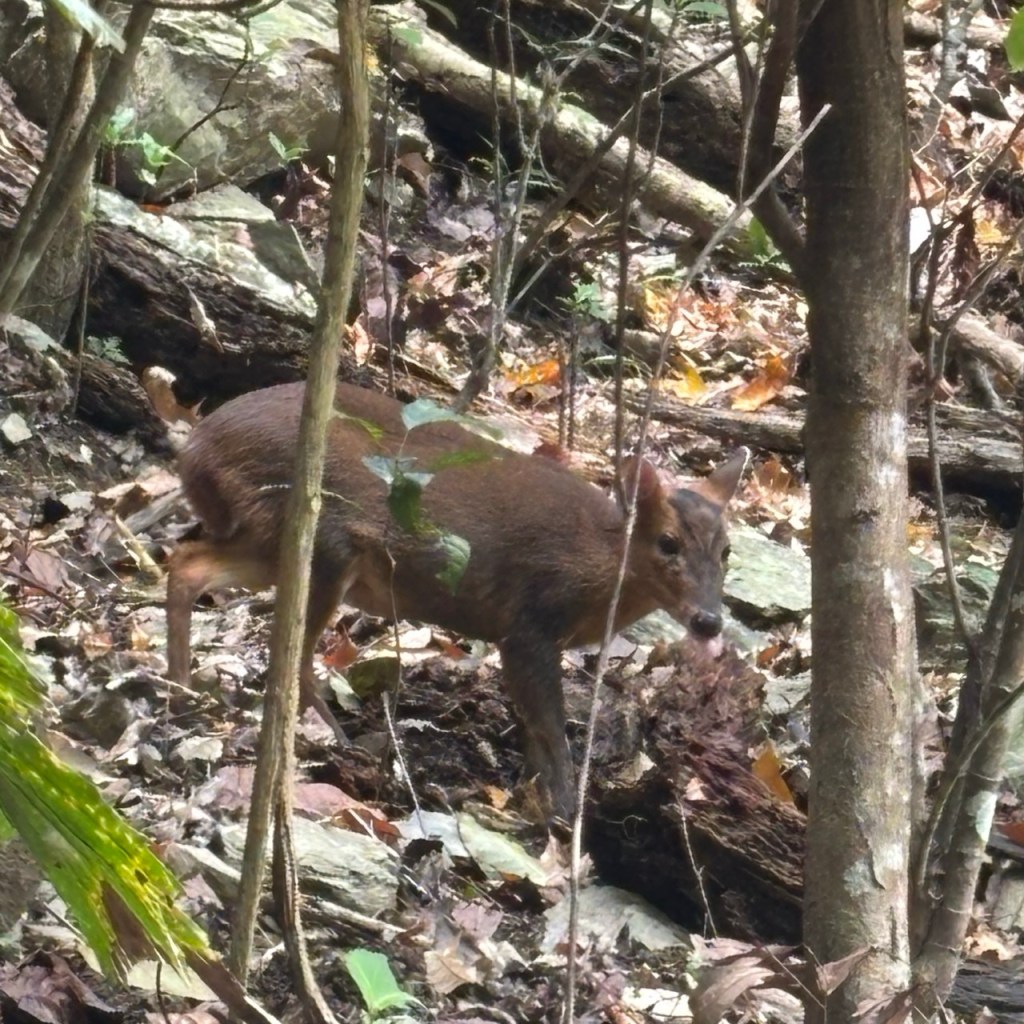
The first thing I noticed were the butterflies. There are 100 species in the forest and they swarmed around me, it’s quite magical. As soon as I got higher up into the park I saw the first mammal of the day, the gorgeous ‘Reeve’s muntjacs’ which I watched with a family several times along the trail.

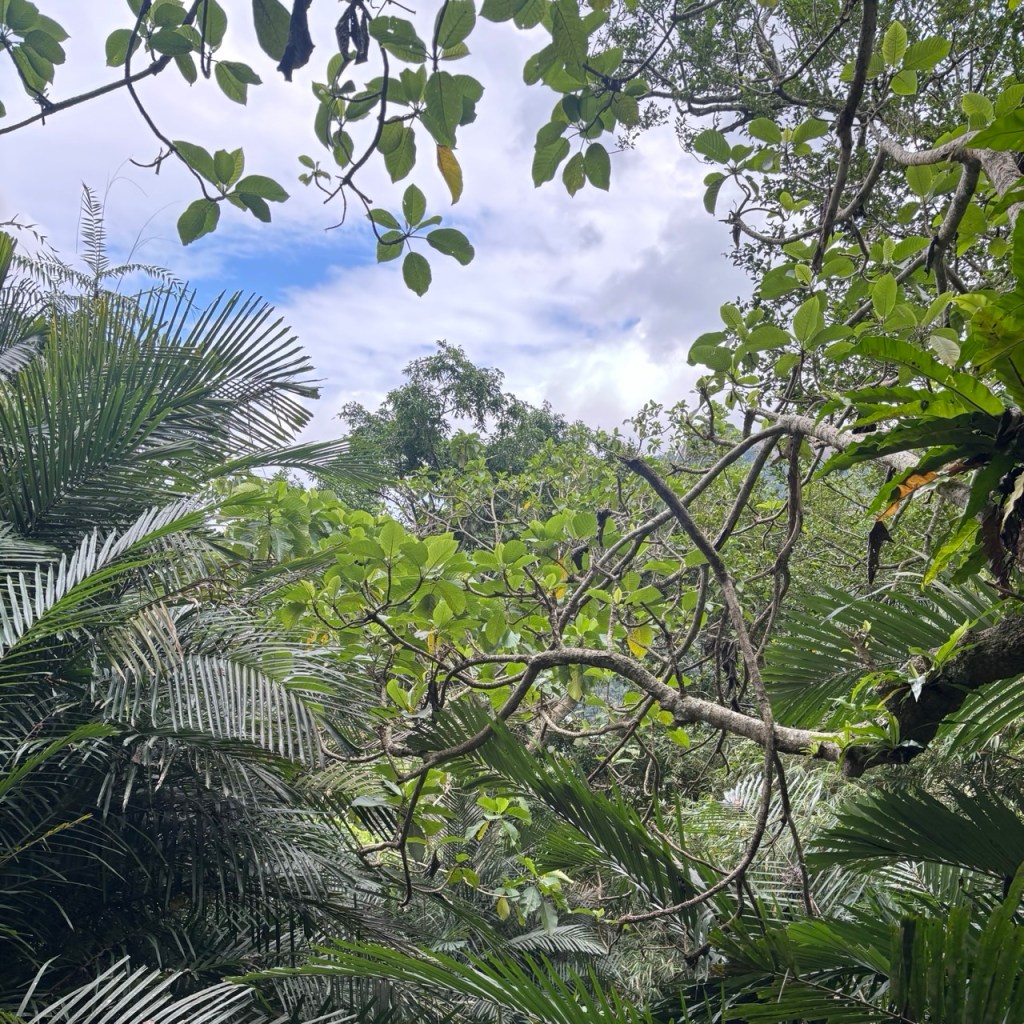
Beautiful trees

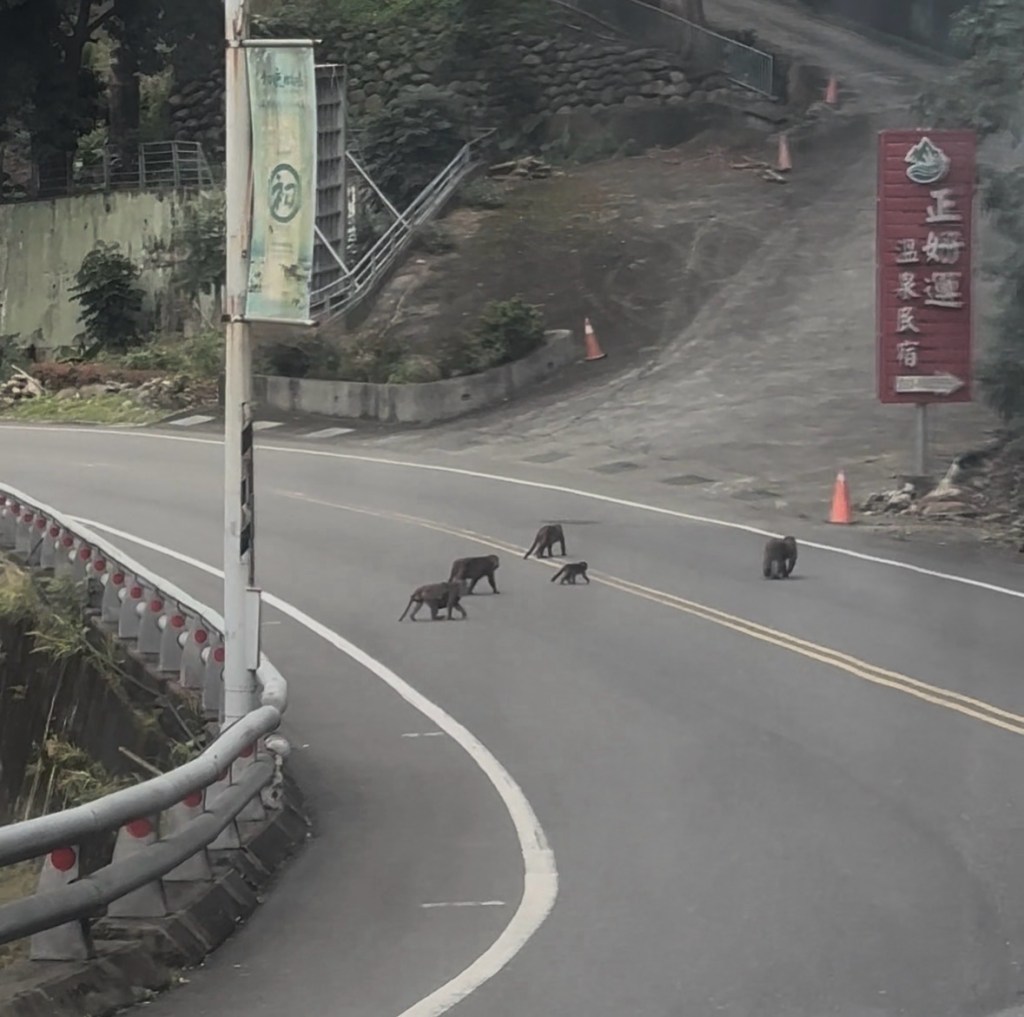
Next up were the Formosan Rock Monkeys. These cute little monkeys were just hanging out in the trees in their groups eating their fruits, rather than trying to steal your food.

Muntjac
Monkeys

The forest is an absolutely idyllic spot. You need a couple of hours to explore the park depending how many trails you do. One part was closed off due to damage, I assume from some sort of natural disaster. The prime spot for the monkey viewing had signs about passing through quickly due to risk of rockfall but the monkey watching was too good a chance to pass up.

Monkeys crossing

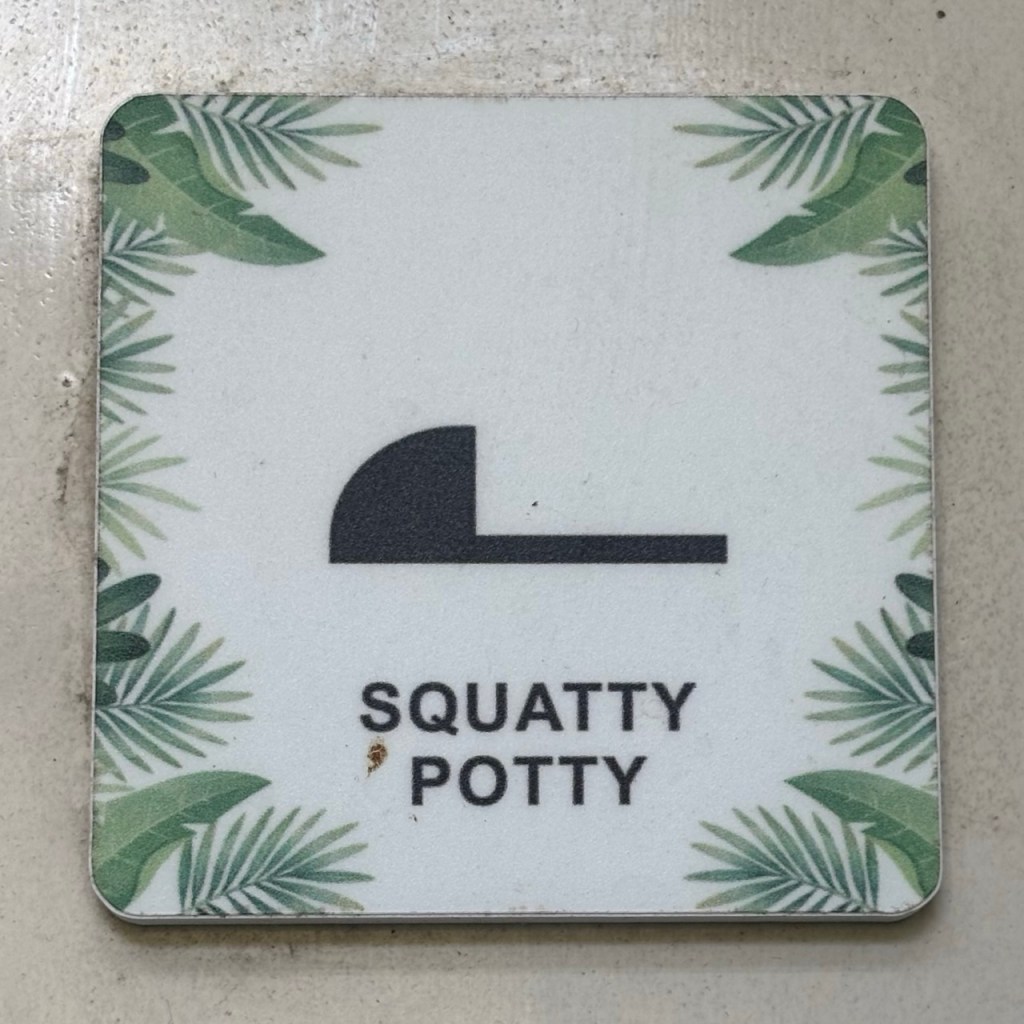
There are no food or drink facilities inside but there are toilets and water fountains – in fact there are water fountains everywhere in Taiwan. You never need to buy water. I made the mistake of following Google maps to the hot springs. This meant I got off the bus at a temple car park next to the river which was definitely not a public hot springs spot. I asked some ladies visiting the temple but they misunderstood and thought I wanted to paddle in the river.

Toilet
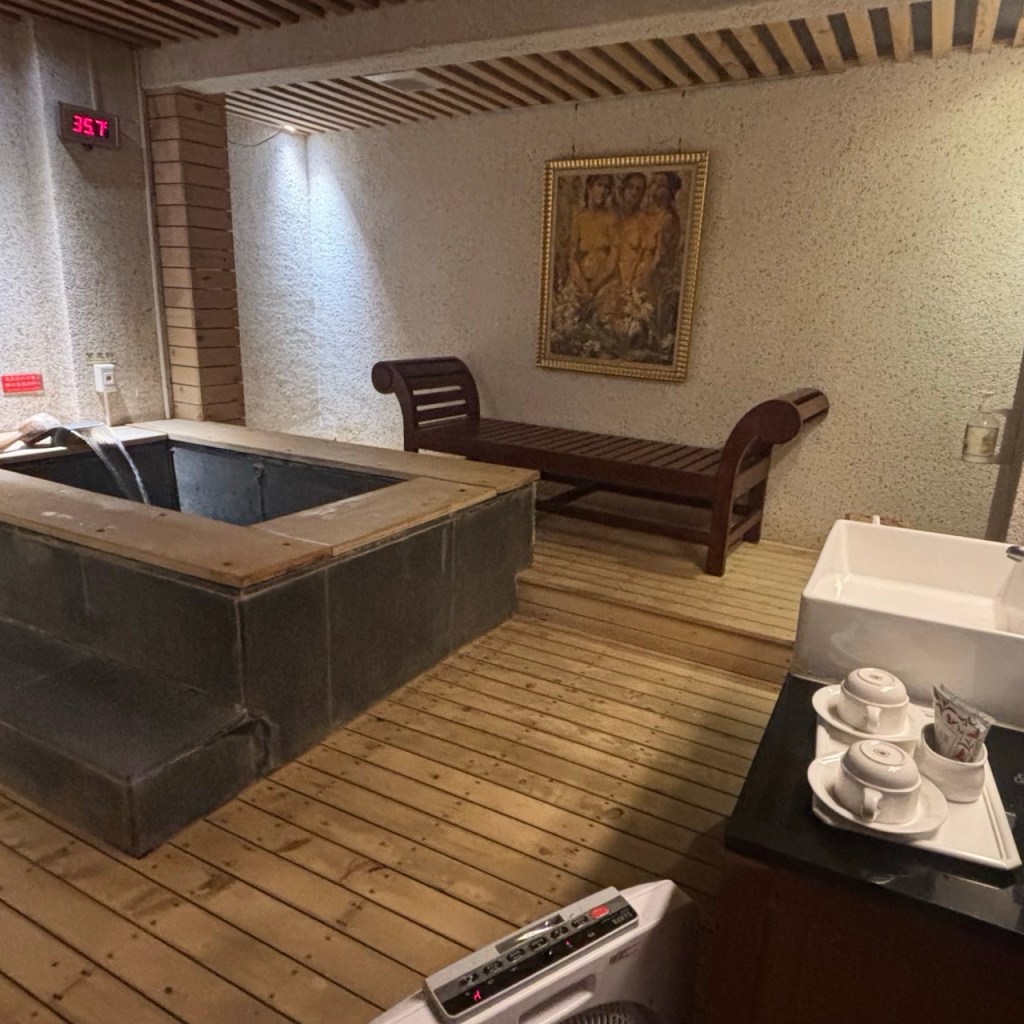
More luxury

By then it started to rain and the only thing I could see was a hot springs resort hotel. They weren’t open until later on that day by which time I’d have missed the bus back – the buses ran at very irregular hours. There is always a solution particularly when you have a strong currency on your side. The nice lady at the hotel made several suggestions including taking a “private spa” for one hour and getting a taxi back all the way to Taitung. This hadn’t even crossed my mind but it cost less than £10 to be driven back door to door. The lady stressed that this type of spa was naked, so I had to use Google translate to confirm that it was indeed a private spa and I wouldn’t be sharing with anyone. It was a truly luxurious experience which would be outrageously expensive if hot springs even existed in the UK.
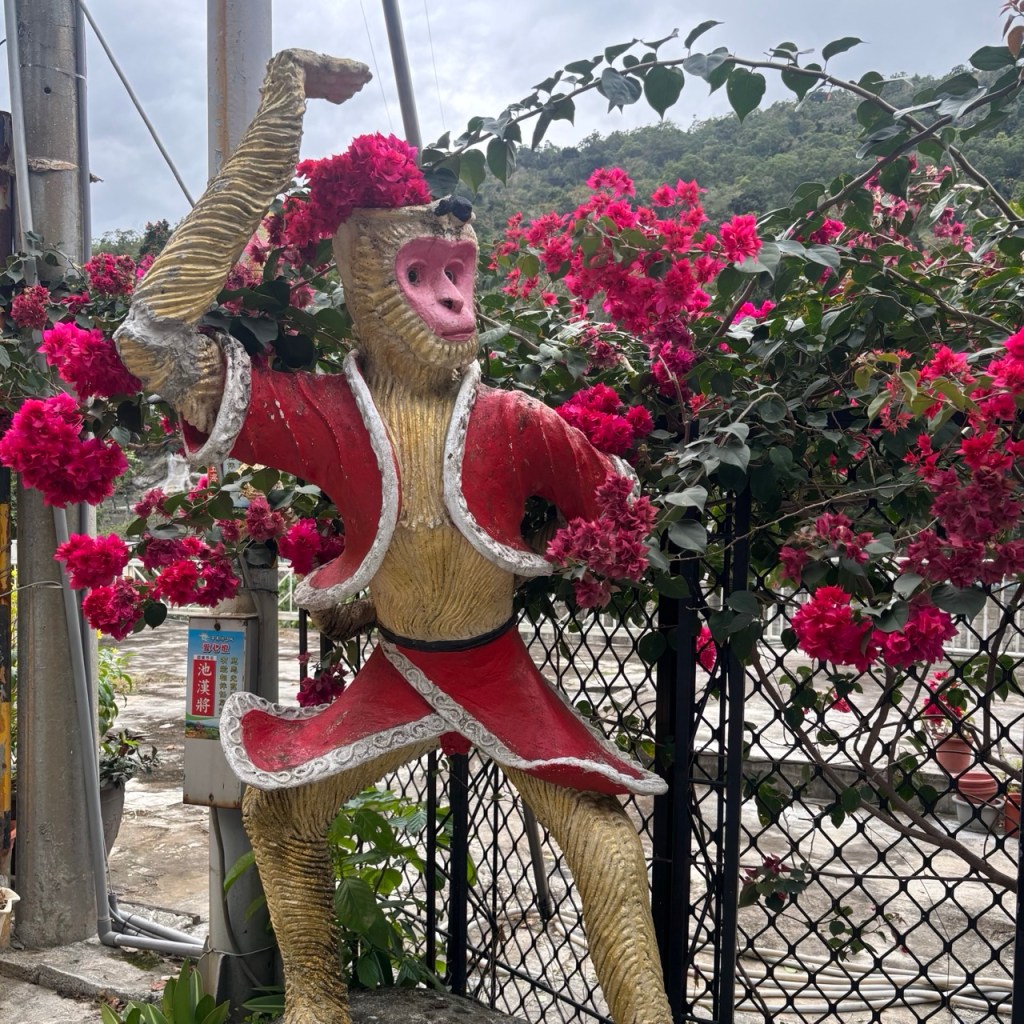
Beware the monkeys

When I got the bus back from town to my B&B after the long day, as often happens in Taiwan, a lady started chatting to me. She knew some English and told me she was in her 70s and on her way back from meeting up with her sister in a mountain town to see the early cherry blossom blooms. When she learned I was travelling alone around Taiwan she said that’s wonderful, and told me ‘YOLO – you only live once!’. I also had a concerned text message from my B&B saying “We noticed that you didn’t enjoy our breakfast. Would you like a vegan meal?”.

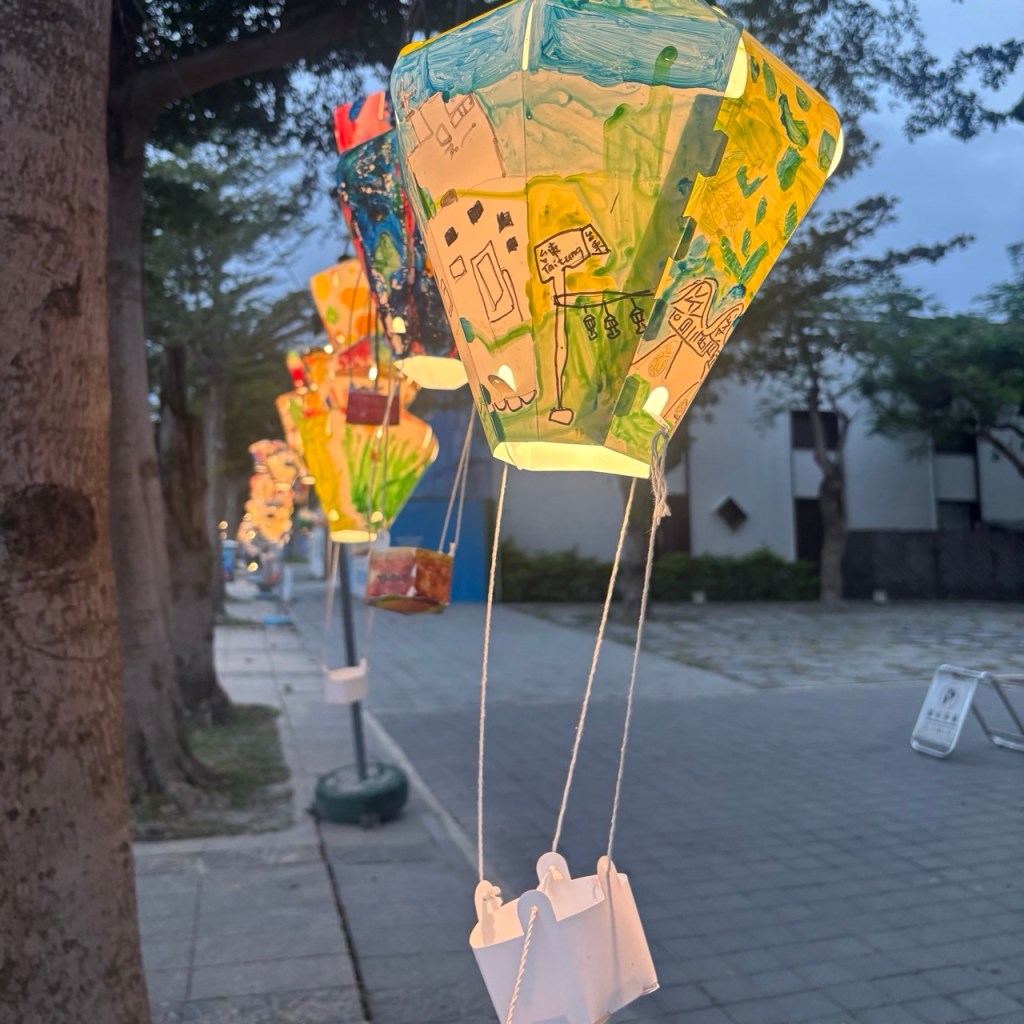
Lanterns around the station

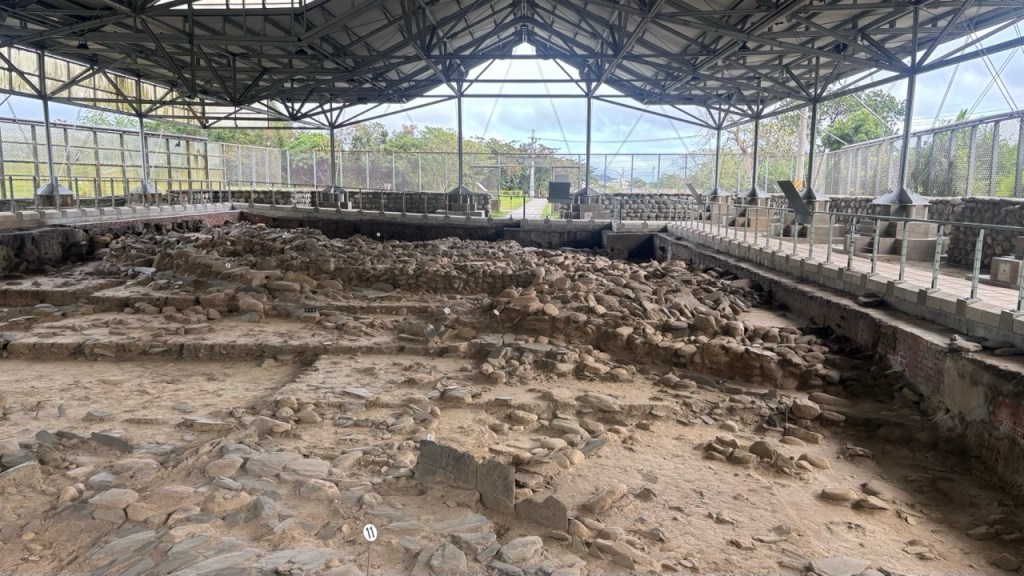
In contrast to the nature, I would highly recommend a day exploring the history of this area visiting the very impressive History Museum and the Peinan burial site. You can do them together but likely need a taxi due to the erratic bus schedule, though the Peinan site is walkable from the train station.

Peinan site

The History Museum takes you through from the creation of Taiwan from a geological perspective through to the movements of the Polynesian people up to the present day culture with influences from all over Asia. What makes Taiwan interesting is the tectonic evolution, namely the collision of the Eurasian and Philippine Sea Plates. According to the museum facts, the Coastal Range is still moving at a speed of 6-13 cm per year relative to the Central Range. During the Ice Age, the Taiwan Strait became land because the sea level dropped, allowing the migration of plants and animals into Taiwan.

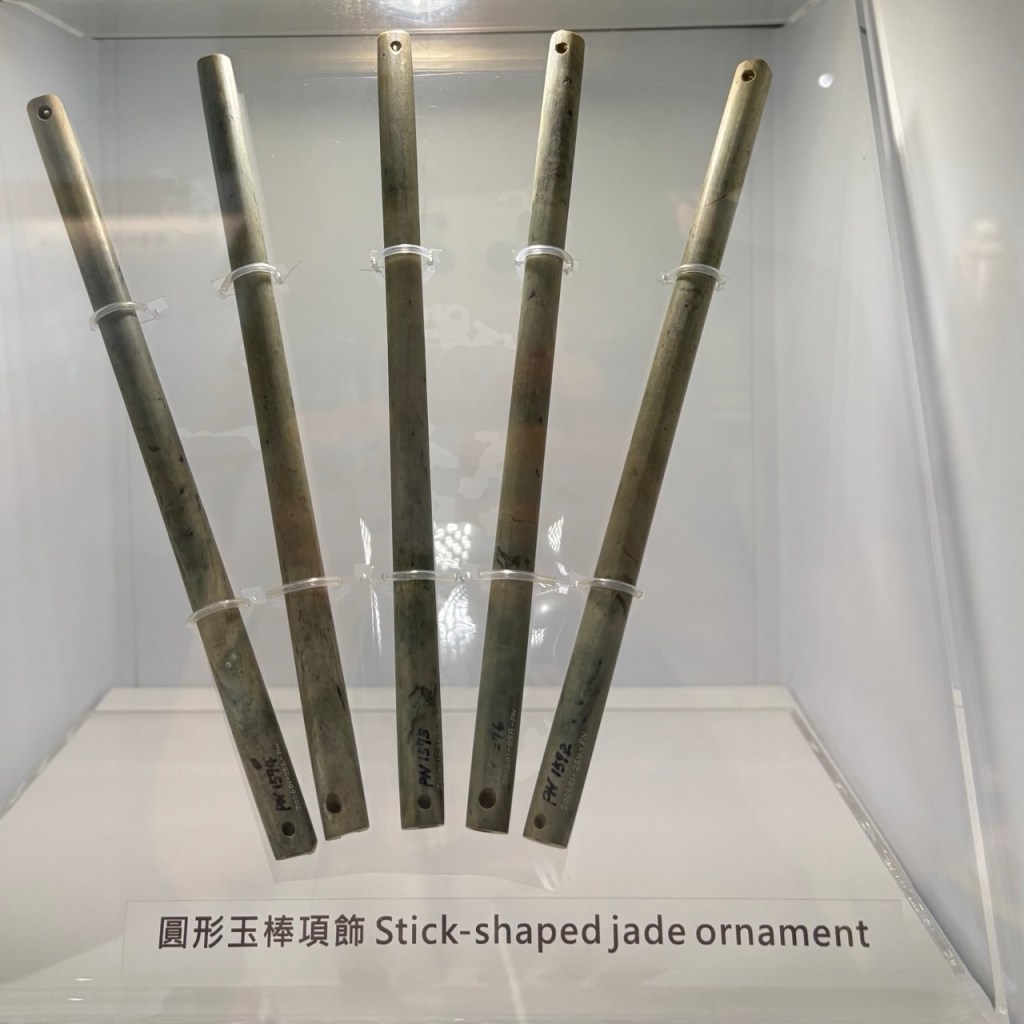
Jade on display in museum

Taiwan is also a know as a “place of convergence” due to it’s location – many different ethnic groups and objects have passed through, including the trade of Jade, glass beads and sweet potatoes with China, Southeast Asia and the Austronesian people. The museum has some really good exhibits of indigenous culture. Austronesian people make up less than 2.3% of the population according to when the info was written but they make up 7% of Taiwan’s military and 60% of special forces.

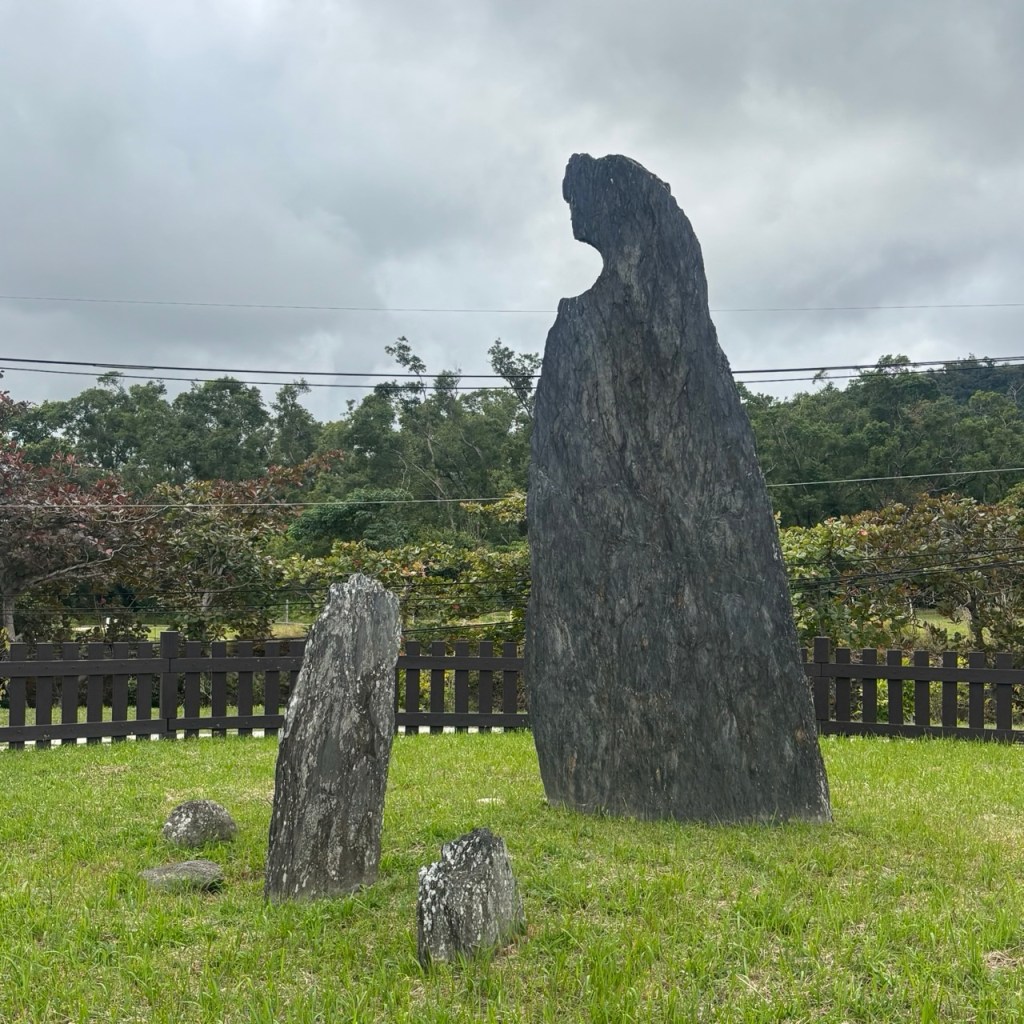
Last remaining slate pillar

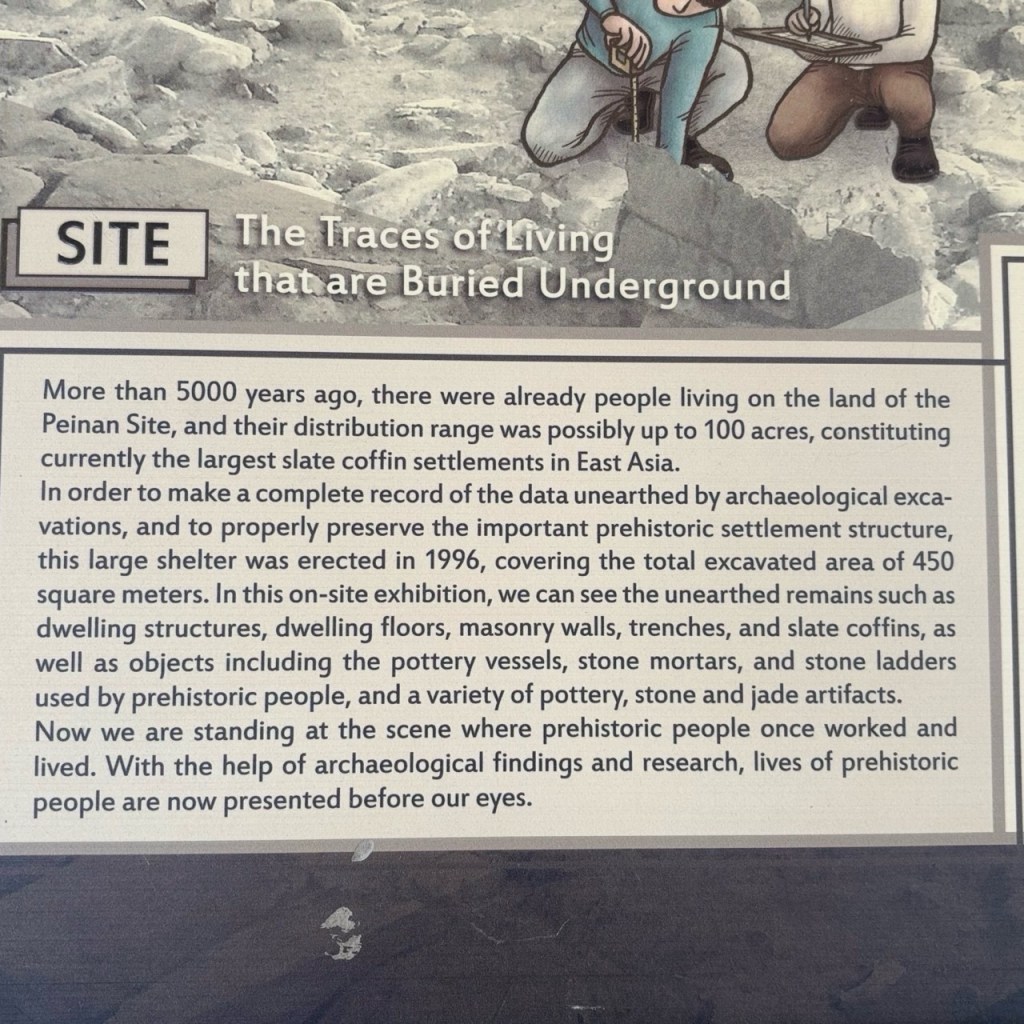
Without turning this into a history lesson, the Peinan site is also fascinating. This a prehistoric culture, with people settling here 5000 years ago. In 1896 a Japanese scholar visited Taitung and photographed the stone pillars. But it wasn’t until 1945 when the Japanese carried out the first excavation. The Peinan Culture is believed to have been active from middle to late Neolithic Period with people leaving the site approximately 1900 years ago – nobody really knows why or where they went though there are theories they went into the mountains.

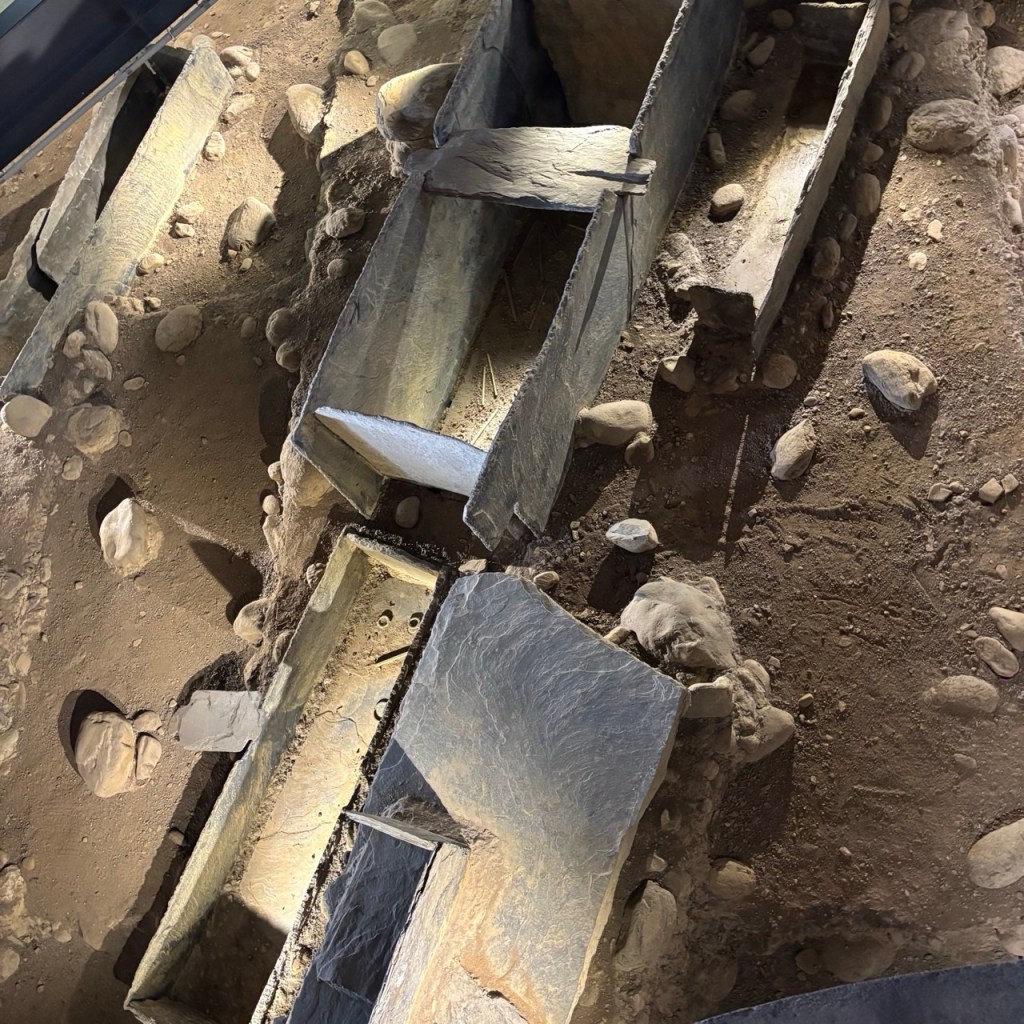
Slate coffins

In 1993 the huge group of slate coffins were excavated – this is the largest excavated slate coffin burial complex in East Asia with over 200 unearthed, including single-body and multi-body burials.

Info on the coffins

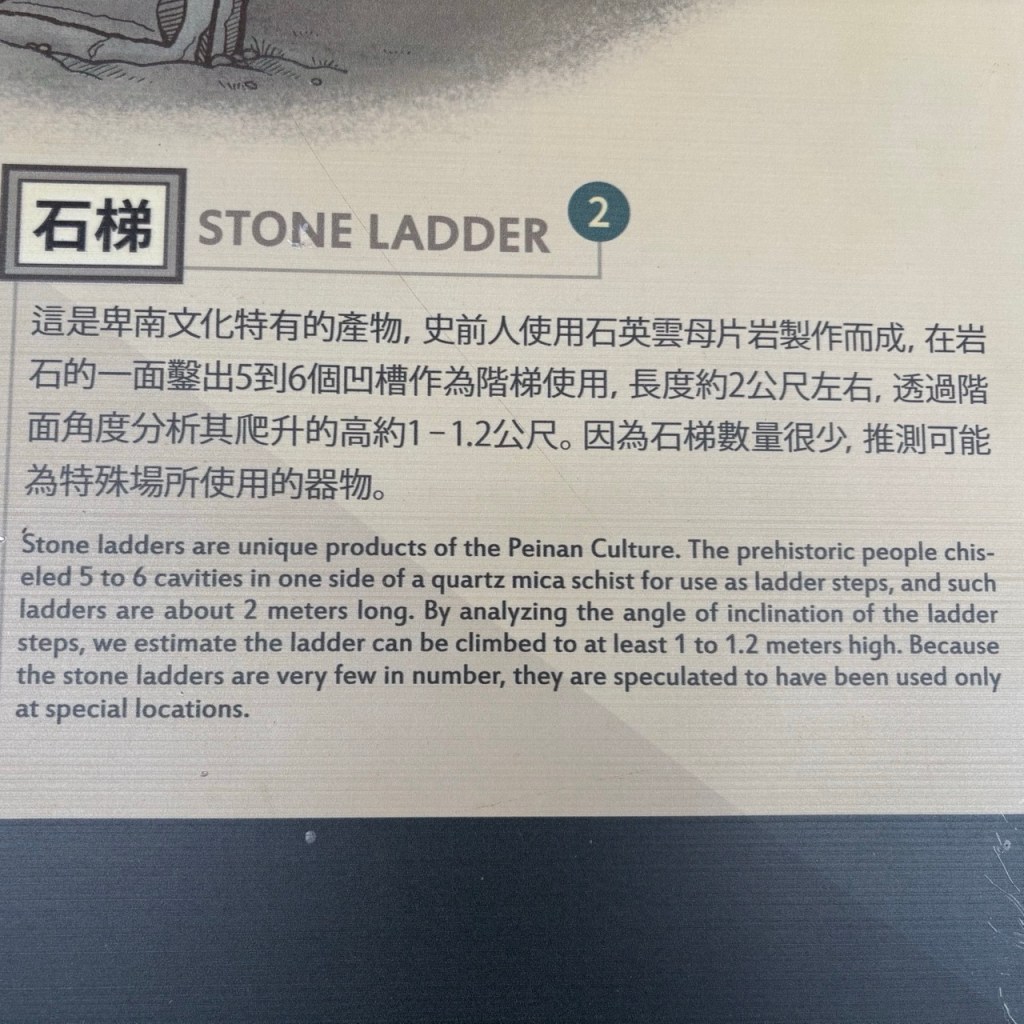
What I liked about this site is that you can walk right around the excavation and look at the walls, the stairs, the ladders, pottery vessels … This brings it more to life. And of course aside from a group of Chinese visitors who were just leaving, I had all it to myself as usual. Next stop, Khaosiung.

Info on the excavation site

Carry On Buses (a bizarre solo experience in Hualien)

The first stop on my route east around Taiwan was Hualien, a couple of hours away from Taipei. The main attraction of this city is the nearby Taroko Gorge which sadly remains almost entirely closed to visitors due to the 7.2 magnitude earthquake in 2024. I had heard that Hualien was a bit of a ghost town and unfortunately the rain didn’t help the already strange vibe of the place. I imagine in better weather it’s lovely with its mountain backdrop but all I could see was low cloud.

Hualien station

The “Hualien Wow” hostel was really good, right opposite the train station and the bargain price of £10 included toast and peanut butter for breakfast. The hostel may have been Wow but Hualien was not. Even the well known night market was a washout – with no buses running that I could find, I walked the 30 mins each way in the rain (the hostels lend you umbrellas or you can just rent one on the street) only to buy some inedible tofu sticks and a pot of sweetcorn. Most of the food on the street markets is fried in some sort of cooking oil that smells rancid – the whiff of it makes me feel sick.

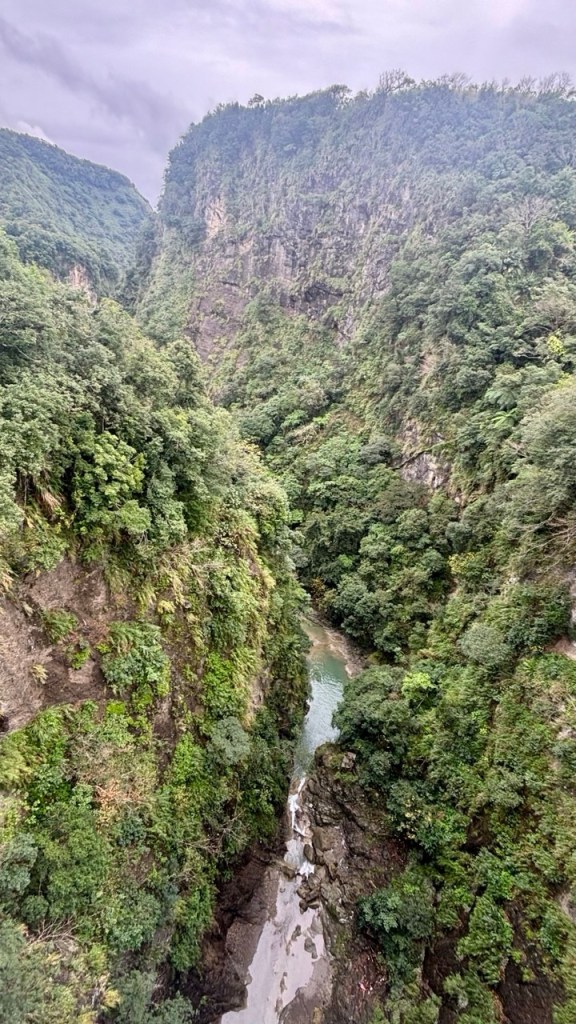
Beautiful scenery from the road

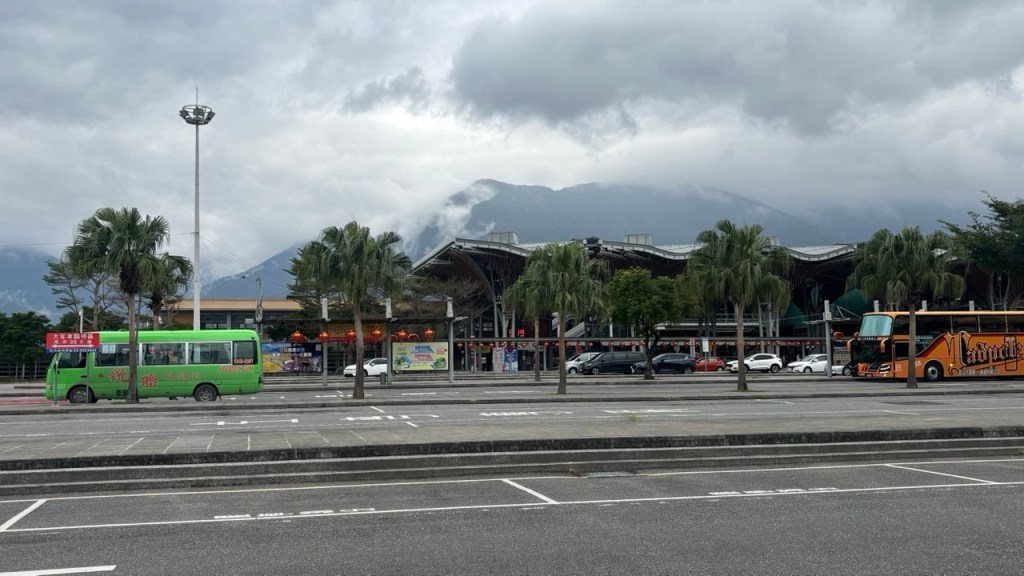
An extremely earnest woman at the bus station information stand told me there was not much point in visiting Taroko, especially in bad weather, as only the visitor centre was accessible. Instead she highly recommended an 8 hour day trip up and down the east coast. The next day it wasn’t raining so I decided to take her advice – it was either that or leave Hualien without doing anything, as there was actually nothing else to do. I arrived at the bus station (conveniently right opposite the train station) 15 minutes before one of the 3 departures of the day hoping I’d still get a seat, and was greeted enthusiastically by an attendant manning the desk. He gave me a ticket from a machine with the number 1 on it, which I thought was a little strange. At 9.30 on the dot a minibus bus pulled up and a little old man got off with a clipboard, wrote down my name and contact details on the first line of his sheet, ushered me into the first seat and off we went. I was the only passenger. It became apparent he didn’t speak any English when he spoke into a translator on his phone in a comedy monotone voice to tell me he would be my guide. It’s ok, I thought, I’ll be getting off at each of the 7 or 8 different stops and can do my own thing.

Lego shopping mall?
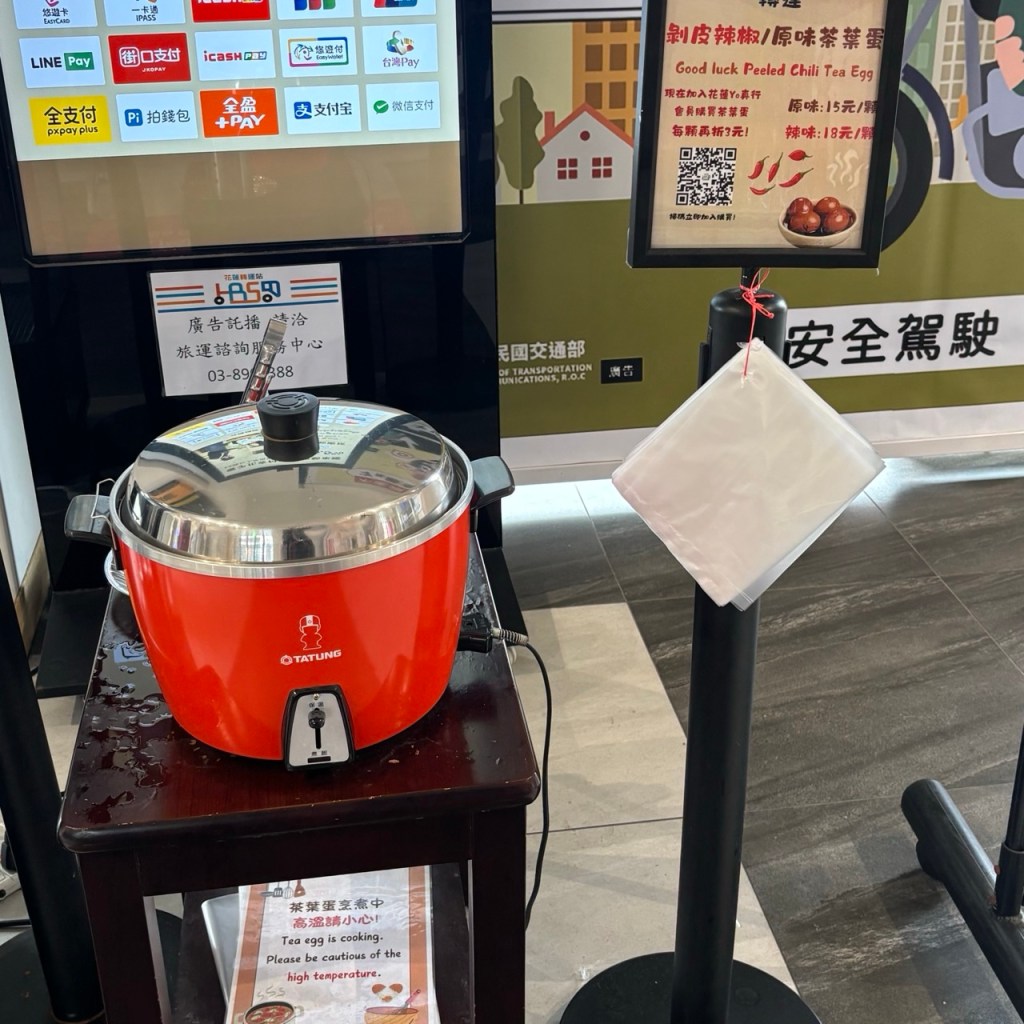
Lucky egg cooked in tea

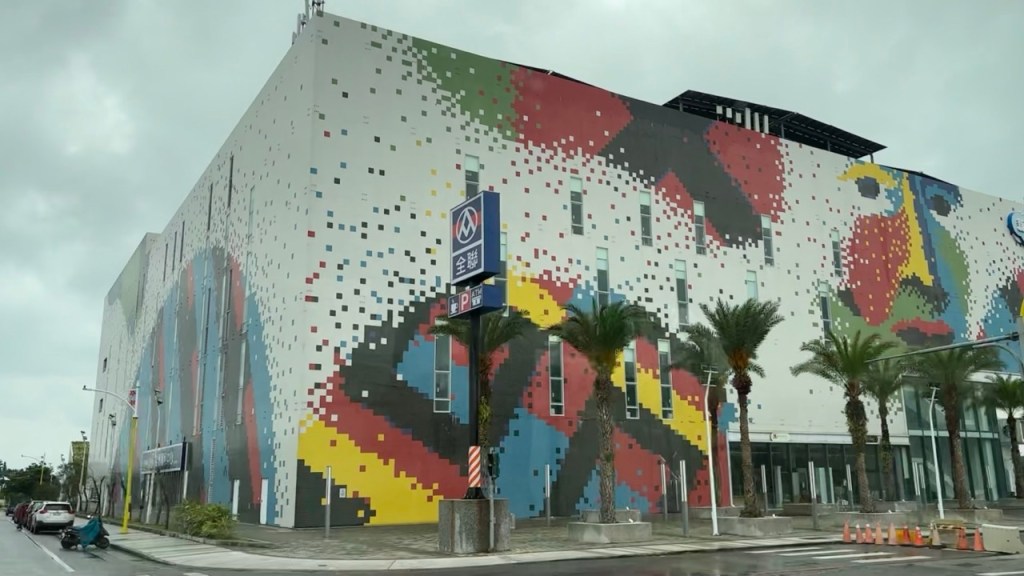
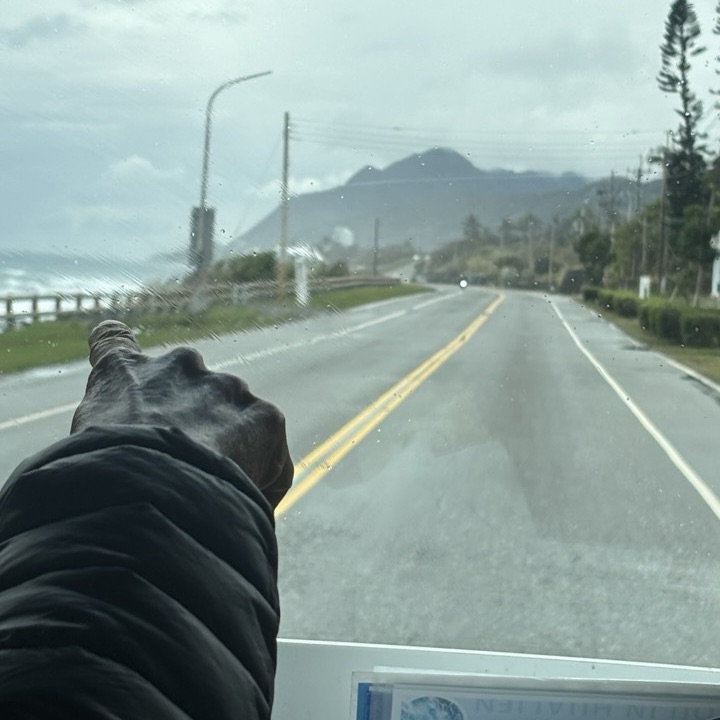
After about ten minutes his phone told me in its robot voice to get my camera ready as we were going past the world’s biggest building made of Lego (I think), followed by a mountain in the distance that he was very insistent I got a photo of. I obediently got my phone out but had no idea what I was meant to be capturing. What happened next was interesting. Some military tanks drove past with soldiers in camouflage gear standing on top arranged in a circle facing outward with their machine guns pointed right at us. It looked like a scene from a movie. There are some military bases around so I assumed (hoped) it was some sort of drill. I asked my guide who suddenly refused to talk, shaking his head and making a “no comment” sort of gesture. He obviously didn’t want a record of any mention of the military on his phone.
Mountains in the shape of a face?
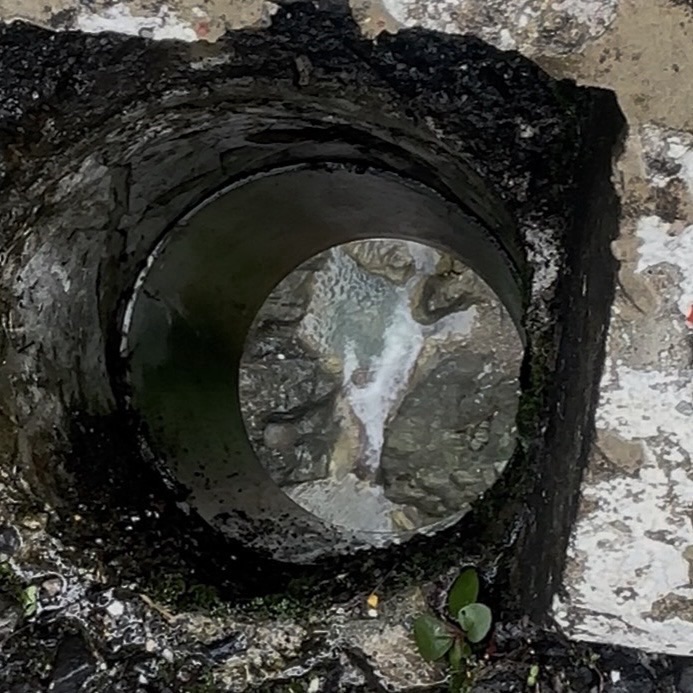
Waterfall through hole in the bridge road

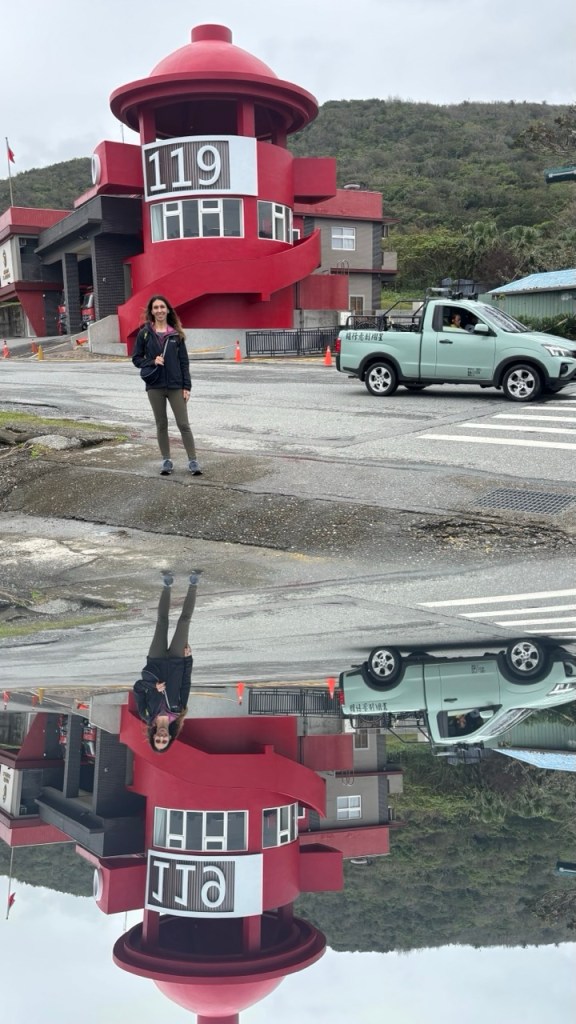
We arrived at the first stop, the world’s only fire station that is actually built like a fire hydrant. It’s cool, but you don’t need more than 5 mins to have a look and take a photo. Oh no, said my guide, the departure time is in 25 minutes – I must look at the temple next door, use the squat toilet, then we will take photos and “I’ll show you some wonderful illusions”. I then realised he was going to accompany me on every stop and I’d be participating in the world’s most ridiculous photoshoot. It was going to be a very long day.

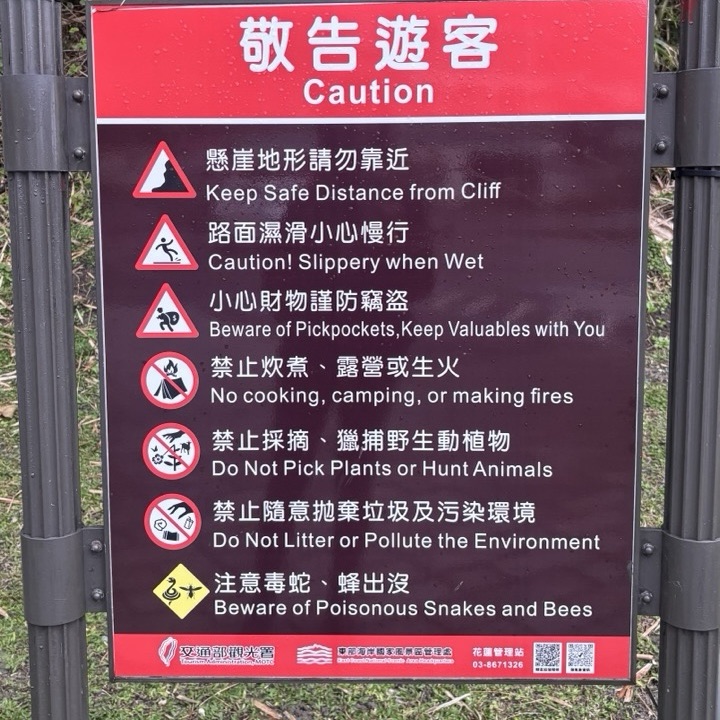
The many dangers

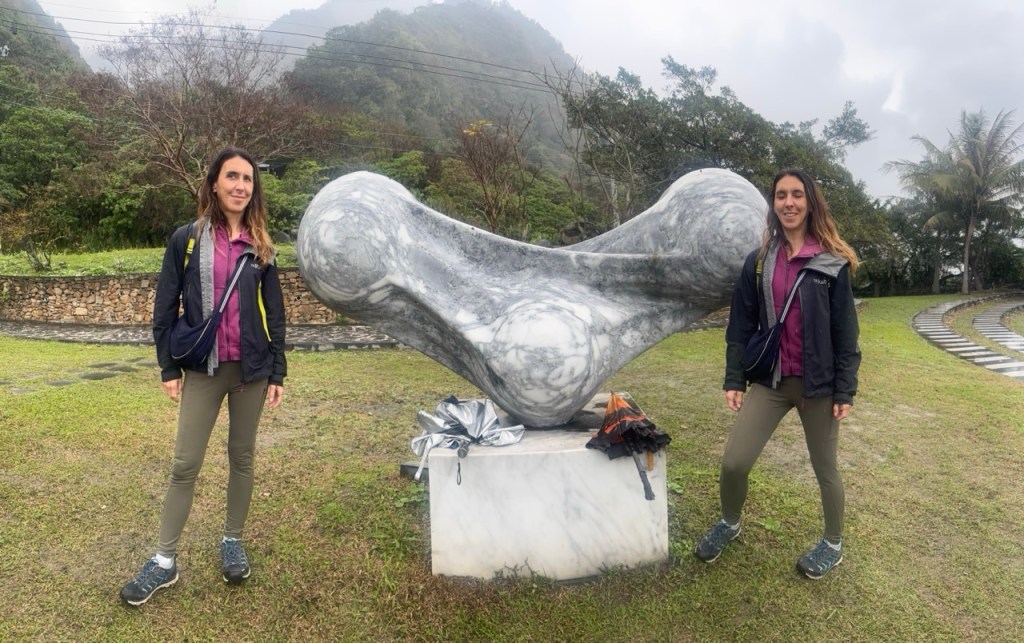
Here is me infront of the fire station after he whipped out a hand held mirror and took a photo that gave the illusion of a water reflection. I feigned delight and said oh wow, so clever! He then took a panoramic with me running in a circle so there appeared to be two of me. “Do your parents know you have a twin in Taiwan?” he asked. Once was quite amusing. But at each stop in the drizzle, it got old very fast.
Illusions
Me and my twin

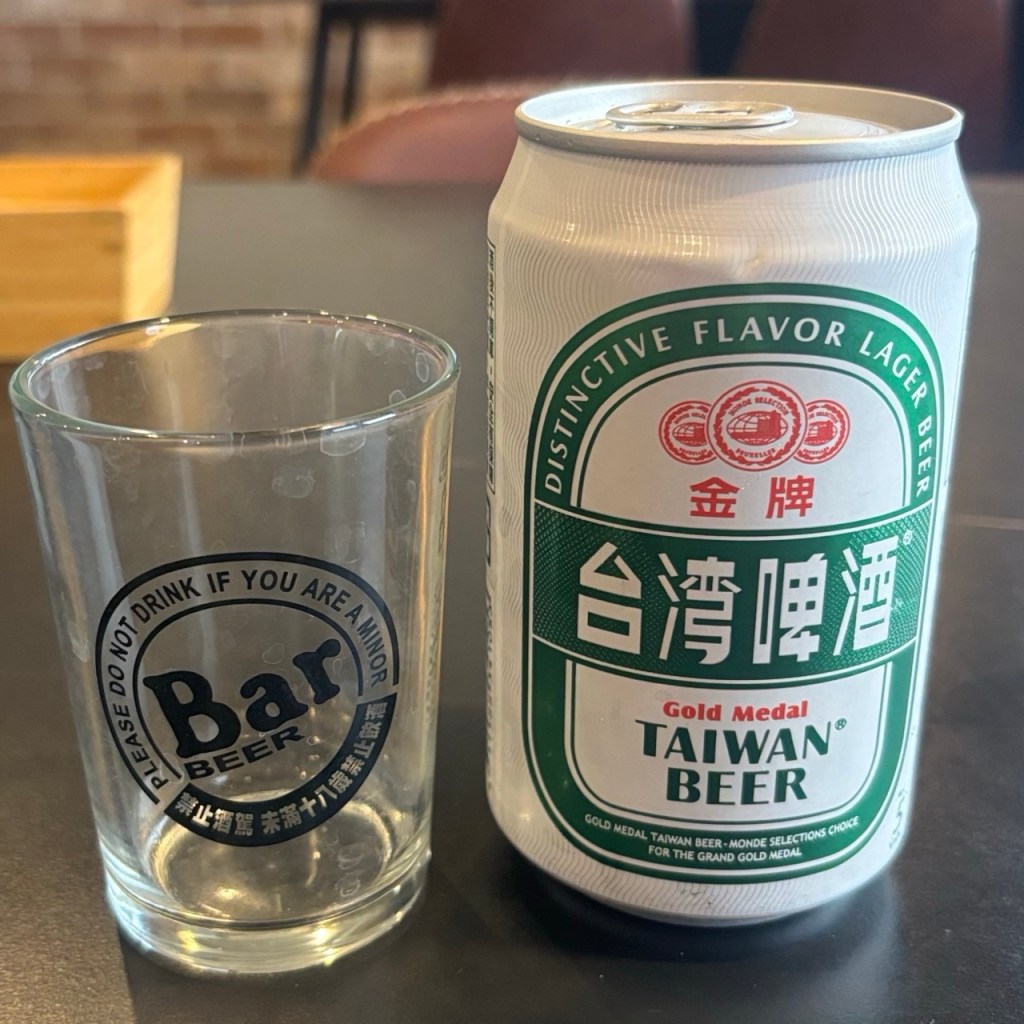
Today was the only day I didn’t bring any snacks. By the time we got to the fishing village for the lunch stop I was starving and it was now pouring down with rain. His instructions that “We will eat lunch at a local fish restaurant and the bus will depart in 90 minutes“ was not what I wanted to hear. I translated that I wanted vegetarian food and suddenly he spoke a few words of English – “OH MY GOD” he said slapping his head, suggesting I walk up the hill as there was a shop that “might sell bread”. The tiny shop at the top did not sell bread or any sort of snack I could identify and the missing-toothed shop owner seems to have no idea what I was asking for – but he did gesture further up the hill. Turns out at the very top there was a restaurant with “Welcome” written in English, several vegetable based options and a lovely lady and her little daughter greeted me with “would you like a beer?”. Yes please.

Lunch
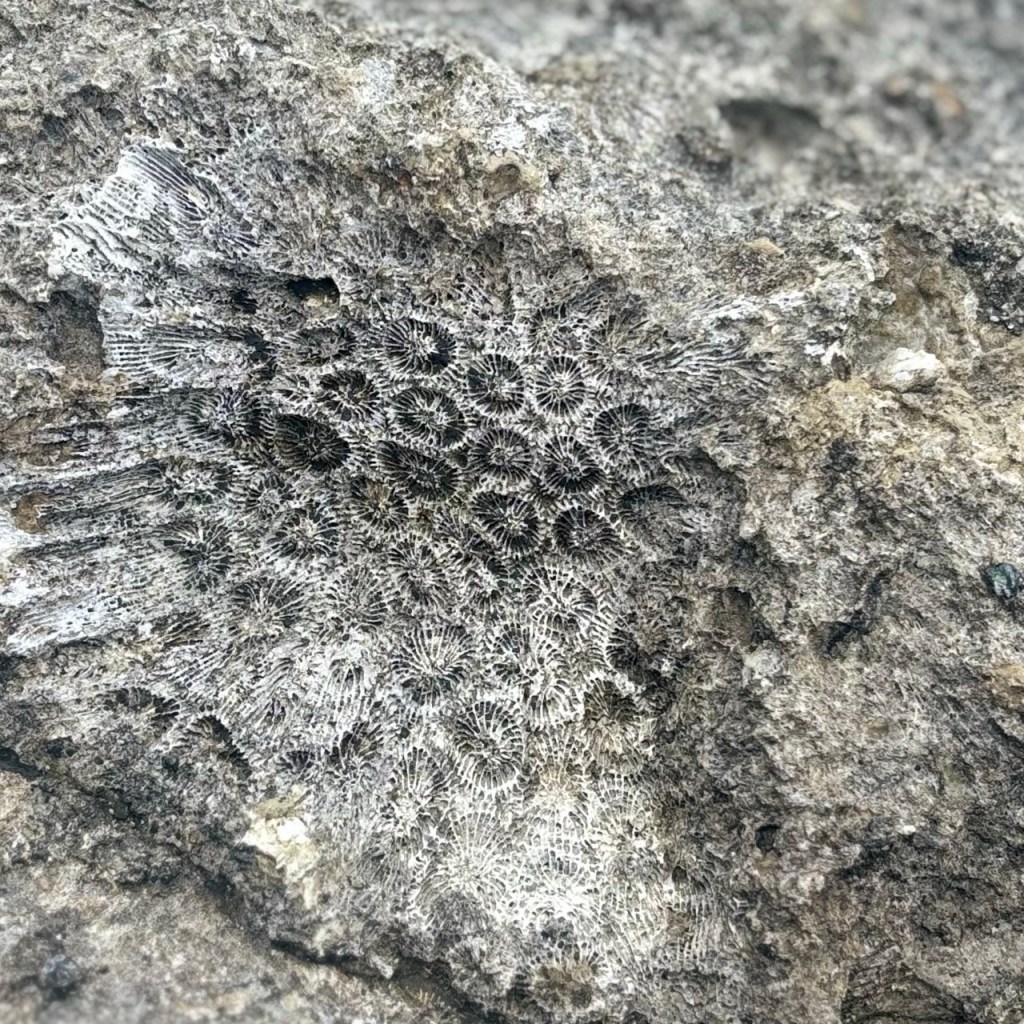
One of the few interesting things he pointed out, a fossil

My guide was a stickler for the official “bus departure time”, which wasn’t for another ten mins so when I got back we had to stand in the rain looking at a mural of whales on the wall and playing a guessing game of which species each of them was and do I have whales in my country. After lunch he told me “This afternoon will not be fun. It is raining”. No kidding. If I wrote about every excruciating stop we made this would be a very long post. I will just mention the best (or worst) three:

Driving my Nissan car

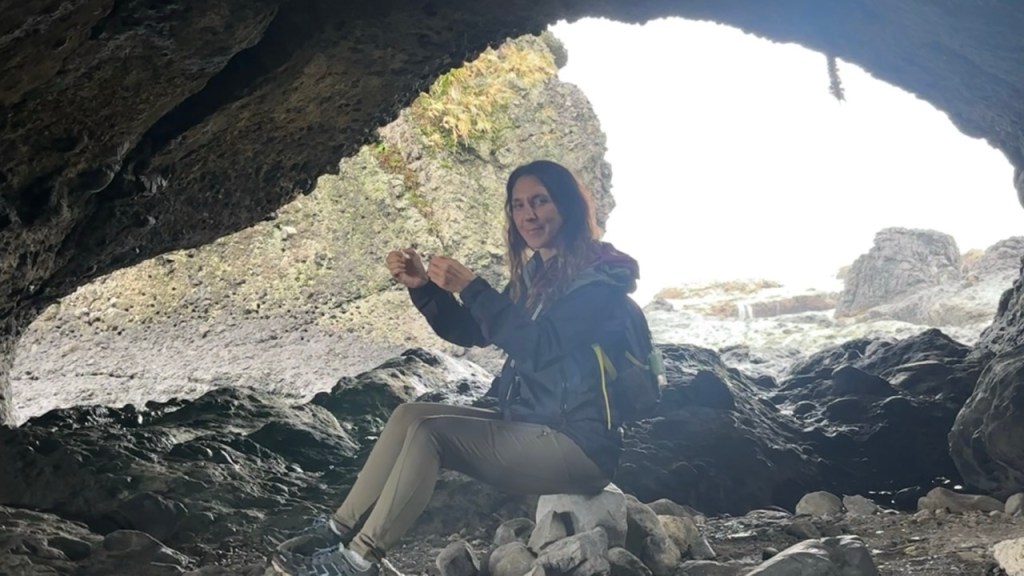
1. The Nissan cave. We stopped at the Shimen recreation area where a long path leads to a stunning rocky coastline and a cave. But it was raining, the rocks were slippery and the sea looked ferocious. Ever so often the waves threatened to cover the rocks where we were standing. The guide was in full photographer mode by now. Try following instructions in Chinese to recreate specific poses when you have no reference as to what they are. It’s only when I saw a photo in the recreation area explaining that “The sea-facing opening is called the “March Cave” as it looks like a March (a Nissan car model)” that I realised I was supposed to be driving a car. After I fell over on the rocks trying to reach the next spot I was getting annoyed and told him no more photos. This just annoyed him and he told me crossly that “an American tourist got an amazing photo in that spot”. Good for him. 

Off he goes

2. The cliff rescue. For someone who looked about 70 he leapt up the rocky slope to the top of the rocks. After looking over the edge I decided I really didn’t want his photo to be the last one I ever took. But getting down was harder than he made it look, so much so that I got stuck. To add to the ridiculousness of this entire day there was a family a bit lower down who sent their  approximately 10 year old son up to fetch me. Unfortunately he appeared to be scared of heights. The poor boy started screaming (no exaggeration) as he tried to reach me while his parents laughed their heads off and took photos of us both. My only regret is that I didn’t video it. The guide just looked disgusted that I didn’t want a photo on the edge.

Time to get down
Not actually as dangerous as it looks

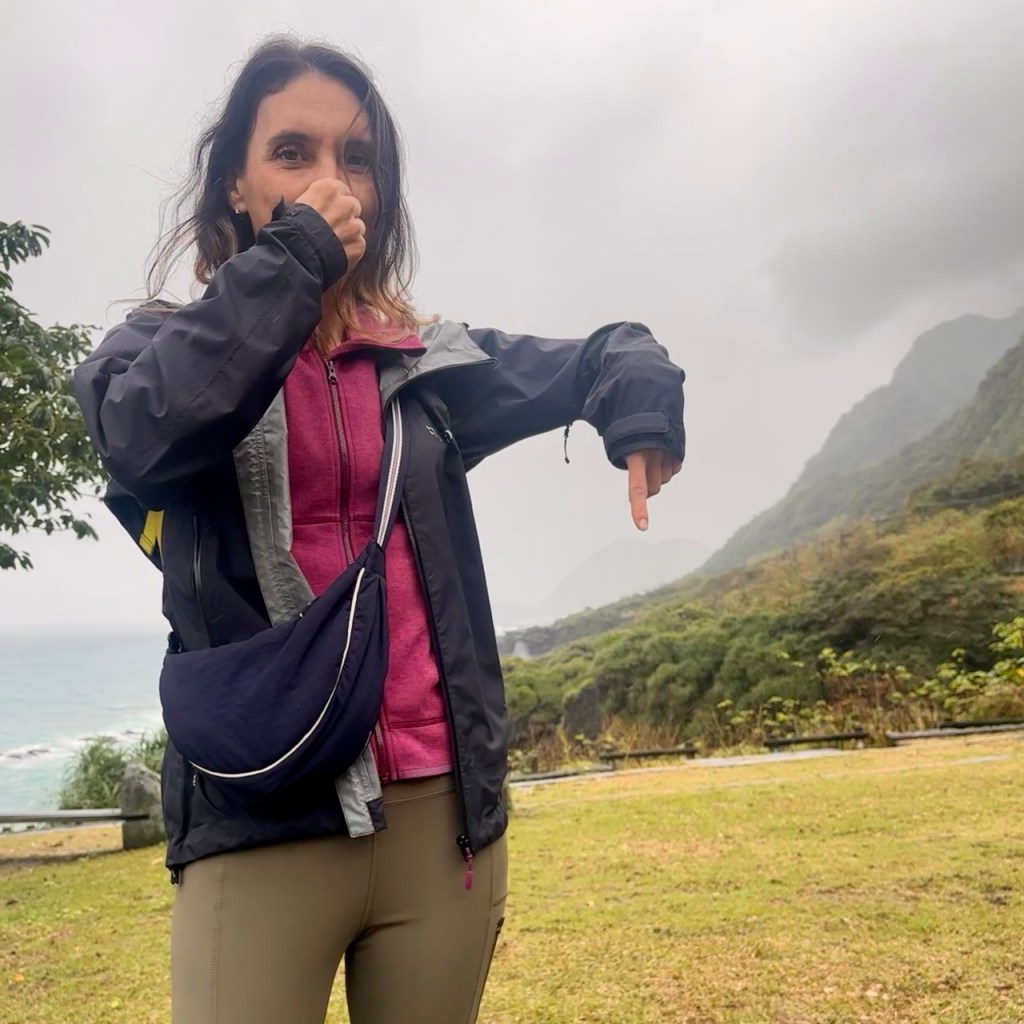
3. The bum shot. Best of all, or worst of all, at an otherwise average viewpoint he started positioning my arms and told me to hold my nose. Again I had no idea why until he showed me the photo. Like other tourists on his camera roll, I am supposed to be pointing at a mountain in the shape of a bottom and holding my nose at the smell. Is that even funny?

Bum mountain barely visible

I couldn’t hide my annoyance at the end when he wanted me to do the mirror trick myself and I failed the test. He snatched it back and his phone shouted “No! Never drop the mirror!”. The final straw was when I was trying to enjoy my ginger tea whilst praying for the departure time to come around and he asked where my husband was and informed me that he was 66 and not married yet.

I didn’t realise I wasn’t meant to actually climb it til he shouted “No!!!”

Hualien is probably best left until the Taroko Gorge reopens, or perhaps I missed something. Unfortunately I just wanted to get out of the place so I went straight to the train station to secure my train ticket down the coast to Taitun the next day. 

Running from an earthquake” – getting run over more likely
Worth climbing over for a photo?!
Where the boy rescued me from
The one viewpoint he didn’t accompany me, too many stairs

Glimpse into the North (South Korea Part Two)

Let’s start by that saying as far as strange tours go, this was up there with the best of them. The Demilitarised Zone is a strip of land cutting the Korean peninsula in half, forming a ‘buffer zone’ approximately 2km wide on either side of the Military Demarcation Line, the divider between the Democratic People’s Republic of Korea (North Korea) and the Republic of Korea (South Korea). The zone itself may be ‘demilitarised’ but the areas on either side are very heavily militarised indeed. Within the DMZ is the Joint Security Area (JSA) where negotiations take place and until recently it was possible to visit the spot where North and South Korean soldiers face off. This is important to know before booking, because the JSA closed to tourists in July 2023 after an American soldier attempted to cross the border from South to North without authorisation. Tours to the DMZ continued, with a couple of options that generally include a walk through one of the infiltration tunnels, a visit to an ‘observatory’ / visitor’s centre with telescopic viewing platforms set up to provide the coveted glimpse into North Korea and a stop at one of the suspension bridges, which are a fun way to stagger the group arrivals to the DMZ. The other thing to know (which I didn’t) is that various bridges and tunnels are closed on different days. As it turned out, the tour I initially booked was closed on Mondays so I ended up on this one, which I actually would recommend as the guides were great and it wasn’t too crowded – ‘2nd Tunnel and Y-Shaped Suspension Bridge‘ via the GetYourGuide platform. I set off at 6.30am for the meeting point at Myeondong subway station, a 20 min walk from my hostel.

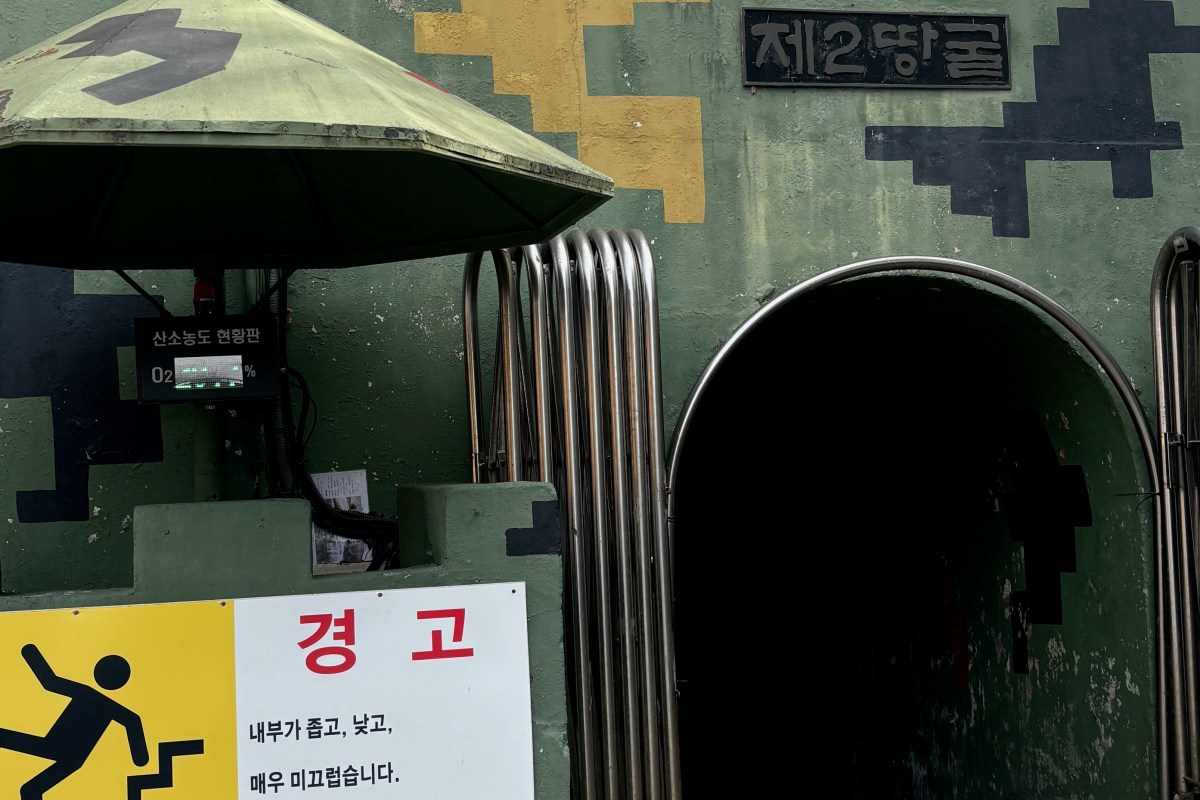
Map of the DMZ and 2nd infiltration tunnel

The roads were dark and quiet other than some office workers starting their day but Seoul is a very safe city. Finding anywhere open for breakfast at that time was impossible so I settled for a coffee and and a bread roll filled with sweet red beans from the 7/11 convenience store, a good way to use up some of my T-Card balance. I arrived at the subway station and spotted a group of blank looking tourists sitting on some benches. A guide with a clipboard introduced herself as Lucy, gave me a tag to hang around my neck with her name on it and sent me over to join the others. There’s always an annoying person or two in group trips (as the saying goes if there isn’t one, then it’s you) and sure enough two middle aged Australian men joined the group after unnecessarily loudly having a go at Lucy for changing the meeting point (she didn’t) and asking us all if we had received the location details on time (we had).

Video from the bus, entering the DMZ

Bus tours are a very popular way to see South Korea and in fact the only way to see the DMZ, which needs to be booked in advance with your passport details. Lucy and her fellow tour guide Joey didn’t believe in any rest on the bus – this theme continued on all of the bus tours I took in South Korea. Sitting up front meant I had no choice but to listen to the non-stop commentary aside from a 20 min break where Joey announced ‘ok you can take a rest now, sleep well’. It was actually very informative, and if I’m not forced to listen then I will switch off. Meanwhile our suit and sunglasses wearing driver Mr Sony provided a cheerful hello and thank you each time we embarked and disembarked the purple bus. Interestingly, Joey said that until she became a tour guide a few years ago, when she was living in London and working in Pret, she hadn’t given much thought to the question of unification between the North and South. Her father recalls North Korean citizens being referred to as animals during his own school days and her mother still considers them ‘the enemy’. It’s only now that she’s working in tourism that her view has shifted and she has come to view them as normal people mostly working as farmers and living below the poverty line, and she now sees unification as a good thing.

Y-Shaped Suspension bridge, taken from the observation deck

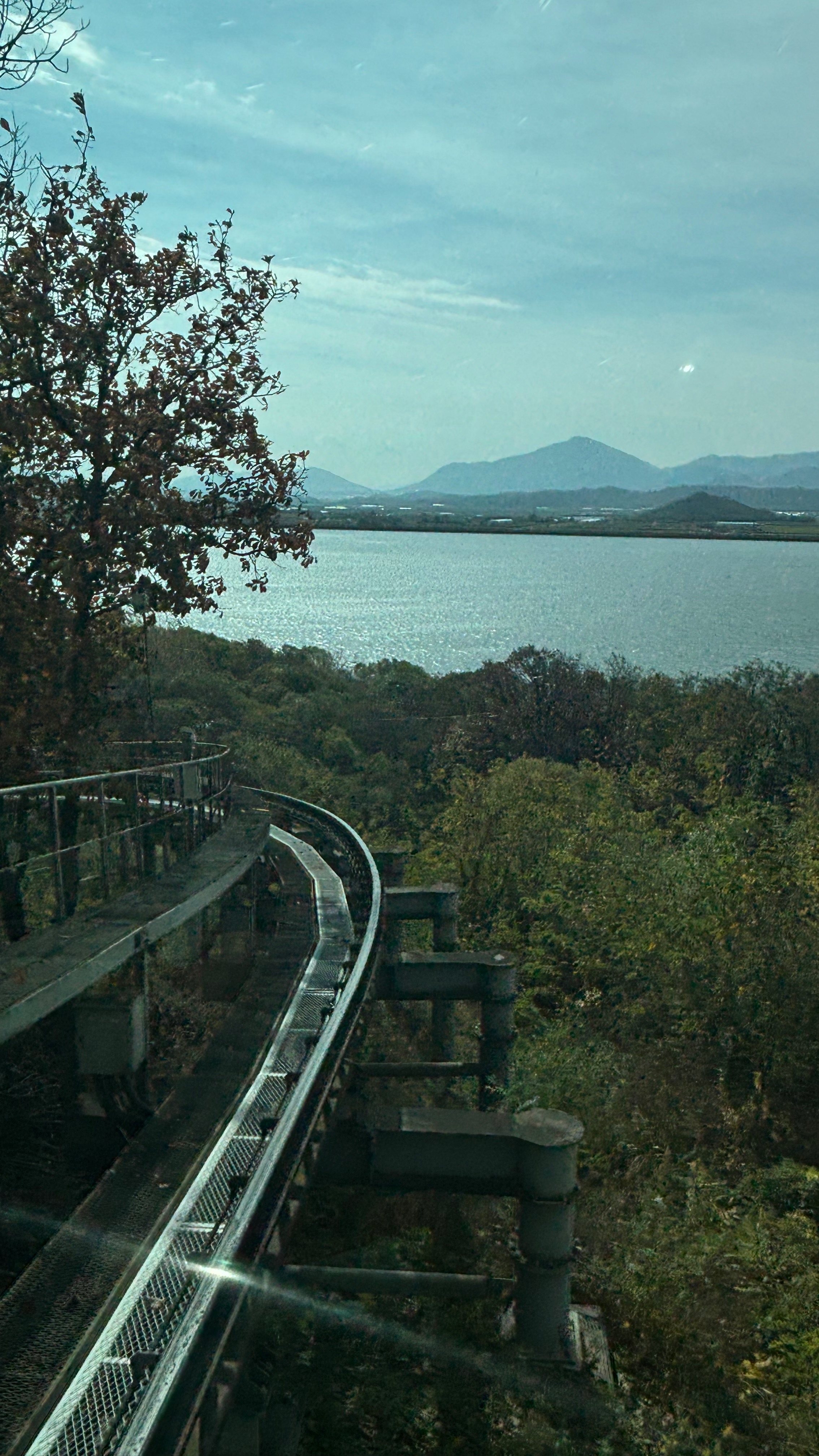
Our first stop was the ‘Y-Shaped Pocheon Suspension Bridge’, which at 410m is the longest suspension bridge in Korea, as the name suggests forming a Y shape over the Hantangang River. The advantage of starting the tour so early is that you’re the first group to arrive – the observatory and cafe were just opening up and the bridge was quite literally empty. The real reason there are multiple suspension bridges in this area is because they were once used as a defence line, but nowadays they are fun to walk over and provide some lovely views of the autumn colours.

CCTV on the bridge

Perhaps the most unsettling thing about this tour compared to other war memorials and places of historical interest, is that usually the conflicts, or at least the wars, are in the past. Whereas this conflict is most definitely in the present. It was also disconcerting to hear the ‘rivalry’ referred to in a lighthearted manner, i.e the raising of flagpoles higher than the other one, and the blasting of K-Pop and Gangnam Style music – both sides broadcast various music / messages / material into the area over loud speakers. It was only recently in the news that thousands of balloons filled with rubbish (according to news reports, possibly also containing human waste) were sent over from the North and dropped on the South.

View from the bridge

Back on the bus and off to our second stop, the “2nd Infiltration Tunnel” and, unexpectedly, a Crane centre (the bird variety) which we had a look around whilst Lucy sorted out some admin. The tunnel is one of four constructed by North Korea, intended for a surprise attack. The information in the visitors centre explained that some South Korean soldiers heard banging noises leading to the discovery of the tunnel in 1975, which had already been abandoned. It’s about 2m by 2m and could apparently accommodate up to 30,000 armed soldiers per hour, along with vehicles, artillery and tanks. I’m not so sure about the tanks – I soon understood why helmets were mandatory, as the ceiling is really low in places and the only sound was that of people bumping their heads every minute or so.

Crane Centre

Strictly no photos were allowed inside the tunnel, but it’s fairly well lit (the artificial lights allowed plants to grow despite the dampness). Our guide said there was some type of mineral on the ceiling – I forgot exactly what, but it’s meant to be lucky to touch it – but all I touched was slime. There are some benches for weary tourists at the deepest point, after which the tunnel is barricaded off and you need to turn back. It’s a bit surreal to consider that if you did continue on, you’d surface somewhere in North Korea, which presumably wouldn’t be a tourist attraction. Or would it?

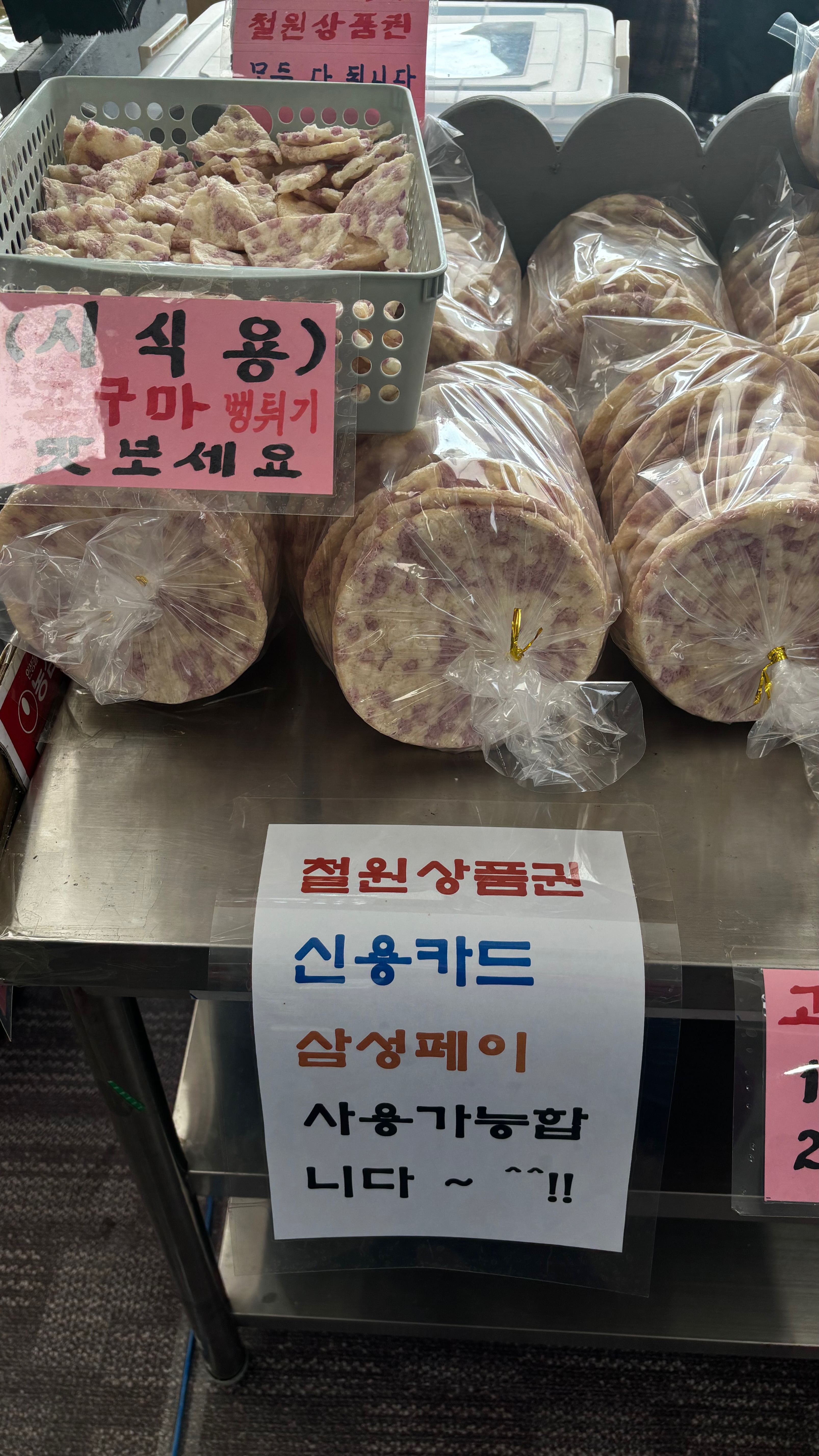
This day trip was 10 hours long (another common theme with the bus trips) and included a basic buffet lunch. Eventually we made it to the highlight of the trip and main reason for coming, the Peace Observatory. Lucy and Joey warned us not to take any photos of the South Korean guards, who would apparently all look very young (this was true). After a short train/cable car ride up, we all filed into a cinema style room (no photos inside either) and watched a short video which could itself be described as propaganda with it’s horror music style soundtrack. Positioned around the floor to ceiling glass windows were telescopes, some with digital screens trained on the DMZ and beyond into North Korea. We were told that whilst no photos were allowed outside either, nobody would check our phones which could be taken as encouragement. The adolescent looking soldiers helped focus the lenses on what was described as Propaganda Village – a village on the North Korea side which they say is fake. I did spot a moving truck, and Joey got very excited at a blob she said was “a North Korean”. She said this like it was some type of rare exotic species. I wondered were there lenses trained on us from the other side? Outside was even more surreal as over the wind I could hear a message being broadcast very loudly from the speakers, which the soldiers said was a message of peace. I have no idea what it was, as it was in Korean. But I found it fascinating wandering around the terrace, using the telescopes to look past nomads land. I would be slightly wary of posting any footage on social media, even if I had taken any.

Tanks outside the visitor’s centre (spot the name tag)

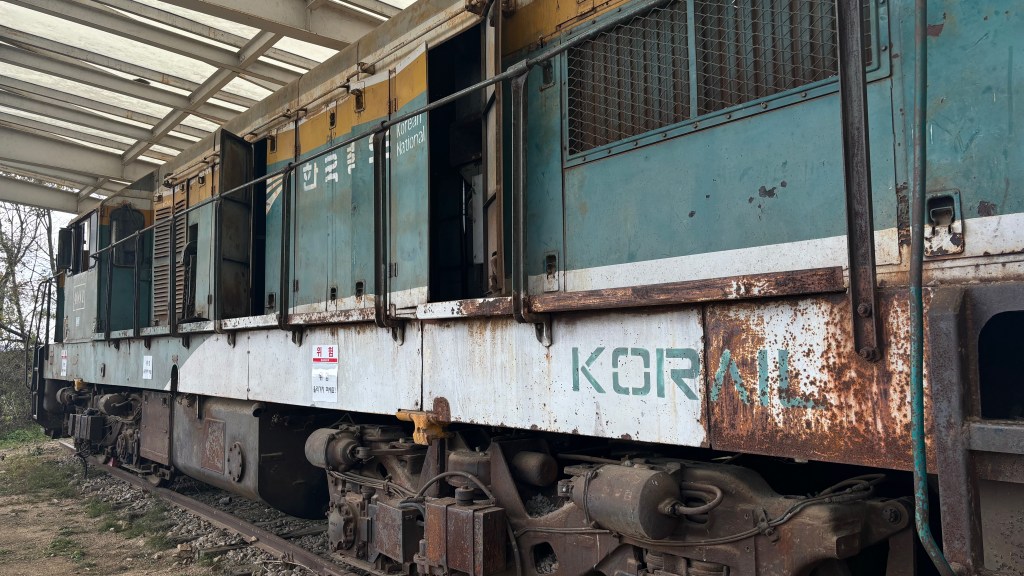
After some photos with the tanks and a visit to the shop selling 10kg bags of rice – also free green tea and samples of purple rice cake (this is prime rice growing territory) – off we went to yet another stop, the abandoned Woljeongri station. This is the now dilapidated last train stop before the border. It was a great photo opportunity and fairly eery with the remains of a carriage just rusting away on the tracks, which now lead to nowhere and the distant sound of K-Pop being broadcast from the South Korean speakers.

Train to nowhere
Korean K-Pop music in the background

Not far from here, and the final stop on the tour, is the last building constructed in North Korean architectural style, the Korean Workers Party Headquarters. Constructed in 1946, the three story building is falling down but there was still a a team of gardeners tending to the bushes. I didn’t get any more information on this, but imagine it’s an influencer’s dream photo spot in the Spring.

Cheorwon Korean Workers’ Party Headquarters

Finally it was back on the bus and a couple of hours drive back to Seoul. It was certainly an eye opening day, and once more it was too late to find a proper meal. These long days are tiring – I managed a walk around the night market in Myendong and a cheap veggie spring roll before retreating to my pod for some sleep before my morning flight to the South Korea’s answer to Hawaii, Jeju Island…

Dinner

Two Wasters in a Country Club – Paraguay Part 1

Paraguay is one country I missed out last time and I didn’t know anyone who had bothered to visit. When Vix and I told people in our hostel in Montevideo that we were planning to go, they said “Paraguay?! You must be very religious or drug dealers”. Even more reason to visit this landlocked country that borders Brazil, Argentina and Bolivia and is part of the Triple Frontier where the Iguazú and Paraná rivers meet.

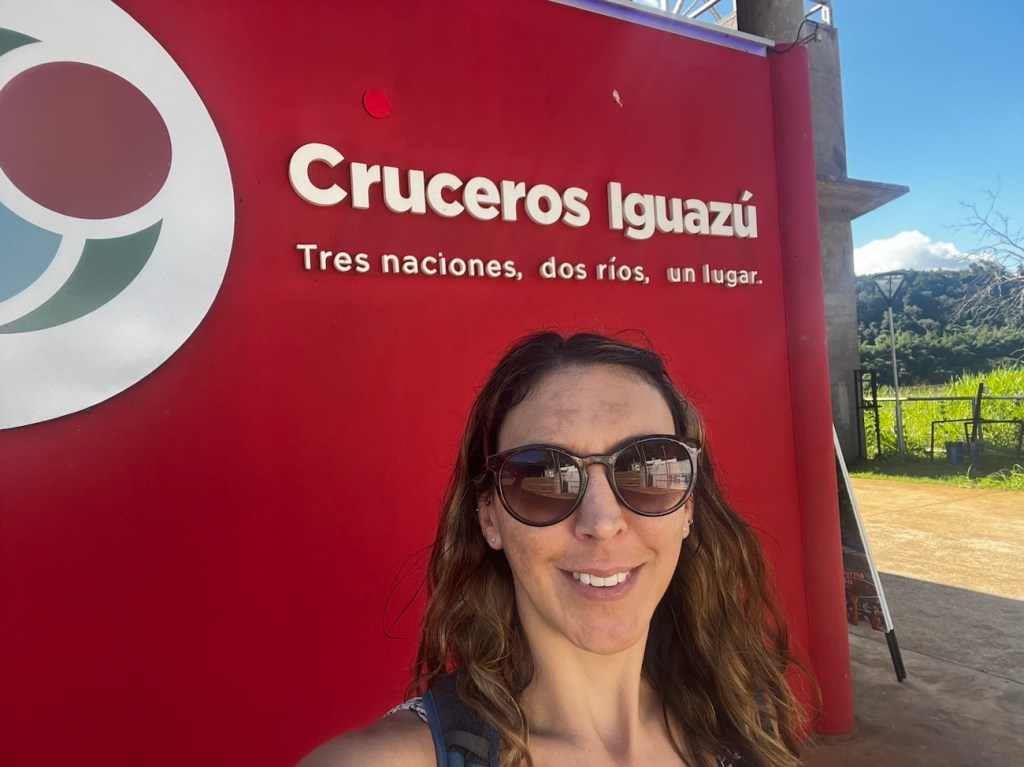
Three nations, two rivers, one place

There were multiple bus operators at the bus terminal in Puerto Iguazú running services to from Argentina to Ciudad del Este in Paraguay. It looked pretty straightforward as long as you don’t get left behind when the bus stops first at the Brazilian border. The easiest option is a taxi all the way – taxi drivers were offering this service as we walked down the street. The most fun way, however, is as a foot passenger on the car ferry (called La Balsa) across the Paraná river.

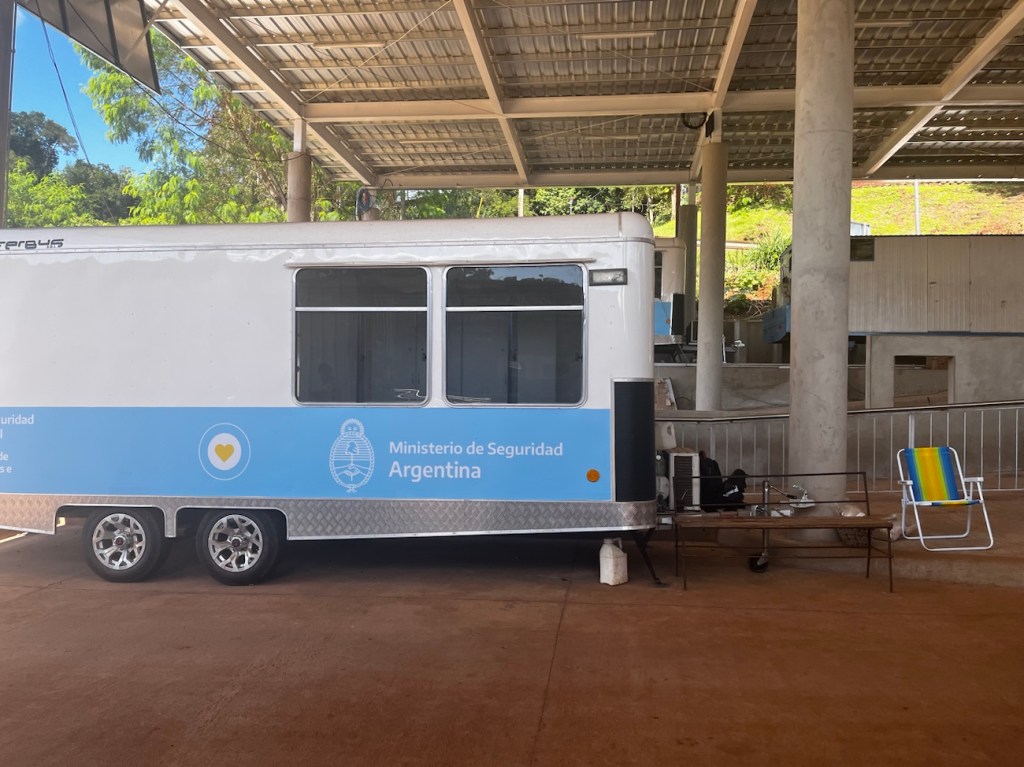
Argentina border control

It was hard to find any information about La Balsa as nobody seemed to know about it. We were met with blank stares at the Hostel Iguazú, although to be fair that’s how they responded to everything. But we did find a helpful blog that detailed the journey and discovered that the port was only a 20 minute walk across town. When we asked the hostel how much a taxi to the port should cost, just as a rough idea, the woman helpfully said she has no idea as she walks everywhere. Well, so do I when I’m not dragging all my belongings around and limping from an allergic reaction to a wasp sting. We definitely got ripped off with over £5 for a five minute drive but as four different currencies are accepted (Brazilian reals, Argentinian peso, Paraguayan guaraní or good old US dollars) I paid with left over currency that made it feel like a free ride whatever it cost.

Which boat?

La Balsa ferry seems to be relatively new. We had to ask a few times before we found the little portacabin selling the right tickets and we could easily have missed getting stamped out of Argentina (it’s electronic now so no evidence in the passport that we were ever there).

Sign for the car ferry

We went to sit on the floor by the river to enjoy the view whist we waited since the timetable is just a rough guide – it leaves when full – and immediately got asked to move inside by security who weren’t happy until we were ring fenced in the seating area with it’s concrete benches. We’d been sitting there for a while when Vix happened to look up and noticed that everyone else had left.

La Balsa

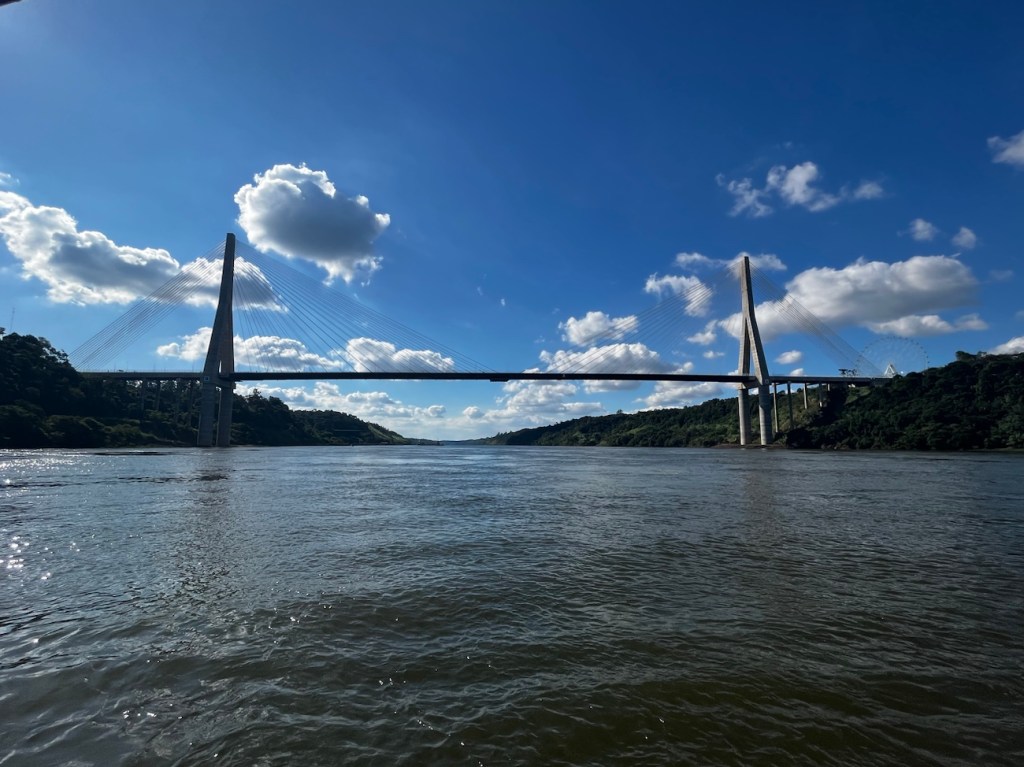
When we eventually got on, the boat only took about 15 minutes and the views are beautiful as it goes past the International Friendship Bridge that connects Brazil with Paraguay.

There were no other tourists on the boat and there is no way to blend in – as I got off some fellow passengers said “Welcome to Paraguay” 🙂 We lugged our bags up the hill to yet another portacabin to possibly the most relaxed passport control I’ve seen. We were very happy with our perfect Paraguay entry stamps – the friendly officer must have either just filled up his ink or else not had any other visitors recently.

Paraguay
No idea what this was but we liked it

I assume if we had walked further up the hill we may have found some buses but we had no idea of the timetable. Taxi is definitely the easiest way out of the “port” – a man offered us a ride for $10 for the 45 minute drive to our hotel north of Ciudad del Este which we were more than happy with.

Customs in Paraguay

The taxi driver spent the journey telling us facts about his country in hard to understand Spanish, which was lovely but we would have preferred him not to have been finding YouTube videos of Monday Falls (Paraguay’s alternative to Iguazú) whilst he was driving. He also stopped the car to show us the red soil, which we felt obliged to get out and take a photo of, unless we misunderstood 🤷🏻‍♀️🤷‍♀️

Bus?
Red dirt

As soon as we got close to Ciudad del Este, it became clear he didn’t know the way at all and showing him the map didn’t help. We burned through Vix’s mobile phone data with Google maps and all those school lessons in asking directions in Spanish came in useful as we directed him around the back roads. When we eventually got there he complained that it should have cost more and he could have gone on the highway – that’s what you get for asking two foreigners “left or right?” at the last minute at EVERY SINGLE JUNCTION.

Country roads

Ciudad del Este is a duty free shopping haven and the city centre didn’t have the best reputation. But the weather was good and four star hotels are cheap so we decided “Las Ventanas” boutique hotel inside the Paraná Country Club, a 15 minute drive out of town, was just the place. The intention was to stay a couple of nights then move on.

Las Ventanas meaning The Windows

But it wouldn’t be a trip for me unless it involved an insect related hospital visit. I woke up in the morning with a foot twice the usual size and was unable to walk thanks to the wasp in Iguazú Falls. I limped down to reception and told the horrified man at the desk that I needed a hospital – he was visibly relieved that it hadn’t happened in his hotel. Thankfully there was a decent private hospital ten minutes away.

Got my spot for the day -alcohol free beer

They clearly hadn’t had a foreign patient before, as when they took my passport to copy my name they were looking at completely the wrong page and a radiologist took a break from casually sipping his herbal mate tea to have a peak. Luckily there was a nice woman who seemed to know what she was doing and made sure I got seen within ten minutes by a lovely doctor who called my name out as “Marianne British”. I tried to explain that my surname is not “British”, it’s just a British passport then decided it wasn’t the most important thing to communicate. Vix had typed out a description of the situation in Google translate to avoid confusion but this just meant the doctor spoke about me to Vix, as if she was my carer. I can actually see the funny side now. After telling Vix several times that the patient was NOT allowed to drink alcohol on top of the cocktail of antibiotics and anti inflammatories and two other medications even Vix in her actual capacity as real life nurse hadn’t heard of, we left with instructions of bed rest and ice. The whole thing cost about £30.

God knows what the lovely hotel staff thought about two scruffy backpackers who checked into room 211 (“dos once” in Spanish), stuck the “do not disturb” sign on the door and weren’t seen again other than via room service requests for large amounts of ice, toilet paper refills and vegetarian food. On our first night the chef made us a meal of gnocchi and vegetables, which is what they came up with when we asked if there was a single option without meat. Trying to communicate on the phone in Spanish that the chef had made a special meal the night before and could he do it again, was very challenging. Vix managed it but when I tried it just never turned up.

Breakfast

I found it very hard to understand Paraguayan Spanish and they didn’t understand me, until we realised they just don’t pronounce most of the syllables. When Vix politely asked for a taxi from the hospital back to our hotel Las Ventanas, the driver looked confused for a while then repeated back ‘ah, la vetaaaaaa’. Likewise, an ‘americano’ coffee is simply ‘amerraaoo’. The next week was spent watching movies on the huge TV, stealing food from the amazing buffet breakfast for lunch and hobbling around by the pool we mostly had to ourselves. The other guests were nicely dressed Paraguayans visiting for the holiday weekend, and overweight men from what we think was a diabetes drug convention during the week. Meanwhile we wandered around looking like wasters.

My favourite chairs in the hotel

After a few days I could walk a bit more, very grateful to have avoided a hospital stay – thanks to my lovely kind travelling companion Vix! There there are quite a few things to do around the area, although I didn’t want to risk any more waterfalls or nature type places… We went to visit the Itaipu dam instead. We had just got in the taxi at 12.55 when our helpful hotel man called the driver and told him to hurry up so we would make the 13.00 tour. With classic getaway driving, we did the predicted fifteen minute journey in five.

Electricity

Itaipu is the 3rd largest hydroelectric dam in the world and produces the second most electricity, powering all of Paraguay and a significant amount of Brazil. It’s free to take the bus tour around the site, including the Brazilian side, although the commentary is in Spanish. The power of the water is amazing and it’s well worth a visit. There’s also a lovely gift shop with local handicrafts – our taxi driver went to sit in his car and wait.

Water flowing over the Itaipu Dam
Harnessing the power
Beavis and Buttthead or two stupid Gringos?

There are also a couple of museums in the area but unfortunately they were both closed, which we found out when we pulled up in yet another taxi only to see the gate fully padlocked, so we went straight back to the hotel via the supermarket. By this point we were ready to leave Ciudad del Este and head to Asuncion, the capital of Paraguay, but our plans were thwarted again as ALL of the highways out of town were closed to protestors. There had just been an election and supporters of the losing right wing party were starting fires on the roads. Our initial thought was to try to get there on the backroads, but when we heard they had overturned an ambulance, and police were disbursing crowds in the capital with rubber bullets we decided to wait it out.

Me and Johnny in the Growler Bar

Each day we would ring down to the front desk, ask if the roads were open yet and confirm we were staying another day. We became so used to just saying ‘dos once’ when we wanted anything that we half-jokingly discussed getting tattoos – until I Googled it and found that 211 is a notorious white supremacist prison gang.

The Growler Bar

Where better to kill time than in the The Growler Bar, aka local rock music venue, which happened to be right next door and finally open after being closed all week. They even went to buy fresh pineapple juice to make me a non alcoholic cocktail and we stayed about 6 hours listening to tunes, eating cassava fries with a ridiculously spicy sauce and getting intel on the capital. The barman, who was from Asuncion, warned us how dangerous the city was and said we couldn’t possibly stay in the old town like we wanted, mimicking stabbing someone to drive home his point. When he wasn’t telling Vix all about his open marriage and how he too was a nurse and a physio and ever other detail of his life, he took some great photos of us next to the rock and roll memorabilia wall. He obviously thought we had more money than we did, as he personally phoned the Crowne Plaza hotel in Asuncion to check the price.

May I help you?

The riots were over and the roads were open again in the morning, so we could finally leave. Buying bus tickets in Paraguay is neither easy nor efficient – you need to enter your passport number about ten times, you only get three minutes to enter all your details and the website rejected all of our credit cards. We finally booked by taking over the front desk computer, otherwise our hotel man had kindly offered to go in person at 6am in the morning to physically get them for us. Anything to make sure we actually left this place – I’m not entirely sure our jokes that ‘we live here now’ were taken as humour.

Traffic lights are fun when you have street entertainers – I missed the one juggling knives.

And that’s proof you can spend a week in Ciudad del Este! The Country Club has some really good restaurants if you can be bothered to leave your hotel – we had a great meal at a Japanese/Pizza fusion place. And plenty of pharmacies to stock up on drugs you can’t get at home. The only thing we didn’t get to do was ride around in one of the golf buggies we saw parked around the place although I’m sure if we’d asked our hotel they would have obliged. Las Ventanas did have the nicest hotel staff I’ve ever come across, who went out of their way to help us with anything we needed. Our favourite front desk man recommended a nicer, cheaper hotel than the Crowne Plaza, in the old town like we wanted and he laughed when we recreated the ‘stabby stabby’ warning from the barman next door – it’s perfectly safe in the daytime apparently. Final stop Asuncion!

The Dollar Blue, The Devil’s Mouth and the Three Frontiers (Buenos Aires and Iguazú Falls)

We departed Uruguay via the ferry to Argentina after about ten days visiting a handful of places along the coast. Uruguay has been absolutely lovely and there is plenty to see and do, albeit more in high season, but for some reason this little country is often not part of the standard South America gringo trail. We just had time to walk around the jetty in Colonia with it’s fancy yachts and get whistled at by some men on a boat that was called “Zero Tolerance” of all things. Shame we weren’t invited on board for a drink!

First glimpse of Argentina

It was great catching my first view of Buenos Aries again after all these years, barely visible under a smog cloud. After taking an Uber from the ferry terminal (which turfs you out a back door onto the smoking area on the street outside) we couldn’t find our hostel, “Del 900 Boutique” in the Monserrat district. The man at customs wasn’t even going to let me in the country without the hostel address, which I hadn’t saved and didn’t have Wi-Fi but he did let me run after Vix to get the details – luckily I got her attention just before she left the building.

Vix showing me the hostel address through the glass wall
“Little door”

A lady in the restaurant on the corner said it was just next door, “through a tiny little door”. Eventually we realised the entrance was actually through one of the biggest doors I’ve ever seen, housed in the most amazing colonial building. The doorway led us up a staircase and into the grandest hostel lobby that surely exists.… piano, leather sofas, old pool table … all under the highest of ceilings.

Hostel lobby
View from our private balcony

First hurdle – we tried to pay the hostel using the dollars we got from the ATM in Uruguay as hostels here generally only accept cash, but they wouldn’t take them as they were old. I knew that in Argentina the money exchanges only took the brand new notes in $100 bills and had come prepared with some but wanted to keep that as a backup. Second hurdle – trying to understand what the hell is going on with the currency in Argentina. What you need is the “blue dollar”, the rate you get when you physically sell a USD on the street or in a “cueva” (cave) for Argentine pesos and they will all take the older dollars for a slightly lower rate. This essentially doubles your money compared to if you went to an ATM (not that I could now both working cards were cancelled).

News on TV
Rates for the current minute

As you walk down the street in the gold district all you hear is “cambio cambio cambio”. With counterfeit Argentinan pesos in circulation we asked the hostel where a reliable exchange was. Changing the money was an activity in itself – the place we eventually changed our money at was fronting as a tourist office where they ushered us in to a booth with a one way mirror so we couldn’t see the cashier’s face. We did a crash course on YouTube in how to spot a fake and tested a small amount in a souvenir shop before changing up the rest.

A protest in Plaza de Mayo

The blue dollar value was changing minute by minute and it was being reported on the news that with inflation approaching 95%, people earning under a certain amount were not being paid. It’s much raise to change up your dollars and stick to cash as confusingly when we paid with card in a few shops expecting the official rate, a few days later we’d get random refunds appearing. When we finally got the cash and paid our hostel, the real cost to us had gone down to about a tenner each per night 🤯

Pretending not to be Wasters

With our new stash we enjoyed a fancy evening meal of pesto pasta with a genuinely good bottle of red wine. I always loved the restaurants in Buenos Aires, the huge areas and set tables and waiters in waistcoats, and the bowls of bread brought to the table (worth the table charge).
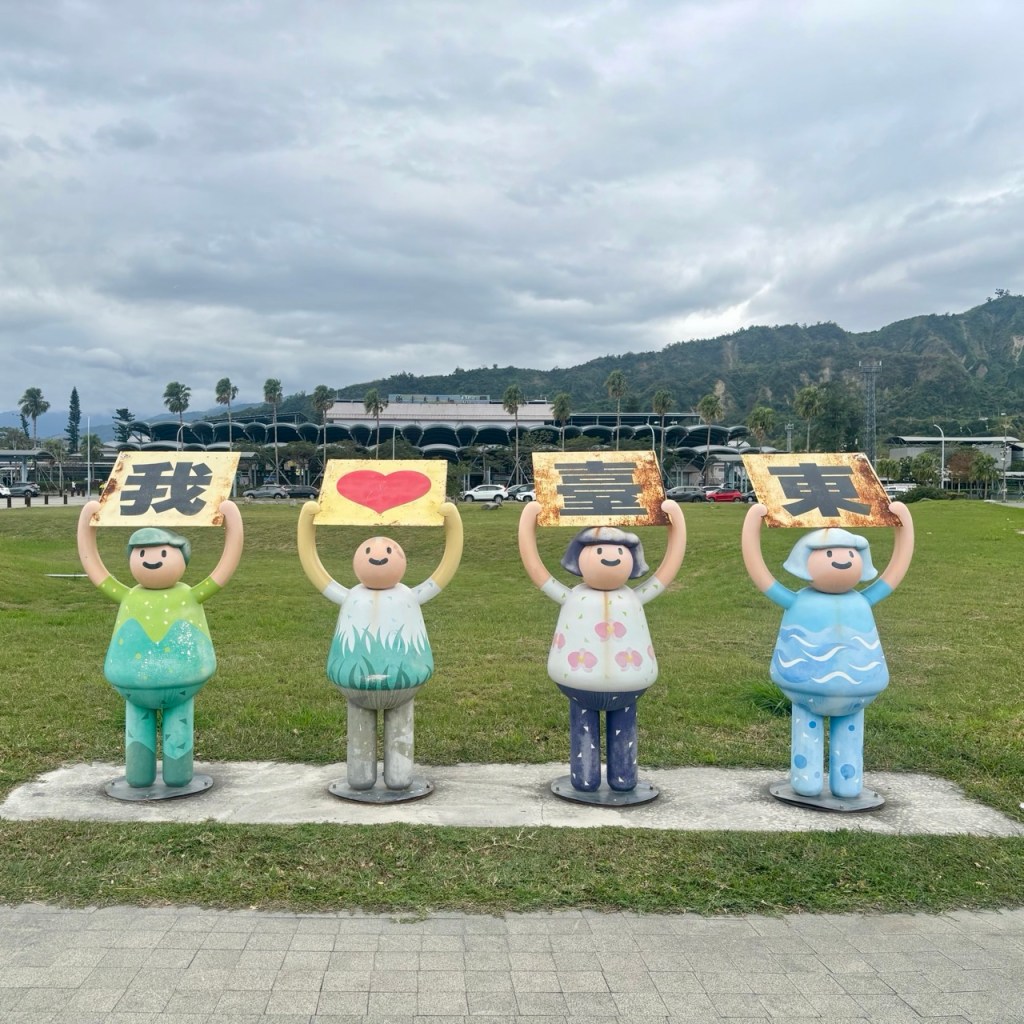
An “influencer” ruining my shot

We only spent two night in Buenos Aries, mostly as a stop over before flying up to Iguazu and a trip down memory lane for me. With one full day, we walked up to the area of La Recoleta and browsed the shops and cafes.
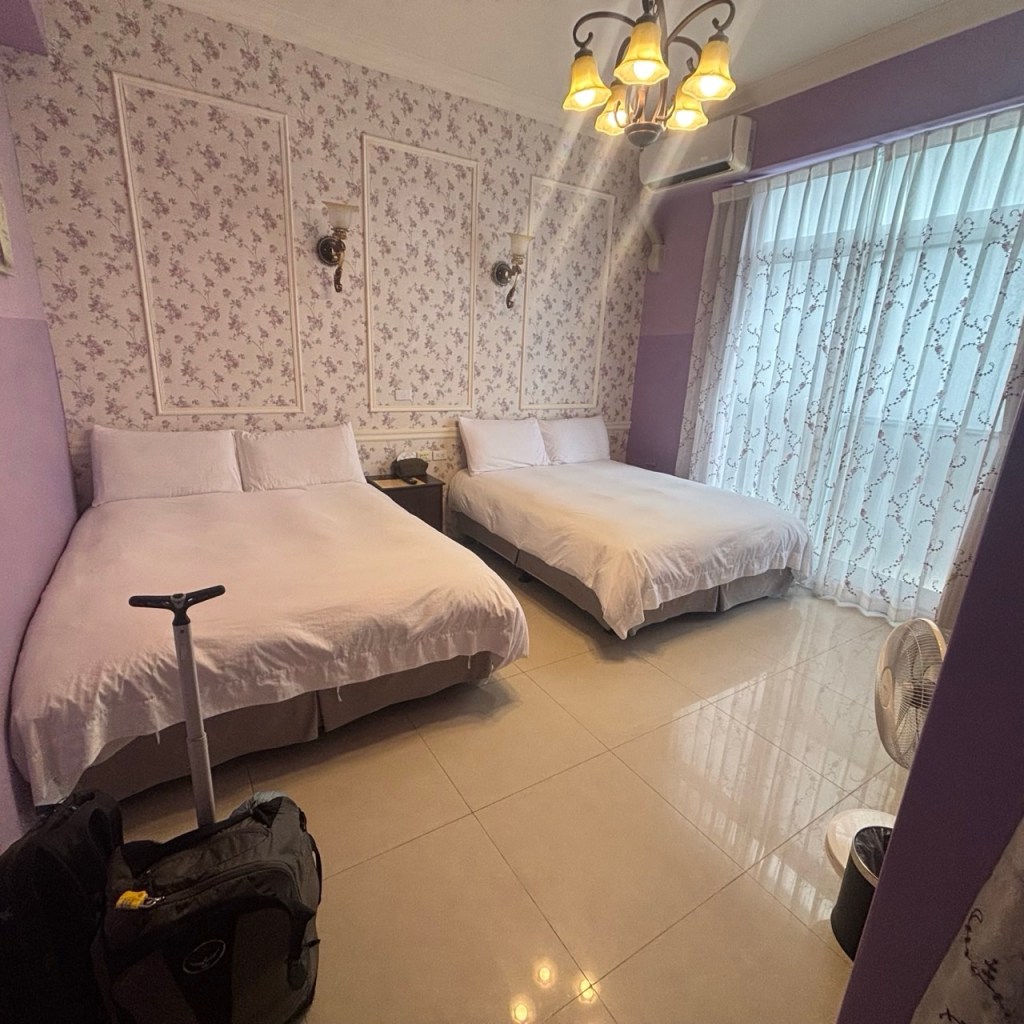
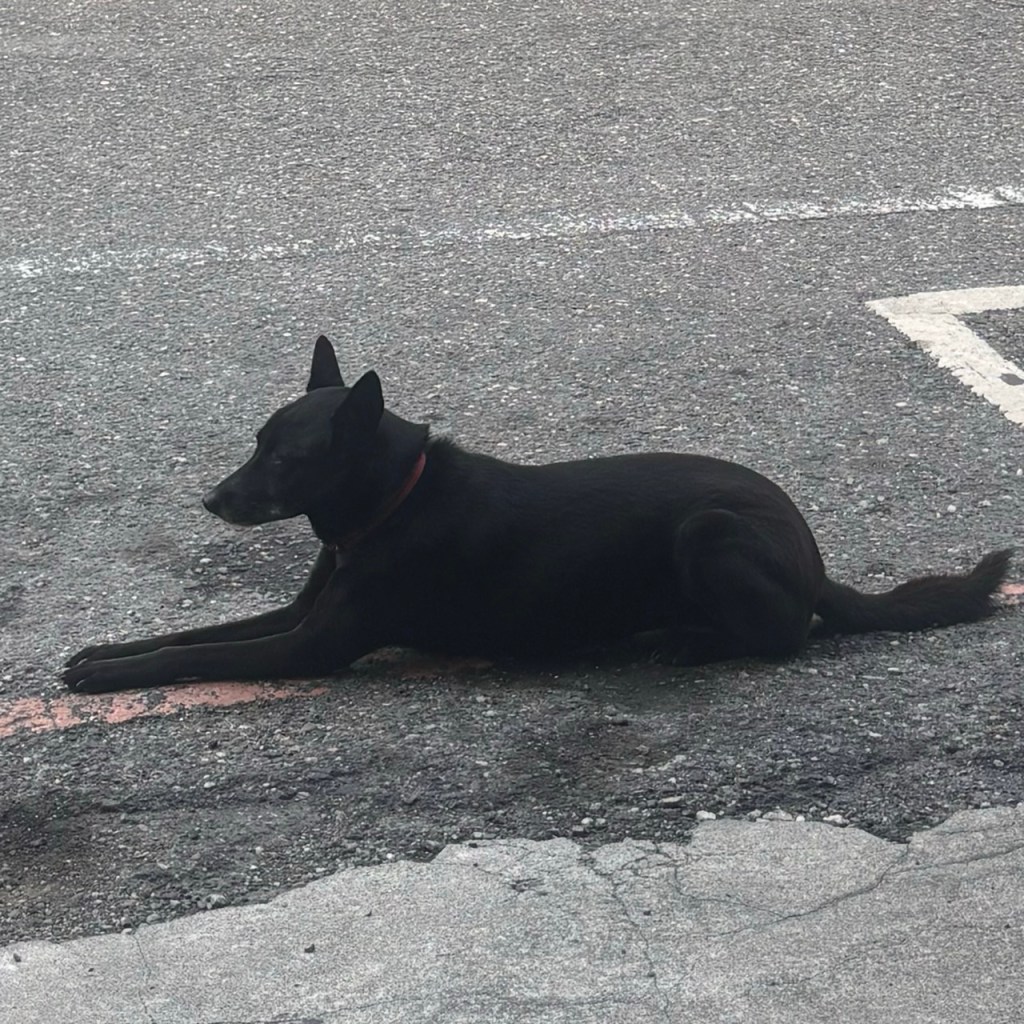
There’s a rock bar in there somewhere

We had another attempt at finding a rock bar as we went to the “Rock and Beer” pub which had an active social media page and looked like it might be a lively spot. After walking up and down past the location several times we eventually saw it all padlocked up. As Vix said, it couldn’t have been more shut if it were on fire. We also passed several signs taunting us that KISS and Deep Purple were playing next week.

I love how busy Buenos Airies is and that you can walk around at night without ending up in a favela. The worst that happened to us was when we walked past a couple performing tango outside a restaurant. We only stopped to watch for a couple of minutes but they saw us taking a sneaky photo and as soon as the music finished they appeared in front of us like magic asking for payment. Vix pretended we couldn’t speak any English and we escaped before we had to part with any of our precious remaining currency, avoiding another slightly stressful trip to a money cave.

The Obelix by night

One of my favourite things about Buenos Airies is the breakfast that is served at all of the cafes and bistro type places. For about £2.50 you get a really good coffee, freshly squeezed orange juice and tostadas (toasted bread) served on a board with jam.

More protests

We booked a flight up to Iguazu to save a 18 hour bus and there isn’t much of a price difference if you want the “cama” bed style seat. As we left we passed more protestors. These ones had closed a motorway lane by burning tires. The taxi driver explained this area had been without power for weeks now so we saw their point.

Arriving in Puerto Iguazú meant a return to hot and tropical weather. You need to be more careful in general in border towns and this one is part of the Three Frontiers, linking Argentina, Brazil and Paraguay. We booked a hostel hoping for some information on Iguazú Falls, or a social element, but again those elements were lacking. The staff at the Iguazu Falls Hostel could not have been less interested in us if they tried, and our room was down a rabbit warren of corridors, the floor slippery from leaks and padded out with cardboard. Every question like “where can I do laundry?” was met with the minimum effort answer of “no”.

Back at Iguazú

We did our own thing and found a laundrette, money changer and nice restaurant and in the morning we headed off on the bus to Las Cataracas, otherwise known as Iguazú Falls. It’s actually really easy to get there with buses running every 20 minutes from the bus station in town and you don’t need any type of tour.

Not exactly prepared for what was coming

I had been to the falls on my previous trip but the customary boat trip has changed (the route I took back then is now considered unsafe apparently!) and the Devils Mouth walkway up to the top is now open so I was keen to revisit.

Lunch area

We made friends with an older couple from Argentina/Mexico, a spinal surgeon and his wife, who we chatted with whilst waiting for the jeep ride to take us through the jungle down to the jetty for the boat trip. The world’s most boring guide provided some commentary in lazy Spanish with an even lazier English translation that I barely understood, before they threw life jackets at us and bundled everyone onto the boat. The ride up to the base of the horseshoe shaped falls was as spectacular as I remembered. I remembered getting wet, and the excited screams of everyone shouting “otra vez!” to go again. What I did not remember was going so close to the falls that you’re hit in the face by a wall of water over and over again – the driver casually announced that “now we are going to take a shower”.

First part of the boat ride

Below is my attempt at videoing one of the close ups. Vix described it as 100 cubic metres of parasitic water chucked in your face but she managed to video it all (too big to upload here). At least I had taken off my shoes and put my stuff in the dry bag that they provided.

Best video I’ve ever taken

The Argentinan surgeon had everyone laughing as he’d worn a poncho – don’t ever wear something like this again he said, it’s a waterfall in your balls 😳

Reasons not to wear a poncho

The boat driver was also having some fun of his own on the way back, taking us over the rapids. The boat is still the best way to really experience the power of one of the Seven Natural Wonders of the World. It’s overwhelming, it’s so, so much fun, everyone is screaming and laughing and it’s really impossible to put the feeling into words other than you’re alive.

Our shadows off to the Devils Mouth

Soaking wet (denim shorts are NOT the best choice) and slightly shellshocked, we grabbed a sandwich and a coffee from the cafeteria area which still looked the same as it did ten years ago and got straight on the little train towards the Devil’s Mouth, “la Garganta del Diablo.”

See the mist from the falls

Really you need two days here to explore the jungle trails with so many different birds (over 400 species) and beautiful butterflies that land on you.

Unfortunately butterflies are not the only thing that might land on you – I was walking along minding my own business covered in Deet to repel the mozzies when something stung me on the back of the ankle. It was such a shock that I fell over and dropped my sandwich into the dirt but somehow kept hold of my coffee. A passerby said it was probably a black wasp, common in the park. Once the pain subsided and I had replaced my lunch we continued to the walkways providing a passage over the river to reach the Devils Mouth.

Vix on her way

The bridges take you right up to the “mouth” of the falls where the Iguazú river drops 80m over multiple cascades in a semi circle 2700m in diameter. The river itself is the border between Argentina and Brazil. Because we were there at the end of the day we had it almost to ourselves. It was all nice and calm and we were happily taking photos under the rainbow when out of nowhere it changed and we were drenched again.

Trying to get a selfie at the top
Poem on display

We were quite literally the last to leave the Devils Mouth, heading back to get the ultimo train back to the park entrance, followed by a cleaning man sweeping the paths clear of any litter. We were later passed by a group of Coati, the real clean up crew, on the lookout for leftover lunches.

The Coati clean up crew
The feeling you’re being watched on the train

Back in Puerto Iguazú, and nice and dry, we enjoyed a meal and quite a few drinks (I still blame Vix as a Negroni is pure alcohol). The next day it was time to pack up again and embark on our adventure to Paraguay. We wanted to go the fun way via boat over the river rather than bus or taxi. Unfortunately my foot had swelled up from the wasp sting so we had to taxi to the port 🙄 after some last minute souvenir shopping as always …