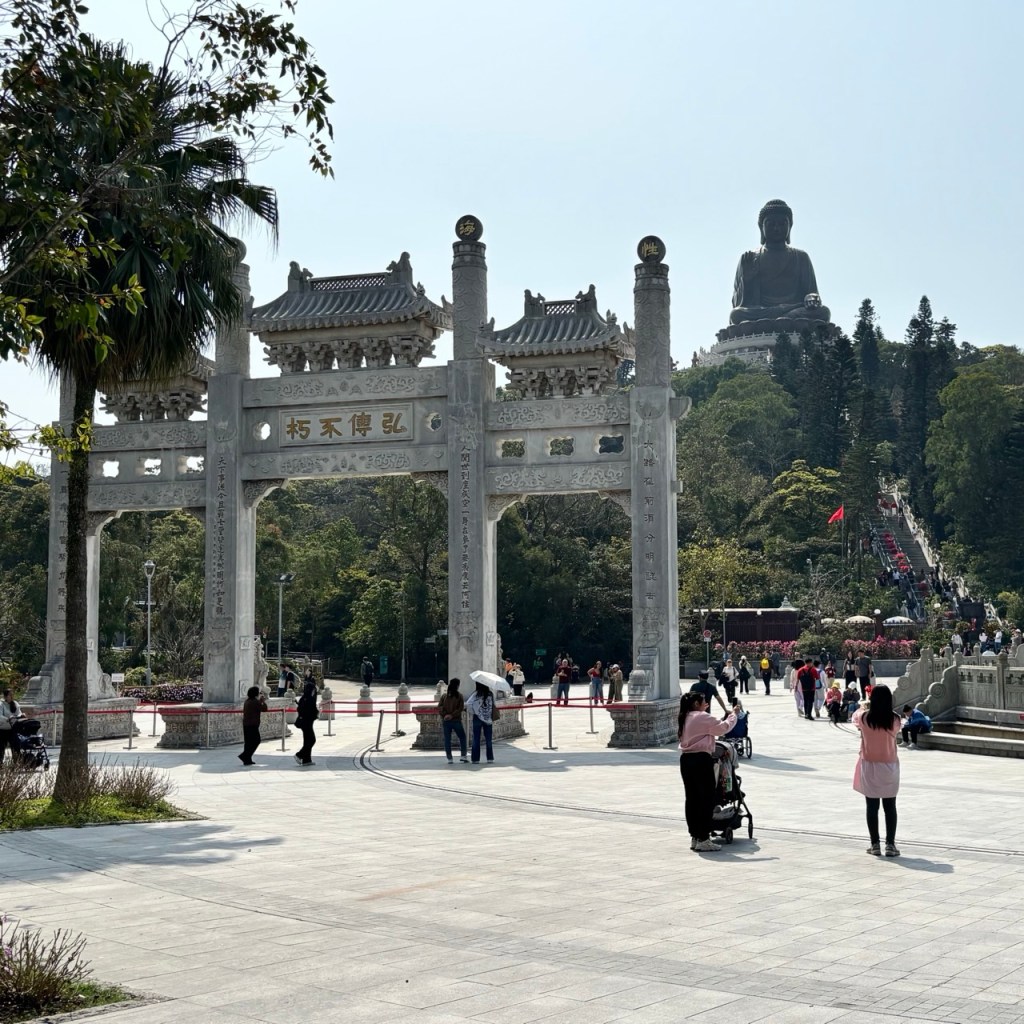
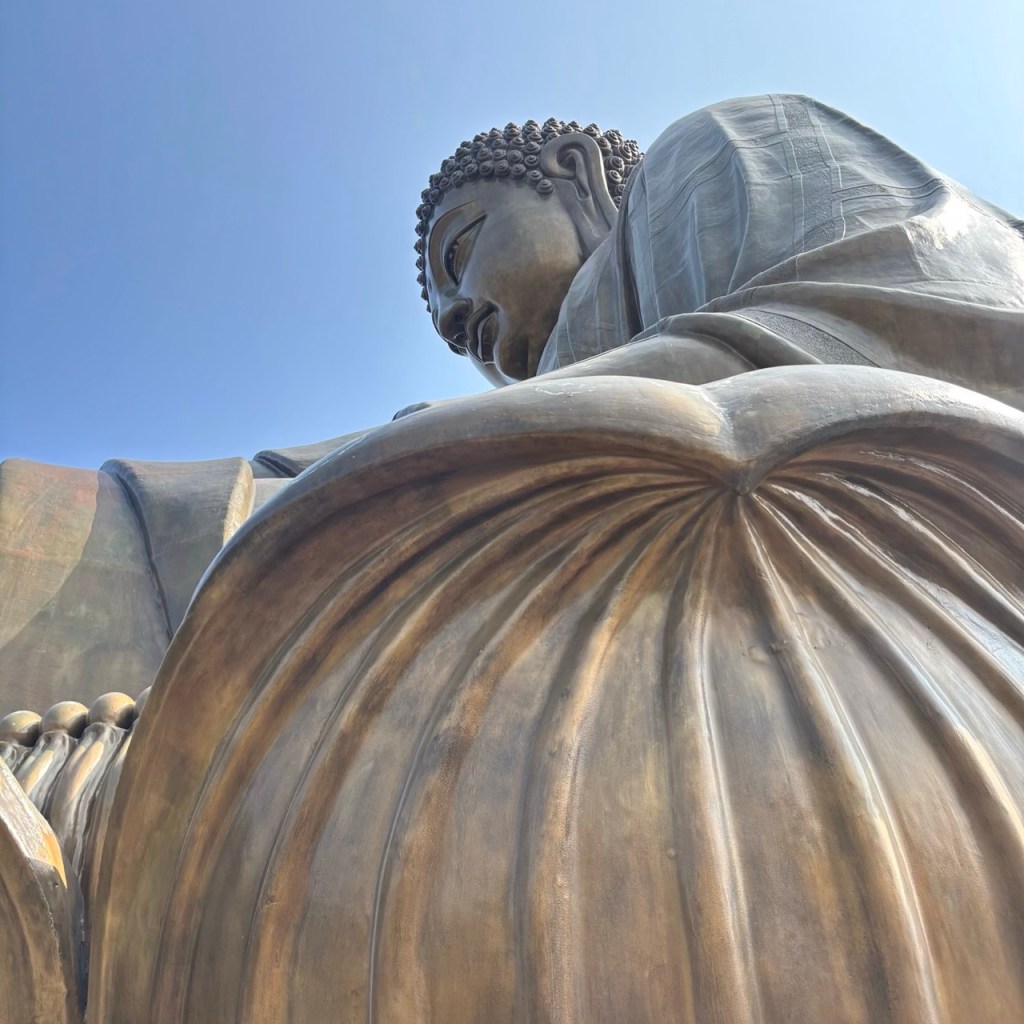
Another “must see” in Hong Kong is the Big Buddha and Po Lin Monastery, perched high up on a mountain on Lantau island. The Big Buddha is a huge 112 foot tall bronze sculpture of The Buddha. Weighing in at over 250 tons, constructed in 1993 it is the world’s ‘tallest outdoor seated bronze Buddha’.
Arriving at the Big Buddha site
I was fooled by the lack of people on Cheung Chau the day before. The most popular way to reach the monastery is by train from the Hong Kong Central to Tung Chung station, then a beautiful cable car ride on the Ngong Ping 360 up to the top. The queue for the cable car didn’t look too bad until I realised it was a pre-queue. The ticket number I’d been handed was a ticket to join the real queue. I waited with a herd of people in the sun just standing there or sitting on the floor for about an hour before my number was called to join the queue inside.
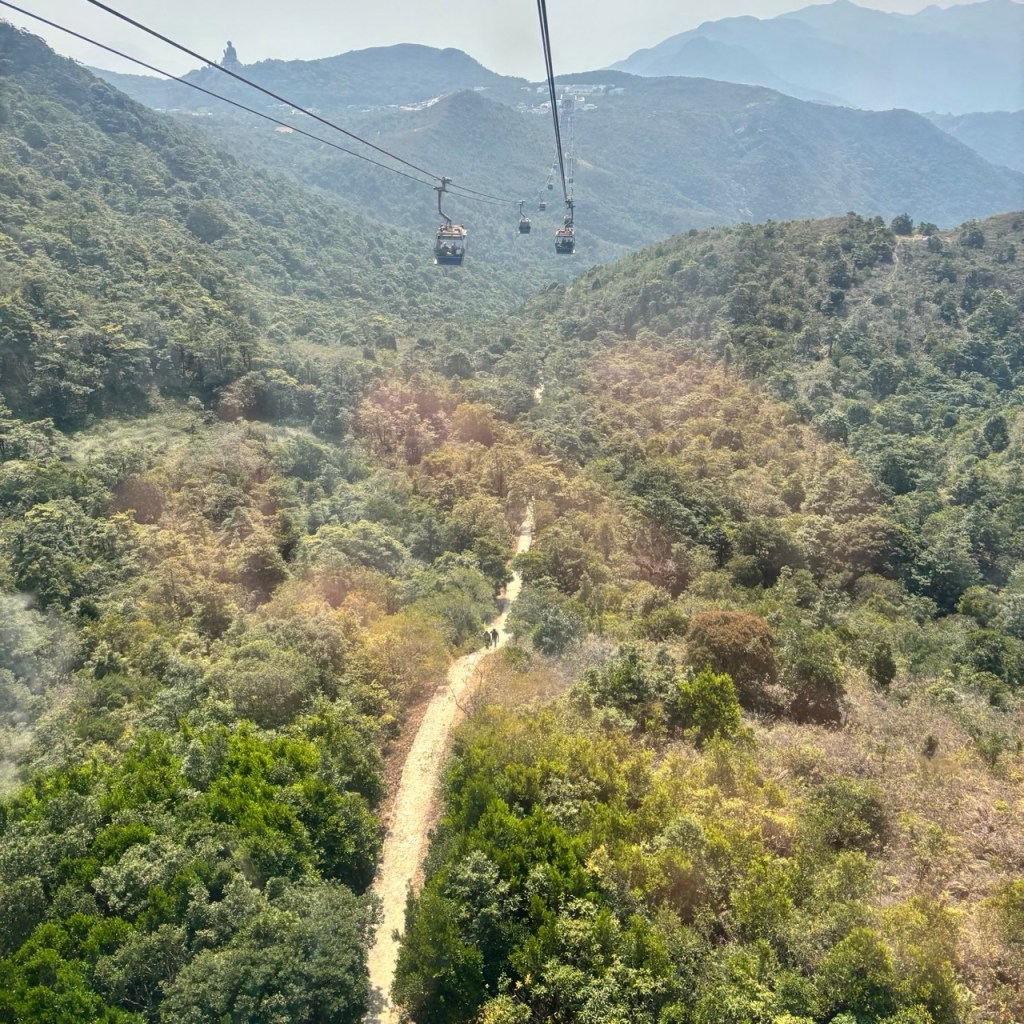
Hiking path below the cable car
The ride took about 25 minutes and provided great views over the nearby Hong Kong International Airport, the architectural marvel that is the bridge road to Macau, plus of course the Big Buddha itself. This was definitely worth the queue. I considered hiking back down as it looked like a pretty path.
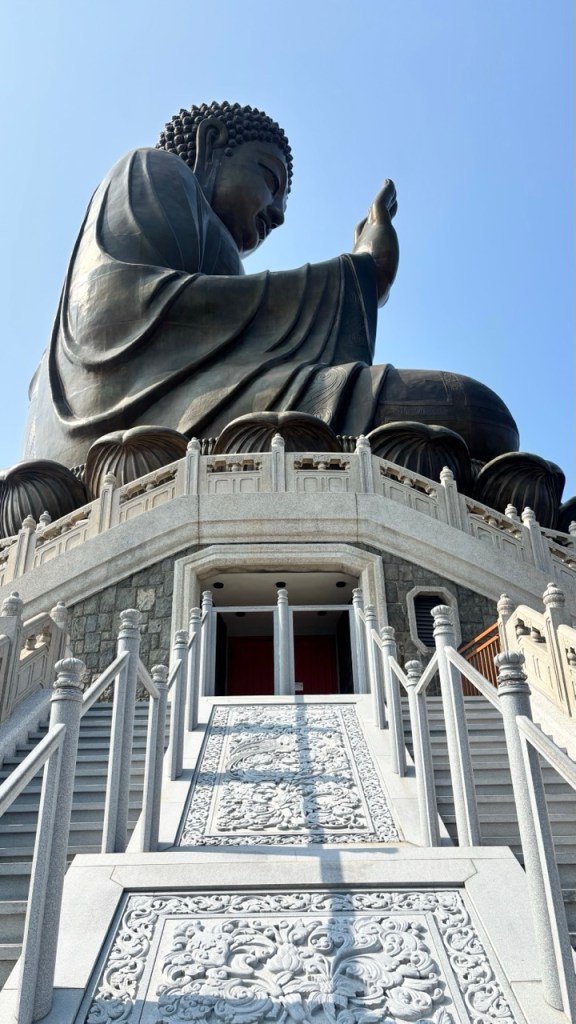
Up close to the Big Buddha
I was expecting a peaceful, serene monastery experience but I got off the cable car to find a Disneyland feel, with Starbucks, Subway and fast food joints lining the square which was a bit surreal.
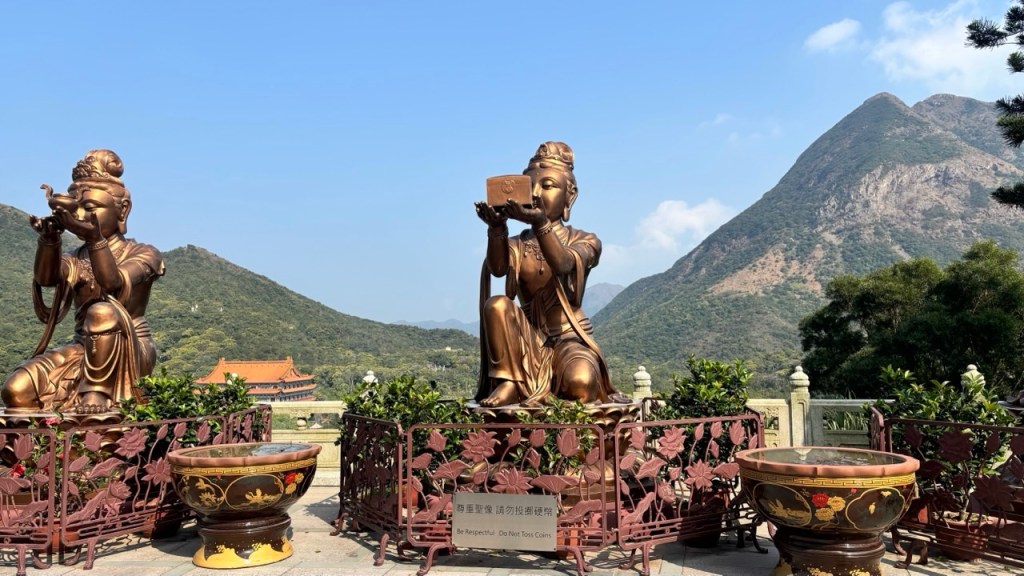
Six smaller bronze statues surround the Big Buddha, known as the “Offering of the Six Devas”
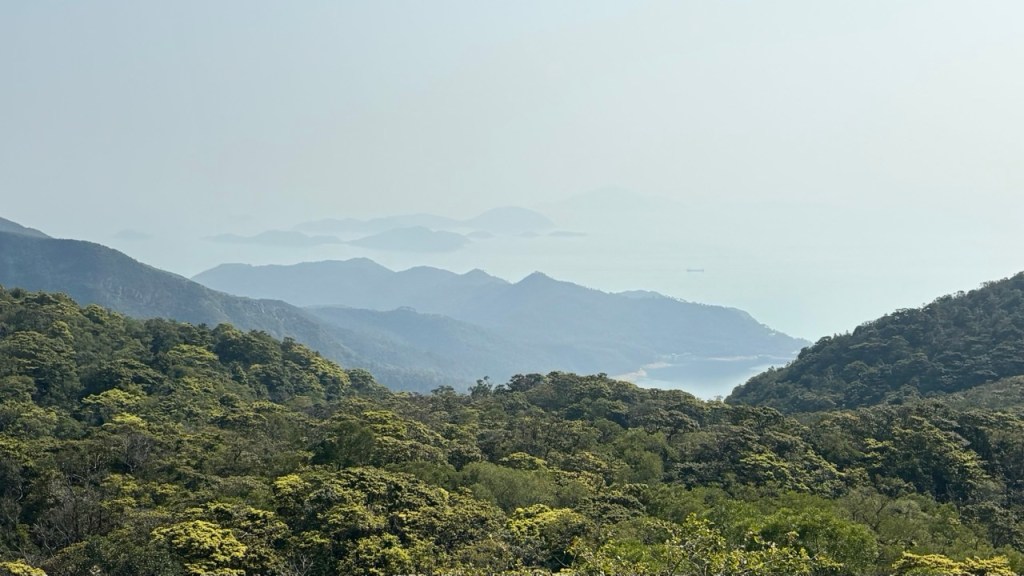
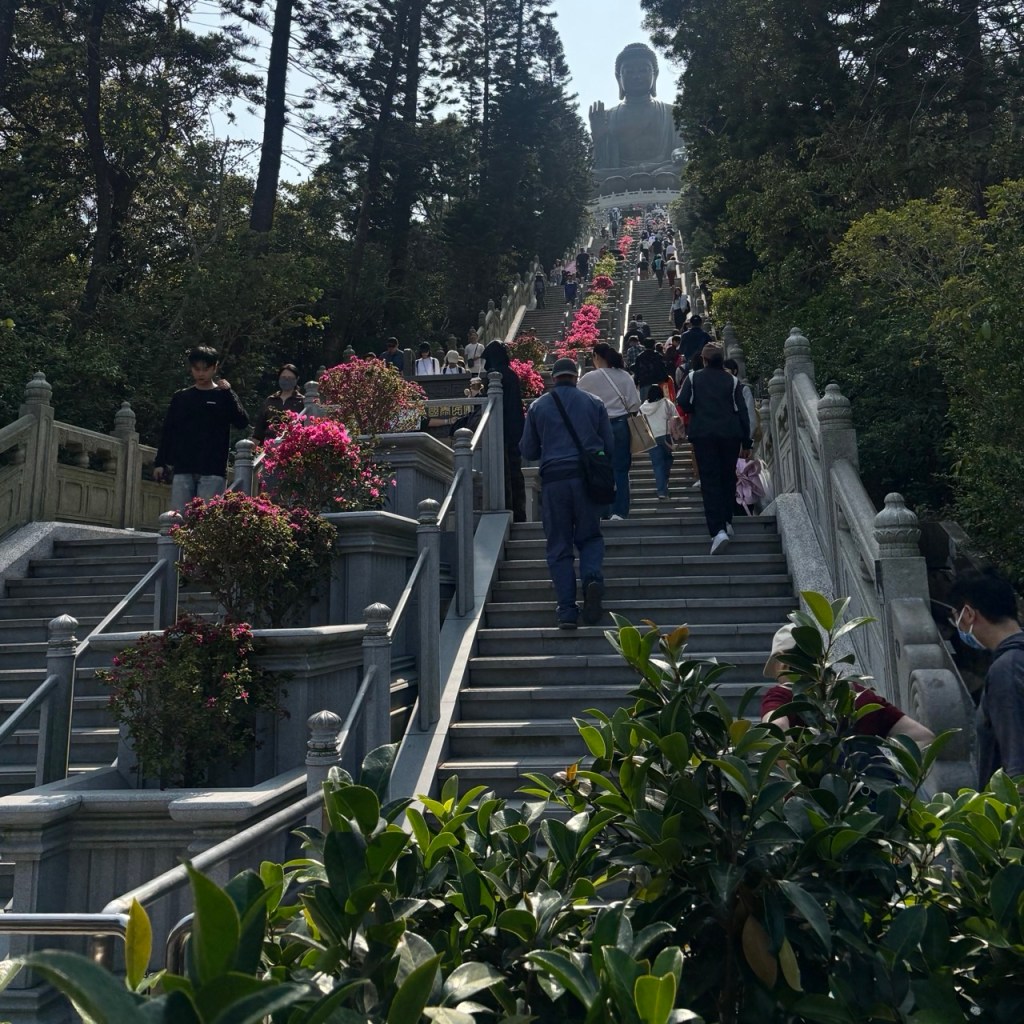
The Big Buddha itself sits even higher up a climb of almost 300 steps but what’s the point of coming if you don’t go all the way up? The 360-degree views are amazing if you get a clear day. Inside the Buddha itself is just a shop, not so interesting.
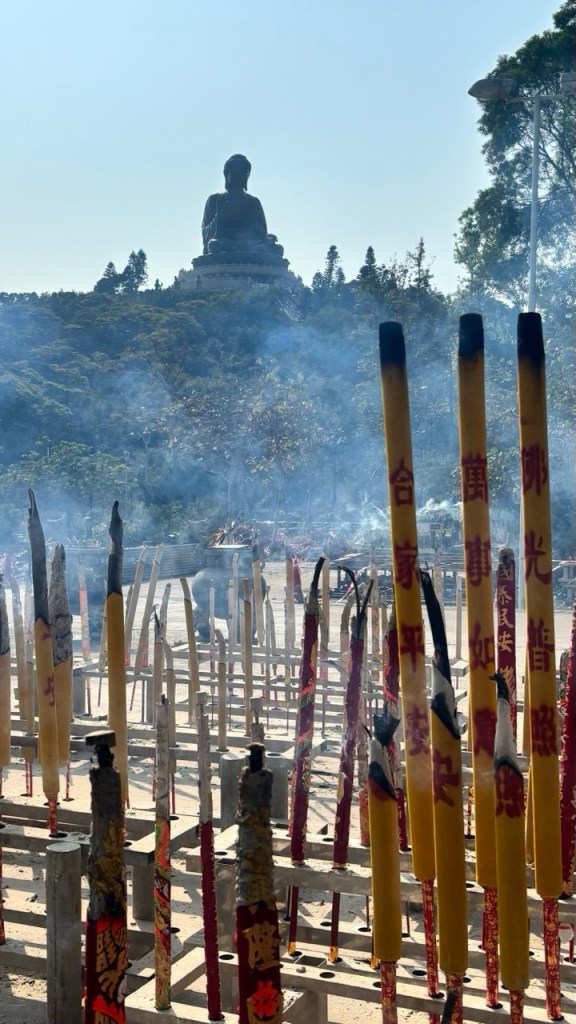
Giant incense, taller than me
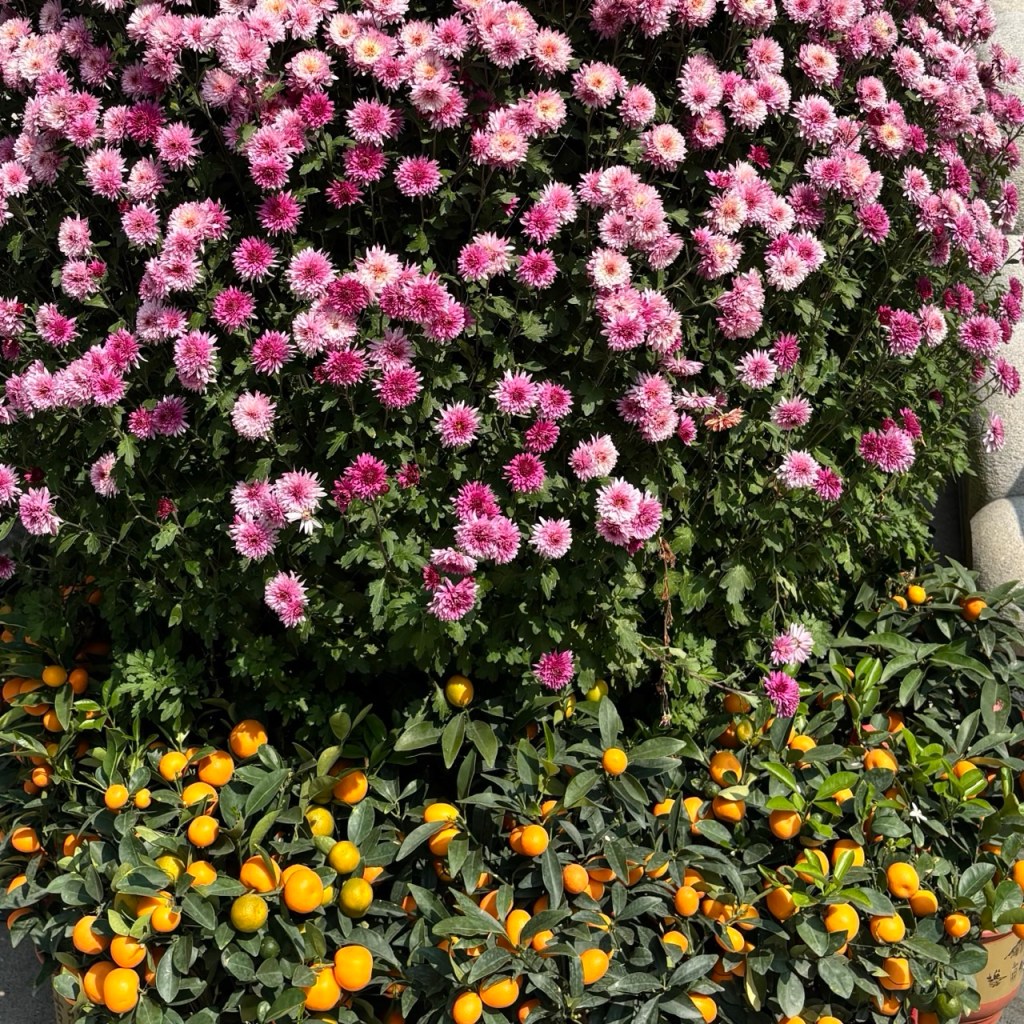
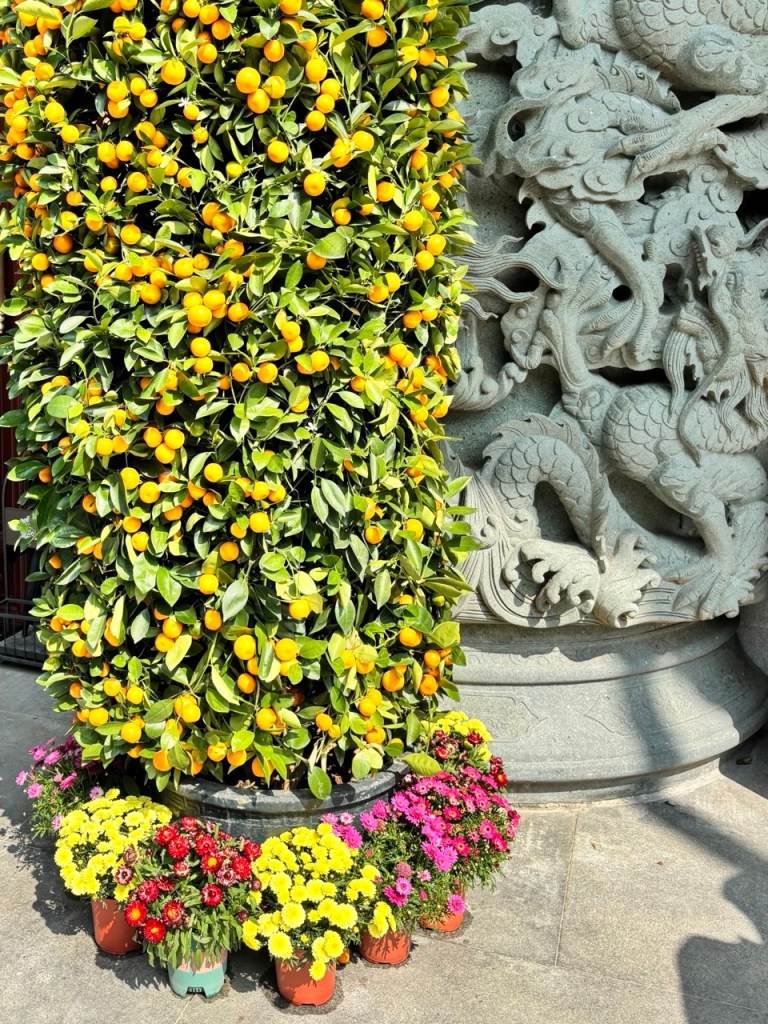
The monastery area is also a beautiful sight as it’s full of flowers and mandarin trees that didn’t look real. It’s positioned through an ornate Japanese-style gate, behind a row of giant incense sticks a few feet high.
Mountain ViewsAlmost at the top 270 steps up
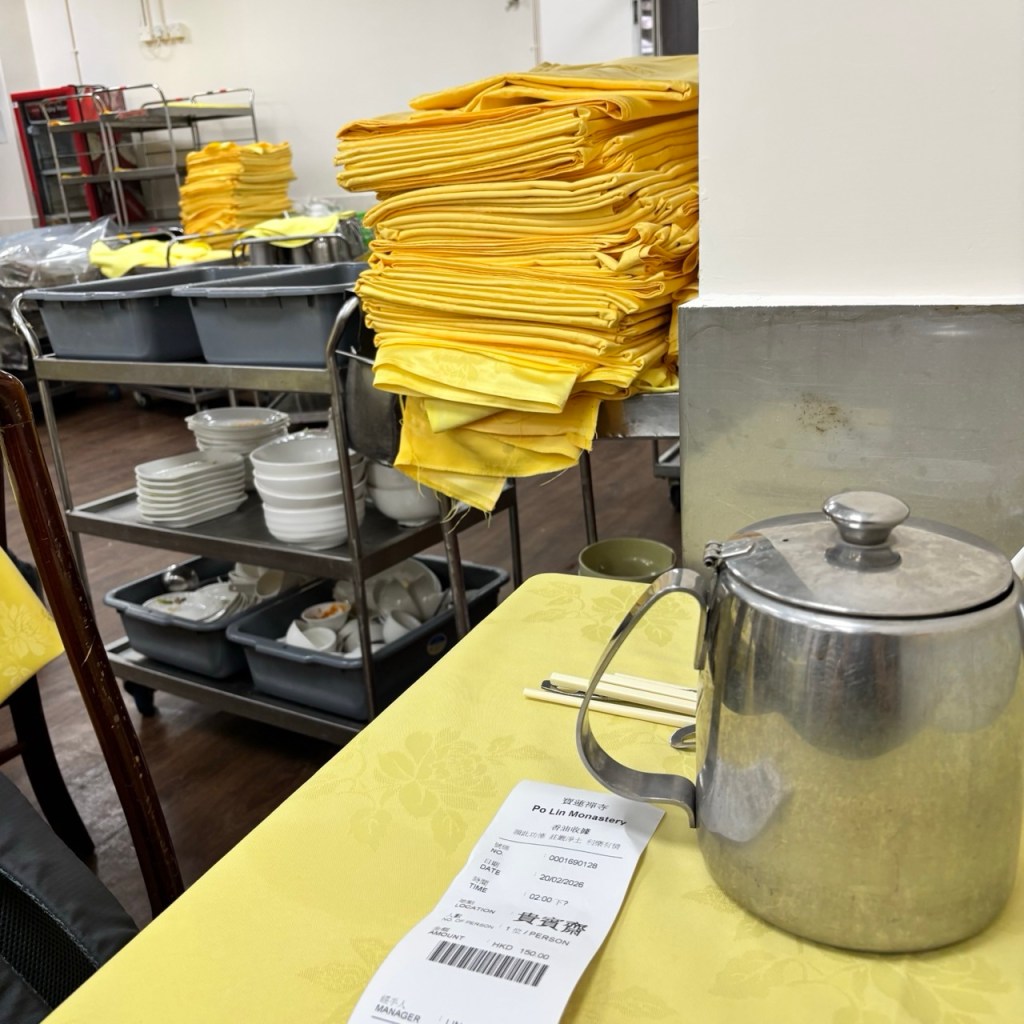
Like a lot of Buddhist monasteries, this one offers a vegetarian lunch and usually these are cheap and delicious. I took a ticket to get my lunch and disappointingly was shoved onto a table for one in the corner next to the dirty dishes cart. I hate it when they put single people out of the way somewhere in the worst seats.
Table with a view
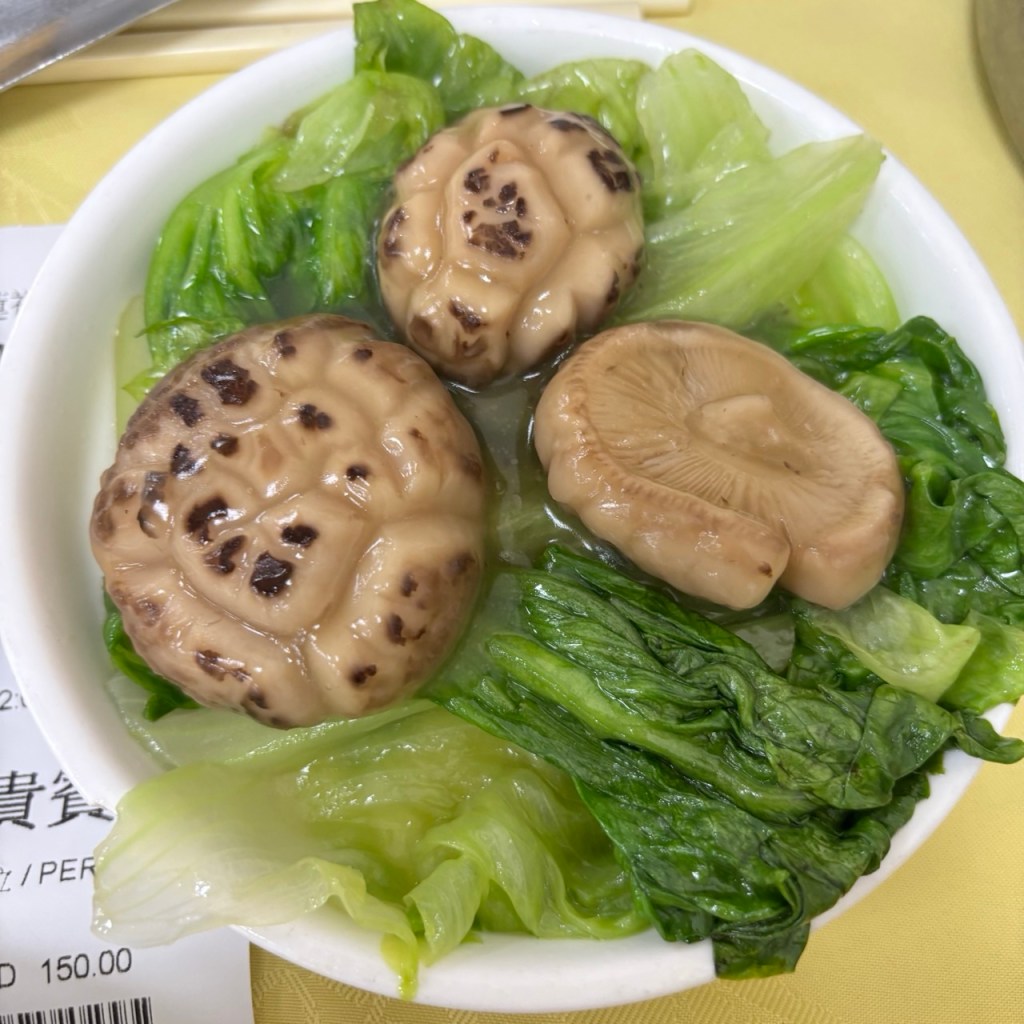
I was given a cold pot of tea and some disgusting slimy mushrooms followed by a saucepan of lukewarm rice to serve myself with some bright orange sweet-and-sour vegetables. I left most of it after paying for one of my most expensive meals in Asia at around £15.
Yuck
With a huge queue to go down by cable car there is another option aside from hiking down. This turned out to be the unexpected highlight of the day. You can take a bus 30 mins down the hill to the small fishing village Tai O. The bus was only running every hour or so but I managed to time it just right.
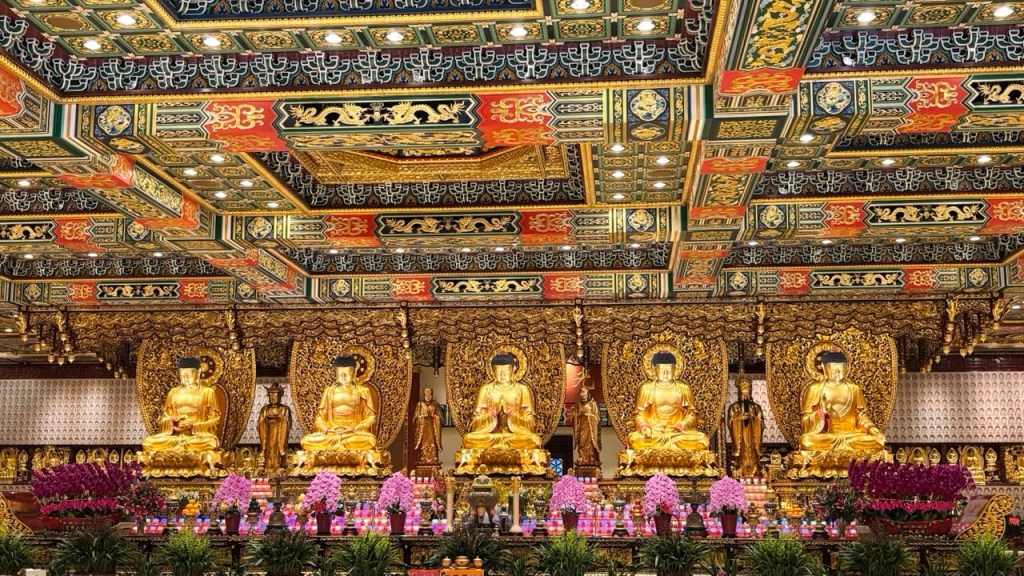
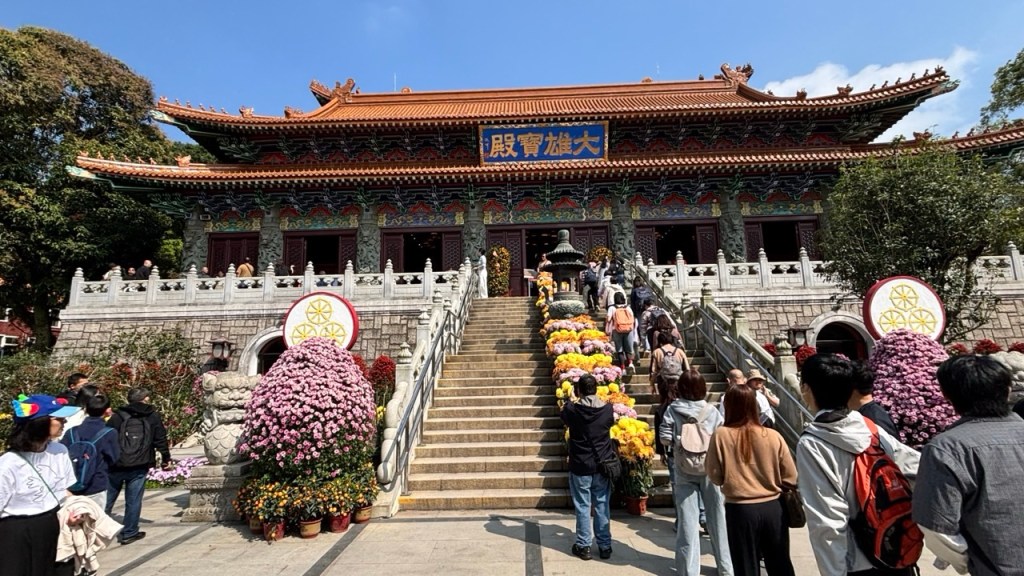
Flowers outside the Po Lin Monastery And a tree of mandarinsInside the hall of 1000 Buddhas The monastery
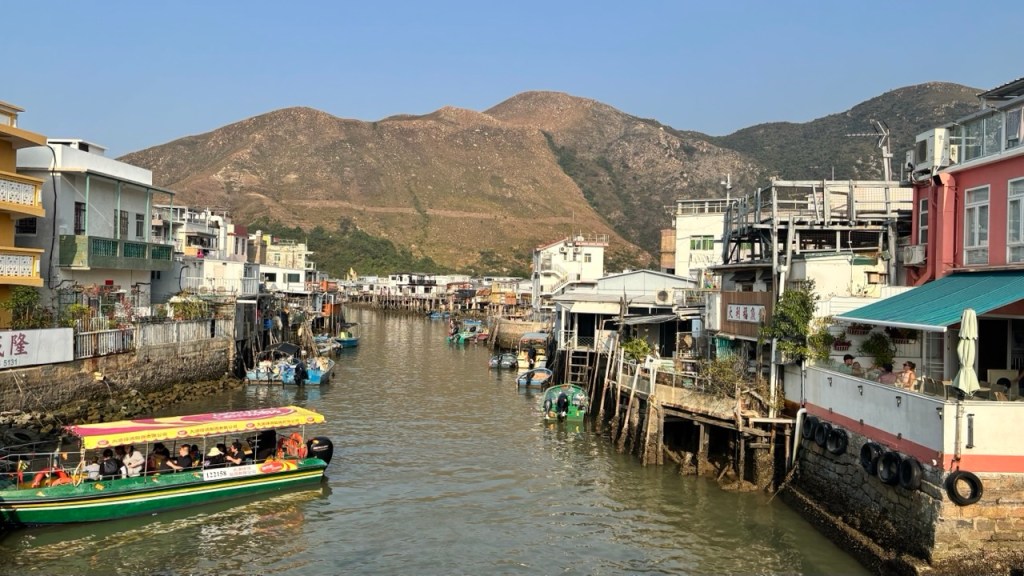
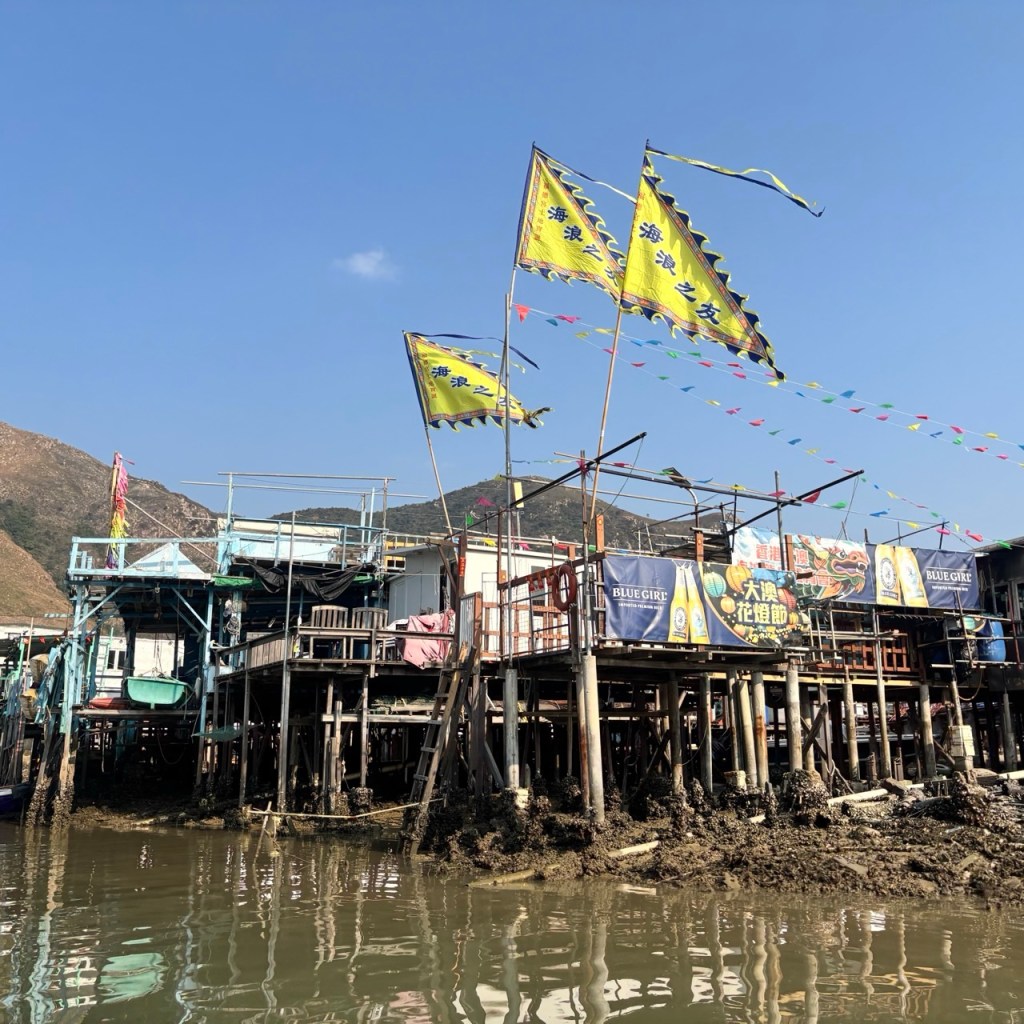
I arrived around 4pm in Tai O without knowing what to expect. It’s a small village built on the water, with most of the buildings on stilts and boats used to get around. It’s a bit like a fishing village version of Venice!
Approaching Tai O fishing village
As soon as I got off the bus I was offered a boat trip for about £7 which was a really nice way to experience the village from the water. We didn’t see any of the pink dolphins that apparently live there but I really enjoyed it.
Buildings on stilts
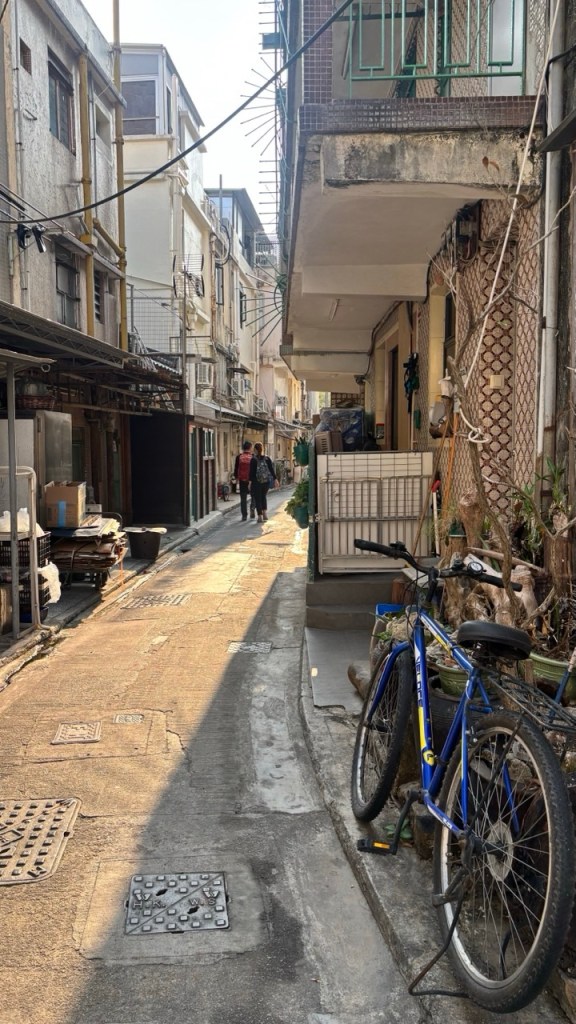
The village is connected by bridges over the water and there are a few cafes and bars which would be perfect at sunset. The village square had music playing and there were older residents sitting outside, people watching. I’m not sure many people know about visiting place – for me it was just a random tip from someone I met at the hostel.
Happy Year of the Horse!
One thing I loved about Tai O was the music and general atmosphere in the tiny streets – see video of main square below!
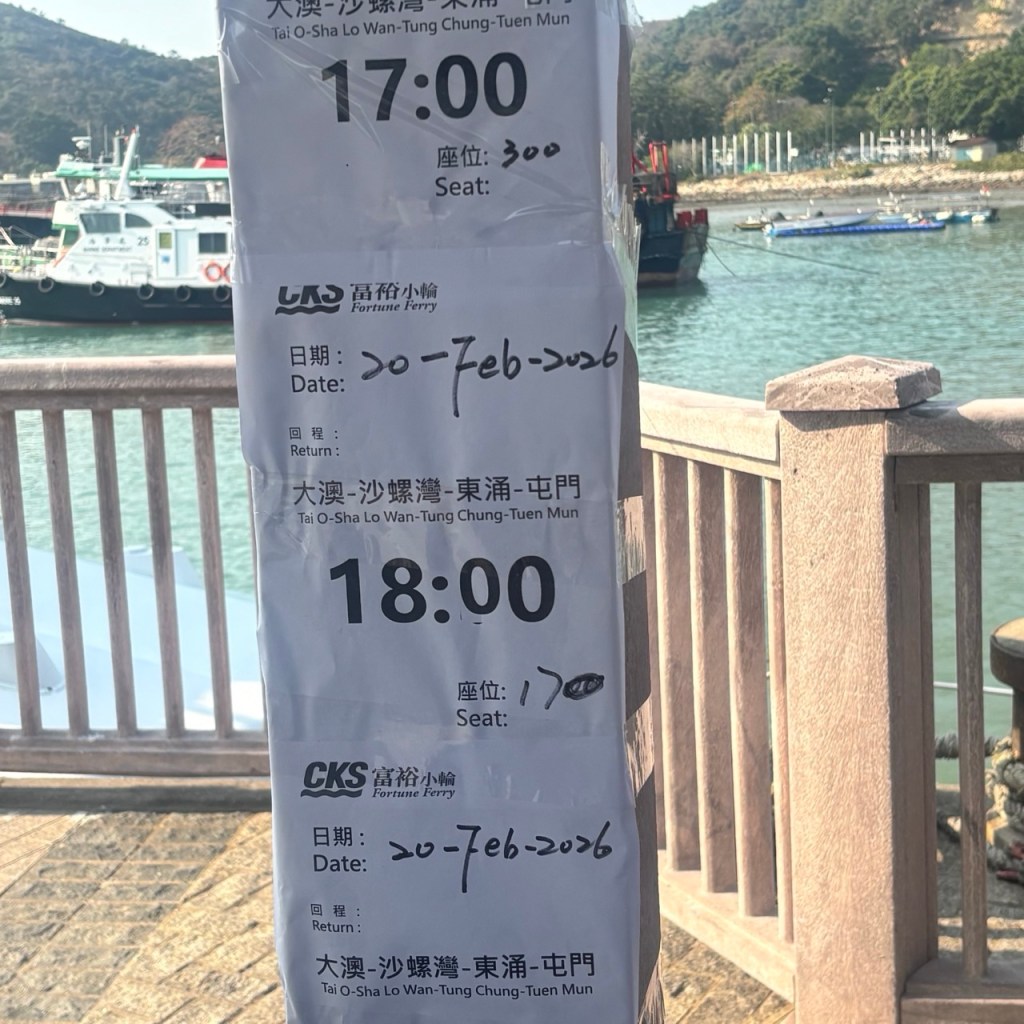
Another trick to avoid yet another long queue for the 1.5 hour bus ride back to Tung Chung train station, is to jump on the ferry that runs from Tai O. I just happened to walk past the port and had a look at the timetable, which a child in the queue helped me to understand. There aren’t many departures so it had to be timed with the visit, which again just worked out perfectly.
Quiet village streetsFortune Ferry timetable
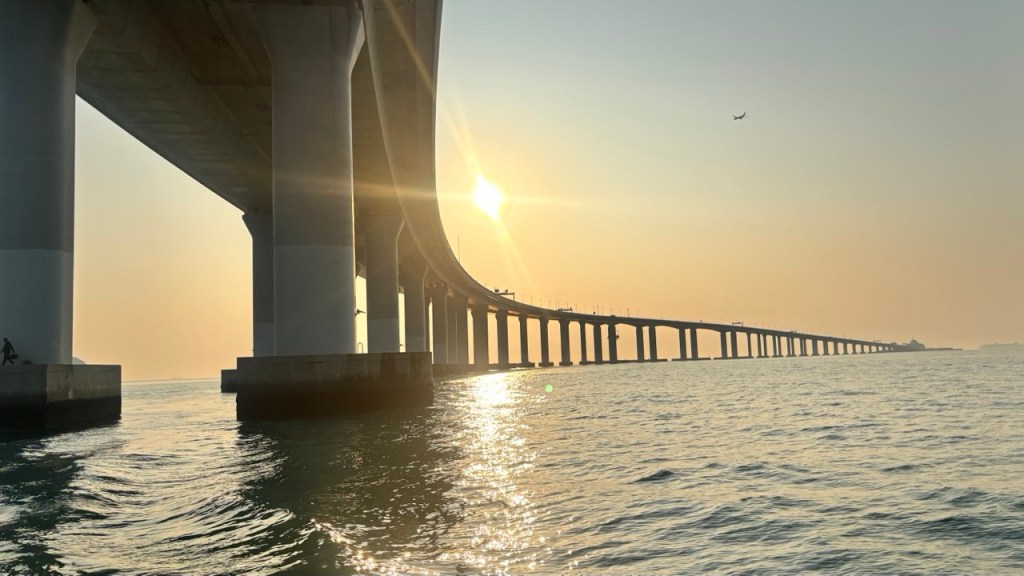
This boat trip was actually brilliant and another highlight – really cheap (about £1) not crowded at all and the perfect way to see the coastline. Best of all, we followed the Macau bridge. To give it its full name, the Hong Kong-Zhuhai-Macau Bridge is the world’s longest ‘sea-crossing and bridge-and-tunnel system’, spanning 55km to connect Hong Kong, Macau and Zhuhai.
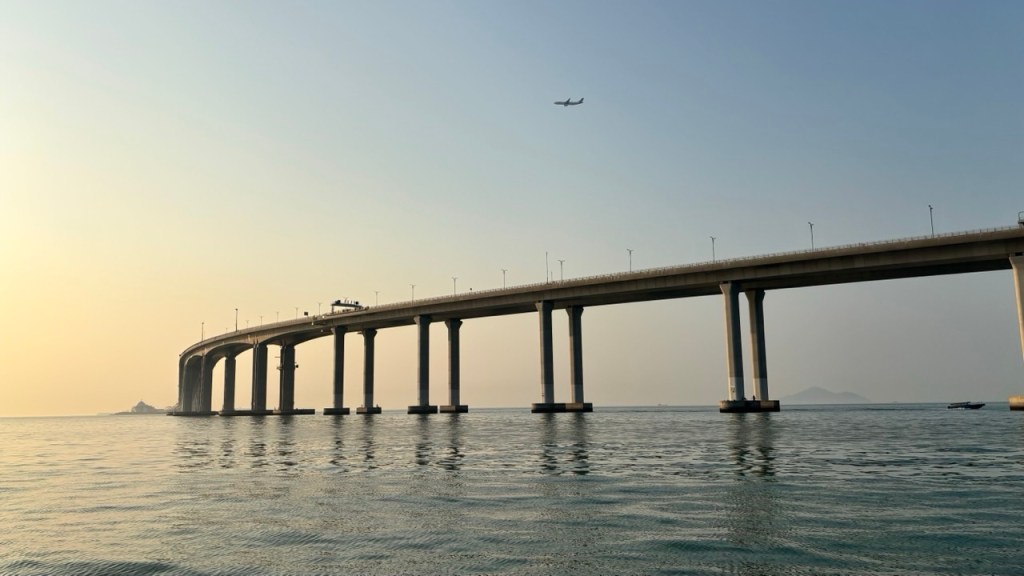
Plane spotting under the Macau bridge
Seeing this up close was breathtaking, especially with all the planes taking off from the airport and flying right over our heads at sunset. Lots of people were taking videos of the takeoffs.
And another
All in all, the Big Buddha was certainly a sight worth seeing while in Hong Kong but the highlight today was most definitely the journey!
The next few days of this trip were the ones that needed some advanced planning. Firstly the Alishan National Forest: the most iconic way to get to this forest high up in the mountains in the centre of Taiwan is to ride the scenic Alishan Forest Railway. This is a narrow gauge railway that runs through the Alishan mountains and high-altitude forests. However, getting a ticket for this is like getting a ticket for the Sri Lanka Ella train all over again (throwback to when Original Travel Companion Helen and I tried and failed to even get on the train, being the only ones left standing on the platform after the locals piled in). Tickets are released online 60 days in advance but sell out immediately. A blog called “Taiwan Obsessed” has been invaluable in telling me how to practically do things. It mentioned that you might need to try over 100 times to buy the ticket online (no joke), or a better option might be to buy a bus ticket as a backup and try your luck to get a train ticket closer to the time. To buy the bus ticket, you go to a Family Mart convenience store and use an ATM-like machine, all in Chinese, to print a receipt which you take to the counter and pay for in return for the bus ticket. I managed to do this only by following screenshots from the blog, matching them up to the Chinese text on the machine, of which there were at least 7 screens to click through and some blind faith that I was actually purchasing a bus ticket.
The Journey Up
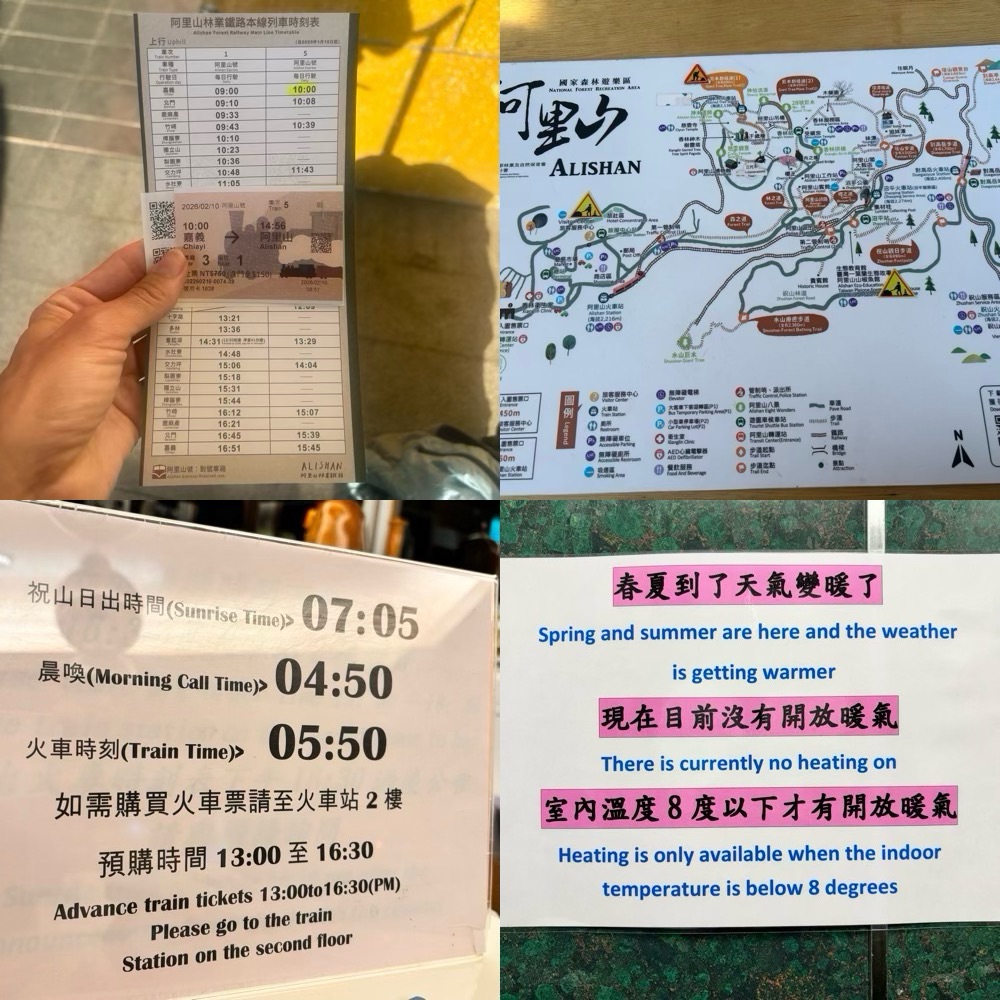
With bus ticket in hand I for once arrived early at the bus stop before the 8.30 departure. I had almost convinced myself that taking the 3 hour bus up to Alishan would be perfectly fine – it’s faster by two hours, cheaper and the scenery would still be beautiful, and the train was probably overrated…. But from the bus stop I could see the Alishan Forest Railway ticket booth. Surely it was worth a try? I ran over and asked the lady if they by any chance had any tickets for the train today. You’re very lucky, she said, we have one window seat left. It takes five hours as it includes a one hour lunch stop at Fenqihu Station. I handed over the money and got my golden ticket.
Golden ticket, Alishan map, Hotel notices
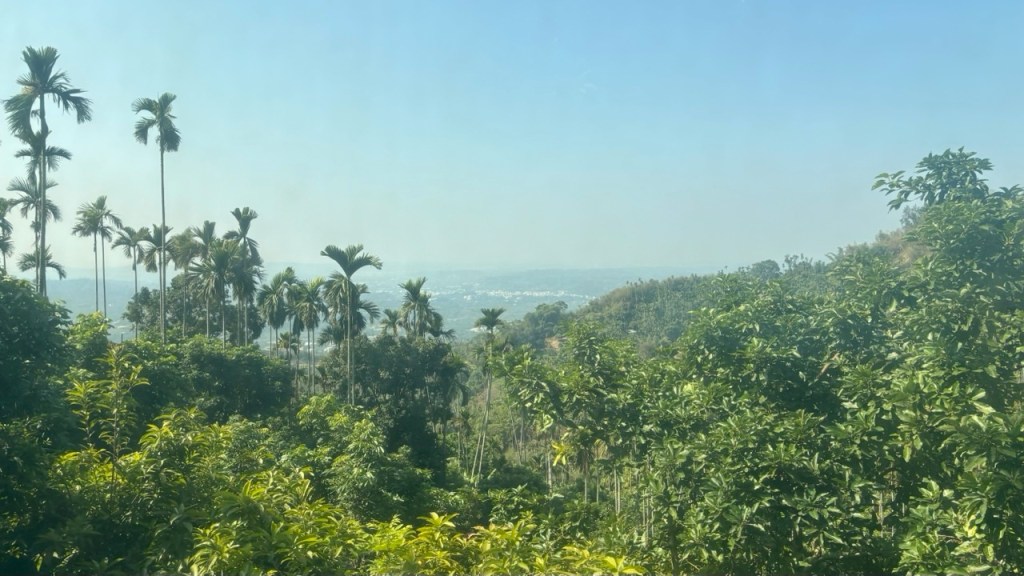
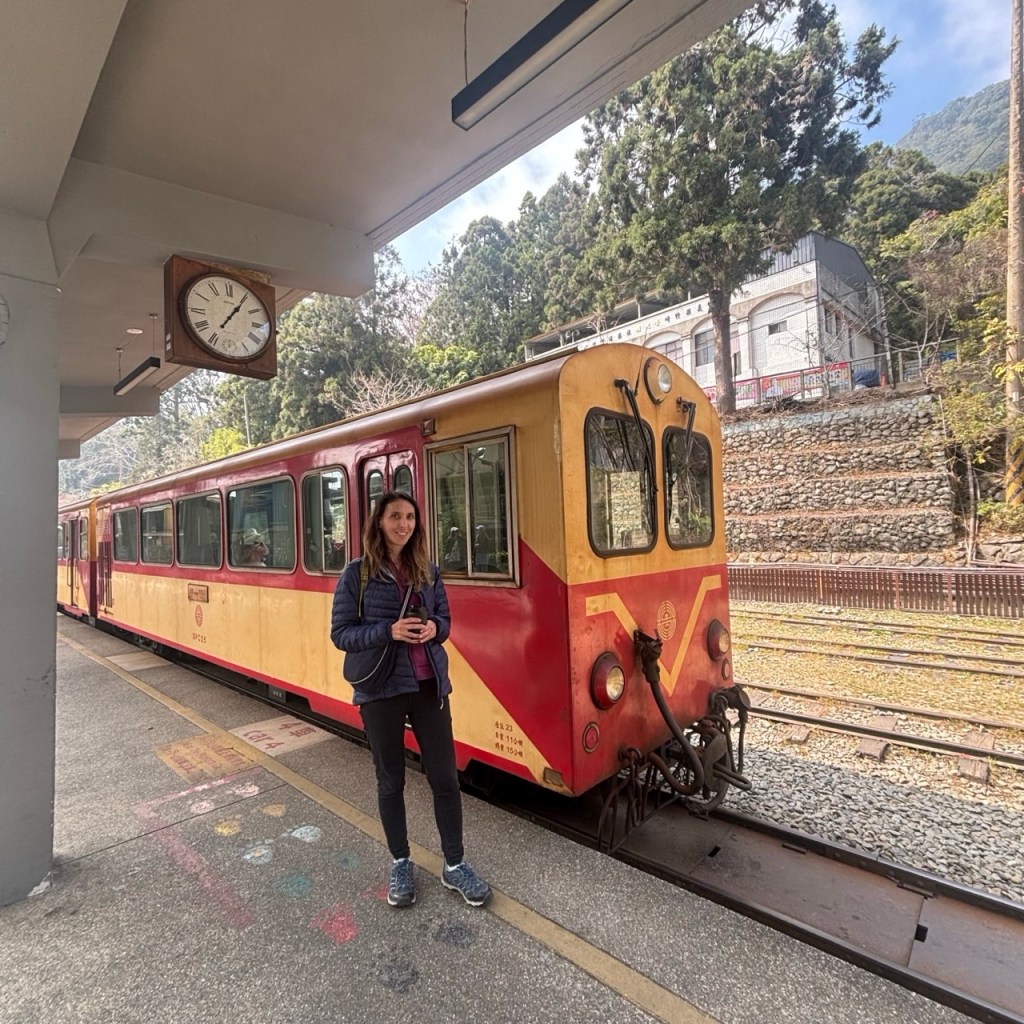
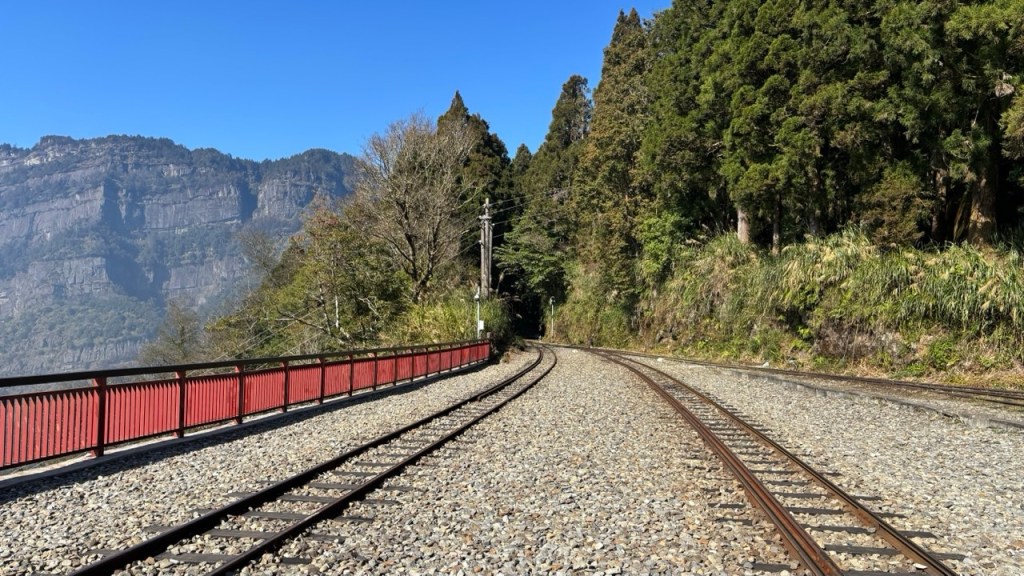
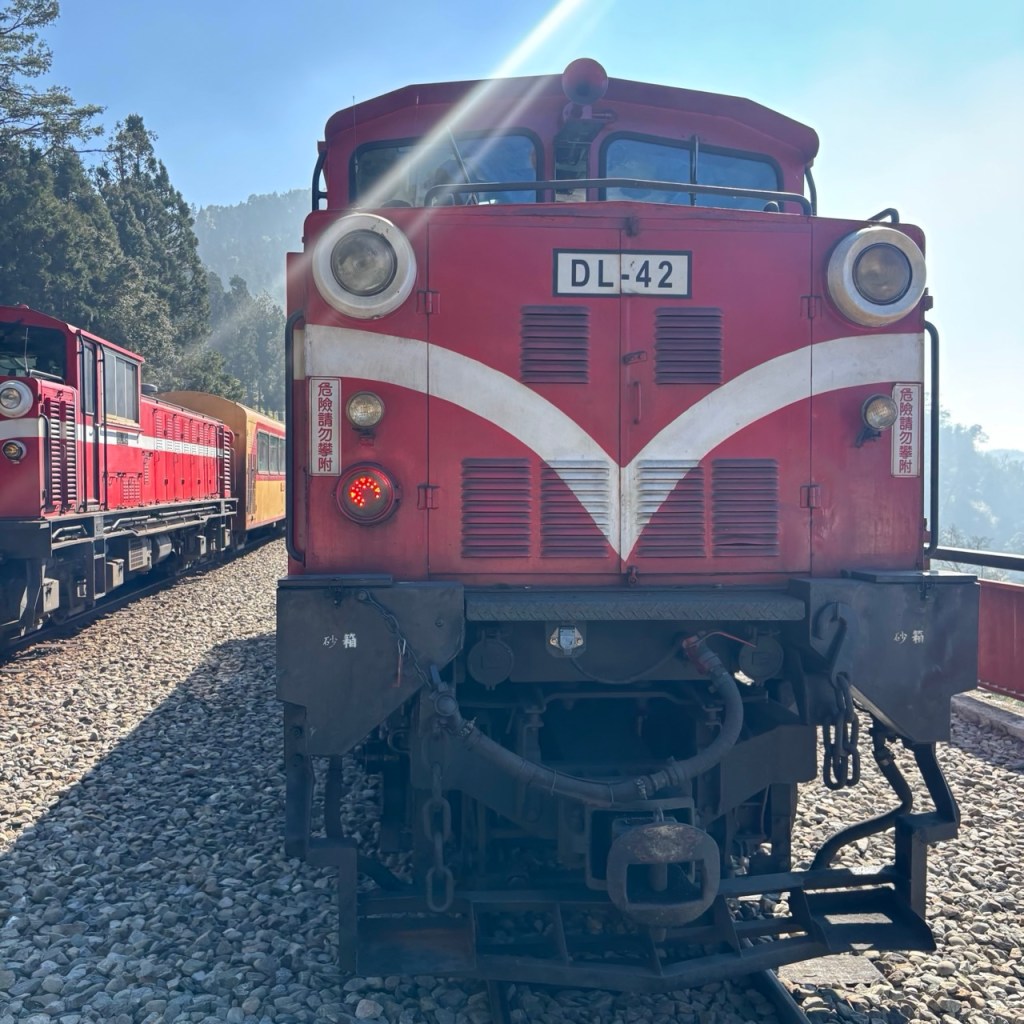
I headed back to the train station and when the ticket attendants asked me “Alishan train?” as they had done every time I passed though, this time I said YES which a huge smile on my face. The historic train trundled into the station at 10.00 and I took my single seat by the window and settled in. It was hands down the best train ride I have ever taken and worth every Taiwanese dollar of the extra £14. The train gradually climbs up from 30 metres above sea level to 2,216 metres, goes through 47 tunnels and over 72 bridges. The narrow gauge railway line alternates between hugging the edge of the mountain (looking out the window was literally looking down into the valleys over the mountain edge) and cutting through the middle via the tunnels. It even has some English commentary.
Ready to board
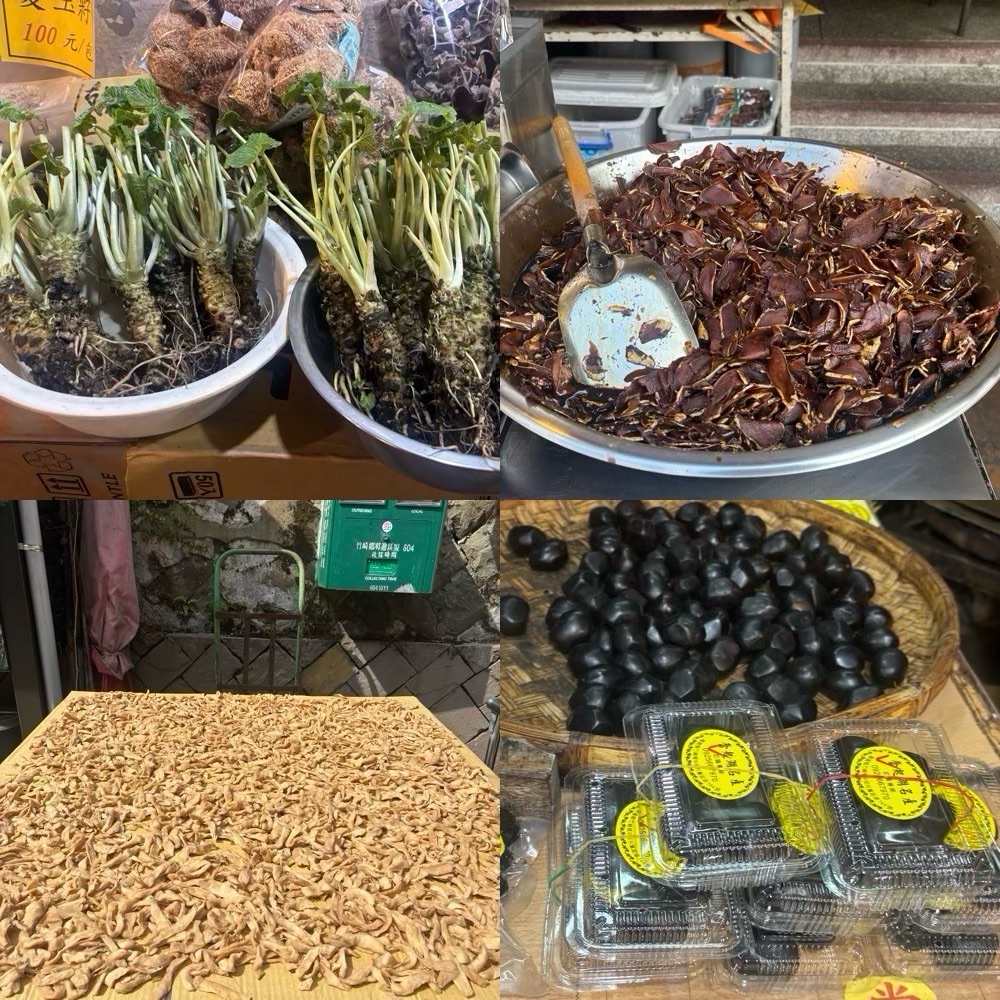
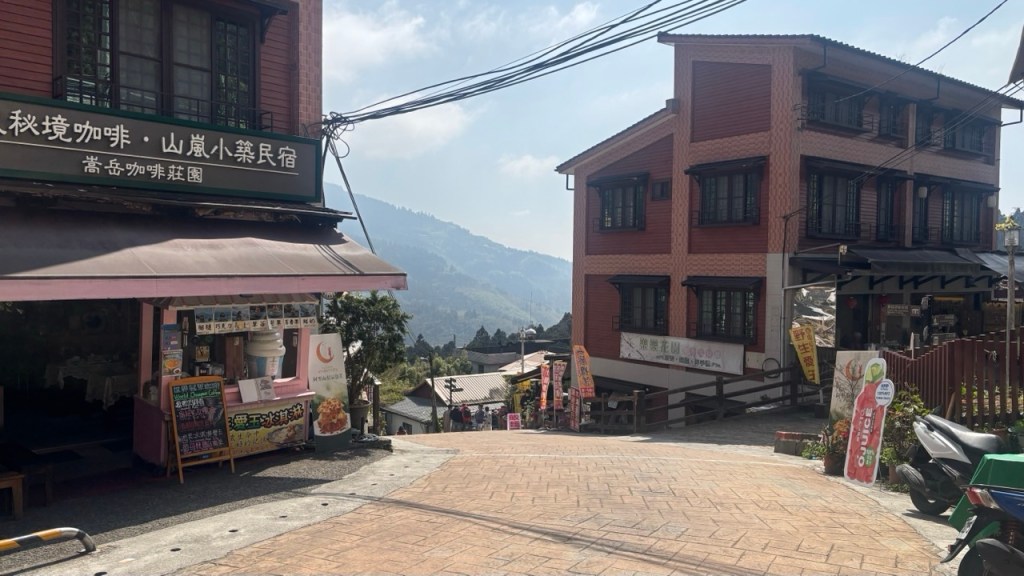
Three hours flew by before we reached Fenqihu Station at an altitude of 1,400 metres. My heart sang as I got off to explore Old Street with its weird and wonderful snacks. I tried the sweetest and most intense ginger tea (see photo below for the ginger being roasted) and picked up the traditional bento box for a picnic lunch looking out over the mountains. It didn’t even feel overcrowded as the train holds just 80 passengers and runs only twice per day.
Delights at Fenqihu Old Street: Greens, Ginger Tea, More Ginger and Something UnknownFenqihu Lunch Spot
Everyone has lunch, followed by coffee and a local donut then gets back on the train for the last two hours of the journey. I had a chat to a girl who didn’t realise it took 5 hours and was doing the world’s shortest day trip – she’d have to get the return bus about 30 minutes after arriving. Alishan does take a bit of advance planning because there are two things that you absolutely have to do. Firstly go to a viewpoint for sunset, and secondly in the morning everyone, and I mean everyone, gets on the train again to a sunrise point close to Zhushan Station to watch the sun come up through the clouds. As well as follow as many trails as possible of course. So staying overnight is the way to go, although accommodation inside the national park is both expensive and pretty poor value compared to the rest of Taiwan.
View from the trainPhoto StopThe famous train
I decided to stay one night and absorb the extortionate cost of £70 by eating instant noodles for dinner for a few days and buying my coffee from the highest 7-11 convenience store in the country. Staying inside the park means you can join in the sunrise and sunset trips, and have easy access to all of the trails – sometimes convenience is worth the cost.
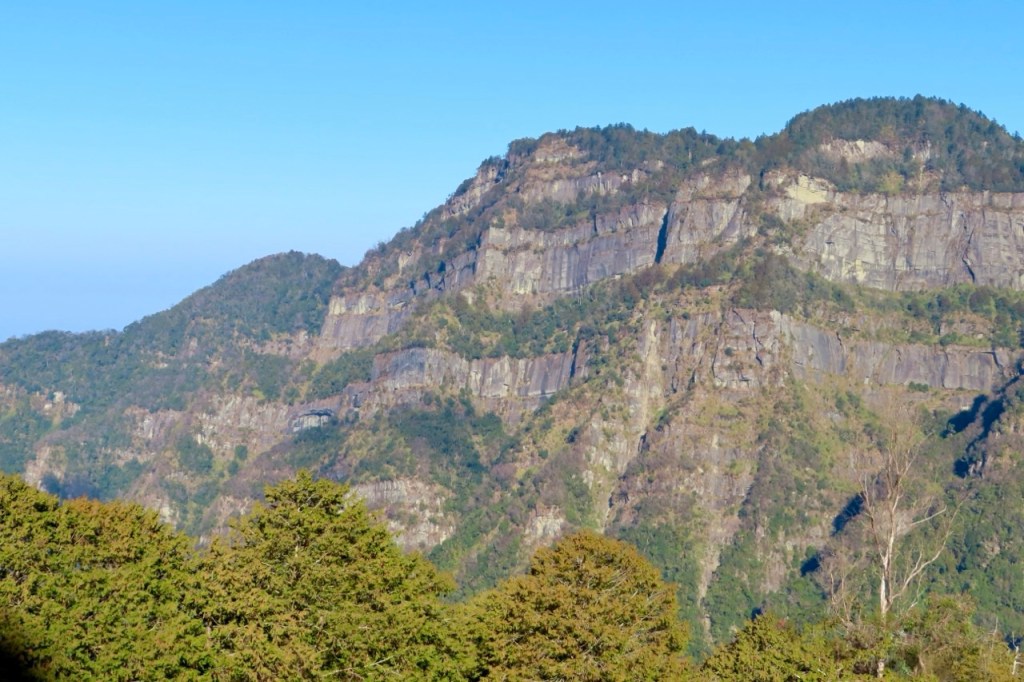
Mountain views
The higher up we went the more interesting the journey got. The bends became a series of switchbacks, as the turns were otherwise too tight for the train. This means the train moves forward into a dead end, then reverses direction until the next switchback when it changes direction again. Arriving at the main station, music was playing from loud speakers and it felt like being at an Alpine lodge.
What goes down must go back up again (with luggage)
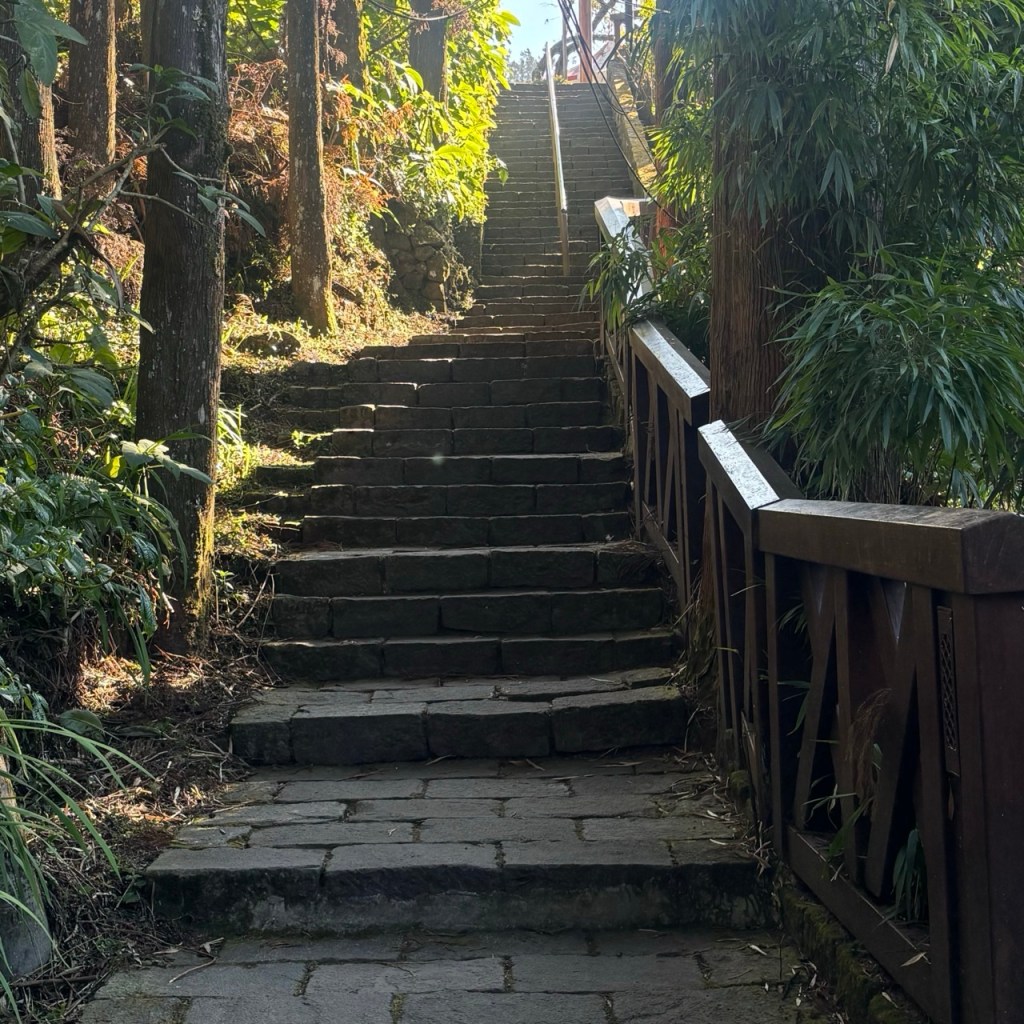
The train ticket includes entry to the park and the hotel area is about a 10 minute walk away, down some very steep stairs that are a lot less fun to walk up again with luggage. The Gau Shan Ching Hotel was alright considering some of the pretty terrible reviews – yes it’s dated but it’s clean and yes it was very cold (the sign on the wall said the heating is turned on when it reaches 8 degrees!) but it was a chance to wear all of my clothes at once and the novelty factor of a wakeup call for sunrise. I hadn’t known that you have to buy your sunrise train ticket the day before at 16.00 from the train station ticket office (the exact departure time would be confirmed later in the evening to make sure we get there in plenty of time). With sunrise ticket purchased, I wanted to make the most of the couple of hours of daylight left, so armed with a lovely map I jumped on the tourist shuttle bus and headed straight into the park.
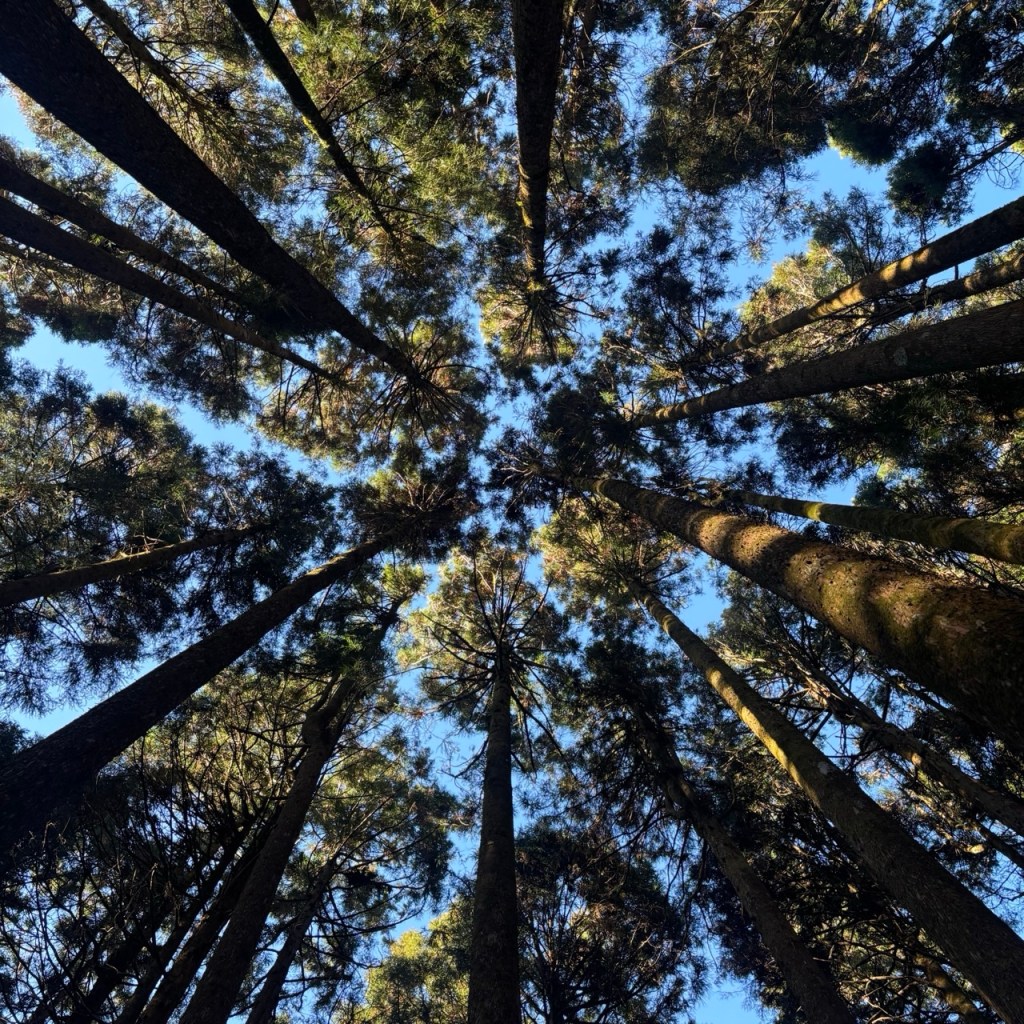
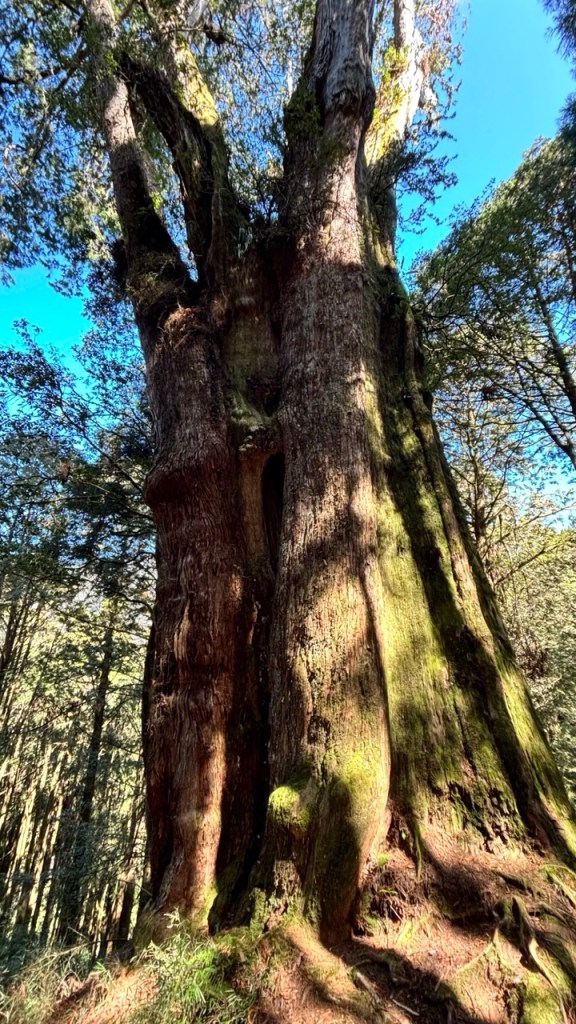
The tallest trees
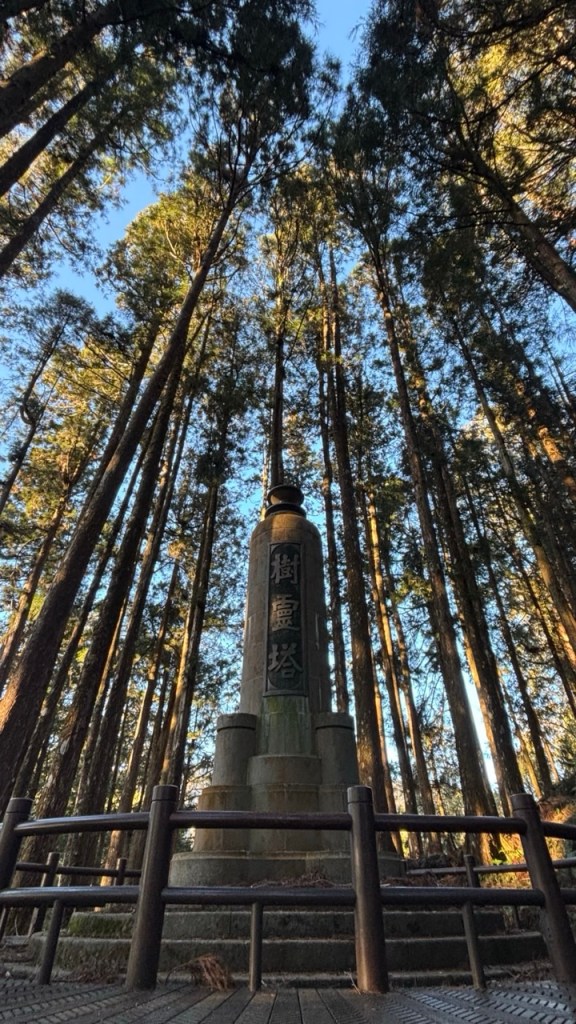
As with everywhere I’ve been in Taiwan, this national park is extremely well organised. You just need to turn up, get a map and make sure you know how to get back out again. Inside the park I was blown away by the size of the trees. They are in fact Giant Trees and it’s impossible to capture their size on camera. There are a number of hikes ranging from shorter strolls along boardwalks to the more challenging which take three hours each way – all have magical sounding names. In fact the whole place is magical. For example, the “Three Generation Trees” and the “Pagoda of the Tree Spirit.”
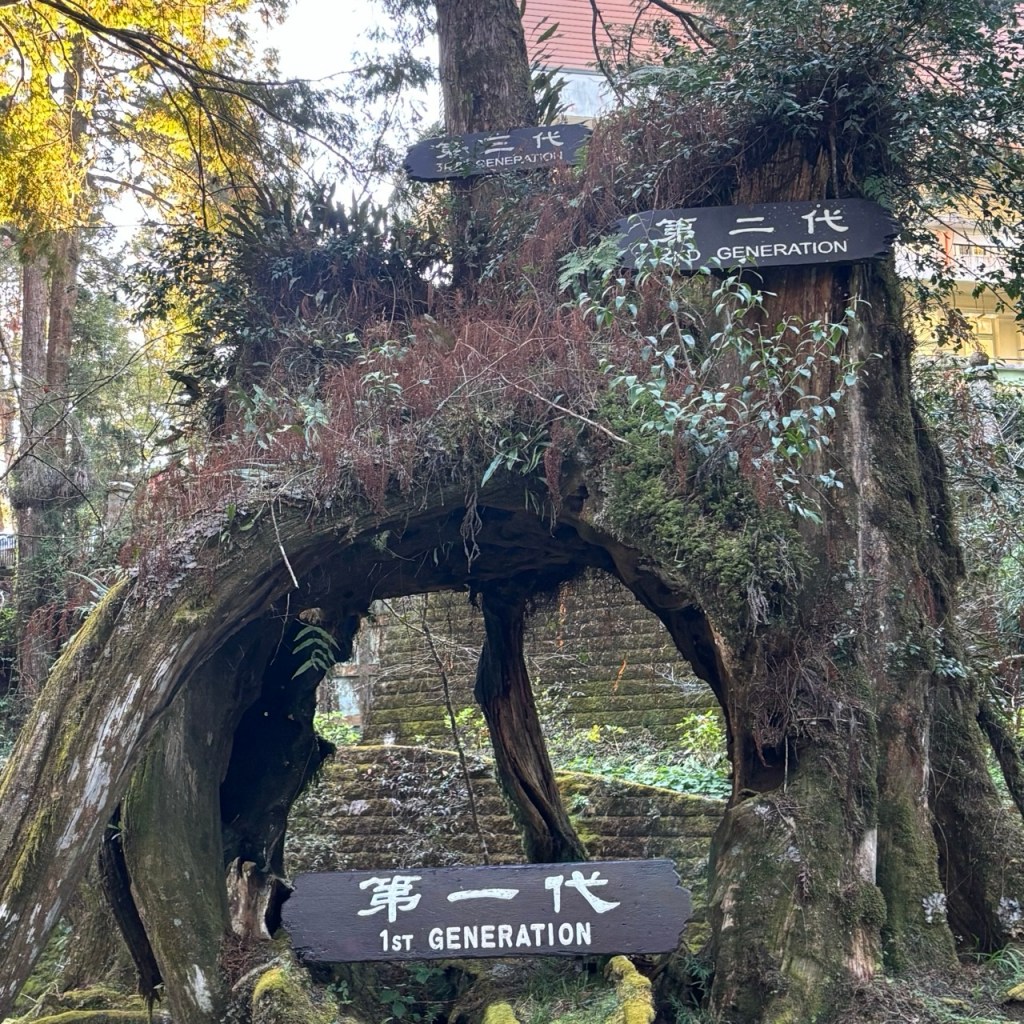
“3 Generation Tree”
The “3 Generation Tree” is three generations of Cypress trees that have sprouted from the same root. The 1st generation being the roots lying on the ground, estimated to be 1500 years old. 250 years after the first generation died, a seed drifted onto it and grew into the second generation, and the third generation sprouted another 300 years later. And the “Pagoda of the Tree Spirit” was built in 1935 to “comfort the souls” of the 77 loggers who died on the job as well as the spirits of the 100,000 trees that had been felled.
Pagoda of the tree spirit
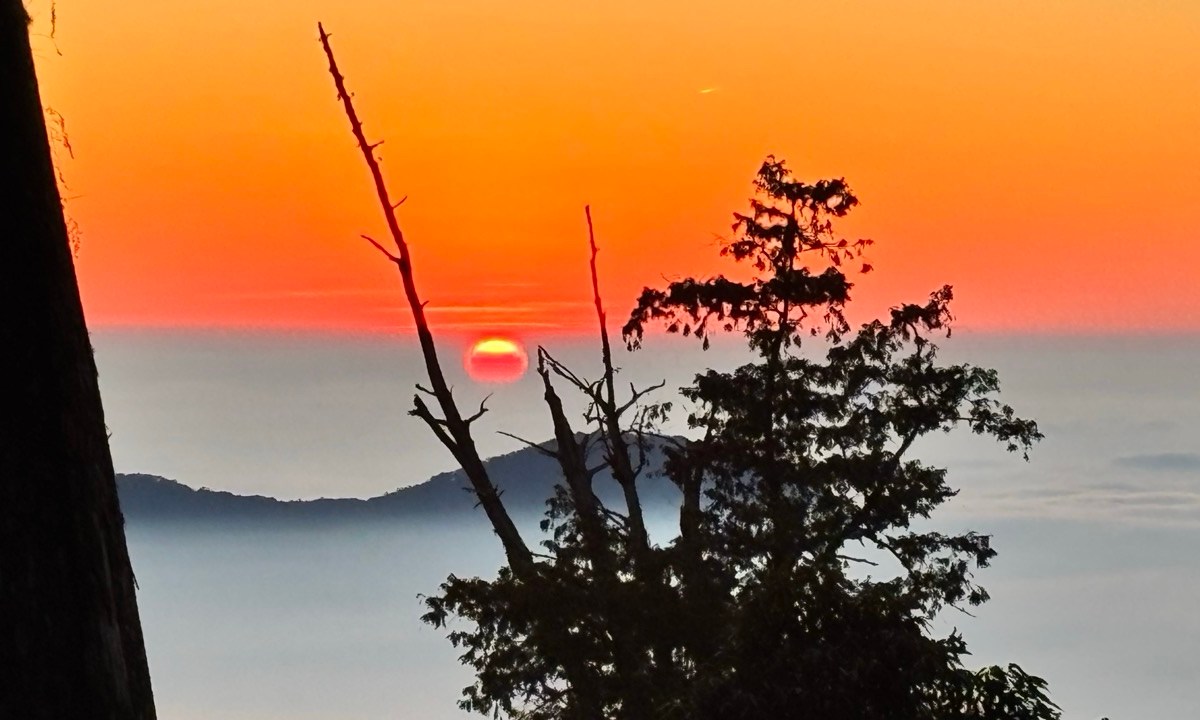
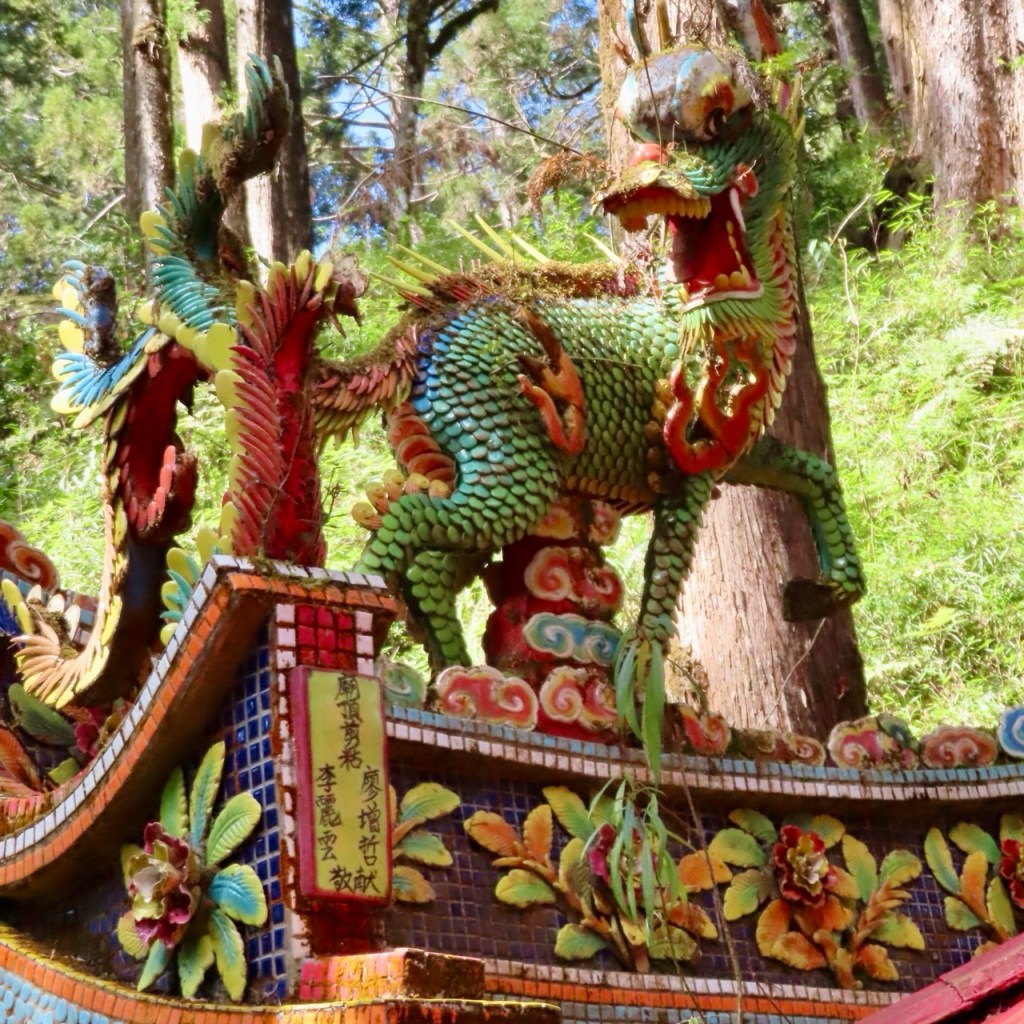
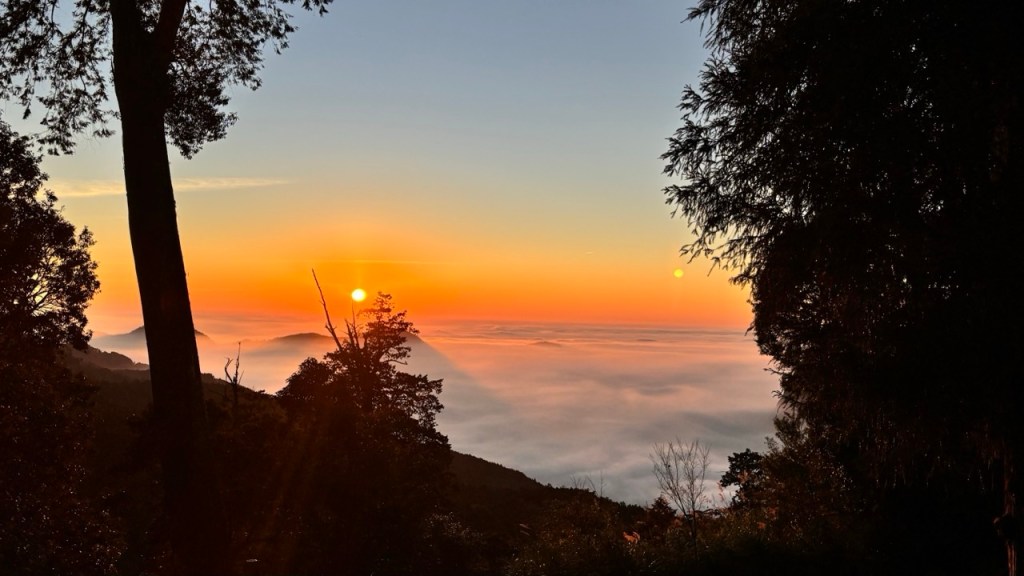
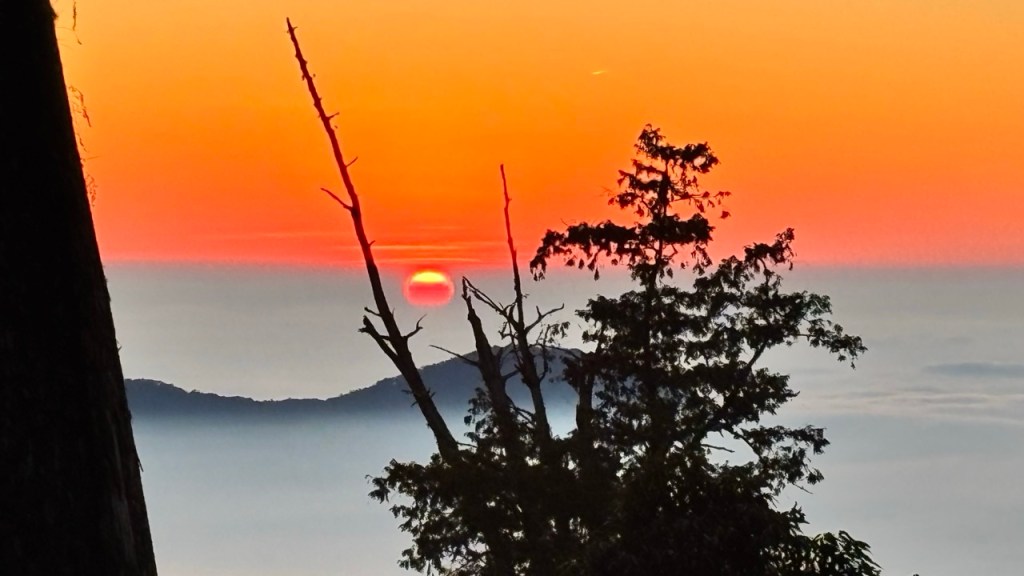
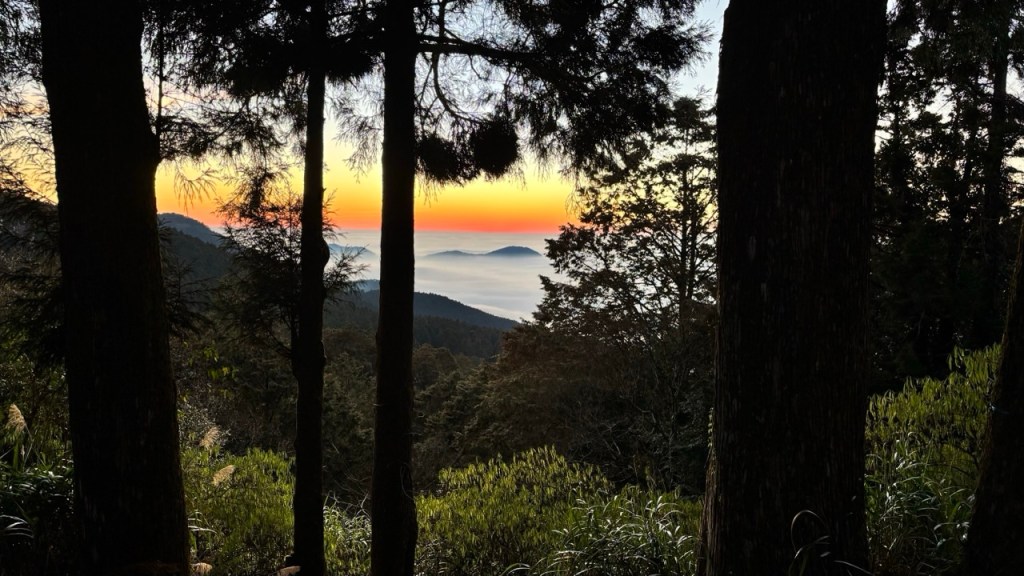
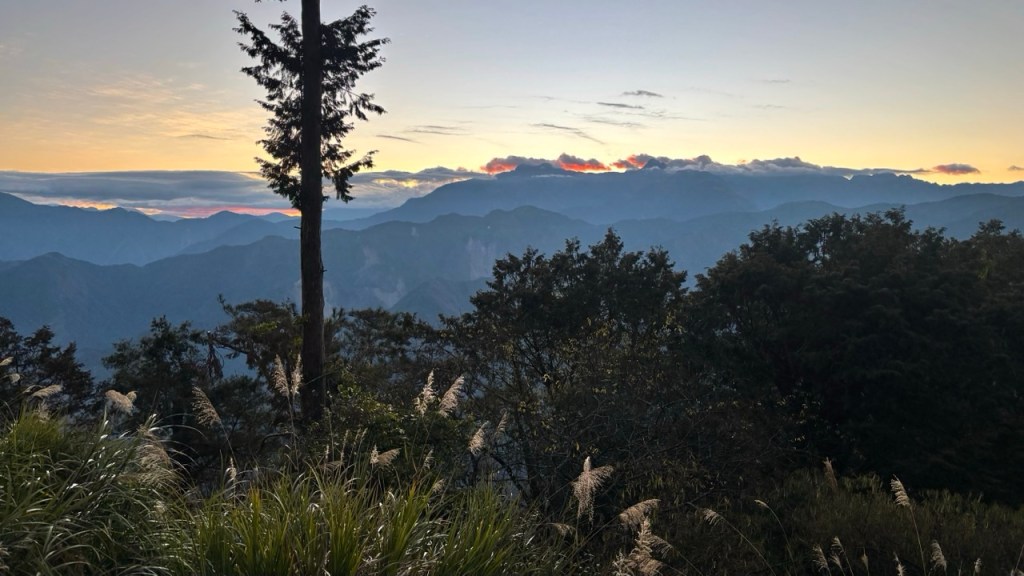
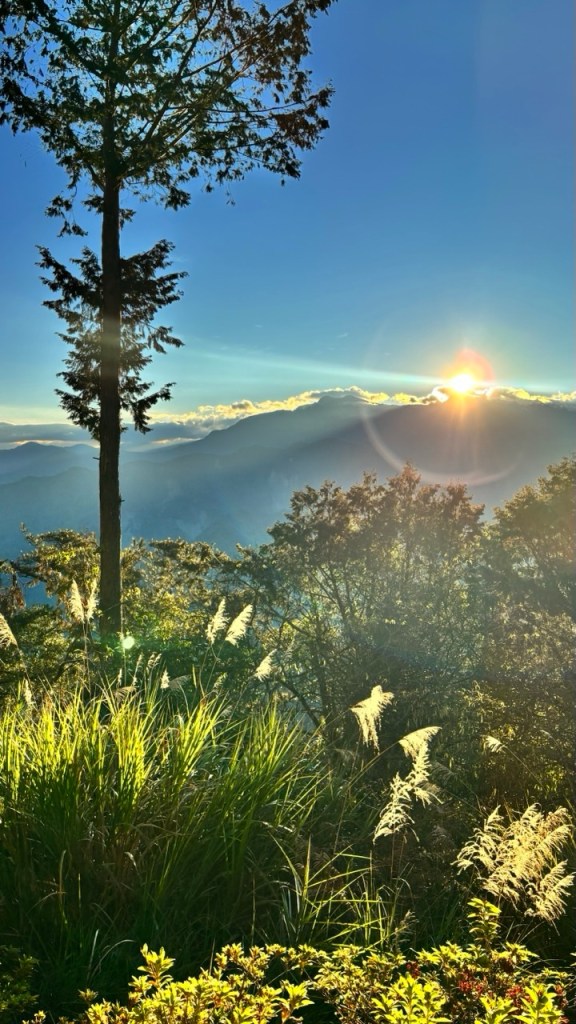
The lady at the information desk gave me a tip on where to watch the sunset, behind the small Ciyun Temple. There were only a few other people there so it was incredibly peaceful (other than a gigantic hornet type creature that the people who were there confirmed came straight for my head). It was also the most stunning sunset I have ever experienced and that is no exaggeration. The clouds form a sea over the forest, and the sun gradually goes down beneath the clouds but is still visible.
CijunTempleSunsetUnedited photo
My photos look like they have been edited or enhanced but they have not – it genuinely looked just like this. Since watching the sunset is a rite of passage at Alishan, it doesn’t matter that you need to walk back through the forest after darkness has fallen.
Another sunset photo, just because
In other facts about Alishan, the Ginkgo tree is considered a living fossil, thought to originate at least 270 million years ago. Its cell-regeneration means that old and young trees remain equally healthy and produce the same fruit, they are also resistant to drought and disease making them close to immortal. One of my favourite trails was the Giant Trees boardwalk which connects 36 ancient, giant Formosan red cypress trees, over 1000 years old. The “number 28 giant tree” is the tallest and oldest tree on the Giant Tree trail. It has a girth of 13.1 meters and is 43.5 meters tall, estimated to be around 1,095 years old. Again it was impossible to capture the size of this on camera. We also have the Sacred Tree (Shenmu) – this 3,000-year-old tree collapsed in 1997 but it’s remnants are preserved near Shenmu Station. And the oldest standing tree, the Shuishan Giant Tree over 2700 years old. There are so many Giant Trees it gets a bit confusing.
Giant trees
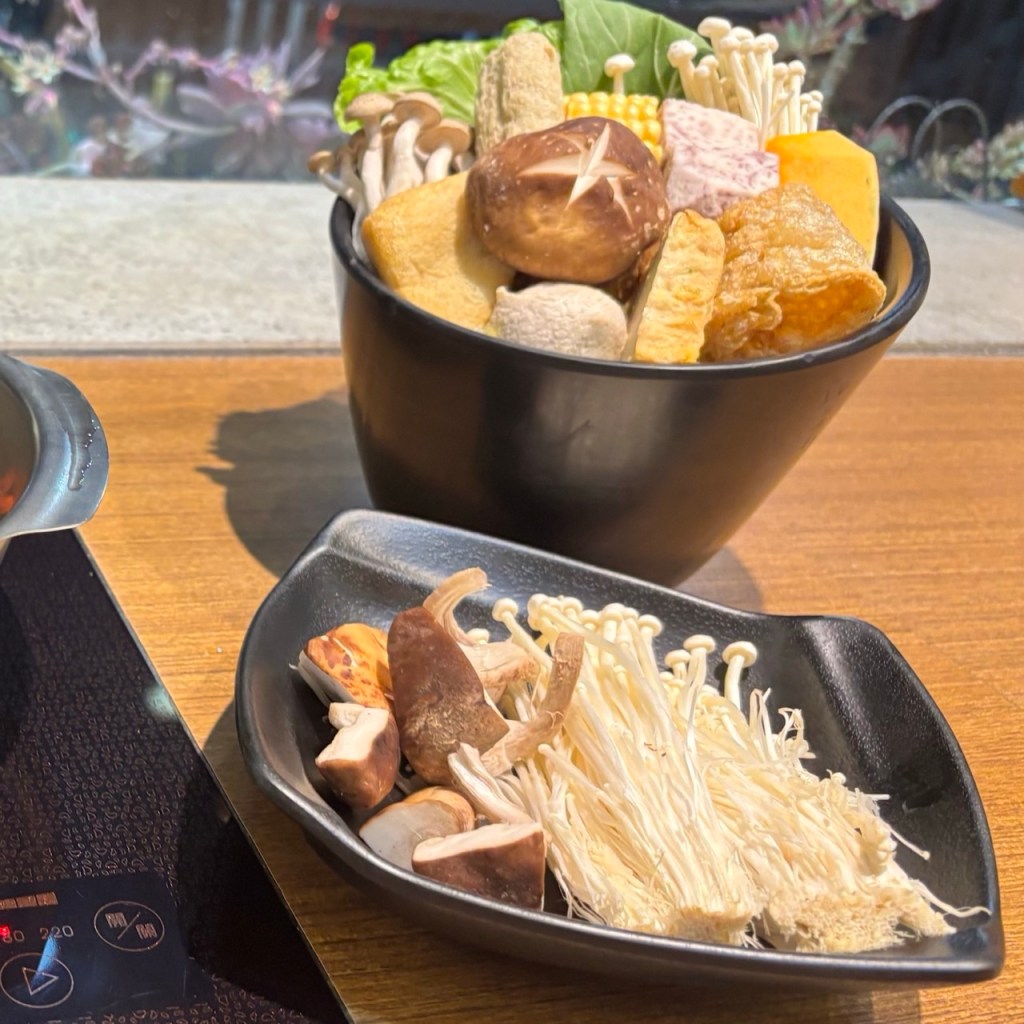
There are several restaurants in the recreation area, also slightly overpriced but convenient. Something I hadn’t tried yet was the Hot Pot and one of the restaurants was serving a veggie version, so perfect for dinner. I sat next to a friendly couple who helped me cook it – the waitress simply turns on the individual stove that everyone has at their table and puts down a plate of various raw vegetables.
Hot pot ingredients
Hot Pot cooking away
I tried to get some sleep before wake up call at 4.30 am, an hour before the train at 5.30 but it was very, very cold. Getting up, I was freezing but it was really fun to head out in the darkness with everyone else, grab a coffee (you’re allowed to drink on a train here unlike on the metro systems) board the wooden train and follow the crowd to the lookout area.
Waiting for sunrise Worth the wait!
After the sun has risen all the food hawkers open up their stalls serving hot coffee, ginger tea, steaming buns or sizzling Taiwanese pancakes. Being only 6.30 am I decided to walk back and get in another hike before checking out of the hotel, avoiding the crowds who were mostly taking the train back.
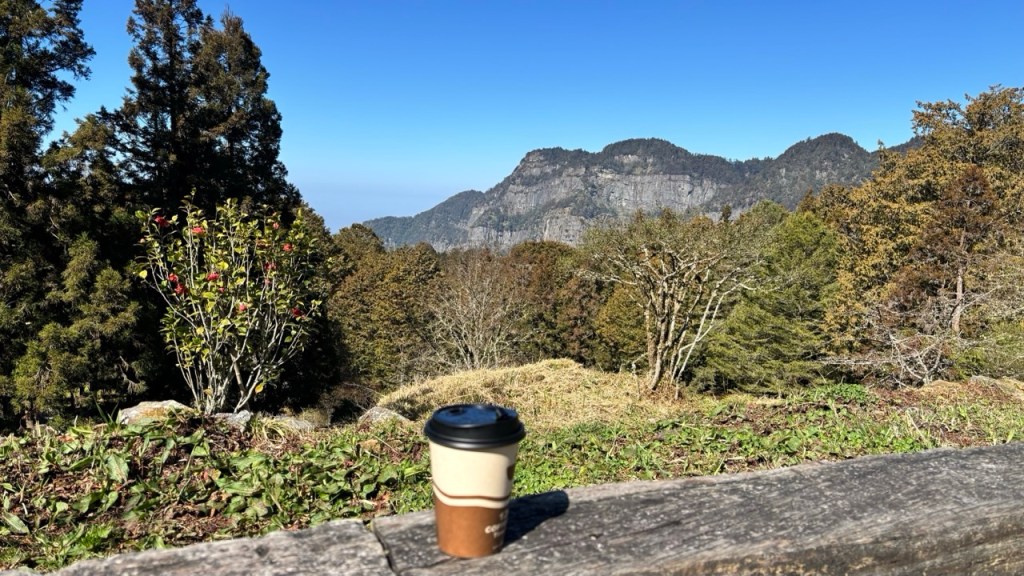
Cheapo coffee with a view
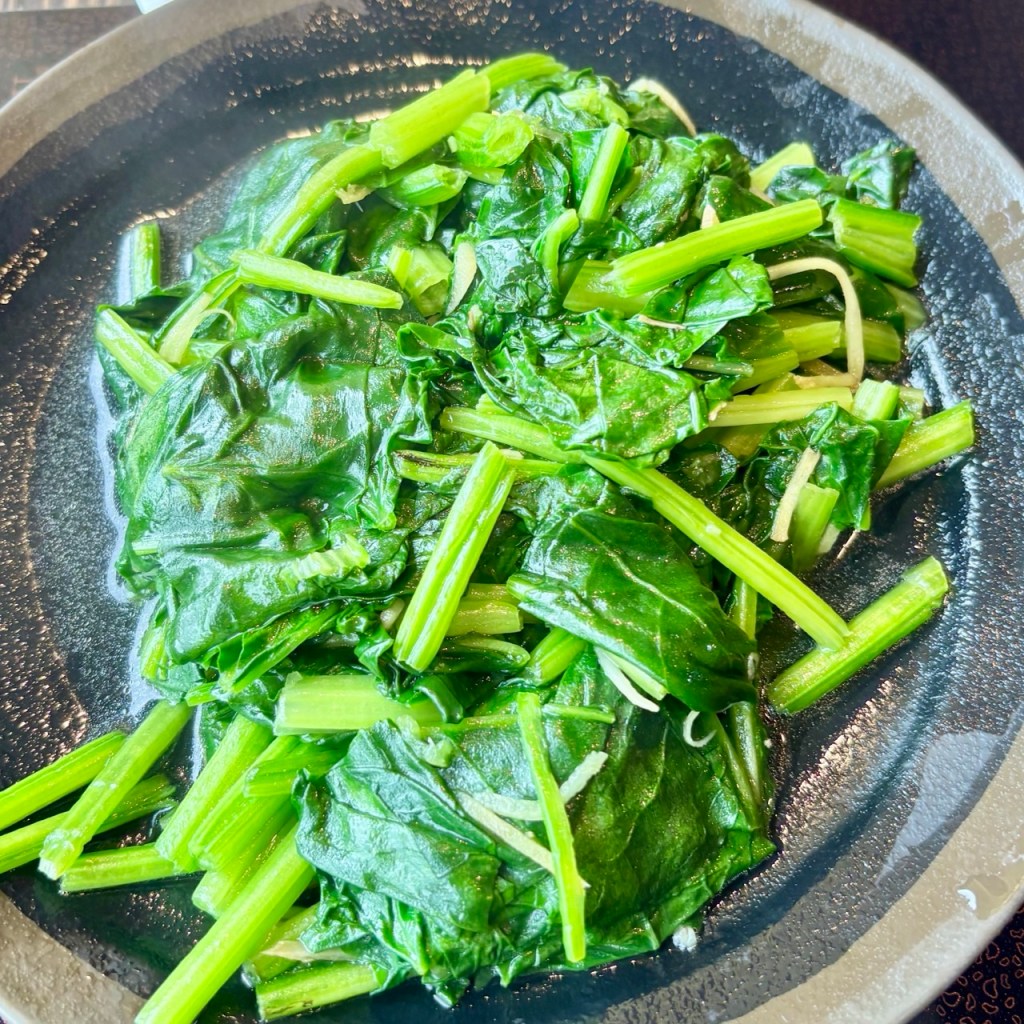
The was also time to try a local snack of two whole sweet potatoes, which makes for a tasty and filling stop gap (but not nearly as delicious as the sweet potato in Japan!). My favourite food in Taiwan has been the spinach and ginger, which a lady at the next table told me is blanched before it’s fried, getting rid of the earthy taste. I have lost count of the times I’ve had lovely conversations when sitting on communal tables.
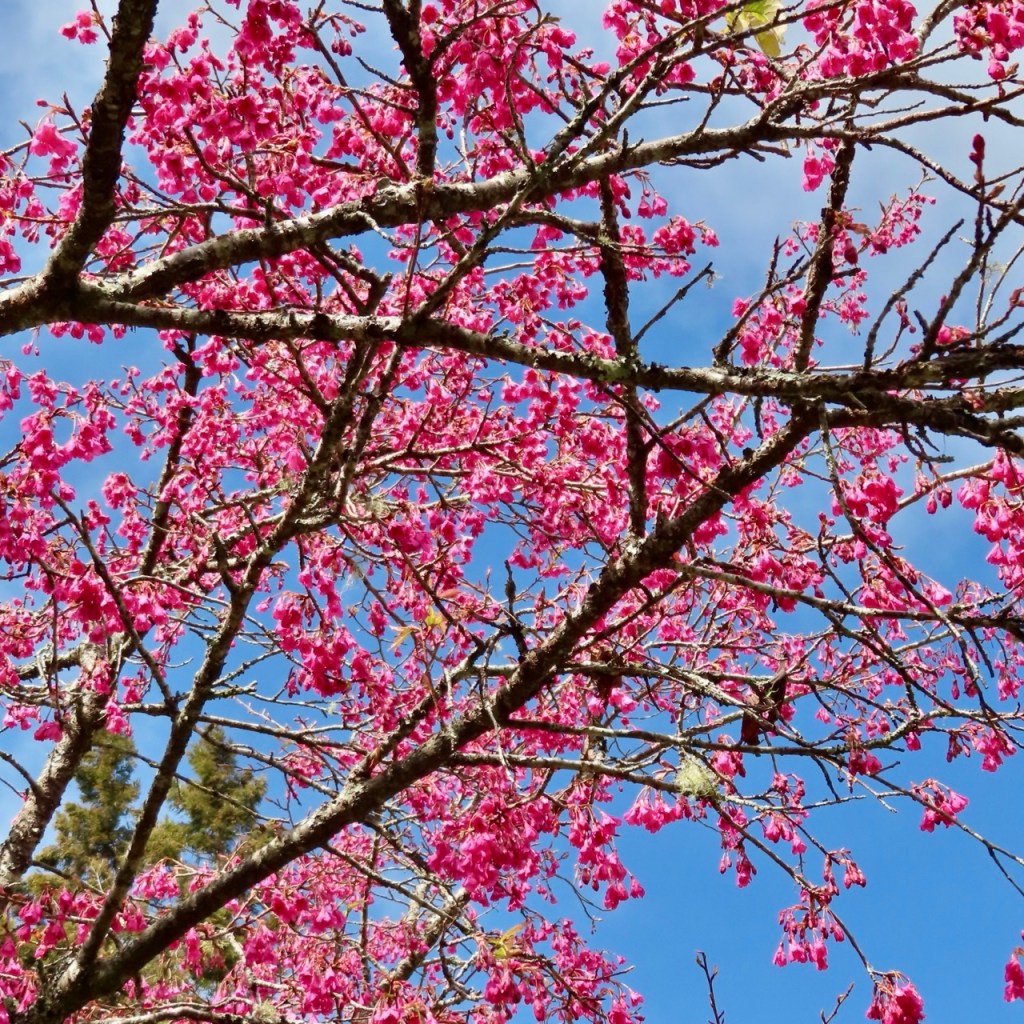
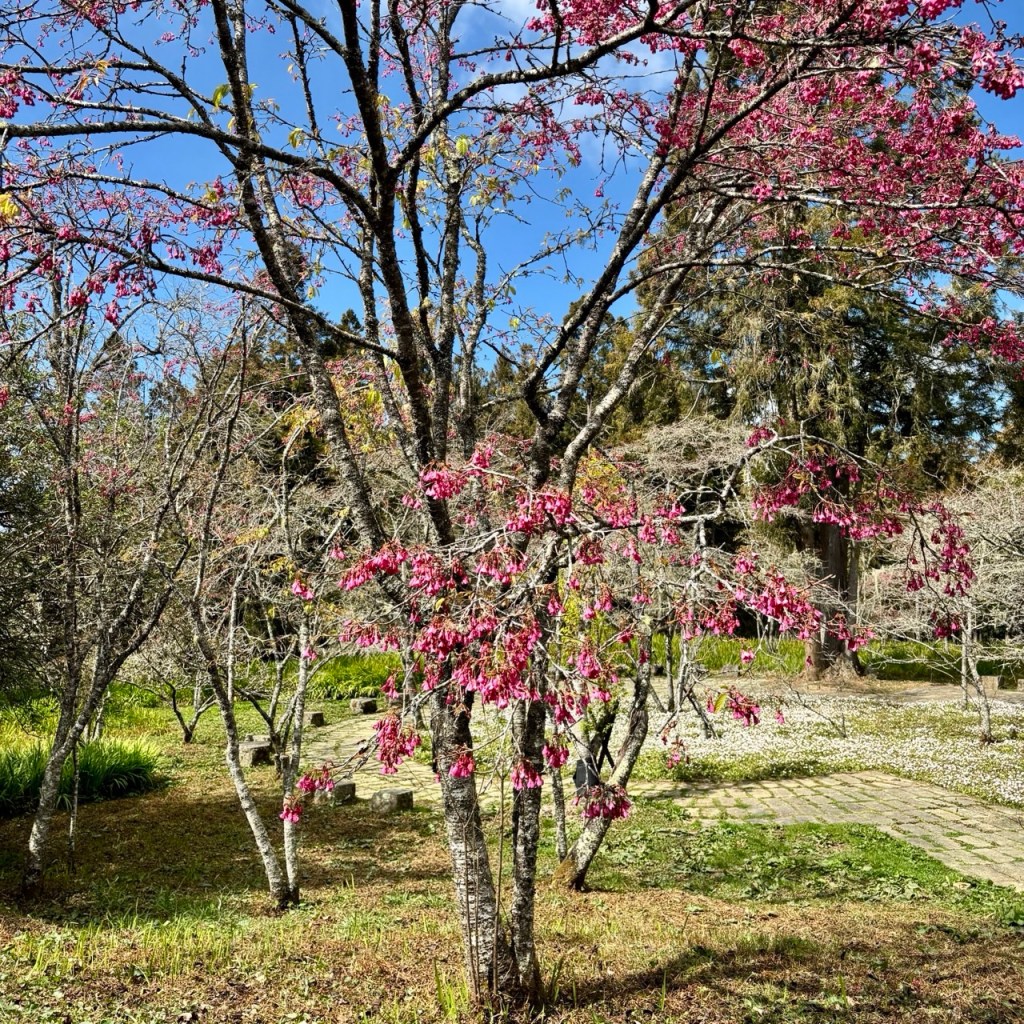
I could live on thisCherry blossom in bloom More cherry blossom
Alishan also has the first cherry blossoms in bloom, which is wonderful to see. It has been an almost spiritual experience here, exploring the trails, experience sunrise and sunset mostly on my own – there are plenty of local tourists around at the viewpoints so it never feels isolated, but few Westerners and the majority of the trails are pleasantly empty.
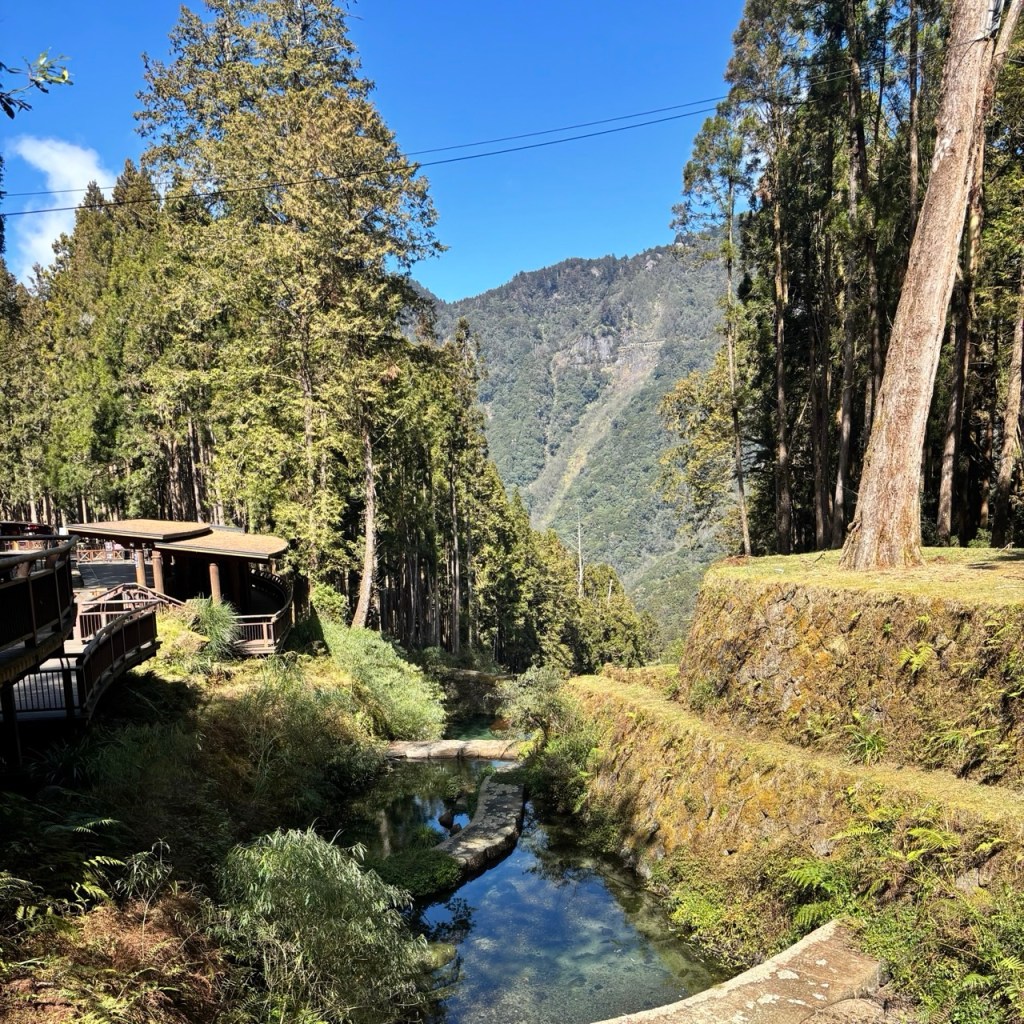
View from one of the hiking routesAdd caption
After two days, all too soon it was time to get the 3pm tourist bus all the way to my next stop – the mysterious sounding Sun Moon Lake …

 Maz On The Road