The Day I Caught The Train: Sea of Clouds, Giant Trees and Solitude (Alishan National Park)

The next few days of this trip were the ones that needed some advanced planning. Firstly the Alishan National Forest: the most iconic way to get to this forest high up in the mountains in the centre of Taiwan is to ride the scenic Alishan Forest Railway. This is a narrow gauge railway that runs through the Alishan mountains and high-altitude forests. However, getting a ticket for this is like getting a ticket for the Sri Lanka Ella train all over again (throwback to when Original Travel Companion Helen and I tried and failed to even get on the train, being the only ones left standing on the platform after the locals piled in). Tickets are released online 60 days in advance but sell out immediately. A blog called “Taiwan Obsessed” has been invaluable in telling me how to practically do things. It mentioned that you might need to try over 100 times to buy the ticket online (no joke), or a better option might be to buy a bus ticket as a backup and try your luck to get a train ticket closer to the time. To buy the bus ticket, you go to a Family Mart convenience store and use an ATM-like machine, all in Chinese, to print a receipt which you take to the counter and pay for in return for the bus ticket. I managed to do this only by following screenshots from the blog, matching them up to the Chinese text on the machine, of which there were at least 7 screens to click through and some blind faith that I was actually purchasing a bus ticket.
The Journey Up

With bus ticket in hand I for once arrived early at the bus stop before the 8.30 departure. I had almost convinced myself that taking the 3 hour bus up to Alishan would be perfectly fine – it’s faster by two hours, cheaper and the scenery would still be beautiful, and the train was probably overrated…. But from the bus stop I could see the Alishan Forest Railway ticket booth. Surely it was worth a try? I ran over and asked the lady if they by any chance had any tickets for the train today. You’re very lucky, she said, we have one window seat left. It takes five hours as it includes a one hour lunch stop at Fenqihu Station. I handed over the money and got my golden ticket. 
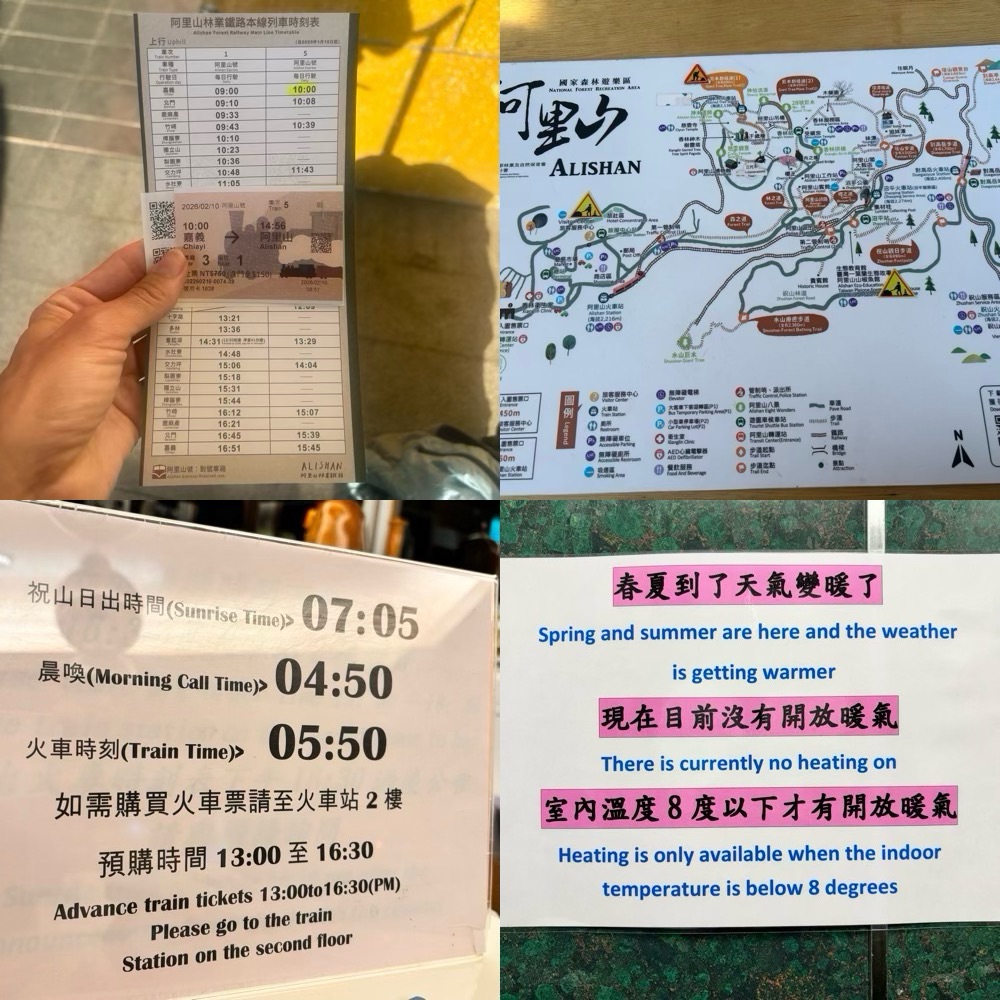
Golden ticket, Alishan map, Hotel notices

I headed back to the train station and when the ticket attendants asked me “Alishan train?” as they had done every time I passed though, this time I said YES which a huge smile on my face. The historic train trundled into the station at 10.00 and I took my single seat by the window and settled in. It was hands down the best train ride I have ever taken and worth every Taiwanese dollar of the extra £14. The train gradually climbs up from 30 metres above sea level to 2,216 metres, goes through 47 tunnels and over 72 bridges. The narrow gauge railway line alternates between hugging the edge of the mountain (looking out the window was literally looking down into the valleys over the mountain edge) and cutting through the middle via the tunnels. It even has some English commentary. 
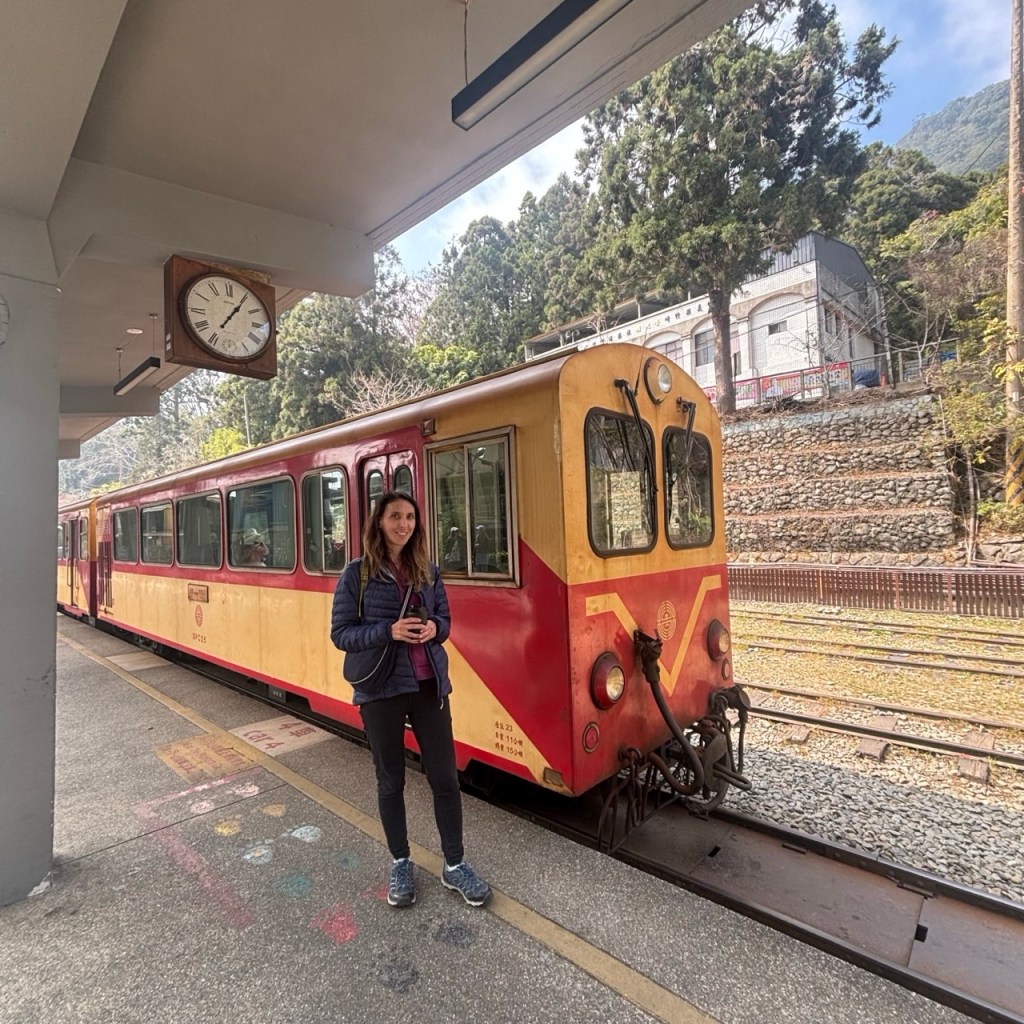
Ready to board

Three hours flew by before we reached Fenqihu Station at an altitude of 1,400 metres. My heart sang as I got off to explore Old Street with its weird and wonderful snacks. I tried the sweetest and most intense ginger tea (see photo below for the ginger being roasted) and picked up the traditional bento box for a picnic lunch looking out over the mountains. It didn’t even feel overcrowded as the train holds just 80 passengers and runs only twice per day. 
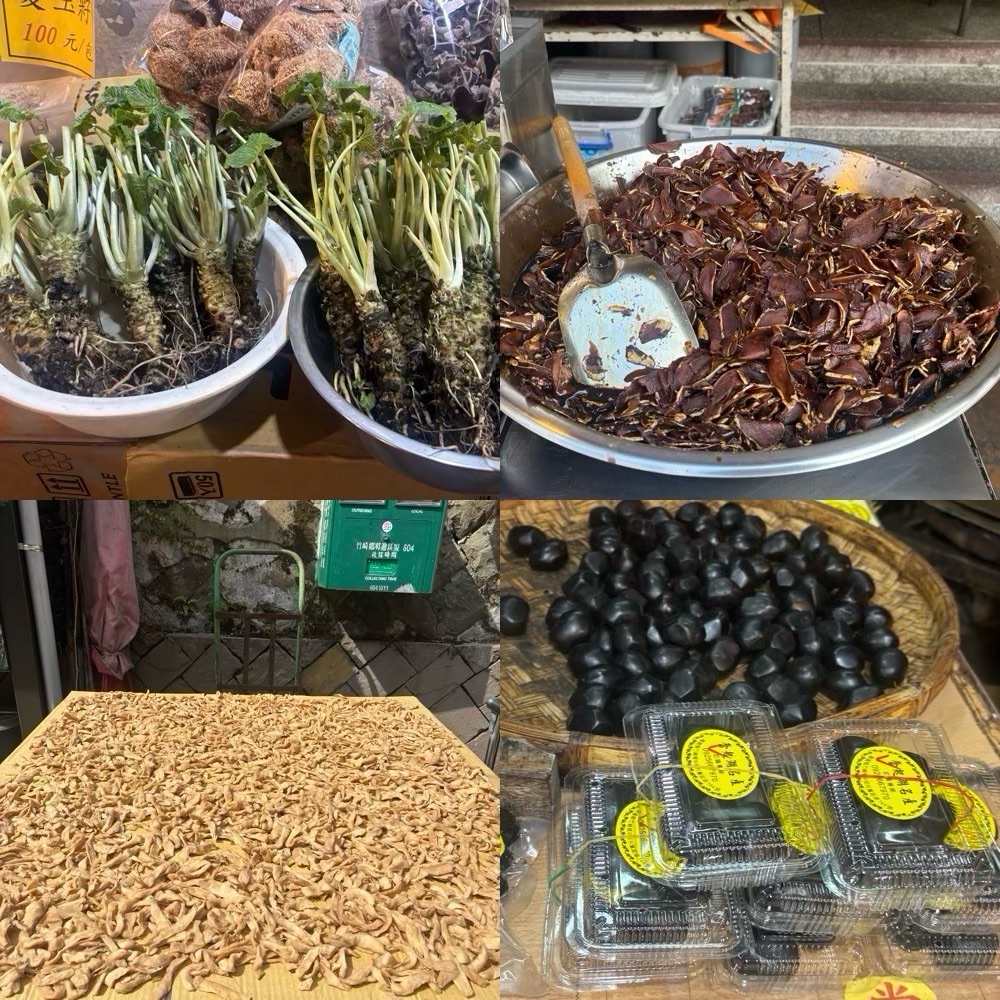
Delights at Fenqihu Old Street: Greens, Ginger Tea, More Ginger and Something Unknown
Fenqihu Lunch Spot

Everyone has lunch, followed by coffee and a local donut then gets back on the train for the last two hours of the journey. I had a chat to a girl who didn’t realise it took 5 hours and was doing the world’s shortest day trip – she’d have to get the return bus about 30 minutes after arriving. Alishan does take a bit of advance planning because there are two things that you absolutely have to do. Firstly go to a viewpoint for sunset, and secondly in the morning everyone, and I mean everyone, gets on the train again to a sunrise point close to Zhushan Station to watch the sun come up through the clouds. As well as follow as many trails as possible of course. So staying overnight is the way to go, although accommodation inside the national park is both expensive and pretty poor value compared to the rest of Taiwan.
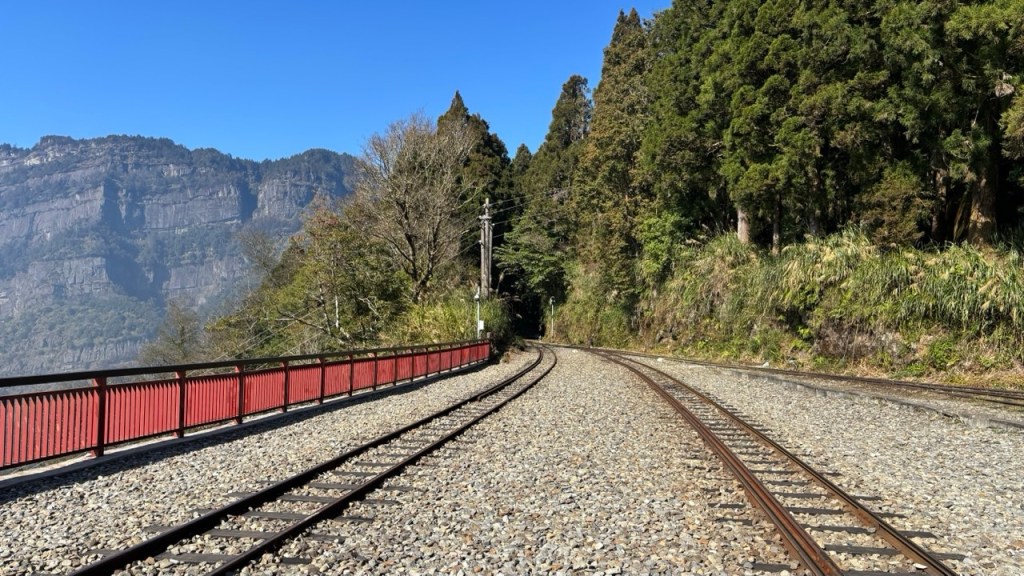
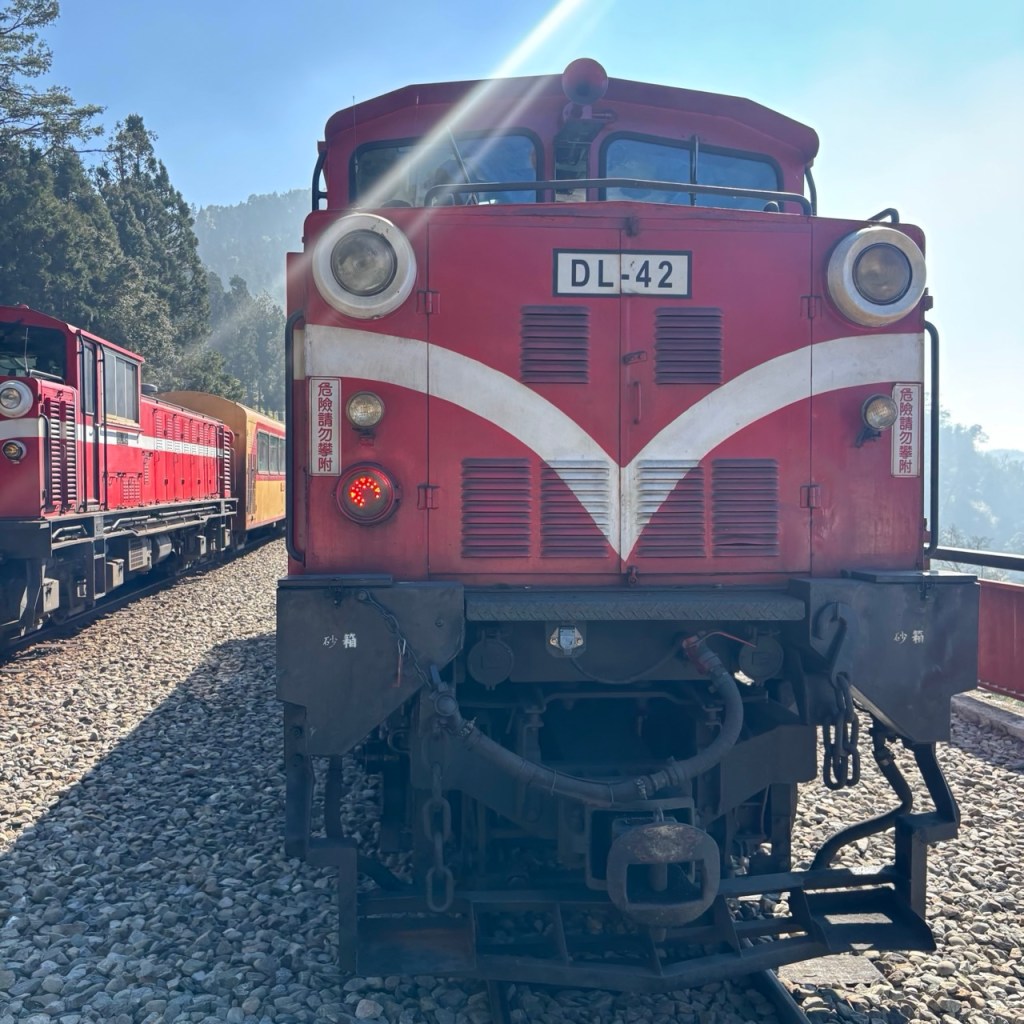
View from the train
Photo Stop
The famous train

I decided to stay one night and absorb the extortionate cost of £70 by eating instant noodles for dinner for a few days and buying my coffee from the highest 7-11 convenience store in the country. Staying inside the park means you can join in the sunrise and sunset trips, and have easy access to all of the trails – sometimes convenience is worth the cost.
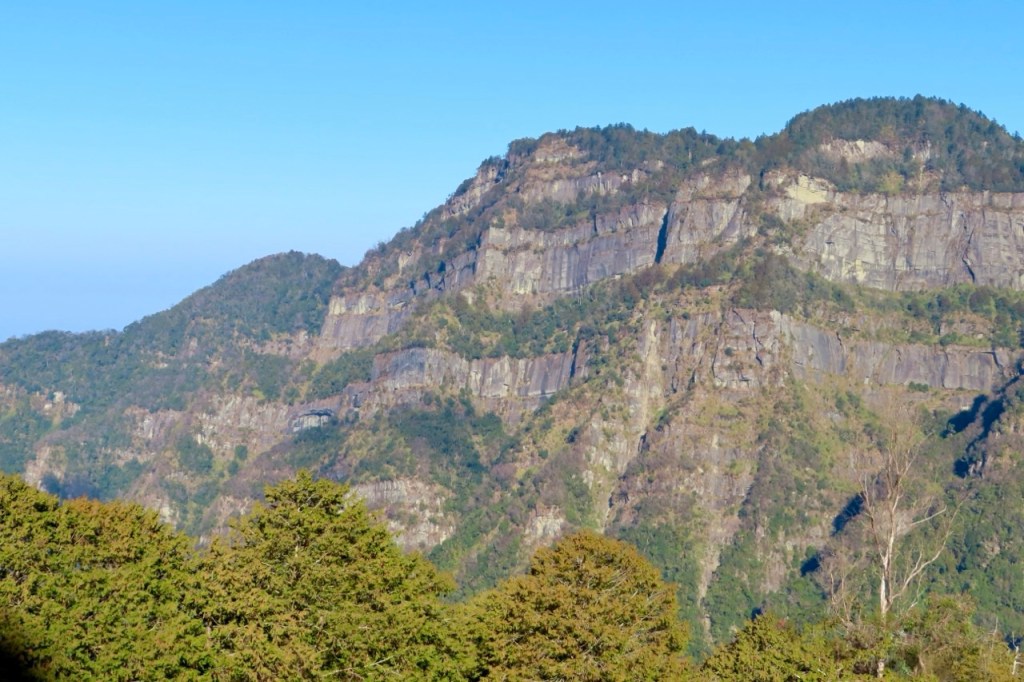
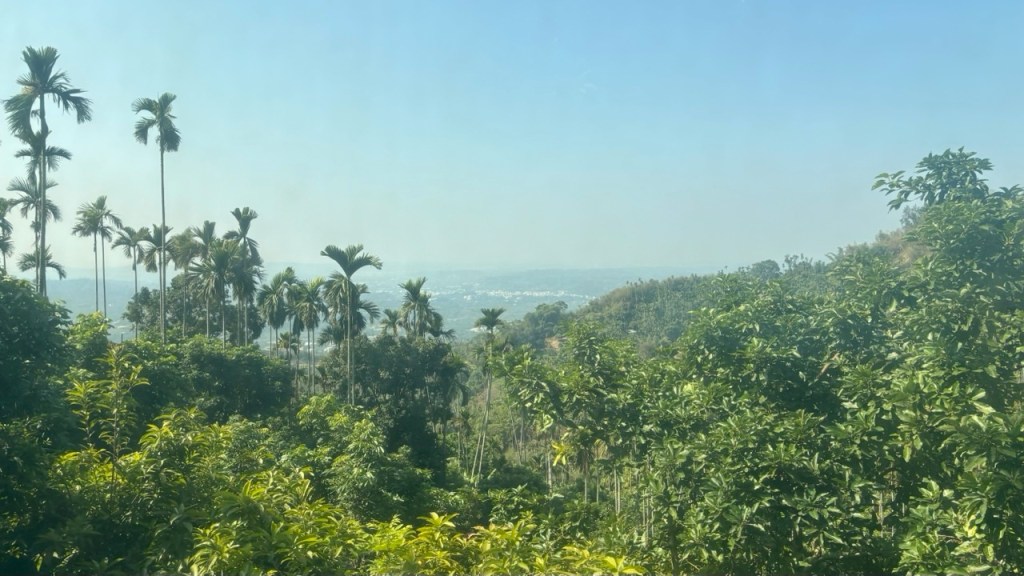
Mountain views

The higher up we went the more interesting the journey got. The bends became a series of switchbacks, as the turns were otherwise too tight for the train. This means the train moves forward into a dead end, then reverses direction until the next switchback when it changes direction again. Arriving at the main station, music was playing from loud speakers and it felt like being at an Alpine lodge.
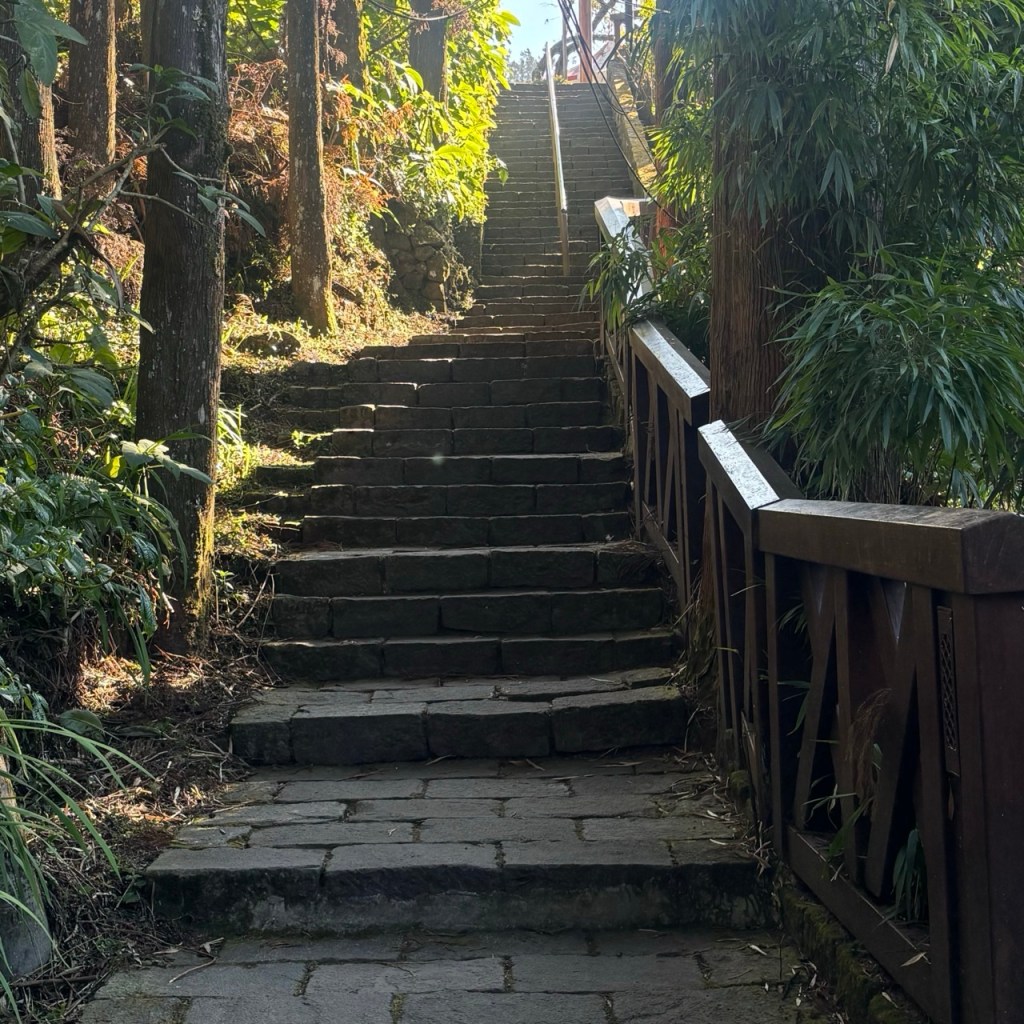
What goes down must go back up again (with luggage)

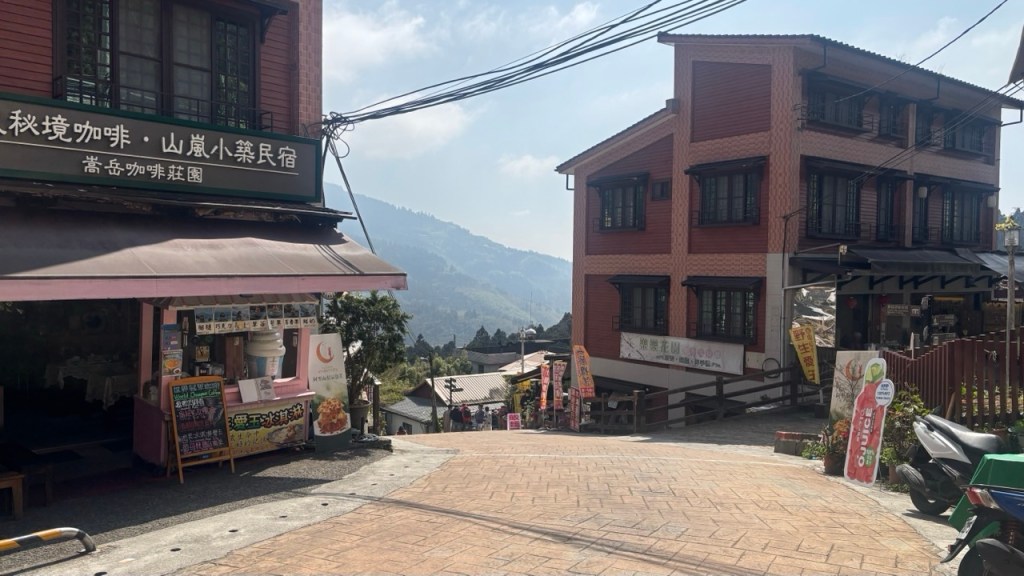
The train ticket includes entry to the park and the hotel area is about a 10 minute walk away,  down some very steep stairs that are a lot less fun to walk up again with luggage. The Gau Shan Ching Hotel was alright considering some of the pretty terrible reviews – yes it’s dated but it’s clean and yes it was very cold (the sign on the wall said the heating is turned on when it reaches 8 degrees!) but it was a chance to wear all of my clothes at once and the novelty factor of a wakeup call for sunrise. I hadn’t known that you have to buy your sunrise train ticket the day before at 16.00 from the train station ticket office (the exact departure time would be confirmed later in the evening to make sure we get there in plenty of time). With sunrise ticket purchased, I wanted to make the most of the couple of hours of daylight left, so armed with a lovely map I jumped on the tourist shuttle bus and headed straight into the park.
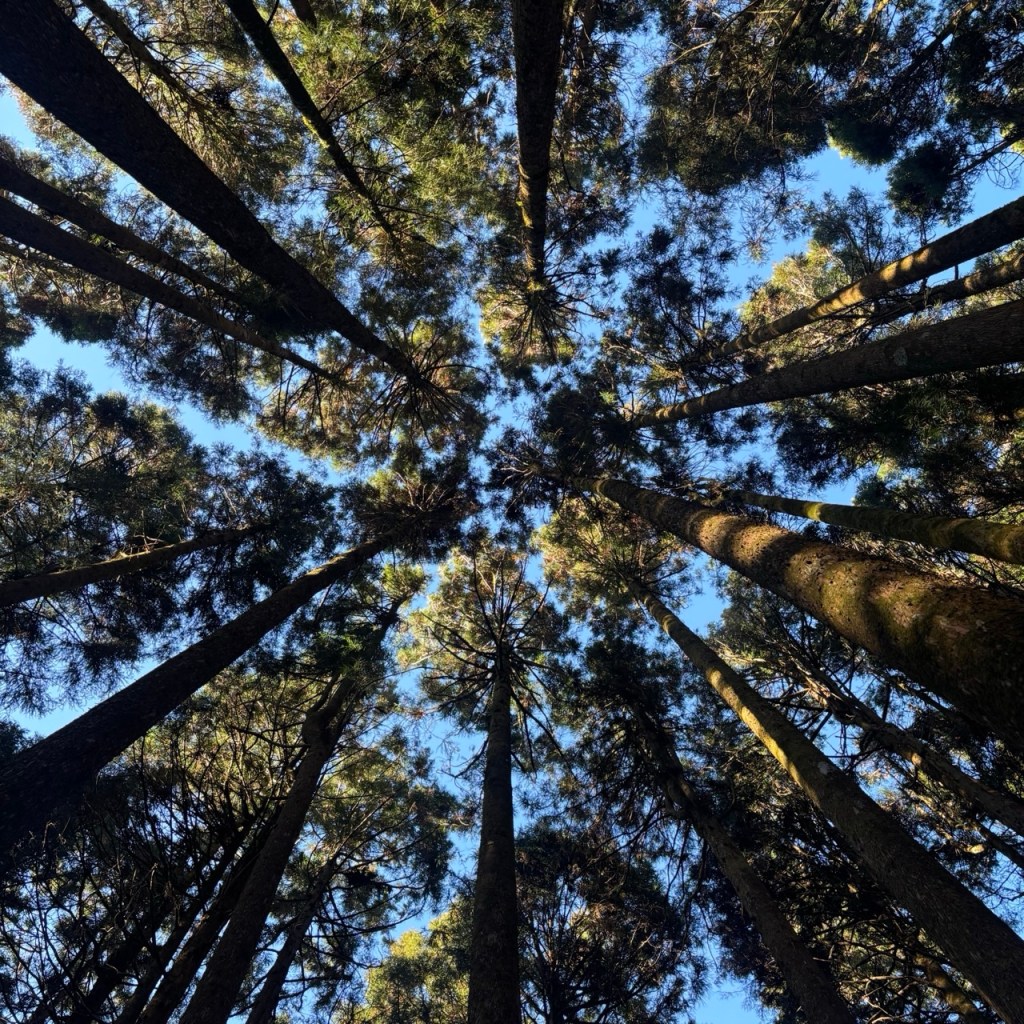
The tallest trees

As with everywhere I’ve been in Taiwan, this national park is extremely well organised. You just need to turn up, get a map and make sure you know how to get back out again. Inside the park I was blown away by the size of the trees. They are in fact Giant Trees and it’s impossible to capture their size on camera. There are a number of hikes ranging from shorter strolls along boardwalks to the more challenging which take three hours each way – all have magical sounding names. In fact the whole place is magical. For example, the “Three Generation Trees” and the “Pagoda of the Tree Spirit.”
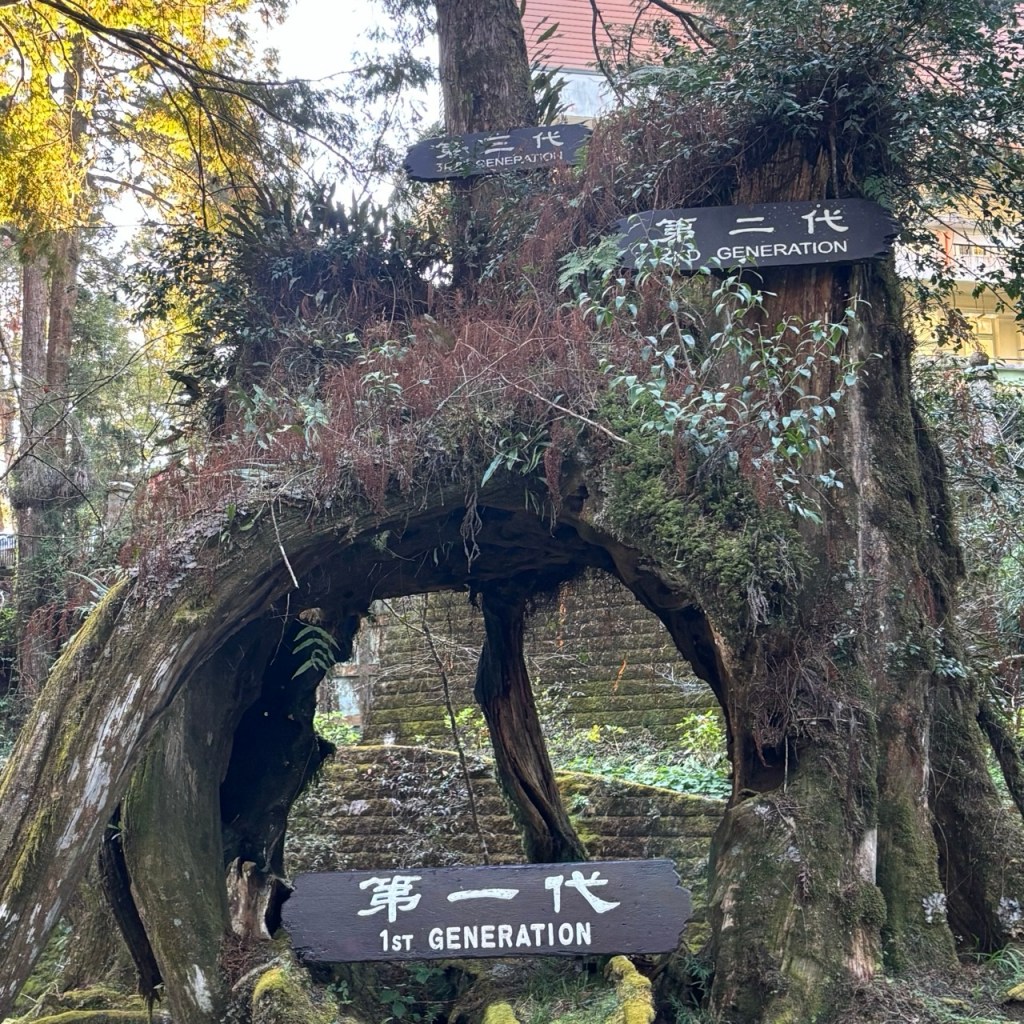
“3 Generation Tree”

The “3 Generation Tree” is three generations of Cypress trees that have sprouted from the same root. The 1st generation being the roots lying on the ground, estimated to be 1500 years old. 250 years after the first generation died, a seed drifted onto it and grew into the second generation, and the third generation sprouted another 300 years later. And the “Pagoda of the Tree Spirit” was built in 1935 to “comfort the souls” of the 77 loggers who died on the job as well as the spirits of the 100,000 trees that had been felled.
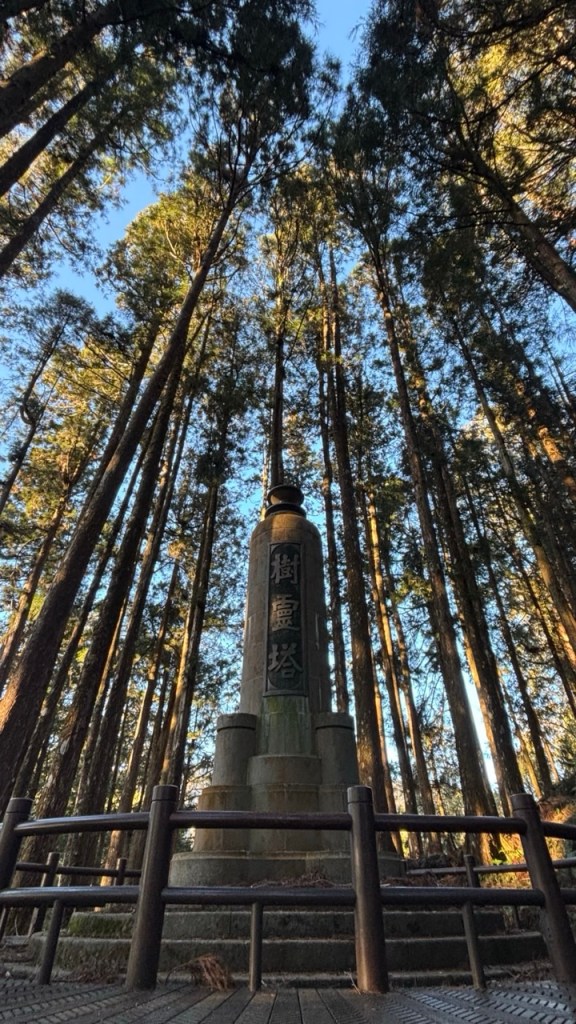
Pagoda of the tree spirit

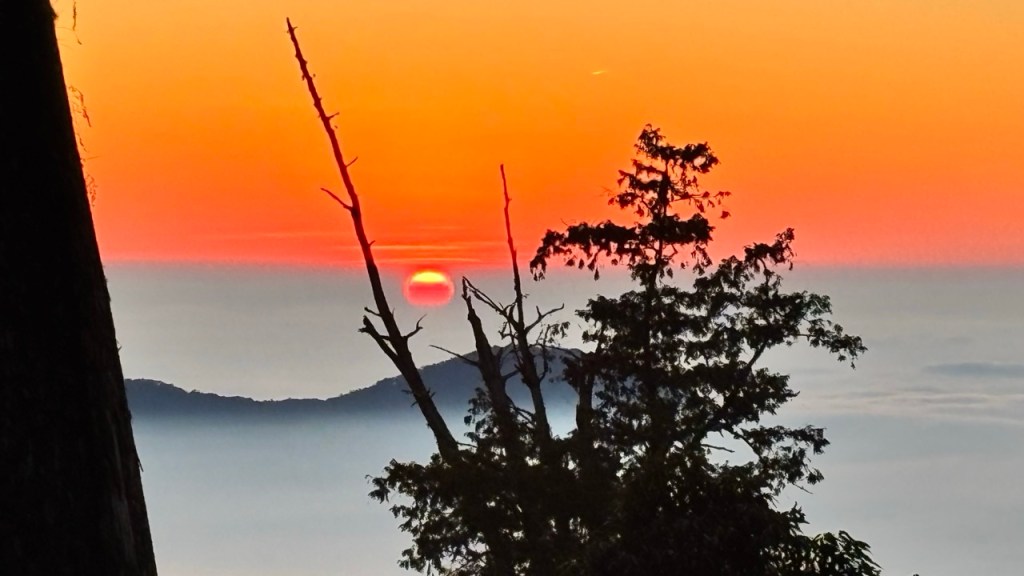
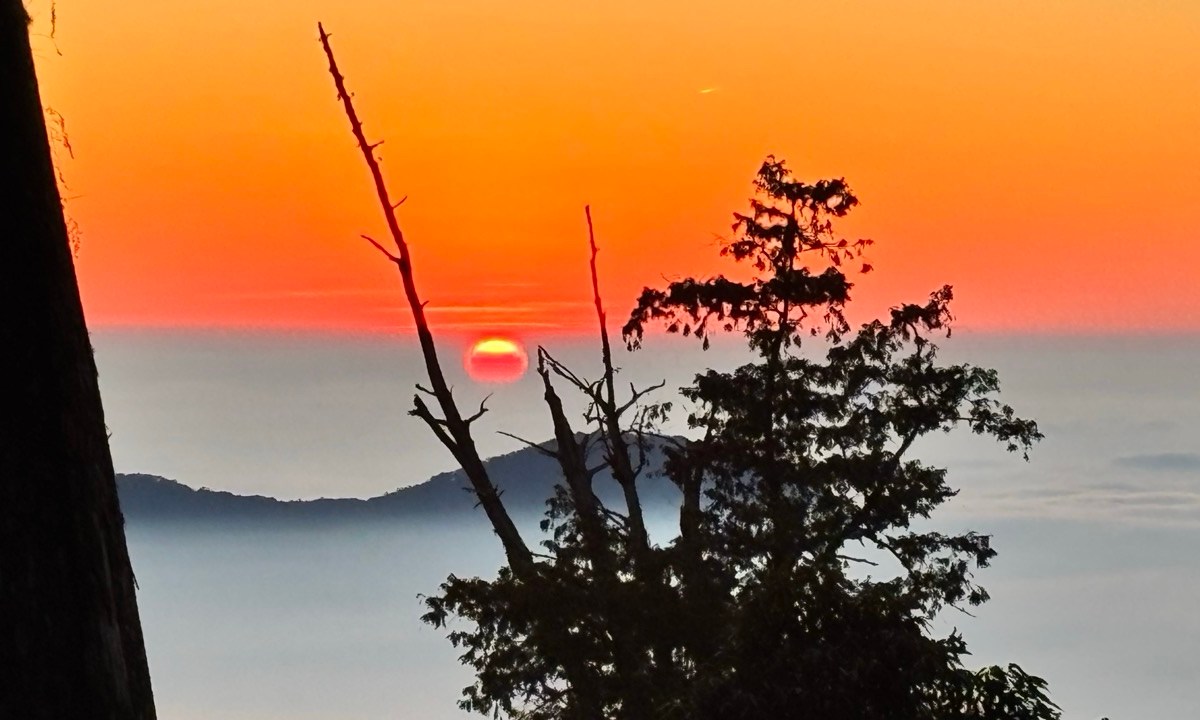
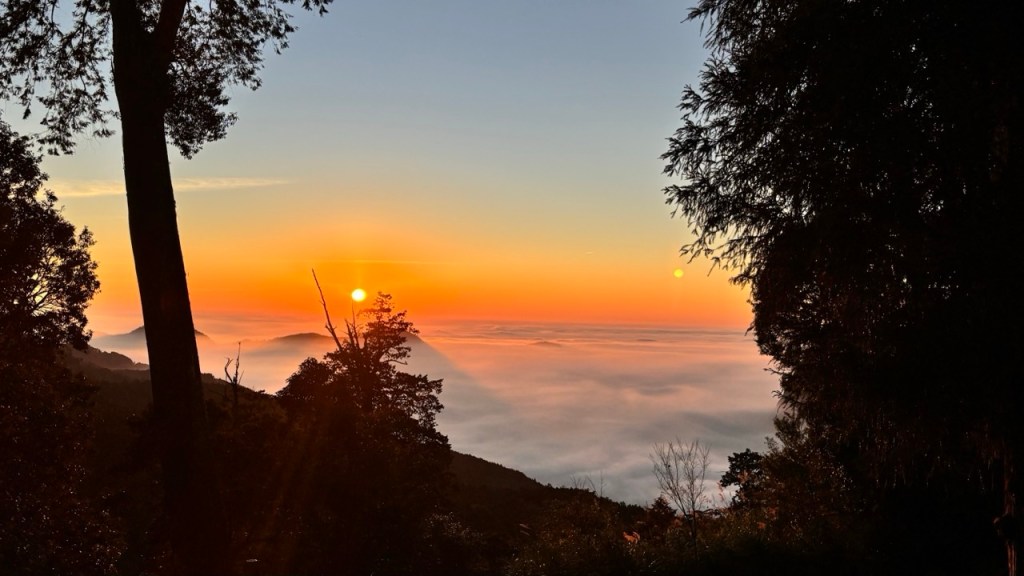
The lady at the information desk gave me a tip on where to watch the sunset, behind the small Ciyun Temple. There were only a few other people there so it was incredibly peaceful (other than a gigantic hornet type creature that the people who were there confirmed came straight for my head). It was also the most stunning sunset I have ever experienced and that is no exaggeration. The clouds form a sea over the forest, and the sun gradually goes down beneath the clouds but is still visible.
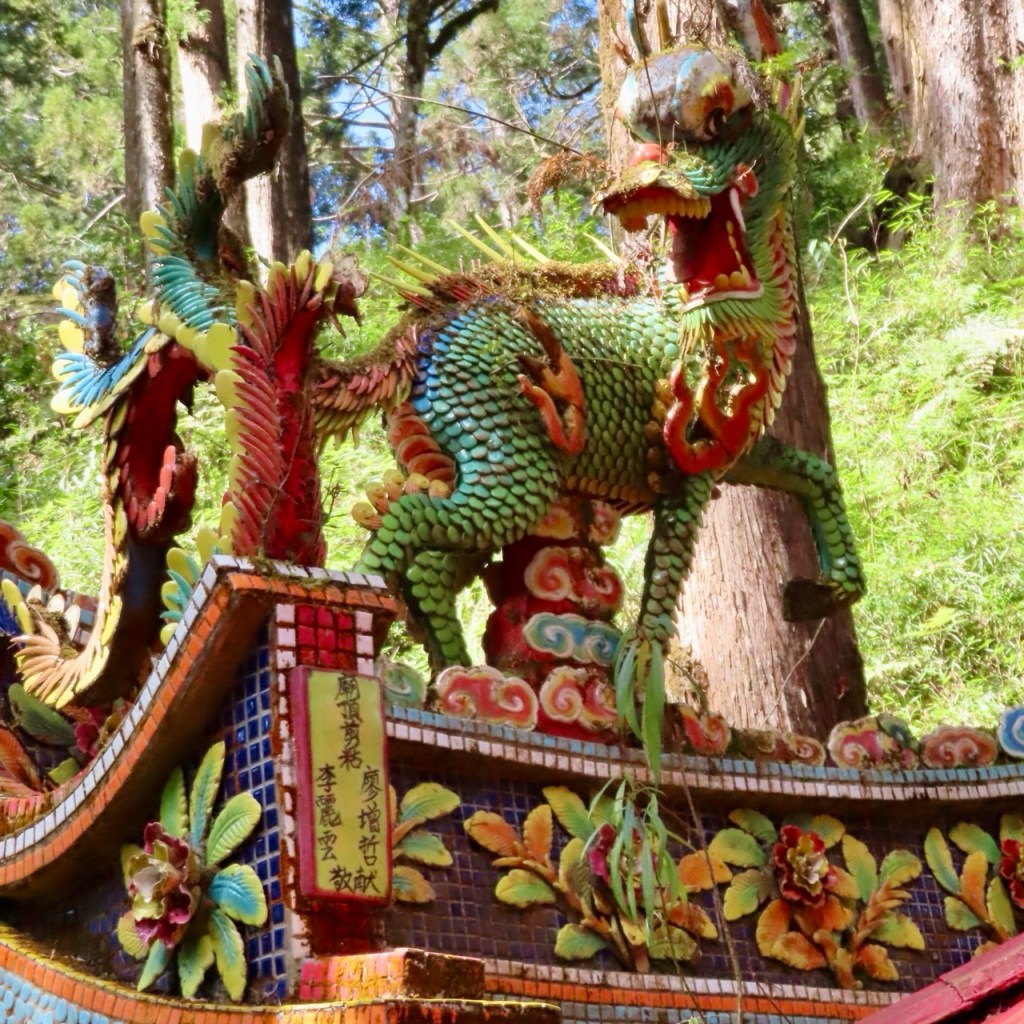
Cijun Temple
Sunset
Unedited photo

My photos look like they have been edited or enhanced but they have not – it genuinely looked just like this. Since watching the sunset is a rite of passage at Alishan, it doesn’t matter that you need to walk back through the forest after darkness has fallen.
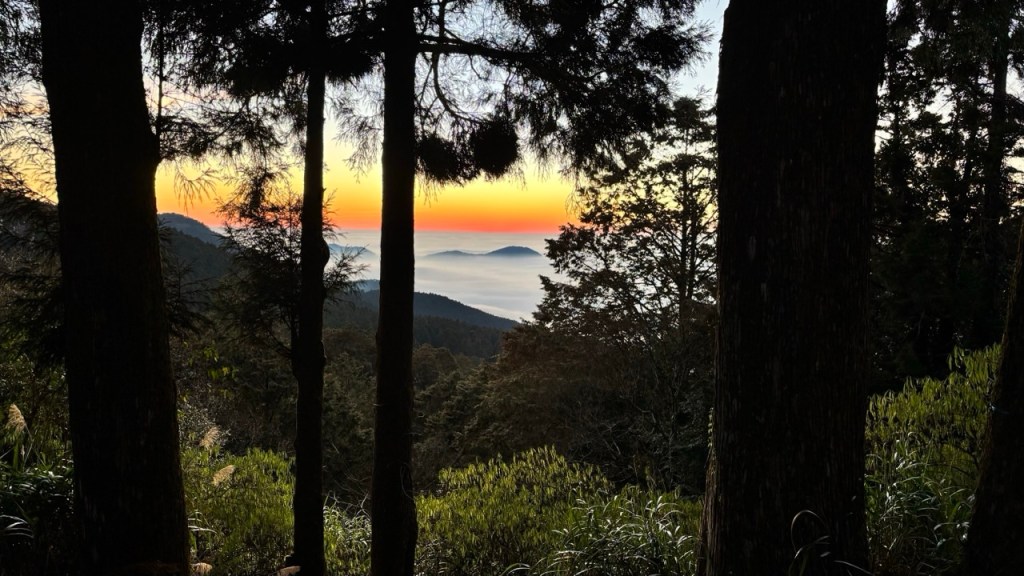
Another sunset photo, just because

In other facts about Alishan, the Ginkgo tree is considered a living fossil, thought to originate at least 270 million years ago. Its cell-regeneration means that old and young trees remain equally healthy and produce the same fruit, they are also resistant to drought and disease making them close to immortal. One of my favourite trails was the Giant Trees boardwalk which connects 36 ancient, giant Formosan red cypress trees, over 1000 years old. The “number 28 giant tree” is the tallest and oldest tree on the Giant Tree trail. It has a girth of 13.1 meters and is 43.5 meters tall, estimated to be around 1,095 years old. Again it was impossible to capture the size of this on camera. We also have the Sacred Tree (Shenmu) – this 3,000-year-old tree collapsed in 1997 but it’s remnants are preserved near Shenmu Station. And the oldest standing tree, the Shuishan Giant Tree over 2700 years old. There are so many Giant Trees it gets a bit confusing.
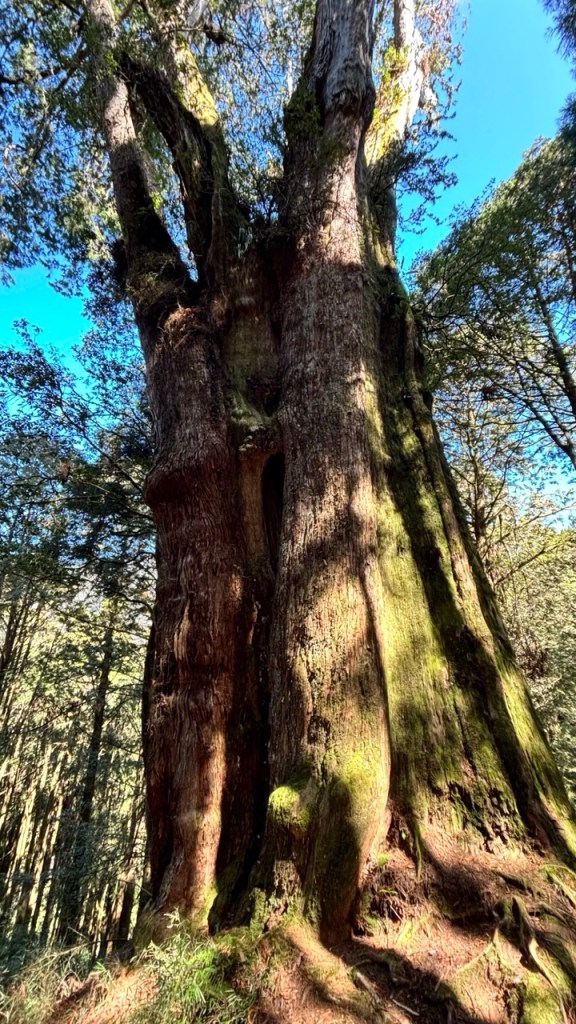
Giant trees

There are several restaurants in the recreation area, also slightly overpriced but convenient. Something I hadn’t tried yet was the Hot Pot and one of the restaurants was serving a veggie version, so perfect for dinner. I sat next to a friendly couple who helped me cook it – the waitress simply turns on the individual stove that everyone has at their table and puts down a plate of various raw vegetables.
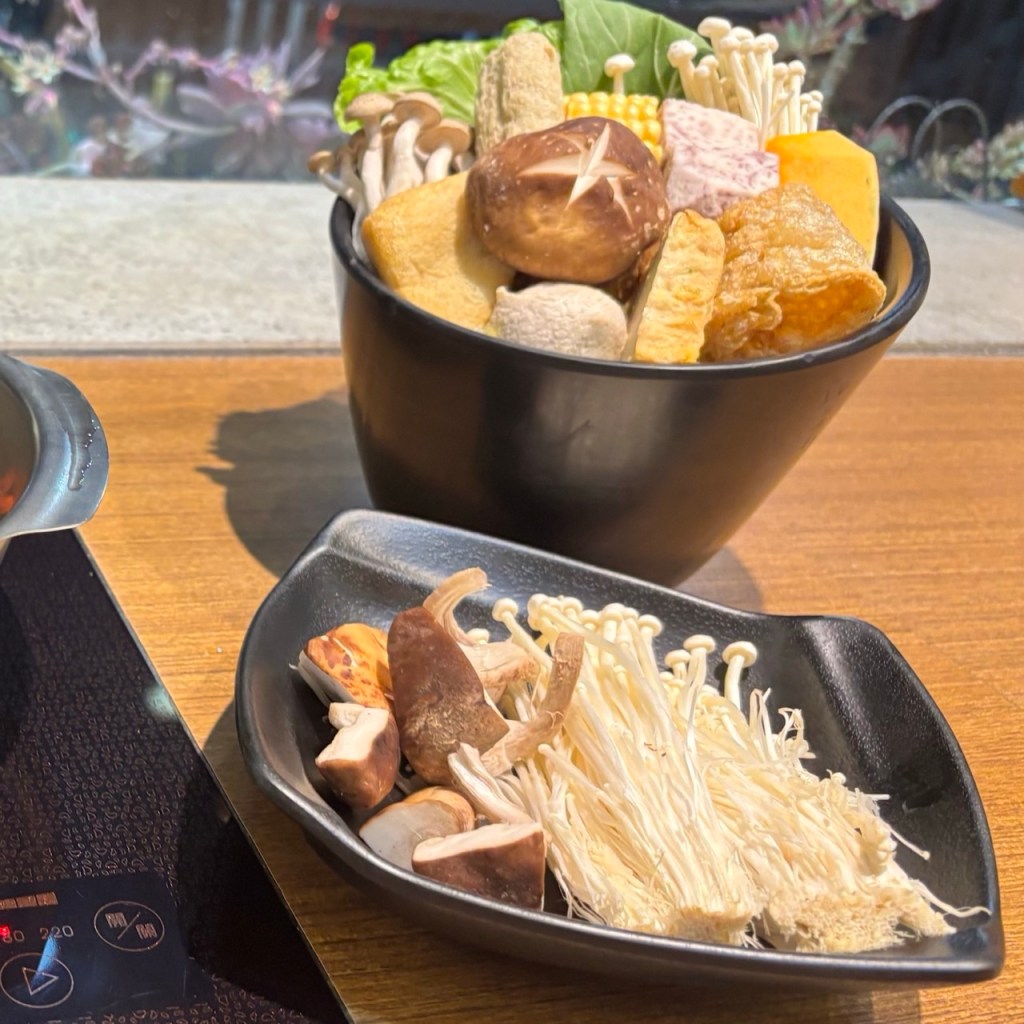
Hot pot ingredients
Hot Pot cooking away

I tried to get some sleep before wake up call at 4.30 am, an hour before the train at 5.30 but it was very, very cold. Getting up, I was freezing but it was really fun to head out in the darkness with everyone else, grab a coffee (you’re allowed to drink on a train here unlike on the metro systems) board the wooden train and follow the crowd to the lookout area.
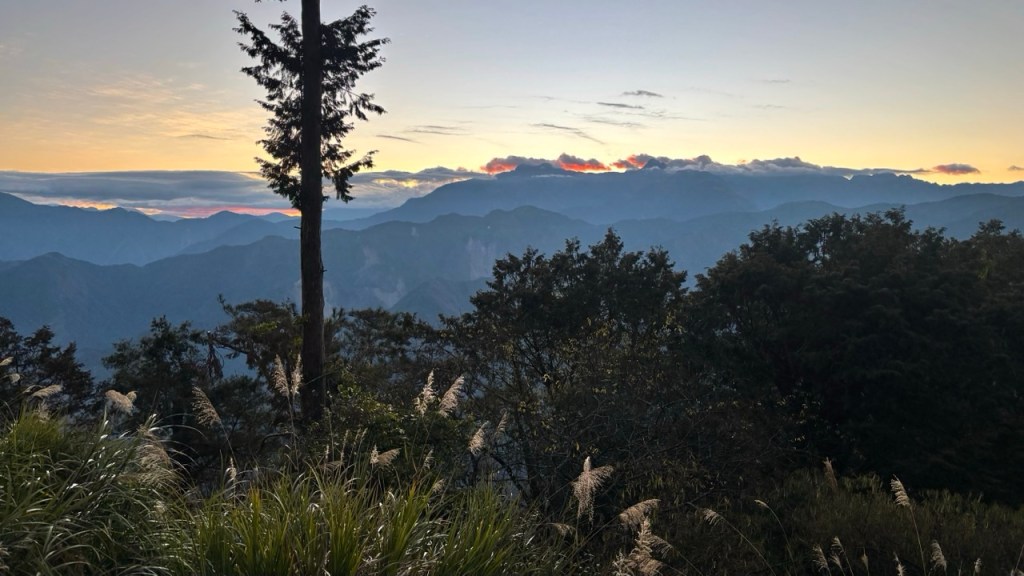
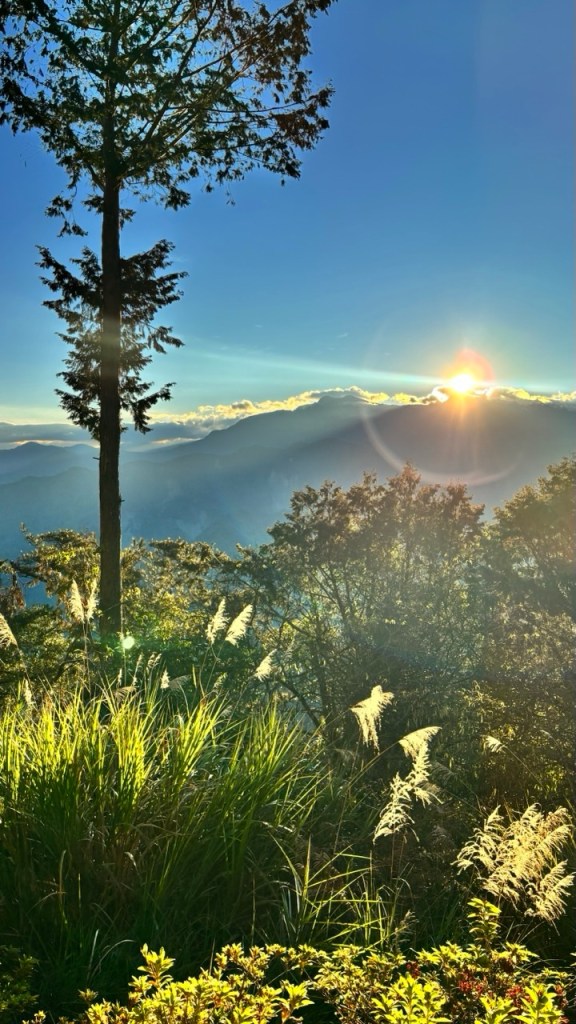
Waiting for sunrise
Worth the wait!

After the sun has risen all the food hawkers open up their stalls serving hot coffee, ginger tea, steaming buns or sizzling Taiwanese pancakes. Being only 6.30 am I decided to walk back and get in another hike before checking out of the hotel, avoiding the crowds who were mostly taking the train back.
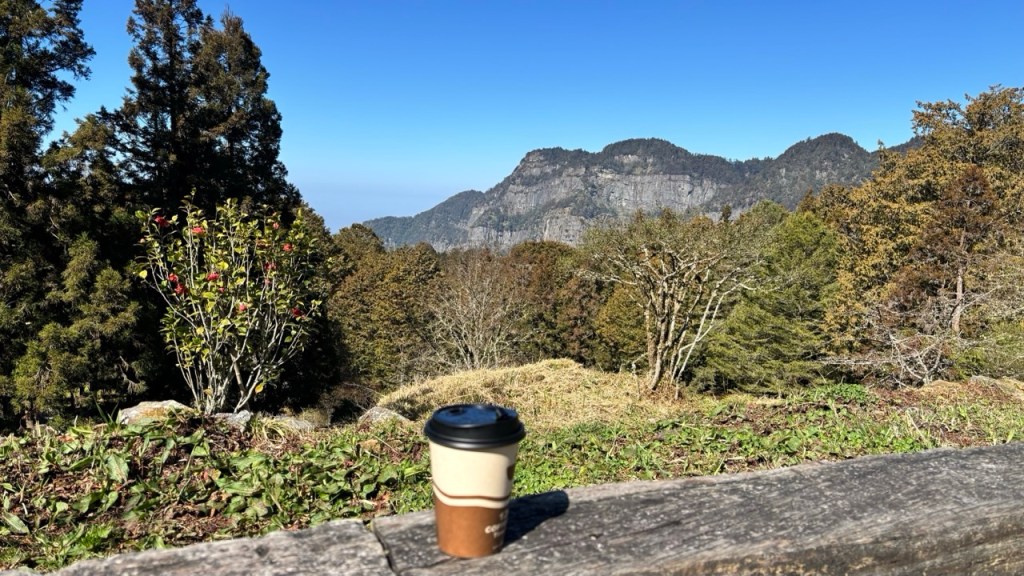
Cheapo coffee with a view

The was also time to try a local snack of two whole sweet potatoes, which makes for a tasty and filling stop gap (but not nearly as delicious as the sweet potato in Japan!). My favourite food in Taiwan has been the spinach and ginger, which a lady at the next table told me is blanched before it’s fried, getting rid of the earthy taste. I have lost count of the times I’ve had lovely conversations when sitting on communal tables.
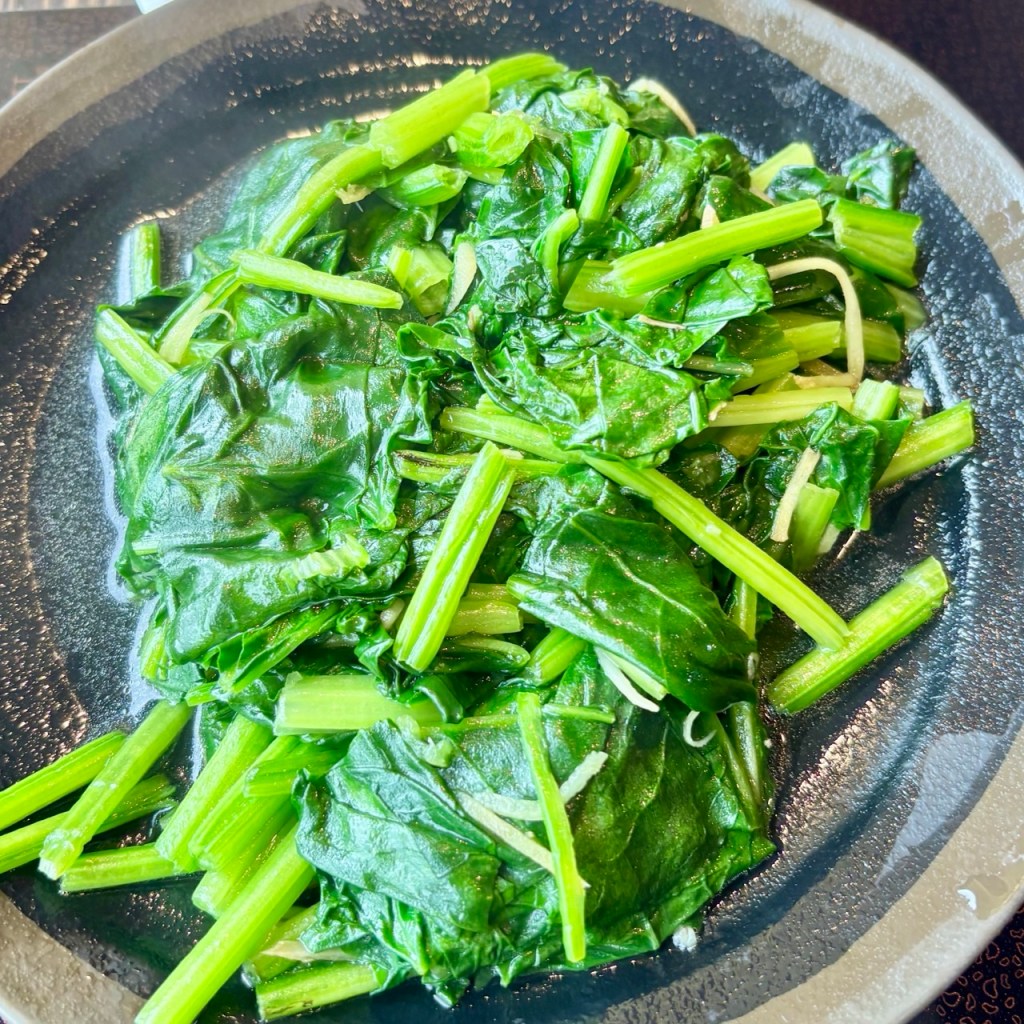
I could live on this
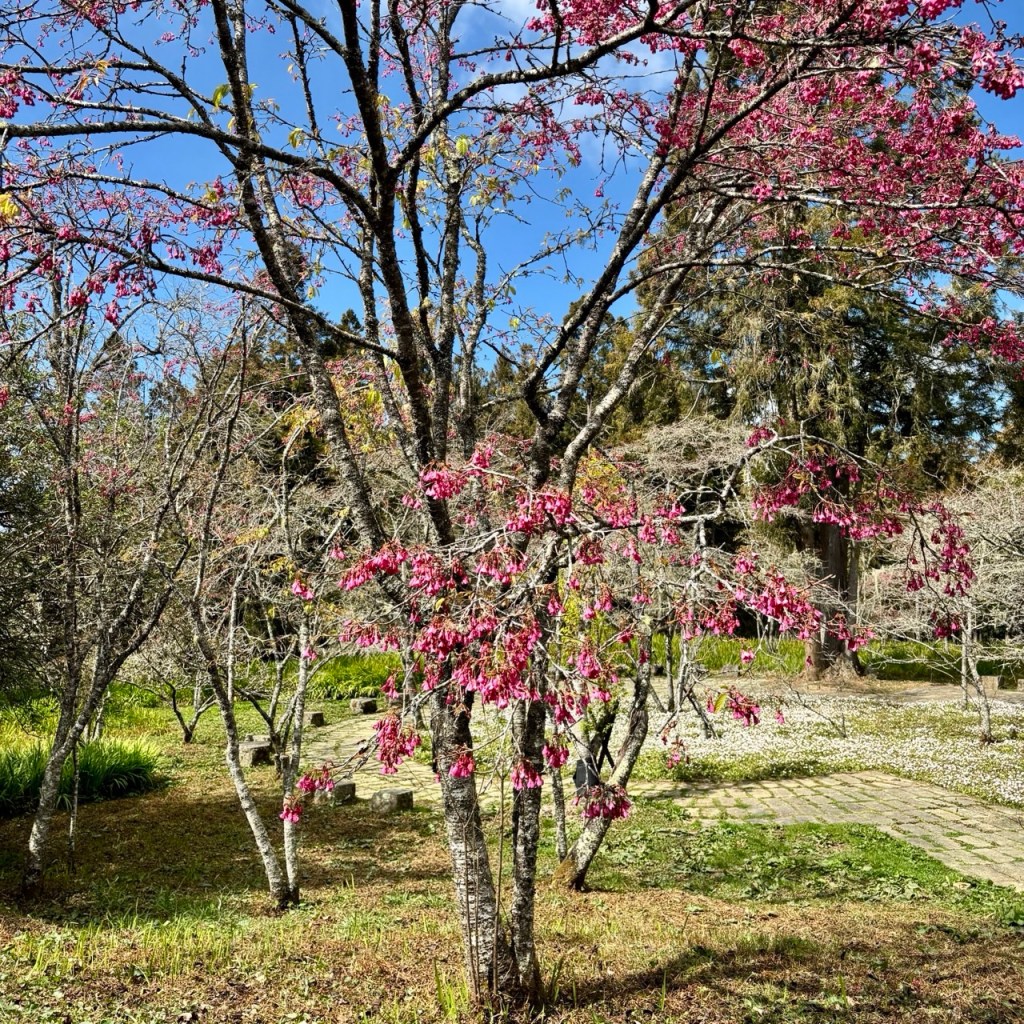
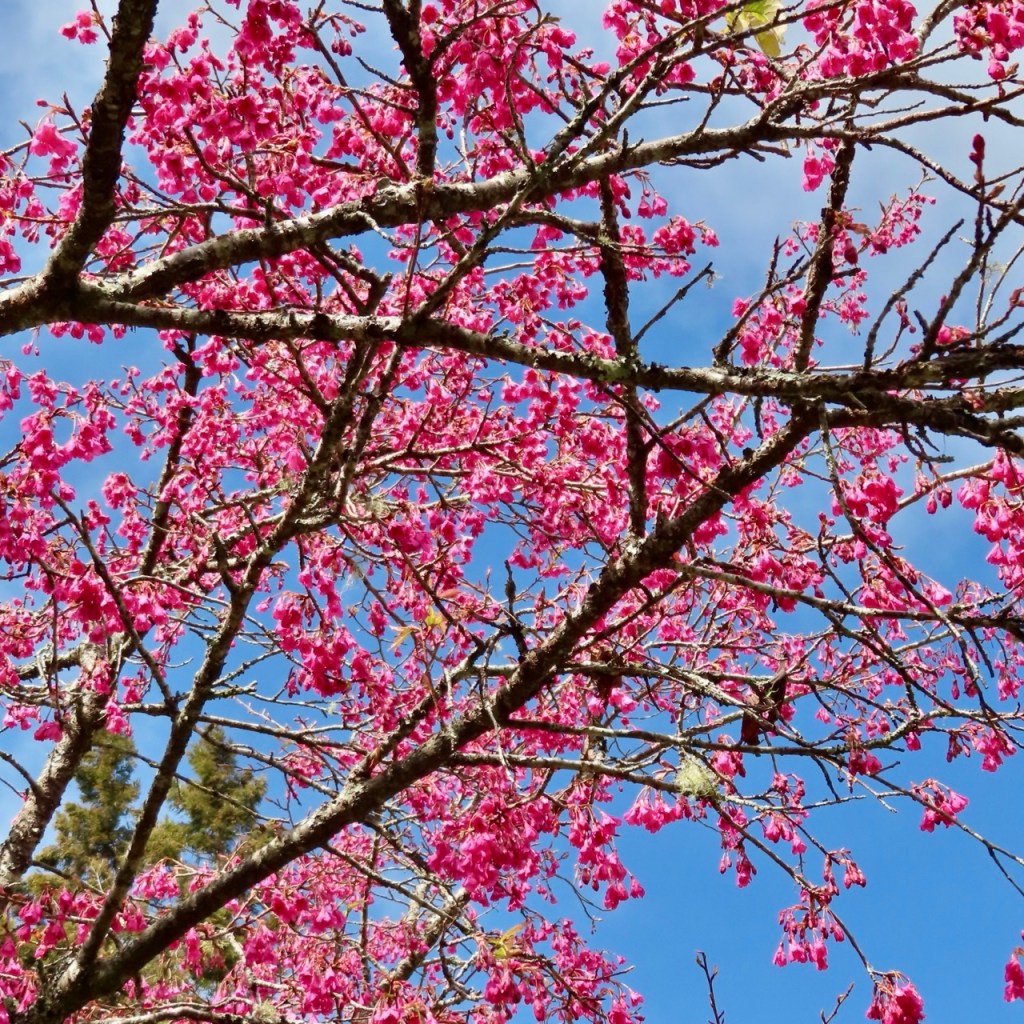
Cherry blossom in bloom
More cherry blossom

Alishan also has the first cherry blossoms in bloom, which is wonderful to see. It has been an almost spiritual experience here, exploring the trails, experience sunrise and sunset mostly on my own – there are plenty of local tourists around at the viewpoints so it never feels isolated, but few Westerners and the majority of the trails are pleasantly empty.
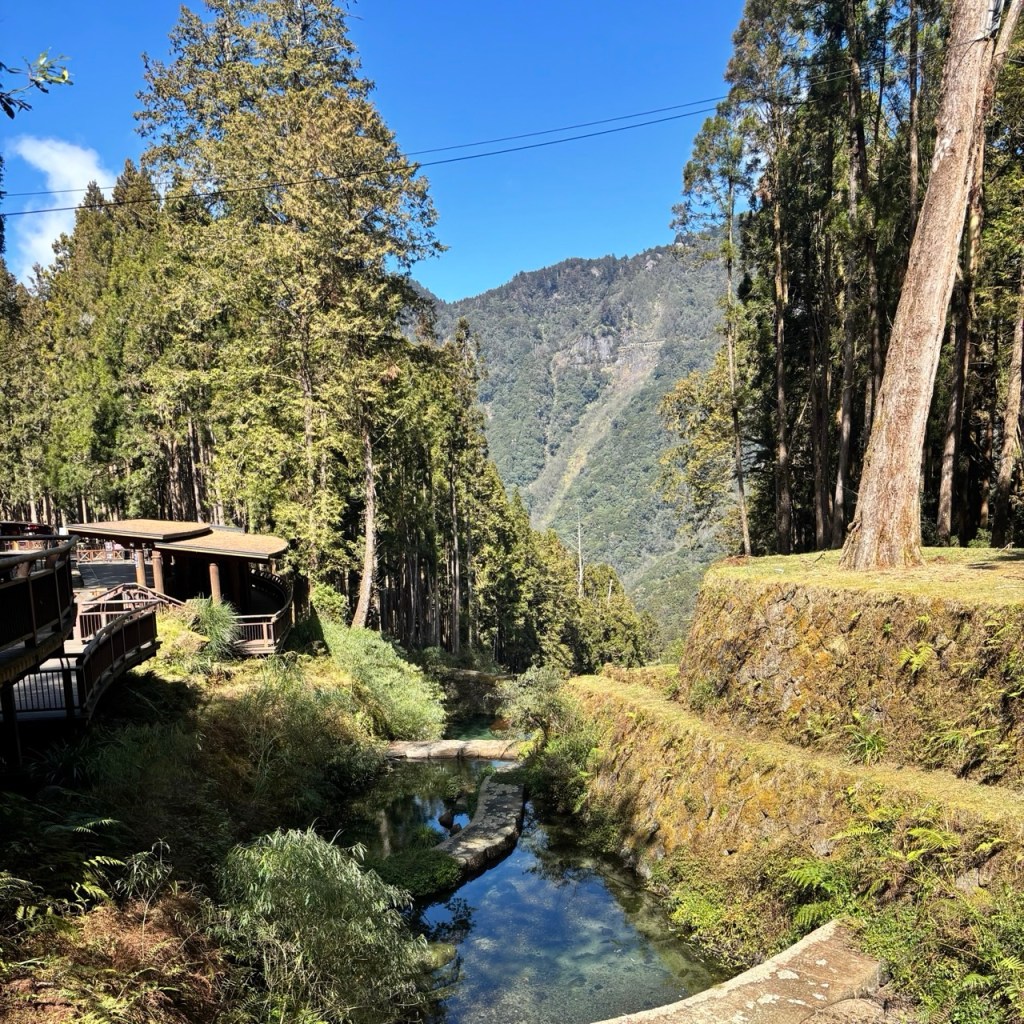
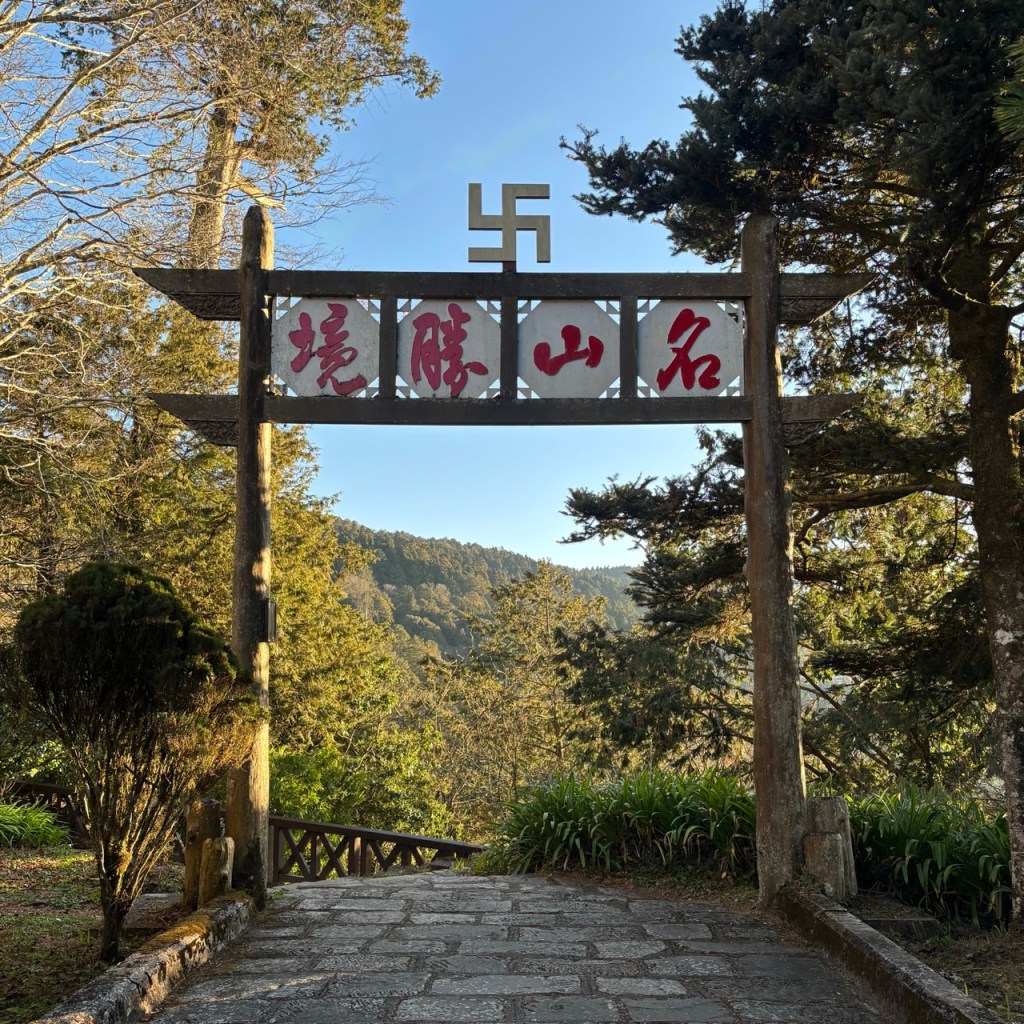
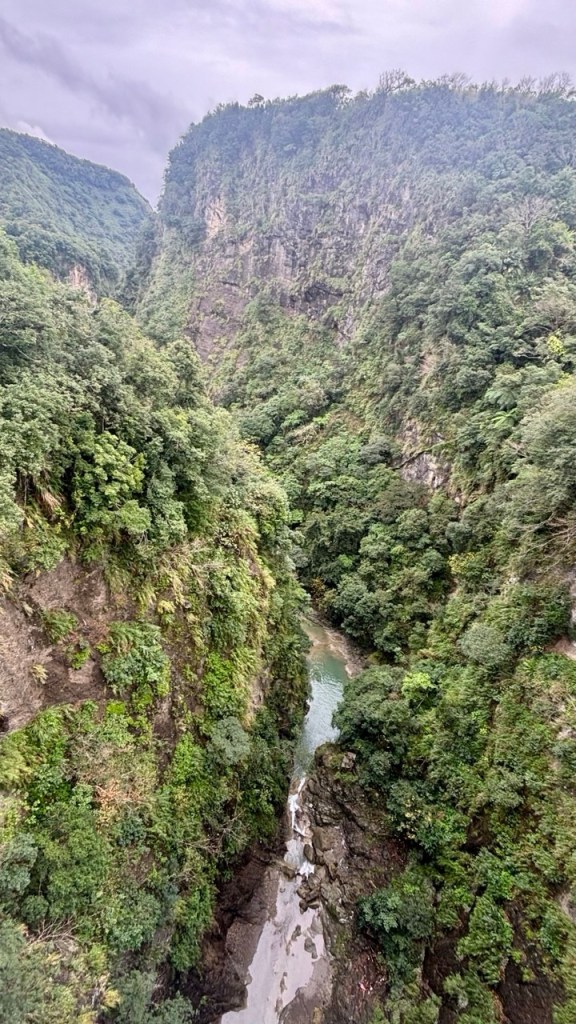
View from one of the hiking routes
Add caption

After two days, all too soon it was time to get the 3pm tourist bus all the way to my next stop – the mysterious sounding Sun Moon Lake …
Carry On Buses (a bizarre solo experience in Hualien)

The first stop on my route east around Taiwan was Hualien, a couple of hours away from Taipei. The main attraction of this city is the nearby Taroko Gorge which sadly remains almost entirely closed to visitors due to the 7.2 magnitude earthquake in 2024. I had heard that Hualien was a bit of a ghost town and unfortunately the rain didn’t help the already strange vibe of the place. I imagine in better weather it’s lovely with its mountain backdrop but all I could see was low cloud.

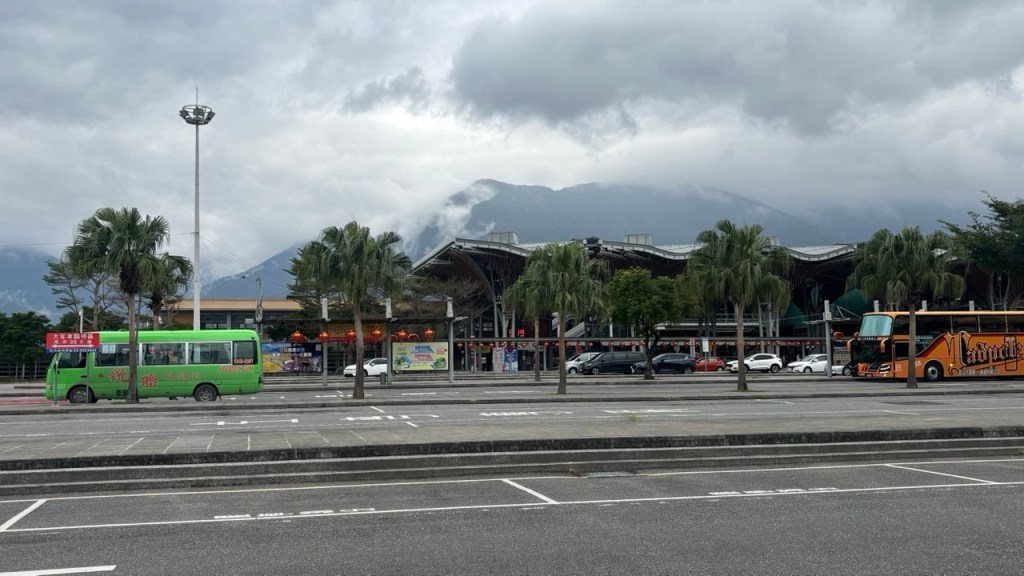
Hualien station

The “Hualien Wow” hostel was really good, right opposite the train station and the bargain price of £10 included toast and peanut butter for breakfast. The hostel may have been Wow but Hualien was not. Even the well known night market was a washout – with no buses running that I could find, I walked the 30 mins each way in the rain (the hostels lend you umbrellas or you can just rent one on the street) only to buy some inedible tofu sticks and a pot of sweetcorn. Most of the food on the street markets is fried in some sort of cooking oil that smells rancid – the whiff of it makes me feel sick.

Beautiful scenery from the road

An extremely earnest woman at the bus station information stand told me there was not much point in visiting Taroko, especially in bad weather, as only the visitor centre was accessible. Instead she highly recommended an 8 hour day trip up and down the east coast. The next day it wasn’t raining so I decided to take her advice – it was either that or leave Hualien without doing anything, as there was actually nothing else to do. I arrived at the bus station (conveniently right opposite the train station) 15 minutes before one of the 3 departures of the day hoping I’d still get a seat, and was greeted enthusiastically by an attendant manning the desk. He gave me a ticket from a machine with the number 1 on it, which I thought was a little strange. At 9.30 on the dot a minibus bus pulled up and a little old man got off with a clipboard, wrote down my name and contact details on the first line of his sheet, ushered me into the first seat and off we went. I was the only passenger. It became apparent he didn’t speak any English when he spoke into a translator on his phone in a comedy monotone voice to tell me he would be my guide. It’s ok, I thought, I’ll be getting off at each of the 7 or 8 different stops and can do my own thing.

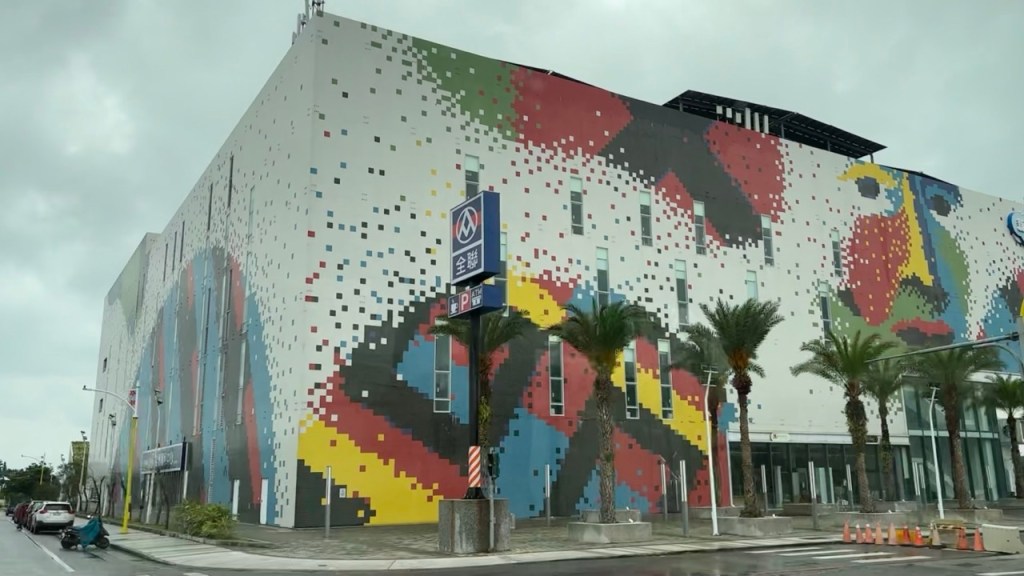
Lego shopping mall?
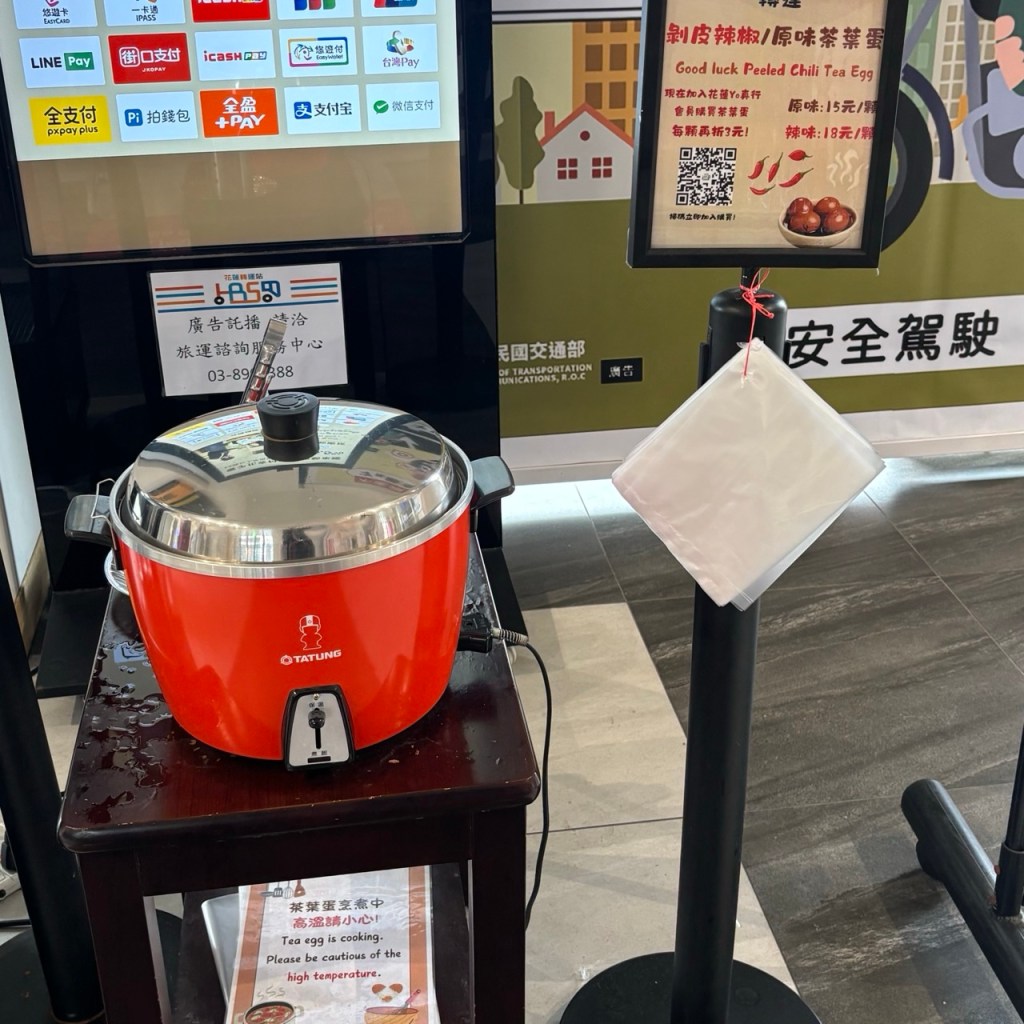
Lucky egg cooked in tea

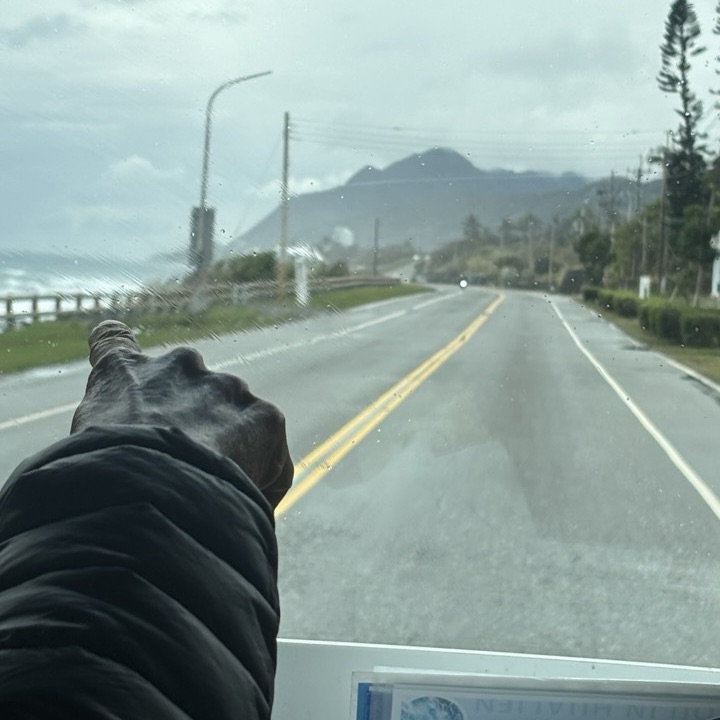
After about ten minutes his phone told me in its robot voice to get my camera ready as we were going past the world’s biggest building made of Lego (I think), followed by a mountain in the distance that he was very insistent I got a photo of. I obediently got my phone out but had no idea what I was meant to be capturing. What happened next was interesting. Some military tanks drove past with soldiers in camouflage gear standing on top arranged in a circle facing outward with their machine guns pointed right at us. It looked like a scene from a movie. There are some military bases around so I assumed (hoped) it was some sort of drill. I asked my guide who suddenly refused to talk, shaking his head and making a “no comment” sort of gesture. He obviously didn’t want a record of any mention of the military on his phone.

Mountains in the shape of a face?
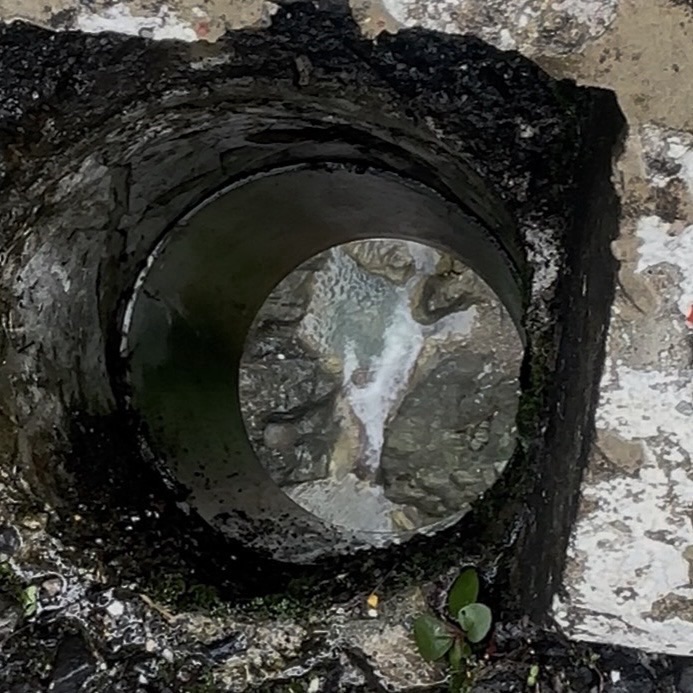
Waterfall through hole in the bridge road

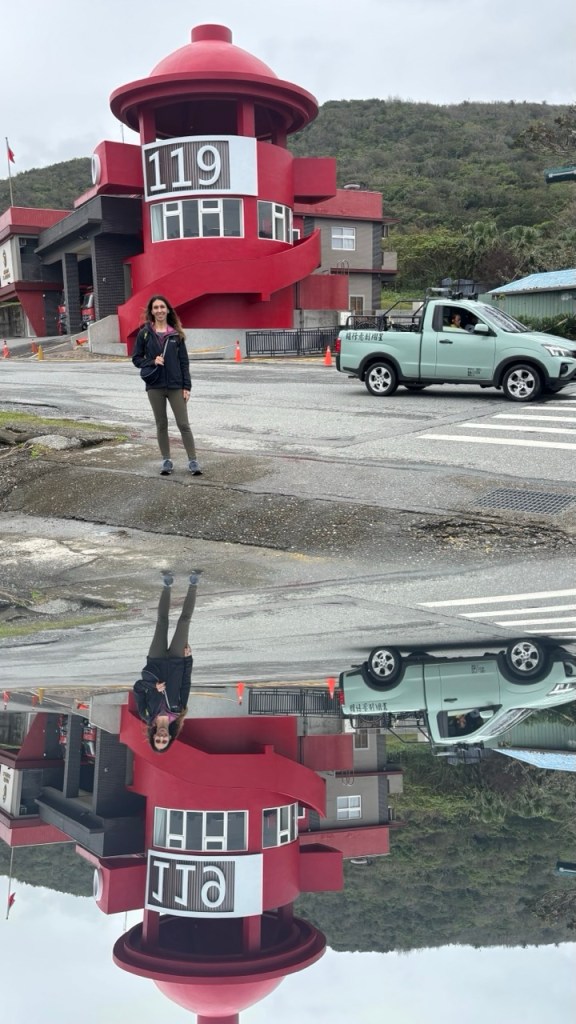
We arrived at the first stop, the world’s only fire station that is actually built like a fire hydrant. It’s cool, but you don’t need more than 5 mins to have a look and take a photo. Oh no, said my guide, the departure time is in 25 minutes – I must look at the temple next door, use the squat toilet, then we will take photos and “I’ll show you some wonderful illusions”. I then realised he was going to accompany me on every stop and I’d be participating in the world’s most ridiculous photoshoot. It was going to be a very long day.

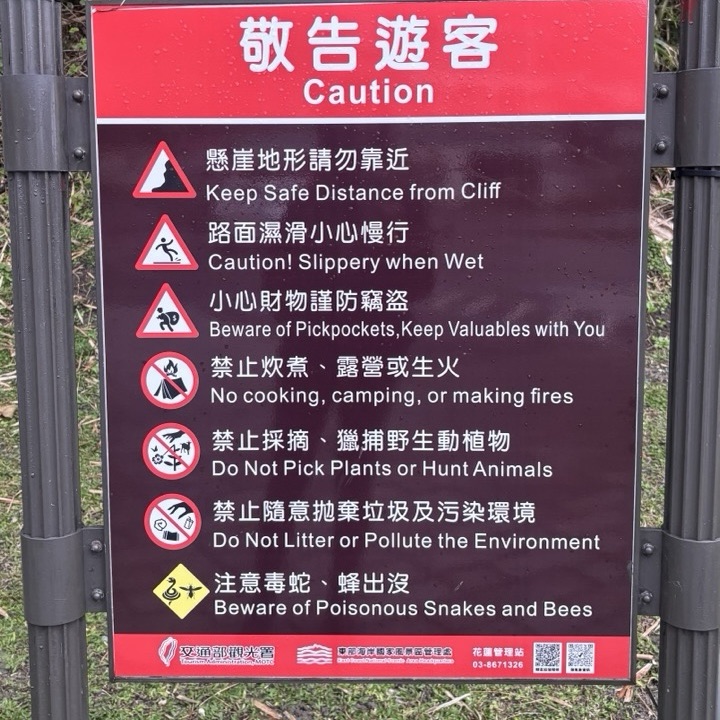
The many dangers

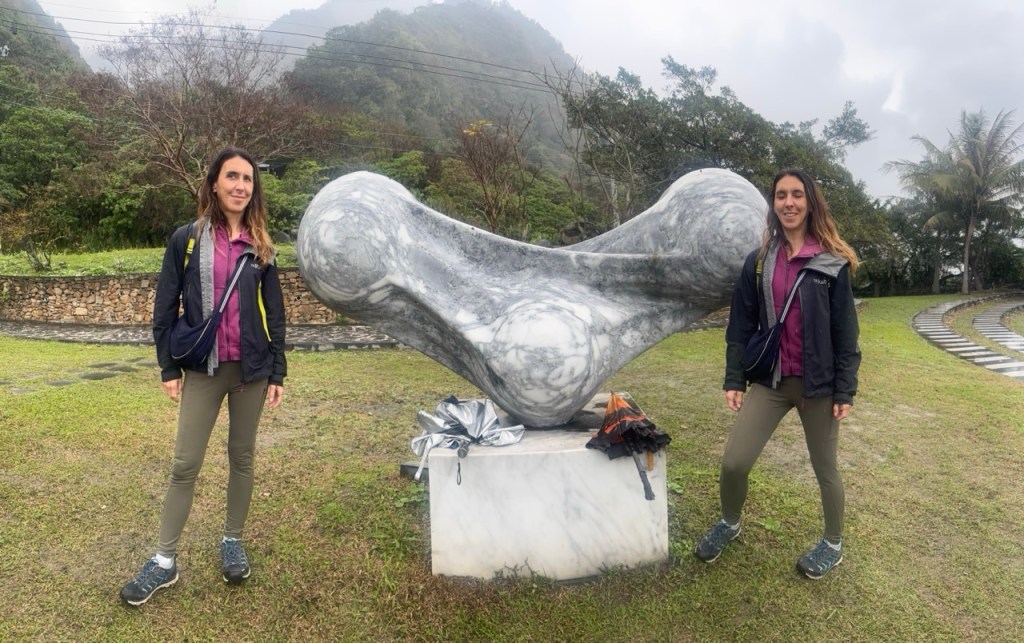
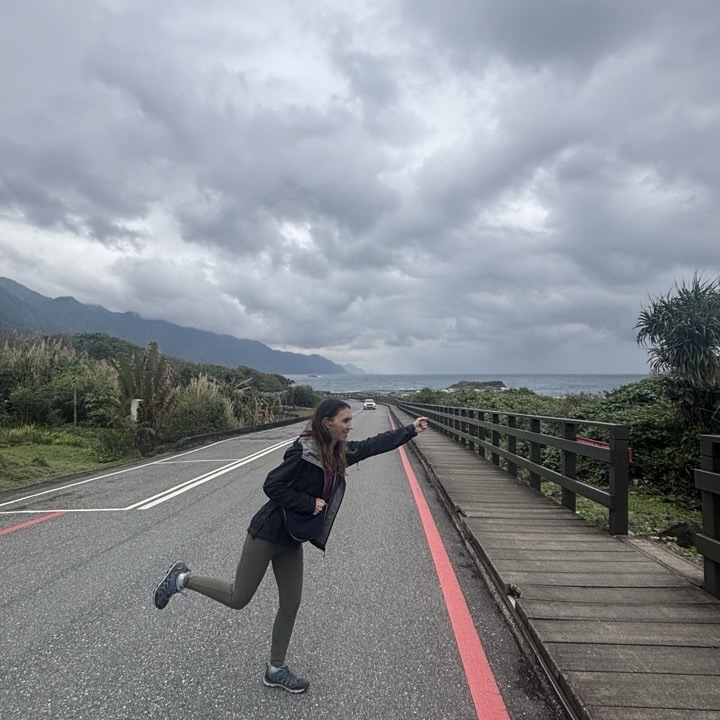
Here is me infront of the fire station after he whipped out a hand held mirror and took a photo that gave the illusion of a water reflection. I feigned delight and said oh wow, so clever! He then took a panoramic with me running in a circle so there appeared to be two of me. “Do your parents know you have a twin in Taiwan?” he asked. Once was quite amusing. But at each stop in the drizzle, it got old very fast.

Illusions
Me and my twin

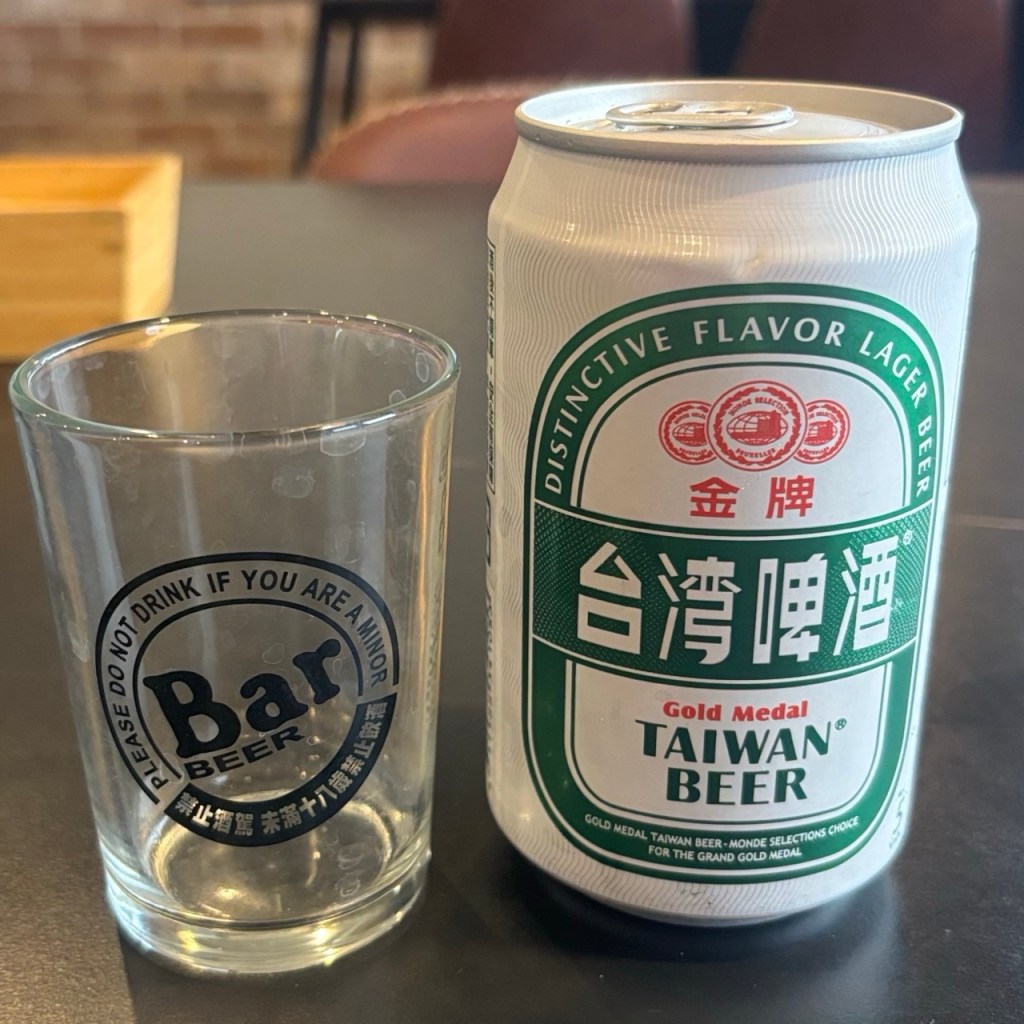
Today was the only day I didn’t bring any snacks. By the time we got to the fishing village for the lunch stop I was starving and it was now pouring down with rain. His instructions that “We will eat lunch at a local fish restaurant and the bus will depart in 90 minutes“ was not what I wanted to hear. I translated that I wanted vegetarian food and suddenly he spoke a few words of English – “OH MY GOD” he said slapping his head, suggesting I walk up the hill as there was a shop that “might sell bread”. The tiny shop at the top did not sell bread or any sort of snack I could identify and the missing-toothed shop owner seems to have no idea what I was asking for – but he did gesture further up the hill. Turns out at the very top there was a restaurant with “Welcome” written in English, several vegetable based options and a lovely lady and her little daughter greeted me with “would you like a beer?”. Yes please.

Lunch
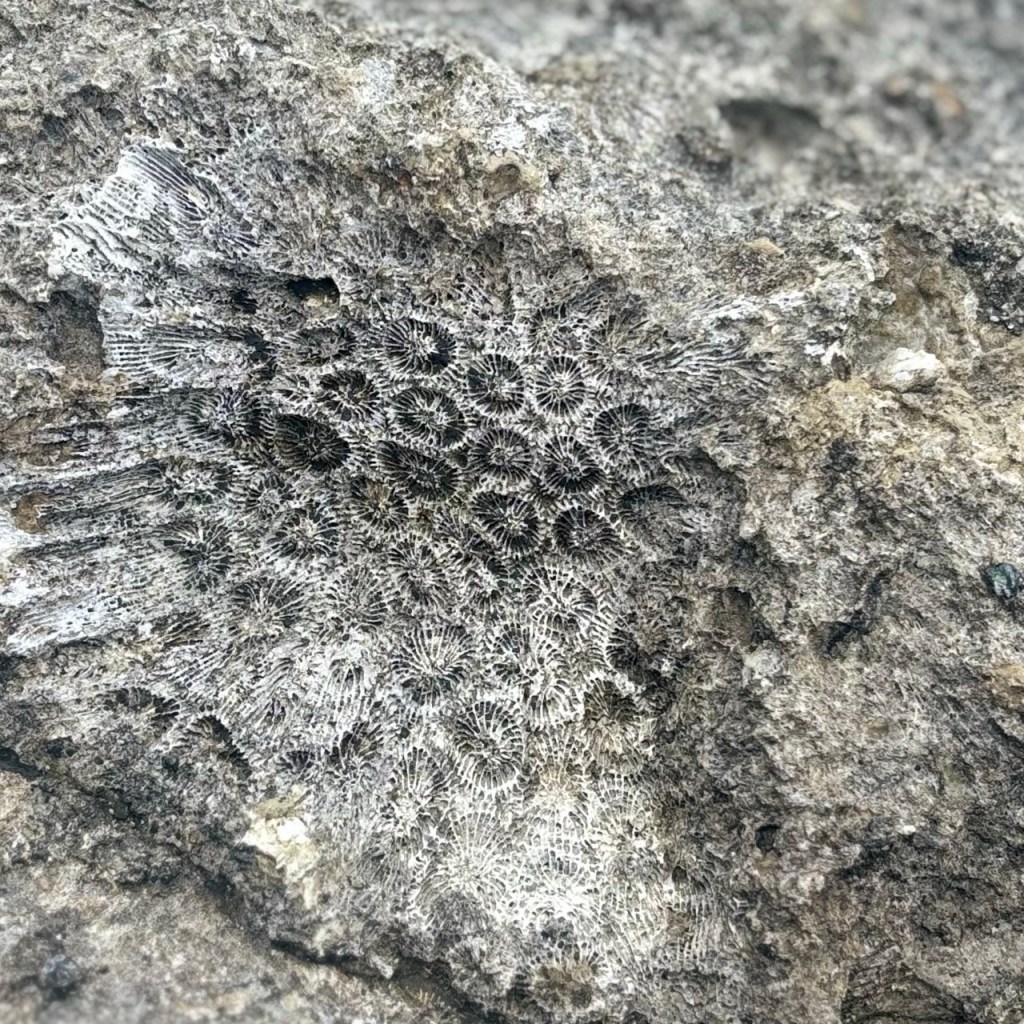
One of the few interesting things he pointed out, a fossil

My guide was a stickler for the official “bus departure time”, which wasn’t for another ten mins so when I got back we had to stand in the rain looking at a mural of whales on the wall and playing a guessing game of which species each of them was and do I have whales in my country. After lunch he told me “This afternoon will not be fun. It is raining”. No kidding. If I wrote about every excruciating stop we made this would be a very long post. I will just mention the best (or worst) three:

Driving my Nissan car

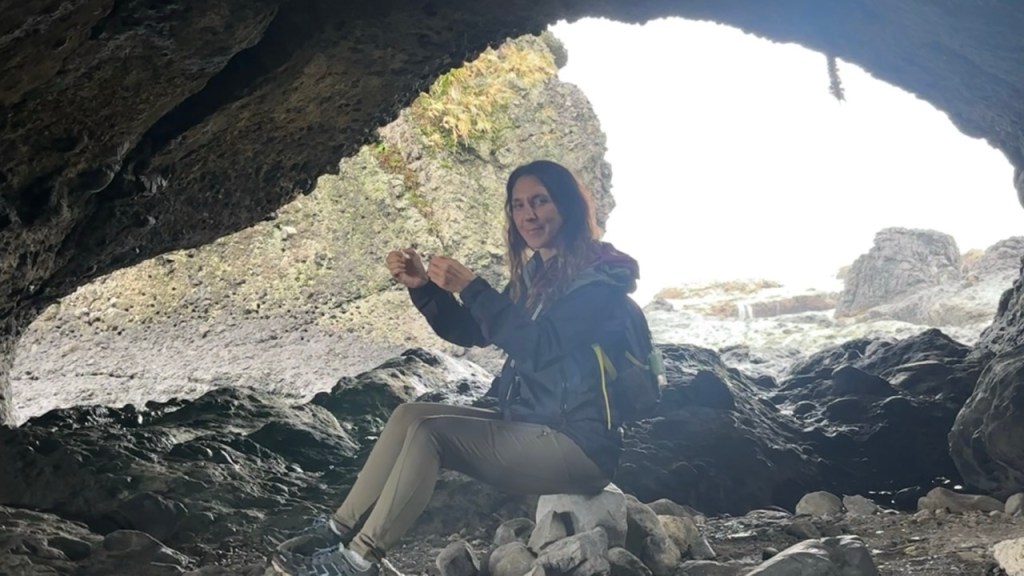
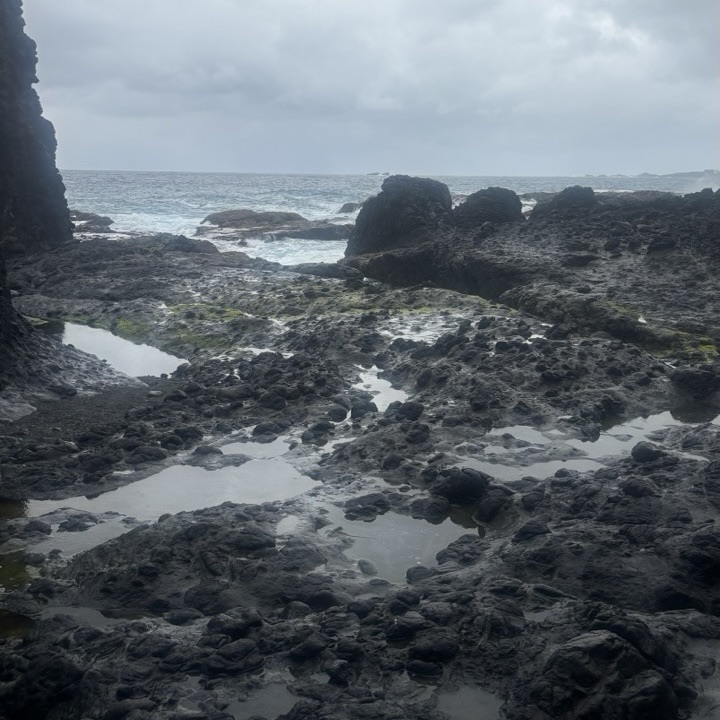
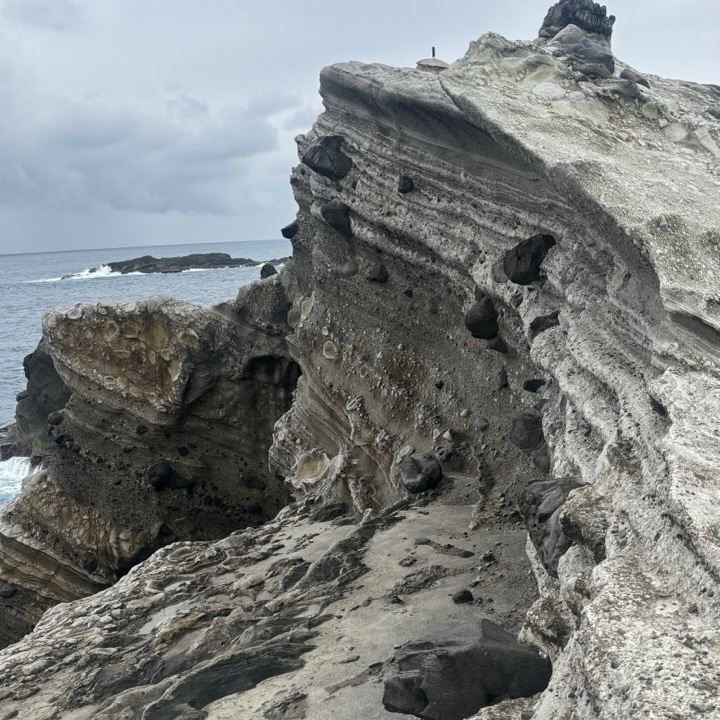
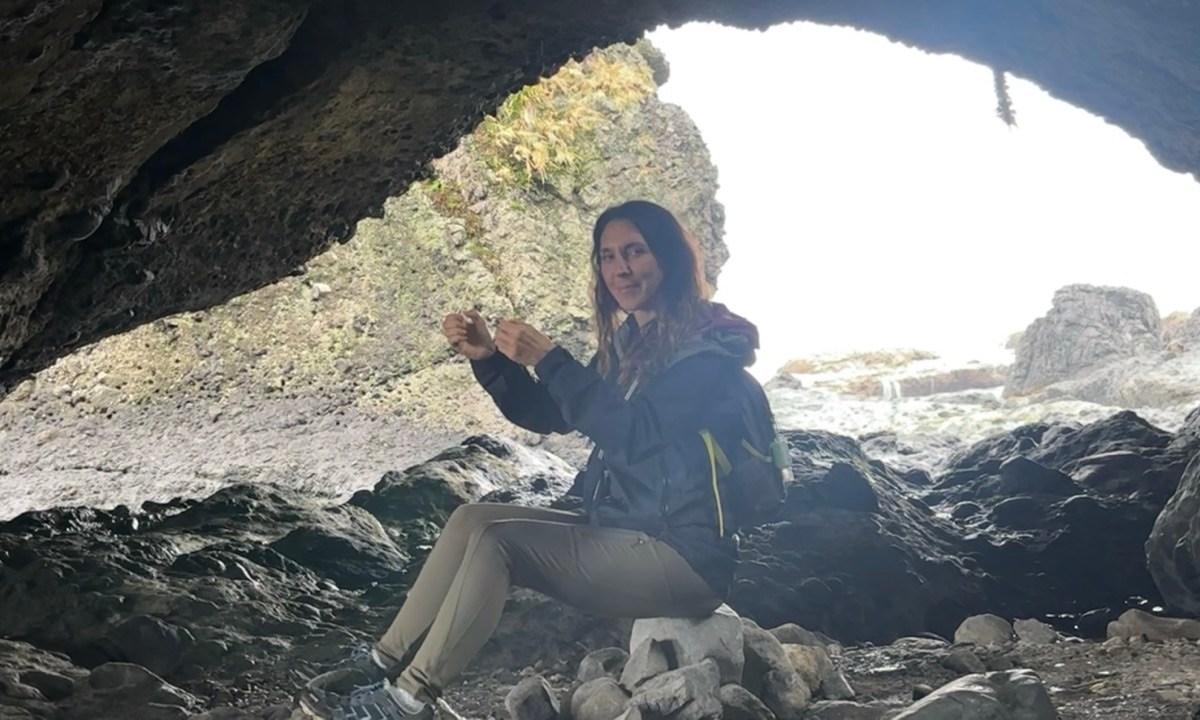
1. The Nissan cave. We stopped at the Shimen recreation area where a long path leads to a stunning rocky coastline and a cave. But it was raining, the rocks were slippery and the sea looked ferocious. Ever so often the waves threatened to cover the rocks where we were standing. The guide was in full photographer mode by now. Try following instructions in Chinese to recreate specific poses when you have no reference as to what they are. It’s only when I saw a photo in the recreation area explaining that “The sea-facing opening is called the “March Cave” as it looks like a March (a Nissan car model)” that I realised I was supposed to be driving a car. After I fell over on the rocks trying to reach the next spot I was getting annoyed and told him no more photos. This just annoyed him and he told me crossly that “an American tourist got an amazing photo in that spot”. Good for him. 

Off he goes

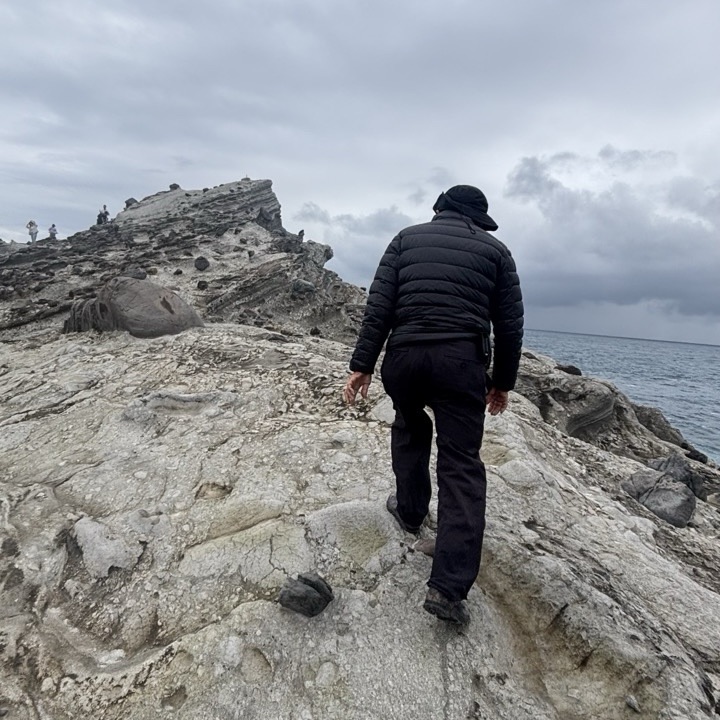
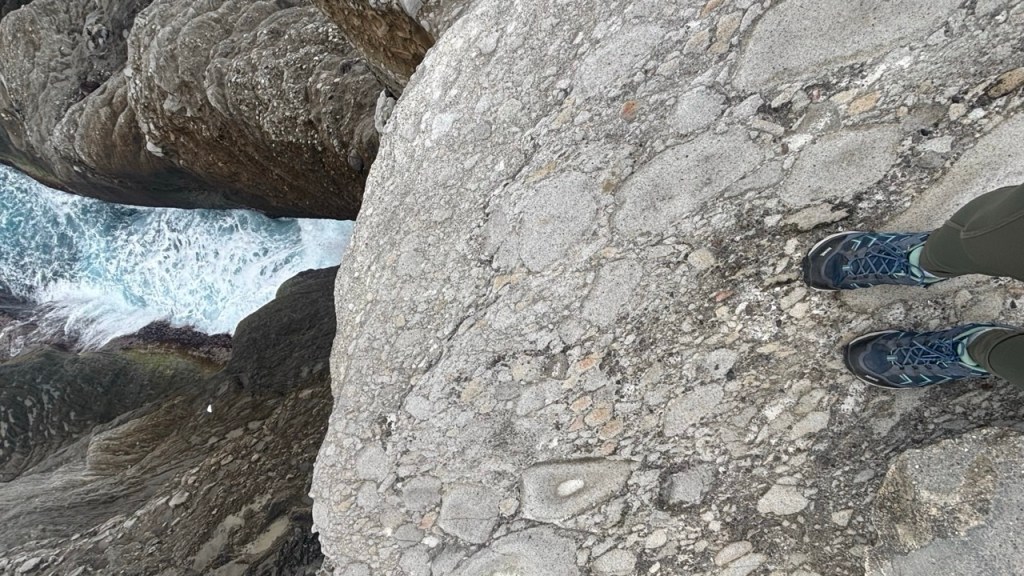
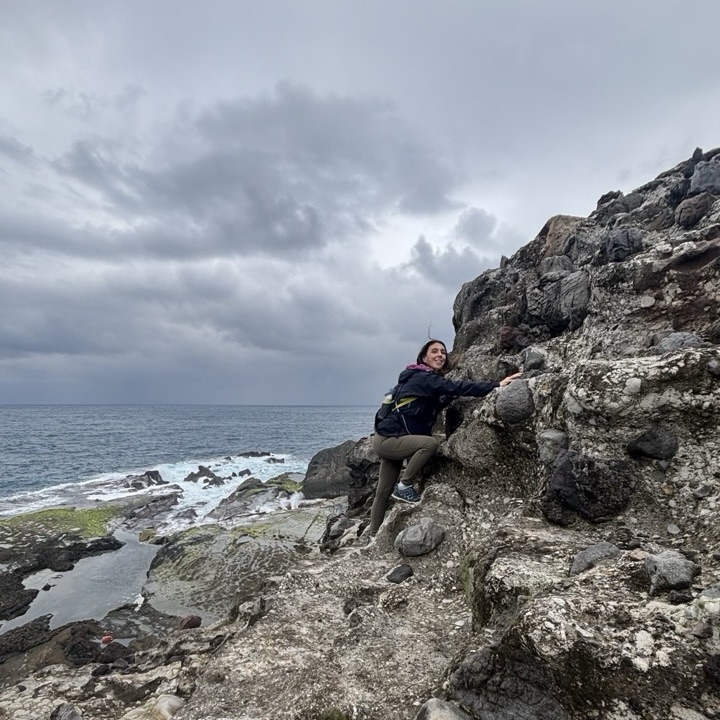
2. The cliff rescue. For someone who looked about 70 he leapt up the rocky slope to the top of the rocks. After looking over the edge I decided I really didn’t want his photo to be the last one I ever took. But getting down was harder than he made it look, so much so that I got stuck. To add to the ridiculousness of this entire day there was a family a bit lower down who sent their  approximately 10 year old son up to fetch me. Unfortunately he appeared to be scared of heights. The poor boy started screaming (no exaggeration) as he tried to reach me while his parents laughed their heads off and took photos of us both. My only regret is that I didn’t video it. The guide just looked disgusted that I didn’t want a photo on the edge.

Time to get down
Not actually as dangerous as it looks

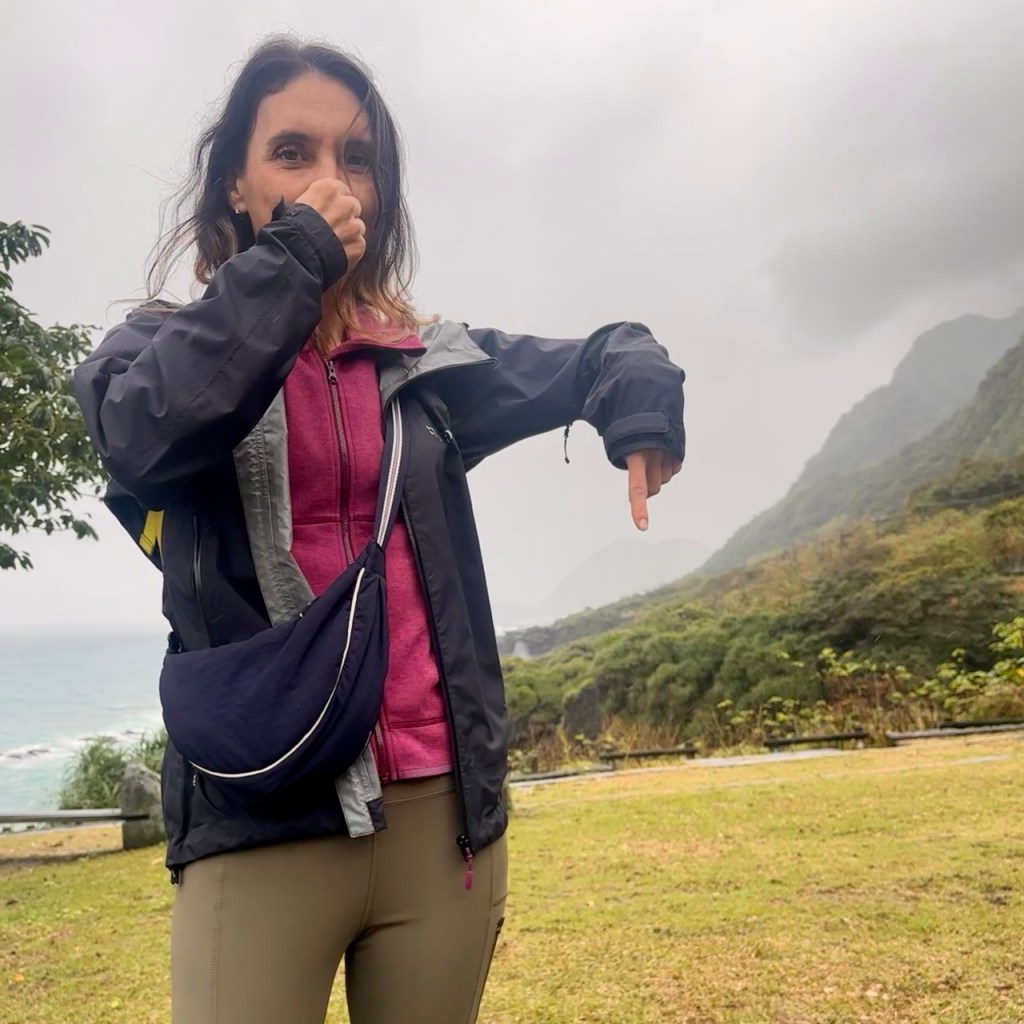
3. The bum shot. Best of all, or worst of all, at an otherwise average viewpoint he started positioning my arms and told me to hold my nose. Again I had no idea why until he showed me the photo. Like other tourists on his camera roll, I am supposed to be pointing at a mountain in the shape of a bottom and holding my nose at the smell. Is that even funny?

Bum mountain barely visible

I couldn’t hide my annoyance at the end when he wanted me to do the mirror trick myself and I failed the test. He snatched it back and his phone shouted “No! Never drop the mirror!”. The final straw was when I was trying to enjoy my ginger tea whilst praying for the departure time to come around and he asked where my husband was and informed me that he was 66 and not married yet.

I didn’t realise I wasn’t meant to actually climb it til he shouted “No!!!”

Hualien is probably best left until the Taroko Gorge reopens, or perhaps I missed something. Unfortunately I just wanted to get out of the place so I went straight to the train station to secure my train ticket down the coast to Taitun the next day. 

Running from an earthquake” – getting run over more likely
Worth climbing over for a photo?!
Where the boy rescued me from
The one viewpoint he didn’t accompany me, too many stairs

Glimpse into the North (South Korea Part Two)

Let’s start by that saying as far as strange tours go, this was up there with the best of them. The Demilitarised Zone is a strip of land cutting the Korean peninsula in half, forming a ‘buffer zone’ approximately 2km wide on either side of the Military Demarcation Line, the divider between the Democratic People’s Republic of Korea (North Korea) and the Republic of Korea (South Korea). The zone itself may be ‘demilitarised’ but the areas on either side are very heavily militarised indeed. Within the DMZ is the Joint Security Area (JSA) where negotiations take place and until recently it was possible to visit the spot where North and South Korean soldiers face off. This is important to know before booking, because the JSA closed to tourists in July 2023 after an American soldier attempted to cross the border from South to North without authorisation. Tours to the DMZ continued, with a couple of options that generally include a walk through one of the infiltration tunnels, a visit to an ‘observatory’ / visitor’s centre with telescopic viewing platforms set up to provide the coveted glimpse into North Korea and a stop at one of the suspension bridges, which are a fun way to stagger the group arrivals to the DMZ. The other thing to know (which I didn’t) is that various bridges and tunnels are closed on different days. As it turned out, the tour I initially booked was closed on Mondays so I ended up on this one, which I actually would recommend as the guides were great and it wasn’t too crowded – ‘2nd Tunnel and Y-Shaped Suspension Bridge‘ via the GetYourGuide platform. I set off at 6.30am for the meeting point at Myeondong subway station, a 20 min walk from my hostel.

Map of the DMZ and 2nd infiltration tunnel

The roads were dark and quiet other than some office workers starting their day but Seoul is a very safe city. Finding anywhere open for breakfast at that time was impossible so I settled for a coffee and and a bread roll filled with sweet red beans from the 7/11 convenience store, a good way to use up some of my T-Card balance. I arrived at the subway station and spotted a group of blank looking tourists sitting on some benches. A guide with a clipboard introduced herself as Lucy, gave me a tag to hang around my neck with her name on it and sent me over to join the others. There’s always an annoying person or two in group trips (as the saying goes if there isn’t one, then it’s you) and sure enough two middle aged Australian men joined the group after unnecessarily loudly having a go at Lucy for changing the meeting point (she didn’t) and asking us all if we had received the location details on time (we had).

Video from the bus, entering the DMZ

Bus tours are a very popular way to see South Korea and in fact the only way to see the DMZ, which needs to be booked in advance with your passport details. Lucy and her fellow tour guide Joey didn’t believe in any rest on the bus – this theme continued on all of the bus tours I took in South Korea. Sitting up front meant I had no choice but to listen to the non-stop commentary aside from a 20 min break where Joey announced ‘ok you can take a rest now, sleep well’. It was actually very informative, and if I’m not forced to listen then I will switch off. Meanwhile our suit and sunglasses wearing driver Mr Sony provided a cheerful hello and thank you each time we embarked and disembarked the purple bus. Interestingly, Joey said that until she became a tour guide a few years ago, when she was living in London and working in Pret, she hadn’t given much thought to the question of unification between the North and South. Her father recalls North Korean citizens being referred to as animals during his own school days and her mother still considers them ‘the enemy’. It’s only now that she’s working in tourism that her view has shifted and she has come to view them as normal people mostly working as farmers and living below the poverty line, and she now sees unification as a good thing.

Y-Shaped Suspension bridge, taken from the observation deck

Our first stop was the ‘Y-Shaped Pocheon Suspension Bridge’, which at 410m is the longest suspension bridge in Korea, as the name suggests forming a Y shape over the Hantangang River. The advantage of starting the tour so early is that you’re the first group to arrive – the observatory and cafe were just opening up and the bridge was quite literally empty. The real reason there are multiple suspension bridges in this area is because they were once used as a defence line, but nowadays they are fun to walk over and provide some lovely views of the autumn colours.

CCTV on the bridge

Perhaps the most unsettling thing about this tour compared to other war memorials and places of historical interest, is that usually the conflicts, or at least the wars, are in the past. Whereas this conflict is most definitely in the present. It was also disconcerting to hear the ‘rivalry’ referred to in a lighthearted manner, i.e the raising of flagpoles higher than the other one, and the blasting of K-Pop and Gangnam Style music – both sides broadcast various music / messages / material into the area over loud speakers. It was only recently in the news that thousands of balloons filled with rubbish (according to news reports, possibly also containing human waste) were sent over from the North and dropped on the South.

View from the bridge

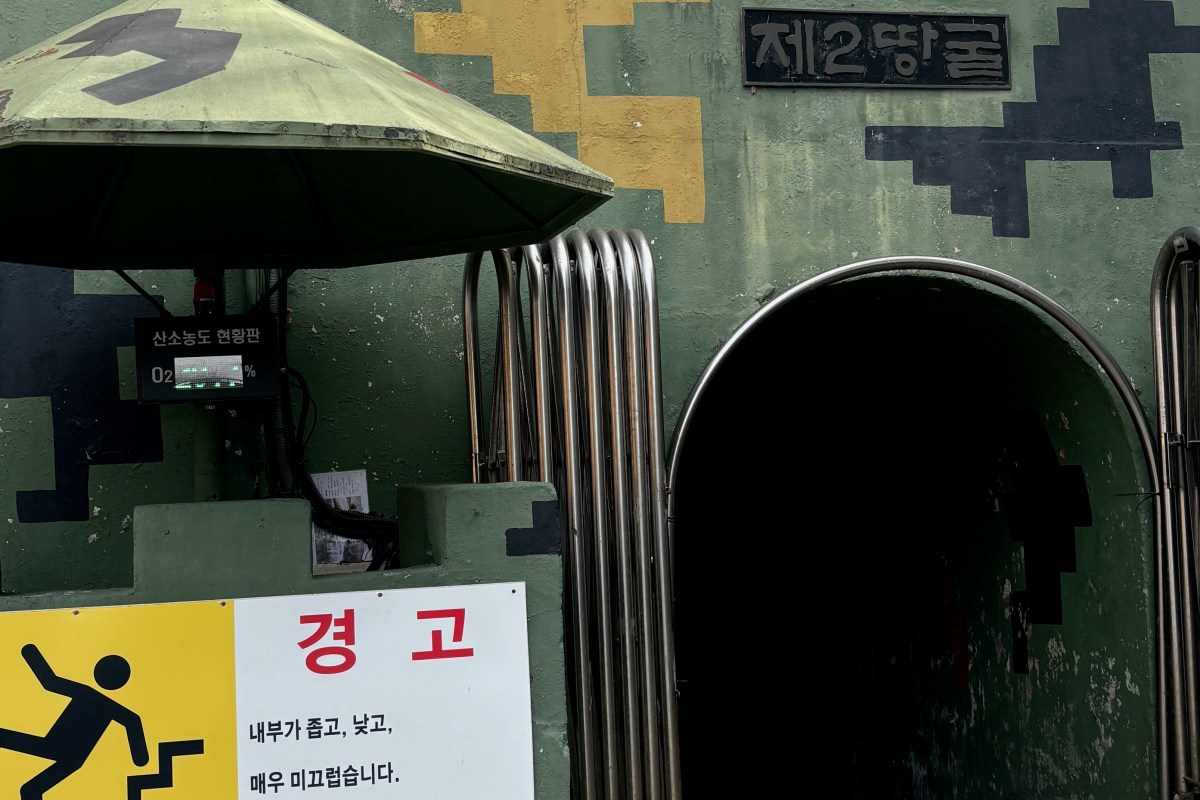
Back on the bus and off to our second stop, the “2nd Infiltration Tunnel” and, unexpectedly, a Crane centre (the bird variety) which we had a look around whilst Lucy sorted out some admin. The tunnel is one of four constructed by North Korea, intended for a surprise attack. The information in the visitors centre explained that some South Korean soldiers heard banging noises leading to the discovery of the tunnel in 1975, which had already been abandoned. It’s about 2m by 2m and could apparently accommodate up to 30,000 armed soldiers per hour, along with vehicles, artillery and tanks. I’m not so sure about the tanks – I soon understood why helmets were mandatory, as the ceiling is really low in places and the only sound was that of people bumping their heads every minute or so.

Crane Centre

Strictly no photos were allowed inside the tunnel, but it’s fairly well lit (the artificial lights allowed plants to grow despite the dampness). Our guide said there was some type of mineral on the ceiling – I forgot exactly what, but it’s meant to be lucky to touch it – but all I touched was slime. There are some benches for weary tourists at the deepest point, after which the tunnel is barricaded off and you need to turn back. It’s a bit surreal to consider that if you did continue on, you’d surface somewhere in North Korea, which presumably wouldn’t be a tourist attraction. Or would it?

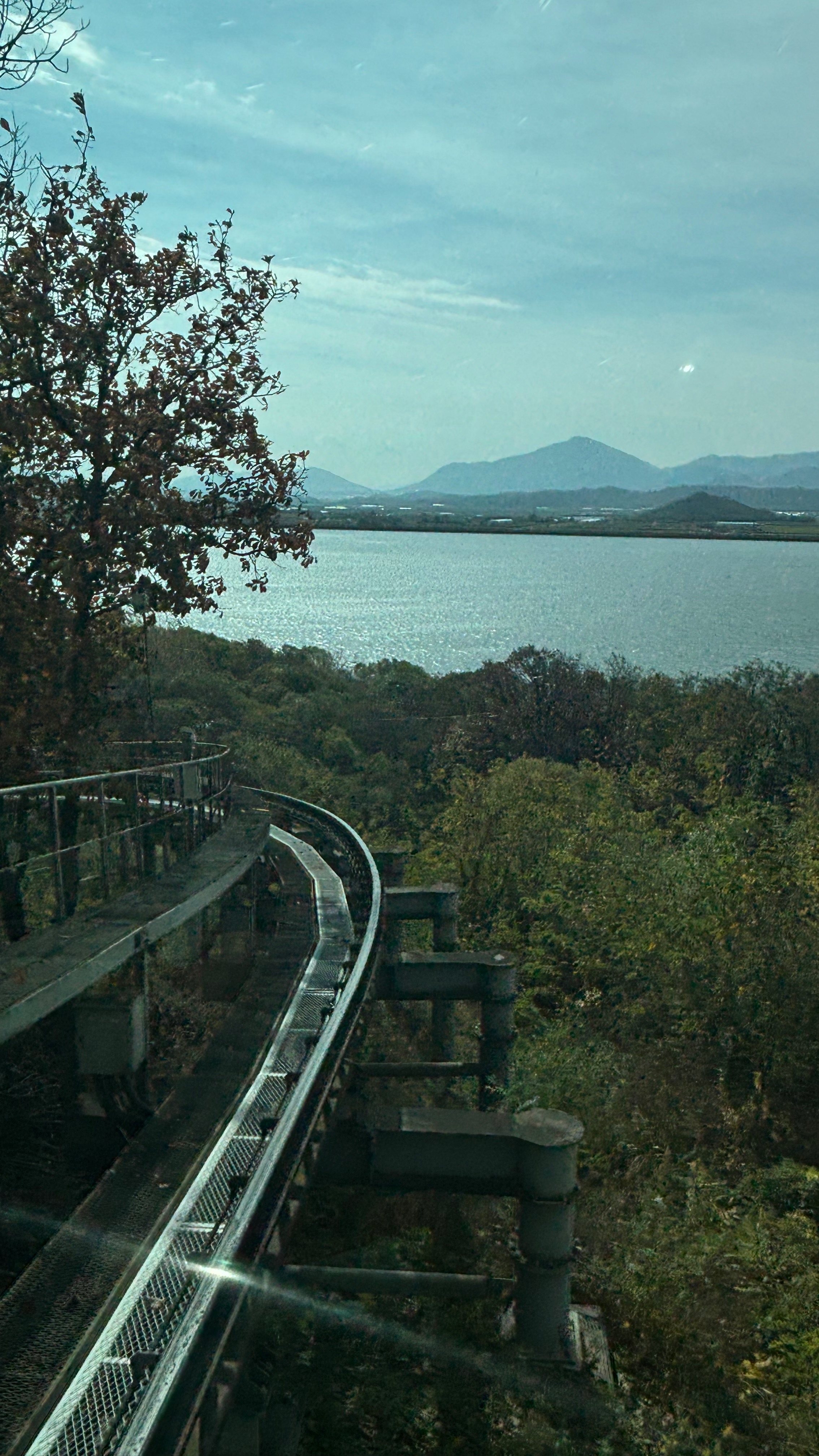
This day trip was 10 hours long (another common theme with the bus trips) and included a basic buffet lunch. Eventually we made it to the highlight of the trip and main reason for coming, the Peace Observatory. Lucy and Joey warned us not to take any photos of the South Korean guards, who would apparently all look very young (this was true). After a short train/cable car ride up, we all filed into a cinema style room (no photos inside either) and watched a short video which could itself be described as propaganda with it’s horror music style soundtrack. Positioned around the floor to ceiling glass windows were telescopes, some with digital screens trained on the DMZ and beyond into North Korea. We were told that whilst no photos were allowed outside either, nobody would check our phones which could be taken as encouragement. The adolescent looking soldiers helped focus the lenses on what was described as Propaganda Village – a village on the North Korea side which they say is fake. I did spot a moving truck, and Joey got very excited at a blob she said was “a North Korean”. She said this like it was some type of rare exotic species. I wondered were there lenses trained on us from the other side? Outside was even more surreal as over the wind I could hear a message being broadcast very loudly from the speakers, which the soldiers said was a message of peace. I have no idea what it was, as it was in Korean. But I found it fascinating wandering around the terrace, using the telescopes to look past nomads land. I would be slightly wary of posting any footage on social media, even if I had taken any.

Tanks outside the visitor’s centre (spot the name tag)

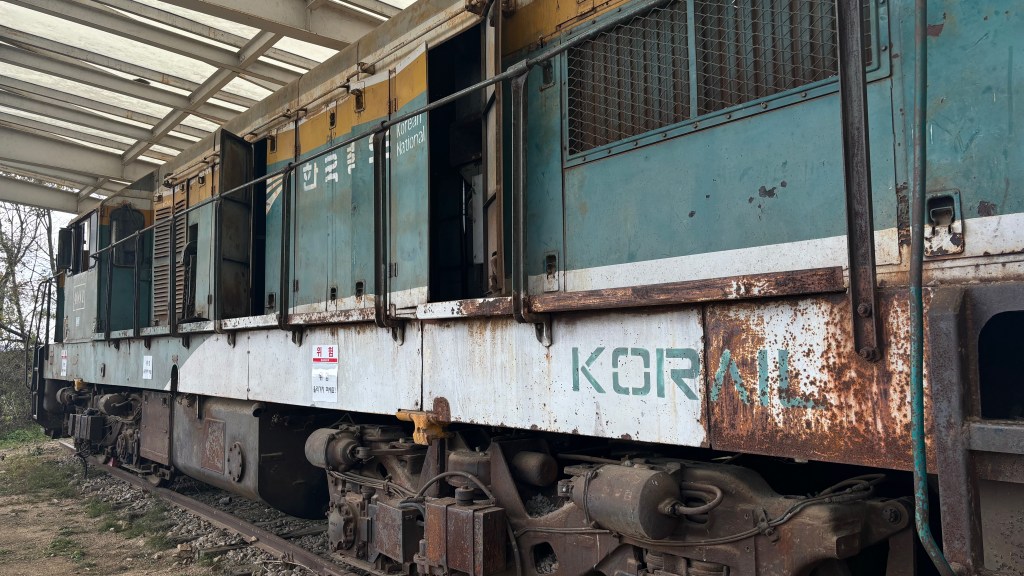
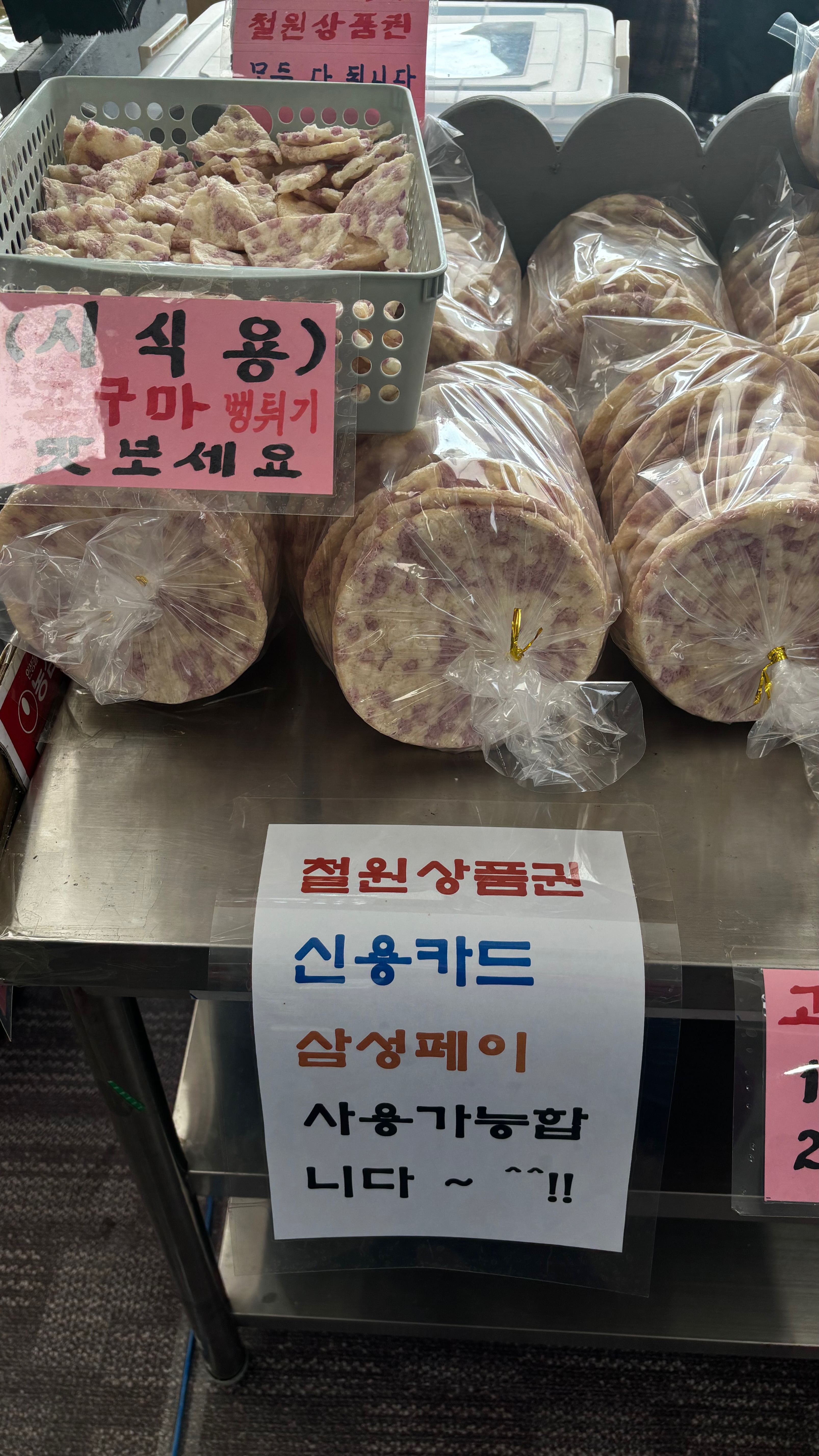
After some photos with the tanks and a visit to the shop selling 10kg bags of rice – also free green tea and samples of purple rice cake (this is prime rice growing territory) – off we went to yet another stop, the abandoned Woljeongri station. This is the now dilapidated last train stop before the border. It was a great photo opportunity and fairly eery with the remains of a carriage just rusting away on the tracks, which now lead to nowhere and the distant sound of K-Pop being broadcast from the South Korean speakers.

Train to nowhere
Korean K-Pop music in the background

Not far from here, and the final stop on the tour, is the last building constructed in North Korean architectural style, the Korean Workers Party Headquarters. Constructed in 1946, the three story building is falling down but there was still a a team of gardeners tending to the bushes. I didn’t get any more information on this, but imagine it’s an influencer’s dream photo spot in the Spring.

Cheorwon Korean Workers’ Party Headquarters

Finally it was back on the bus and a couple of hours drive back to Seoul. It was certainly an eye opening day, and once more it was too late to find a proper meal. These long days are tiring – I managed a walk around the night market in Myendong and a cheap veggie spring roll before retreating to my pod for some sleep before my morning flight to the South Korea’s answer to Hawaii, Jeju Island…

Dinner