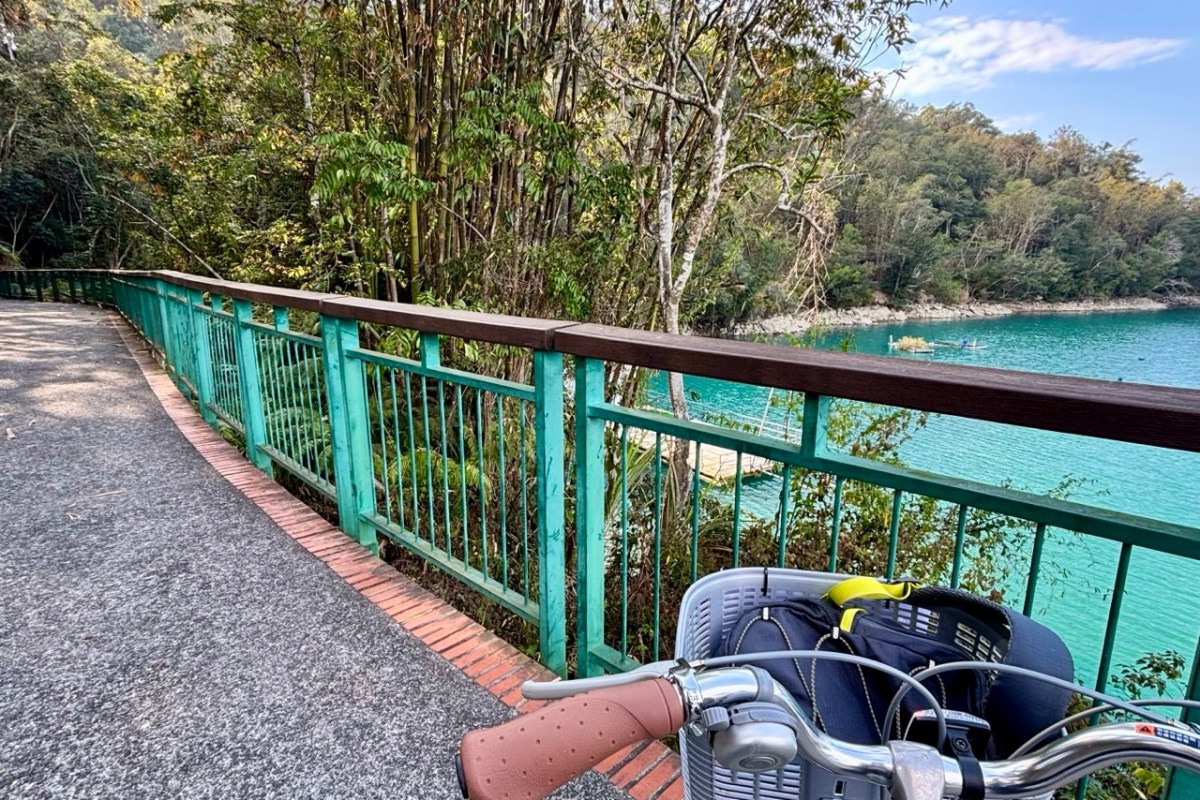
Glimpse into the North (South Korea Part Two)

Let’s start by that saying as far as strange tours go, this was up there with the best of them. The Demilitarised Zone is a strip of land cutting the Korean peninsula in half, forming a ‘buffer zone’ approximately 2km wide on either side of the Military Demarcation Line, the divider between the Democratic People’s Republic of Korea (North Korea) and the Republic of Korea (South Korea). The zone itself may be ‘demilitarised’ but the areas on either side are very heavily militarised indeed. Within the DMZ is the Joint Security Area (JSA) where negotiations take place and until recently it was possible to visit the spot where North and South Korean soldiers face off. This is important to know before booking, because the JSA closed to tourists in July 2023 after an American soldier attempted to cross the border from South to North without authorisation. Tours to the DMZ continued, with a couple of options that generally include a walk through one of the infiltration tunnels, a visit to an ‘observatory’ / visitor’s centre with telescopic viewing platforms set up to provide the coveted glimpse into North Korea and a stop at one of the suspension bridges, which are a fun way to stagger the group arrivals to the DMZ. The other thing to know (which I didn’t) is that various bridges and tunnels are closed on different days. As it turned out, the tour I initially booked was closed on Mondays so I ended up on this one, which I actually would recommend as the guides were great and it wasn’t too crowded – ‘2nd Tunnel and Y-Shaped Suspension Bridge‘ via the GetYourGuide platform. I set off at 6.30am for the meeting point at Myeondong subway station, a 20 min walk from my hostel.

Map of the DMZ and 2nd infiltration tunnel

The roads were dark and quiet other than some office workers starting their day but Seoul is a very safe city. Finding anywhere open for breakfast at that time was impossible so I settled for a coffee and and a bread roll filled with sweet red beans from the 7/11 convenience store, a good way to use up some of my T-Card balance. I arrived at the subway station and spotted a group of blank looking tourists sitting on some benches. A guide with a clipboard introduced herself as Lucy, gave me a tag to hang around my neck with her name on it and sent me over to join the others. There’s always an annoying person or two in group trips (as the saying goes if there isn’t one, then it’s you) and sure enough two middle aged Australian men joined the group after unnecessarily loudly having a go at Lucy for changing the meeting point (she didn’t) and asking us all if we had received the location details on time (we had).

Video from the bus, entering the DMZ

Bus tours are a very popular way to see South Korea and in fact the only way to see the DMZ, which needs to be booked in advance with your passport details. Lucy and her fellow tour guide Joey didn’t believe in any rest on the bus – this theme continued on all of the bus tours I took in South Korea. Sitting up front meant I had no choice but to listen to the non-stop commentary aside from a 20 min break where Joey announced ‘ok you can take a rest now, sleep well’. It was actually very informative, and if I’m not forced to listen then I will switch off. Meanwhile our suit and sunglasses wearing driver Mr Sony provided a cheerful hello and thank you each time we embarked and disembarked the purple bus. Interestingly, Joey said that until she became a tour guide a few years ago, when she was living in London and working in Pret, she hadn’t given much thought to the question of unification between the North and South. Her father recalls North Korean citizens being referred to as animals during his own school days and her mother still considers them ‘the enemy’. It’s only now that she’s working in tourism that her view has shifted and she has come to view them as normal people mostly working as farmers and living below the poverty line, and she now sees unification as a good thing.

Y-Shaped Suspension bridge, taken from the observation deck

Our first stop was the ‘Y-Shaped Pocheon Suspension Bridge’, which at 410m is the longest suspension bridge in Korea, as the name suggests forming a Y shape over the Hantangang River. The advantage of starting the tour so early is that you’re the first group to arrive – the observatory and cafe were just opening up and the bridge was quite literally empty. The real reason there are multiple suspension bridges in this area is because they were once used as a defence line, but nowadays they are fun to walk over and provide some lovely views of the autumn colours.

CCTV on the bridge

Perhaps the most unsettling thing about this tour compared to other war memorials and places of historical interest, is that usually the conflicts, or at least the wars, are in the past. Whereas this conflict is most definitely in the present. It was also disconcerting to hear the ‘rivalry’ referred to in a lighthearted manner, i.e the raising of flagpoles higher than the other one, and the blasting of K-Pop and Gangnam Style music – both sides broadcast various music / messages / material into the area over loud speakers. It was only recently in the news that thousands of balloons filled with rubbish (according to news reports, possibly also containing human waste) were sent over from the North and dropped on the South.

View from the bridge

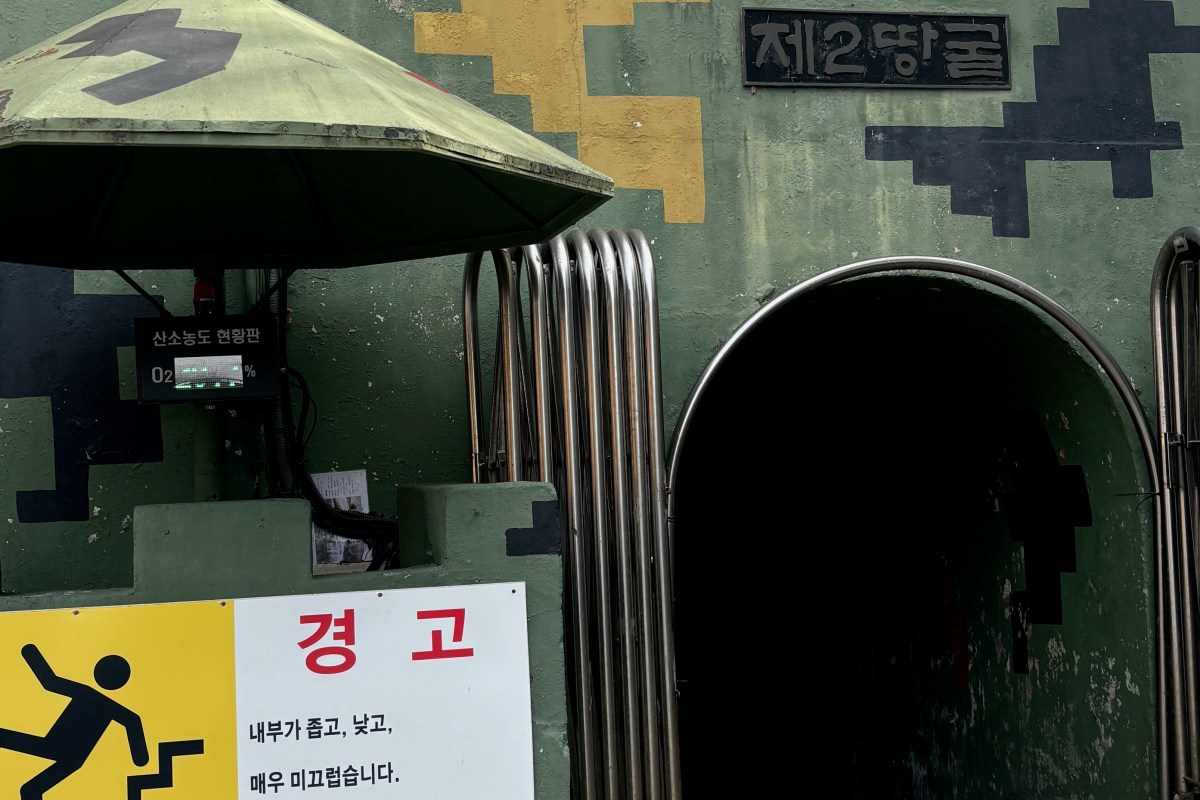
Back on the bus and off to our second stop, the “2nd Infiltration Tunnel” and, unexpectedly, a Crane centre (the bird variety) which we had a look around whilst Lucy sorted out some admin. The tunnel is one of four constructed by North Korea, intended for a surprise attack. The information in the visitors centre explained that some South Korean soldiers heard banging noises leading to the discovery of the tunnel in 1975, which had already been abandoned. It’s about 2m by 2m and could apparently accommodate up to 30,000 armed soldiers per hour, along with vehicles, artillery and tanks. I’m not so sure about the tanks – I soon understood why helmets were mandatory, as the ceiling is really low in places and the only sound was that of people bumping their heads every minute or so.

Crane Centre

Strictly no photos were allowed inside the tunnel, but it’s fairly well lit (the artificial lights allowed plants to grow despite the dampness). Our guide said there was some type of mineral on the ceiling – I forgot exactly what, but it’s meant to be lucky to touch it – but all I touched was slime. There are some benches for weary tourists at the deepest point, after which the tunnel is barricaded off and you need to turn back. It’s a bit surreal to consider that if you did continue on, you’d surface somewhere in North Korea, which presumably wouldn’t be a tourist attraction. Or would it?

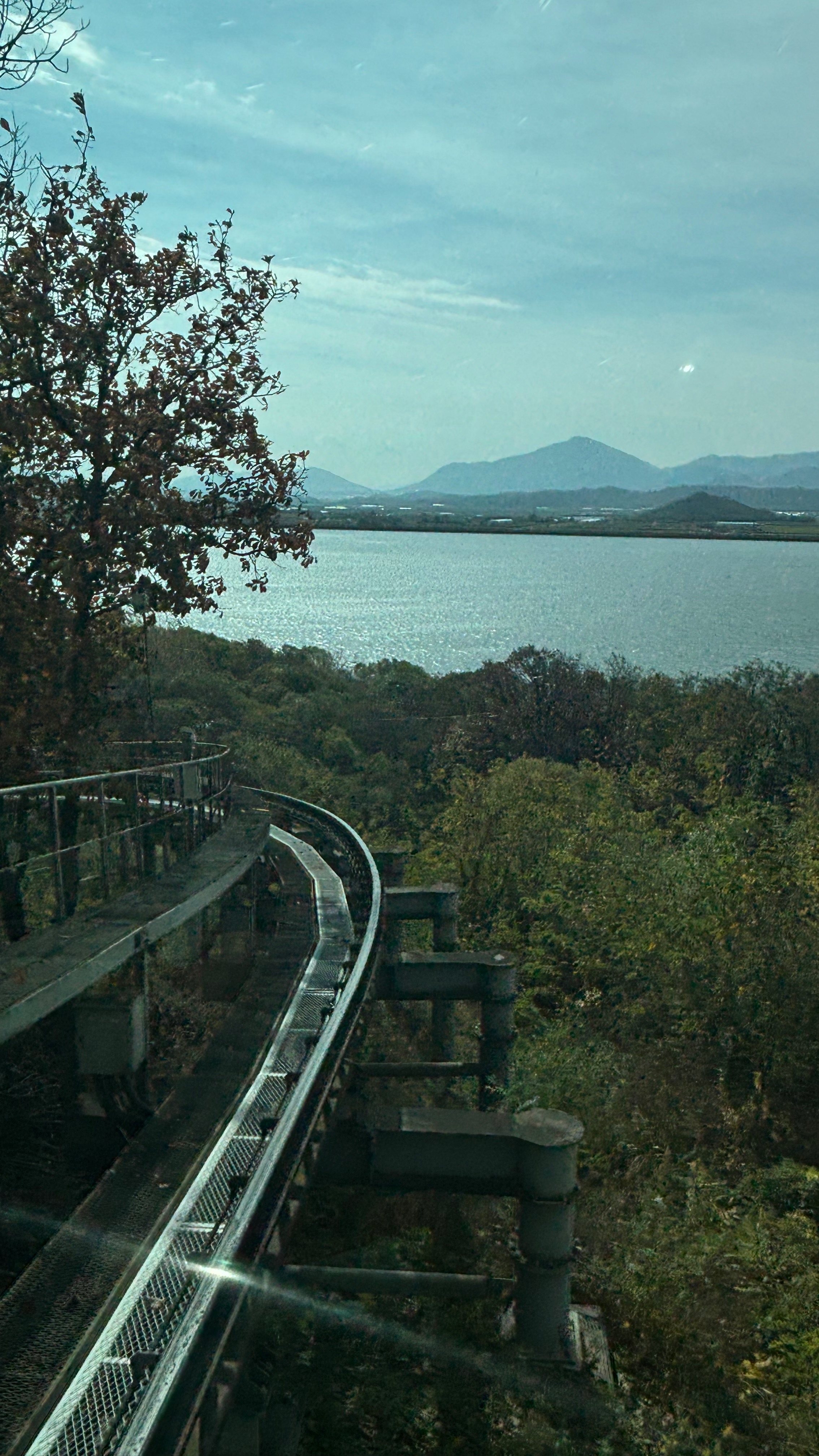
This day trip was 10 hours long (another common theme with the bus trips) and included a basic buffet lunch. Eventually we made it to the highlight of the trip and main reason for coming, the Peace Observatory. Lucy and Joey warned us not to take any photos of the South Korean guards, who would apparently all look very young (this was true). After a short train/cable car ride up, we all filed into a cinema style room (no photos inside either) and watched a short video which could itself be described as propaganda with it’s horror music style soundtrack. Positioned around the floor to ceiling glass windows were telescopes, some with digital screens trained on the DMZ and beyond into North Korea. We were told that whilst no photos were allowed outside either, nobody would check our phones which could be taken as encouragement. The adolescent looking soldiers helped focus the lenses on what was described as Propaganda Village – a village on the North Korea side which they say is fake. I did spot a moving truck, and Joey got very excited at a blob she said was “a North Korean”. She said this like it was some type of rare exotic species. I wondered were there lenses trained on us from the other side? Outside was even more surreal as over the wind I could hear a message being broadcast very loudly from the speakers, which the soldiers said was a message of peace. I have no idea what it was, as it was in Korean. But I found it fascinating wandering around the terrace, using the telescopes to look past nomads land. I would be slightly wary of posting any footage on social media, even if I had taken any.

Tanks outside the visitor’s centre (spot the name tag)

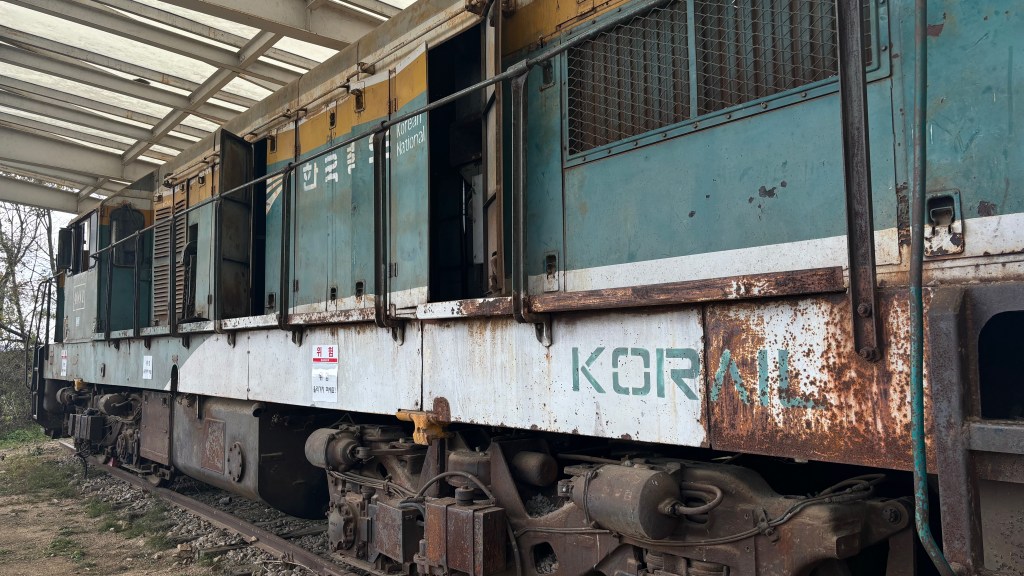
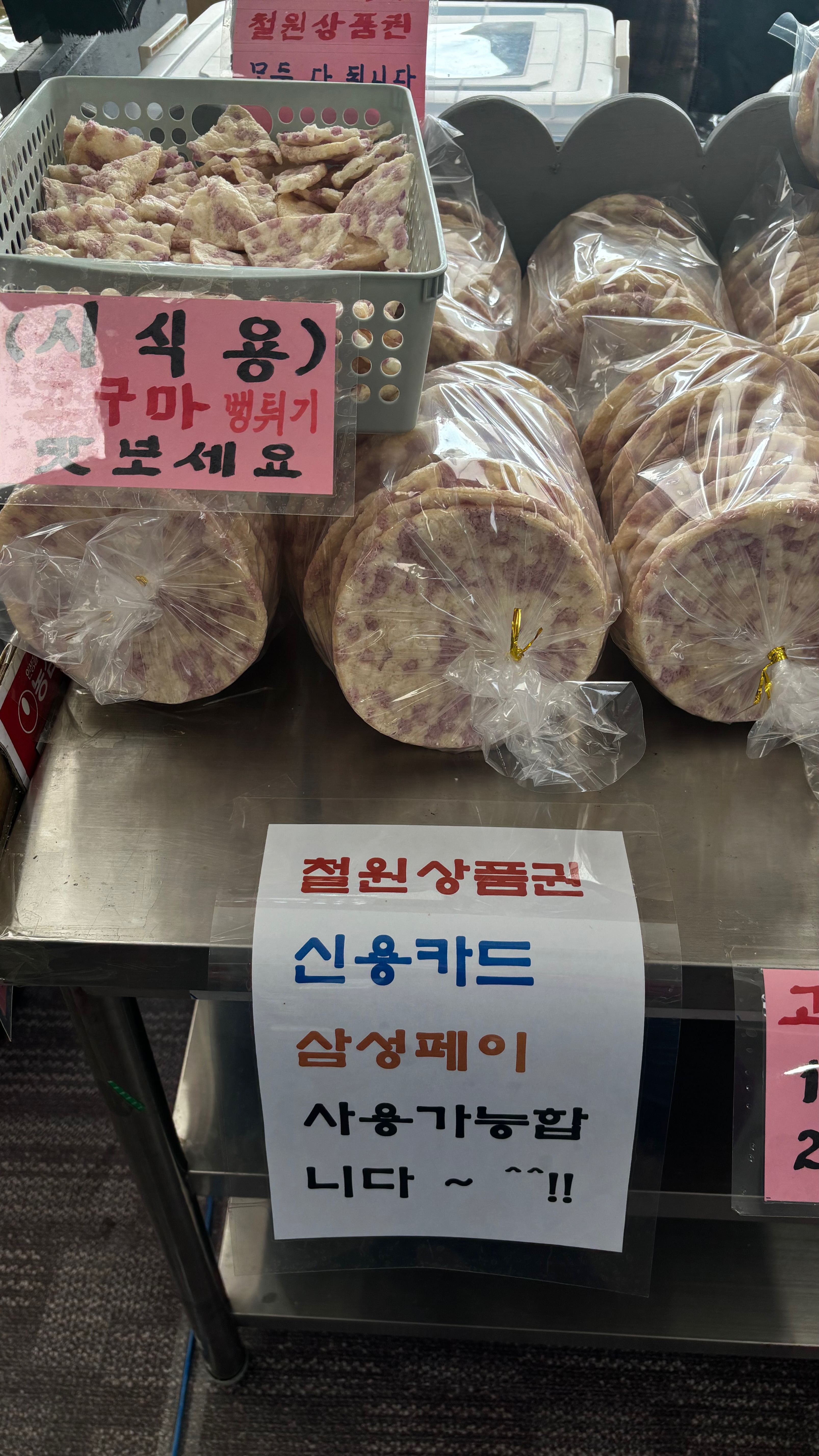
After some photos with the tanks and a visit to the shop selling 10kg bags of rice – also free green tea and samples of purple rice cake (this is prime rice growing territory) – off we went to yet another stop, the abandoned Woljeongri station. This is the now dilapidated last train stop before the border. It was a great photo opportunity and fairly eery with the remains of a carriage just rusting away on the tracks, which now lead to nowhere and the distant sound of K-Pop being broadcast from the South Korean speakers.

Train to nowhere
Korean K-Pop music in the background

Not far from here, and the final stop on the tour, is the last building constructed in North Korean architectural style, the Korean Workers Party Headquarters. Constructed in 1946, the three story building is falling down but there was still a a team of gardeners tending to the bushes. I didn’t get any more information on this, but imagine it’s an influencer’s dream photo spot in the Spring.

Cheorwon Korean Workers’ Party Headquarters

Finally it was back on the bus and a couple of hours drive back to Seoul. It was certainly an eye opening day, and once more it was too late to find a proper meal. These long days are tiring – I managed a walk around the night market in Myendong and a cheap veggie spring roll before retreating to my pod for some sleep before my morning flight to the South Korea’s answer to Hawaii, Jeju Island…

Dinner

Two Wasters in a Country Club – Paraguay Part 1

Paraguay is one country I missed out last time and I didn’t know anyone who had bothered to visit. When Vix and I told people in our hostel in Montevideo that we were planning to go, they said “Paraguay?! You must be very religious or drug dealers”. Even more reason to visit this landlocked country that borders Brazil, Argentina and Bolivia and is part of the Triple Frontier where the Iguazú and Paraná rivers meet.

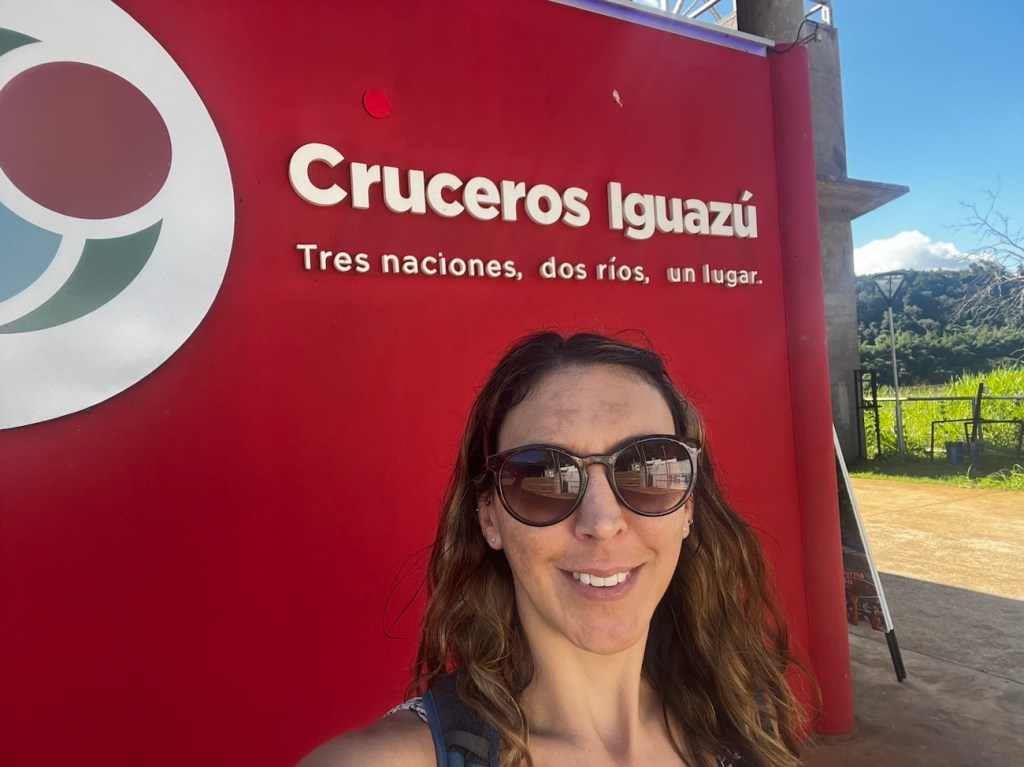
Three nations, two rivers, one place

There were multiple bus operators at the bus terminal in Puerto Iguazú running services to from Argentina to Ciudad del Este in Paraguay. It looked pretty straightforward as long as you don’t get left behind when the bus stops first at the Brazilian border. The easiest option is a taxi all the way – taxi drivers were offering this service as we walked down the street. The most fun way, however, is as a foot passenger on the car ferry (called La Balsa) across the Paraná river.

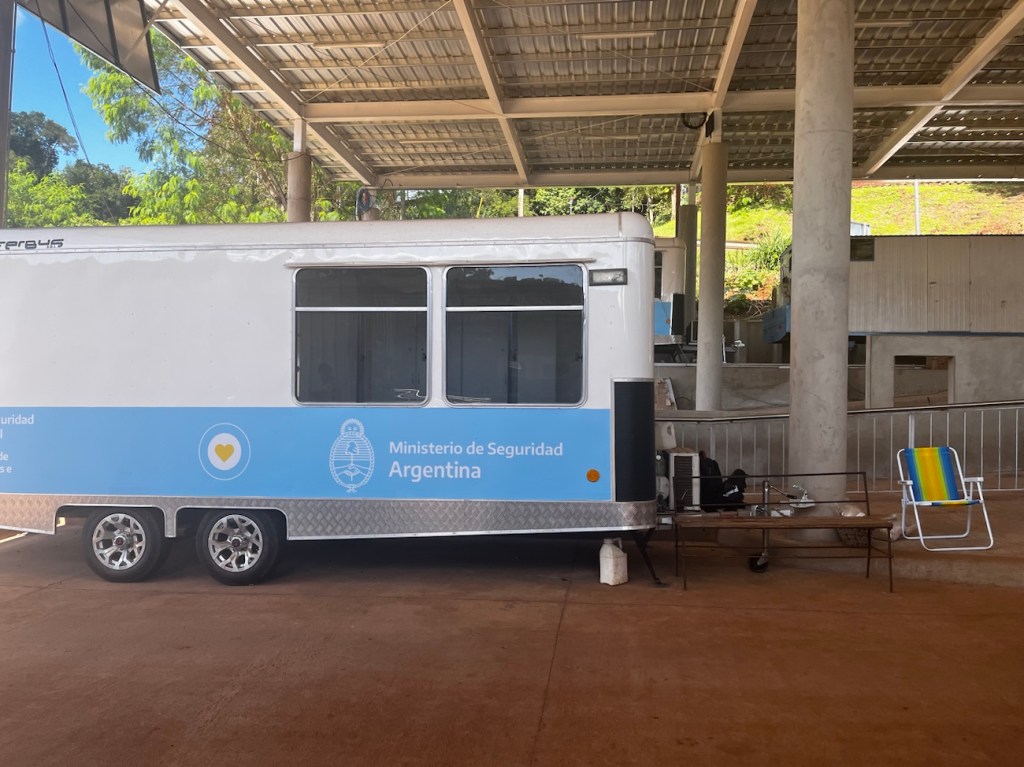
Argentina border control

It was hard to find any information about La Balsa as nobody seemed to know about it. We were met with blank stares at the Hostel Iguazú, although to be fair that’s how they responded to everything. But we did find a helpful blog that detailed the journey and discovered that the port was only a 20 minute walk across town. When we asked the hostel how much a taxi to the port should cost, just as a rough idea, the woman helpfully said she has no idea as she walks everywhere. Well, so do I when I’m not dragging all my belongings around and limping from an allergic reaction to a wasp sting. We definitely got ripped off with over £5 for a five minute drive but as four different currencies are accepted (Brazilian reals, Argentinian peso, Paraguayan guaraní or good old US dollars) I paid with left over currency that made it feel like a free ride whatever it cost.

Which boat?

La Balsa ferry seems to be relatively new. We had to ask a few times before we found the little portacabin selling the right tickets and we could easily have missed getting stamped out of Argentina (it’s electronic now so no evidence in the passport that we were ever there).

Sign for the car ferry

We went to sit on the floor by the river to enjoy the view whist we waited since the timetable is just a rough guide – it leaves when full – and immediately got asked to move inside by security who weren’t happy until we were ring fenced in the seating area with it’s concrete benches. We’d been sitting there for a while when Vix happened to look up and noticed that everyone else had left.

La Balsa

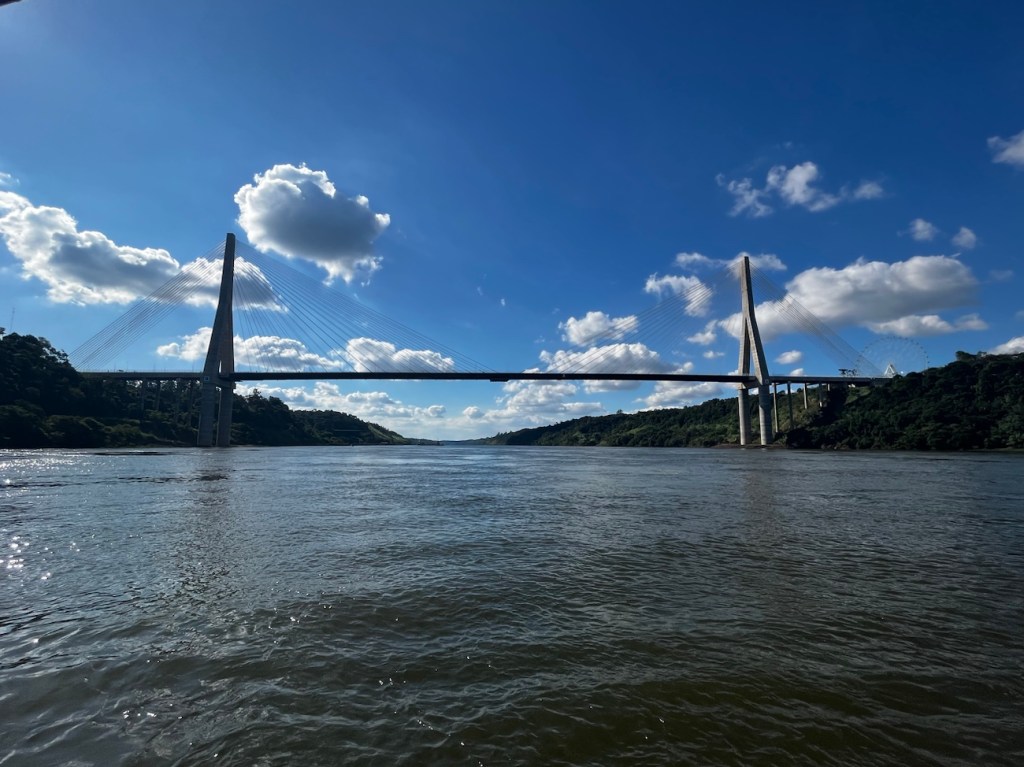
When we eventually got on, the boat only took about 15 minutes and the views are beautiful as it goes past the International Friendship Bridge that connects Brazil with Paraguay.

There were no other tourists on the boat and there is no way to blend in – as I got off some fellow passengers said “Welcome to Paraguay” 🙂 We lugged our bags up the hill to yet another portacabin to possibly the most relaxed passport control I’ve seen. We were very happy with our perfect Paraguay entry stamps – the friendly officer must have either just filled up his ink or else not had any other visitors recently.

Paraguay
No idea what this was but we liked it

I assume if we had walked further up the hill we may have found some buses but we had no idea of the timetable. Taxi is definitely the easiest way out of the “port” – a man offered us a ride for $10 for the 45 minute drive to our hotel north of Ciudad del Este which we were more than happy with.

Customs in Paraguay

The taxi driver spent the journey telling us facts about his country in hard to understand Spanish, which was lovely but we would have preferred him not to have been finding YouTube videos of Monday Falls (Paraguay’s alternative to Iguazú) whilst he was driving. He also stopped the car to show us the red soil, which we felt obliged to get out and take a photo of, unless we misunderstood 🤷🏻‍♀️🤷‍♀️

Bus?
Red dirt

As soon as we got close to Ciudad del Este, it became clear he didn’t know the way at all and showing him the map didn’t help. We burned through Vix’s mobile phone data with Google maps and all those school lessons in asking directions in Spanish came in useful as we directed him around the back roads. When we eventually got there he complained that it should have cost more and he could have gone on the highway – that’s what you get for asking two foreigners “left or right?” at the last minute at EVERY SINGLE JUNCTION.

Country roads

Ciudad del Este is a duty free shopping haven and the city centre didn’t have the best reputation. But the weather was good and four star hotels are cheap so we decided “Las Ventanas” boutique hotel inside the Paraná Country Club, a 15 minute drive out of town, was just the place. The intention was to stay a couple of nights then move on.

Las Ventanas meaning The Windows

But it wouldn’t be a trip for me unless it involved an insect related hospital visit. I woke up in the morning with a foot twice the usual size and was unable to walk thanks to the wasp in Iguazú Falls. I limped down to reception and told the horrified man at the desk that I needed a hospital – he was visibly relieved that it hadn’t happened in his hotel. Thankfully there was a decent private hospital ten minutes away.

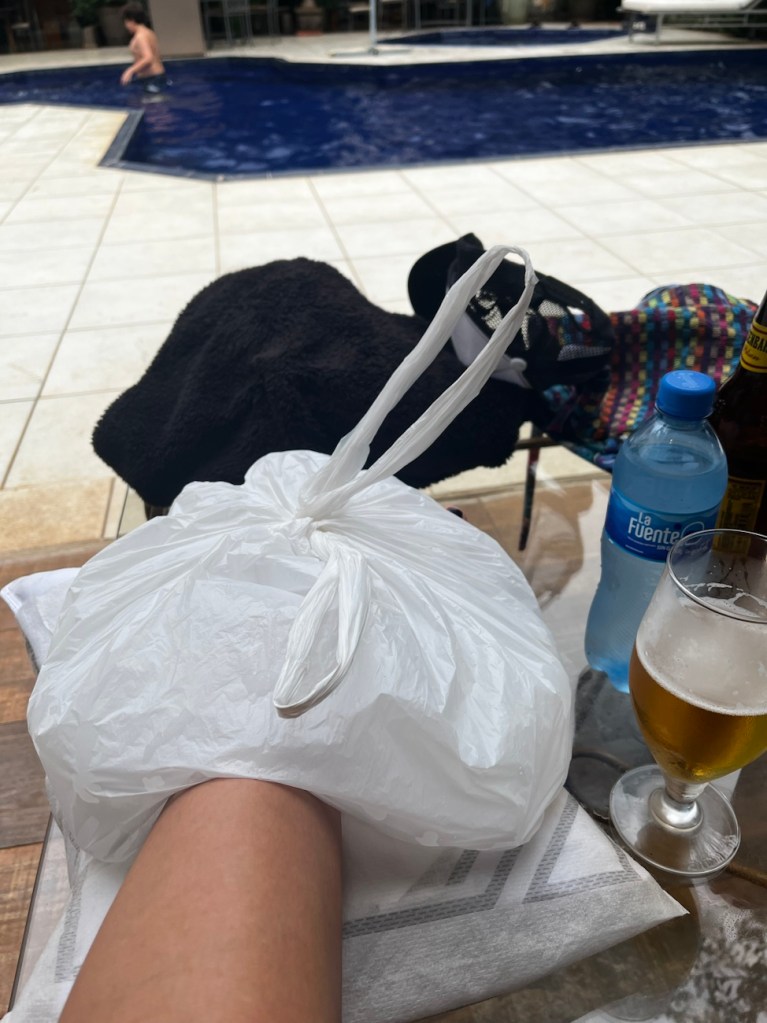
Got my spot for the day -alcohol free beer

They clearly hadn’t had a foreign patient before, as when they took my passport to copy my name they were looking at completely the wrong page and a radiologist took a break from casually sipping his herbal mate tea to have a peak. Luckily there was a nice woman who seemed to know what she was doing and made sure I got seen within ten minutes by a lovely doctor who called my name out as “Marianne British”. I tried to explain that my surname is not “British”, it’s just a British passport then decided it wasn’t the most important thing to communicate. Vix had typed out a description of the situation in Google translate to avoid confusion but this just meant the doctor spoke about me to Vix, as if she was my carer. I can actually see the funny side now. After telling Vix several times that the patient was NOT allowed to drink alcohol on top of the cocktail of antibiotics and anti inflammatories and two other medications even Vix in her actual capacity as real life nurse hadn’t heard of, we left with instructions of bed rest and ice. The whole thing cost about £30.

God knows what the lovely hotel staff thought about two scruffy backpackers who checked into room 211 (“dos once” in Spanish), stuck the “do not disturb” sign on the door and weren’t seen again other than via room service requests for large amounts of ice, toilet paper refills and vegetarian food. On our first night the chef made us a meal of gnocchi and vegetables, which is what they came up with when we asked if there was a single option without meat. Trying to communicate on the phone in Spanish that the chef had made a special meal the night before and could he do it again, was very challenging. Vix managed it but when I tried it just never turned up.

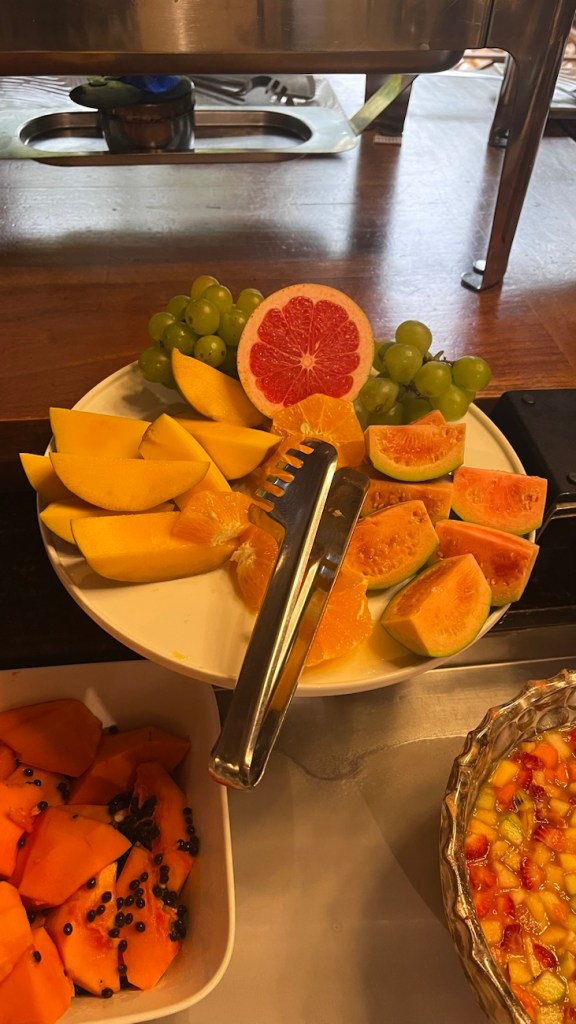
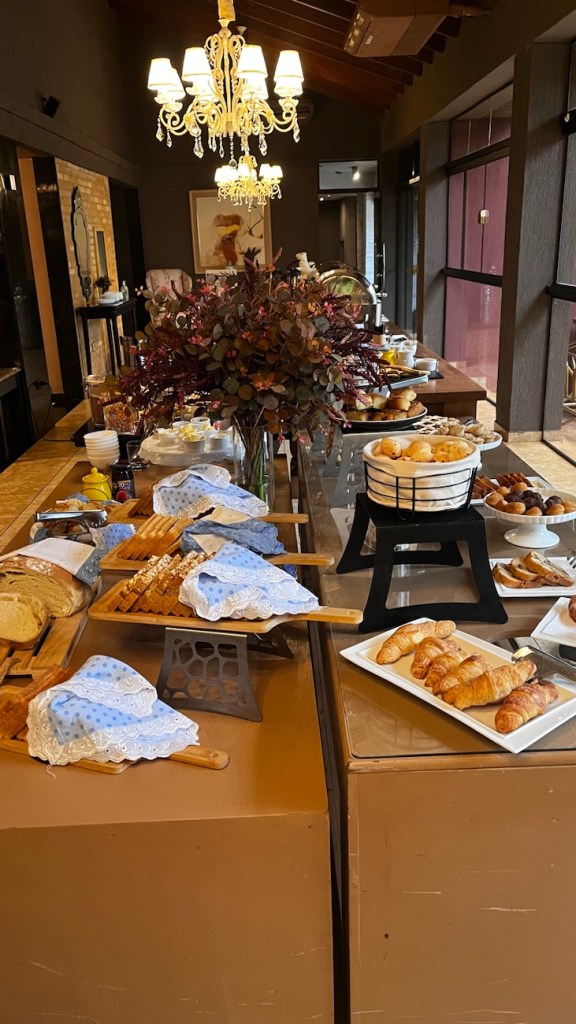
Breakfast

I found it very hard to understand Paraguayan Spanish and they didn’t understand me, until we realised they just don’t pronounce most of the syllables. When Vix politely asked for a taxi from the hospital back to our hotel Las Ventanas, the driver looked confused for a while then repeated back ‘ah, la vetaaaaaa’. Likewise, an ‘americano’ coffee is simply ‘amerraaoo’. The next week was spent watching movies on the huge TV, stealing food from the amazing buffet breakfast for lunch and hobbling around by the pool we mostly had to ourselves. The other guests were nicely dressed Paraguayans visiting for the holiday weekend, and overweight men from what we think was a diabetes drug convention during the week. Meanwhile we wandered around looking like wasters.

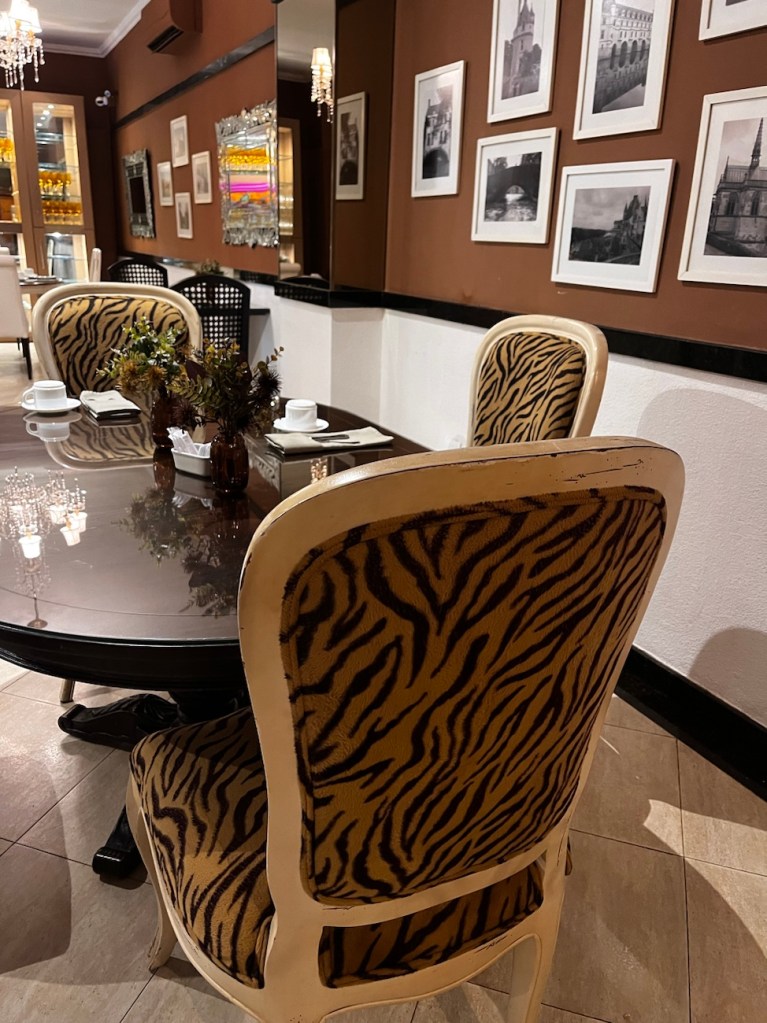
My favourite chairs in the hotel

After a few days I could walk a bit more, very grateful to have avoided a hospital stay – thanks to my lovely kind travelling companion Vix! There there are quite a few things to do around the area, although I didn’t want to risk any more waterfalls or nature type places… We went to visit the Itaipu dam instead. We had just got in the taxi at 12.55 when our helpful hotel man called the driver and told him to hurry up so we would make the 13.00 tour. With classic getaway driving, we did the predicted fifteen minute journey in five.

Electricity

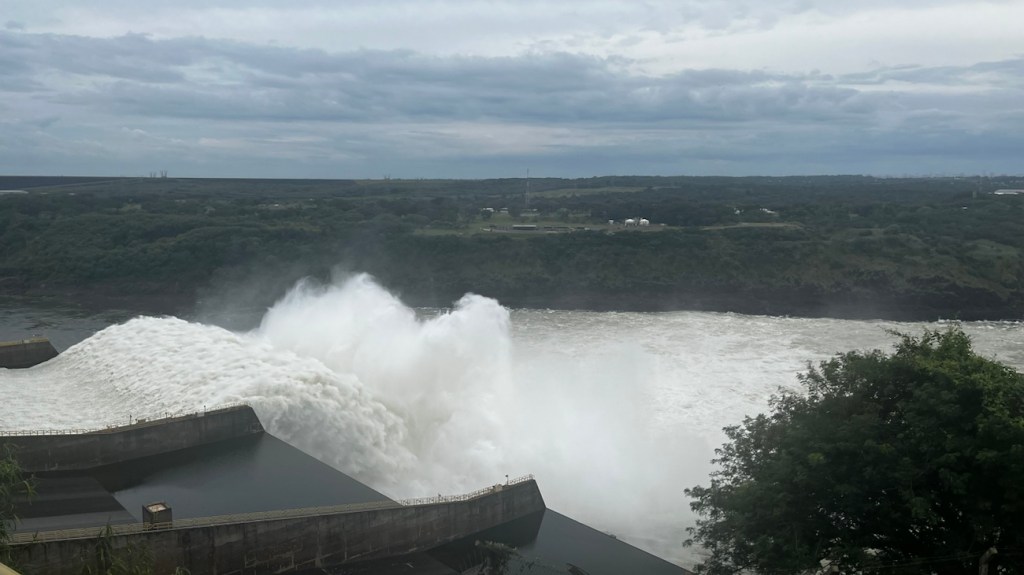
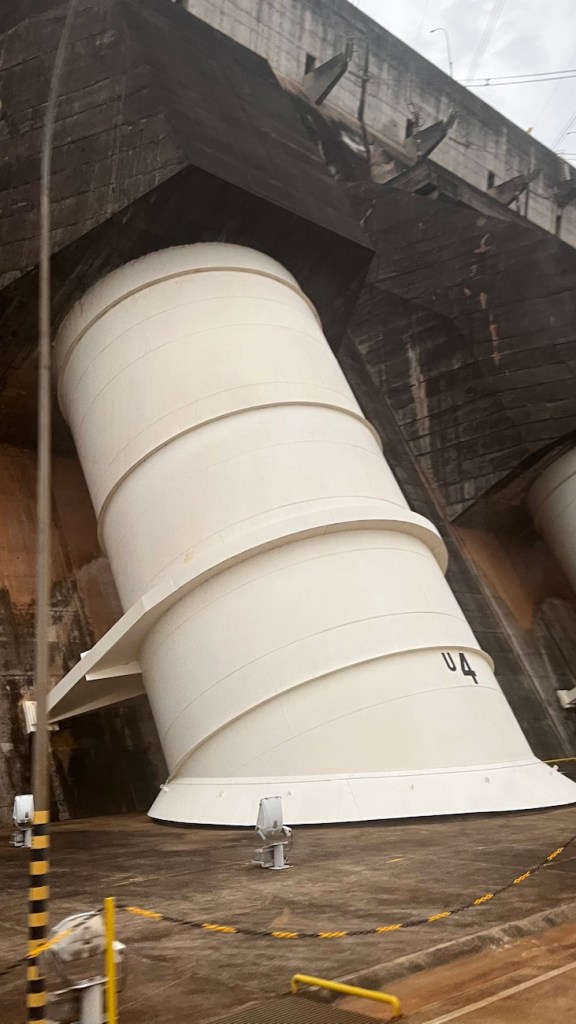
Itaipu is the 3rd largest hydroelectric dam in the world and produces the second most electricity, powering all of Paraguay and a significant amount of Brazil. It’s free to take the bus tour around the site, including the Brazilian side, although the commentary is in Spanish. The power of the water is amazing and it’s well worth a visit. There’s also a lovely gift shop with local handicrafts – our taxi driver went to sit in his car and wait.

Water flowing over the Itaipu Dam
Harnessing the power
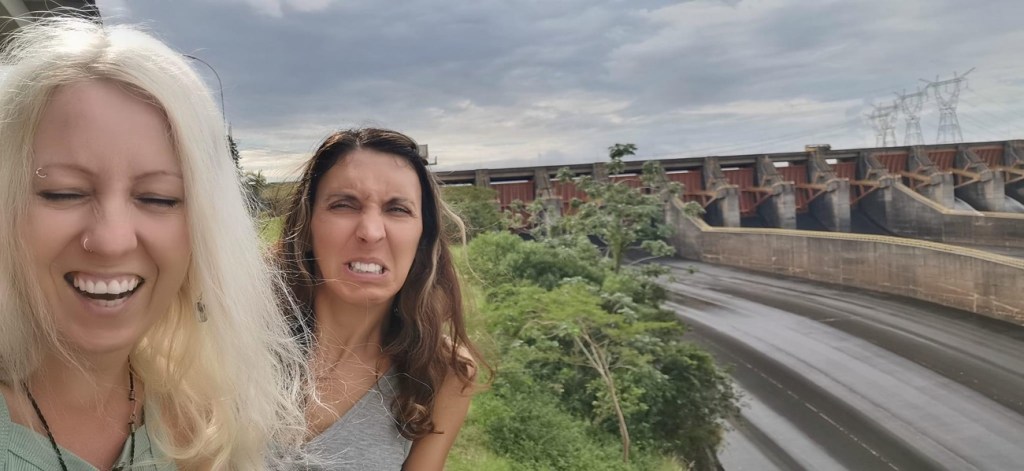
Beavis and Buttthead or two stupid Gringos?

There are also a couple of museums in the area but unfortunately they were both closed, which we found out when we pulled up in yet another taxi only to see the gate fully padlocked, so we went straight back to the hotel via the supermarket. By this point we were ready to leave Ciudad del Este and head to Asuncion, the capital of Paraguay, but our plans were thwarted again as ALL of the highways out of town were closed to protestors. There had just been an election and supporters of the losing right wing party were starting fires on the roads. Our initial thought was to try to get there on the backroads, but when we heard they had overturned an ambulance, and police were disbursing crowds in the capital with rubber bullets we decided to wait it out.

Me and Johnny in the Growler Bar

Each day we would ring down to the front desk, ask if the roads were open yet and confirm we were staying another day. We became so used to just saying ‘dos once’ when we wanted anything that we half-jokingly discussed getting tattoos – until I Googled it and found that 211 is a notorious white supremacist prison gang.

The Growler Bar

Where better to kill time than in the The Growler Bar, aka local rock music venue, which happened to be right next door and finally open after being closed all week. They even went to buy fresh pineapple juice to make me a non alcoholic cocktail and we stayed about 6 hours listening to tunes, eating cassava fries with a ridiculously spicy sauce and getting intel on the capital. The barman, who was from Asuncion, warned us how dangerous the city was and said we couldn’t possibly stay in the old town like we wanted, mimicking stabbing someone to drive home his point. When he wasn’t telling Vix all about his open marriage and how he too was a nurse and a physio and ever other detail of his life, he took some great photos of us next to the rock and roll memorabilia wall. He obviously thought we had more money than we did, as he personally phoned the Crowne Plaza hotel in Asuncion to check the price.

May I help you?

The riots were over and the roads were open again in the morning, so we could finally leave. Buying bus tickets in Paraguay is neither easy nor efficient – you need to enter your passport number about ten times, you only get three minutes to enter all your details and the website rejected all of our credit cards. We finally booked by taking over the front desk computer, otherwise our hotel man had kindly offered to go in person at 6am in the morning to physically get them for us. Anything to make sure we actually left this place – I’m not entirely sure our jokes that ‘we live here now’ were taken as humour.

Traffic lights are fun when you have street entertainers – I missed the one juggling knives.

And that’s proof you can spend a week in Ciudad del Este! The Country Club has some really good restaurants if you can be bothered to leave your hotel – we had a great meal at a Japanese/Pizza fusion place. And plenty of pharmacies to stock up on drugs you can’t get at home. The only thing we didn’t get to do was ride around in one of the golf buggies we saw parked around the place although I’m sure if we’d asked our hotel they would have obliged. Las Ventanas did have the nicest hotel staff I’ve ever come across, who went out of their way to help us with anything we needed. Our favourite front desk man recommended a nicer, cheaper hotel than the Crowne Plaza, in the old town like we wanted and he laughed when we recreated the ‘stabby stabby’ warning from the barman next door – it’s perfectly safe in the daytime apparently. Final stop Asuncion!

The Dollar Blue, The Devil’s Mouth and the Three Frontiers (Buenos Aires and Iguazú Falls)

We departed Uruguay via the ferry to Argentina after about ten days visiting a handful of places along the coast. Uruguay has been absolutely lovely and there is plenty to see and do, albeit more in high season, but for some reason this little country is often not part of the standard South America gringo trail. We just had time to walk around the jetty in Colonia with it’s fancy yachts and get whistled at by some men on a boat that was called “Zero Tolerance” of all things. Shame we weren’t invited on board for a drink!

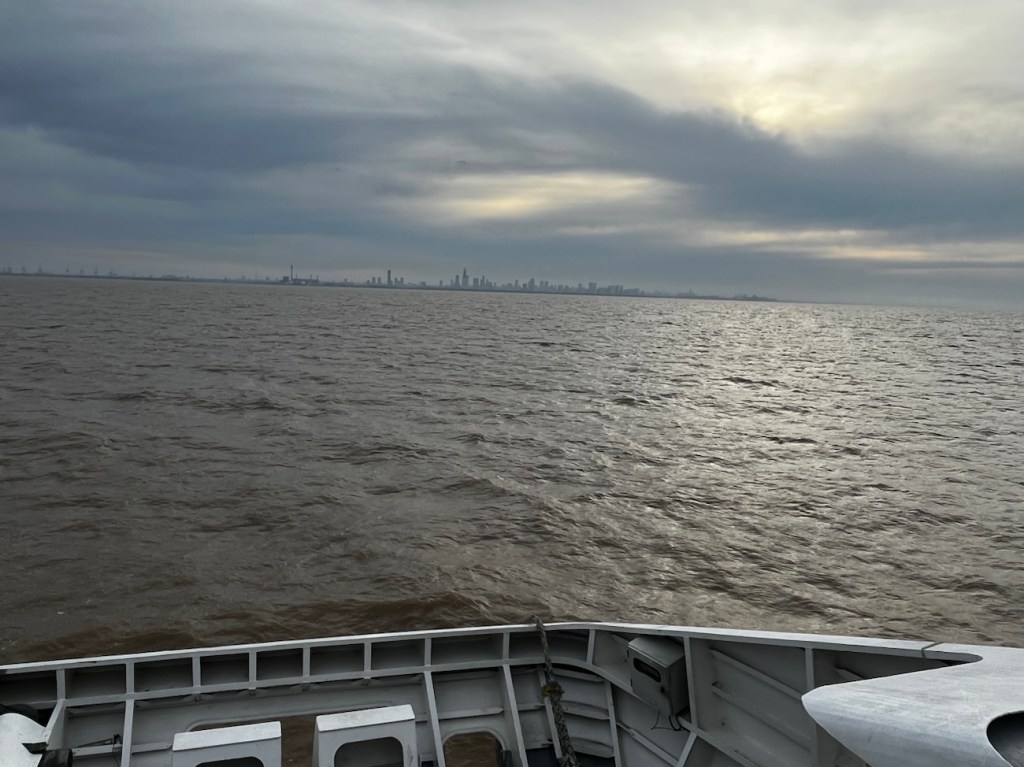
First glimpse of Argentina

It was great catching my first view of Buenos Aries again after all these years, barely visible under a smog cloud. After taking an Uber from the ferry terminal (which turfs you out a back door onto the smoking area on the street outside) we couldn’t find our hostel, “Del 900 Boutique” in the Monserrat district. The man at customs wasn’t even going to let me in the country without the hostel address, which I hadn’t saved and didn’t have Wi-Fi but he did let me run after Vix to get the details – luckily I got her attention just before she left the building.

Vix showing me the hostel address through the glass wall
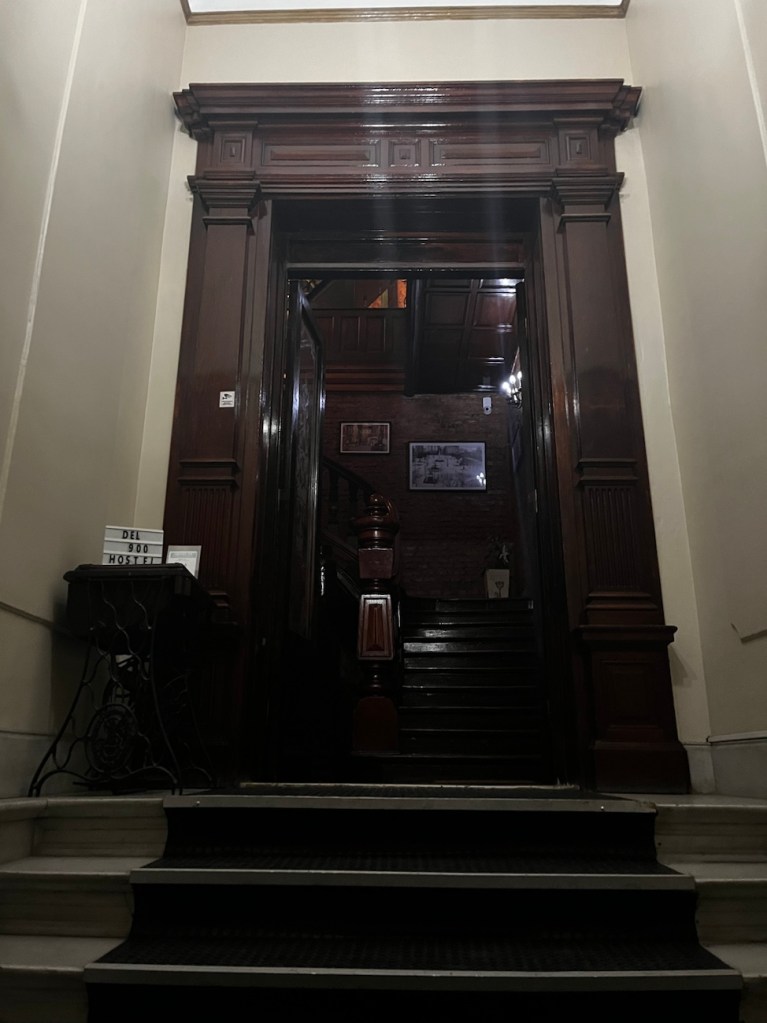
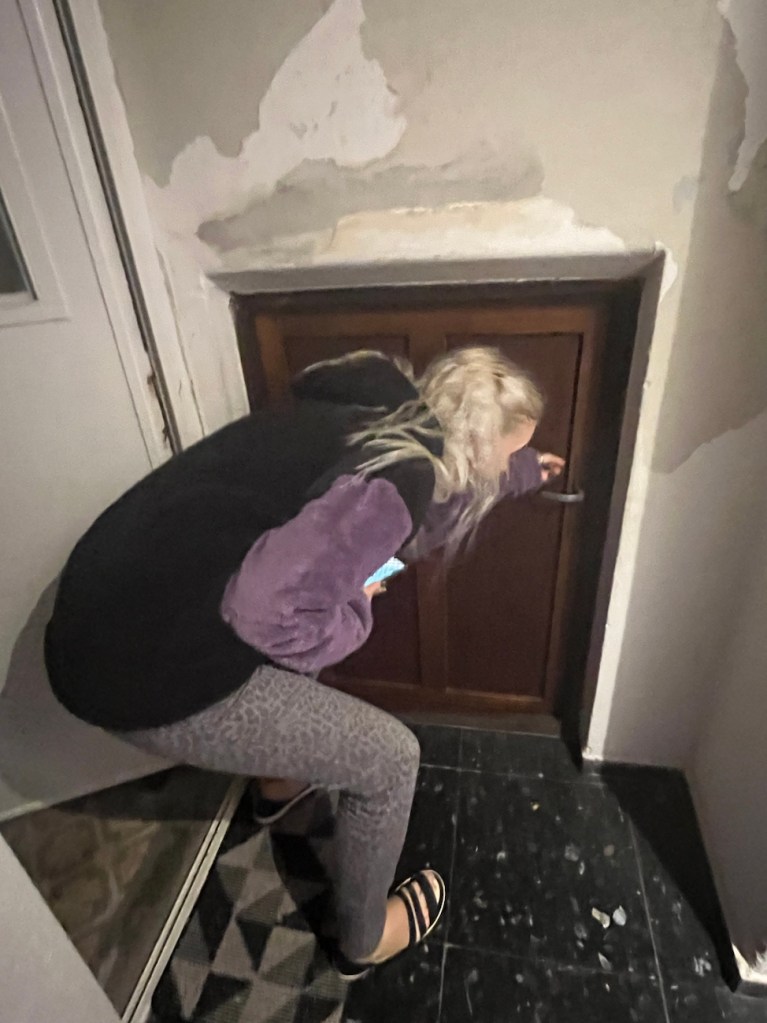
“Little door”

A lady in the restaurant on the corner said it was just next door, “through a tiny little door”. Eventually we realised the entrance was actually through one of the biggest doors I’ve ever seen, housed in the most amazing colonial building. The doorway led us up a staircase and into the grandest hostel lobby that surely exists.… piano, leather sofas, old pool table … all under the highest of ceilings.
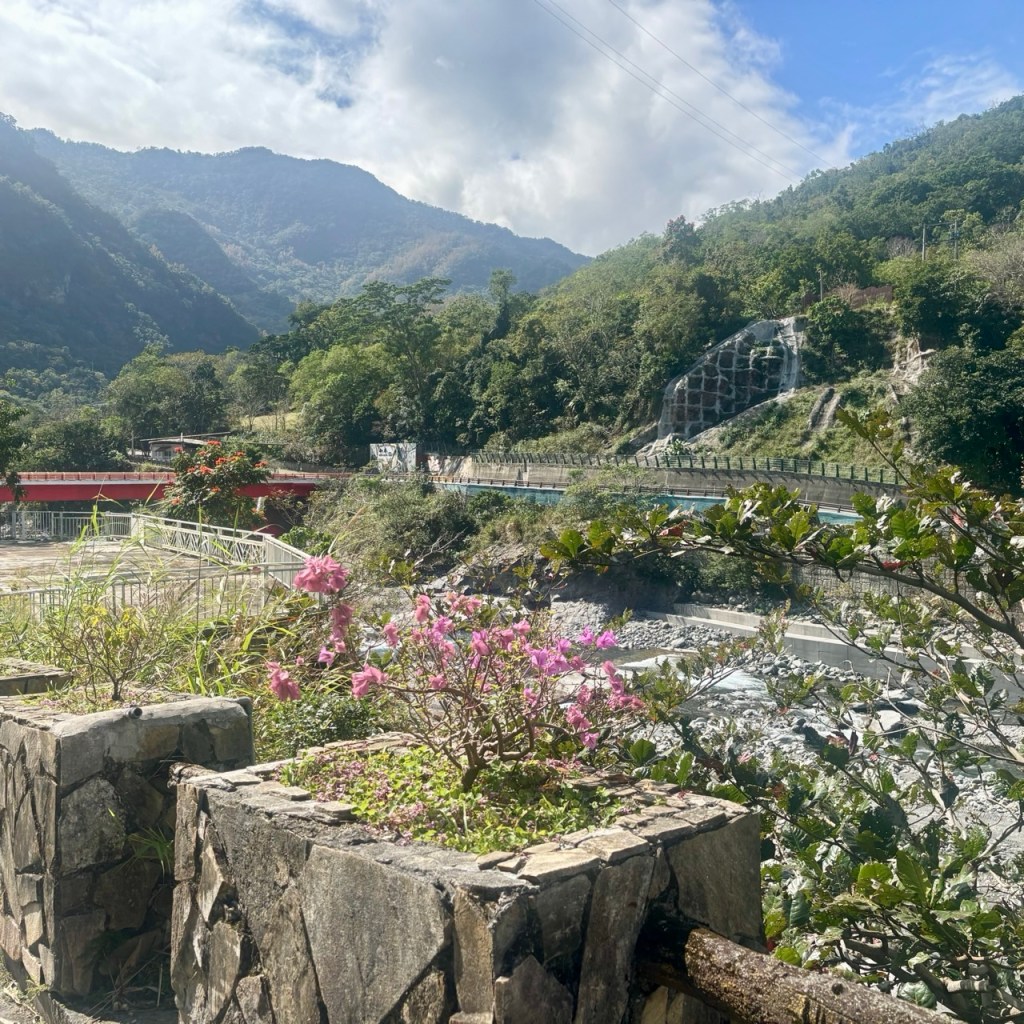
Hostel lobby
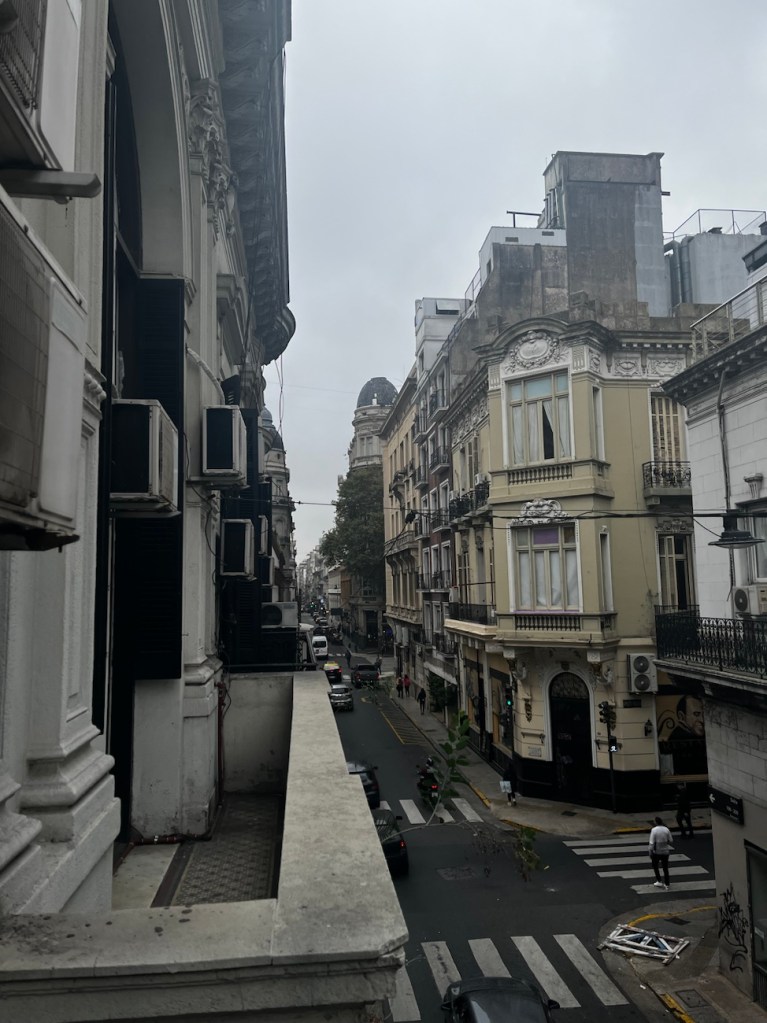
View from our private balcony

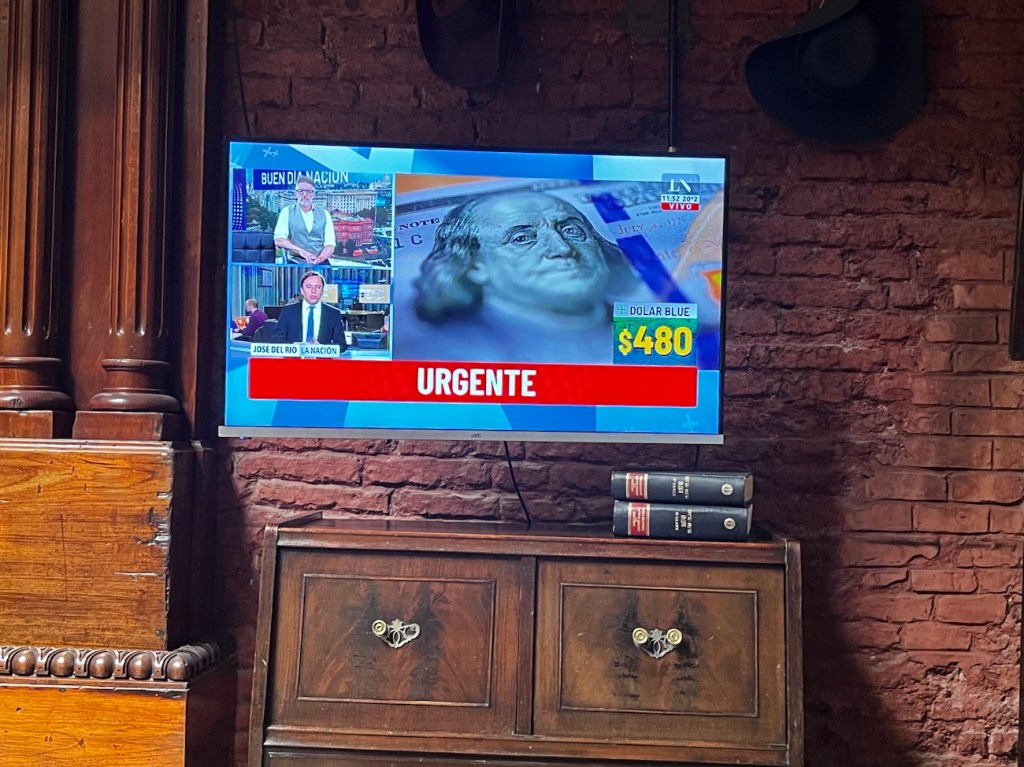
First hurdle – we tried to pay the hostel using the dollars we got from the ATM in Uruguay as hostels here generally only accept cash, but they wouldn’t take them as they were old. I knew that in Argentina the money exchanges only took the brand new notes in $100 bills and had come prepared with some but wanted to keep that as a backup. Second hurdle – trying to understand what the hell is going on with the currency in Argentina. What you need is the “blue dollar”, the rate you get when you physically sell a USD on the street or in a “cueva” (cave) for Argentine pesos and they will all take the older dollars for a slightly lower rate. This essentially doubles your money compared to if you went to an ATM (not that I could now both working cards were cancelled).

News on TV
Rates for the current minute

As you walk down the street in the gold district all you hear is “cambio cambio cambio”. With counterfeit Argentinan pesos in circulation we asked the hostel where a reliable exchange was. Changing the money was an activity in itself – the place we eventually changed our money at was fronting as a tourist office where they ushered us in to a booth with a one way mirror so we couldn’t see the cashier’s face. We did a crash course on YouTube in how to spot a fake and tested a small amount in a souvenir shop before changing up the rest.

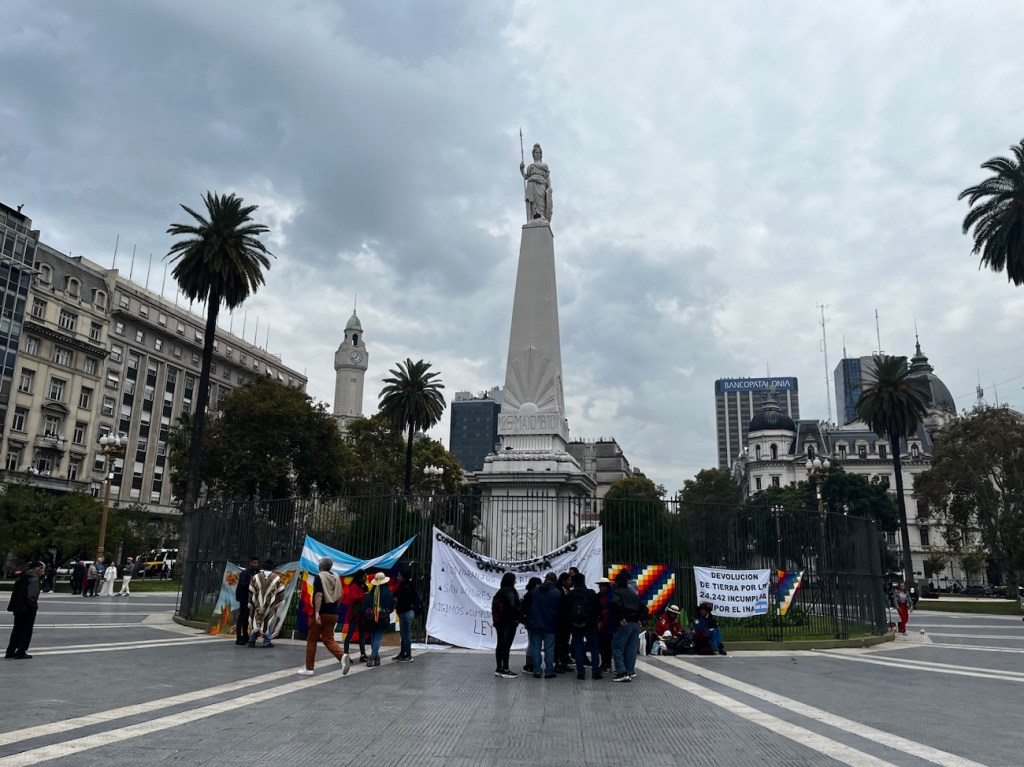
A protest in Plaza de Mayo

The blue dollar value was changing minute by minute and it was being reported on the news that with inflation approaching 95%, people earning under a certain amount were not being paid. It’s much raise to change up your dollars and stick to cash as confusingly when we paid with card in a few shops expecting the official rate, a few days later we’d get random refunds appearing. When we finally got the cash and paid our hostel, the real cost to us had gone down to about a tenner each per night 🤯

Pretending not to be Wasters

With our new stash we enjoyed a fancy evening meal of pesto pasta with a genuinely good bottle of red wine. I always loved the restaurants in Buenos Aires, the huge areas and set tables and waiters in waistcoats, and the bowls of bread brought to the table (worth the table charge).

An “influencer” ruining my shot

We only spent two night in Buenos Aries, mostly as a stop over before flying up to Iguazu and a trip down memory lane for me. With one full day, we walked up to the area of La Recoleta and browsed the shops and cafes.

There’s a rock bar in there somewhere

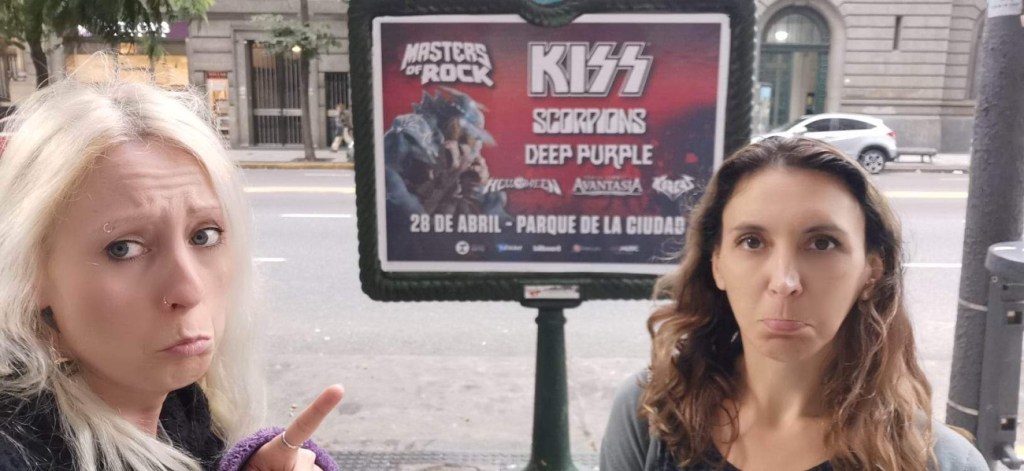
We had another attempt at finding a rock bar as we went to the “Rock and Beer” pub which had an active social media page and looked like it might be a lively spot. After walking up and down past the location several times we eventually saw it all padlocked up. As Vix said, it couldn’t have been more shut if it were on fire. We also passed several signs taunting us that KISS and Deep Purple were playing next week.

I love how busy Buenos Airies is and that you can walk around at night without ending up in a favela. The worst that happened to us was when we walked past a couple performing tango outside a restaurant. We only stopped to watch for a couple of minutes but they saw us taking a sneaky photo and as soon as the music finished they appeared in front of us like magic asking for payment. Vix pretended we couldn’t speak any English and we escaped before we had to part with any of our precious remaining currency, avoiding another slightly stressful trip to a money cave.

The Obelix by night

One of my favourite things about Buenos Airies is the breakfast that is served at all of the cafes and bistro type places. For about £2.50 you get a really good coffee, freshly squeezed orange juice and tostadas (toasted bread) served on a board with jam.

More protests

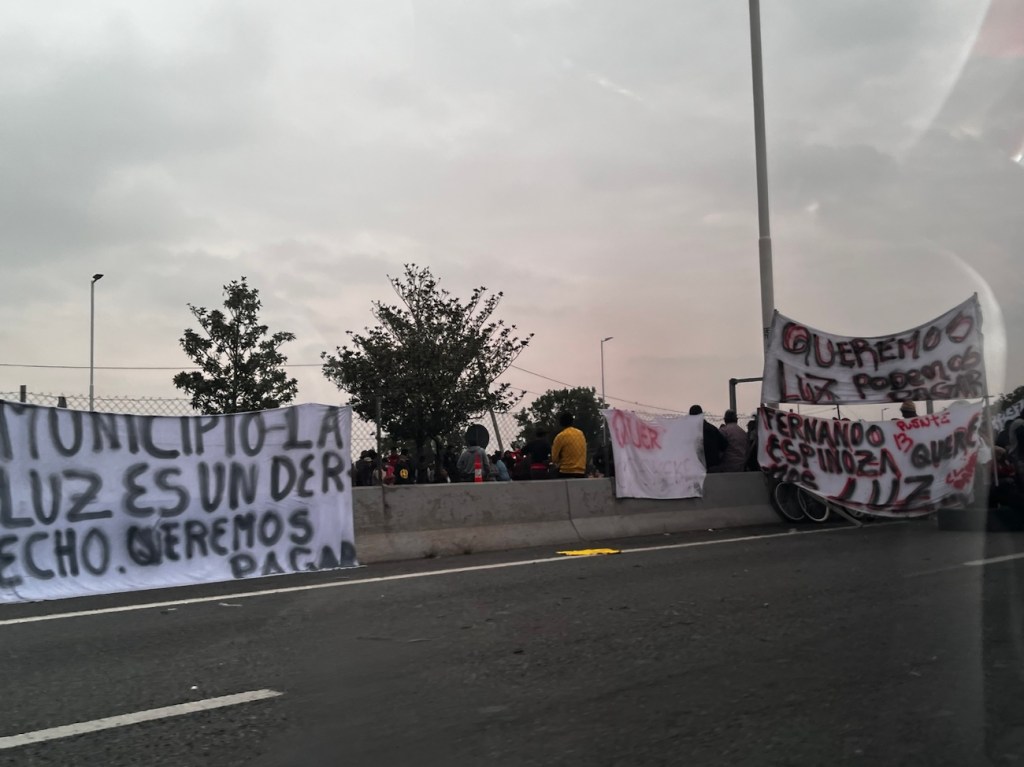
We booked a flight up to Iguazu to save a 18 hour bus and there isn’t much of a price difference if you want the “cama” bed style seat. As we left we passed more protestors. These ones had closed a motorway lane by burning tires. The taxi driver explained this area had been without power for weeks now so we saw their point.

Arriving in Puerto Iguazú meant a return to hot and tropical weather. You need to be more careful in general in border towns and this one is part of the Three Frontiers, linking Argentina, Brazil and Paraguay. We booked a hostel hoping for some information on Iguazú Falls, or a social element, but again those elements were lacking. The staff at the Iguazu Falls Hostel could not have been less interested in us if they tried, and our room was down a rabbit warren of corridors, the floor slippery from leaks and padded out with cardboard. Every question like “where can I do laundry?” was met with the minimum effort answer of “no”.

Back at Iguazú

We did our own thing and found a laundrette, money changer and nice restaurant and in the morning we headed off on the bus to Las Cataracas, otherwise known as Iguazú Falls. It’s actually really easy to get there with buses running every 20 minutes from the bus station in town and you don’t need any type of tour.

Not exactly prepared for what was coming

I had been to the falls on my previous trip but the customary boat trip has changed (the route I took back then is now considered unsafe apparently!) and the Devils Mouth walkway up to the top is now open so I was keen to revisit.

Lunch area

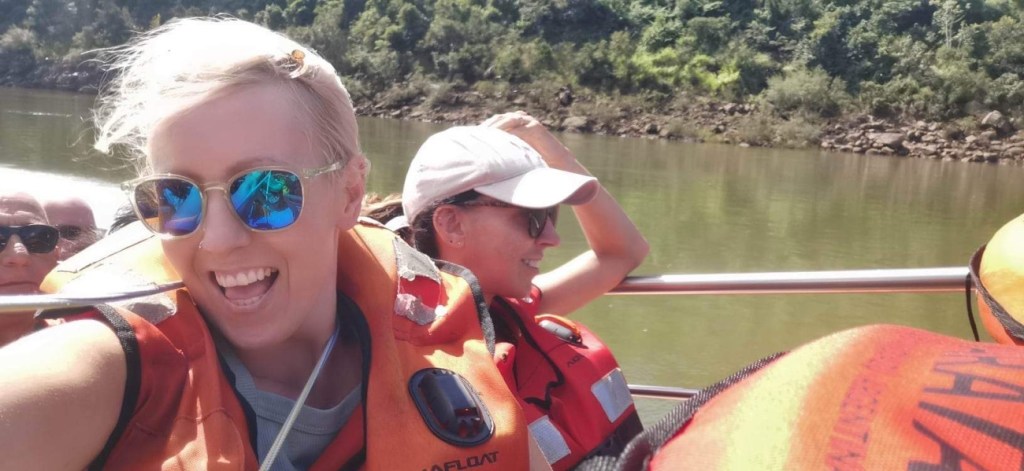
We made friends with an older couple from Argentina/Mexico, a spinal surgeon and his wife, who we chatted with whilst waiting for the jeep ride to take us through the jungle down to the jetty for the boat trip. The world’s most boring guide provided some commentary in lazy Spanish with an even lazier English translation that I barely understood, before they threw life jackets at us and bundled everyone onto the boat. The ride up to the base of the horseshoe shaped falls was as spectacular as I remembered. I remembered getting wet, and the excited screams of everyone shouting “otra vez!” to go again. What I did not remember was going so close to the falls that you’re hit in the face by a wall of water over and over again – the driver casually announced that “now we are going to take a shower”.

First part of the boat ride

Below is my attempt at videoing one of the close ups. Vix described it as 100 cubic metres of parasitic water chucked in your face but she managed to video it all (too big to upload here). At least I had taken off my shoes and put my stuff in the dry bag that they provided.

Best video I’ve ever taken

The Argentinan surgeon had everyone laughing as he’d worn a poncho – don’t ever wear something like this again he said, it’s a waterfall in your balls 😳

Reasons not to wear a poncho

The boat driver was also having some fun of his own on the way back, taking us over the rapids. The boat is still the best way to really experience the power of one of the Seven Natural Wonders of the World. It’s overwhelming, it’s so, so much fun, everyone is screaming and laughing and it’s really impossible to put the feeling into words other than you’re alive.

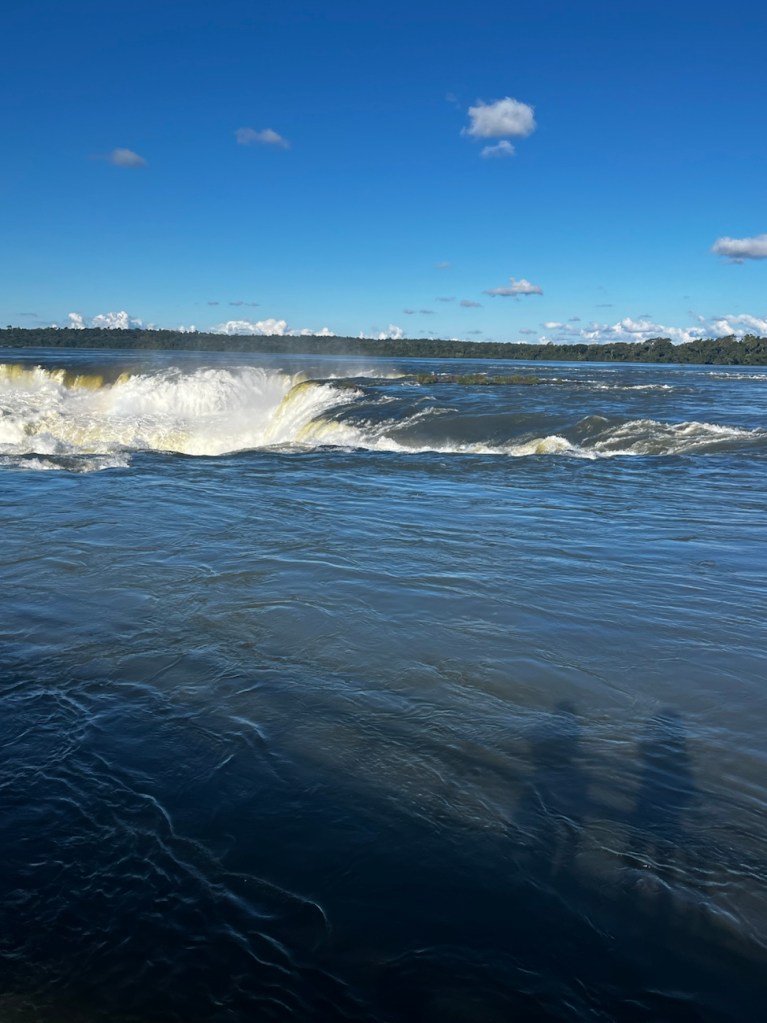
Our shadows off to the Devils Mouth

Soaking wet (denim shorts are NOT the best choice) and slightly shellshocked, we grabbed a sandwich and a coffee from the cafeteria area which still looked the same as it did ten years ago and got straight on the little train towards the Devil’s Mouth, “la Garganta del Diablo.”

See the mist from the falls

Really you need two days here to explore the jungle trails with so many different birds (over 400 species) and beautiful butterflies that land on you.

Unfortunately butterflies are not the only thing that might land on you – I was walking along minding my own business covered in Deet to repel the mozzies when something stung me on the back of the ankle. It was such a shock that I fell over and dropped my sandwich into the dirt but somehow kept hold of my coffee. A passerby said it was probably a black wasp, common in the park. Once the pain subsided and I had replaced my lunch we continued to the walkways providing a passage over the river to reach the Devils Mouth.

Vix on her way

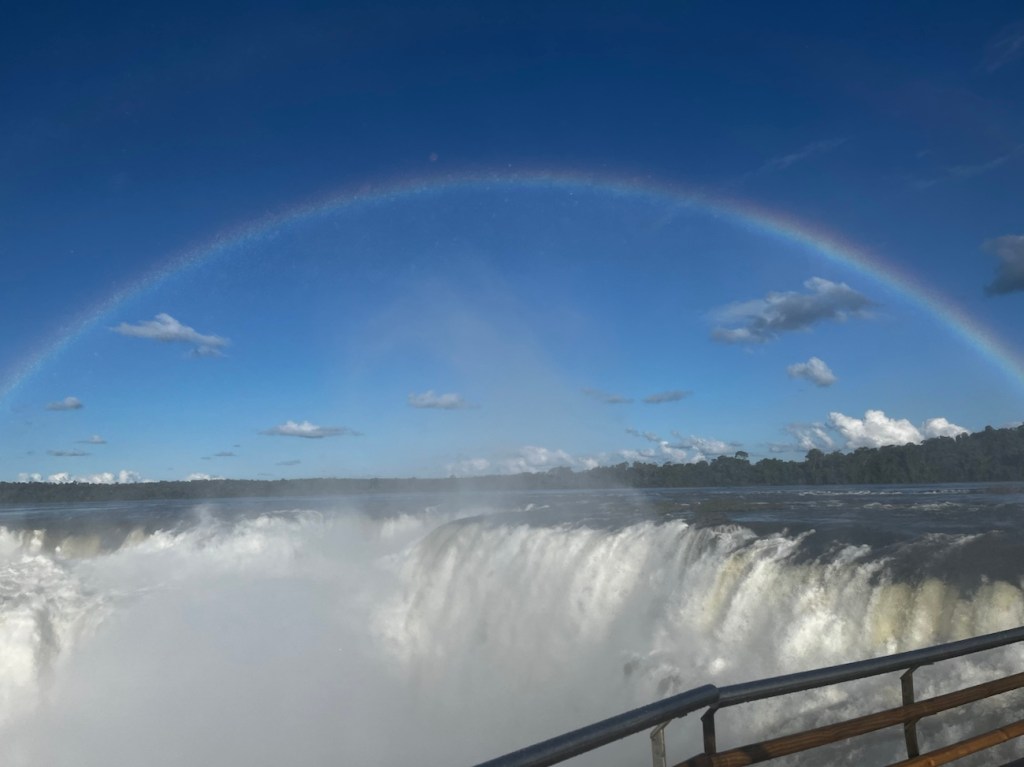
The bridges take you right up to the “mouth” of the falls where the Iguazú river drops 80m over multiple cascades in a semi circle 2700m in diameter. The river itself is the border between Argentina and Brazil. Because we were there at the end of the day we had it almost to ourselves. It was all nice and calm and we were happily taking photos under the rainbow when out of nowhere it changed and we were drenched again.

Trying to get a selfie at the top
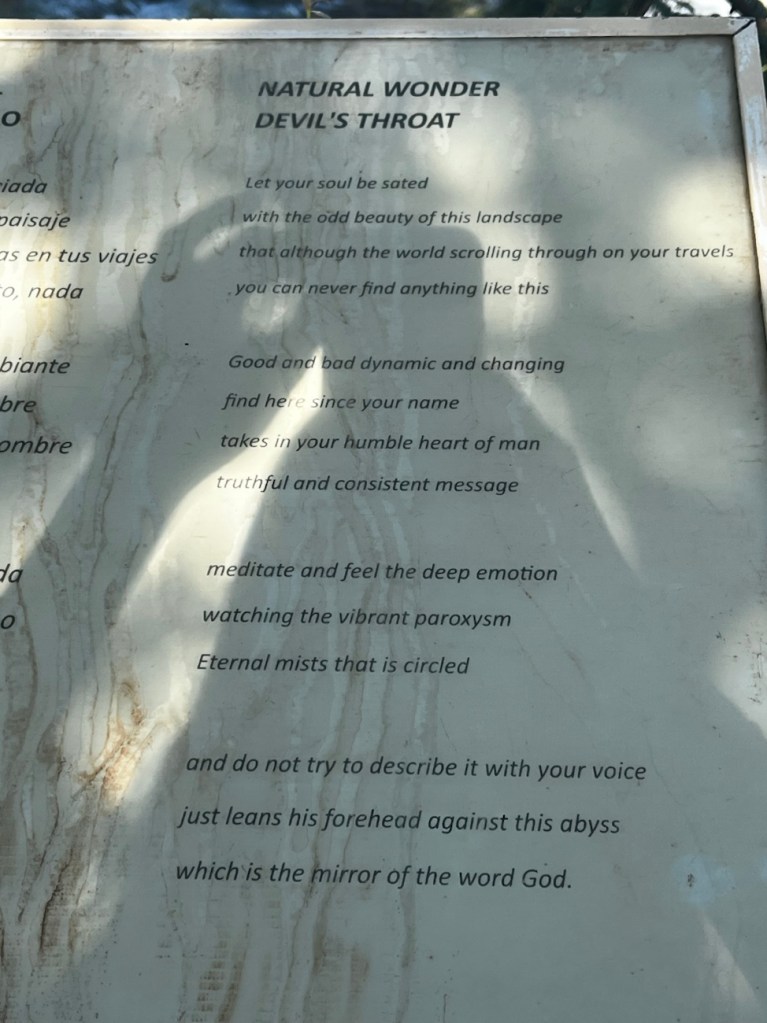
Poem on display

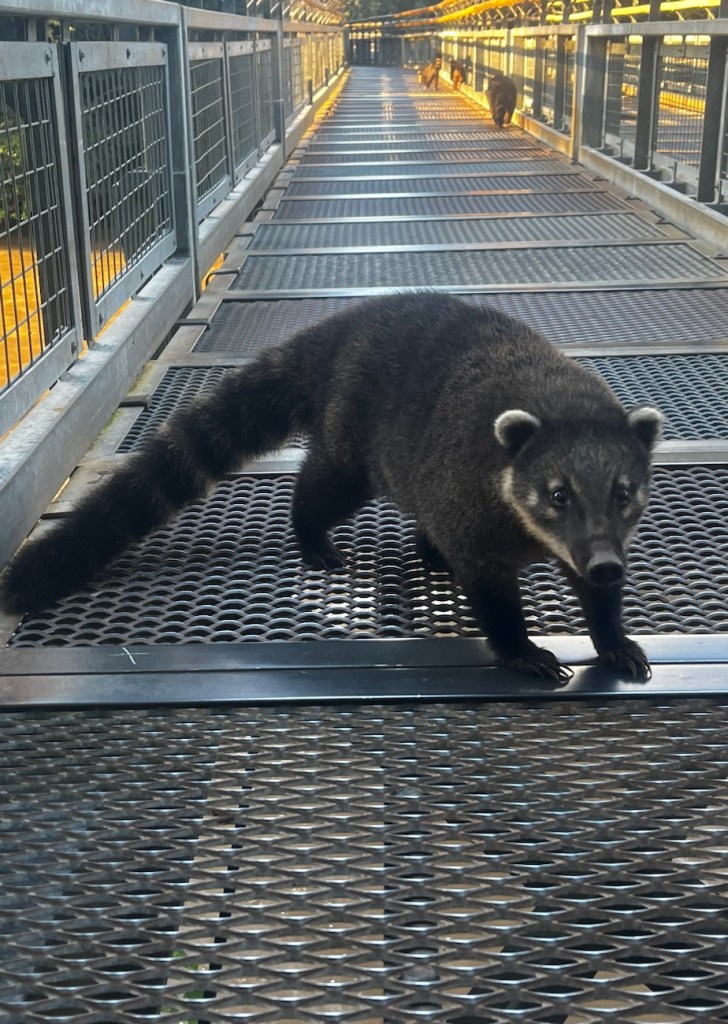
We were quite literally the last to leave the Devils Mouth, heading back to get the ultimo train back to the park entrance, followed by a cleaning man sweeping the paths clear of any litter. We were later passed by a group of Coati, the real clean up crew, on the lookout for leftover lunches.

The Coati clean up crew
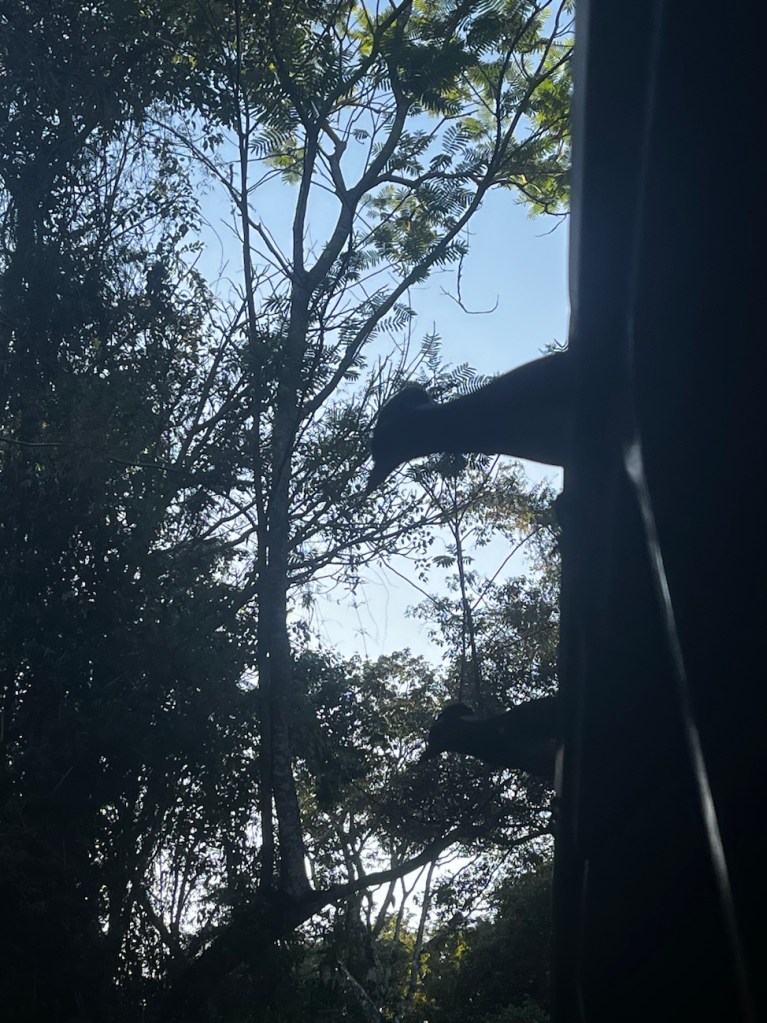
The feeling you’re being watched on the train

Back in Puerto Iguazú, and nice and dry, we enjoyed a meal and quite a few drinks (I still blame Vix as a Negroni is pure alcohol). The next day it was time to pack up again and embark on our adventure to Paraguay. We wanted to go the fun way via boat over the river rather than bus or taxi. Unfortunately my foot had swelled up from the wasp sting so we had to taxi to the port 🙄 after some last minute souvenir shopping as always …
Caballos and Colonia

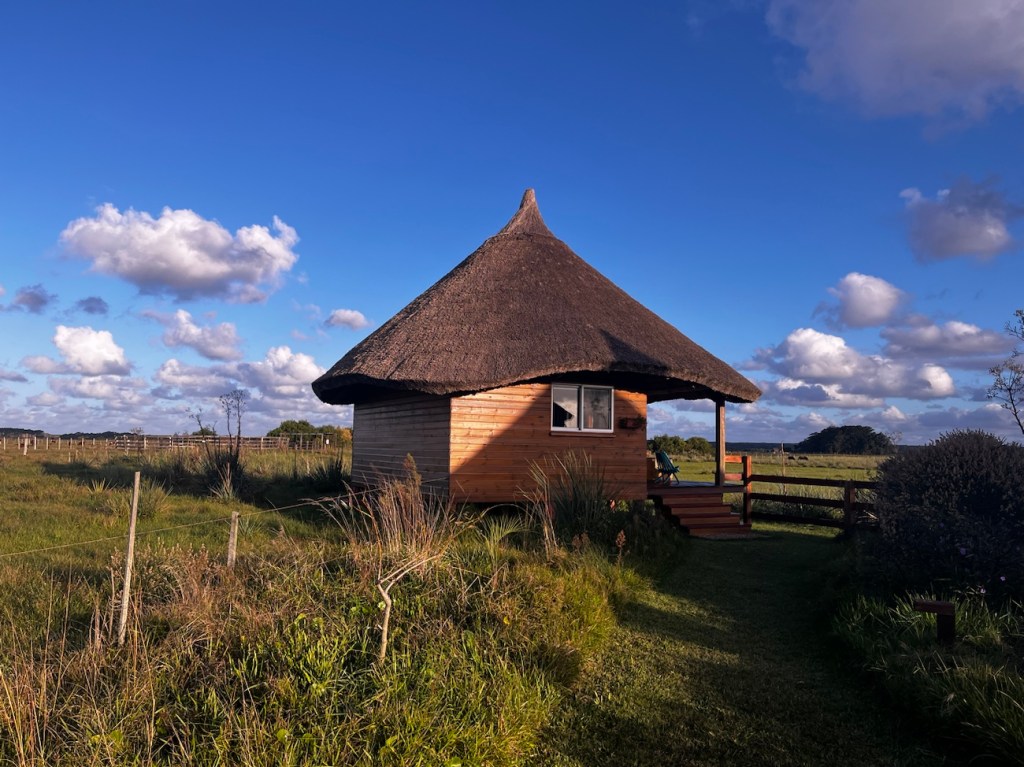
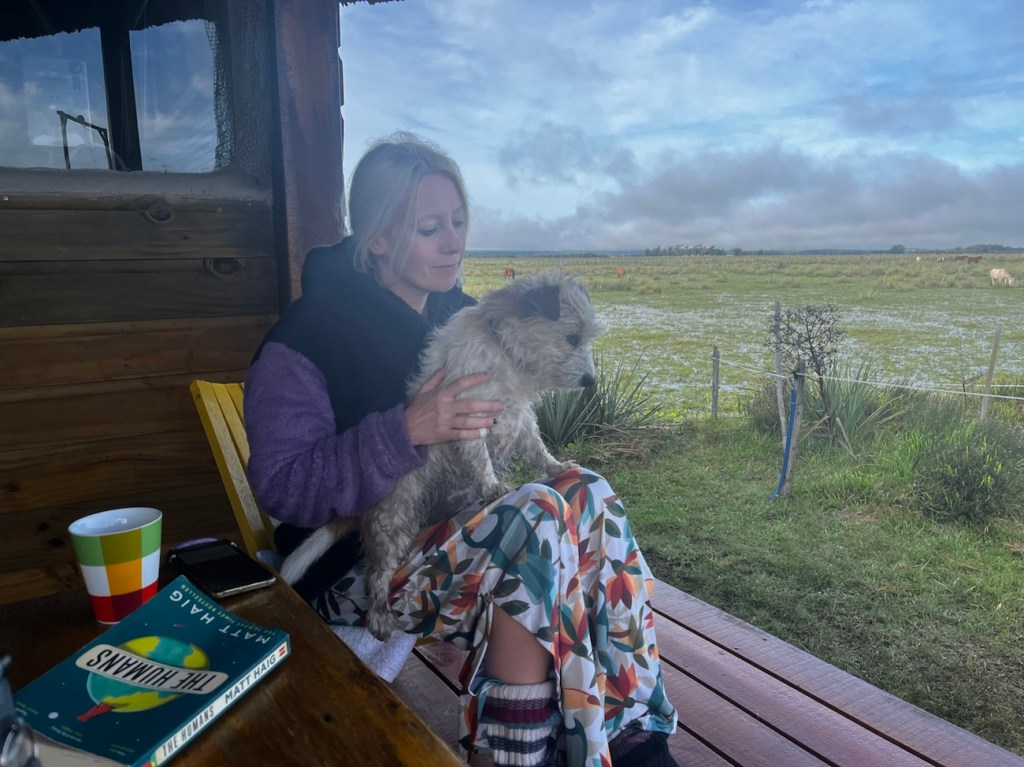
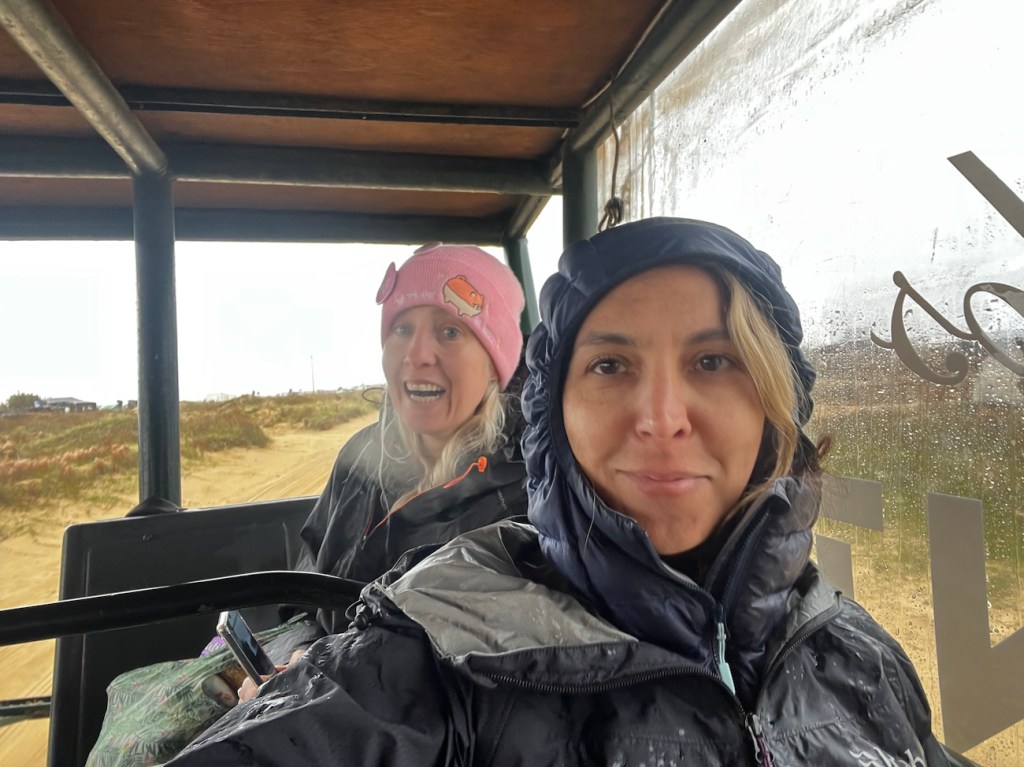
After leaving Cabo Polonio on the jeep in the rain, we arrived back at the visitors centre. Our next stop was only a 15 minute drive north so with the next bus not for a couple of hours we took a taxi to Los Chajá ecolodge, on the edge of the small beachside down of Barra de Valizas. This place was recommended to me by another lodge that I wanted to go to (vegetarian, horses, specified they were “not a dude ranch”) but was closed at the moment. We fell in love with the place as soon as we got there – we had a beautiful thatched roof chalet all to ourselves, one of only two on the property and directly surrounded by twenty horses munching on the marshland.

By day

It was such a stark contrast to the last hostel that the lovely owner, Laura, must have thought I was mad exclaiming “oh wow there is a fridge! And a kettle!”.

By night

This is the sort of place you could come back to for a week, you can cook in your own kitchen and eat on the porch with the dogs (Laura and her partner Mauro just rescued a set of puppies as well as their two older dogs) and horses who will try to steal the breakfast that Laura brings over in the morning.

View from the porch

Most of all we enjoyed making hot chocolate with soya milk in the evenings and quizzing each other on South American mammals (there were no English books in the library!). Turns out I have a weirdly specific knowledge of how many teeth a certain type of anteater has. In order to have a hot shower you had to light the gas hob, turn on the kitchen hot tap, run to the bathroom and turn the hot shower on, then turn off the kitchen tap and hob. These instructions were actually written in the welcome booklet. This made me nervous as I was still mentally scarred from the Cabo Polonio gas leak.

Quiz master Vix

On our way back from buying supplies at the little supermarket, as the sun set car drove up the road towards us, turned around the mini roundabout and stopped. A very friendly smiley couple wound the windows down and offered us a lift, asking if we were staying at the lodge. Not wanting to accept a lift from strangers, we declined and they drove off back the way they came. This felt like a very safe place but why did they drive up then turn around and how did they know where we were staying?!

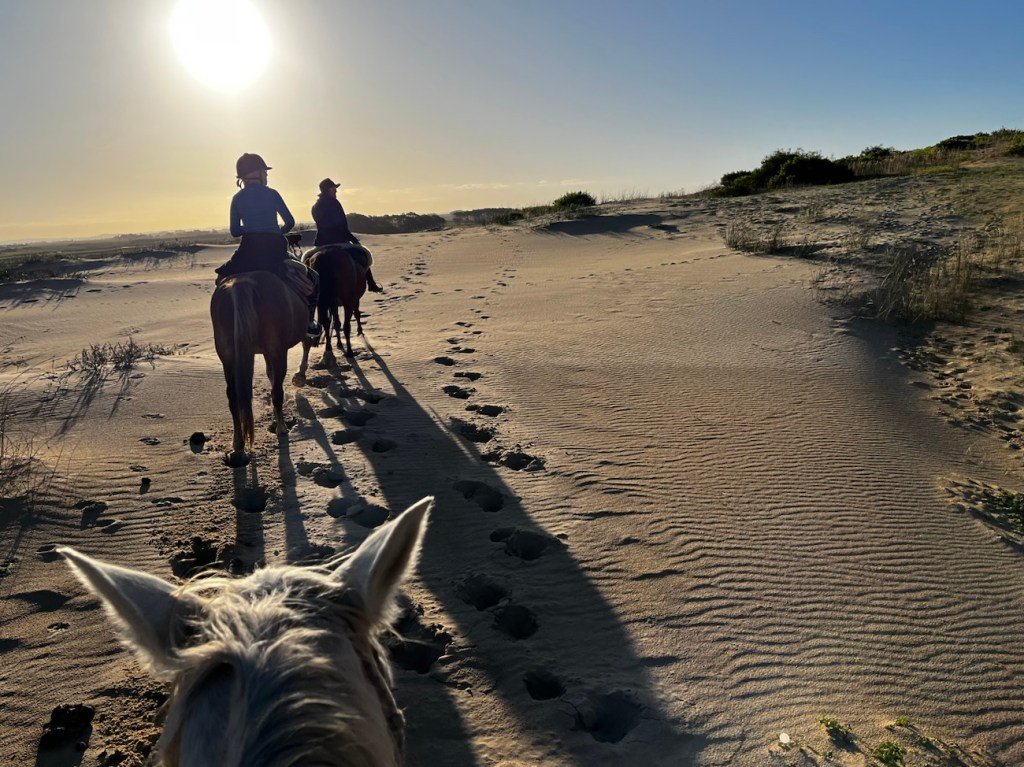
The next day we went horse riding within the Cabo Polonio national park along the beach. First of all Laura made sure we greeted our horses (Arthur and Brisa) and could control the direction and speed the Gaucho way. No pulling on reins or kicking, just use one hand to gently steer and your voice to go faster or slower.

Companions

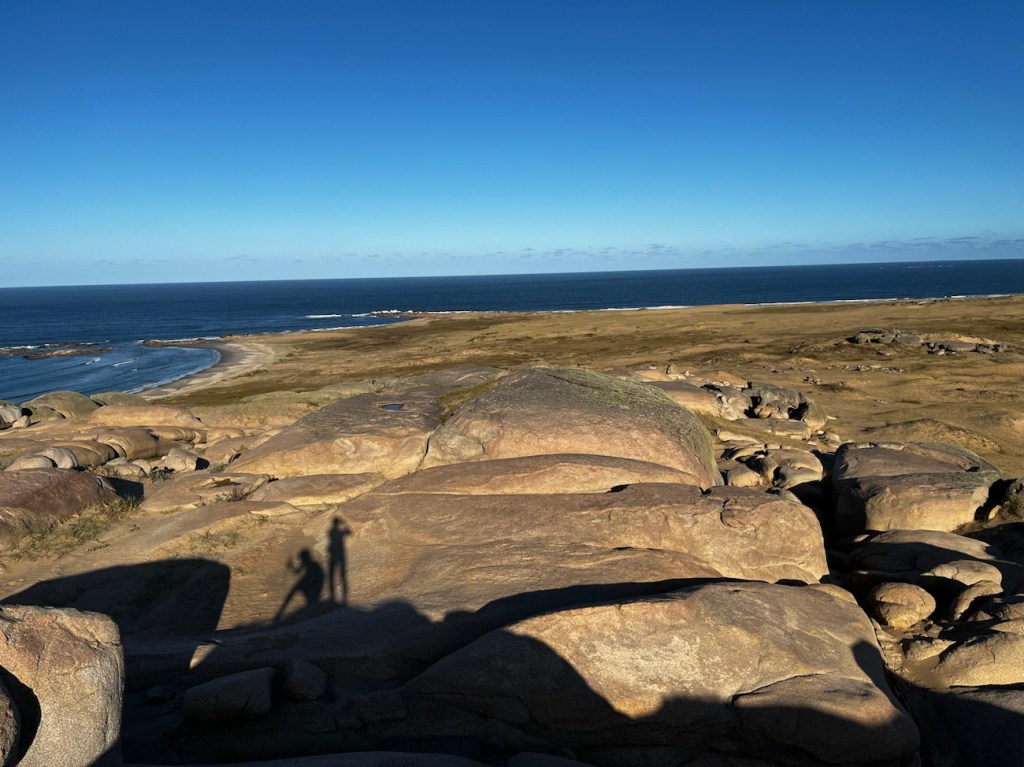
The beach was absolutely stunning, just us and Thea the dog, and maybe one or two people we passed along the four hour round trip to the Buena Vista viewpoint where we dismounted to climb up.

Making shadows at the top of the viewpoint

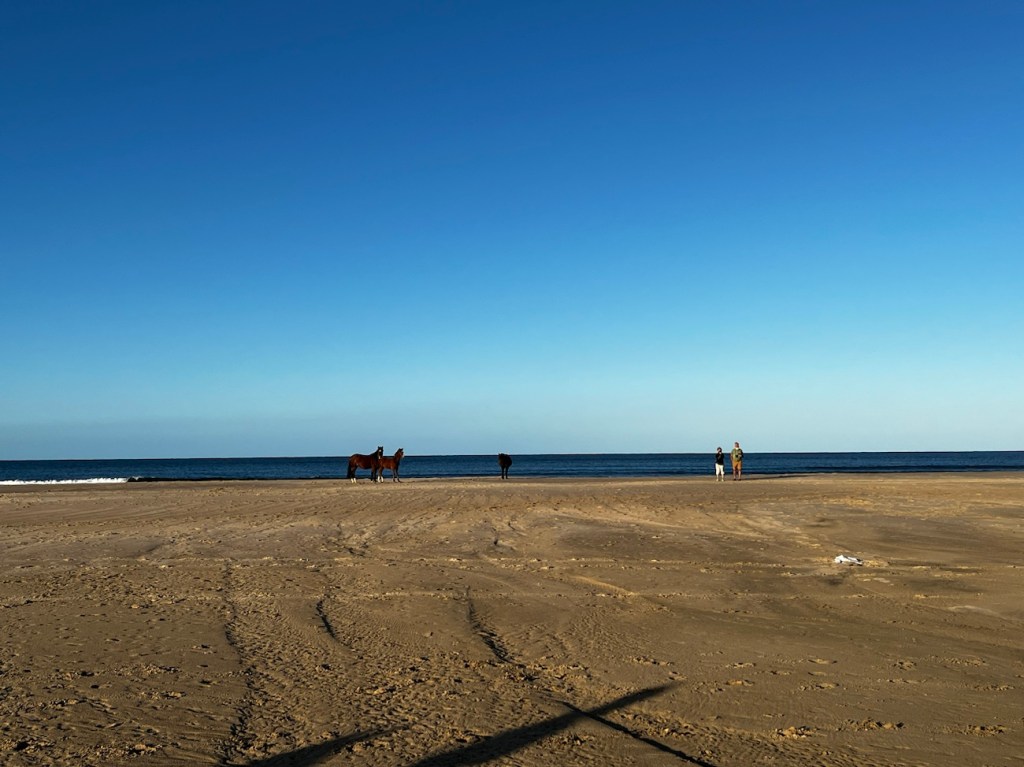
Riding through sand dunes, along the beach and through Wild West type desert landscape was incredible. As we led the horses through the steeper parts of the dunes we noticed they also try to step in existing footprints as it’s easier, just like we do. We passed a herd of cows on the beach but the best part was seeing the group of horses who had just popped down from the village to the beach on their own to enjoy the weather. They were just hanging out by the water until our dog Thea had a go and they galloped off into town – I’ve never heard actual thundering hooves before. Vix’s horse almost went with them.

Cows on the beach

We also loved brushing and feeding the horses – if this place offers a volunteer program I’m there!

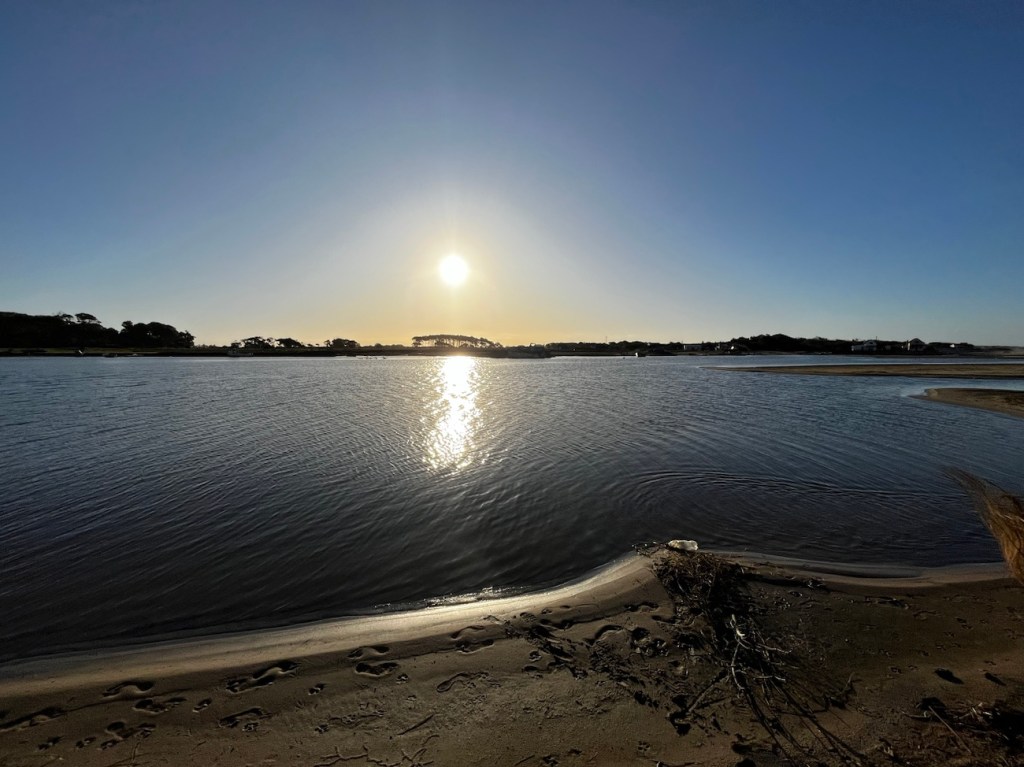
Sunset over the lagoon on the ride
Wild horses

We did almost destroy the place though – in the same five minutes, the bottom fell off the sink and water went all over the floor, something happened to the gas heater and the room filled with gas and then the cover fell off the air vent. We opened all the windows and turned everything off before calling Laura, who was out on a ride. When she got back and saw both the bathroom sink and gas no longer worked she looked slightly worried and moved us to the other chalet as the other couple were just leaving. As they waved we realised they were the same nice couple that had kindly offered us the lift last night and they were not in fact after our kidneys.

Morning dew
Breakfast companion Rocky

There is only one bus out of this place per day, at 15.00. With checkout in the morning, and everything closed and deserted for the low season, we wandered down to the beach and made more doggy friends before catching the supermarket before it closed to buy avocados and wraps for our staple meal (thanks Vix!). We did, however, find the only bar open in town and enjoyed a Patricia lager with some locals who welcomed us in and even offered to turn their music down. The owner said we were beautiful like Patricia.

Deserted town of Barra de Valizas
We found the beer

We waited at the bus stop as the daily bus trundled into town, turned around and came back to pick us up on the way out. With no real internet for several days now we hadn’t booked any accommodation nor were we sure if we could make it all the way to Colonia. It was about 5 hours back to the capital city of Montevideo, where we literally jumped off, ran to the ticket office and got ourselves onto the Colonia bus ten minutes later which was full of teenagers going on a night out to a club. We were absolutely starving by the time we arrived and spent the entire 3 hour journey on the bus Wi-Fi trying to find anywhere that would let us check in after midnight – turns out most places expect you before then 🤦🏻‍♀️

Back after 12 years

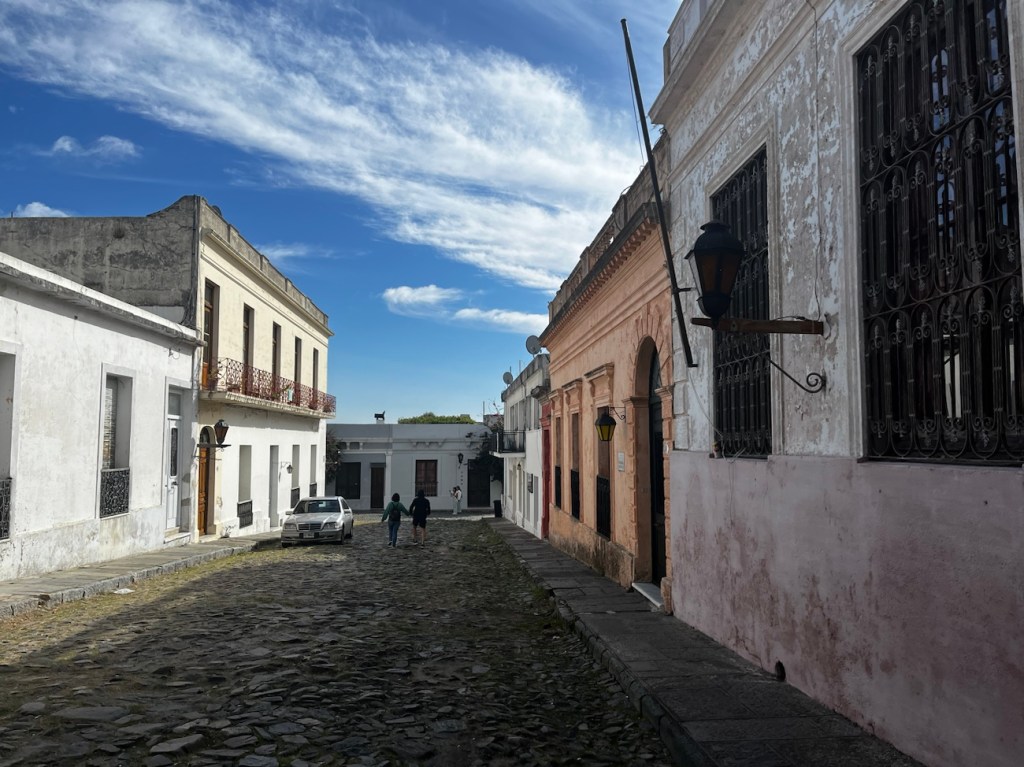
We found a hotel that responded just in time and walked the few blocks through the quiet cobbled streets of Colonia – in a huge contrast to Brazil where we couldn’t do that in the daytime! The journey was worth it to wake up in Colonia, as beautiful as I remembered it being ten years ago. The only thing that has changed is that there were loads of old cars, Cuban style, last time I was there which seemed to have gone now aside from a couple outside a restaurant.

Found an old car!

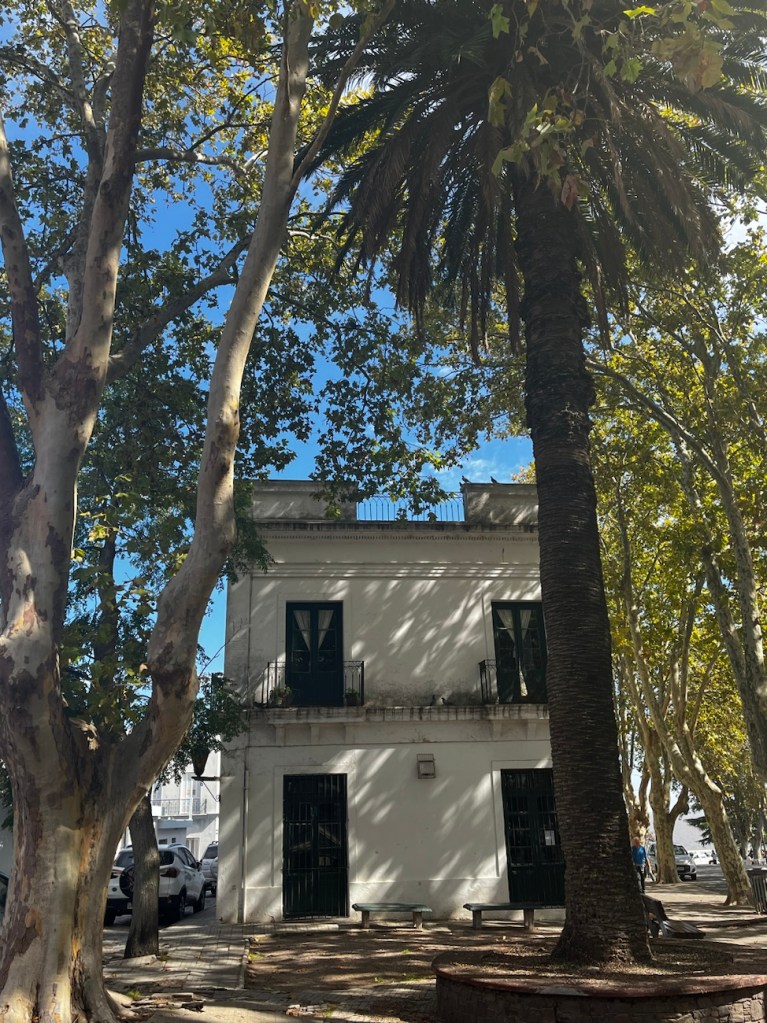
Our hotel didn’t have room for us the following night which turned out to be a blessing as we moved just around the corner to an apartment in a the most gorgeous original colonial building. We booked it at 10.50 and arrived at 11.00 to find the lovely Fred, an artist who struggled to hear sometimes over his hearing aid, just finishing preparing the room. To stay in one of these buildings was amazing and we made use of the pretty garden. We had already walked past the door and taken photos of it, before realising that was in fact our new home.

Fred’s doorway
Vegan seitan version of the local dish

The day was spent wandering around the streets and eating too much fried food in a restaurant on the sea with live music (a man pretending to play guitar and singing “Mi Corazon” with some dramatic gestures in between solar charging his equipment on the table). As well as trying to get cash – my bank card also had to be cancelled as someone had tried to swipe it in Cabo Polonio, possibly by holding a card reader against the locker, so I spent an hour trying to explain to HSBC “the local bank” that no I could not pop into a local branch as I’m in Uruguay, and no I cannot verify a payment if they can’t tell me any details, and locking me out of the banking app “for security” was the least helpful thing they could have done. We withdrew a load of US dollars on Vix’s working card to hopefully avoid needing any more ATMs for the rest of the trip.

We still haven’t found the party – we did find a rock bar with promising art work, but when we asked what’s on tonight they said they have a reggaeton DJ at weekends.

You can easily “see” Colonia in a day but it’s a lovely place to enjoy the atmosphere, walk along the coast and stroll around so you could equally easily spend a week here. But I was really keen to return to Buenos Airies again which fitted in perfectly with the ferry across to Argentina …
British Girls on a Ride and The Wasters (Uruguay Part 1)

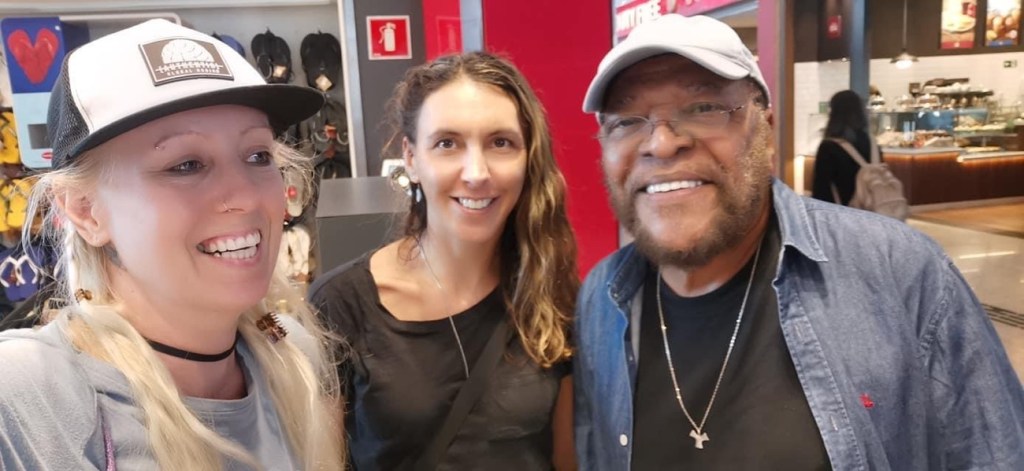
After five lazy beach days, we took a cheap flight from the island of Florianopolis, Brazil to the often overlooked capital of Uruguay, Montevideo. I have been to Uruguay once before but only on a day trip from Buenos Airies during my first trip to South America over ten years ago. At the airport in Sao Paolo where we changed planes, we noticed people taking selfies with an older man – naturally we had to get one too, having no clue who it was. He turned out to be Martinho da Vila the 85 year old Brazilian samba star.

In Montevideo we stayed two nights at the Yorki Haus hostel, run by a German man and a French man. We had a prison style room at the very top of the building with a gorgeous rooftop to ourselves.

Morning coffee

An annoying family had taken over the kitchen, which I didn’t mind until I spent ages making coffee using our £10 Starbucks ground coffee (literally the only coffee in any supermarket without added sugar) then as soon as I turned my back to spread my £10 peanut butter on my toast The Dad poured the rest of the coffee and took it for himself.

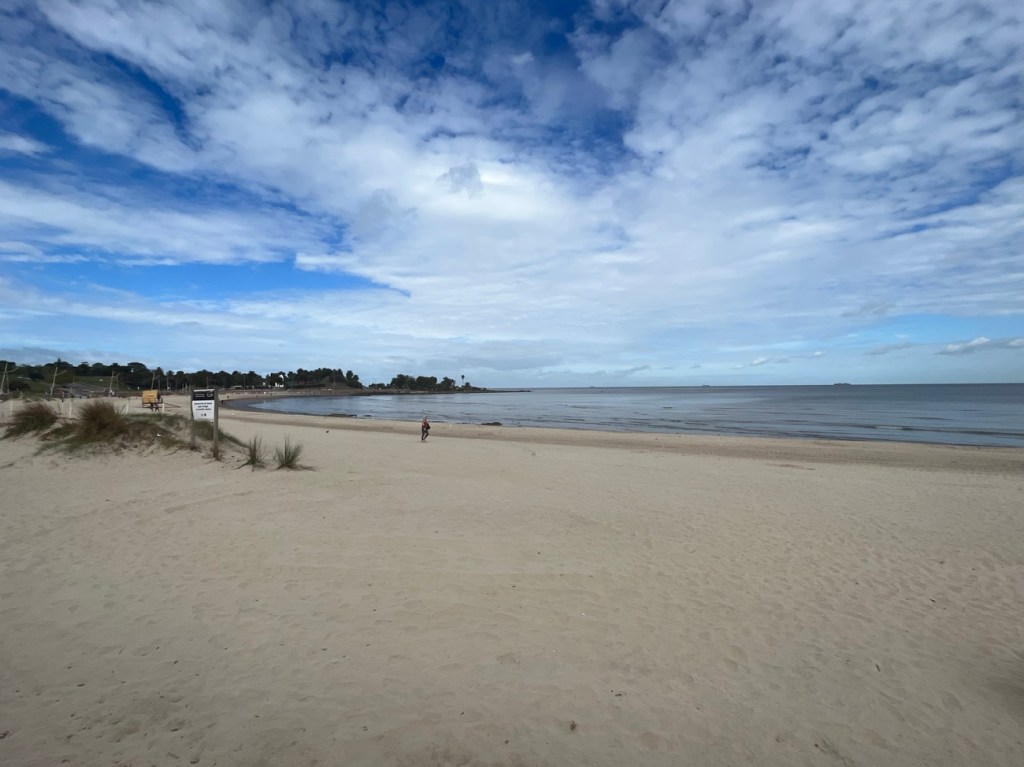
Montevideo city beach

Seeing the capital city at the weekend was great. We found a great little bar just down the road that served veggie sandwiches and cocktails and played Latin rock, and during the day we walked the few kilometres down to the old town along the beach amongst locals jogging and exercising on a Saturday morning. Like much of South America, it doesn’t get going until the afternoon. We browsed the antique shops and had an amazing lunch of grilled vegetables before making our way back via the supermarket to stock up on food for the next few days when we would be “off grid” in the hippy town of Cabo Polonio.

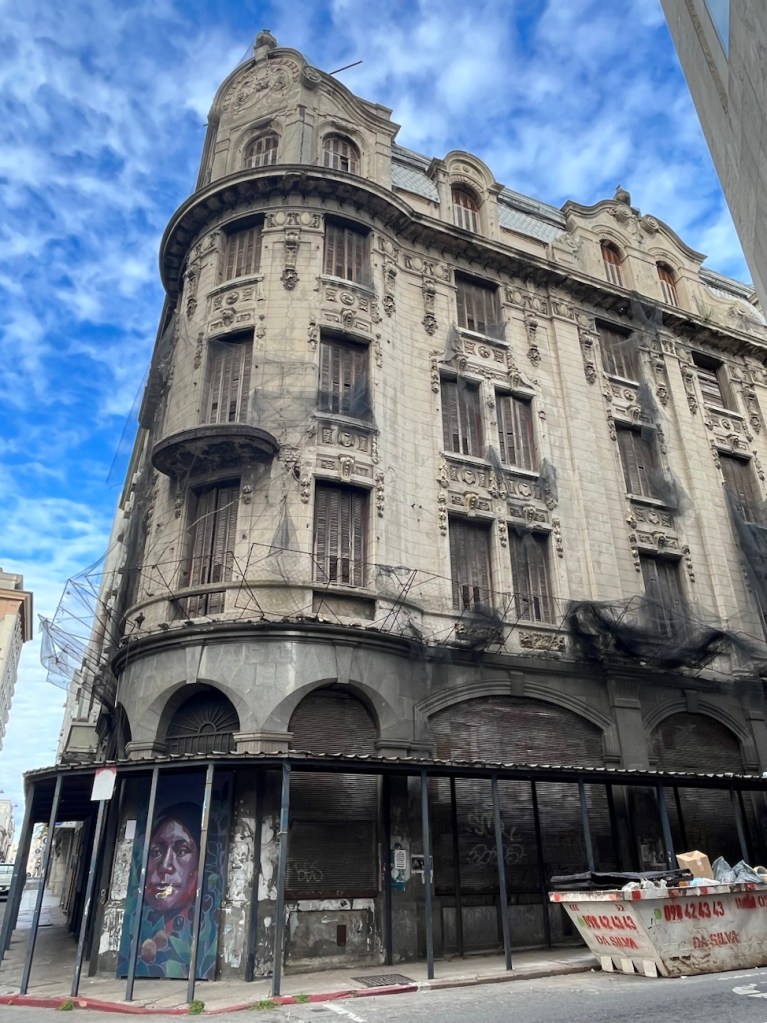
Old town in Montevideo

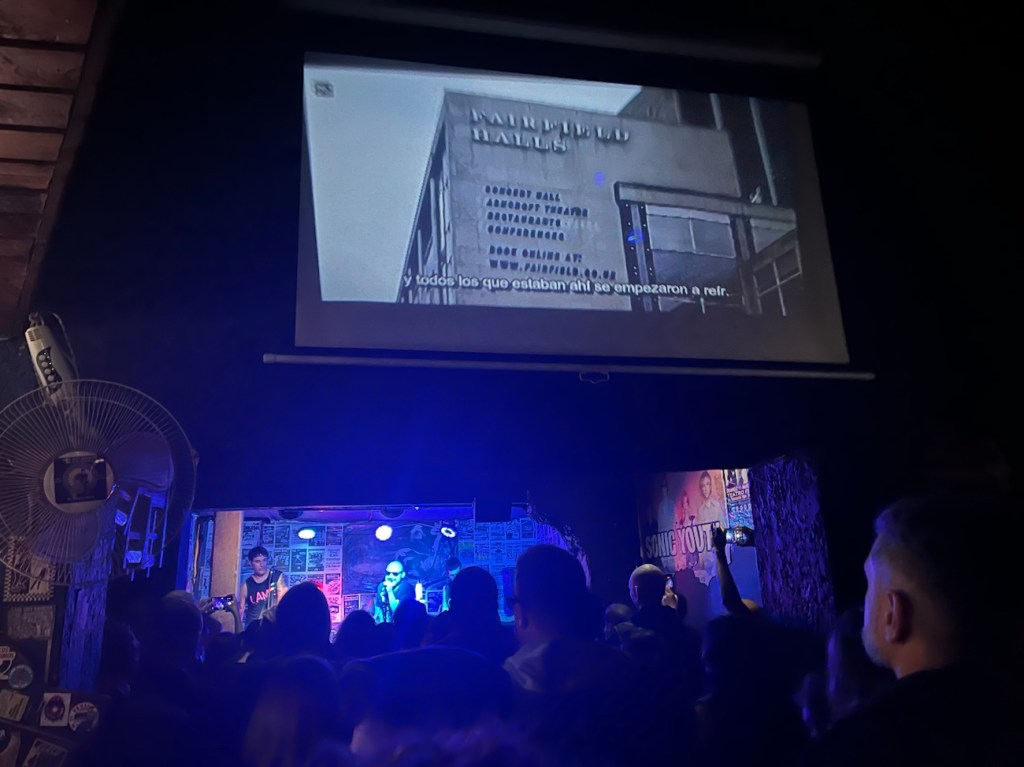
Having looked up rock bars in Montevideo, thinking surely we’d finally find a night out in the capital, we got an Uber across town to the “best rock bar in Uruguay”, the Roxx Bar. When we arrived at a deserted residential looking street, we asked the driver if the place even existed. The driver asked the one man hanging around outside, who explained the that he was also waiting as the owner was a “a bit late opening up”. It was already almost 11pm so after waiting for a while we decided that even if the owner did turn up, it would just be the three of so maybe not that exciting. Luckily we found a friendly welcome and a live punk covers band at Clash City Rockers bar down the road, even though it was cash only so we had just enough money for two beers between us.

Where does this hostel door go?!
Punk band

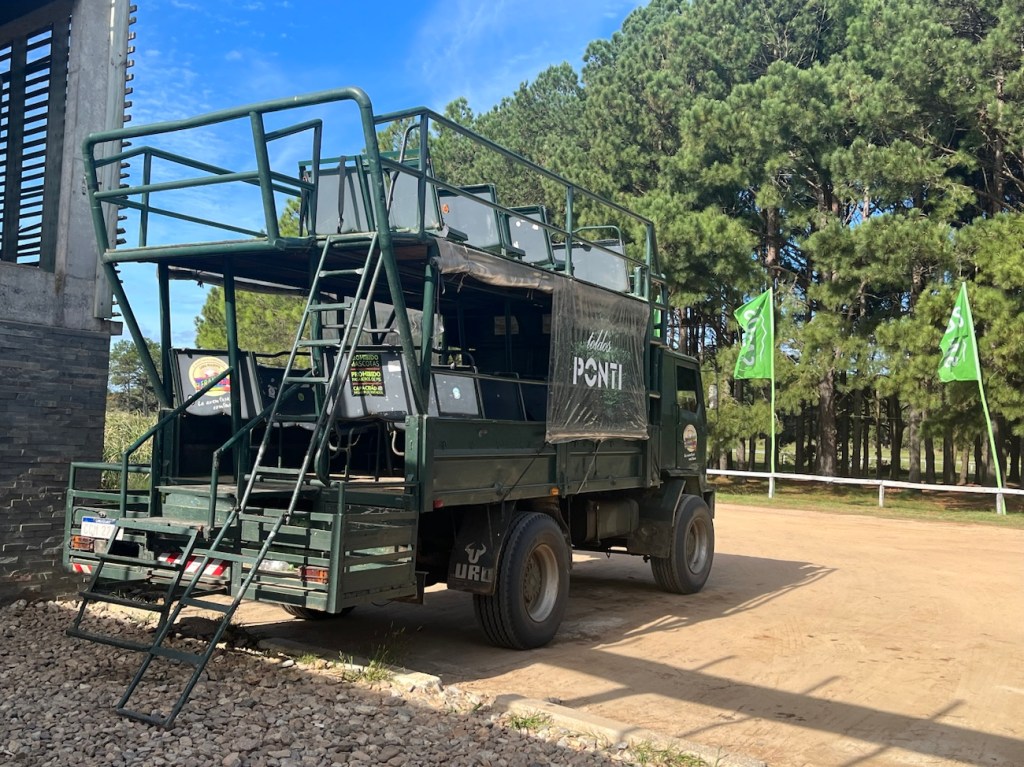
Next morning we set off early to the huge and modern Tres Cruces bus terminal to get a 4.5 hour bus northeast up the coast to Cabo Polonio. It’s a scenic journey and we passed a few places we’d have been happy to get off and explore. When you get off at Cabo Polonia bus station, there is a visitors centre where you hang around for a while before a large jeep type vehicle takes you all through the sand dunes to the village, three times a day.

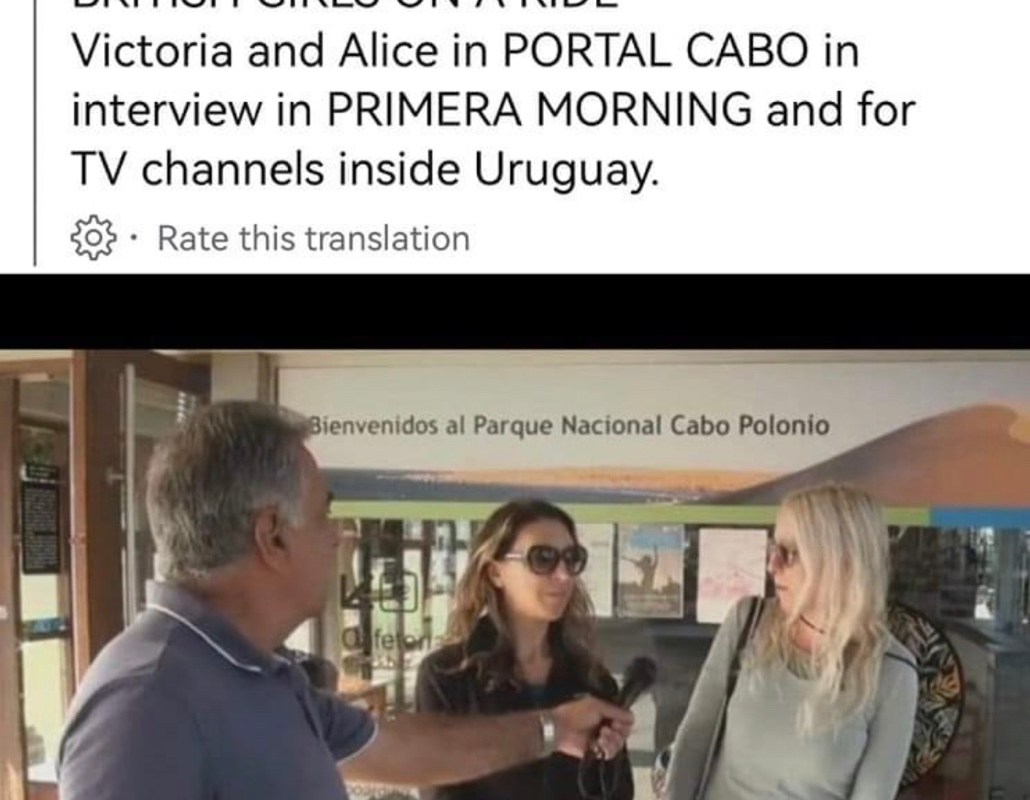
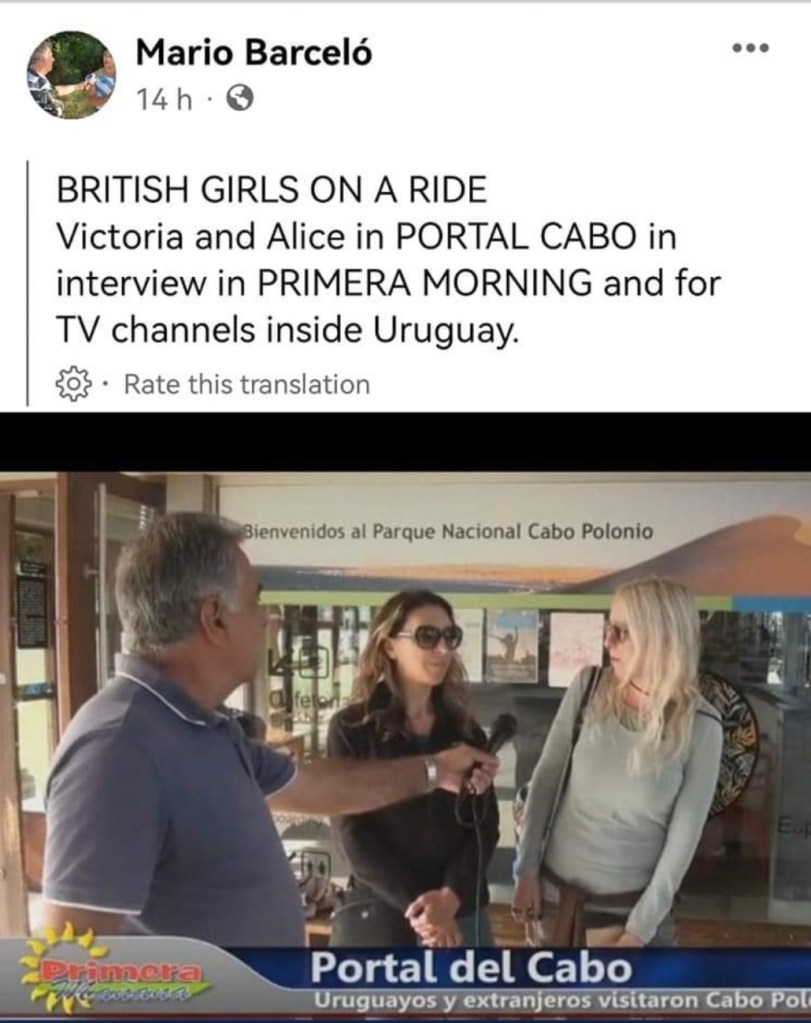
Whilst waiting for the jeep we made our debuts on Uruguayan daytime TV when we were asked for an interview about our visit with host Mario – although half of what we said wasn’t translated, somehow my name was changed to Alice and I have no idea where the “British Girls on a Ride” tag line came from 🤦🏻‍♀️ It’s available on YouTube although I haven’t yet got over the cringe factor enough to watch it (what was the point in asking if we are planning on coming back again when we haven’t been there yet?).

Jeep transport

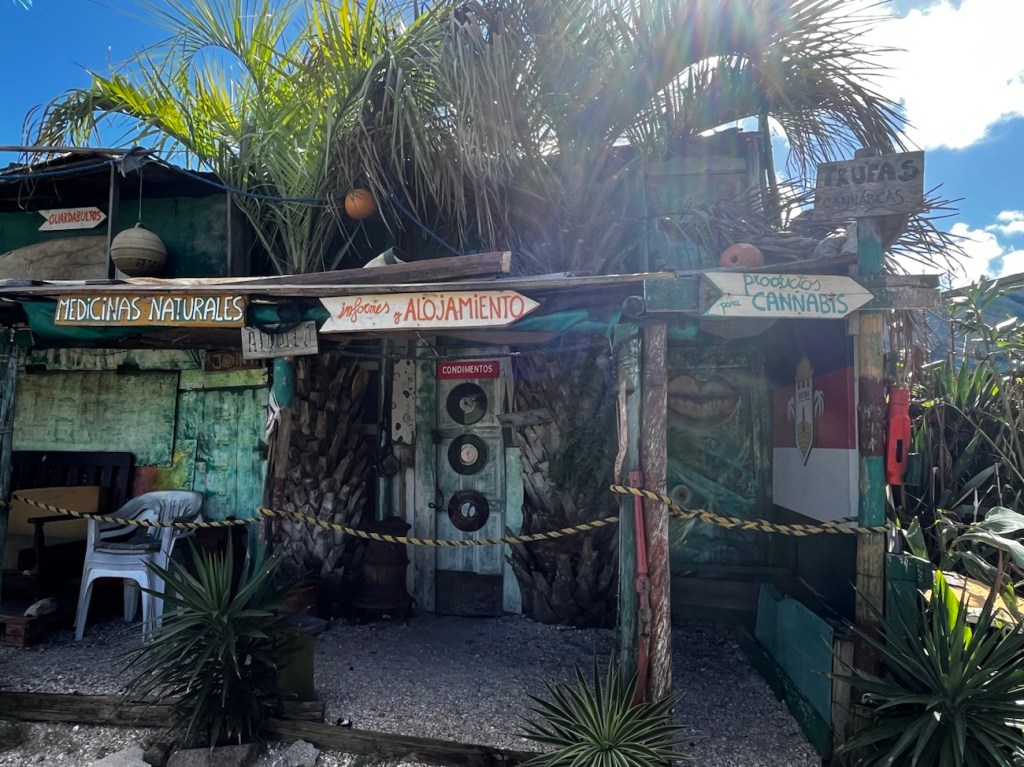
Cabo Polonio is about 9km off the main highway and there are no proper roads there. The driver had to take a run up over one mound and we passed some military looking types that were well and truly stuck in the sand. We finally reached the Lobo Hostel Bar, which we had chosen for its sociable setting and billing as the local bar – seeing as we were there off season and we didn’t want to be totally isolated. We accidentally went to the nice welcoming looking guesthouse next door, with music playing from the restaurant and tables and chairs outside – I later realised they only turn the music on and put the chairs out when the morning jeep arrives with new visitors. I never saw it open again.

Entrance to our room

Neither of us have particularly high expectations for accommodation. In fact we have pretty low standards. When the woman running the place, Celia (we think that was her name) showed us to our attic room up a ladder with only a rope to hold on to, lockable only by our own padlock, we took it as part of the adventure. We loved the window that opened directly on to the little rooftop that we had to ourselves. We loved the wind turbine next to the roof. We didn’t mind the fact the blanket on the bed was full of leaves, until we got bed bugs. I gave Celia, aka the Hunchback of Cabo Polonia, the benefit of the doubt when she shortchanged us even though another backpacker told us she’d done the same thing to her friend. We tried to cook our pasta on the frankly disgusting stove that stank of a gas leak and made me feel sick everytime I went near it. The only thing the Hunchback really said was how ugly the newer houses were (we thought they were really pretty) and essentially how tourists were ruining the place.

Oil soaked floor

But we drew the line when we went down the ladder to make dinner in the kitchen we had paid to use, to find pieces of cardboard on the floor soaking up an oil spill, a “do not use” sign on the sink though there was nothing wrong with it and the fridge had been unplugged. The Hunchback was from then on referred to by Vix (whose socks were now soaked in oil) as Oil Slick Mcgoo when she tried to blame her other guests for spilling the oil and leaving it. The oil was never cleaned up over the three nights we were there, it just stayed all over the floor next to the open flame (if she’d turn the gas on and lend you a lighter).

Local pharmacy, all shut
Mammals to look out for

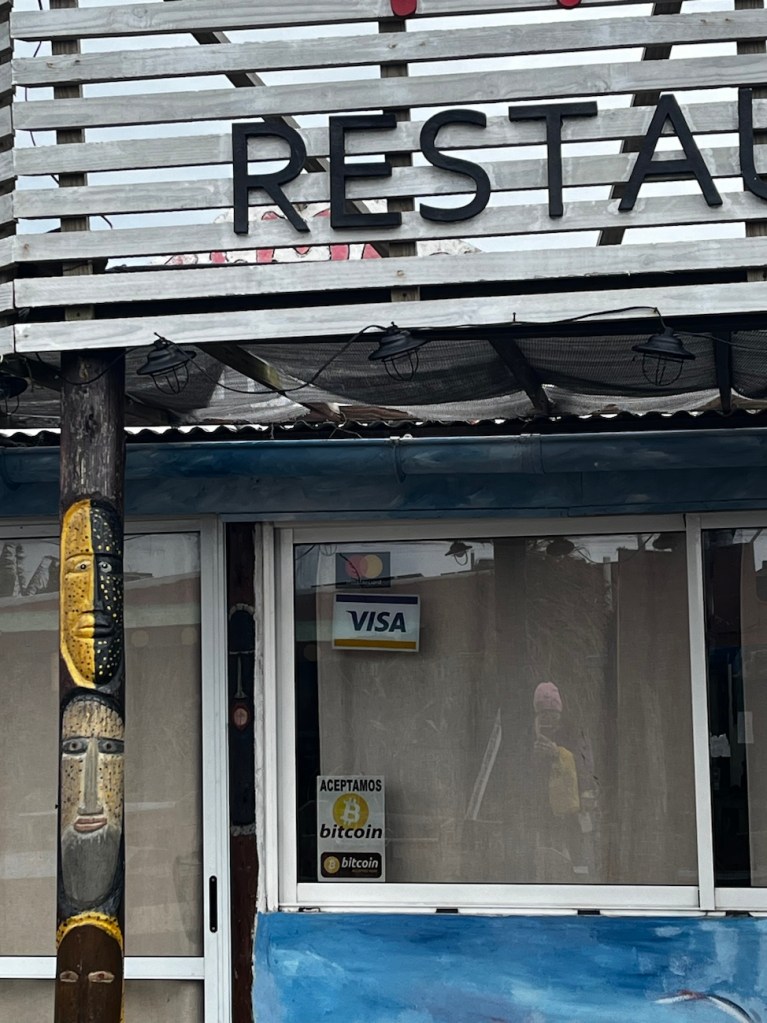
There is a very old fashioned supermarket in the village, which weighs fruit and vegetables the old way and is open all day other than around 3-5. The empanadas looked suspiciously like the ones from yesterday, every morning, but we were just glad they took Visa since with one of my cards already lost to cloning and no ATMs in the town we had limited funds. No problem – the shop sold a great selection of wine and anything over £8 they would accept cards for. Win win (until my Visa was also stopped a few days later for a dodgy contactless transaction which was either the shop or the hostel trying their luck).

Ancient supermarket

On our first night we went with another girl to try to see the glowing Bioluminescence, a type of plankton, in the water. This was a total fail but it was fun to walk around the lighthouse at night in the pitch black other than the lighthouse signal itself.

Bone, fossil or rock outside a “new” house
Lighthouse Dog

There are certain characters you encounter over again when backpacking. “The Waster” is one of them. They are usually European backpackers who have stayed too long doing nothing or maybe “volunteering” / skiving at a hostel, typically looking horrible and miserable. The man “working” at the hostel was definitely a Waster.

Bomb?

April being low season, it was a total ghost town. The next morning I tried to make us both coffee in the morning but The Hunchback had thrown the cafetière in the bin. I asked The Waster and he reluctantly gave me another from their own fully functioning kitchen. After a lot off faff trying to get it going and avoiding the oil spill and carbon monoxide poisoning, I knocked the whole thing over and was about to spontaneously combust myself when Vix calmed me down and we got the hell out of there. With nowhere open, we found an old man who opened up his tiny cafe to shelter us and two other other desperate tourists from the rain and served us coffee on a little silver tray with shaking hands.

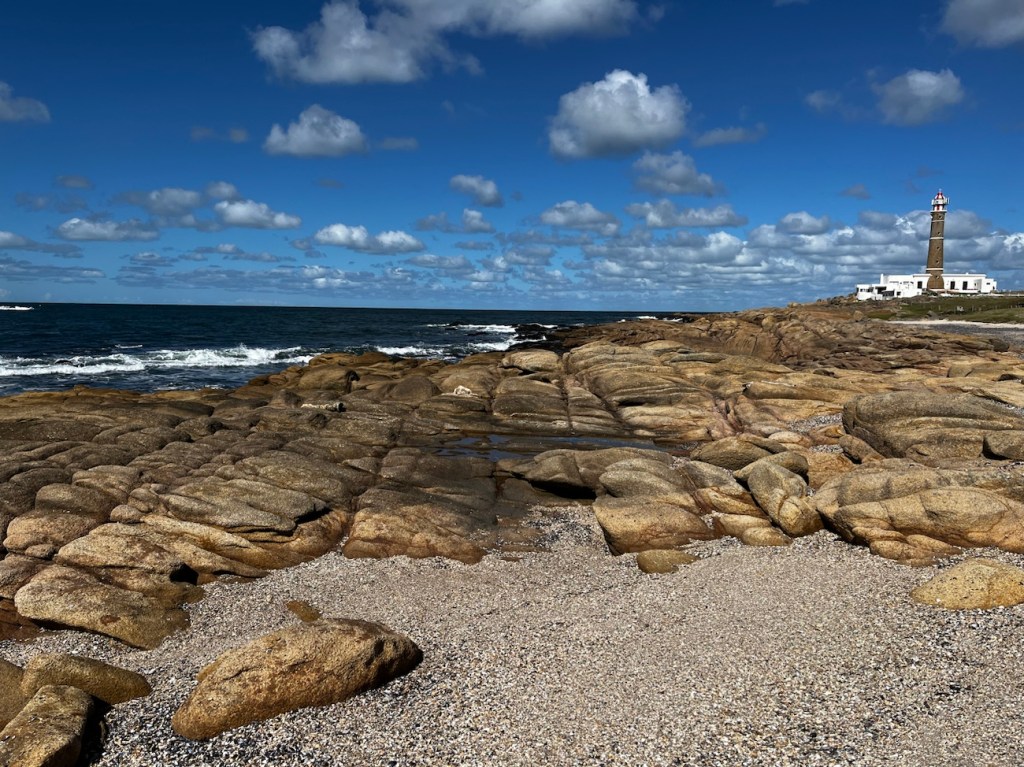
Lighthouse

Spot the seal

The dogs of Cabo Polonio deserve a mention – friendly and sociable, they each have their own patch. As we walked though the village each day we would meet each one in turn, from the Hostel Dog who hung out on our rooftop and probably gave us fleas, to the Town Dog half way across the village that seemed blind, to the gorgeous blue eyed Lighthouse Dog that accompanied us on our search for the seals.

Solar powered cinema, obviously closed
Improvised wine glass to avoid dirty hostel cup

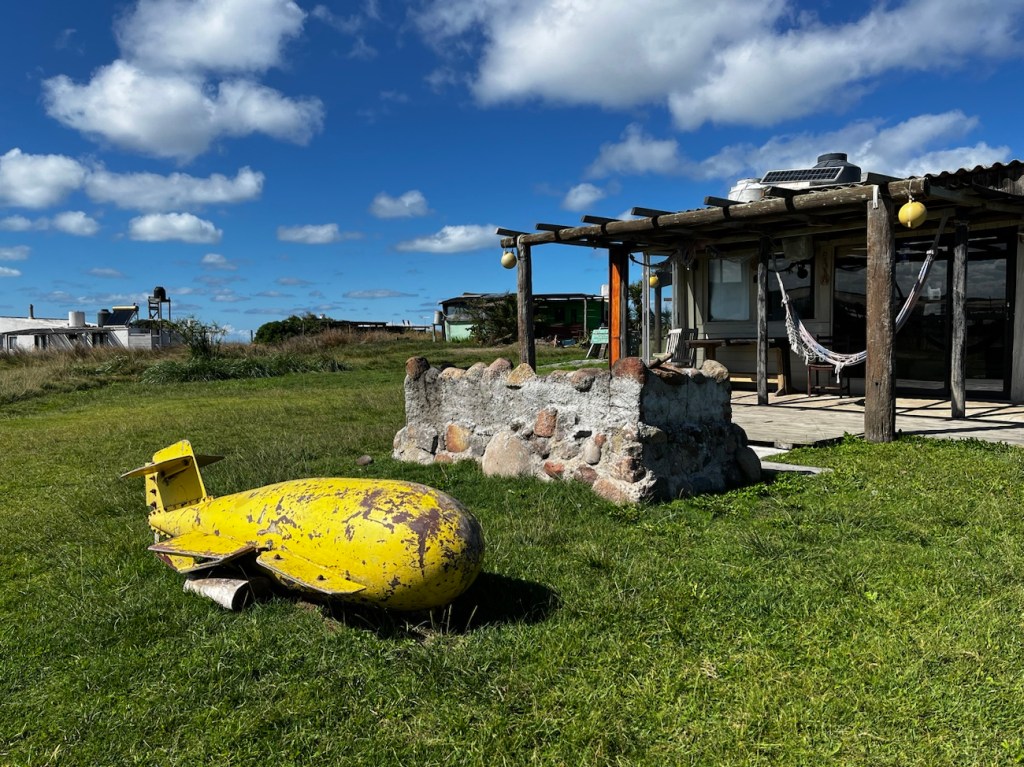
There is a large area of “new” houses on the other side of the village, but not a single person in sight. One house had what looked like a massive spinal bone out front, one had an old bomb and most had some piece of unique art embedded into the walls.

Having given up on cooking at the hostel, we found the one more expensive restaurant that took Visa and lived it up with a lovely vegetable stir fry. Totally worth it for the view and a comfy place to hang out and drink (we went back every day). Vix even went into the sea and swam with the tiny creatures whose heads we had seen from the shore but never could find out what they were (dolphin / turtle / baby seal depending upon who you asked).

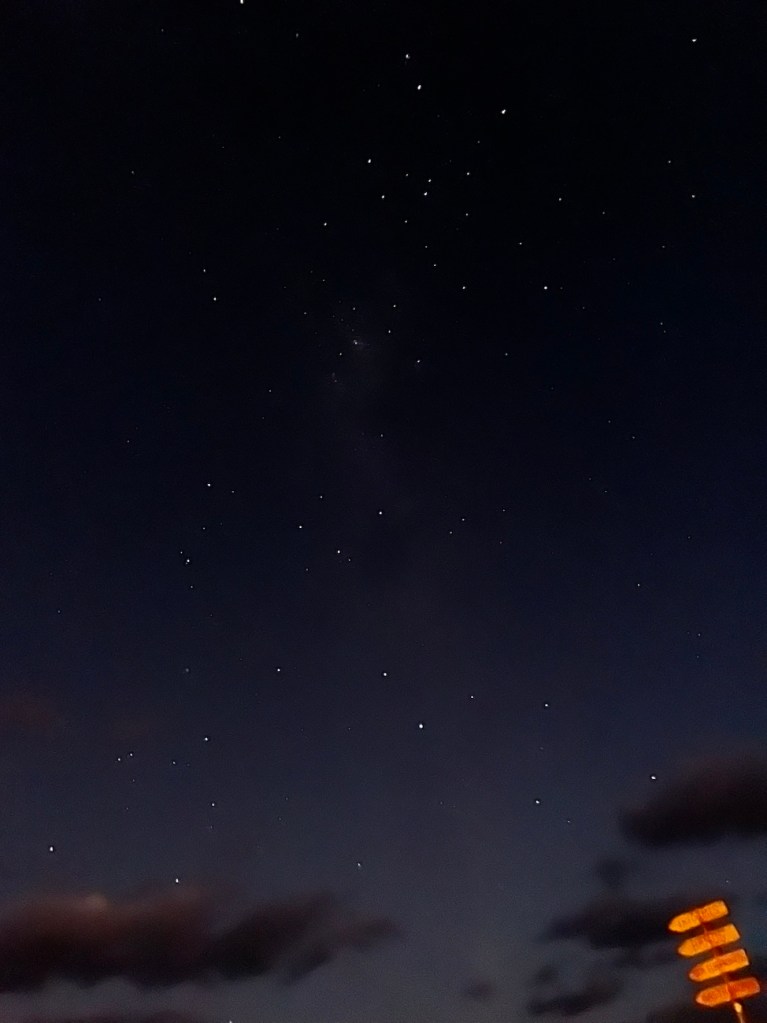
Our rooftop came into it’s own at night- this was the clearest sky I’ve seen in a long time, with the Milky Way visible end to end. I also loved having the chance to switch off from your phone with very limited electricity, and candle light in the evening means you can enjoy the night sky. But we were sitting in darkness in the hostel as the candles in the plastic bottles burned out while The Wasters cooked up a storm in the fully lit up “restaurant” kitchen next door.

Avocado, tomato and bean wraps on the roof – no cooking required

It poured with rain as we left on the jeep a few days later, after making our way back to the Visa restaurant only to find it closed and begging a man there to make us an instant coffee. We only left our stuff in the hostel for an hour, my big bag which was locked and putting our smaller bags in a locker. When we returned from coffee, both combination locks had been tampered with. Our feeling was that The Wasters either tried to get in or just turned the codes to mess with us, something I have never experienced at a hostel before. It’s probably a good thing we did our TV interview before our visit!

View from the Visa restaurant
Breakfast- miniature bag of cornflakes from our bag of snacks and £3 instant coffee

You’d expect some Filthy Hippies at an off grid community and I love the idea behind Cabo Polonio and self sufficiency but the the place we stayed had no recycling and was just filthy, which goes against the values of an eco town. But the area itself is absolutely stunning with miles of unspoilt coastline and the nature is amazing – definitely worth a visit for a few days if you stay in one of the nice guesthouses. It’s also nice to be there off season when you can enjoy the peace and quiet.

Visa cat
Visa and bitcoin accepted?!
Jeep ride out – only one poor guy was on the inbound jeep as we left

Saying goodbye to Cabo, we continued the off grid theme as we headed to a horse “eco lodge” just a few miles up the coast…

Ilha Grande to Paraty

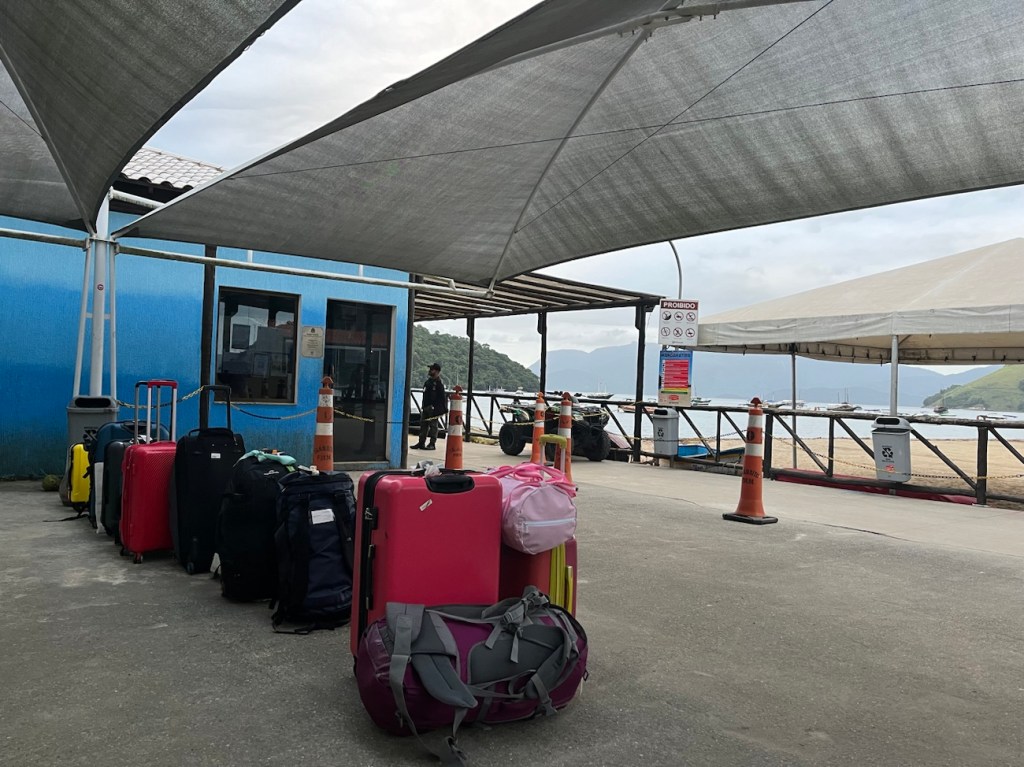
As we left Rio, to make the bus and boat journey to the island of Ilha Grande easier, we booked a three hour transfer from the hostel desk. Two hours later we were still in the minibus and just pulling up at the airport to collect the last passenger (the airport that is only half hour away to start with) courtesy of a very annoying family who were not even at their hotel at pickup time let alone ready to leave, then had the audacity to ask the driver to stop at a cash machine. When we finally got everybody on board the driver had have enough himself and declared we were stopping at a restaurant for 30 minutes. By the time we got to the port we had missed the boat plus we had noticed that everyone else paid on the bus and paid five pounds less than we had. The bus driver bought boat tickets for everyone, gave them to one girl to look after for all of us and instructed us to line our luggage up in the middle for some unknown reason. At least there was a police guard to protect the sitting ducks.

By the time we made the half hour crossing on a boat that reminded me of a lifeboat, and arrived on the island six hours later it was dark. And I mean dark – the island power was off. Of course we had booked the guesthouse furthest from the beach and there were no wheelbarrow luggage helpers here. At least we had our head torches to help navigate the sandy lanes and we found our home for the next three nights.

Breakfast

We walked back down to the town to find some food and were looking at the menu at a busy restaurant when a man wandered over from the street, holding a plastic bag, and said something we didn’t understand. I hazarded a guess he was asking for money and said no thank you which was a bit awkward when he turned out to be the waiter. Thus commenced a bizarre evening where he took our order then forgot about it and we played 6 games of Monopoly Deal before getting a horrible meal. When I asked someone else that I assumed was a waitress for some water, she repeated back “you want water??” with an incredulous look as if I’d asked for the most ridiculous thing imaginable. By the end we still weren’t sure if the original man worked there or not. But the island’s power came back on and everyone cheered.

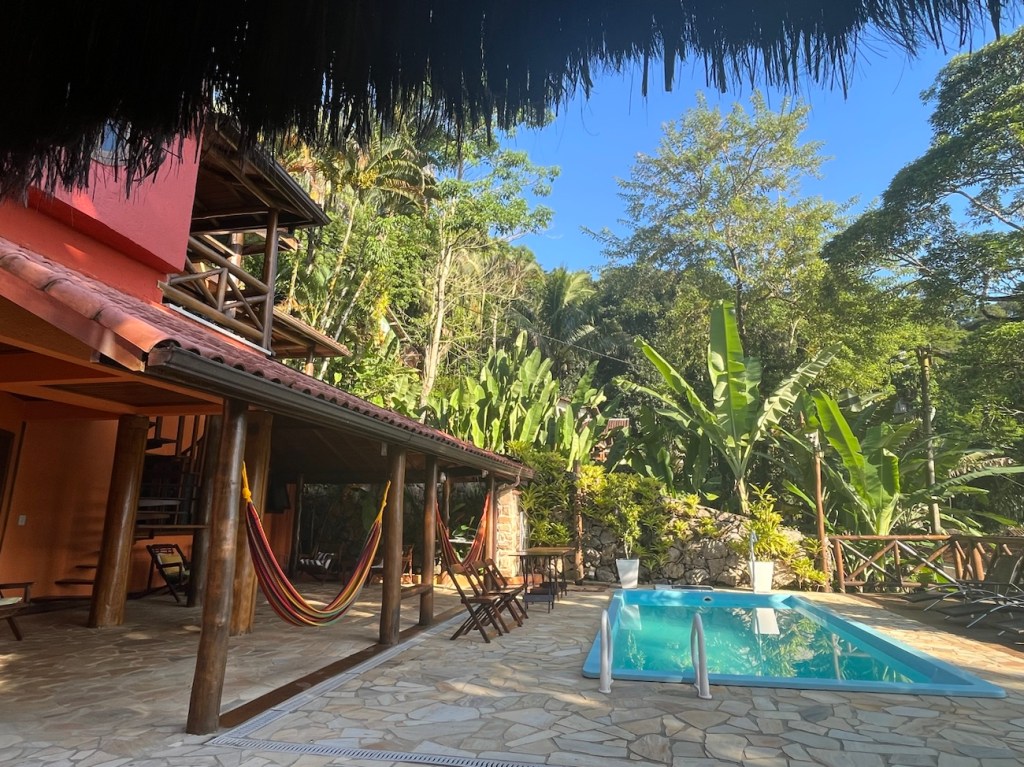
In the morning we saw how beautiful our little guesthouse really was, with hammocks and a pool and a lovely breakfast lady squeezing fresh juice who spoke no English but used Google translate to talk to us. We were the only guests in the whole place so had our own private breakfast buffet of fruit and rolls and cake. After some planning the night before, we set off on the most popular hike across the island to Lopez Mendes, “the most beautiful beach in Brazil”, billed as it’s a tough 3 hour, 6.1km hike (“expert” level) with limited supplies on the way. We bought a picnic lunch of sandwiches (unfortunately they toasted them) and enough crisps and water to survive for a week.

In actual fact this is a really beautiful hike through the jungle, only passing a few other people, and not really difficult at all if you have a reasonable level of fitness. I especially enjoyed the tiny section that required a rope which we presume gave it the “expert” rating!

The trail passes by the smaller and in my opinion more beautiful beaches of Praia de Palmas which had just a handful of tiny guest houses and would have been a lovely place to spend a night, then continued to Prai de Mangues where the boats come in. We saw some gorgeous little monkeys in the trees, scared away by the Argentinian group with their flasks of maté and loud voices shouting “hay un mono!!”. Not any more there isn’t.

When we got to the actual Lopes Mendes beach it was anything but deserted – it had kiosks selling beer and food and lifeguard stations, and we seemed to have timed our arrival with a cruise ship. It may not have been the most beautiful beach in Brazil but Helen jumped some waves and we ate our cooled down toasted sandwiches after picking out the wilted lettuce, unable to buy a beer as we didn’t have enough cash (no ATMs on the island so maybe the annoying bus family had the right idea). In my opinion the hike itself is the highlight rather than the destination.

Like most people we got the boat back at 3.30 instead of hiking the return trail – which we almost missed as we were waiting on the wrong beach. The boat ride was really nice in itself and is the perfect way to see some of the island without spending money on an actual boat tour!

We had another slightly weird dinner with another waiter we weren’t sure actually worked there and five games of monopoly deal before getting our drinks, but it was one of my favourite days in Brazil so far.

“Deserted” beach

We finally had a lazy morning by the pool the next day before doing the short hike to some ruins of a jail that was used for quarantine. You could easily spend a good few days here hiking the various island trails – though we were yet to find a beach with enough sand to sunbathe, we did find one with a very annoying hippy couple playing terrible recorder.

Beach dog

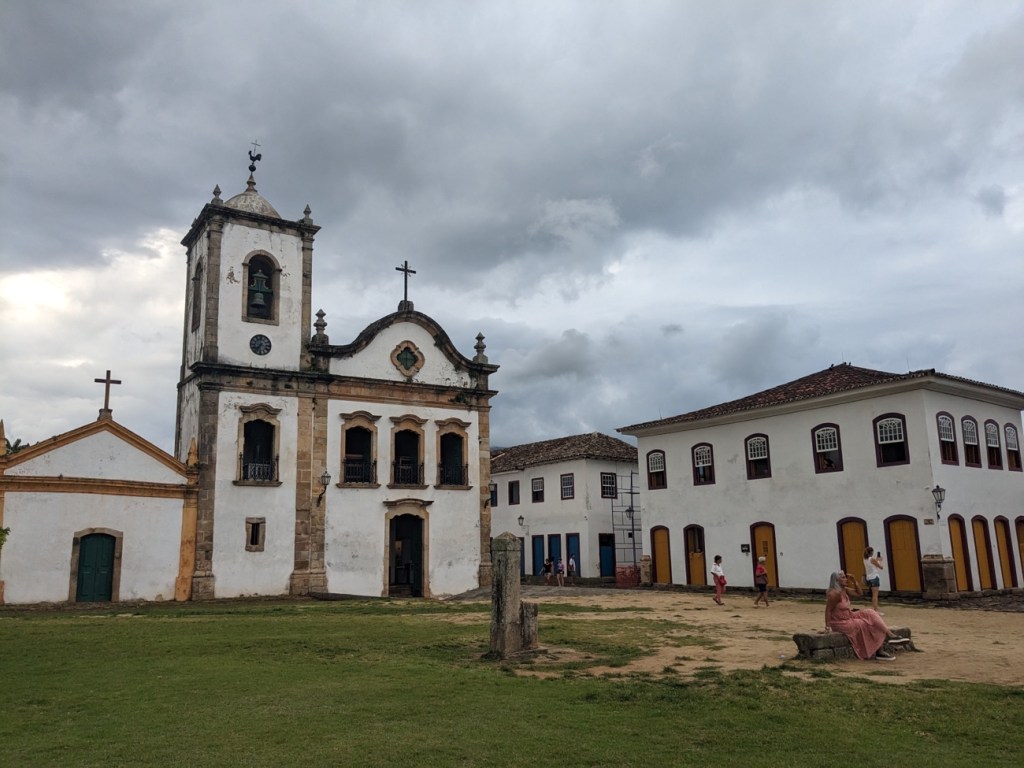
On the way back to Sao Paolo, which would conclude Helen’s trip and mark the start of the next leg of my journey, we followed the backpacker trail via the little colonial town of Paraty. I had done zero research on this place so had no expectations but it’s well worth a stop with it’s preserved town centre and jungle backdrop. It also has a really interesting history, with the Portuguese arriving in the 16th century and it became a busy port town built on slave labour.

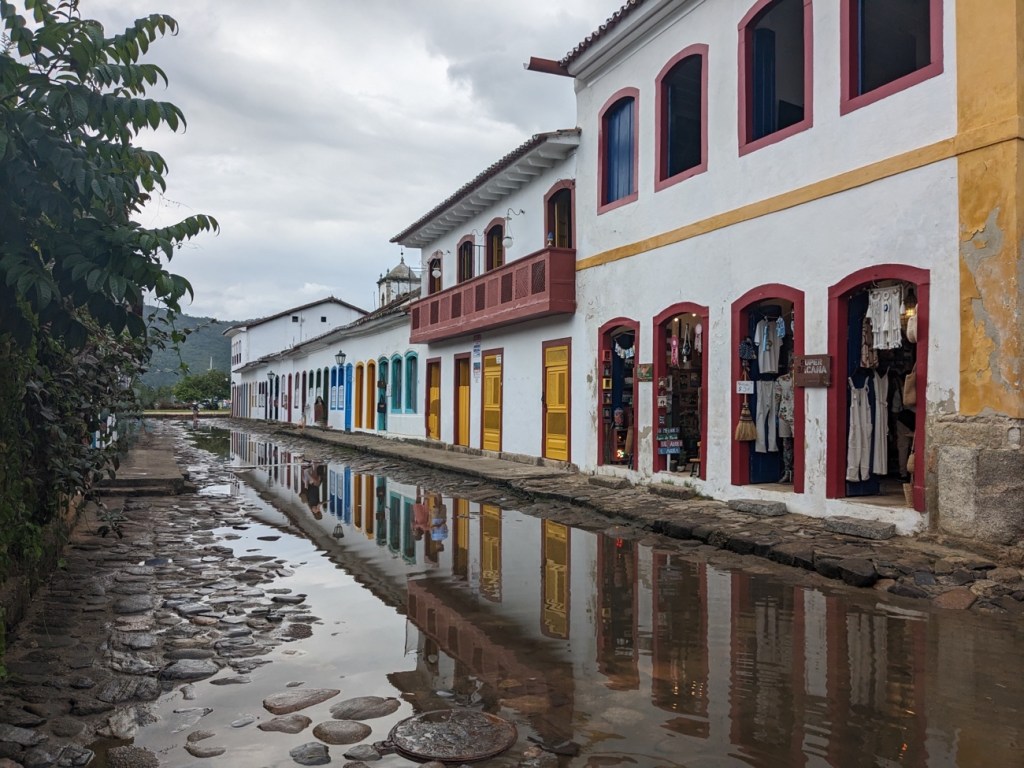
Much of the town gets submerged under the tide water – good thing we were wearing flipflops aside from when navigating the cobbled streets (Helen fell over). The streets used to be lower than the houses which gave it the name of the Venice of Brazil. Sadly the old roads were rebuilt by child slaves and the “good” stones replaced by cheaper uneven ones, at a higher level meaning the houses flooded. I can’t remember most of the history and have no internet access to look it up but I do remember that the three main churches were once totally segregated for whites, blacks and mixed race people and there was also no sewage system so the houses and churches closest to the sea got the raw deal.

Photo credit to Helen!

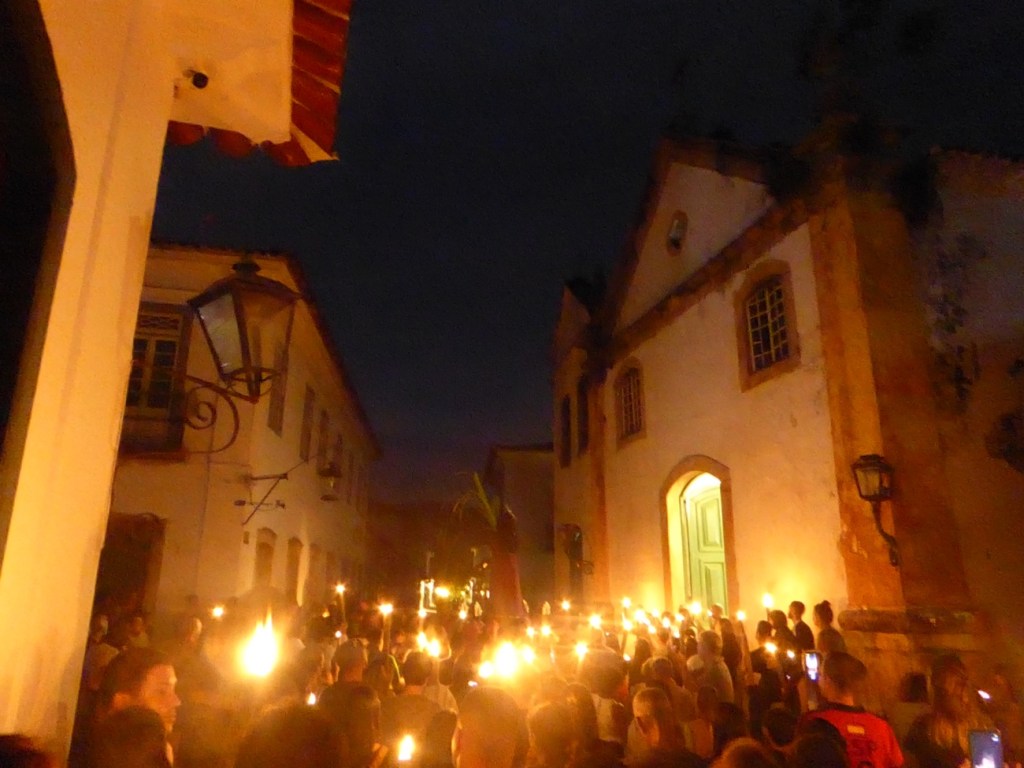
We were there for Good Friday meaning we got up again at midnight (one of Helen’s better ideas!) to see the ritual of a effigy of Jesus holding a huge palm, being carried through the streets followed by a large crowd holding lit torches. We ended up in the parade for quite a while before we could get home again.

And that was three weeks in Brazil, as we waited for a six hour bus to Sao Paolo – a bus that never turned up so we ended up sharing a rollercoaster of a taxi ride with an Argentinian family who were otherwise about to miss their flight…

Return to the Mountains (Montenegro Part Two)

The silver lining to going around in a circle to get back to Montenegro was meeting Monique on the bus that I hadn’t intended to take. We bonded when she donated 50 cents for me to use the toilet (hole in the ground) at good old Podgorica bus station as I didn’t have any money left, having traded the last of my Albanian Lek with the bus driver in order to purchase the ticket for the next leg of the journey. Monique also shouted me a coffee as we waited for our second bus which would take me to the city of Bar and her to Ulcinj (that town that we had been less than 45 mins away from the same morning). It always amazes me that when you’re travelling it’s perfectly acceptable to swap numbers with a stranger and invite them to hang out the next day, but if you did that in the UK you’d probably get a very different reaction.

Bus buddies
Interesting cargo on the road

My final stop in Montenegro was ‘The Grove’, the only accommodation I had booked before leaving the UK as I had a feeling it would be my kind of place. The Grove is a beautiful converted olive mill nestled between the mountains outside of Stari Bar (the old town of Bar). After the usual half hour walking around in the heat with my bags looking for an ATM I couldn’t be bothered to wait two hours for the local bus nor haggle with the taxi drivers so I paid the rip-off price of €10 to get straight out of main Bar (there’s nothing really to see there) and up to the village.

The grounds of The Grove

The Grove has to be one of the most stunningly unique places I’ve had the pleasure of staying in. Incredibly spacious with a huge shared kitchen and a two storey open lounge area, the selling point (and it was actually up for sale when I visited!) has to be the massive garden with its own spring (pure drinking water), firepit and pizza oven. Add a few cats and chickens wandering around as well as a beer fridge operating on a trust system and you’ve got an instantly sociable setting.

Obligatory hammock shot

The current owners Chris and Zoe also go out of their way to make it a friendly place, organising hikes to waterfalls and getting the fire going at night. This was the perfect base for 5 nights of doing nothing.

Group singalong by the fire
Mountain setting

The next day instead of doing nothing I jumped back on the bus to meet new friend Monique in the smaller coastal town of Ulcinj. Beach days are better with friends and a female friend means you can visit Ladies Beach… despite the seedy looking signs this is not the Montenegro Stringfellows, it is the nicest, most comfortable beach setting that I experienced in Montenegro. The key feature of Ladies Beach is that no men are allowed – sorry guys! Two bouncer types sitting at the entrance were presumably making sure only people who looked like women entered. There are even green sheets hanging from the trees that blend in with the forest to make sure there are no prying eyes. Down the stairs awaits a gorgeous secluded cove with turquoise, sulphur water and caves to explore, sunbeds dotted around the rocks with a €4 price tag and a restaurant with a waitress who will bring huge plates of watermelon to your spot. I’m not sure this could get any better, with women of all ages and ethnicities feeling comfortable to wear swimsuits or nothing at all.

Ladies Beach – not actually a strip club
Modesty protection

Ulcinj itself has its fair share of souvenir shops but this is offset by a lovely fortress, as is usual in Montenegro. There is a distinctly romantic theme to the sunset bars which we enjoyed with a cocktail and a wander through the cobbled streets until I had missed the last bus back. Apparently once it gets to 9pm the taxi companies have closed, but luckily Monique’s hotel was run by two amusing brothers in their 60s, one of whom disappeared into the night and eventually came back with a man prepared to drive me home, who was actually an economics graduate who lost his job in banking in the pandemic and now helps his father driving taxis.

Ulcinj fort at sunset
Sound on for romantic tunes
‘Money Heist’ themed bar in Ulcinj – no idea why

Stari Bar is the old town of Bar – Stari meaning old – and has my favourite fortress so far. It costs just €2 to enter and is deceptively huge. Monique is the Queen of Instagram photography i.e. she takes sneaky shots when you genuinely are unaware so I ended up with what are likely to be the most flattering photos I’ll get for some time.

Within the fortress walls

The fortress is well worth a visit, there is the remains of the tower to climb, the church and ruins of the palace, all with amazing mountain views of course.

Mosaic in the fortress

The thing about staying somewhere special like The Grove is that it tends to attract like minded people. There were always people to hike to a rock pool with, or share a home cooked dinner in the evening.

Naturally we had to climb down for a dip
A day in Montenegro is not complete if you don’t swim under a waterfall
Hiking expedition

And that concludes Montenegro for me, having backtracked through the country twice I have seen all I need to and feel I accidentally saved the best until last. I’m leaving for Serbia just as the UK puts Montenegro on the dreaded ‘red list’ and just when tourism was picking up, as are lots of other visitors who funnily enough would prefer to spend two weeks in the neighbouring countries and enjoy the September sunshine rather than give a couple of thousand quid to the UK government in a ‘quarantine hotel’…

Albania – Bunkers, BMWs and Non Existent Buses

Albania wasn’t even on my radar until fellow backpackers I met in Montenegro were telling me that the neighbouring country was well worth a visit. At the end of my first day in the capital, Tirana, I could see why.

Transport from Sarajevo to Podgorica

The bus journey here from Sarajevo through Montenegro was an unexpected highlight – a cramped looking minibus was surprisingly comfortable as it transported us through the mountains, in and out of mini tunnels and on the edge of the Tara Canyon which got some whoops from the children on board. I had to spend an uneventful night enroute in Montenegro’s capital, Podgorica. It is known as the ‘most boring capital city in Europe’ but I was still expecting to find somewhere open for food. Pasta and a can of beer in the hostel kitchen was as good as it got (the miserable supermarket checkout lady wouldn’t let me purchase a bottle, which I only found out later was because you’re supposed to return the empty for recycling).

Border control
Podgerica – don’t bother

Back on another bus the next day and there was no searching of bags at the Montenegro / Albania border crossing – we didn’t even step off the bus, instead the driver simply collected our passports and handed them back to us nicely stamped into the country. When the slightly gangster looking young man (Albanian mafia featured in the movie Taken apparently) sitting next to me shared his pack of biscuits I got my first taste of Albanian hospitality towards visitors to their country.

Olives on sale at the service stop…
… Along with some more interesting items
Video of the bus journey – worth it just for the views

Tirana is a really lively city with plenty of space, both urban and green. I was pleased to find a huge park to wander around and especially pleased to find a ‘cooling station’, like an open doorway that sprays cool air as you pass through.

Tirana opera house

I stayed at the gorgeous Garden Hostel which includes a breakfast buffet in the garden and a very warm welcome from the brother and sister team. I also got to check out the bunker that is under their house, with room for over 80 people (each seat has a number). Bunkers are a common sight in Tirana – by 1983 there were 173,371 bunkers in Albania, built in the 1960s and 1970s during Enver Hoxha’s Stalinist rule. This was known as bunkerisation.

Bunker under my guesthouse
Communist propoganda on the walls

The first thing I noticed in Albania is that almost every single car is either a BMW or Mercedes, and a battered up old car at that. On every corner is a car flashing it’s German logo looking like it’s weathered a fair few accidents.

With just one night here, I wasted no time in joining an evening walking tour of the city with a very entertaining guide. He managed the tricky task of showing us his hometown, presenting a crash course in the history of communismn in Albania and still keeping it fun. Tip-based tours like this are usually a great way to meet other solo travellers as most of the hostels promote them.

I hadn’t appreciated the level of communism in Albania, which did not end until 1992. According to our guide, Albania thought North Korea was ‘not communist enough’. He urged us to imagine suddenly being exposed to banks, bananas and other aspects of life we consider essential – his grandfather would ask for a ‘red banana’ when what he meant was a Coca-Cola.

The expanse of Skanderbeg Square, named after national hero Gjergj Kastrioti Skënderbeu who led the rebellion against the Ottoman empire, appears in stark contrast to the communist-era blocks of flats dotted around.

I’m including a lot of photos of Tirana because of the sheer variety of buildings I saw – including religious ones, in a country that has a population of 80% Muslim on paper and also claims Mother Teresa as their own. Though apparently so does North Macedonia.

A stark reminder of previous times is a piece of the Berlin wall on display next to the entrance of yet another city bunker.

On that note, Tirana has maybe the most unique museum I’ve ever been to – “Bunk Art 1” (a smaller “Bunk Art 2” can be found in the city centre but it’s worth the half hour bus ride out to the original – just ask around for the bus stop and the driver will tell you when to get off).

Mother Teresa

Note that this is by no means an art gallery – rather it is a huge underground maze including 106 rooms and an auditorium. There are communication rooms where you can pick up a telephone and listen to the voice of Hoxha himself, fully furnished bedrooms and bathrooms. Fairly creepy when you seem to be the only visitor! This was all built in preparation for a war that never happened and as such was never used, rather they were abandoned in 1992 with the fall of communism.

The decontamination room reminded me of Lost – turn the sound on

A helpful sign states that you are encouraged to remain calm and stay where you are in case of a powercut – it seemed very unlikely anybody would remain calm if you happened to be in one of the rooms with the life-sized gasmask wearing pretend soldiers and fake snow on the ground.

Entrance to Bunk Art 1
Tunnel leading to the bunker complex
Enver Hoxha’s living quarters
Original electronic equipment
Auditorium inside the bunker

There is an enormous amount of information in this place, room upon room of photographs and letters, from relations with Italy, to the start of communism, the rescue of an American medical flight through to UK involvement. It was far too much to me to take in – once more I was reminded how little I know about this part of European history.

Original ‘Communist propoganda’ on display in the bunkers

Back up on ground level, Tirana is an opportunity to eat at vegetarian restaurants again, even a mocha with soy milk is available. I wandered around at night taking in the atmosphere but too tired to join a hostel bar crawl.

Tirana at night

Next stop on the backpacker trail in Albania is Berat. Taking yet another bus here was an experience in itself – there are two ‘bus stations’ in Tirana, one serving routes north and south and one serving east and west – it’s important to get the right one. I use inverted commas because ‘bus station’ is a stretch – bus stations in Albania are really carparks filled with buses of varying states of decay. As soon as you arrive, a group of men will shout various city names at you. This is not a scam, it’s how you find your bus as English is not widely spoken and there is no ticket office. I hopped on just as the Berat bus was departing – the lack of following schedules actually means you’re less likely to miss your bus as the driver tries to wait until all seats are filled.

The UNESCO Heritage Site of Berat, often referred to as the city of 1000 windows, dates back to the 4th century. Berat could be visited in a day trip from Tirana but it’s lovely at night when the streets are full of people drinking coffee and eating dessert, and old men playing chess occupy the benches. Apparently if you want to find anyone in Berat, just come to the main street after dusk.

Old streets leading to hostel
Evening in Berat

Berat’s main attraction is the fortress on top of the hill, which has a functional town inside of it with houses, shops and restaurants. The walk up is steep in the 35 degree Celsius August heat (even the first bit of rain I’ve seen in 3 weeks didn’t cool the temperature down) but the views are worth it.

View from the fort over the Gorica area

I went in the slightly odd National Ethnographic Museum of Berat which is basically a house where I had no real clue what I was looking at, but mostly enjoying wandering along the river in the afternoon and stopping for coffee or food.

Figs picked from the garden

I stayed at the Berat Backpackers, a choice made mostly due to the Lonely Planet write up and it’s beautiful setting inside the Gorica area (across the bridge and south of the river Osumi) with a large garden to enjoy breakfast and a beer from the well stocked fridge.

Berat Backpackers

The atmosphere didn’t quite live up to the reviews possibly because of change in ownership – this was a rare time where I was grateful when some other Brits turned up and quite literally brought the party in the form of three 18 year olds – India, Millie (from Budleigh Salterton – she agreed that naturist beach is definitely dodgy) and Millie’s boyfriend, who made me laugh like only 18 year olds can, and Tom who brought a plastic water bottle full of the local liquor ‘rakia’, otherwise known as pure fire, made by an old woman who ripped him off on the street. With a lack of other backpackers able or willing to speak English, a quiet Friday night quickly turned into Brits on Tour as we found the one place that had a pool table. I was slightly concerned we were now in Albania mafia territory and it was unclear how much/ what it was going to cost, but Tom assured me the locals who were by now clearly waiting for us to leave, were ‘just the lads’.

Let’s just say we were not popular in the hostel the next morning (I blame the Czechs who certainly knew how to carry the party on) but luckily I was moving south for some beach time.

What happens in Albania stays in Albania

With only a week here, I wanted to see the Albanian Riviera and chose the town of Vlorë predominantly because of the direct bus route. First hurdle – no taxis so the hostel owner’s financé drove me to the bus station / parking lot. Second hurdle – despite what the timetable said there were no buses running in that direction today, and no explanation as to why not. Having already booked the next few nights accommodation and on a schedule for once, I had no choice but to pay the fiancé to drive me the hour and a half all the way to the coast. I spotted some other tourists also trying to get to Vlorë and suggested we share the ride but they weren’t interested, expressing horror at the price. What cheapskates, I thought as I agreed to pay the 7000 lek myself (around €55). It was only when we were on the way that I realised I had done my old trick of confusing the currency and quoted them 70,000 lek, over five HUNDRED euros. No wonder they weren’t keen.

When we eventually got to Vlore, after stopping to help two German girls change a flat tyre, we couldn’t find my accommodation despite my lovely driver making several phone calls and looking so hard at Google maps that he backed into a parked car (which he totally ignored). If he was regretting taking me to the bus station he didn’t show it, refusing to accept even take a tiny tip.

Vlorë beach front

My accommodation in Vlorë was the ‘Berti Apartments’, run by the sweetest old couple who did not speak a word of English other than ‘breakfast?’ – the old woman woke me up at 7am by knocking on my window to bring breakfast on a cute little tray to the table outside my room. It was only missing the coffee – with no instructions I couldn’t light the gas to make my own nor communicate this to my hosts. Cue comedic gesturing until the old man called a younger man for me to explain over the phone, who then came around two minutes later so we could all go to my room to teach me that the gas has to be turned on from the mains in order to work.

Vlorë is a beach holiday destination – lovely sandy beach and the warmest sea at the price of a €4 sunbed for the day. Wide palmtree lined streets full of cafes and restaurants turn into thumping clubs in the evening when the promenades are full of people, mostly holidaymakers from the surrounding countries. Still not quite the secluded coves for early morning swims I was looking for but beautiful none the less and with the bonus of very friendly people; as much I as liked Montenegro it is hard not to notice that people don’t really smile.

All too quickly my week in Albania came to an end as I had booked some accommodation back in the south of Montenegro, just across the border from the city of Shkodër, so I headed there for the night. There isn’t much to do there unless you’re going further north to hike in the Albanian Alps or spend time on the lake, neither of which I had time for but I did enjoy the photographic museum which I had all to myself. It contains some stunning old photographs of Albanian life, particularly the random ones of people laughing and joking with no information to explain the who / what / when.

I wasn’t that surprised when once more the bus did not materialise, despite a) my having double checked in advance with two different hostels that it existed and b) this bus was my sole reason for going to Shkodër in the first place as was less than hour away from my final destination. The journey is part of the experience as they say so I had to go almost full circle in the opposite direction, back through my favourite city Podgerica, for a final five nights in Montenegro before heading north to Serbia…