Two Wasters in a Country Club – Paraguay Part 1

Paraguay is one country I missed out last time and I didn’t know anyone who had bothered to visit. When Vix and I told people in our hostel in Montevideo that we were planning to go, they said “Paraguay?! You must be very religious or drug dealers”. Even more reason to visit this landlocked country that borders Brazil, Argentina and Bolivia and is part of the Triple Frontier where the Iguazú and Paraná rivers meet.
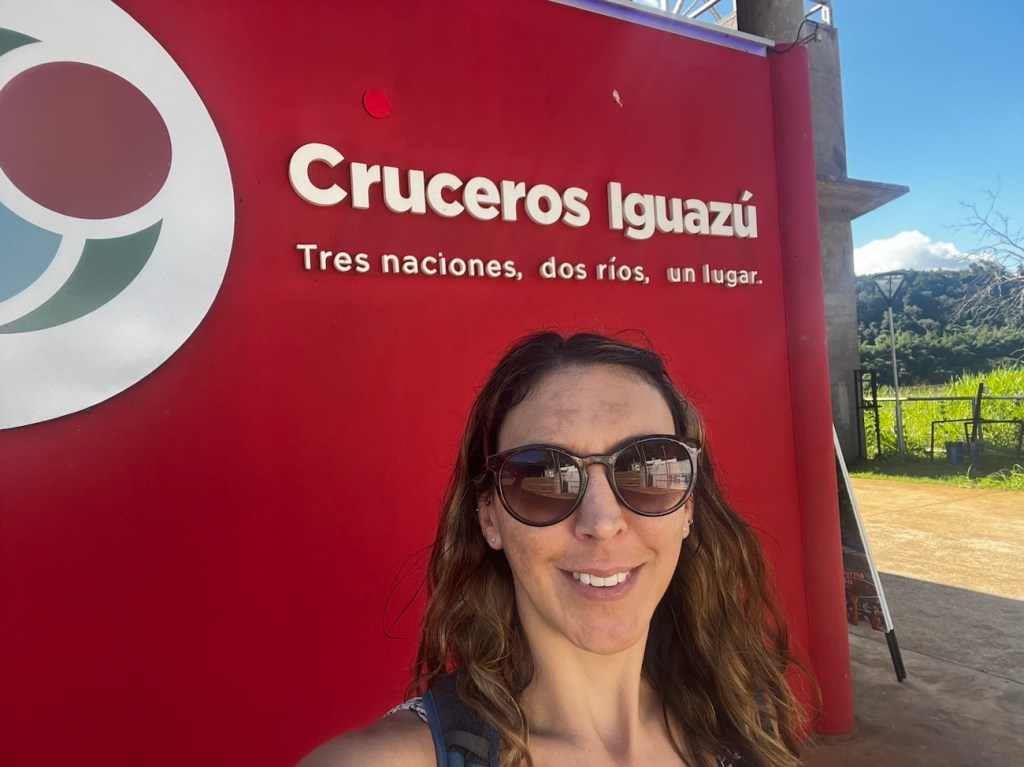
Three nations, two rivers, one place

There were multiple bus operators at the bus terminal in Puerto Iguazú running services to from Argentina to Ciudad del Este in Paraguay. It looked pretty straightforward as long as you don’t get left behind when the bus stops first at the Brazilian border. The easiest option is a taxi all the way – taxi drivers were offering this service as we walked down the street. The most fun way, however, is as a foot passenger on the car ferry (called La Balsa) across the Paraná river.
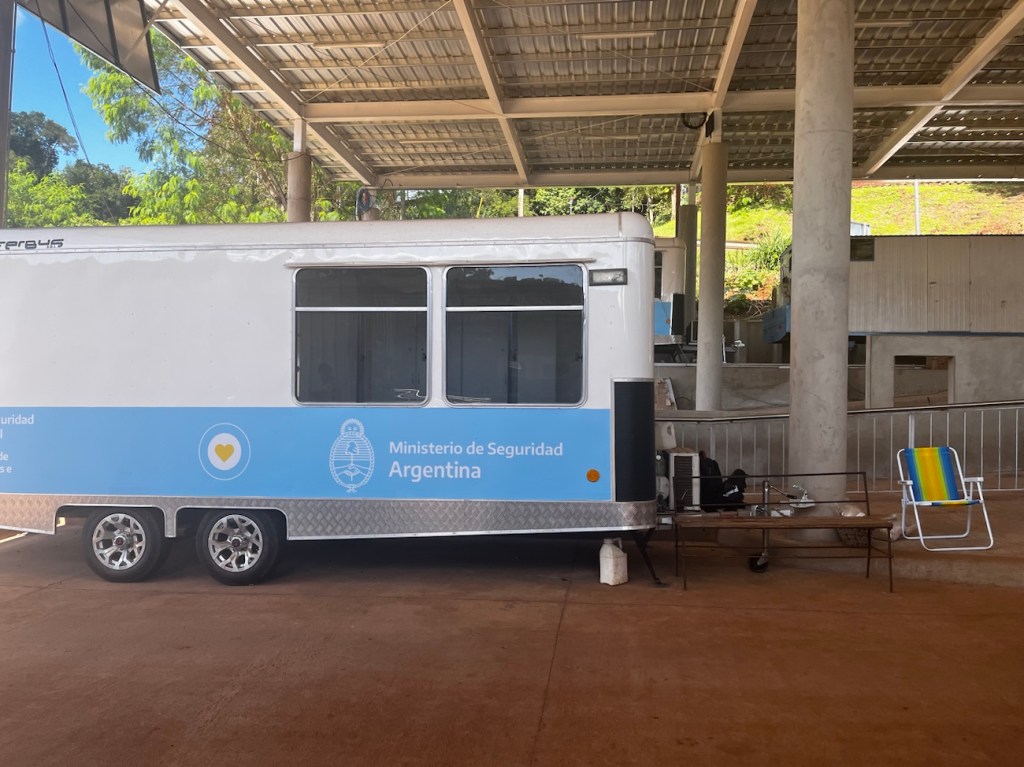
Argentina border control

It was hard to find any information about La Balsa as nobody seemed to know about it. We were met with blank stares at the Hostel Iguazú, although to be fair that’s how they responded to everything. But we did find a helpful blog that detailed the journey and discovered that the port was only a 20 minute walk across town. When we asked the hostel how much a taxi to the port should cost, just as a rough idea, the woman helpfully said she has no idea as she walks everywhere. Well, so do I when I’m not dragging all my belongings around and limping from an allergic reaction to a wasp sting. We definitely got ripped off with over £5 for a five minute drive but as four different currencies are accepted (Brazilian reals, Argentinian peso, Paraguayan guaraní or good old US dollars) I paid with left over currency that made it feel like a free ride whatever it cost.

Which boat?

La Balsa ferry seems to be relatively new. We had to ask a few times before we found the little portacabin selling the right tickets and we could easily have missed getting stamped out of Argentina (it’s electronic now so no evidence in the passport that we were ever there).

Sign for the car ferry

We went to sit on the floor by the river to enjoy the view whist we waited since the timetable is just a rough guide – it leaves when full – and immediately got asked to move inside by security who weren’t happy until we were ring fenced in the seating area with it’s concrete benches. We’d been sitting there for a while when Vix happened to look up and noticed that everyone else had left.

La Balsa

When we eventually got on, the boat only took about 15 minutes and the views are beautiful as it goes past the International Friendship Bridge that connects Brazil with Paraguay.
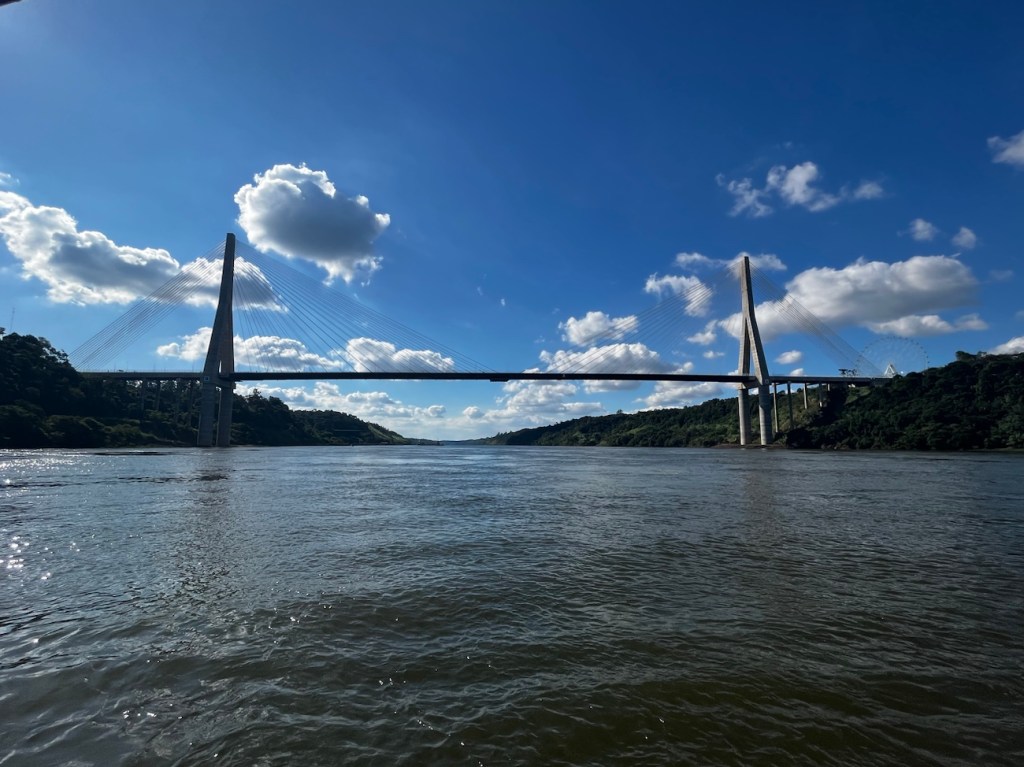
There were no other tourists on the boat and there is no way to blend in – as I got off some fellow passengers said “Welcome to Paraguay” 🙂 We lugged our bags up the hill to yet another portacabin to possibly the most relaxed passport control I’ve seen. We were very happy with our perfect Paraguay entry stamps – the friendly officer must have either just filled up his ink or else not had any other visitors recently.

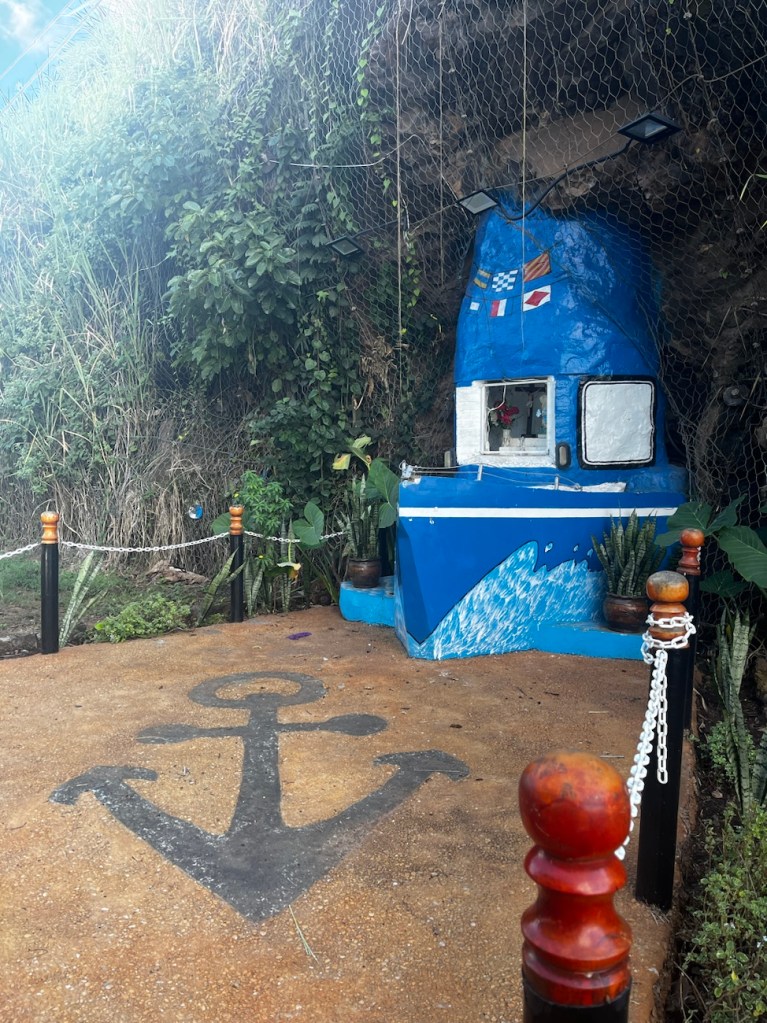
Paraguay
No idea what this was but we liked it

I assume if we had walked further up the hill we may have found some buses but we had no idea of the timetable. Taxi is definitely the easiest way out of the “port” – a man offered us a ride for $10 for the 45 minute drive to our hotel north of Ciudad del Este which we were more than happy with.

Customs in Paraguay

The taxi driver spent the journey telling us facts about his country in hard to understand Spanish, which was lovely but we would have preferred him not to have been finding YouTube videos of Monday Falls (Paraguay’s alternative to Iguazú) whilst he was driving. He also stopped the car to show us the red soil, which we felt obliged to get out and take a photo of, unless we misunderstood 🤷🏻‍♀️🤷‍♀️

Bus?
Red dirt

As soon as we got close to Ciudad del Este, it became clear he didn’t know the way at all and showing him the map didn’t help. We burned through Vix’s mobile phone data with Google maps and all those school lessons in asking directions in Spanish came in useful as we directed him around the back roads. When we eventually got there he complained that it should have cost more and he could have gone on the highway – that’s what you get for asking two foreigners “left or right?” at the last minute at EVERY SINGLE JUNCTION.

Country roads

Ciudad del Este is a duty free shopping haven and the city centre didn’t have the best reputation. But the weather was good and four star hotels are cheap so we decided “Las Ventanas” boutique hotel inside the Paraná Country Club, a 15 minute drive out of town, was just the place. The intention was to stay a couple of nights then move on.

Las Ventanas meaning The Windows

But it wouldn’t be a trip for me unless it involved an insect related hospital visit. I woke up in the morning with a foot twice the usual size and was unable to walk thanks to the wasp in Iguazú Falls. I limped down to reception and told the horrified man at the desk that I needed a hospital – he was visibly relieved that it hadn’t happened in his hotel. Thankfully there was a decent private hospital ten minutes away.
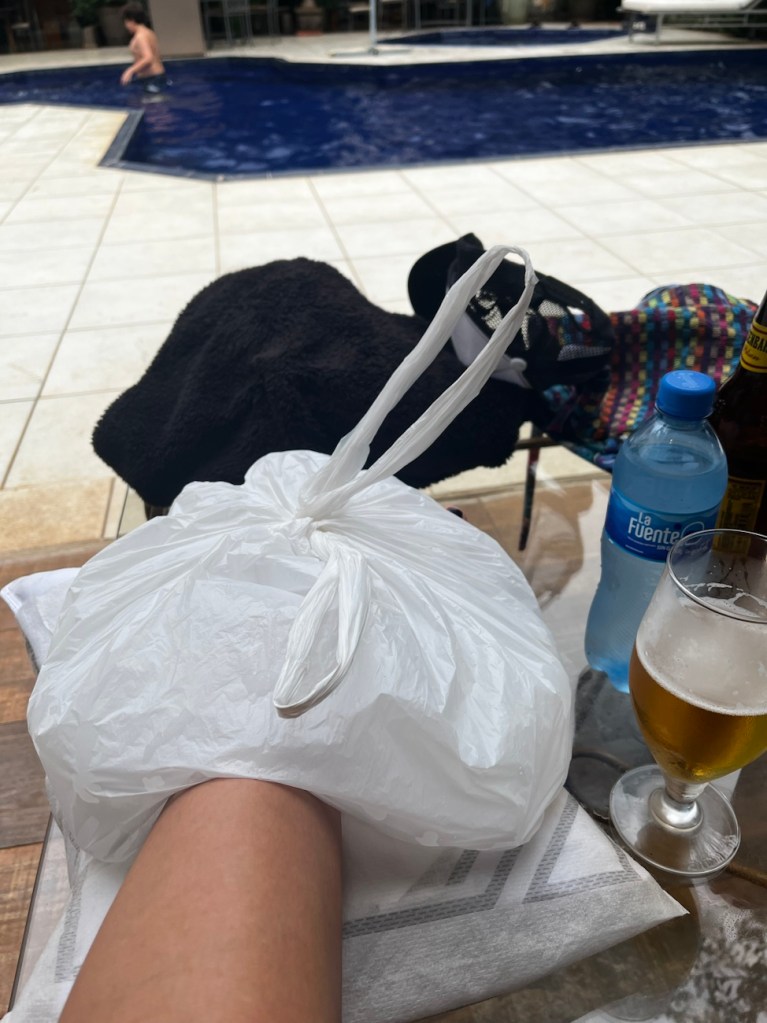
Got my spot for the day -alcohol free beer

They clearly hadn’t had a foreign patient before, as when they took my passport to copy my name they were looking at completely the wrong page and a radiologist took a break from casually sipping his herbal mate tea to have a peak. Luckily there was a nice woman who seemed to know what she was doing and made sure I got seen within ten minutes by a lovely doctor who called my name out as “Marianne British”. I tried to explain that my surname is not “British”, it’s just a British passport then decided it wasn’t the most important thing to communicate. Vix had typed out a description of the situation in Google translate to avoid confusion but this just meant the doctor spoke about me to Vix, as if she was my carer. I can actually see the funny side now. After telling Vix several times that the patient was NOT allowed to drink alcohol on top of the cocktail of antibiotics and anti inflammatories and two other medications even Vix in her actual capacity as real life nurse hadn’t heard of, we left with instructions of bed rest and ice. The whole thing cost about £30.
God knows what the lovely hotel staff thought about two scruffy backpackers who checked into room 211 (“dos once” in Spanish), stuck the “do not disturb” sign on the door and weren’t seen again other than via room service requests for large amounts of ice, toilet paper refills and vegetarian food. On our first night the chef made us a meal of gnocchi and vegetables, which is what they came up with when we asked if there was a single option without meat. Trying to communicate on the phone in Spanish that the chef had made a special meal the night before and could he do it again, was very challenging. Vix managed it but when I tried it just never turned up.
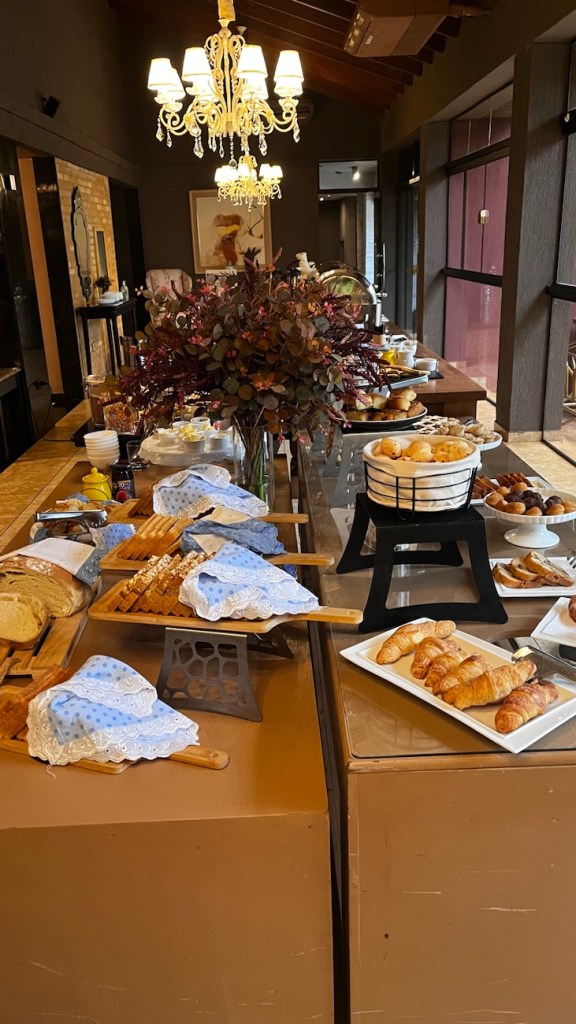
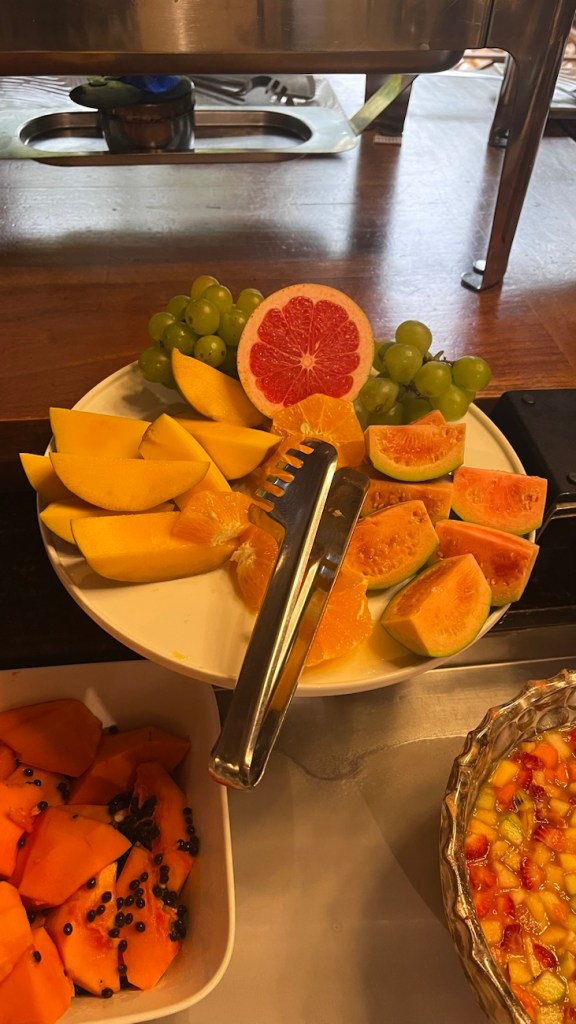
Breakfast

I found it very hard to understand Paraguayan Spanish and they didn’t understand me, until we realised they just don’t pronounce most of the syllables. When Vix politely asked for a taxi from the hospital back to our hotel Las Ventanas, the driver looked confused for a while then repeated back ‘ah, la vetaaaaaa’. Likewise, an ‘americano’ coffee is simply ‘amerraaoo’. The next week was spent watching movies on the huge TV, stealing food from the amazing buffet breakfast for lunch and hobbling around by the pool we mostly had to ourselves. The other guests were nicely dressed Paraguayans visiting for the holiday weekend, and overweight men from what we think was a diabetes drug convention during the week. Meanwhile we wandered around looking like wasters.
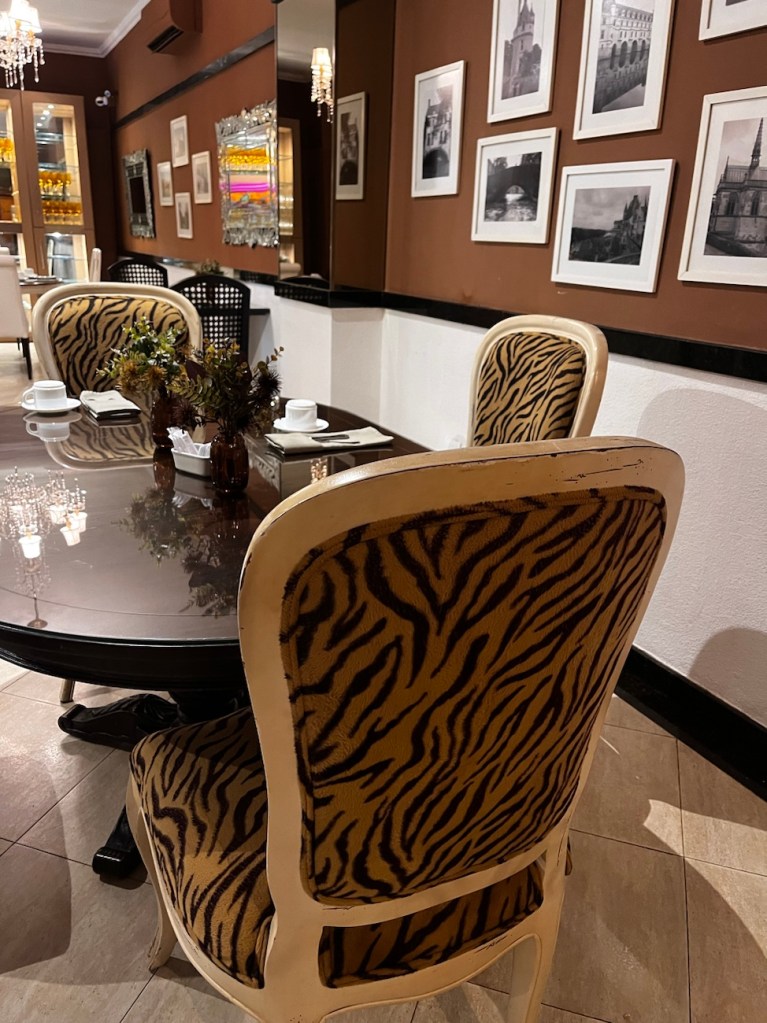
My favourite chairs in the hotel

After a few days I could walk a bit more, very grateful to have avoided a hospital stay – thanks to my lovely kind travelling companion Vix! There there are quite a few things to do around the area, although I didn’t want to risk any more waterfalls or nature type places… We went to visit the Itaipu dam instead. We had just got in the taxi at 12.55 when our helpful hotel man called the driver and told him to hurry up so we would make the 13.00 tour. With classic getaway driving, we did the predicted fifteen minute journey in five.

Electricity

Itaipu is the 3rd largest hydroelectric dam in the world and produces the second most electricity, powering all of Paraguay and a significant amount of Brazil. It’s free to take the bus tour around the site, including the Brazilian side, although the commentary is in Spanish. The power of the water is amazing and it’s well worth a visit. There’s also a lovely gift shop with local handicrafts – our taxi driver went to sit in his car and wait.
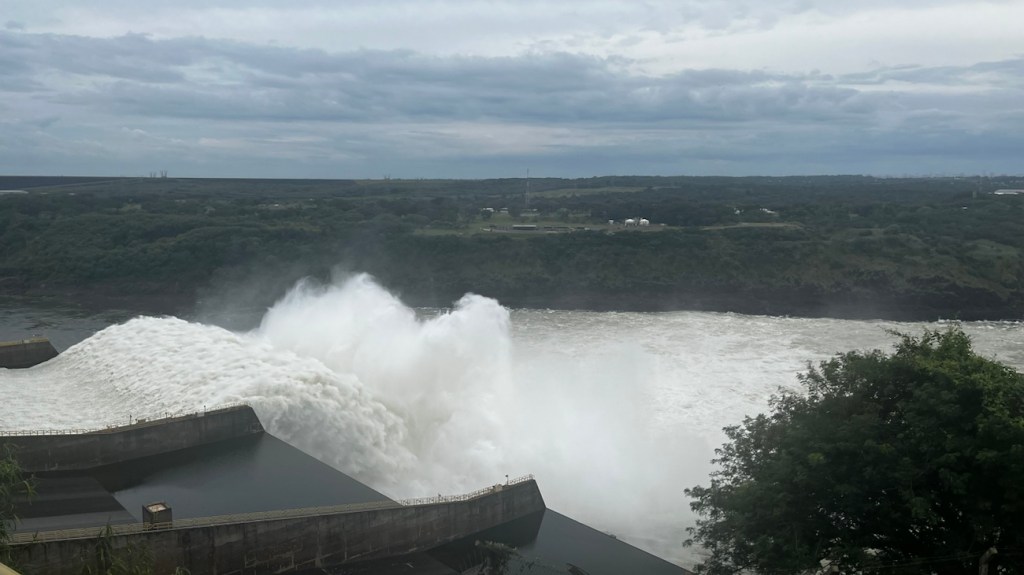
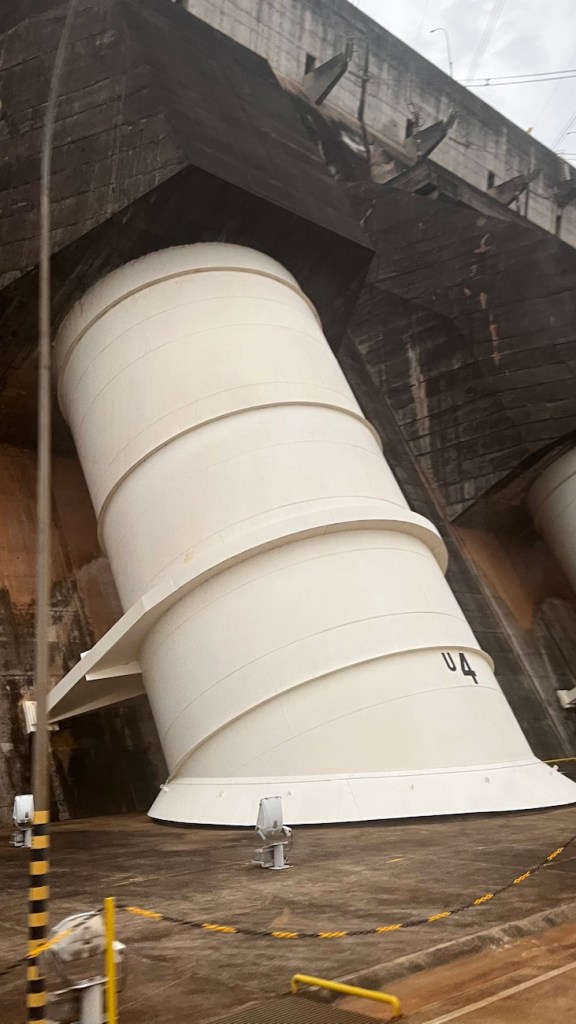
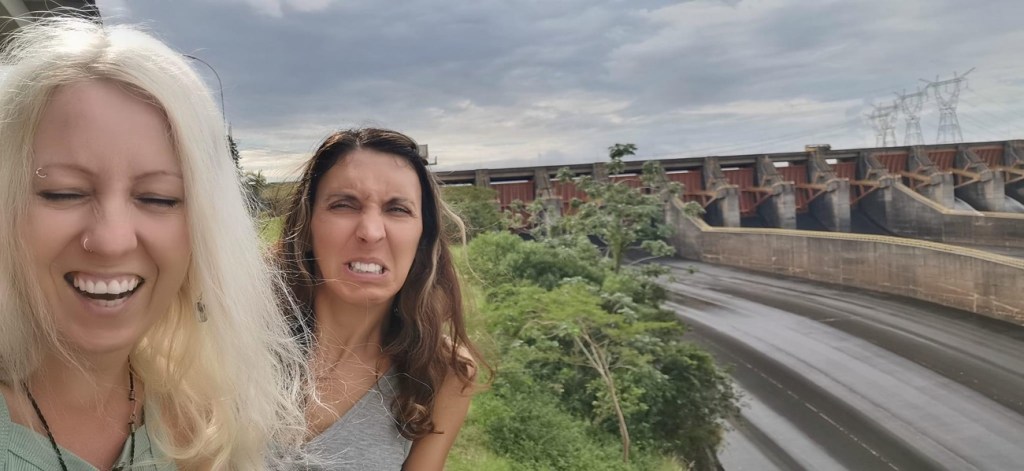
Water flowing over the Itaipu Dam
Harnessing the power
Beavis and Buttthead or two stupid Gringos?

There are also a couple of museums in the area but unfortunately they were both closed, which we found out when we pulled up in yet another taxi only to see the gate fully padlocked, so we went straight back to the hotel via the supermarket. By this point we were ready to leave Ciudad del Este and head to Asuncion, the capital of Paraguay, but our plans were thwarted again as ALL of the highways out of town were closed to protestors. There had just been an election and supporters of the losing right wing party were starting fires on the roads. Our initial thought was to try to get there on the backroads, but when we heard they had overturned an ambulance, and police were disbursing crowds in the capital with rubber bullets we decided to wait it out.

Me and Johnny in the Growler Bar

Each day we would ring down to the front desk, ask if the roads were open yet and confirm we were staying another day. We became so used to just saying ‘dos once’ when we wanted anything that we half-jokingly discussed getting tattoos – until I Googled it and found that 211 is a notorious white supremacist prison gang.

The Growler Bar

Where better to kill time than in the The Growler Bar, aka local rock music venue, which happened to be right next door and finally open after being closed all week. They even went to buy fresh pineapple juice to make me a non alcoholic cocktail and we stayed about 6 hours listening to tunes, eating cassava fries with a ridiculously spicy sauce and getting intel on the capital. The barman, who was from Asuncion, warned us how dangerous the city was and said we couldn’t possibly stay in the old town like we wanted, mimicking stabbing someone to drive home his point. When he wasn’t telling Vix all about his open marriage and how he too was a nurse and a physio and ever other detail of his life, he took some great photos of us next to the rock and roll memorabilia wall. He obviously thought we had more money than we did, as he personally phoned the Crowne Plaza hotel in Asuncion to check the price.

May I help you?

The riots were over and the roads were open again in the morning, so we could finally leave. Buying bus tickets in Paraguay is neither easy nor efficient – you need to enter your passport number about ten times, you only get three minutes to enter all your details and the website rejected all of our credit cards. We finally booked by taking over the front desk computer, otherwise our hotel man had kindly offered to go in person at 6am in the morning to physically get them for us. Anything to make sure we actually left this place – I’m not entirely sure our jokes that ‘we live here now’ were taken as humour.

Traffic lights are fun when you have street entertainers – I missed the one juggling knives.

And that’s proof you can spend a week in Ciudad del Este! The Country Club has some really good restaurants if you can be bothered to leave your hotel – we had a great meal at a Japanese/Pizza fusion place. And plenty of pharmacies to stock up on drugs you can’t get at home. The only thing we didn’t get to do was ride around in one of the golf buggies we saw parked around the place although I’m sure if we’d asked our hotel they would have obliged. Las Ventanas did have the nicest hotel staff I’ve ever come across, who went out of their way to help us with anything we needed. Our favourite front desk man recommended a nicer, cheaper hotel than the Crowne Plaza, in the old town like we wanted and he laughed when we recreated the ‘stabby stabby’ warning from the barman next door – it’s perfectly safe in the daytime apparently. Final stop Asuncion!

The Dollar Blue, The Devil’s Mouth and the Three Frontiers (Buenos Aires and Iguazú Falls)

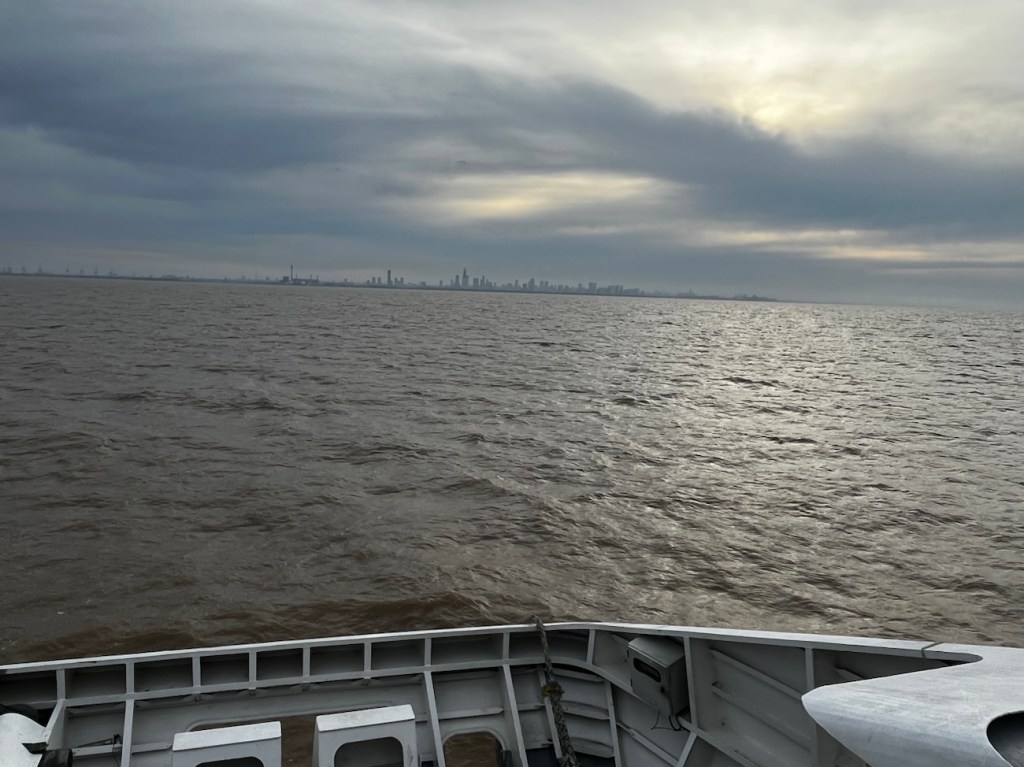
We departed Uruguay via the ferry to Argentina after about ten days visiting a handful of places along the coast. Uruguay has been absolutely lovely and there is plenty to see and do, albeit more in high season, but for some reason this little country is often not part of the standard South America gringo trail. We just had time to walk around the jetty in Colonia with it’s fancy yachts and get whistled at by some men on a boat that was called “Zero Tolerance” of all things. Shame we weren’t invited on board for a drink!

First glimpse of Argentina

It was great catching my first view of Buenos Aries again after all these years, barely visible under a smog cloud. After taking an Uber from the ferry terminal (which turfs you out a back door onto the smoking area on the street outside) we couldn’t find our hostel, “Del 900 Boutique” in the Monserrat district. The man at customs wasn’t even going to let me in the country without the hostel address, which I hadn’t saved and didn’t have Wi-Fi but he did let me run after Vix to get the details – luckily I got her attention just before she left the building.

Vix showing me the hostel address through the glass wall
“Little door”

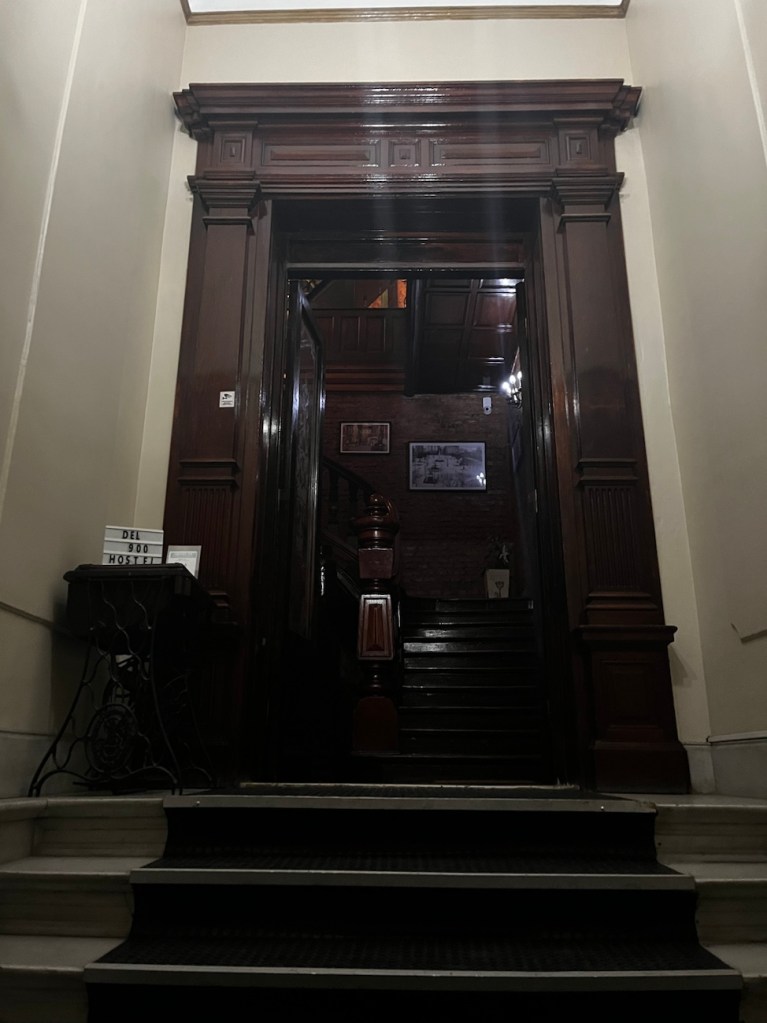
A lady in the restaurant on the corner said it was just next door, “through a tiny little door”. Eventually we realised the entrance was actually through one of the biggest doors I’ve ever seen, housed in the most amazing colonial building. The doorway led us up a staircase and into the grandest hostel lobby that surely exists.… piano, leather sofas, old pool table … all under the highest of ceilings.

Hostel lobby
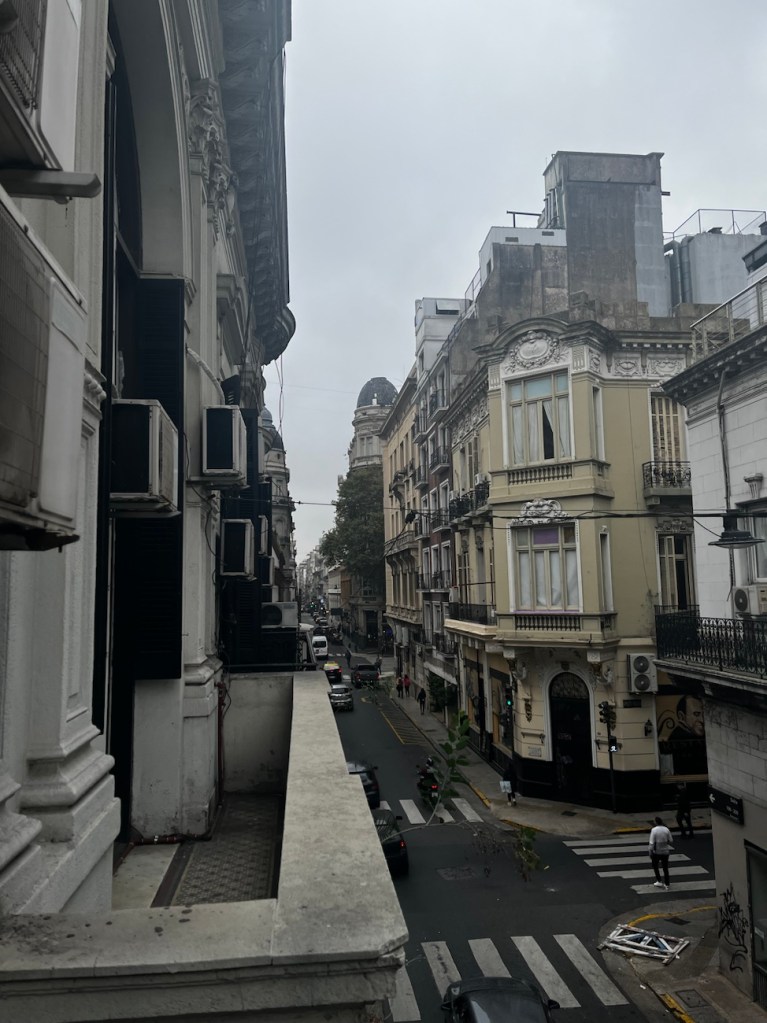
View from our private balcony

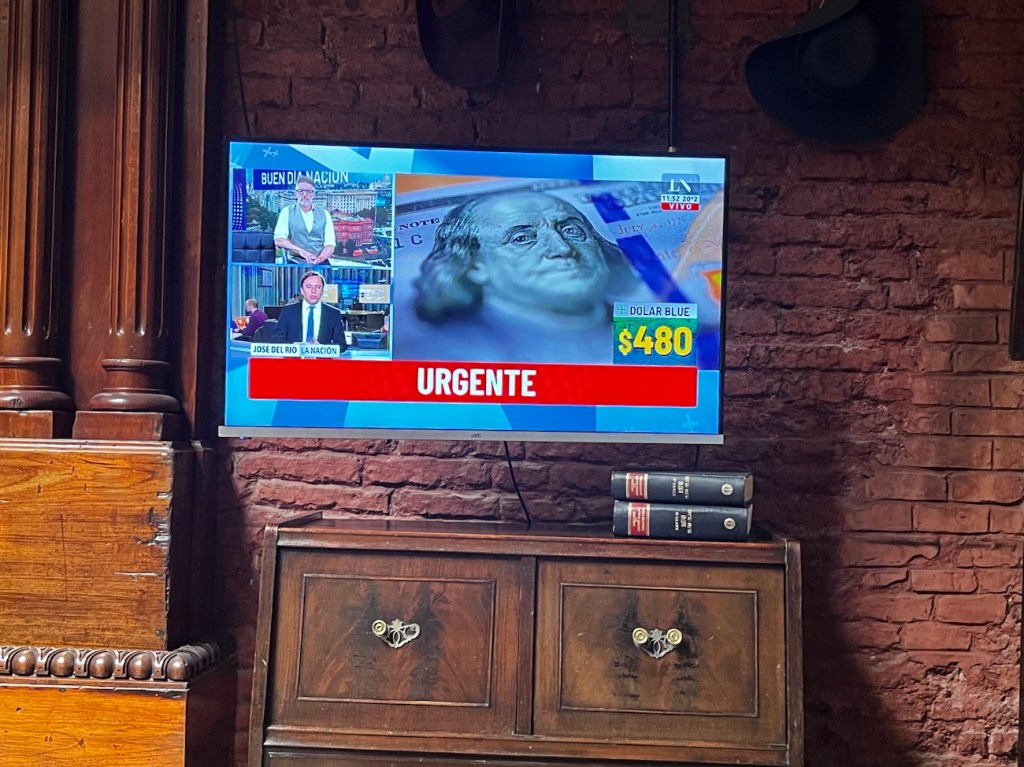
First hurdle – we tried to pay the hostel using the dollars we got from the ATM in Uruguay as hostels here generally only accept cash, but they wouldn’t take them as they were old. I knew that in Argentina the money exchanges only took the brand new notes in $100 bills and had come prepared with some but wanted to keep that as a backup. Second hurdle – trying to understand what the hell is going on with the currency in Argentina. What you need is the “blue dollar”, the rate you get when you physically sell a USD on the street or in a “cueva” (cave) for Argentine pesos and they will all take the older dollars for a slightly lower rate. This essentially doubles your money compared to if you went to an ATM (not that I could now both working cards were cancelled).

News on TV
Rates for the current minute

As you walk down the street in the gold district all you hear is “cambio cambio cambio”. With counterfeit Argentinan pesos in circulation we asked the hostel where a reliable exchange was. Changing the money was an activity in itself – the place we eventually changed our money at was fronting as a tourist office where they ushered us in to a booth with a one way mirror so we couldn’t see the cashier’s face. We did a crash course on YouTube in how to spot a fake and tested a small amount in a souvenir shop before changing up the rest.

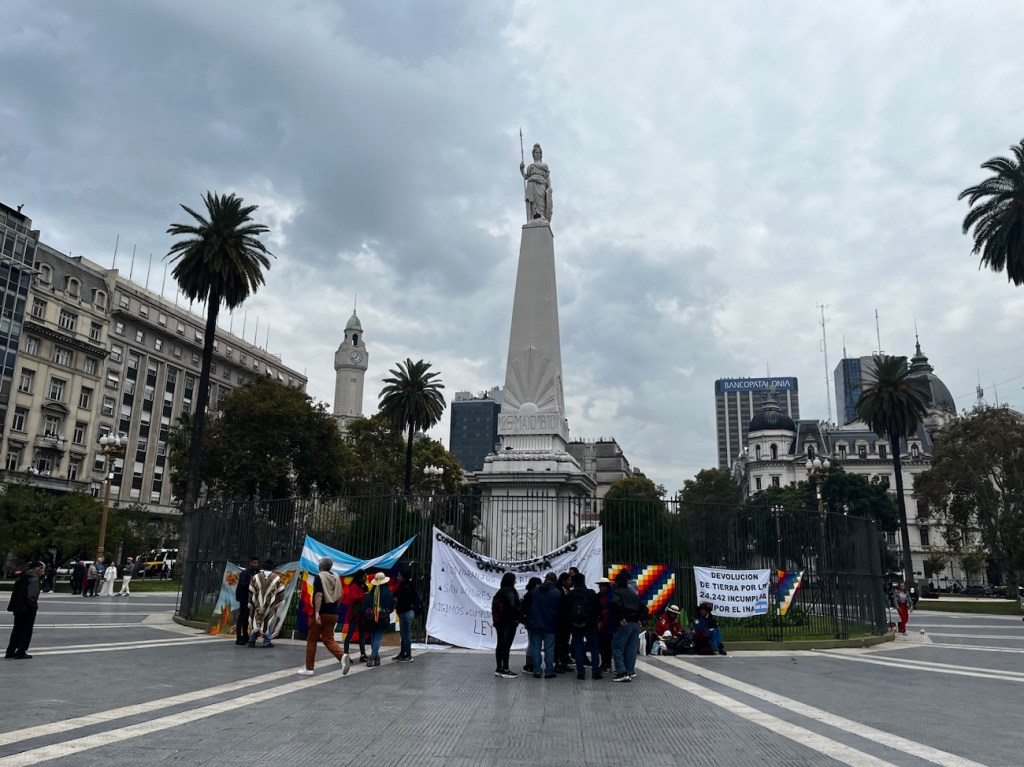
A protest in Plaza de Mayo

The blue dollar value was changing minute by minute and it was being reported on the news that with inflation approaching 95%, people earning under a certain amount were not being paid. It’s much raise to change up your dollars and stick to cash as confusingly when we paid with card in a few shops expecting the official rate, a few days later we’d get random refunds appearing. When we finally got the cash and paid our hostel, the real cost to us had gone down to about a tenner each per night 🤯

Pretending not to be Wasters

With our new stash we enjoyed a fancy evening meal of pesto pasta with a genuinely good bottle of red wine. I always loved the restaurants in Buenos Aires, the huge areas and set tables and waiters in waistcoats, and the bowls of bread brought to the table (worth the table charge).

An “influencer” ruining my shot

We only spent two night in Buenos Aries, mostly as a stop over before flying up to Iguazu and a trip down memory lane for me. With one full day, we walked up to the area of La Recoleta and browsed the shops and cafes.

There’s a rock bar in there somewhere

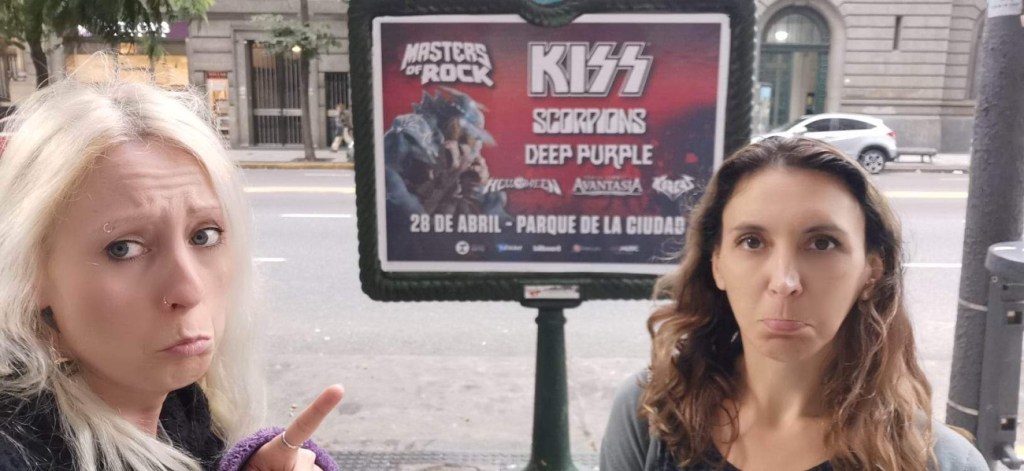
We had another attempt at finding a rock bar as we went to the “Rock and Beer” pub which had an active social media page and looked like it might be a lively spot. After walking up and down past the location several times we eventually saw it all padlocked up. As Vix said, it couldn’t have been more shut if it were on fire. We also passed several signs taunting us that KISS and Deep Purple were playing next week.

I love how busy Buenos Airies is and that you can walk around at night without ending up in a favela. The worst that happened to us was when we walked past a couple performing tango outside a restaurant. We only stopped to watch for a couple of minutes but they saw us taking a sneaky photo and as soon as the music finished they appeared in front of us like magic asking for payment. Vix pretended we couldn’t speak any English and we escaped before we had to part with any of our precious remaining currency, avoiding another slightly stressful trip to a money cave.

The Obelix by night

One of my favourite things about Buenos Airies is the breakfast that is served at all of the cafes and bistro type places. For about £2.50 you get a really good coffee, freshly squeezed orange juice and tostadas (toasted bread) served on a board with jam.

More protests

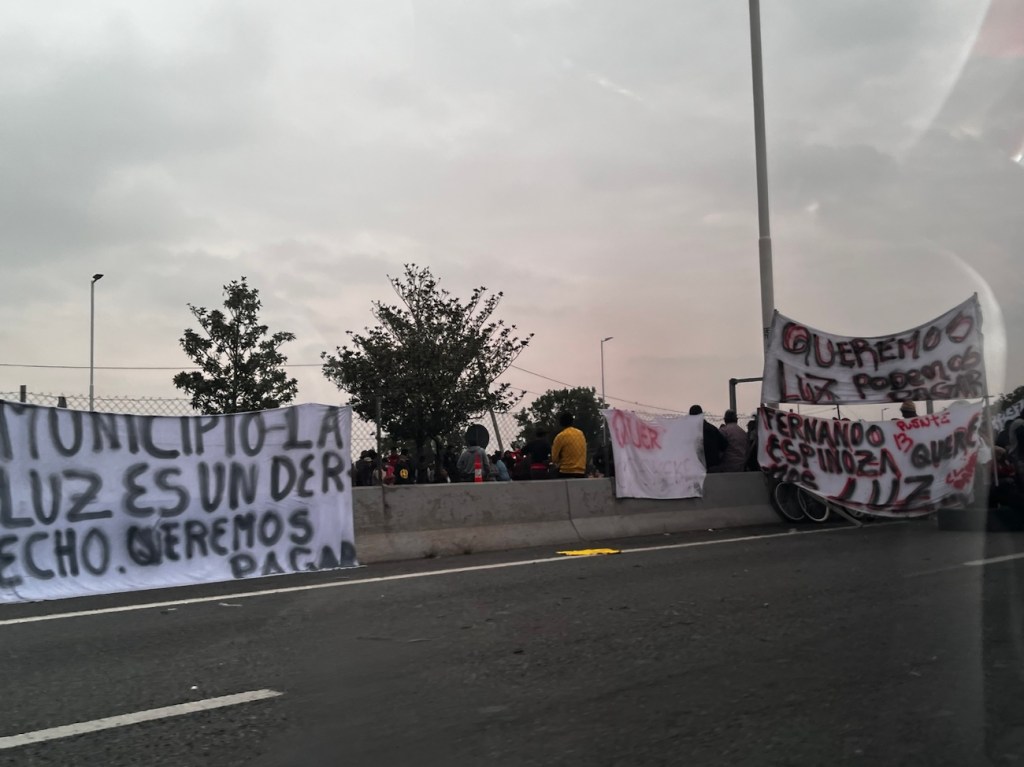
We booked a flight up to Iguazu to save a 18 hour bus and there isn’t much of a price difference if you want the “cama” bed style seat. As we left we passed more protestors. These ones had closed a motorway lane by burning tires. The taxi driver explained this area had been without power for weeks now so we saw their point.

Arriving in Puerto Iguazú meant a return to hot and tropical weather. You need to be more careful in general in border towns and this one is part of the Three Frontiers, linking Argentina, Brazil and Paraguay. We booked a hostel hoping for some information on Iguazú Falls, or a social element, but again those elements were lacking. The staff at the Iguazu Falls Hostel could not have been less interested in us if they tried, and our room was down a rabbit warren of corridors, the floor slippery from leaks and padded out with cardboard. Every question like “where can I do laundry?” was met with the minimum effort answer of “no”.

Back at Iguazú

We did our own thing and found a laundrette, money changer and nice restaurant and in the morning we headed off on the bus to Las Cataracas, otherwise known as Iguazú Falls. It’s actually really easy to get there with buses running every 20 minutes from the bus station in town and you don’t need any type of tour.

Not exactly prepared for what was coming

I had been to the falls on my previous trip but the customary boat trip has changed (the route I took back then is now considered unsafe apparently!) and the Devils Mouth walkway up to the top is now open so I was keen to revisit.

Lunch area

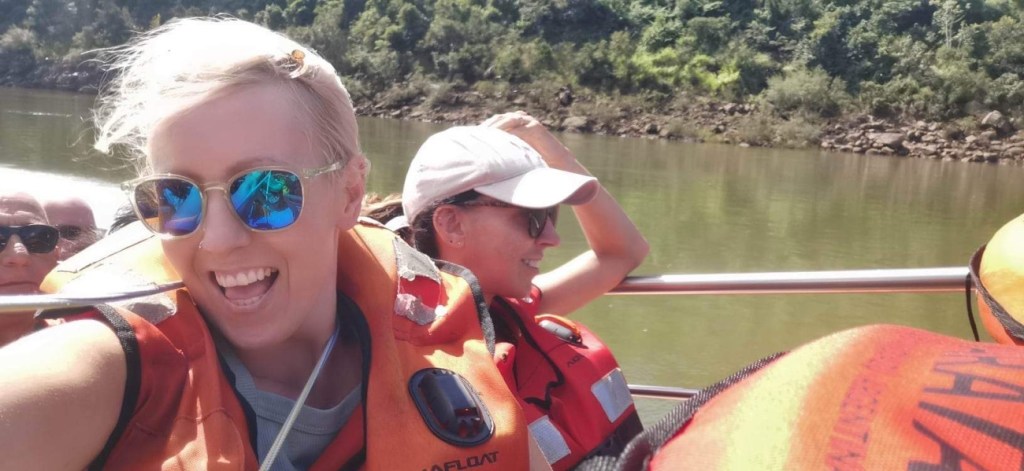
We made friends with an older couple from Argentina/Mexico, a spinal surgeon and his wife, who we chatted with whilst waiting for the jeep ride to take us through the jungle down to the jetty for the boat trip. The world’s most boring guide provided some commentary in lazy Spanish with an even lazier English translation that I barely understood, before they threw life jackets at us and bundled everyone onto the boat. The ride up to the base of the horseshoe shaped falls was as spectacular as I remembered. I remembered getting wet, and the excited screams of everyone shouting “otra vez!” to go again. What I did not remember was going so close to the falls that you’re hit in the face by a wall of water over and over again – the driver casually announced that “now we are going to take a shower”.

First part of the boat ride

Below is my attempt at videoing one of the close ups. Vix described it as 100 cubic metres of parasitic water chucked in your face but she managed to video it all (too big to upload here). At least I had taken off my shoes and put my stuff in the dry bag that they provided.

Best video I’ve ever taken

The Argentinan surgeon had everyone laughing as he’d worn a poncho – don’t ever wear something like this again he said, it’s a waterfall in your balls 😳

Reasons not to wear a poncho

The boat driver was also having some fun of his own on the way back, taking us over the rapids. The boat is still the best way to really experience the power of one of the Seven Natural Wonders of the World. It’s overwhelming, it’s so, so much fun, everyone is screaming and laughing and it’s really impossible to put the feeling into words other than you’re alive.

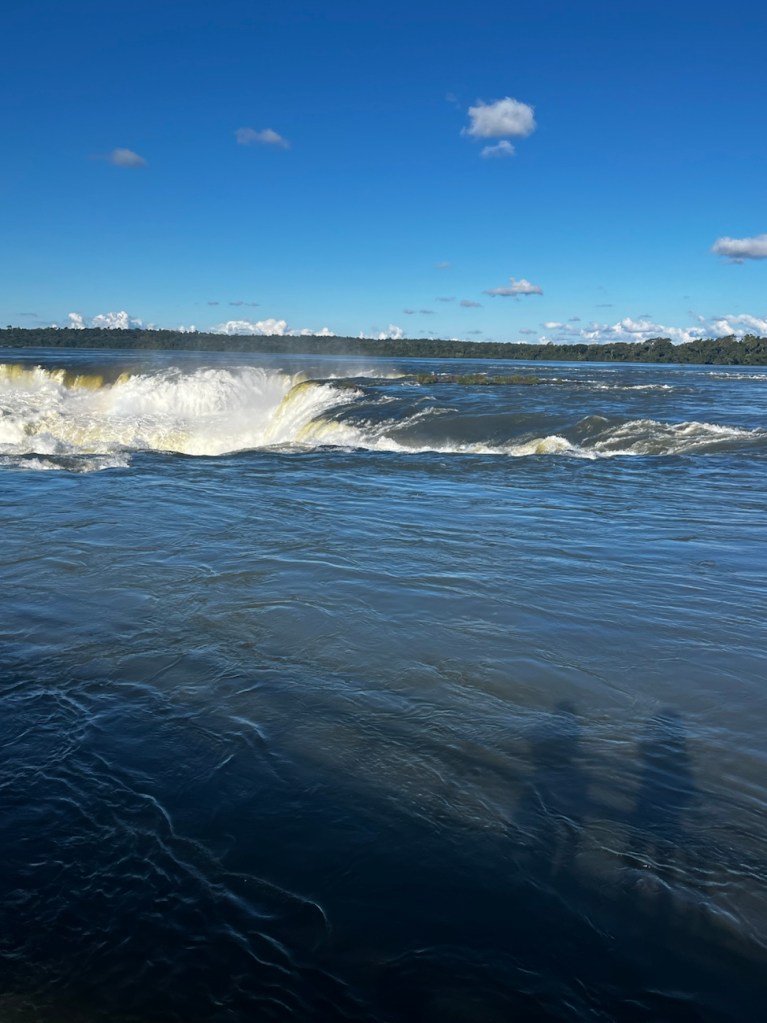
Our shadows off to the Devils Mouth

Soaking wet (denim shorts are NOT the best choice) and slightly shellshocked, we grabbed a sandwich and a coffee from the cafeteria area which still looked the same as it did ten years ago and got straight on the little train towards the Devil’s Mouth, “la Garganta del Diablo.”

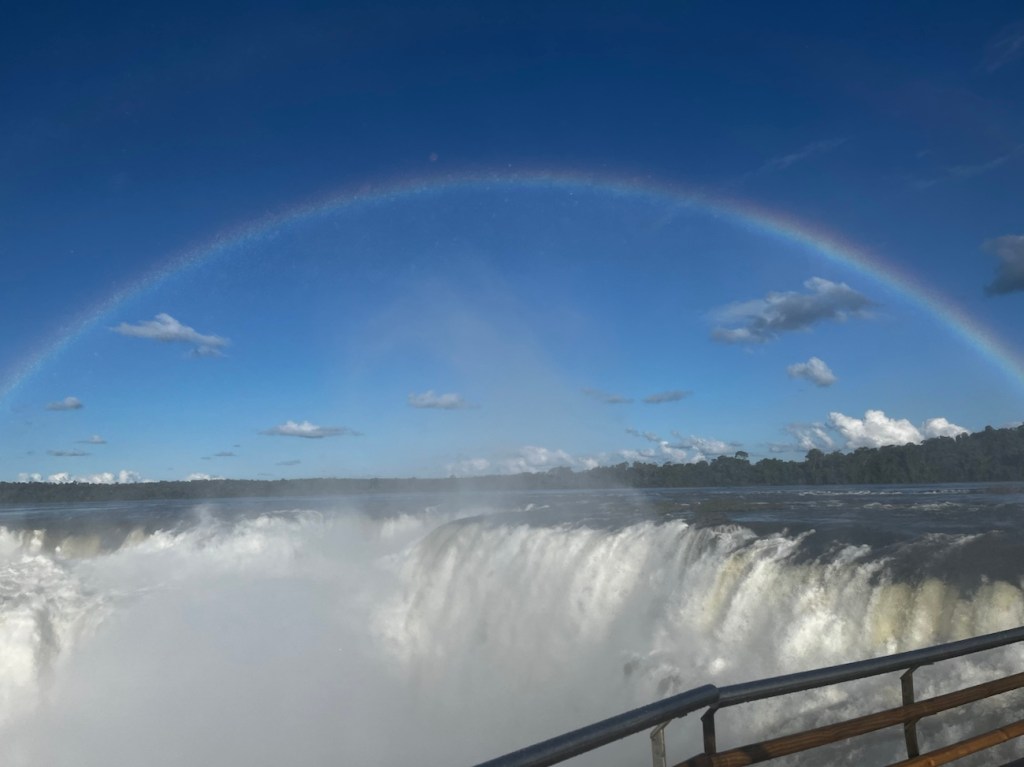
See the mist from the falls

Really you need two days here to explore the jungle trails with so many different birds (over 400 species) and beautiful butterflies that land on you.

Unfortunately butterflies are not the only thing that might land on you – I was walking along minding my own business covered in Deet to repel the mozzies when something stung me on the back of the ankle. It was such a shock that I fell over and dropped my sandwich into the dirt but somehow kept hold of my coffee. A passerby said it was probably a black wasp, common in the park. Once the pain subsided and I had replaced my lunch we continued to the walkways providing a passage over the river to reach the Devils Mouth.

Vix on her way

The bridges take you right up to the “mouth” of the falls where the Iguazú river drops 80m over multiple cascades in a semi circle 2700m in diameter. The river itself is the border between Argentina and Brazil. Because we were there at the end of the day we had it almost to ourselves. It was all nice and calm and we were happily taking photos under the rainbow when out of nowhere it changed and we were drenched again.

Trying to get a selfie at the top
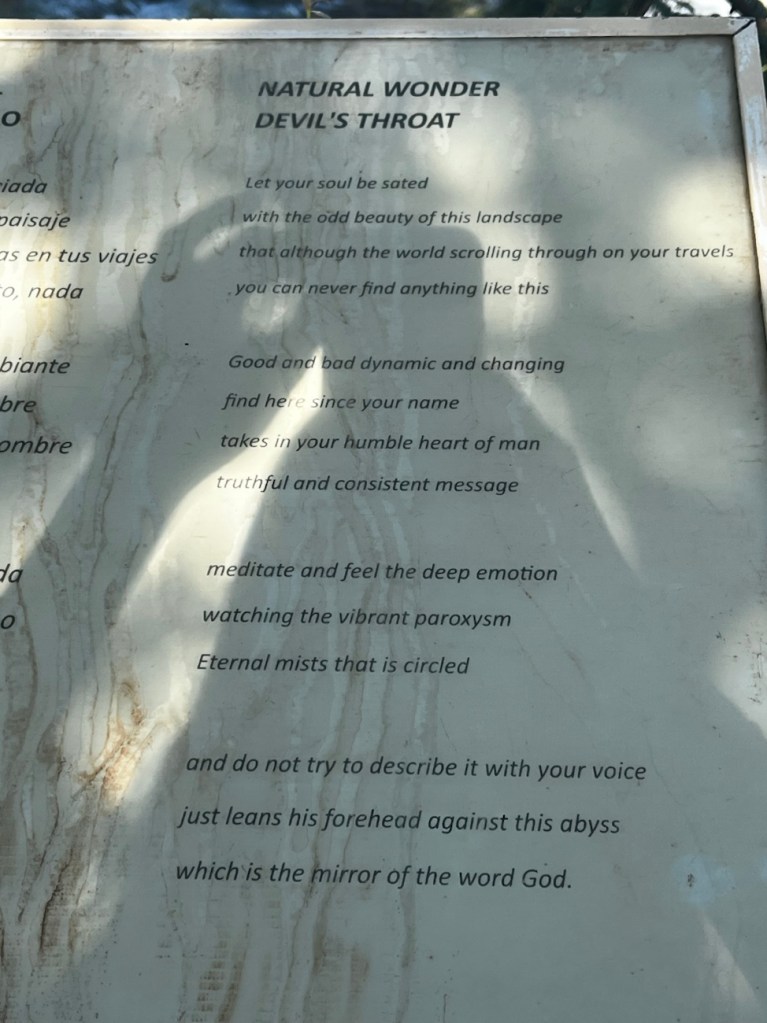
Poem on display

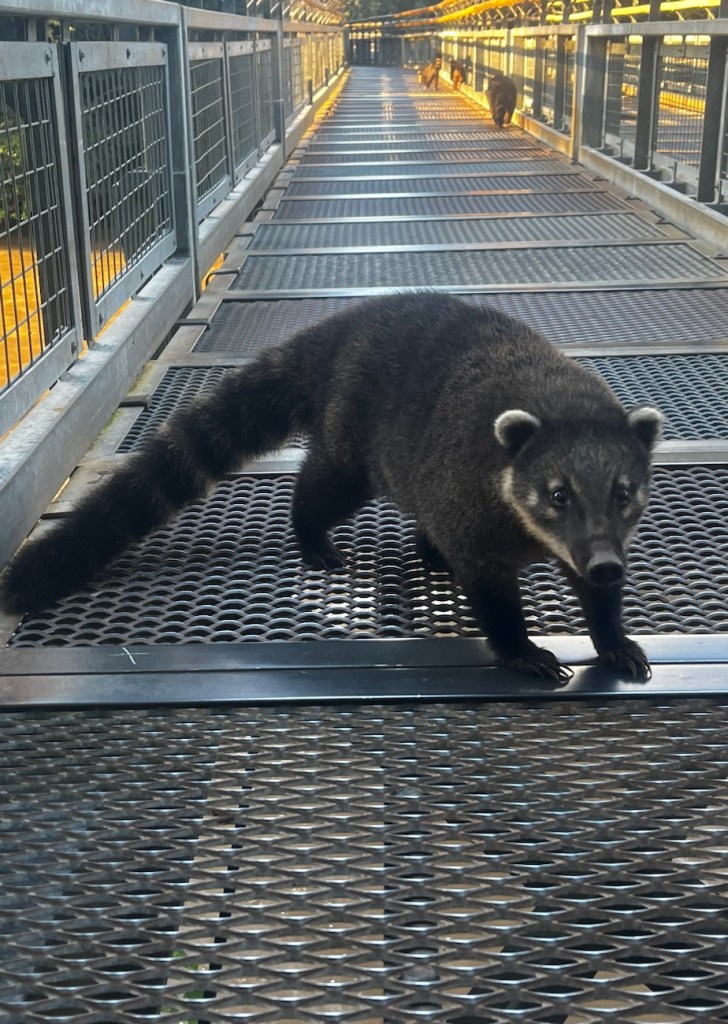
We were quite literally the last to leave the Devils Mouth, heading back to get the ultimo train back to the park entrance, followed by a cleaning man sweeping the paths clear of any litter. We were later passed by a group of Coati, the real clean up crew, on the lookout for leftover lunches.

The Coati clean up crew
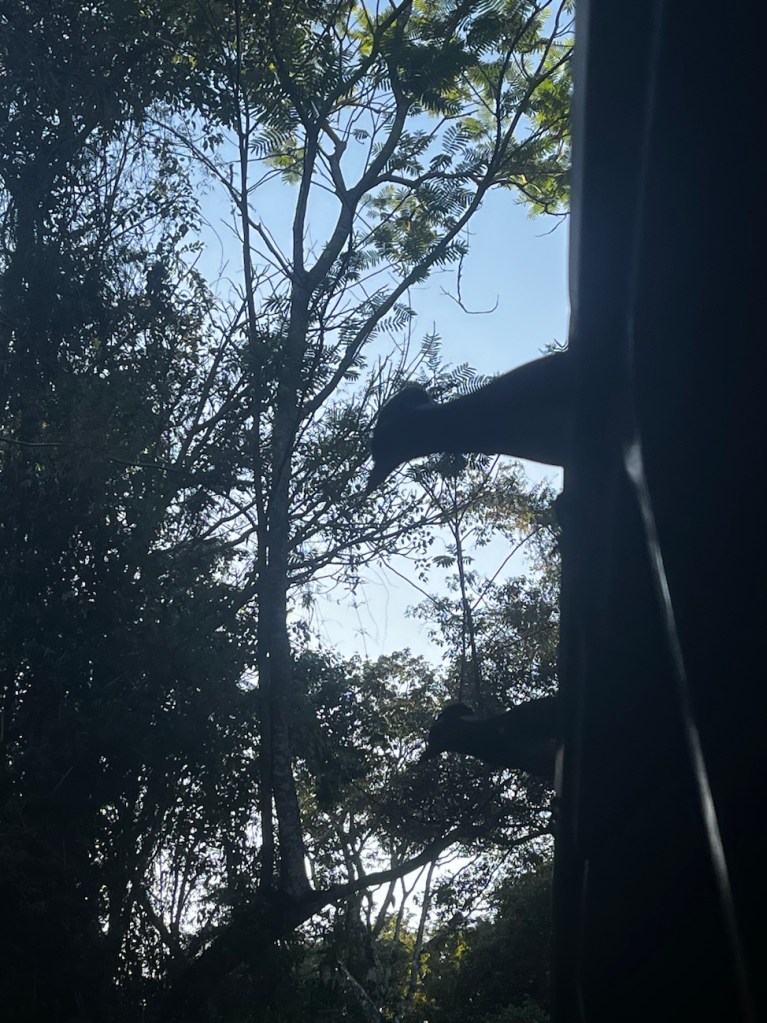
The feeling you’re being watched on the train

Back in Puerto Iguazú, and nice and dry, we enjoyed a meal and quite a few drinks (I still blame Vix as a Negroni is pure alcohol). The next day it was time to pack up again and embark on our adventure to Paraguay. We wanted to go the fun way via boat over the river rather than bus or taxi. Unfortunately my foot had swelled up from the wasp sting so we had to taxi to the port 🙄 after some last minute souvenir shopping as always …

British Girls on a Ride and The Wasters (Uruguay Part 1)

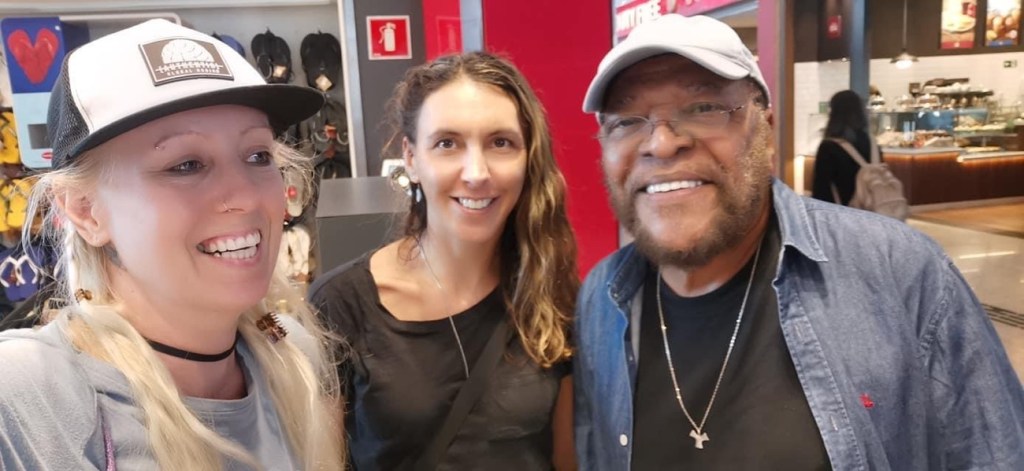
After five lazy beach days, we took a cheap flight from the island of Florianopolis, Brazil to the often overlooked capital of Uruguay, Montevideo. I have been to Uruguay once before but only on a day trip from Buenos Airies during my first trip to South America over ten years ago. At the airport in Sao Paolo where we changed planes, we noticed people taking selfies with an older man – naturally we had to get one too, having no clue who it was. He turned out to be Martinho da Vila the 85 year old Brazilian samba star.

In Montevideo we stayed two nights at the Yorki Haus hostel, run by a German man and a French man. We had a prison style room at the very top of the building with a gorgeous rooftop to ourselves.

Morning coffee

An annoying family had taken over the kitchen, which I didn’t mind until I spent ages making coffee using our £10 Starbucks ground coffee (literally the only coffee in any supermarket without added sugar) then as soon as I turned my back to spread my £10 peanut butter on my toast The Dad poured the rest of the coffee and took it for himself.

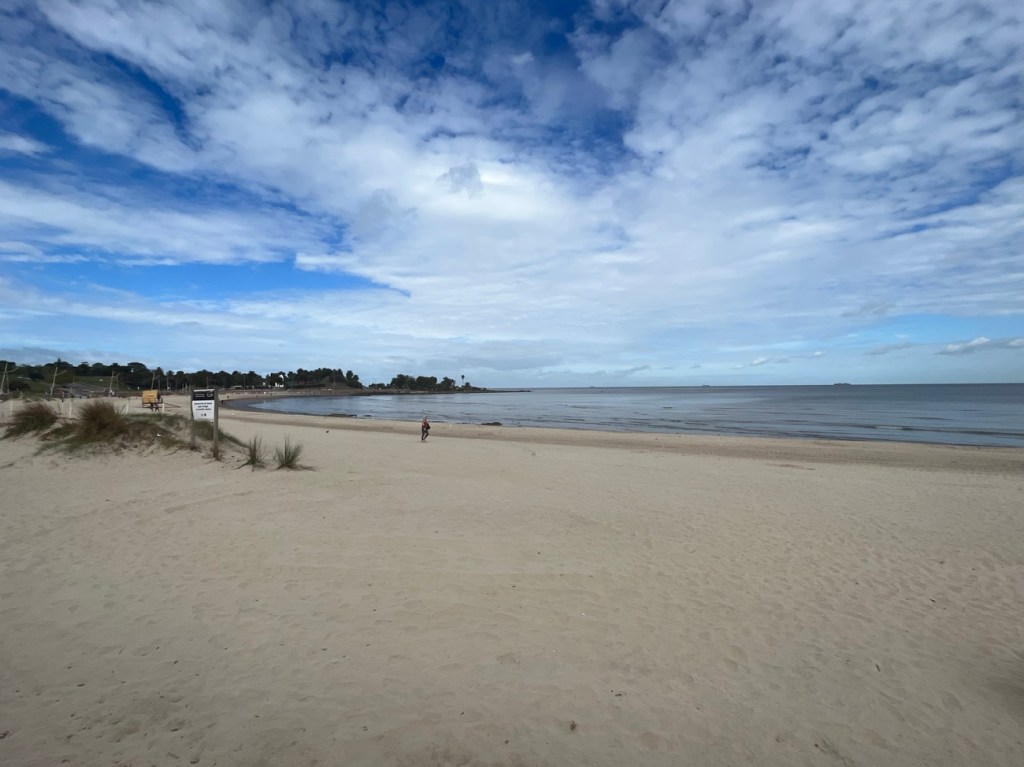
Montevideo city beach

Seeing the capital city at the weekend was great. We found a great little bar just down the road that served veggie sandwiches and cocktails and played Latin rock, and during the day we walked the few kilometres down to the old town along the beach amongst locals jogging and exercising on a Saturday morning. Like much of South America, it doesn’t get going until the afternoon. We browsed the antique shops and had an amazing lunch of grilled vegetables before making our way back via the supermarket to stock up on food for the next few days when we would be “off grid” in the hippy town of Cabo Polonio.

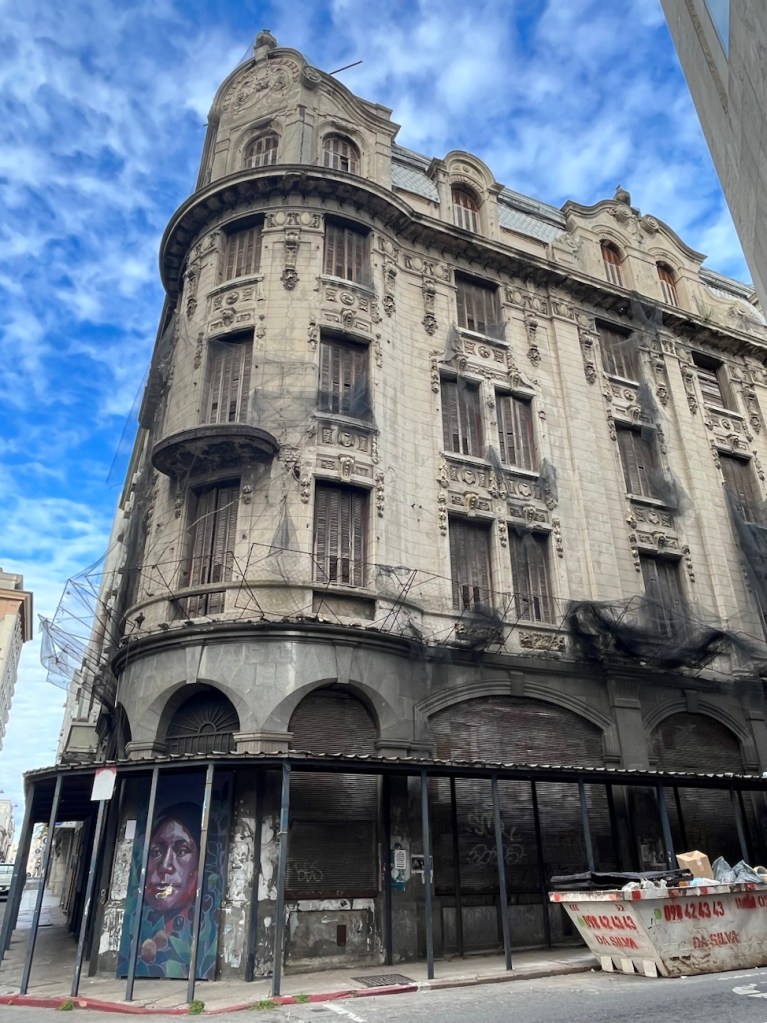
Old town in Montevideo

Having looked up rock bars in Montevideo, thinking surely we’d finally find a night out in the capital, we got an Uber across town to the “best rock bar in Uruguay”, the Roxx Bar. When we arrived at a deserted residential looking street, we asked the driver if the place even existed. The driver asked the one man hanging around outside, who explained the that he was also waiting as the owner was a “a bit late opening up”. It was already almost 11pm so after waiting for a while we decided that even if the owner did turn up, it would just be the three of so maybe not that exciting. Luckily we found a friendly welcome and a live punk covers band at Clash City Rockers bar down the road, even though it was cash only so we had just enough money for two beers between us.

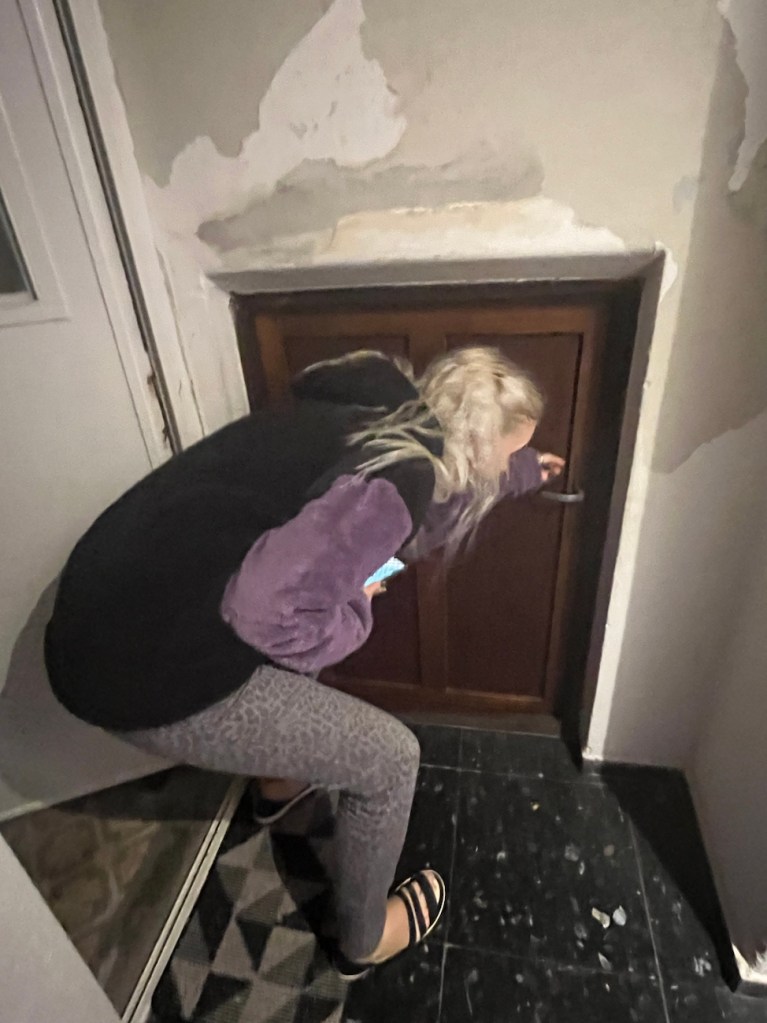
Where does this hostel door go?!
Punk band

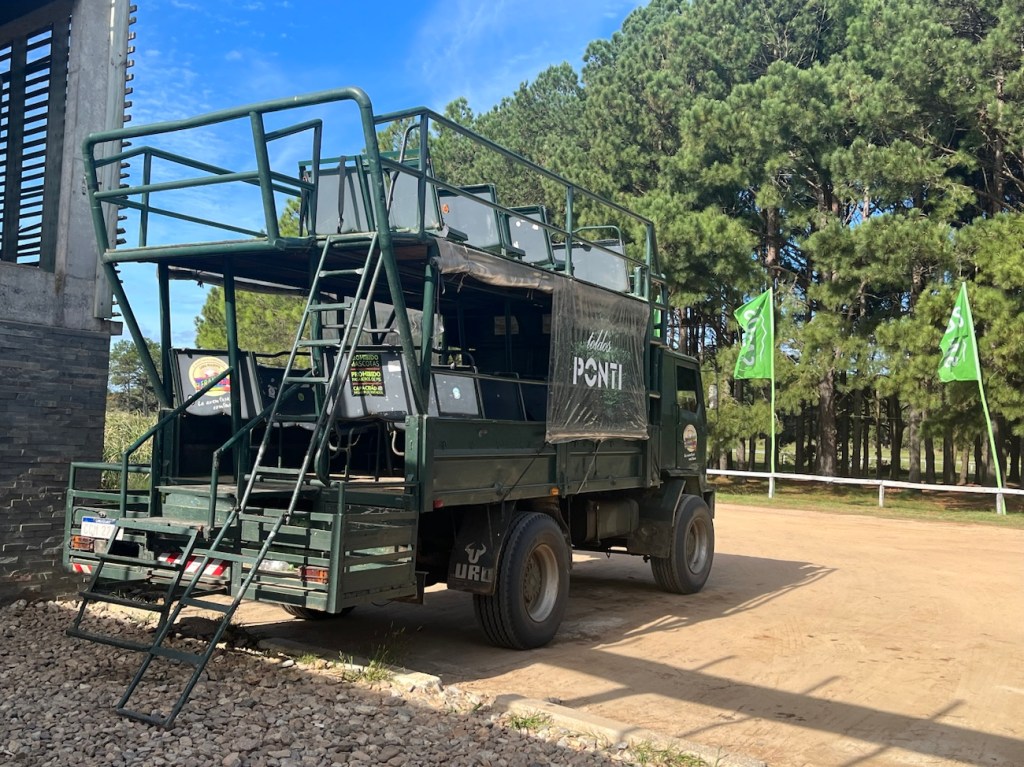
Next morning we set off early to the huge and modern Tres Cruces bus terminal to get a 4.5 hour bus northeast up the coast to Cabo Polonio. It’s a scenic journey and we passed a few places we’d have been happy to get off and explore. When you get off at Cabo Polonia bus station, there is a visitors centre where you hang around for a while before a large jeep type vehicle takes you all through the sand dunes to the village, three times a day.

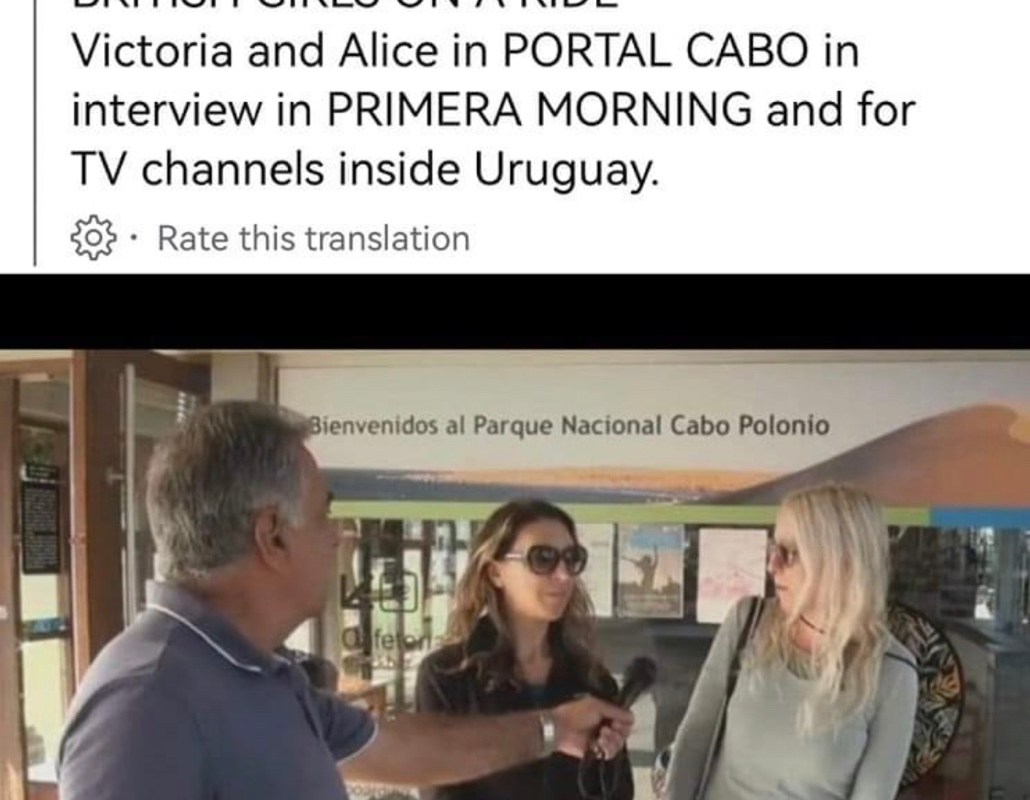
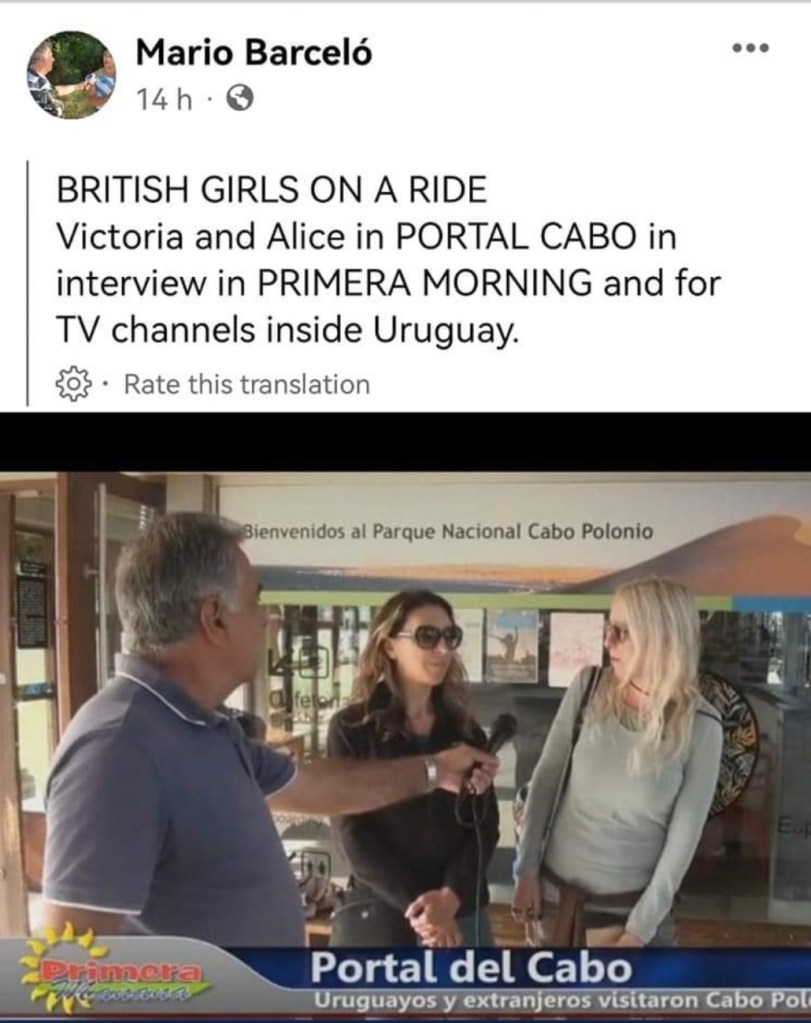
Whilst waiting for the jeep we made our debuts on Uruguayan daytime TV when we were asked for an interview about our visit with host Mario – although half of what we said wasn’t translated, somehow my name was changed to Alice and I have no idea where the “British Girls on a Ride” tag line came from 🤦🏻‍♀️ It’s available on YouTube although I haven’t yet got over the cringe factor enough to watch it (what was the point in asking if we are planning on coming back again when we haven’t been there yet?).

Jeep transport

Cabo Polonio is about 9km off the main highway and there are no proper roads there. The driver had to take a run up over one mound and we passed some military looking types that were well and truly stuck in the sand. We finally reached the Lobo Hostel Bar, which we had chosen for its sociable setting and billing as the local bar – seeing as we were there off season and we didn’t want to be totally isolated. We accidentally went to the nice welcoming looking guesthouse next door, with music playing from the restaurant and tables and chairs outside – I later realised they only turn the music on and put the chairs out when the morning jeep arrives with new visitors. I never saw it open again.

Entrance to our room

Neither of us have particularly high expectations for accommodation. In fact we have pretty low standards. When the woman running the place, Celia (we think that was her name) showed us to our attic room up a ladder with only a rope to hold on to, lockable only by our own padlock, we took it as part of the adventure. We loved the window that opened directly on to the little rooftop that we had to ourselves. We loved the wind turbine next to the roof. We didn’t mind the fact the blanket on the bed was full of leaves, until we got bed bugs. I gave Celia, aka the Hunchback of Cabo Polonia, the benefit of the doubt when she shortchanged us even though another backpacker told us she’d done the same thing to her friend. We tried to cook our pasta on the frankly disgusting stove that stank of a gas leak and made me feel sick everytime I went near it. The only thing the Hunchback really said was how ugly the newer houses were (we thought they were really pretty) and essentially how tourists were ruining the place.

Oil soaked floor

But we drew the line when we went down the ladder to make dinner in the kitchen we had paid to use, to find pieces of cardboard on the floor soaking up an oil spill, a “do not use” sign on the sink though there was nothing wrong with it and the fridge had been unplugged. The Hunchback was from then on referred to by Vix (whose socks were now soaked in oil) as Oil Slick Mcgoo when she tried to blame her other guests for spilling the oil and leaving it. The oil was never cleaned up over the three nights we were there, it just stayed all over the floor next to the open flame (if she’d turn the gas on and lend you a lighter).

Local pharmacy, all shut
Mammals to look out for

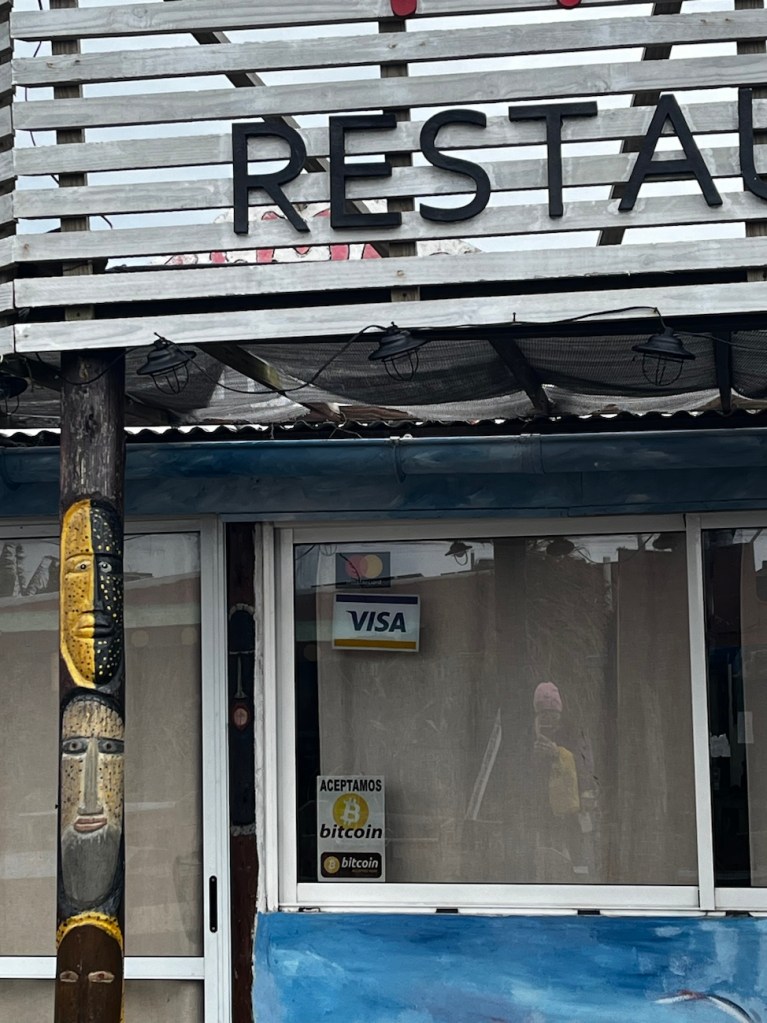
There is a very old fashioned supermarket in the village, which weighs fruit and vegetables the old way and is open all day other than around 3-5. The empanadas looked suspiciously like the ones from yesterday, every morning, but we were just glad they took Visa since with one of my cards already lost to cloning and no ATMs in the town we had limited funds. No problem – the shop sold a great selection of wine and anything over £8 they would accept cards for. Win win (until my Visa was also stopped a few days later for a dodgy contactless transaction which was either the shop or the hostel trying their luck).

Ancient supermarket

On our first night we went with another girl to try to see the glowing Bioluminescence, a type of plankton, in the water. This was a total fail but it was fun to walk around the lighthouse at night in the pitch black other than the lighthouse signal itself.

Bone, fossil or rock outside a “new” house
Lighthouse Dog

There are certain characters you encounter over again when backpacking. “The Waster” is one of them. They are usually European backpackers who have stayed too long doing nothing or maybe “volunteering” / skiving at a hostel, typically looking horrible and miserable. The man “working” at the hostel was definitely a Waster.

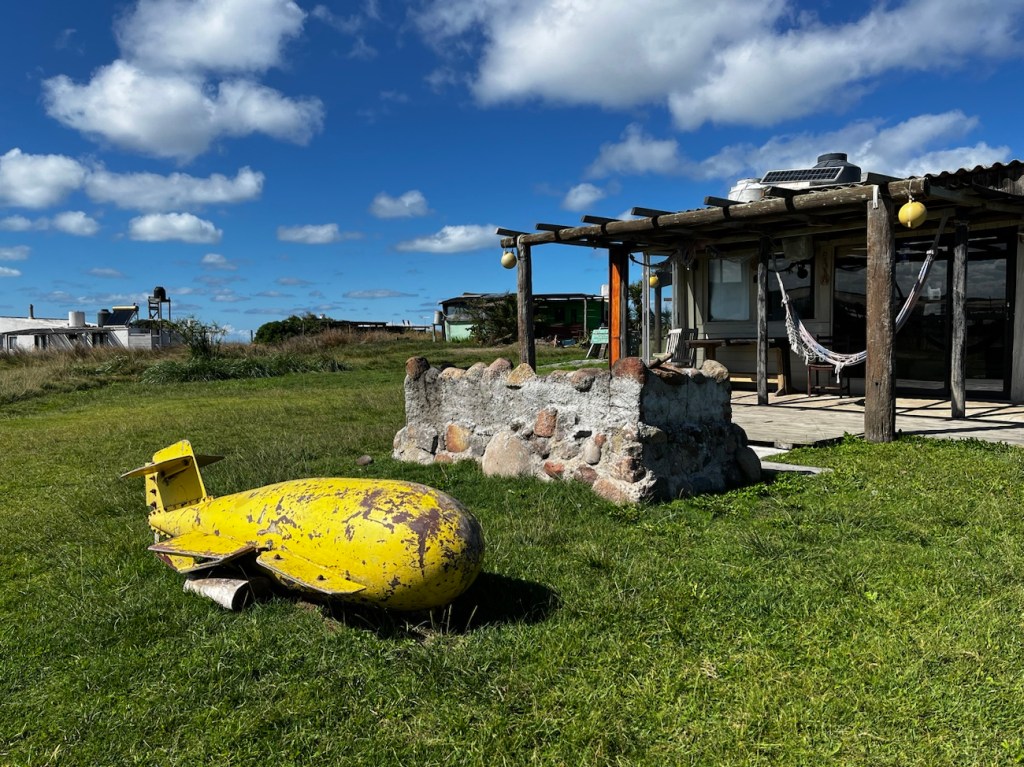
Bomb?

April being low season, it was a total ghost town. The next morning I tried to make us both coffee in the morning but The Hunchback had thrown the cafetière in the bin. I asked The Waster and he reluctantly gave me another from their own fully functioning kitchen. After a lot off faff trying to get it going and avoiding the oil spill and carbon monoxide poisoning, I knocked the whole thing over and was about to spontaneously combust myself when Vix calmed me down and we got the hell out of there. With nowhere open, we found an old man who opened up his tiny cafe to shelter us and two other other desperate tourists from the rain and served us coffee on a little silver tray with shaking hands.

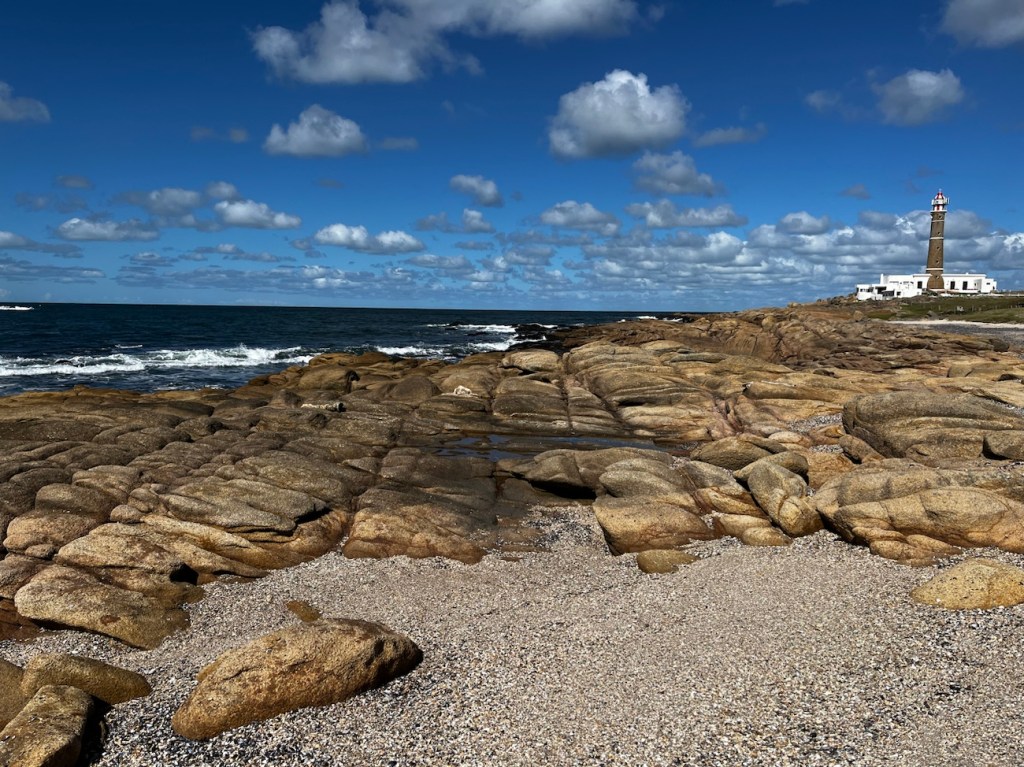
Lighthouse

Spot the seal

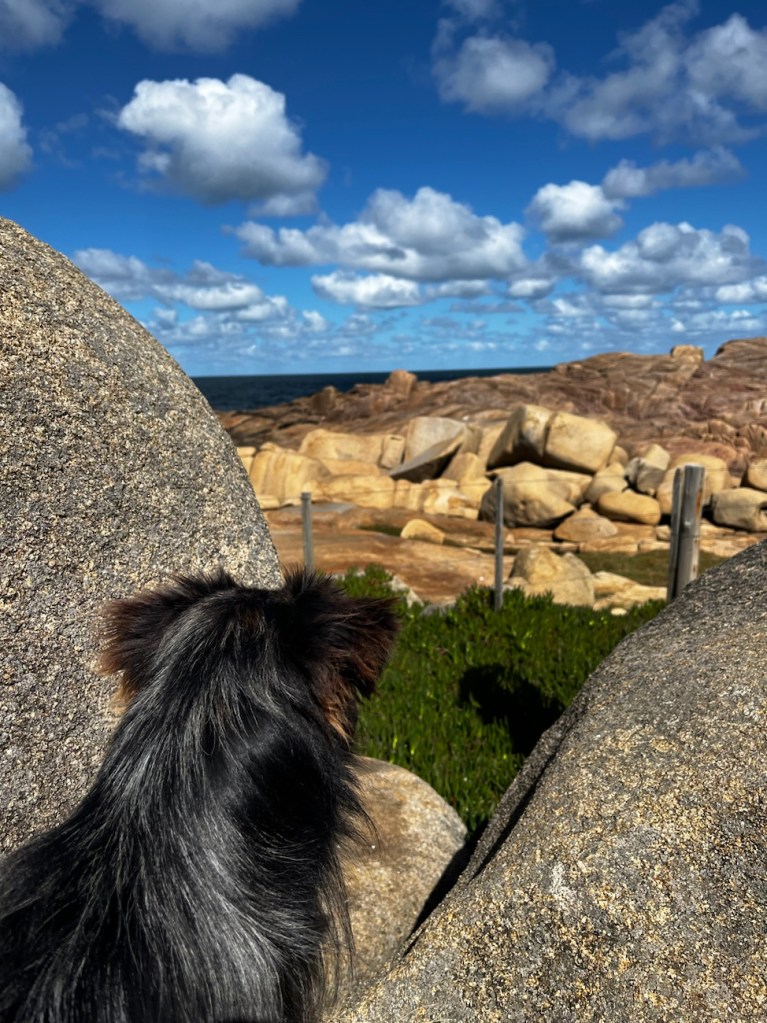
The dogs of Cabo Polonio deserve a mention – friendly and sociable, they each have their own patch. As we walked though the village each day we would meet each one in turn, from the Hostel Dog who hung out on our rooftop and probably gave us fleas, to the Town Dog half way across the village that seemed blind, to the gorgeous blue eyed Lighthouse Dog that accompanied us on our search for the seals.

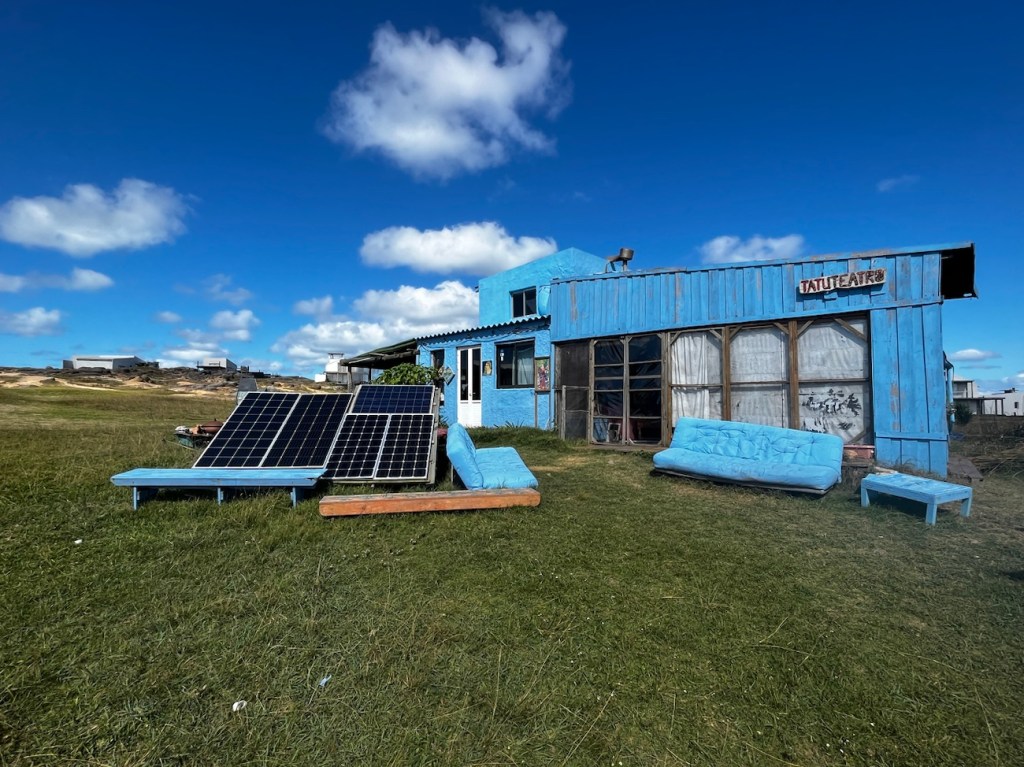
Solar powered cinema, obviously closed
Improvised wine glass to avoid dirty hostel cup

There is a large area of “new” houses on the other side of the village, but not a single person in sight. One house had what looked like a massive spinal bone out front, one had an old bomb and most had some piece of unique art embedded into the walls.

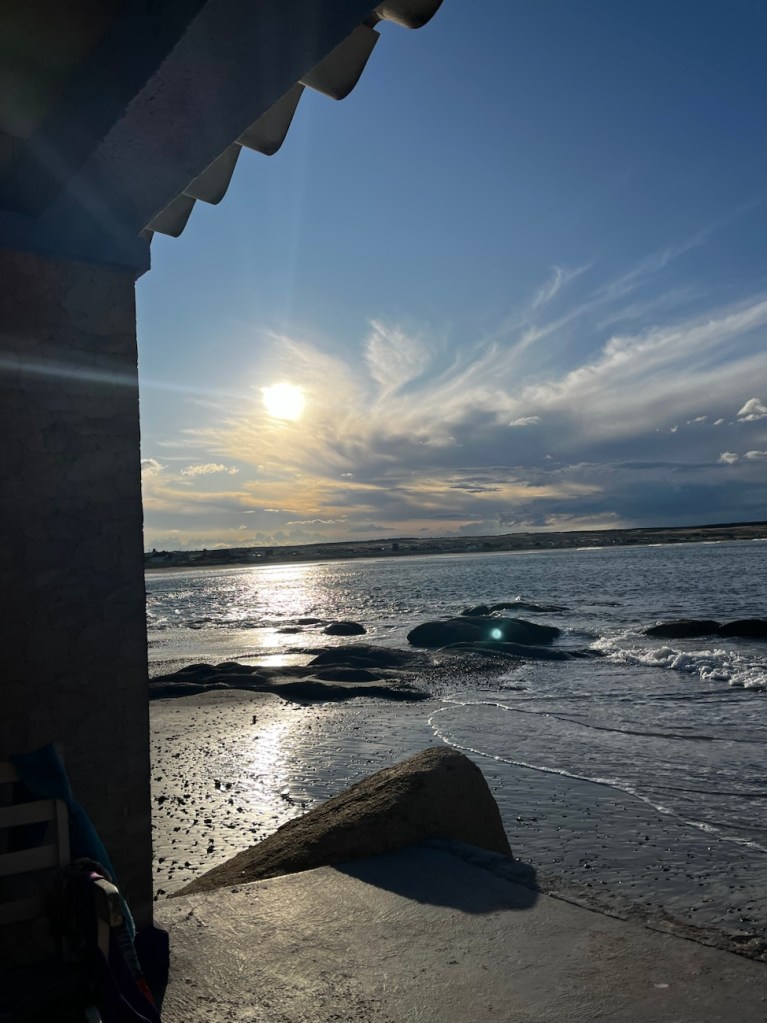
Having given up on cooking at the hostel, we found the one more expensive restaurant that took Visa and lived it up with a lovely vegetable stir fry. Totally worth it for the view and a comfy place to hang out and drink (we went back every day). Vix even went into the sea and swam with the tiny creatures whose heads we had seen from the shore but never could find out what they were (dolphin / turtle / baby seal depending upon who you asked).

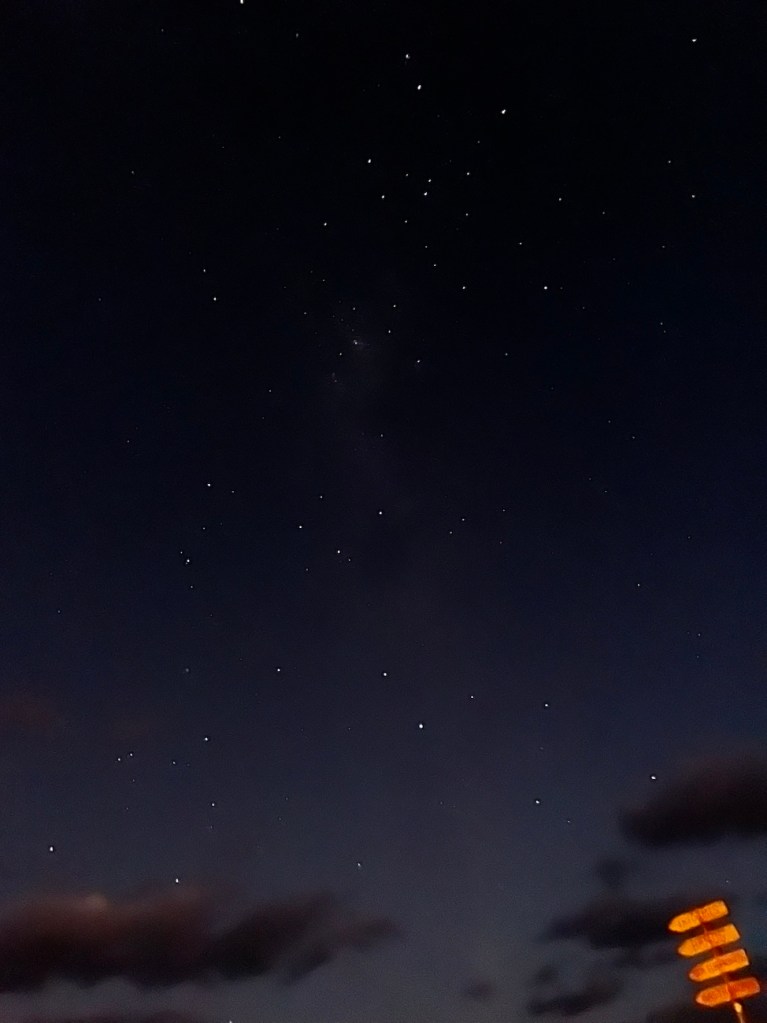
Our rooftop came into it’s own at night- this was the clearest sky I’ve seen in a long time, with the Milky Way visible end to end. I also loved having the chance to switch off from your phone with very limited electricity, and candle light in the evening means you can enjoy the night sky. But we were sitting in darkness in the hostel as the candles in the plastic bottles burned out while The Wasters cooked up a storm in the fully lit up “restaurant” kitchen next door.

Avocado, tomato and bean wraps on the roof – no cooking required

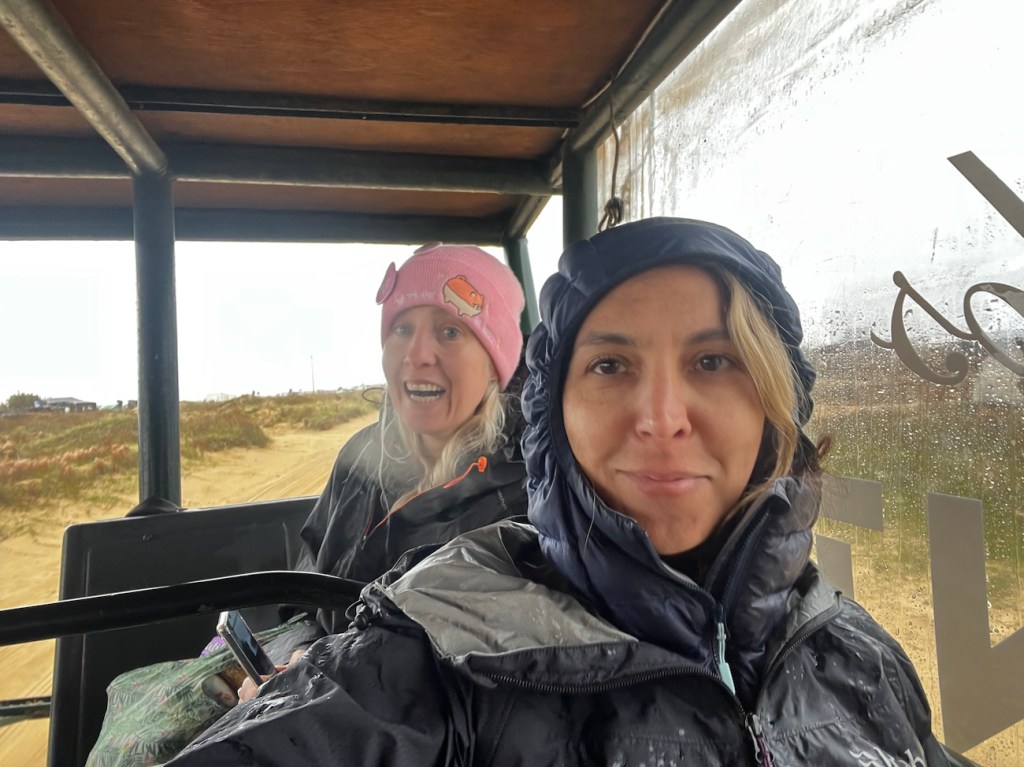
It poured with rain as we left on the jeep a few days later, after making our way back to the Visa restaurant only to find it closed and begging a man there to make us an instant coffee. We only left our stuff in the hostel for an hour, my big bag which was locked and putting our smaller bags in a locker. When we returned from coffee, both combination locks had been tampered with. Our feeling was that The Wasters either tried to get in or just turned the codes to mess with us, something I have never experienced at a hostel before. It’s probably a good thing we did our TV interview before our visit!

View from the Visa restaurant
Breakfast- miniature bag of cornflakes from our bag of snacks and £3 instant coffee

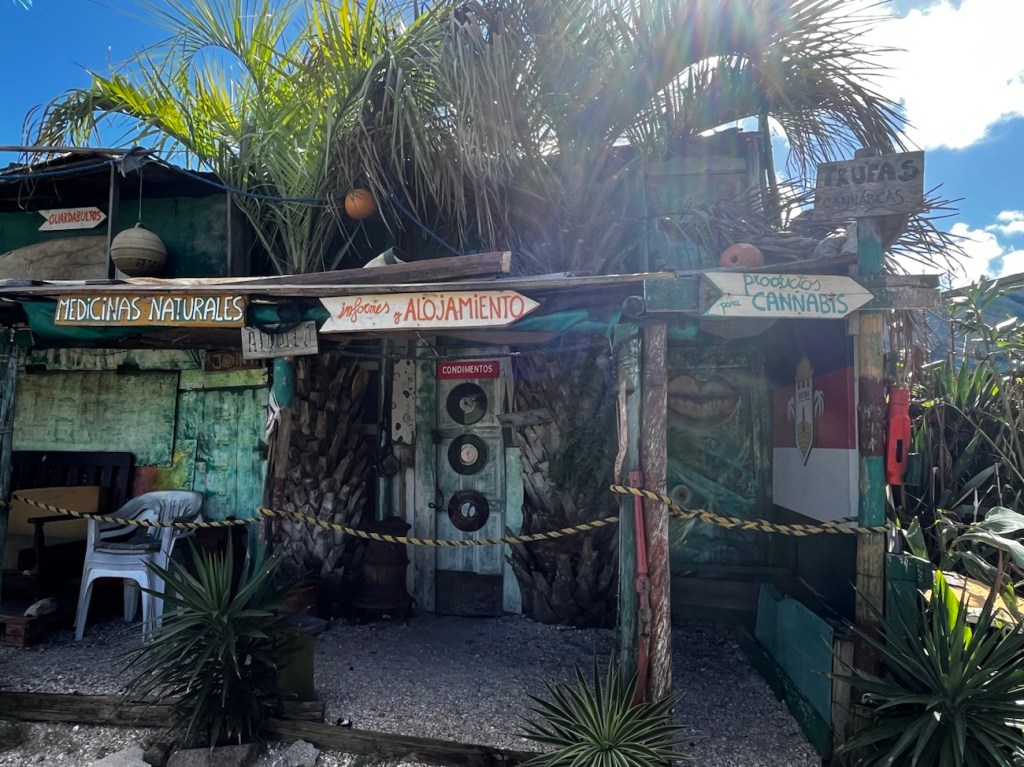
You’d expect some Filthy Hippies at an off grid community and I love the idea behind Cabo Polonio and self sufficiency but the the place we stayed had no recycling and was just filthy, which goes against the values of an eco town. But the area itself is absolutely stunning with miles of unspoilt coastline and the nature is amazing – definitely worth a visit for a few days if you stay in one of the nice guesthouses. It’s also nice to be there off season when you can enjoy the peace and quiet.

Visa cat
Visa and bitcoin accepted?!
Jeep ride out – only one poor guy was on the inbound jeep as we left

Saying goodbye to Cabo, we continued the off grid theme as we headed to a horse “eco lodge” just a few miles up the coast…

Ilha Grande to Paraty

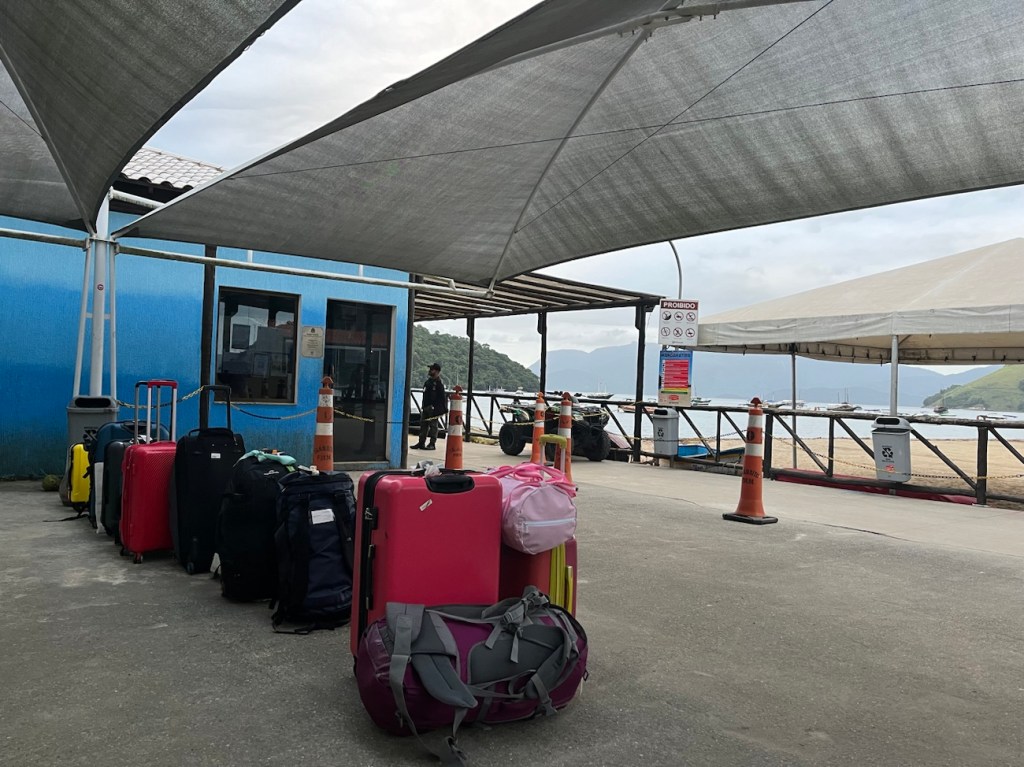
As we left Rio, to make the bus and boat journey to the island of Ilha Grande easier, we booked a three hour transfer from the hostel desk. Two hours later we were still in the minibus and just pulling up at the airport to collect the last passenger (the airport that is only half hour away to start with) courtesy of a very annoying family who were not even at their hotel at pickup time let alone ready to leave, then had the audacity to ask the driver to stop at a cash machine. When we finally got everybody on board the driver had have enough himself and declared we were stopping at a restaurant for 30 minutes. By the time we got to the port we had missed the boat plus we had noticed that everyone else paid on the bus and paid five pounds less than we had. The bus driver bought boat tickets for everyone, gave them to one girl to look after for all of us and instructed us to line our luggage up in the middle for some unknown reason. At least there was a police guard to protect the sitting ducks.

By the time we made the half hour crossing on a boat that reminded me of a lifeboat, and arrived on the island six hours later it was dark. And I mean dark – the island power was off. Of course we had booked the guesthouse furthest from the beach and there were no wheelbarrow luggage helpers here. At least we had our head torches to help navigate the sandy lanes and we found our home for the next three nights.

Breakfast

We walked back down to the town to find some food and were looking at the menu at a busy restaurant when a man wandered over from the street, holding a plastic bag, and said something we didn’t understand. I hazarded a guess he was asking for money and said no thank you which was a bit awkward when he turned out to be the waiter. Thus commenced a bizarre evening where he took our order then forgot about it and we played 6 games of Monopoly Deal before getting a horrible meal. When I asked someone else that I assumed was a waitress for some water, she repeated back “you want water??” with an incredulous look as if I’d asked for the most ridiculous thing imaginable. By the end we still weren’t sure if the original man worked there or not. But the island’s power came back on and everyone cheered.

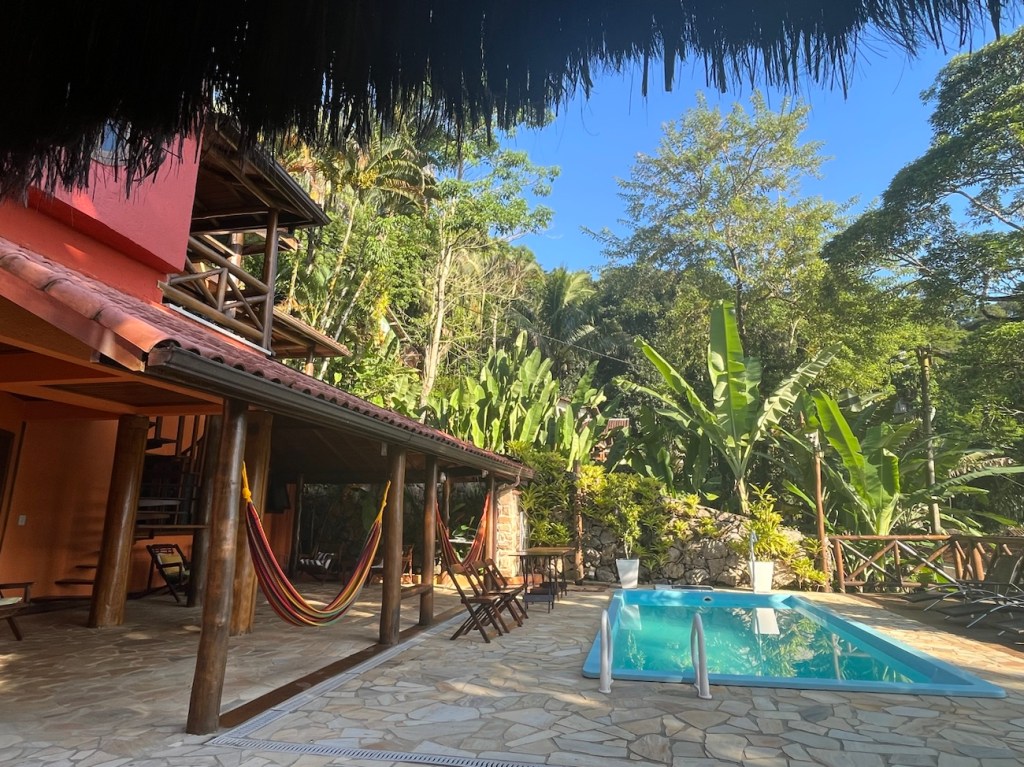
In the morning we saw how beautiful our little guesthouse really was, with hammocks and a pool and a lovely breakfast lady squeezing fresh juice who spoke no English but used Google translate to talk to us. We were the only guests in the whole place so had our own private breakfast buffet of fruit and rolls and cake. After some planning the night before, we set off on the most popular hike across the island to Lopez Mendes, “the most beautiful beach in Brazil”, billed as it’s a tough 3 hour, 6.1km hike (“expert” level) with limited supplies on the way. We bought a picnic lunch of sandwiches (unfortunately they toasted them) and enough crisps and water to survive for a week.

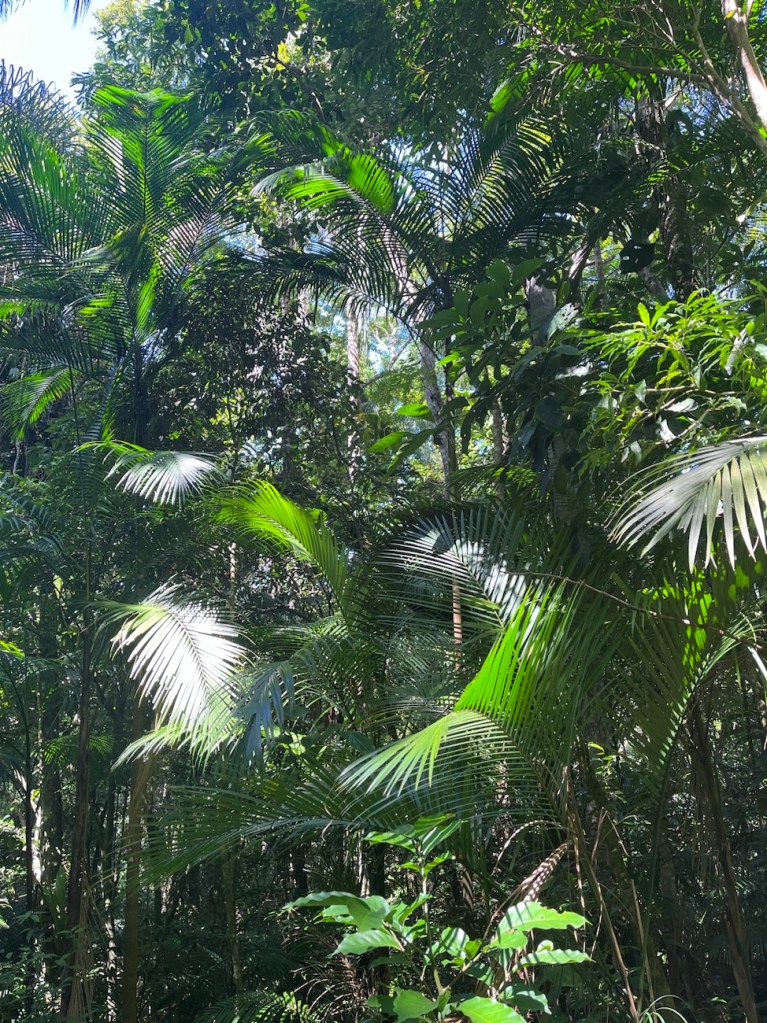
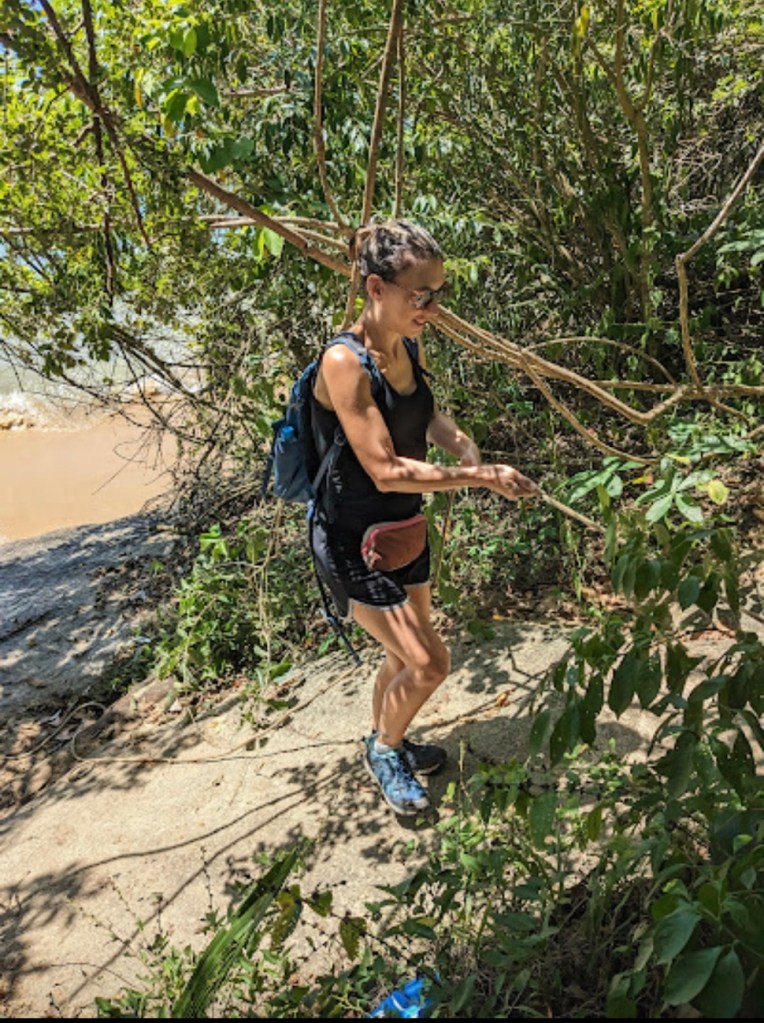
In actual fact this is a really beautiful hike through the jungle, only passing a few other people, and not really difficult at all if you have a reasonable level of fitness. I especially enjoyed the tiny section that required a rope which we presume gave it the “expert” rating!

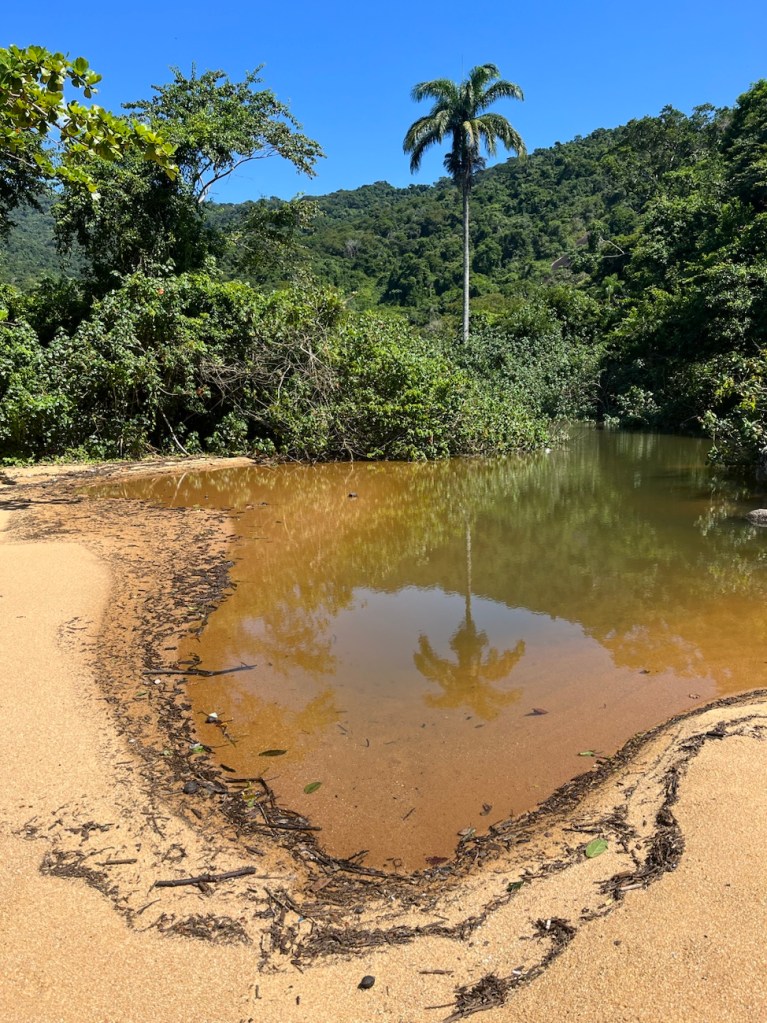
The trail passes by the smaller and in my opinion more beautiful beaches of Praia de Palmas which had just a handful of tiny guest houses and would have been a lovely place to spend a night, then continued to Prai de Mangues where the boats come in. We saw some gorgeous little monkeys in the trees, scared away by the Argentinian group with their flasks of maté and loud voices shouting “hay un mono!!”. Not any more there isn’t.

When we got to the actual Lopes Mendes beach it was anything but deserted – it had kiosks selling beer and food and lifeguard stations, and we seemed to have timed our arrival with a cruise ship. It may not have been the most beautiful beach in Brazil but Helen jumped some waves and we ate our cooled down toasted sandwiches after picking out the wilted lettuce, unable to buy a beer as we didn’t have enough cash (no ATMs on the island so maybe the annoying bus family had the right idea). In my opinion the hike itself is the highlight rather than the destination.

Like most people we got the boat back at 3.30 instead of hiking the return trail – which we almost missed as we were waiting on the wrong beach. The boat ride was really nice in itself and is the perfect way to see some of the island without spending money on an actual boat tour!

We had another slightly weird dinner with another waiter we weren’t sure actually worked there and five games of monopoly deal before getting our drinks, but it was one of my favourite days in Brazil so far.

“Deserted” beach

We finally had a lazy morning by the pool the next day before doing the short hike to some ruins of a jail that was used for quarantine. You could easily spend a good few days here hiking the various island trails – though we were yet to find a beach with enough sand to sunbathe, we did find one with a very annoying hippy couple playing terrible recorder.

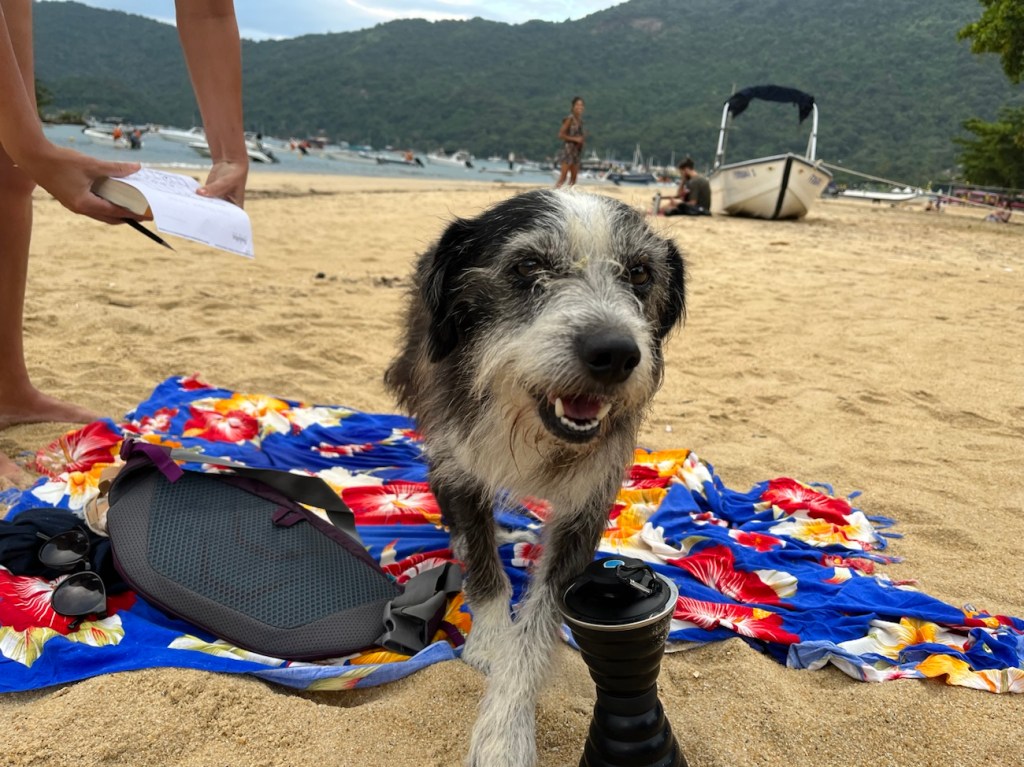
Beach dog

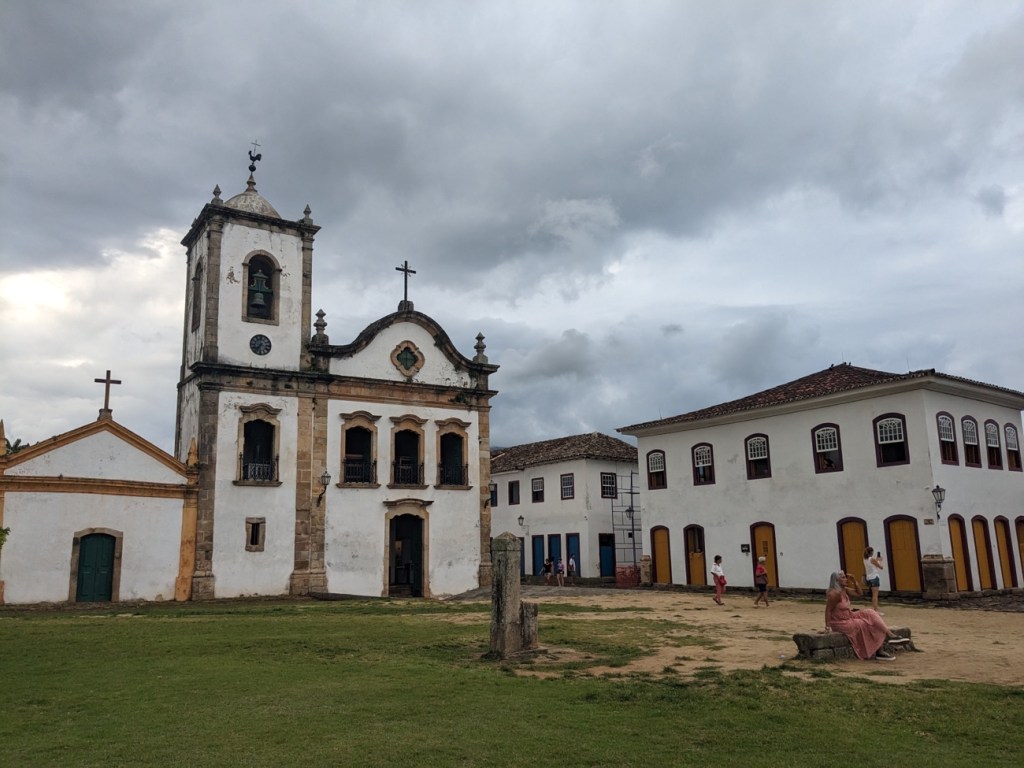
On the way back to Sao Paolo, which would conclude Helen’s trip and mark the start of the next leg of my journey, we followed the backpacker trail via the little colonial town of Paraty. I had done zero research on this place so had no expectations but it’s well worth a stop with it’s preserved town centre and jungle backdrop. It also has a really interesting history, with the Portuguese arriving in the 16th century and it became a busy port town built on slave labour.

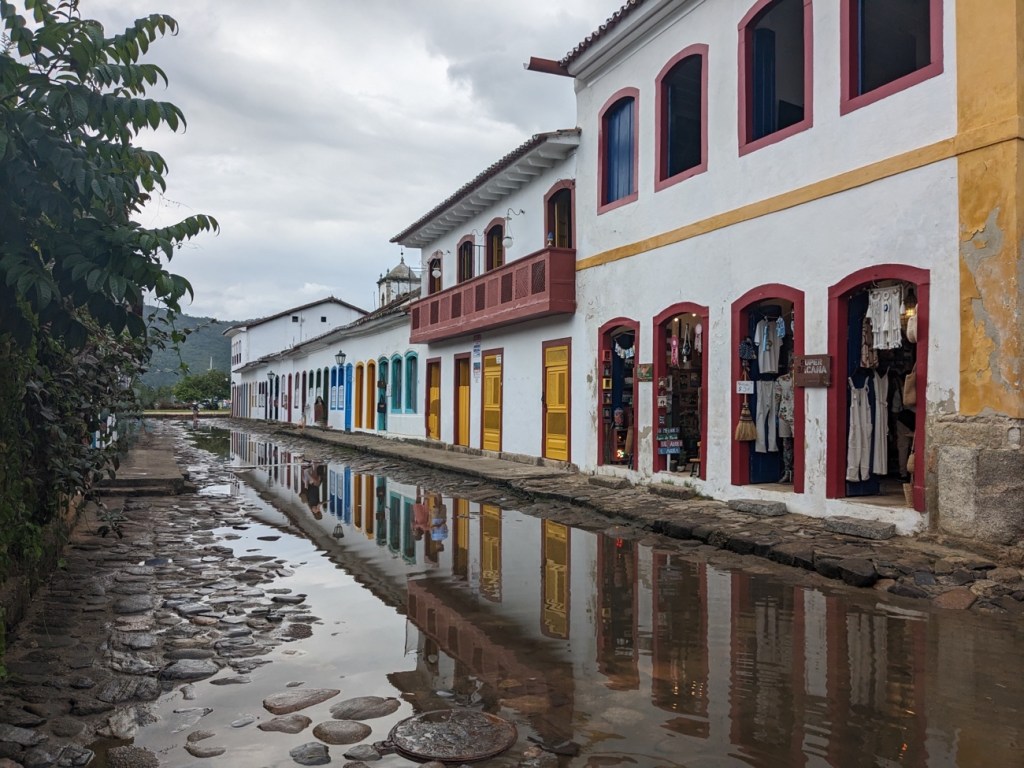
Much of the town gets submerged under the tide water – good thing we were wearing flipflops aside from when navigating the cobbled streets (Helen fell over). The streets used to be lower than the houses which gave it the name of the Venice of Brazil. Sadly the old roads were rebuilt by child slaves and the “good” stones replaced by cheaper uneven ones, at a higher level meaning the houses flooded. I can’t remember most of the history and have no internet access to look it up but I do remember that the three main churches were once totally segregated for whites, blacks and mixed race people and there was also no sewage system so the houses and churches closest to the sea got the raw deal.

Photo credit to Helen!
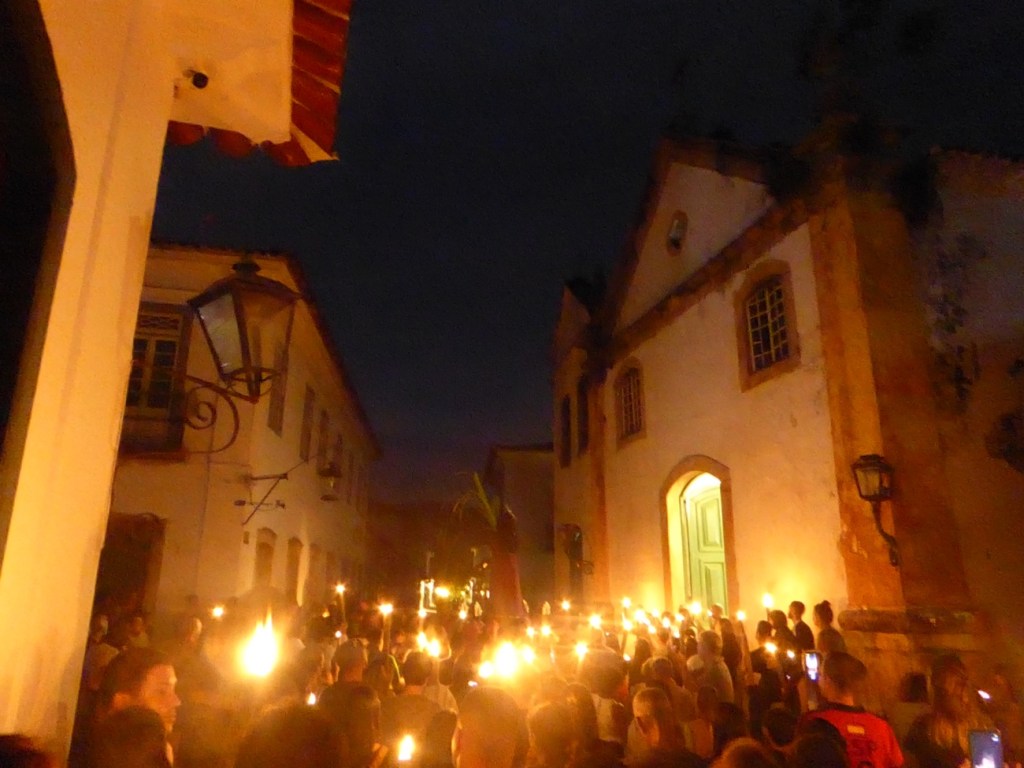
We were there for Good Friday meaning we got up again at midnight (one of Helen’s better ideas!) to see the ritual of a effigy of Jesus holding a huge palm, being carried through the streets followed by a large crowd holding lit torches. We ended up in the parade for quite a while before we could get home again.

And that was three weeks in Brazil, as we waited for a six hour bus to Sao Paolo – a bus that never turned up so we ended up sharing a rollercoaster of a taxi ride with an Argentinian family who were otherwise about to miss their flight…