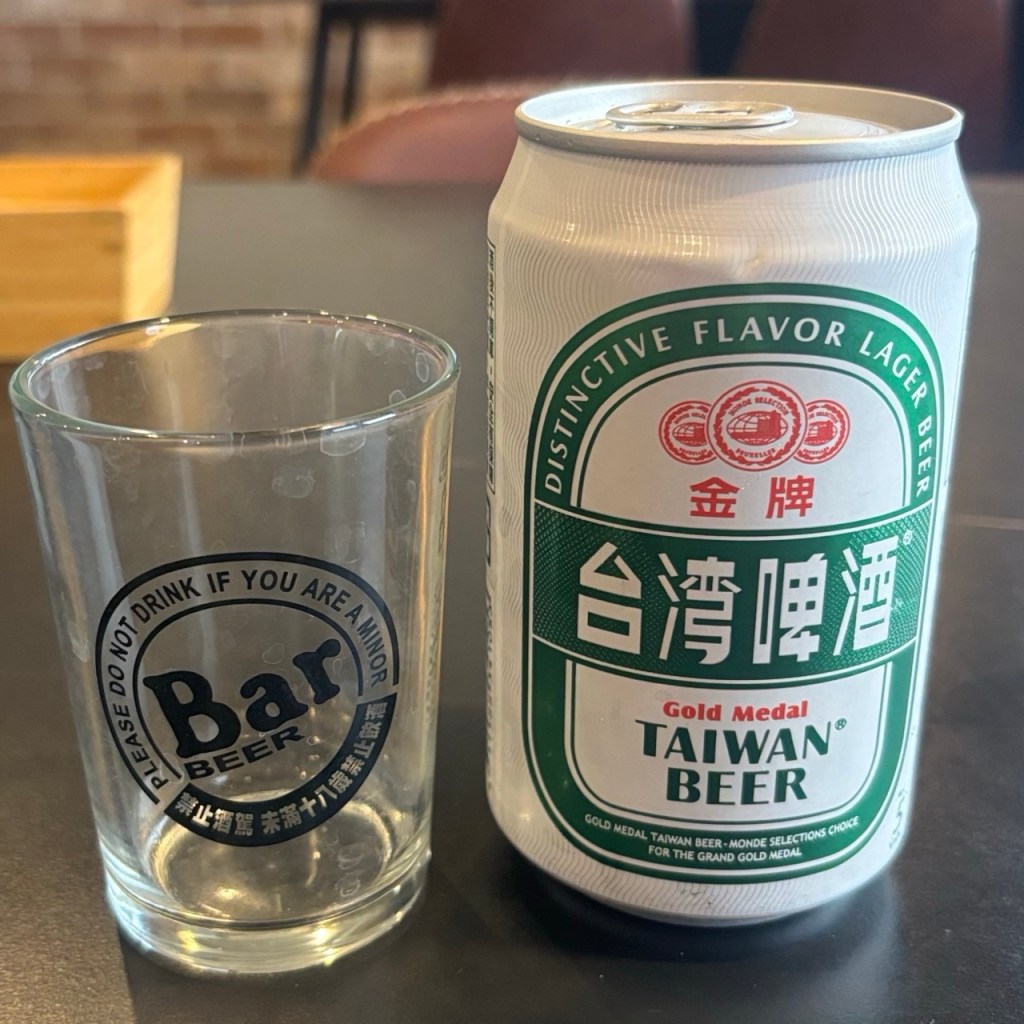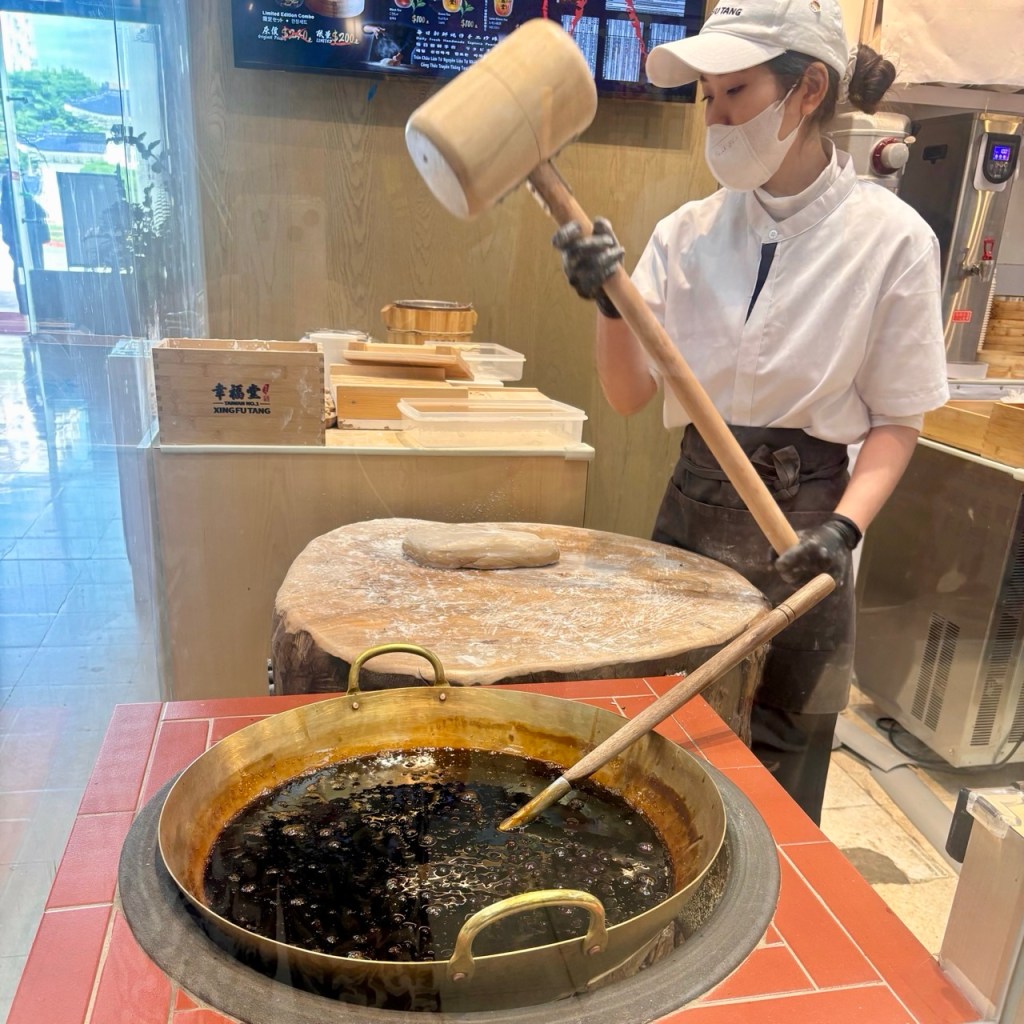
The Birthplace of Taiwan (Tainan, and Chiayi)

This post is really just memories of a really nice couple of days in two really nice cities. I arrived in Tainan via train with just enough time to walk the ten minutes to my hostel, off the main road and hidden away in one of Tainan’s many windy narrow lanes, and get settled in. This is actually Tainan Part 1 as I decided to come back later in the trip. I needed a bit of a rest so indulged in doing my laundry at the hostel for about 50p (I’m not sure why but I find doing laundry in hostel really satisfying, enjoyable even), treated myself to a western style avocado brunch at the ‘Australian’ cafe over the road and signed up for a walking tour in the afternoon.
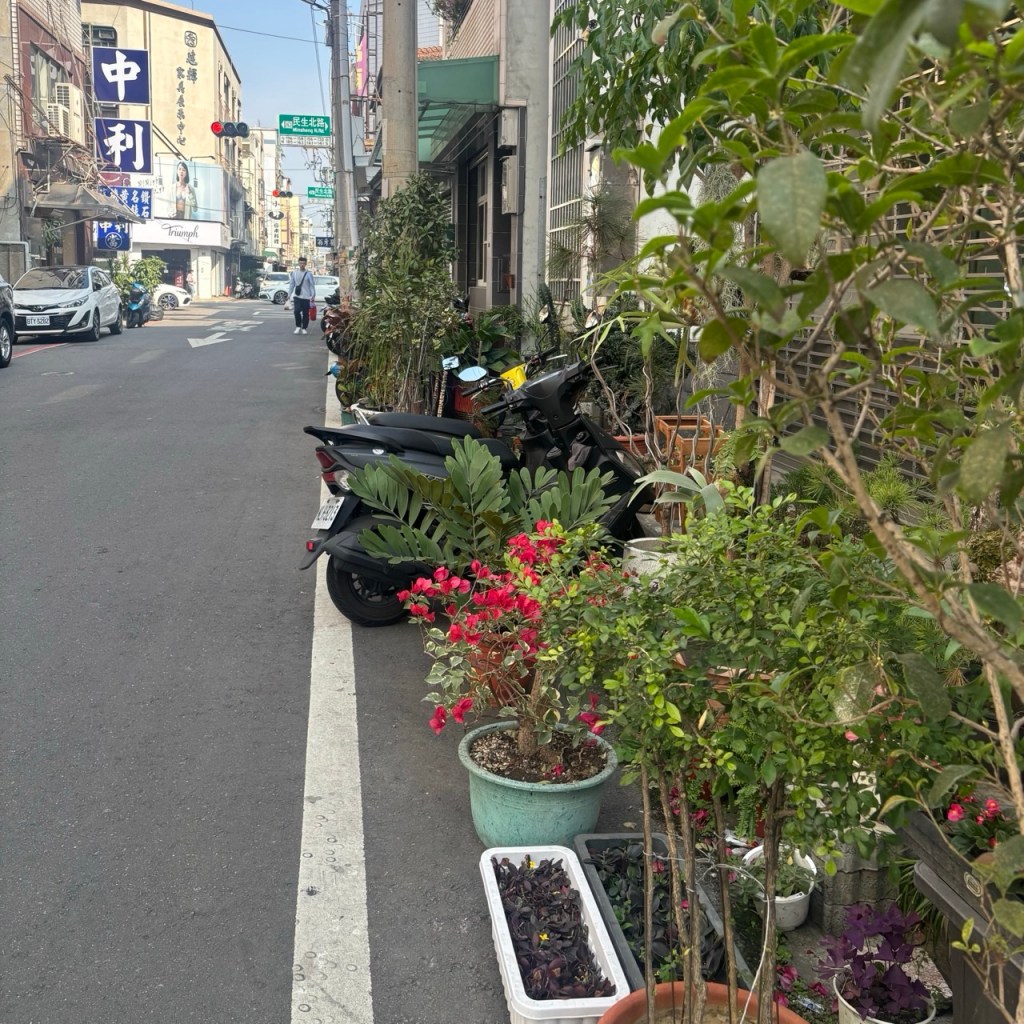
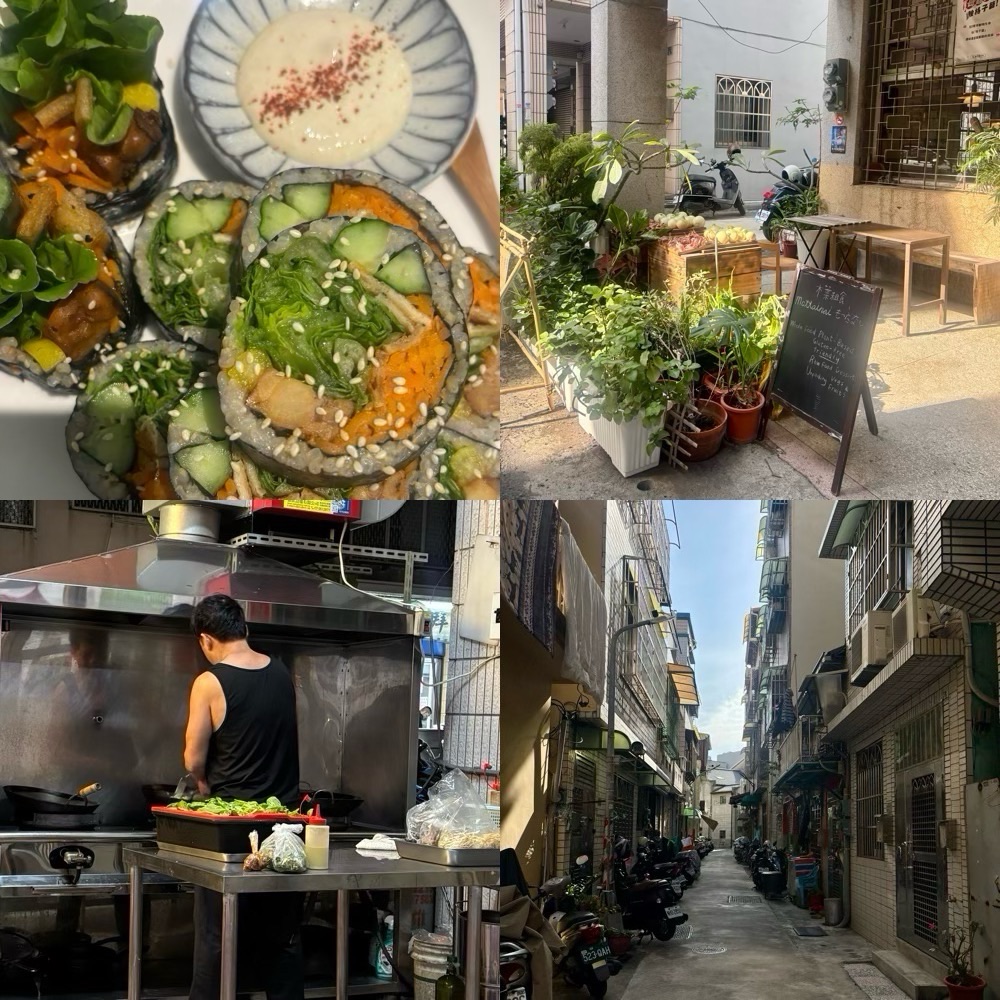
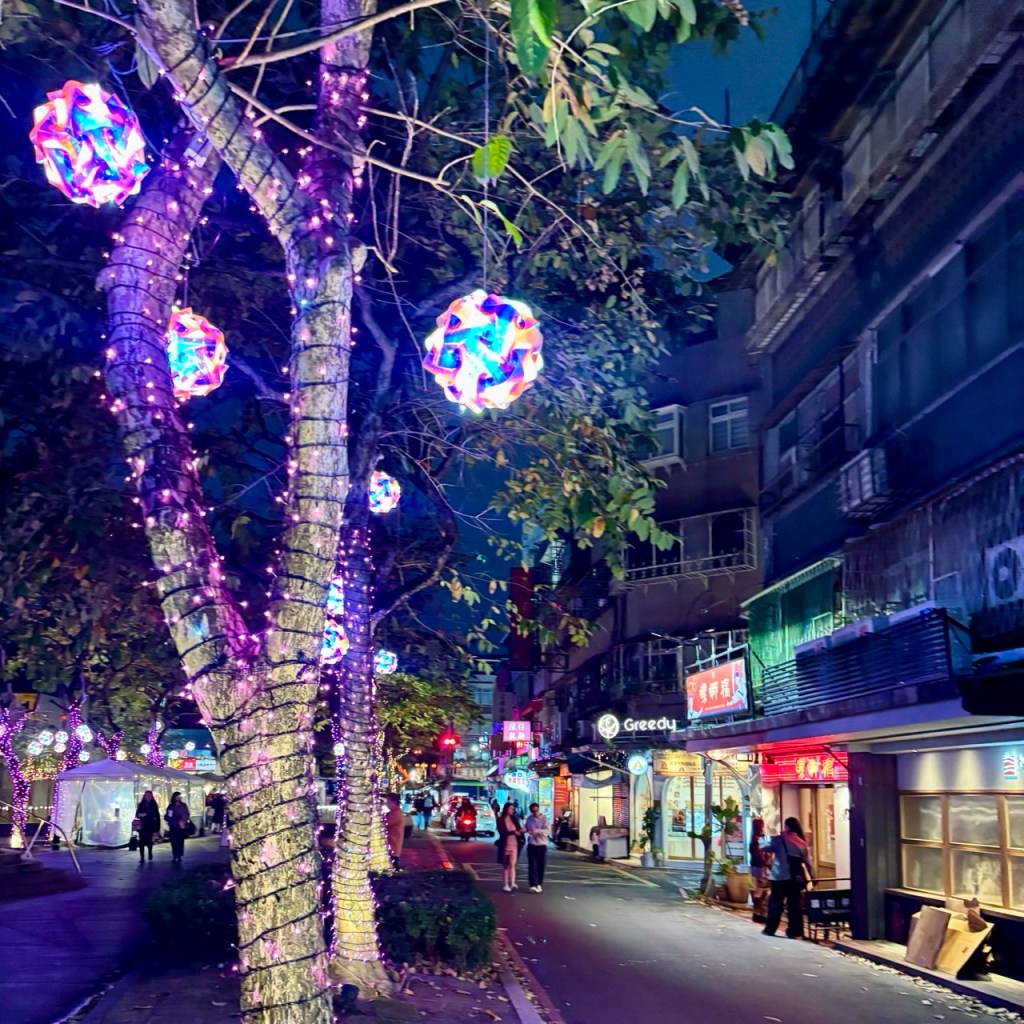
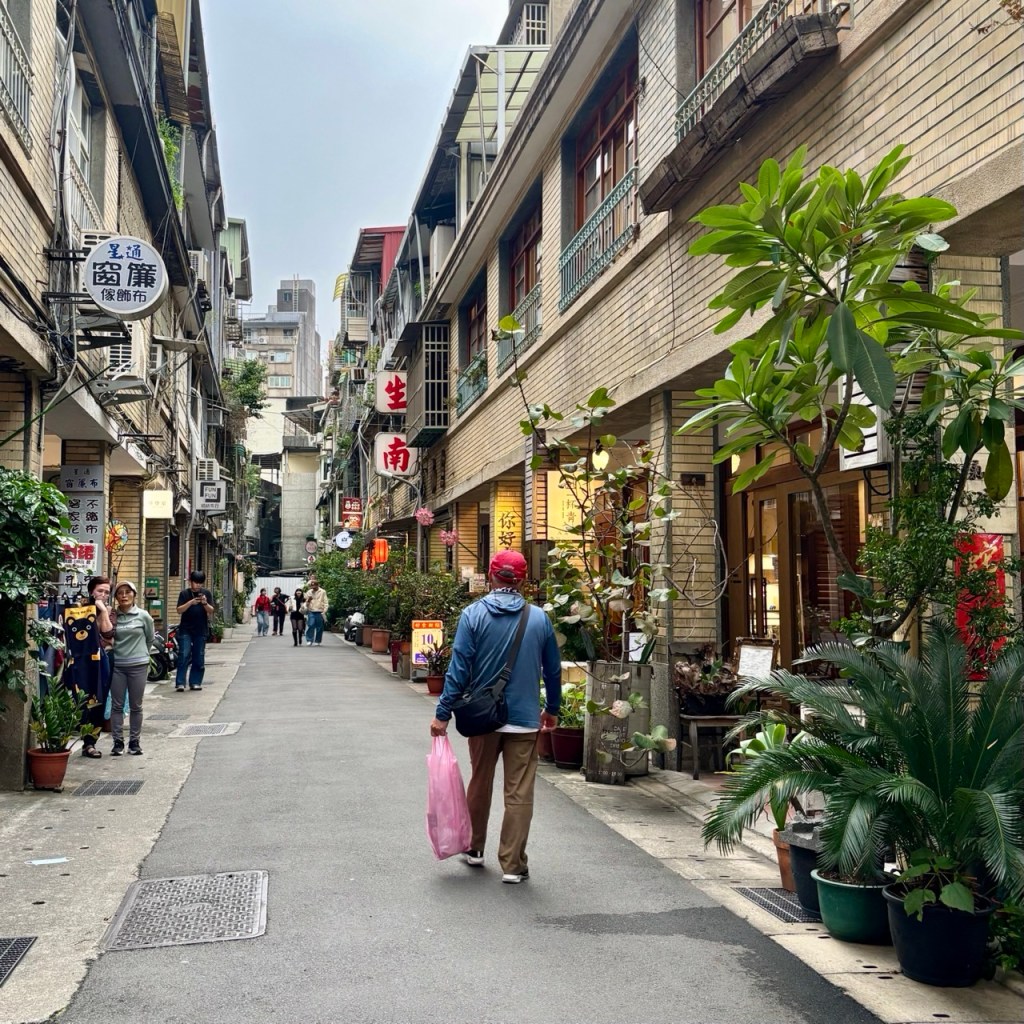
Tainan streets

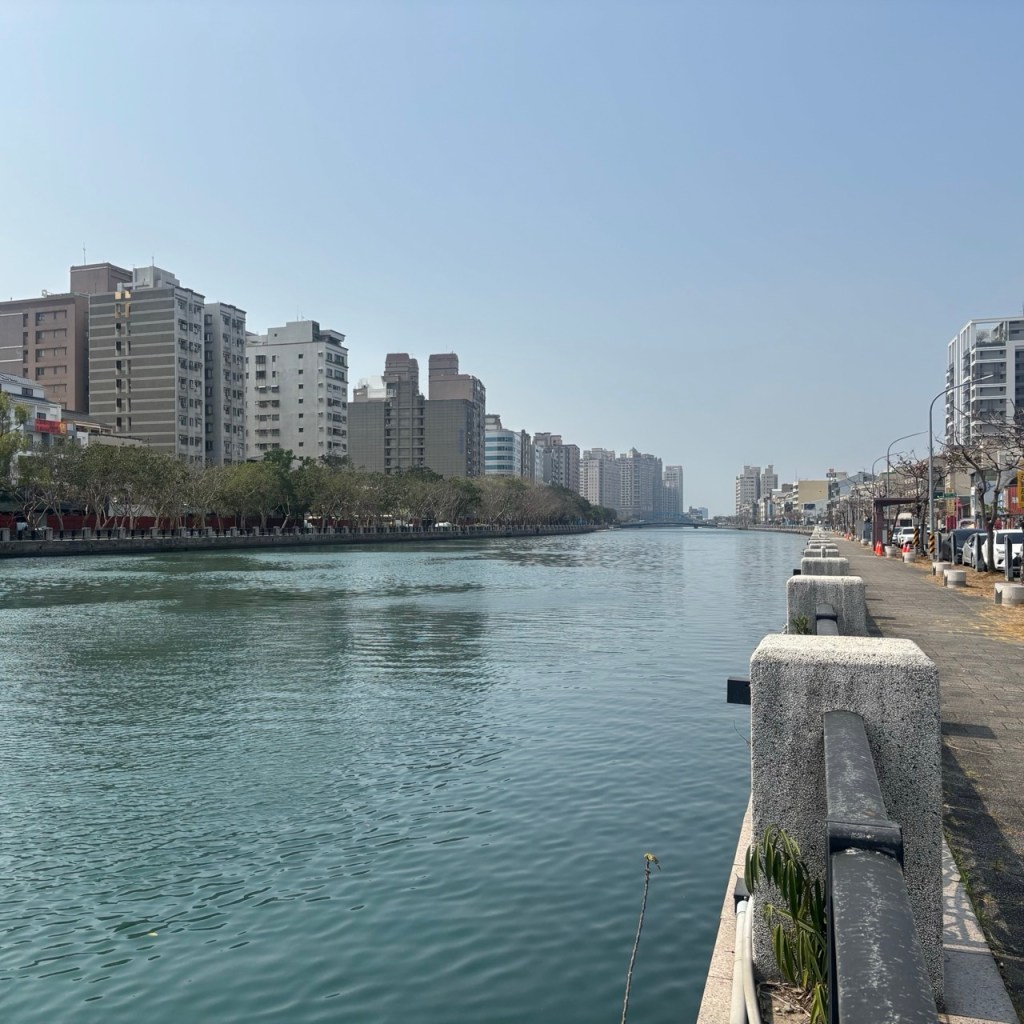
I then set off for the Amping Fort area, walking along the riverside for an hour which sounded lovely but was actually just walking along a busy road with hardly any pavement and stopping to cross the street every 5 minutes. It was interesting though to see the residential areas next to the river.
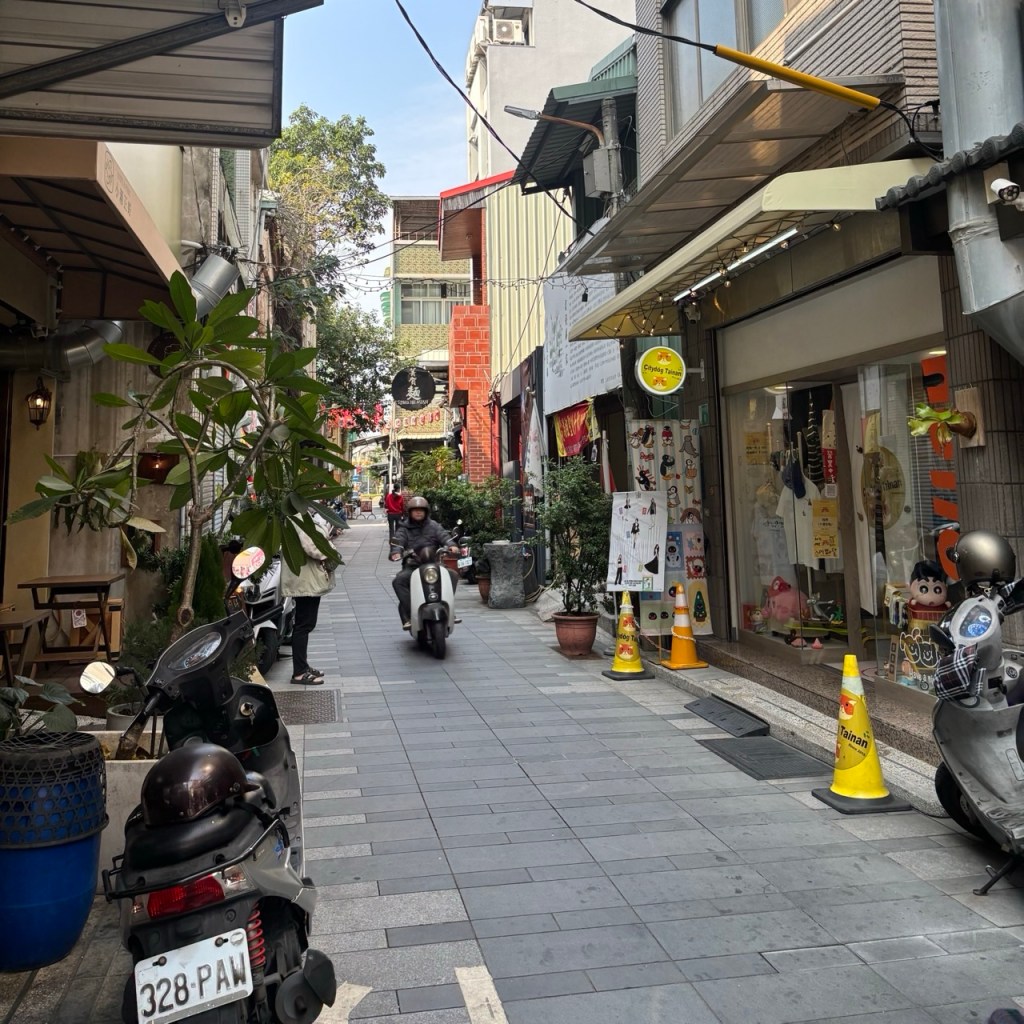
Side streets
Riverside

Walking in Tainan isn’t the easiest as what looks like a pavement is actually a moped parking area, or seating for a restaurant and often just abruptly comes to an end. It also takes forever to cross the road as like Japan, nobody ignores the little red man and the timers on the traffic lights run for a couple of minutes. I spent ten minutes backtracking as I missed my hostel entrance, mistakenly crossed the road, tried to walk along one side and literally came up against a brick wall then had to wait to cross back again, all whilst being only a few metres away from the hostel the whole time. In fact Tainan has a huge roundabout in the middle of the city which is impossible to cross without waiting to cross five lanes of traffic.
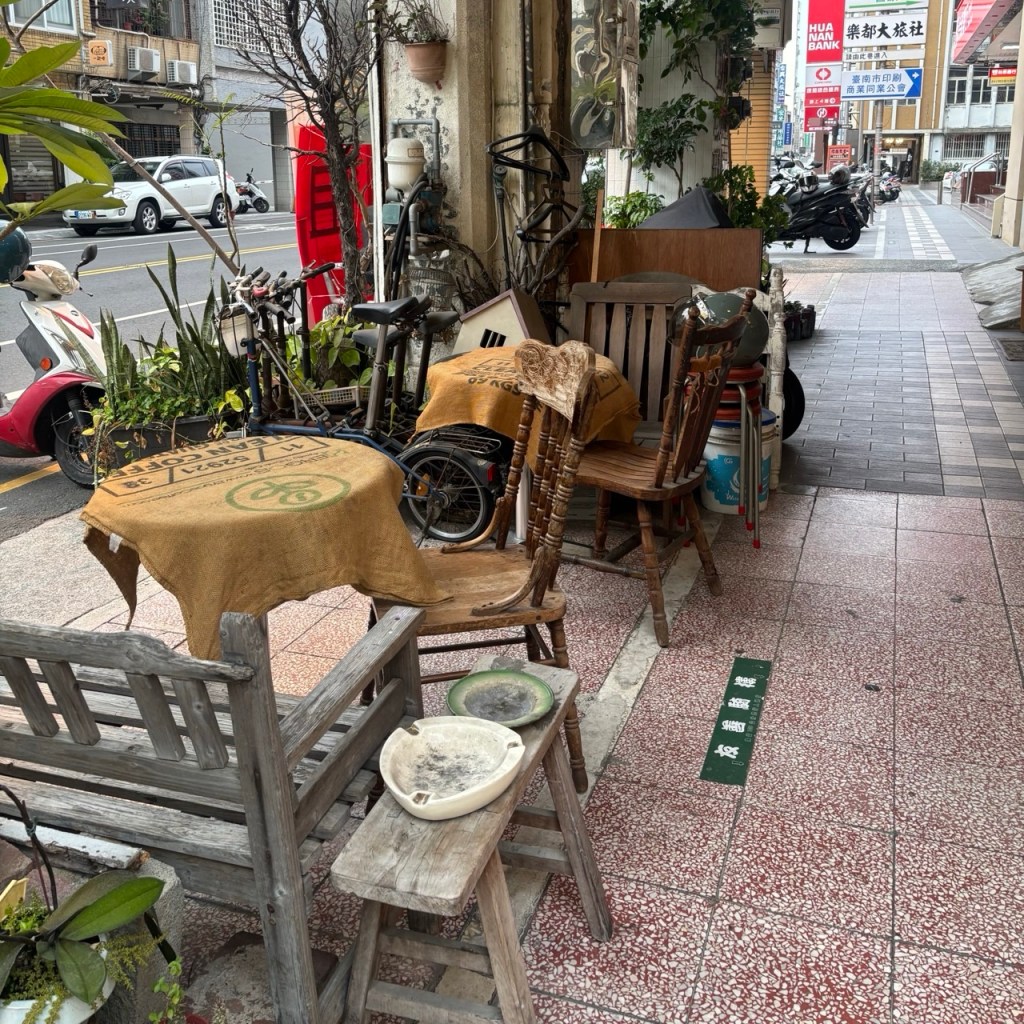
Pavement/Dining/Parking

Tainan is Taiwan’s oldest city and has a rich history spanning 400 years. Initially established by the Dutch East India Company as a trading base known as Fort Zeelandia during the Dutch rule, Tainan was the capital city for 260 years. It gained the name ‘the Phoenix City’ due to the number of changes that it went through – from the Dutch rule, to being seized by the famed Koxinga (the most highly respected saint known for getting rid of the Dutch – the “original ancestor” for a free Taiwan) in 1662 and surviving under the Chinese Qing dynasty until 1887, followed by the Japanese Empire until 1945.
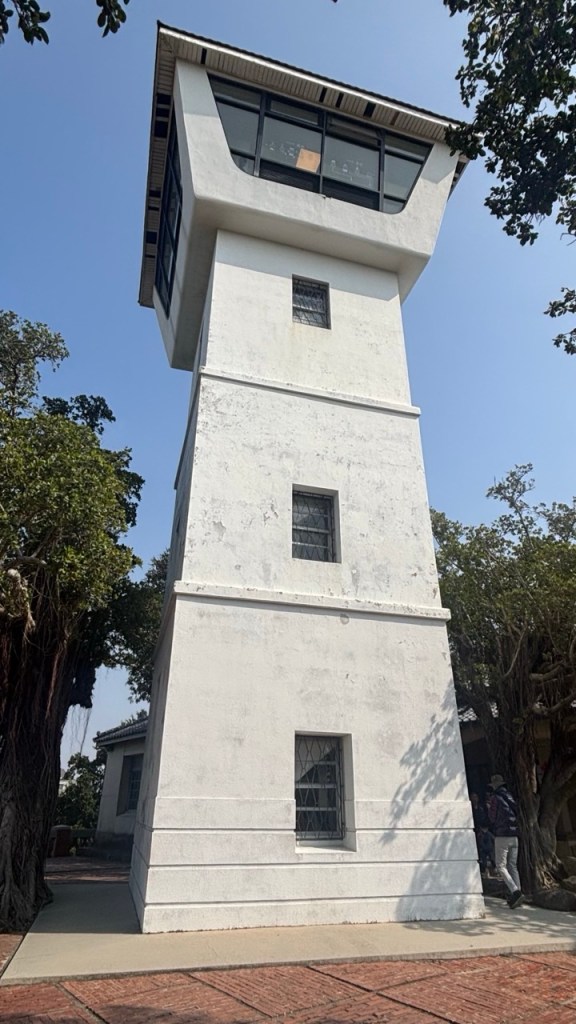
Amping Old Fort
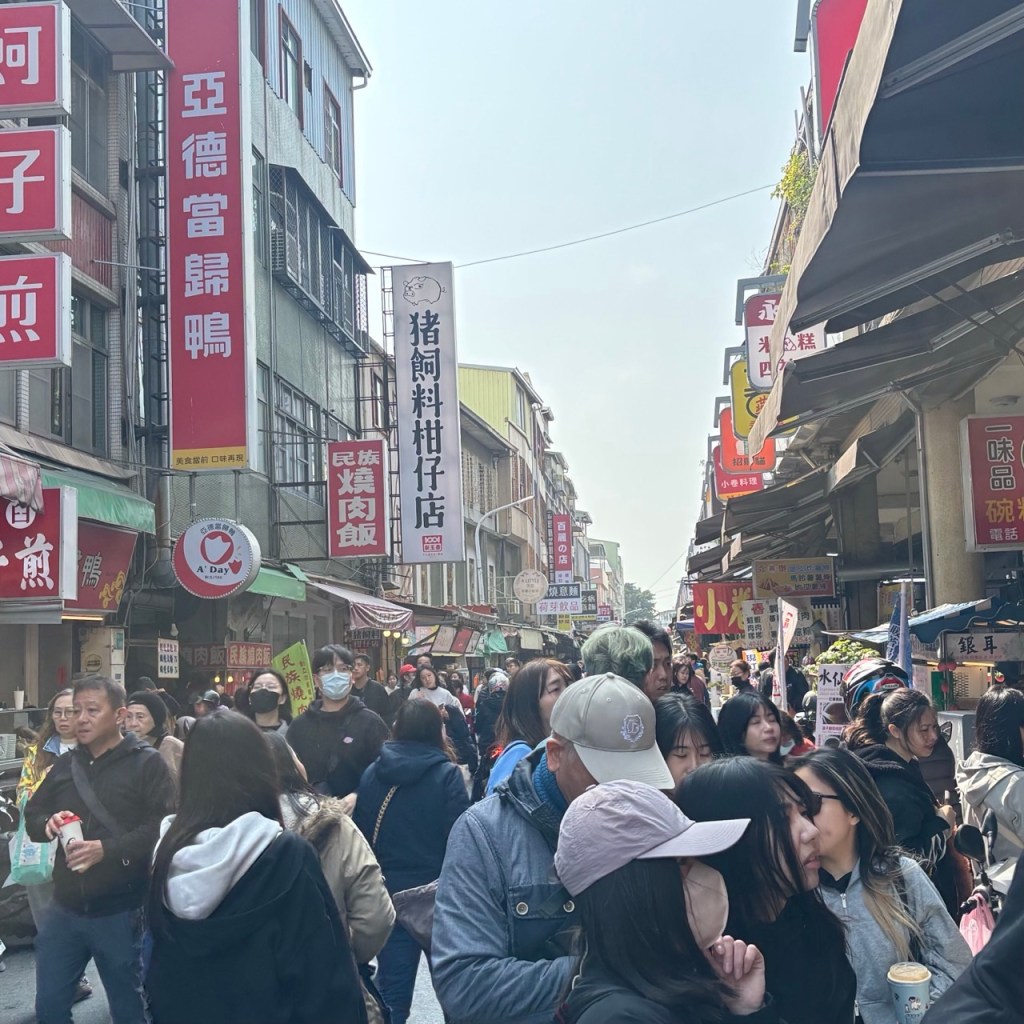
Busy YongLe Market

The old Dutch Fort therefore is at the centre of this history. Built in 1624, Fort Zeelandia (meaning the place where land meets the sea) was one of the most important sites for trading in East Asia due to it’s location. Now known as Amping Old Fort, the Dutch style buildings were completely destroyed during Japanese rule and it was reconstructed in red brick.
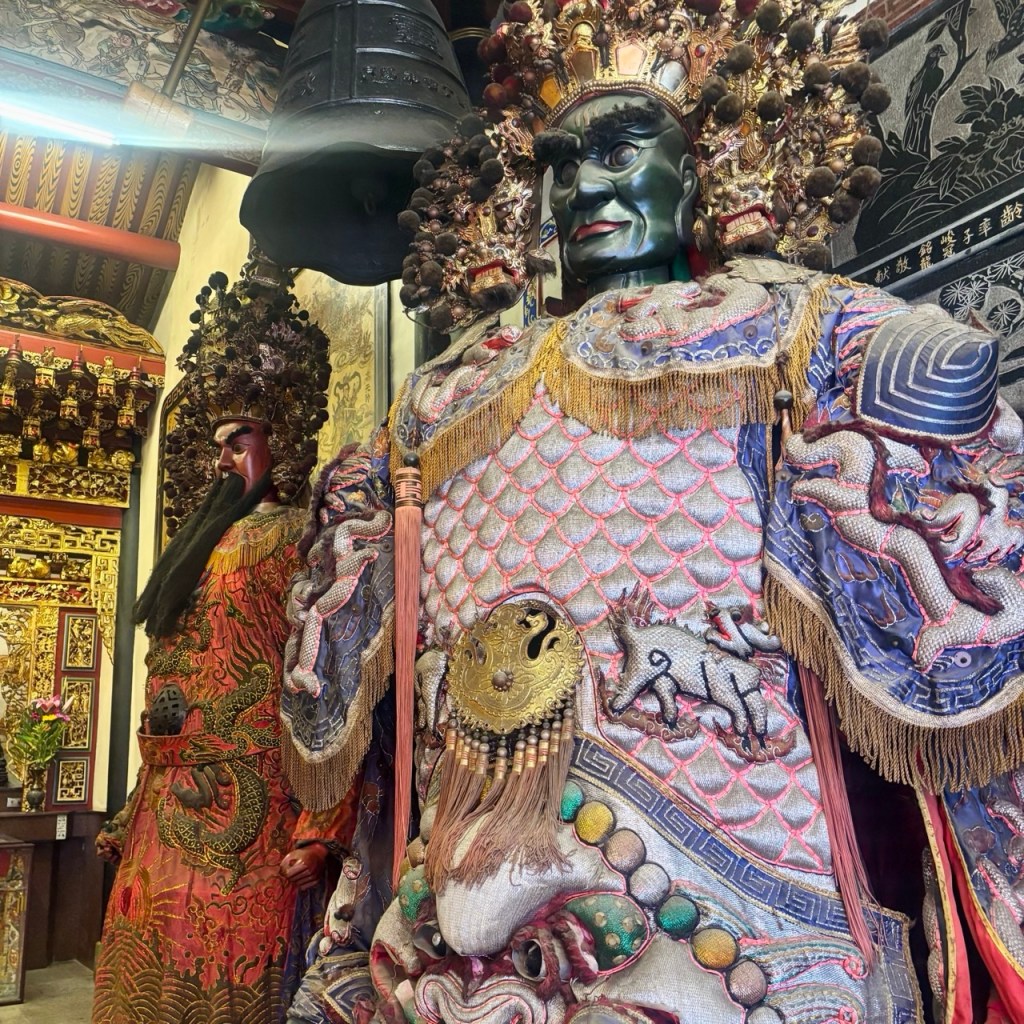
Inside one of the many temples in Tainan

The streets around the fort are filled with food stalls and Bubble Tea shops. I tried a peanut rice ball which was not the sweet treat I expected – instead it was filled with veggie meat but I had to eat half of it as I was sitting next to the woman rolling them in banana leaves – and an Oat Milk Tea which turned out to be milk tea with thick sweet porridge oats at the bottom.
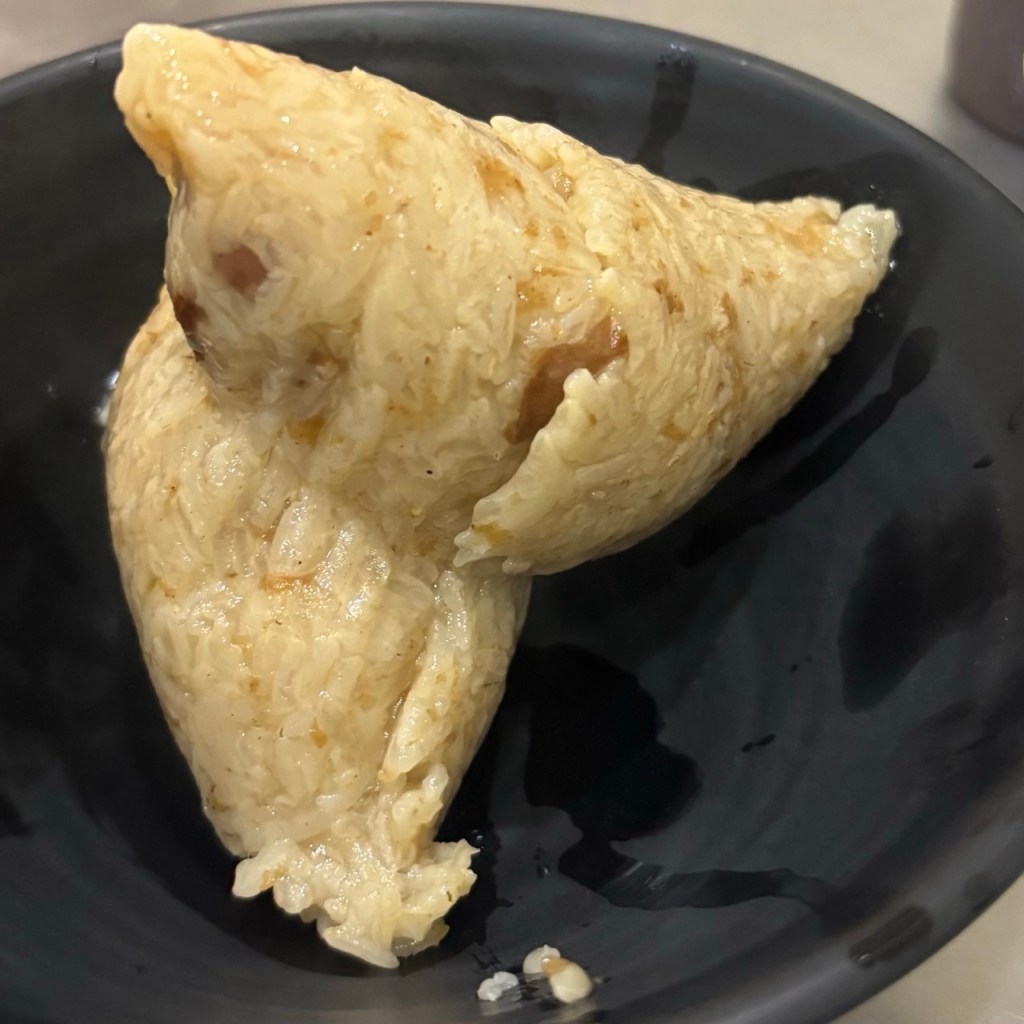
Veggie peanut rice cake

I didn’t want to miss the walking tour so I rushed back to the centre on the bus, helped out massively by an old couple who told me which bus to take and exactly when to get off, in fact half the people on the crowded bus were involved in making sure I got off. The lady also told me ‘you are very courageous!’.
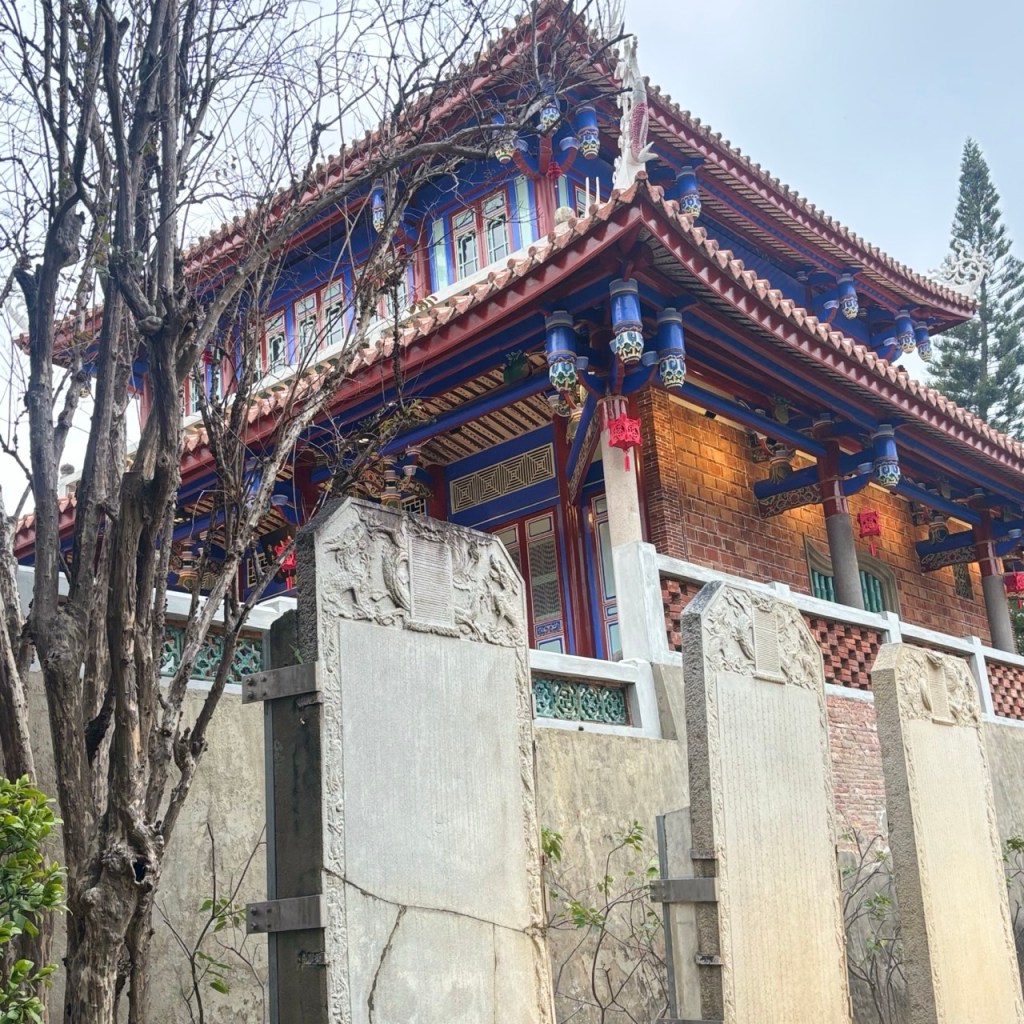
Chihkan Tower

It was only when I arrived at the meeting point at the Chihkan Tower and nobody was there that I realised I had mixed up the two walking tours and it actually departed from the Fort. Exactly where I had just come from. With nothing else planned, there was time for a massage at the spa next to the Australian cafe with the most attentive masseuse I’ve ever had. It was just less relaxing when I could feel him looking at me intently every minute to check if I flinched and to constantly ask if the pressure was OK (it always was).
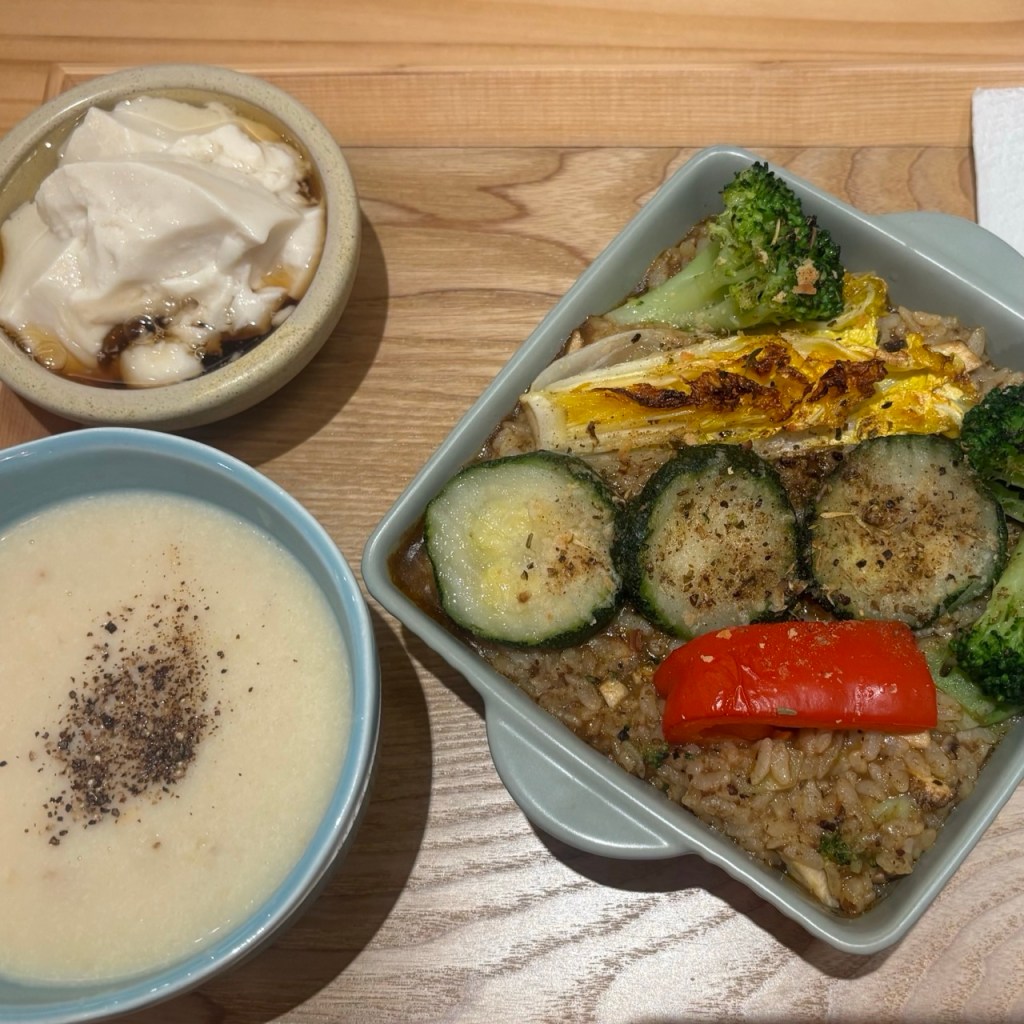
Vegan set meal

Something else worth a look is the historic Hayashi department store from the 1930s and it’s ‘granny lift’ with the floor number pointer that everyone wants to see. This meant everyone was queuing take the lift up, which I thought was a bit unfair on the actual grannies who actually did need to take the lift.
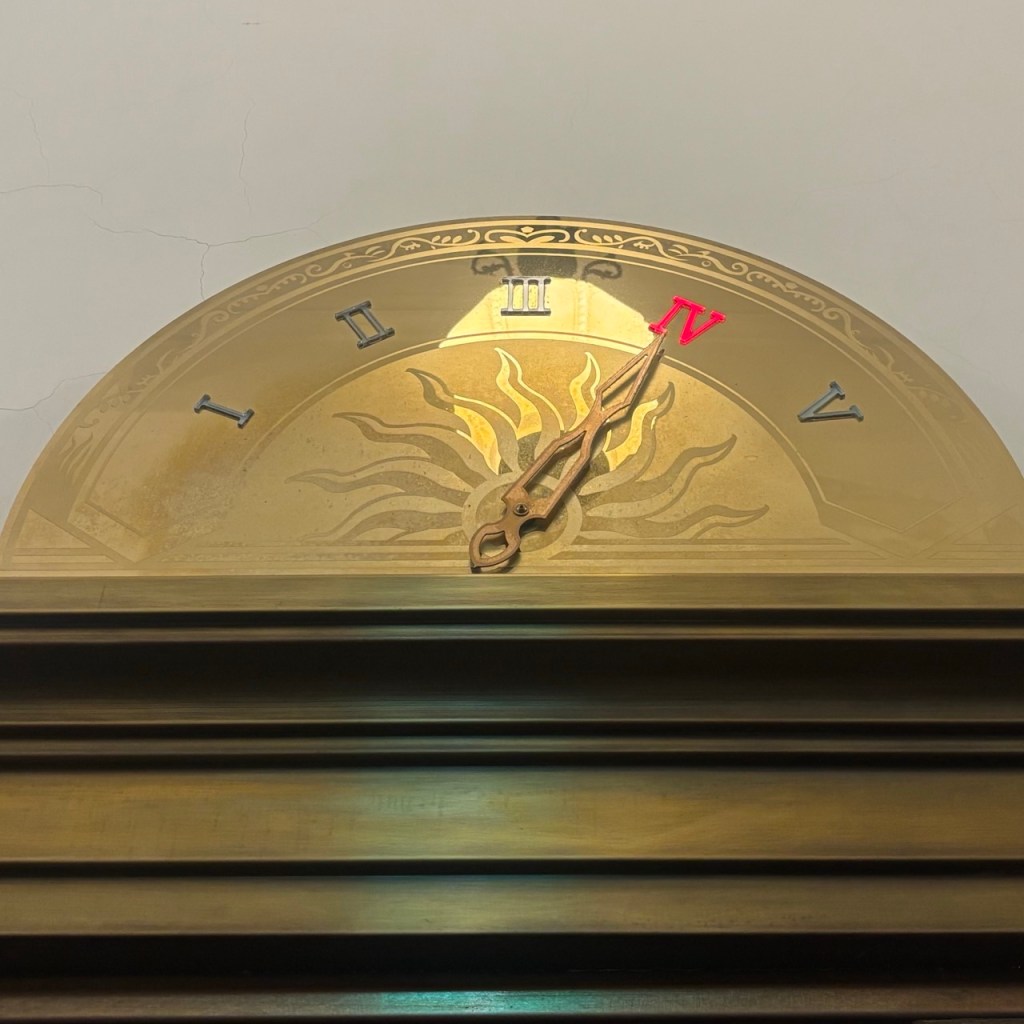
Granny Lift
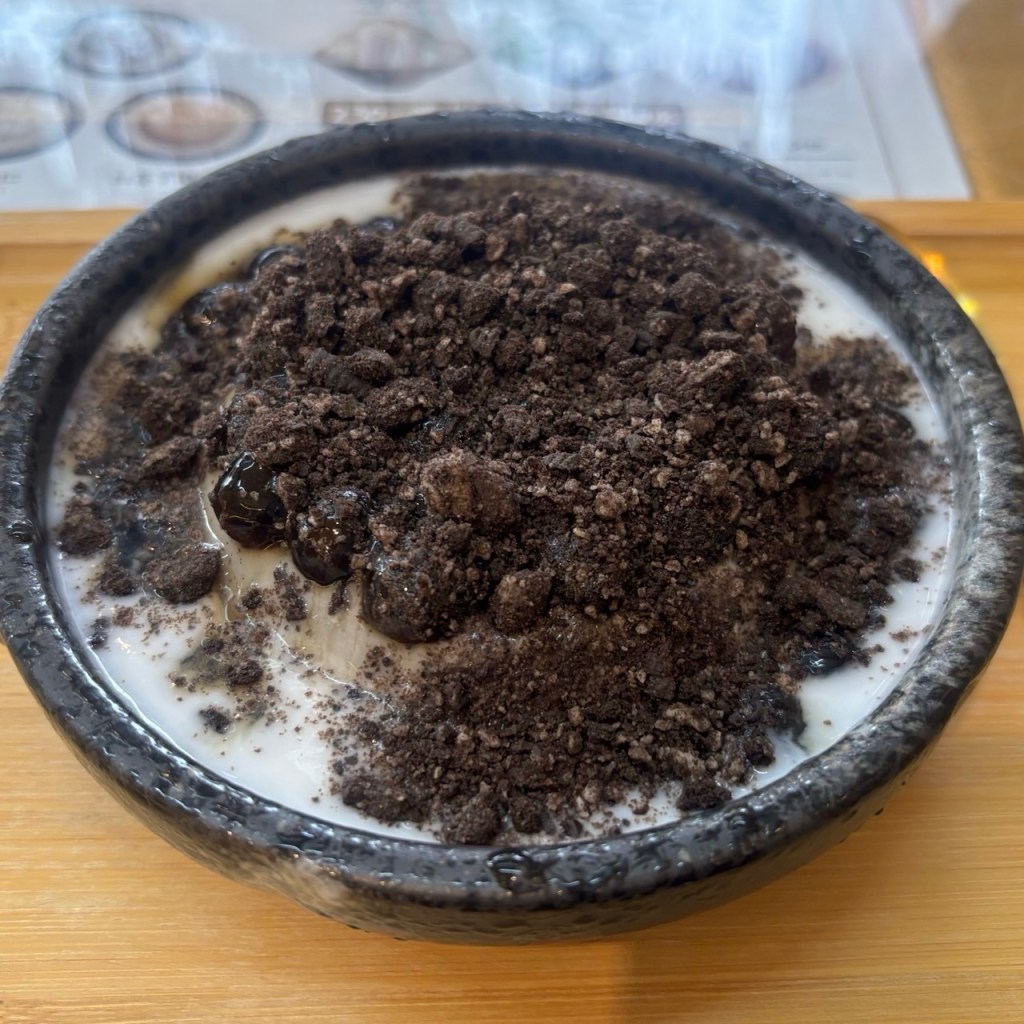
Oreo Tofu Pudding

Rather than wait, I just walked up the four flights of steps and all the way up to the rooftop which houses a Shinto Shrine, and where bullet holes from WW2 are visible (although I couldn’t see them), then hopped straight in the lift down and out past the queue.
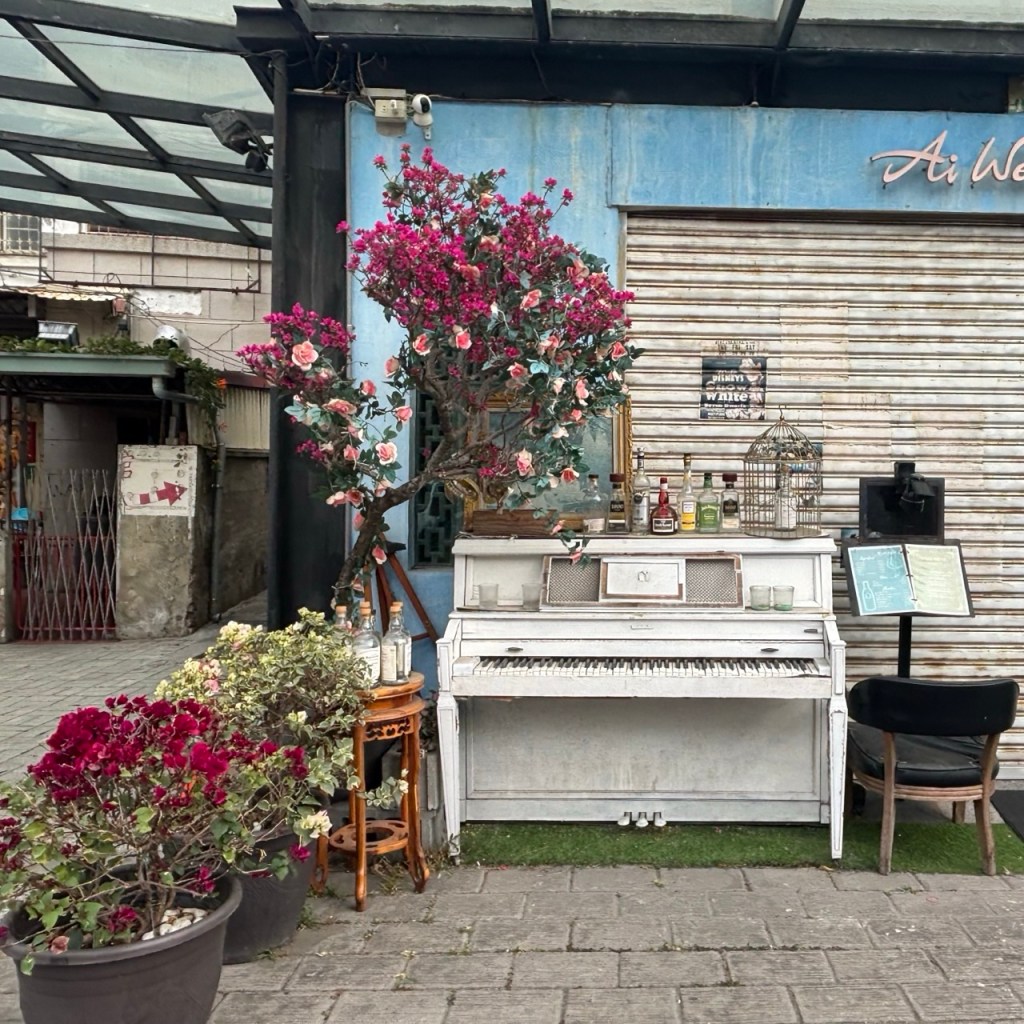
Tainan cool area

One of the things I loved about Tainan is the amount of plants everywhere. Plants of all sizes in flowerpots, clearly being looked after by someone. The food is also great and there are plenty of interesting independent cafes – Oreo tofu pudding is a new favourite.
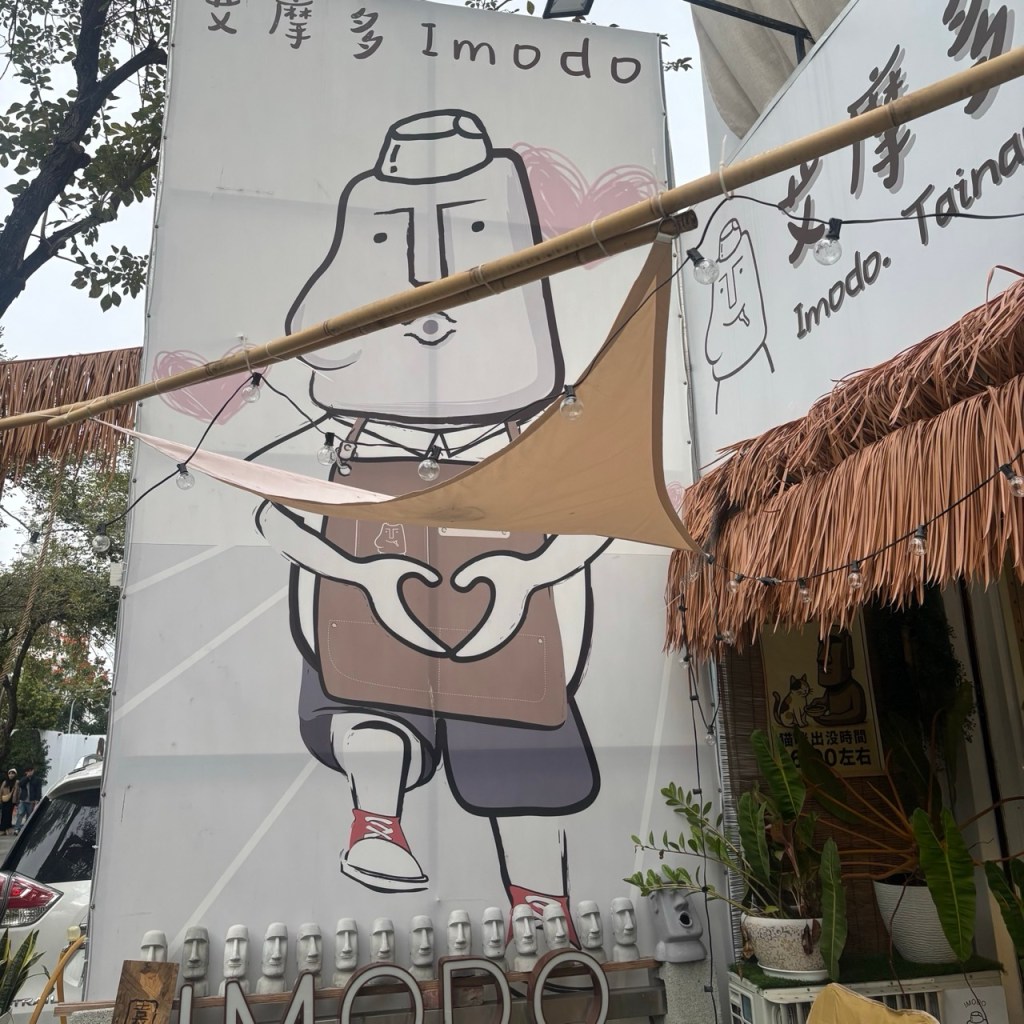
A cafe I liked

With a trip booked a couple of days later to a place I was really looking forward to, the Alishan National Forest, I left the next morning via train to the smaller city of Chiayi – the jumping off point for buses and trains to Alishan.
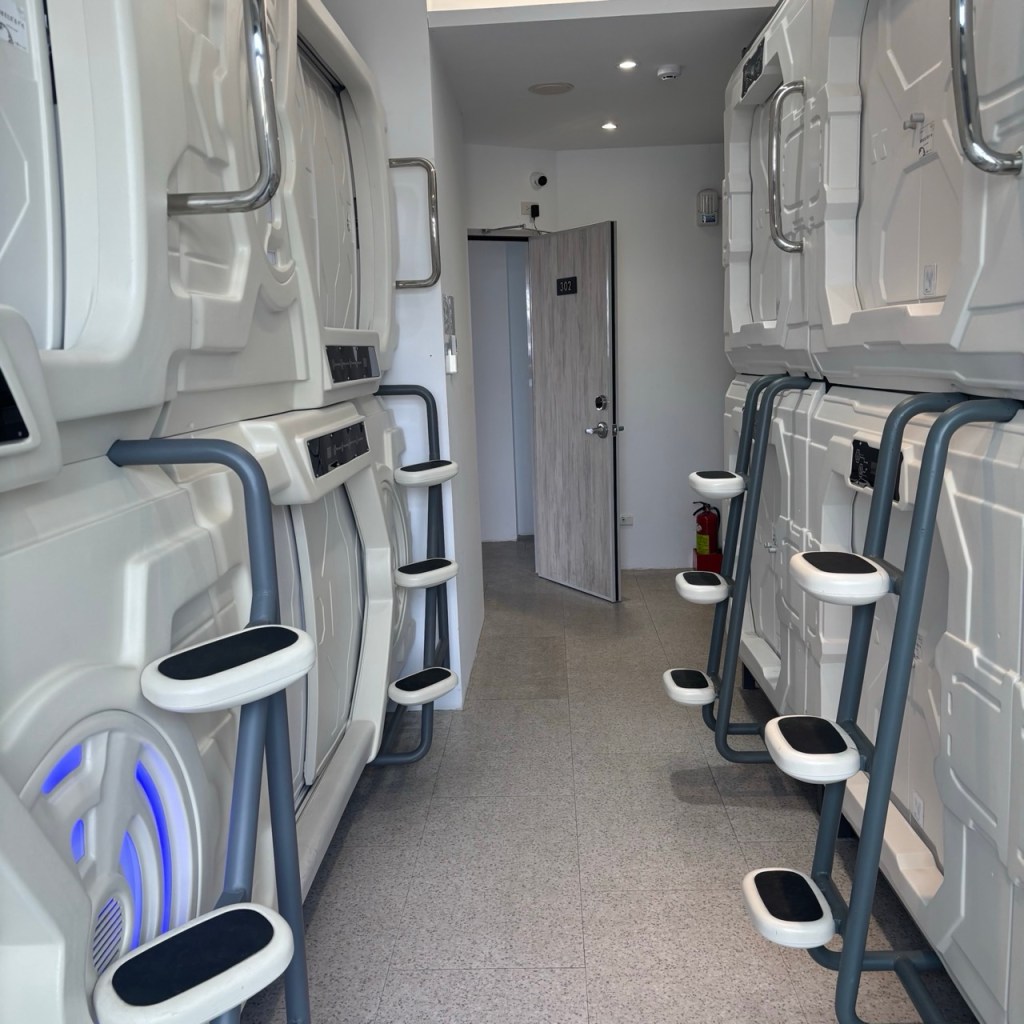
Pod hostel

I expected Chiayi to just be a stopover but it was a nice surprise. I paid around £10 at the Planet 23 hostel for a hi-tech style pod with different coloured lights and individual air con controls, a big clean common area with free coffee from a proper coffee machine and toast and peanut butter for breakfast. You would expect it to be fully booked but I only saw one family.
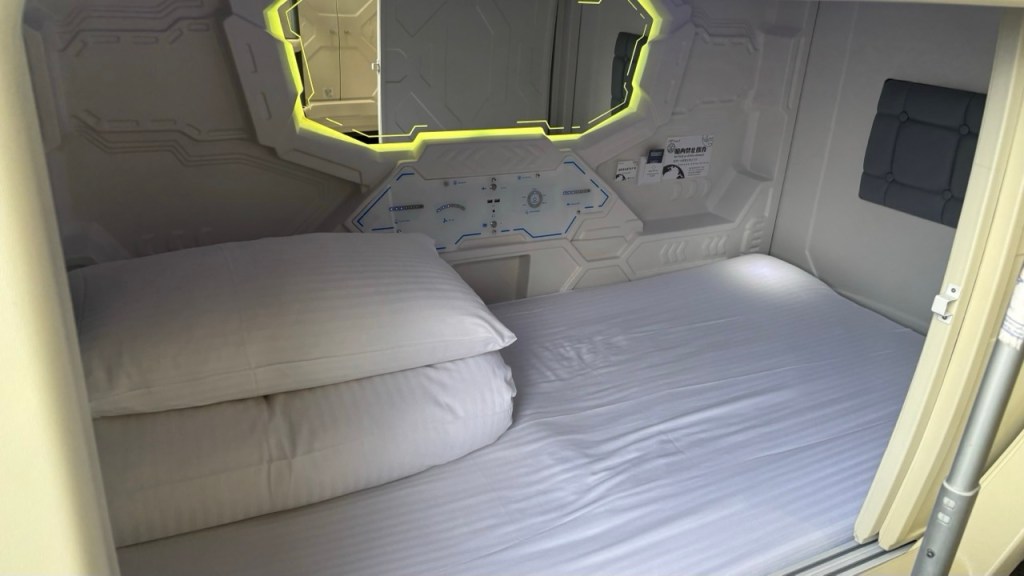
Inside the pod

The train station separated the area where the hostel was from the rest of the city. Since the station was under some sort of construction, in order to cross to the other side of the main road, I had to pass through the station by taking a fake ticket, showing it to station staff and going all the way through the platforms and up and down over passes. This meant I again spent a long time trying to get out of the station.
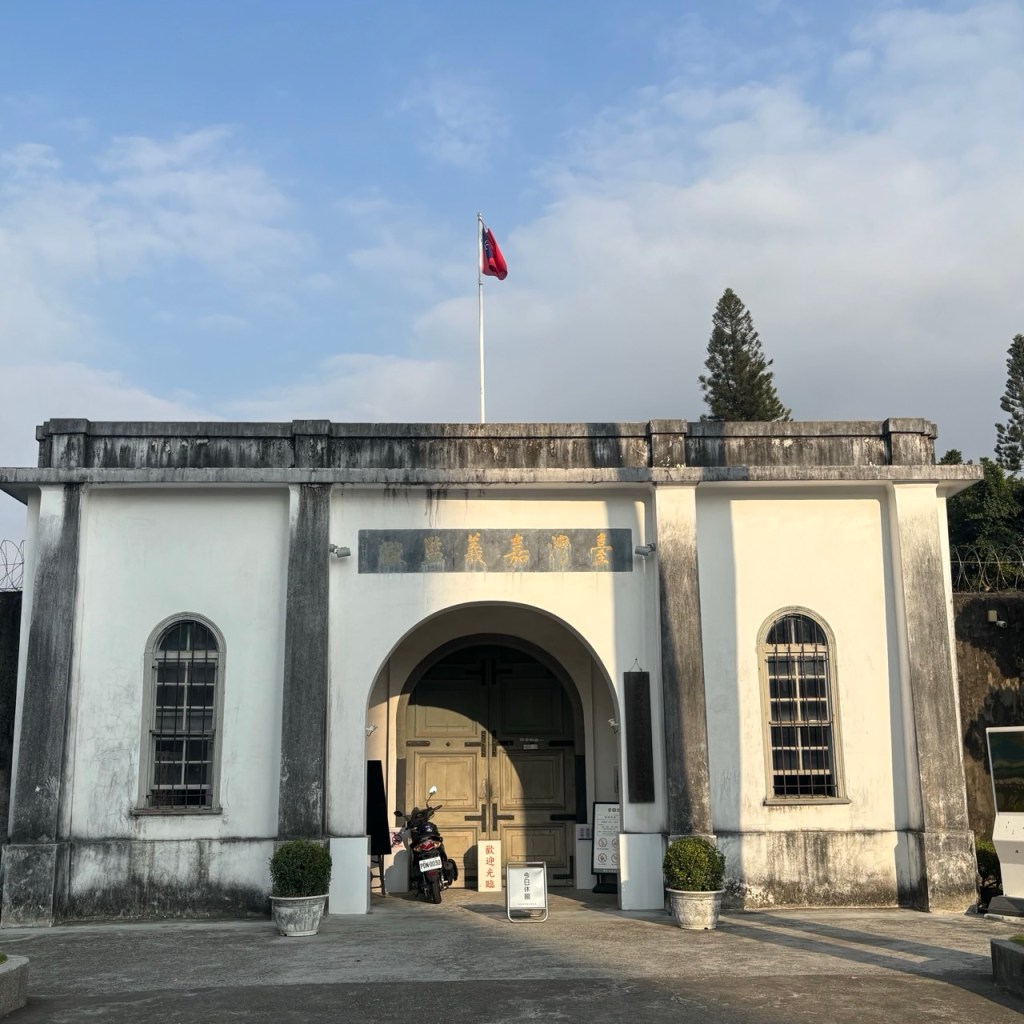
Chiayi old prison

I spent a very pleasant afternoon wandering around the Japanese inspired Hinoki village, which is not cheap but has lots of cute Japanese shops and I had to try the peanut latte coffee which cost me the same as a meal over here.
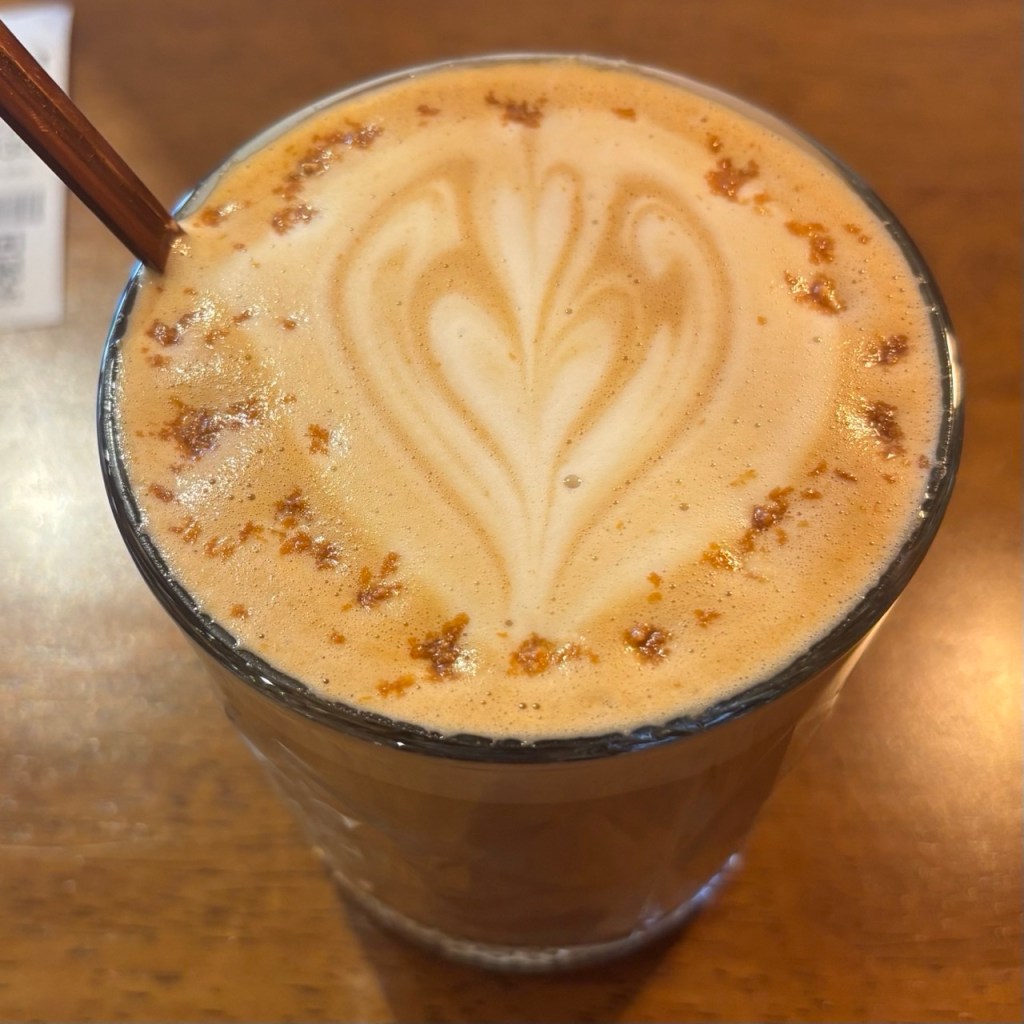
Peanut oat latte
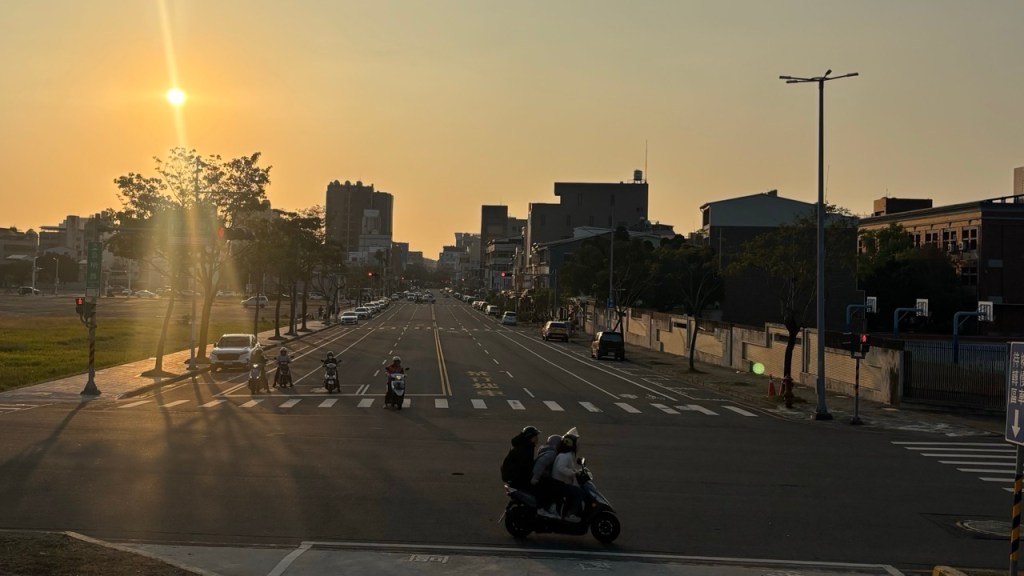
Chiayi sunset

I ended up walking all the way through the city streets, past the old prison and up to the lovely Chiayi Park and the Sun-Shooting Tower. The park was pretty parched looking but filled with older locals exercising as is common in Taiwan, including women stretching on bars like ballerinas with their legs higher than people half their age could manage, a Tai Chi group and a man power walking backwards.
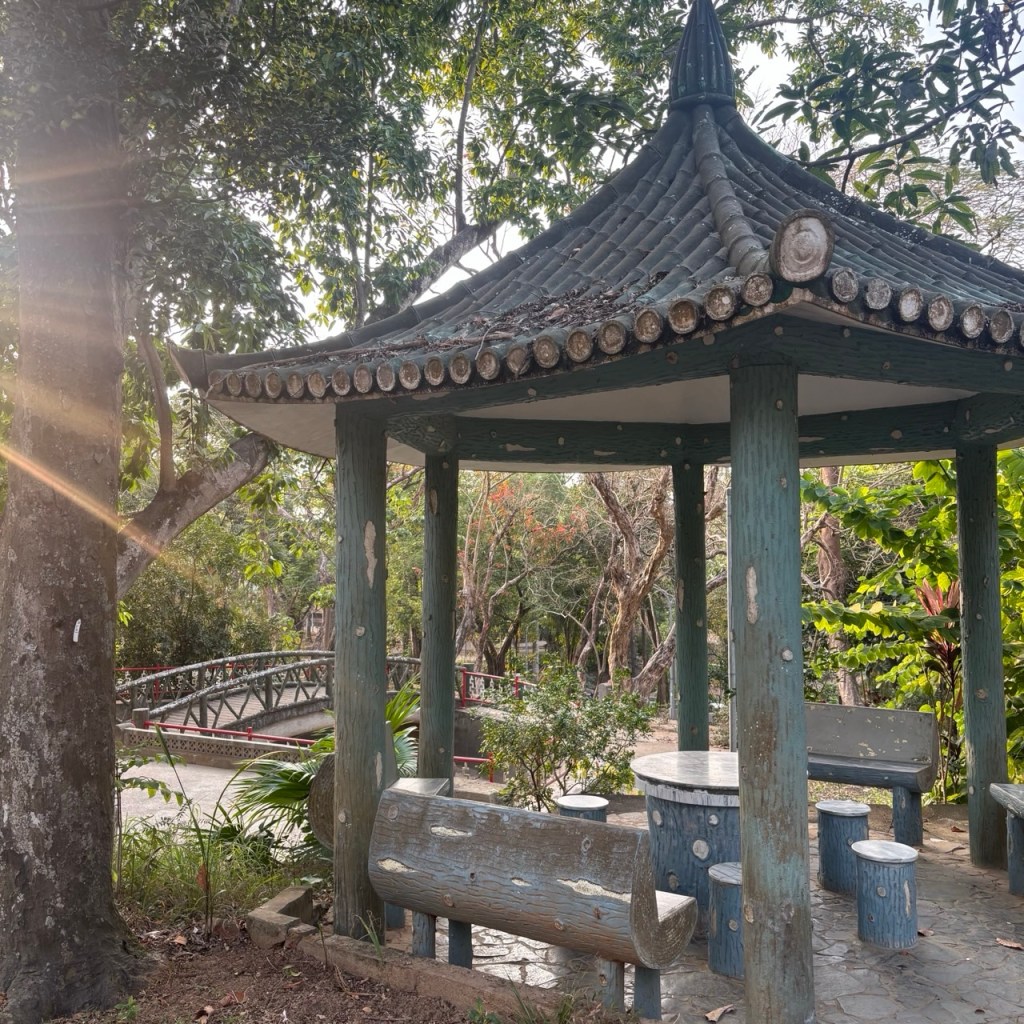
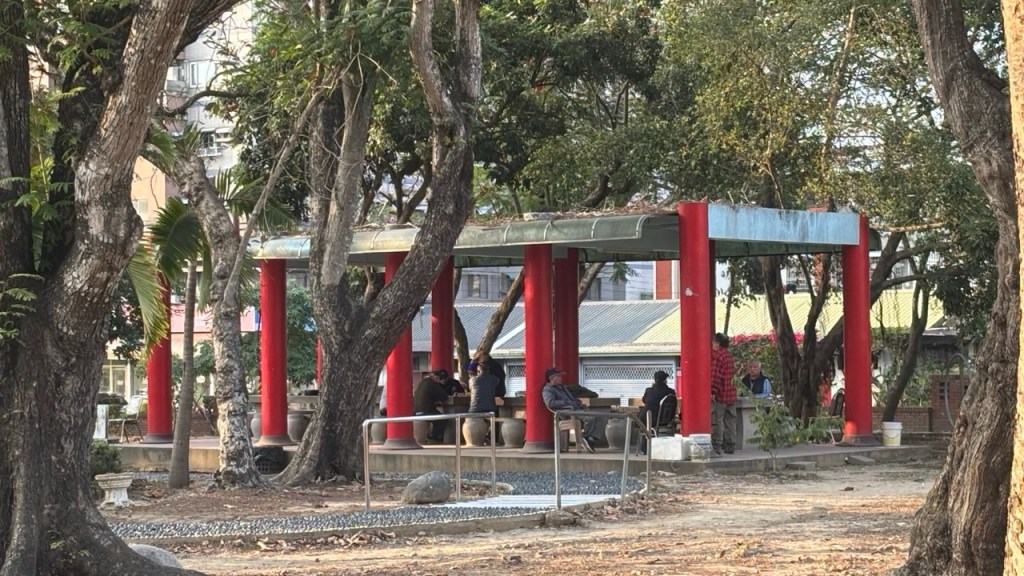
Chiayi Park
Men playing chess

The other demographic out at sunset were younger people with cute little handbag sized dogs. I wasn’t sure what the Sun-Shooting Tower was all about as it was closed, but it was nice to walk around! There would generally be more to see on a day other than Monday when things like the art museum are closed.
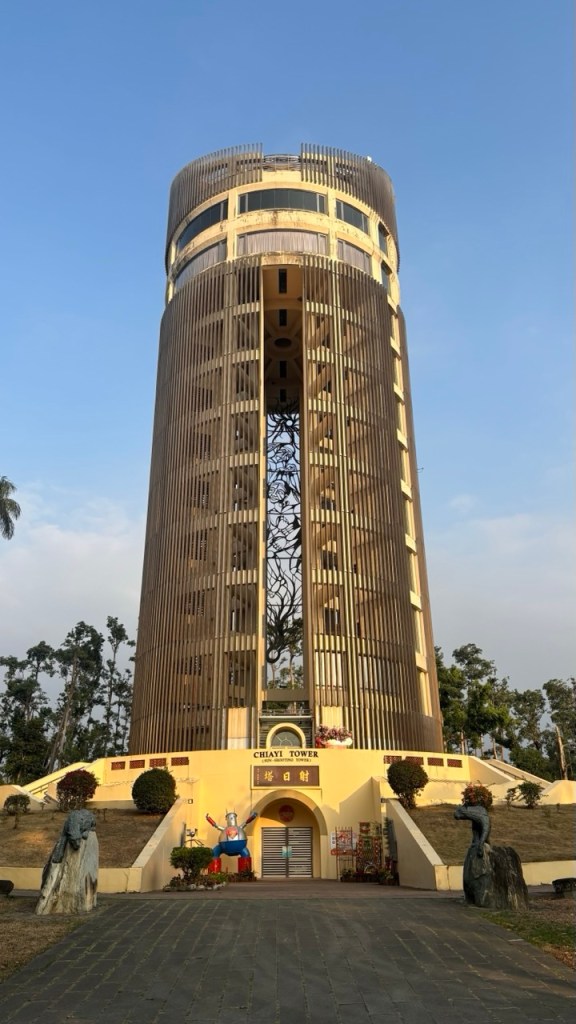
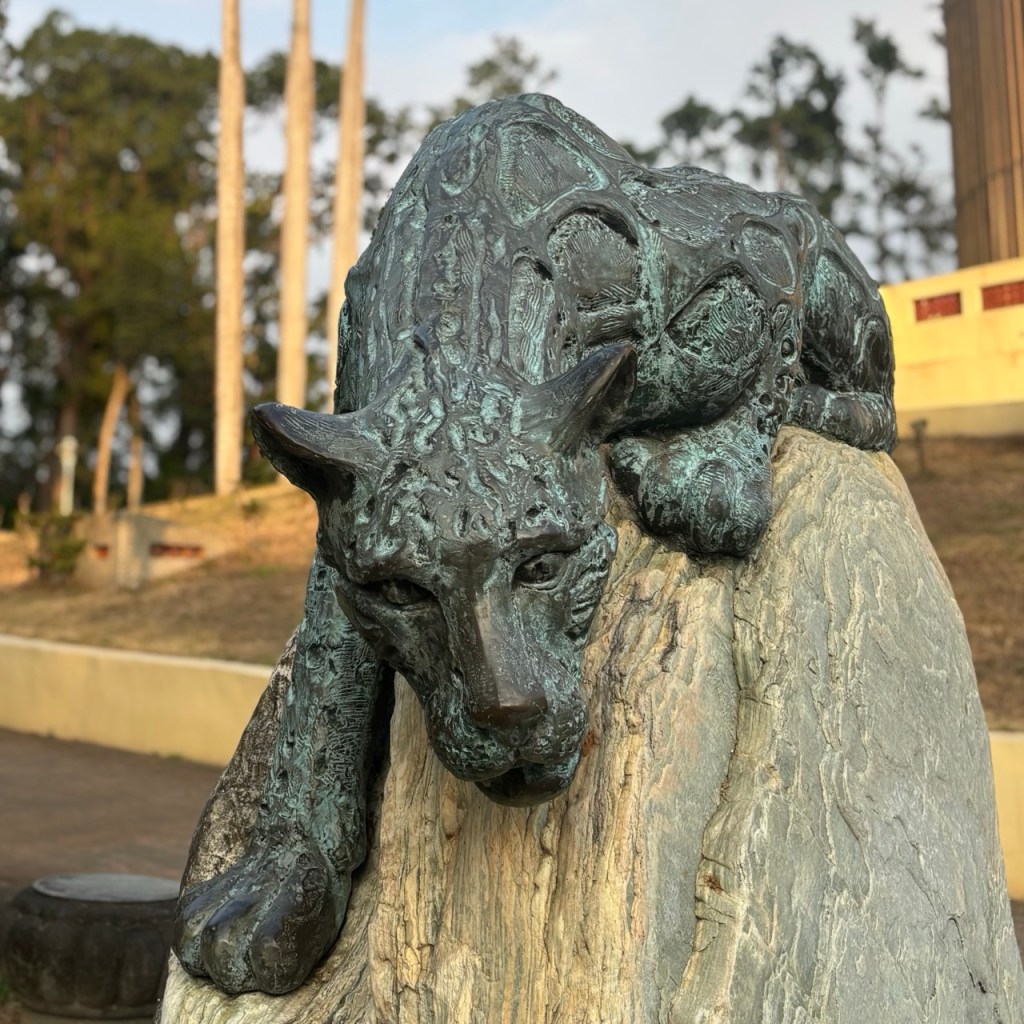
Sun Shooting Tower
One of the Sun Shooting Tower Guardians
And the other

That’s all I had time for in the South of Taiwan for now – but I’d already decided to extend my trip and spend a bit more time here. Moving on to the mountains in the centre of Taiwan to the Alishan National Forest…
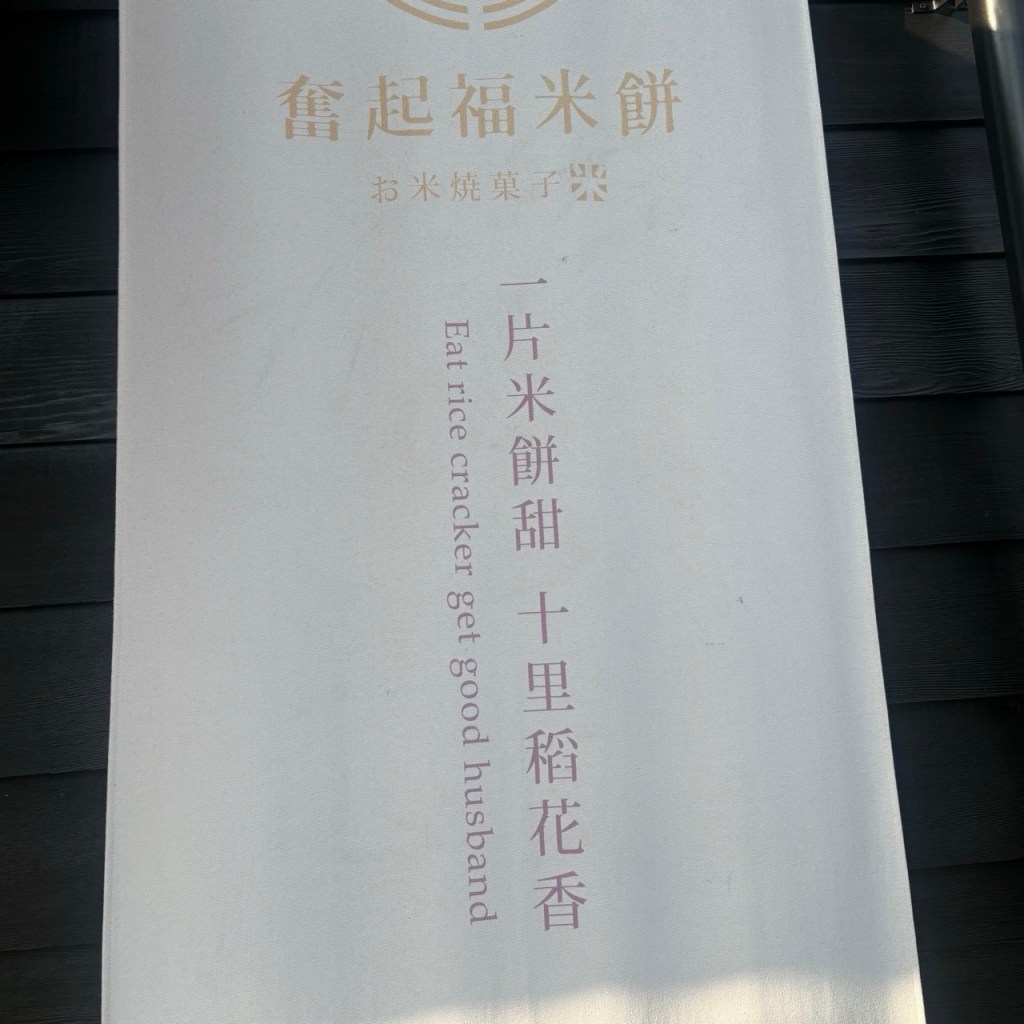
Unfortunately I didn’t like the rice cracker

The City That Has It All: from Monkey Mountain to Tiger Temples, Super Heroes to Palm Trees and the Tunnel of Stars (Khaosiung)

Moving clockwise around Taiwan, the next stop was the city of Khaosiung in the South West of the island – an over the top mix of old and new with a good amount of nature thrown in. Khaosiung has it all and I loved it immediately. The “mountain line” train journey from Taitung was also beautiful as it hugs the coast then cuts across inland. The only thing I didn’t like was my choice of budget accommodation which was my own fault – you get what you pay for and £10 a night got me a pod style bed in a dark basement of a building, with a slightly creepy giant teddy bear sitting in the windowless lounge area that nobody used. The lack of windows meant I got dressed for a summery day only to go upstairs to find it pouring down with rain.

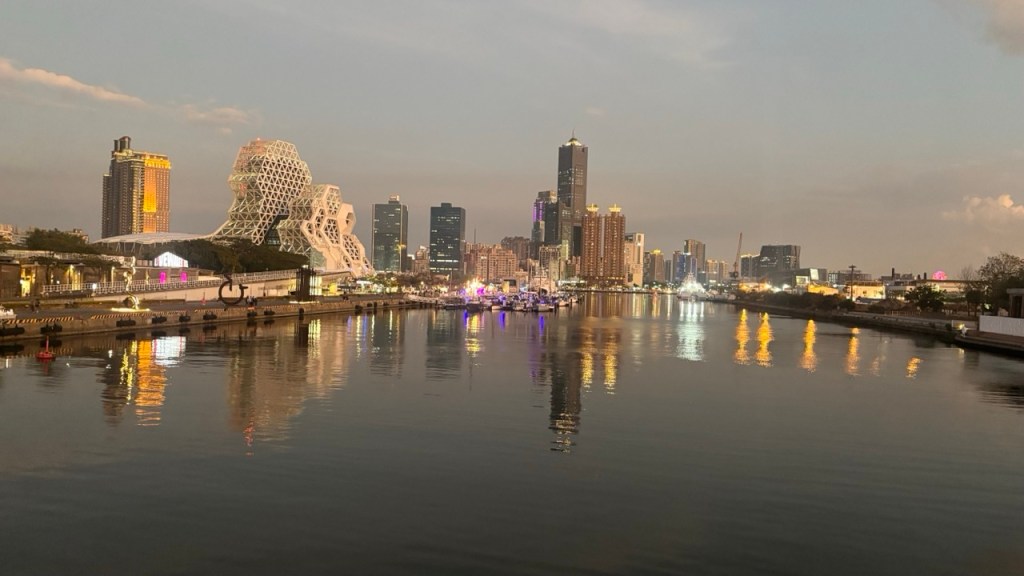
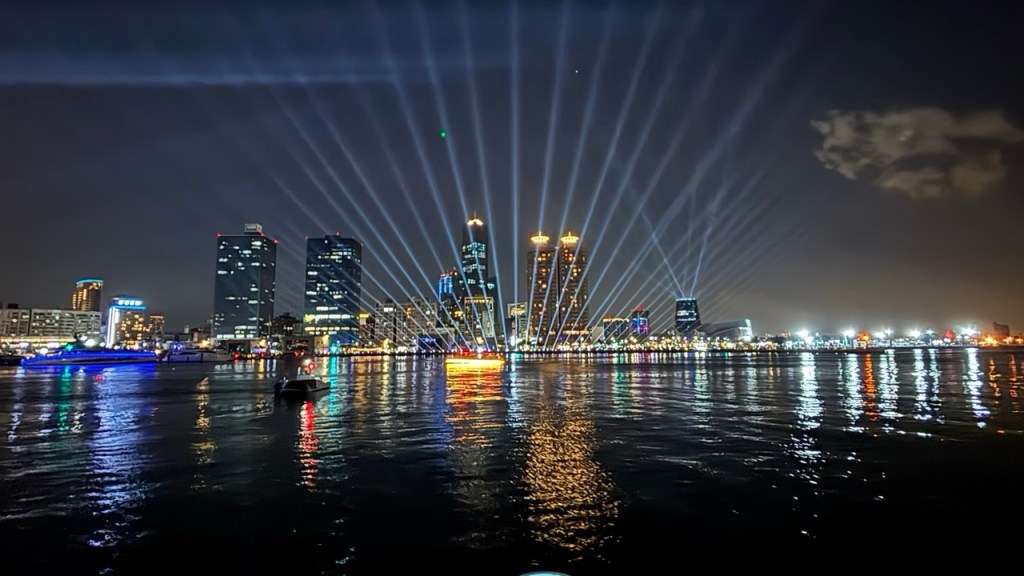
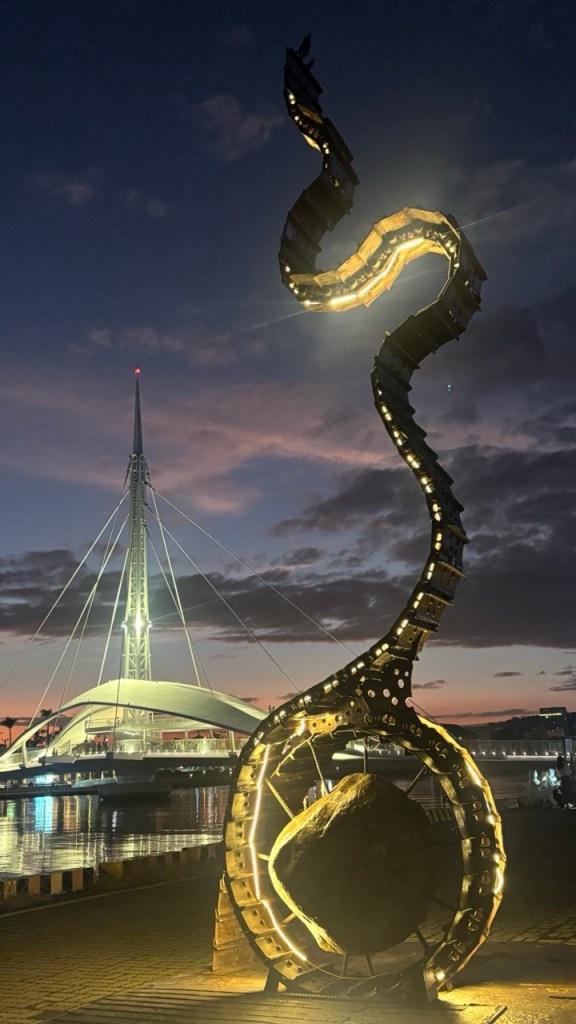
Khaosiung Harbour at night
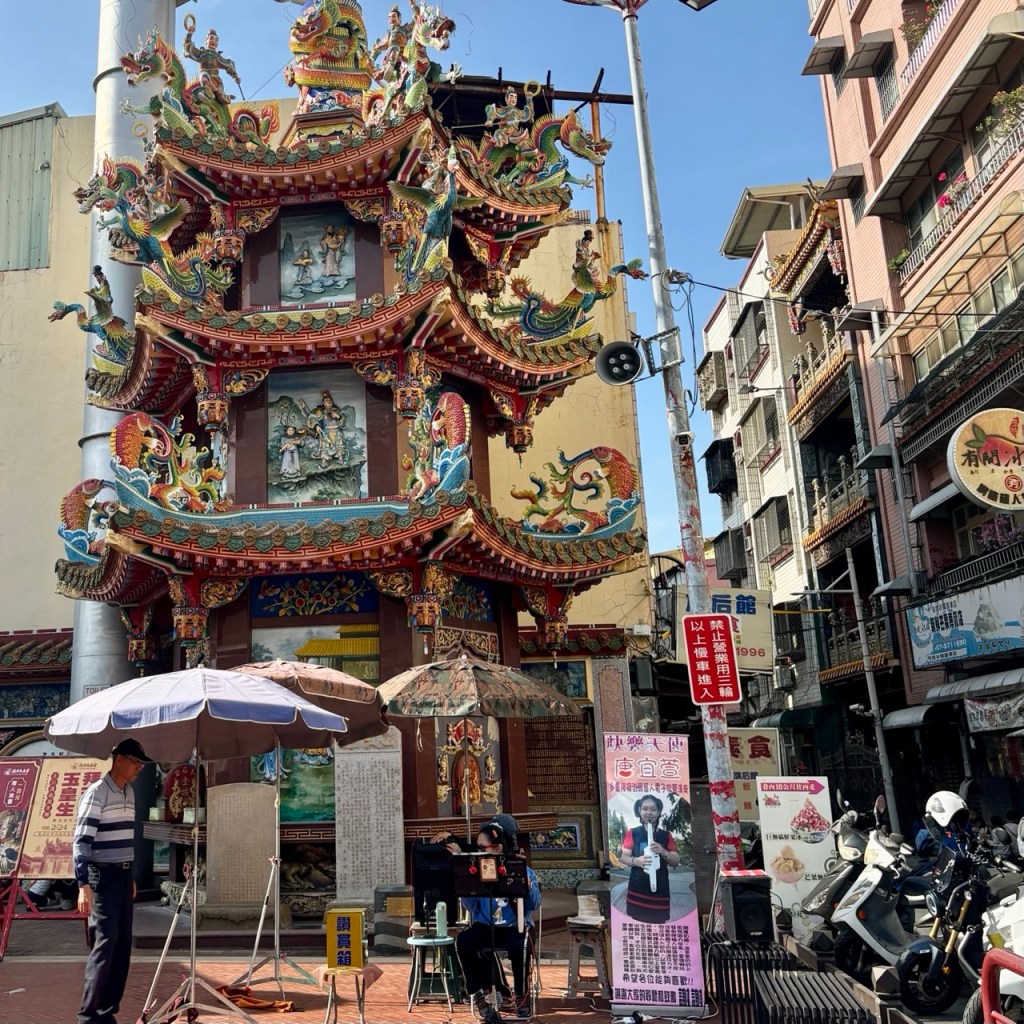
There’s always room to squeeze a temple in

Top of my list of things to: visit the circuit of outlandish temples around the Lotus Pond, go for a hike up Monkey Mountain and take the ferry to Cijin Island. The city is connected by monorail around the centre, then local trains and buses but nowhere near as frequently as the northern cities so it can take twice as long as you think. I fitted in a quick visit to the Fine Arts Museum, only to find it was less fine arts and all modern art.

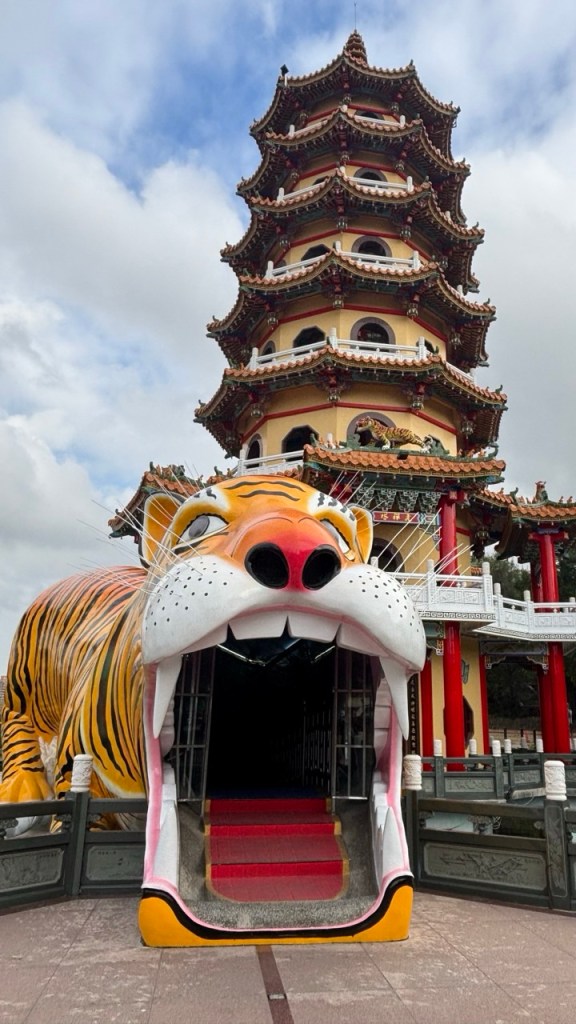
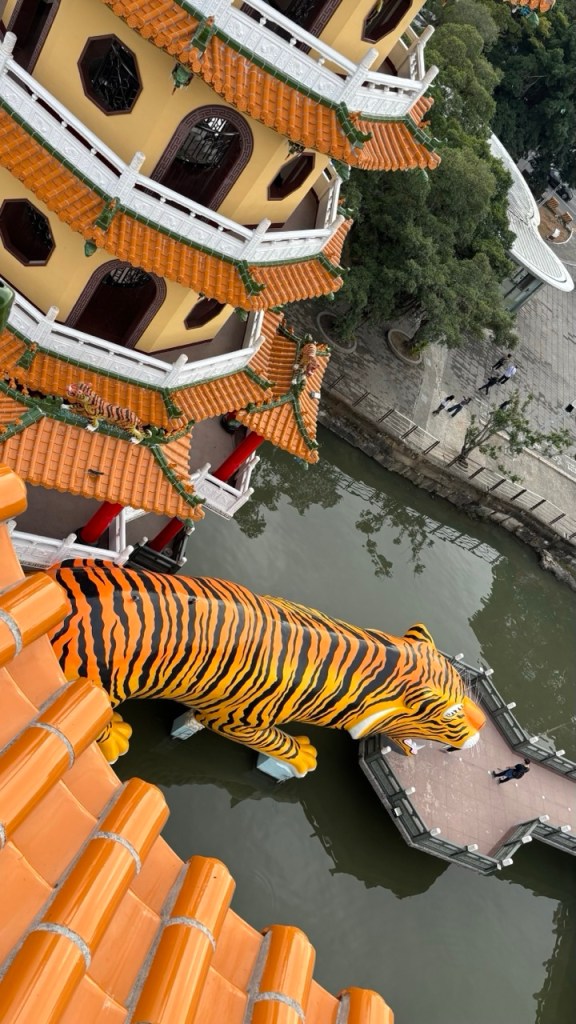
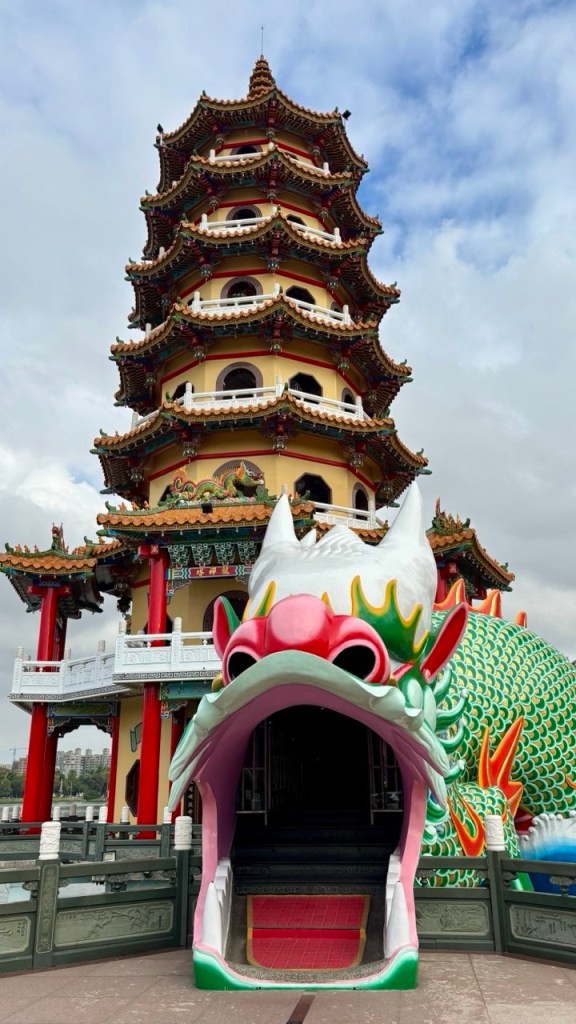
Tiger Templeenter through the mouth

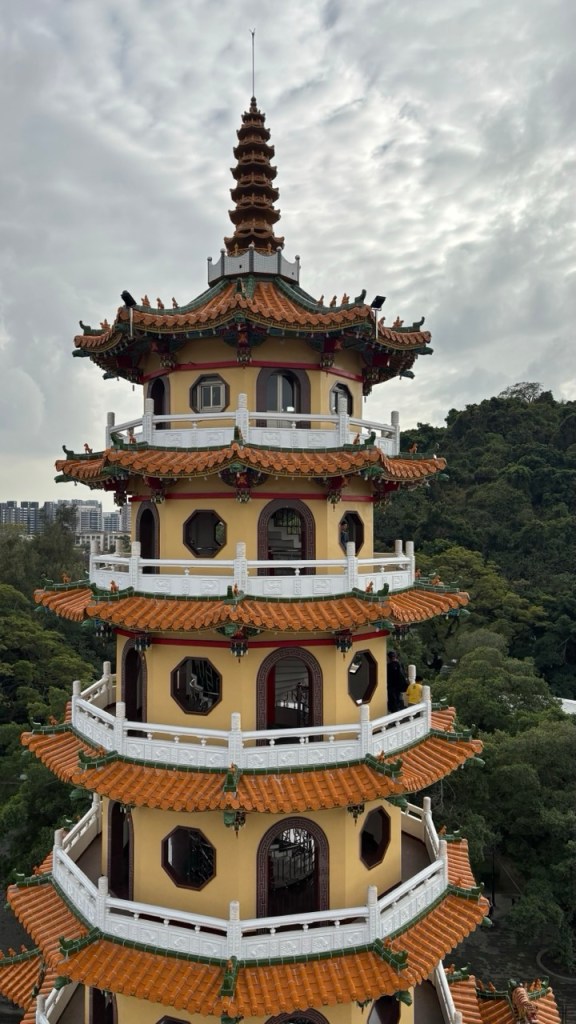
On to the temples – the Lotus Pond is a man made lake, with over 20 incredible and fairly garish temples situated on the 3km cycle and walking paths that surround it. Renting a bike and cycling would probably be the better option. The biggest ones are the Spring and Summer Pavilions, the Dragon and Tiger Pagodas and the Confucian Temple.

View from the top of the Tiger

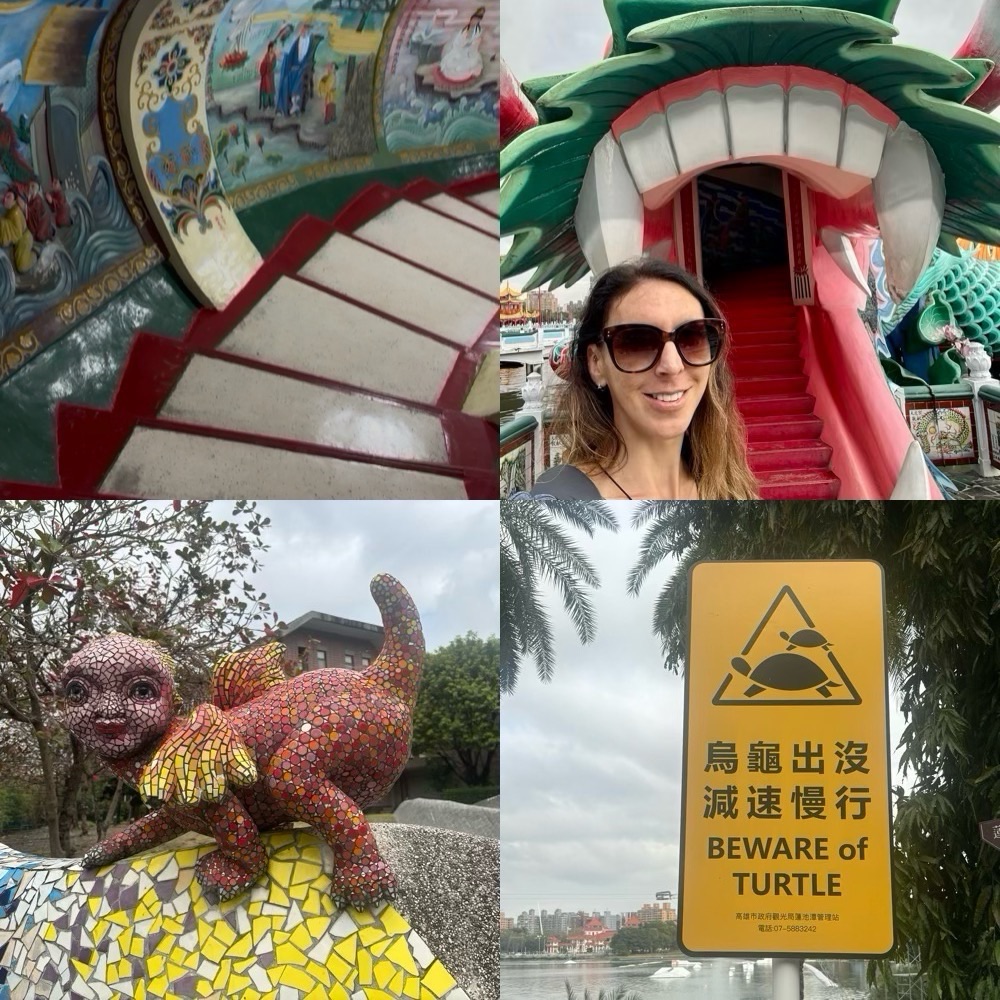
My favourite had to be the Dragon and Tiger Temples, which were designed to stand in the lake. These are no ordinary temples – I’m talking about temples where you enter through the mouths of huge dragon and tiger statues, climb up towers 7 stories high, and walk through tunnels connecting the temples to the shore, containing art that apparently tells stories (this went over my head). It’s mental and amazing.

Staring into the Dragon’s mouth
There’s a reason why I’m averaging 25,000 steps a day in Taiwan
Inside the Dragon’s Mouth

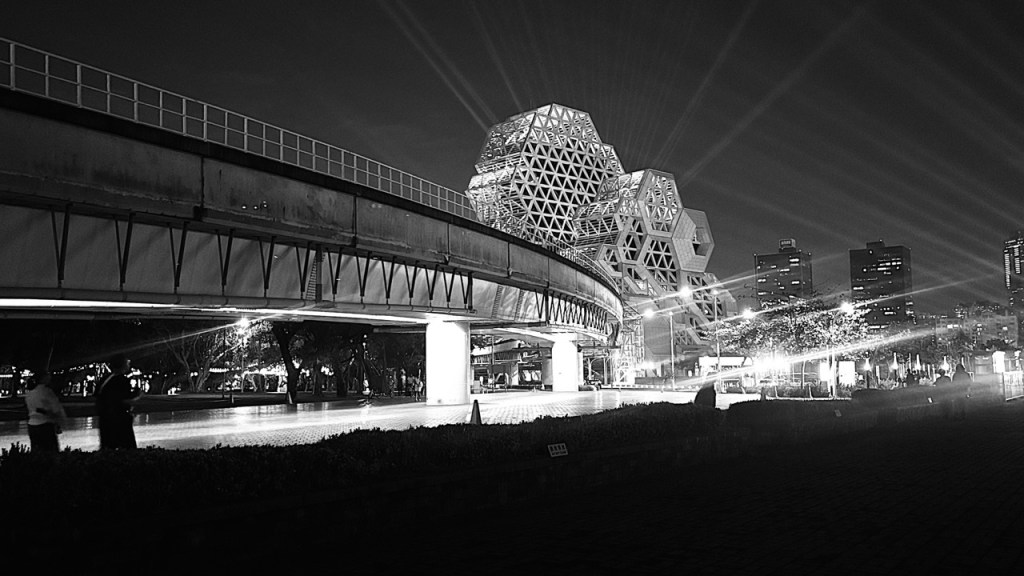
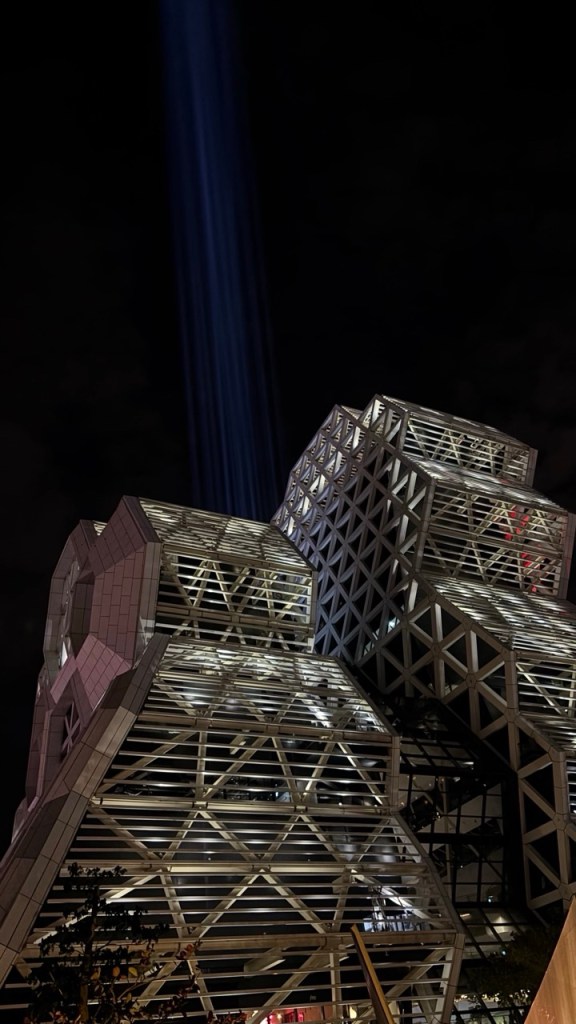
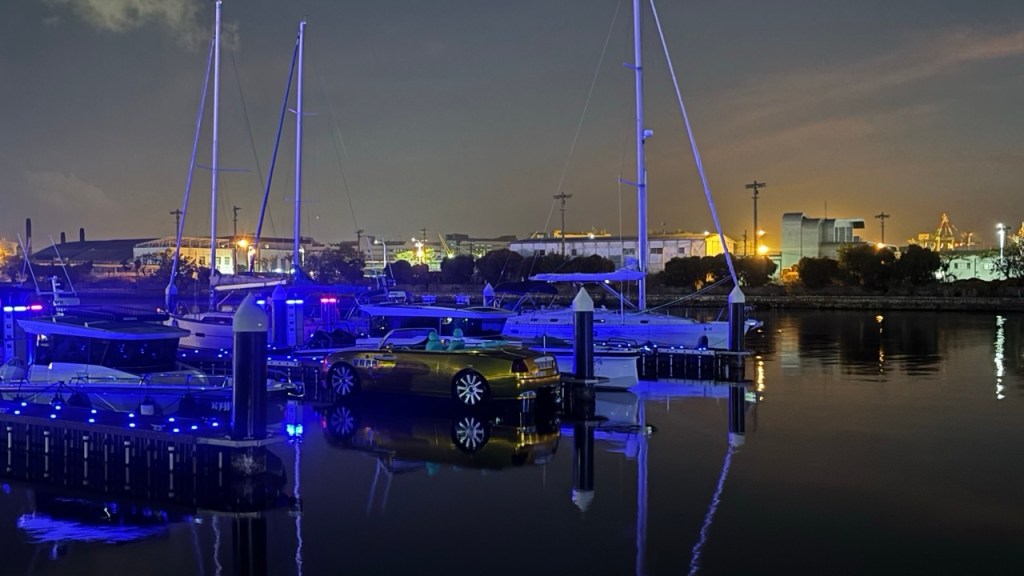
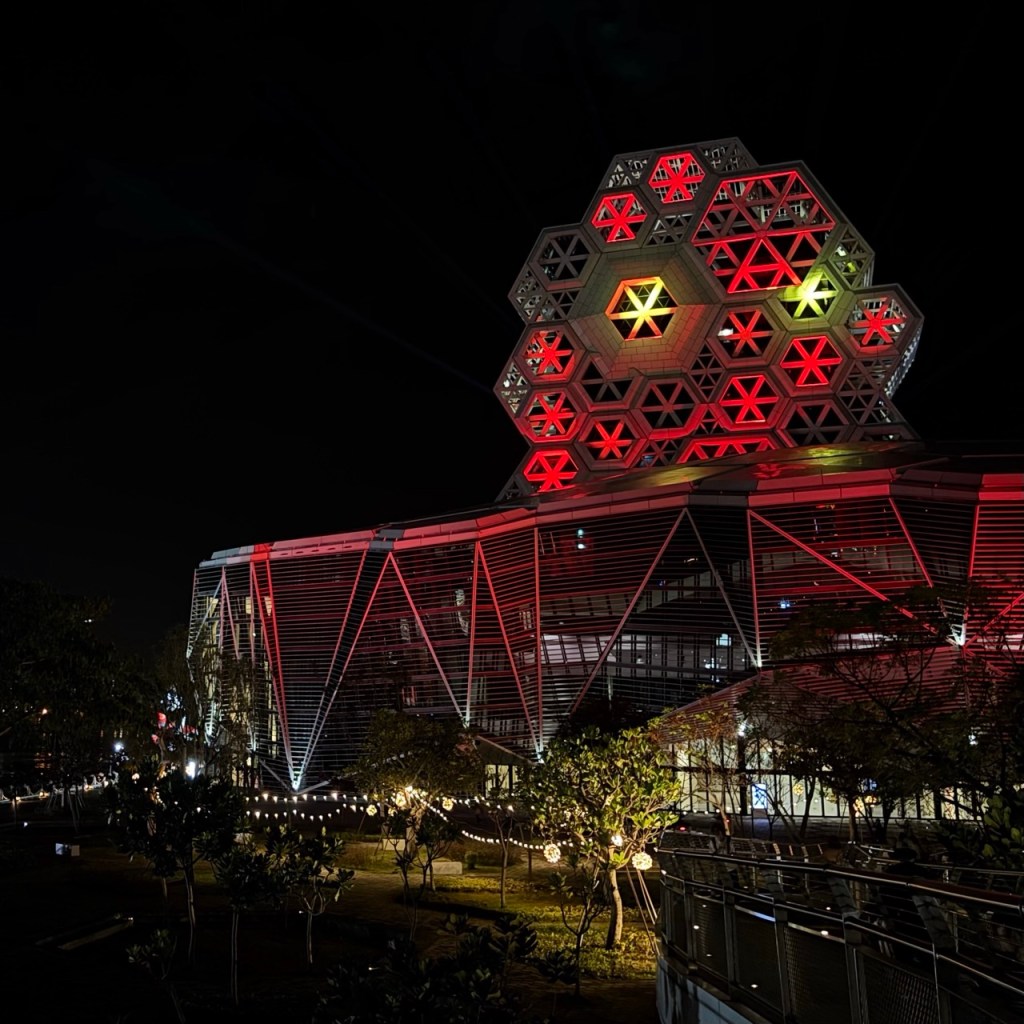
In the evening I headed to the Pier 2 area (recommended by the lady on the bus in Taitung who told me YOLO!). The harbour area is absolutely gorgeous in the evening and the modern buildings are in stark contrast to the temples. I’ve added a lot of photos because they are all different examples of the architecture on show.

Arty shot
The stadium beaming light into the sky
That actually is a car ON the water

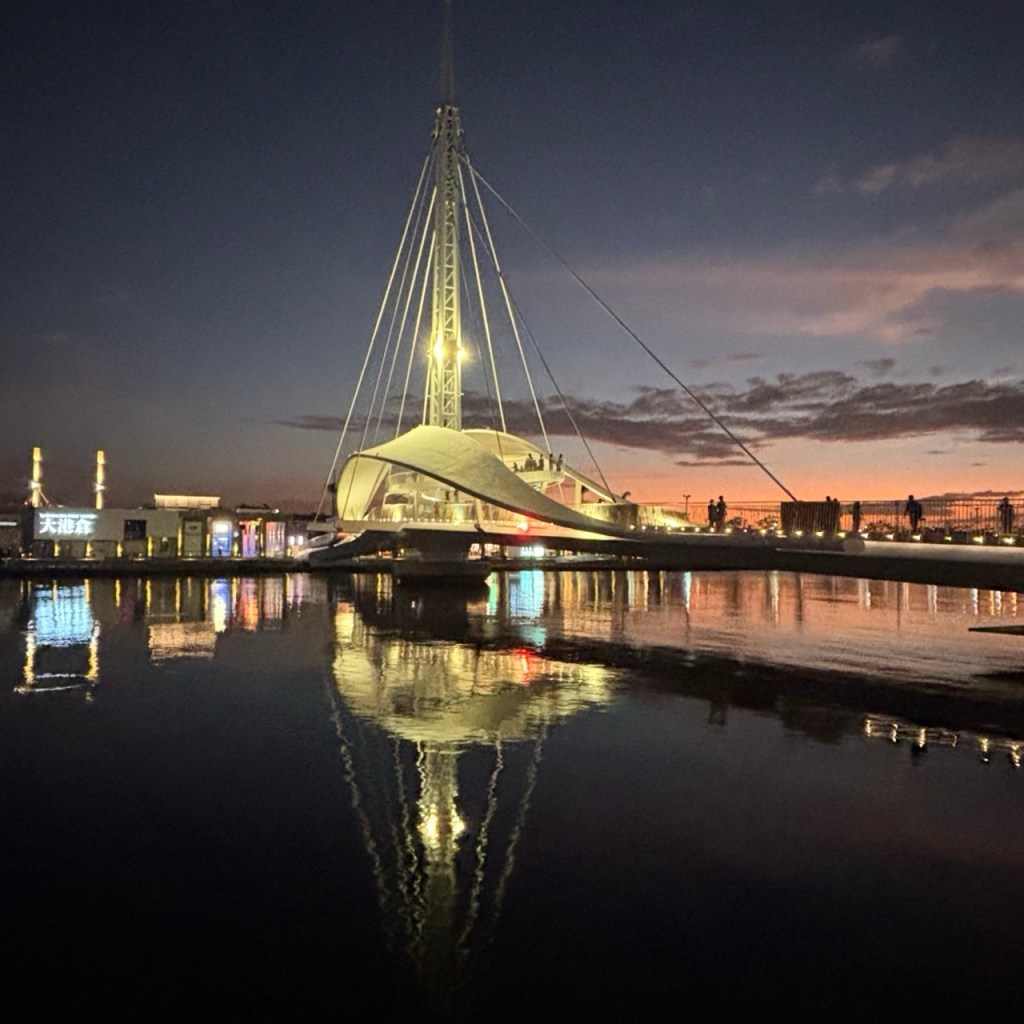
One of stars of the show has to be the dolphin shaped pedestrian bridge that is Asia’s longest rotating bridge, horizontally rotating 90 degrees in 3 minutes. Although I didn’t see the Great Harbour Bridge in action, walking across was good enough.

The rotating Harbour Bridge

As I walked along the harbour, I came across the massive stadium beaming lights up into the night sky. I wasn’t sure what it was at first but asked a very young student who had stopped me to tell me I was cute (when I politely said he didn’t need to accompany me he graciously said that’s fine we can just be friends).

Stadium from the other side
The harbour in all it’s glory

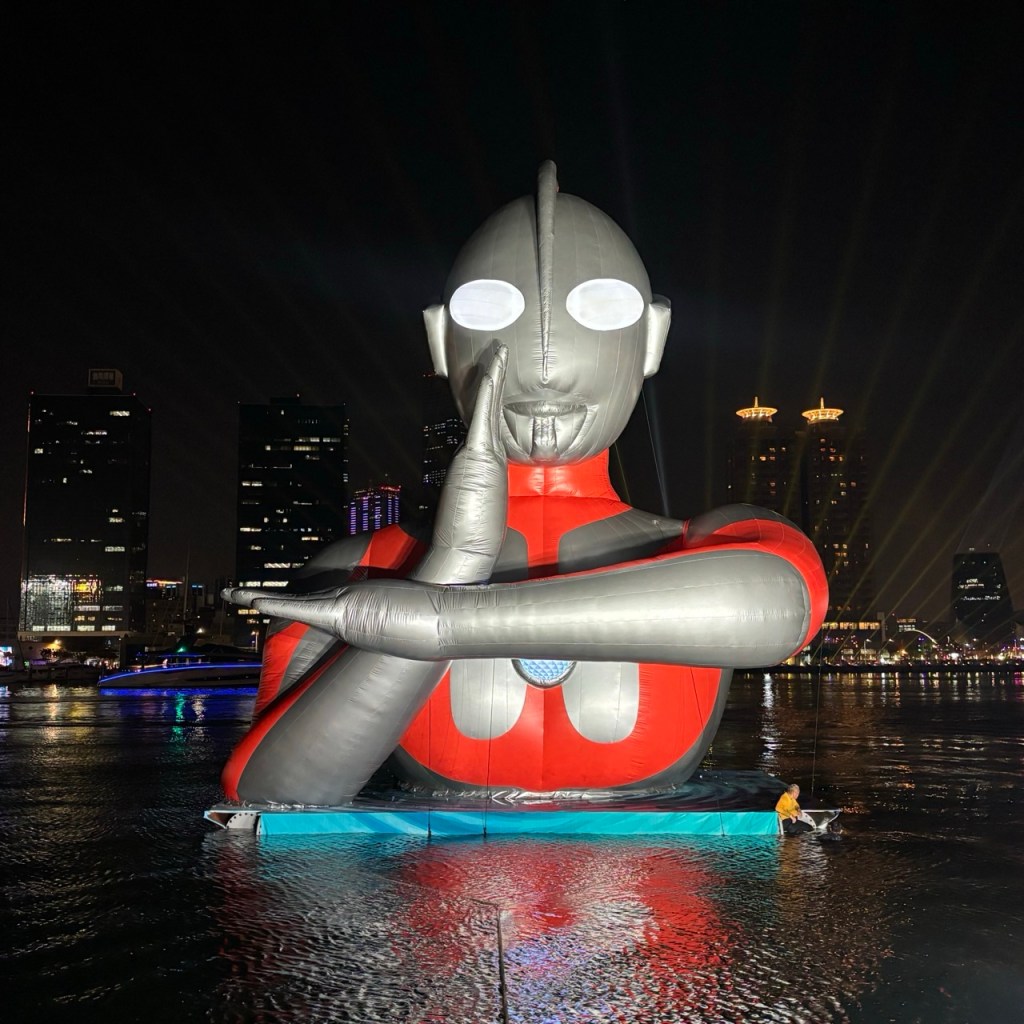
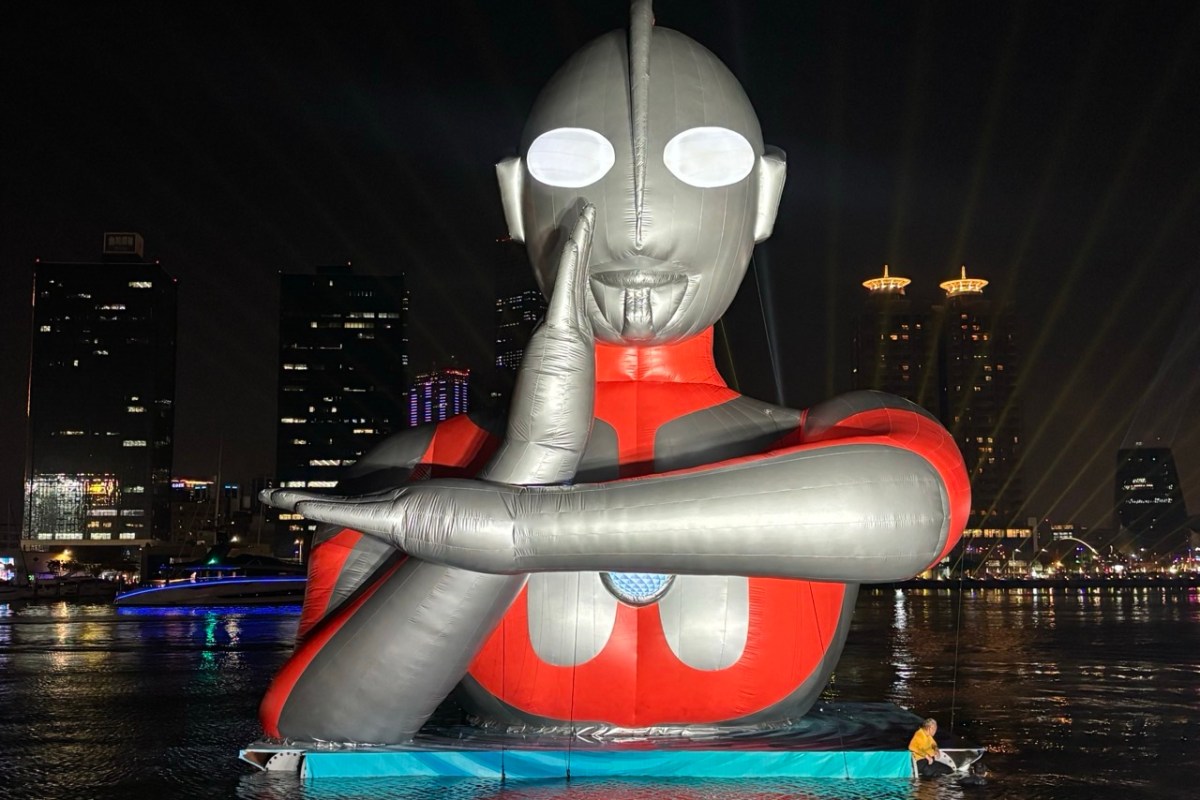
Things get more modern and more weird the further around the harbour you go. An absolutely massive floating alien like creature awaits. What I didn’t understand was why there was a real life man sitting on the alien and another in the water. Some official looking people were shouting instructions from the harbour, so they weren’t there by mistake. I Googled it later and found out it was not in fact an alien but a giant inflatable Ultraman” statue floating in Love River Bay. Ultraman being a Japanese superhero character.

“Ultraman” and real life man
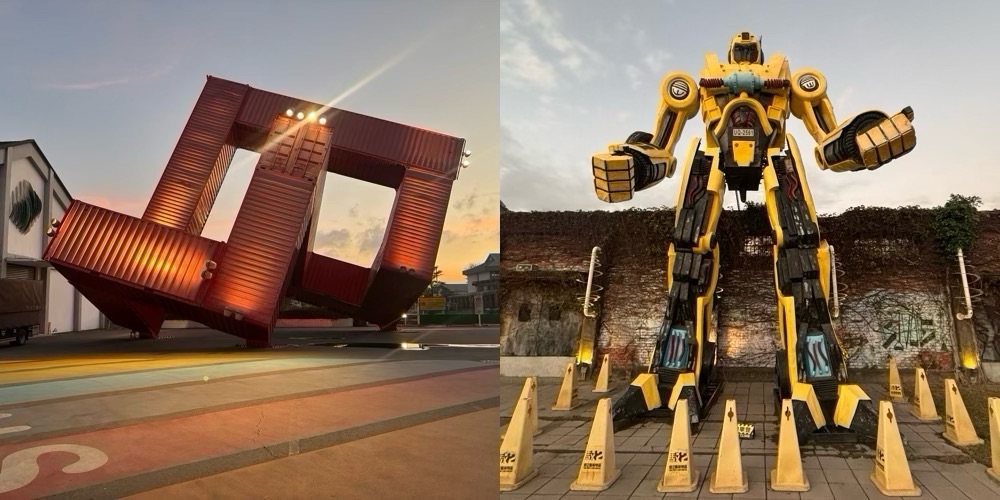
More giant art

After a lot of walking I made it to the Water Drop Teahouse vegetarian restaurant just before closing time at 20.00 where a very smiley and kind nun made me extremely welcome and assured me there was plenty of time so no need to rush my vegetable curry soup.

Snake like Sculpture

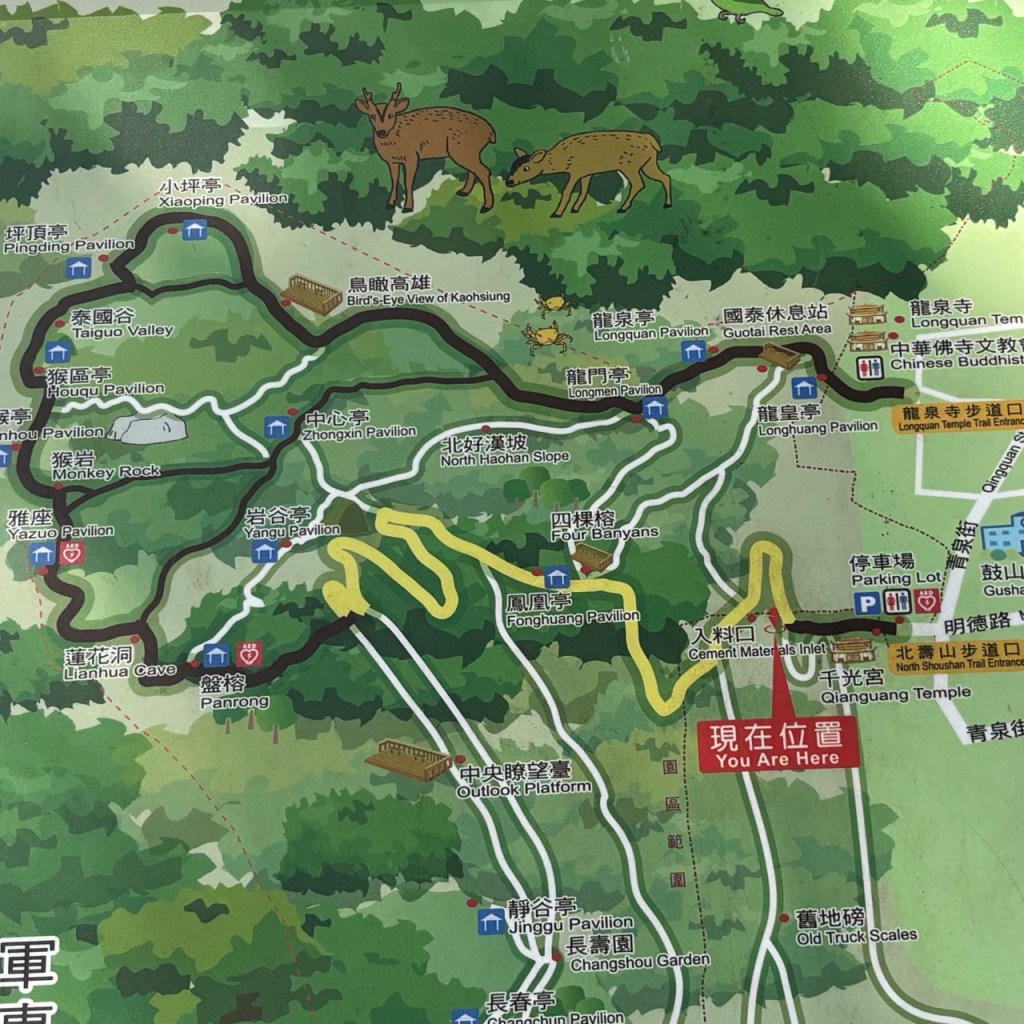
The next day, having ready about a hike where you can see monkeys, on Monkey Mountain, naturally I had to go. It was a hot day so I saved the location of the start of the trail head, behind a temple around the corner from a 7-11 not that far from the Fine Arts Museum and set off. I saw a man who looked to be in his 70s and clearly dressed to go hiking – full walking gear, boots and poles – and followed him past the numerous signs warning not to take any food inside the forest. I had ironically just finished my banana and in Taiwan there are no rubbish bins. Anywhere. I carried this banana skin around looking fruitlessly for somewhere to throw it until the point of entering the forest when I had to accidentally drop it away from the CCTV. It was either that or take a banana skin into an area known for aggressive monkeys.

Following the Monkey Mountain train

Following the old man was a rookie mistake. It turns out there is more than one entrance to the trails and this was not the “easy, signposted route” I was looking for. These are the retired Taiwanese super hikers and this was something I needed a lot more water for and a proper map. Luckily there were two local women who were also on the wrong path so I followed them to get back on track.

The real start of the trail

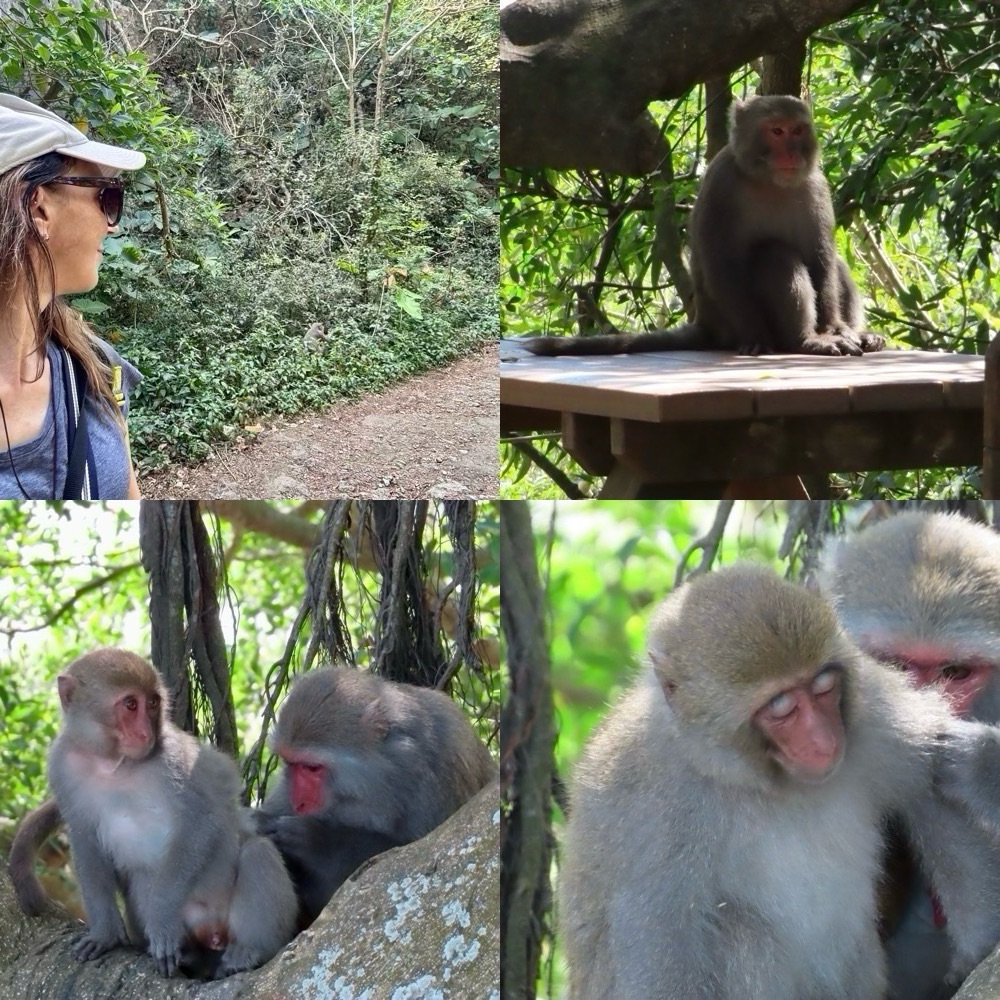
You see monkeys everywhere on this mountain and they are the bigger, more intimidating macaw monkey. Signs presented instructions in English that if a monkey was to jump on you, don’t panic or wave or shout. Just carry on calmly and “the monkey will leave”. I absolutely loved seeing families of monkeys eating fruit, grooming each other and hanging out on the side of the trail. A couple of times they might have been following me. These macaws have the intelligence of a 3 year old child and you should not drink water or open your bag infront of them if you don’t want it to be stolen.

Spot the monkeys

The 70 year old pro hikers powered on past making light work of the steps, wearing their sweatbands, carrying their portable speakers and playing their music out loud.

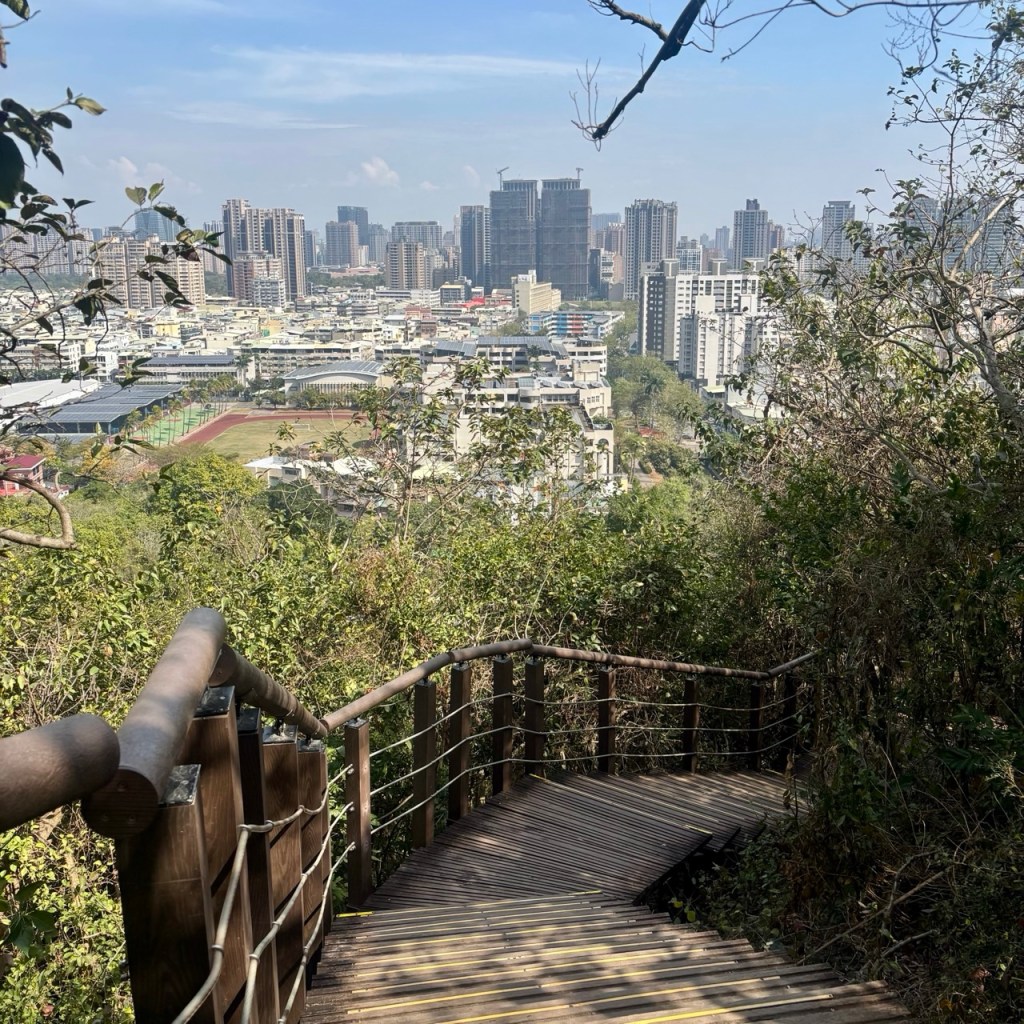
The “boardwalk” trail isn’t actually a boardwalk after you finish the stairs up, rather it’s a stony path. But it’s signposted and there are several rest areas with benches where you can watch monkeys. All in all I spent a couple of hours here and thoroughly enjoyed it. As before you can safely embark on these hikes alone as there are enough people around without it feeling in the least bit crowded.

Another world lies just over the water
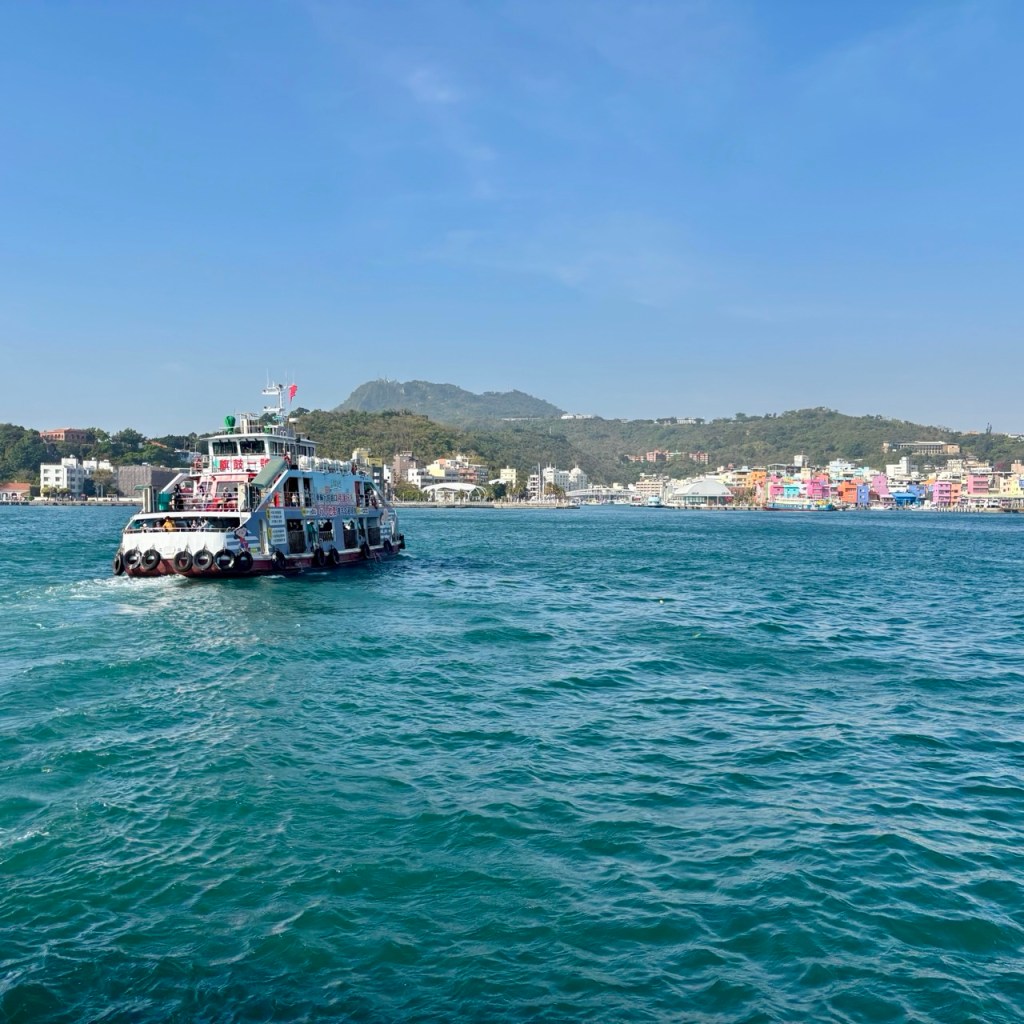
Ferry to Cijin Island

In the afternoon there was just the right amount of time to catch the short ferry over to Cijin Island. This narrow stretch of land (a sandbar) is only 5 miles long and has a real holiday atmosphere. I loved seeing how all the people on scooters rode on and off the ferry – you just have to look where you’re walking at all times. Cijin Old Street has a long street market filled with that rancid smell of the local speciality “stinky tofu” and due to construction work there is no other option but to go past every single stinky stall.

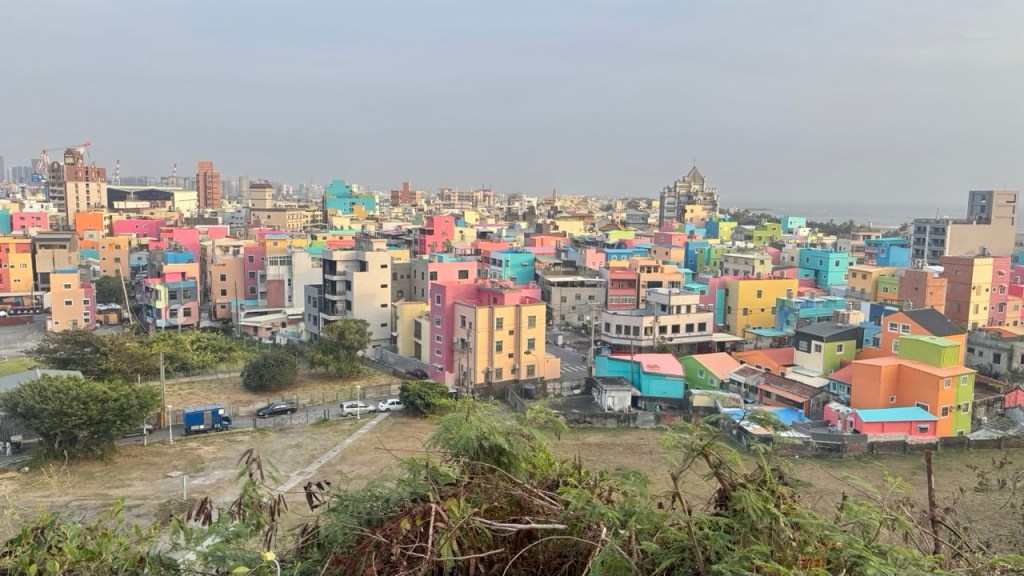
Colourful houses on Cijin Island

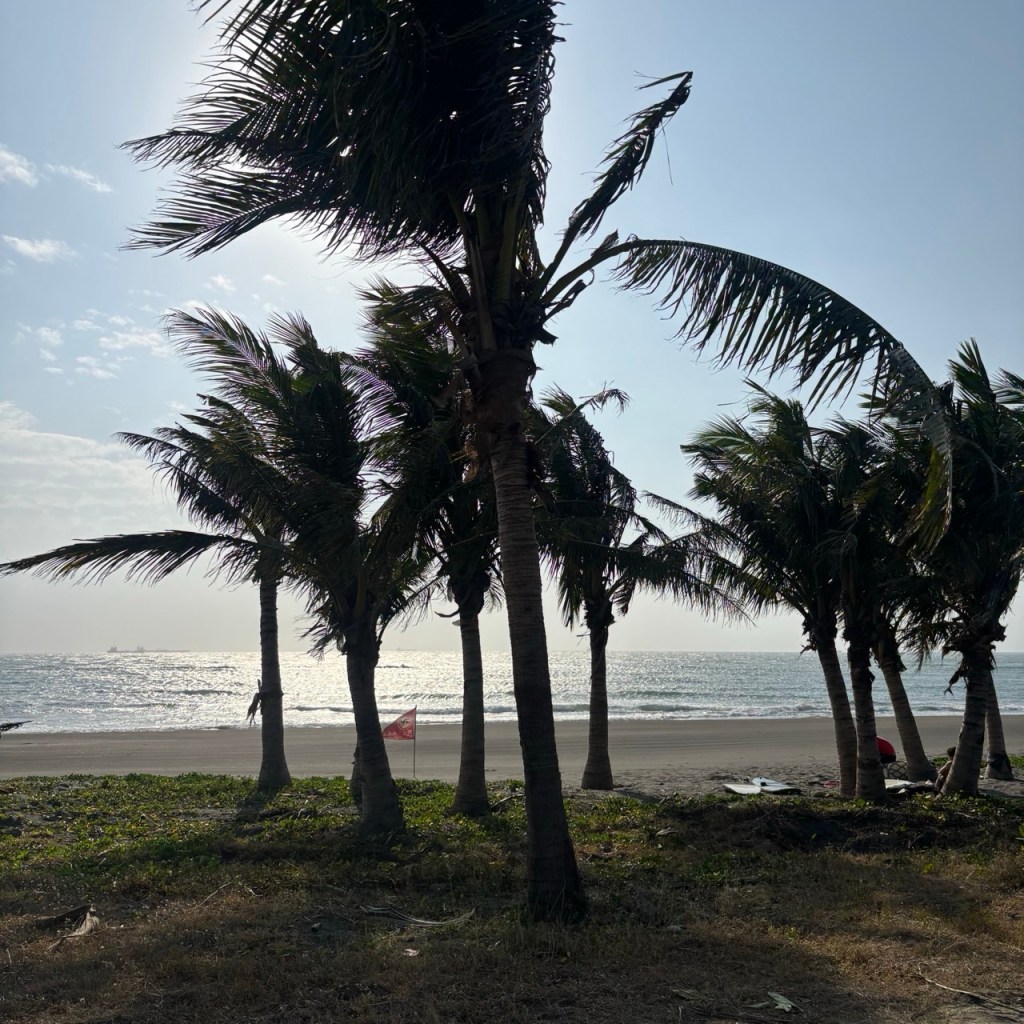
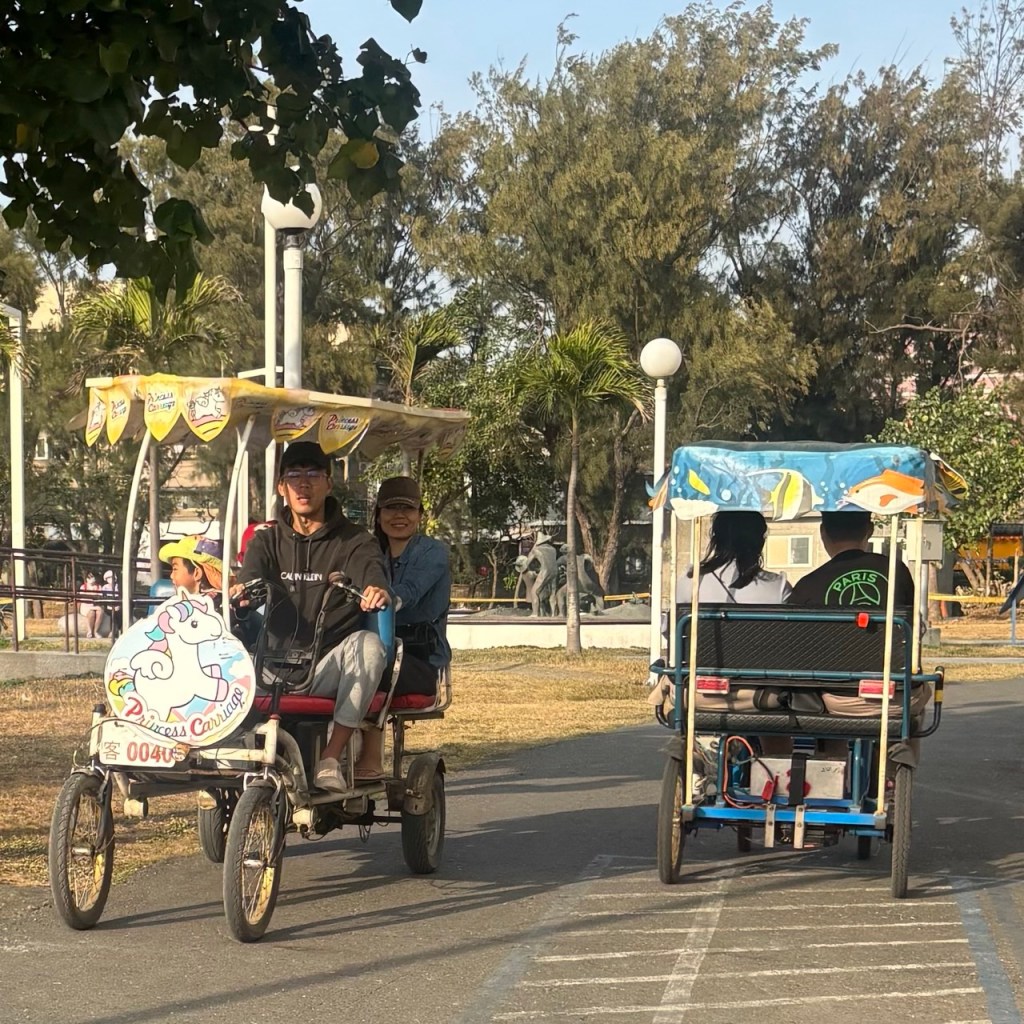
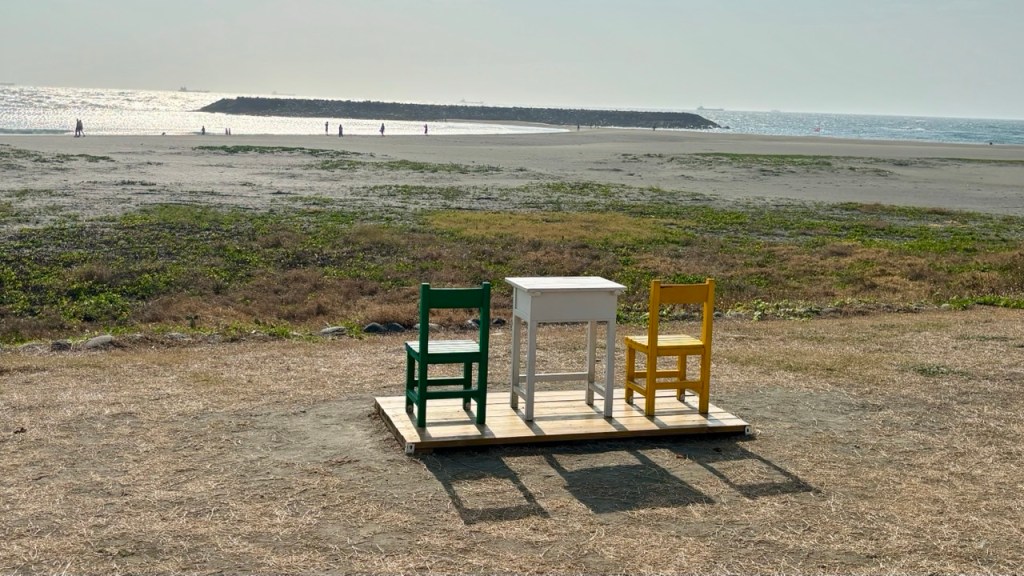
The palm tree lined black sand Cijin beach that stretches 1.5km is very pretty, too windy to swim but perfect for walking. You just have to dodgy the cutesy tricycles decked out like cartoon creatures that everyone rides like they’ve never ridden a bike before. Imagine strolling along enjoying the view then Mickey Mouse comes hurtling around the corner and there’s nowhere for you to go.

Beware the My Little Pony
Cijin Black Beach

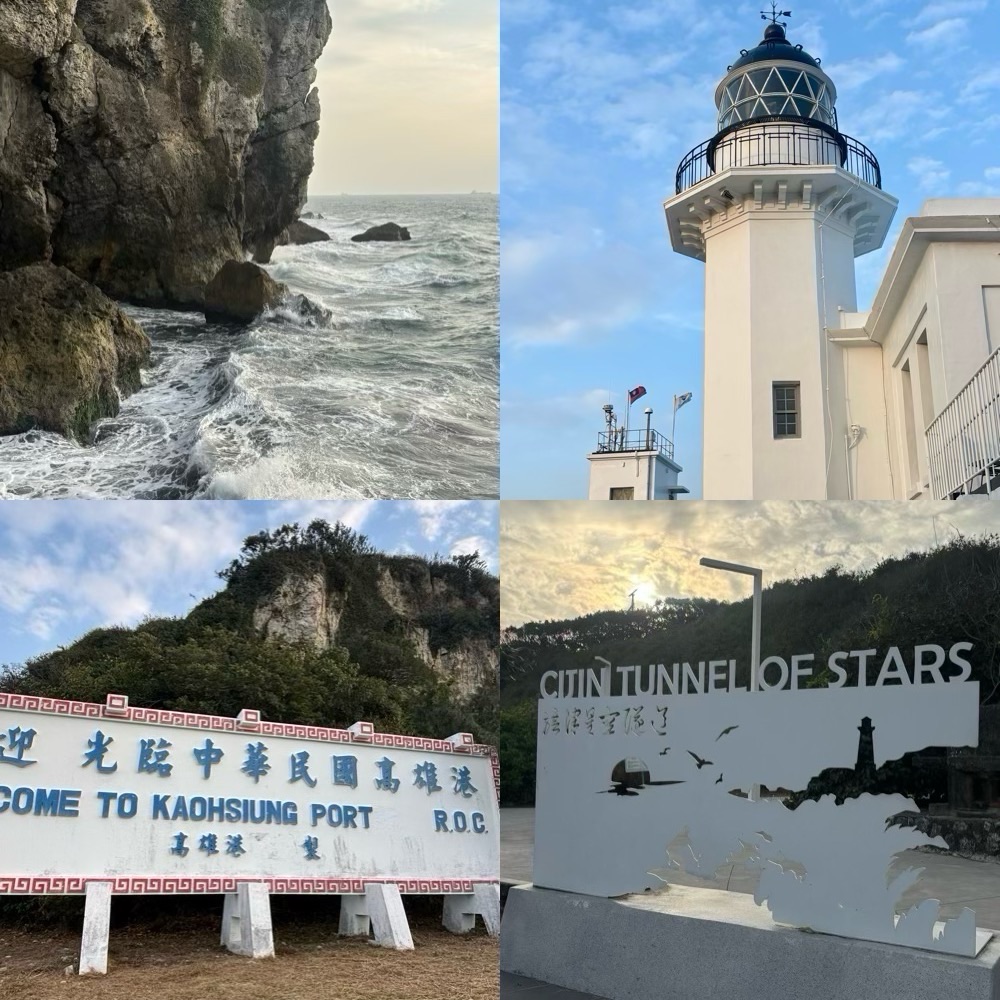
I also climbed the hill up to Cijou Fort which dates back to 1720 when Taiwan was ruled by the Qing Empire of China. There is a beautiful view over Khaosiung Harbour that it was designed to protect. At the top stands the Lighthouse, whose history is also interesting. The harbour was opened to foreign traders in 1863 and it was British engineers who initially built a Chinese style lighthouse in red brick. The Lighthouse was then rebuilt in 1916 during Japanese rule and opened to the public as a historical building in 1985. There is a small museum inside, not much in English but some interesting old photographs of the construction.

The Lighthouse

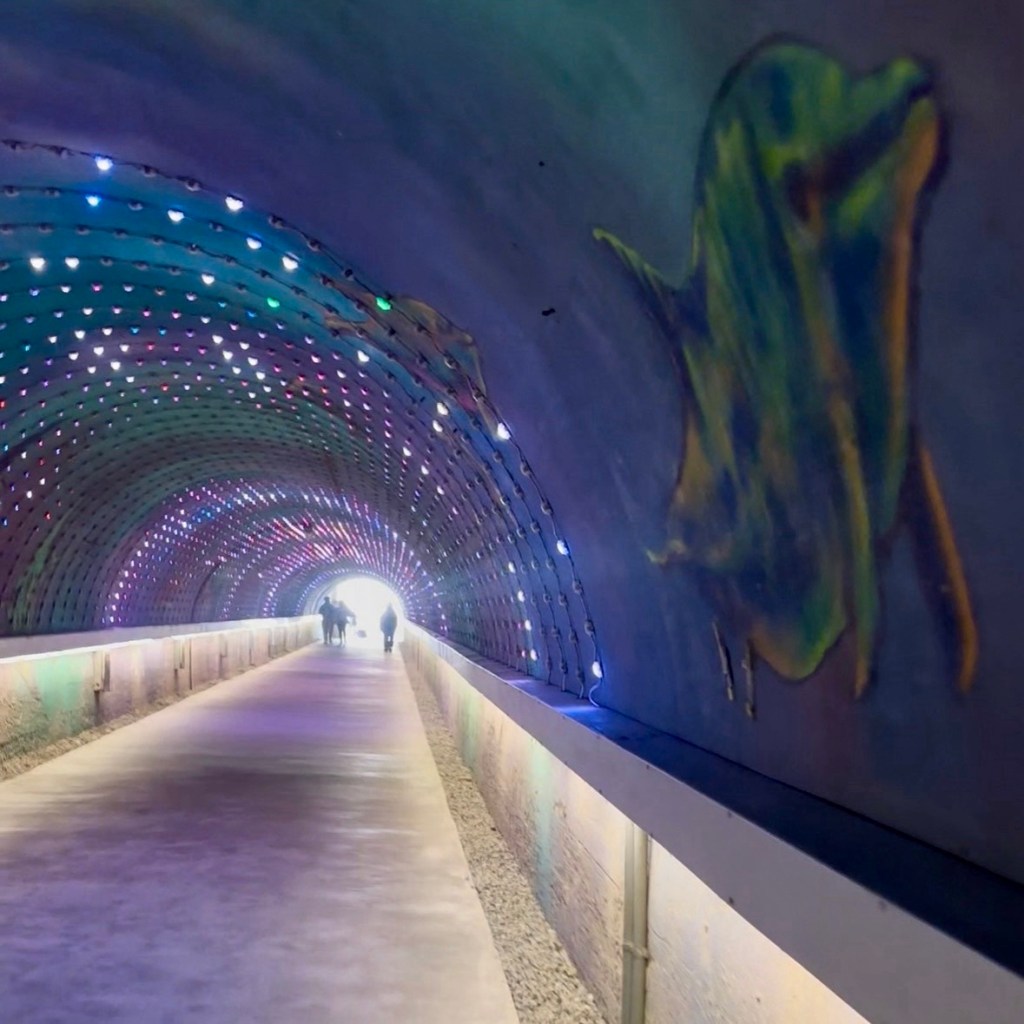
In order to get up to the Lighthouse you must walk through the Tunnel of Stars (a wind tunnel through the cliffs decorated in stars and psychedelic art). Again I didn’t know what it actually was until I looked it up but it’s a Japanese era military tunnel. The effect of the wind rushing through from the sea was deafening.

Inside the Tunnel of Stars

After a busy day I headed to a tiny dirt cheap restaurant with 5 star reviews where the ex-Michelin restaurant chef now cooks up the most delicious vegan stirfries on his outdoor gas flame. He was keen to have a chat and gave me all the free spinach from the buffet before he closed up shop.

Never easier to find delicious food

I hope this conveys the absolute variety of places, styles and the unexpected sites in Khaosiung. I would definitely return here for a few more days next time. That’s all I had time for before catching an evening train to Tainan as the race to reach Taipei again before the Chinese New Year continued …
Taitung: Nature and Neolithics

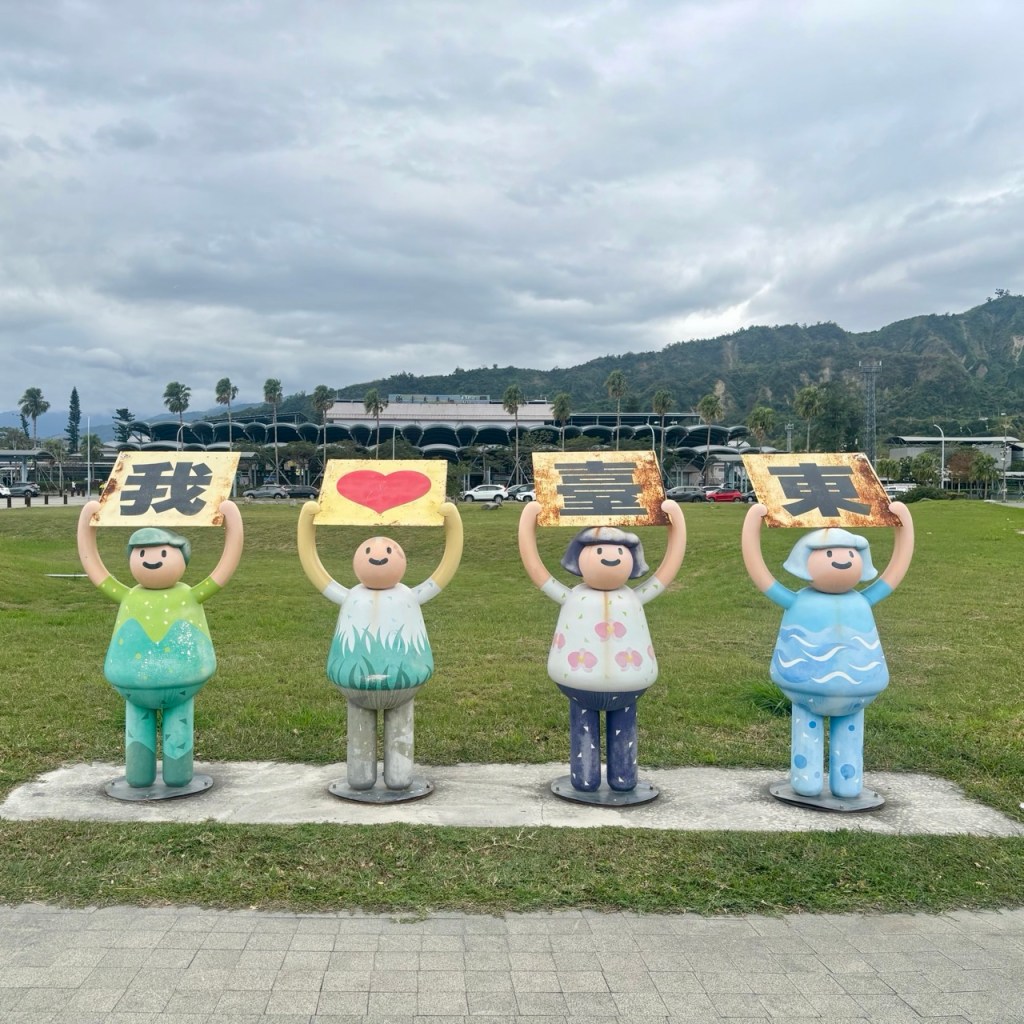
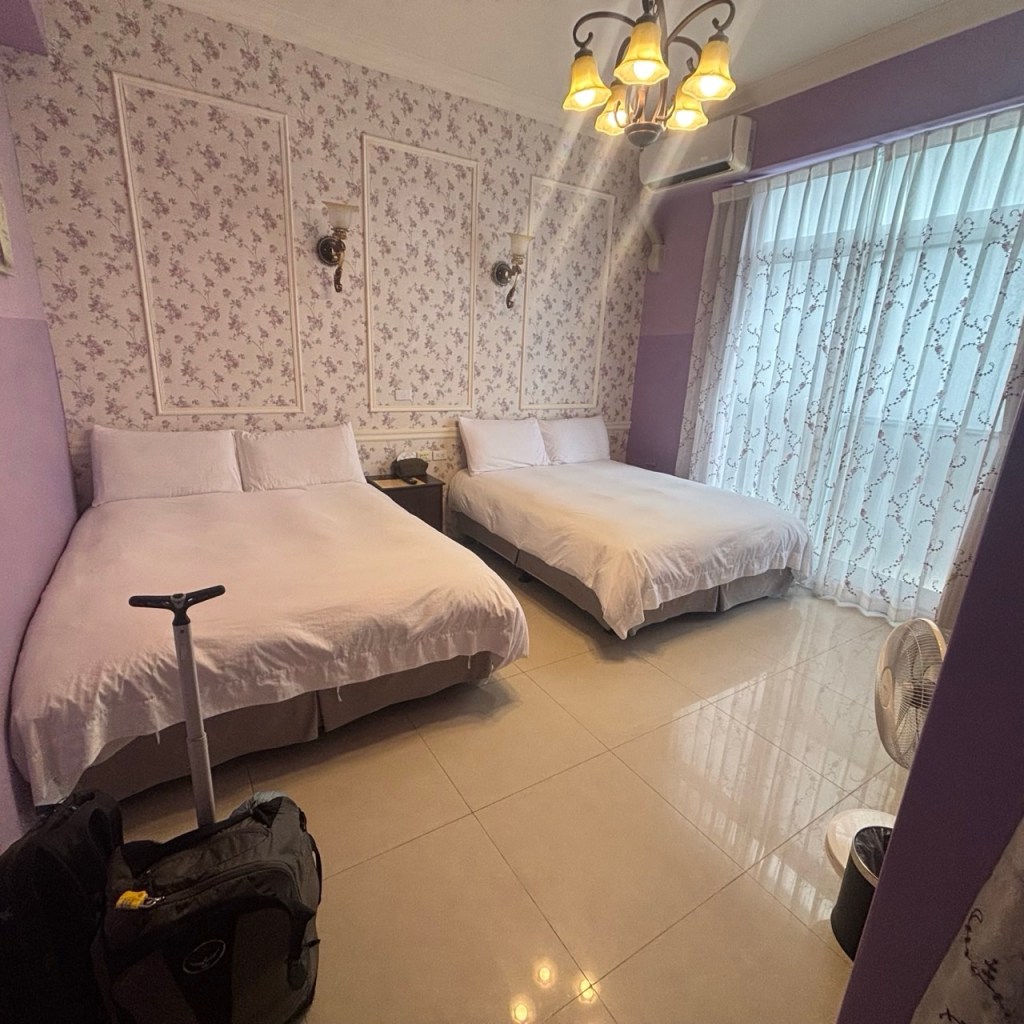
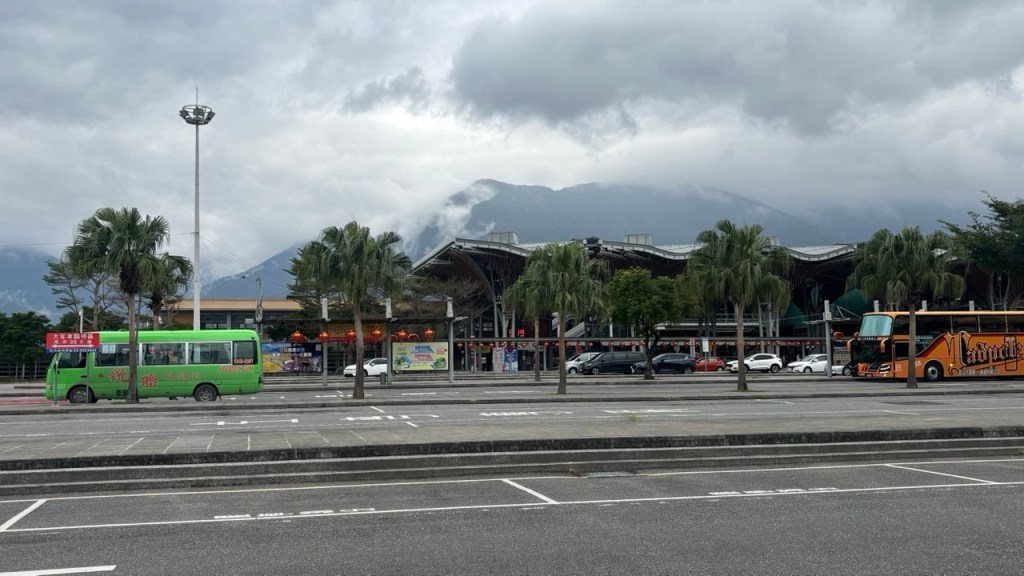
Taitung was an addition to the itinerary after reading about a national park where you could hike with monkeys and soak in hot springs. I liked Taitung as soon as I got off the train. The sun was shining and there were cute figurines in the garden around the train station. I treated myself to my own room in the lovely Giraffe B&B for £20 a night including breakfast. This got me a beautiful room with two beds, shiny white bathroom and a TV set to BBC news. The housekeeper let me in and asked via Google translate what time I wanted breakfast. It’s located along with the other more budget options close to the train station and regular buses run the 15 minutes to the downtown area.

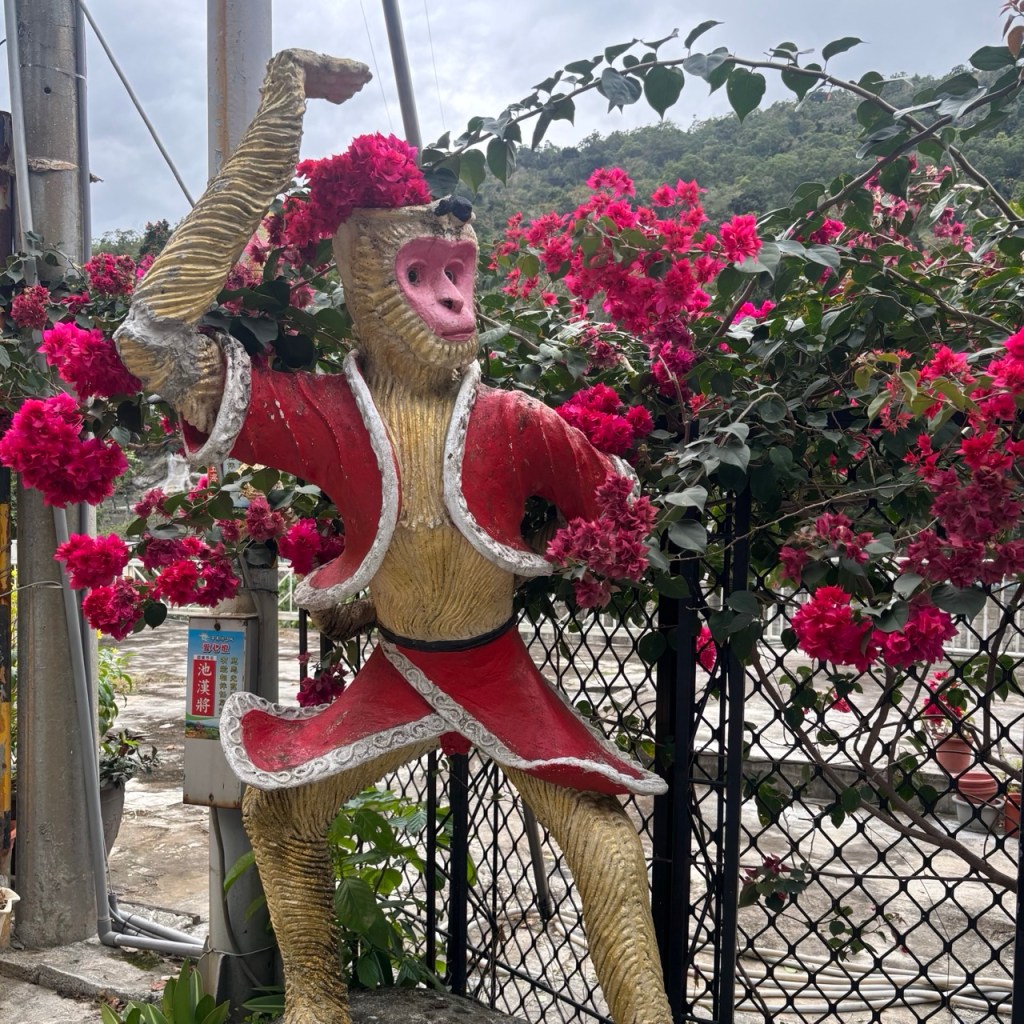
Taitung welcome committee

Taitung has a lot to offer – I could easily have spent more than the couple of days I had. Close to the downtown area there is a big coastal park where walking and cycling paths connect the beach with the city. Follow the paths further and you reach the massive forest reserve with its lakes and bird watching. It’s a popular cycling route and renting a bike would be really nice. The indigenous culture is also much more visible here – more on that later.

Luxury

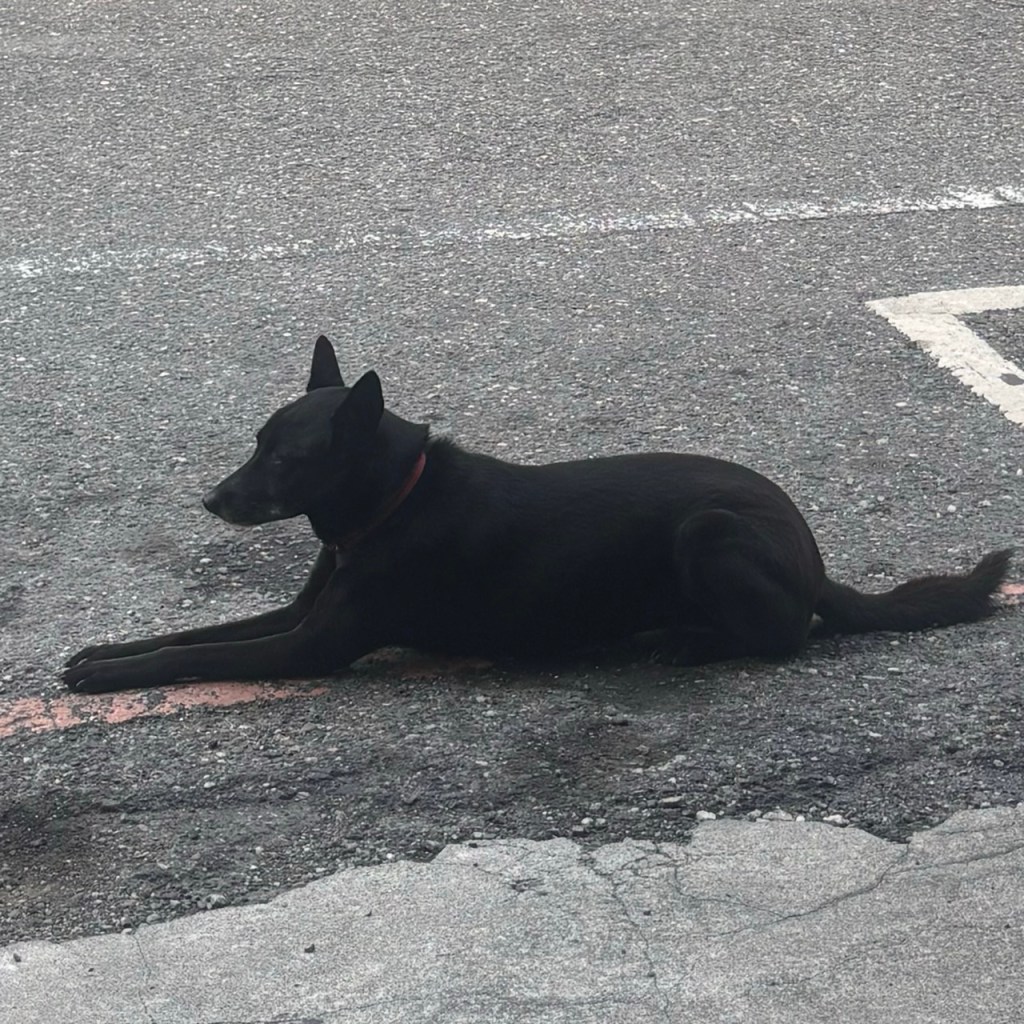
To get to the downtown area there are regular buses that take about 20-30 minutes as they literally go all around the houses. Taitung just has a really nice vibe to it. Even the dogs are chilled out. They appear to be street dogs as they are freely wandering around town but they have collars and look cared for.

Local dog
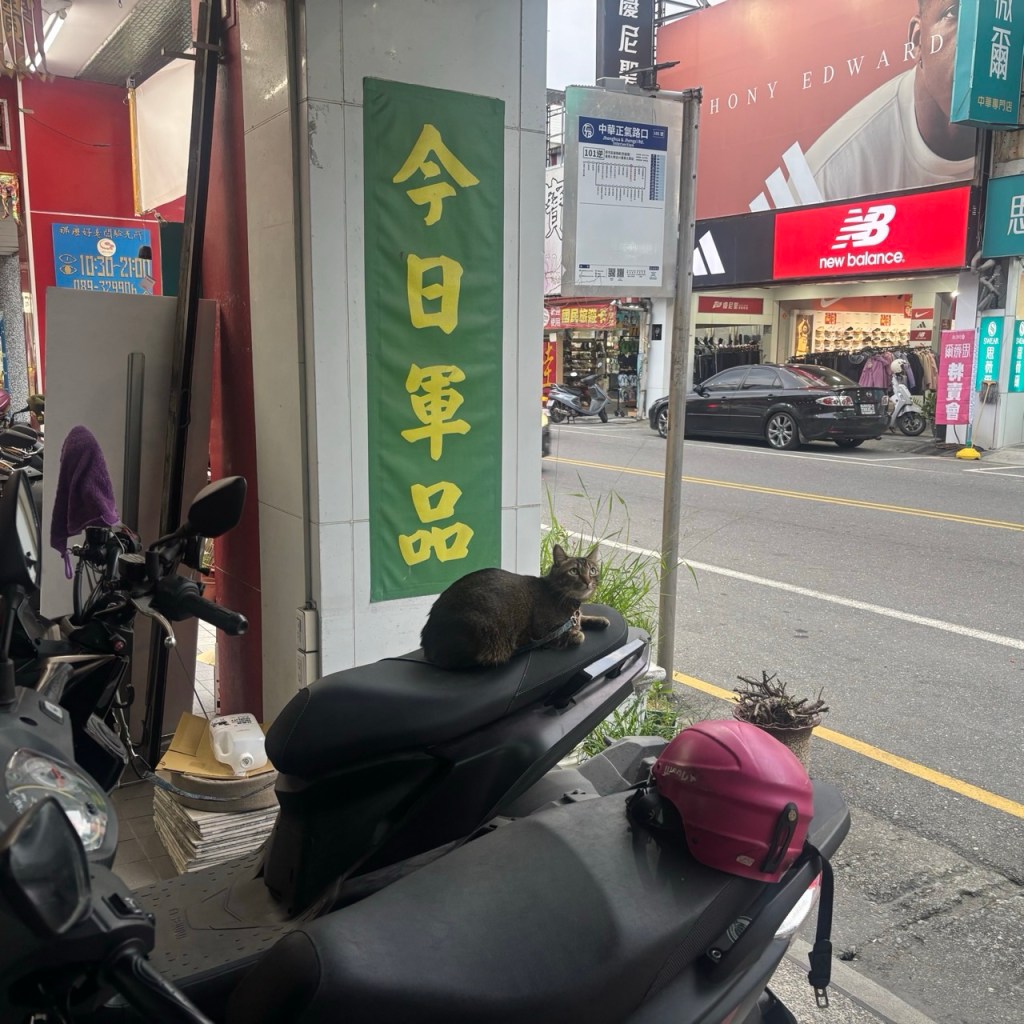
Local cat
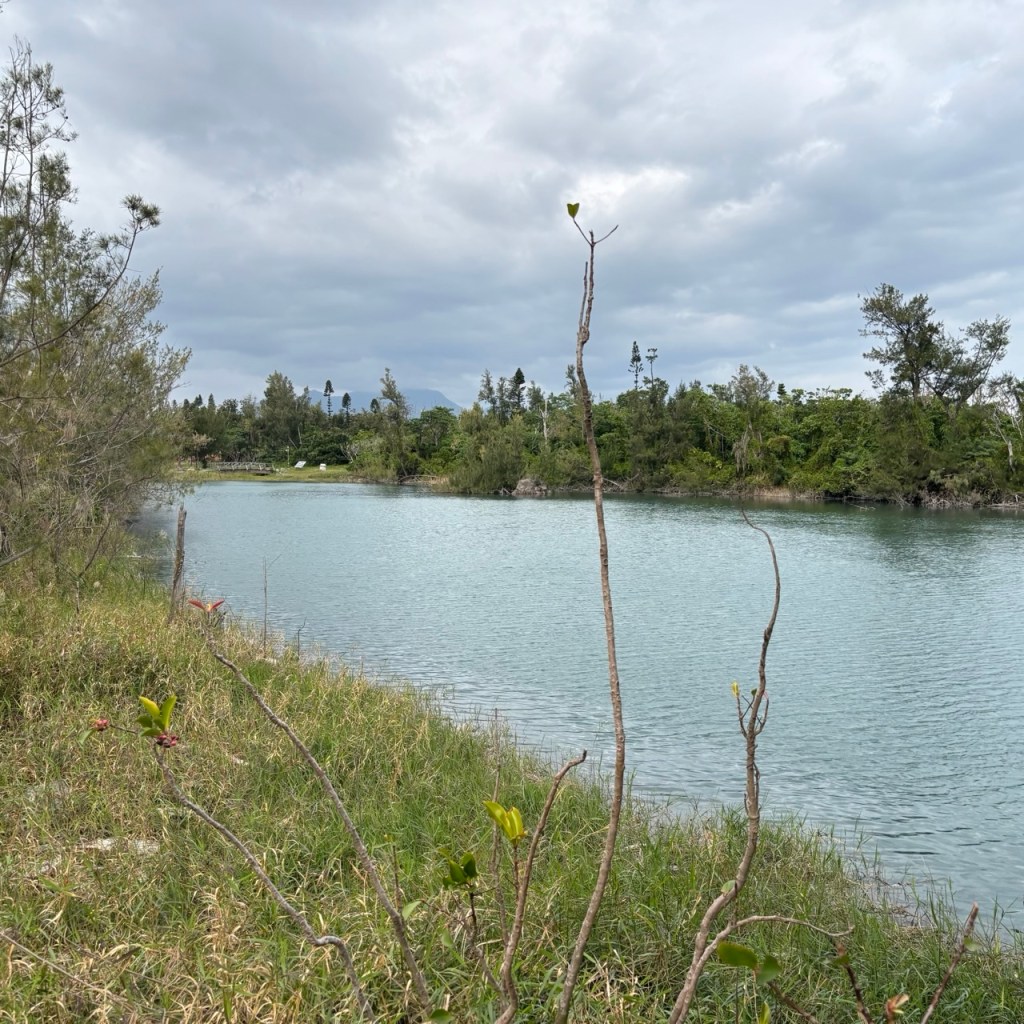
Nature in Taichung city
Local hangout by the coastal park

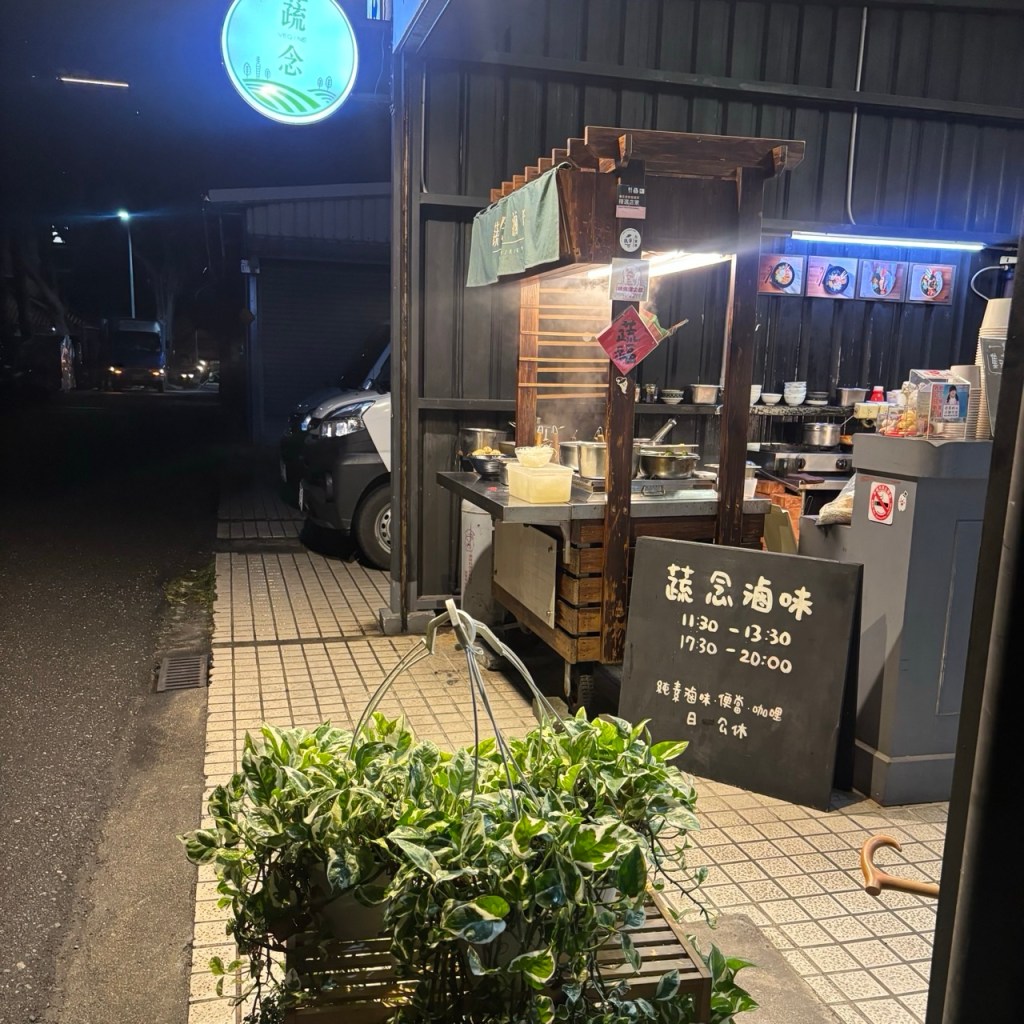
I found a lovely little vegan food stall called Vegine with a limited number of seats where the owner cooks whatever vegetables and noodles you select from the shop and like at many of the stalls, her children took a break from playing to help bring the food to customers. It was so good I went back twice and ordered two lots of the fried tofu. I’d go back again just for that.

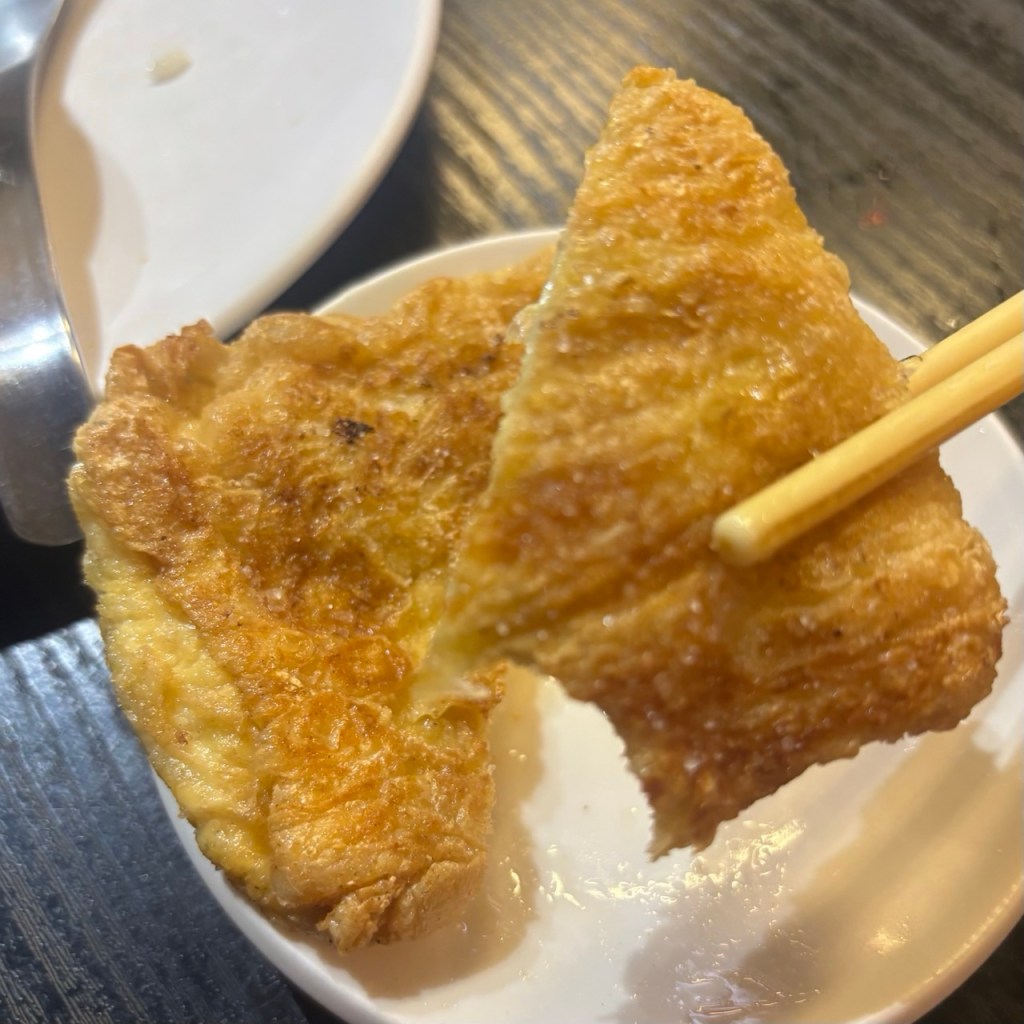
Fried tofu
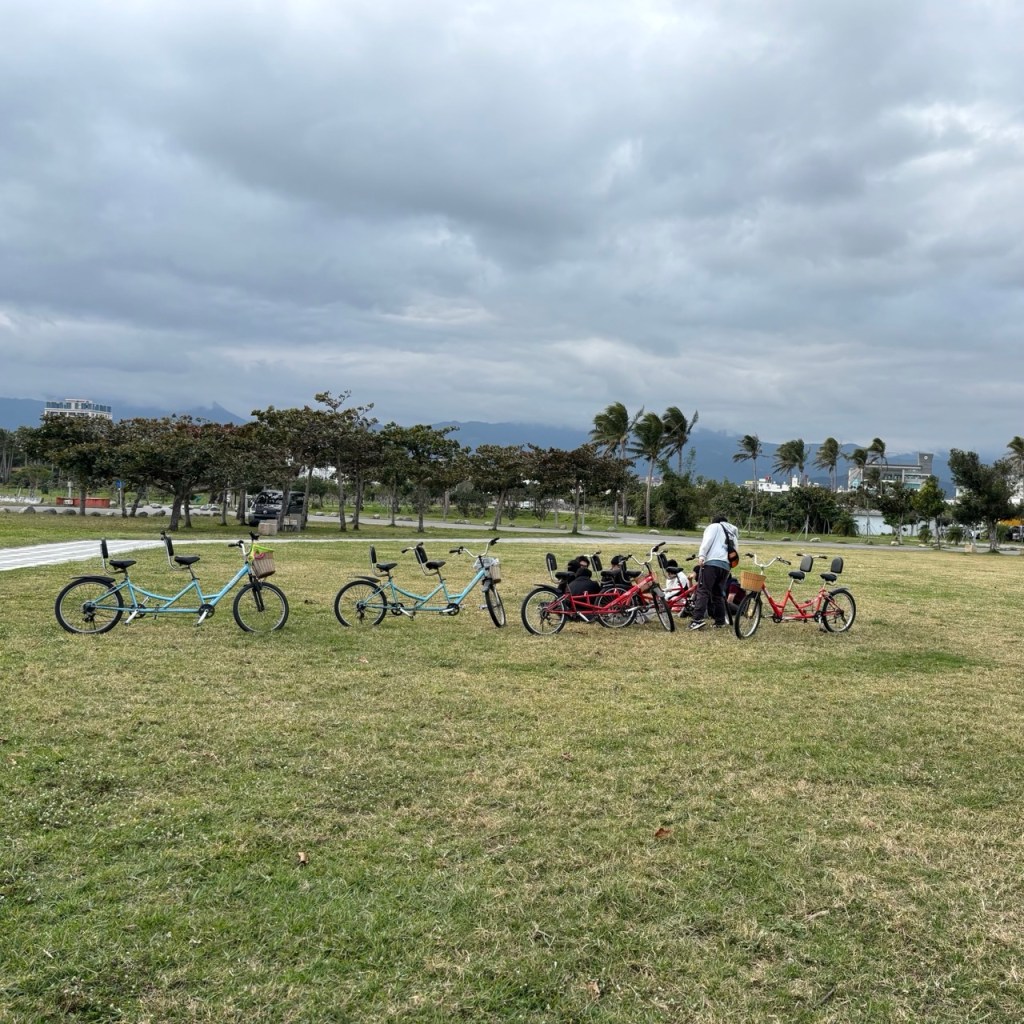
Cycling paths
Vegine

I was about to get the bus back to the B&B when I heard music and discovered a low key night market with a local band playing songs I hadn’t heard before mixed in with some Bon Jovi covers and people from the nearby islands selling local food, crafts and jewellery. Scones filled with hot brown sugar seemed to be the thing. I had wanted to visit the two islands, Green Island and Lanyu (Orchid) Island to learn more about their indigenous culture, but local advice was that it’s too windy in winter and regular boats aren’t running.

Getting off the bus
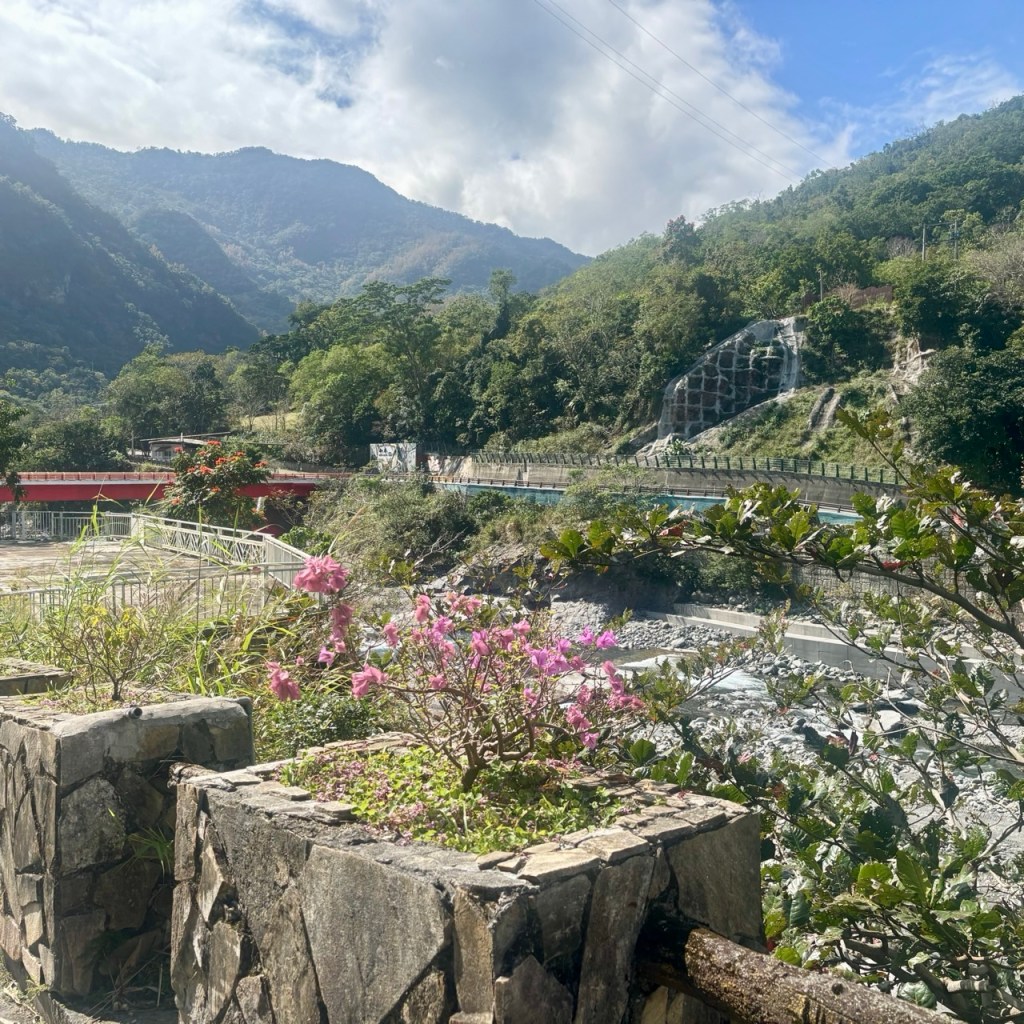
Entrance to the Jhihben Forest Reserve

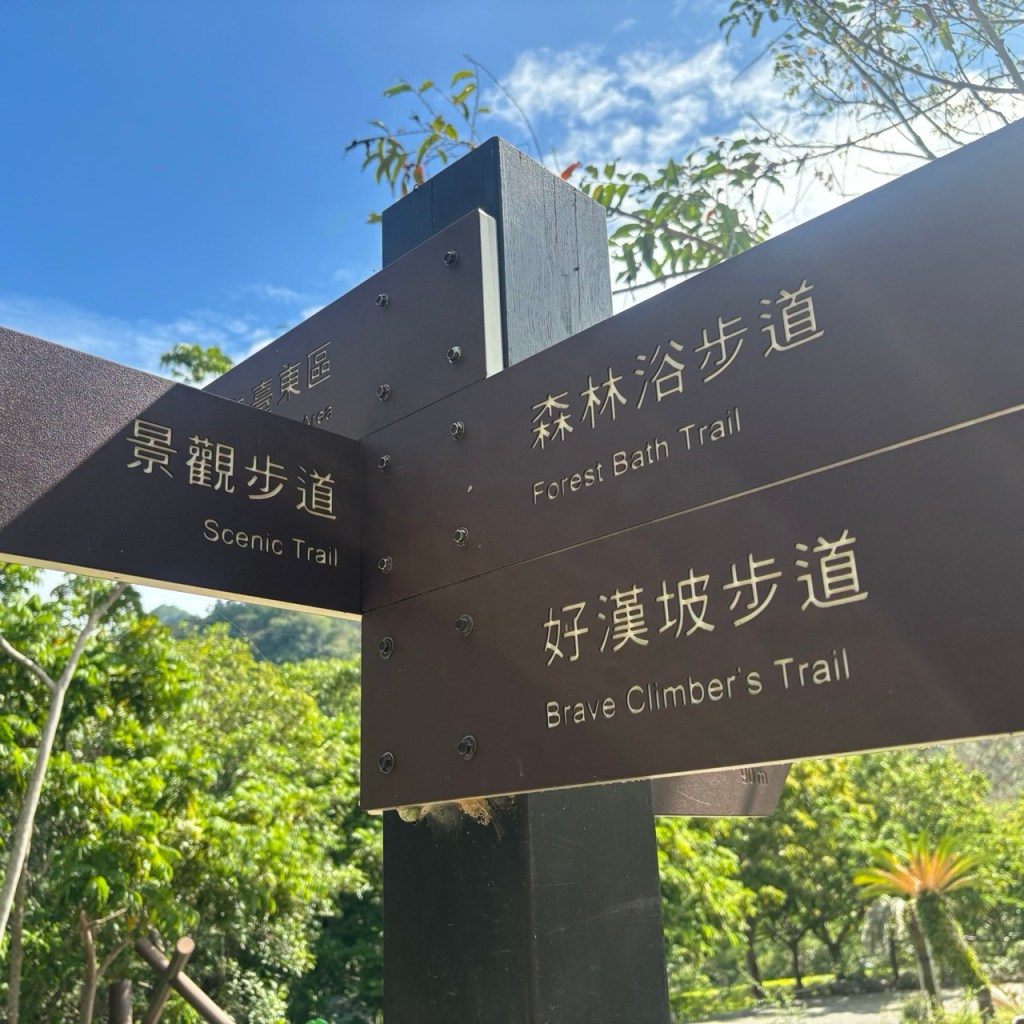
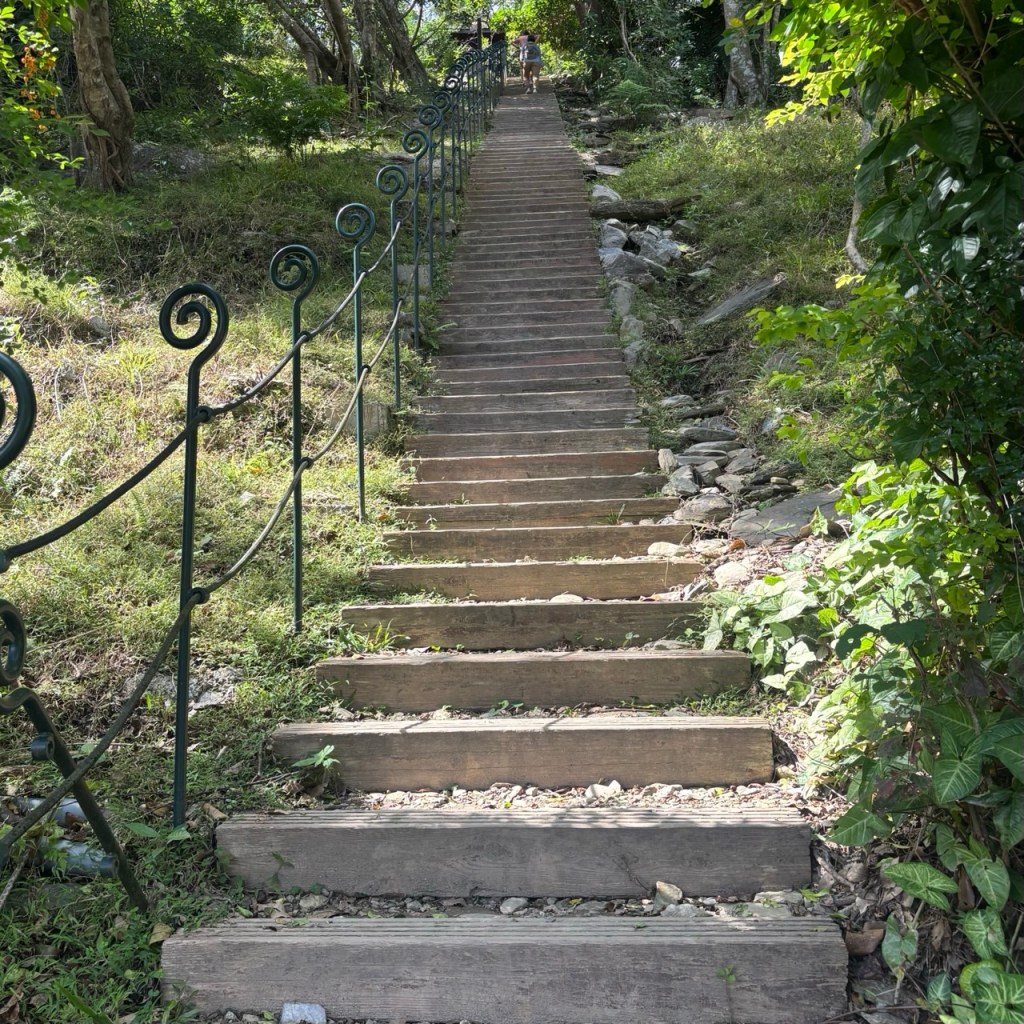
The next day I went down to breakfast at the pre-arranged time to find the housekeeper had already put out a plate of food including a chunk of meat and a salad, neither of which I wanted to eat. I explained I only needed the bread and fruit and set off on a day trip via local bus to the Jhihben Forest Reserve. I hoped to stop at the hot springs in the area on the way back. As was becoming usual, I was the only westerner around, with just a few passengers on the bus but the journey was easy enough. After paying the small entry fee you get given a map with a few aptly named options for hiking, like the ‘Brave Climber’s Trail’ and a key that indicates level of experience and effort required. I went for the ‘Forest Bath’ and ‘Scenic Trail’.

Hiking in Taiwan is amazing because you get the trails almost to yourself but there are enough friendly families around and it’s well organised so it’s very safe. Aside from all of the ‘beware snakes and wasps’ signage. Everyone I passed said ‘Welcome to Taiwan’ – a big reason that travelling in Taiwan in general is so great because it’s not overrun with other visitors, there are no tourist prices and nobody rips you Local people are interested to have a chat and go out of their way to help.

“Brave Climber’s Trail”

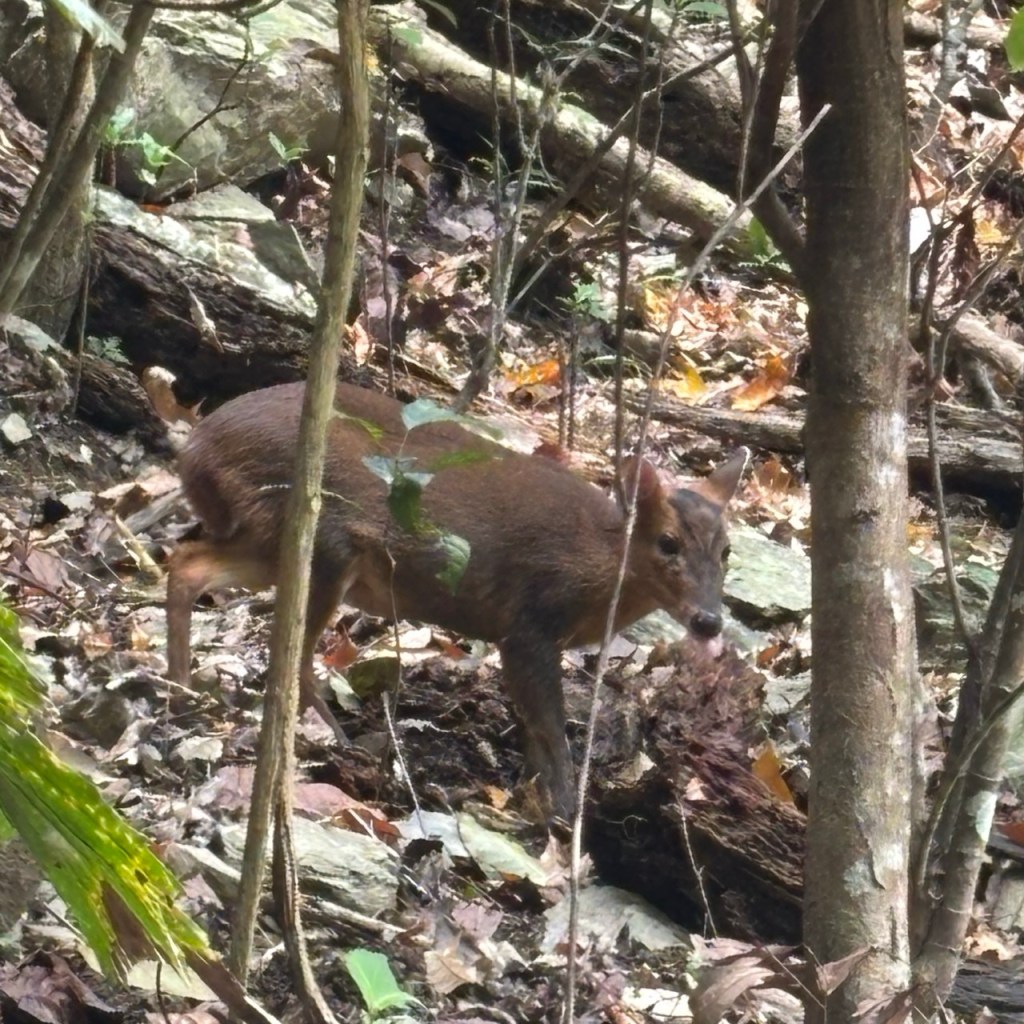
The first thing I noticed were the butterflies. There are 100 species in the forest and they swarmed around me, it’s quite magical. As soon as I got higher up into the park I saw the first mammal of the day, the gorgeous ‘Reeve’s muntjacs’ which I watched with a family several times along the trail.

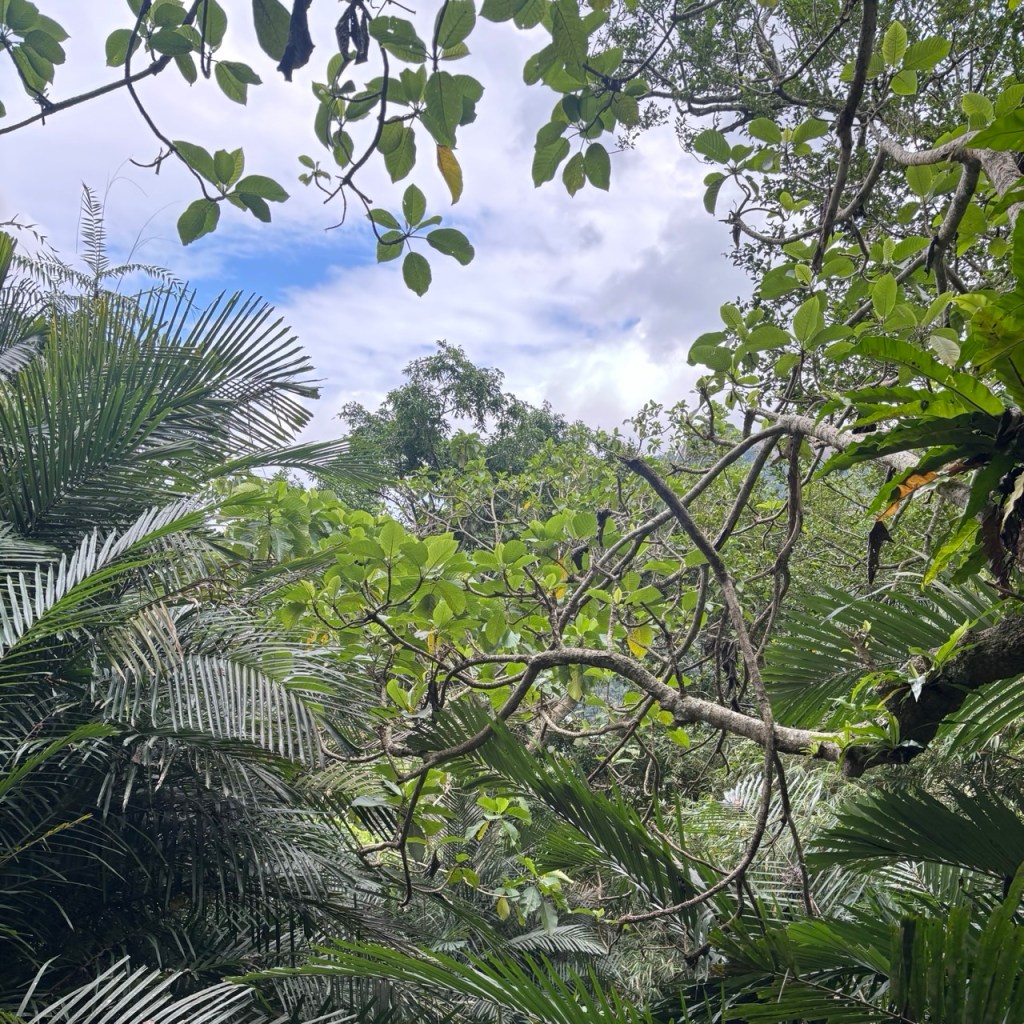
Beautiful trees

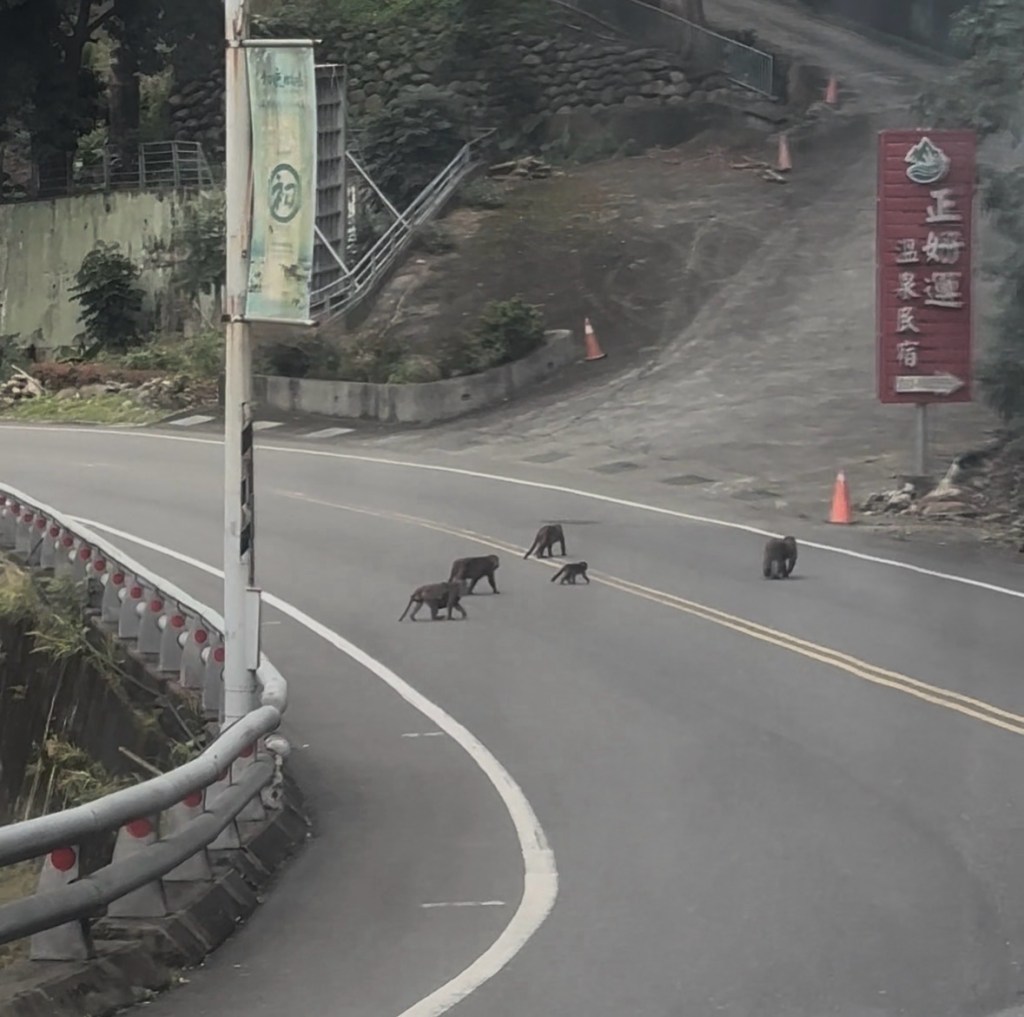
Next up were the Formosan Rock Monkeys. These cute little monkeys were just hanging out in the trees in their groups eating their fruits, rather than trying to steal your food.

Muntjac
Monkeys

The forest is an absolutely idyllic spot. You need a couple of hours to explore the park depending how many trails you do. One part was closed off due to damage, I assume from some sort of natural disaster. The prime spot for the monkey viewing had signs about passing through quickly due to risk of rockfall but the monkey watching was too good a chance to pass up.

Monkeys crossing

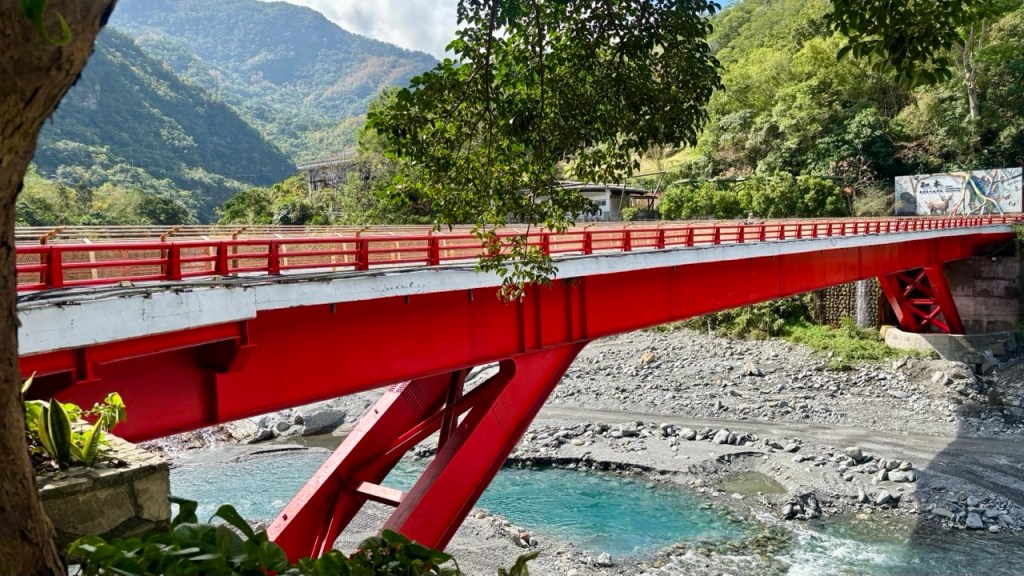
There are no food or drink facilities inside but there are toilets and water fountains – in fact there are water fountains everywhere in Taiwan. You never need to buy water. I made the mistake of following Google maps to the hot springs. This meant I got off the bus at a temple car park next to the river which was definitely not a public hot springs spot. I asked some ladies visiting the temple but they misunderstood and thought I wanted to paddle in the river.

Toilet
More luxury

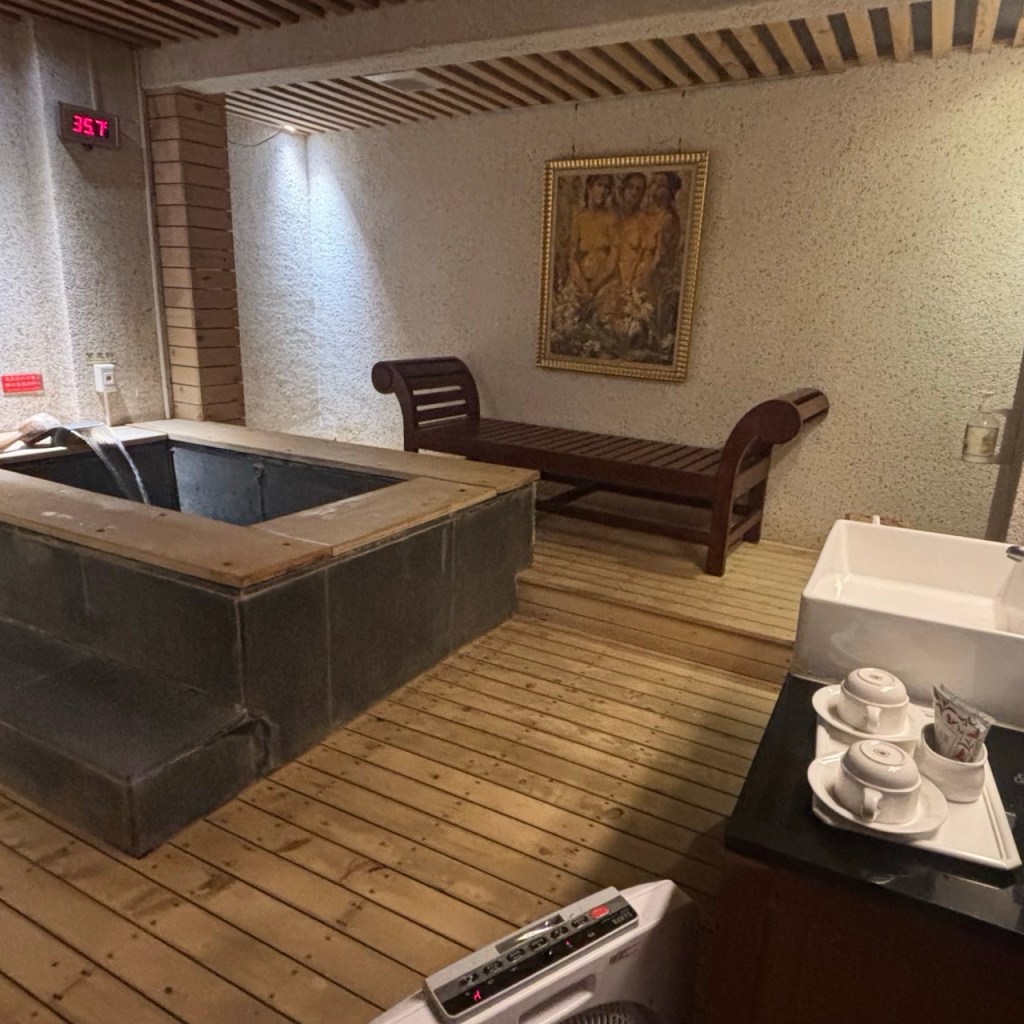
By then it started to rain and the only thing I could see was a hot springs resort hotel. They weren’t open until later on that day by which time I’d have missed the bus back – the buses ran at very irregular hours. There is always a solution particularly when you have a strong currency on your side. The nice lady at the hotel made several suggestions including taking a “private spa” for one hour and getting a taxi back all the way to Taitung. This hadn’t even crossed my mind but it cost less than £10 to be driven back door to door. The lady stressed that this type of spa was naked, so I had to use Google translate to confirm that it was indeed a private spa and I wouldn’t be sharing with anyone. It was a truly luxurious experience which would be outrageously expensive if hot springs even existed in the UK.

Beware the monkeys

When I got the bus back from town to my B&B after the long day, as often happens in Taiwan, a lady started chatting to me. She knew some English and told me she was in her 70s and on her way back from meeting up with her sister in a mountain town to see the early cherry blossom blooms. When she learned I was travelling alone around Taiwan she said that’s wonderful, and told me ‘YOLO – you only live once!’. I also had a concerned text message from my B&B saying “We noticed that you didn’t enjoy our breakfast. Would you like a vegan meal?”.

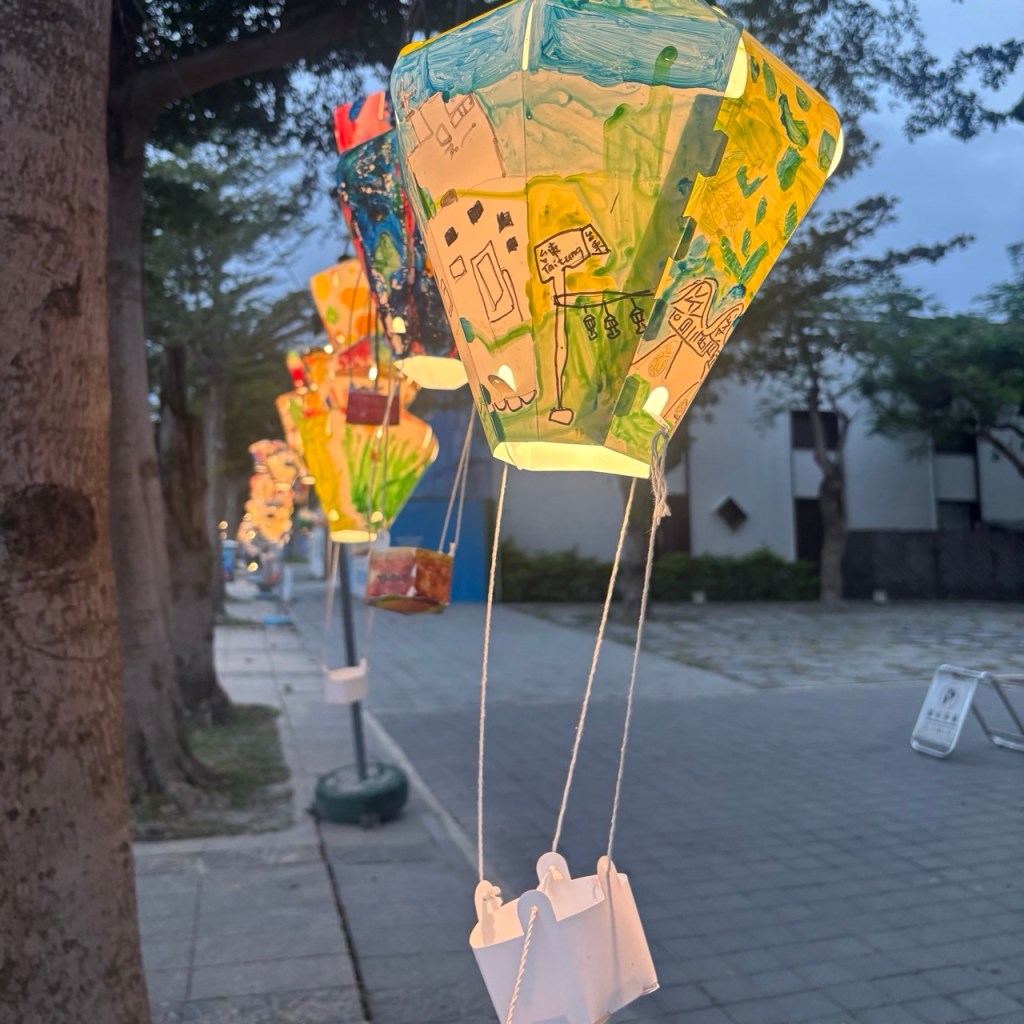
Lanterns around the station

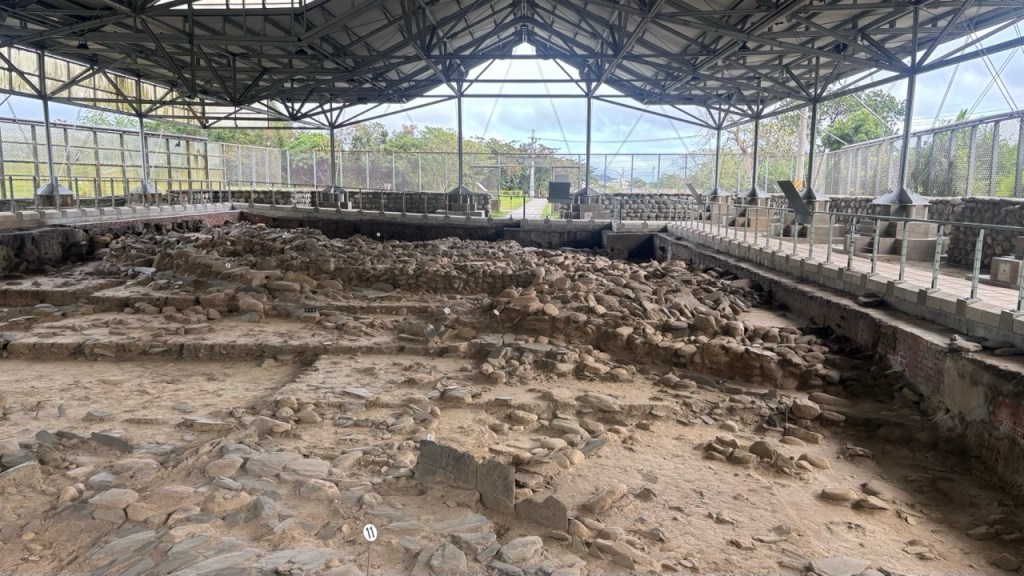
In contrast to the nature, I would highly recommend a day exploring the history of this area visiting the very impressive History Museum and the Peinan burial site. You can do them together but likely need a taxi due to the erratic bus schedule, though the Peinan site is walkable from the train station.

Peinan site

The History Museum takes you through from the creation of Taiwan from a geological perspective through to the movements of the Polynesian people up to the present day culture with influences from all over Asia. What makes Taiwan interesting is the tectonic evolution, namely the collision of the Eurasian and Philippine Sea Plates. According to the museum facts, the Coastal Range is still moving at a speed of 6-13 cm per year relative to the Central Range. During the Ice Age, the Taiwan Strait became land because the sea level dropped, allowing the migration of plants and animals into Taiwan.

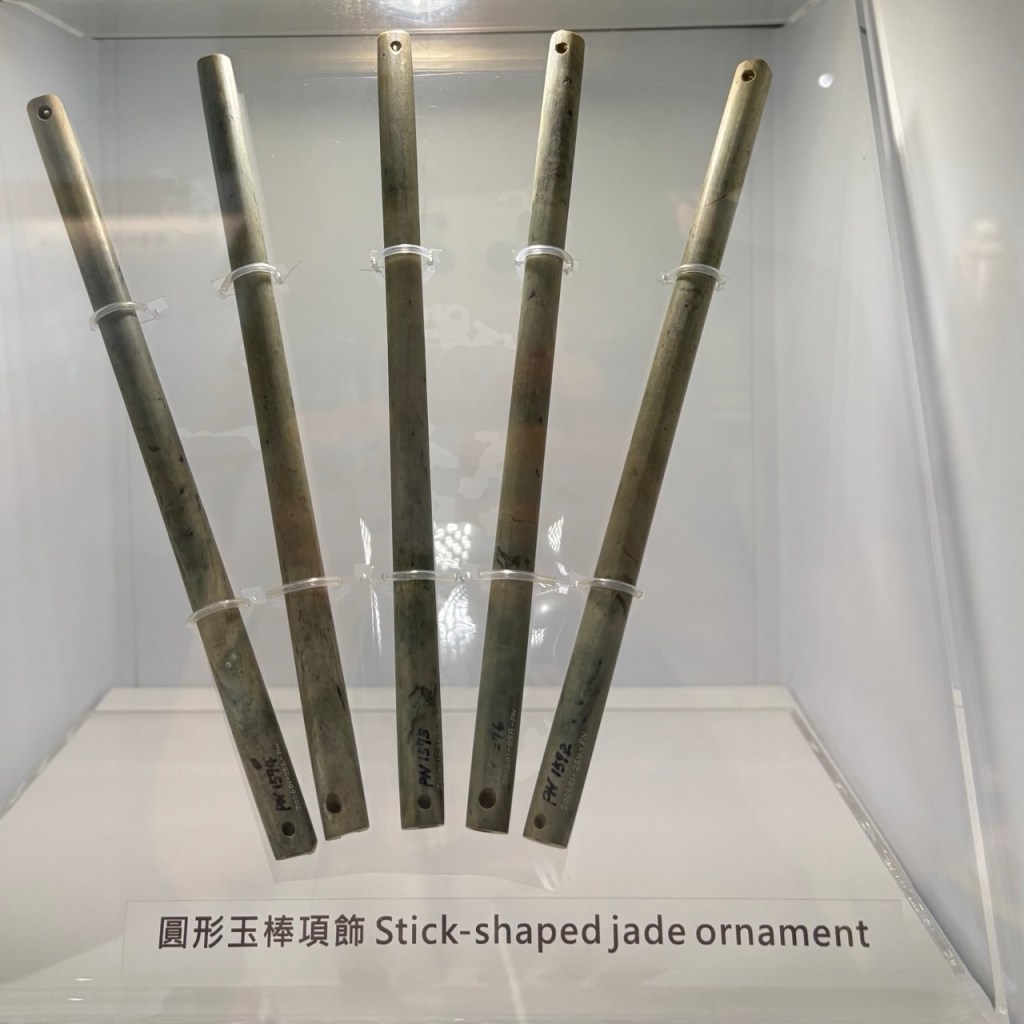
Jade on display in museum

Taiwan is also a know as a “place of convergence” due to it’s location – many different ethnic groups and objects have passed through, including the trade of Jade, glass beads and sweet potatoes with China, Southeast Asia and the Austronesian people. The museum has some really good exhibits of indigenous culture. Austronesian people make up less than 2.3% of the population according to when the info was written but they make up 7% of Taiwan’s military and 60% of special forces.

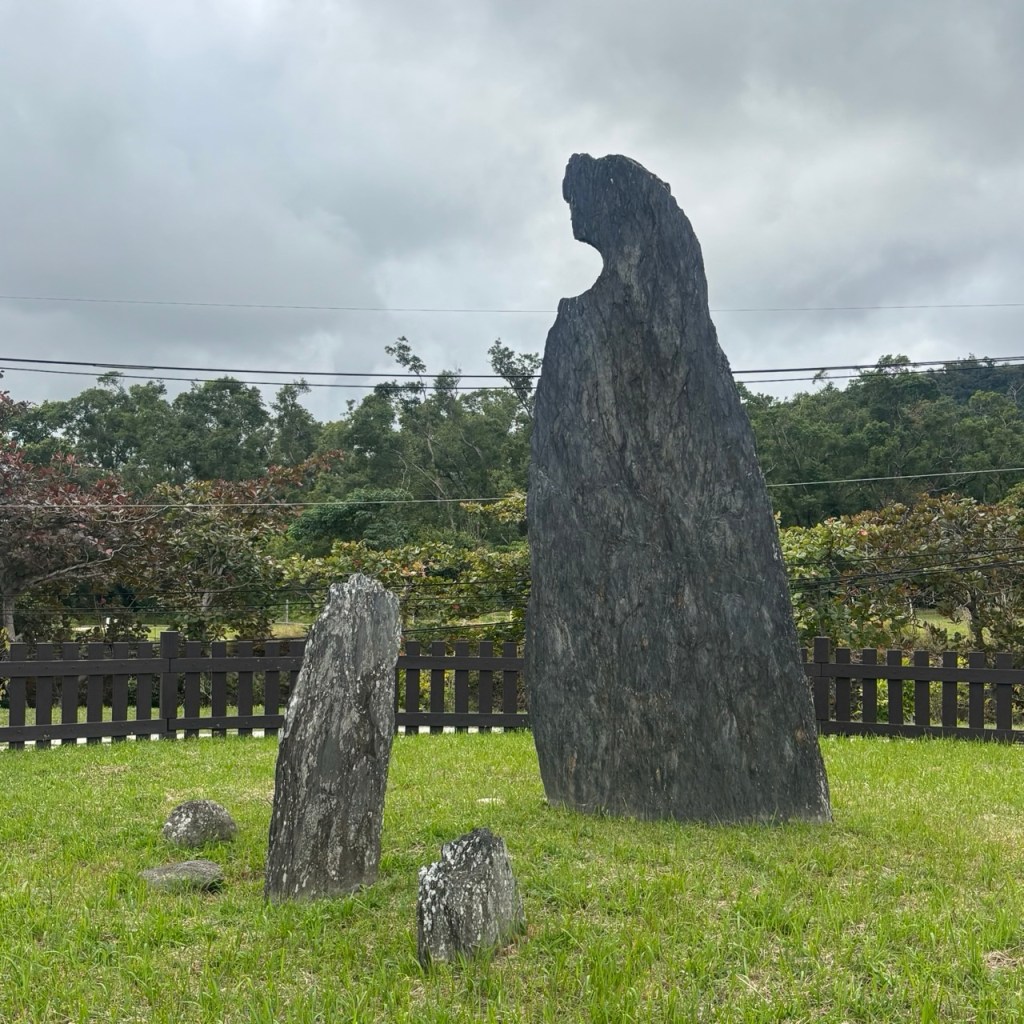
Last remaining slate pillar

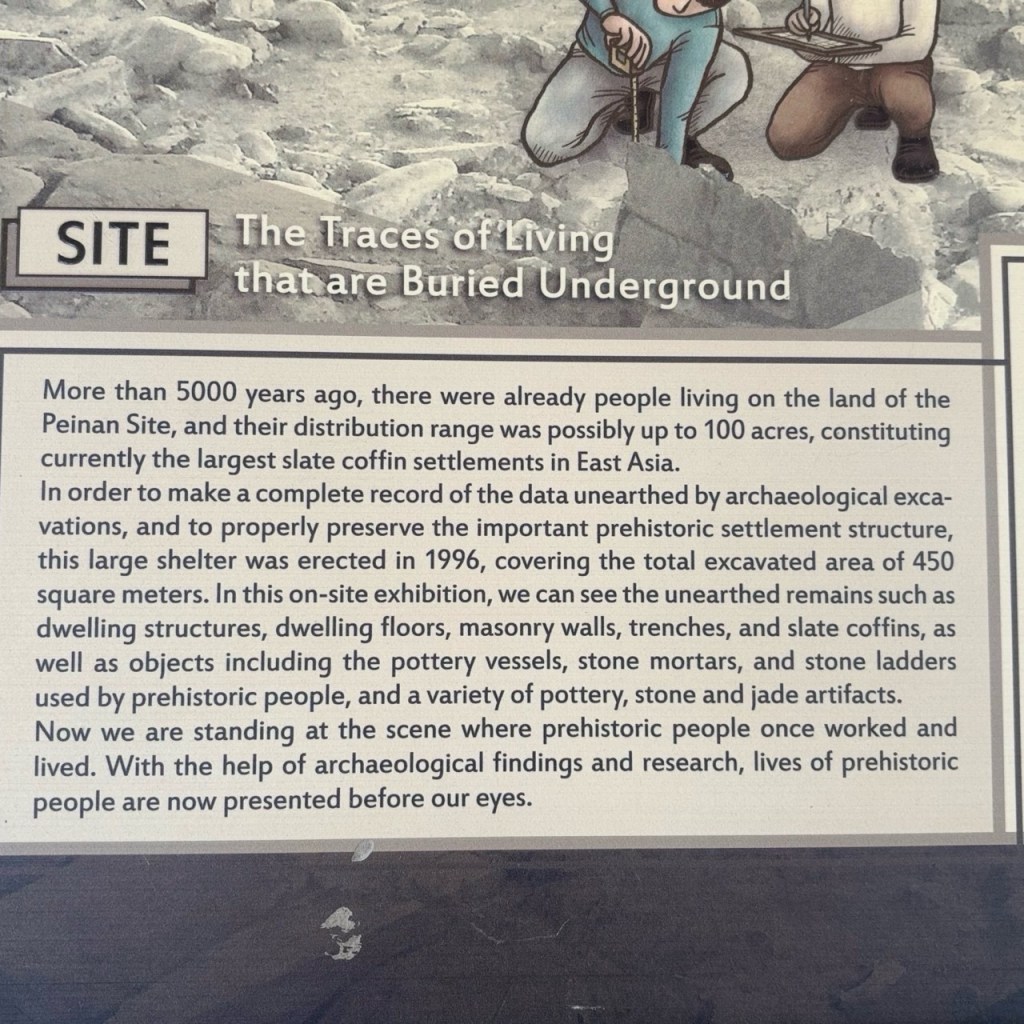
Without turning this into a history lesson, the Peinan site is also fascinating. This a prehistoric culture, with people settling here 5000 years ago. In 1896 a Japanese scholar visited Taitung and photographed the stone pillars. But it wasn’t until 1945 when the Japanese carried out the first excavation. The Peinan Culture is believed to have been active from middle to late Neolithic Period with people leaving the site approximately 1900 years ago – nobody really knows why or where they went though there are theories they went into the mountains.

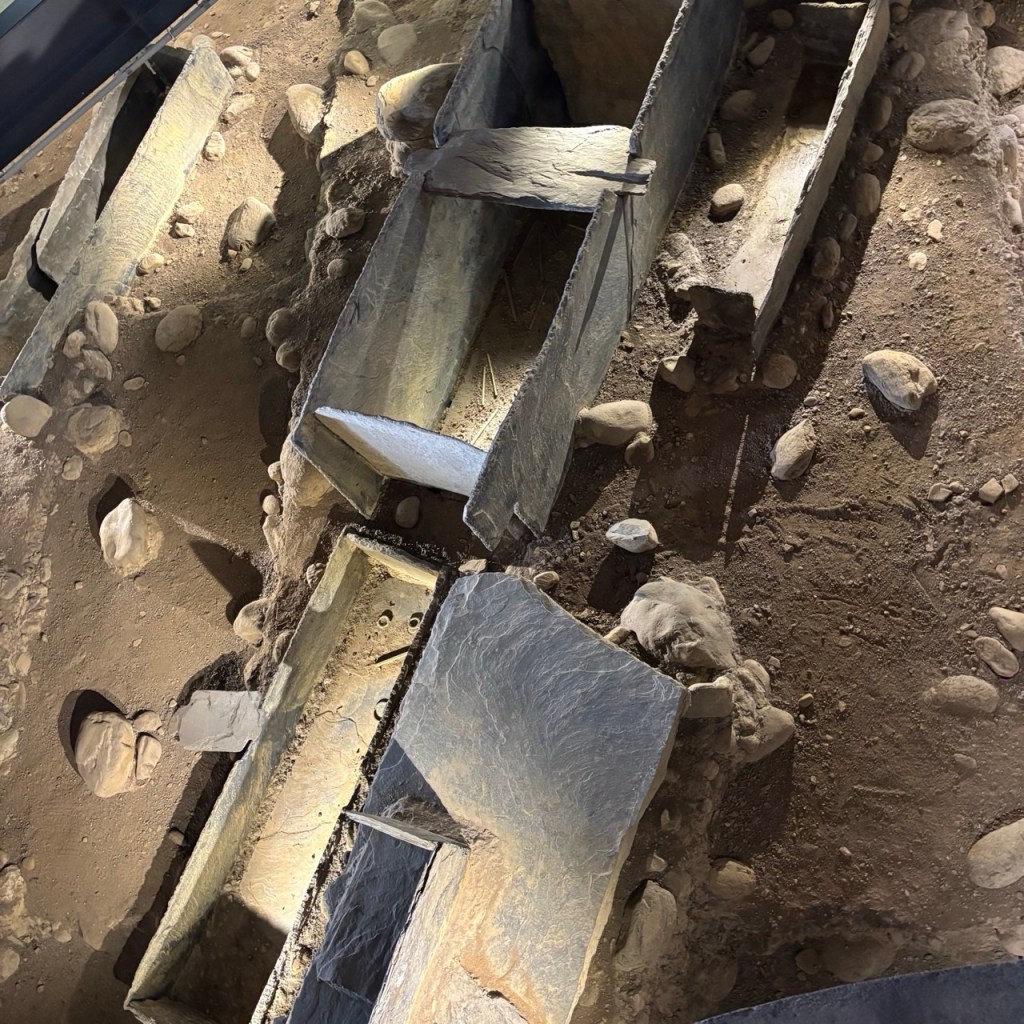
Slate coffins

In 1993 the huge group of slate coffins were excavated – this is the largest excavated slate coffin burial complex in East Asia with over 200 unearthed, including single-body and multi-body burials.

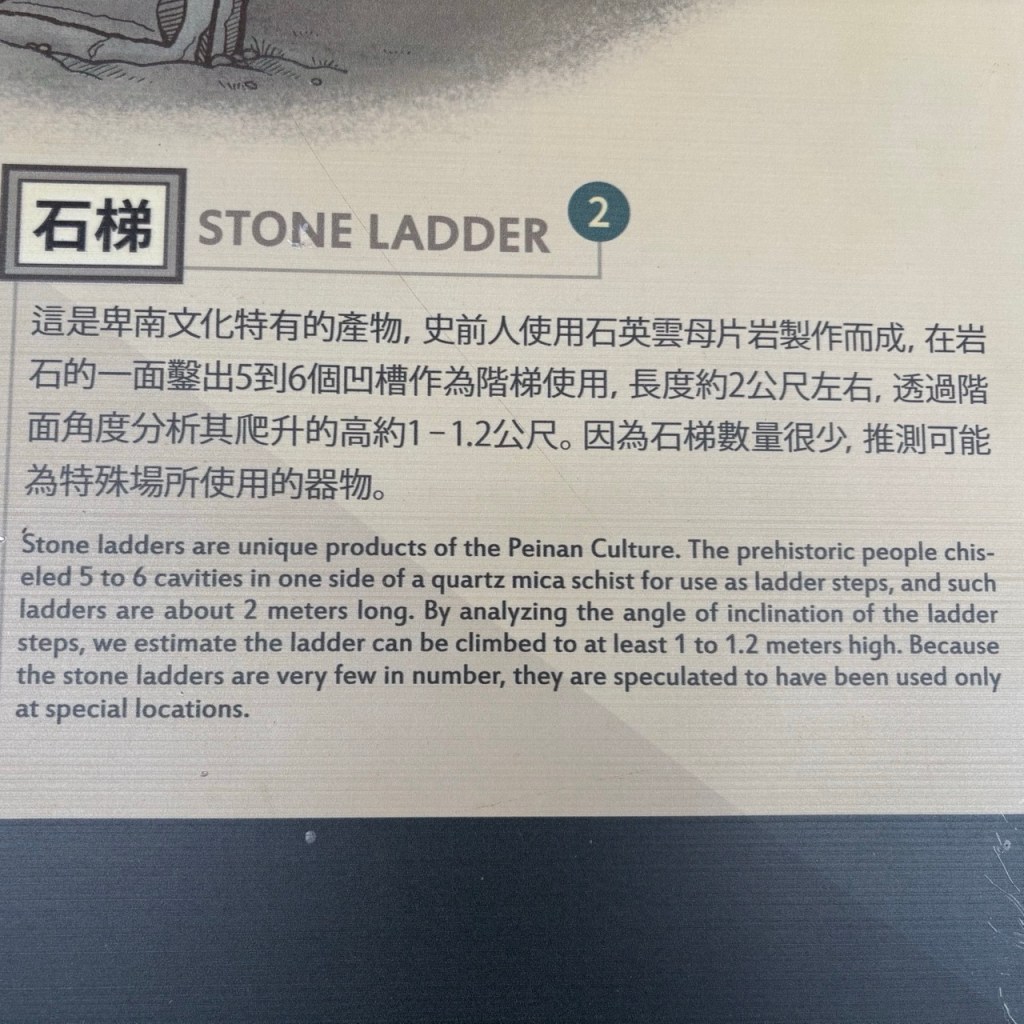
Info on the coffins

What I liked about this site is that you can walk right around the excavation and look at the walls, the stairs, the ladders, pottery vessels … This brings it more to life. And of course aside from a group of Chinese visitors who were just leaving, I had all it to myself as usual. Next stop, Khaosiung.
Info on the excavation site

Carry On Buses (a bizarre solo experience in Hualien)

The first stop on my route east around Taiwan was Hualien, a couple of hours away from Taipei. The main attraction of this city is the nearby Taroko Gorge which sadly remains almost entirely closed to visitors due to the 7.2 magnitude earthquake in 2024. I had heard that Hualien was a bit of a ghost town and unfortunately the rain didn’t help the already strange vibe of the place. I imagine in better weather it’s lovely with its mountain backdrop but all I could see was low cloud.

Hualien station

The “Hualien Wow” hostel was really good, right opposite the train station and the bargain price of £10 included toast and peanut butter for breakfast. The hostel may have been Wow but Hualien was not. Even the well known night market was a washout – with no buses running that I could find, I walked the 30 mins each way in the rain (the hostels lend you umbrellas or you can just rent one on the street) only to buy some inedible tofu sticks and a pot of sweetcorn. Most of the food on the street markets is fried in some sort of cooking oil that smells rancid – the whiff of it makes me feel sick.

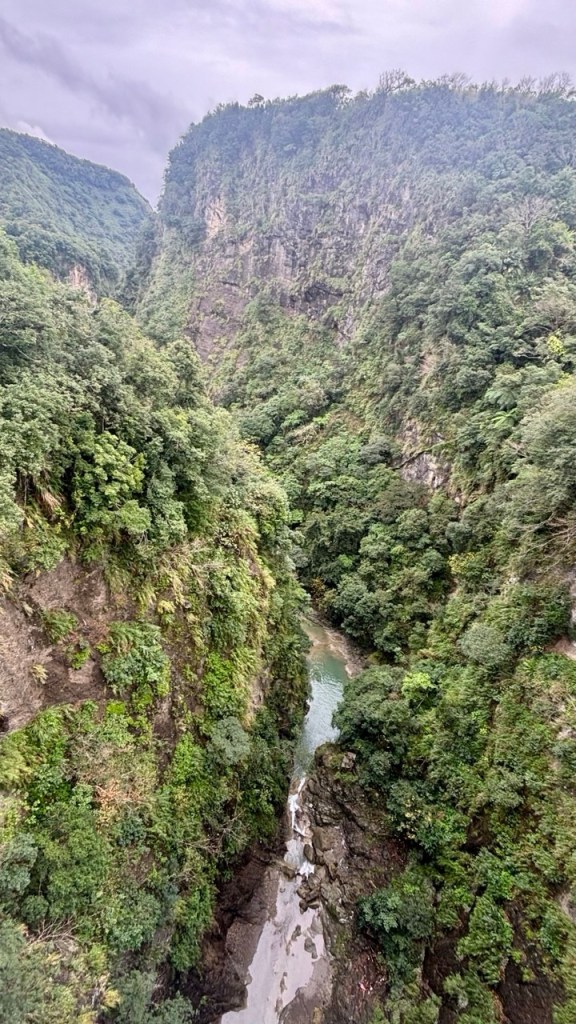
Beautiful scenery from the road

An extremely earnest woman at the bus station information stand told me there was not much point in visiting Taroko, especially in bad weather, as only the visitor centre was accessible. Instead she highly recommended an 8 hour day trip up and down the east coast. The next day it wasn’t raining so I decided to take her advice – it was either that or leave Hualien without doing anything, as there was actually nothing else to do. I arrived at the bus station (conveniently right opposite the train station) 15 minutes before one of the 3 departures of the day hoping I’d still get a seat, and was greeted enthusiastically by an attendant manning the desk. He gave me a ticket from a machine with the number 1 on it, which I thought was a little strange. At 9.30 on the dot a minibus bus pulled up and a little old man got off with a clipboard, wrote down my name and contact details on the first line of his sheet, ushered me into the first seat and off we went. I was the only passenger. It became apparent he didn’t speak any English when he spoke into a translator on his phone in a comedy monotone voice to tell me he would be my guide. It’s ok, I thought, I’ll be getting off at each of the 7 or 8 different stops and can do my own thing.

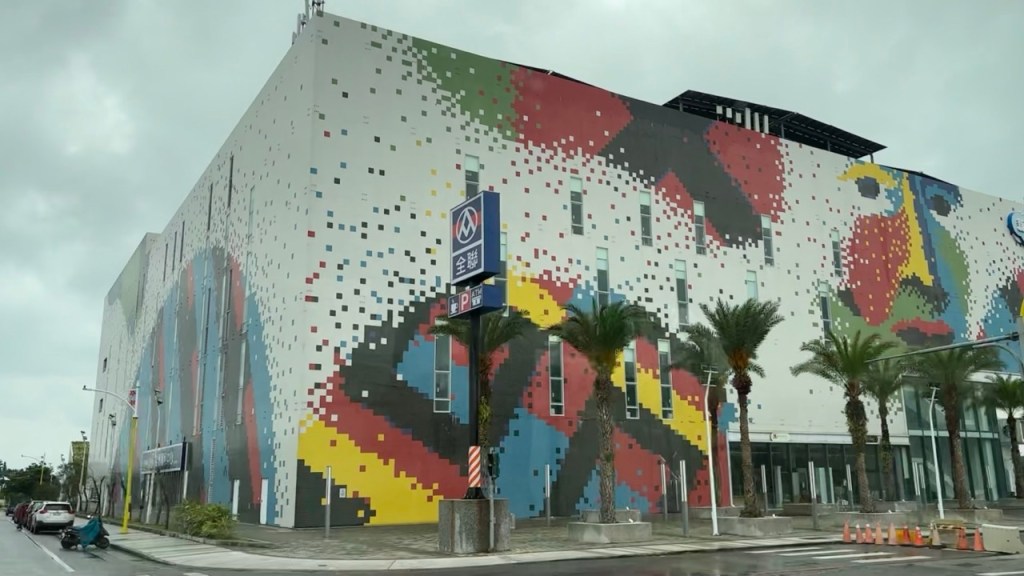
Lego shopping mall?
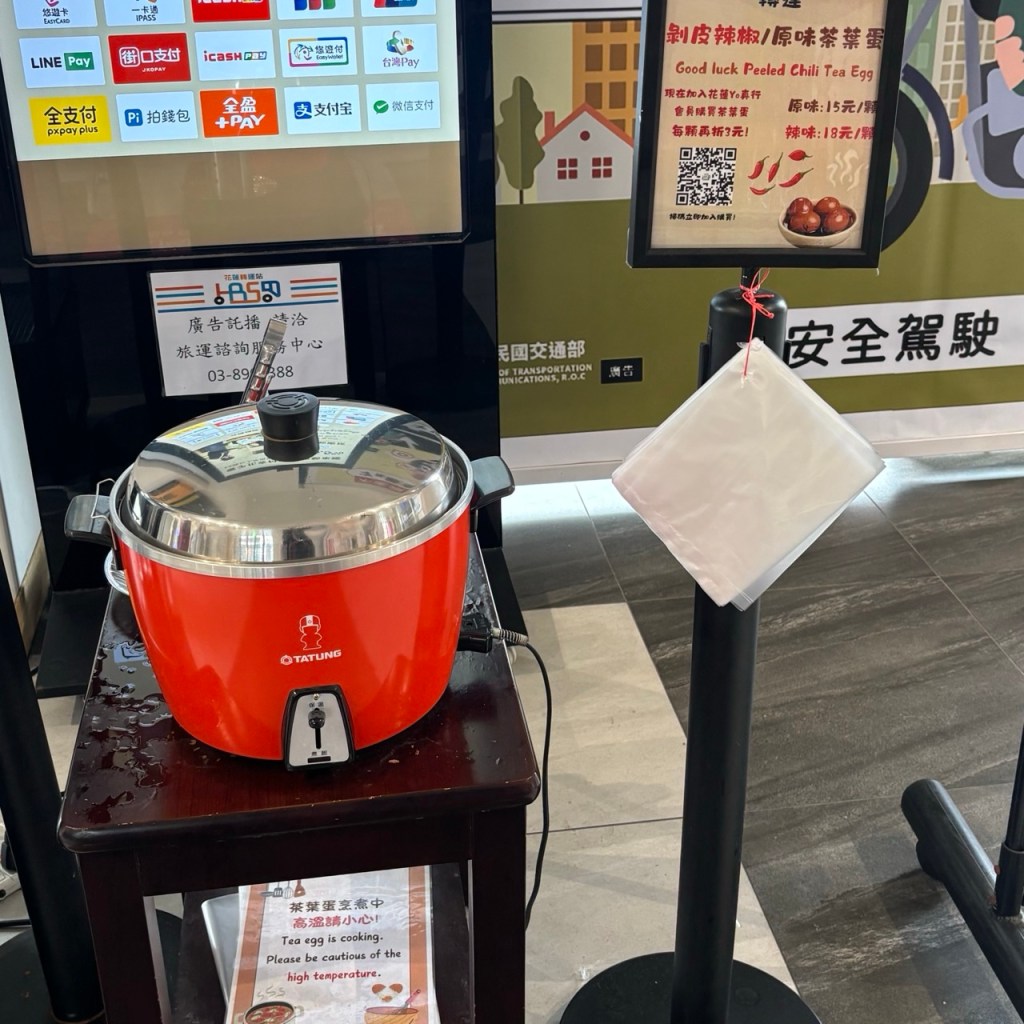
Lucky egg cooked in tea

After about ten minutes his phone told me in its robot voice to get my camera ready as we were going past the world’s biggest building made of Lego (I think), followed by a mountain in the distance that he was very insistent I got a photo of. I obediently got my phone out but had no idea what I was meant to be capturing. What happened next was interesting. Some military tanks drove past with soldiers in camouflage gear standing on top arranged in a circle facing outward with their machine guns pointed right at us. It looked like a scene from a movie. There are some military bases around so I assumed (hoped) it was some sort of drill. I asked my guide who suddenly refused to talk, shaking his head and making a “no comment” sort of gesture. He obviously didn’t want a record of any mention of the military on his phone.

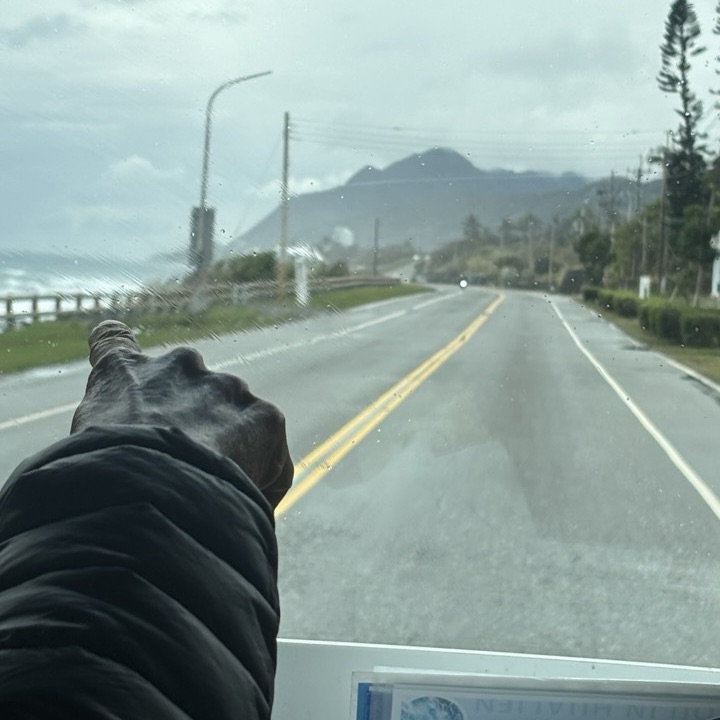
Mountains in the shape of a face?
Waterfall through hole in the bridge road

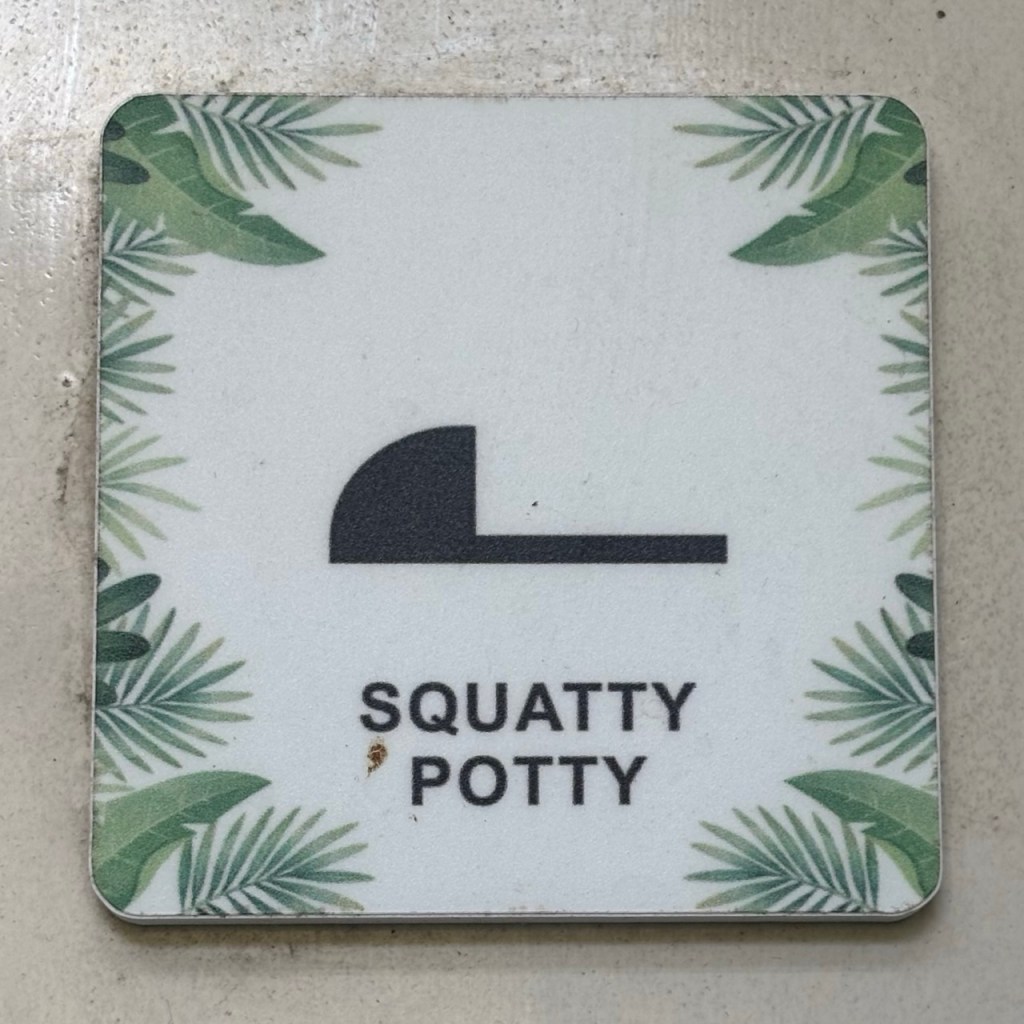
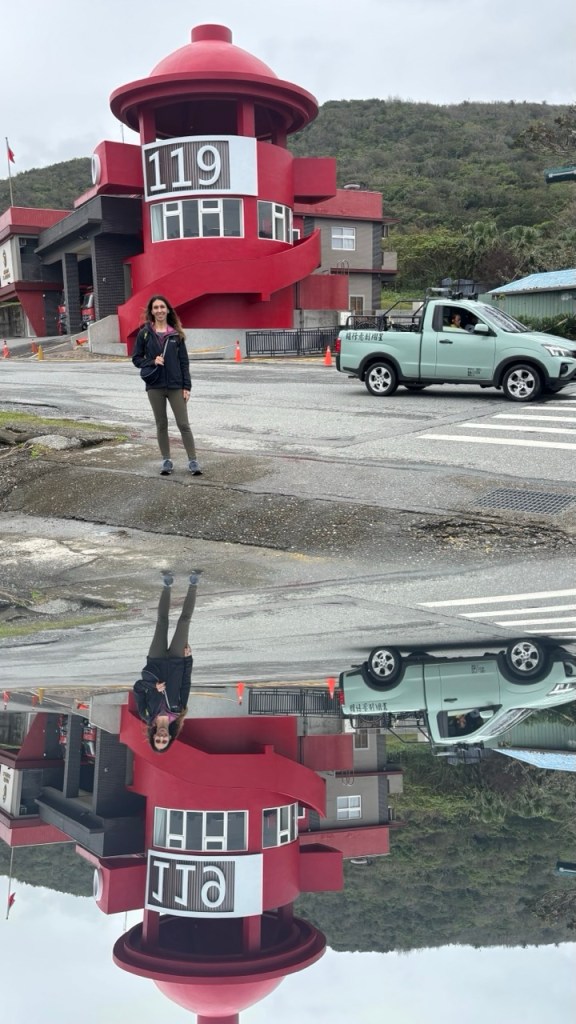
We arrived at the first stop, the world’s only fire station that is actually built like a fire hydrant. It’s cool, but you don’t need more than 5 mins to have a look and take a photo. Oh no, said my guide, the departure time is in 25 minutes – I must look at the temple next door, use the squat toilet, then we will take photos and “I’ll show you some wonderful illusions”. I then realised he was going to accompany me on every stop and I’d be participating in the world’s most ridiculous photoshoot. It was going to be a very long day.

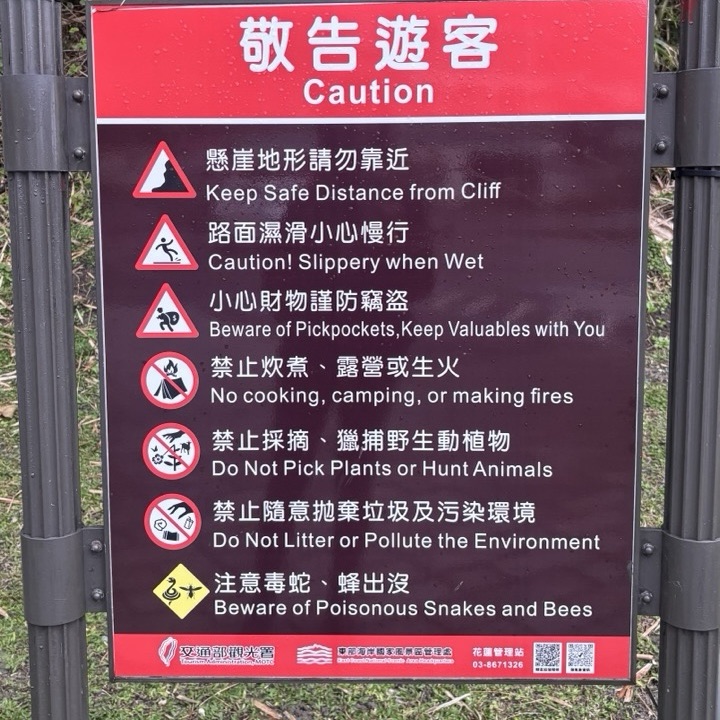
The many dangers

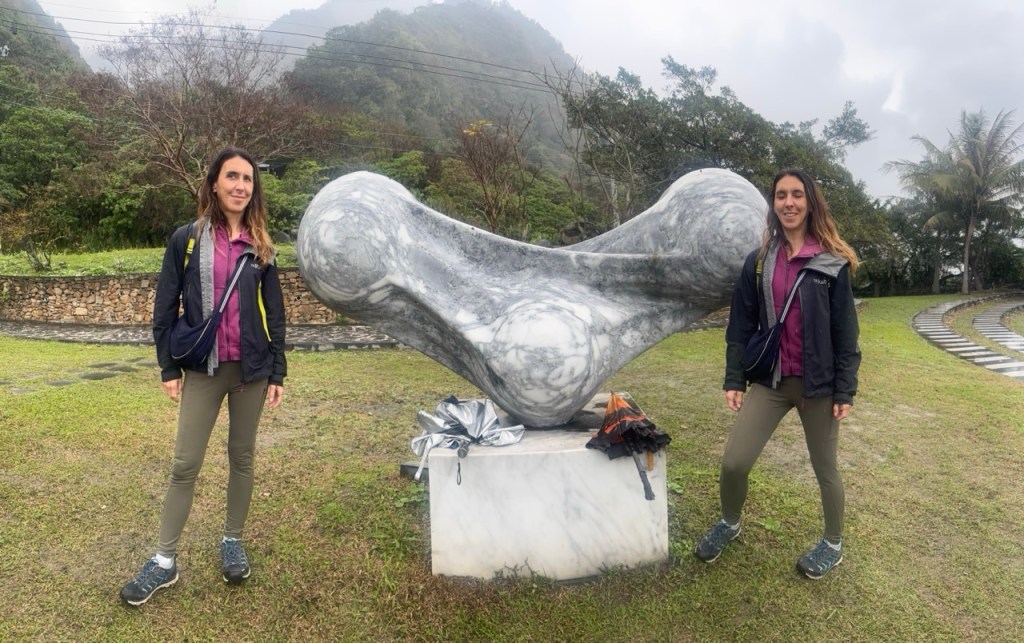
Here is me infront of the fire station after he whipped out a hand held mirror and took a photo that gave the illusion of a water reflection. I feigned delight and said oh wow, so clever! He then took a panoramic with me running in a circle so there appeared to be two of me. “Do your parents know you have a twin in Taiwan?” he asked. Once was quite amusing. But at each stop in the drizzle, it got old very fast.

Illusions
Me and my twin

Today was the only day I didn’t bring any snacks. By the time we got to the fishing village for the lunch stop I was starving and it was now pouring down with rain. His instructions that “We will eat lunch at a local fish restaurant and the bus will depart in 90 minutes“ was not what I wanted to hear. I translated that I wanted vegetarian food and suddenly he spoke a few words of English – “OH MY GOD” he said slapping his head, suggesting I walk up the hill as there was a shop that “might sell bread”. The tiny shop at the top did not sell bread or any sort of snack I could identify and the missing-toothed shop owner seems to have no idea what I was asking for – but he did gesture further up the hill. Turns out at the very top there was a restaurant with “Welcome” written in English, several vegetable based options and a lovely lady and her little daughter greeted me with “would you like a beer?”. Yes please.

Lunch
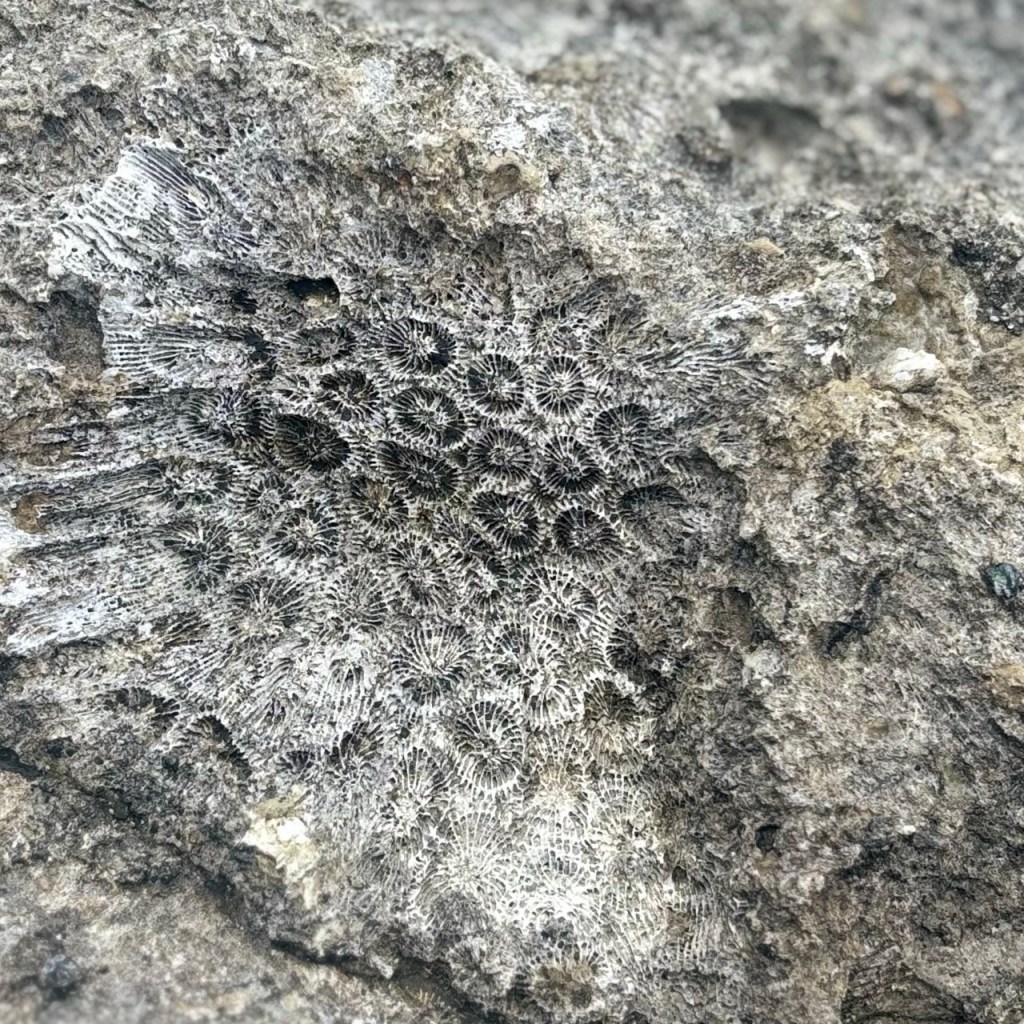
One of the few interesting things he pointed out, a fossil

My guide was a stickler for the official “bus departure time”, which wasn’t for another ten mins so when I got back we had to stand in the rain looking at a mural of whales on the wall and playing a guessing game of which species each of them was and do I have whales in my country. After lunch he told me “This afternoon will not be fun. It is raining”. No kidding. If I wrote about every excruciating stop we made this would be a very long post. I will just mention the best (or worst) three:

Driving my Nissan car

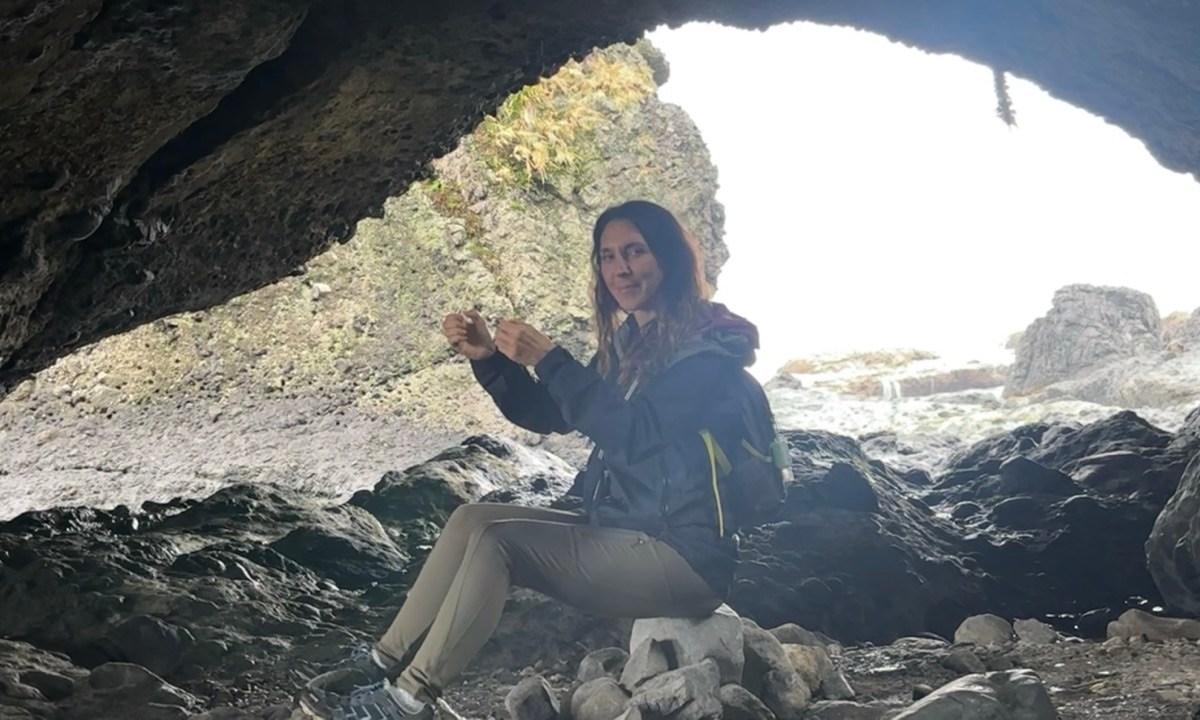
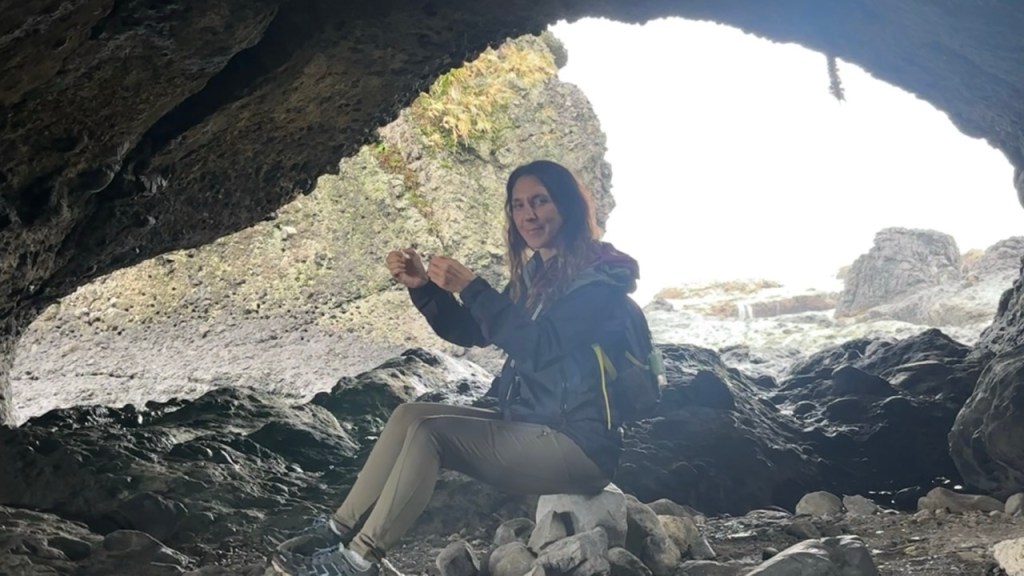
1. The Nissan cave. We stopped at the Shimen recreation area where a long path leads to a stunning rocky coastline and a cave. But it was raining, the rocks were slippery and the sea looked ferocious. Ever so often the waves threatened to cover the rocks where we were standing. The guide was in full photographer mode by now. Try following instructions in Chinese to recreate specific poses when you have no reference as to what they are. It’s only when I saw a photo in the recreation area explaining that “The sea-facing opening is called the “March Cave” as it looks like a March (a Nissan car model)” that I realised I was supposed to be driving a car. After I fell over on the rocks trying to reach the next spot I was getting annoyed and told him no more photos. This just annoyed him and he told me crossly that “an American tourist got an amazing photo in that spot”. Good for him. 

Off he goes

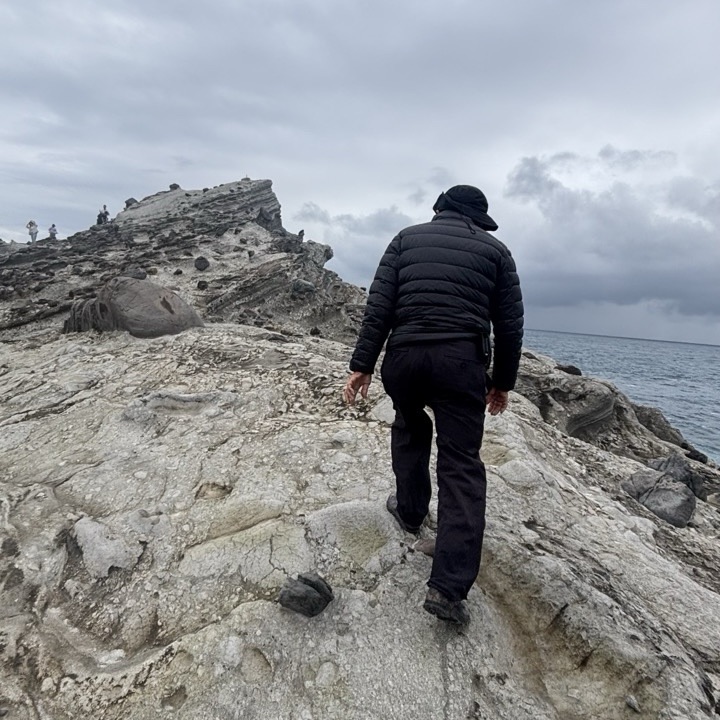
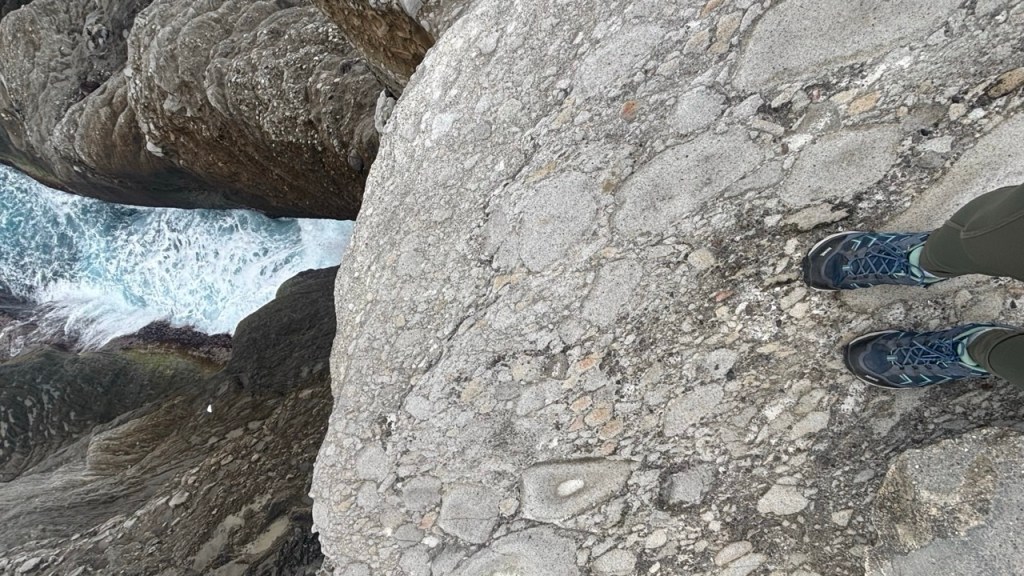
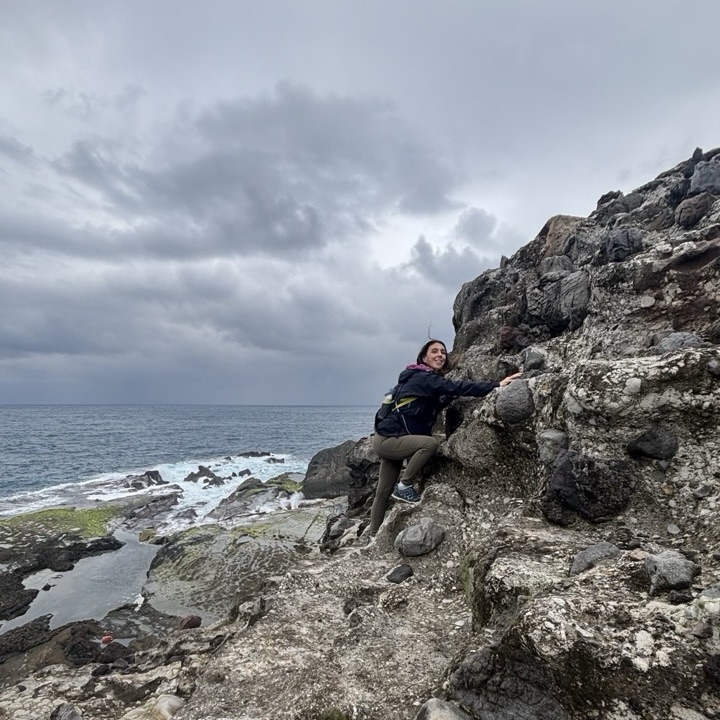
2. The cliff rescue. For someone who looked about 70 he leapt up the rocky slope to the top of the rocks. After looking over the edge I decided I really didn’t want his photo to be the last one I ever took. But getting down was harder than he made it look, so much so that I got stuck. To add to the ridiculousness of this entire day there was a family a bit lower down who sent their  approximately 10 year old son up to fetch me. Unfortunately he appeared to be scared of heights. The poor boy started screaming (no exaggeration) as he tried to reach me while his parents laughed their heads off and took photos of us both. My only regret is that I didn’t video it. The guide just looked disgusted that I didn’t want a photo on the edge.

Time to get down
Not actually as dangerous as it looks

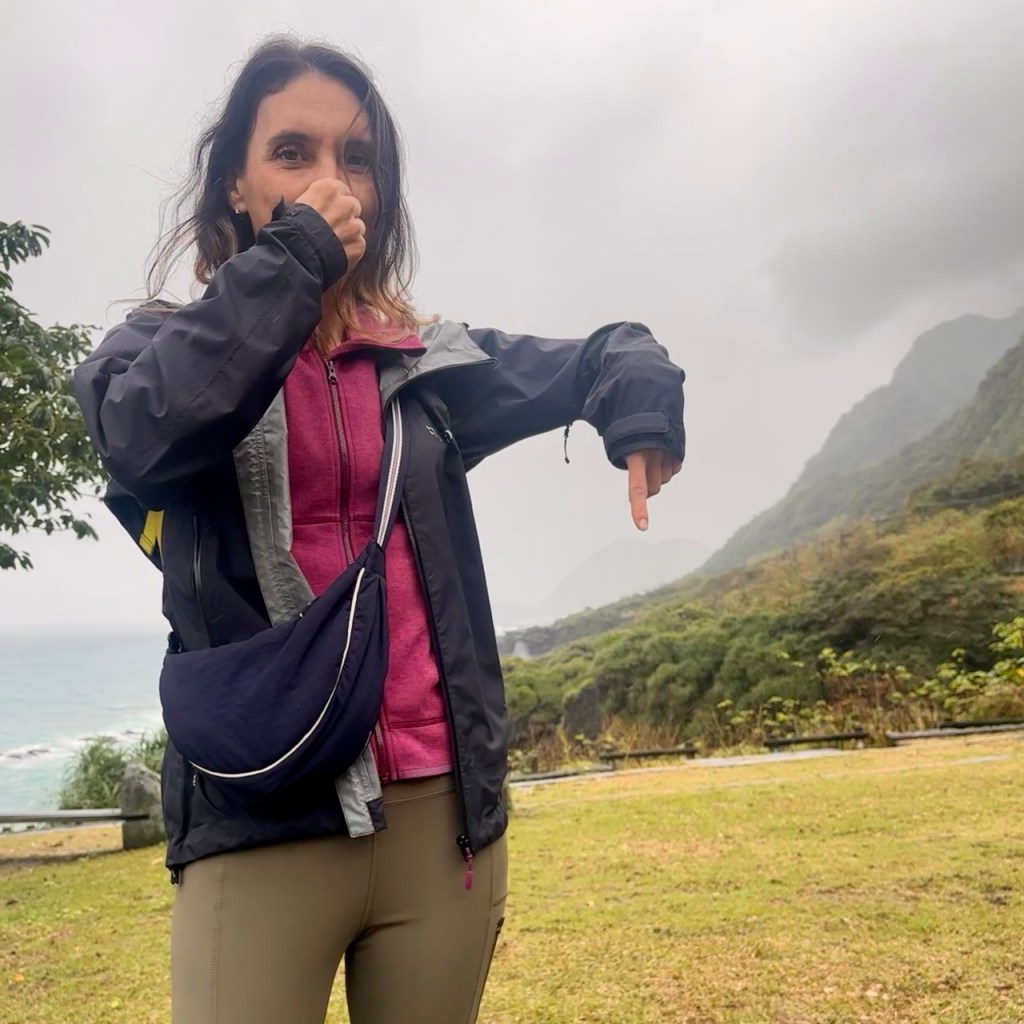
3. The bum shot. Best of all, or worst of all, at an otherwise average viewpoint he started positioning my arms and told me to hold my nose. Again I had no idea why until he showed me the photo. Like other tourists on his camera roll, I am supposed to be pointing at a mountain in the shape of a bottom and holding my nose at the smell. Is that even funny?

Bum mountain barely visible

I couldn’t hide my annoyance at the end when he wanted me to do the mirror trick myself and I failed the test. He snatched it back and his phone shouted “No! Never drop the mirror!”. The final straw was when I was trying to enjoy my ginger tea whilst praying for the departure time to come around and he asked where my husband was and informed me that he was 66 and not married yet.

I didn’t realise I wasn’t meant to actually climb it til he shouted “No!!!”

Hualien is probably best left until the Taroko Gorge reopens, or perhaps I missed something. Unfortunately I just wanted to get out of the place so I went straight to the train station to secure my train ticket down the coast to Taitun the next day. 

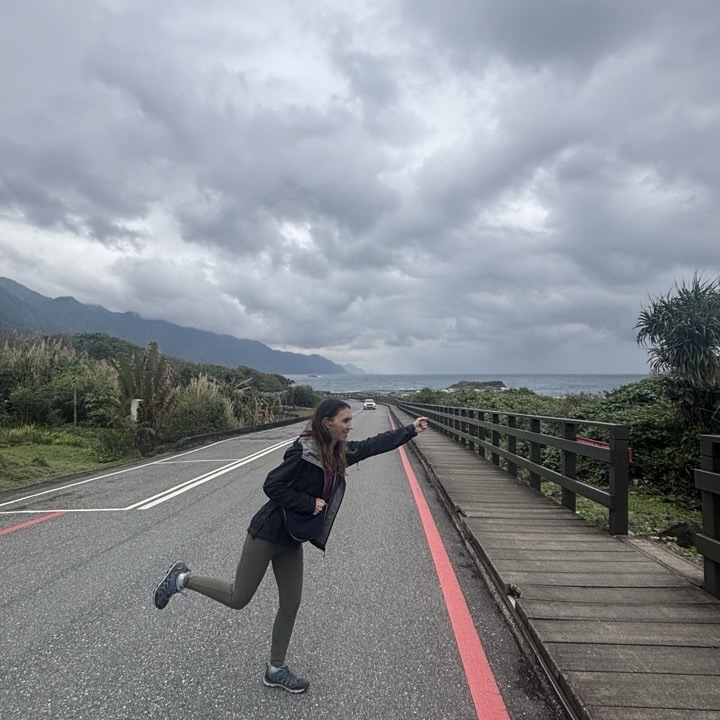
Running from an earthquake” – getting run over more likely
Worth climbing over for a photo?!
Where the boy rescued me from
The one viewpoint he didn’t accompany me, too many stairs

48 Hours in Taipei (Tea, Temples and Taiwanese Food Heaven)

Lesson learned when taking budget flights in Asia. They are strict. Firstly I was forced to buy a ticket out of Taiwan before they would let me check in at the airport in Okinawa and secondly what constitutes carry-on baggage in Europe doesn’t mean carry-on here. If you thought Ryan Air staff were petty, Air Asia staff weighed every single item I had on me with a hand-held scale and as it was over 7kg I had to pay to put my ridiculously small bag into the hold. Airport hassles aside, arriving in Taiwan was smooth sailing. I bought an ‘Easy Pass’ travel card and took a fast train to the city from the airport. You get to choose a cute design for the card (I went for a sort of gothic Minnie Mouse) which makes it fun to use and it’s valid all over Taiwan on buses, trains (apart from the High Speed Rail) and in convenience shops, just top it up with cash.

Taipei by night

The ‘’Old Door Hostel” was actually right opposite one of the many exits of the Taipei Main Station. This is a convenient base although my friend in Taipei warned me to expect a lot of homelessness, which was sad to see. The main station is a maze of floors and underground shopping malls and subways. It felt like I spent half of my time in Taipei somewhere in that station trying to get out. Not to worry, there are people on hand with English translators ready to spot anyone looking lost.

The home of Bubble Tea

Taiwan is noticeably quieter at night than Hong Kong or Japan. Restaurants generally open for lunch from 12.00-14.00 and again from 17.00-19.00, so a bit of planning is needed so you don’t miss out. Some of my favourite cheap food has been in the food courts of the shopping malls, particularly vegetarian buffets which are always busy, the food is fresh and you can fill up for £3.

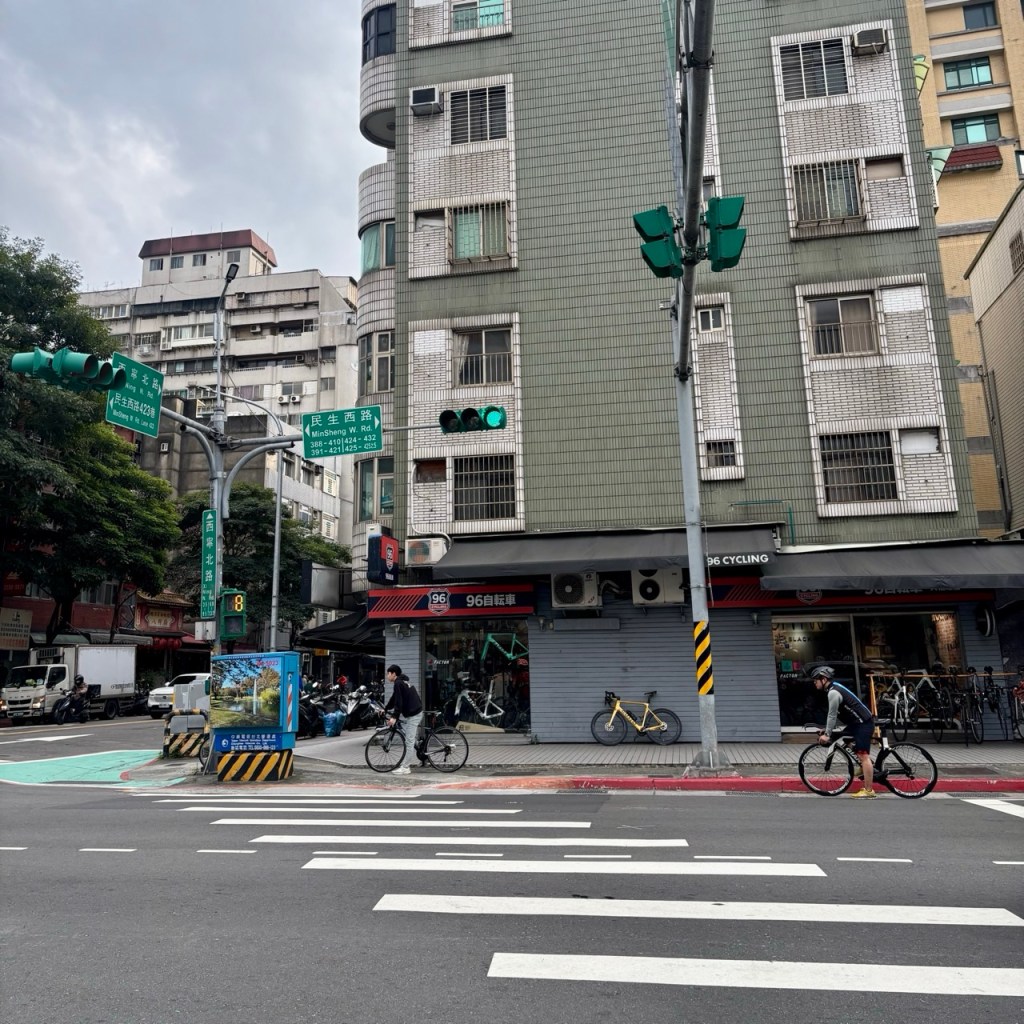
A rare empty crossing

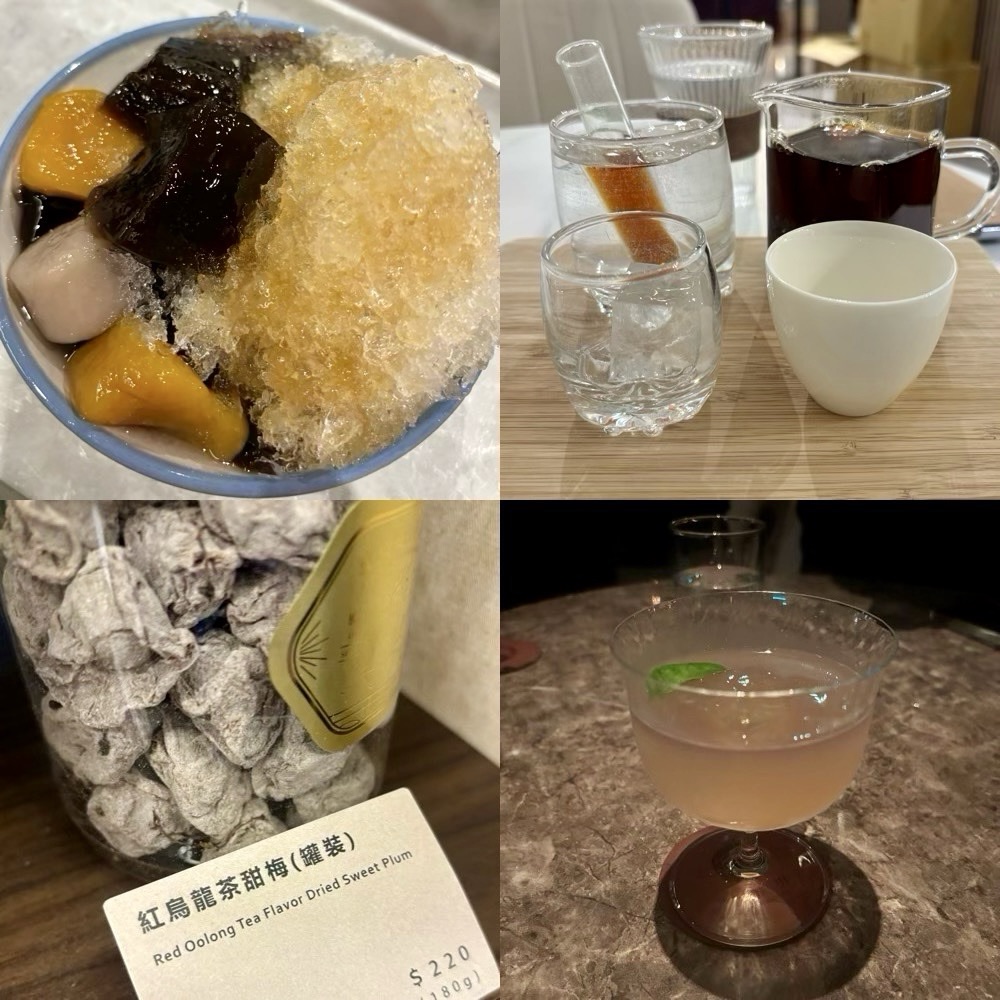
What I’m saving on food and accommodation on this trip I could easily spend on coffee. Taiwan has an excellent coffee scene with independent coffee shops and speciality cafes everywhere. I made the mistake of popping in one in the more touristy area of Dihua Street and tapping to pay for their “signature hand dripped coffee” without checking the price. I could not believe it when I realised later that I had paid over £6 for a single black coffee that I didn’t even like. Granted, it was served with a sample in a test tube and ice cubes to taste how the flavour changes when it gets cold. It didn’t taste any better.

Shaved ice pudding, hand dripped coffee, sweet and sour dried plums with tea, and tea cocktail

The Old Door Hostel has its own bar and cafe downstairs which is a nice touch. I never got back on time for the free whisky shot, probably because I was still in the station. It’s about £15 a night for a bed in a pod style dorm but the Japanese powder rooms are long gone. It’s two showers per 12 or so beds here and a couple of shared wash basins.

Plants everywhere

I had 2 days in Tapei before starting my route Eastwards around the island, with a plan to return at the end. I quickly fell in love with the capital city, and Taiwan in general. There are flowers and plants everywhere. The roads are crazy busy with motorbikes and you have to wait for what seems like eternity to cross the road (nobody skips the lights). A lot of the restaurants are in the huge shopping malls so it might take a while to find them. I spent a few hours browsing the electronics shops – there is some serious gaming going on here. Prices go down the further away you get from the big stores.

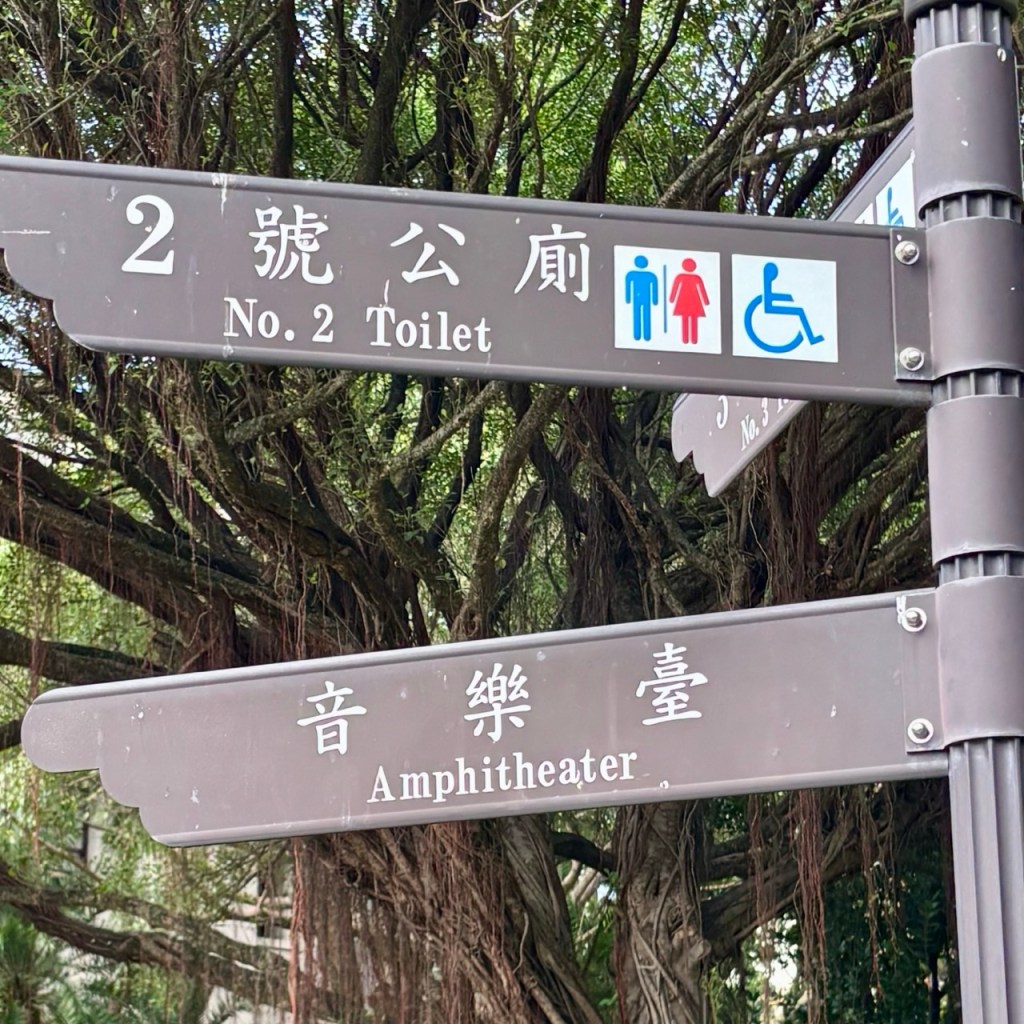
What about No. 1?

I found my ideal food spot in another mall, called VegeCreek, which seems genius and I wish we had this concept in the UK. You take a basket and choose all the ingredients like you’re in a grocery shop, then they make a stirfry or soup for you with the price based on how many items you pick.

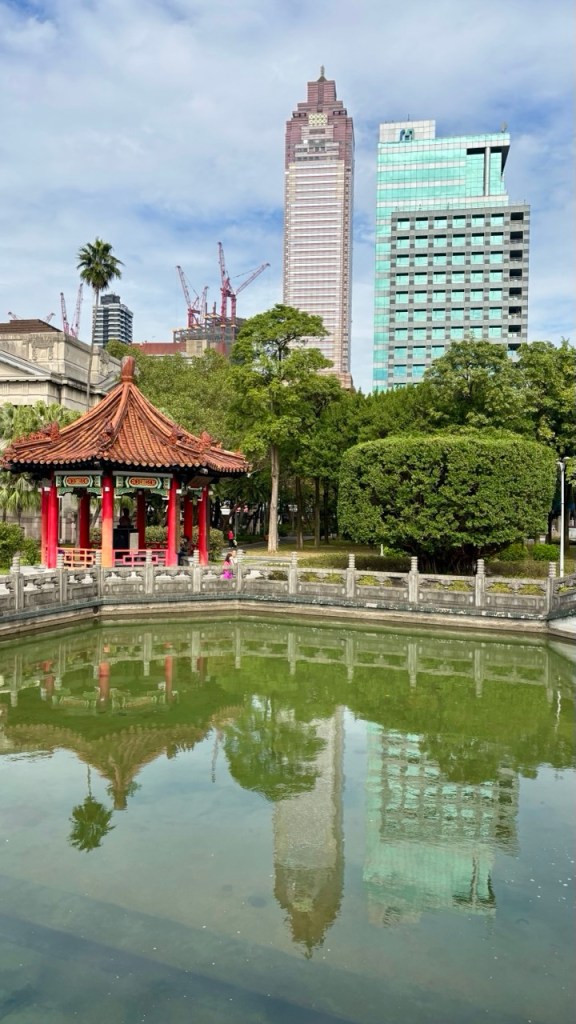
Park surrounding the Peace Memorial

There is enough to do in Taipei alone for a couple of weeks with it’s cultural sites, city parks, temples, the river … each district has it’s own vibe and then there’s the day trips, hiking routes and hot springs. To make the most of my 48 hours, on my first day I walked to the Peace Park. Here there is a memorial to the 228 Massacre, a crackdown on Taiwanese civilians by the KMT-led Nationalist government, triggered by a dispute over cigarette contraband in Taipei. On February 27 1947 agents beat a female cigarette vendor and killed a bystander. Protests escalated the next day and Chinese troops began a crackdown specifically targeting students, lawyers, and doctors, aiming to suppress dissent. The following period known as “White Terror” started with the declaration of martial law in May 1949 which continued for 38 years, not lifted until 1987.

Monument for the 228 Massacre
Peace Park

The estimated death toll for the 228 Massacre ranges from 18,000 to 28,000. I gained my information from the plaque in the park but here is a link to Wikipedia for more details: https://en.wikipedia.org/wiki/February_28_incident

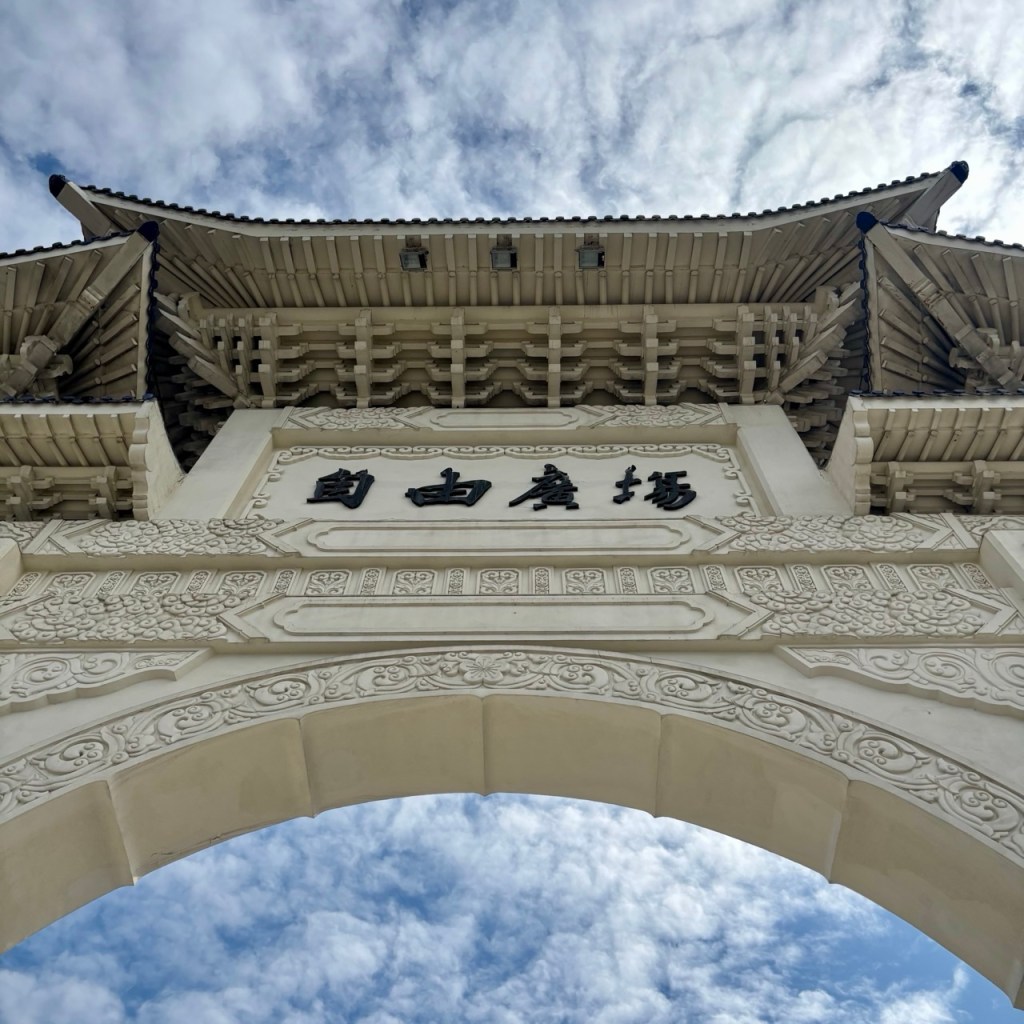
Chiang Kai-shek Memorial Hall Gate

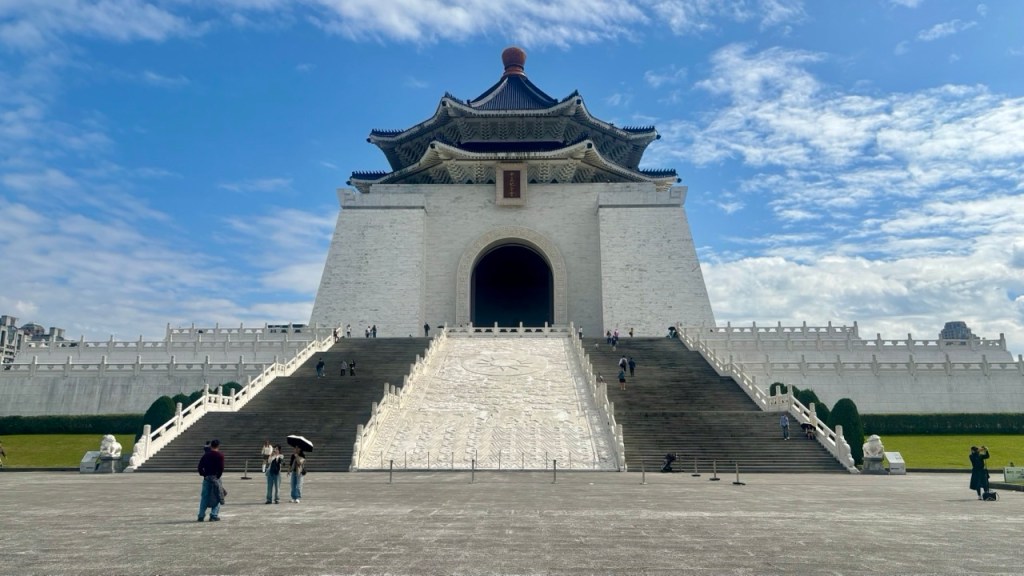
A shortish walk from the park (not counting the time waiting to cross the roads) is the Chiang Kai-shek Memorial Hall. This national monument from 1980 was built to honour the former President of the Republic of China.

Chiang Kai-shek Memorial Hall
Inside the memorial hall
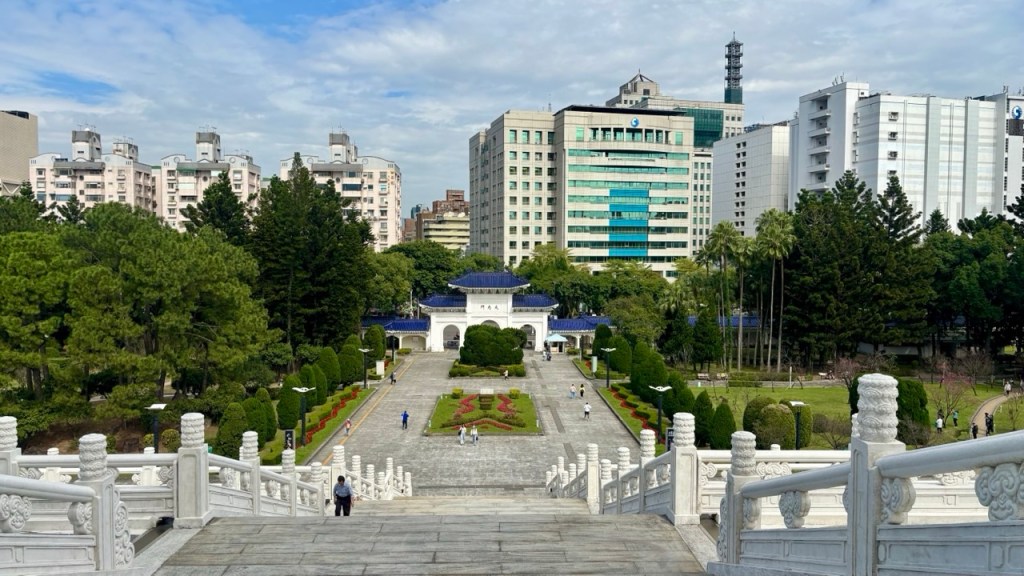
View from the top

The scale of the building isn’t immediately obvious as you enter through the ornate gate and walk up towards the monument itself – but it’s absolutely massive up close. Inside is a huge bronze statue of Chiang Kai-shek. It’s totally worth the climb for the view alone.

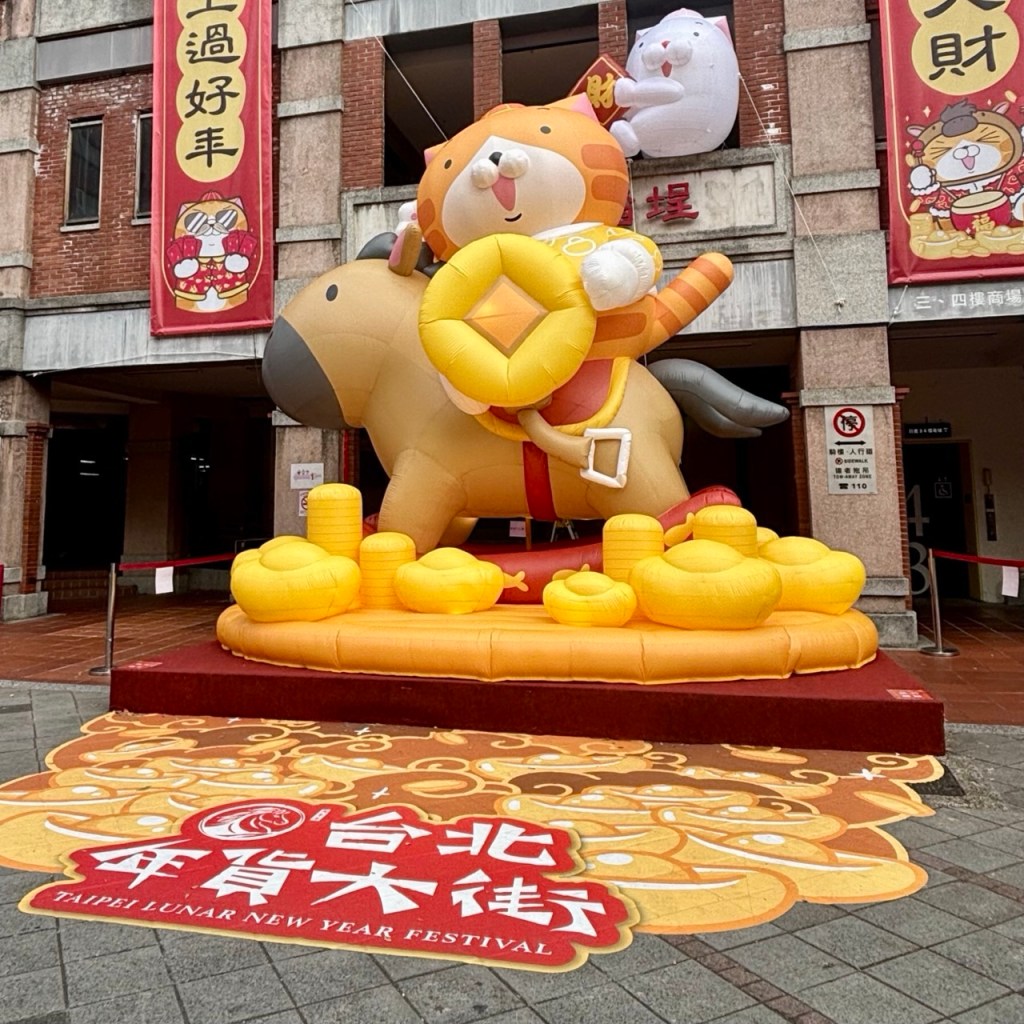
Happy Lunar New Year!
Dihua Street

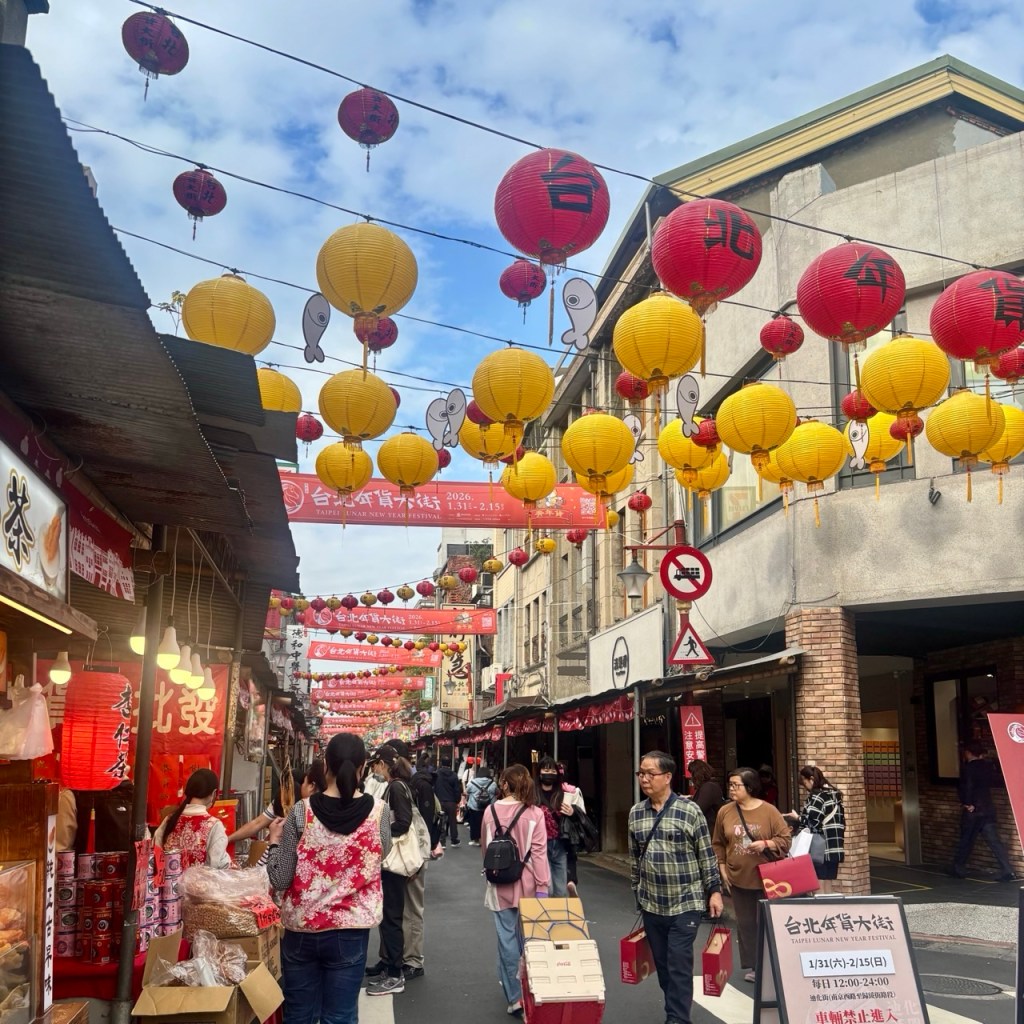
A great way to spend the afternoon is wandering around the Datong district and Yongle market. As my friend said, it’s so busy because it’s the equivalent of a Christmas market in Europe. Stalls were selling all kinds of snacks in preparation for the Chinese New Year which was in a couple of weeks time.

Lunar new year shopping
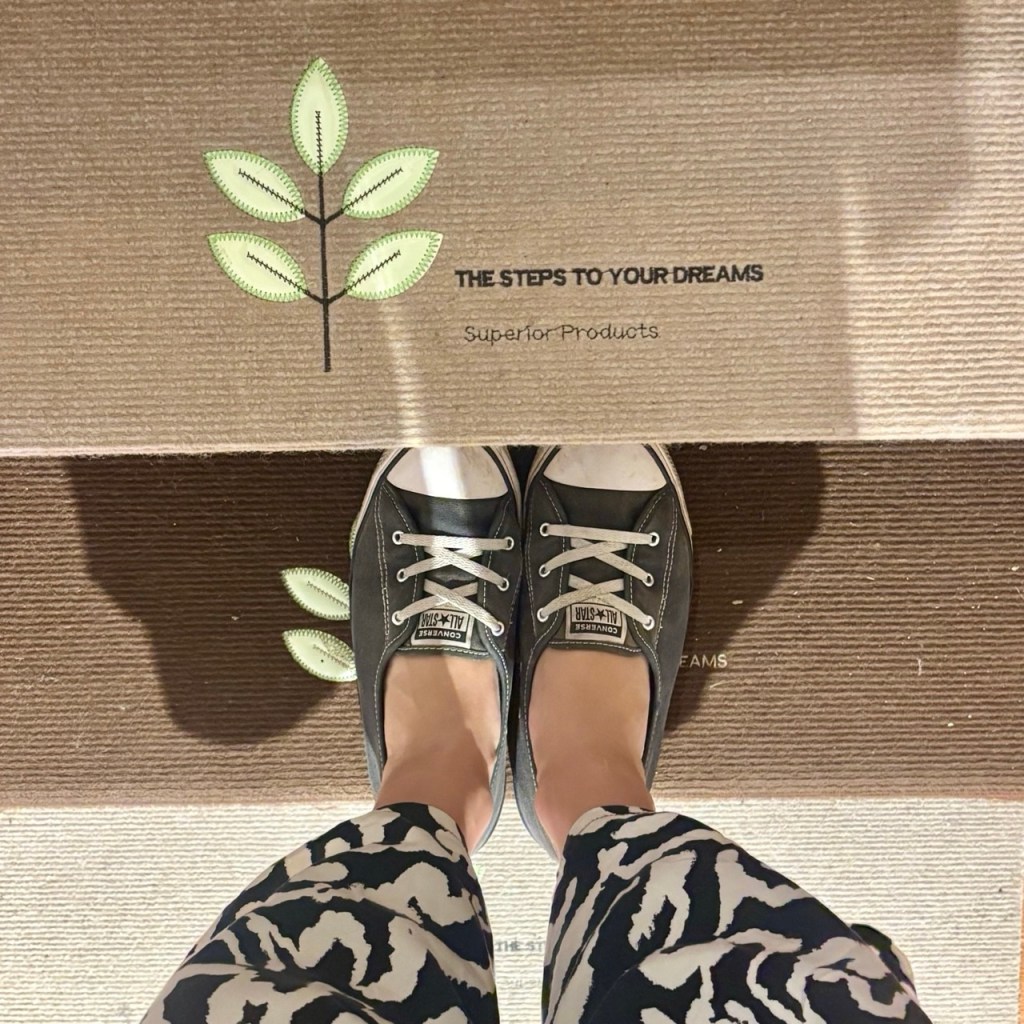
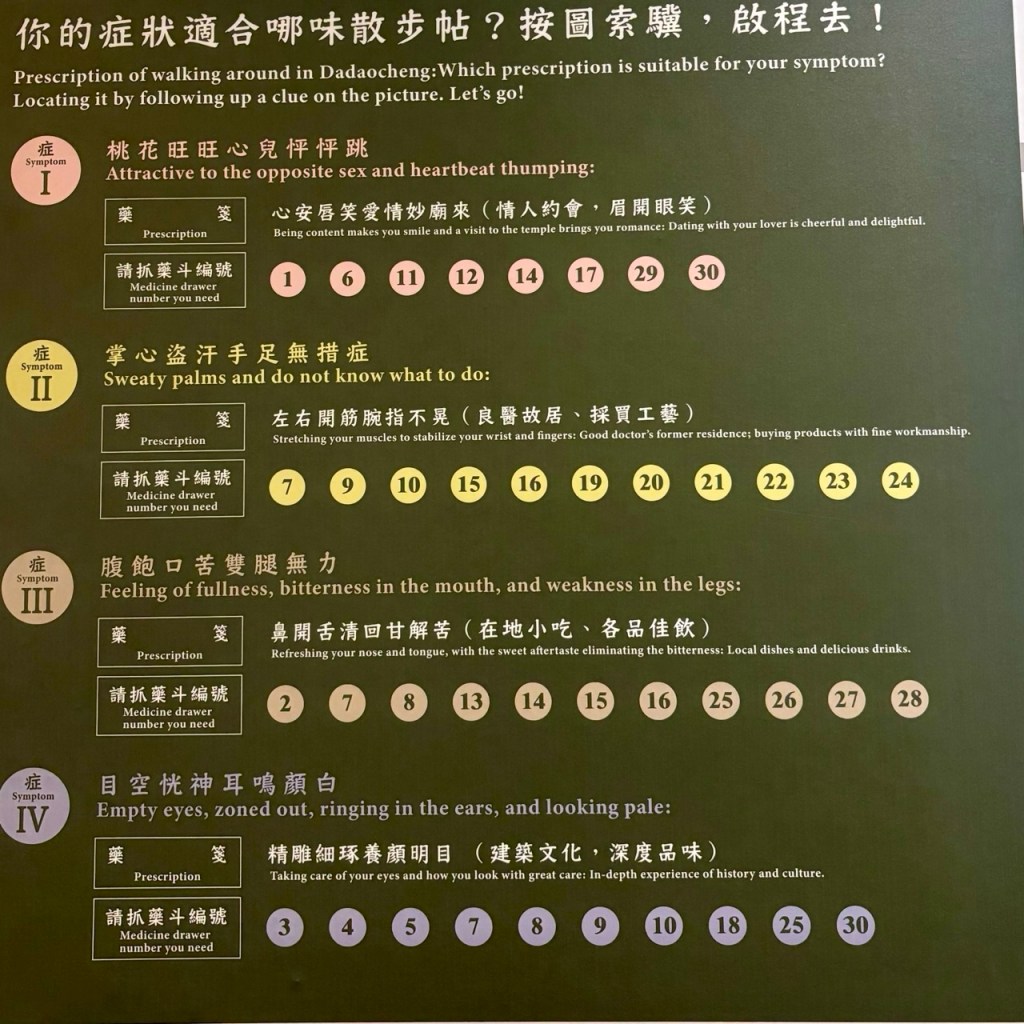
Cutesy steps in visitor information centre

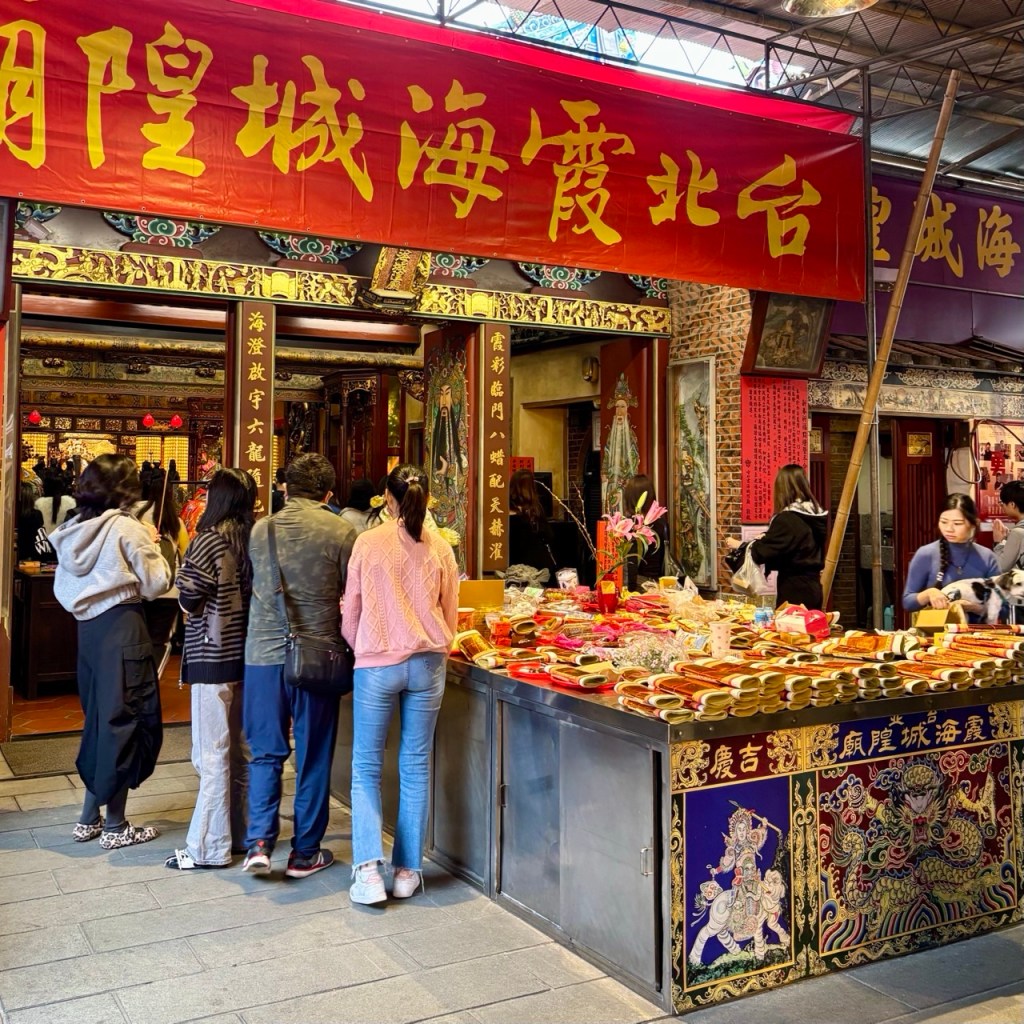
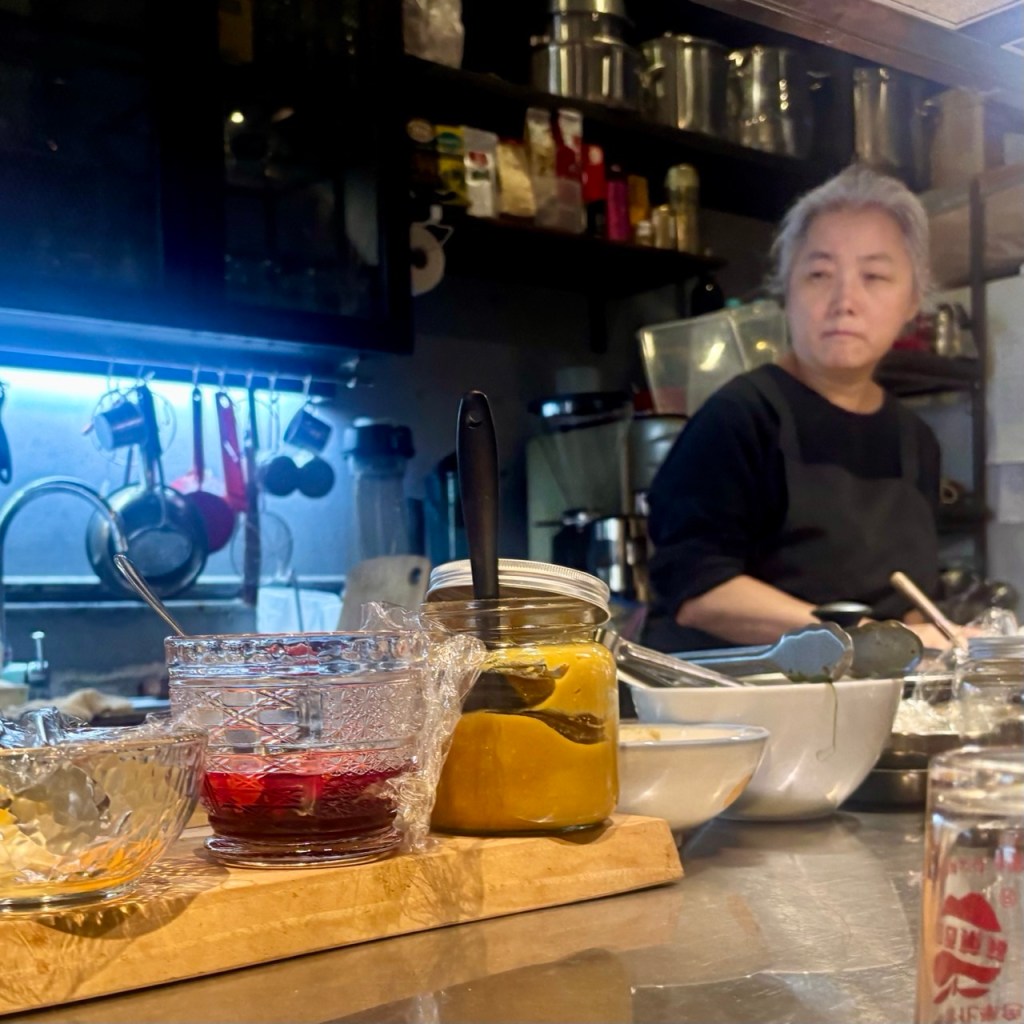
This area is famous for its tea industry which was booming in the 1860s. It became the centre of Taiwan’s tea trade and today the streets are full of traditional tea houses and little shops. I found the most wonderful little vegan restaurant but don’t remember the name. The lovely owner has travelled a lot and speaks perfect English, now spending her time lovingly preparing her menu at the counter where her regular customers sit in a row. One lady purchased 3 bag fulls of cookies. It feels like being in her home.

Not entirely sure what this was

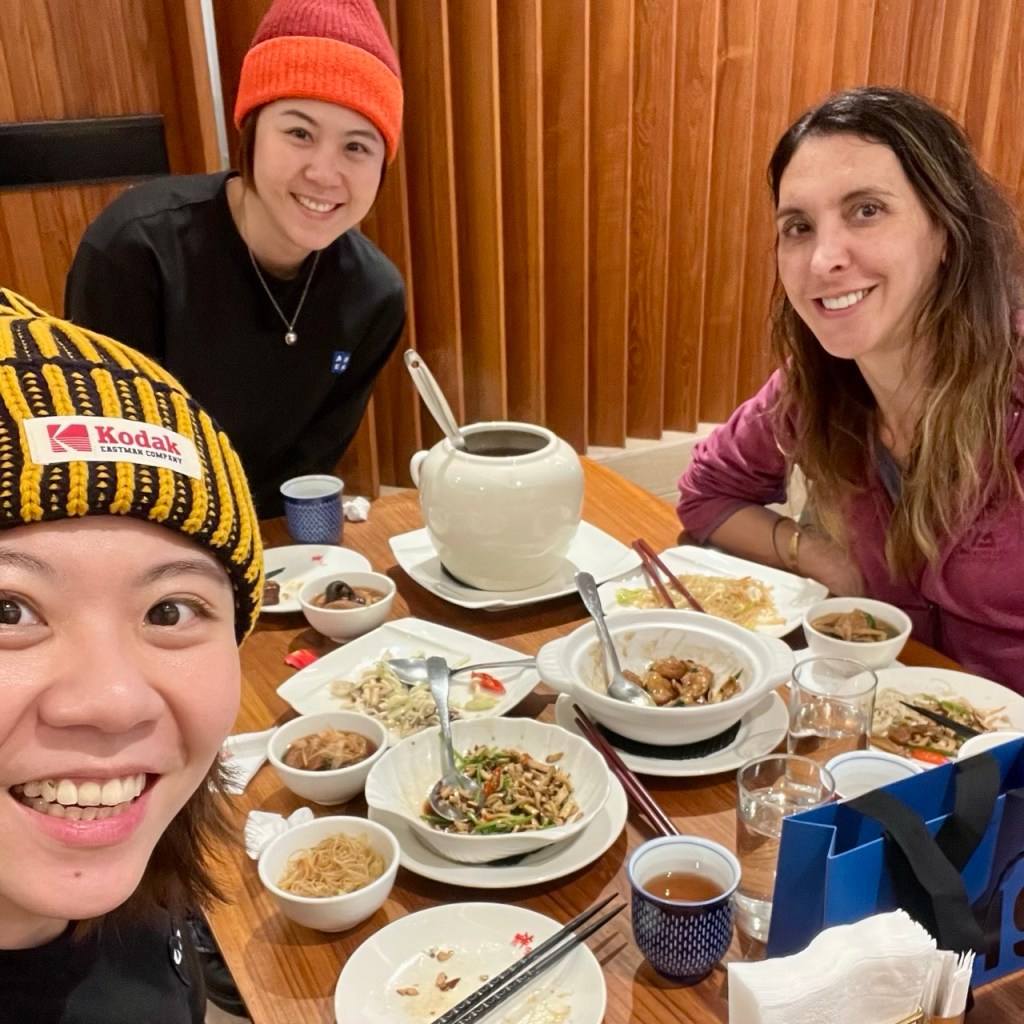
On my second day after a terrible nights sleep with snoring in the dorm – a definite downgrade from Japan – I met up with my friend Ann who I used to work with via video calls but had never met in person until now. It rained on our plans to climb the Xiangshan mountain so Ann, her sister in and I met for coffee followed by lunch at a “Michelin recommended” vegetarian restaurant. It was the most incredible experience and probably the best food I’ve experienced on my travels.

Restaurant/home kitchen

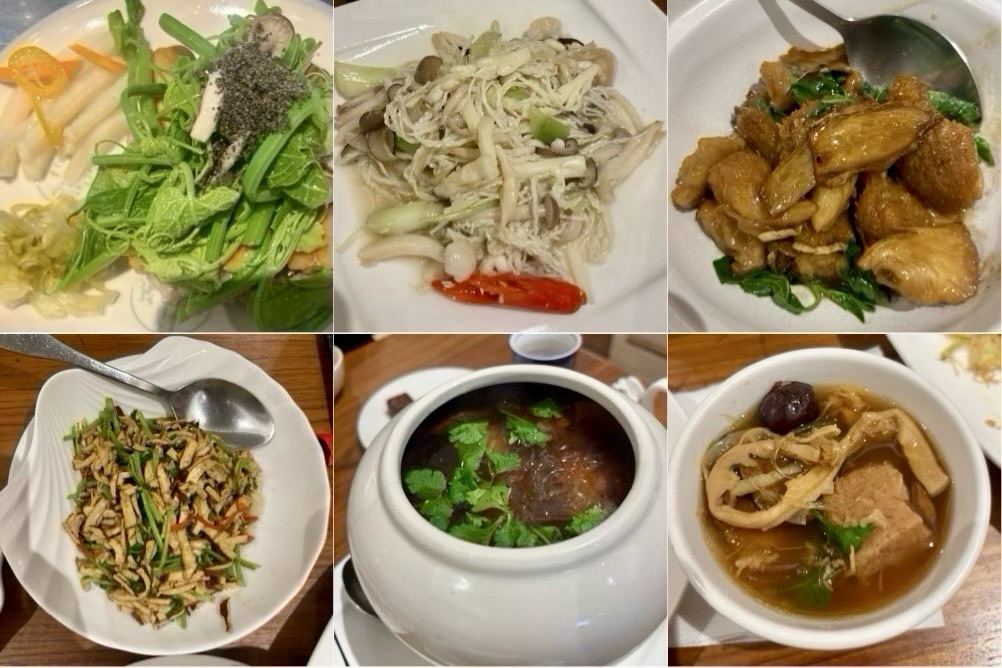
The restaurant served a vegan version of the traditional New Year’s hotpot, listed on the menu as the interestingly named dish “Buddha jumps over the wall”. The pot comes out steaming and packed full of so many different ingredients – including chestnuts, dates, several kinds of mushrooms, taro and “vegetarian sharks fin” (no idea what that actually was). It was amazing to try mushrooms I’ve never seen before and vegetables I’ve never heard of. Apparently Taiwan cultivates over 30 types of mushrooms. We ate so much we couldn’t manage any dinner but there’s always room for tofu pudding and shaved ice!

Clock wise from top left:
1: Chayote leaves,
2: Betel nut flowers, 3: Lions Mane and 3-Cup Monkey Head mushrooms, a 4: Tofu and basil, 5: “Buddha jumps over the wall”, 6: Ready to eat

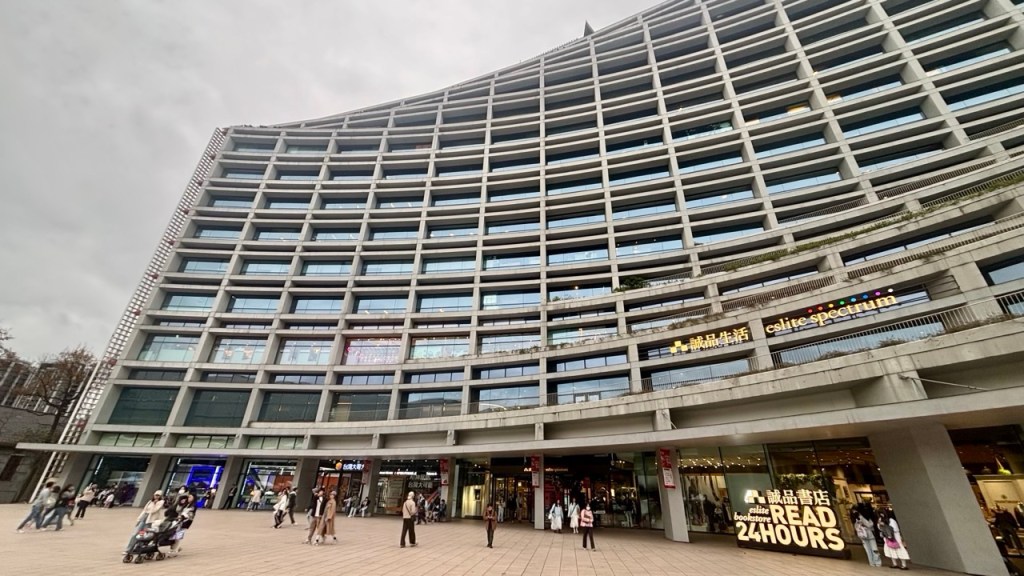
Ann took me to some cool places I might have otherwise missed, like the Songshan Cultural and Creative Park, a former tobacco factory. It’s now a collection of arty shops, including a 24 hour bookshop where you can get coffee and read any time you fancy and the Taiwan Design Museum.

Taiwanese friends and feast

Taiwan has earthquakes on a regular basis, so much so that the locals take it in their stride. I asked Ann what to do – she said “nothing unless it’s a big one”. “What’s a big one?” I asked. “If things keep shaking for over 30 seconds, consider going outside. Actually, you can open the door as well, just so the door doesn’t get stuck.” She added that if I was really worried, I could take my pillow and hold it over my head though I’d get some funny looks if it wasn’t a “big one”. Hoping that’s not what my travel pillow gets used for.

24 hour bookshop

The Taiwanese love their tea so much they even have tea cocktails, which I had to try, served in a classy old building (the sort you’d normally dress up a bit for, not go in your walking shoes and rain jacket but Taiwan is free of judgement). The first cocktail wasn’t on the menu but the barman assured me it was a “good first drink, nice and light” – he wasn’t wrong. The second one was a gamble – oolong tea, Campari, sherry, prickly ash pepper and prosecco. It took two of us to finish it. Ann’s gamble on a seaweed based cocktail did not pay off – it was so undrinkable she asked them to make her something else.

Words of wisdom in cocktail bar

After two days of sightseeing and enough food to see me through for a week, it was time to start my route eastwards around the island…