Glimpse into the North (South Korea Part Two)

Let’s start by that saying as far as strange tours go, this was up there with the best of them. The Demilitarised Zone is a strip of land cutting the Korean peninsula in half, forming a ‘buffer zone’ approximately 2km wide on either side of the Military Demarcation Line, the divider between the Democratic People’s Republic of Korea (North Korea) and the Republic of Korea (South Korea). The zone itself may be ‘demilitarised’ but the areas on either side are very heavily militarised indeed. Within the DMZ is the Joint Security Area (JSA) where negotiations take place and until recently it was possible to visit the spot where North and South Korean soldiers face off. This is important to know before booking, because the JSA closed to tourists in July 2023 after an American soldier attempted to cross the border from South to North without authorisation. Tours to the DMZ continued, with a couple of options that generally include a walk through one of the infiltration tunnels, a visit to an ‘observatory’ / visitor’s centre with telescopic viewing platforms set up to provide the coveted glimpse into North Korea and a stop at one of the suspension bridges, which are a fun way to stagger the group arrivals to the DMZ. The other thing to know (which I didn’t) is that various bridges and tunnels are closed on different days. As it turned out, the tour I initially booked was closed on Mondays so I ended up on this one, which I actually would recommend as the guides were great and it wasn’t too crowded – ‘2nd Tunnel and Y-Shaped Suspension Bridge‘ via the GetYourGuide platform. I set off at 6.30am for the meeting point at Myeondong subway station, a 20 min walk from my hostel.

Map of the DMZ and 2nd infiltration tunnel

The roads were dark and quiet other than some office workers starting their day but Seoul is a very safe city. Finding anywhere open for breakfast at that time was impossible so I settled for a coffee and and a bread roll filled with sweet red beans from the 7/11 convenience store, a good way to use up some of my T-Card balance. I arrived at the subway station and spotted a group of blank looking tourists sitting on some benches. A guide with a clipboard introduced herself as Lucy, gave me a tag to hang around my neck with her name on it and sent me over to join the others. There’s always an annoying person or two in group trips (as the saying goes if there isn’t one, then it’s you) and sure enough two middle aged Australian men joined the group after unnecessarily loudly having a go at Lucy for changing the meeting point (she didn’t) and asking us all if we had received the location details on time (we had).

Video from the bus, entering the DMZ

Bus tours are a very popular way to see South Korea and in fact the only way to see the DMZ, which needs to be booked in advance with your passport details. Lucy and her fellow tour guide Joey didn’t believe in any rest on the bus – this theme continued on all of the bus tours I took in South Korea. Sitting up front meant I had no choice but to listen to the non-stop commentary aside from a 20 min break where Joey announced ‘ok you can take a rest now, sleep well’. It was actually very informative, and if I’m not forced to listen then I will switch off. Meanwhile our suit and sunglasses wearing driver Mr Sony provided a cheerful hello and thank you each time we embarked and disembarked the purple bus. Interestingly, Joey said that until she became a tour guide a few years ago, when she was living in London and working in Pret, she hadn’t given much thought to the question of unification between the North and South. Her father recalls North Korean citizens being referred to as animals during his own school days and her mother still considers them ‘the enemy’. It’s only now that she’s working in tourism that her view has shifted and she has come to view them as normal people mostly working as farmers and living below the poverty line, and she now sees unification as a good thing.

Y-Shaped Suspension bridge, taken from the observation deck

Our first stop was the ‘Y-Shaped Pocheon Suspension Bridge’, which at 410m is the longest suspension bridge in Korea, as the name suggests forming a Y shape over the Hantangang River. The advantage of starting the tour so early is that you’re the first group to arrive – the observatory and cafe were just opening up and the bridge was quite literally empty. The real reason there are multiple suspension bridges in this area is because they were once used as a defence line, but nowadays they are fun to walk over and provide some lovely views of the autumn colours.

CCTV on the bridge

Perhaps the most unsettling thing about this tour compared to other war memorials and places of historical interest, is that usually the conflicts, or at least the wars, are in the past. Whereas this conflict is most definitely in the present. It was also disconcerting to hear the ‘rivalry’ referred to in a lighthearted manner, i.e the raising of flagpoles higher than the other one, and the blasting of K-Pop and Gangnam Style music – both sides broadcast various music / messages / material into the area over loud speakers. It was only recently in the news that thousands of balloons filled with rubbish (according to news reports, possibly also containing human waste) were sent over from the North and dropped on the South.

View from the bridge

Back on the bus and off to our second stop, the “2nd Infiltration Tunnel” and, unexpectedly, a Crane centre (the bird variety) which we had a look around whilst Lucy sorted out some admin. The tunnel is one of four constructed by North Korea, intended for a surprise attack. The information in the visitors centre explained that some South Korean soldiers heard banging noises leading to the discovery of the tunnel in 1975, which had already been abandoned. It’s about 2m by 2m and could apparently accommodate up to 30,000 armed soldiers per hour, along with vehicles, artillery and tanks. I’m not so sure about the tanks – I soon understood why helmets were mandatory, as the ceiling is really low in places and the only sound was that of people bumping their heads every minute or so.

Crane Centre

Strictly no photos were allowed inside the tunnel, but it’s fairly well lit (the artificial lights allowed plants to grow despite the dampness). Our guide said there was some type of mineral on the ceiling – I forgot exactly what, but it’s meant to be lucky to touch it – but all I touched was slime. There are some benches for weary tourists at the deepest point, after which the tunnel is barricaded off and you need to turn back. It’s a bit surreal to consider that if you did continue on, you’d surface somewhere in North Korea, which presumably wouldn’t be a tourist attraction. Or would it?

This day trip was 10 hours long (another common theme with the bus trips) and included a basic buffet lunch. Eventually we made it to the highlight of the trip and main reason for coming, the Peace Observatory. Lucy and Joey warned us not to take any photos of the South Korean guards, who would apparently all look very young (this was true). After a short train/cable car ride up, we all filed into a cinema style room (no photos inside either) and watched a short video which could itself be described as propaganda with it’s horror music style soundtrack. Positioned around the floor to ceiling glass windows were telescopes, some with digital screens trained on the DMZ and beyond into North Korea. We were told that whilst no photos were allowed outside either, nobody would check our phones which could be taken as encouragement. The adolescent looking soldiers helped focus the lenses on what was described as Propaganda Village – a village on the North Korea side which they say is fake. I did spot a moving truck, and Joey got very excited at a blob she said was “a North Korean”. She said this like it was some type of rare exotic species. I wondered were there lenses trained on us from the other side? Outside was even more surreal as over the wind I could hear a message being broadcast very loudly from the speakers, which the soldiers said was a message of peace. I have no idea what it was, as it was in Korean. But I found it fascinating wandering around the terrace, using the telescopes to look past nomads land. I would be slightly wary of posting any footage on social media, even if I had taken any.

Tanks outside the visitor’s centre (spot the name tag)

After some photos with the tanks and a visit to the shop selling 10kg bags of rice – also free green tea and samples of purple rice cake (this is prime rice growing territory) – off we went to yet another stop, the abandoned Woljeongri station. This is the now dilapidated last train stop before the border. It was a great photo opportunity and fairly eery with the remains of a carriage just rusting away on the tracks, which now lead to nowhere and the distant sound of K-Pop being broadcast from the South Korean speakers.

Train to nowhere
Korean K-Pop music in the background

Not far from here, and the final stop on the tour, is the last building constructed in North Korean architectural style, the Korean Workers Party Headquarters. Constructed in 1946, the three story building is falling down but there was still a a team of gardeners tending to the bushes. I didn’t get any more information on this, but imagine it’s an influencer’s dream photo spot in the Spring.

Cheorwon Korean Workers’ Party Headquarters

Finally it was back on the bus and a couple of hours drive back to Seoul. It was certainly an eye opening day, and once more it was too late to find a proper meal. These long days are tiring – I managed a walk around the night market in Myendong and a cheap veggie spring roll before retreating to my pod for some sleep before my morning flight to the South Korea’s answer to Hawaii, Jeju Island…

Dinner

Mad Dash to Seoul (South Korea Part One)

The idea of a two week trip to South Korea was a last minute one, even by my standards. I have wanted to visit South Korea for a long time and imagined I’d spend at least a few weeks exploring this relatively small country as part of a bigger trip to Asia – but with two weeks to wait before starting a new job, staying at home was never an option. I have never planned a trip so quickly, booking a flight that departed just a few days later.

Map of Seoul

I got myself an old fashioned guide book and did some very quick research on the main areas in Seoul. Next was accommodation – budget wise I didn’t want to spend more than £40 per night as I ended up spending more than expected on flights (who knew the £350 return flights on Skyscanner didn’t actually exist 🤦🏻‍♀️). What was available within that budget at three days notice over the weekend was a dorm bed in the Seoul Cube Jongno, located in the prime area of Jongno-Gu meaning I could walk to a lot of places on foot.

First impressions

On that note, this blog is usually just for friends and family to keep track of what I’ve been up to but in my rapid research I came across a lot of information that might actually be useful, so I have decided to make it a bit more informative this time! Scroll down if you have no intention of visiting ever. Things to be aware of:

  • There is a name in South Korea for hidden cameras and miniature spy cameras in women’s toilets, changing rooms and hotels and it’s called “molka”! Probably best not to go for one of the cheap “love motels”.
  • Google Maps does not work properly in Korea for navigation – you need to download the “Naver Maps” app and register as a user before you can save places to favourites. This often means using Google maps to find the Korean name then entering that into Naver to get directions.
  • Get an eSIM so you can navigate on the go – “Saily” is working well for me. I’m all for going old school and having a break from being online but otherwise it’s going to be very hard to get around in South Korea.
  • Uber does in fact work but it’s worth downloading the Korean taxi hailing app “Kakao-T” as well.
  • Travelling on buses is easy but you need to buy a “T-card” at a convenience store and top it up with cash also at the convenience store before you can tap on and off the buses. The average ride costs ₩1500 – I messed up the money and put on 70,000 instead of 7,000 so I can travel for a very long time. Or I can spend it on weird and wonderful items in the 7/11 or failing that apparently you can get a refund of the balance at the end of your trip.
  • Flying to Jeju Island is surprisingly cheap and worth it if you don’t want to spend a day travelling down by bus and ferry (£30 including checked baggage), but flights do actually get booked up particularly over the weekend.
  • Download Korean into Google translate so you can use it offline. Waking up to a Public Safety Alert message on your phone is a lot less scary when you can immediately translate it and understand that the earthquake was a long way away!
Welcome to Seoul

After leaving home on Friday morning, after a couple of hours stopover in the ultra modern Qatar airport and two long haul flights, I arrived on Saturday evening at Incheon International Airport. There are LOTS of buses and trains from the airport to the city. I was just too tired after 24 hours of no sleep to figure it out so I took the easy option of an Uber, well worth the £30 at night for over an hours drive and no hassle.

If someone managed to fit a spycam in here, so be it!

The driver dropped me at the address but I couldn’t see the hostel anywhere. Then I realised you need to look up in Seoul – everything is multi story. I still needed help to find the entrance, which was through a 7/11 shop.

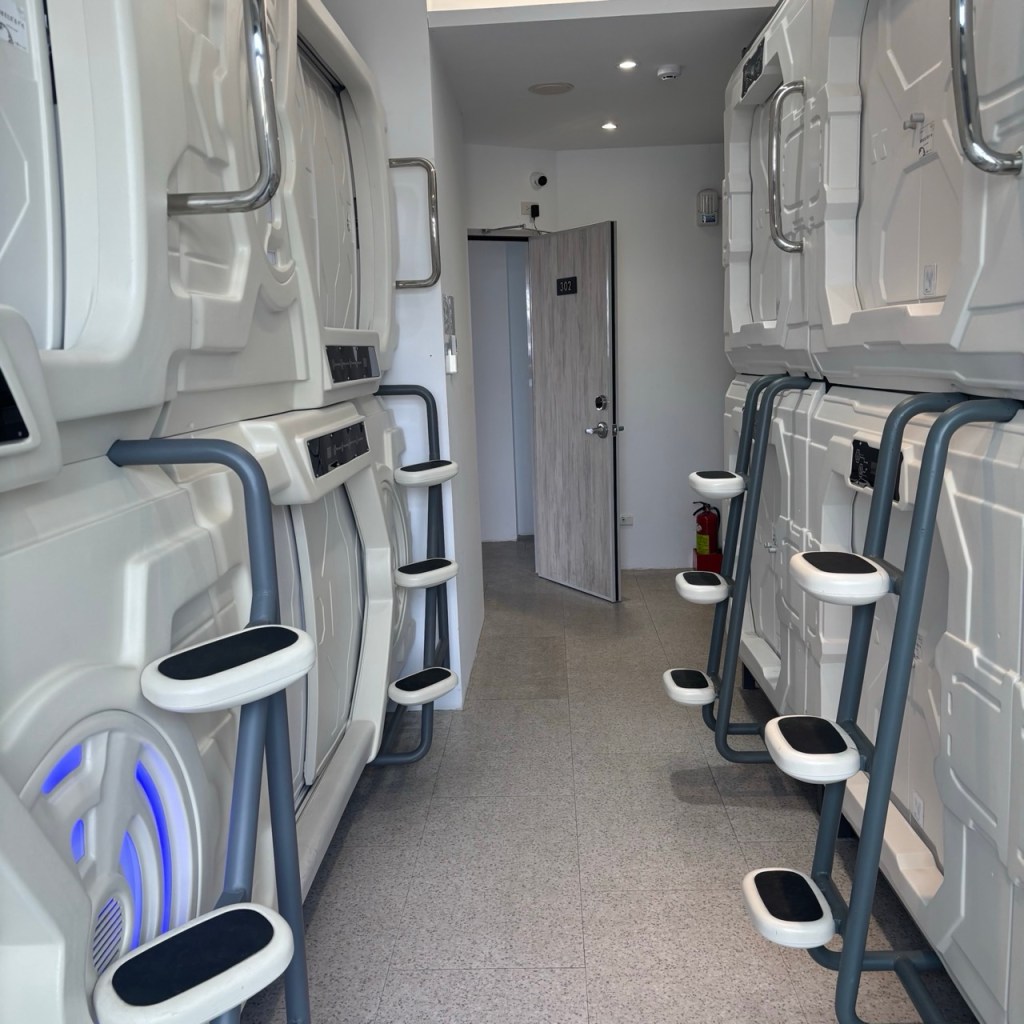
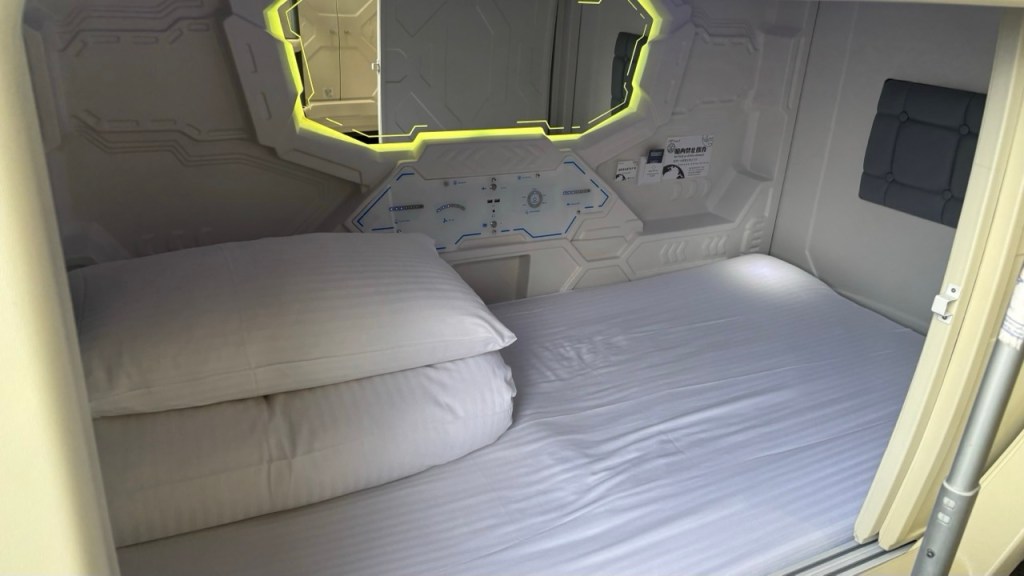
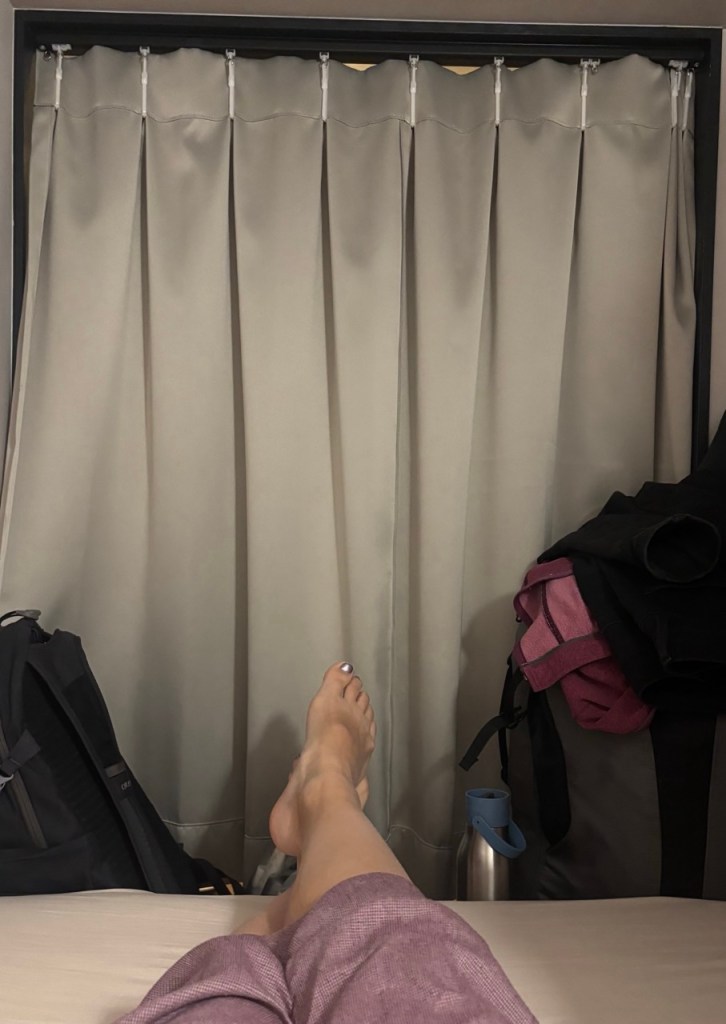
The Seoul Cube hostel was very clean and very quiet, with women only dorms – much appreciated when powering through jet lag means going to bed at 9pm. I was so tired I had a packet of crisps for dinner and managed a bit of polite conversation with some other travellers before going to my pod.

This hostel has A LOT of rules. The most annoying one is that you can’t take your luggage into the bedroom so everyone unpacks on the kitchen floor. You’re also under CCTV in the common area and at constant risk of having the police called on you – strictly no alcohol here, no opening the fridge after before 07.00 or after 10.00 and definitely NO fraternising with the opposite sex. All of this contributes to a general lack of atmosphere but I didn’t have time to hang around the hostel anyway so it made no difference to me.

The “stream”

On my first morning after a great nights sleep in my pod I headed straight to the closest Tourist Information – there was no point asking any questions in the hostel as they had another sign on the wall essentially stating that they are not tourist information so don’t ask. The real Tourist Information were extremely helpful – they gave me a map and sent me off down the “stream” in the direction of somewhere open to get coffee (most of the coffee shops in the area close for a “break” mid morning).

Hechi

The Cheonggyecheon stream runs 11km through the city and comes alive in the evening, conveniently passing by my hostel. It’s actually a restoration of the stream from the Joseon Dynasty spanning 1392-1910. On Sunday morning it was home to the Seoul Outdoor Library, with lots of chairs set up with a stack of books ready for people to enjoy, which looked extremely inviting.

At the end of the stream is a huge bear like figure – this is Hechi, the mascot of Seoul. Mascots are popular here and this is one aspect that reminded me of Japan. Hechi sits overlooking the stream, infront of a huge speaker. There was some kind of rally going on with music blasting out and I couldn’t be sure where it was coming from.

A short walk away from Cheonggyecheon is Gyeongbokgung Palace, meaning “The Palace Greatly Blessed By Heaven” and the largest of the five Grand Palaces. On my way there, Hechi and the outdoor library popped up again, this time with the Bugaksan mountain looming in the background.

My first impression of Seoul in the daylight was the merging of nature and urban. Mountains tower over crosswalks and skyscrapers loom in the distance behind palaces. Even when you’re in the midst of the city, a temple appears.

And the first thing that hit me when I entered the palace grounds through the Gwanghwamun Gate was the number of people in costume. This is positively encouraged in Seoul – you get in for free if you don the traditional costume known as Hanbok. Meanwhile I wandered around in my jeans and failed to get a good photo from anyone that I asked. Probably they make more effort for the Hanbok.

Inside the main palace

It’s a big complex of temple buildings, historically it acted as a small city, including separate King’s and Queen’s residences. The original palace dates back to 1395 and was the main royal palace of the Joseon dynasty. As well as the home of the royal family it was also the seat of government.

Timeline of events

A brief history; All of the royal palaces were burned down during the Japanese Invasion of 1592-1598. In fact Gyeongbokgung Palace was left derelict for over 270 years and reconstruction began in 1867 with over 500 buildings. It was then torn down again in the Japanese Occupation and replaced by a huge Japanese Government building. Further restoration has been ongoing again since 1900 with the Gate and the residences of the King, Queen and Crown Prince being restored to their original state. That’s most of the history I gleaned from the signs around the palace – anything more is best found on Wikipedia.

Entering the palace

I can’t take in too much information at once so I usually resort to taking photos of signs in the hope I’ll come back and read them at some point – here is one of them.

It’s definitely a good idea to learn some basic words in Korean and it’s much appreciated by the local people. Unfortunately this trip was so hurried that I only managed to half remember “thank you”. Something I regretted when I accidentally stepped on an old Korean man’s (full) coffee cup at the lake and was unable to even apologise properly. He did not see the funny side.

One of my favourite views
Autumn colours

Coincidentally autumn is one of the best times to visit South Korea as the fall foliage is in full swing. Everything is orange and green and brown which only adds to the beauty of the temples.

The animals on the roof are placed there to protect the building
Modern city meets ancient dynasty

There are some free tours of the palace in English but I had just missed one and didn’t want to wait. It would probably be useful as there are so many corners to explore. A couple of hours wandering around was enough for me before I got hungry – many restaurants in Seoul also “take a break” between 15.00-17.00 so I went in search of a vegan friendly lunch while I could. I didn’t actually end up in the vegetarian restaurant I was aiming for (still a bit confused as to what happened), but the place I found myself in had a vegan menu with the biggest pancake I’ve ever seen.

Apparently it can be hard to eat alone as restaurants here don’t like serving single portions but this seems to apply to the meat based Korean BBQs. A win for the veggies.

Spring onion style pancakemeant for sharing

There is so much to do, see and experience in Seoul you could easily spend a couple of weeks here. My aim in the afternoon was to make the most of my limited time and visit the cultural Bukchon Hanok Village. I should have paid more attention to the Tourist Helpers who were handing out leaflets on the street – this place is a residential area and “closes” to tourists at 17.00. I had just got there when I was met by people holding sandwich board style placards, encouraging us all to leave in a very smiley and nice manner. Bukchon Hanok will just have to go on the list for when I come back to Seoul at the end of this trip.

Resemblance to the real life helpers is uncanny

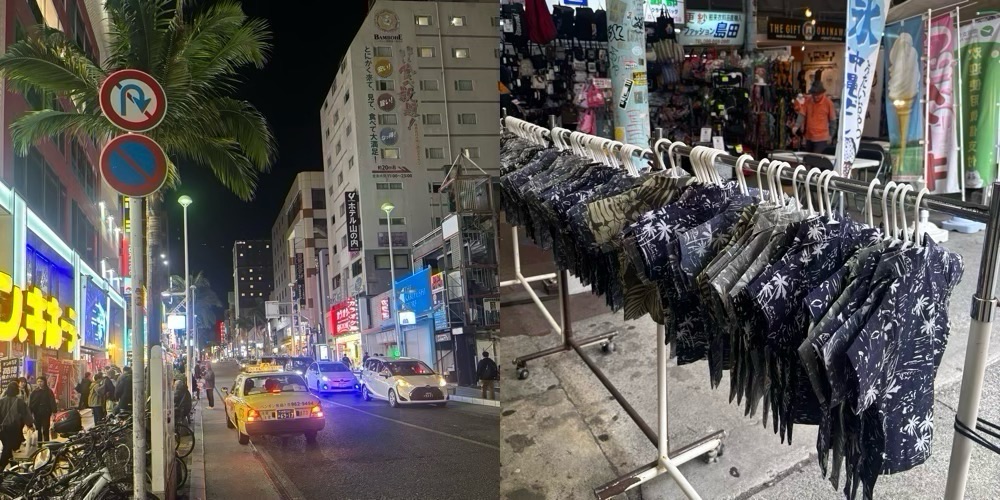
In the evening I took a walk over to Myeongdong with it’s neon signs and late night shops and street market. This felt like the Seoul I had imagined in my head. I’ll need to dedicate some time for shopping at the end of the trip as there is a whole K-Culture that I’ve not been aware of – K-Pop (Gangnam Style is just the beginning), K-Drama, K-Beauty…

Myeongdong

Seoul at night is beautiful and it’s a safe city. I could have walked for miles but I had to be up at 5.30am the next day for my DMZ tour. I will be breaking the hostel rule of “no alarms in the dormitory” for this one. Visiting the DMZ area – the “De-Militarised Zone” – was something I really wanted to do, where you walk through one of the infiltration tunnels and then look at North Korea through binoculars, with a suspension bridge visit thrown in for some light relief.

Make your own keychain
K-Pop themed sweets

Next stop, as close to North Korea as it’s possible to get…

A Paradise Island : More Filthy Hippies and a Movie Star’s Residence

It’s 1am and I’m on the deck of a Filipino movie star’s beachside mansion, belting out Bon Jovi’s ‘I’ll Be There For You’ with my new friend Bernie, our voices echoing out across the ocean and half the island. The speakers are turned up to 11. Anyone who knows me knows that I do not sing! But karaoke is a national sport in The Philippines and they take it very seriously. Saying no is as pointless as saying you’re not hungry when invited to join dinner – a chair will be pulled out and a plate put in front of you, so you might as well just eat . Bernie has just turned off the CCTV camera that his movie star wife and former Miss Philippines had installed to keep the peace and quiet in this stunning residence 🙊. The 70 year old ‘Governor’, as they call her, is out of town and he’s cut me a deal to stay at a quarter of the price. They don’t need the money but apparently she’s one tough lady.

IMG_0288

And I discovered that I loved it! There is something quite liberating about singing as loud as you can and not caring that most of the 2km x 1km island can hear you. Because nobody else cares. And we scored 99%.

img_0277

Declining drinks is also impossible but since my request for less coke in my drink resulted in A PINT glass of neat rum being placed before me, I politely sipped it before sharing it round. To drink Filipino style means you down a shot of rum and coke, poured from a jug and garnished with tiny green limes, then the glass is refilled for the next person. Again, pointless to resist (just cross your fingers nobody has a coldsore).

Backtracking a few days, I wanted a even quieter island than Siquijor for the last few days of my trip and the chance to do absolutely nothing, other than swim in the ocean and laze in a hammock. The Philippines has so many possibilities it actually takes some effort to just stop. The place to relax is the tiny island of Malapascua, where there are no roads and no cars, just sandy paths and motorbikes. No doctor either but let’s not worry about that.

To enjoy travelling here is to accept the fact that it takes one day to get anywhere. There is no point trying to rush. The one ferry a day left Siquijor Island at 12.30, called in at Bohol Island and reached Cebu City about 17.00. I ended up spending 3 nights in Cebu City but didn’t really see much – when you ask where to get food and the hostel staff recommend that you just order takeout then that gives you an idea of the area you’re in!

The next day I set off on the five hour bus journey to Maya port at the Northern tip of Cebu island. They told me that the bus runs every hour so I was prepared for a bit of a wait, but as soon as I arrived at the station a bus driver grabbed my bag, threw it in the storage compartment and said ‘Maya? Leaving now!’ 😎

New Port

After 5 hours and hundreds of stops a few of us tourists were dropped off at the New Port where some local men were dozing on plastic chairs. We each paid 100 pesos (about $2) and jumped on a tiny speedboat that took us out to where a slightly bigger boat was waiting off shore. Very different to the super ferries!

An hour later I arrived in paradise. I jumped on the back of a motorbike, wearing my 12kg backpack and hanging on to the driver as we crossed the length of the island in under 10 minutes to where I would be staying – the Neverland camp near the North Beach. 

I loved my hut!

To enjoy Neverland you have to get the concept. Half the people here are ‘volunteers’, although I’m not really sure what they were doing other than arts and crafts with local kids who hangout here. (Note to Helen – Flashback to the Filthy Hippies of Hawaii! At least I didn’t turn up in a sports car). I’ve also never seen people eat as much at mealtimes. But anywhere that makes a wooden sign with my name on it and provides me with a home cooked vegan dinner (including chocolate dessert) and kittens to cuddle gets my vote. I loved my little hut and outdoor bamboo shower. I did not love so much the ‘active meditation’. I thought it was going to be a yoga class. For half an hour we walked around in circles, stopping when the ‘instructor’ clapped her hands, at which point we had to find the nearest person and stare into their eyes for a good few minutes, whilst thinking about how that made us feel. This is surprisingly hard and very, very awkward. But not as awkward as then hugging that person and breathing three deep breaths in unison. 

5 mins walk away

It turns out that the Northern beaches are in fact the most beautiful on the island. A few minutes walk away is the ‘secret beach’ by the Lighthouse Bar. A few minutes the other way is North Beach with it’s single beach cafe and couple of stalls selling cold beer and coconut bread. There is absolutely zero hassle from vendors here. They don’t try to sell you anything until you explicitly ask to buy it.

A few minutes past North Beach, over some barbed wire, is ‘Hidden Beach’. This is the site of a former holiday resort, torn down by Typhoon Yolanda. Some of the buildings remain in the form of half standing bathrooms and derelict rooms. It is a little bit eery. The damage is evident in the shanty town where many people are now living. Everybody I encountered was incredibly friendly but I do wonder what they think about the rich tourists wandering through their village to get to the beach.

The north beaches have crystal clear, warm, turquoise water, corals and fish. Once you’ve experienced beaches like this you become somewhat spoilt. I spent four days hopping between beaches, sunbathing and swimming with other people who were staying at Neverland. When you stay somewhere like this it’s easier to make friends to hangout with than spend the day alone – when you’re travelling it’s perfectly acceptable to swap numbers and invite a stranger along for the day whereas at home you’d be considered a nutter or chatting someone up 😬

Sunset from Secret Beach – I went there every day


Derelict hotel complex – that’s the bathroom

I wanted to spend my last night as close to the beach as possible. Cue my new friend Joker arranging my stay at the stunning beach residence below. It needs a bit of TLC – I leant on the banister of the steep stairs up to my room and the whole thing gave way – but the view from my room was unbeatable.

This is the view from my private balcony. 

There was the added bonus of pet dog Marley who kept me company on the hammock. Malapascua is a lovely, safe place where everyone knows everyone. I had planned to walk around the island as it’s so small, but it was far too hot. No problem though as you can stop any man on a bike and get a lift for about 30p. It’s even more fun when you ride Filipino style, with at least 3 of you on the bike at once. I wish I had taken a photo.

There are actually day trips you can do to other islands, and most people come to dive with the Thresher Sharks. I was content to just be here. Sadly after 4 nights it was time to say goodbye to Malapascua and The Philippines. I had an incredible time here and could have spent several more weeks exploring the other islands on my wish list. As always, I need to come back. Two lasting memories of the amazing Philippines are below …
img_0346

Stuck on The Voodoo Island… with Giant Turtles and Mystical Healers
Known to the Spanish as the Island of Fire, Siquijor is just 340 square kilometres, all palm fringed beaches with a mountain in the middle. The Spanish called it la Isla de Fuego because of the eerie glow from the fireflies around the island at night. The Filipinos called it the Voodoo Island, or Island of Witches. It’s said that many Filipino people won’t come here due to it’s reputation for black magic, shamans and magic potions. Nowadays visitors seek out these mystical mountain healers for good, but some still fear the dark side.

Usually if you want to see the healers you have to hire a guide to find them. But my visit coincided with the Healing Festival when they congregate for 3 days on the mountain. More on that later!

I booked into the wonderful Tagbalayon hostel / guesthouse for one night before I had to move – I had arrived at Easter and everywhere half decent was fully booked. On the pickup from the port I met Shae from Australia and we headed straight out to go snorkeling on the beach opposite, a marine park. It’s actually very difficult to get into the water and swim when it’s only a foot deep when you’re wearing flippers and you don’t want to tread on the coral or get stabbed in the foot by a sea urchin 😂 I was centimetres away from squishing a beautiful blue starfish when Shae screamed STOP! I saw more beautiful colourful fishes on this free outing than on that rubbish day trip on Bohol.

My first Siquijor sunset

There are no buses on Siquijor Island. Transport is by motorbike or tricycle. I opted for a local guide to take me around on his bike with Shae following on hers – she actually knew how to ride one. This is a really fun way to see the island and gives you the opportunity to check out all the sites without getting lost, then you can return later on your own if you want to.

My wheels for the day

Probably the bluest water I’ve ever seen – no filter!

My favourite stop was the cliff jump – although personally I don’t enjoy jumping into deep water our guide had a great time. Video below! After that he was keen to chill on a secret beach for a while 😂 Payment is on a donation basis – after asking around 800 pesos was apparently the going rate but this works out just £5 each for an entire day which didn’t feel enough to me.

Eveyone on the island seemed to be at the Old Tree, which is also a natural fish spa. I also don’t particularly enjoy having fish nibbling my feet 🤷🏻‍♀️

Siquijor turned into girls on tour when we met more solo female travellers and formed a little group, making plans each day to zip around the beaches on scooters and try different places for dinner. Some things are more fun with other people 😎 Siquijor is so small that every day one of us would run into someone we’d met before.

New friends

Naturally we decided to go to the Healing Festival, bringing along Alexandra from Finland on her pink scooter.

After we filled up the bikes with gas from glass Coke bottles we realised our paper map was useless and we didn’t actually know where the festival was or what it would look like. A man told us turn around, take the first left and ask for San Antonio… I love days like this!
We made it to San Antonio after accidently driving past it (it’s just a tiny cluster of little houses) and after several more stops to ask directions we learned the festival was at the Bandilaan Mountain. One more false start when we recognised the name of a cave (some healers hang out in mountain caves) and only after queuing up for a while did we realise we were in the line to go caving, unrelated to the festival 😂

Alexandra is a hit with local lads

Eventually we arrived at an extremely well organised festival with staff wearing official tshirts directing us to parking spots. After a steep climb up through the national park we reached the mountain top with its Easter Cross – still no healers in sight.

Where’s the healer?

Next clue was a ‘band’ providing entertainment, cue bad singing and reading the words from an iPhone over a sound system which everyone seemed to love. After asking a few more times ‘WHERE ARE THE HEALERS??’ finally we found some little areas under the shade perched high up, with signs for various treatments and long queues of locals and a few tourists. Here we met Nathalia from Poland in the queue for the Bolo Bolo healing. We’d come this far so decided to stick it out and queue for all of them, not that we really knew what they entailed 😂

First up Bolo Bolo. The healer, a man probably in his 40s or 50s, took a jar filled with a clear liquid, with a stone at the bottom, and started blowing into the jar through a straw while moving the jar around my body. If the water becomes brown, you have a problem. Thankfully it remained clear and the healer simply said ‘your body is clean’. Phew. Payment is on a donation basis – we probably over paid for fear of upsetting the healers and being cursed.

Next, Hilot Massage and Palm Reading. Four ladies were doing slightly different massages with the most amazing scented oil any of us had ever smelt. I don’t know what it was, maybe a coconut base, but the glass bottle was full of unrecognisable herbs. Alexandra said her head was bruised after but I loved mine. They spoke only a few English words so the palm reading was interesting…. no privacy here either as the people in the queue jumped in to helpfully translate our readings. I have a feeling a lot was lost in translation as many people received the same fortune. Apparently I’ll be rich by the time I’m 50 👏 cue somebody in the line to offer to marry me at 49 😂

I really enjoyed this festival, it was great to experience something totally different with mostly Filipinos. The drive was also incredibly scenic. I wanted to buy the scented oil but the following was a little bit more than I was looking for – if I bought this and it started bubbling I think I would die of panic.

The fun didn’t stop there as the next day Alexander and I had signed up for a trip to the miniscule Apo Island, the most expensive outing so far at about £30 for the day. Only one company runs these trips, the most expensive resort on Siquijor, Coco Grove. It was also possibly the best day trip I’ve ever taken. Prepared for a rickety old row boat, we were amazed to board a huge luxury boat with comfy airplane style seats, towels and banana cake which won everyone over. We ran into Nathalia again and also picked up Amelia from England.

After an hours cruise we transferred to speed boats to reach the shore where we got two guides for our group of four. There were 65 people in total and I thought it was going to be chaos – but the ocean is big and the individual groups are small. Straight away we encounted giant turtles, wider than me and well over 1m in length. It was almost as good as the whale sharks, especially when you’re swimming along side these graceful creatures and they come up to the surface for air, sticking their cute little heads out next to you. Luckily Nathalia took some photos! The water was so clear I could see the divers below me.

Again it’s hard to keep your distance as sometimes they turn and swim towards you. We all screamed when that happened. I even saw their tiny little teeth 😂

The day continued with buffet lunch (beer and chips!!!) on a gorgeous beach.

I ended up spending 5 nights on Siquijor as I hadn’t booked my ferry ticket in advance and discovered all the seats were sold out until after Easter weekend. There are worse places to be stuck! 😎

I did have to spend two nights in my worst accommodation yet, John Lhea Beach Cottages. Let’s just say that I did not have a beach cottage, I had a windowless room in a building away from the beach, unless you count the two windows (just a fly shield in place of glass) into my next door neighbours room, including a window into their bathroom!

Neighbour out of sight

The flimsy blind was on their side so I had to shout out to them to please close it as I could see them and hear EVERYTHING. It also meant I couldn’t sleep until they did as their light was essentially my light. I couldn’t even tell the owner / staff as there was never anybody around who was not sleeping 🤷🏻‍♀️

What does this weather mean? We saw it every night

Eventually I got a ticket off this island by paying a man £3 to go and queue up at the port at 5am and buy it for me 🙈 There is always a way in The Philippines! Next stop, the even smaller Malapascalua Island…

Bohol : Benidorm, Suicidal Monkeys and Chocolate Hills

I arrived at Pier 1 in Cebu City a sweaty mess after walking around in circles for half an hour with a dodgy ankle in 100F heat. I didn’t take a taxi as it was supposed to be just 5 minutes walk in a straight line. For people with a moderate sense of direction maybe. Why are the Pier buildings visible from all directions but only actually accessible from one side?!

I wasn’t expecting the airport style security and baggage checkin desks or to have an assigned seat – Filipinos know how to do ferries in style! After a couple of hours I arrived on the island of Bohol, famous for two things – the world’s smallest primate and the Chocolate Hills. Both sounded intriguing.

With even more disorganisation than usual, I only booked my accommodation the night before and picked Alona Beach as I was ready for some sand. Almost as soon as I checked into my £7 a night Moon Falls hostel and stepped outside, I realised that this was mistake. I hated it. Like Benidorm in extreme heat, if beach security carried rifles and pistols. And packed with people as it was Holy Week. As for the people, the girls on my snorkeling trip were wearing eyeliner which says it all. Although one of them, actually in my eyes the most beautiful, confided that she was ‘not a real girl’ so I’ll let her off the false lashes. On the walk to the beach I was bombarded with offers of island hopping trips and souvenirs 😬

Against my better judgement but after making friends with a lovely Filipina girl from Manila when we shared a table in the next door vegan cafe Shaka (which is amazing but pricey), I booked myself onto a snorkeling trip for tomorrow that she had really enjoyed. I had already read terrible one star reviews of these snorkeling trips yet for some reason I had a temporary memory lapse when I signed up to a 05.55 am start the next day 🤷🏻‍♀️

I was happy to discuss where my husband is to sit under this umbrella and drink coconut water

Lesson learned : Always heed the reviews!! Whilst I take many hotel reviews with a pinch of salt (‘there was no toilet paper in the bathroom but when I asked for some they were happy to provide it’ – was that even worth writing?!) a succession of negative comments on a tour IS worth taking note of.

I only wanted to snorkel so I didn’t pay much attention to the rest of the itinerary. Had I realised I’d spend two hours on a boat where the engine noise drowned out any notion of a peaceful morning, to chase a small pod of dolphins around with 50 other boats I would not have set foot onboard. All I could see was boatloads of Chinese tourists jumping up and down and squealing, selfie sticks everywhere. My group had a particularly annoying French guy who repeatedly asked the crew if he could get in and swim with the dolphins despite the fact they kept saying NO. I was very tempted to push him overboard and see how he fared amongst all of the boats. Sadly many of these tourists are the ones who sign up for the Oslob whale shark ‘tours’.

Banana!

When we eventually reached the first island, I ended up in a ridiculous comedy argument with the guide… He said we could leave our bags on a table before we go to different site far away for snorkeling. I said I’d rather bring my bag with me. It contains my asthma inhaler, which I’m 99.99% not going to need but I’d like to have it in the near vicinity if we are going to a different site. The guide thinks I want to go snorkeling carrying my backpack because I think it will be stolen. Him: ‘don’t worry it’s safe here’. Me: ‘I know, I just need to bring my inhaler’. After about ten minutes of this, I show him the inhaler. Him: ‘don’t worry we’ll take you in a boat’. Me: ‘??!’. As he’s getting a canoe ready I realise he thinks I’m not fit enough to walk to the snorkel site and need to be specially transported. After I finally convince him that I can actually walk unaided, we set off on the THREE MINUTE walk across the island where everyone else is happily snorkeling away with turtles. After he hid my inhaler in a boat on the shore and gave me a life jacket because he clearly thinks I can’t swim either, we got in the water and I realised he’s not going to leave my side in case I have an asthma attack and die 🤦🏻‍♀️ To make it worse I couldn’t actually swim because the two sizes too big life jacket was floating up around my ears and my crappy mask was filling with water. I’m trying not to flip over whilst the concerned guide is diving down to tie the threadbare life jacket between my thighs to stop it riding up over my head, whilst trying to stay afloat himself, and he picks that moment to ask ‘are you married? Where’s your boyfriend?’ 🤦🏻‍♀️

After 15 mins chaperoning me around the water both the guide and me had enough. We walked the 3 mins back to where the rest of the group was sitting miserably under a canopy refusing offers of overpriced breakfast. We waited there for an hour while the annoying French guy (it had to be him obviously) to go for ‘a quick look’ at the corals before we were transported back to the mainland £10 lighter. We did stop a beautiful sand bank on the way back where I had a fried banana and a another chat with the vendor about where my husband is. I realise that I was still on a very nice island but always do your research!! 😂

I made the snap decision to forfeit the cost of my already paid for bed for the night and get a taxi straight out of there up to the town of Loboc. Sometimes you have to change your plans! Loboc sits on the river and according to the Lonely Planet is where eveyone bases themselves for the Chocolate Hills. I was expecting a backpacker hub. I got the only room left in the town which felt inexplicably empty…

As I looked over the fields from my odd little guesthouse where nobody spoke English I knew I had made the right decision. Even when I wandered around the tiny smoky ghost town (they burn leaves to keep the mosqitoes at bay) to find everything closed and didn’t see a single other traveller.

The next morning I had to move accommodation as everywhere was fully booked – where these mythical guests were hanging out I have no idea. But it was a good thing, as my new place, Stefanie Grace Paradise Inn was just beautiful. On the banks of the river, with steps leading down into the water and even a slide for the kids or braver adults, I had my own little room for about £10.

The lovely people there organised for next door neighbour Michael to take me on a private trip in his tricycle as there were no tour companies in town. I was all set to brave the jeepney but it was so worth it – instead of being herded around tourist spots in a big group I got to choose where I wanted to go, stop when I wanted and enjoy the lush green scenery whilst chatting to Michael.

We passed through the ‘manmade forest’ of Mahogany trees which I didn’t really understand, but his father apparently helped to plant. The seat in the tricycle was made from one of those trees but now it’s prohibited to cut them down. I was actually sitting on a travel neck cushion which Michael keeps for his passengers, asking ‘would you like that for your ass?’ 😂

Apparently you must have a pic standing in the road

I made sure we went to the Philippine Tarsier Sanctuary in Corella to see the world’s smallest primate – not the ‘conservation area’ where most of the day trips take you. Michael agreed that this is the right way to see these tiny animals.

Disclaimer : it’s not actually a monkey

At the centre a guide took three of us to see a few of these tiny, tiny creatures with their huge eyes (which are bigger than their brain), only the size of my hand. They are probably the cutest things I’ve ever seen and I wanted to pick them up and never let go.

Here is a cute video :

Sadly they are endangered and if stressed, they commit suicide by holding their breath. Solitary and nocturnal, they need peace and quiet during the day. You’re reminded to whisper and not get too close.

There is a Tarsier hiding in there

Prince Charles should not have been touching that

Next stop, the second most famous attraction in Bohol, the bizzare Chocolate Hills.

Unfortunately no chocolate in sight, but after climbing some steps to the viewpoint (they told me it was a steep hike, really far – it’s really not!) I could see hundreds of identical, perfectly dome shaped chocolate brown mounds in all directions. Parched from the heat they became a national landmark.

There are no trees on top. Actually there are about 2,000 of these hills, which started off underwater and gradually formed over the years. These are another thing I didn’t really understand – why are they only found on this tiny island?!

If I had more time I could have stayed longer in Loboc simply to lounge by the river and admire the views and the wonderfully dated common area with it’s green decor and family photos. Or laze in a hammock at the guesthouse by day and be seranaded by the aging long haired manager and his guitar in the evening. I was enjoying the Beatles renditions, resident dog and free San Miguel and didn’t even mind the ‘are you married’ chat until he asked if I had a spare passport photo he could keep in his wallet to remember me – at which point I made a swift exit for an early night 😂

The science behind the Chocolate Hills

But a couple of days is sufficient to see the main sites. Itching to get to the real beaches, I took another lovely ferry further south to the mystical island of Siquijor, known to the locals for it’s mountain top black magic healers…

Face to Face with the Whale Shark

Top of my bucket list for years has been to swim with the mighty Whale Sharks. I have tried in The Honduras and Belize and it’s always been the wrong time of year or bad weather conditions. This time around, with April being peak season for whale sharks to migrate to Donsol, Luzon I had a good feeling about my chances.

Donsol was a small fishing village until word of these giant visitors got out, placing it on the tourist map. I could have taken a 14 hour bus from Manila and saved the £££ but I couldn’t face it straight off the 10.5 hour bus back from the rice terraces. Plus I had tripped down the bunk bed steps at my hostel in Manila and sprained my ankle 😬One minute I’m stepping down, next minute I’m flying across the dorm room head first into someone else’s bed, dropping my things everywhere and waking everyone up. To finish my ankle off, I tripped again on the same step immediately after 🤦🏻‍♀️

Who is driving me?

So I spent the money on the flight from Manila to Legazpi airport, which is right next to a perfectly cone shaped active volcano. I sat next to a beautiful 90 year old local woman wearing a denim mini dress who told me of her 12 children with a wry smile, admitting that one or two would have been enough but there was no birth control back then 😂 Atleast they are all still alive she said, and she knows most of her grandchildren’s names but understandably not their birthdays.

That white cloud is not a cloud, it’s a smoking volcano

Rhea, Zabby and me

I stayed at the Agaluz Homestay in Donsol and the lovely Marion came to pick me up from the airport. Marion and family live in a nice house with one room for each of their grown up children who never actually come to stay so they decided to open it up to visitors instead. ‘Welcome home’ said Host Dad when I arrived. Also staying were two cute and very well behaved grandchildren. Rooms here are very basic but you get home cooked food and the personal touch.

Home grown rice drying in the garden

The next morning I went straight to register at the Whale Shark (locally known as Butanding) Interaction Centre – a swollen ankle was not going to stop me even if I did have to hobble up the steps onto the boat. It’s very well organised – no prebooking required but you must register when the centre opens at 7.15 and pay a small fee plus boat and guides, in total about £10. They place you into groups (maximum 6 people) and ensure that you watch a video detailing the rules. Absolutely no touching and don’t get too close. Whale sharks are an endangered species with only 1000 identified world wide. Some whale shark facts – on average they are 5-10 metres long and weigh 20 tons. To put it in perspective they are the size of a bus.

There were 5 crew members on my boat – a spotter who I didn’t notice perched up top until later on, driver and general crew, and the Butanding Interaction Officer (BIO) who gets in the water with you.

Spot the Spotter

I deliberately made the trip to Donsol instead of the more easily accessible Oslob (on the island of Cebu) as I did some research and listened to many warnings of how the whale sharks in Oslob are fed to attract them. I heard tales of the whale sharks having cuts on their heads from bumping the boats for food and it being a free for all with dozens of tourists in the water. I only wanted to see a whale shark if was possible without harming or disrupting them, and if this meant not seeing one at all then so be it.

Our boat set off and the BIO, probably in his 50s who chain smoked in between swimming, said they already had a sighting and to get ready. What this actually means is you have about 5 seconds to get your snorkel mask and fins on and sit on the edge of the moving boat, while he shouts ‘Faster! Faster!!’ then when he shouts ‘JUMP!!’ you all leap into the water and swim as fast as you can to catch him up. I wore a lifejacket thinking that if my ankle gave way then I wouldn’t drown but soon realised that being extra buoyant combined with holding a hired GoPro and only kicking with one leg really limits your speed. I was soon left behind after a fleeting glimpse of huge grey fin through slightly murky water.

Eveyone got back on the boat and as soon we sat down the guide shouted ‘GET READY!!!’ again. The next time I was just watching the fin go out of sight again when I was suddenly propelled forwards at a speed far greater than I can swim even using both my arms and legs. The little guide was pulling me by one arm – I have absolutely no idea how he did this (he didn’t even have flippers) but I have never moved so fast in the water in my life. All of sudden I looked down and I was swimming above the head of the biggest fish on earth. This one was about 7 metres long. The water had cleared completely and I could see every detail on it’s beautiful spotted blue / grey skin. Even the little fish attached to its sides and eating off of it. I cannot describe the feeling of entering the world of this gentle giant for a few moments, until it outswims you and you watch it’s long body pass by. These are not my own photos as I can’t access my memory stick until I get home but new friend Steve kindly provided them from his trip (credit to his friend Li) to give you an idea of what a Whale Shark looks like!

From then on, the guide, my new hero, took me under his wing. I ditched the life jacket and he took charge of my camera – now I could swim at a normal pace 😂 For the next 10 sightings or so, he and I would jump together and he would position me in the water. Suddenly a shark would be approaching, swimming directly towards me with it’s huge mouth half open (which can be up to 2 metres) lined with thousands of tiny teeth. They filter feed, meaning they swim with their mouth open to scoop up plankton (not humans!). I admit to feeling a tiny bit scared the first time, as everyone else onboard also confessed, and coming up for air just to see where the other people in the group were. I probably did get too close by accident a few times because if it decides to move closer to you there isn’t much you can do!

Thanks to the BIO, I had several moments where I was the only person around, swimming alone alongside one of these huge creatures who weren’t at all interested in my presence. It was an absolutely incredible experience.

That evening I went to see the fireflies on a river cruise, the only other thing there is to do in Donsol. My Host Dad took me and waited while I went in a tiny boat with some of the same people from this morning’s trip, run by his cousin. Everybody is related in Donsol. We had to watch another rather bizzare video, starring the same presenters as the whale sharks version, who were comparing the fireflies to Disney World.

Video viewing room

The guide explained that tourists were complaining that there was nothing to do at night, so they started taking visitors out on these sunset cruises to see these insects that light up the trees along the river.

To be honest it was nice, and I’ve never actually seen a firefly before, but it can never match the morning activities. After viewing four trees filled with the tiny shining insects, the guide asked if we wanted to visit another tree and it was a unanimous ‘thank you we have seen enough’ all round 😂

Marion had also called somebody to come and look at my ankle – apparently here they do an ancient massage treatment. Bizarrely I was supposed to meet this person at the entrance to the firefly cruise, which I thought was a bit strange, but they didn’t turn up. In the end a kind masseuse turned up at the house at 8pm to treat me on a donation basis. I was a little apprehensive about her waving my bruised foot around in circles but she worked miracles – so much so that I booked her for an hours massage the following day (for a few pounds, which even then she didn’t want to charge me for).

I had fun playing with the kids in the house and hanging out with 16 year housekeeper Rhea. I can’t quite get used to being called Miss Marianne though. After two days of delicious vegetable dinners and my hosts saying ‘wow you really are pure vegetarian’, I asked what spices were used. ‘We put fish sauce instead of salt’ was the answer. I give up! 🤦🏻‍♀️ The green jackfruit cooked in coconut milk was delicious though.

Relaxing at Home

I went out again with the Whale Sharks the next day – Marion had told me about a guest who stayed for two weeks and went everyday, which I now understand. This time I didn’t get such an amazing guide although he did have a Filipino couple to deal with who could not swim – after a few goes hanging off a float they conceded defeat and watched from the boat. You do have be a reasonably confident swimmer as you will be jumping from a moving boat (cue massive bruise on my arm!) and you’ll be swimming in seriously deep water. Thank you parents for swimming lessons when I was a kid!! 🙏

Waiting for my food

Vegetable noodles Filipino style

Second time around the whole thing was much more rushed – one time I didn’t jump in time and got left behind on the boat. At least I didn’t get left in the water like one girl when our boat took off a bit too early.

Everybody stopped on the runway and took a photo of the volcano

Having swam with at least 15 whale sharks from baby sized to absolutely huge, I doubted that I could top my experience so I booked a last minute flight to the next destination, Cebu. The cost of booking a flight the day before you travel is extortionate but it was worth every penny to fulfill a dream which had become a bit of an obsession 😎 Next stop, in search of the World’s Smallest Primate…

Las Islas de Filipinas – from Imelda Marcos to the Stairway to Heaven

Welcome to Las Islas de Filipinas, named after the Spanish King Felipe and changed to The Philippines by the Americans who couldn’t get to grips with the name, the final destination of my four month trip and the place that people said I was mad to travel alone. They said it’s dangerous. That there are pirates. That I’ll get kidnapped. What they are missing is that there are over 7000 islands in this archepelago – yes seven thousand. And tourists usually visit the top 10. So it’s not too hard to avoid the tiny minority where it’s not advisable to travel.

Signs you’re in The Philippines

I landed in the capital, Manila, to a stifling 40 degree celcius heat (over 100F) and my body didn’t know what had hit it. Gone are the layers of clothes and covering knees and shoulders. The heat is exhausting and the air is hot and suffocating.

At the airport I approached the tourist information to ask where I could find an official taxi, prepared for an Indian style barrage of dodgy taxi drivers hustling for my business. The people behind the desk laughed out loud and pointed me to the ‘Grab station’. Grab is South East Asia’s version of Uber and at the airport they’ve gone one step further and set up a designated pick up area with friendly women ordering cabs for anyone without the Grab app or internet connection and generally keeping things in order. It was the easiest airport transport I’ve taken so far and cost me under £5.

I was also pleasantly surprised by my hostel, Lub D, which had Japanese style pod beds (even if the curtain did only go halfway across) and a cool rooftop bar, where I met Zoe from England and discovered that we’d actually been on the same flight from Osaka a few hours ago. We decided to check out the night life – why waste any time and it was a Friday night! With a recommendation from the barman and taking absolutely nothing with us apart from a concealed money belt with enough cash for the night (no phones felt very liberating!) just in case Manila lived up to it’s bad reputation, we began the ten minute walk. Unfortunately no phone also means no GPS and it wasn’t long before we were back asking for directions again after wandering into the red light district by mistake 🤦🏻‍♀️

We didn’t get back until 3am – it’s good to stay out until you’ve genuinely had enough rather than when you think you should stay out until / get home by. As it turns out nightlife in Manila involves alot of Ed Sheeran remixes (still nothing can beat the Hindi version I heard in India), a lot of dwarves and a lot of local guys telling us they are each other’s cousin. And watered down drinks – best stick to Red Horse beer!

Despite the heat I wanted to see what the much maligned Manila was all about. So I signed up for a bicycle ride around the old walled city, Intramuros (Spanish for ‘within the walls’). And not any old bike – this is the Bambike, handmade from bamboo. They describe themselves as a socio-economic enterprise, providing work to poor communities who make the bikes and directing cash back into schools, education and other social programs. Our group of maybe 12 had three guides who thankfully stopped the crazy traffic when we had to cross the roads.

I really enjoyed it and learned a lot, combined with my visit to the Ayala Museum. Imelda Marcos is not just the woman with a thousand shoes! She was the Philippines first lady during the marshal law period under Ferdinand Marcos. The shoes were left behind when they fled to Hawaii in 1986 and the bulk of their $5-10 BILLION fortune was never found.

The old town was destroyed in the second world war but was rebuilt in an effort to preserve the history and also attract tourists. It felt a bit like an old Spanish town, not surprising as these islands have been ruled by the Spanish, English, Japanese and USA with Japanese rule being particularly brutal. And the Chinese influence can be seen on the Cathedral in the form of pineapples!

In fact Manila was the second most devastated allied city in WW2. The guide pointed out that the cannon inside the walls is pointed at the US embassy – it’s apparently still loaded. I haven’t been able to verify this fact yet!

The history of these islands is fascinating. Dating back to when the Austronesians moved through The Philippines and Mariana Islands to Madagascar, it was a trading route from Acapulco, Mexico where boats traded Mexican silver. I won’t write too much on the history now as I don’t have a good enough Internet connection to verify all the facts – but even the Freemasons settled here.

The Philippines national hero is José Rizal, who like many of his South and Central American counterparts was a small man of just 4 foot 11 inches tall. In his short life before he was executed by firing squad at the age of 35, he apparently spoke 22 languages. He is credited with starting the movement that eventually lead to independence.

I heard horror stories of Japanese brutality direct from grandchildren of victims – locals I met in cafes or on tours. Filipinos are really open and friendly, especially the women. And they speak English with almost a Caribbean twang. The local language is a mix of Tagalog, Spanish and English words and differs by region. After getting lost in the complex history, including the Spanish selling the islands to the USA for $20 million, it left me thinking why can’t western countries just leave everyone else alone.

Toilets are called comfort rooms 🙂

My hostel was in the Makati neighbourhood, like much of the accommodation, which is undoubtedly the upmarket end. Travelling is often a compromise between wanting to experience the real city but not wanting to be too scared to leave your accommodation!

Two days was enough before I found myself hiding out in an air conditioned shopping mall to escape the heat. Time to move on – via my first Filipino night bus heading 10 hours north to the rice terraces of Banaue. You know that gap in between seats on a bus, usually known as an aisle? It turns out that it can be filled with pull out seats. After I naively thought I might get a two seater to myself, the bus filled up. It was a little bit funny to watch some backpackers get on a few minutes before departure and see their faces when they realised they would be spending 10 hours on a fold out child sized seat 🙊

It’s local election time and campaign posters are EVERYWHERE

Crammed in between two Filipino lads either side of me (atleast I had a proper seat) and with the bus stopping every few hours I had no sleep yet again. I was wondering why I keep doing this to myself when I arrived in the lush green paradise that is Banaue. The views from my place, Bogah Homestay, were just beautiful.

The locals call these rice terraces the 8th wonder of the world and when I got out on a guided tour later that day, after a couple of hours sleep and a local filter coffee, I understood why.

My lovely guide Conchita, with her hat of freshly picked leaves, asked if I wanted to walk a bit further via the festival that was happening in one of the villages. Of course I did! She picked a giant leaf to shade my own head and we set off through the rice fields. This means balancing on narrow ‘paths’ between the watery terraces at a brisk pace, trying to take in the views but not fall off. See video below before I put my phone away and concentrated on where I was going!

We stopped at a school which was closed for the festival and full of people eating and drinking. Soon some lukewarm rice and a plate of freshly picked lettuce was placed in front of me and a cup was filled with dark brown rice liquor – they don’t know the alcohol content of this local drink but claimed it was medicinal. I wasn’t planning on hiking after a few glasses of probably 50% proof but I couldn’t be rude and refuse 🤷🏻‍♀️

I couldn’t get over how GREEN everything is. Lush, tropical green. These huge rice fields are divided into smaller patches owned by different families, mostly to feed themselves rather than to sell. Rice is a stable of every meal. I can’t imagine the fitness required to live and work these terraces – my legs were aching and the heat is relentless. Tiny old ladies passed us in flip flops carrying heavy bags on their heads.

We stopped by a hot springs, which had a strong sulfur smell – this time bathing suit was definitely required!! Actually I was the only one in a bikini as the locals go in fully clothed. It was really nice and refreshing after the stairs up – these springs are only accessible on foot.

The way it works here is that you go on day or multi-day hikes with local guides. There is a lot of registering required where you have to write your name, age and marital status. ‘You’re alone? Where’s your husband?’ soon became the standard question 😂 In an effort to save money, the next day I hijacked a Middle Aged German man’s tour to some nearby rice terraces.

Let me introduce the new forms of transport I discovered in The Philippines – the tricycle and the jeepney. The tricycle is a moped with an attached side car, generally falling to bits and pieced together with bits of metal and plastic.

The jeepney is a throwback to the US occupation – these are old army jeeps that have been converted to carry a load of passengers in the back, and pimped up in the style of Indian buses. They actually manufacturer them now and apparently an electric jeepney exists.

Filipinos love kareoke and country music – I took the video below of a great country tune blasting out over the hillside 😎

The tiny village of Batad is also only accessible by foot, or a number of steps to be more accurate. It’s absolutely beautiful – the rice terraces are sky high. There is photo opportunity after photo opportunity. Our guide said only last week one of his guests fell off he edge (she survived). Consider that everything has to be carried up and down by hand, including building materials for houses – I saw many men carrying sacks of sand. Access to medical care is a problem as if a person is too sick to climb the steps to the main road they must be carried.

The steepest part of all was the Stairway to Heaven. Climbing down was a challenge and I was grateful for the stick the guide provided.

We stopped at a waterfall where we could swim. Unfortunately the changing room had recently been destroyed by rain so our guide pinned a sheet to some rocks to cover my modesty. Everybody in the vicinity smiled encouragingly and urged me to go and get changed. One woman even asked me to pose for a photo with her child. So I had no choice really, even if you could see my head sticking out the top and probably a lot more. Still, swimming under the waterfall made it all worth it, even the ridiculously steep climb back up.

Evenings here are quiet. Apart from the kareoke which starts at 6am and never stops and the lurid green lime and gin 🤦🏻‍♀️

I could have stayed here for days but my time in The Philippines is limited and I needed to get to the island of Luzon to see the whale sharks….

A Japanese Seaside and a Prayer to Mount Kurama

Japan : Miyajima, Kyoto and Kurama

In a slightly sober mood after Hiroshima, I packed up my things and booked a train ticket back to Kyoto but not before making a day trip over to the nearby island of Miyajima. A short ferry ride away, I was amazed yet again by the natural beauty of Japan.

The main attraction of Miyajima is the Shinto shrine, with it’s floating Torii gate which free stands in the sea, partially submerged most of the time. I caught a glimpse as the ferry approached but the real fun was walking out on the beach at low tide to stand underneath it.

The streets are small in Miyajima and the pace is slow. I got there early morning and wasted no time in taking the cable car up to the mountain top. On the way I encountered the second biggest attraction – Miyajima has it’s own deer population 😎

What I didn’t realise was the link to Kobo-Daishi (see post on Koya-san). The first cable car takes you half way up the sacred Mount Misen which I shared with a lovely old Japanese couple. It’s a pretty ride over dense forest. But the second ‘air walk’ is something else – with 360 degree views over the Seto inland sea and hundreds of tiny islands, you feel like you are flying. The viewing platform alone is worth the trip. Video below from the air walk…

Naturally I had to go to the very top, of the mountain, which is a fairly steep hike at times through woodland, passing a beautiful shrine to Kobo-Daishi himself, who apparently spent 100 days here and lit the flame that’s burning in the Eternal Fire Hall. It was this flame that was used as the pilot light for the Flame of Peace in Hiroshima Peace Memorial Park. It had indeed the same peaceful feeling as Koya-San.

At the very top the views were just incredible. It actually reminded me the Indonesian island of Komodo where I hiked up and looked down on tiny islands. I definitely wasn’t expecting this in Japan.

Back at sea level the tide had gone out so I could walk out to the gate. It’s strange walking around somewhere that was submerged in water only hours ago.

The main street is very busy but great for sampling new foods and a good coffee. Vegetarian steamed buns, deep fried cake, sweet red bean pastries and roasted chestnuts are all on offer.

If you venture out onto the parallel streets, it’s like stepping back in time with empty roads apart from the odd bicycle and traditional houses.

I really liked the feel of Miyajima, sitting on a bench by the sea looking out at the gate and up at the mountain top, with Hiroshima visible across the mainland. It would be nice to spend the night here to see the sunset although it’s very quiet. The highlight for me was the mountain top, which many day trippers skip.

Back on the mainland, I had time to try a version of the Hiroshima favour of Okonomiyaki noodles, sitting at a table in the train station watching the chefs prepare these nests of noodles and cabbage on the hotplates.

All of a sudden I was back in Kyoto wondering where the last 2.5 weeks had gone. I splashed out and treated myself to fancy pod hotel The Millennials, where your pod comes an iPad to control the double bed and lighting…

It also comes with unlimited free beer in happy hour of 5.30-6.30 where good looking flashpacker types filled up their glasses and mingled / played on their phones. I found it more like an awkward singles night. I was only staying two nights so I didn’t make that much effort! Perhaps if the hostel organised an activity it would have been easier to make friends.

Coming back gave me a chance to visit the hillside Kiyomizu-dera temple and a final cherry blossom fix at Maruyama Park.

Whilst Kyoto is very pretty, the second time I found the crowds exhausting and wanted to end my Japan trip with some more nature. I turned to Trip Advisor and Google to see where I could go for some solitude and found the perfect place, the hike between two little mountain towns, Kibune and Kurama. Despite varying descriptions from different people (tough 3 hour steep climb, easy 1 hour meander, uninteresting walk along the roads), I decided to trust a description of a helpful blog and set off with some water and snacks. I really love a day trip with an element of the unknown!

An hours train ride north of the city, I got off at Kibune and was happy to find a local bus waiting to pick up passengers heading to the local temple and start of the trail, which it turns out has just reopened earlier in the year.

Sure enough I found the start of the trail where I paid 300 yen entrance and received a ticket and a map (all in Japanese). Once I started climbing the steps through the tall cedar trees, passing only a few Japanese people with a polite ‘konnichiwa’ and noticed that my ticket was actually a prayer to Mount Kurama, I knew it was going to be a beautiful day.

The path between the two towns is actually pretty easy. There are steps to climb but there are also rest areas and little shrines to stop at. With no idea what any of the signs said I just kept going until I reached a museum. For a couple of quid I thought I might as well go in – only after I’d paid did the old man give me a leaflet and say ‘Japanese’.

I was literally the only person in the museum at that time, and I suspect the only visitor that day. There was a weird display of photos with hidden insects and camouflaged animals, where I spent quite a long time looking for each creature until I remembered I wanted to be back before dark.

I’m sure the fossils were interesting if you could read what they actually were, but what I did like was the guardian statues on the top floor where I had to change into wooden slippers before entering the room. No photos allowed, but here is a similar guardian, from japanvisitor.com. These guardians are found at many Buddhist temples and usually have intense, often scary expressions. One of them had eyes that almost followed me around the room.

Finally I reached the main Kurama temple, with huge bell you could ring and amazing views over the forests. Notice there is nobody in my photos! I had managed to escape the tour groups at last.

At the foot of the mountains is, amazingly, a Buddhist vegetarian restaurant where I enjoyed hot noodles (after watching some Japanese people first to see how they poured the soup and what order to eat things in) and a smoky tea that the lady kept refilling.

Kurama is a one steet town and ten minutes walk past houses with shutters down that seemed closed up or empty is, of course, a hot springs. I had felt I missed out on the real Japanese onsen experience as every time I took the plunge I was the only one there. This time I was going to take off my clothes with some Japanese ladies otherwise my trip would not be authentic! As a fitting end to my trip, this one had a beautiful setting outside on the mountain side, looking up at the cherry blossom whilst relaxing in the hot mineral water. Success!

And that concludes my quick trip to Japan. Added as an afterthought, it amazed me on daily basis and I can’t wait to come back. I’ll probably write one more post on the highlights and my favourite Japanese experiences, but The Philippines blogs are waiting….

Castles, Hanami and an Atomic Bomb

Feeling refreshed from my stay on the mountain, I had a couple more days around Osaka to explore. I visited the biggest castle in Japan, Himeji, only an hour away by train. This was the second time it rained on me in Japan and after getting drenched in my rain jacket that I bought in India, I forked out for the see-through umbrella that eveyone else was sporting.

Unfortunately the rain didn’t put anyone off visiting the castle and I spent an hour waiting to go inside the main keep, doing the familiar queue shuffle around the narrow castle walls.

Once inside you have to take your shoes off and put them in a plastic bags. I followed the crowds with wet feet, wondering if this was worth it, as the inside of the castle is mostly empty. I did get some good views of cherry blossom in the rain…

The thing I liked best about Himeji was the nearby Sakurasaku restaurant, run by a lovely woman who quite literally ran from the kitchen to the low tables serving up delicious set menus (her first question was ‘are you vegan?’) , accompanied (as usual in these establishments) by coffee and cake. It looks like a fruit and veg shop from the outside but it was worth the trip to Himeji to sit on the floor for a while in this old fashioned place, enjoy the food and even the wartime music.

Osaka itself is a cool city that I would come back to, if only to experience the night life which I missed out on as I was always too exhausted from walking all day to go out again. The cherry tree lined river is beautiful and Osaka has it’s own castle, which would probably have been just as a good as Himeji.

There was time for some more silver jewellery shopping, a visit to a dragon shrine and the best food I had in Japan at the tiny Base Island Kitchen. The beautiful woman here serves up vegan tapas style dishes. I found her place just moments from where I was shopping by doing a quick Google maps search for ‘vegan food’ 🙏 I wish I could recreate these ‘nuggets’ at home!

Now that I had an extra week, Hiroshima was added to the itinerary. After some takeout avocado sushi (the best I have ever tasted, obviously as this is Japan), another couple of hours west on the Shinkansen and another reason I should have bought the JR pass (although overall I don’t think I was actually worse off because I took one way tickets) I arrived in the city famous for the atomic bomb.

I was a little apprehensive of visiting. But whilst it’s undoubtedly emotional – seeing a watch that stopped at the moment of the blast in 1945 and a child’s burned bicycle along with their cute smiling faces is hard – it’s actually incredibly peaceful and the ultimate feeling you are left with is one of hope. I learned a lot in the museum and Peace Memorial – such as just how many nuclear weapons there still are in the world today, and that in the 1980s there were enough to kill every member of the human race several times over.

Hiroshima is a quiet city and I saw the sites on foot in one day. It was also very cold! I spent two nights here in another K’s House hostel as the sister hostel in Hakone was so good, but the Hiroshima branch just doesn’t compare – the common area had no atmosphere and was always full of couples glued to their phones and not talking to each other (another reason to travel solo!) 🤔

The cherry blossom was well and truly in bloom in Hiroshima, and well worth extending my stay for! Cherry blossom viewing even has a name – ‘hanami’. It’s a national past time in Japan, with rows of blankets spread out under the trees and picnics in full swing. It’s really lovely to see.

The ruins of the only building in the centre left partially standing after the bomb is the Atomic Dome. The city decided to keep it as a reminder of the devastation and has campaigned for peace ever since. Seeing these ruins in stark contrast to the sky scrapers behind and the bright pink cherry blossoms lining the river infront is hard to comprehend.

There was bicycle set up nearby, with a folder packed with information and first hand stories of the bomb that are not found in the museum, website below which I will look at when I get home.

Naturally there is a castle in Hiroshima, which has been rebuilt and was worth a look although as all of the information was in Japanese I didn’t really know what I was looking at.

As always, I found a quirky little cafe in ‘Buddies’ just around the corner from the Peace Memorial to get out of the cold for a while. Shame I wasn’t there for the live music.

The Shukkeien gardens have been restored and are really worth a look. I tried the sticky rice and sweet soy sauce while I was there.

I’m glad I went to Hiroshima. Knowing you’re standing on the site of an Atomic Bomb is a strange feeling. At the Victims Memorial you can select a name on a touchscreen from up to 146,000 people killed as a result of the blast or radiation later in life, to see their photo, look into their eyes and read about their life. I only managed to look at three of them.

Paying respect here and becoming more educated about this moment in history was the least I could do before I was fortunate enough to continue my travels. Next stop, the island of Miyagima, which I will write as a separate post.

Kobo-daishi, the Monks and Me

I wanted somewhere special to spend my birthday and in Japan I found the perfect place. A few hours south of modern Osaka is Mount Koya, otherwise known as Koya-San. When I started my Japanese journey, I didn’t realise how spiritual it would be. Koya-san is one of the most sacred places in Japan, a small and secluded temple town that was first established in 826 when monk Kobo-Daishi brought Shingon Buddhism to Japan after learning in China. It is now the world headquarters. Kobo-Daishi is believed to be in external meditation on the mountain top. It seems fitting that I came here after visiting the place where The Buddha found enlightenment in India, and the various tooth and hair relics throughout Sri Lanka and Myanmar.

This is another train journey where you buy a helpful heritage pass that includes all of your travel. It’s very easy – a train from Osaka to Gokurakubashi station where a cable car was waiting to take passengers up to the top of the steep mountain. Once in Koyasan station, there are local buses and people ready to help direct you. I arrived early afternoon with just a small backpack containing overnight kit and it was freezing – good thing I’m still rocking the Michelen look.

Cable car

I hopped straight onto a bus and got off at the helpfully numbered stop for my Ryokan (temple dwelling). Searching for solitude and a place to reflect, I was going to spend the night in the Shojoshin-in temple, eat Japanese vegetarian food and rise at 6am to watch the morning meditation ceremony. Right up my street then 😂

My temple dwelling

A kindly monk checked me in and showed me my room, which I thought was perfect. With no real English on his part, it took a while for me to understand that it was perfectly acceptable to wear the provided robe for dinner but absolutely not OK for the morning ceremony. Good thing we cleared that up! He also showed me the communal bathtub, to be used before bed 🤔

My room, with a sliding door (no lock necessary here), had a Japanese style mat to sleep on, thankfully a heater and pile of thick blankets, a pot of hot water and some green tea and a little sweet, some handmade brochures of the area and a tiny table and mat which were perfect for journal writing which I hadn’t managed since early February 🙈

The schedule

Dinner was served in the hall at 17.30, each party separated with a little bamboo divider. The Shojin Ryori meal included local specialities of tofu which I liked, although for the omnivores it’s not really the best introduction to tofu. Again, the fun was really in the trying the different dishes. Maybe the weirdest taste sensation I’ve ever experienced was (I think) a pickled cherry tomato. The intensity of flavour actually took my breathe away and I’m not sure if that’s a good or bad thing. I’d love to know what each dish was. Anybody recognise this white sponge like thing with pink and blue stripes that was in the soup? 🤔

My room was next to the bathroom so I could have a sneaky peak to see if there were any shoes outside the ladies curtain or if the bathtub was empty. I plucked up the courage to go in just as another woman was coming out and I’ll admit it did cross my mind that I was about to get into a stranger’s dirty bath water… I did it anyway as I was freezing cold and it was lovely! I took a photo earlier in the day before it was open.

Bath time!

Shoes must be left outside the temple but toilet slippers are provided!

On my birthday morning I woke up at 6am and joined the morning ceremony where a tall monk chanted for almost an hour straight, using a prayer bowl and gong at what I presume were key moments.

6am selfie

Spot the monk

After breakfast of rice, miso soup and another wild array of unknown items, I spent an incredible morning at the Okunoin site, hours before any of the day trippers arrived. I met one old Japanese man who insisted on taking a photo for me, just as a group of people arrived and my heart sank. Luckily they disappeared and I had the place to myself.

Nobody in sight

There is an otherworldly feel to this place and a palpable calmness in the air. The 2 kilometer path to the mausoleum is lined with over 200,000 tombstones, with trails leading off on either side to hidden clusters of crumbling monuments. Many are in ruins, which gives it a tomb raider feel. I passed only a handful of people at 8am. It reminded me a little of a miniature Ankor Wat in Cambodia with none of the people.

I crossed the bridge to reach the mausoleum, where no photos are allowed. Behind the Hall of Lanterns, where 10,000 lanterns are eternally lit, is the site of Kobo-Daishi’s eternal meditation. Underground are 50,000 tiny statues.

This was the most serene place of all, surrounded by thousand year old cedar trees, the only sound being the trickle of water from the stream behind. I have never seen trees so tall.

I could easily add a hundred photos, but here is a video which hopefully shows the tranquility:

On the way I passed the water well, where it’s said that if you don’t see your reflection you’ll die within 3 years. I waited for someone else to arrive and see their reflection before I peeked over the edge and was relieved to see my face looking back at me.

I spent a good few hours here, climbing up random stairways and taking a detour along the river into a forest, without seeing anybody else. I’m not sure what I would have done if I had looked into the well and not seen my reflection when I was all alone.

I could have stayed all day but I was hungry and there is a lovely rustic vegetarian cafe that serves a set meal with coffee and cake included, called Bon-on-sha, on the way back into town which was perfect. Before heading back, I went to the edge of town to see the Daimon gate, marking the traditional entrance to Koyasan with its huge guardian statues.

Tiny shrine hidden on top of a hill, to grant you one wish

Even though it was early afternoon by now there were still hardly any other visitors – most people stick to the largest temple of Kongobuji which contains the biggest rock garden in Japan.

A pine tree stands in the central Garan temple grounds, said to have 3 pronged pines. Legend has it that Kobo-Daishi threw his three pronged sankosho from China and discovered it in the branches of this very tree, which determined the site of Koyasan. I spent a while looking for a 3 forked pine but I didn’t see any.

Guardian

When I got back to the cable car boarding area there was chaos (by Japan standards). A female staff member was shouting instructions in a high pitched voice and handing everyone a number. I had no idea what was going on so just stood there with my number until somebody explained that a tree had come down on the train tracks so we were waiting for a bus to drive up the mountain and rescue us. Ever so often an official would shout numbers in Japanese and people would follow him while the tourists in the room just held up their numbers hopefully. Fortunately a lovely old Japanese man on a pilgrimage (Koyasan is the start and end point) took me under his wing as we had the same numbers. Eventually we got on a bus that dropped us at a different train station and he gave me some sweets for the ride. This man was very concerned that I get back to Osaka safely and spent the entire train ride looking at his map through a magnifying glass, although I tried to tell him I’d figure it out and not to worry.

My new friend studying his map

When I eventually made it back to my hostel a few hours later, the boy at reception said ‘ah yes your friend called us!’. I was very confused as I’m travelling alone until I realised that the old man had in fact called my hostel to confirm their location 🙂

Tea ceremony

I was too exhausted to do anything that night but relax and enjoy the nightly tea ceremony where the lovely front desk boy donned a robe and prepared the frothy mix in the traditional way. I couldn’t even pretend to like it this time 🤢 Luckily another girl shared her bottle of wine with me instead, a much more enjoyable end to the perfect day 🙏

With an extra week added to my trip, I had a couple more days in Osaka to explore the area – next blog coming soon.