
When you’re standing on the very spot that started World War One you know this will need a longer and more serious blog post than usual. Welcome to country number three on my Balkans Tour – Bosnia and Herzegovina.
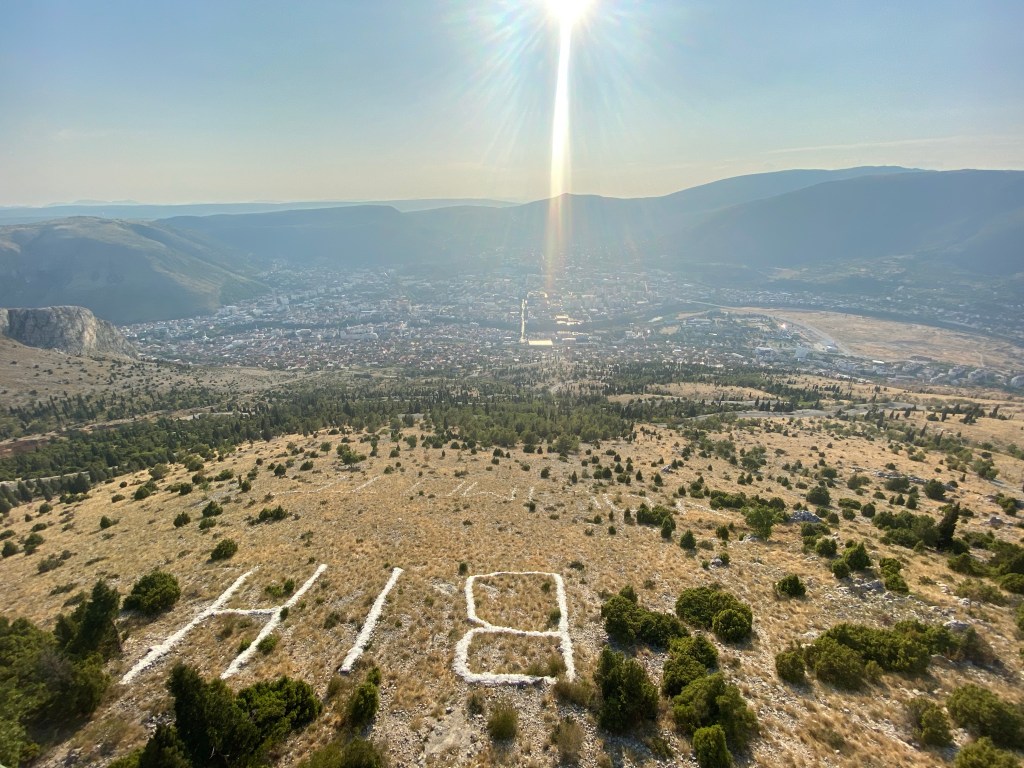
Let’s start with the journey. I boarded a supposedly six hour bus in Budva, Montenegro with destination Mostar. I was enjoying the view along the Adriatic coast from my window seat when I overheard somebody ask the driver about a toilet stop, to which he replied ‘toilets in Dubrovnik’. That would be Dubrovnik, Croatia – obviously I should have read the timetable more carefully. This bus was taking the indirect route with not one but four border crossings to contend with – Montenegro -> Croatia -> Bosnia -> Croatia-> Bosnia due to the division of land in this area.

We hit a complete standstill at the first Croatian checkpoint until our driver had enough and floored it for what felt like a good few miles on the wrong side of the road, to audible gasps from the passengers. It turned out he hadn’t lost his mind – the ticket collector had run ahead and was now standing in the middle of the road stopping the traffic until we cut everyone else up and forced our way back in at the front of the queue.
The Montenegro / Croatia land border is an EU entry point and the reason for the delay was the border police on steroids who were ripping through every single item of every single person’s luggage, including everyone on our bus as we were ordered off. I could see my heart pounding as an officer with a gun pulled out more and more packs of my antihistamine tablets, suspicious as to why I had so many (even I wasn’t sure anymore, probably the Boots 3 for 2 offers) and clearly baffled as to how anyone could be that allergic to anything. At this point I’m regretting a) answering NO when asked ‘do you have any medication?’ as evidently I am carrying a small pharmacy, and b) emptying two months worth of multi vitamins into a plastic bag shoved into a shoe to save on space. I’m also remembering a taxi driver telling me that the Croatian police like to issue fines for any medication manufacturered outside of Croatia. We did actually have a laugh when he couldn’t do my bag back up again – for some reason I told him he needs to get better at packing. He agreed he needed more training in that department and wished me a safe trip.
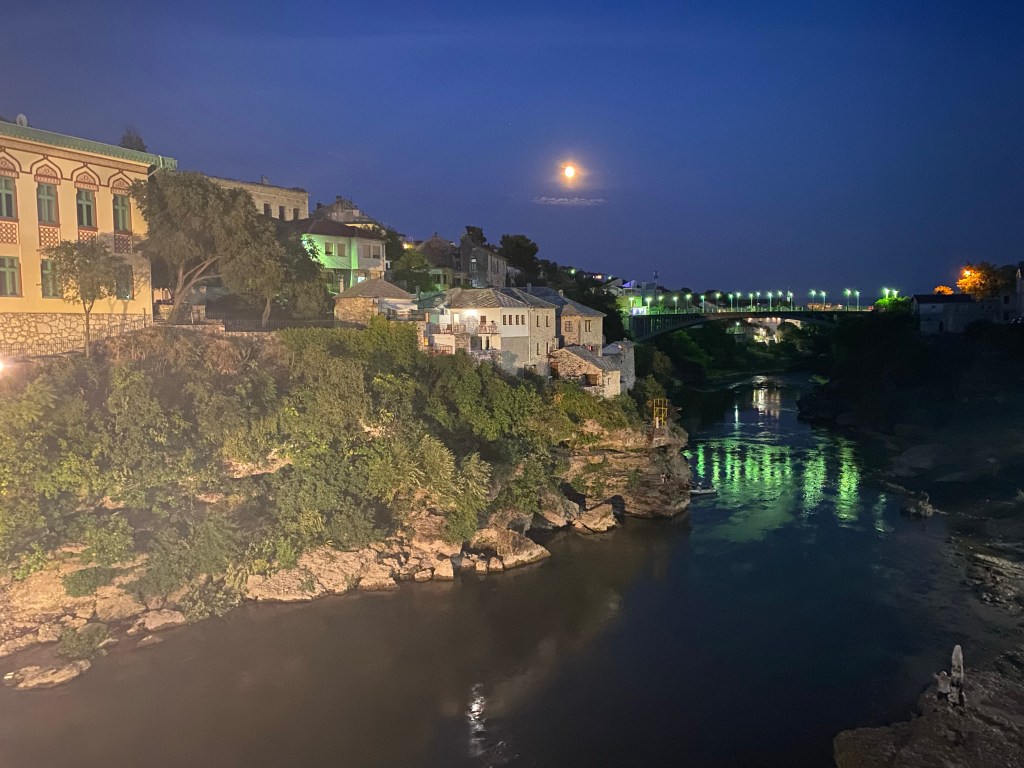
Back on the bus and wishing I could flush half my bag down the toilet before the next border check, the silver lining was getting to see the sunset over that unexpected detour to Dubrovnik as I realised that six hours was long gone. By the time I arrived in Mostar it was 11pm and with no taxis in sight I had to walk to my hostel, Taso’s Place, which actually felt an awful lot safer than London with plenty of people still out and about.
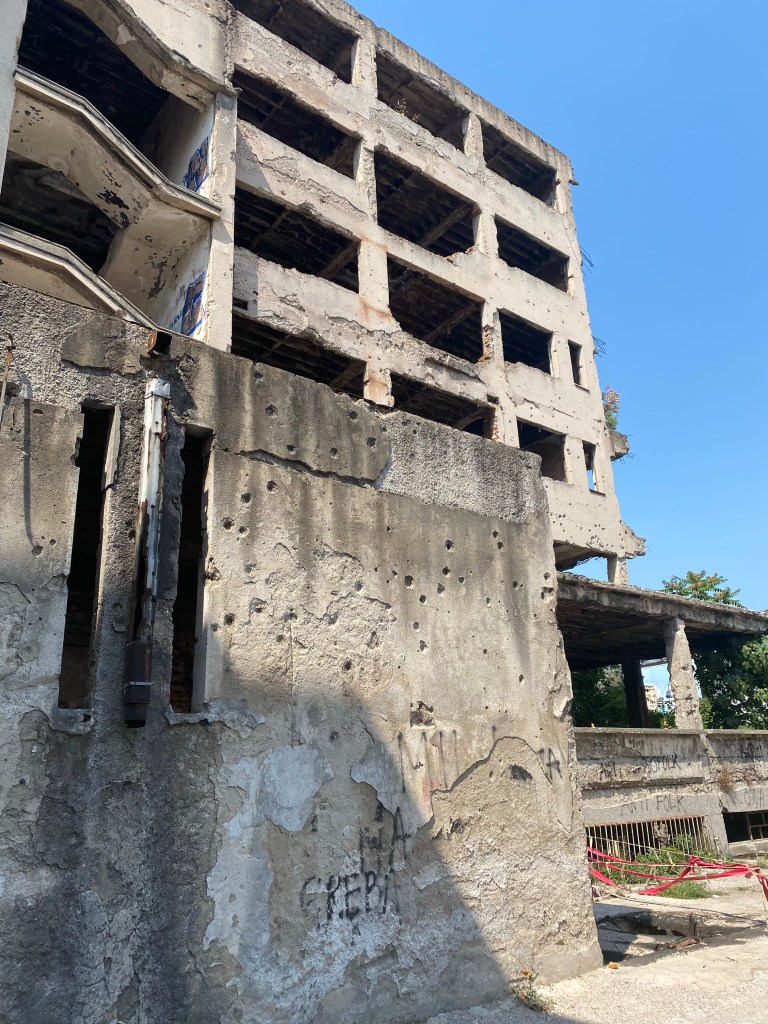
The next morning, off on a day trip that Taso organised for me with a few others, I was amazed by how beautiful Herzegovina is. All blue rivers and green fig trees and purple grape vines. The trip started with my second breakfast of the day featuring fried Uštipci dough balls, grilled vegetables and very good coffee while getting to know the others. Our guide had an incredible knowledge of UK politics and it seems most of the world. Whilst my education in Herzegovina was sorely lacking, mostly limited to their entries in the Eurovision Song Contest.
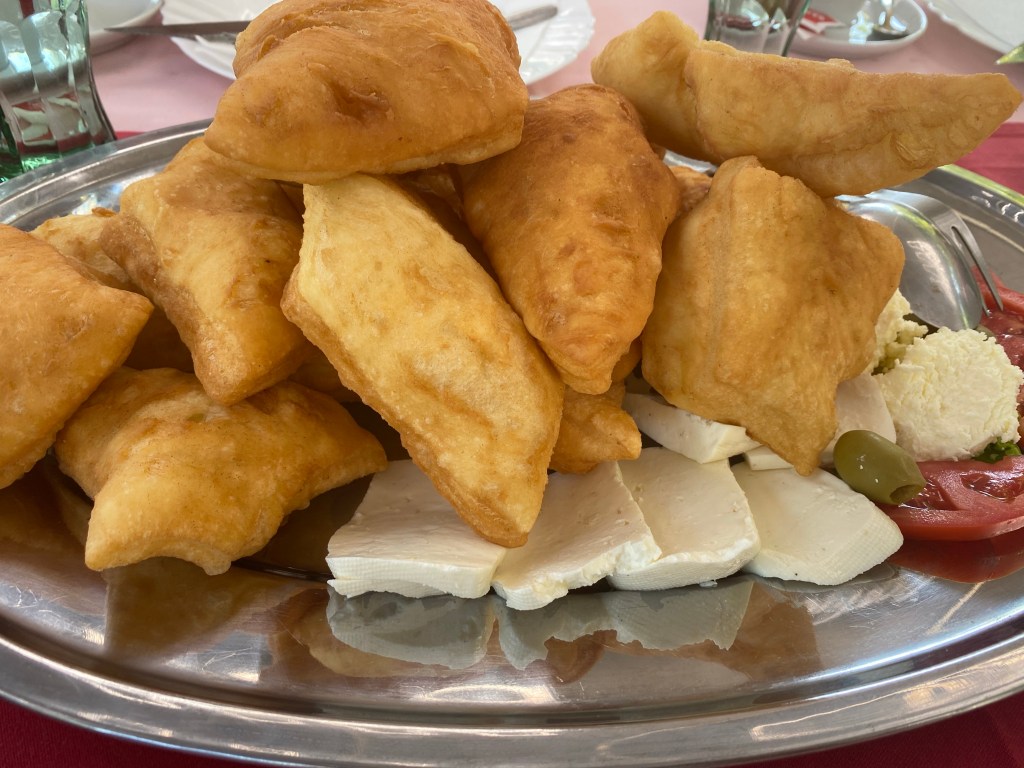
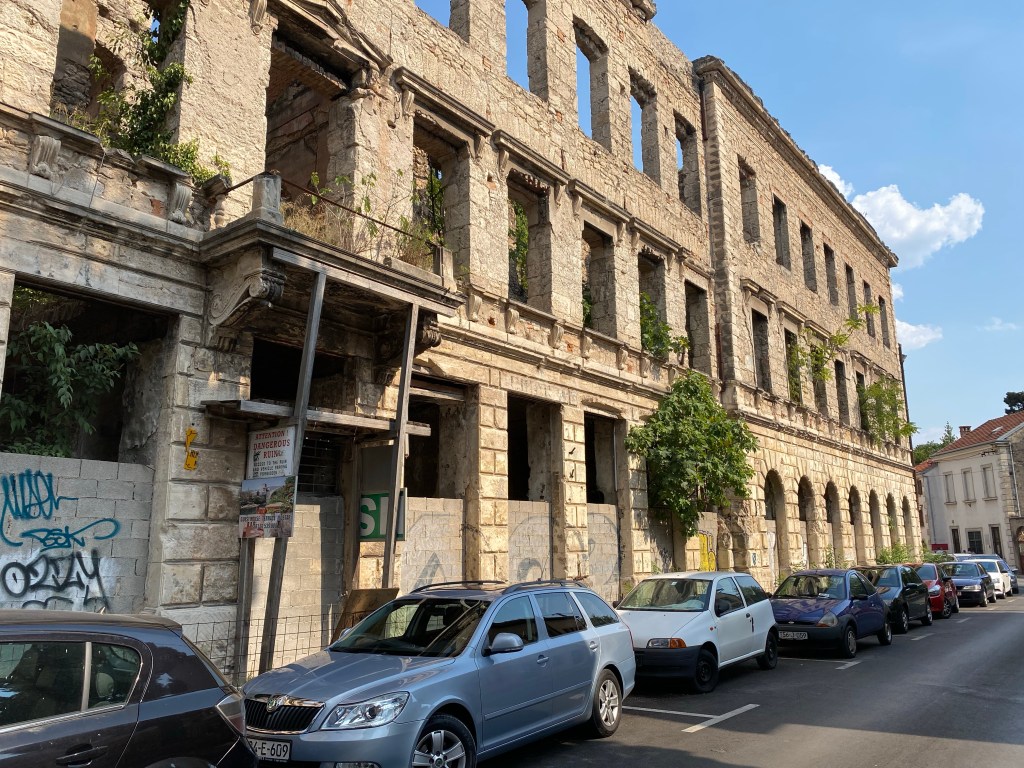
Mostar as a city has an incredibly complex history interwoven with the Ottoman and Austro-Hungarian empires. Bosnia and Herzegovina as a country has sadly become synonymous with a warzone. Here I will simply give some of the information that I managed to take in from speaking to local guides, fact checked on Wikipedia as best I can do with limited Internet access!
I always try to take the free (tip based) walking tours in the major cities that I visit as this gives you the opportunity to ask any questions you like – nothing was off limits. Highly recommended is Shiva’s guided tour of Mostar, which lasts as long as it lasts. You also get his business card which apparently acts as a ‘get out of jail free’ card.

Mostar is named after it’s Ottoman centre piece, the Stari Most bridge (Old Bridge) rising over the river Neretva. Originally built in the 16th century, it’s destruction in 1993 has become symbolic of the war in Mostar and the division of community that followed.
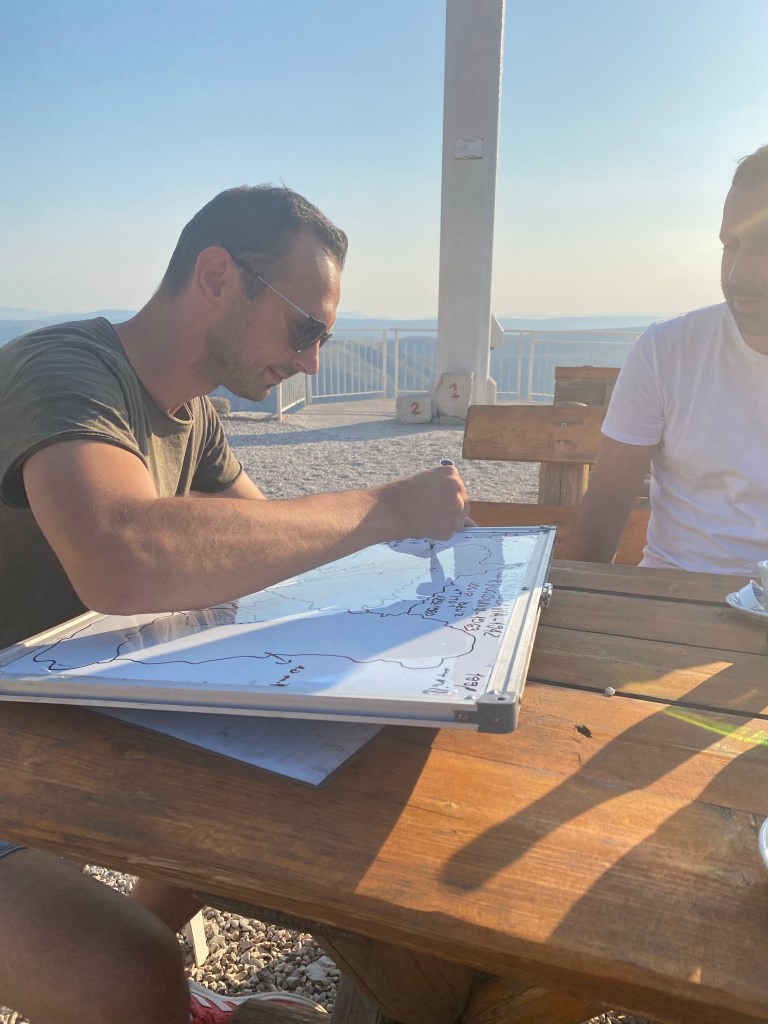
After independence from Yugoslavia in 1992, Mostar was under siege for 3 years during the Bosnian War which killed over 100,000 people across the country and resulted in the genocide of over 8000 Bosnian Muslims in Srebrenica. The people I spoke to were clear that rather than a ‘civil war’, this was ethnic cleansing.
It’s important to note that the 1991 census records a population made up of 29% Croats, 34% Muslims, 19% Serbs and the remaining 18% Yugoslavs / other. At that point in time around a third of all marriages in Mostar were mixed, with the different ethnic and religious communities spread evenly throughout the city. This means that when forced to fight, you would likely be taking sides against your spouse’s family or your neighbours and friends.
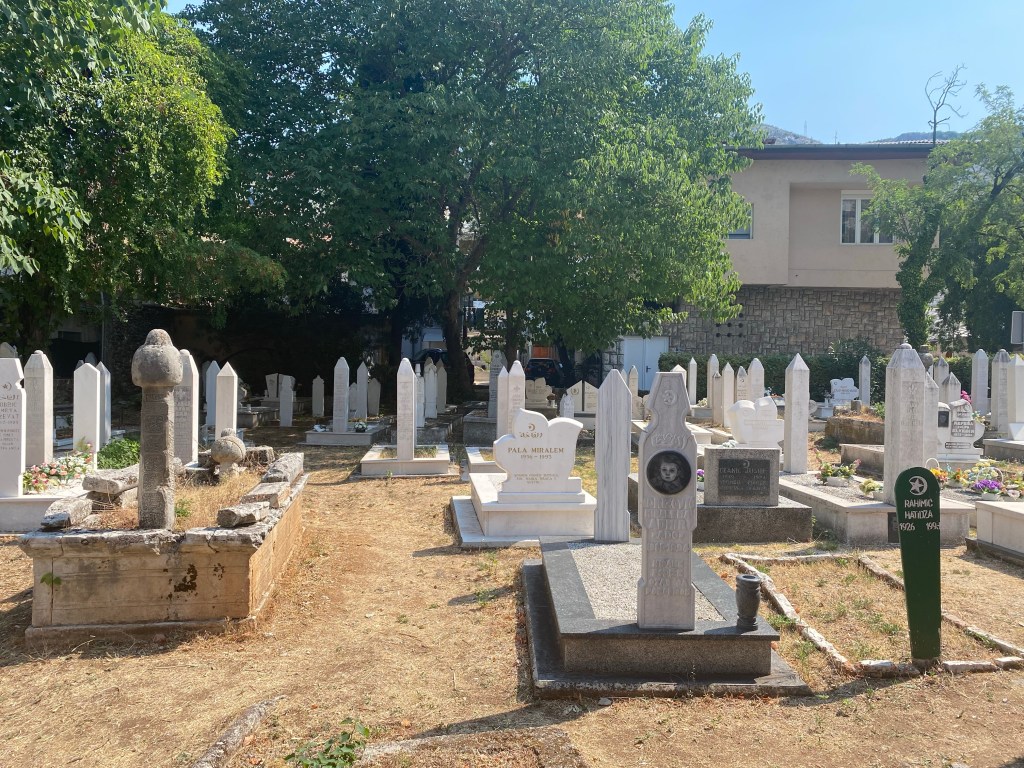
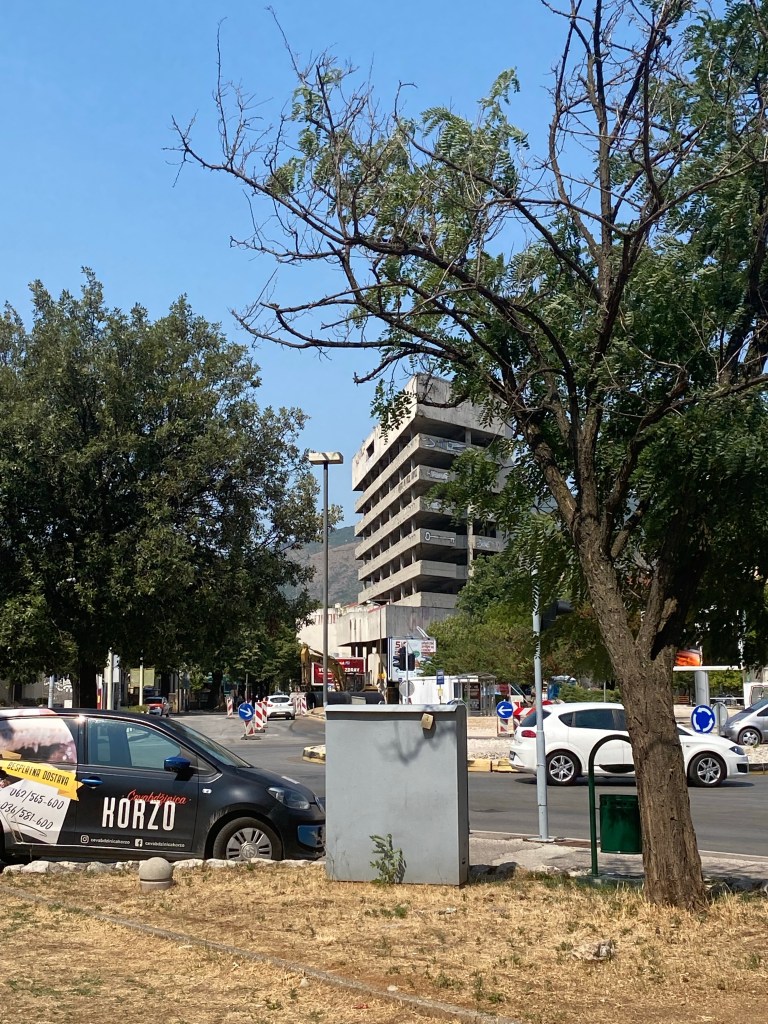
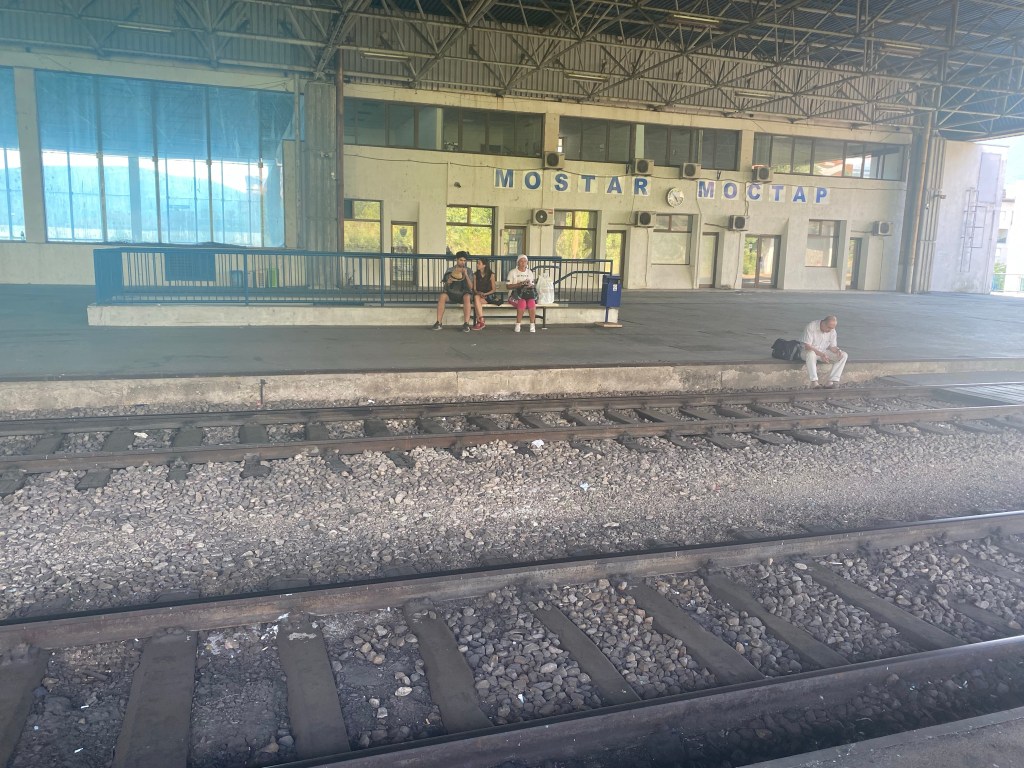
The 90s are not that long ago – most people here have direct experience of the war. My first tour guide’s father was sent to a concentration camp and the second believes life today is generally worse than under Tito’s Yugoslavia with low wages and high unemployment. The division can still be seen today – East Mostar is known as the Muslim side with Catholic Croats on the West. There are separate schools (one mixed school now exists but has separate lessons), two fire brigades, two bus stations, two football teams… There are even three Presidents who rotate as Chairperson every eight months: one Bosniak, one Serb, and one Croat, making for an administrative nightmare.
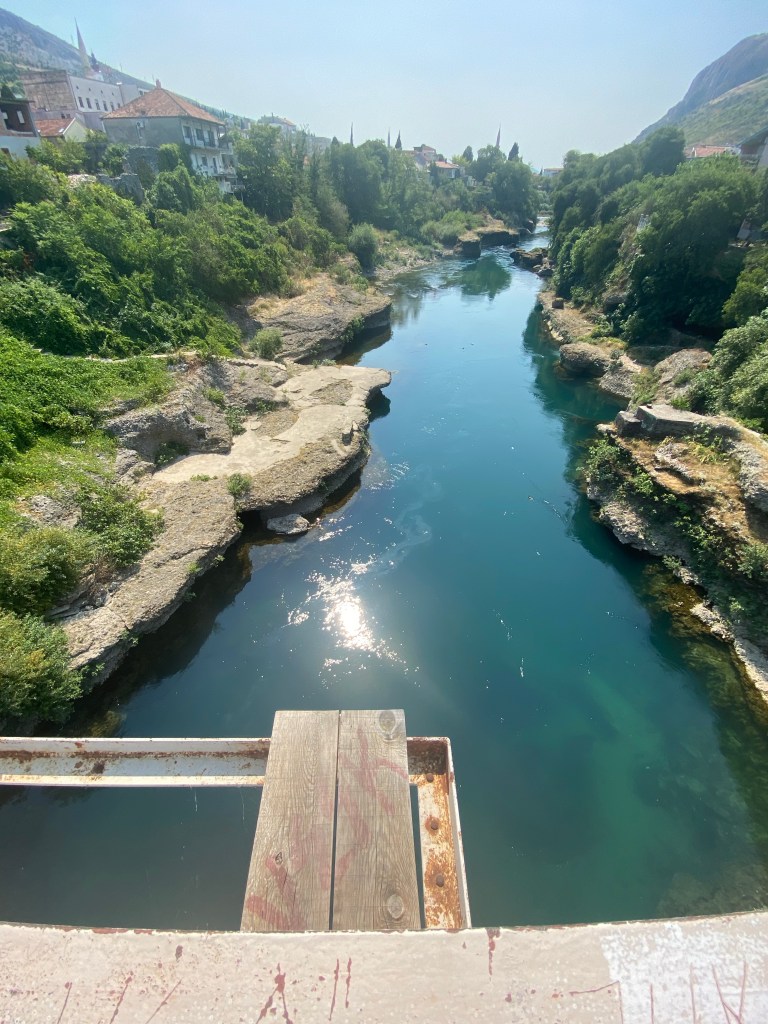
On a lighter note the local heroes are the Mostonian bridge divers, who continue the tradition of diving into the river as a right of passage. I was passing by as local guys were drumming up tips and teasing the gathering crowd for a quite a while before jumping so gracefully it appeared like slow motion: see video below.


I also learned where the term ‘whirl like a Dervish’ actually comes from at the 1520 era monastery where the Sufi Muslims practice rituals that involve whirling. It felt very calming with the rooms being built right into the mountain and directly on the water. As the sign on the wall said ‘we are all made from water’. Visiting inside meant covering heads and bodies – one of our group did mistake me for a Muslim woman.


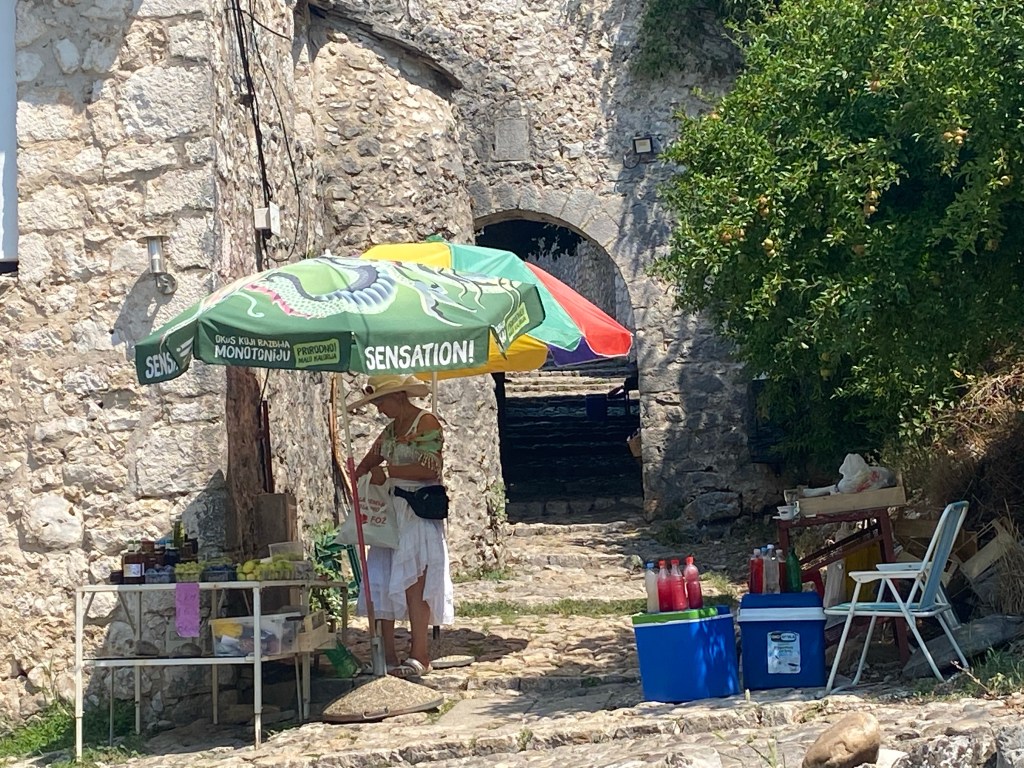
There was also an opportunity to sample the most delicious figs I’ve ever tasted and climb free reign over the castle in Počitelj. The lovely woman selling her fruit knows full well that she only needs to convince one person to taste it and the whole group will soon be buying the fresh pomegranate juice mixed with lemon and sugar.


Sarajevo was my next stop, only a two hour train ride through the mountains. I was not expecting such a visible Turkish influence, a throwback to the Ottoman era ofcourse. It’s also home to the place where the Arch Duke of Austria, Franz Ferdinand (not just a band name) was assassinated, widely considered the trigger for the first World War – a fact I was unaware of. This is an example of why I feel travelling is so important rather than relying on barely listened to school history lessons about Henry 8th’s wives. At least in my case anyway.
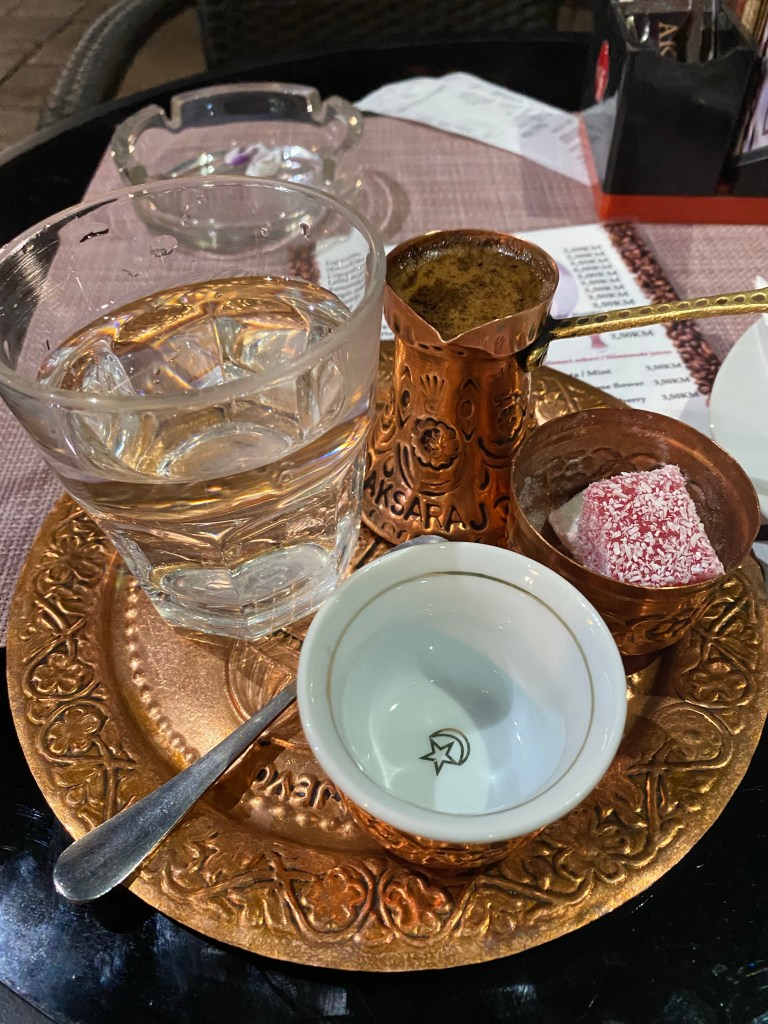
At night the old town of Sarajevo is buzzing with people, mostly sipping Bosnian coffee (which has to be savoured not rushed, and if you take it with sugar you’re supposed to put the sugar cube on your tongue then drink the coffee) and eating baklava or other similar sweet desserts. It’s a really nice place to spend an evening people watching if you can find a free seat.
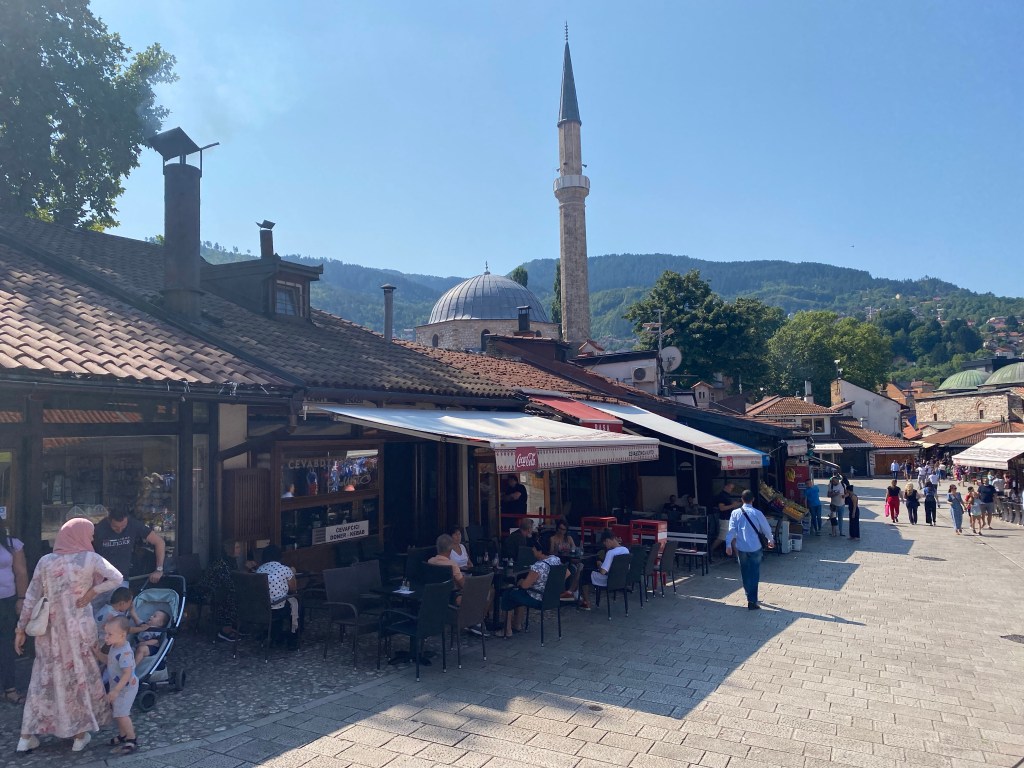
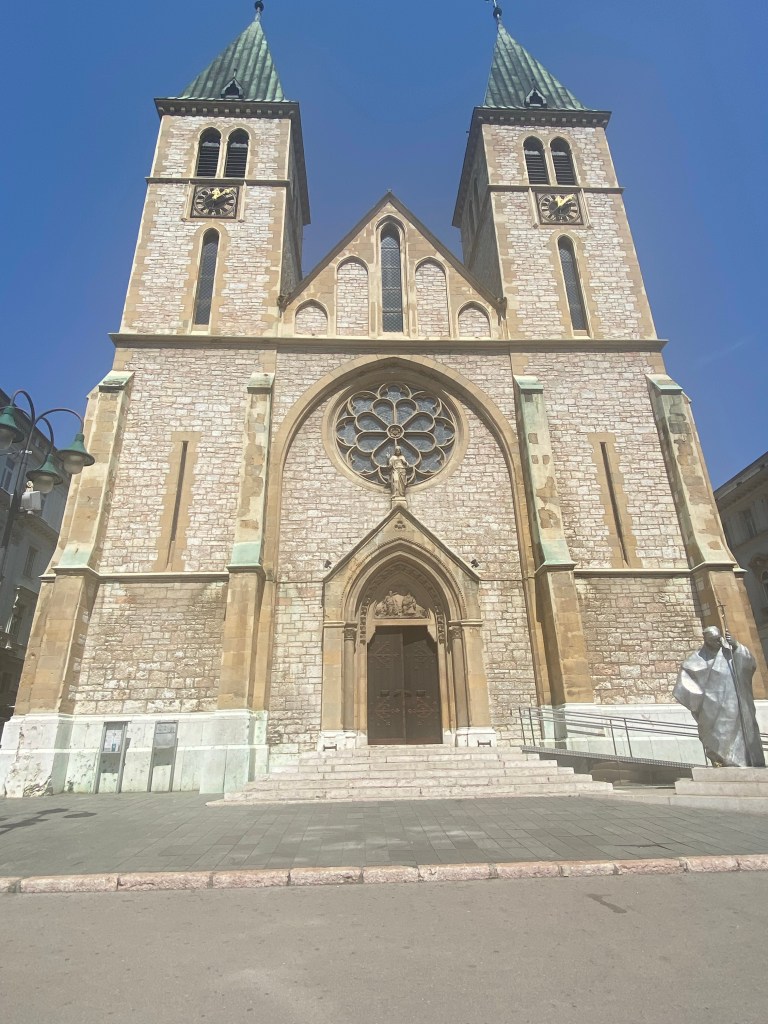
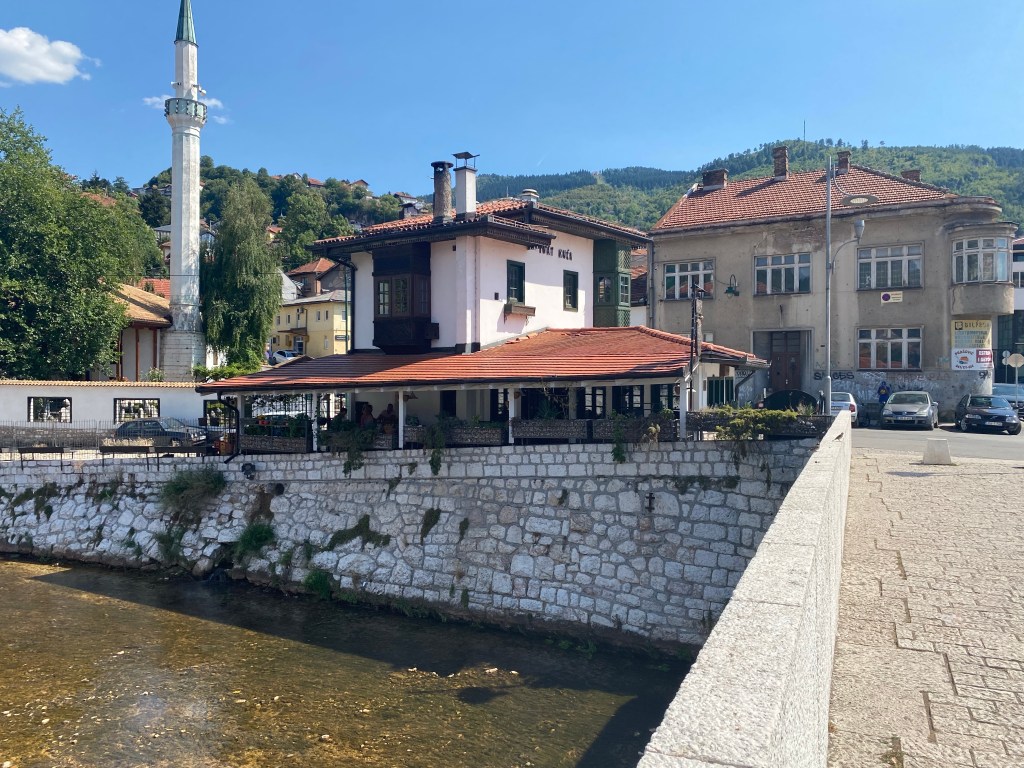
The city today prides itself today on the meeting of different cultures and religions, having a mosque, Catholic church, Orthodox church and synagogue all within the same neighborhood. It is also home to the second largest Jewish cemetery in Europe, partly due to the large number of Jewish refugees from Spain who settled here.


A stark reminder of the war are the Sarajevo Roses that can found scattered around the city. These are concrete scars from mortar explosions, coloured in red to mark spots where at least 3 people were killed.

When you want to escape the city, a cable car takes you up to the Trebević mountain for scenic views and the slightly creepy abandoned Bobsleigh track built for the 1984 Olympics. Tourists have yet to return to this country in their pre-covid levels, meaning I had a cable car to myself.


I only spent 4 days in Bosnia and Herzegovina, added to my route as an afterthought on the recommendation of other travellers, and barely scratched the surface of the history, culture and landscapes – but the incredibly friendly people in the small number of places I did visit have taught me more than I can possibly write in this short space of time and words. Put this country on your bucket list and see for yourself!
 Maz On The Road
Great history lesson so much to take in terrible things happened back in the nineties xx
LikeLike