Goodbye Nicaragua – Facing the Rain and a Canyon 

Nicaragua : Estelí and Somoto 

Travel companion : Anja

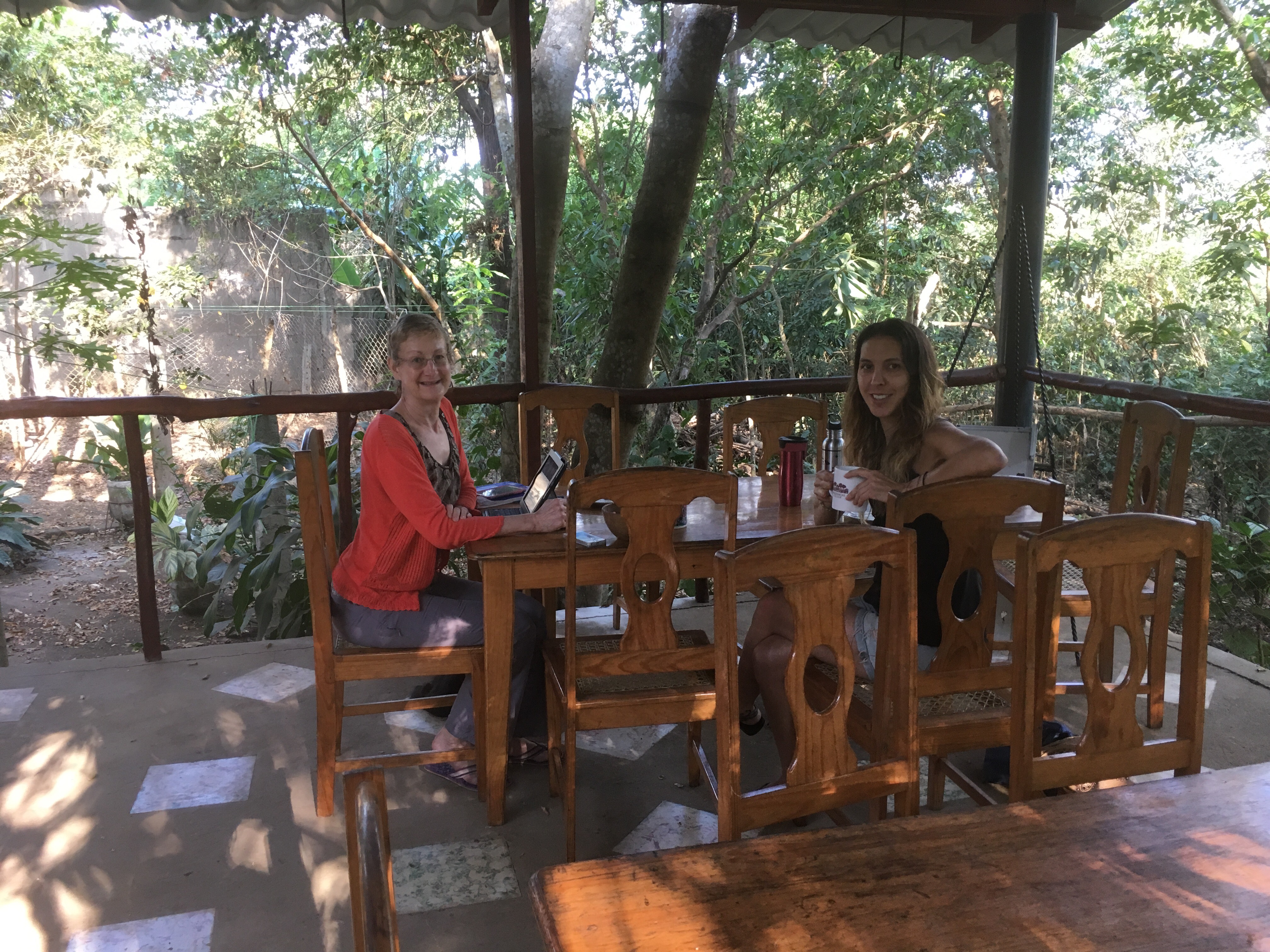
Leaving Matagalpa behind, I continued north with Anja to the town of Estelí. Another liberal town that has been badly scarred by the war – in the 80s the US backed Contra would attack from the mountains. 


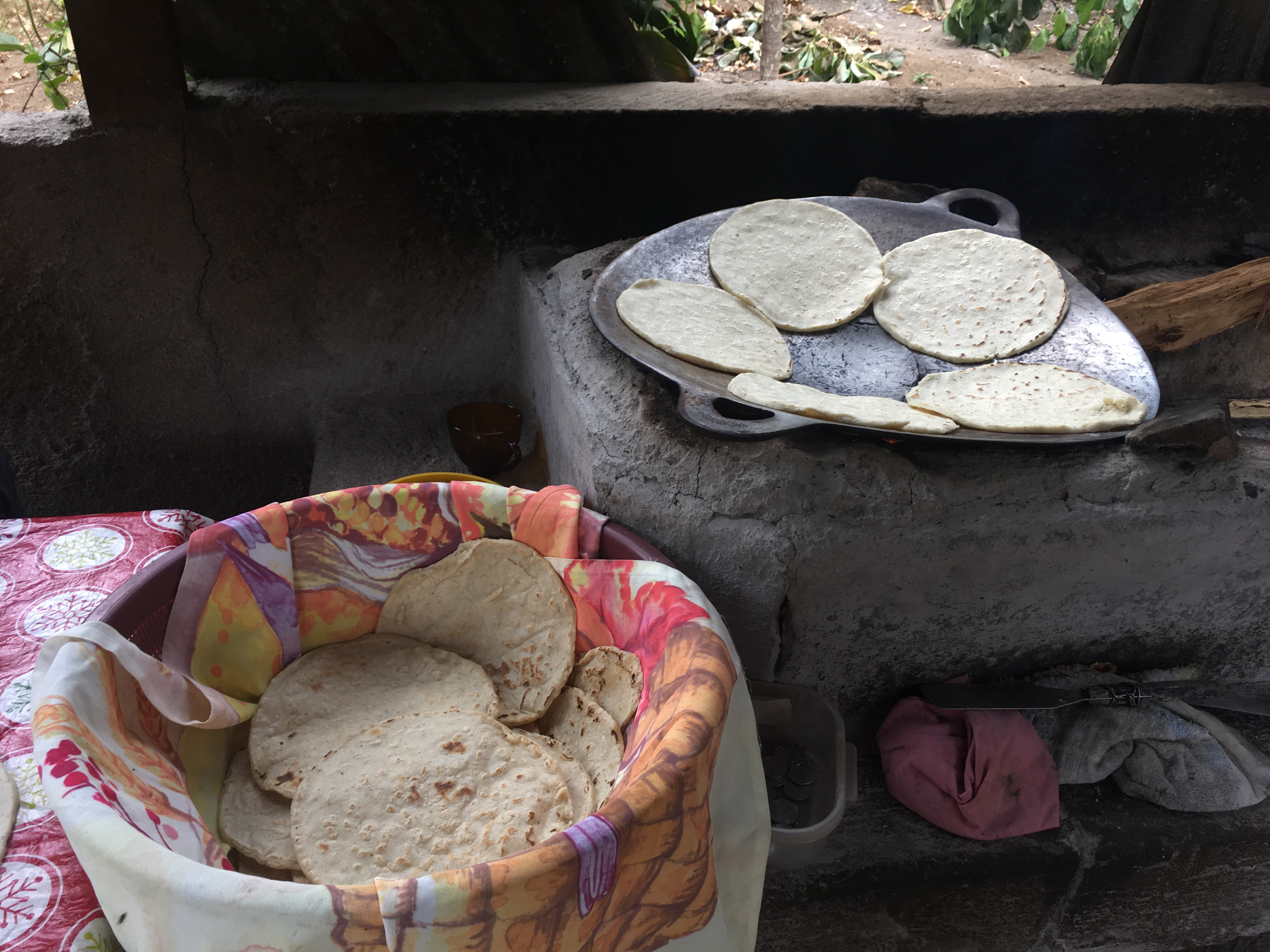
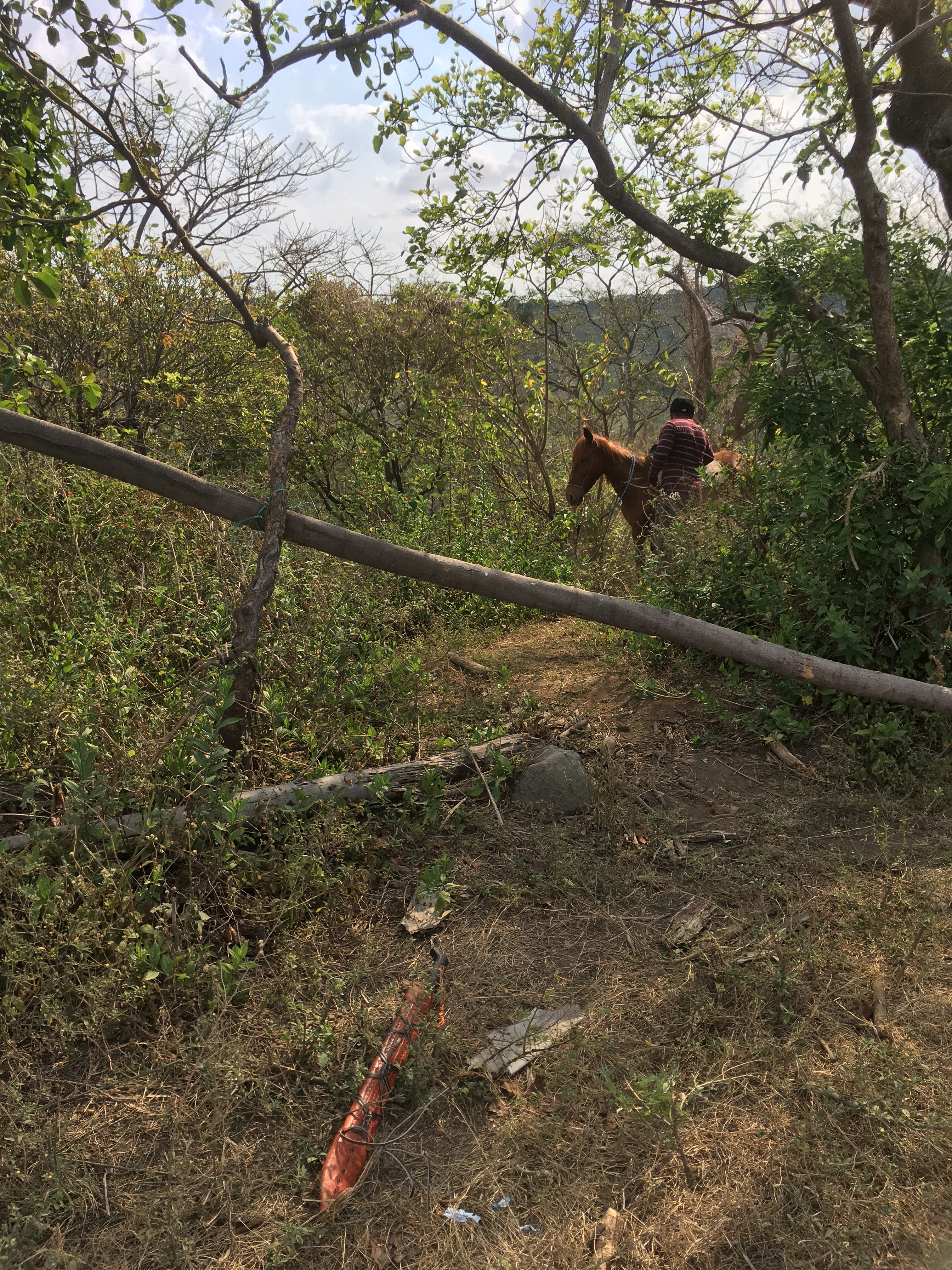
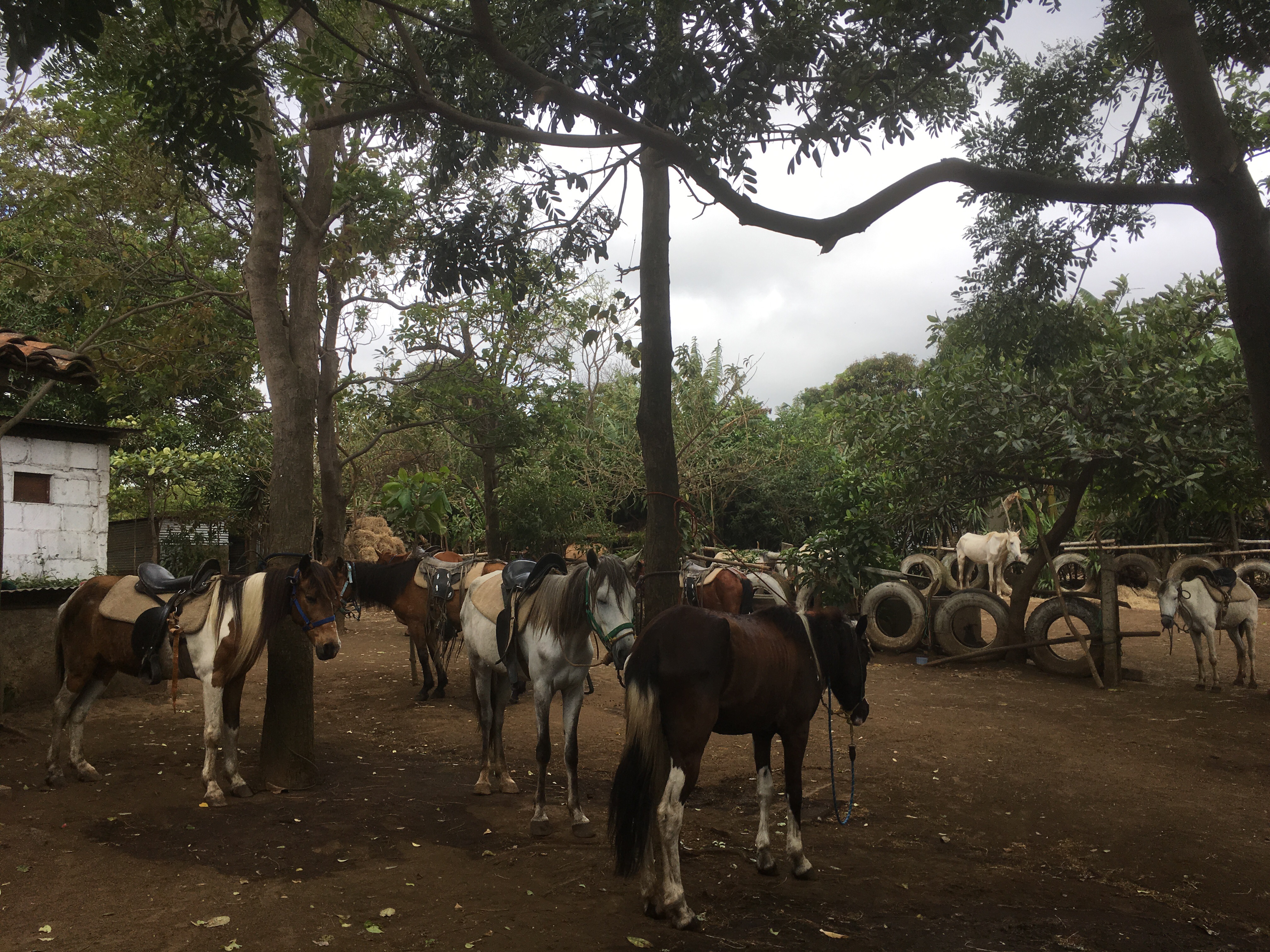
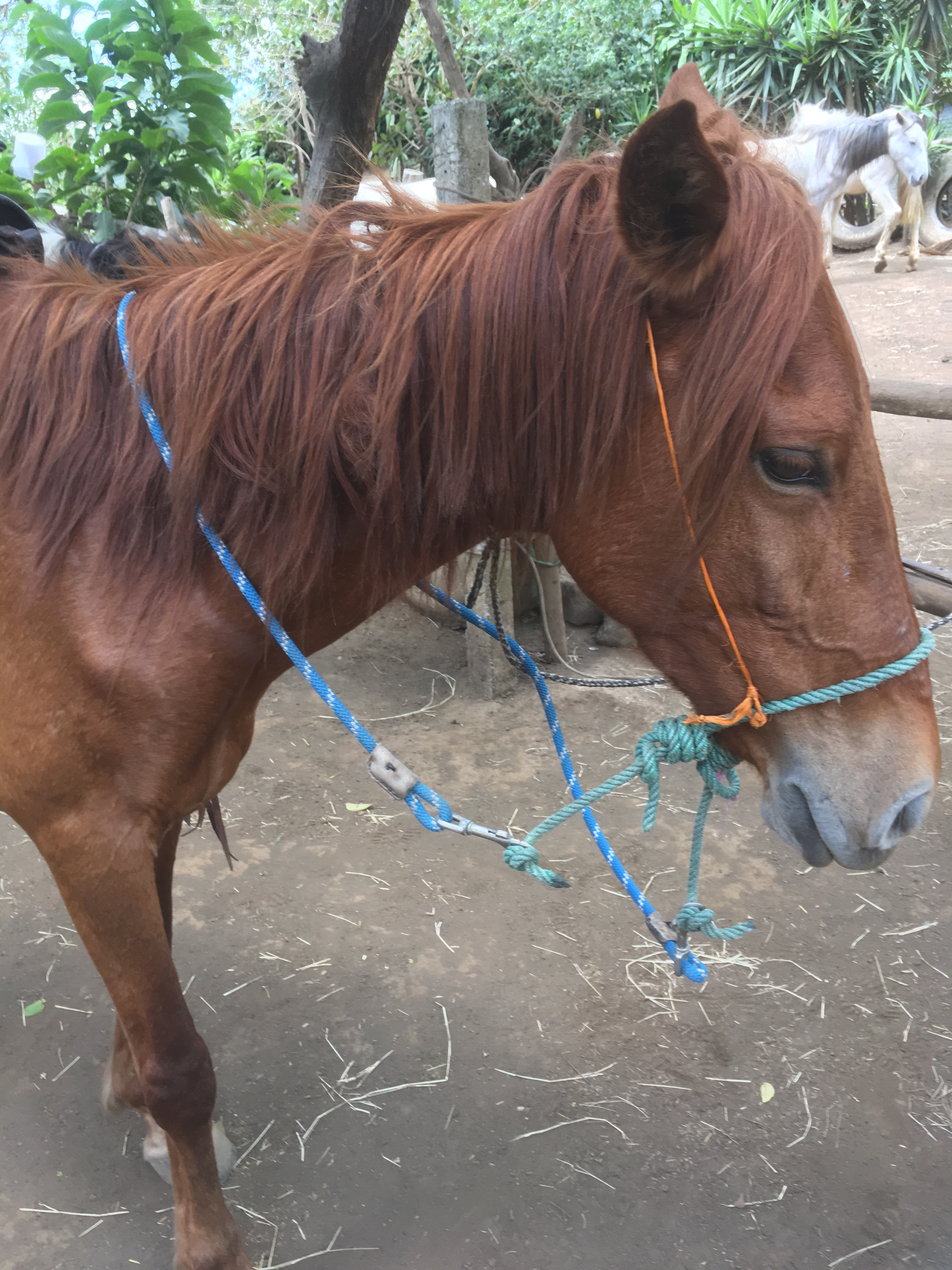
Although Estelí is a friendly working town, the real draw is the surrounding Miraflor nature reserve. Through the Tree Huggers not for profit group we arranged our own trip into this community. On horseback we could visit the mid level and highest communities, learn to make tortillas and hike in the cloud forest, plus lunch in a family’s home for about $28 each. 
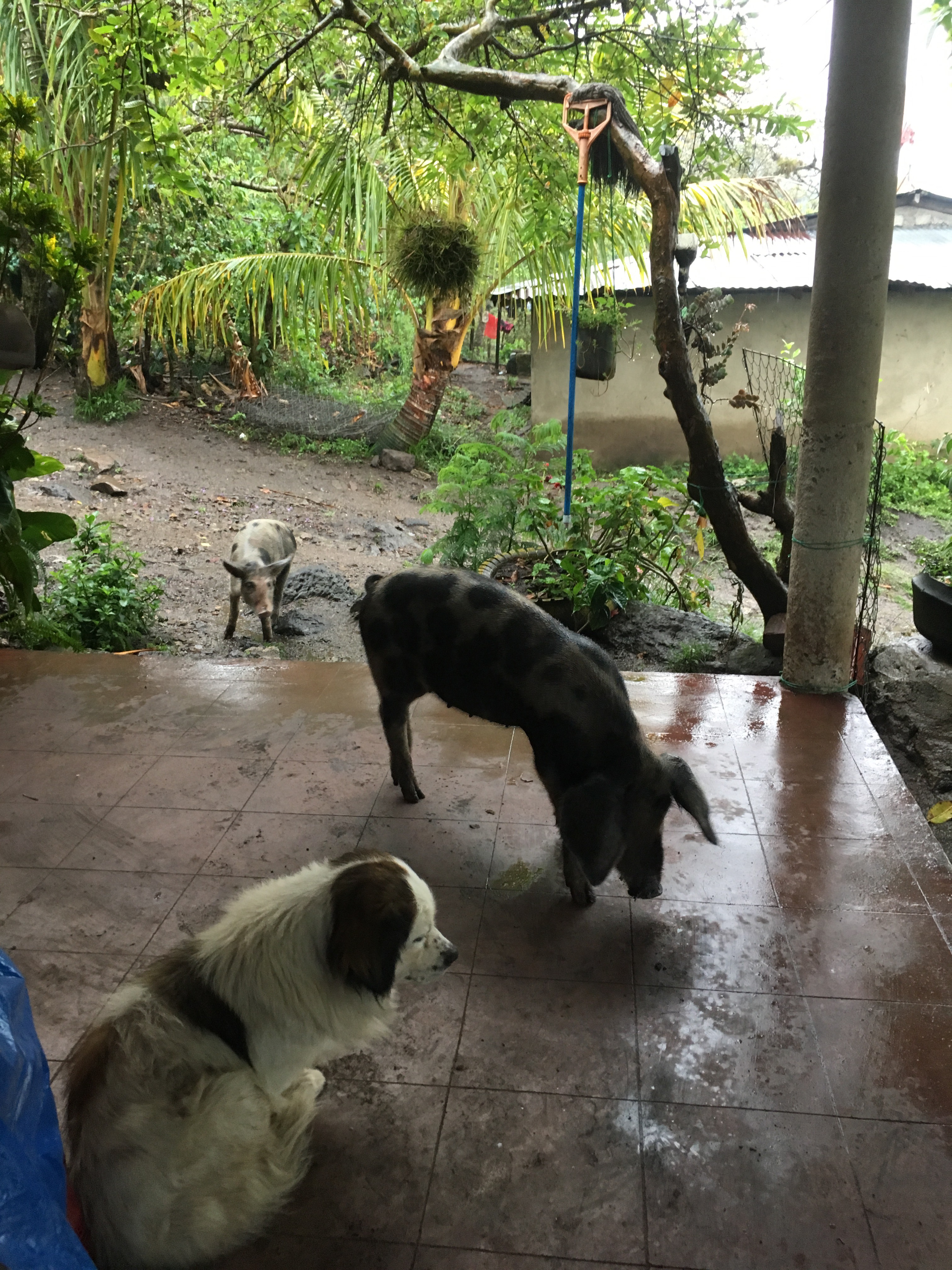

The next day we woke up to torrential rain but soldiered on in the dark to the bus stop at 5am, our shoes (walking boots where are you when I need you?!) already soaked through and clutching our packed lunches. 

The road was the worst road I’ve been on and that’s saying something. The poor buses simply go until they break down, which is frequent. 


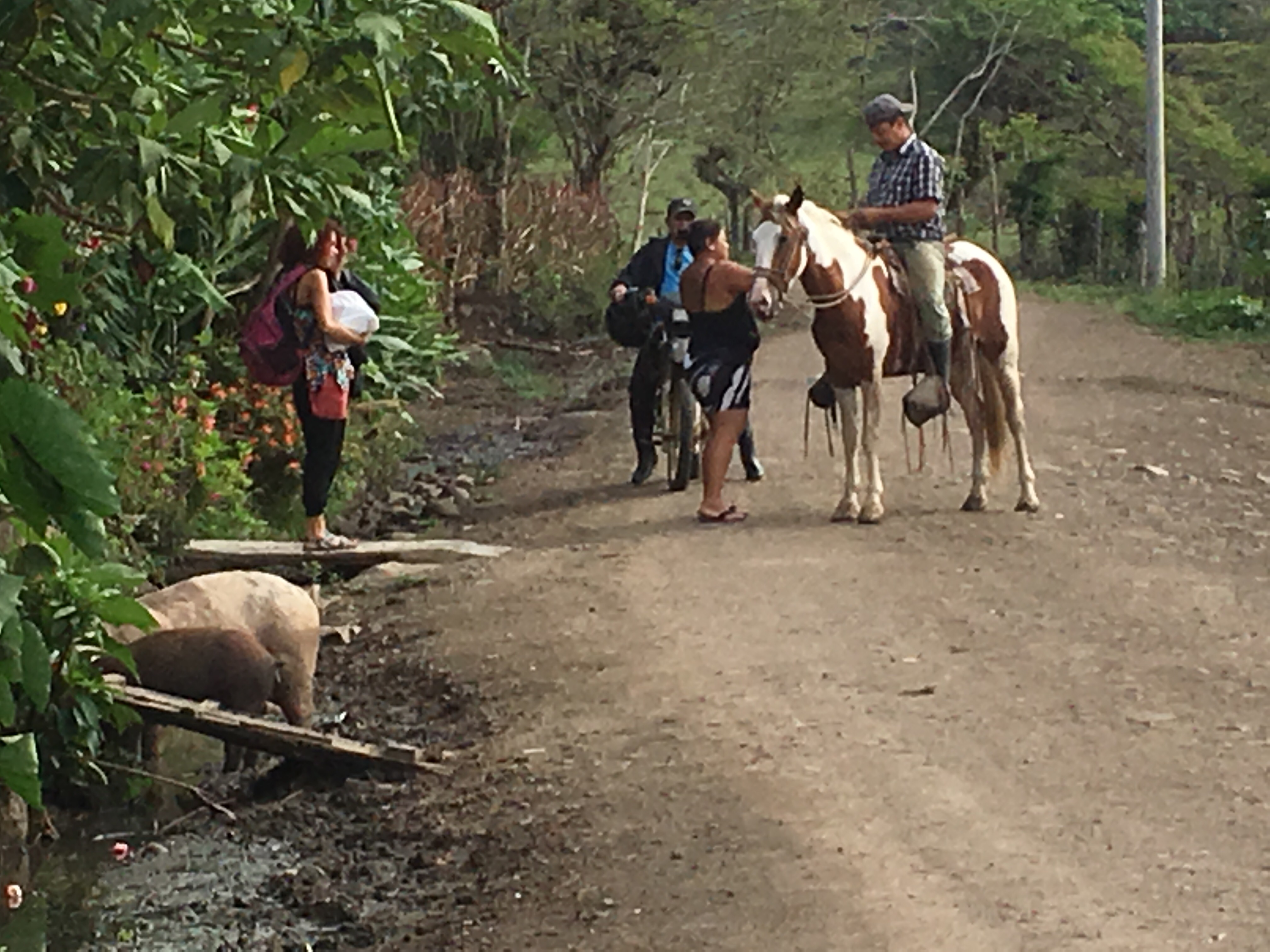
Our guide turned up late – the poor guy had to come via motorbike in the rain at 4am to get the horses ready for us. The organisation hires local community guides and the income can provide for a family for a week. He spoke with enthusiasm about the anti littering project he’s involved in, meanwhile he works on the land. Previously he worked in t-shirt factories, selling clothes, tried to make it in Costa Rica and Panama for a better life for his family. There are some extremely resilient and determined people in Nicaragua.


The rain lifted and revealed that we were high above the clouds. We rode up to the higher communities and saw the difference in living conditions – there is no electricity and the conditions aren’t right for growing coffee, only potatoes. It was extremely valuable to see this rural side of Nicaraguan life.

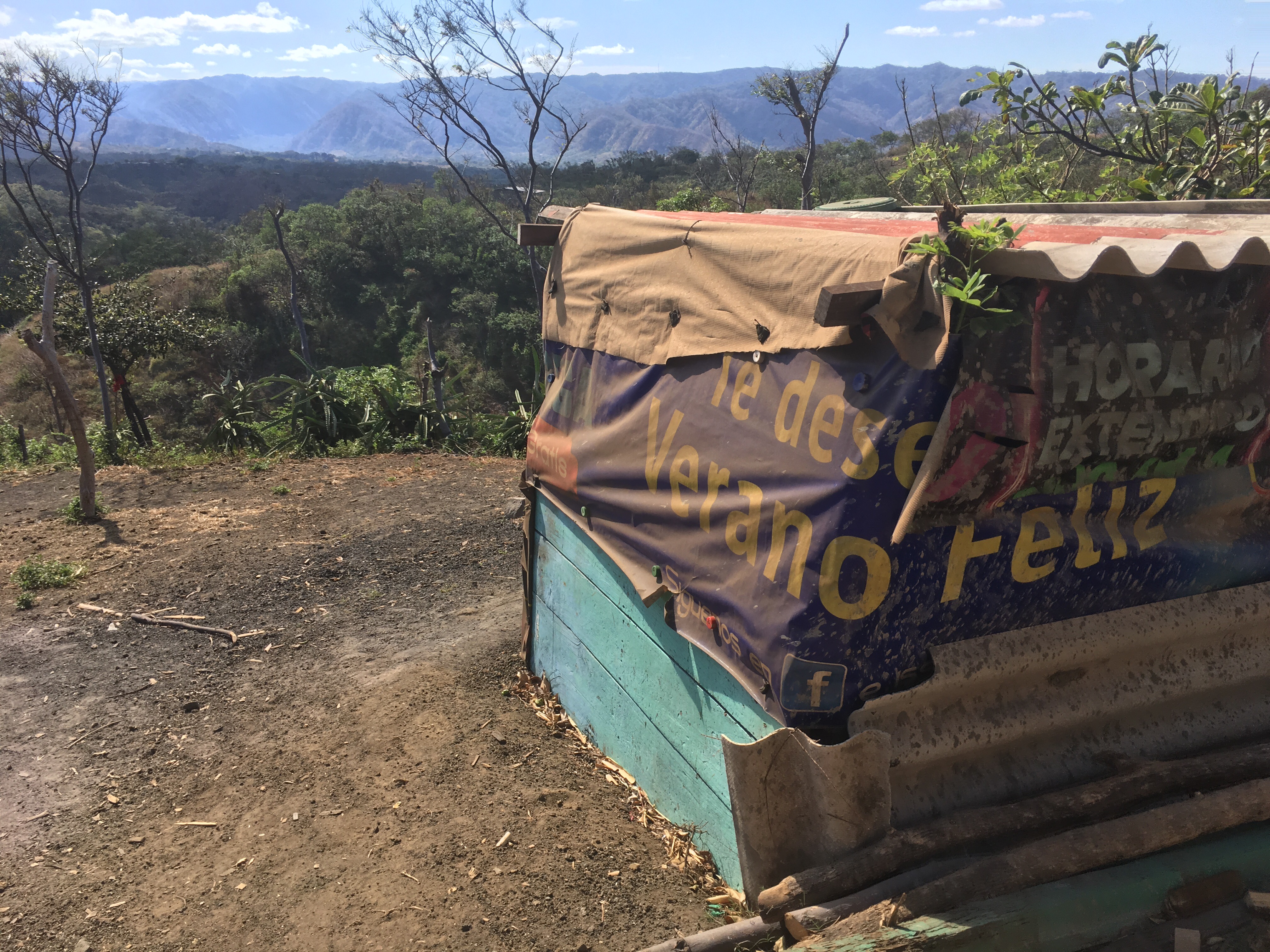
The final challenge of my Nicaraguan journey was the Somoto Canyon. My understanding was that this entailed an easy enough hike and some pleasant swimming and floating through the canyon itself, with some OPTIONAL jumps into the water. After a two hour chicken bus ride we arrived at Henry’s house, an unexpectedly tall local man who has made a business out of Canyon tours. ‘Everyone ok with a 5 metre jump right ‘ he said casually. Turns out due to the rain the conditions had changed and this jump was now non negotiable as ‘there’s no way back’. Going with the ‘Live each day as if it’s your last’ approach I decided to do it (plus surely there must actually be a way back in case of emergency). 


Then commenced 4 hours of hell. The rain had raised the water level to swirling dirty yellow rapids. ‘Float! Float!’ shouted Orvin. Suddenly I realised ‘floating’ actually meant white water rafting without the raft, just trying to keep your head above water and not get smashed by rocks. 

After a few ‘floats’ it became apparent that we really couldn’t go back. How they haven’t been sued yet by an American tourist I have no idea as we didn’t sign anything. When the time came to jump in, (definitely more than 5m and necessary to avoid a rapid whirlpool) I had lost it completely. The only reasons I jumped were a) the rest of group were now waiting and shivering in the water shouting encouragments of ‘You can do it Marianne!!’ and b) tour guide Olvin kept his promise to hold my hand and jump in tandem, me attached to him like a limpet. In fact he had held my hand and dragged me most of the way. 

When we finally got to dryland, Olvin remarked ‘Oh you’re smiling! You’re pretty now – you weren’t earlier when you were shouting “3 more hours of this?!”‘ He nicknamed himself my ‘boyfriend and life saver for the day’. 

And that’s the last chapter in my Nicaraguan story – for now! Next stop the Honduras, after a two day failed attempt to buy a bus ticket…
Hitching in Trucks and Finding Elizabeth 

‘This is Nicaragua’ he said, ‘The bus driver probably didn’t feel like coming past today’. We were patiently waiting for the bus to pass by the Rancho to take us back to Chinandega. The same bus we had seem come into the village a while ago, where it’s supposed to wait a while then turn around and come back past. But apparently it wasn’t coming back today. I was heading north to the town of Matagalpa, set in the highlands of coffee and cigar production. This involved three buses and a day of travel as per usual. Today half of the hostel was attempting to leave town. The owner offered to drop us all at the highway intersection but was concerned no buses would pass there either. Not really having an alternative, we all piled into his pickup, me in the front holding one child, the baby on his lap helping to drive and the back full with a group of Dutch lads.

I’ve never been so glad to have other people to travel with as that day! Nine of us waited on the side of the road with some local women who were also trying to hitch a ride. Below – our saviour :


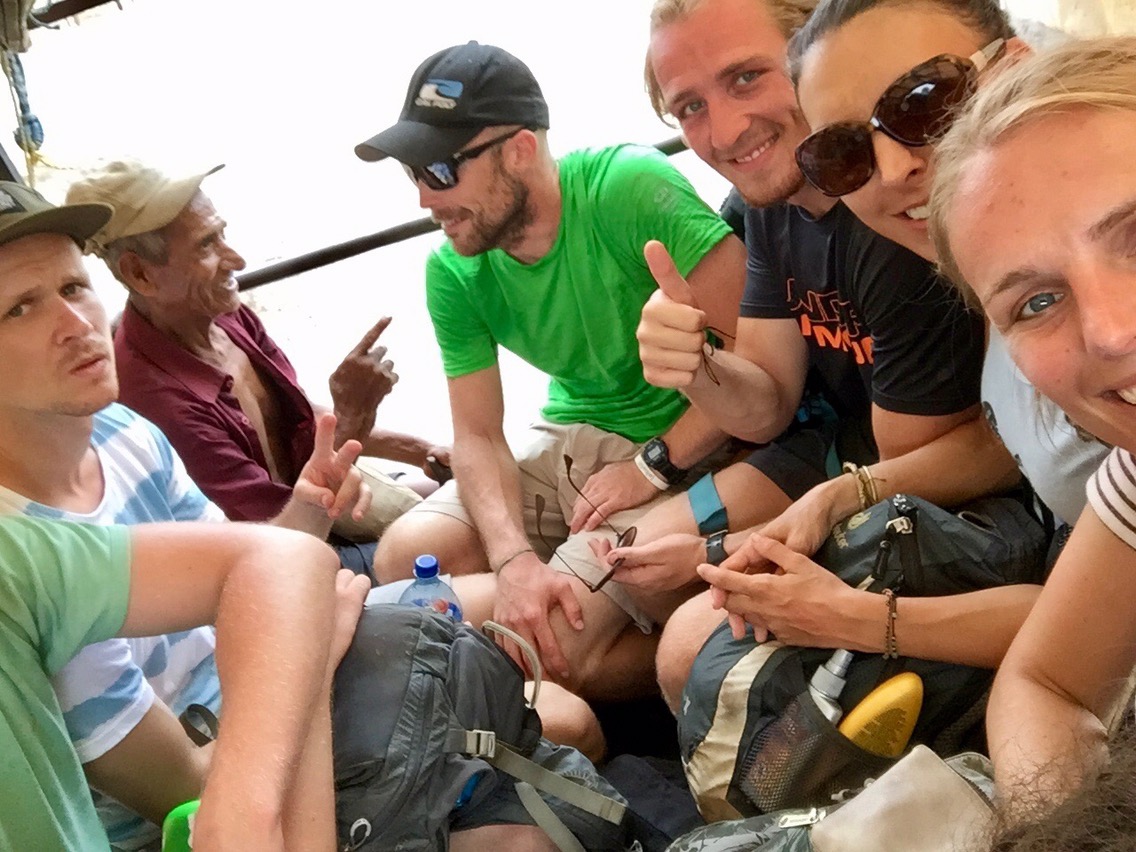
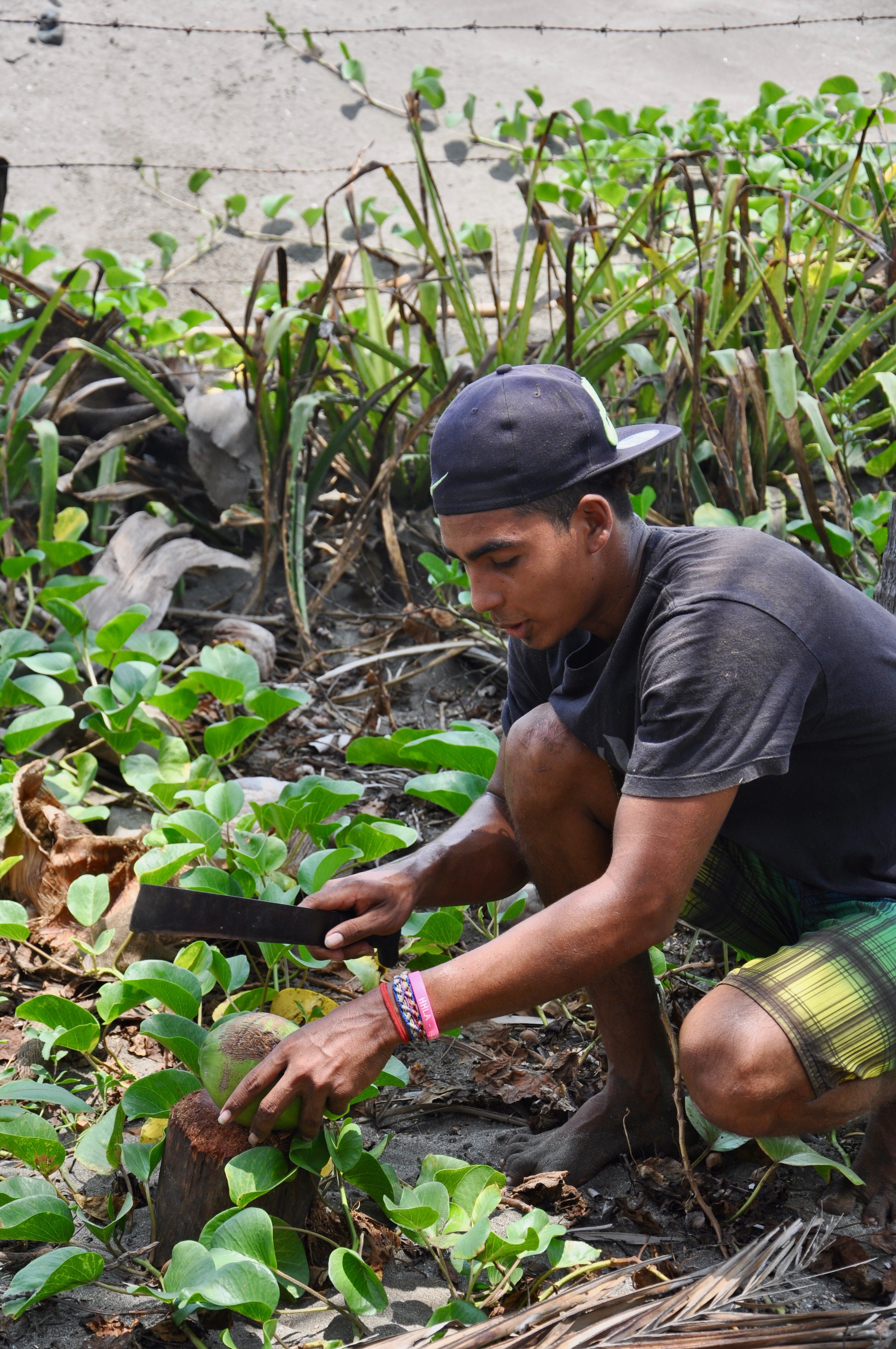
Eventually a truck stopped – we shared it with some bags of huge fish, heads poking out, and an old man with no teeth and a machete almost as big as him. This is local transport in Nicaragua! 

Below : spot the machete…


We stopped to let people off when they banged on the side of the truck and squeeze in more people – this was hands down the most fun journey of the trip so far! 

Below : my bag sitting tight.


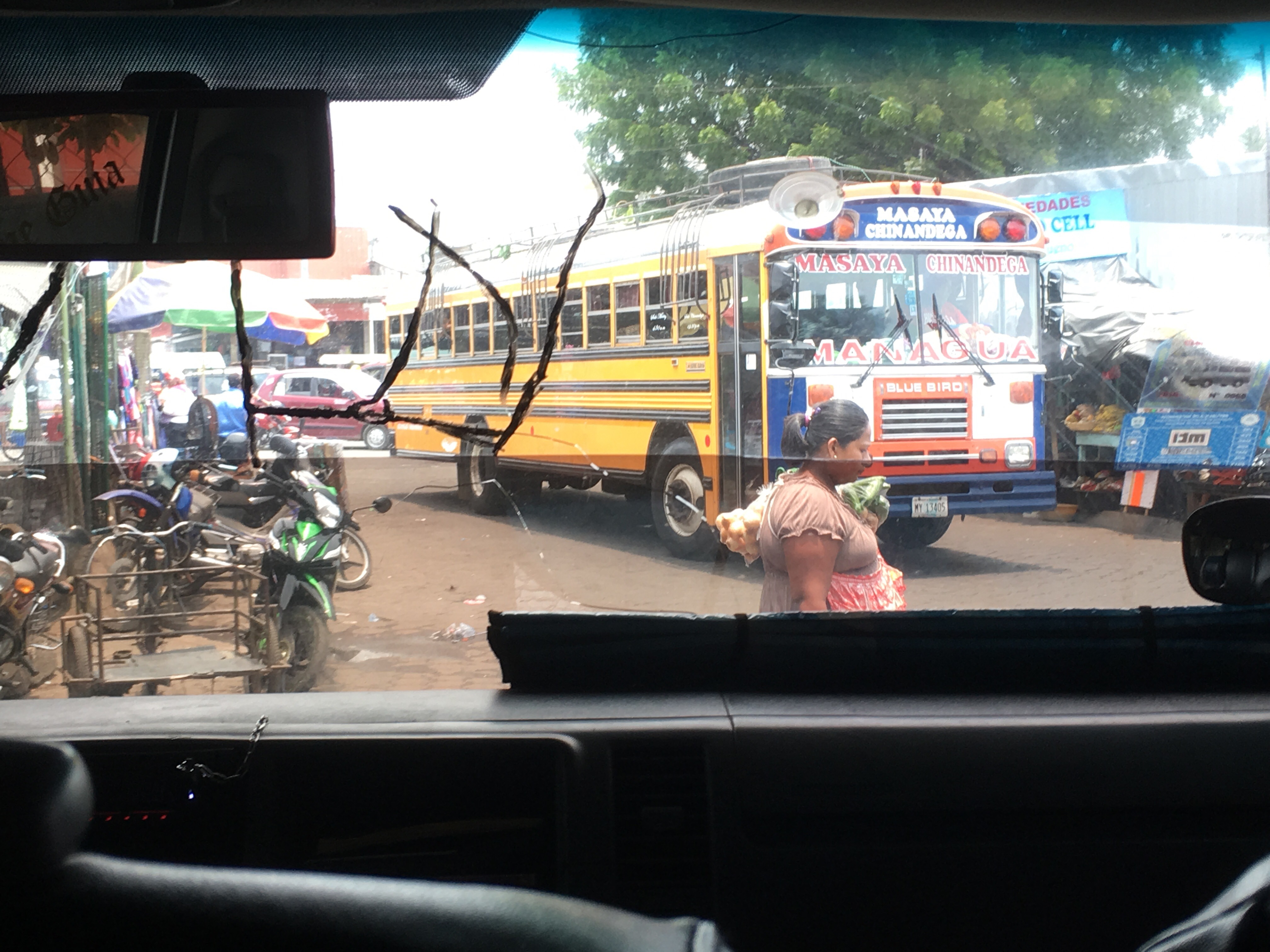
We went our separate ways in Chinandega and Anja and I eventually made it to Matagalpa – by coincidence we had booked into the same hostel. I passed some time chatting to an old man about The Beatles – they are extremely popular in Nicaragua and the main conversation striker followed by, believe it or not, Brexit. This is because music was an integral part of the Revolution and the Beatles were smack in the middle of it. They didn’t understand the lyrics but they didn’t need to. I’m very proud of holding a conversation about Brexit with an old man in Spanish! Below is one of the many bus stations of the day.


Matagalpa is a beautiful working city, surrounded by rolling hills and coffee and tobacco fields. Hardly any tourists to be seen, it felt like a ‘real’ town. 


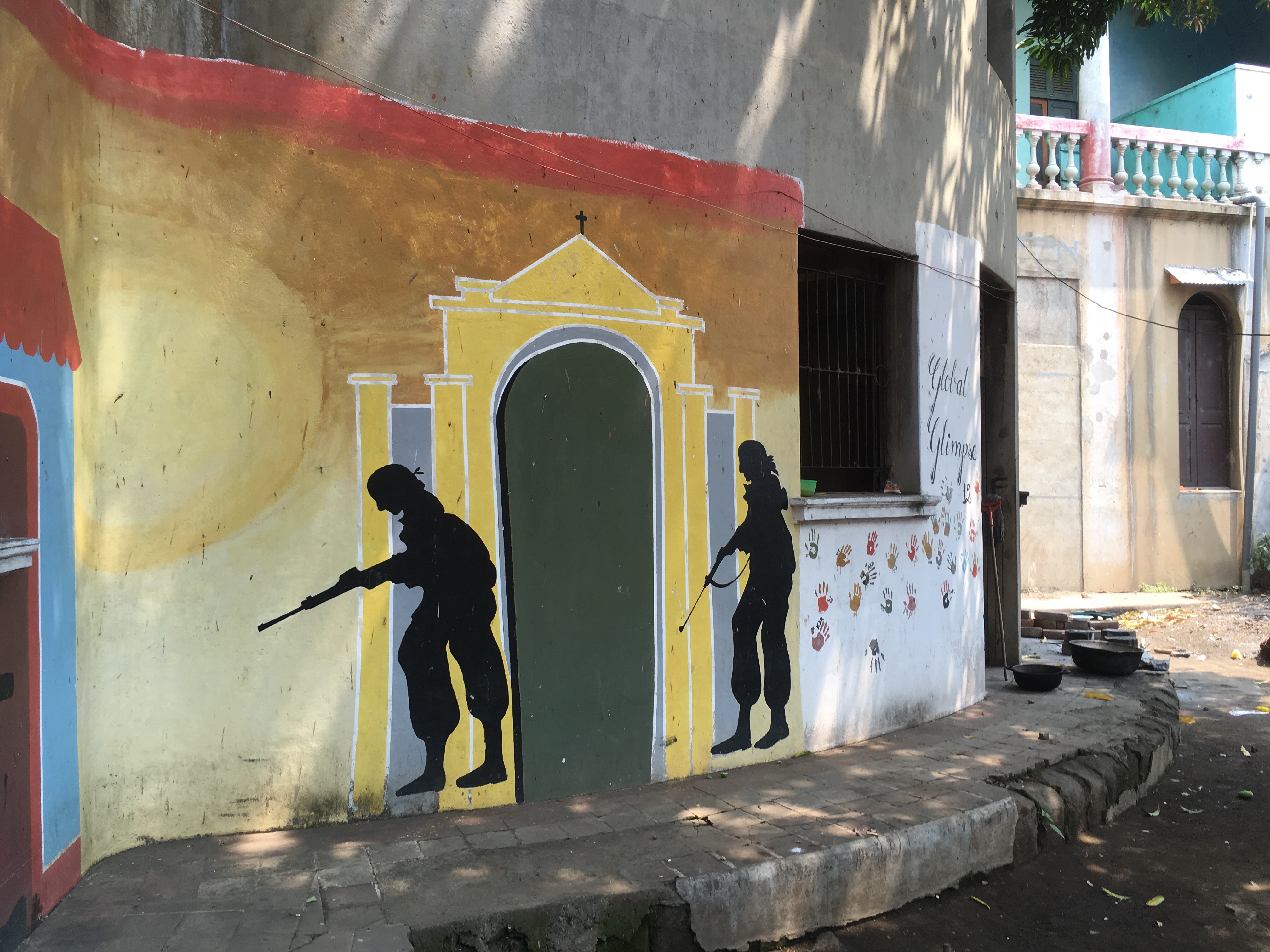
It’s also the birthplace of Carlos Fonseca, one of the key Sandinistas (“the intellectual one”). There are murials and tributes all over town including the police station:


Anja and I decided to do our own thing instead of the organised tours, preferring to seek out a real Nicaraguan coffee farm rather than a large scale foreign production (such as the German owned Selva Negra). We set off instead for the nearby town of San Ramón.


Not before making a stop at the Castillo de Chocolate where they make the famous chocolate that I’ve tasted all over Nicaragua. Unbelievably there are only three women who make the chocolate, all by hand. Including cutting the silver wrappers and glueing on the ingredients list.

The bus to San Ramón was the friendliest yet, maybe because it’s off the beaten track. We were looking for a tourism office to arrange a visit to a coffee farm. Then commenced an afternoon of finding various people in various locations like a treasure hunt…
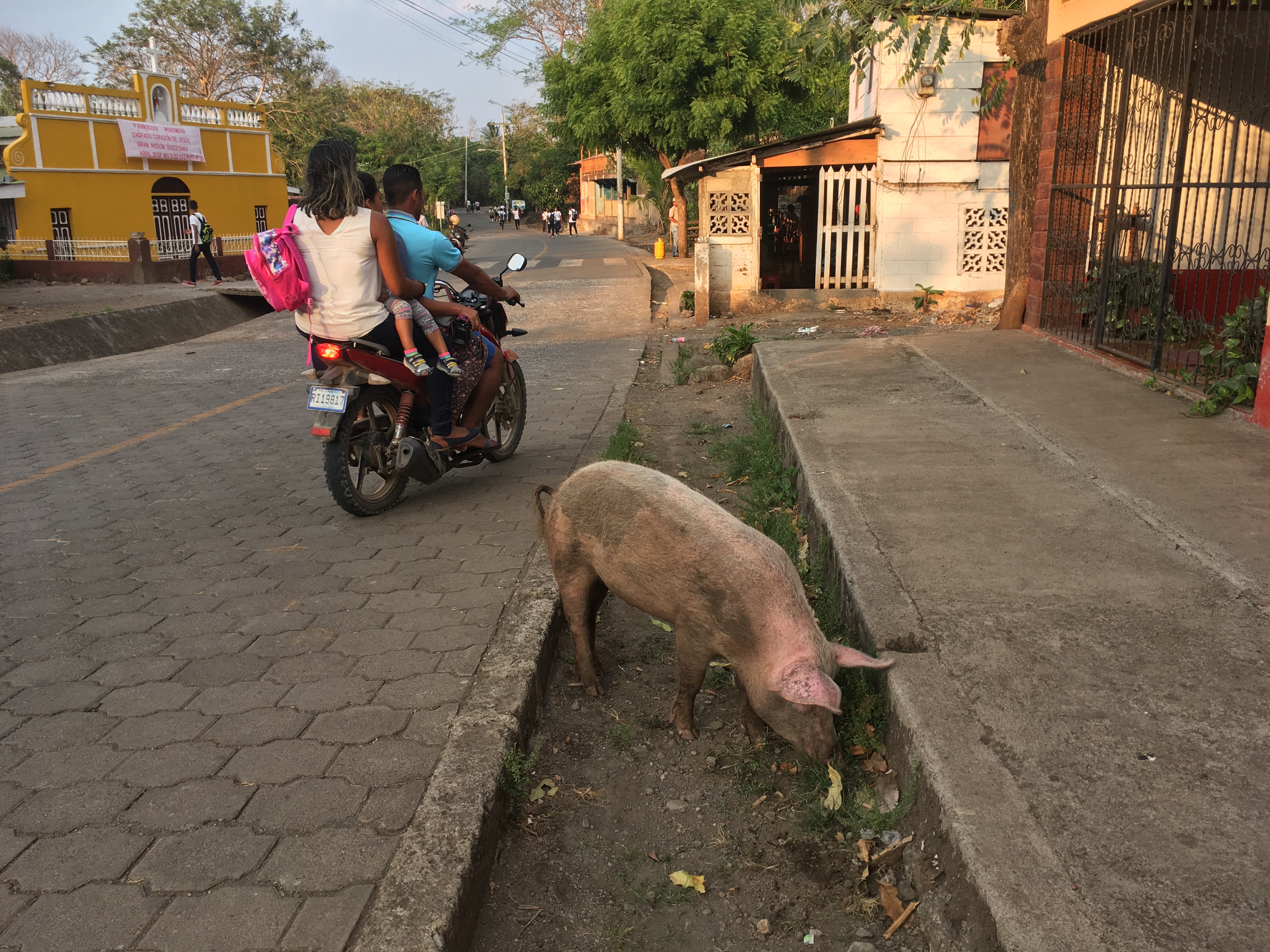

San Ramón is a lovely little town, a main streets, some small shops and a square around the church. 


We asked a security guard for directions, who took us to a man’s house who would apparently know. He did – we found the office but Darling, the  woman who runs things, was apparently in the cafe down the road. Where we had just had lunch. 


Back we went and asked for Darling. Nope, they young boy said, she’s gone out for a few hours. Luckily with Spanish we could communicate our intention and he made a phone call. Apparently we needed to go to ‘La Reyna’, where there was an old gold mine. There a lady called Elizabeth would be waiting for us…


We hopped on the next bus not really knowing where we were going – it turns out La Reyna is a cooperative community, with several families growing coffee and frijoles (beans). They also host visitors overnight. It’s a wonderful way to provide sustainable income in the community. 


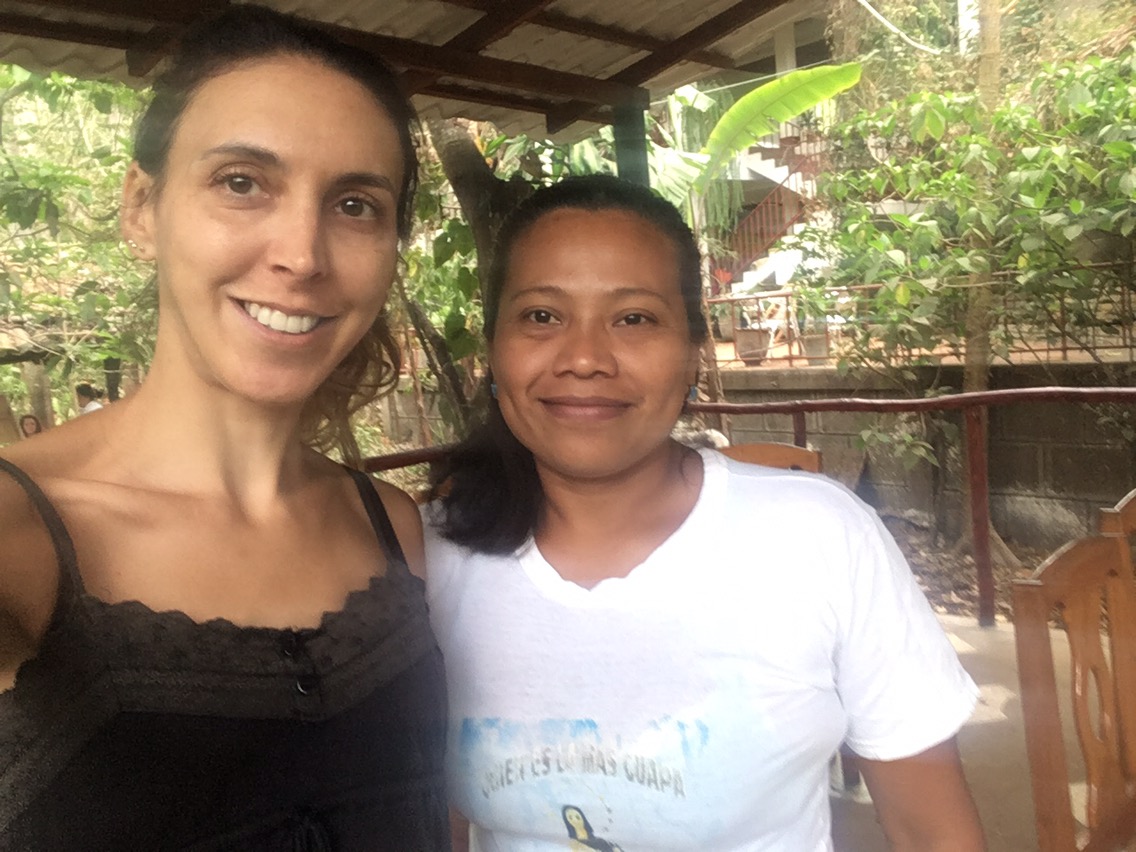
We walked along a dirt track wondering how we were going to find Elizabeth but magically a rickety wooden sign ‘information’ appeared pointing to a house on the hillside. And there was Elizabeth:

And Elizabeth was lovely! She explained how the cooperative works and organised for a young girl Bettina to come and take us on a walk up the mountain, around the coffee plantations and show us the process even though it’s not coffee season – all this and she’d get us back in time for the one and only bus back!

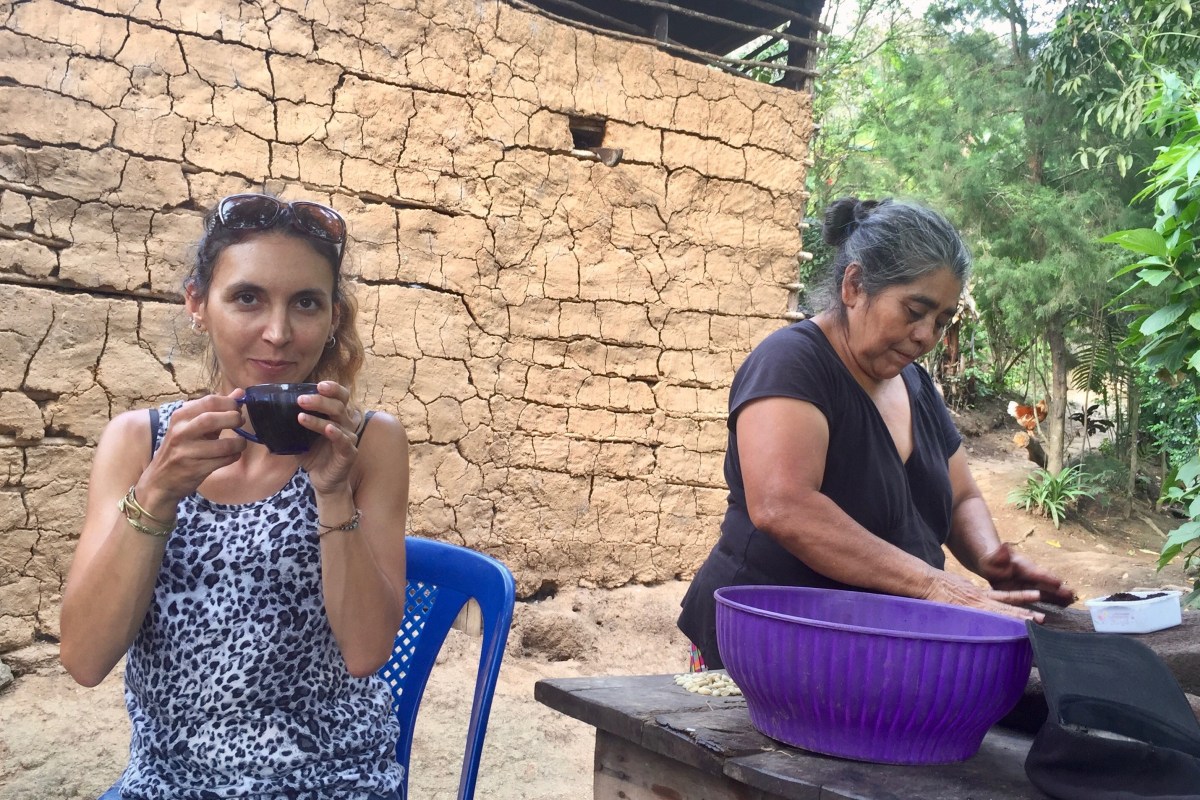
The land here is beautiful. We went to an old couple’s home and helped to roast the beans over a fire and then grind them – harder than it looks! We even got to enjoy our hard work with a fresh brew, with the chickens and dogs.

This was one of the best days I’ve had here in central America. When you make an effort to get off the tourist trail you are rewarded with authentic experiences and genuine people 😀

Chicken Buses, Compost Toilets and A Volcano 

Nicaragua – Jiquillo 

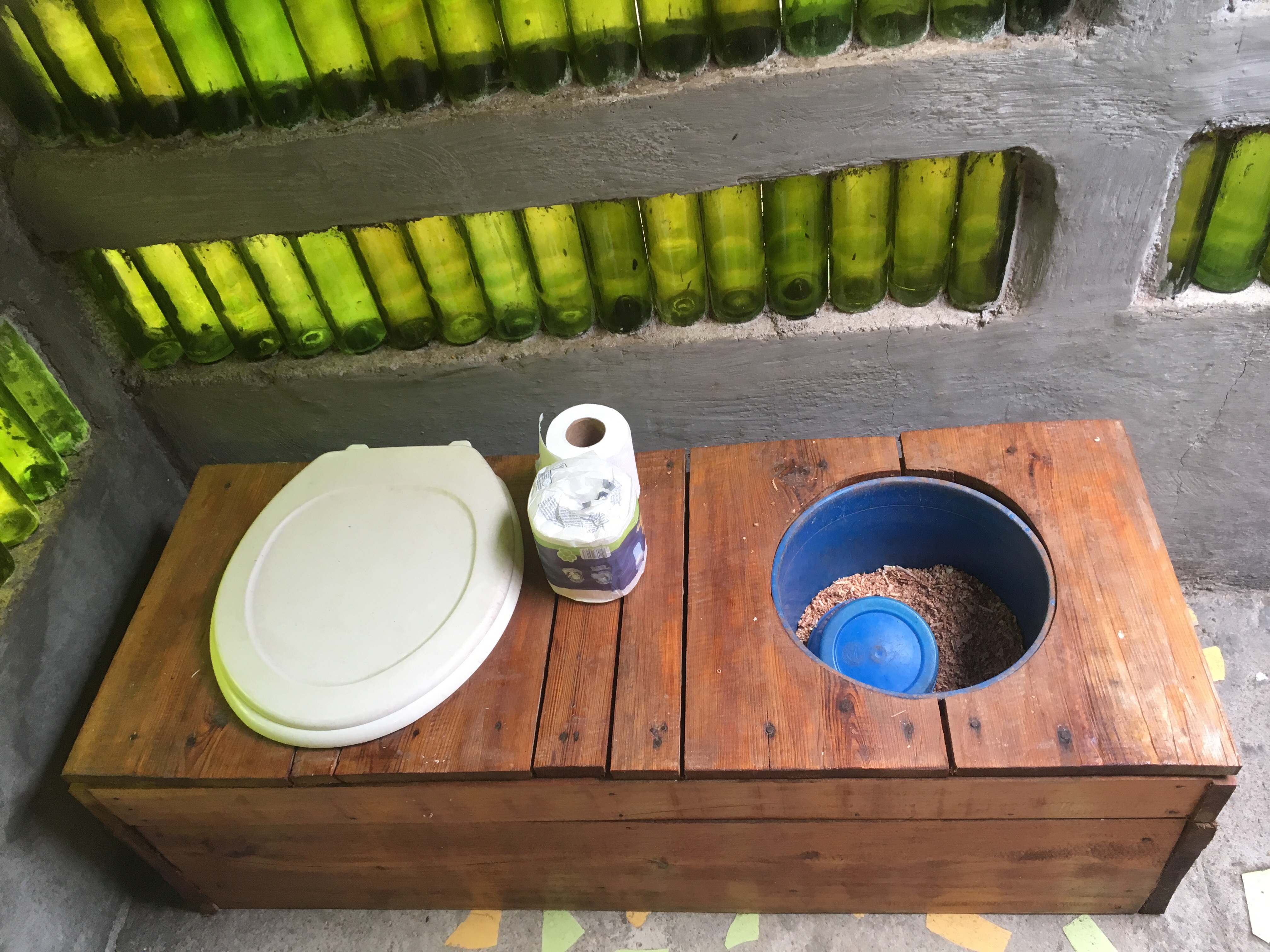
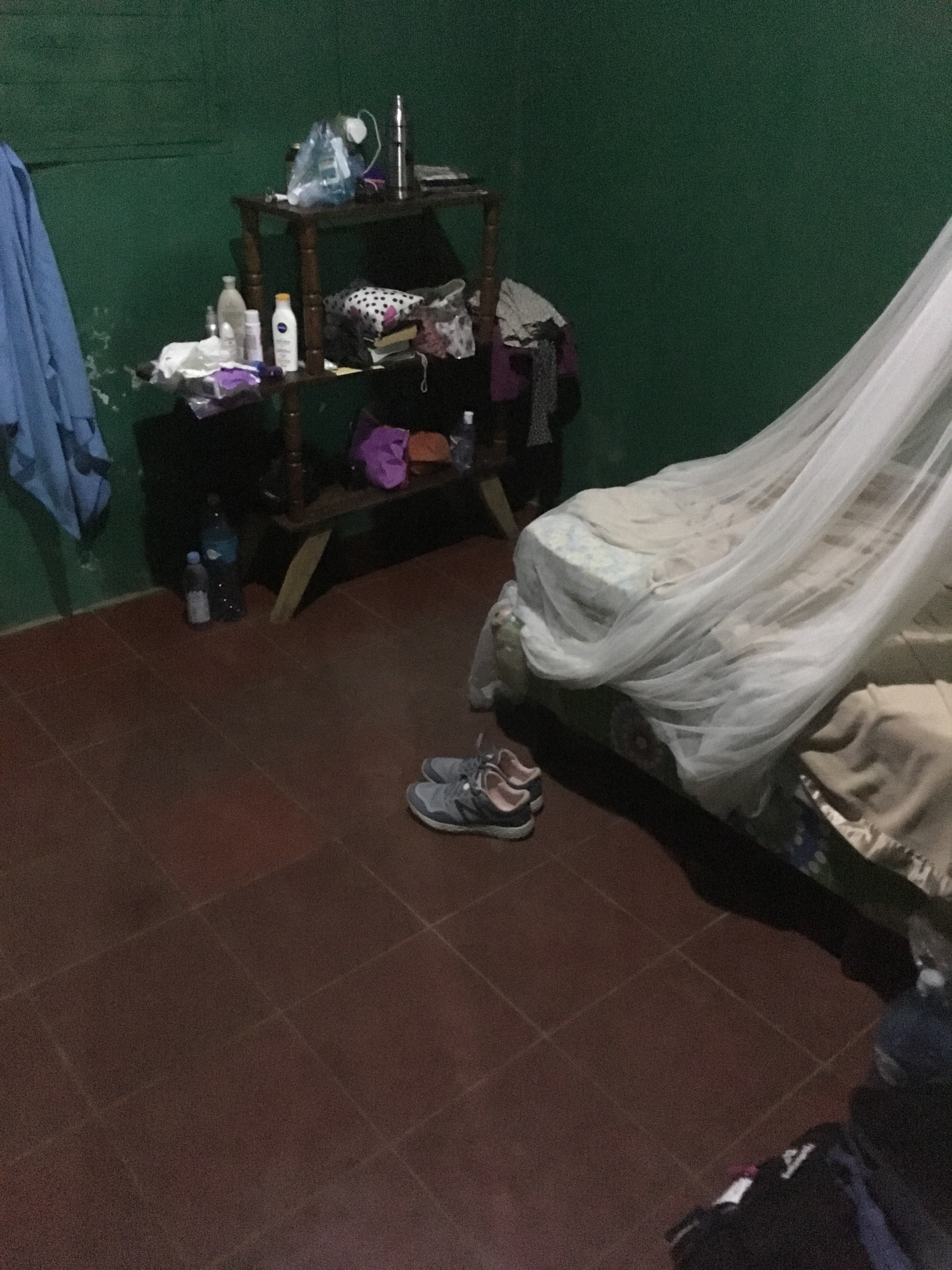
After the Tarantula incident I swore off any accommodation with the word ‘eco’ in the name. Yet I found myself in a bamboo hut on the sand  complete with open air shower and compost toilet – think cat litter tray. Welcome to Rancho Esperanza, hidden in the tiny fishing village of Jiquillo on Nicaragua’s Pacific coast and a day of hot, sweaty chicken bus travel to get here. Below is my lovely hut :


Rancho Esperanza is a tranquil set of eco friendly cabins on the sand, recommended to me by a few people I met at La Mariposa. The aim was relax, read, write or do nothing. It actually turned into ‘let’s climb a volcano in 90 degree heat!’ – more of that later. Here’s a photo of my outdoor shower and no flush toilet!

Showering under the stars
The journey is all part of the adventure in central America – it’s  worth a diversion here to explain the beauty of the Microbus … 

  1. They drive like lunatics and generally don’t stop on the way. After a few Chicken Buses you start to see this as a good thing.
  2. They leave when full – no need to worry about timetables!
  3. They cost less between 20p to £1 depending how far.
  4. They always fit more people in – I now see this a good thing although standing at a right angle isn’t comfortable. 
  5. You can’t miss your bus because the driver touts for business by shouting the destination name over and over and faster and faster – as if people might change their mind on where they are heading.

A confusing aspect of bus travel here is the number of different bus stations in a town, plus they are  usually in the middle of local markets. 


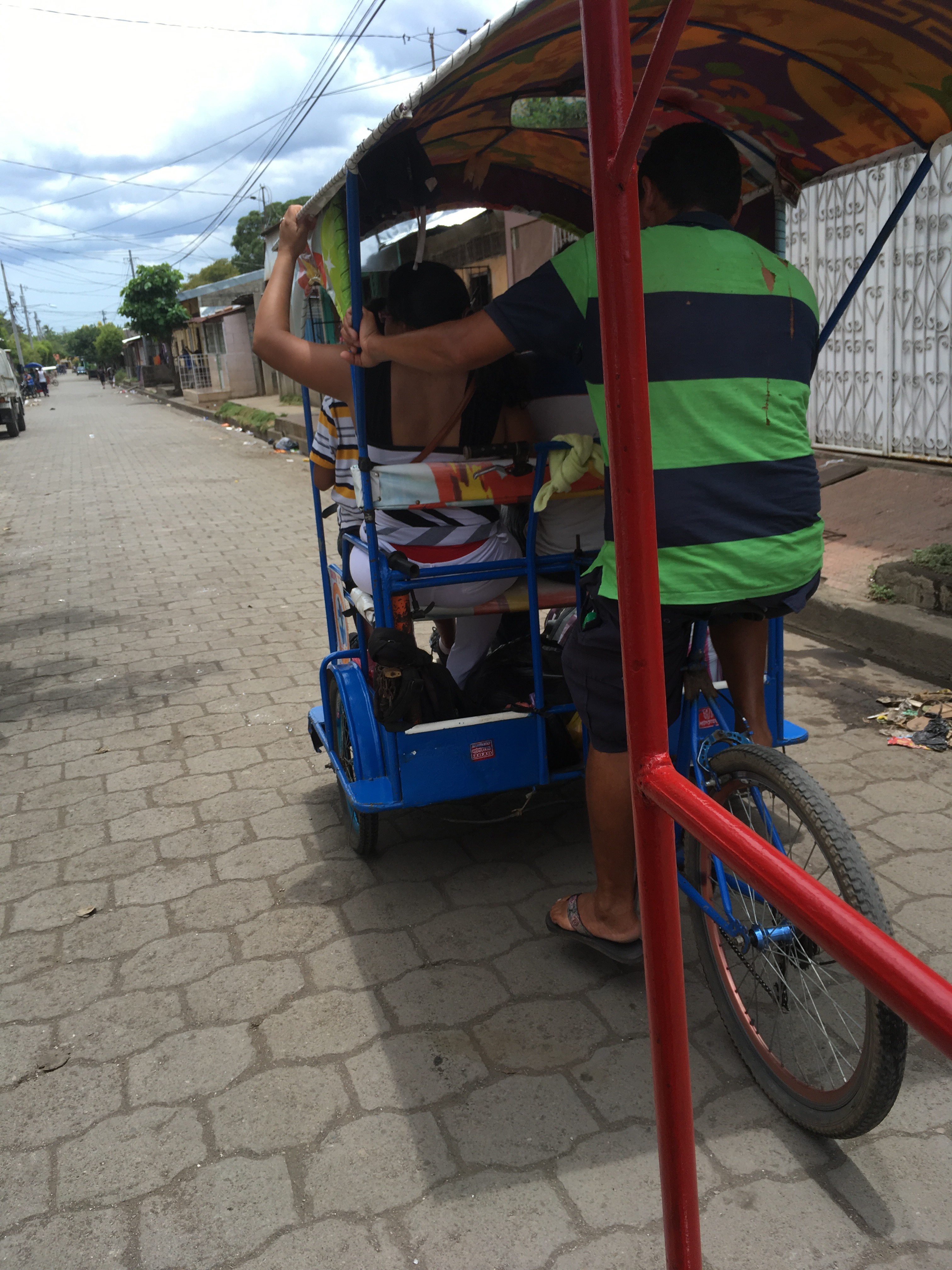
On the way to Jiquillo I got off the microbus in the town of Chinandega at ‘El mercado’ (the market) and took a bicycle taxi to ‘El mercadito’ (the little market). Zero other tourists so I just stood for 45 minutes with my bags in the sun hoping the bus would turn up. Of course it did and the friendly bus driver and local kids made sure to tell me to keep an eye on my stuff. I sat next an old lady and we chatted about how hot it was – discussing the weather is universal!

Which brings me on to the joys of the Chicken Bus…

  1. They look amazing! American school buses – pimped up, spray painted and customised to the route.
  2. Plenty of religion slogans to read, usually along the lines of ‘God has blessed this bus’. Good to know.
  3. There is an assistant who comes around to take payment, puts your bags or shopping on the roof and HELPS YOU ON AND OFF THE BUS. London bus drivers take note!
  4. They play salsa or bachata music, very loud.
  5. People will get on to offer you food and drinks at every stop – and there are a lot of stops because it stops for anyone, pretty much anywhere.
  6. You’ll even have a seat if you get on early.
  7. Don’t worry about pressing a bell to get off – the assistent will shout or whistle as he knows where you’re going! (Providing you’ve asked him nicely in Spanish)

Dozens of women got on board this already packed bus to offer us every kind of food and beverage possible – it was complete chaos.


I was helped off the bus at Rancho Esperanza and told I’d arrived by several other helpful passengers. There had been another backpacker on the bus all along – Christina from Switzerland.


The Rancho is an amazing place – Nate the owner is an American about my age who has deep links with the community, with some great projects going on. Jiquillo has been hammered by a Tsunami and is under constant threat from the sea. At high tide the water was lapping the only road through the village. I took a walk around with a local lady – people are living in huts with the sand under their feet here. She told me there is a big problem with the ‘machismo’ attitude and depressingly high levels of domestic violence which they are working to improve. Below is the sschool behind barbed wire (funded by Japanese) and main street:


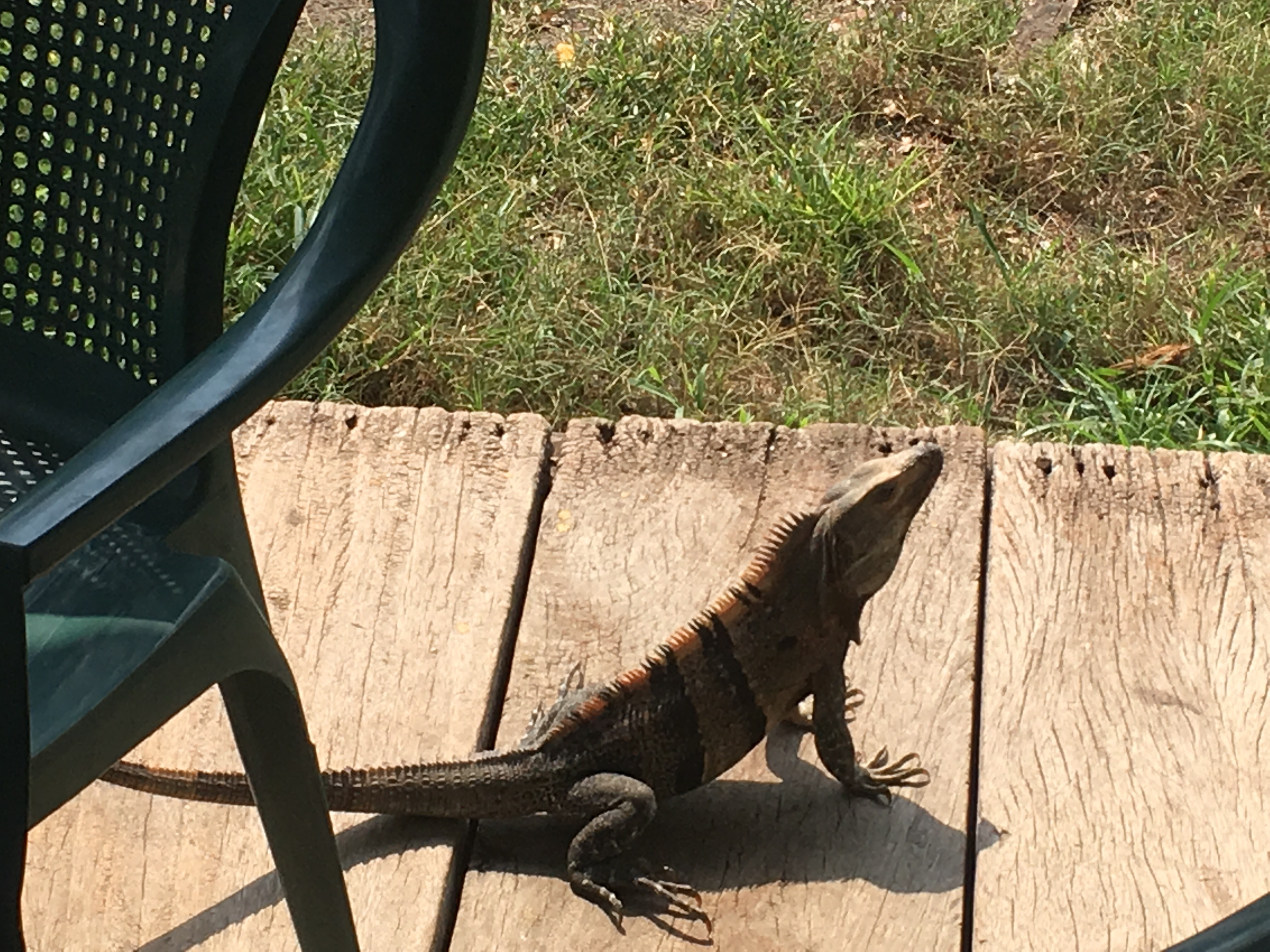
I loved my hut and all the lizards and frogs that I shared it with, until a tropical storm hit and I laid waiting for the hut to go up in flames or the next tsunami to strike.

We all had a go at climbing a coconut tree – the girls unfortunately failed spectacularly, not even getting both feet off the ground one inch. It looked so easy when our guide simply clasped the trunk in his arms and walked up to pick 11 coconuts.


Meals and served communal style in the main hut and there is NO WIFI!! Amazing – after dinner everyone played games (Monopoly is still no fun when you lose). Easy to make friends as it attracts like minded people (who don’t mind the compost toilet).


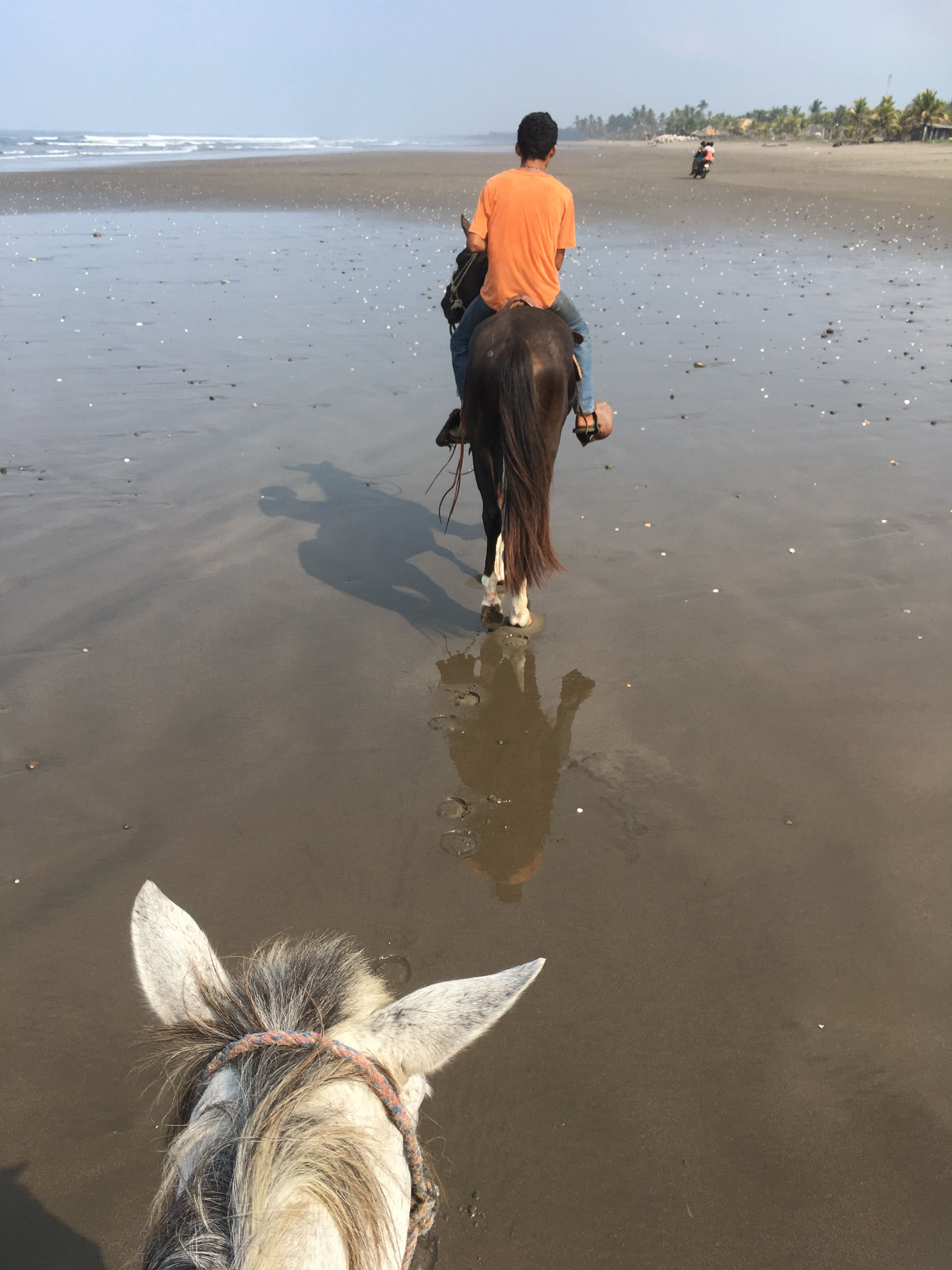
The beach here is stunning as it’s so remote, especially sunset. I opted for a morning horse ride which was beautiful as it was completely deserted. Although I wasn’t expecting my guide to be 15 years old, or to be chased by a pack of dogs – galloping from the start then!

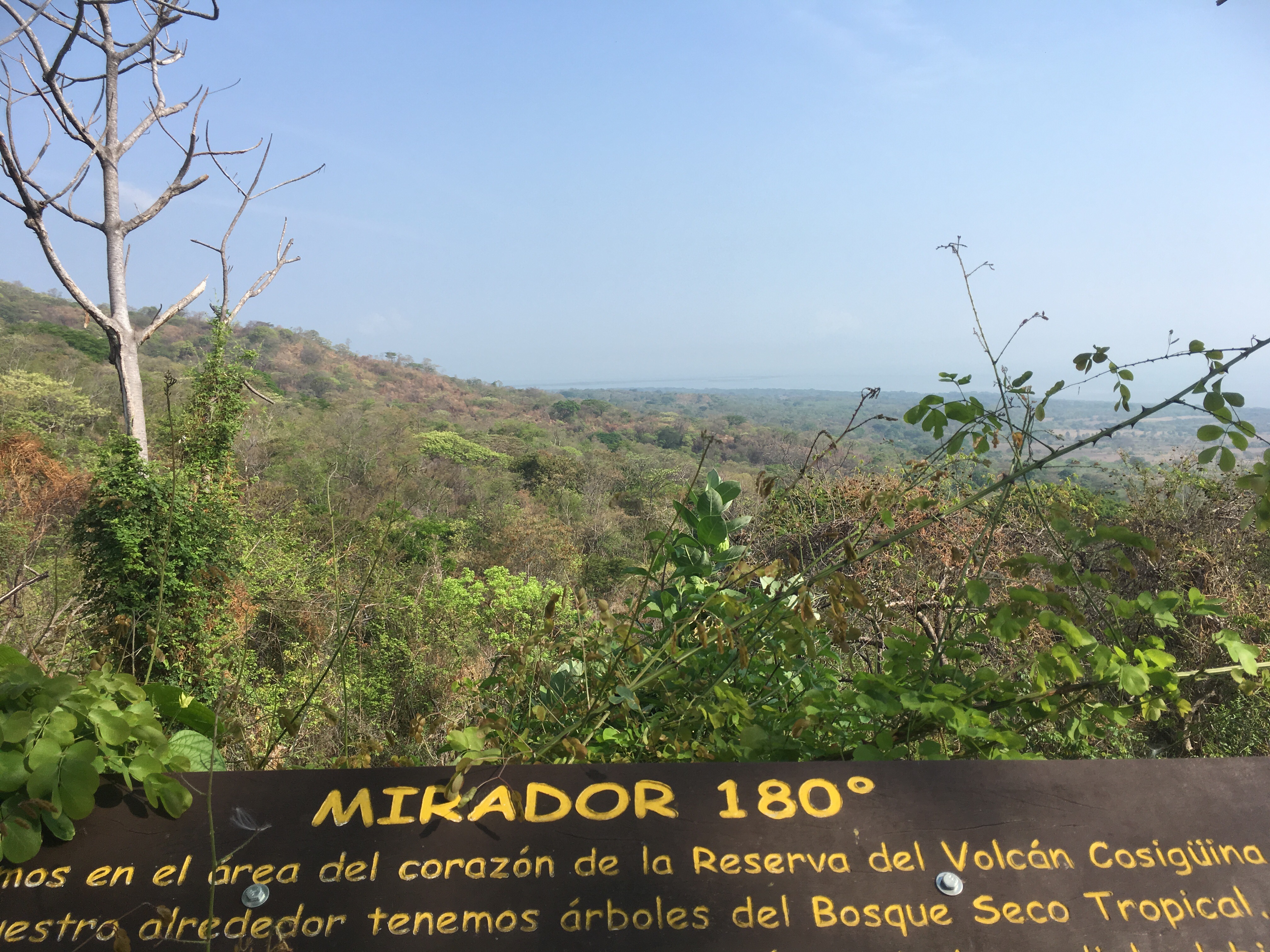
My ‘do nothing and relax’ idea changed dramatically into climbing a volcano when everyone else was doing it – over 3 hours uphill in 95 degree heat to reach the crater lake summit of Volcan Consiguiña. 


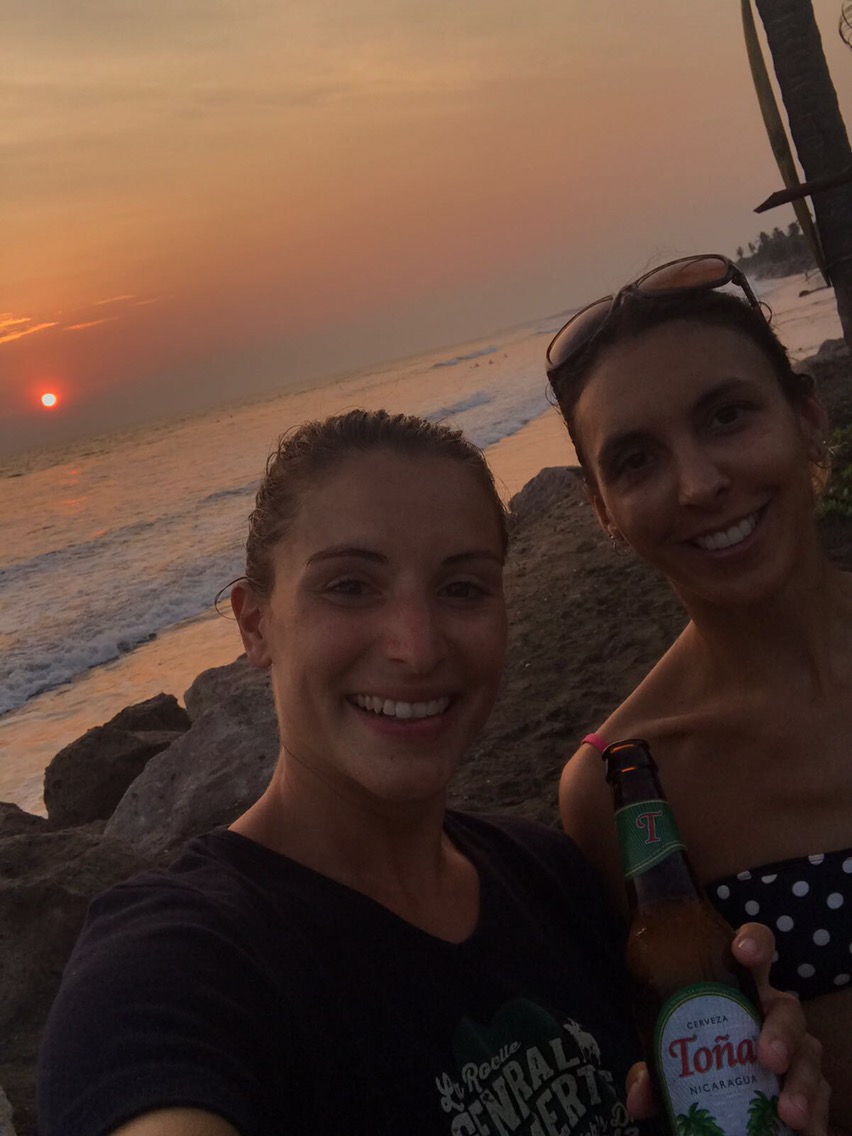
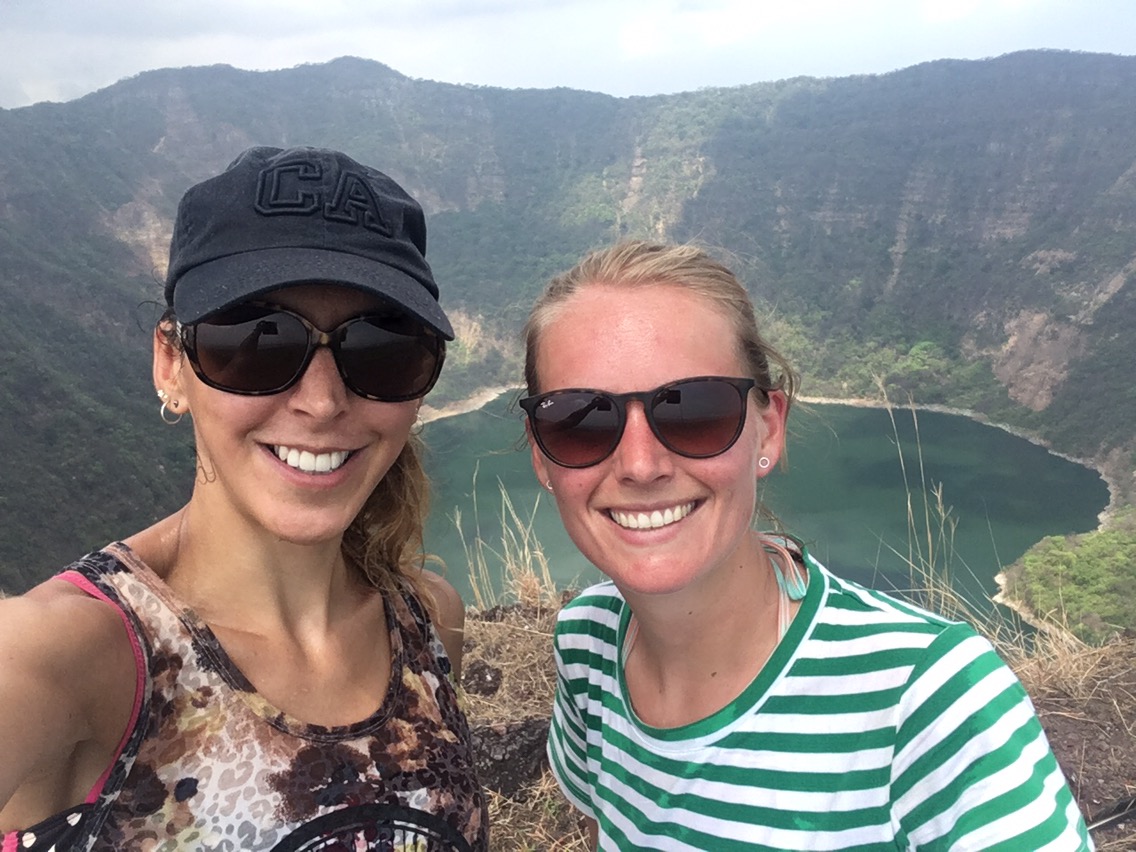
Totally worth it of course – the volcano is on the most south western part of Nicaragua overlooking the gulf of El Salvador and Honduras. Here is Anja and I at the top!


Unfortunately I sent my expensive walking boots home with Dad as I wasn’t planning on much hiking. So I slipped and slid my way down the volcano as my legs turned to jelly. One of the local guides walked behind me and each time I fell he pulled me up by my backpack before I hit the ground. Or he just held my hand. At one point the poor guy said at this rate we’re both going over the edge. 

Next stop is a tour of the Northern Highlands, the Sandinista stronghold towns of Matagalpa and Estelí – next catchup blog coming soon!

Two Volcanoes, A Circus and The Revolution 

Days : I’ve lost track 

Nicaragua : San Juan del Sur, Isla de Ometepe, León 

Travel companions : me, myself and I 

Chicken bus

I’ve spent the last few weeks travelling all over Nicaragua by chicken bus (old American school bus), microbus (souped up minivan),  in the back of pickup trucks (my favourite), ferry and horseback. I crossed the land border at Peñas Blancas after travelling by bus across Costa Rica. 
Local transport…

This is a very easy border crossing – “Coyotes” (money changers) are waiting to change any spare cash and the only question I was asked was ‘Do you need a bus? Or maybe a Nica boyfriend?’ – it felt good to be back!

Ferry to Ometepe Island

First stop was the surf town of San Juan del Sur. This was the only place I didn’t like much, mainly because of the influx of backpackers seeking the Sunday Funday pub crawl and the sweltering 90+ degree heat.

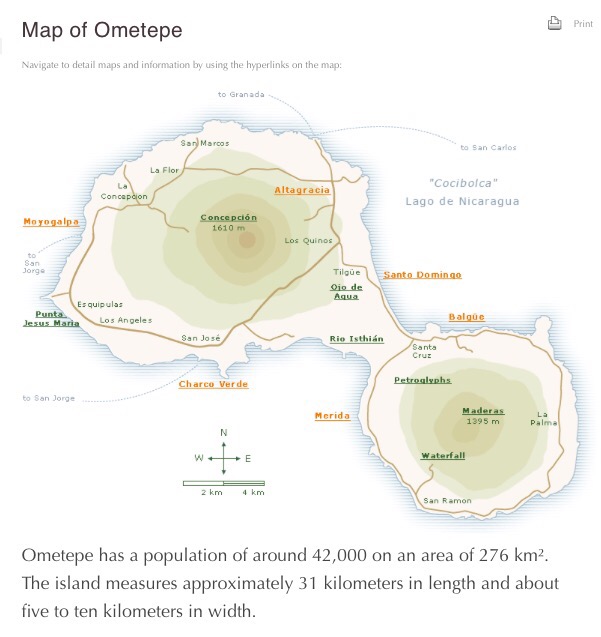
Map of Isla de Ometepe
I took buses and a ferry to the magical Isla de Ometepe, an island formed by two volcanoes, Volcán Concepción and Volcán Maderas, in the middle of the huge Lake Nicaragua. 

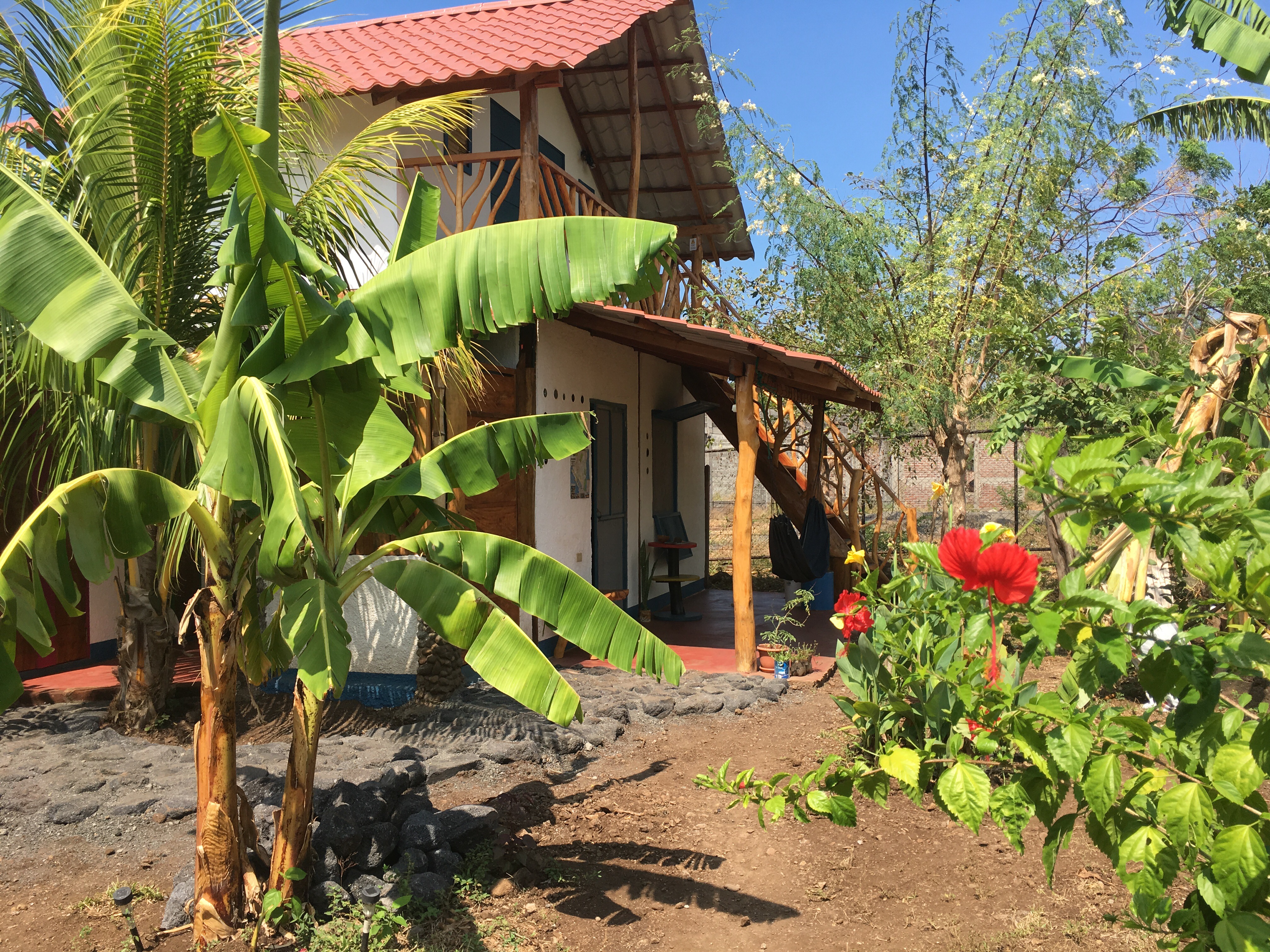
La Orraca Loca (crazy magpie)

I stayed in Balgüe, at a lovely new hostel called La Urraca Loca run by a Spanish couple in the countryside surrounded by little farms. I even arrived in time for a sunset swim.

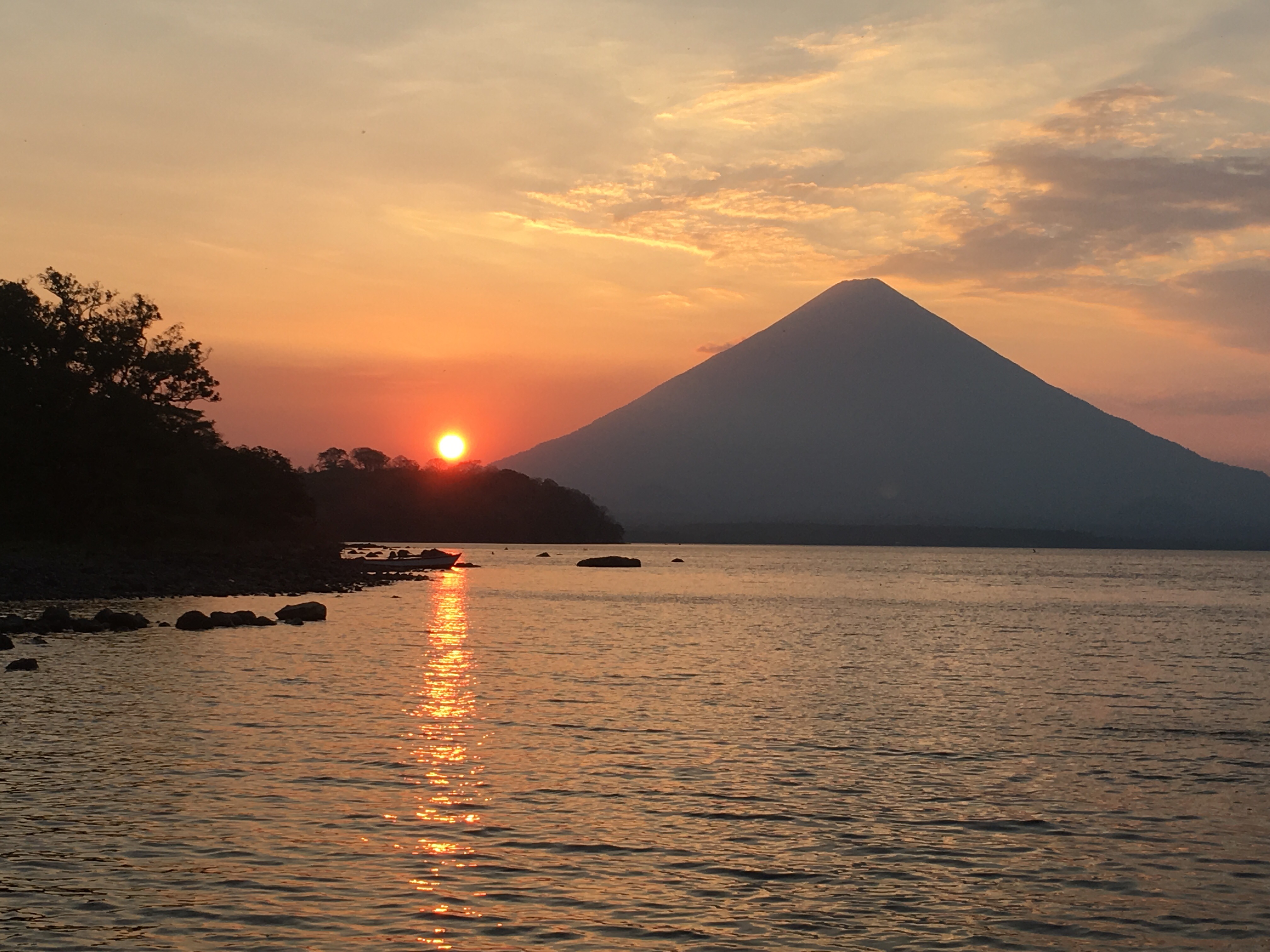
Sunset over Volcan Concepción, from the lake

Ometepe is stunning, possibly my favourite place in Nicaragua. It’s considered a sacred land – I visited some ancient petroglyphs at Finca Magdalena. There are over 2000 boulders with these mysterious markings, which may be over 3000 years old.

Helicopter?

At the hostel I met Liat from Switzerland, Andreas from Italy and Andrea from Germany. One night we went to the local circus which had set up camp nearby. It cost about 50p and was probably the weirdest thing I’ve ever seen – a goat that refused to walk across a plank of wood, a clown called Earthquake and an old man who seemed to run the show. We climbed up to the top of the rickety seating structure only to climb straight back down when we realised how rickety it was. Nicaraguans apparently have no problem half sitting half squatting for hours!
Earthquake works the crowd

Later on Earthquake changed outfits and did some acrobatics on an old mat, prevented from flying into us only by the old man who was poised to catch him. Needless to say I laughed all night long and the Spanish came in handy. An unexpected highlight was the farmyard chickens and dogs that just wandered around as they fancied. I only have one video clip that isn’t offensive to anyone or anything!

I took a very friendly local bus for about 20p to the national spring Ojo de Agua on my own and spent all my money on local jewellery such that I could only afford a coconut and plate of fried plátano for lunch. There was no need for the bus fare back as it didn’t turn up so I had to hitch in the back of a pickup with some others – it’s just the way it is here!

Ometepe residents

Ometepe is definitely on my list of places to return. After a few days Liat, Andreas and I traveled North together to León – it’s much easier travelling in a group as you can actually leave your bag and go to the bathroom! 

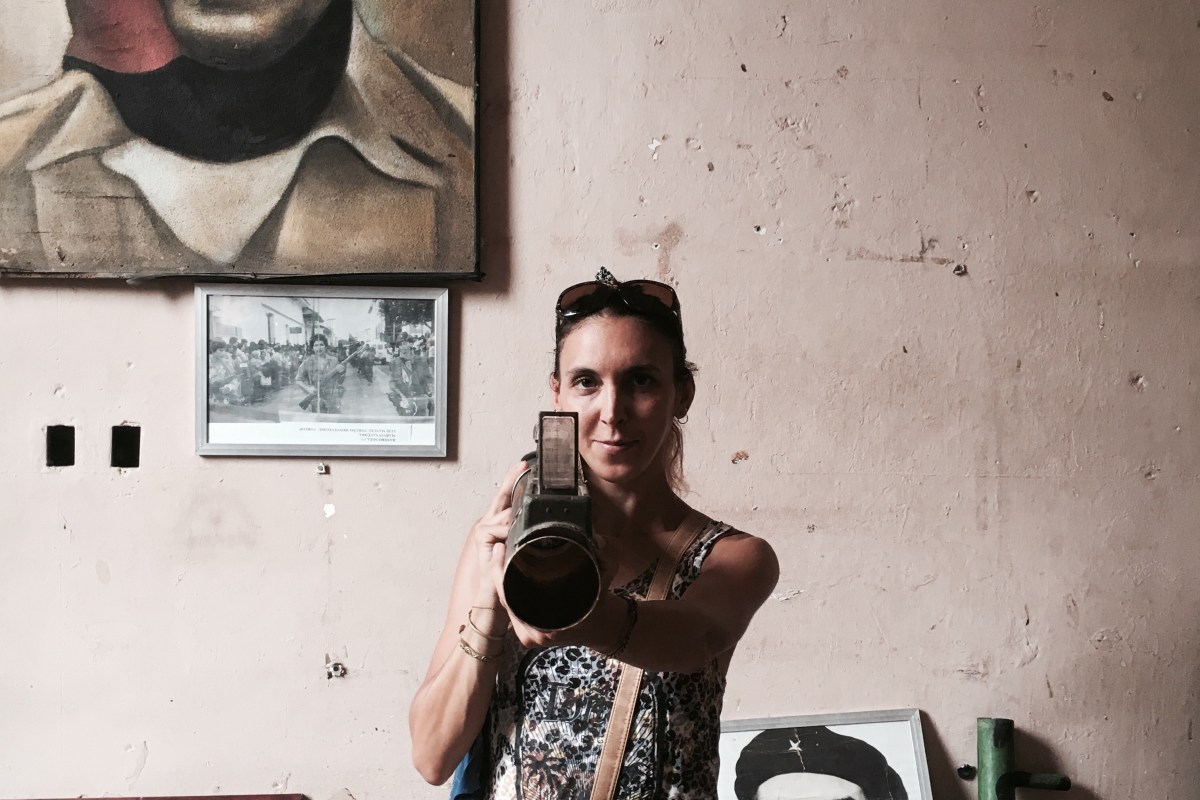
A real bazooka – the Revolution museum

León, a student city, former capital and Sandinista stronghold, was pivotal in the Revolution of ’79. It was the first city to be liberated. Most people here fought and this was a war where women and even Nuns were picking up guns. ‘A free country or death’ was Sandino’s stance. 

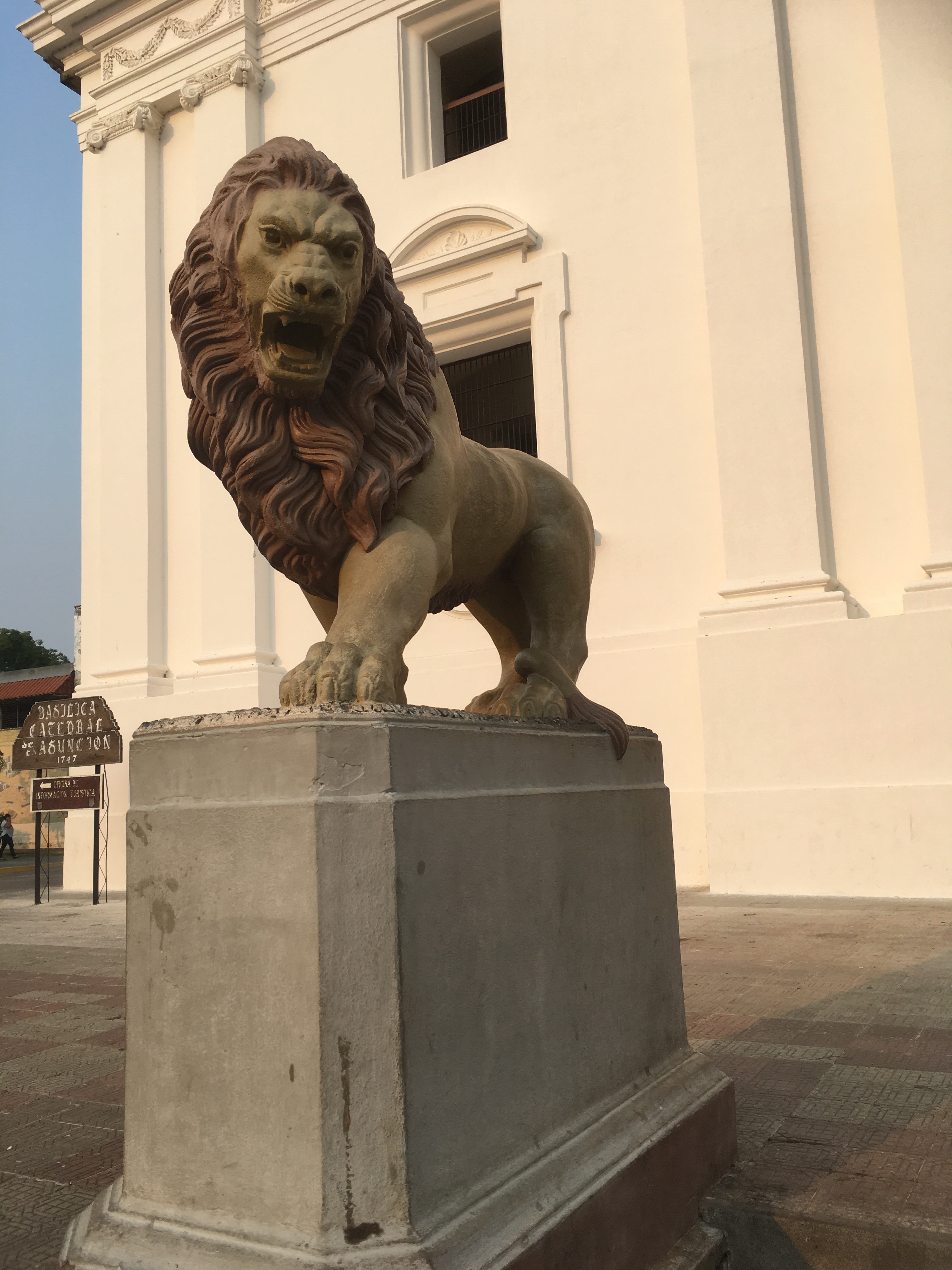
León = Lion

Nicaraguan history is fascinating – I’m at risk of becoming a bore who bangs on about the war but this country has been trampled by one dictator after another. First the Spanish and then the English took what they could get. Then follows a period of dictatorships until the FSLN (Sandinista National Liberation Front) overthrew dictator Anastasio Somoza. Then the American Regan administration funded the ‘Contra’ war in the 1980s via the sale of weapons to Iran (Google Oliver North if you’re interested!). The International Court of Justice ruled in favor of Nicaragua and against the USA, but the USA didn’t accept the verdict.

Murals inside the Revolution museum

Anyone visiting León should go to the History of the Revolution museum – this is top of my Nicaraguan experience. We met ‘The Beast’, who fought in the Revolution. They used nicknames – he showed us a photo of his friend who he only knew by pseudonym. The museum is itself is the former dictator’s Palace of Communications, taken over by the Revolutionaries and riddled with bullet holes. Inside is a crude collection of photographs and newspaper clippings propped up on the floor. 

Article in the museum

I have to thank La Mariposa Spanish School – one of the Revolutionaries shows you around the museum one on one and personally explains the articles, in Spanish (for over 2 hours).

Viva Sandino

If you don’t speak Spanish in central America yes you can get by – but you only get a fraction of the big picture. The chance to talk with someone (twice imprisoned) who went into dictator Somoza’s office at the end and drank his whiskey is priceless. Many taxi drivers also told me their experiences and loss of family members. 

Selfie on the roof – Andreas, The Beast, me and Liat

The visit culminated with a walk on the roof to point out the real life locations of key spots such as the HQ of the national guard. This alone was worth the entry fee of a couple of dollars.

On top of the world – La Catedral

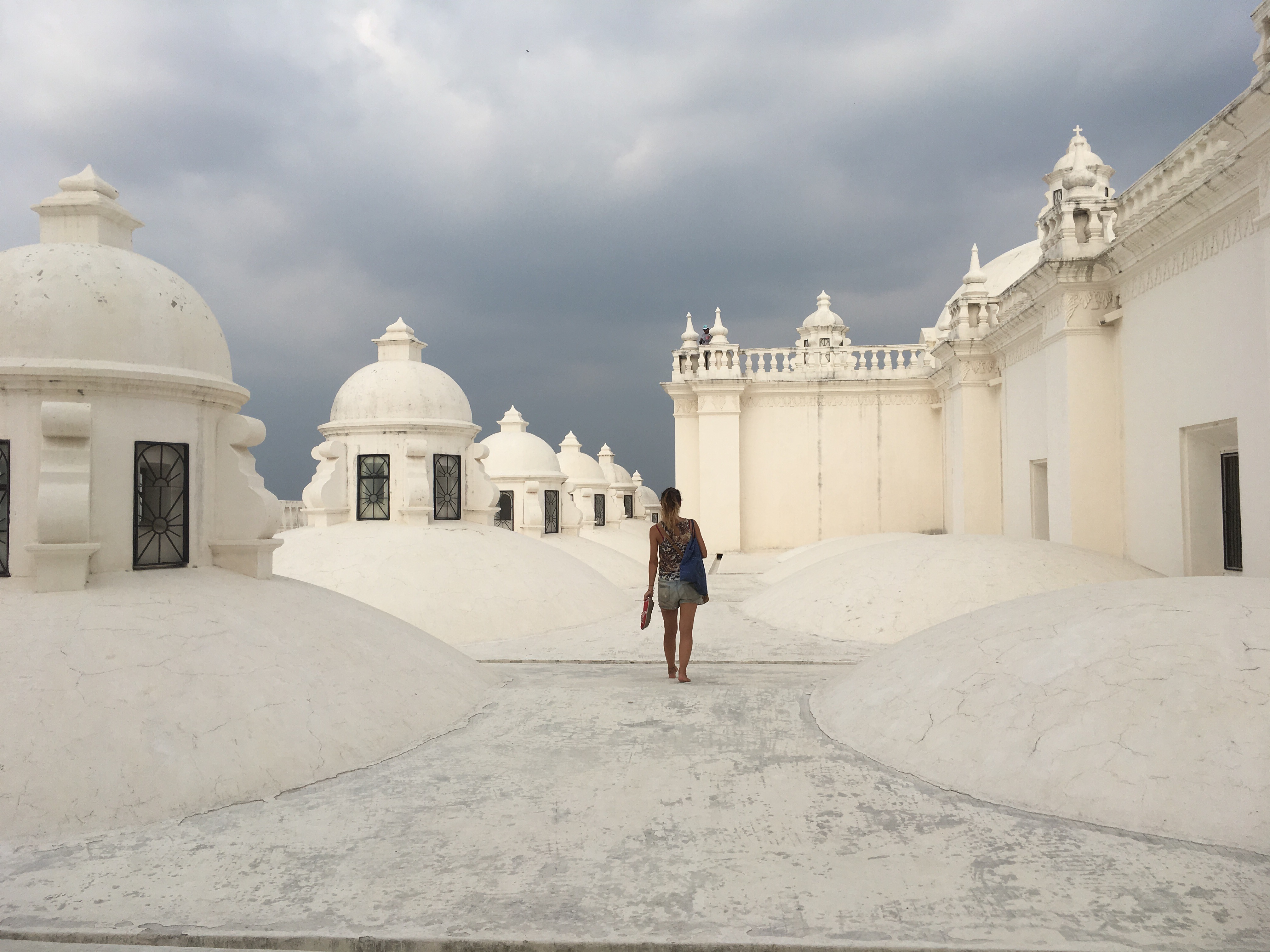
Another rooftop  highlight of León is the Cathedral – we climbed up to the top and were allowed to walk around as long as we didn’t ring the bell. There’s a fine for doing this which I thought was Vale La Pena  (worth it) but the security guy said he would lose his job and go to prison and never get married or have children, so maybe not.

“The City of Churches”

My next stop would entail a day of chicken buses north to the lesser visited fishing village of Jiquillo following recommendations from fellow students at La Mariposa…. Saving that for next time!

¡Que tuani ser Nica!

I’m writing this blog entry from Costa Rica as I’ve just left Nicaragua after an incredible 5 weeks. I miss it already! Here’s a video I took on my last day that captures a fraction of how amazing La Mariposa is:

Error
This video doesn’t exist

And one of the parrot playing hide and seek with me just for fun:

Error
This video doesn’t exist

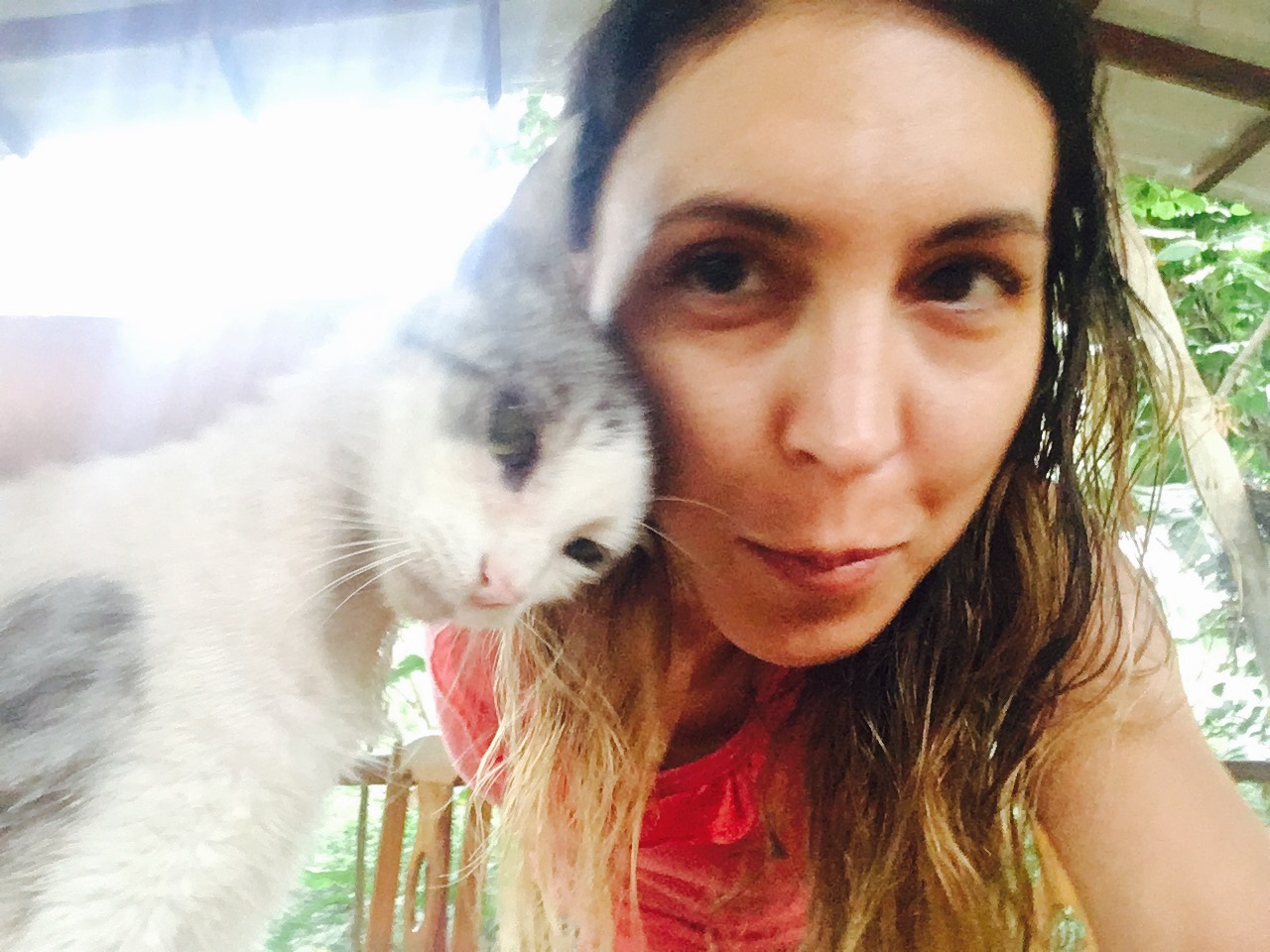
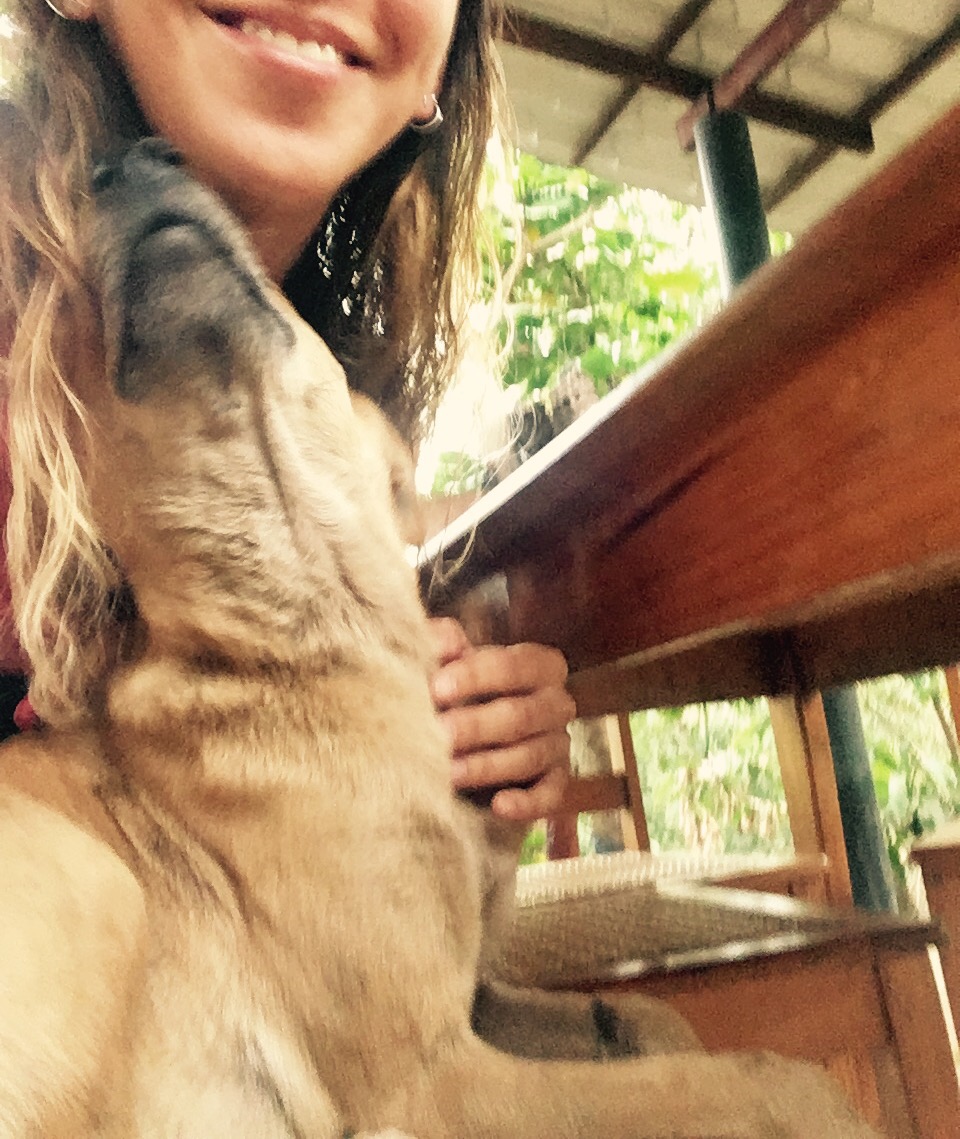
Last week I celebrated my birthday in Nicaragua and it will be very hard to beat. Starting with kisses from my favorite furry friends who were waiting to greet me 😀

Preciosa

My new BFF Madeleine made me a card and little Emily must have sung Happy Birthday ten times.


Next my teacher Jenny brought avocados with her so we could go and buy fresh tortillas from an old lady down the road during our class.

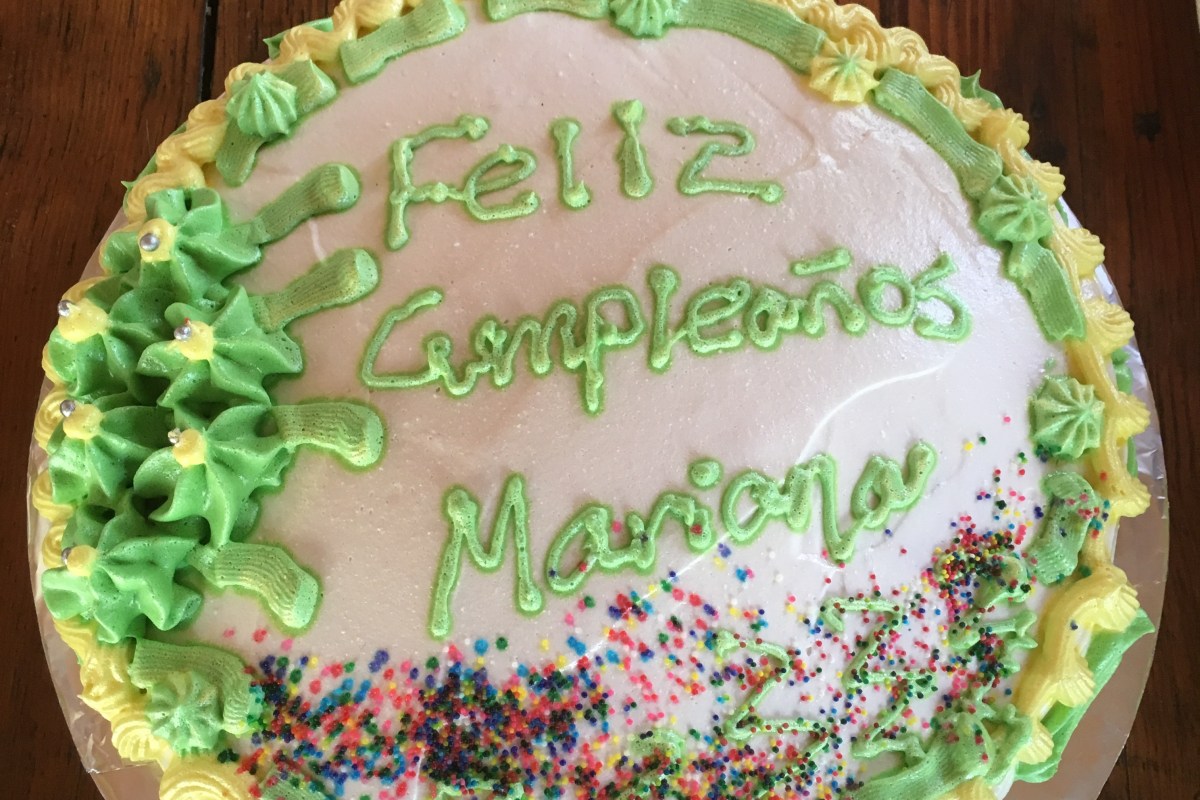
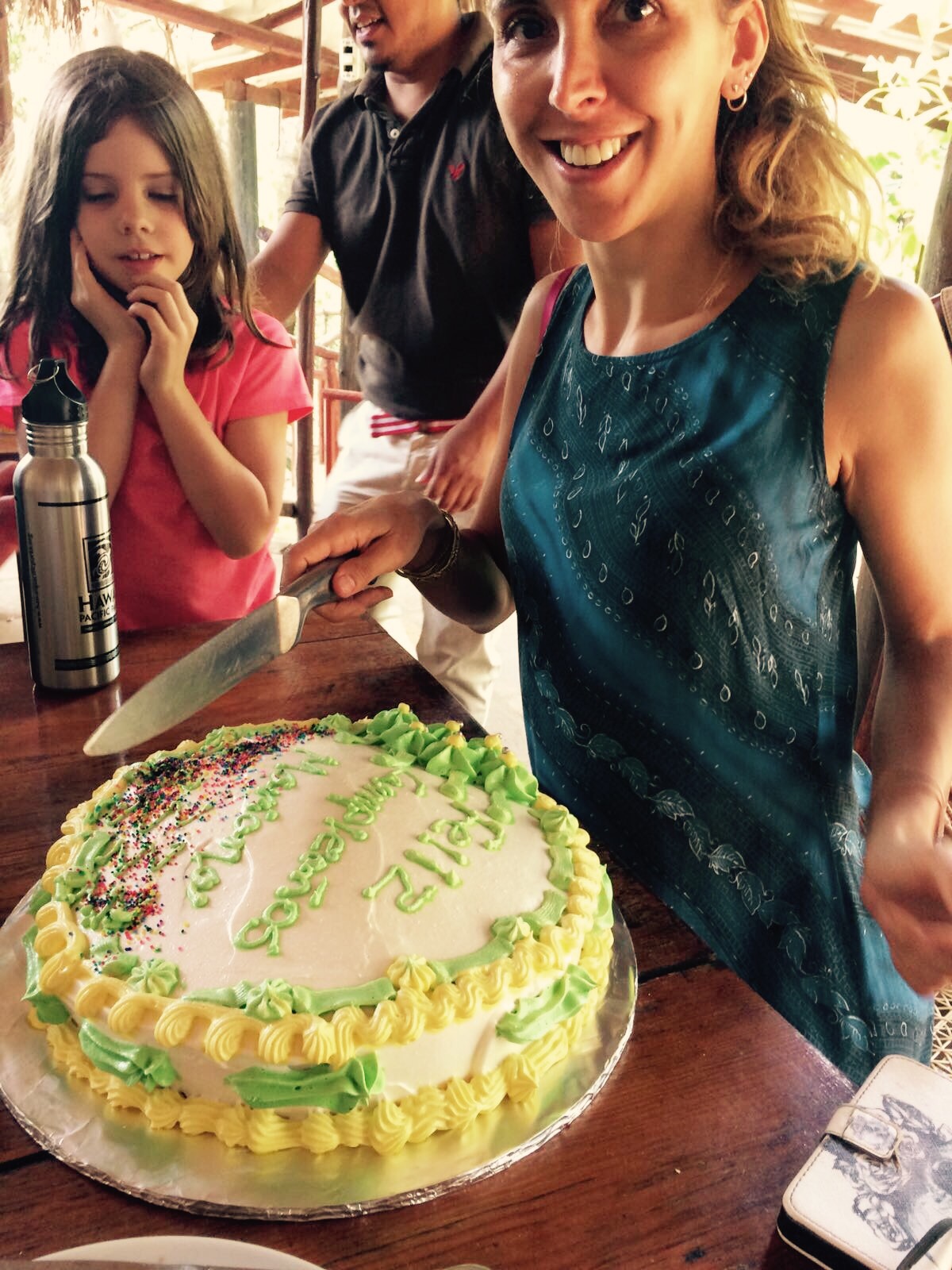
At lunch the lovely people at the school organised a huge cake with my name and Gigi performed a surprise traditional dance in my honour. This meant a lot since she hates to wear dresses!


​​
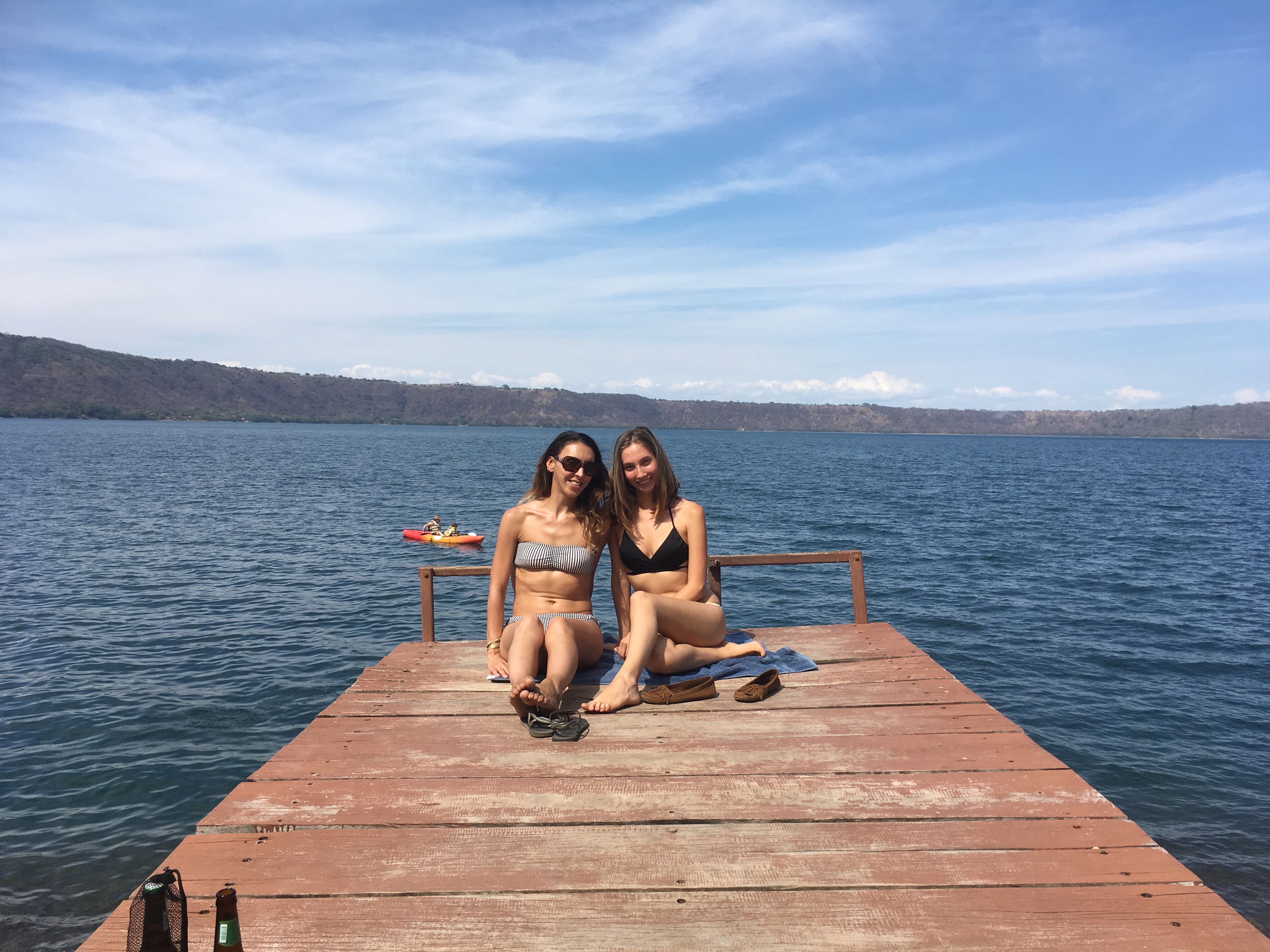
Everyone went to the Laguna de Apoyo for the afternoon and we floated around on inner tubes in the lake drinking beer and cocktails. 

Madeleine and me floating in tyres
My birthday

I was so reluctant to leave this place that I extended my stay again until the day I absolutely had to be in Costa Rica to meet my travel companions for the next two weeks. And the last weekend here was amazing – two near death experiences, one on a horse and one in a microbus 😎

Princesa
A man, his horse and his machete
I’ve rediscovered my love of horse riding and gone out with Princesa on every opportunity. Until now I’d been fairly cautious but I’m trying to adopt more of a ‘live each day as if it’s my last’ approach – letting Princesa loose to gallop could very well have been my last day on earth!! One moment I’m cantering calmly, next minute another horse has caught up and we are racing neck and neck. These are beach horses and they love to run – they were picking up speed and now flat out galloping on the trails. I realised Princesa was not going to lose. ‘Can you slow your horse down?!’ I screamed – ‘I can’t!!’ came the response from the other girl. I can still hear the thundering hooves. Just when I thought this is only going to end when I fall off, no helmet of course, we approached a sheer drop – of course the horses knew this was their rest stop and casually came to a halt leaving us in a daze waiting for the others to catch up ten minutes later.

Madeleine and I also took a trip to Masaya to look for a t-shirt I was after and experience the bus. The minivan arrived with the muchacho shouting “Masaya Masaya Masaya!!” through the open door. Sat with our back to the driver with heads bent due to being a foot taller than everyone else and the man opposite guarding  his crown jewels as if I’m about to kick him. We explored the local market which was huge and and hot and selling everything from live chickens next to hair clips and shoes (I got a pair of sandals for $2). We waited for the bus home for a long time at the front of the queue but suddenly everyone started running and throwing their bags through the windows to grab a seat – I was somehow last to get on. Madeleine physically dragged me on and a lady made everyone squash together to fit me in ‘because you are thin’ – when I got off I had cramp in my stomach.

I made some amazing friends here who I already miss after spending every day together, not to mention the animals. Madeleine and I have had so many laughs – I’m going to visit her mum in Texas! 

I’ve discovered that the saying “90% of communication is non verbal” is rubbish – there have been some hilarious misunderstandings like me asking ‘are you married?’ instead of ‘are you tired?’ and accidentally cutting short a ride by saying ‘nah I’m not bothered’ instead of ‘I don’t mind ‘.

I’ve also discovered that in Nicaragua if a man suggests ‘going for a walk’ it does not in fact mean going for a walk – as I found out when I accidently went on a walk 😳

Back of the bus with my BFF

The best teacher, Jenny
The amazing cook Marisol
My coffee buddy Tracey
Gigi and me
I doubt there is anywhere else quite like La Mariposa and I wish I had several more months there. I’ve discovered that Nicaragua has many more places to visit so I’ve decided to travel the country after Costa Rica and Panama 😎 For now it’s time to say Hasta La Proxima!

La Mariposa

La Mariposa Escuela de Español 

San Juan de la Concepción, Masaya, Nicaragua

Days 32-52

‘Sí’ he said, ‘es una Tarantula’. I had upgraded from a room in a homestay to a rustic Cabaña, or ‘tree house’. Amazing view out to the jungle and a little too close to nature… I was making up my mosquito net and as I moved the mattress I saw a leg poke out from under the bed. The leg was so big I thought it must be a nice gecko so I leant in with my head torch for a closer look – at biggest beast of a spider, eyes glowing in the light.
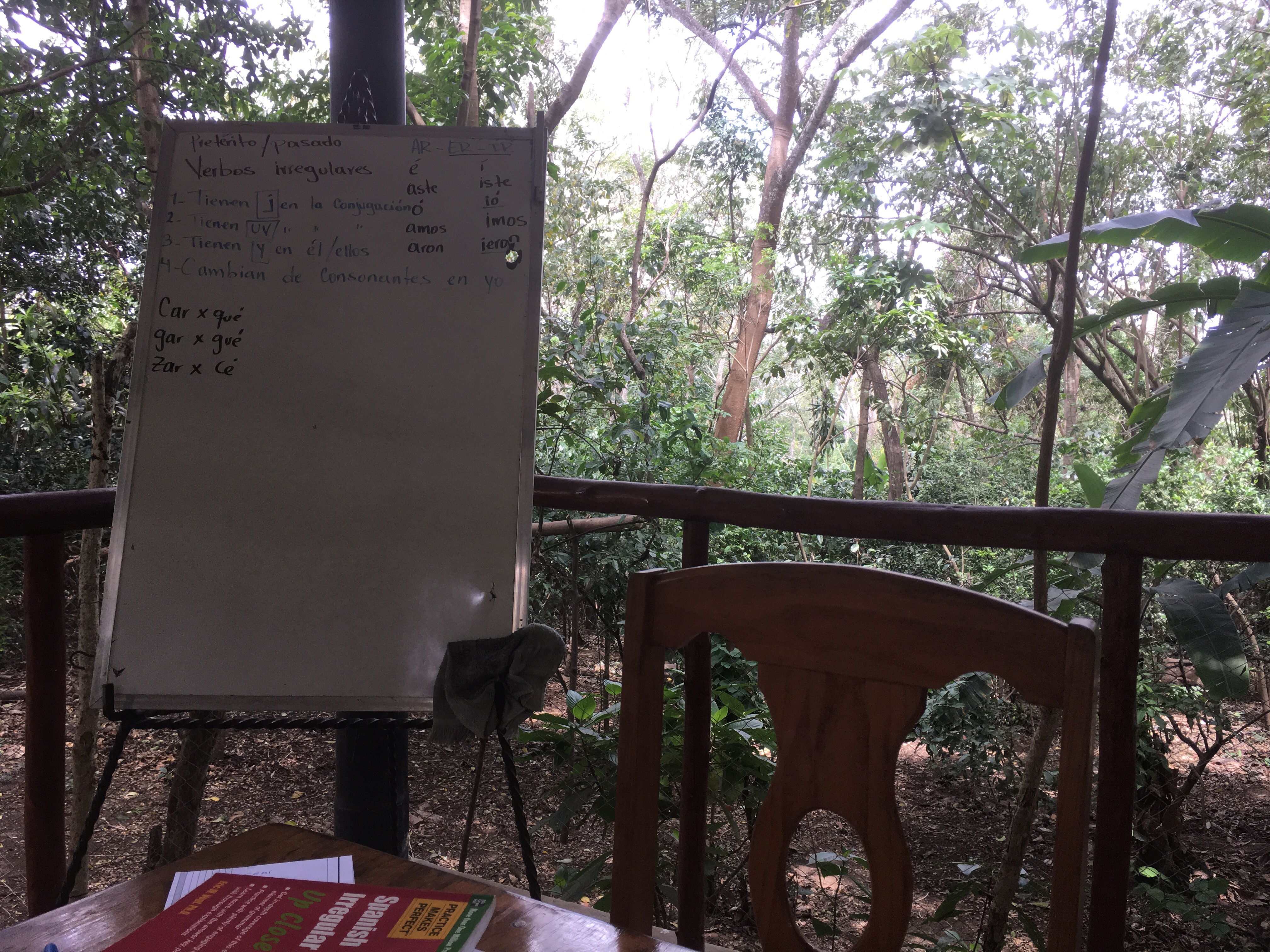
Tarantulas aside, the last few weeks have been amazing – one-to-one Spanish tuition, home cooking and fun activities with a great group of fellow students. I keep extending my stay as I don’t want to leave!

6.30 coffee time
New friends

I’ve settled into a routine with the other long timers – 6.30am coffee with Tracey from Canada and freestyle exercising with Madeleine from the USA. I have my favourite dogs and cats who greet me in the morning and join in the stretching.

Exercise buddies!

This kitten arrived two weeks ago in a terrible state – Now look at her!

Lunchtime!
Pelusa aka Fluffy
The Mariposa Spanish school is truly amazing. It was started 10 years ago by the wonderful Paulette who moved over from England with her Nicaraguan daughter Gigi whom she adopted almost 30 years ago. It was set up as a project to employ local people and now has around 75 employees, not counting the numerous community  projects – which are funded by the proceeds of the hotel. We were able to visit some of the projects, my favourite being Los Pipitos. This provides horse equine therapy for disabled children, including those suffering from celebral palsy, as the movement really helps them. It also funds a physiotherapist who can do home visits and a pool for hydrotherapy. The horses have all been rescued from various places.  Many are simply living out their days whilst others give rides to the kids. There is no government support for disabled children in this area. Leading on to the next project, teaching children English in the extremely poor village of Panamá. It’s close to Volcán Masaya and the residents suffer many adverse health effects – rotting and discoloured teeth, particles that damage skin and eyes. They can’t use tin for the roof of their homes as it corrodes. Yet the biggest problem is that there is simply no water for half the year. They rely on La Mariposa buying and delivering water to the village twice a week. La Mariposa teachers are running this centre for local children – we visited on the opening day and joined in the party.

School buildings in Panama
 
Unlimited bananas
 

Piñata party in Panamá

Animal rescue is another big part of La Mariposa. One day a policeman dropped off a box of monkeys that had been confiscated from the illegal trade – Paulette had to bottle feed them. Numerous parrots (many now released), dozens of dogs and cats live at each property as well as the worker’s own homes. The school also organises a spaying program. And that’s without mentioning the conservation projects – including  buying land to prevent development.

All of this relies on people visiting the school or directly donations.

Eco Cabaña – Tarantula not shown
Dutch courage to face the Tarantulas
The coffee here isn’t strong enough  – one cup doesn’t cut it. Luckily Tracey shares my addiction so we ventured out on an expedition to replenish our supply. We took a local microbus – an old van that’s been modified to fit rows of seats, into Jinotepe. Each van has a Muchacho (young boy) hanging out the doors touting for business and shouting the destination. We got on – there were no seats left and the roof wasn’t high enough to stand up so we were bent over at right angles. We’d been told to hold on straight away – I now know why since the bus sped off with the door still open. 50mph and I’m hanging on for dear life almost outside of the van, Tracey keeping me in by my arm. “Oh well” said Tracey, “at least nobody else will get on as the bus is full”. Ha!! It wasn’t even considered half full. Tracey was bumped further away from me to the back of the van until I could only see her hat and I was squashed between some boxes. We were also lucky not to be kicked off for trying to haggle down the price to 5 córdobas (15 cents) – I thought we were being charged ‘tourist prices’ but actually we’d misheard the price the school told us – the passengers were laughing because I tried to pay so little not because I was being ripped off!

5pm wine
Top student, Preciosa
 

We spend a lot of time watching the monkeys and playing hide and  seek with the parrot, who shouts “Hola!” It’s amazing to see them every day up close. We’ve been here so long we don’t like new people arriving and taking our hammocks.

Local residents rescued from the illegal trade

One of my favourite activities has been horse riding. I hardly ever ride horses (since I was a child) as I don’t agree with any exploitment or mistreatment which is sadly often the case especially abroad. But here I can ride the rescue horses once a week. I’ve taken to riding the guide’s horse Princesa that the others aren’t allowed to ride – it’s like riding a bike!

Riding to the Ridge
Princesa was found with her feet tied up and bleeding, rescued with her foal

I sadly have to leave next week. I’ve been on several excursions and learned so much about Nicaragua that I’ll need to write another blog post very soon!

La Vida Nica

San Juan de la Concepcion,Masaya, Nicaragua 

Days 25-32

Accommodation: homestay 

Nicaragua. Volcanoes. 17 to be precise and 5 of them active. The second poorest country in the Western hemisphere after Haiti. Civil war and the Sandinista Revolution of 1979. Hawaii was a holiday, Mexico was familiar but Nicaragua is neither.

Volcano land
Flying over mountain ranges in Mexico

I’m in Nicaragua for about a month, primarily to study Spanish. For the last week I’ve been living with a family in San Juan de la Concepción. This is a day to day life without running water, without comforts or ‘things’. The capital, Managua, was almost completely destroyed in 1972 by an earthquake. The frequent tremors account for the lack of proper buildings.

Jungle and Volcano
 Nicaragua is also fairly recently recovering from civil war. In one week I’ve learned a lot about this fascinating country with its dramatic landscapes.

My room

It’s exhausting at first – dusty, hot and noisy. Music blares from houses, shops and cars. There are street dogs everywhere and when they all start barking you know about it. Sleeping in the house is near impossible- there is about a foot gap between the top of the walls and the ceiling so I’m woken up by the noise of the birds (not by the noise of the couples, as I told my Spanish teacher – the words for bird and couple are very similar!), dogs, TVs, music, people leaving for work at 4am. Not ideal since it’s not advised to go out alone after dark and there isn’t anything else to do after dinner!

My homestay and Chile the dog

The village gets water twice a week so each house stores it in a large tank. My house has a western style toilet but it can only be flushed with a bucket of water. Even washing your face requires effort – lowering a bucket on a string into the tank and lugging it up again. A shower means pouring the bucket of water over your head.

Water tank and washing area
Bucket shower anyone?

The Hippy Junkyard of Hawaii seems like the utmost in luxury now! But people take pride in their appearance and appear clean with pressed clothes. 

Nicaraguan house

After a week I’m still not entirely sure who lives here (apparently 8 people do) and which child belongs to who – it’s become too late to ask now. There is a slightly crazy dog, possibly for security- the houses are open at the front until bars are pulled across at night.

Moto taxi

On the journey from the airport in Managua to the region of Masaya, we overtake and change lanes more than I’ve probably ever done in my driving life. Salsa music blares from the radio in the ancient truck and we pass an accident almost immediately. Public transport has three forms:

  1. Microbus – minivans crammed with people, some hanging out of the door.
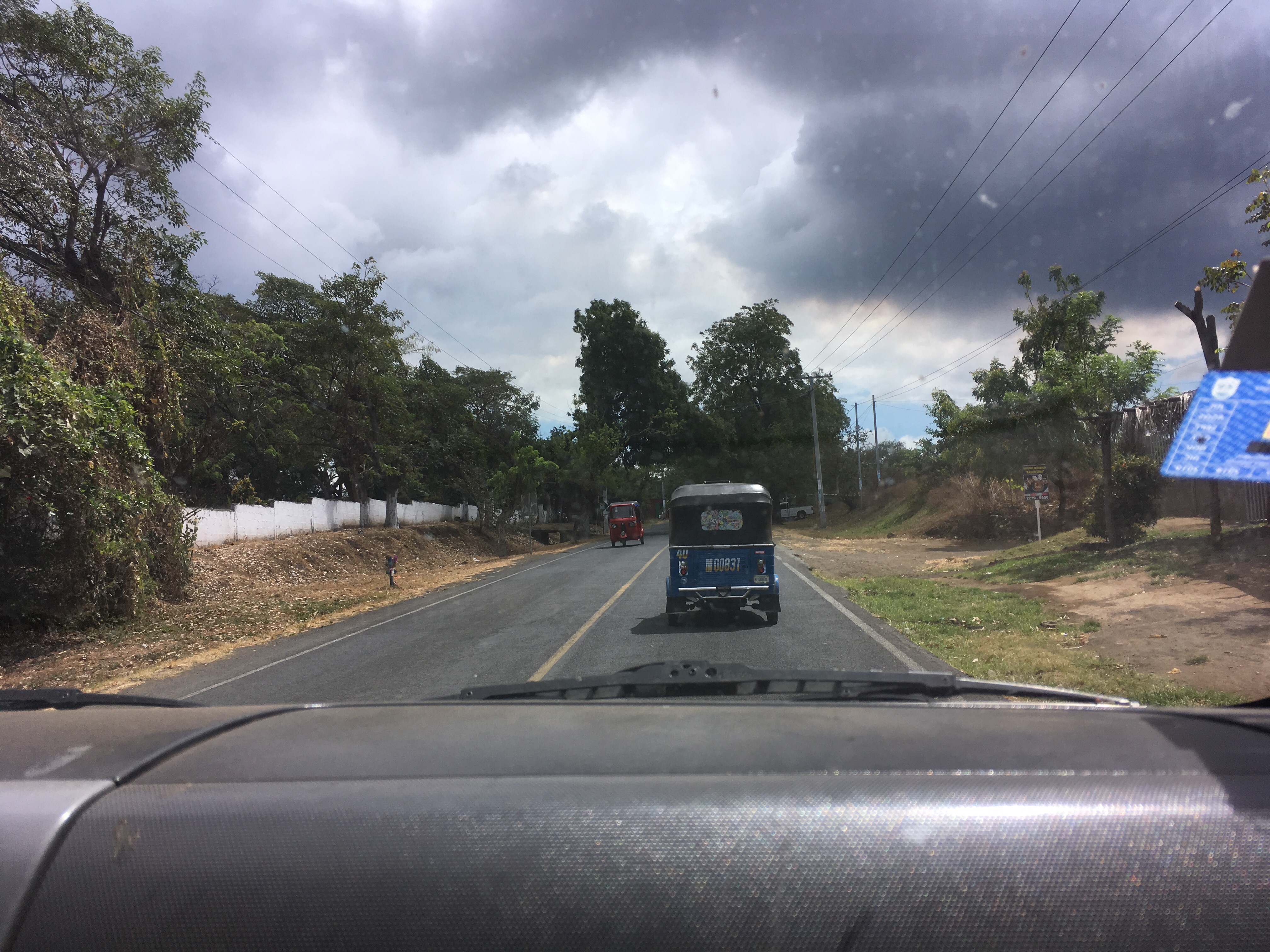
  2. Moto taxi – aka the tuk tuks you see in Asia.
  3. Pickup trucks – people piled into the back.

But The Mariposa Spanish School is an eco oasis of calm – set up by a British woman, all the proceeds go back into the projects. There are dozens of rescued street dogs and cats, monkeys and birds.


La Mariposa residents

Food is freshly prepared with produce from the organic vegetable gardens where possible and it’s very vegan friendly. Students laze in hammocks when they aren’t deep in the one-on-one Spanish conversation and grammar lessons, volunteering at the various projects or out on organised excursions. 
Monday’s classroom

Whenever I introduce myself the response is ‘Ah, Mariana de la Noche!’ – a TV series that I clearly need to watch!

Conversation class
Conversation class usually involves a walk through the jungle or up the mountain, picking and eating fruit as we go.

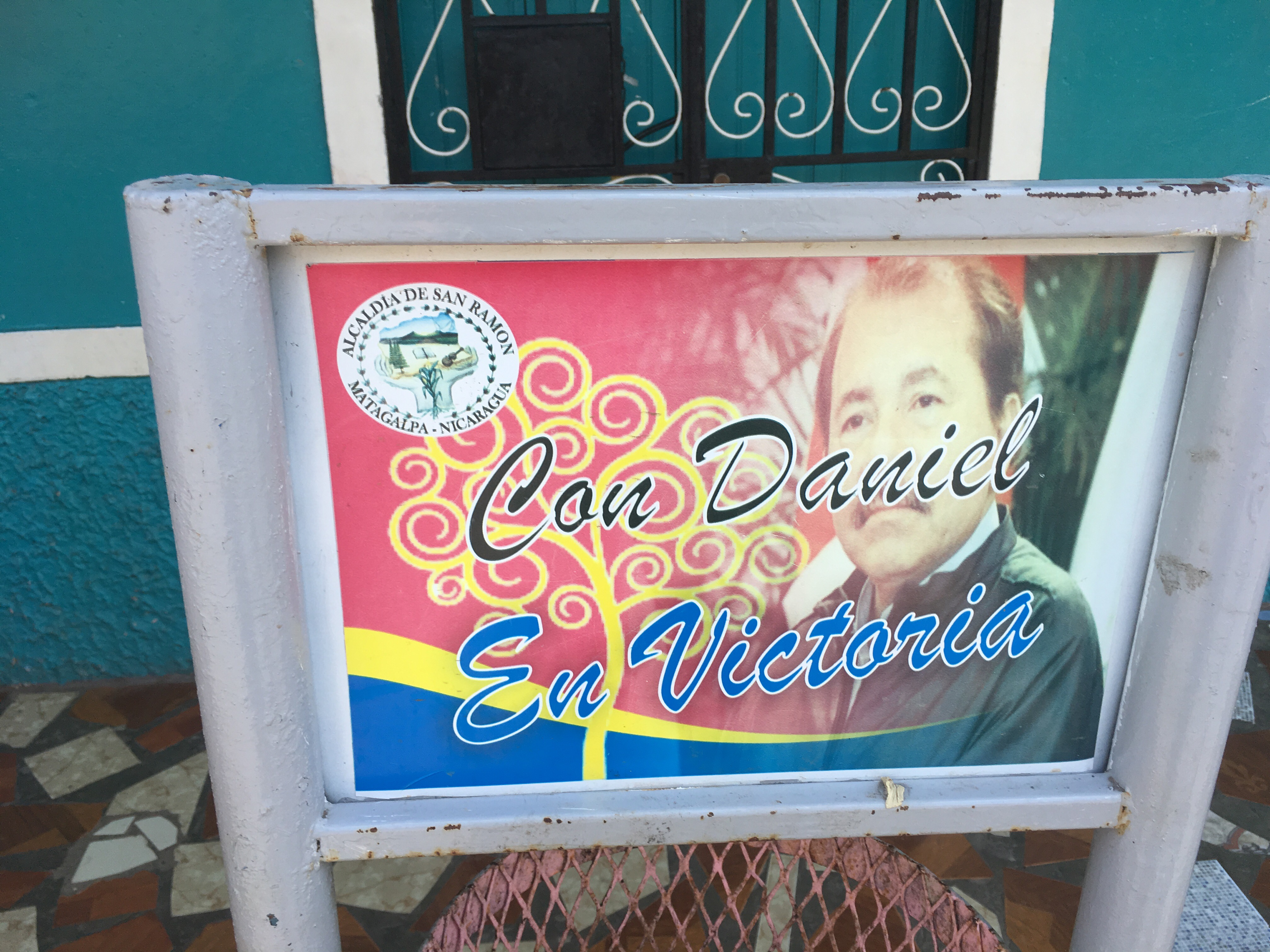
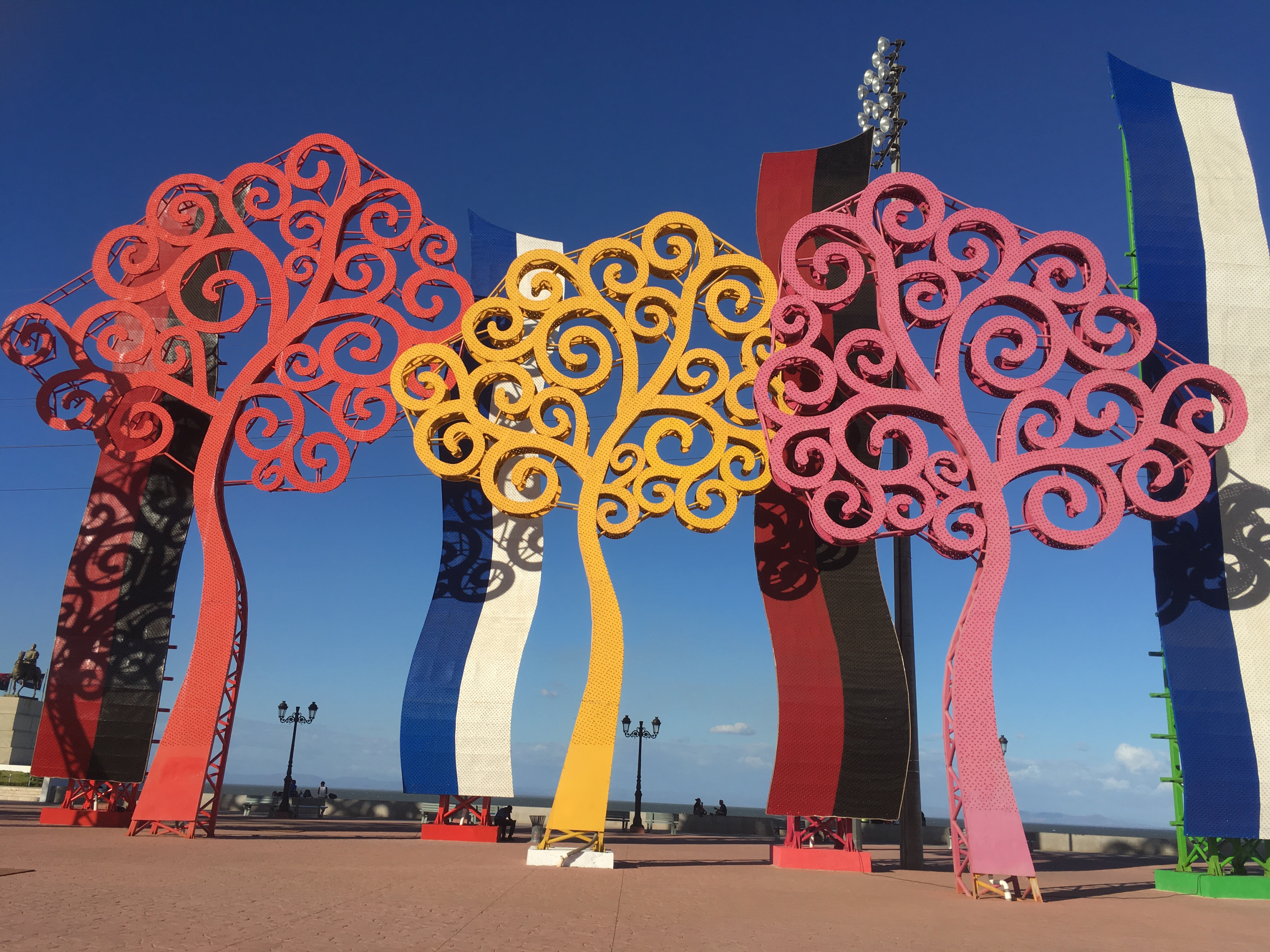
In the first week I’ve immersed myself in four hours of Spanish a day and visited the capital, Managua. Since the earthquake, the cathedral still hasn’t been restored and there isn’t a city centre to speak of. We visited the Revolution Square and saw the efforts to clean up the city first hand. The Sandinista government has transformed some no-go areas into family spots. The re-elected Daniel Ortega has installed hundreds of  colourful ‘Trees of Life’ – huge metal structures lit up with lights at night. Controversial, since each cost $10,000 and this is not a rich country. 

Trees of Life

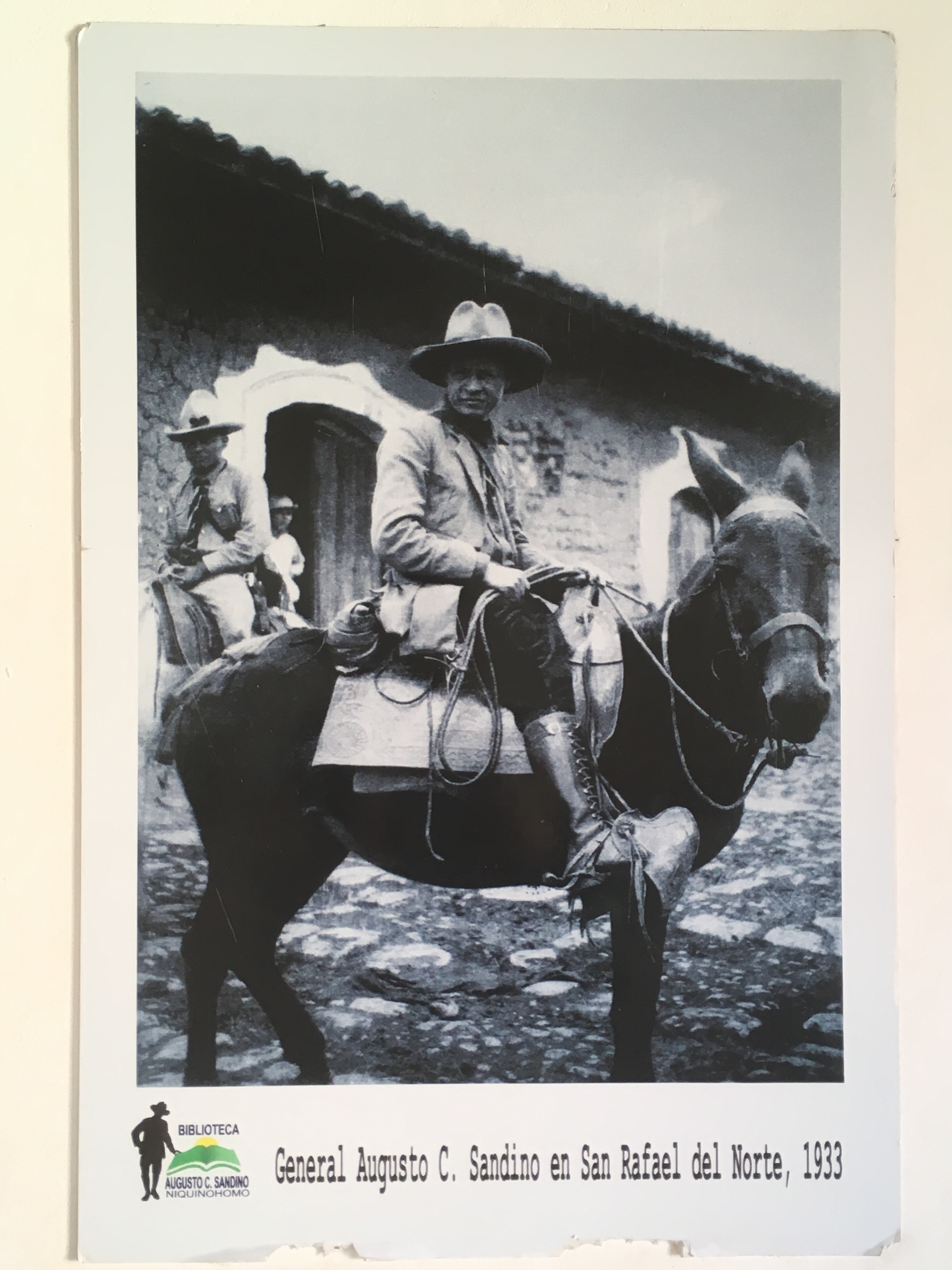
There are also replicas of famous people’s houses, the revolutionary Sandino of course and the poet Rubén Darío. There is not a single other visitor while we are there – just armed security and very friendly guides who recite Darío’s poems in Spanish.

Tributes to Sandino

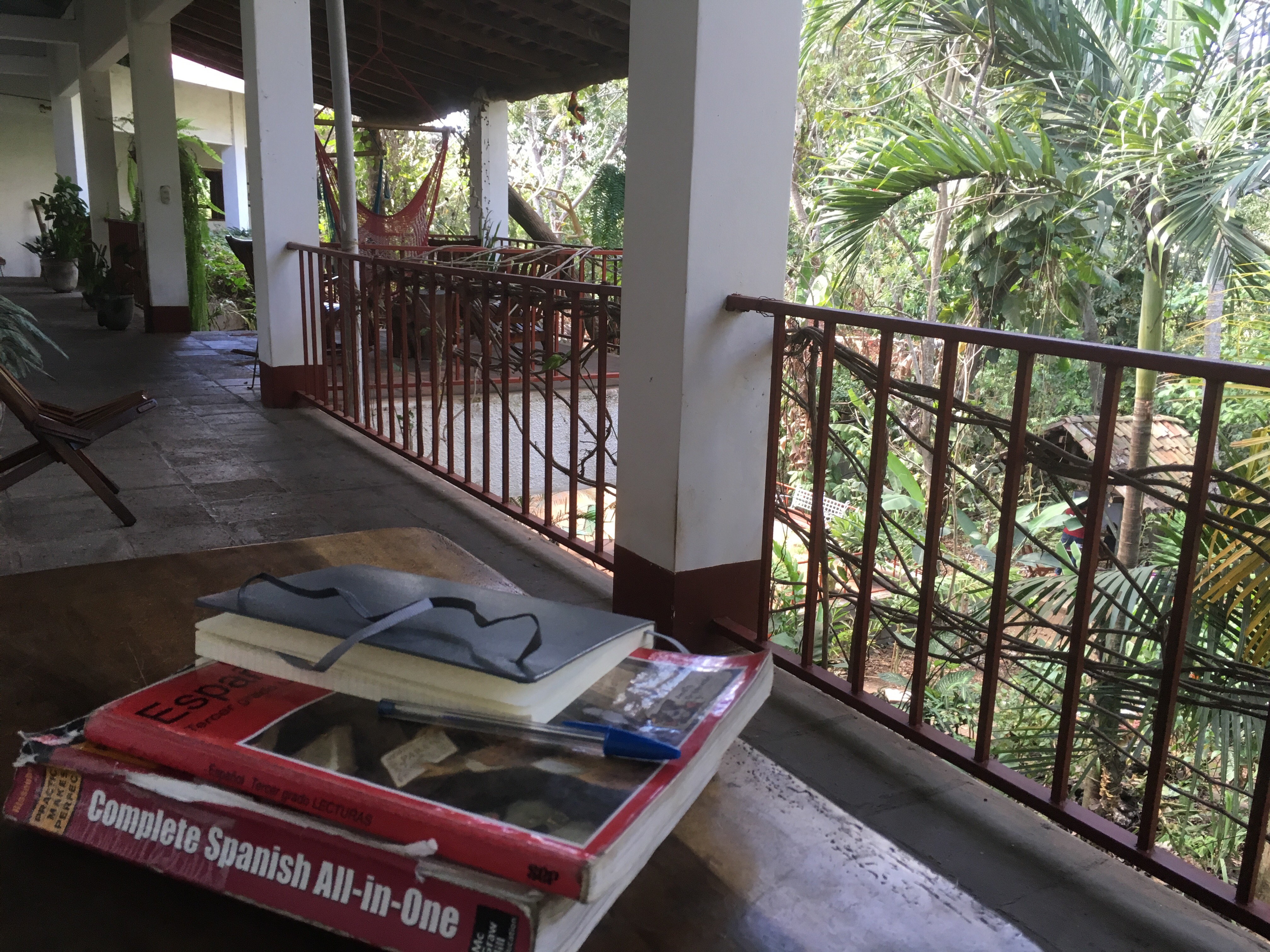
There is an interesting mix of students at La Mariposa. Kids about to start university on a gap year, Middle Aged Retirees (seems I can’t get away from this demographic!?) and people like me taking time out to travel.

Study time

That’s all I have time to write before class – ¡hasta la proxima!