Kobo-daishi, the Monks and Me

I wanted somewhere special to spend my birthday and in Japan I found the perfect place. A few hours south of modern Osaka is Mount Koya, otherwise known as Koya-San. When I started my Japanese journey, I didn’t realise how spiritual it would be. Koya-san is one of the most sacred places in Japan, a small and secluded temple town that was first established in 826 when monk Kobo-Daishi brought Shingon Buddhism to Japan after learning in China. It is now the world headquarters. Kobo-Daishi is believed to be in external meditation on the mountain top. It seems fitting that I came here after visiting the place where The Buddha found enlightenment in India, and the various tooth and hair relics throughout Sri Lanka and Myanmar.

This is another train journey where you buy a helpful heritage pass that includes all of your travel. It’s very easy – a train from Osaka to Gokurakubashi station where a cable car was waiting to take passengers up to the top of the steep mountain. Once in Koyasan station, there are local buses and people ready to help direct you. I arrived early afternoon with just a small backpack containing overnight kit and it was freezing – good thing I’m still rocking the Michelen look.

Cable car

I hopped straight onto a bus and got off at the helpfully numbered stop for my Ryokan (temple dwelling). Searching for solitude and a place to reflect, I was going to spend the night in the Shojoshin-in temple, eat Japanese vegetarian food and rise at 6am to watch the morning meditation ceremony. Right up my street then πŸ˜‚

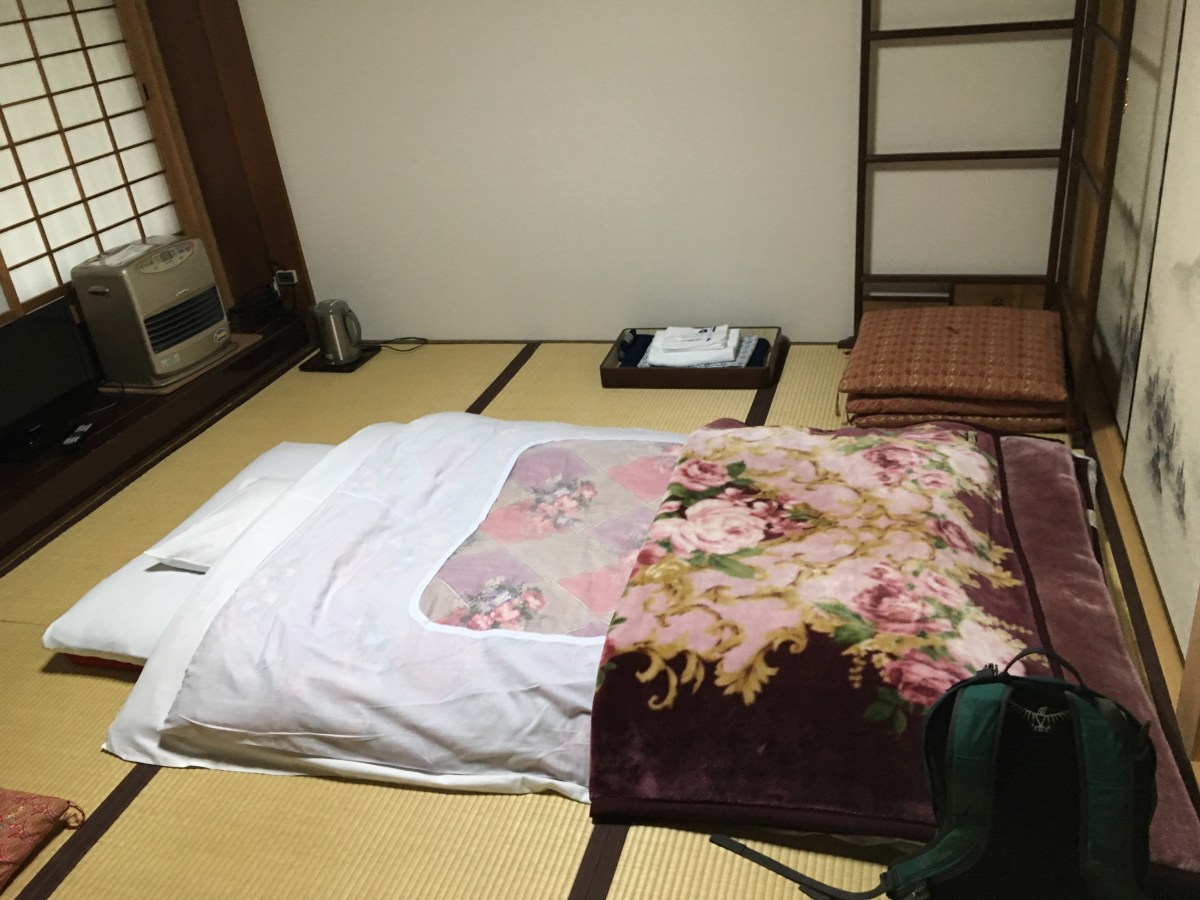
My temple dwelling

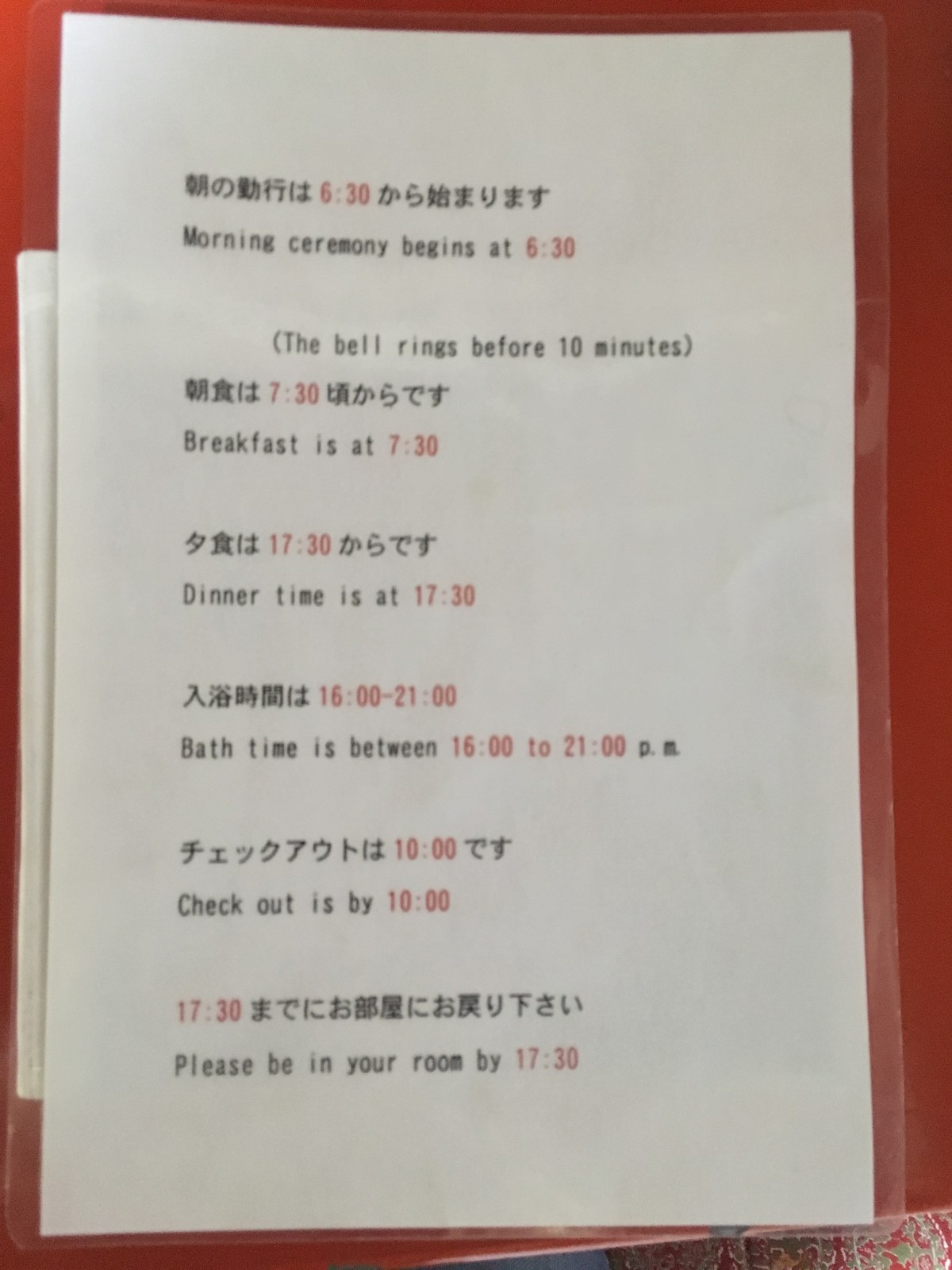
A kindly monk checked me in and showed me my room, which I thought was perfect. With no real English on his part, it took a while for me to understand that it was perfectly acceptable to wear the provided robe for dinner but absolutely not OK for the morning ceremony. Good thing we cleared that up! He also showed me the communal bathtub, to be used before bed πŸ€”

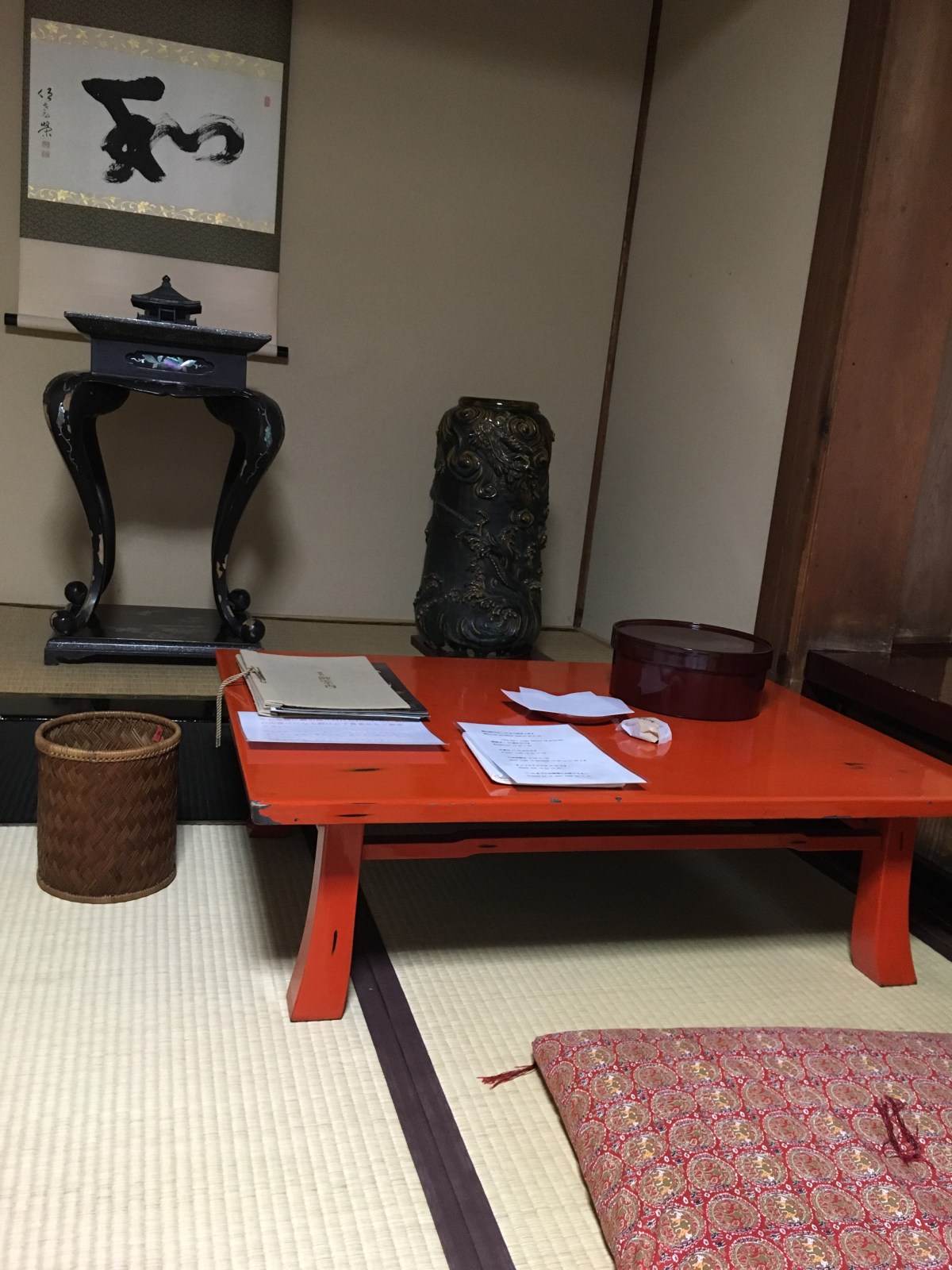
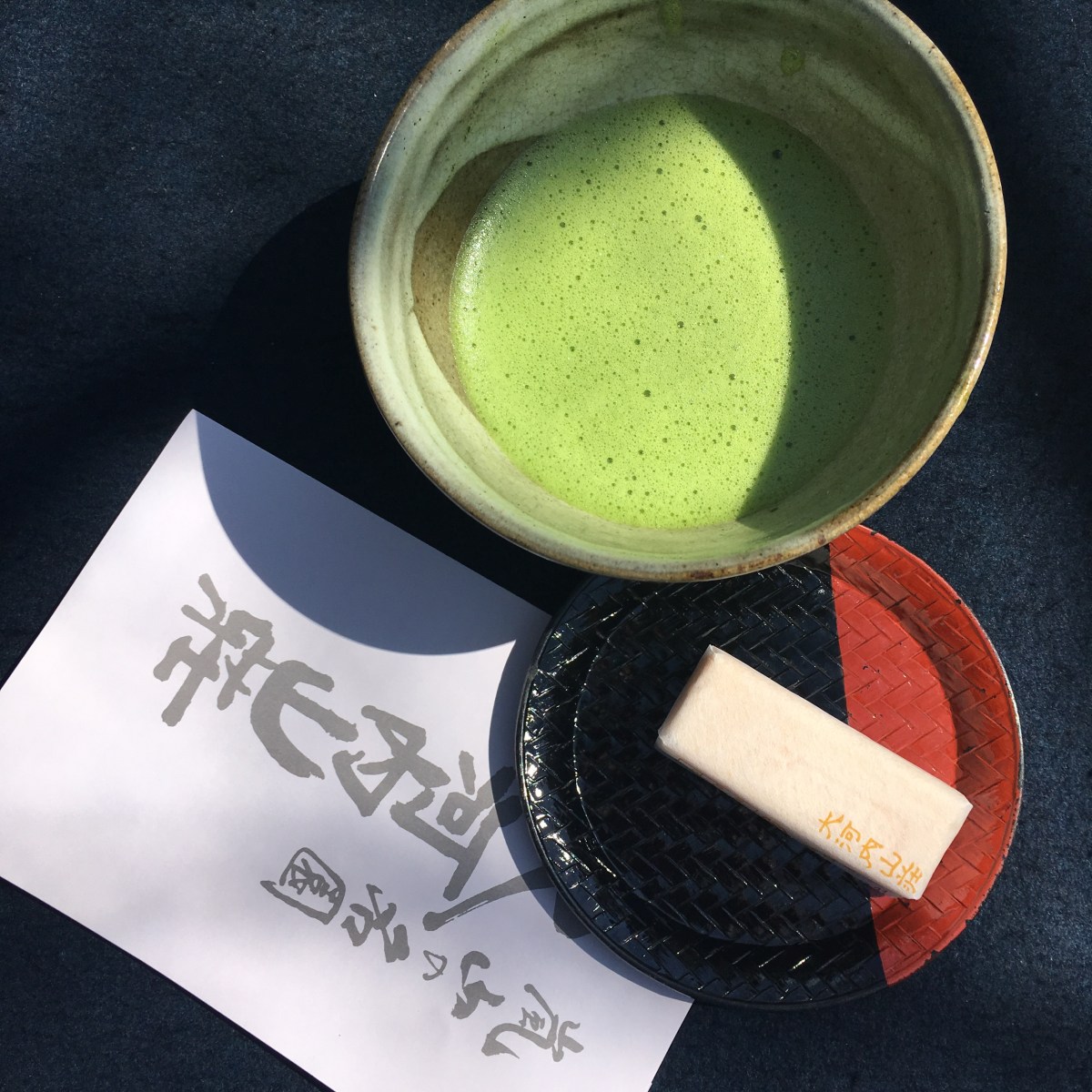
My room, with a sliding door (no lock necessary here), had a Japanese style mat to sleep on, thankfully a heater and pile of thick blankets, a pot of hot water and some green tea and a little sweet, some handmade brochures of the area and a tiny table and mat which were perfect for journal writing which I hadn’t managed since early February πŸ™ˆ

The schedule

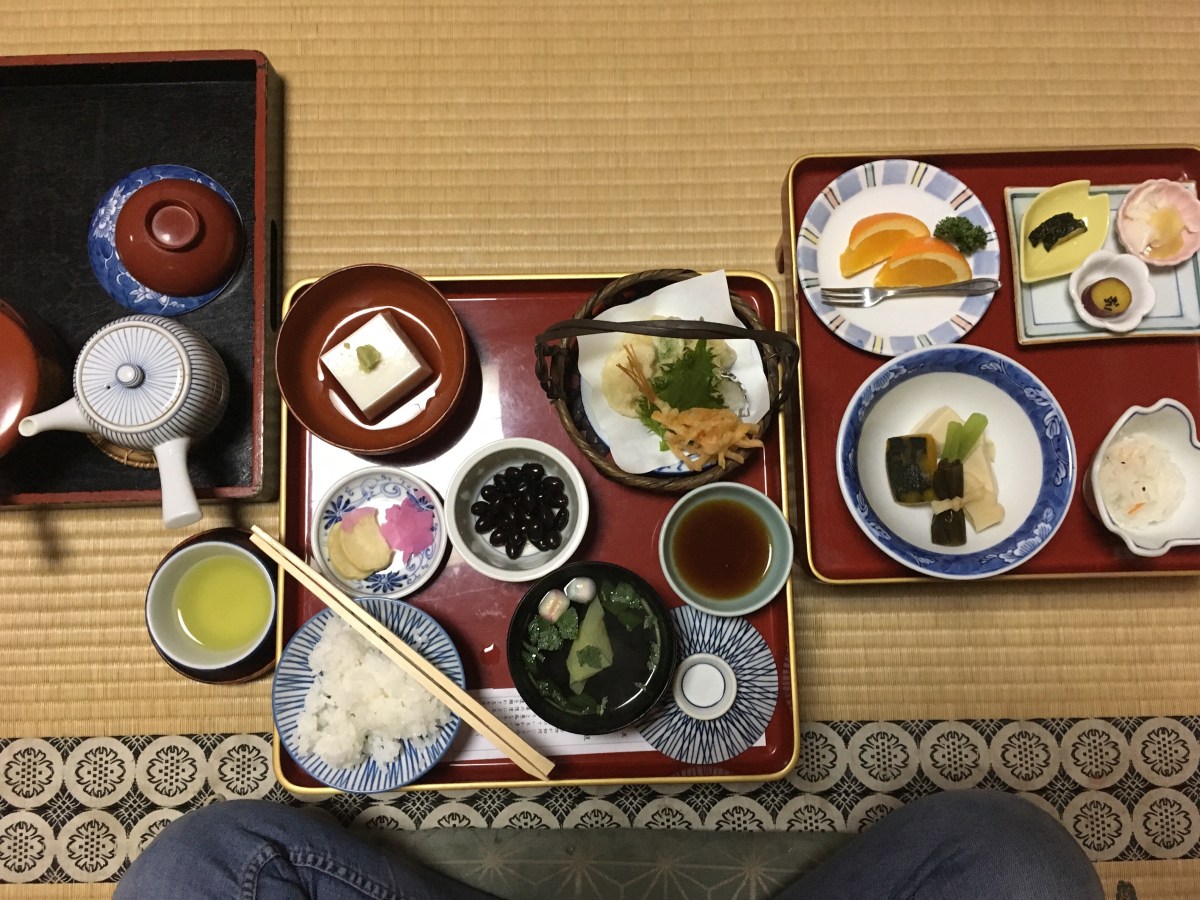
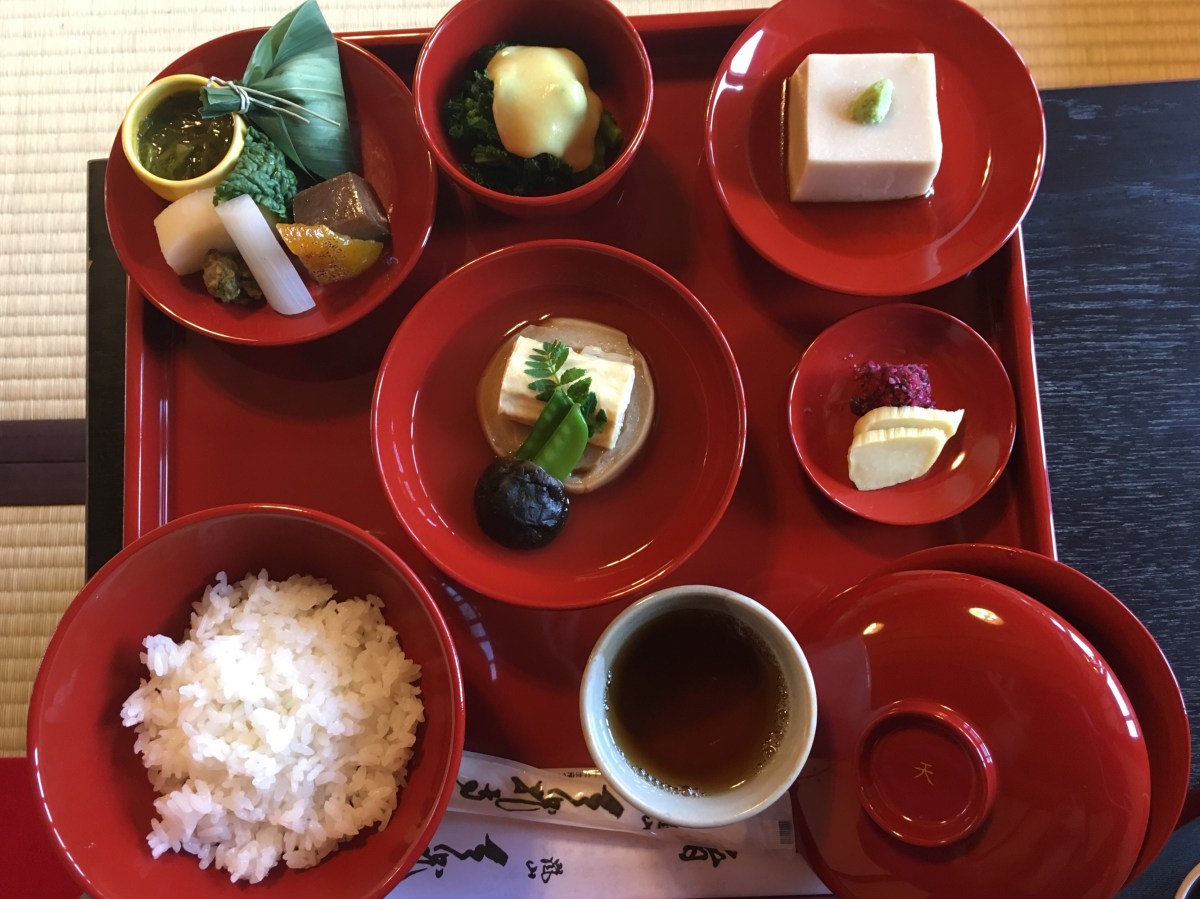
Dinner was served in the hall at 17.30, each party separated with a little bamboo divider. The Shojin Ryori meal included local specialities of tofu which I liked, although for the omnivores it’s not really the best introduction to tofu. Again, the fun was really in the trying the different dishes. Maybe the weirdest taste sensation I’ve ever experienced was (I think) a pickled cherry tomato. The intensity of flavour actually took my breathe away and I’m not sure if that’s a good or bad thing. I’d love to know what each dish was. Anybody recognise this white sponge like thing with pink and blue stripes that was in the soup? πŸ€”

My room was next to the bathroom so I could have a sneaky peak to see if there were any shoes outside the ladies curtain or if the bathtub was empty. I plucked up the courage to go in just as another woman was coming out and I’ll admit it did cross my mind that I was about to get into a stranger’s dirty bath water… I did it anyway as I was freezing cold and it was lovely! I took a photo earlier in the day before it was open.

Bath time!
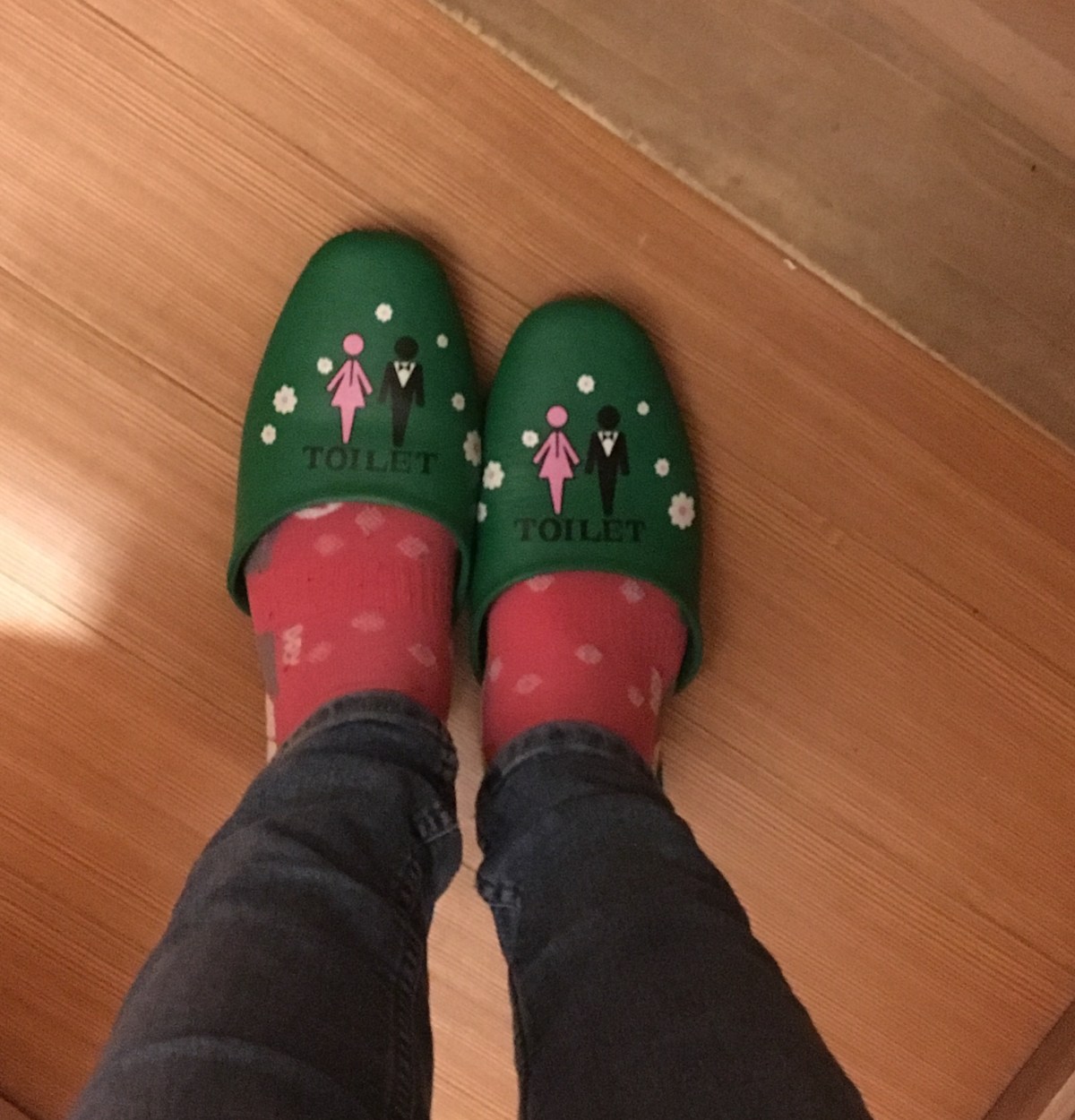
Shoes must be left outside the temple but toilet slippers are provided!

On my birthday morning I woke up at 6am and joined the morning ceremony where a tall monk chanted for almost an hour straight, using a prayer bowl and gong at what I presume were key moments.

6am selfie
Spot the monk

After breakfast of rice, miso soup and another wild array of unknown items, I spent an incredible morning at the Okunoin site, hours before any of the day trippers arrived. I met one old Japanese man who insisted on taking a photo for me, just as a group of people arrived and my heart sank. Luckily they disappeared and I had the place to myself.

Nobody in sight

There is an otherworldly feel to this place and a palpable calmness in the air. The 2 kilometer path to the mausoleum is lined with over 200,000 tombstones, with trails leading off on either side to hidden clusters of crumbling monuments. Many are in ruins, which gives it a tomb raider feel. I passed only a handful of people at 8am. It reminded me a little of a miniature Ankor Wat in Cambodia with none of the people.

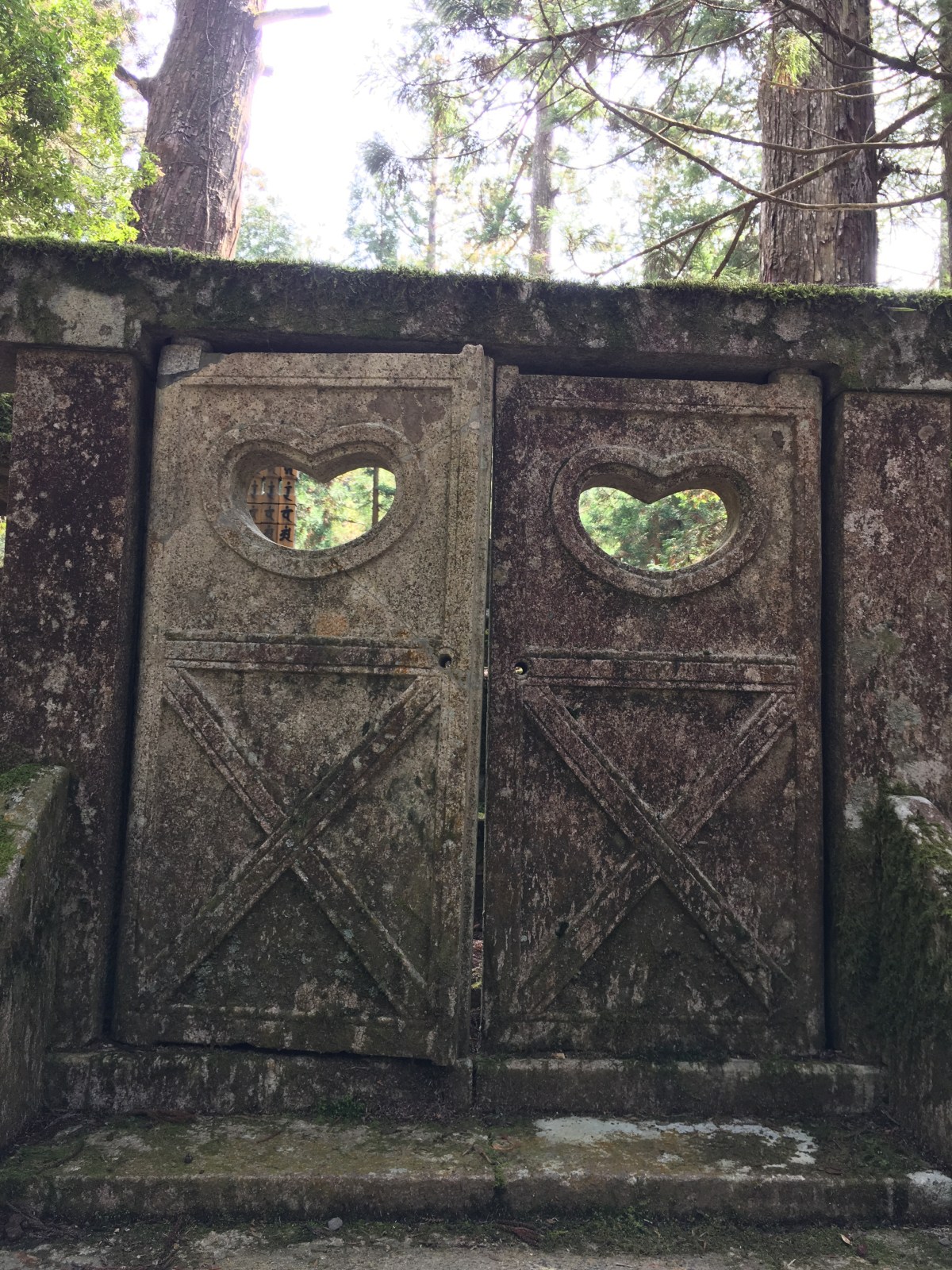
I crossed the bridge to reach the mausoleum, where no photos are allowed. Behind the Hall of Lanterns, where 10,000 lanterns are eternally lit, is the site of Kobo-Daishi’s eternal meditation. Underground are 50,000 tiny statues.

This was the most serene place of all, surrounded by thousand year old cedar trees, the only sound being the trickle of water from the stream behind. I have never seen trees so tall.

I could easily add a hundred photos, but here is a video which hopefully shows the tranquility:

On the way I passed the water well, where it’s said that if you don’t see your reflection you’ll die within 3 years. I waited for someone else to arrive and see their reflection before I peeked over the edge and was relieved to see my face looking back at me.
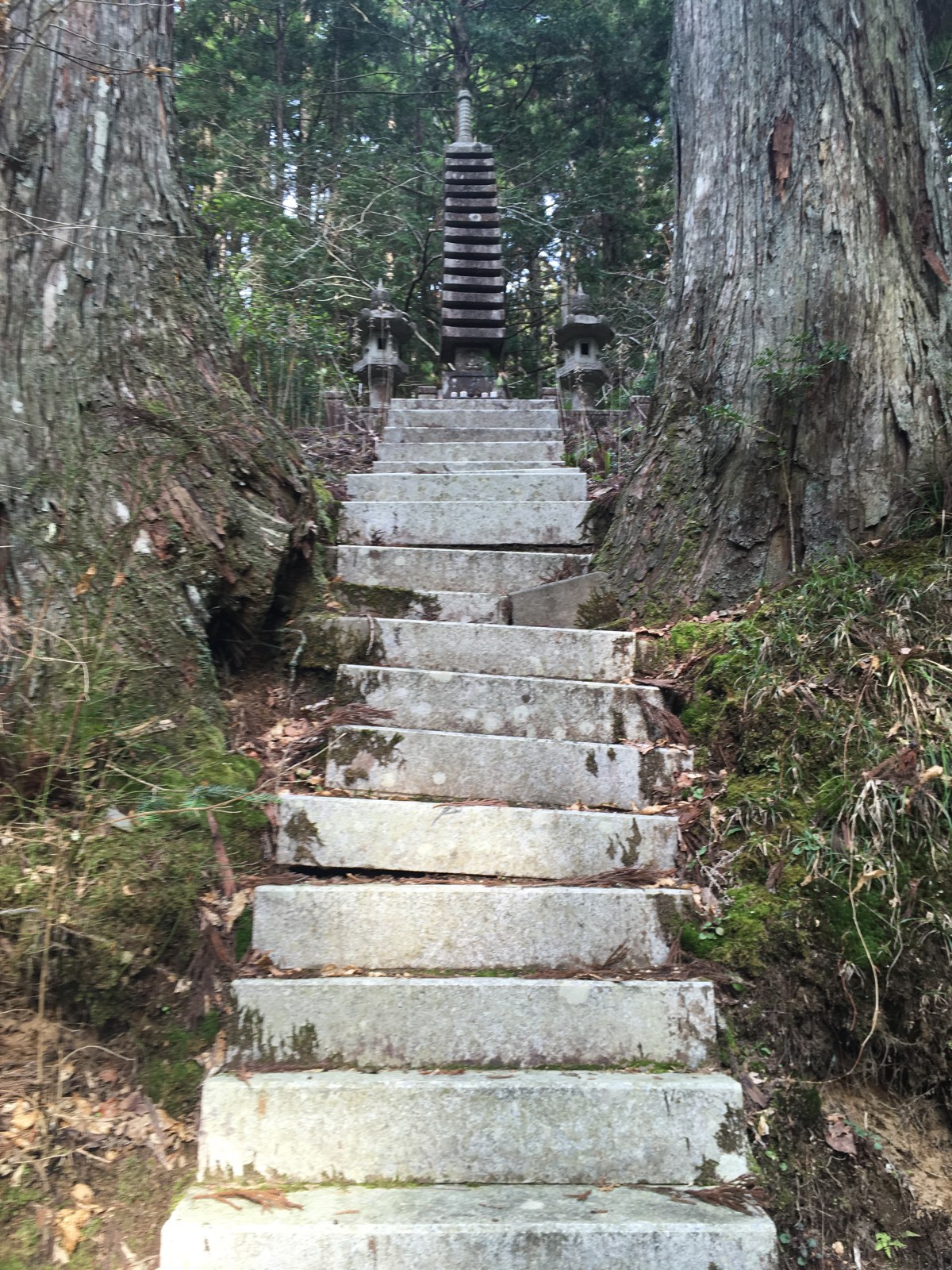
I spent a good few hours here, climbing up random stairways and taking a detour along the river into a forest, without seeing anybody else. I’m not sure what I would have done if I had looked into the well and not seen my reflection when I was all alone.

I could have stayed all day but I was hungry and there is a lovely rustic vegetarian cafe that serves a set meal with coffee and cake included, called Bon-on-sha, on the way back into town which was perfect. Before heading back, I went to the edge of town to see the Daimon gate, marking the traditional entrance to Koyasan with its huge guardian statues.

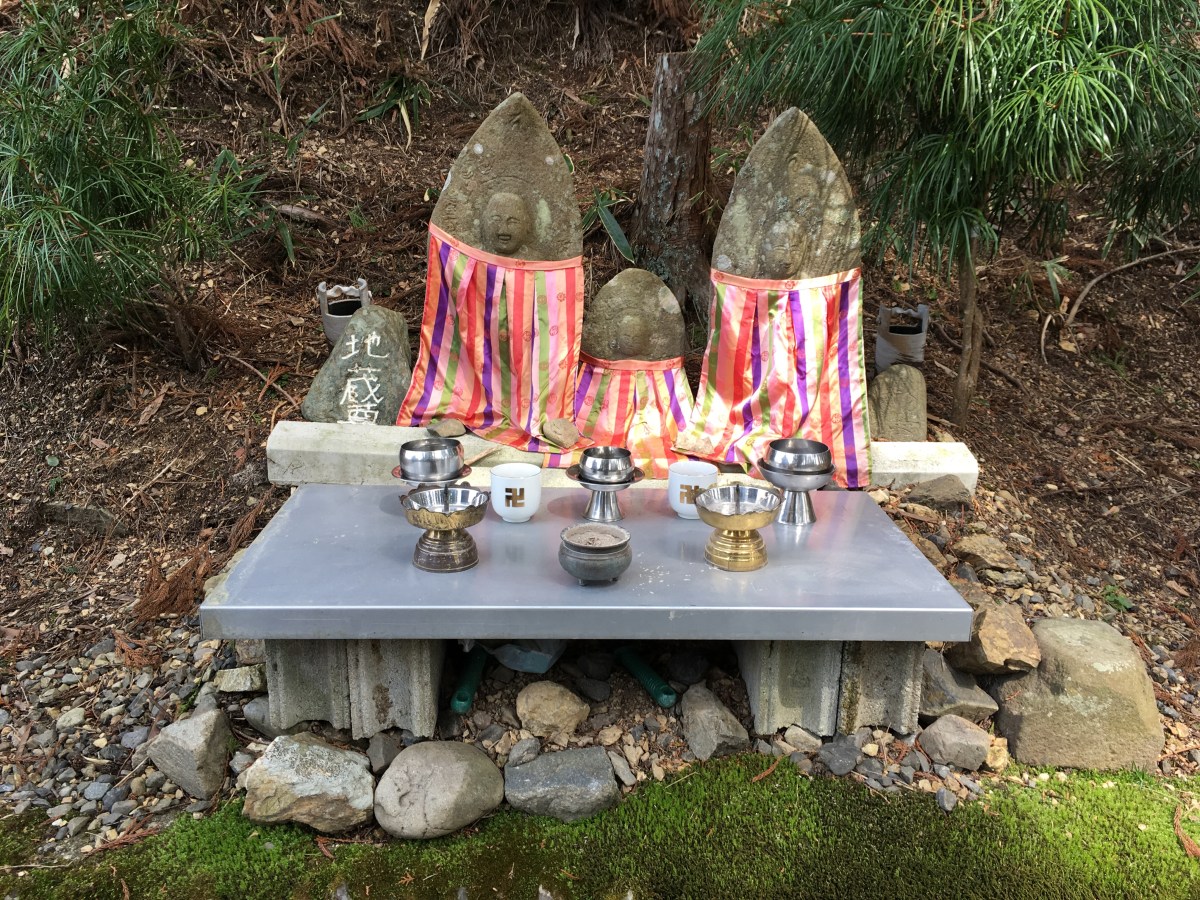
Tiny shrine hidden on top of a hill, to grant you one wish

Even though it was early afternoon by now there were still hardly any other visitors – most people stick to the largest temple of Kongobuji which contains the biggest rock garden in Japan.
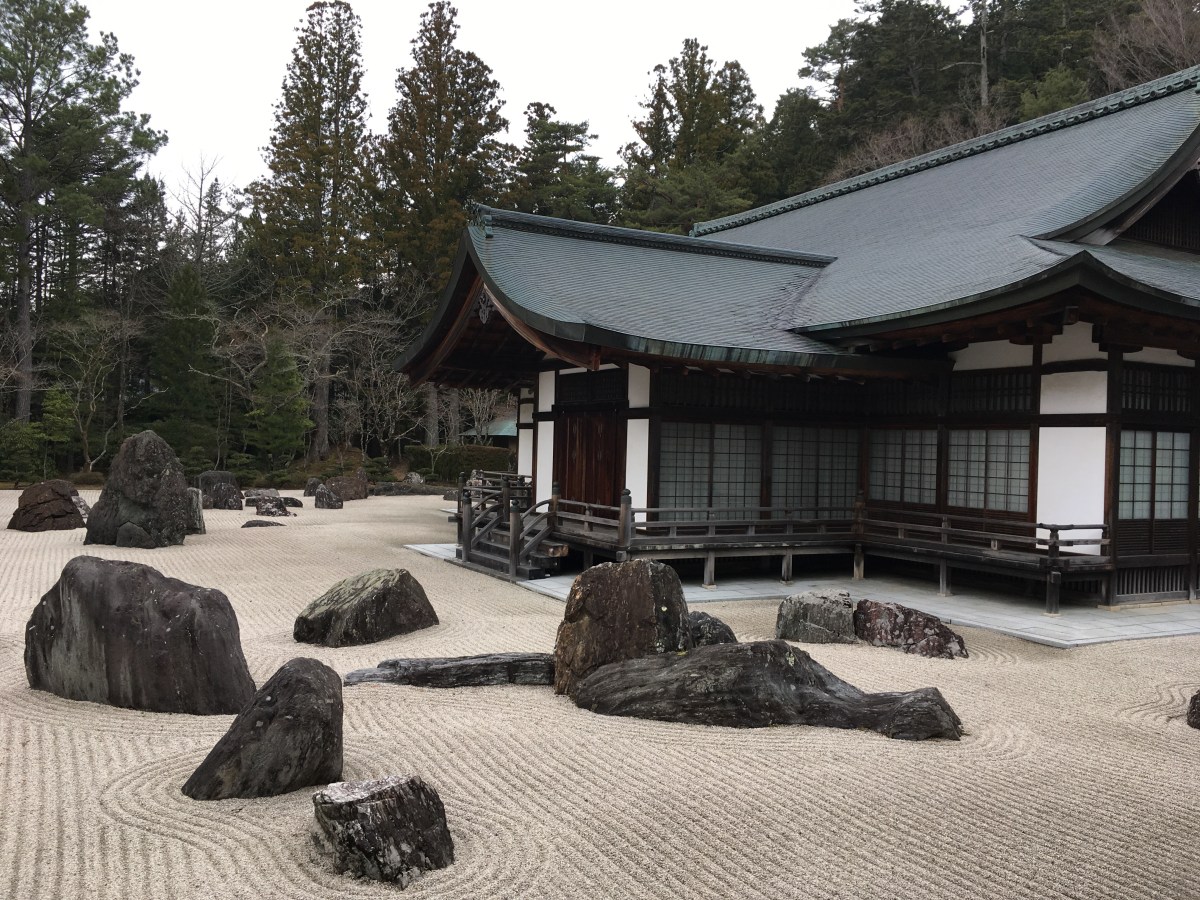
A pine tree stands in the central Garan temple grounds, said to have 3 pronged pines. Legend has it that Kobo-Daishi threw his three pronged sankosho from China and discovered it in the branches of this very tree, which determined the site of Koyasan. I spent a while looking for a 3 forked pine but I didn’t see any.

Guardian

When I got back to the cable car boarding area there was chaos (by Japan standards). A female staff member was shouting instructions in a high pitched voice and handing everyone a number. I had no idea what was going on so just stood there with my number until somebody explained that a tree had come down on the train tracks so we were waiting for a bus to drive up the mountain and rescue us. Ever so often an official would shout numbers in Japanese and people would follow him while the tourists in the room just held up their numbers hopefully. Fortunately a lovely old Japanese man on a pilgrimage (Koyasan is the start and end point) took me under his wing as we had the same numbers. Eventually we got on a bus that dropped us at a different train station and he gave me some sweets for the ride. This man was very concerned that I get back to Osaka safely and spent the entire train ride looking at his map through a magnifying glass, although I tried to tell him I’d figure it out and not to worry.
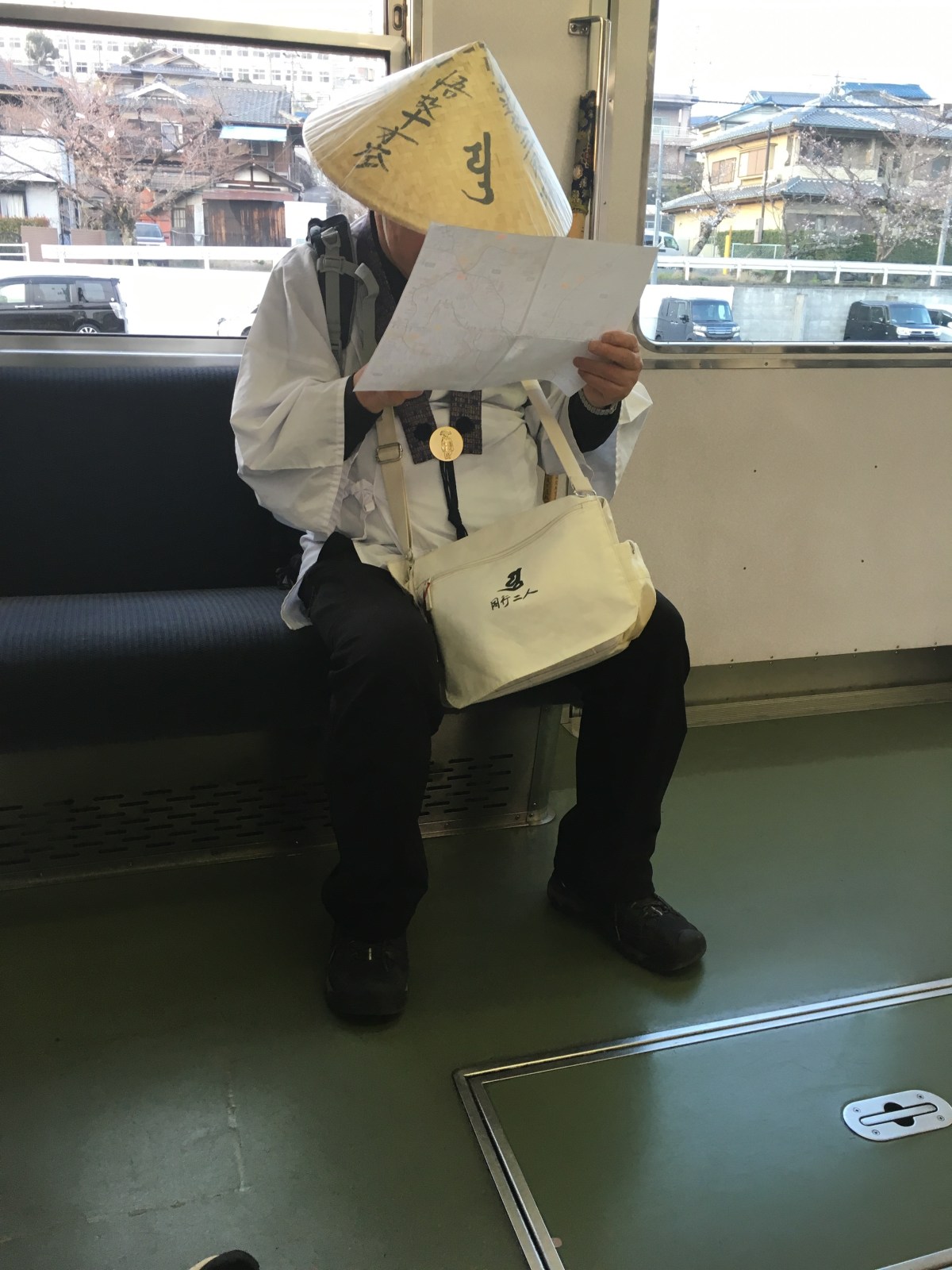
My new friend studying his map

When I eventually made it back to my hostel a few hours later, the boy at reception said ‘ah yes your friend called us!’. I was very confused as I’m travelling alone until I realised that the old man had in fact called my hostel to confirm their location πŸ™‚

Tea ceremony

I was too exhausted to do anything that night but relax and enjoy the nightly tea ceremony where the lovely front desk boy donned a robe and prepared the frothy mix in the traditional way. I couldn’t even pretend to like it this time 🀒 Luckily another girl shared her bottle of wine with me instead, a much more enjoyable end to the perfect day πŸ™

With an extra week added to my trip, I had a couple more days in Osaka to explore the area – next blog coming soon.

Kyoto : Land of the Deer and the Geisha

I was standing on the platform in Odawara waiting for the train to Kyoto, chatting to a group of Middle Aged Indians from Maharashtra (it was lovely to hear that accent again!) when my jaw literally dropped open. A Shinkansen (bullet train) had just shot past in a blur. Here is a video (credit to new travel buddy Matt – I was too slow to react each time one passed) but even that doesn’t show the true speed, up to 200pmh, as this one was just setting off from the station.

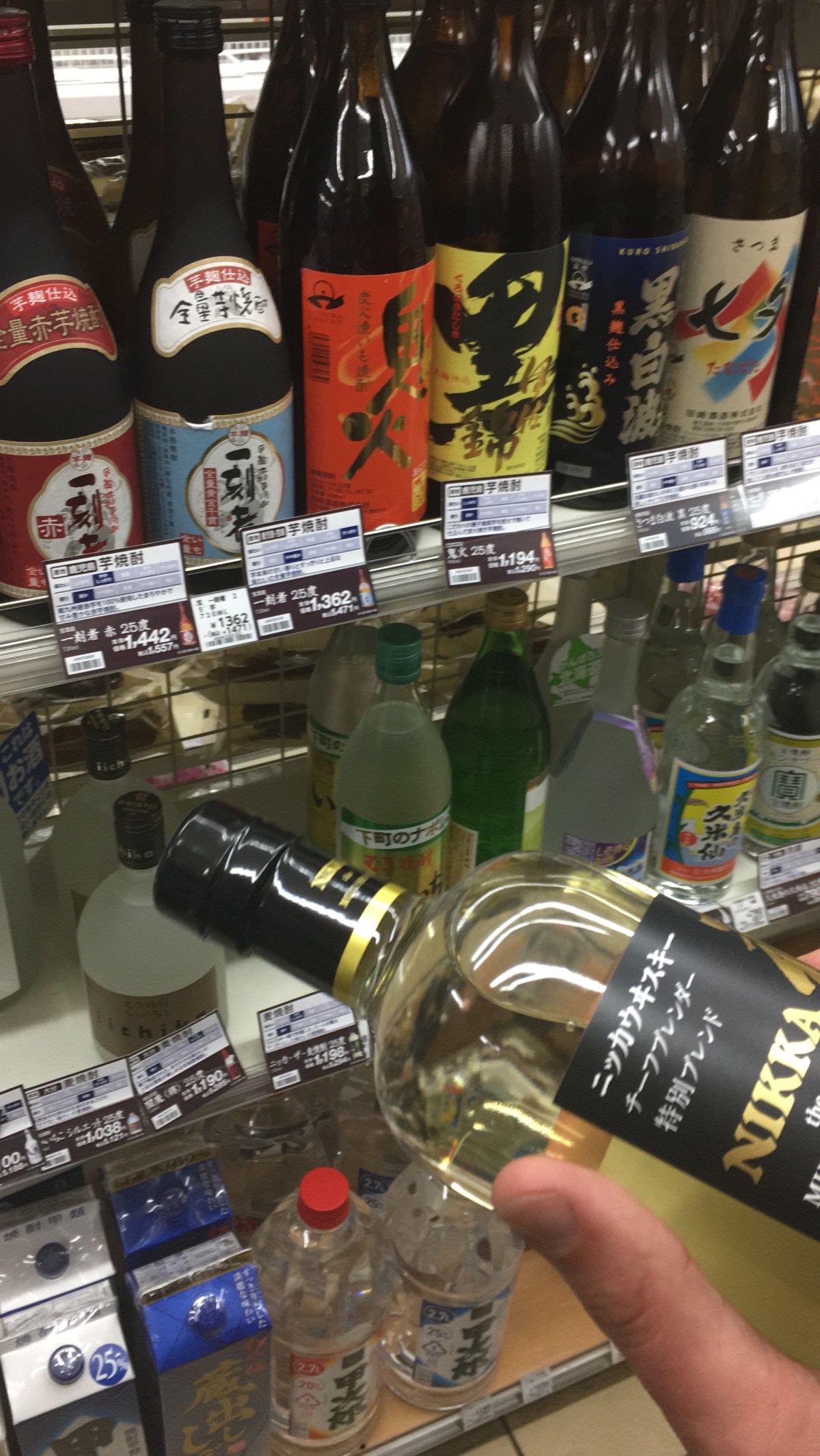
The next day I joined Matt on a day trip to Nara, home of The Deer. Hungover from too many plum wines and the lethal Sochu liquor (dinner in a quiet Japanese bar somehow escalated to us regressing to our teenage years and buying a bottle from a Lawsons store to drink on the street – sorry parents!), I dragged myself onto yet another train as the lure of The Deer was too much to resist.

What happens in Kyoto stays in Kyoto

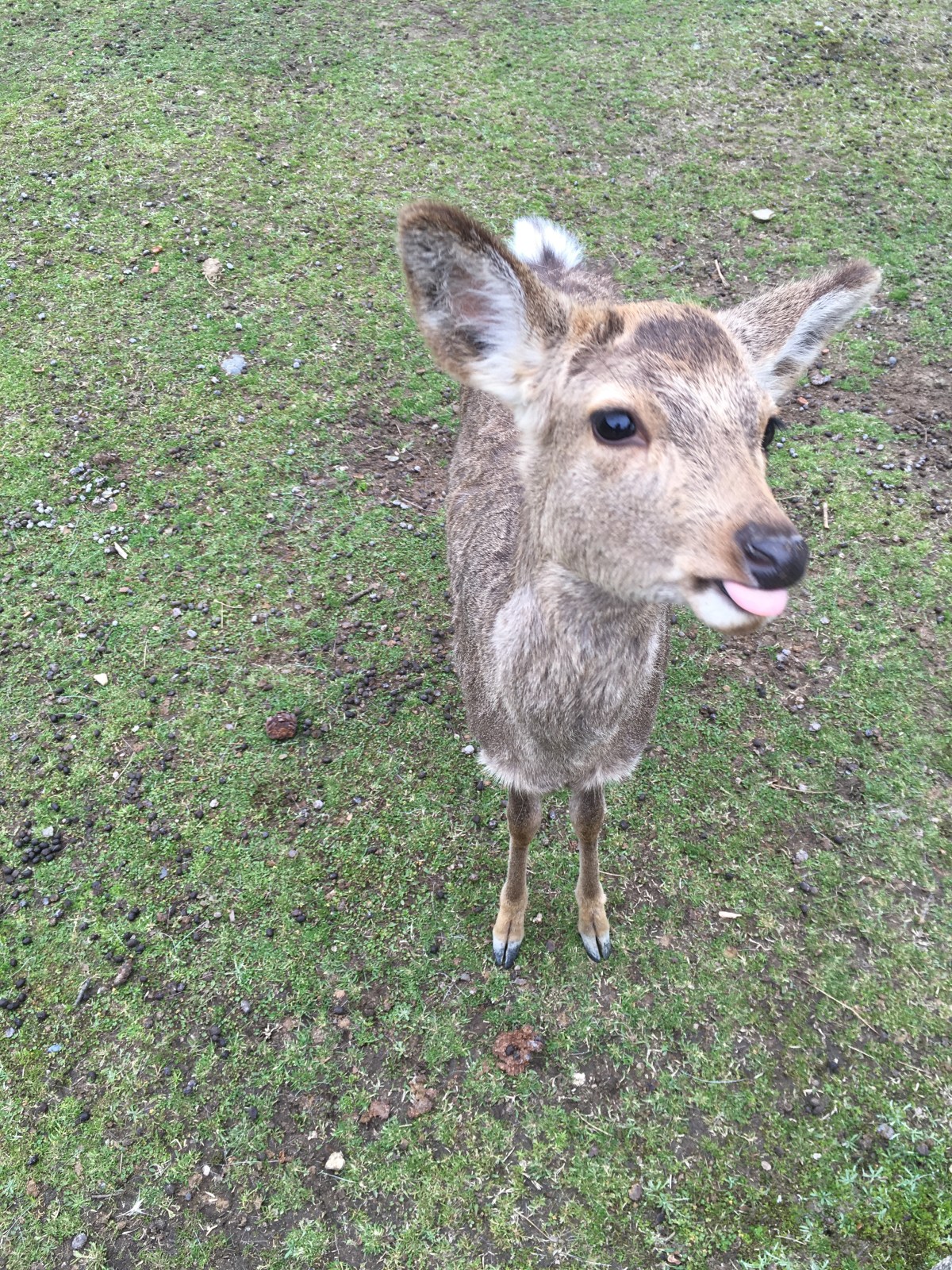
Nara’s deer population wander the parks looking for ‘deer cookies’ (rice crackers) which you can buy – cue hours of fun feeding them / being chased.

I’m not sure that Matt realised just how crazy I would go for The Deer or that he’d spend half the day taking photos of me and my new friends and forking out for more cookies when I ran out πŸ˜‚

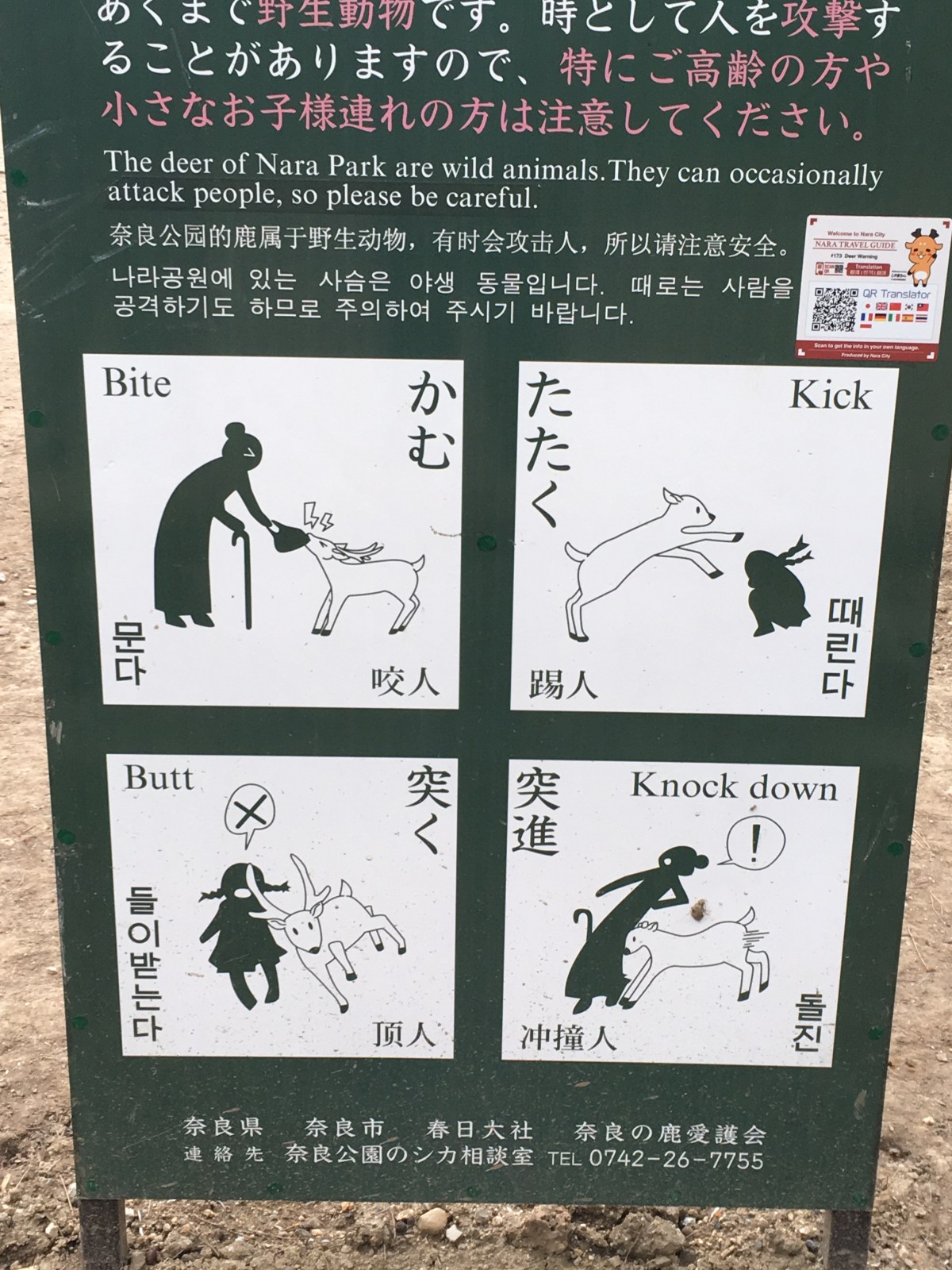
I especially liked the signs detailing the four kinds of deer attack, and seeing how many of each I could spot in real life, which was quite a few Butts but sadly no Knockdowns.

However, this is only funny until you’re the one being chased by a group of cracker addicts looking for their next hit… although it was fun using the hands up STOP sign when the deer got a bit carried away – it really works 😎

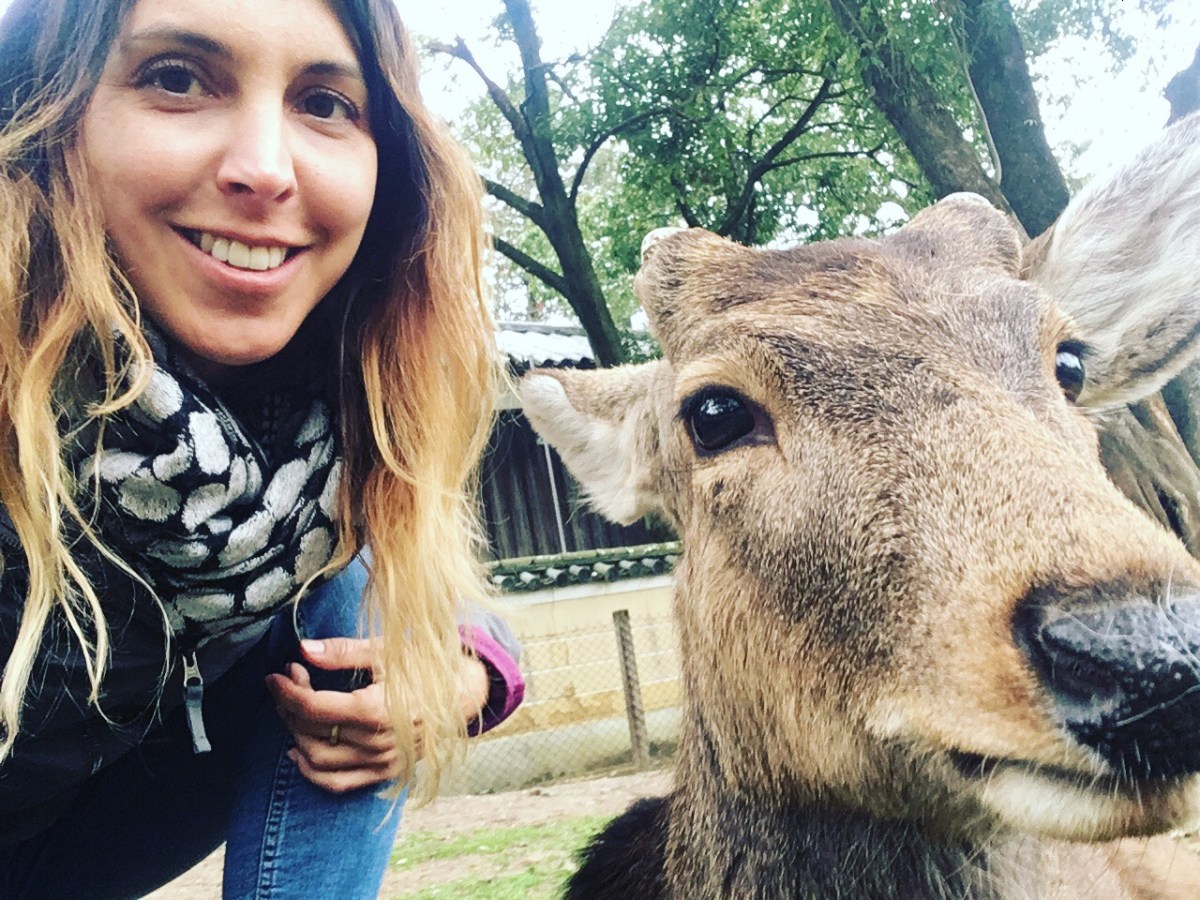
No trip to Nara is complete without the obligatory deer selfie although I went one step further with some wet nose kisses (sadly no photo, I guess Matt had had enough by then).

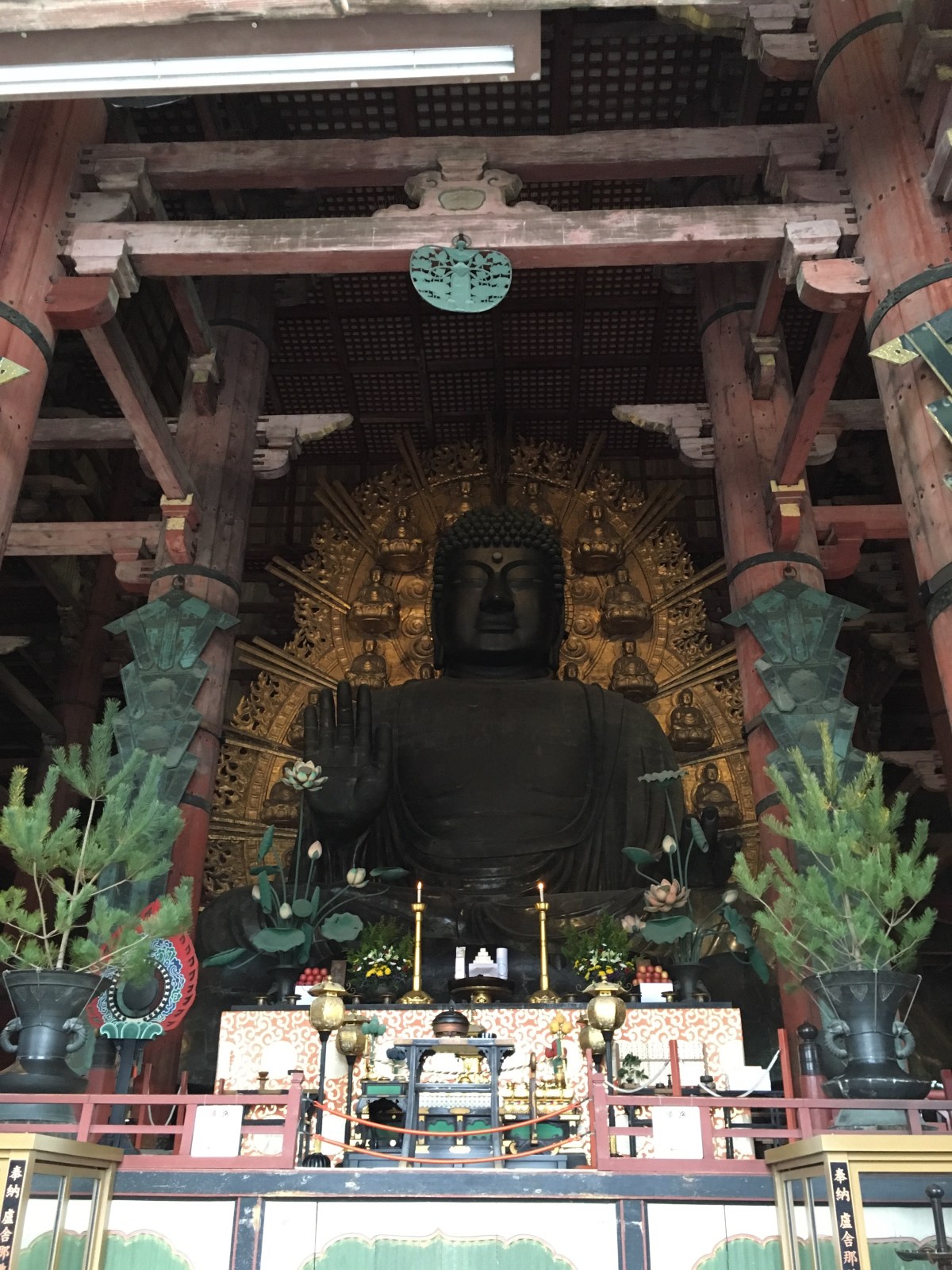
Whilst the shopping streets and modern feel of the town centre weren’t what I was expecting, there is actually more to Nara than deer – Japan is knocking the other countries I’ve visited out of the park with it’s own Buddha images. Nara houses the giant bronze/black Great Buddha in Todaiji Temple which at 15 metres tall I think is my absolute favourite so far. A photo cannot capture the scale of this beauty.

The Big Buddha Hall is actually the largest wooden building in the world – need I say more!?

You can light a sacred incense stick here which I thought would be nice. I was patiently waiting for it to light when I glanced down and noticed I was also burning a hole in my jacket 😬 I think my good luck charm I had just purchased might have saved me from going up in flames outside a temple. (I had actually just been warned about this but obviously took absolutely no notice).

Kofukuji Temple

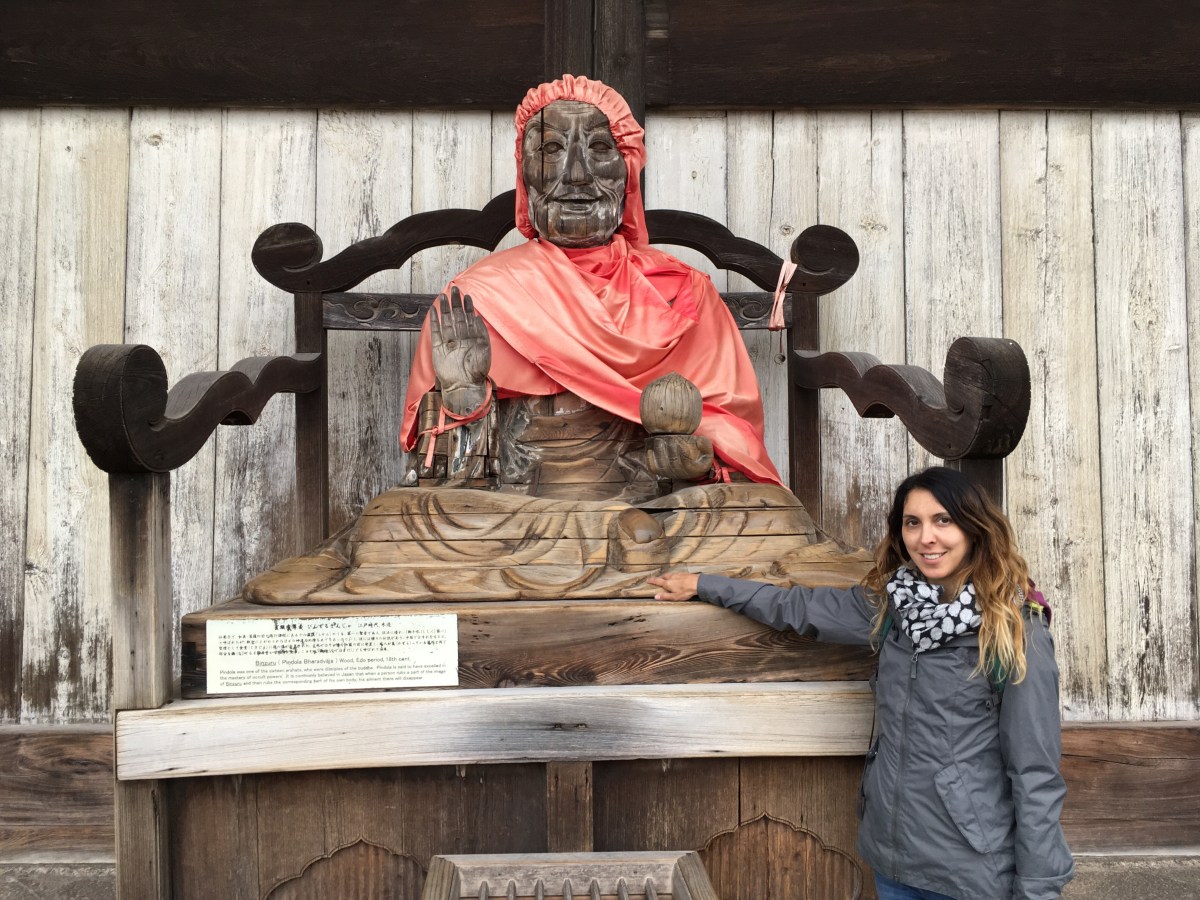
I was struck by the Japanese features on their Buddhas, the eyes, hair and even a little beard in some cases. They look quite different in each country. Nara also has the Healing Buddha that you can touch a particular part of to heal yourself but I’m not sure I did this right 😬

Back in Kyoto, I had another two crazy sightseeing days, where, like Tokyo, I only stopped to eat cake in vegan cafΓ©s and sleep. Because the sights are fairly far apart and they get very crowded, you can’t really visit more than a couple of places per day.

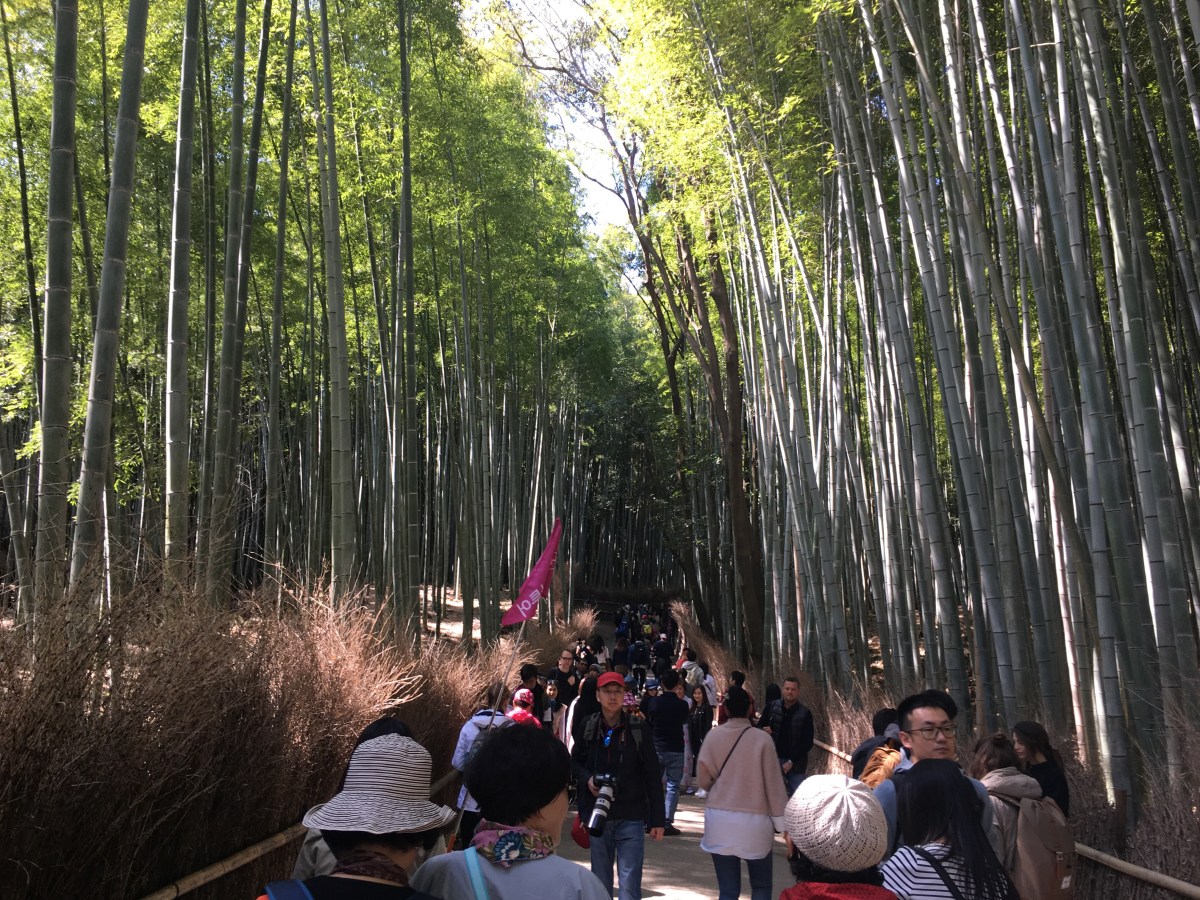
I hit the Bamboo forest too late in the day – when I say a place in Japan is crowded, I mean ‘shuffling two steps behind the person ahead of you’ kind of crowded. dodging big tour groups with their guide waving a flag, and bumping into all the girls in their rented Geisha outfits brandishing their selfie sticks at the slightest glimpse of cherry blossom.

I continued on the famous walk between the bamboo trees as I was already there, but much preferred the beautiful private gardens that I stumbled upon nearby, created by the period film actor Denjirō Ōkōchi. This was my first real Japanese garden and tea room experience and I loved it. Unfortunately it turns out that I hate this whipped up green tea 😬

Another first for me that day as I splashed out on a traditional Buddhist vegetarian lunch in the nearby Tenryuji temple grounds. I must have tried over 20 new delicacies – I have no idea what they were except they were totally plant based.

To be honest I enjoyed more the experience of sitting cross legged on a mat and being served a multitude of intriguing dishes, more than I enjoyed the actual dishes themselves πŸ˜‚

Dressing up for the weekend

Another must for Kyoto is Geisha spotting. The real ones (with white painted faces) and even the apprentices don’t just wander the streets. They have a celebrity status in Japan. I learned a good way to see one in real life is to hang around the side streets off Gion Corner where the old Tea Houses are, around dusk, looking for any black taxis with their engine running – a sign that a Geisha is leaving work for the day. This is hard to do without looking like a nutter, especially when many venues have security.

Tea house or random building?

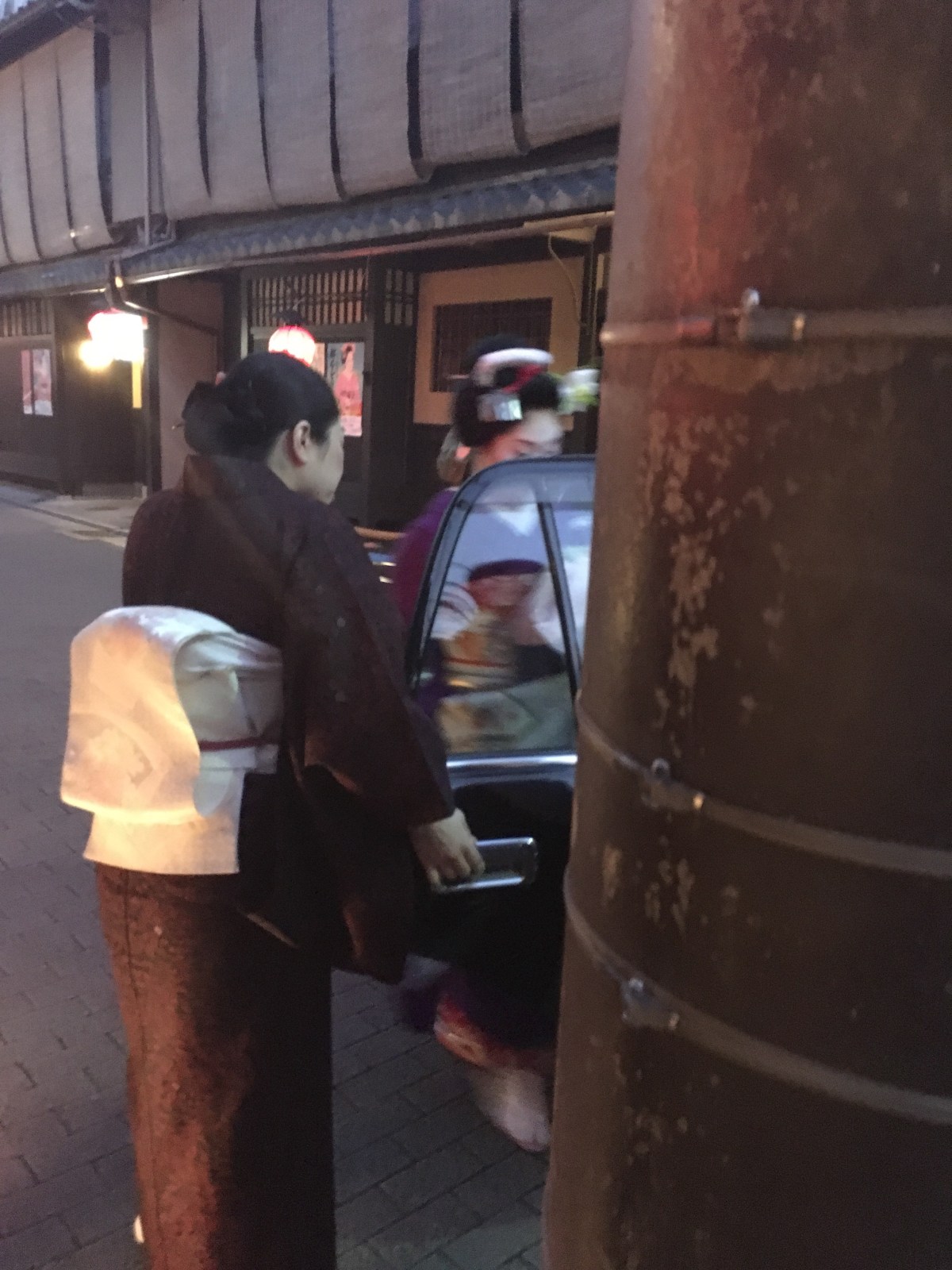
After ten minutes I saw a taxi so I joined the other tourists hanging around hopefully and sure enough two beautiful Geishas came out soon after. They moved extremely quickly, heads down and straight into the cab then they were gone. There is a certain thrill to peeking in the taxi windows and seeing a flash of white skin and red lips.

I was due to travel on to Osaka at this point, but by now I had realised 10 days was not enough and I would not be ready to leave Japan in a few days time. I had, by chance, booked a flexible flight out of Osaka so I made the most of it and extended my time here by one more week meaning I could come back to Kyoto for the cherry blossom. Next stop, the mystical Buddhist site of Mount Koya and a night in a temple …

Mount Fuji and the Naked Bathers

When was the last time you did something for the first time?

I may have stolen that from a country music song I’m listening to at the moment but it’s a good question, especially when travelling and the answer should always be ‘today’ 😎 On this day I rode the ‘Romance Train’, saw Mount Fuji, and got unexpectedly naked in a communal Japanese bath 😬

I took this rather fancy train from Tokyo to the mountain town of Hakone, towards Mount Fuji, and it was hands down the nicest train I have ever ridden.

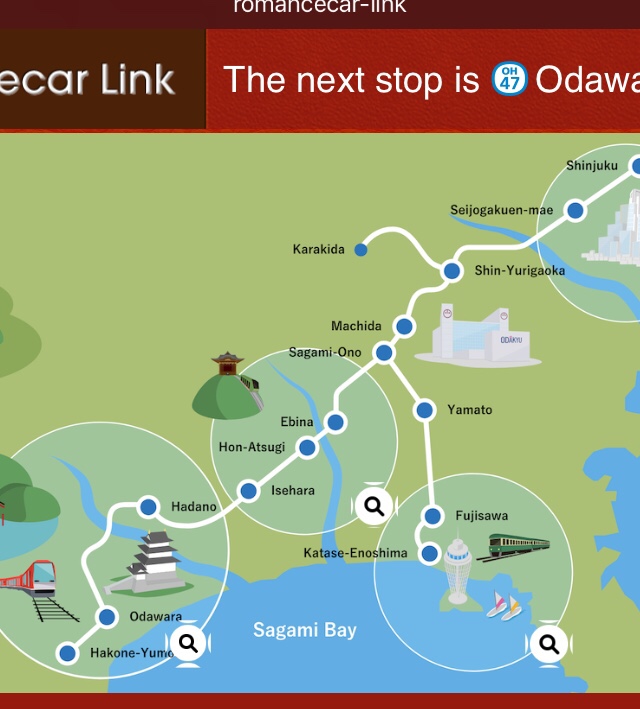
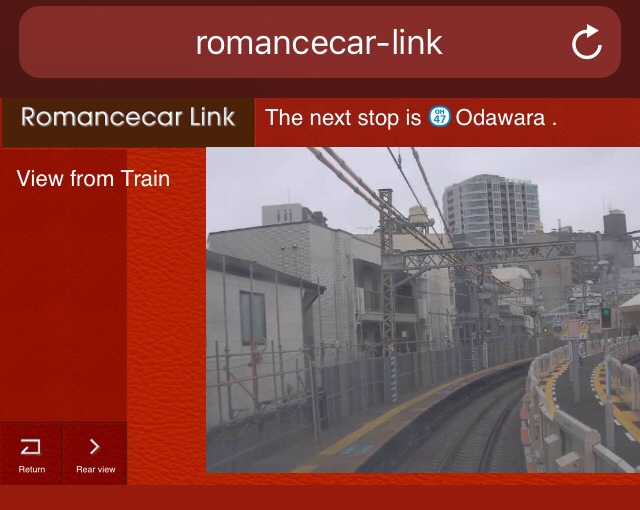
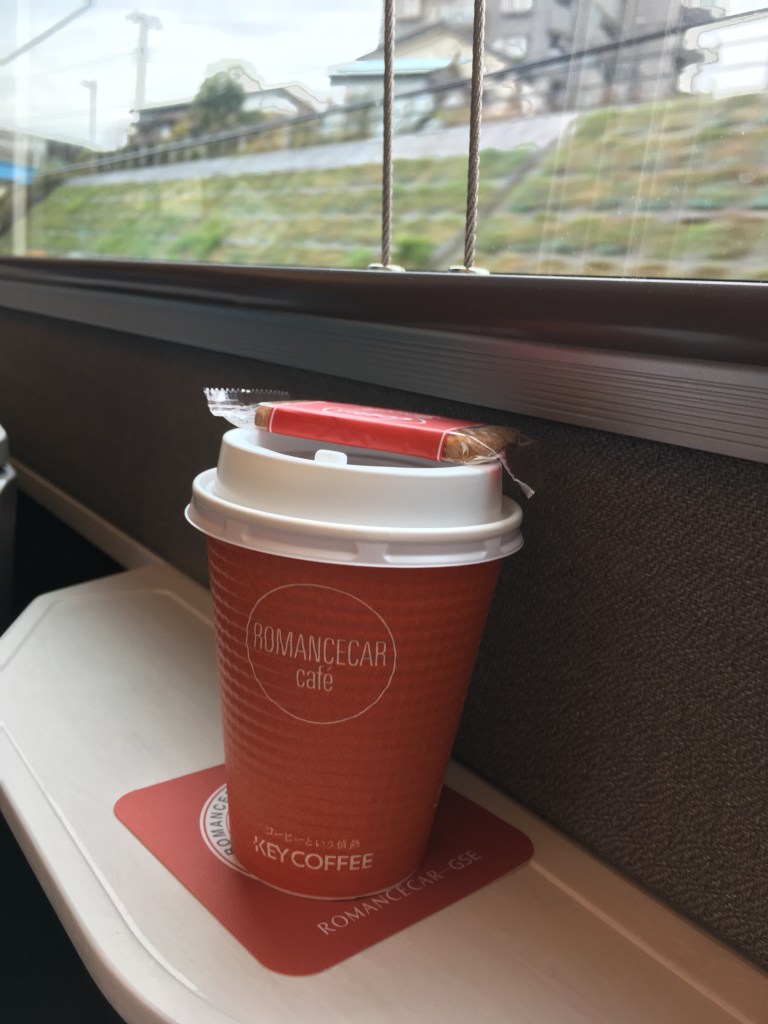
In my reserved seat with enough leg room for my own legs twice over, a luggage rack where I actually left my backpack out of sight and somebody came and served me a cup of coffee and biscuit. There were proper toilets with soap, and free WIFI with an interactive map and live camera view from the front of the train. Whatsmore whenever the attendant leaves the carriage they do a little bow πŸ‘

Train cam

I realise most of these points may sound obvious to the Western mind (maybe not the bowing part), but remember I’ve gotten used to trains in India where I’ve sat on the filthy floor watching my bag like a hawk and almost falling out of the open door onto the tracks.

The Japan train experience reminded me of something I forgot to write about in India. We had just arrived in Agra after a long train journey and tour guide Manny McPhee had clearly said ‘get off to the left’. Now the last time we took a train we nearly didn’t get off at all as a crowd pushed their way on before we got near the exit. So, as a few of us approached a door on the left and saw locals getting off, we followed suit. The fact there was no platform to step onto did not deter us. We jumped right down onto the live railway tracks like lemmings. I remember telling Izz Dog ahead of me to hurry up, not realising there was a metre drop. Only when I was down on the tracks, looking into the face of an oncoming train (that I now know was stationary) and realising it was not physically possible to haul myself, let alone my backpack, up onto the platform, did I panic slightly πŸ€¦πŸ»β€β™€οΈ Especially when I heard a train whistle in the distance. I still have the image in my head of Del Dog, mid air and horizontal, being dragged up on to the platform by her arms and legs. Had I not thought I was about to die I would have taken a photo, but I was too busy shouting HELP ME before I too was hoisted up by the gang. My lasting memory is tour guide Manny’s horrified expression as he registered what had happened from further down the train, where where everyone else was getting off at platform level like normal people, shouting ‘what are you doing!?’ Although I still cry with laughter at this memory, it scares me a little that I adopted this pack mentality and didn’t question what I was doing 😬

Anyway, in Japan it’s clearly marked where to get on and off so no risks of that happening again πŸ˜‚

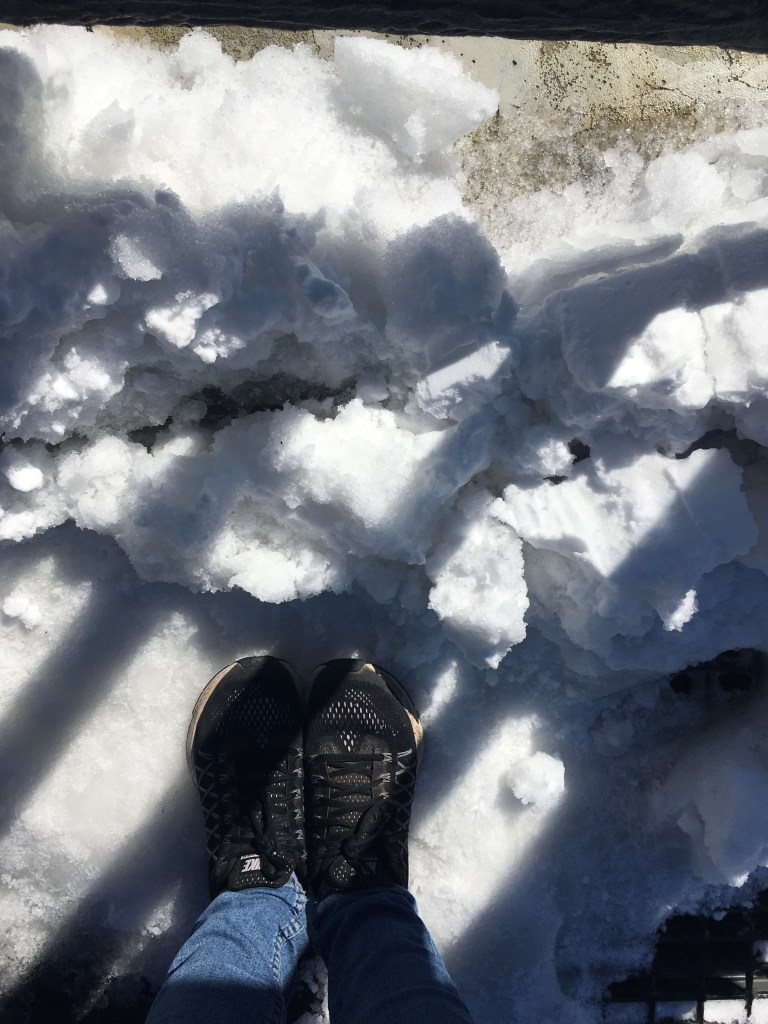
Snow!

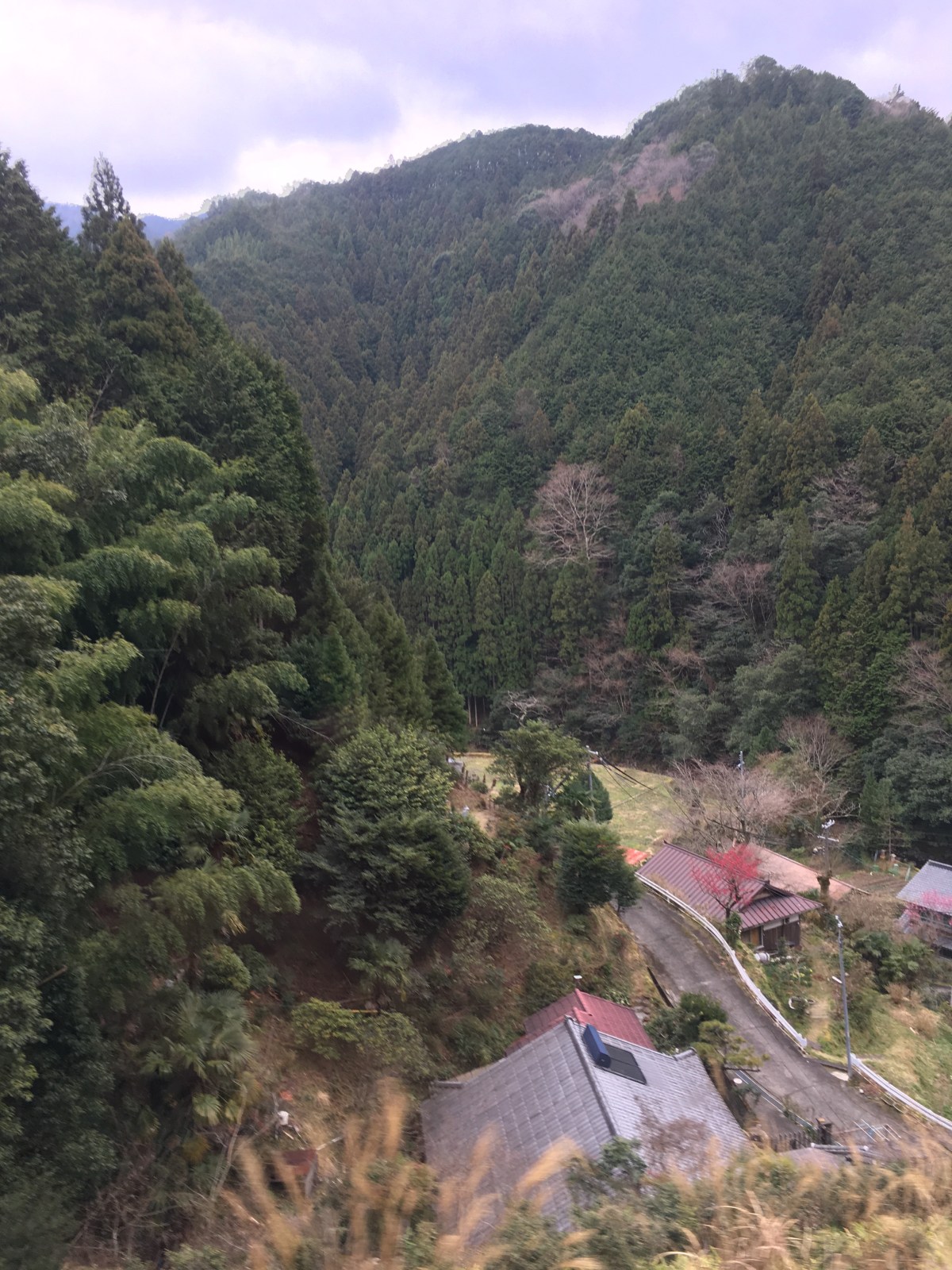
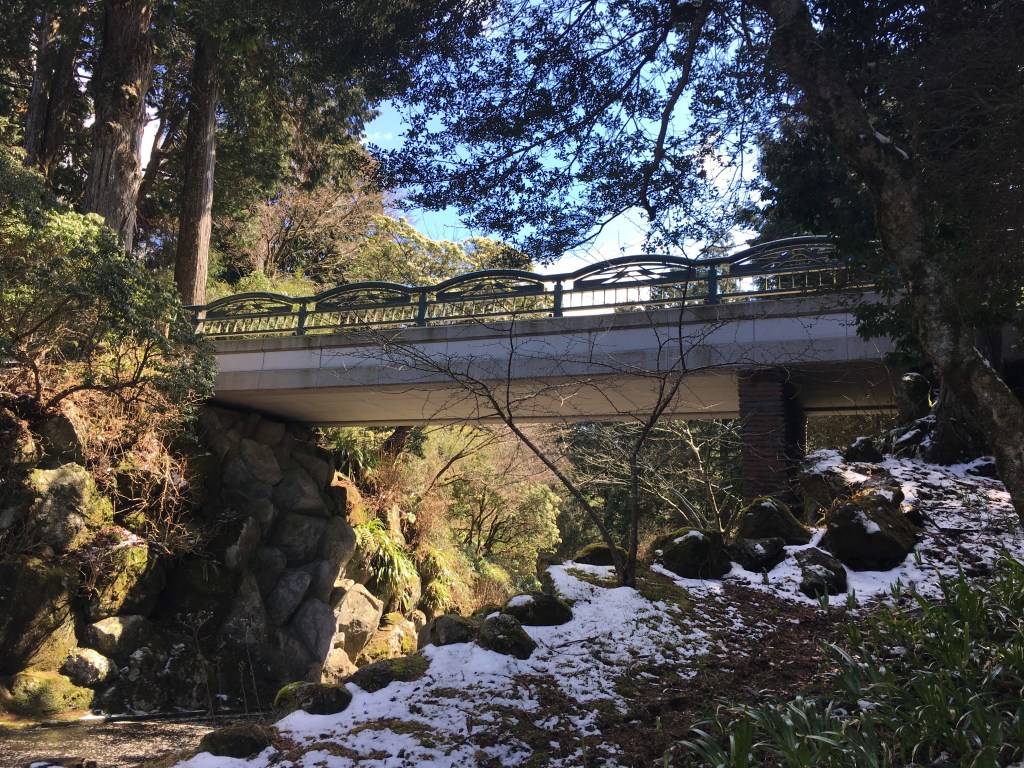
I also appreciated for the first time that Japan is not just bright lights and big cities. There was snow and sunshine at the same time 😎 The scenery and nature here is simply stunning.

Hakone

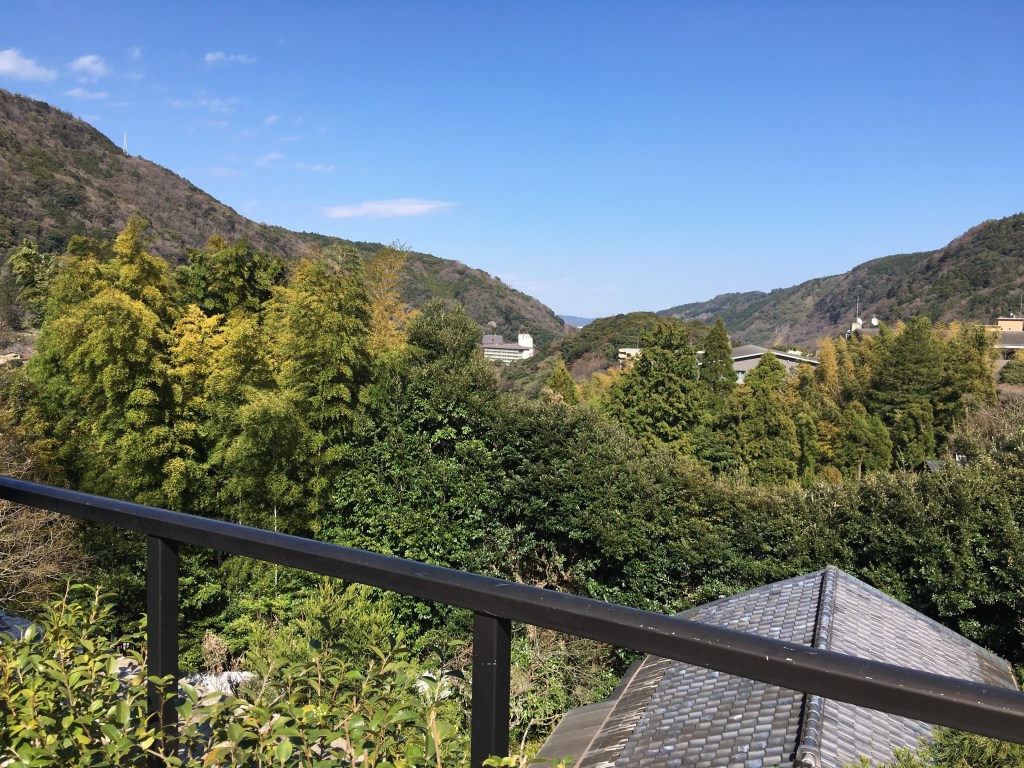
The ‘Heritage pass’ from Tokyo to Hakone includes all transport in the Hakone area, which is perfectly set up for tourism. I’ve decided to start including actual useful information about where I’ve travelled as well as silly stories, as more people are reading this blog now who might be planning a trip. I got on a local bus and headed to my hostel, K’s House which had some beautiful mountain views although it was raining. I hadn’t seen rain for months!! Just across the road from the hostel is a great little Japanese style bar where you sit side by side at a long bar. They even have a veggie menu – vegetable noodles Japan style please!

The Japanese love to queue for restaurants too. All of the eateries around the train station had long lines outside but this little place is too far up the hill for most people.

Clear skies the next day from hostel terrace

Everyone who comes to Hakone does two things. Firstly ‘the loop’ which is a brilliantly organised system of trains, buses, a boat, a ropeway (unfortunately not a rope ladder as I thought but a cable car) with a bit of easy hiking thrown in. Although what I ended up doing on Saturday was spending all afternoon at various train stations trying to buy a ticket for the following day to Kyoto, plus it was raining and bloody freezing.

No chance of getting lost with these directions?

Secondly, eveyone visits the hot springs (‘onsen’). The bathing experience in Japan is very different. I chose this hostel since it has it’s own onsen. I thought I had misread the sign at first that said ‘no bathing suits allowed’. But yes, the Japanese like to bathe full on starkers, albeit in separate men and women’s pools. Actually they switch the timings, so men are in the outdoor pool when women are inside, and vice versa. It’s a little bit stressful making sure you’re entering the right one at the right time – should have learned the Japanese sign for women! You have to shower first sitting on a miniature stool otherwise you’ll cause offence, then get in the pool. I decided to take the plunge and was initially relieved to have the outdoor pool all to myself – although in a way this was weirder than bathing with others πŸ€·πŸ»β€β™€οΈ No photos for obvious reasons – you can stop reading now if that’s what you were looking for!

The next day I set off bright and early on the loop after K’s free coffee πŸ‘ The temperature was 1 degree celcius but the sun was shining, the sky was blue and I realised one more thing that day – I would be wearing all of my clothes, all of the time. I refuse to buy a thicker jacket even if that means resembling a Michelen Man.

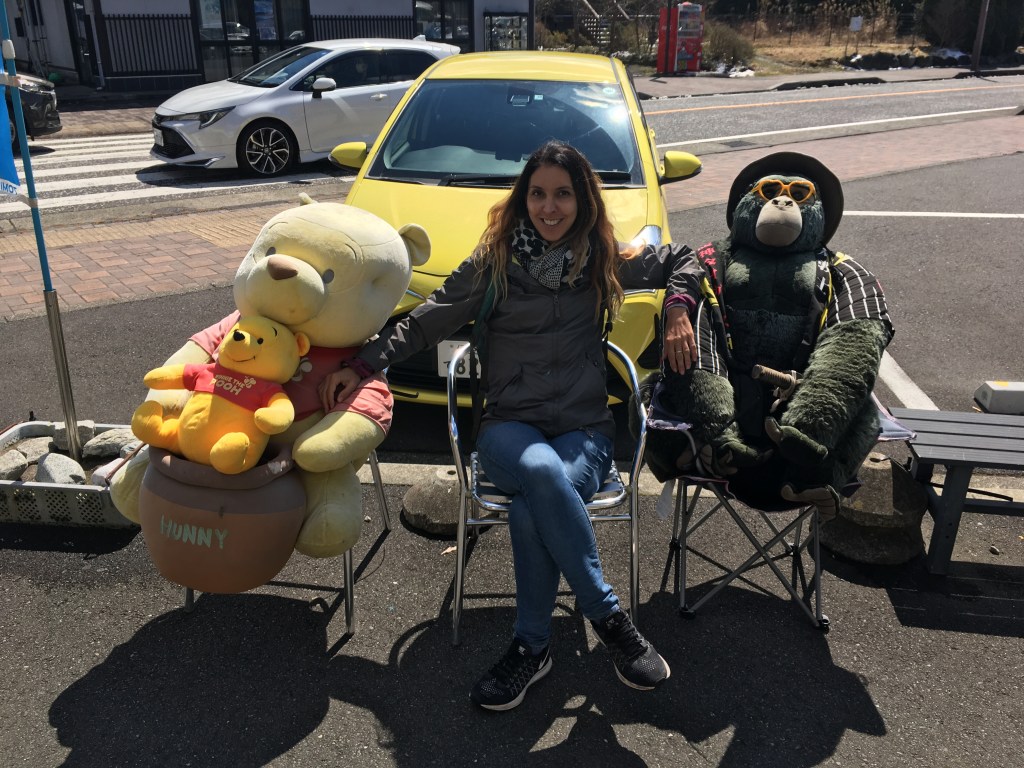
I teamed up with a couple of guys from my hostel for the day. It was fun to do the loop with others – backpacking is a mix of time spent in your own company and with others, and today was the perfect time for the latter.

New travel buddies Matt and Andy…. a selfie stick may have been involved

With another paper map and and not really knowing how long any of it would take, plus not wanting to miss my train that I had unnecessarily prebooked, we whizzed around the first bit and accidently missed half the places we wanted to stop at πŸ€¦πŸ»β€β™€οΈ

The ‘Ropeway’

Note to self #1 – there is actually no need to pay extra to prebook a train seat if you’re flexible on time.

Note to self #2 – next time just cough up for the Japan Rail pass (for a flat fee and certain number of days you can travel all over Japan with a few exceptions) then you don’t have to faff about buying a ticket at all, you can just jump in the three unreserved carriages.

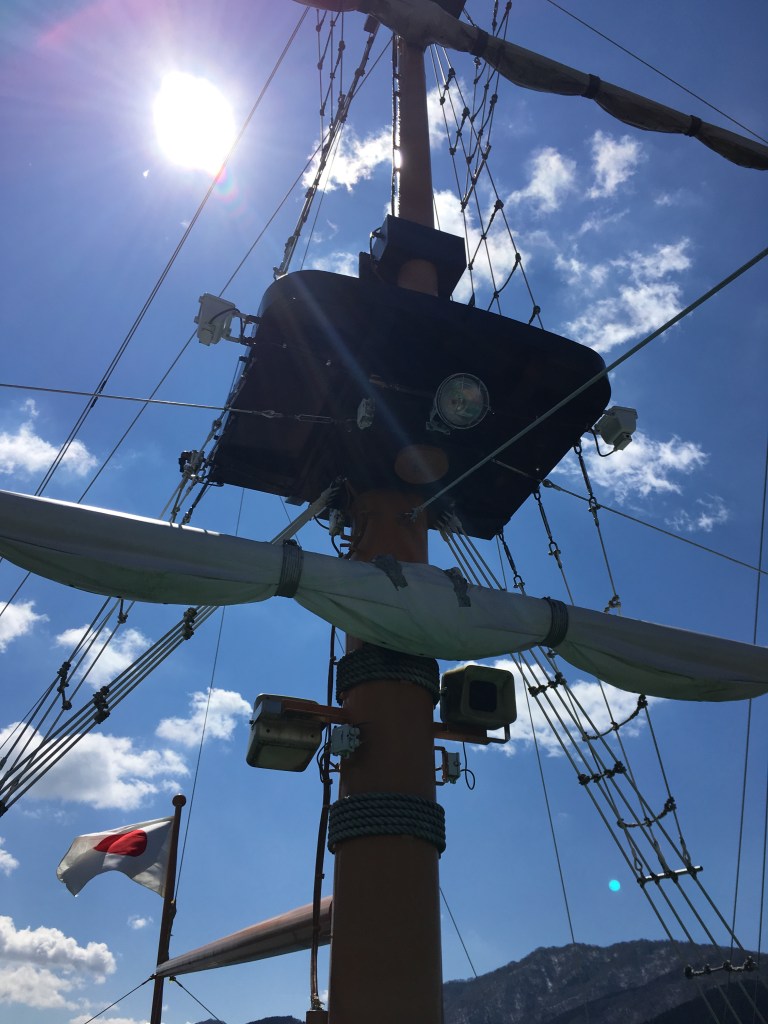
The loop includes a boat ride across the lake on what I considered a pirate ship – I really wanted to climb the masts πŸ€” The crowds really build up come midday so be prepared for a bit of a wait.

Pirate ship!

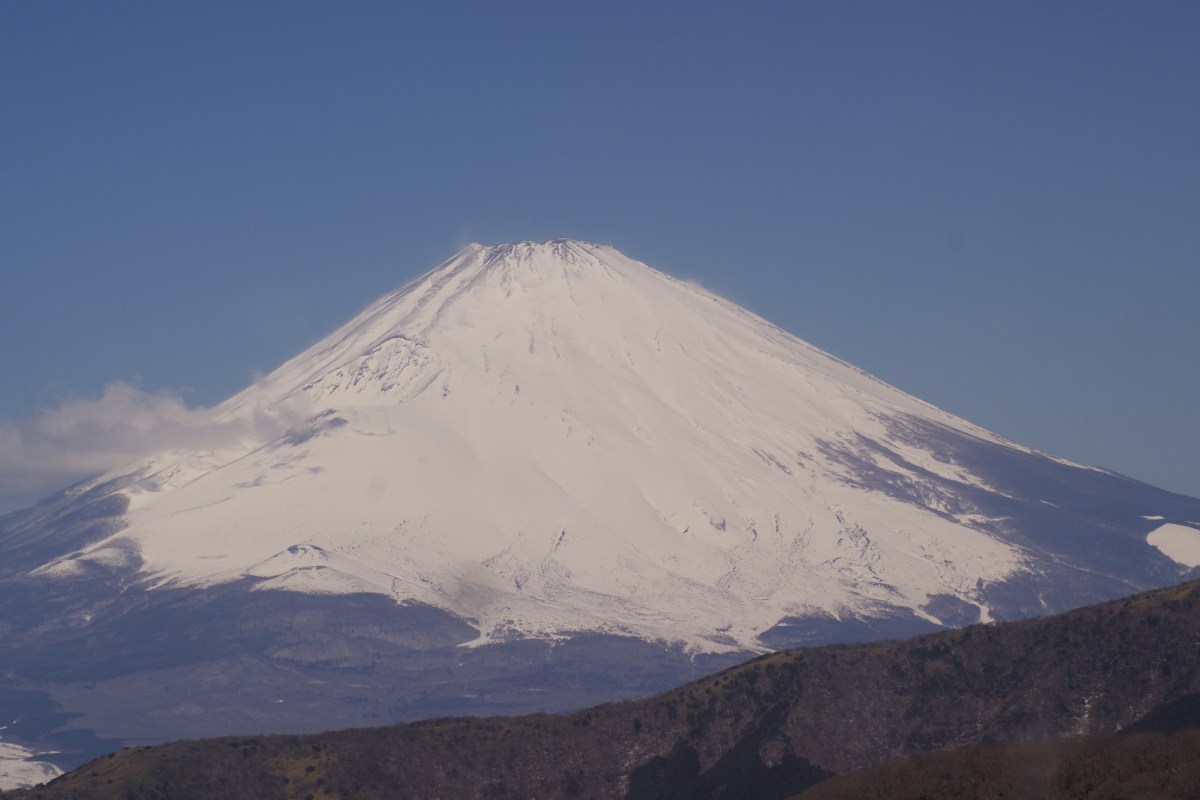
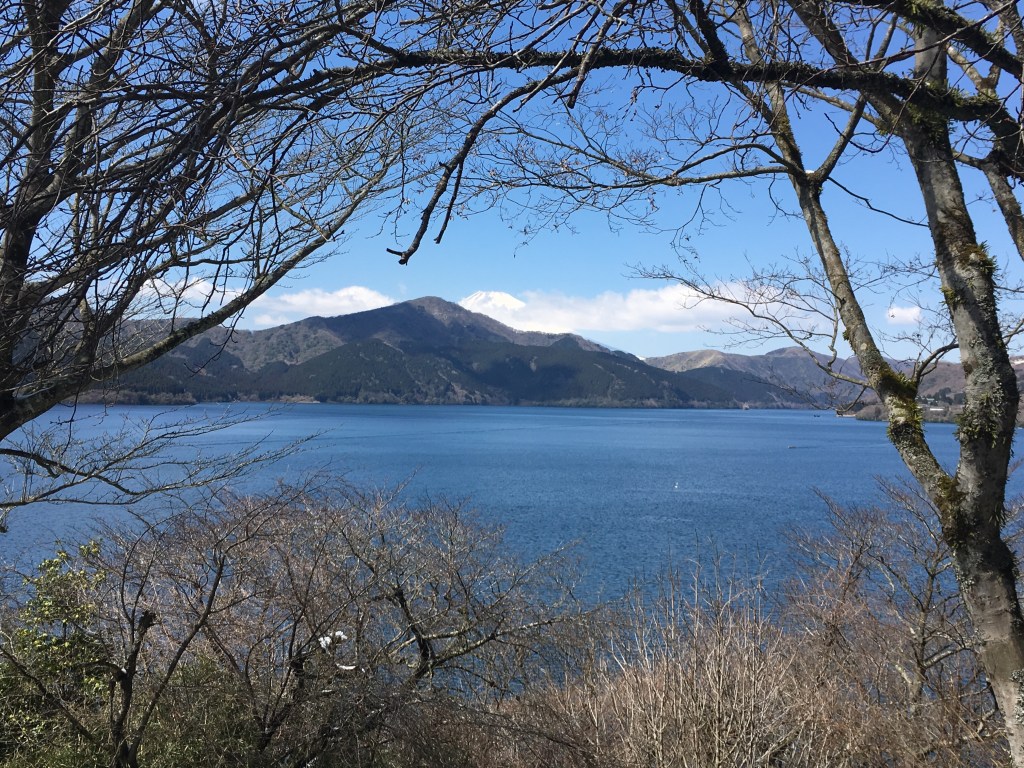
I was lucky with the weather and got so many stunning views of Mount Fuji…. I had prepared myself to maybe catch a glimpse between the clouds but this was fantastic. Yes there are a lot of people doing this loop, but if you set off early and take your time to get off the beaten track you can escape the crowds.

Bonus traveller point to Andy for bringing a proper camera

We did just that when we veered off the path in search of a viewpoint and discovered some gorgeous snowy paths around the lake. The scenery reminded me of Banff in Canada, or New Zealand – it’s rare to have snow on the ground, bright sunshine and waves lapping at your feet.

And Mount Fuji in the background – that’s snow on the mountain top, not a cloud 😎

Rice cracker?

I tried a giant freshly roasted rice cracker with soy sauce while the guys went for the local ‘black egg’ 🀒 I guess it’s black due to the sulphur from the hot springs which we could smell – obviously ignoring the warnings stating that anyone with any health problems at all risks death (flashback to the volcano in Hawaii which Helen and I survived). I didn’t see anyone bothering with the protective face towel that was provided πŸ€·πŸ»β€β™€οΈ

There’s a lot more to see in the area if you have the time, including the Hakone Open Air Museum at the top of the loop, which I missed, and local onsens which I chickened out of. Beware – most onsen don’t accept tattoos as this is a sign of Japanese mafia πŸ™Š

So many photo ops

After a nonstop day involving all kinds of transport, I had my first encounter with the Shinkansen (bullet train) as we all headed to Kyoto. Next post coming soon 😎

An Alien in Tokyo

After the slow pace of Myanmar, I landed in one of the most hi-tech places on the planet, Tokyo, and experienced a kind of reverse culture shock. There are so many people. The men wear trousers not skirts. The doors open automatically. The toilets have a mind of their own and should come with an instruction manual for their many controls, automatically lifting their lids and heating their seats as I open the cubical door. I’m instructed to sit not squat.

And I must flush the toilet paper instead of throwing it in the bin although it takes me 5 minutes to find the flush button and it’s a while before I’m brave enough to press the ‘female cleansing’ button πŸ™Š

I added Japan to my itinerary almost on a whim enroute to the Philippines. Before quitting to travel, I worked at Google and my team was based in Tokyo. Come visit when you’re in this part of the world they said. So here I am!

What I discovered pretty much immediately that Japan is a 30-something backpacker’s dream come true. I thought I had outgrown dormitary rooms but Japanese hostels have raised the bar so high I can’t even see it anymore. Plus I can’t afford my own room in Japan.

My first pod

A dorm bed here costs about Β£30 and generally gets you a sleeping pod, which I didn’t know I’d been missing out on until now. Amazing. You have a decent sized bed and enough space to sit up in, a reading light, some shelf space (a bit like a mini version of those all in one beds you want as a teenage girl) all safely enclosed by a curtain. And a pair of slippers – get used to taking your shoes off a lot in Japan! The calibre of fellow travellers is also that bit higher – your average 18 year old on their gap year can’t afford it πŸ™Š

As I stepped off the plane and onto the Tokyo metro system, I thought it was going to be harder to get around than it actually is. Rail staff generally speak enough English to point you in the right direction and a few words of Japanese (excuse me, thank you) go a long way! I also discovered that whilst I spent half my time getting lost inside the stations and figuring out which of the hundreds of lines to take (Tokyo has the biggest station in the world, Shinjuku), once you’re actually on the train it’s easy as stations are numbered and announcements are even in English.

On to Tokyo itself, with only two full days it was always going to be jam packed. I don’t like big cities. But I loved Tokyo. I could even imagine living here. Because whilst there are over 9 million people, there is an efficiency to it and pockets of calm to be found. People are incredibly polite and they like to queue. I was waiting to board a bus when I realised everyone people was waiting for me to get on first as I’d arrived before them. As a Brit I obviously appreciate the queue, although I don’t see the point of waiting at a pedestrian crossing for the little green man when the road is clearly empty πŸ€”

Tuktuk Japan style!

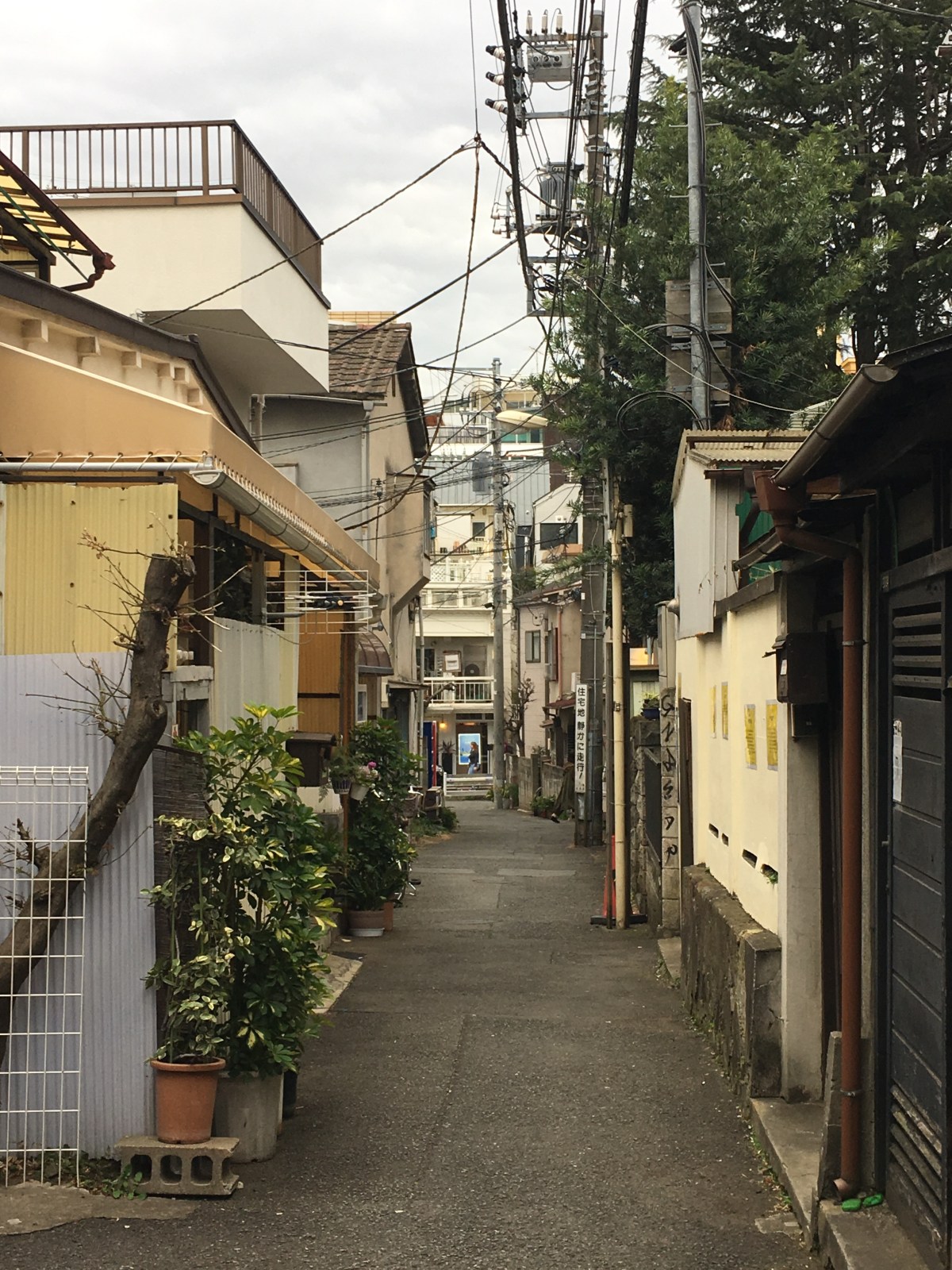
Two days barely scratched the surface and I can only write about my own experiences. I stayed in the Asakusa area, to the east of the city where a lot of the hostels are based. On both days I left my hostel early mornings armed with a paper tourist map and a metro card and pounded the streets for several hours, only returning late at night to sleep.

All vegan Japanese curry and tempura

Asakusa is a good area due to the proximity to the Dempo-in Temple, the Sky Tower and the river, also a fairly early metro station to take you into the city. I found a lovely vegan cafe called The Farm by the river for my first Japanese lunch.

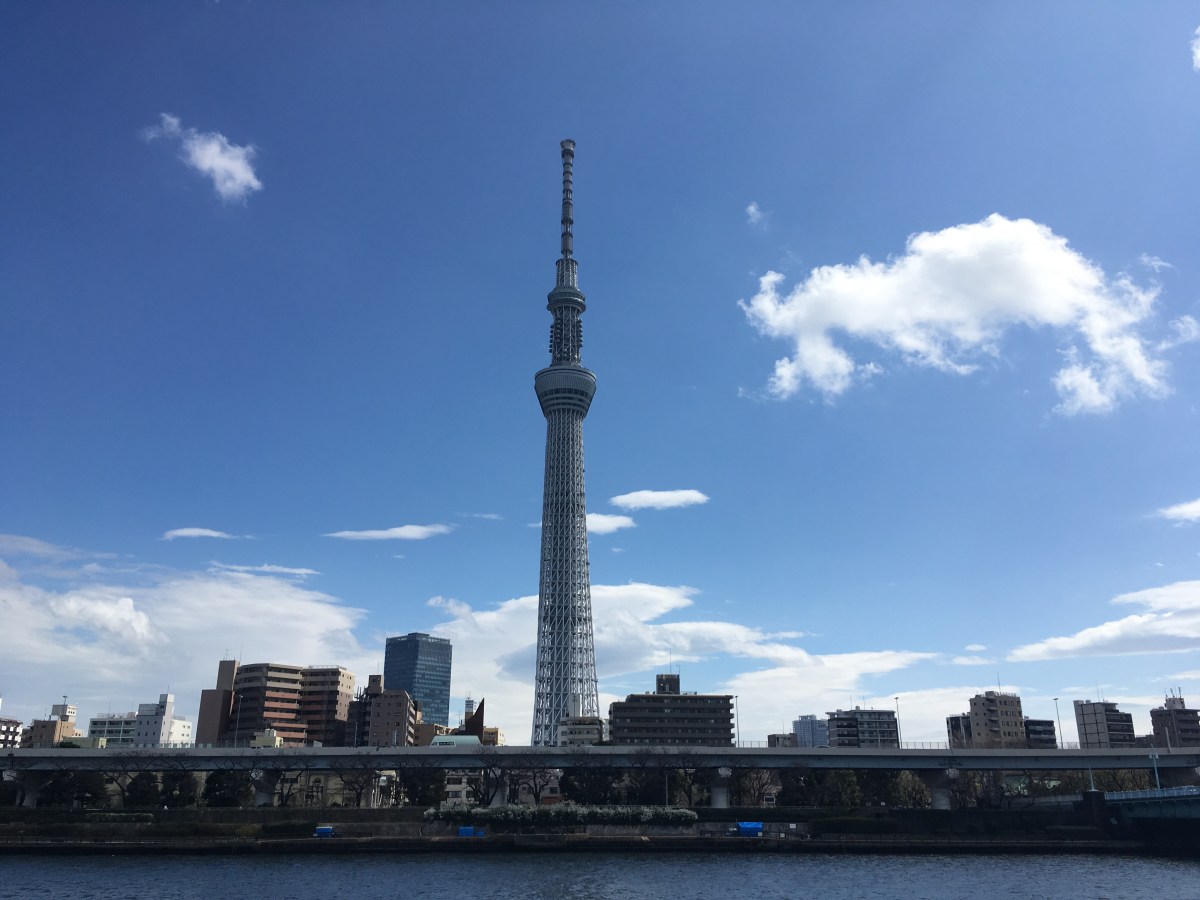
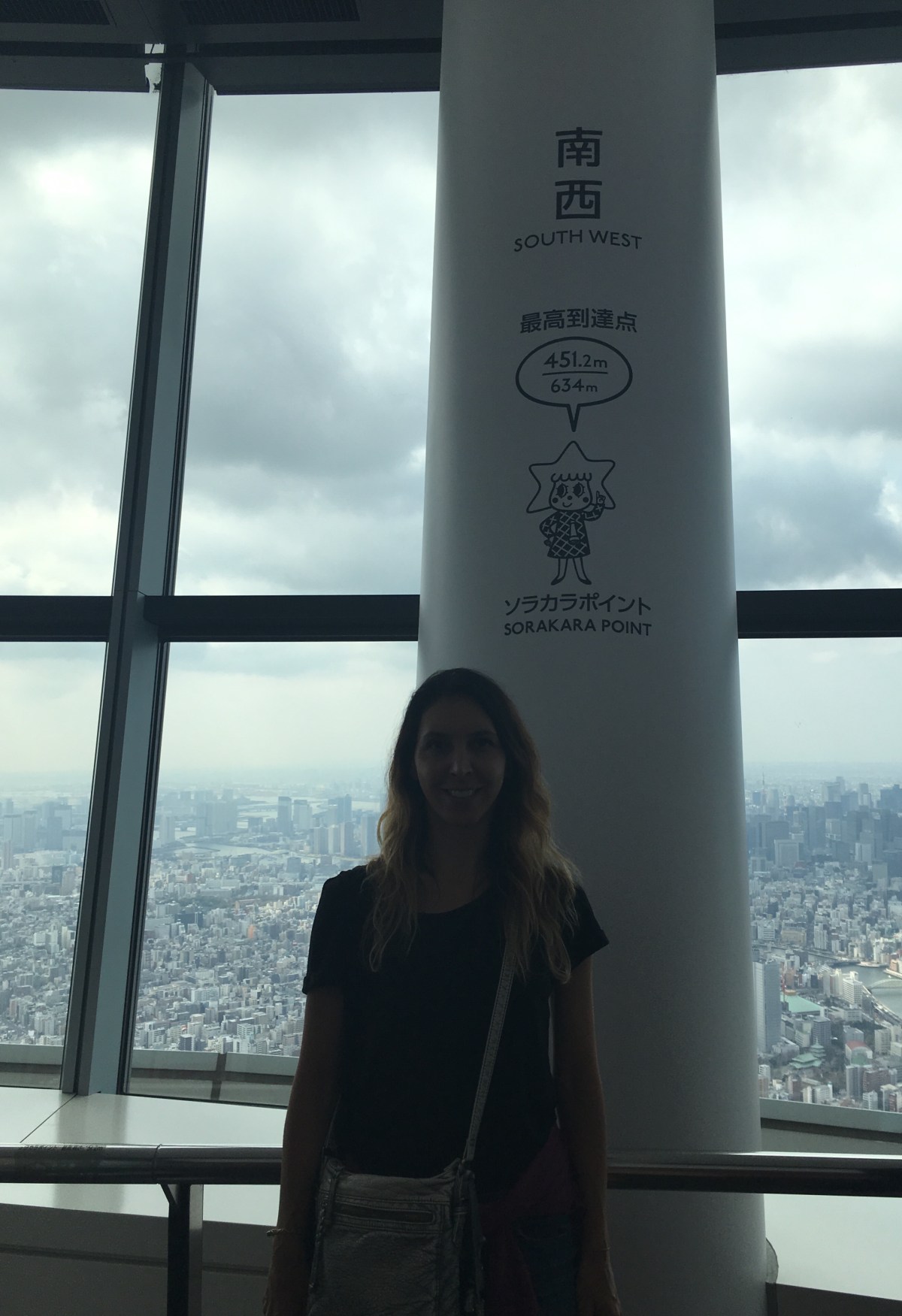
The Sky Tower used to hold the title of World’s Tallest Building so naturally I went to the very top. I don’t think I even looked at the extra cost for the top floors – what’s the point if you don’t go to the highest point?! They also have a post box up there which I thought was pretty cool.

The views from the top were stunning – although the Barbie doll exhibition on the top was a little odd. I never considered Barbie to be a career goal.

The highest point

The Dempo-in shrine gave me my first experience of Asian girls dressing up in kimonos, whipping out their selfie sticks at the slightest hint of cherry blossom. Note to other tourists – these are not Geisha πŸ˜‚ It also introduced me to the fortune slips, whereby you pay a coin or two, shake a box and pull out a stick with a number on it then find that number on a big chest of drawers type thing, and discover your fortune. Unfortunately I couldn’t understand my number but some girls helped me out and I was relieved to find my fortune was a good one. Not to worry though – if you get a bad one, simply tie it to the post and get rid of it.

Helping find my fortune number

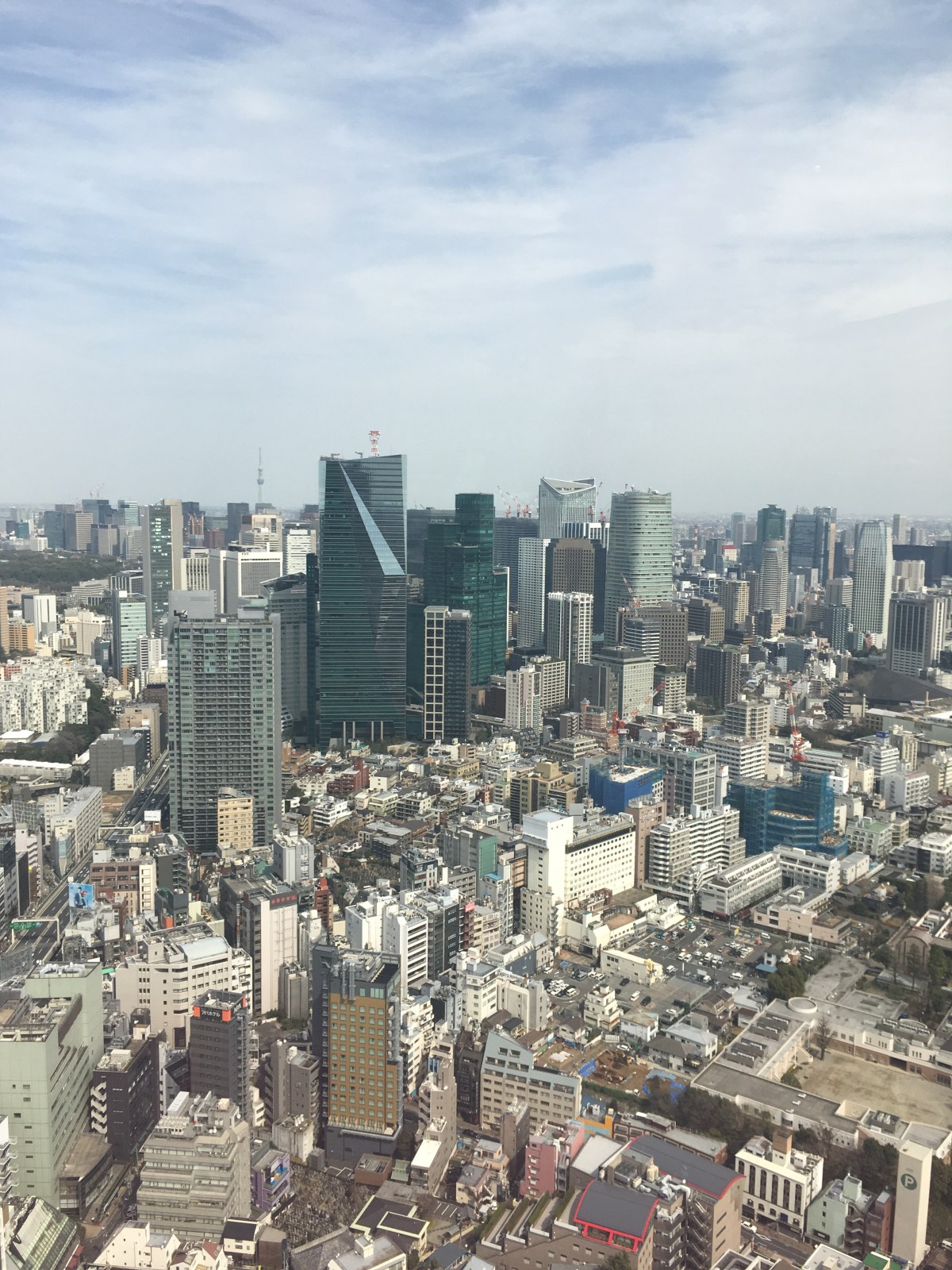
I popped in the Google office for a free lunch and view from the top of the Roppongi Hills office. Whilst their suggestion of for afternoon activities was some way off (Fish market and Maid Cafe) it was nice to catch up in person although it felt like a weird parallel universe where work me and backpacker me collided πŸ€”

They also treated me to a unique private dining experience in a Tempura restaurant which was the best food I ate for a while. Three of us sat in a private room whilst the chef prepared course after course in front of us before explaining exactly how each piece should be eaten. With a delicious vegetable only menu for me of course.

When in Tokyo you have to check out the Shinjuku area with the iconic neon signs and walk around at night. I realise this is a bit like saying when in London you must go to Picadillly Circus, an area no Londoner just wanders around by choice, but I couldn’t quite get my head around these scenes after India and Myanmar. A good place to get a break from the crowds and see the city lights for free is the Government Building observatory.

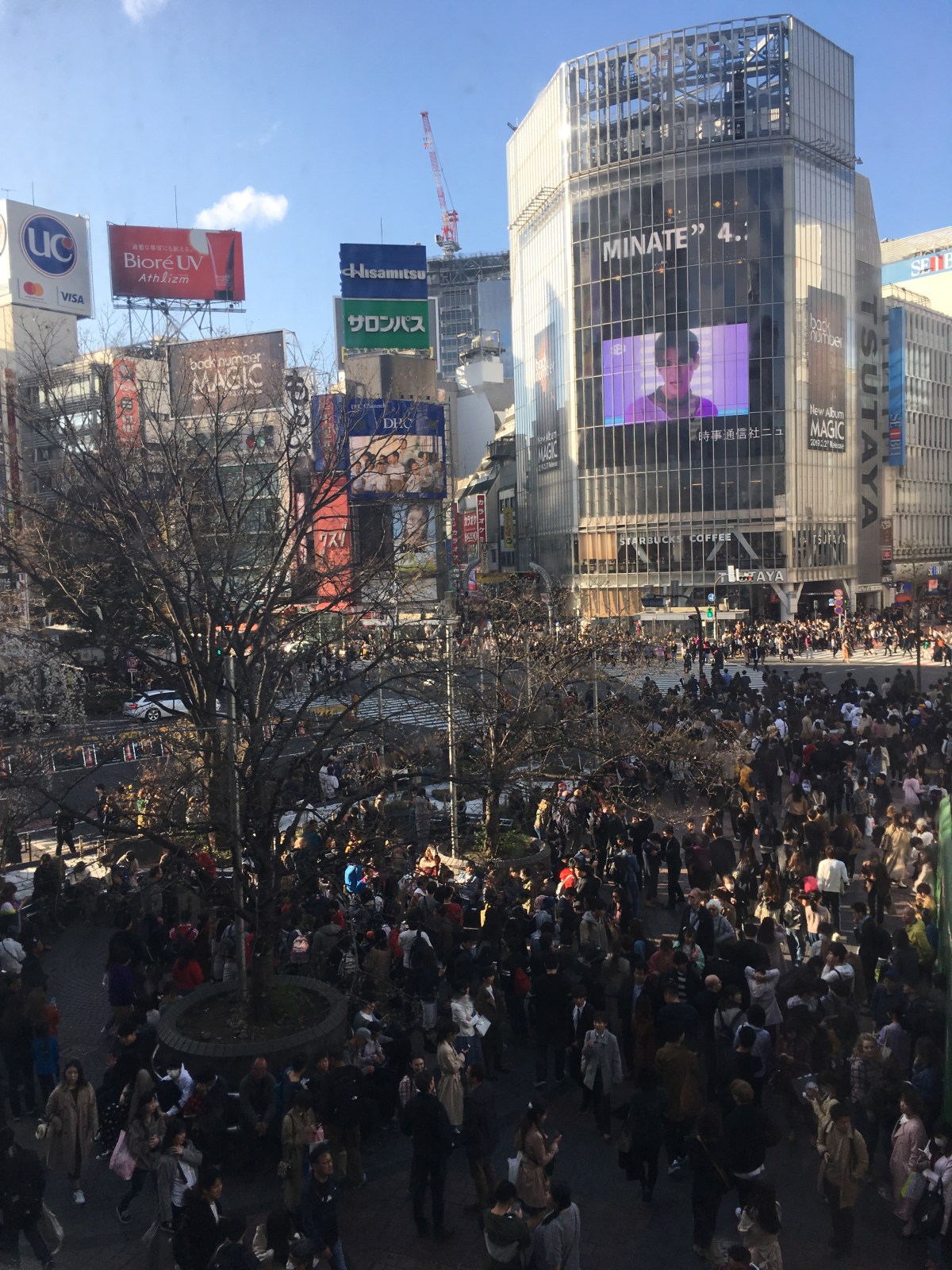
I also had to see the World’s Busiest Crossing at Shibuya (maybe I should start watching record breakers as I seem to enjoy this type of thing) which despite apparently having 2500 people crossing in all directions, felt relatively calm. Photo below!

My favourite area was probably Harajuku where I wandered around the quieter streets, had coffee, browsed the weird and wonderful fashion shops in Takeshita Street (sooo many people!) and found a gorgeous silver jewelry shop with abundance of skulls, where the owner was a lovely guy from Myanmar of all places – I got a few freebies for that reason 😎

Vegan cheesecake in Mr Farmer

I was intrigued by the number of cat and dog cafes but didn’t go in as I can’t imagine I’d have been happy to see animals contained in cafes. Below is a video of the crowds on Harajuku Street – I didn’t last long there.

The makeup shops also fascinated me. There is makeup for things I didn’t know existed…. And skin lightening is a big thing – I’ve given up on finding a normal moisturiser without going the Michael Jackson route and am just putting hand cream on my face until I get to the Philippines. Neither can I find a hair conditioner that isn’t industrial sized. I’ve spent hours in these shops just looking and wondering what everything is.

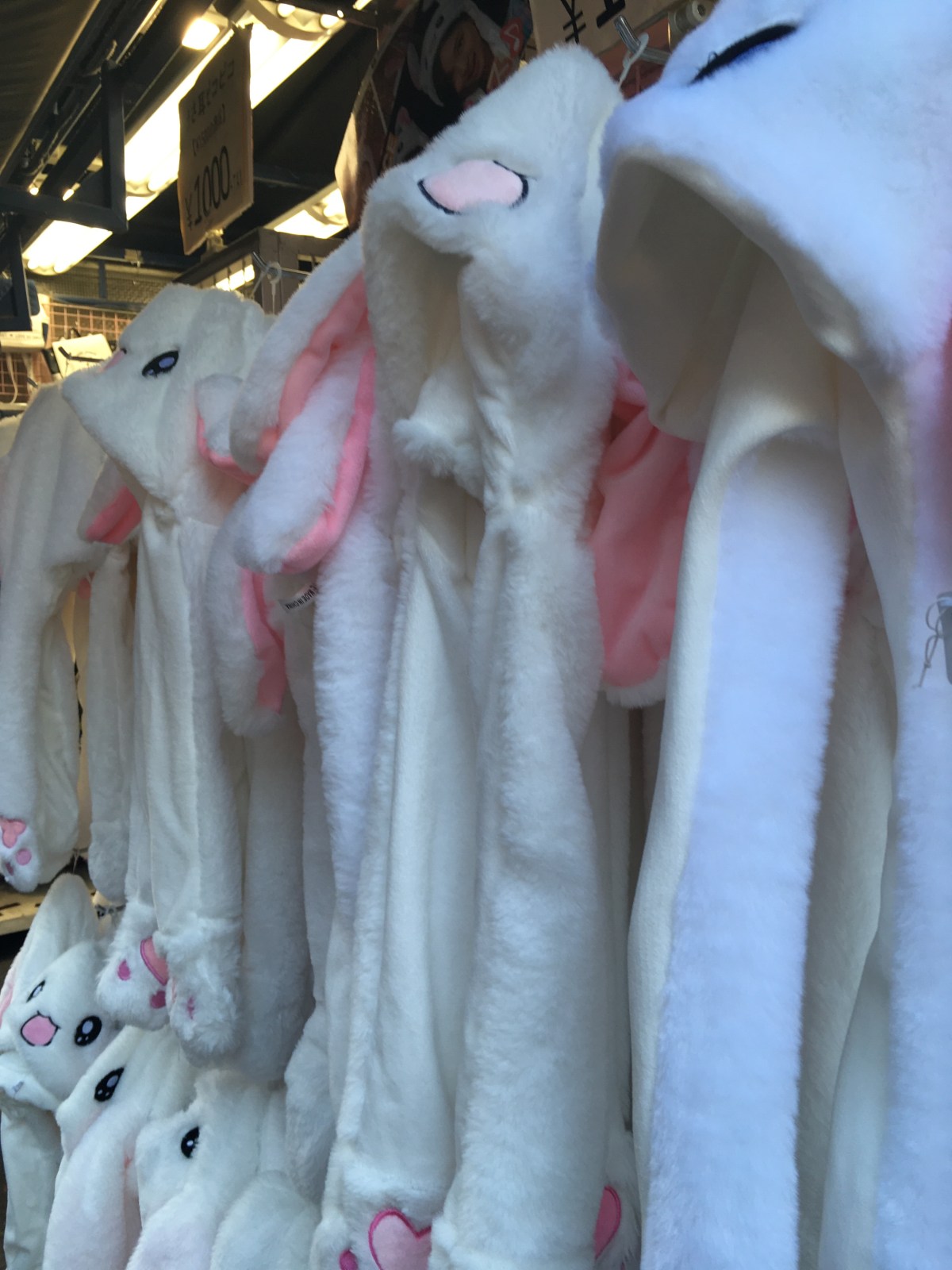
Can I wear this at home?
The Japanese love to use props in photos…

Japan is also home of the super duper vending machine, on every corner and selling cans of hot coffee. I did not see any vending machines for more dodgy things shall we say, which I had been told existed.

Vending machine – selling what?!

Not sure what these are!

I was only planning 10 days in Japan initially, so after 3 nights I moved on to catch a glimpse of Mount Fuji and experience the Japanese bathing phenomenon of Onsen…

Yangon : The Hair of The Buddha

Just one more night bus away, this time a modern one with a working seat and no naughty monks (but still no sleep) lies Yangon.

Spot the woman brushing her teeth

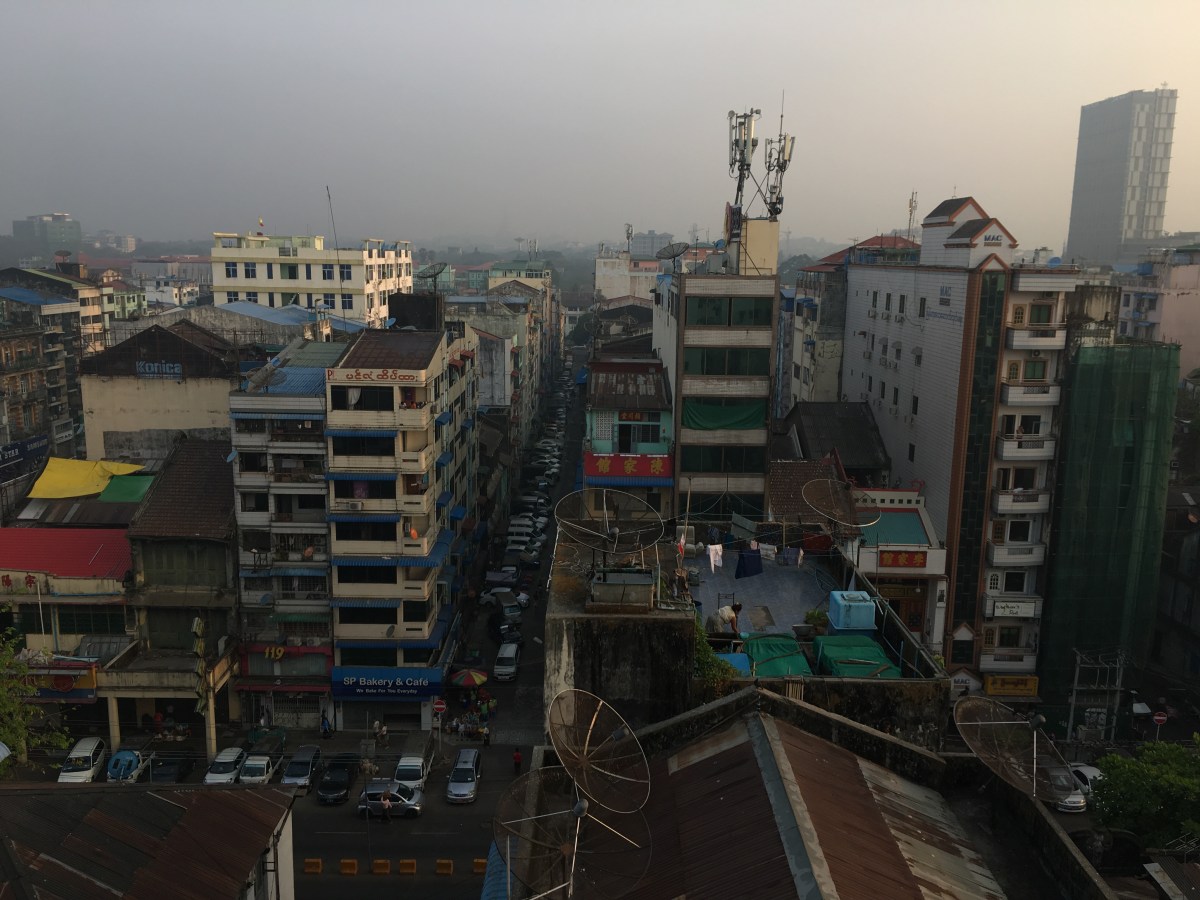
Founded in the 11th century and formerly known as Rangoon, this city turned out to be one of my favourite in Asia. It has a great vibe, it’s a real city where as a visitor you are made to feel welcome but it’s not overrun with tourists. I could walk down the busy streets as the only Westerner and feel completely safe. In fact in Myanmar I haven’t worn my money belt or bothered to lock my backpack when I leave the room – it just hasn’t felt necessary.

Yangon was the capital until 2006, when the  government relocated the capital to a purpose-built city, Naypyidaw, in central Myanmar. There are over 7.3 millon inhabitants – I really enjoyed breakfast on the hotel rooftop looking out at some of these people busy tidying their roof gardens and one woman brushing her teeth up there 🀐

I’ve seen a lot of Buddha images since I arrived in Sri Lanka on 1st January and travelled through India and Thailand. I’ve lost count of how many. But just when I thought I’d seen them all, Yangon gave me the Swedagon Pagoda, the mother of all Buddhist temples and this absolutely blew my mind.

In this temple complex there are over 2000 gold Buddha images. How many?! Most Burmese Buddhists visit here at least once in their lifetime. See video for a tiny glimpse…

Error
This video doesn’t exist

I tried my best but I’m not sure the awesomeness of this place can be captured on camera or video. There is one huge temple in the centre, surrounded by dozens of mini versions forming a circle, with a little shrine for each birth day, where you pour a cup of water for each year of your life. Or one per decade if you’re going to be there for a while!

In the main temple, according to Buddhist beliefs, there is something very special – the hair relic of The Buddha. Sri Lanka might have had the tooth relic but this is 1-0 to Myanmar in my book.

Coordinated sweeping was fascinating

I made a stop at the National Museum for once and it was entertaining, even if it didn’t meant to be. The rooms were huge and spacious, but mostly empty with a few exhibitions dotted around. In the biggest room was the magnificent Lion throne which was returned from India in 1885. I spent a while walking around the dome looking for the other 7 thrones before reading the text properly and realising they were destroyed many moons ago πŸ€¦πŸ»β€β™€οΈMy other favourite was a collection of weird and wonderful musical instruments, all shaped like snakes or other animals. No photos unfortunately as we had to lock our bags away before entering.

This is something that would have annoyed me if I was on the way to work in London rush hour, but we rode the circular Commuter Train for a few stops to get a feel for the area and admire the view from the open windows as the train passed through surrounding villages. But it wasn’t that busy and nobody seemed to mind although I declined the insect snacks and dried plums that vendors were selling!

Dried plums in red basket, insects out of shot

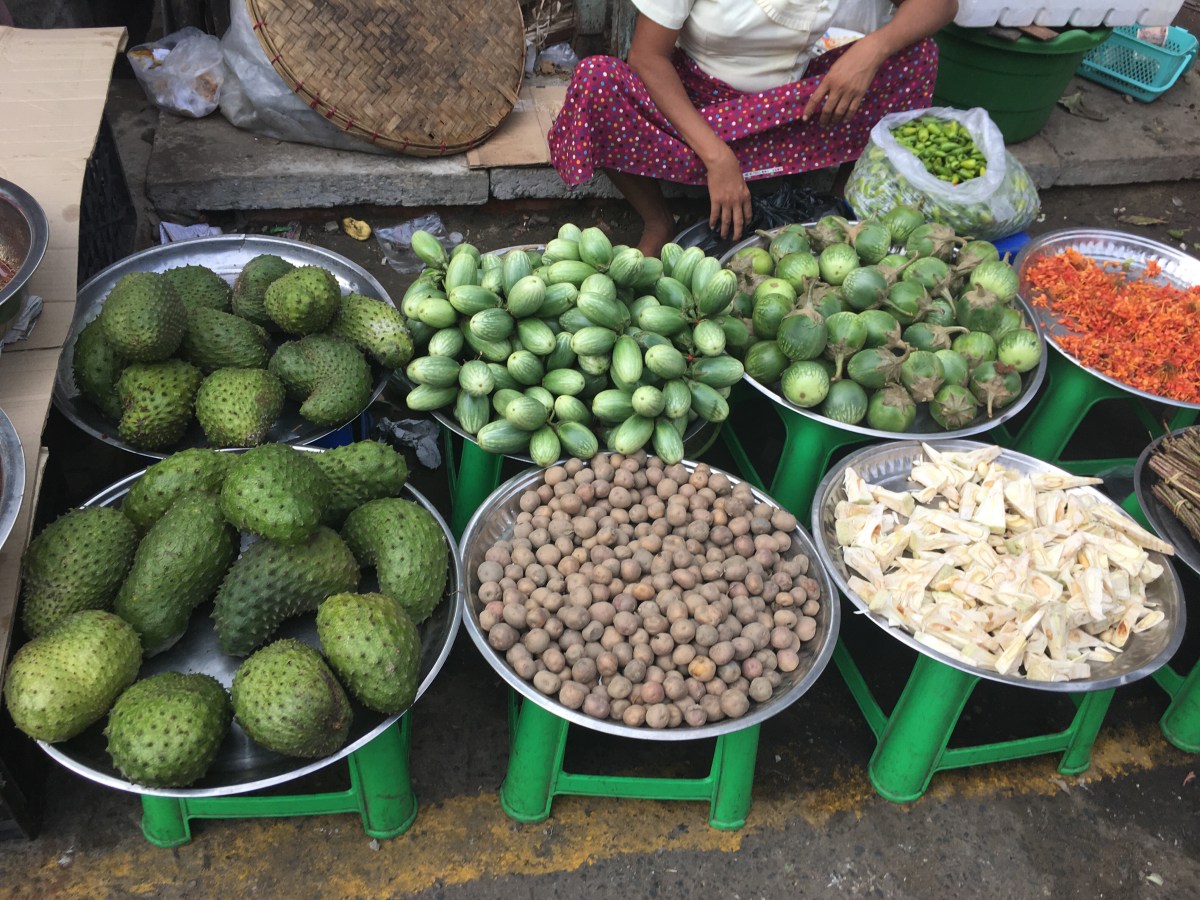
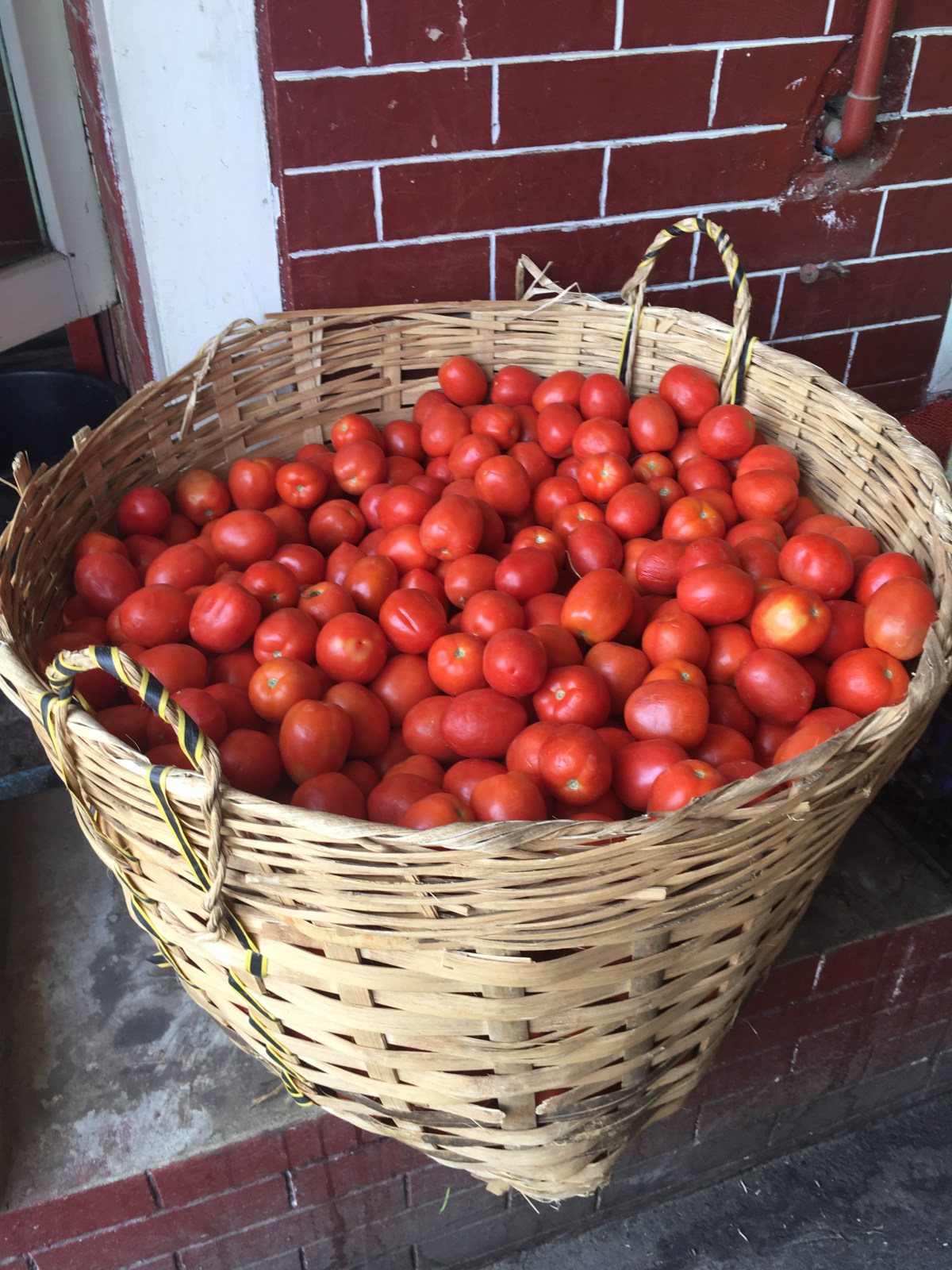
Yangon is a good place to explore local markets, full of colourful produce and nobody really tries to sell you anything. I avoided the fish market and the place where they make the dreaded Fish Sauce by burying layers of fish in the ground and leaving it for one year. People are so friendly that I could take lots of photos of the fruit, vegetables and tofu laid out on the ground. I tried some red bananas – slightly sweeter than the yellow ones.

Inside, women were perched on tiny platforms, stitching away on ancient looking sewing machines. It felt like going back in time.

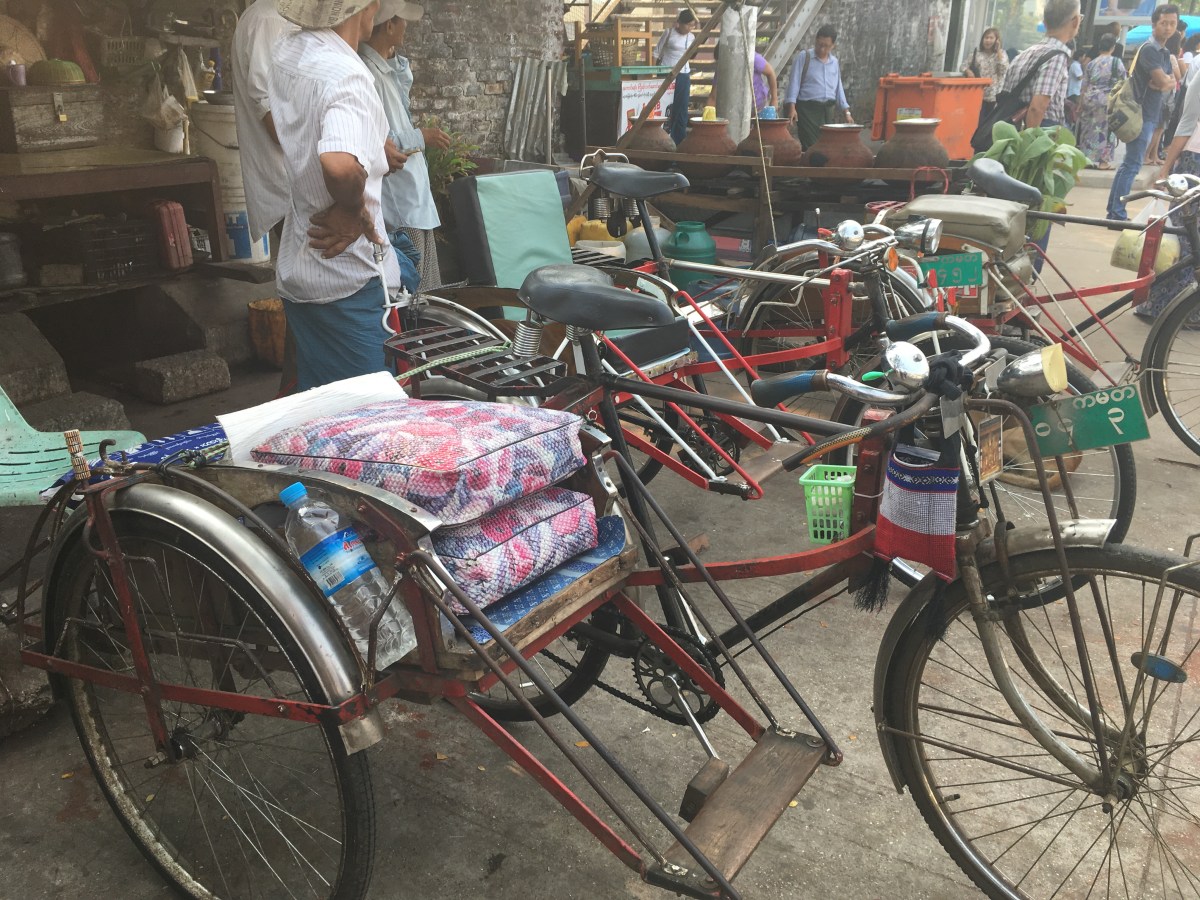
A particularly fun way to get around in Yangon is by tricycle, where you sit side car style on a bicycle. They go pretty fast, especially into oncoming traffic πŸ˜‚ – see video!

Interesting bum enhancer for sale at the market πŸ€”

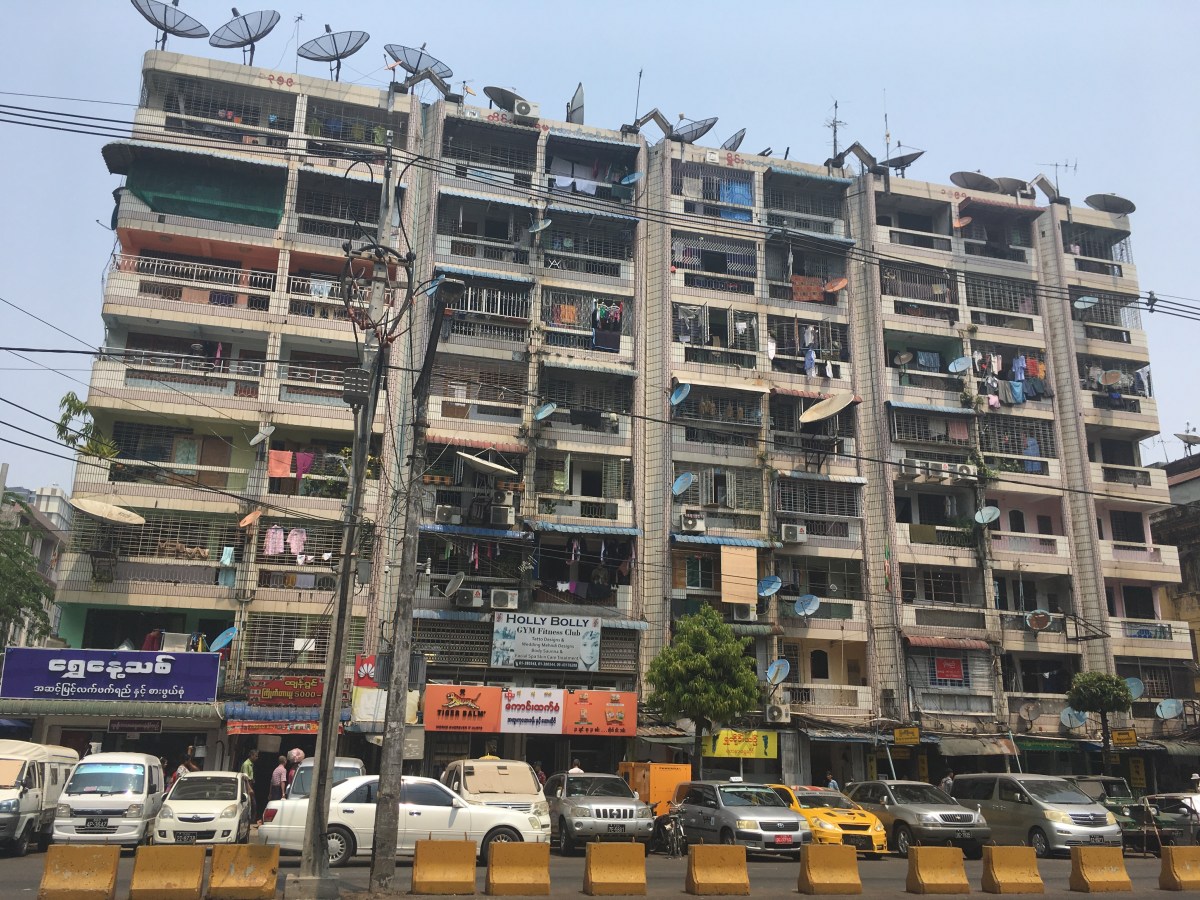
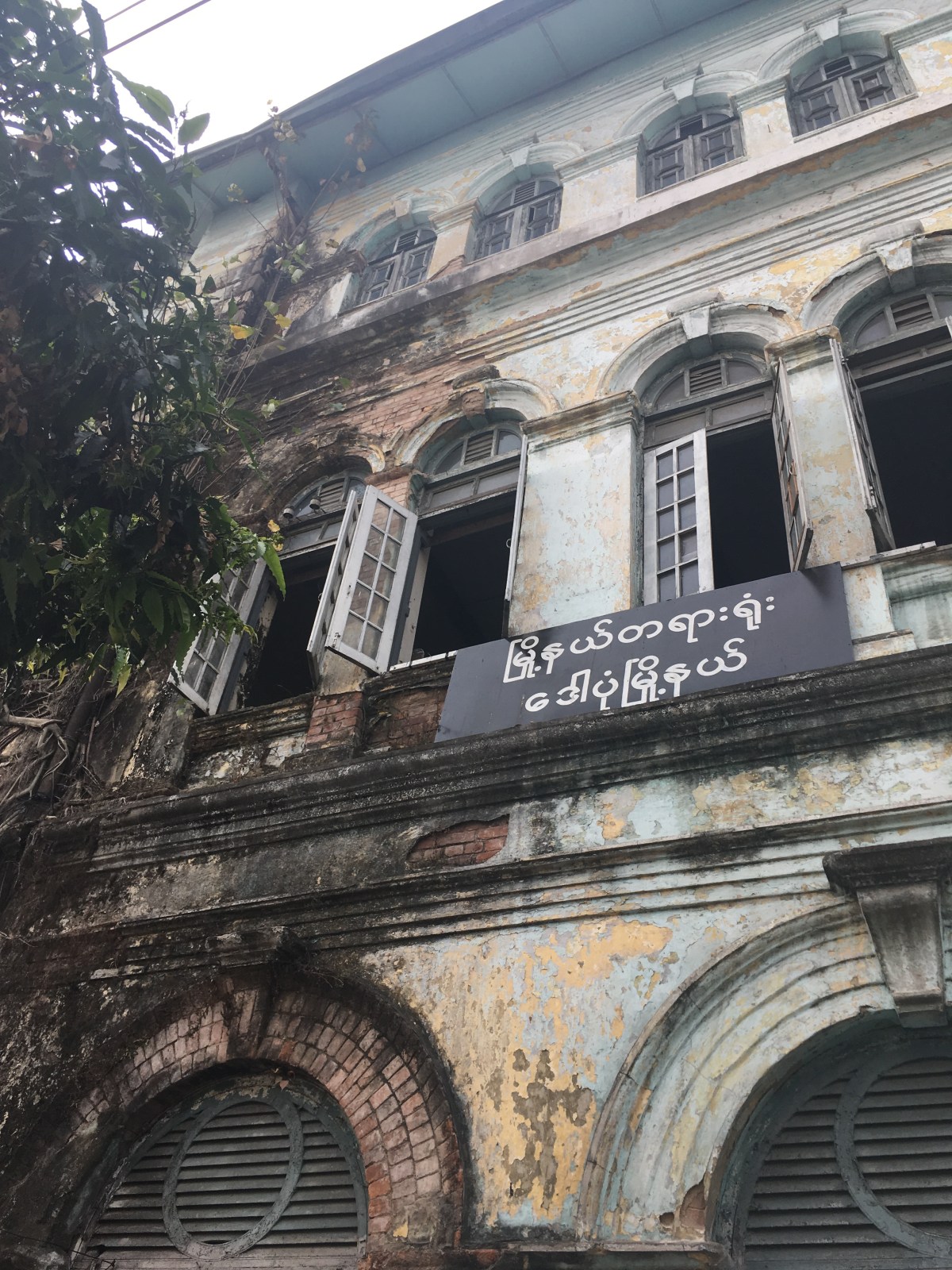
My final day in Yangon, and in fact Myanmar, was spent wandering the old town and admiring the colonial style buildings. This part of the city reminded me a little of Mumbai.

Food was also excellent and although a little more pricey, it meant a change from the daily vegetable fried noodles (“tatalo, fish sauce no!”) – I had the chance to try banana blossom, and ordered a vegetable samosa salad which I did not expect to come as a soup πŸ€¦πŸ»β€β™€οΈ

Inke and I share a love for massage treatments so we headed to a local spa and indulged once again in the full works ❀️

Our guide Leo offering to the novice nuns

Two weeks in Myanmar has flown by and I’m not sure where the time went. I’ll definitely return when I’m in this part of the world, to visit the beaches in the south and hopefully the mountains in the north will be be more accessible.

I can’t recommend Myanmar strongly enough although I don’t want it to be ruined by tourism. This is the internal dilemma you face daily when travelling – you want a place to be easy to get to but for nobody else to be there πŸ€”. Just be prepared to move at a slower pace – your meals might take an age to arrive, you might be served the wrong dish, and you’ll have to learn to love the squat toilet but you’ll be rewarded with old fashioned hospitality and be greeted with a smile. Go! ❀️

The Road to Mandalay

Sad to leave Bagan but excited for Mandalay, it was a relatively short journey to the second largest city and last royal capital of Myanmar. The name sounds really romantic, probably because of Rudyard Kipling’s poem.

Looking back Mandalay is a bit of a blur, visiting one temple after another on two day trips which packed in the sights. I’m running the risk of simply rattling off all the places I visited without much information – but that’s because there are so many places to see. I’ve decided to write what I remember right now before I forget and maybe do a retrospective post later on with more detail.

Bus rest break

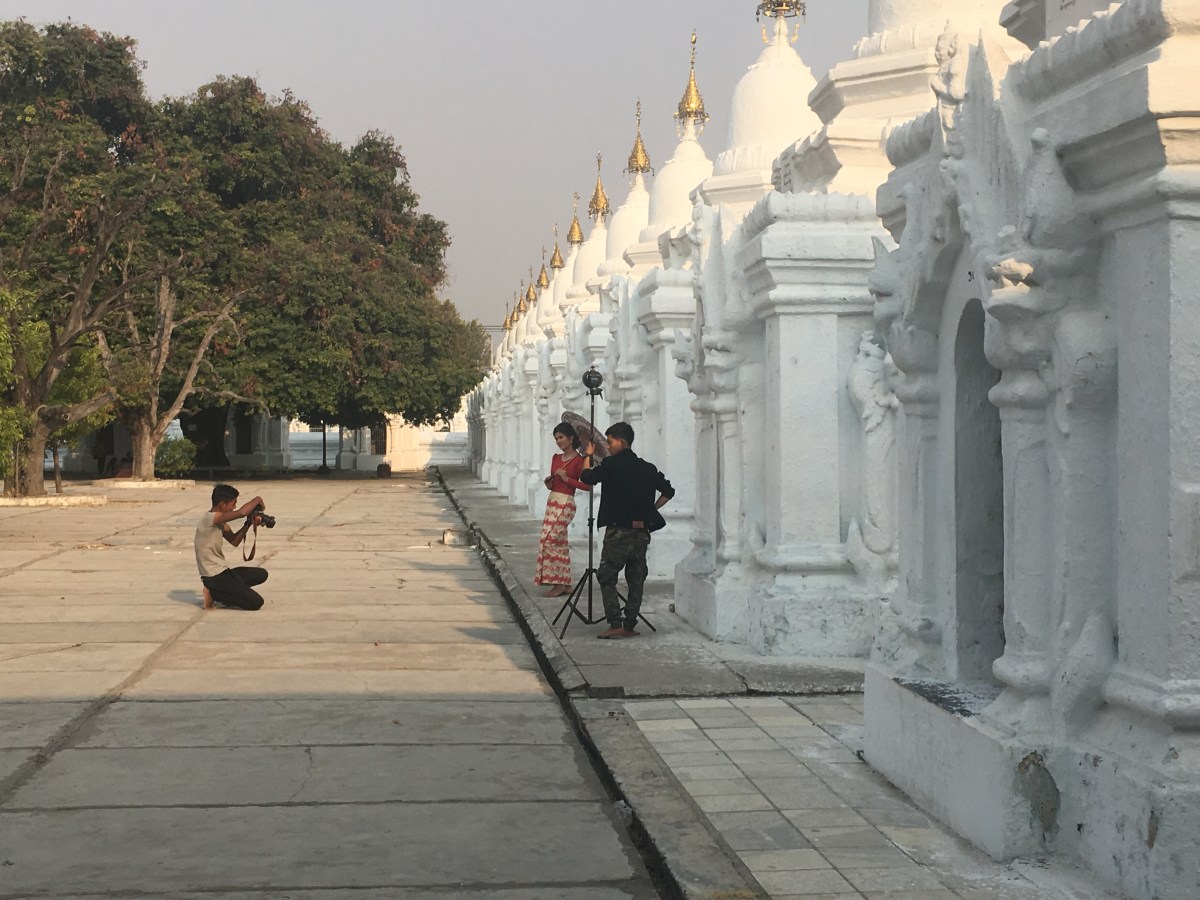
There are a few ‘biggest in the world’ sites in Mandalay. First up, the ‘World’s Biggest Book’, otherwise known as the Kuthodaw Pagoda – hundreds and hundreds of stone tablets inscribed with Buddhist texts, which apparently took the monks 6 months to recite. The ‘book’ was commissioned by the King and completed in 1868, to ensure the preservation of the text. It’s very beautiful and quite the hotspot for photoshoots – I saw many Burmese wedding and graduation parties.

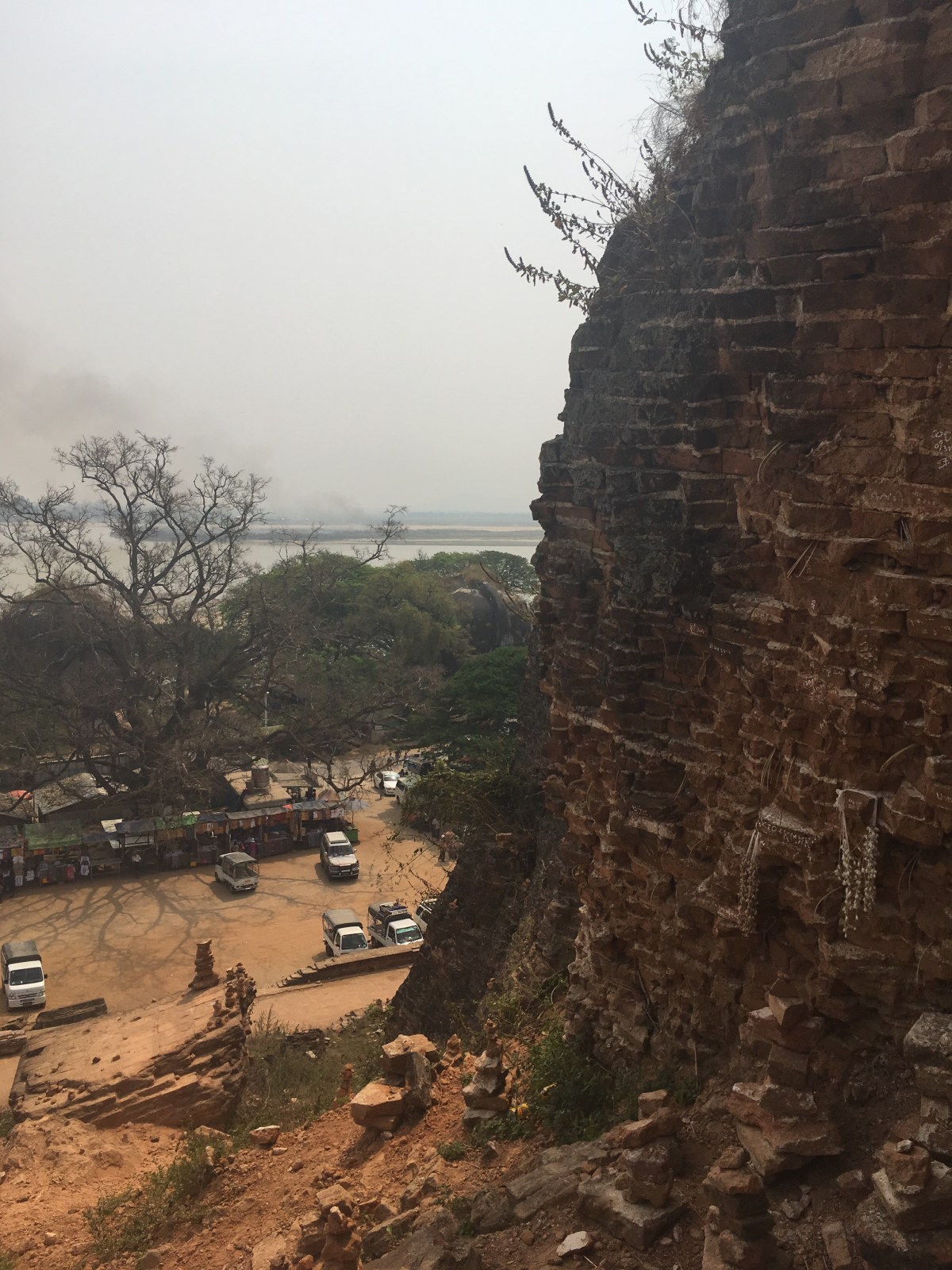
On top of Mandalay Hill is the Su Taung Pyei pagoda complex, which even has an escalator to take you to the top… Some great sunset views to be had here and chats with local students who come up to practice their English with visitors.

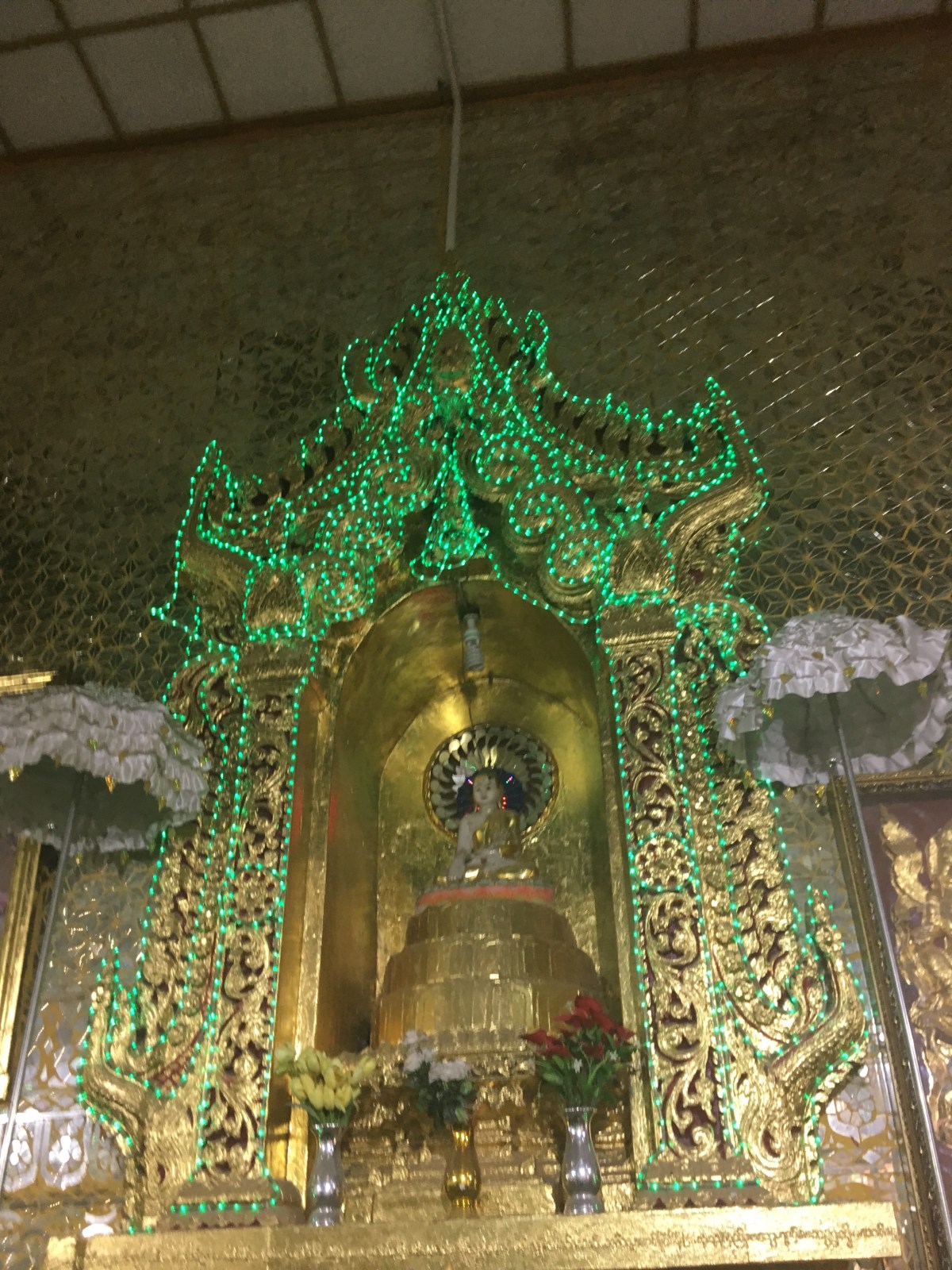
Whilst I also visited the Mahamuni Pagoda, women are not allowed to enter the main shrine so I don’t have any photos 😑 there is a live video stream where I could see men sticking gold leaf on to the Buddha image. I did this in Bagan so wasn’t too upset. I think the following photos were taken at the Mahamuni pagoda as well but to be honest I can’t remember πŸ™ˆ. I do remember it felt more like a garden centre than a temple, with numerous Buddhas for sale, palm readers and a multitude of flashing lights!

I really enjoyed a boat ride across the river to the area known as Mingun, especially as the boat had comfy chairs laid out for us, and a little table with free coffee, biscuits and bananas πŸ‘

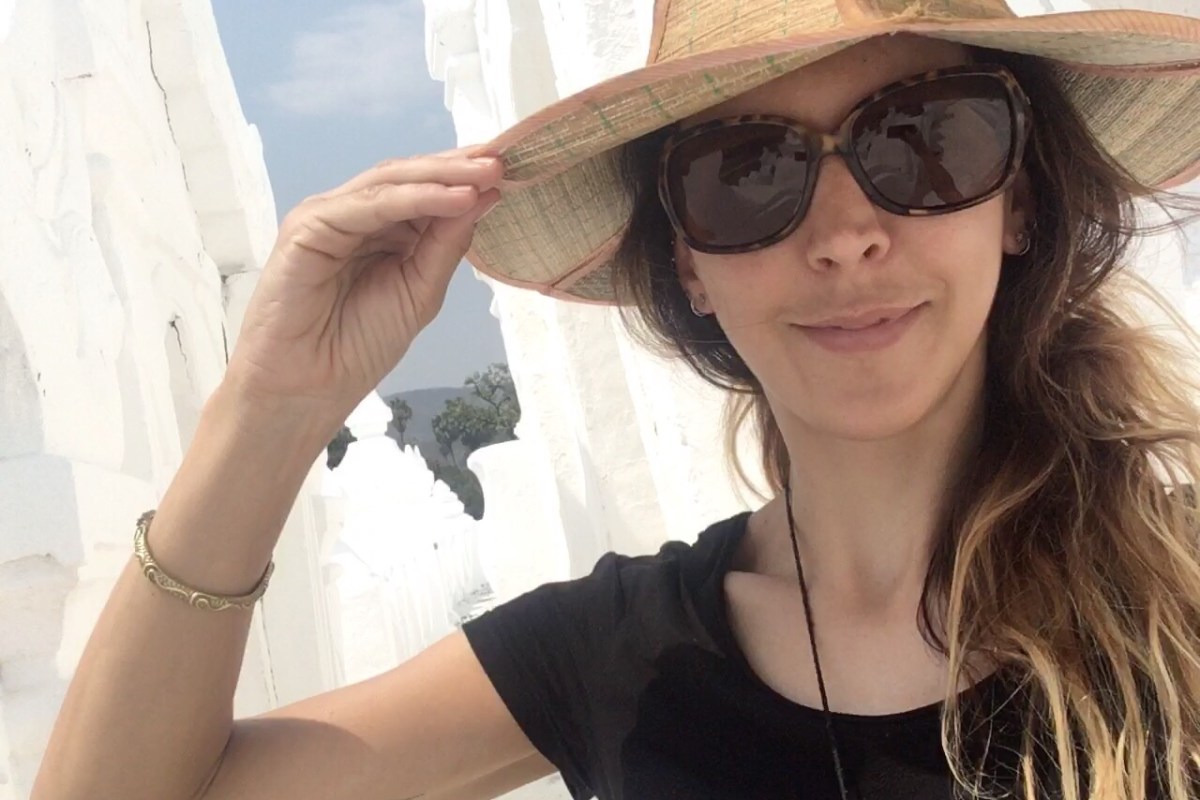
As soon as we got off the boat, ladies selling bamboo hats descended on us and of course I bought one for 50p – something which turned out to be essential when a visit to Myanmar’s answer to the Taj Mahal, the White Stupa, turned into a photoshoot. In fact the hat made the photos 😎 I ended up with the best photos I’ve ever had of myself, thanks to Lucy who knows a few Instagram worthy tricks!

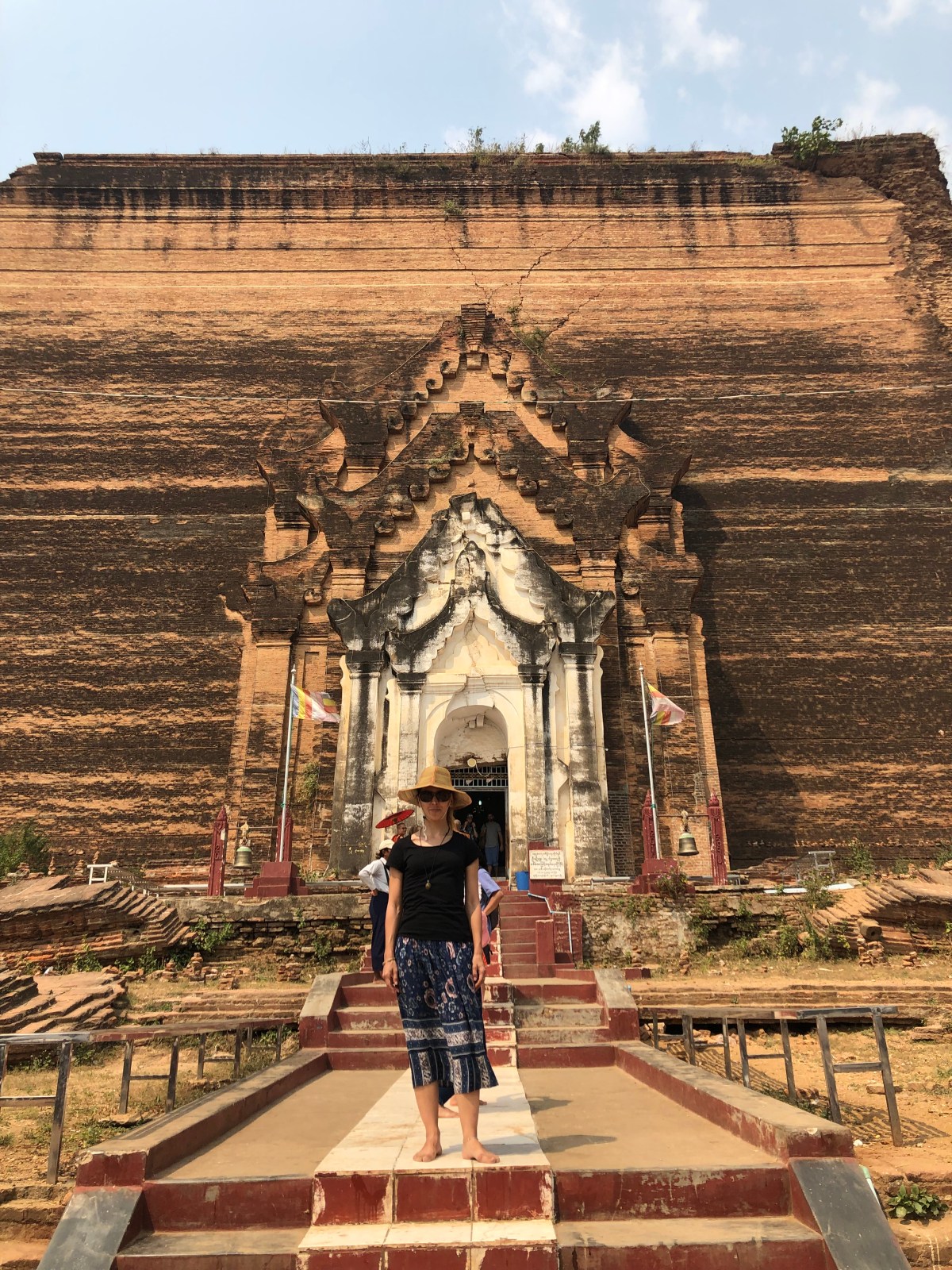
Back on the ‘biggest in the world’ theme is the ‘World’s Biggest Pile of Bricks’. I’m not making this up. Although in my opinion that’s a bit of an insult as it’s actually a huge pagoda, albeit unfinished, that you can climb up for a great view. Everyone knows if it can be climbed, I’ll be at the top!

And don’t forget the ‘World’s Biggest Ringing Bell’ – I only noticed this man who I almost knocked out when I watched this video back πŸ™ˆ

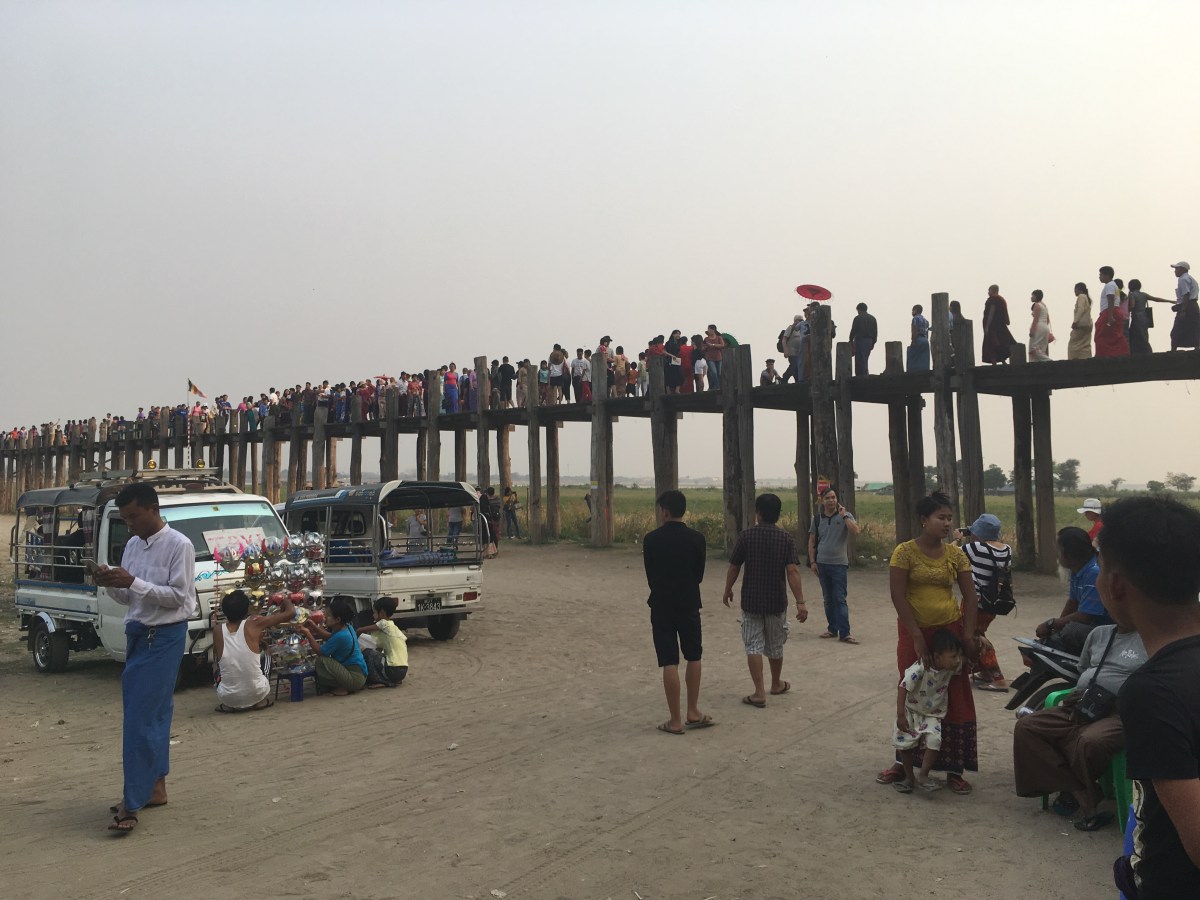
Last one – the ‘World’s Longest Teak Wood Bridge’ πŸ˜‚ The Burmese love their teak trees! We got here in time for sunset. There was a party atmosphere and the bridge was full of locals making the walk across, although no beer was on sale that day 😑

Mind your step

No visit to Mandalay would be complete without a wooden monastery. We visited the ancient Shwenandaw Monastery, which is full of, you’ve guessed it, teak carvings. It was pretty impressive! I noticed both monks and nuns here – I’m slightly ashamed to admit that I only realised on that day that the ones wearing pink robes are in fact nuns and not monks πŸ™ˆ

I also got to see how Gold Leaf is produced, something I didn’t realise I had been missing and it is back breaking. A man was beating the gold leaf over and over with a huge hammer – his back looked pretty bent out of shape to me. The gold leaf is wrapped in bamboo paper, which itself takes several months to make. No wonder the price tag is high – I managed to resist a purchase this time!

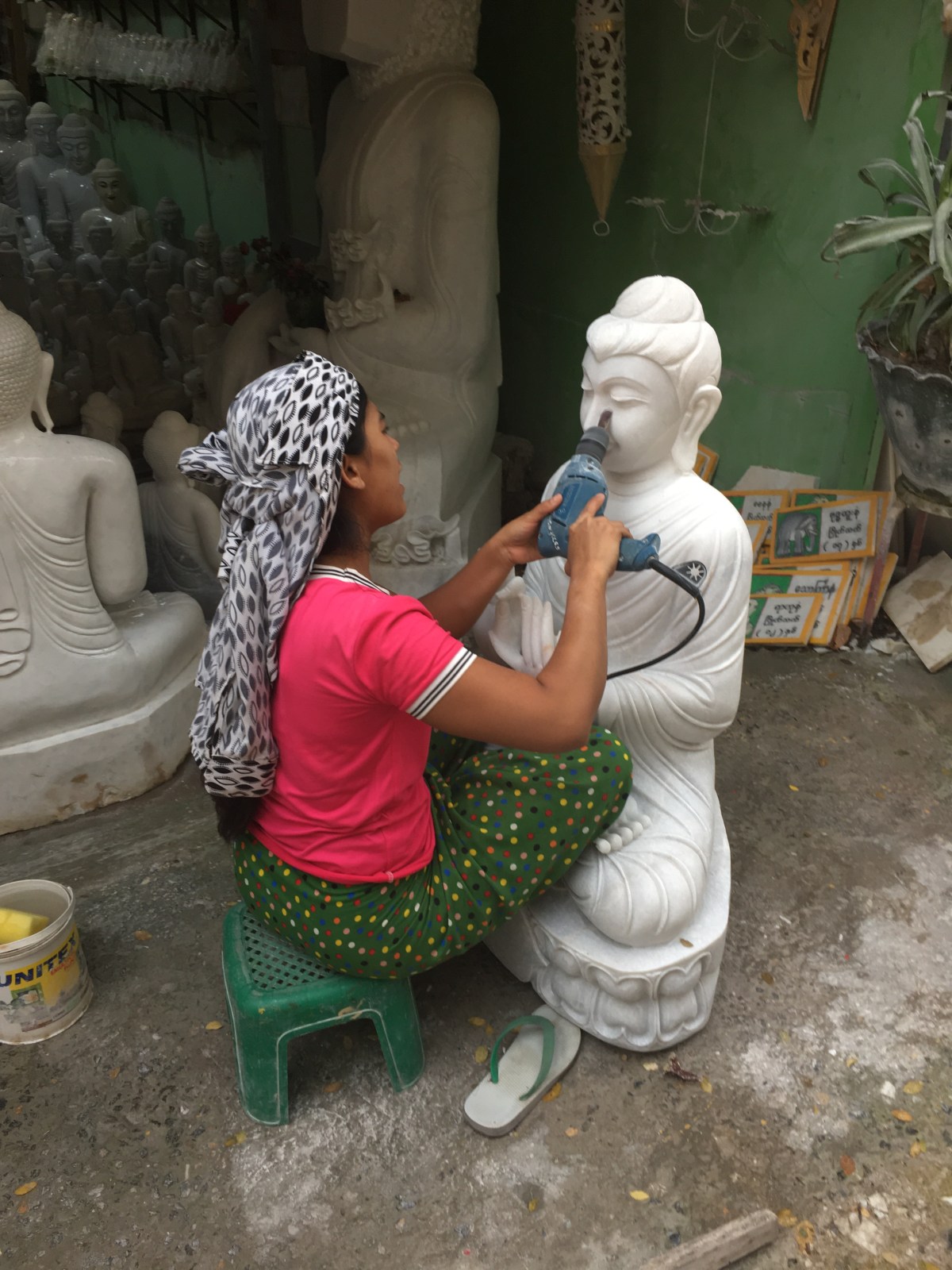
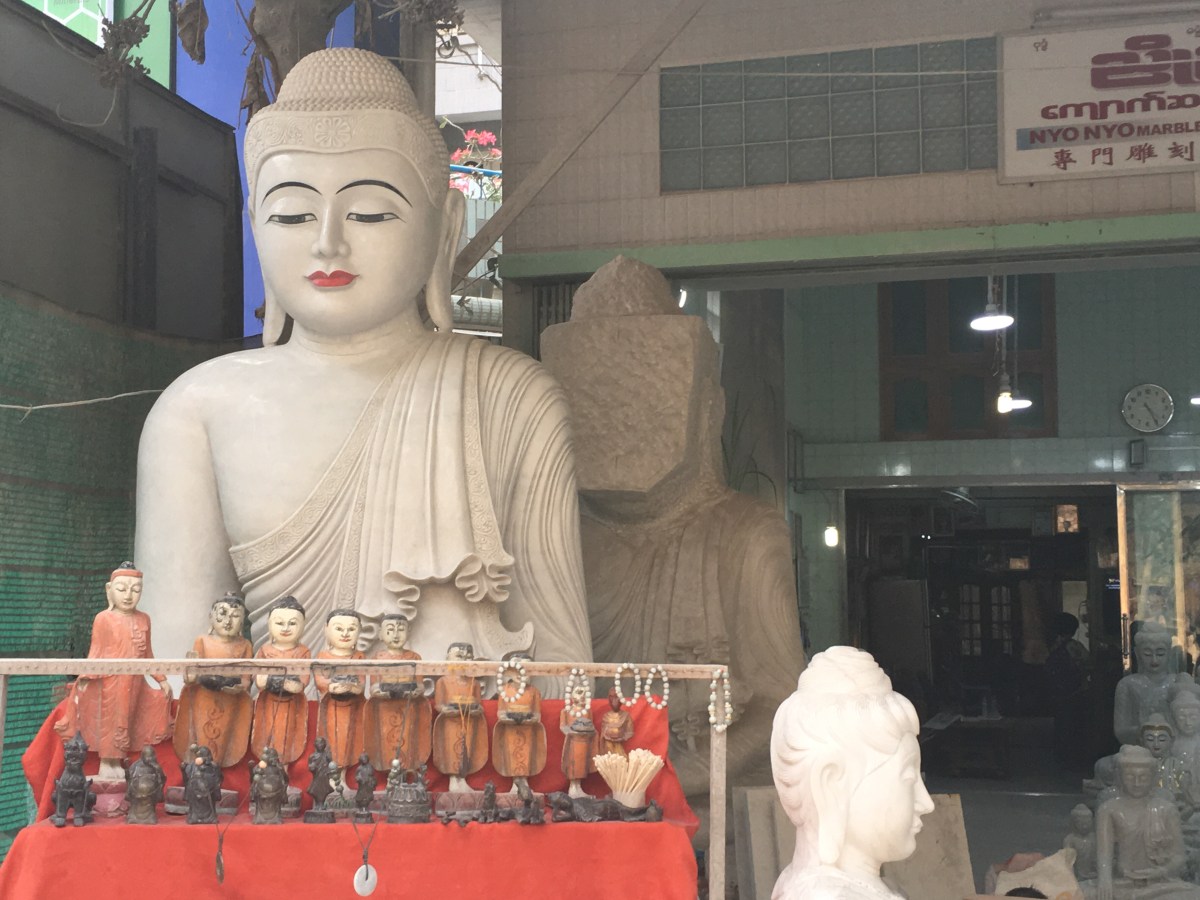
Another unexpected but fascinating sight was the street where the thousands of Buddha statues are hand made. People carving the stone were literally covered in white residue – from head to toe. No protective face masks either. I can’t imagine what this does to your lungs. Typically the women were polishing and painting while the men carved.

I liked this one!

And that’s my whistlestop tour of Mandalay. I feel like my two days were enough, although maybe I didn’t really get a feel for the day to day life as I was so busy seeing the sights. I thought I had seen enough Buddhas to last me a lifetime – and then I went to Yangon…

1000 Temples…In Search of Pagoda X

Myanmar : Bagan

I was sitting on a night bus in Inle patiently waiting for it to leave the station. My seat, with the broken recline and dud entertainment system, was to be my bed for the night and after an hour I was wondering why we hadn’t yet moved. The word was that we were waiting for a couple of people who were late – I was quite annoyed at this point, if they missed the bus surely that’s their fault! After a while longer it transpired it was actually two monks who were late, and out of respect we must wait. Right. Apparently they were just ten minutes away. Eventually a few of us got off to go to the toilet, just as another bus pulled up alongside ours and two elderly monks got out – now the monks must wait for us πŸ™

Almost as soon as we set off, the bus stopped, of course, for a noodle break, where I ate the noodles even though I’d just had dinner and took a sneaky pic of the monks. I didn’t get one of them smoking fags and sharing a mobile phone unfortunately πŸ˜‚

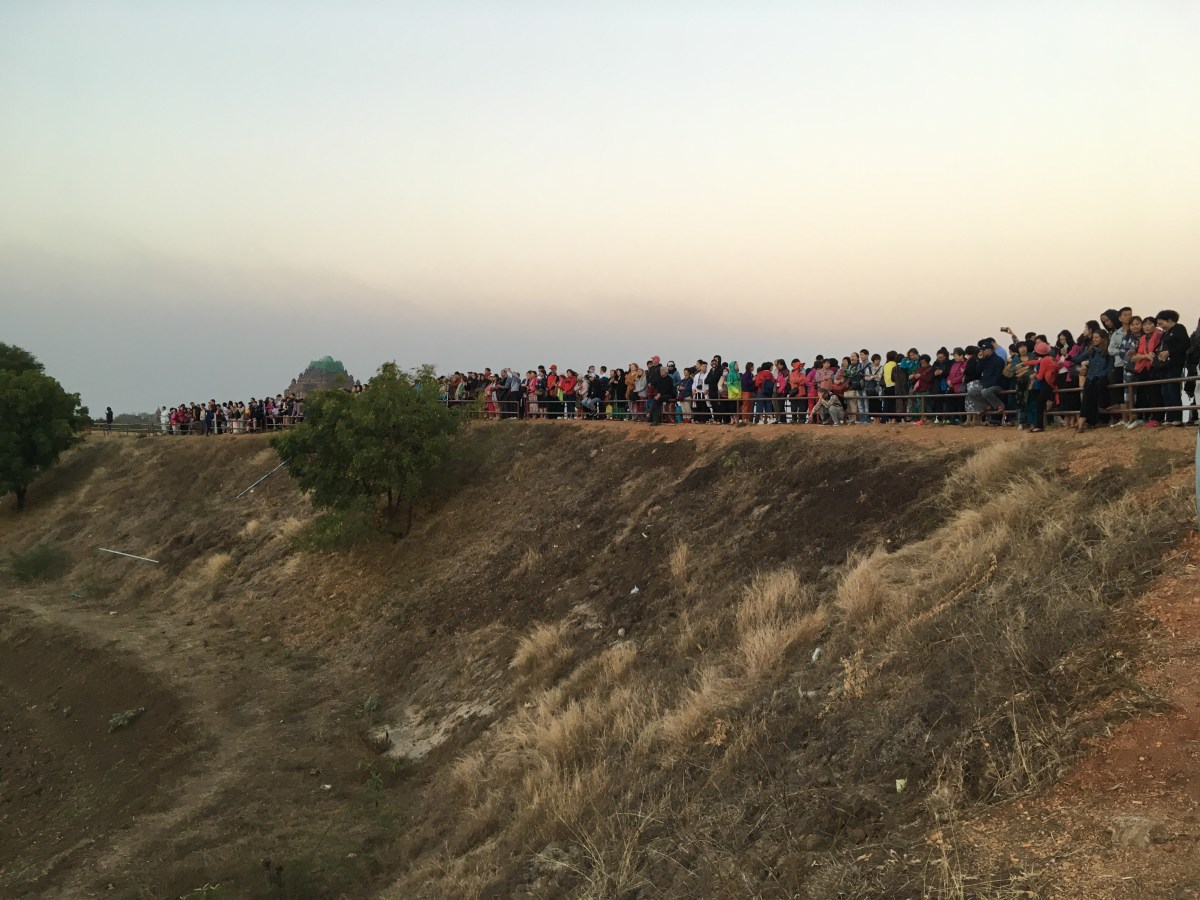
After three more stops and zero sleep, I probably wasn’t in the best of moods when we arrived at dawn to watch the famous balloons floating over Bagan, an image I’d had in my head for a while – serene hot air balloons floating over hundreds and hundreds of ruined temples as the sun rises…. Instagram vs reality strikes again!

What actually happened is that we arrived at a hill top along with what felt like thousands of Chinese tourists, all brandishing huge zoom lenses and munching loudly on corn. As we jostled for space, getting the evil eye from all sides, with no balloons to be seen and most temples obscured by trees, I wondered what we were missing. I’m still confused by how it was light before the sun had actually risen – at 6.30am Inke and I were convinced we’d missed the sunrise and were on the verge of leaving before the main event πŸ˜‚ This is the problem with having expectations – lesson learned!

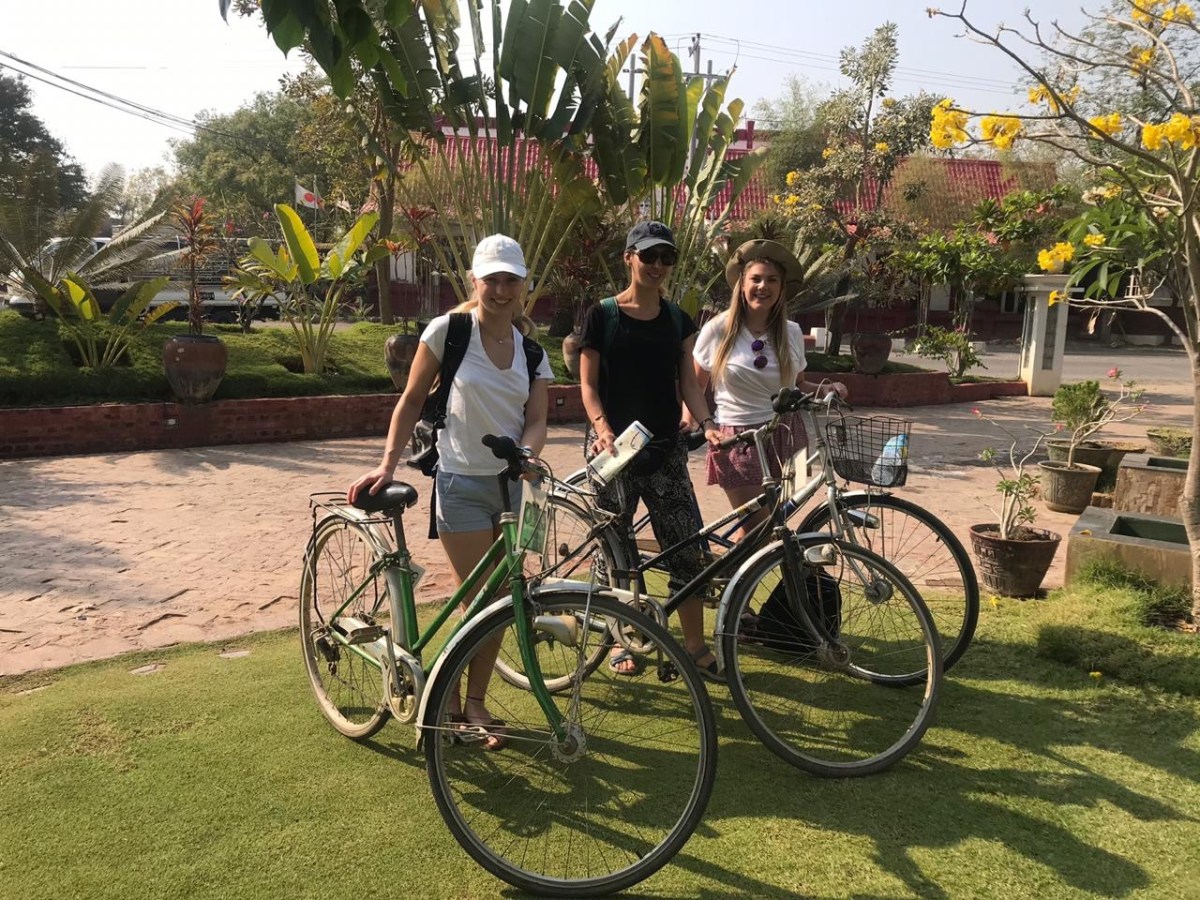
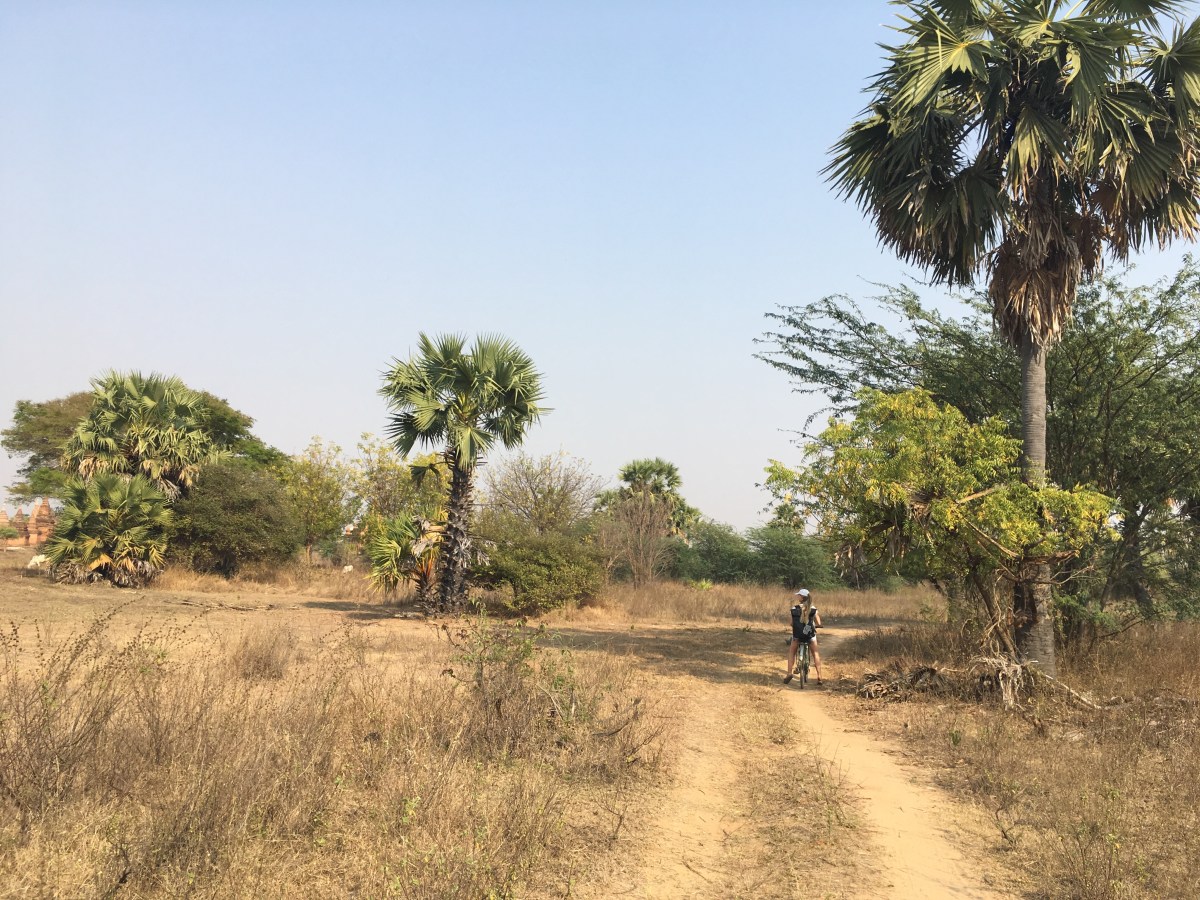
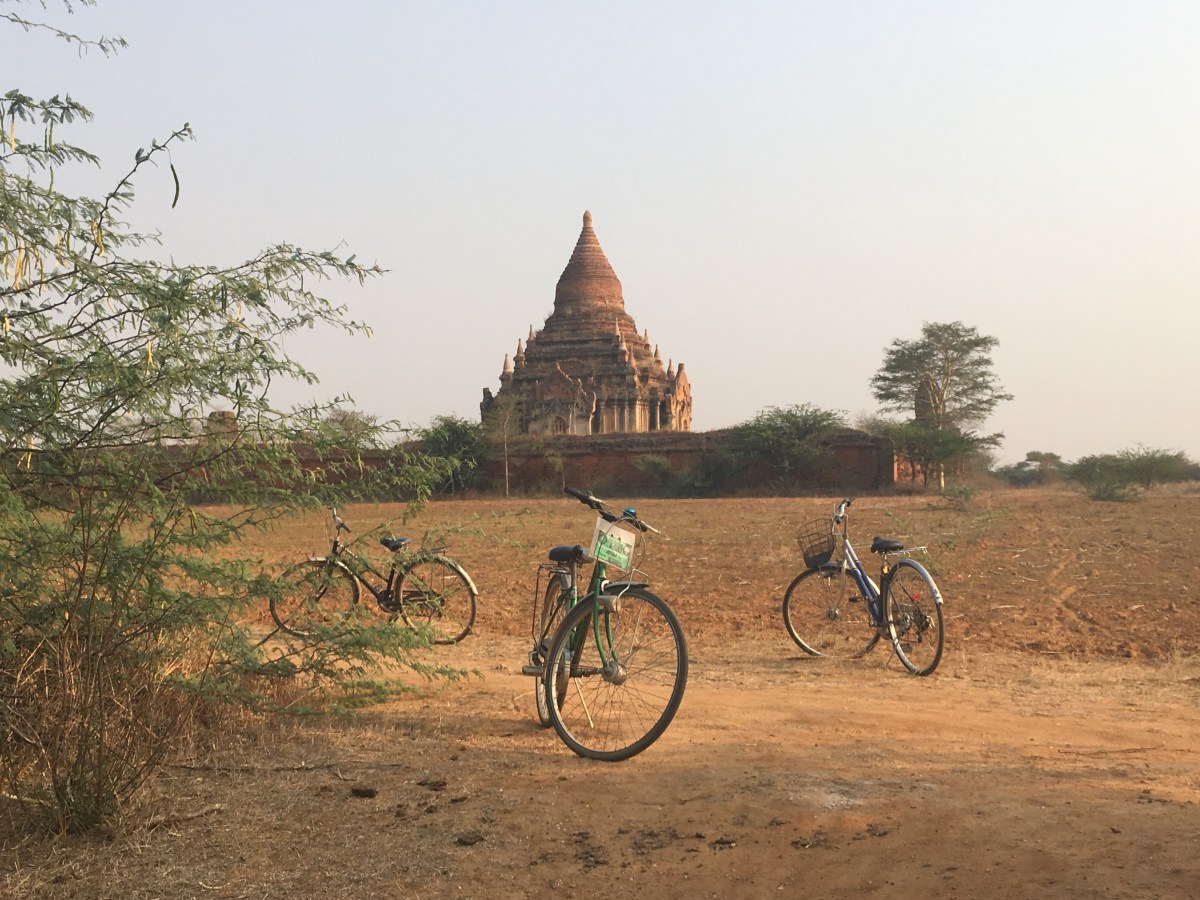
Bagan is an ancient city, where between the 11th and 13th centuries over 10,000 Buddhist temples, pagodas and monasteries were built. Almost 3,000 of their ruins remain today. Determined to get off the beaten track and see the real Bagan, the next day I convinced Inke and Lucy they wanted to ride bicycles and track down a ‘secret’ temple (let’s call it Pagoda X) that somebody had told me about.

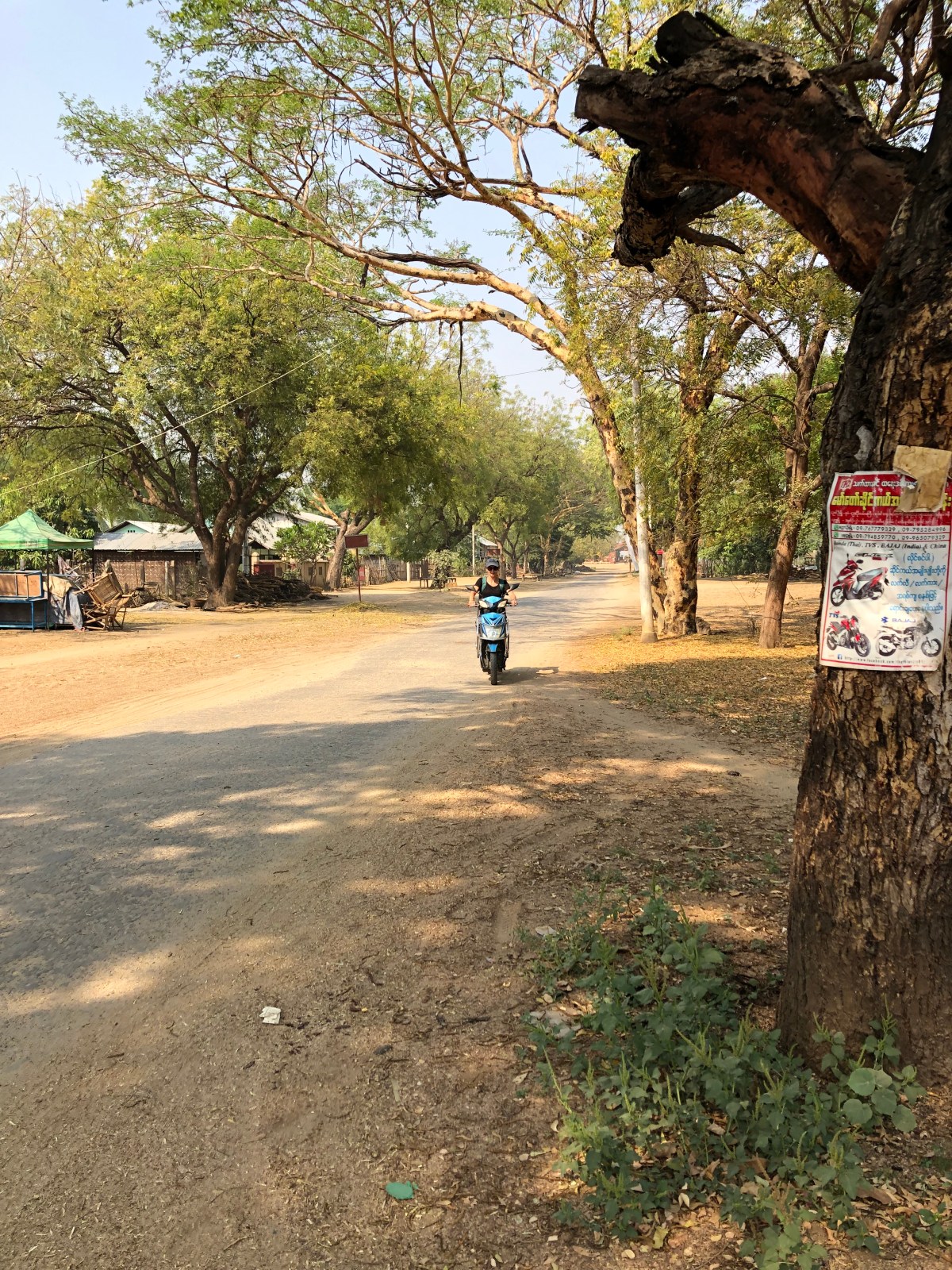
However, the best way to get around is on a scooter. As we set off on our bicycles and every man and his dog and 12 year old kid passed us on scooters, we all had the same thought – wouldn’t this be more fun on a real bike?! Our guide Leo put in a call to bring some scooters over after we’d had a practice go on his.

How hard can it be, right?! Very, it turns out – apparently none of us were capable of turning a corner without revving the engine and speeding off out of control πŸ˜‚

I think Leo’s face says it all

As I skidded to a stop, let go of the scooter without turning off the ignition and sent it crashing to the ground whilst crying tears of laughter, three people from the scooter company pulled up with our vehicles. They promptly turned around and left as Leo just shook his head and waved them on their way again without saying a word πŸ™ˆ

I maintain that if we’d had a bit longer to practice and could have ridden in a straight line out of town not stopping at any junctions, we’d have been just fine. But travelling is a fine line between #yolo (you only live once) and blatant stupidity, so we got our uninsured selves back on our trusty bicycles (only Β£2 for the day) armed with a map, water and a few bananas, and despite the 35 degree heat and no gears to speak of we had the best day of the trip so far. In fact it was top three days of my entire journey 😎

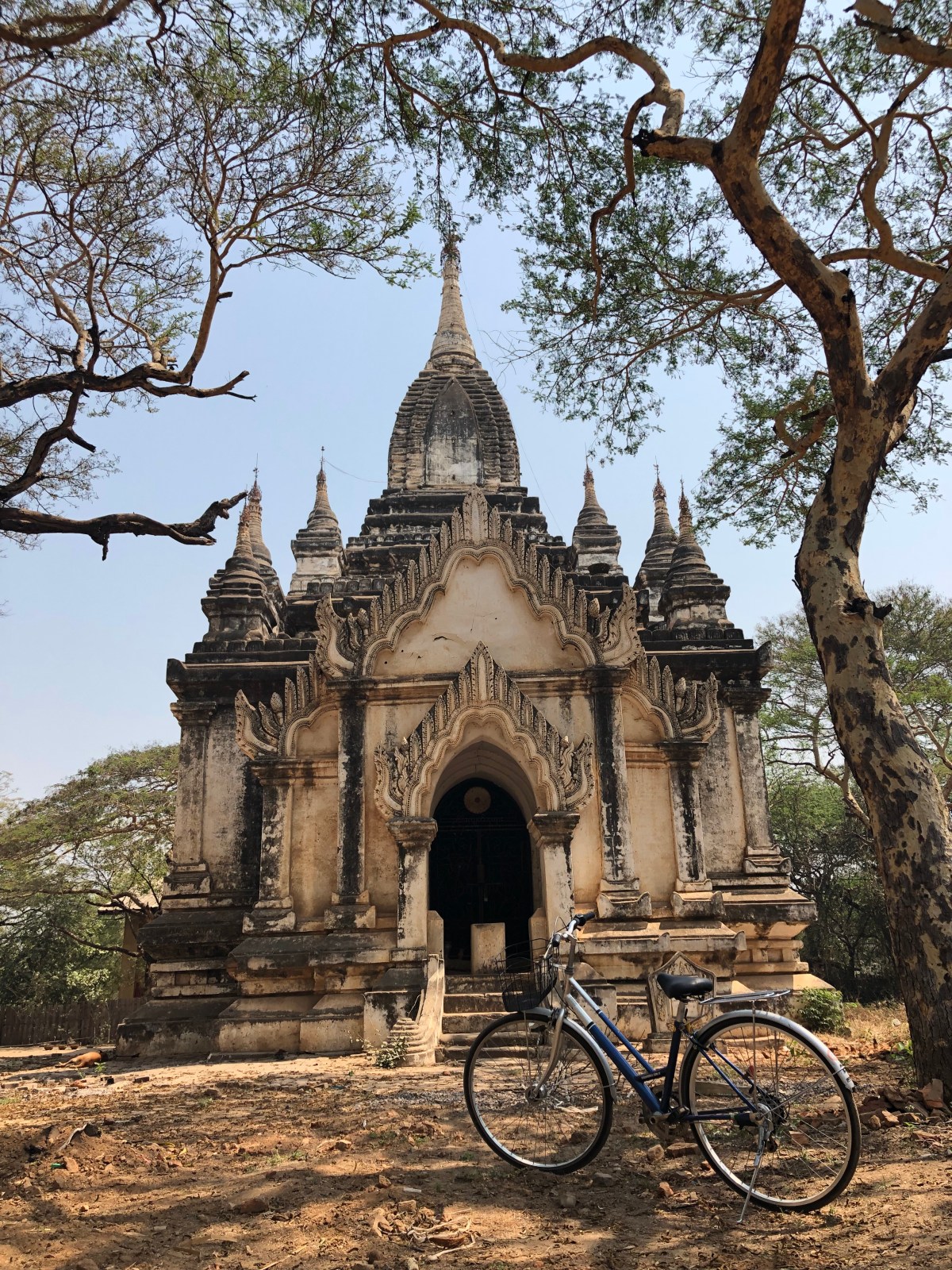
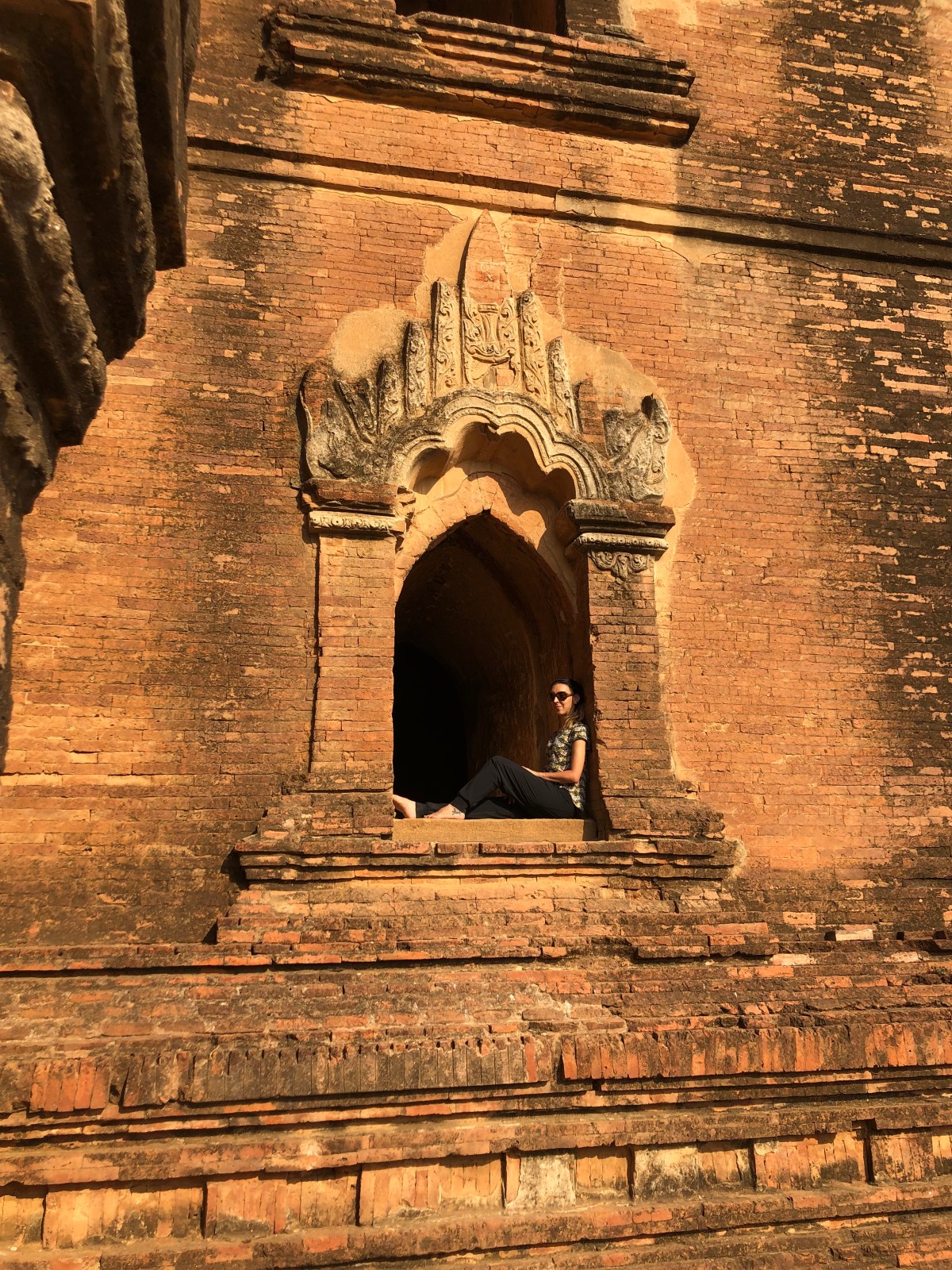
Remember there are thousands of ruined temples and pagodas here. If you have the means to go off road, you can visit as many as you like. They are only known by number and most aren’t on the map. Unfortunately for us but perhaps for the good of the structures, climbing them is now forbidden and most of the hidden stairways have been blocked off. Looking for secret doors was still a thrill! As is the freedom of having all day and nowhere to be, the ability to go wherever you want and some great people to do it with 😎

It’s very hard to put into words the beauty of this place and the feeling of looking around and seeing nothing and nobody other than hundreds of ruined temples around you and on the horizon.

These two short videos are only a glimpse – imagine this scene laid out in every direction and around every corner and you’ll get the idea.

The rusty old bikes survived although Lucy seemed to have lost her brake pads altogether by the end, despite narrowly avoiding punctures from thorn trees (we remembered Leo’s warning about staying on the paths far too late) and all the skidding when the paths turned to sand then disappeared altogether. Every few minutes somebody would shout ‘Sand! Look out!’ and nearly fall off πŸ˜‚

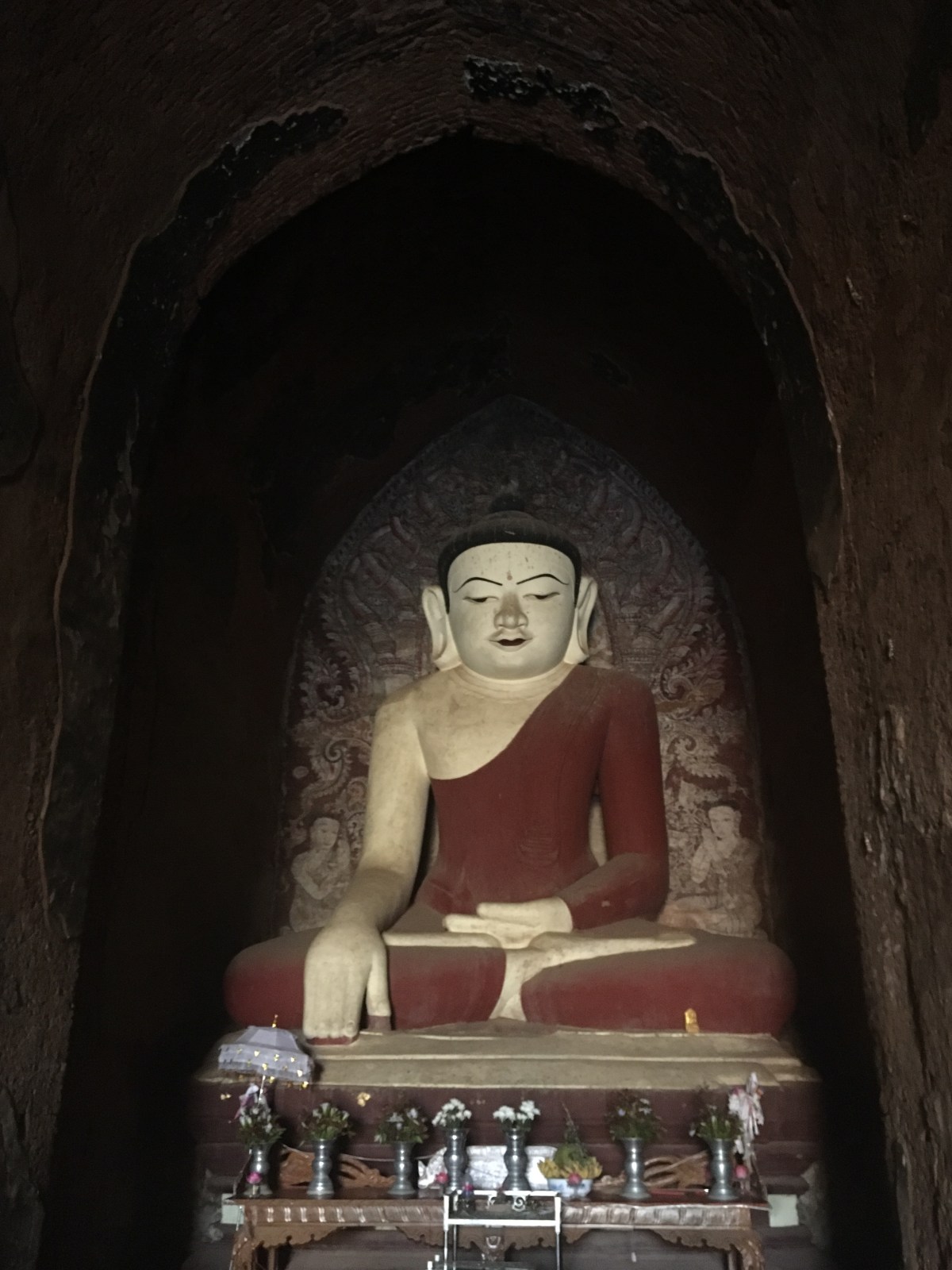
Hidden Buddhas inside

I put my bike to the test when at 17.30 I realised I’d left my treasured sand painting that I’d bought earlier in the day (it’s a tradition here to use sand on fabric) in Pagoda X when we were halfway up the hidden staircase. I bombed it back through the sand, having faith it would still be there (unless the one person we had seen near there had nicked it) shouting encouragement at the old girl and praying I didn’t meet a scooter on the way.

Blocked off stairway 😒
No climbing!

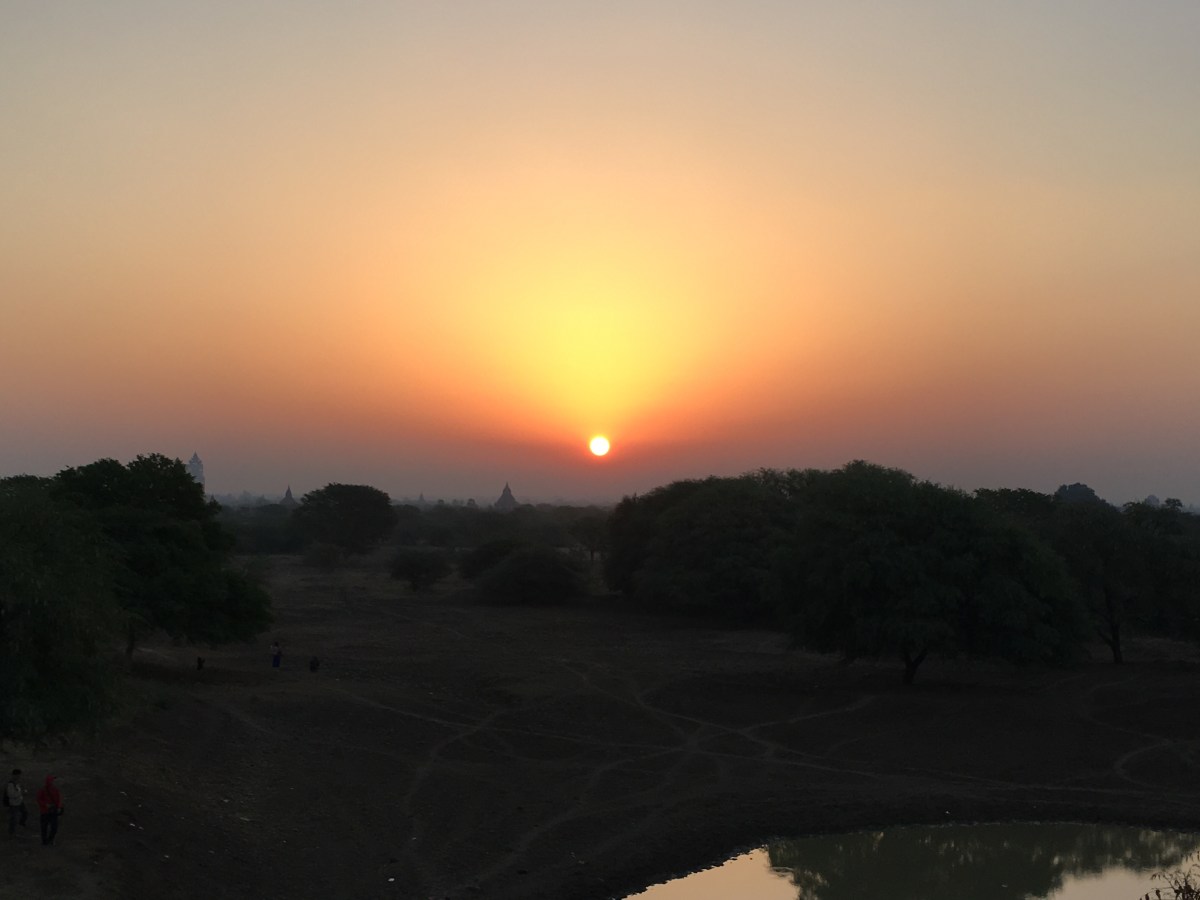
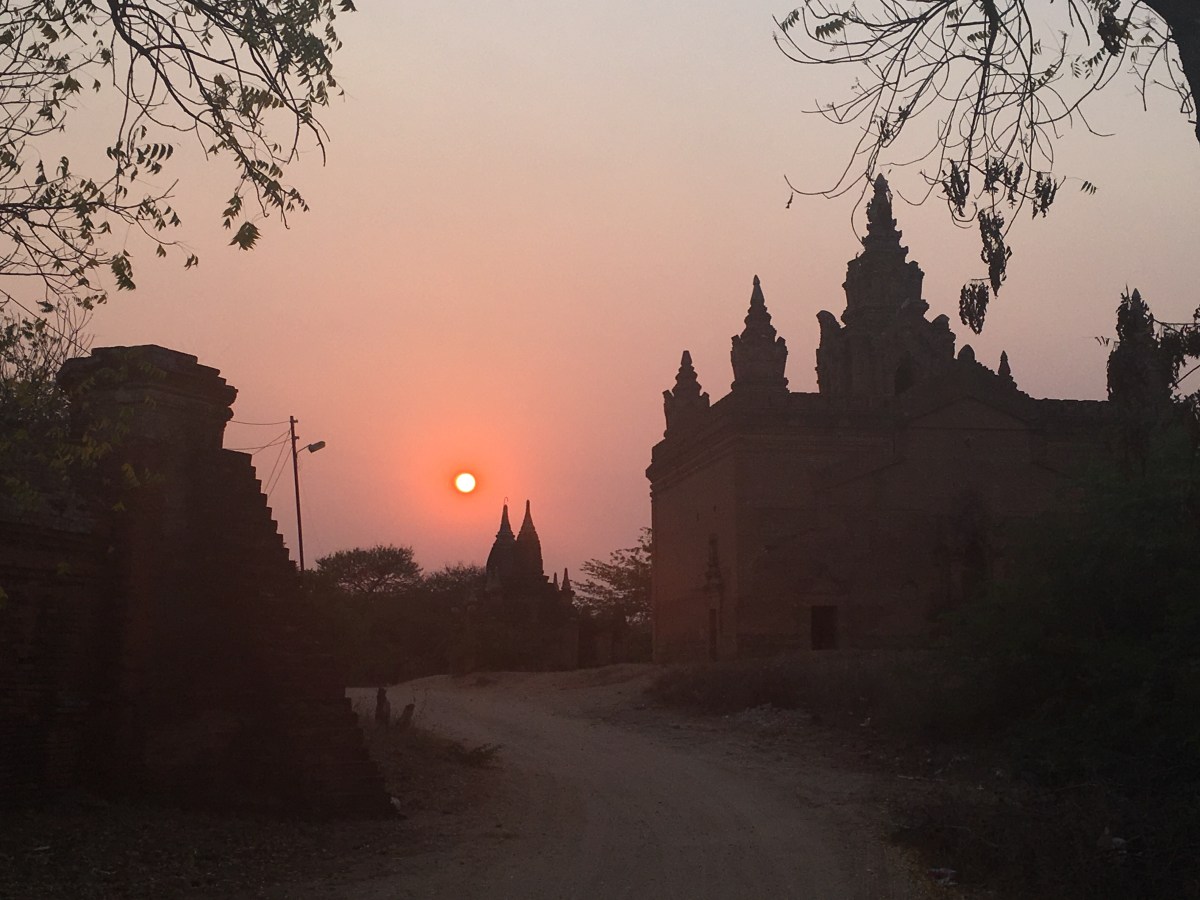
We didn’t stop until the sun went down, chasing the sunset at the end of the day, covered in dirt and dust but thoroughly happy and finishing the day off with a curry and beer at local vegetarian restaurant. Success!

Sunset all to ourselves
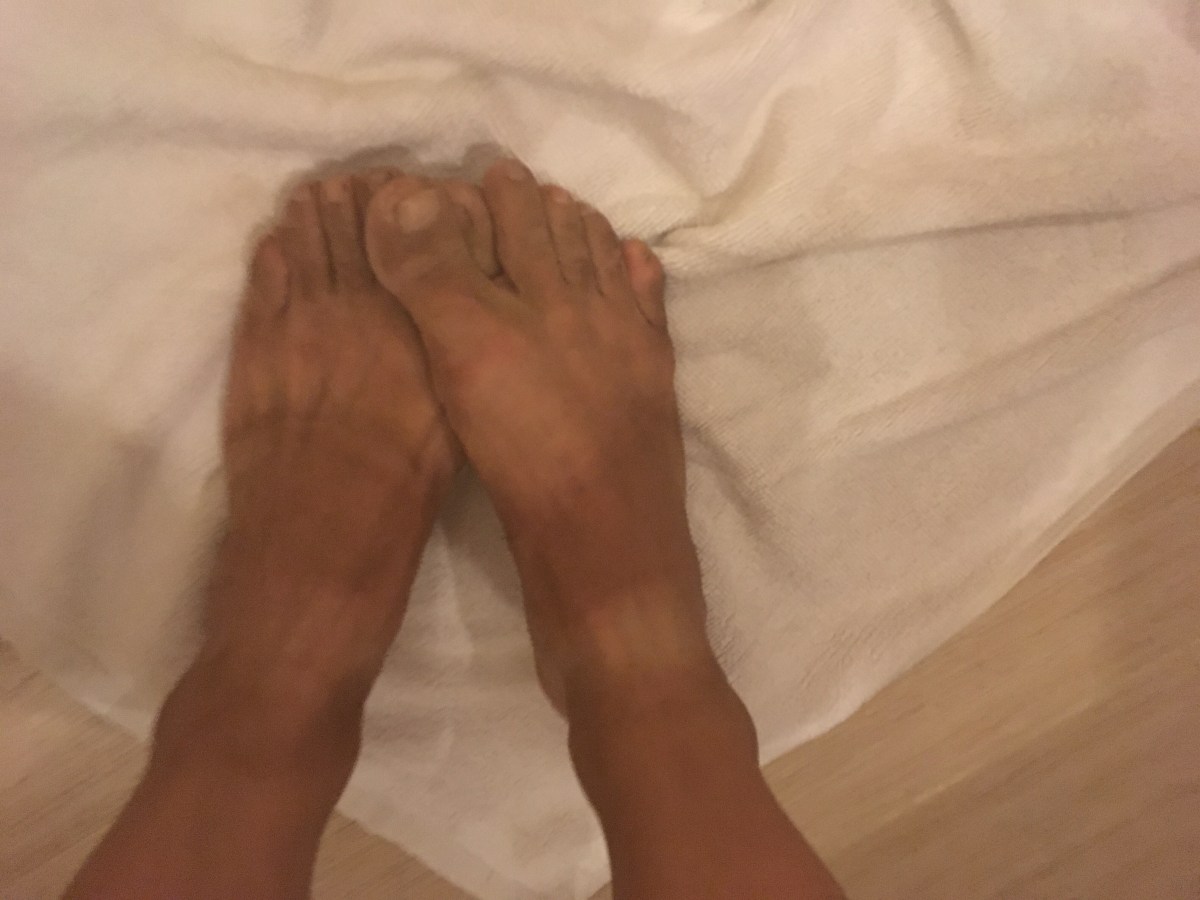
My poor feet
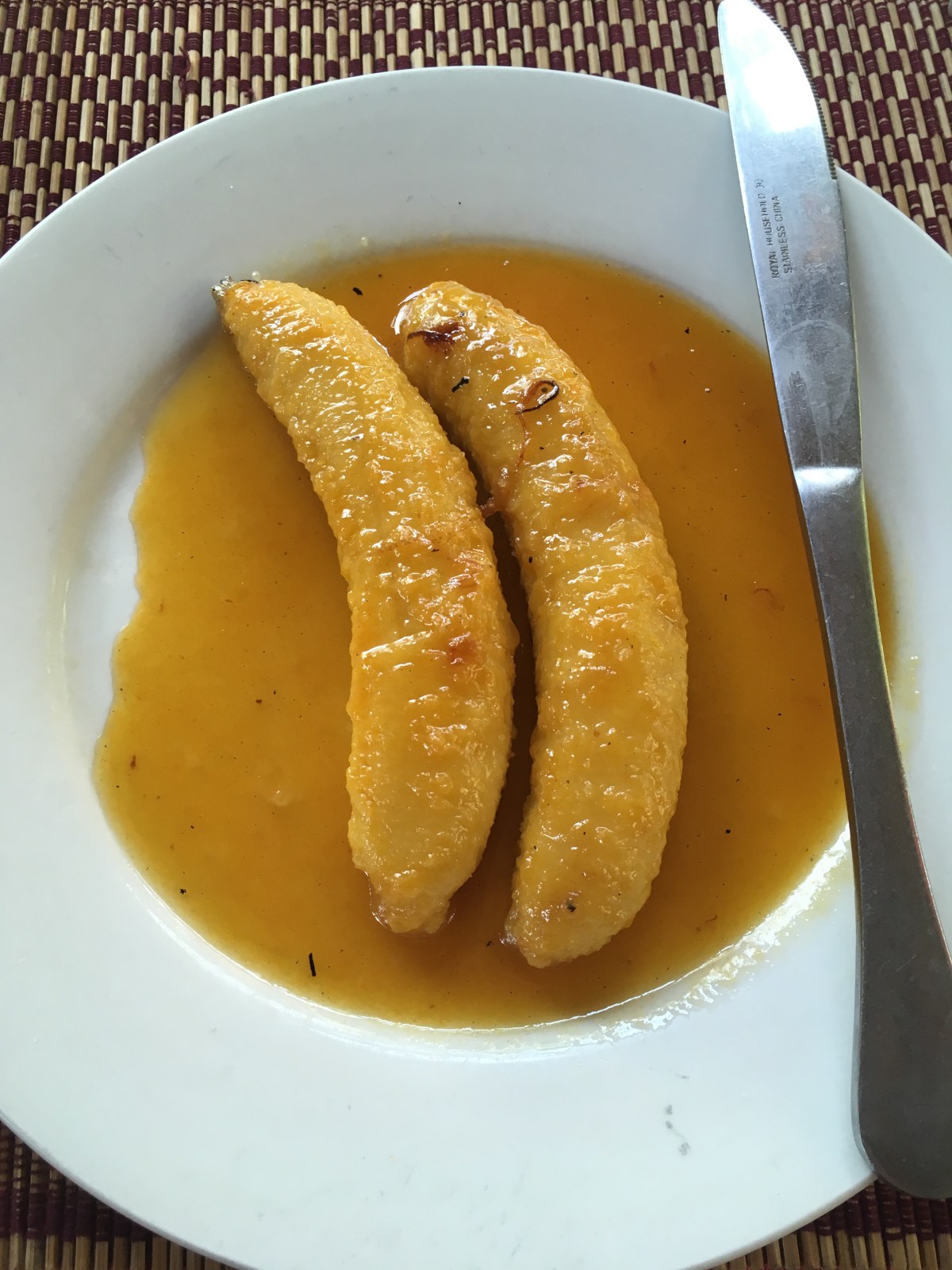
Fried banana dessert

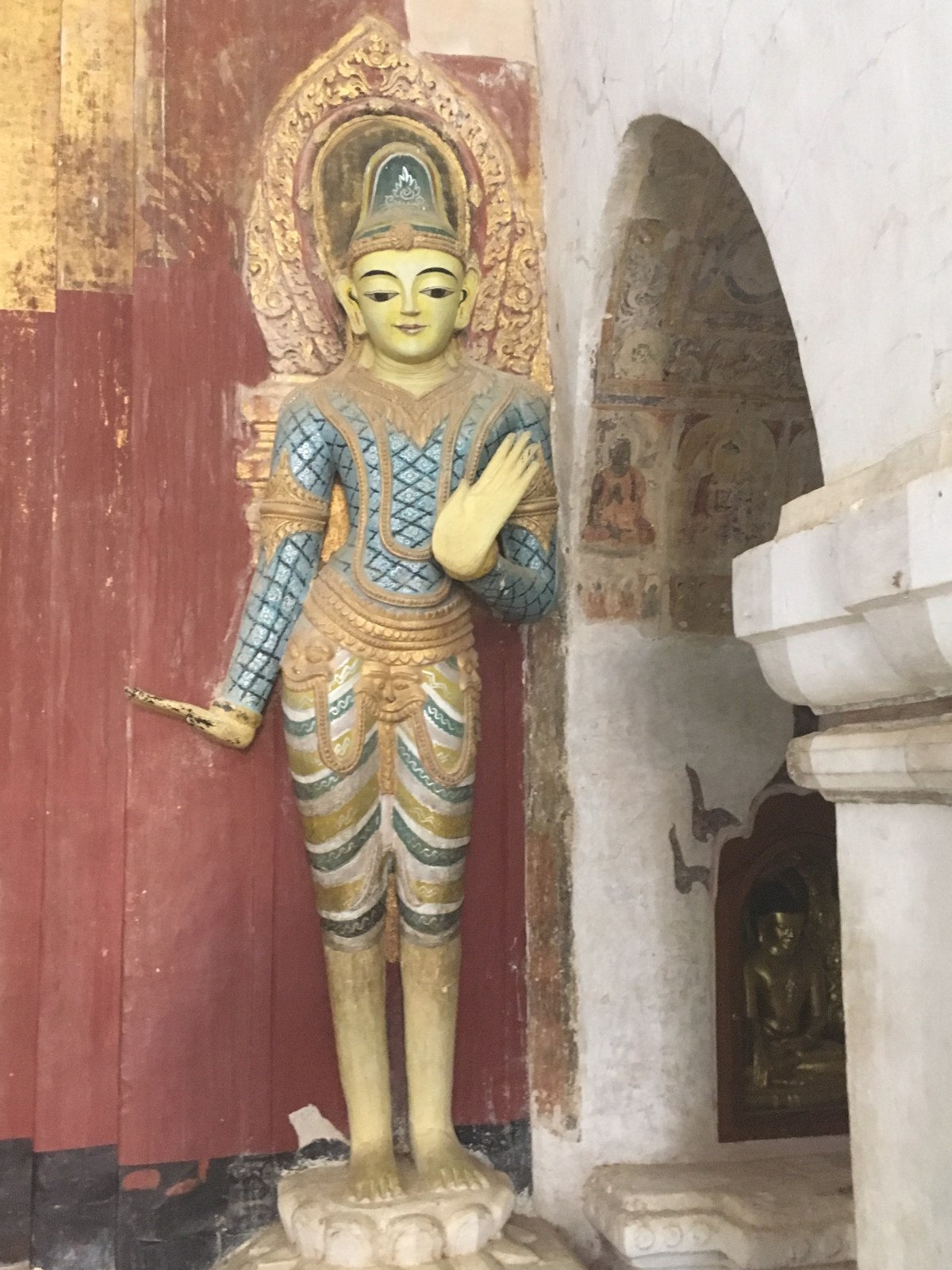
Whilst in Bagan we also took a guided trip around the biggest temples but this wasn’t nearly as much fun. I should probably mention them, so here are a few more photos!

All the gold and I’m blending in #wheresmaz
#wheresmaz

My favorite – the huge Buddhas at Ananda temple change expression and smile as you get closer

Days later, Inke had a closer look at the map our guide Leo had sent us, and realised Pagoda X was marked on there all along. Or was it?! πŸ€”

Any excuse for a puppet show

I didn’t get to see the balloons – as it turned out they didn’t go up due to weather conditions that day, but that’s OK. I really didn’t want to leave Bagan behind, but the road to Mandalay was calling…

Life on the Lake

Myanmar : Inle Lake

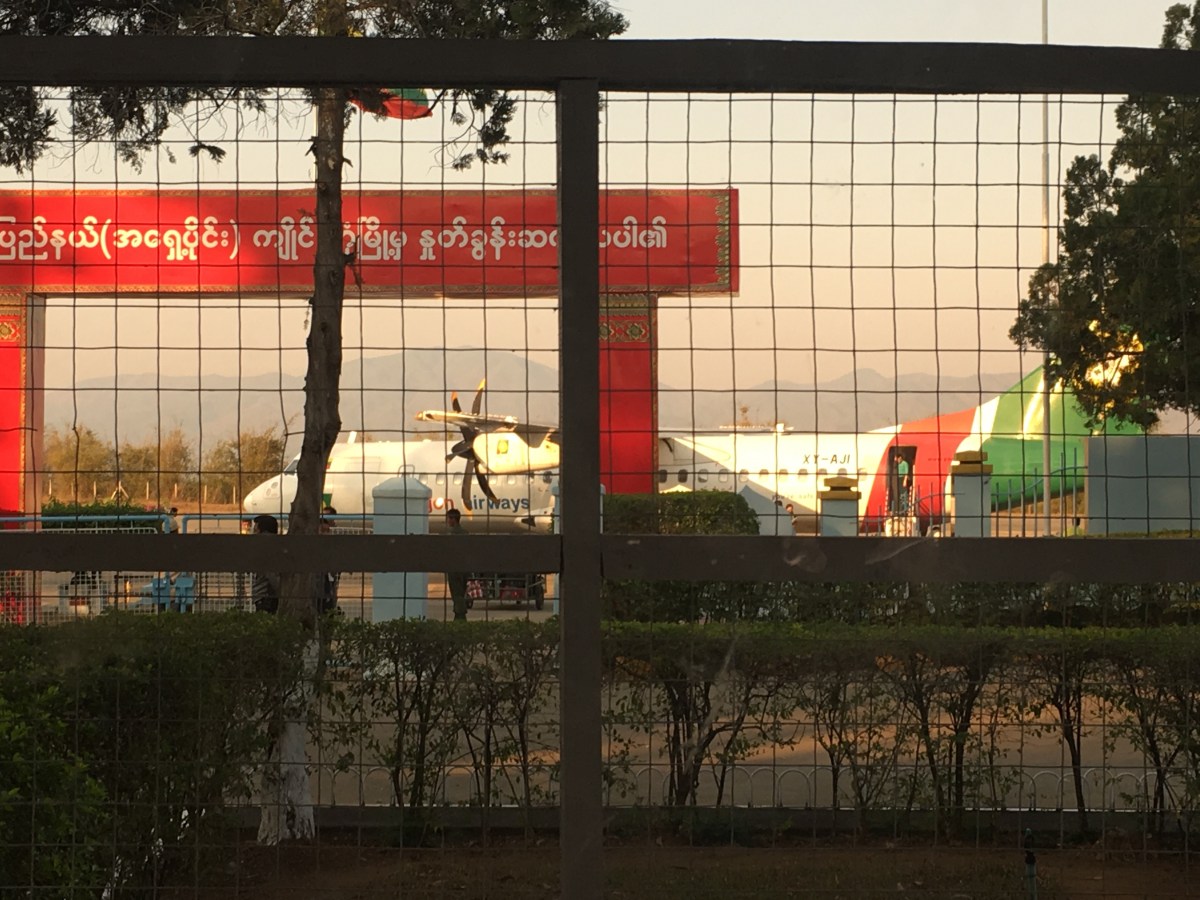
The road to Inle was closed so we took a propeller plane to Heho airport, only an hours flight. The airport was tiny, just a single building and they gave us a sticker as a boarding pass. My litre bottle of water was allowed through security if I promised to finish it before boarding the plane πŸ™‚

We sat and waited until we saw the plane come in to land – when it did, there was a bit of a free for all as everyone ran to the doors to be the first onboard – there was no reserved seating but apparently everyone had a ticket so I wasn’t sure what happens if you end up back of the queue πŸ€” I was happy to find they served coffee and snacks onboard – less happy when one of the group warned the snack was durian cake, so don’t eat it. This fruit is an acquired taste that stinks – I’m not a fan 🀒

The advantage of being in a GAdventures group is that everything is organised, so I could simply step off the plane onto a waiting bus which is a really nice change from bargaining with taxi drivers or riding in the back of a tuktuk and being pleasantly surprised when he drops you at your hostel instead of kidnapping you πŸ˜‚

This hotel continued the hospitality with cold drink, wet towel and a pair of slippers to wear πŸ˜‚

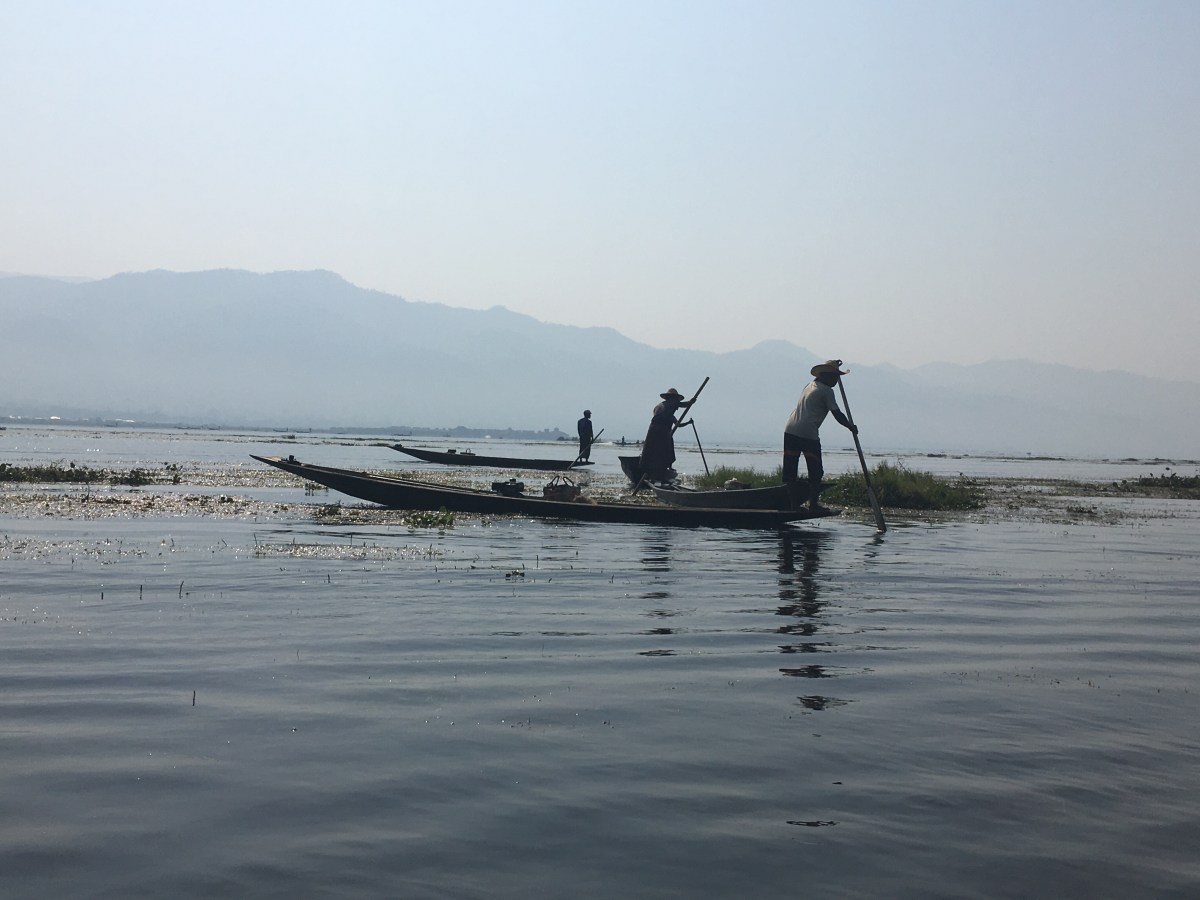
The main reason to come here is to see the lake – or life on the lake. Everyone takes a day trip by longboat to visit several places. Several times it crossed my mind what idiot tourists we must look, wearing bright life jackets and talking photos, as local fishermen, water gardeners or women hopping between villages passed by. Still, most of them waved.

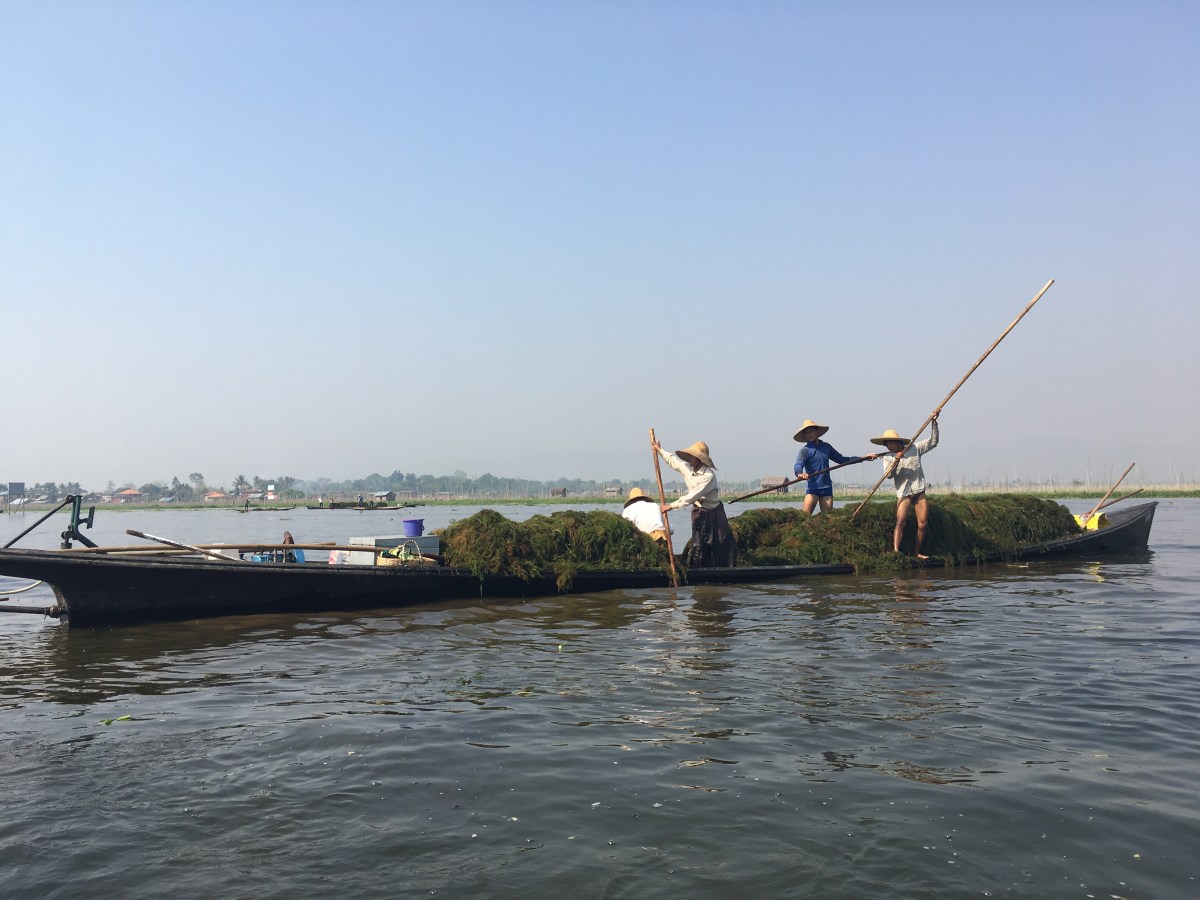
Surprisingly the water is crystal clear and below the surface are bright green plants (a bit like those mum fishes out of my pond at home!!) which local men harvest, transporting them to their village and turning them into floating gardens on which vegetables are grown. This looked like extremely hard work πŸ€”

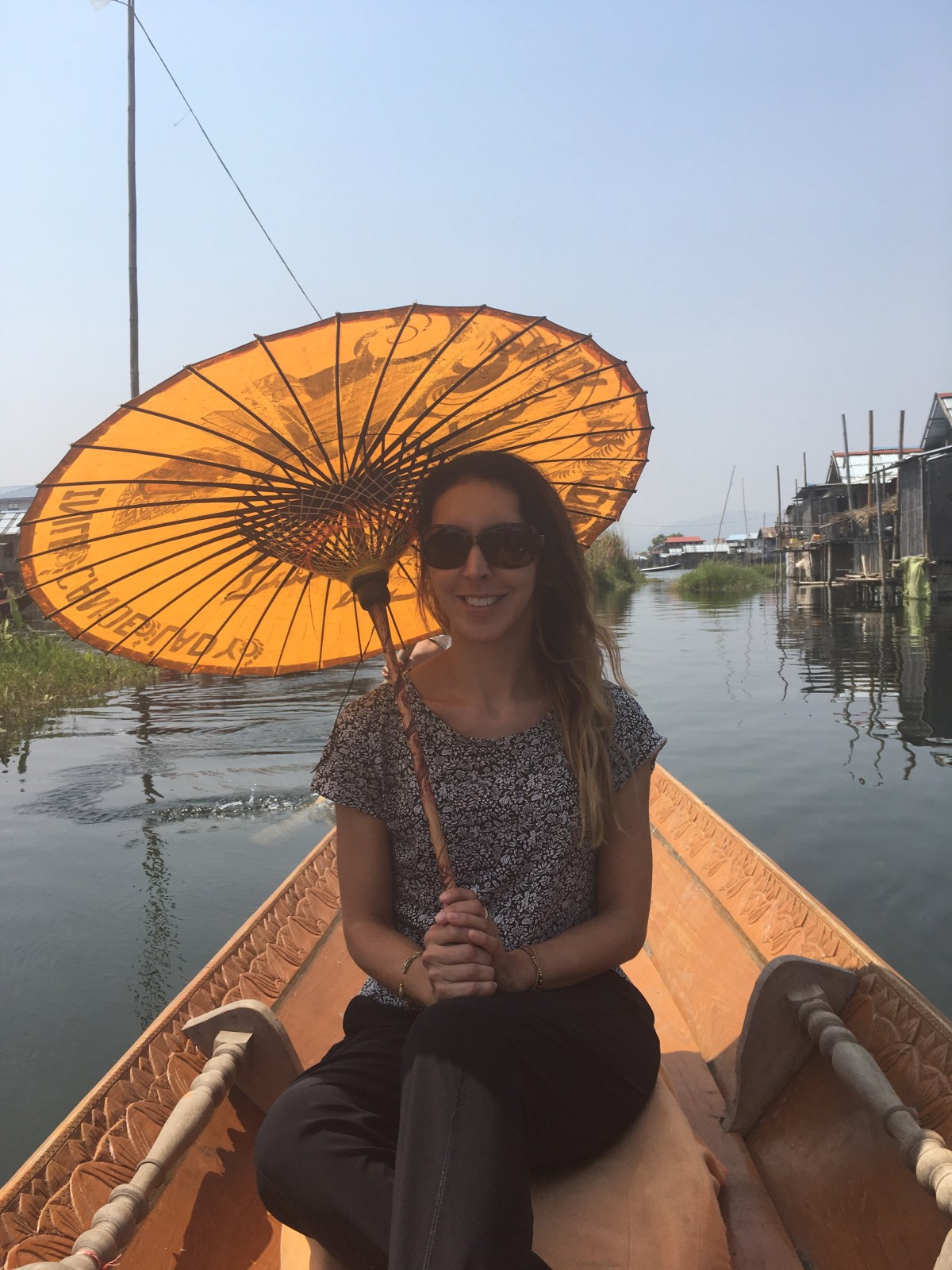
On the lake are floating villages, with restaurants and shops in between the tiny houses. We transfered to canoes, rowed by women, for a closer look and to support the project. I just liked holding a parasol!

A highlight was visiting the Nyaumg Shew monastery and the ruins of Shwe Inn Dein pagodas someway down the river system. The rivers have crude damns, essentially just sticks in the water which we raced through without slowing down – a lot of fun when you’re at the front of the boat!

Dam ahead

It’s fascinating to imagine daily life here, hopping in a boat to pop across to your neighbour or to buy food.

One of the many weird restaurant signs in Myanmar

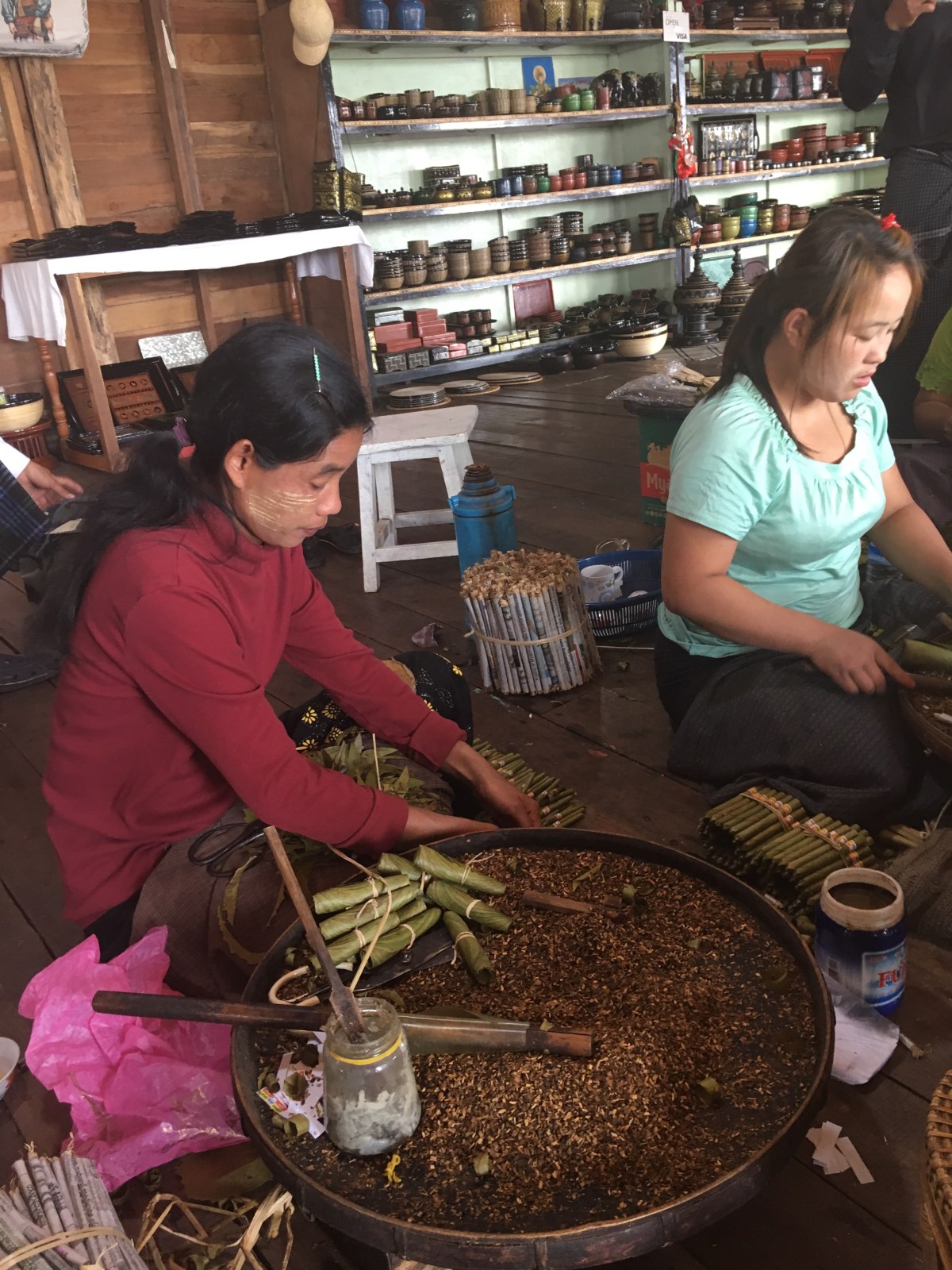
The surprising favorite activity was having a go at making cigars, flavoured with banana, rum, pineapple, mint and more… It’s much harder than it looks to roll! Almost everyone, including me, bought some, although apparently nobody smokes πŸ€”

Also here are the Long Neck ladies. I’ve seen these before in Thailand and Laos – our guide Leo explained that they are actually from the remote villages and are working here in tourism to earn money. I wasn’t sure about taking a photo with them as it felt either contrived or exploitative, but since we gave a decent donation and there is currently no infrastructure to visit them otherwise, I decided it was OK.

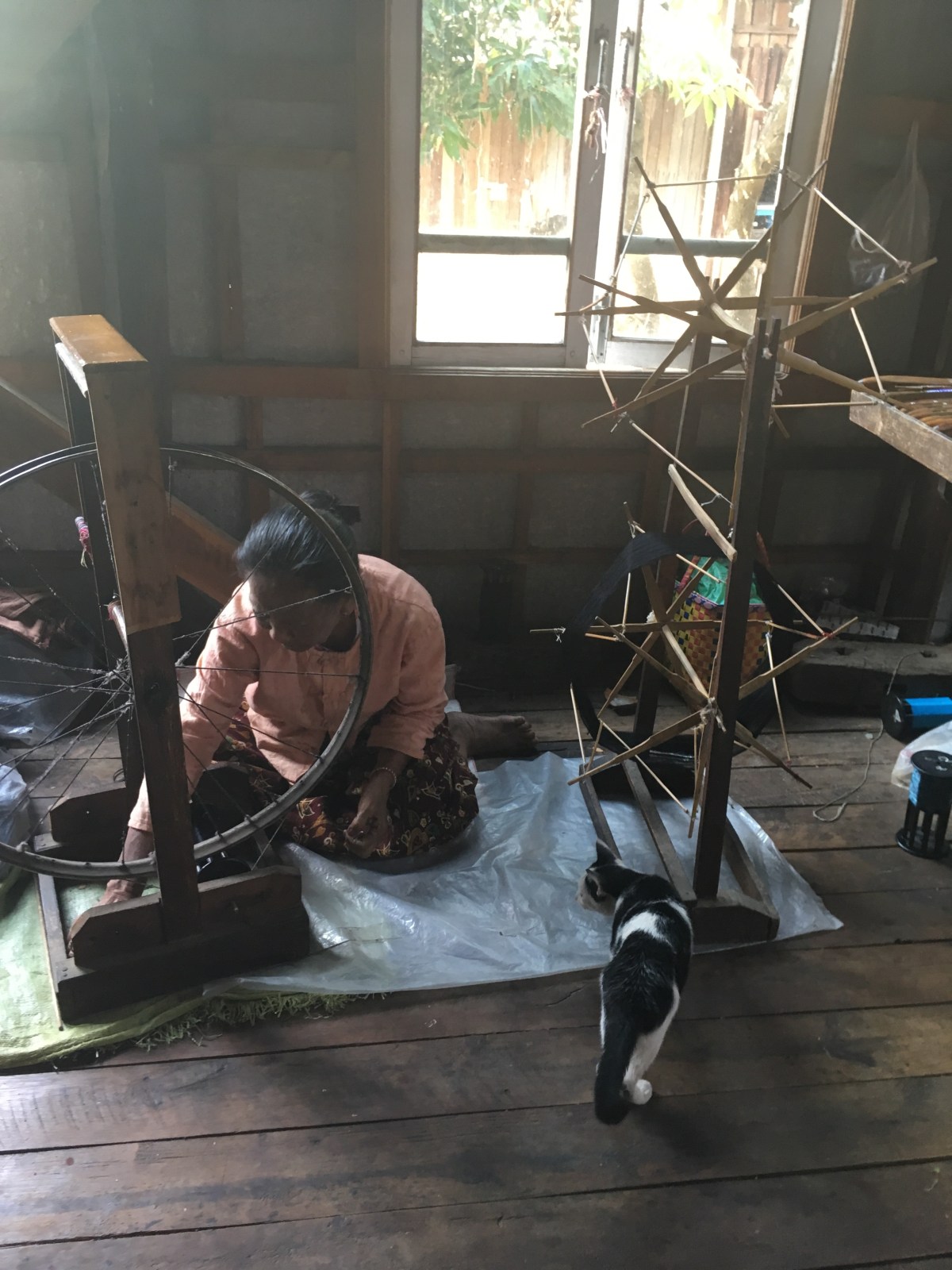
There are a lot of crafts to be had on Inle, including hand made silver jewellery and lacquered bamboo items (cups, bowls etc), as well as weaving by hand which was actually really interest. Tiny old ladies and one old man were perched on wooden benches turning thread from lotus flowers into beautiful designs. There goes my budget…

I really enjoyed a visit to our local guides house for a cup of tea, who confusingly is also known as T. We had an interesting chat about tourism in Myanmar – there are so many beautiful areas which are not accessible right now, supposedly due to lack of safe roads. I’m personally not if it’s more about limiting foreigner movement. It’s important to remember that Myanmar is a small country, under control of China in many ways and lacking crucial funds to fight back in the international press. Tourism numbers have dropped so low that many many people have lost their jobs. This reminded me of the sad situation in Nicaragua right now, a country that is close to my heart.

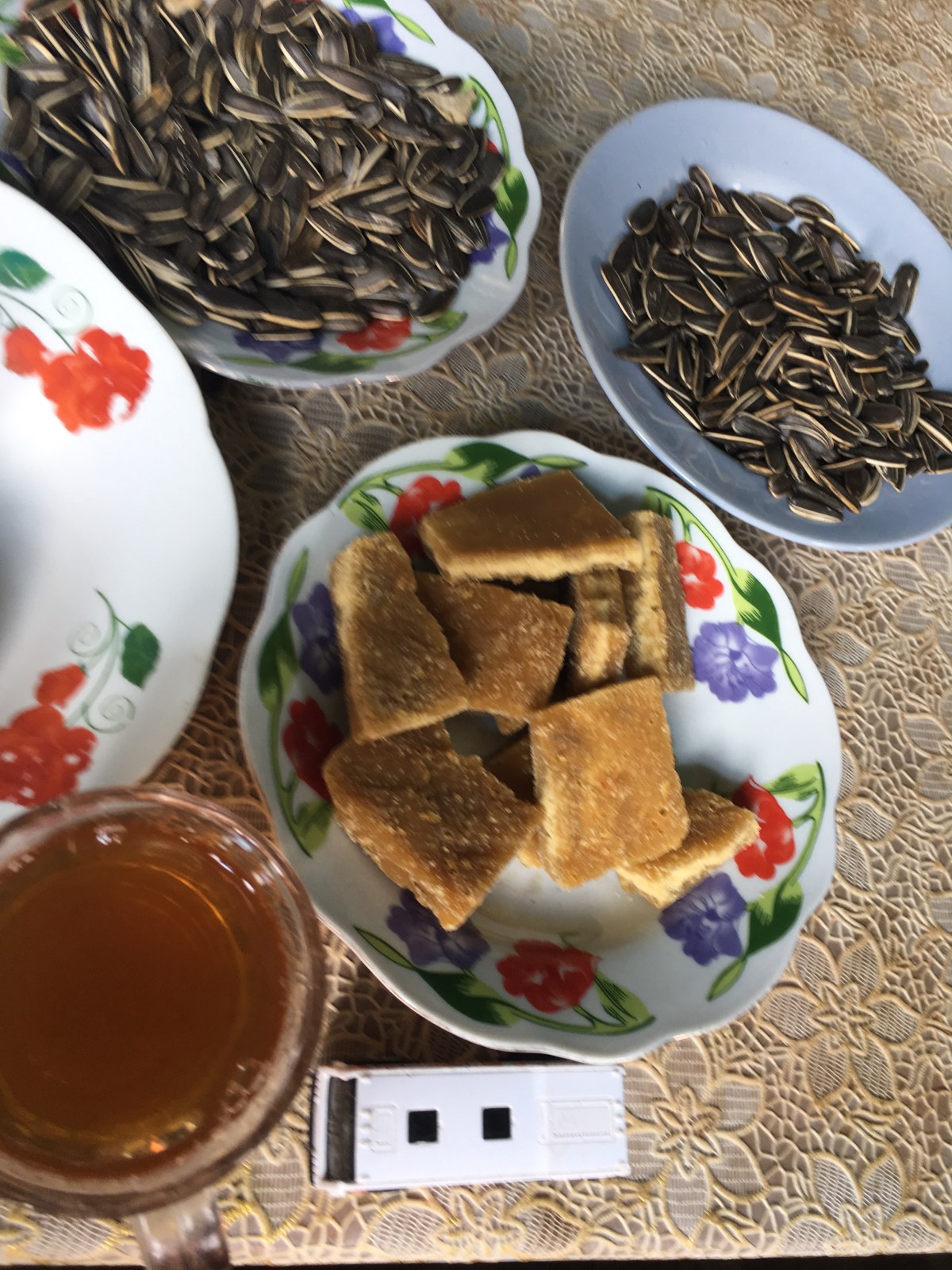
Snacks…sunflower seeds and sugar cane

I also got to try a Burmese massage, which is amazing! It’s so cheap that Inke and I had a whole afternoon at the spa, indulging in a full body massage (thankfully this time fully clothed and no blindfold involved) and foot scrub / mask. Here are some more food photos to finish this post πŸ˜€

Vegan Burmese sharing platter

The dreaded Shan noodles again

However, while Inle Lake was fascinating, it had nothing on Bagan…

Welcome to Myanmar

Myanmar : Tachileik, Kengtung, Shen State

I’ve wanted to visit Myanmar for a long time and I’m so glad I did. Don’t believe everything you read in the press – the vast majority of the country is incredibly safe to visit. Think lush tropical scenery, so many temples they don’t keep count and the most hospitable, friendly people you’ll likely ever encounter. I joined another GAdventures trip for two weeks as I wanted to see as much as possible in two weeks and it’s a little harder to get off the beaten track on your own here. Joining a tour meant we had our own transport for the more remote areas and could cross the Thai / Burmese border at Tachileik.

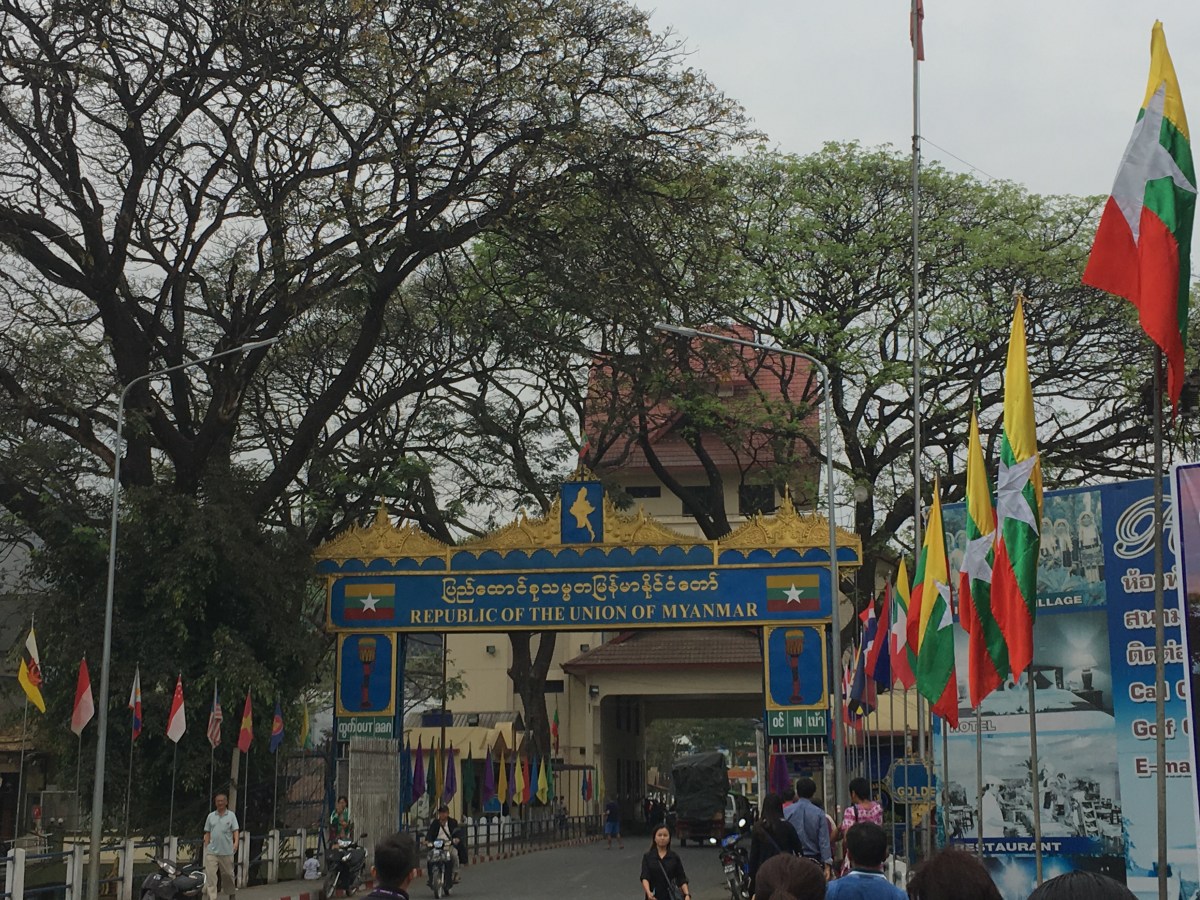
The actual border

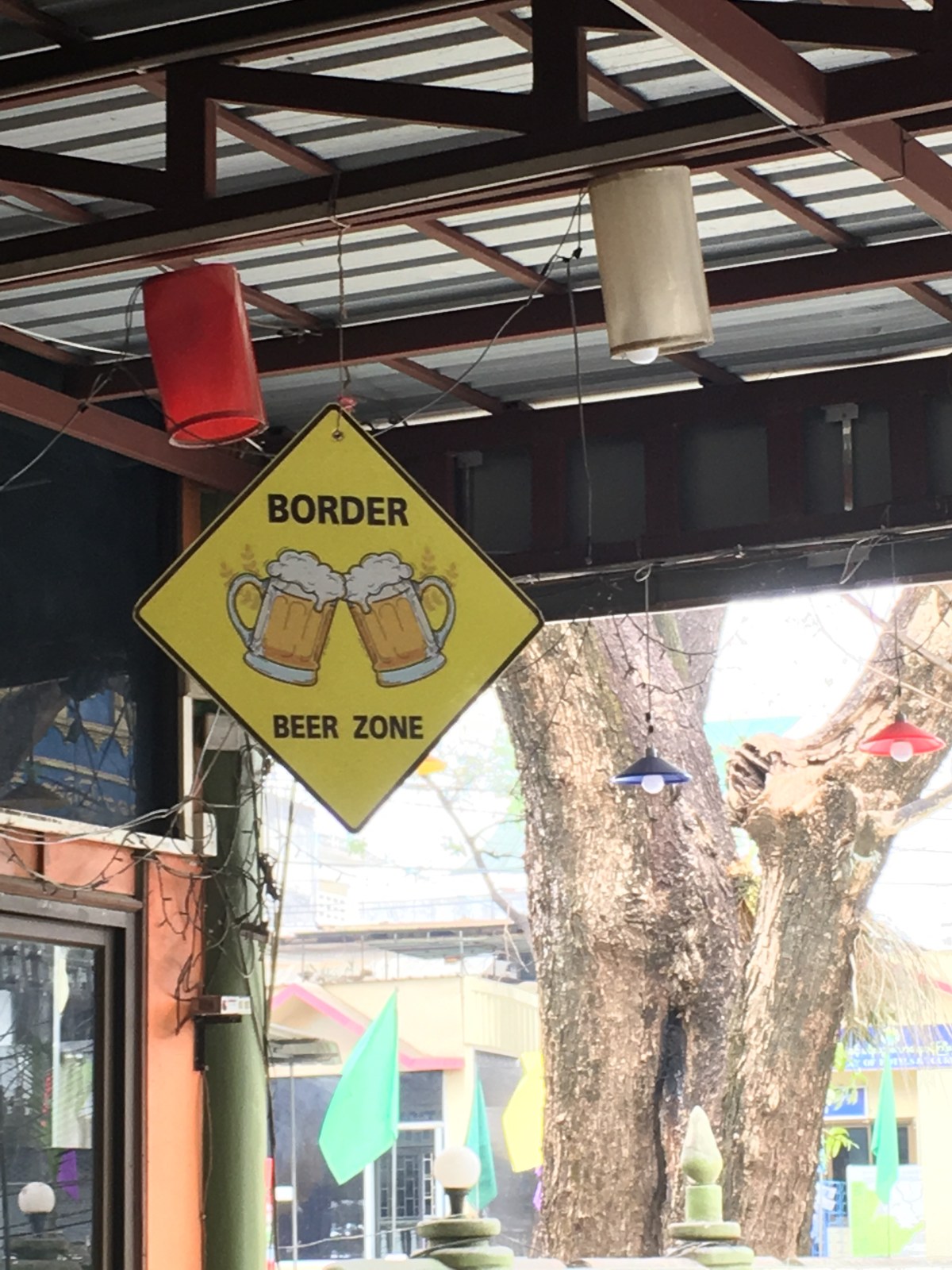
To cross the border you walk over a bridge, stopping at a little office / shack with some officials casually checking paperwork whilst eating their lunch. We left our bags in a big pile in the office while they finished their checks and went to sit on some plastic chairs under a sign for beers for a while πŸ˜‚

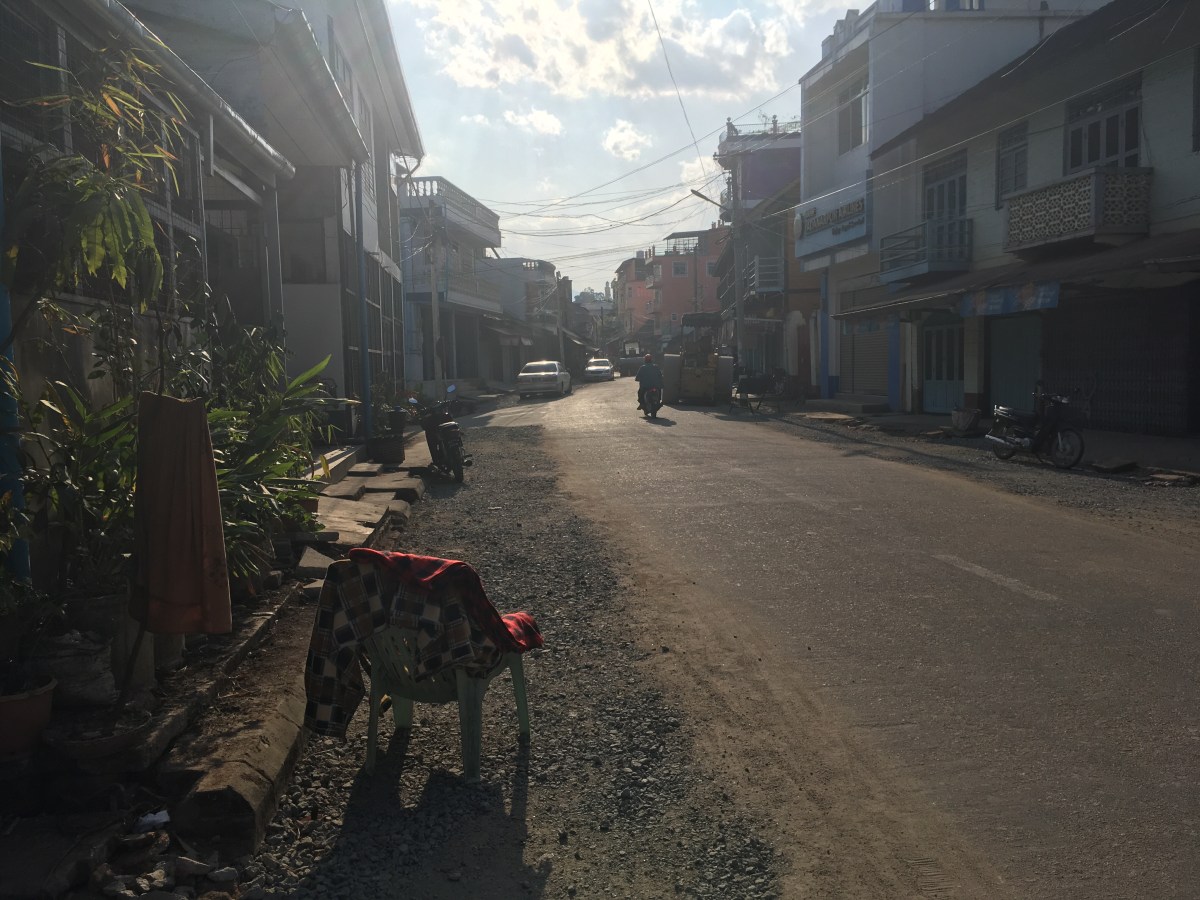
Once officially in the country we settled down for a four hour ride in our beat up old minivan. Our guide Leo, native to Myanmar and proudly wearing the traditional ‘longi’ dress, explained that due to sanctions, vehicles are generally second hand from Japan or China. This means they are very old and very slow. Many are also right hand drives even though they drive on the right. The roads were almost empty – we passed maybe three other vehicles all the way to our first stop of Kengtung. This is because the government often close this road and the bus to the border only runs a couple of times per day. Eventually we arrived at a mini version of Chiang Mai, Thailand, but 30 years in the past.

First glimpse of Myanmar

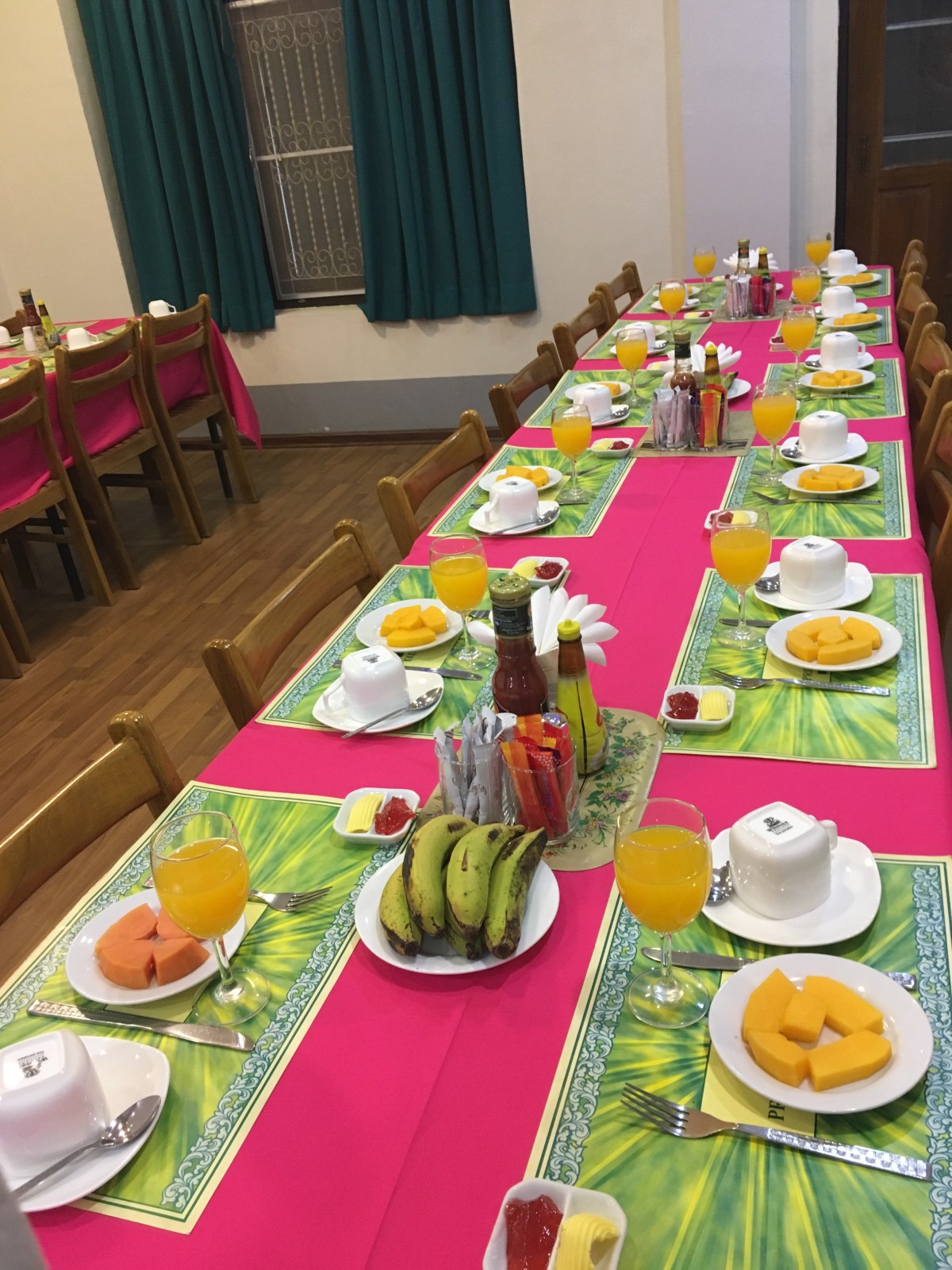
Hotels still have to be government approved but GAdventures favours locally owned, smaller businesses wherever possible. We stayed in old fashioned hotels where they tried so hard on the customer service front πŸ™‚ It’s nice to be welcomed with a cold drink and a refreshing towel and have your backpack carried to your room! The next morning my new roommate Inke and I went down to breakfast and found the table set for us – despite this being a large hotel with several floors, we were the only guests. I soon realised fried food was going to be my staple diet…. Breakfast was fried samosas, some kind of fried donut, fried eggs, huge slices of white bread and instant coffee stewing in a pot πŸ€¦πŸ»β€β™€οΈ better stock up on those bananas!

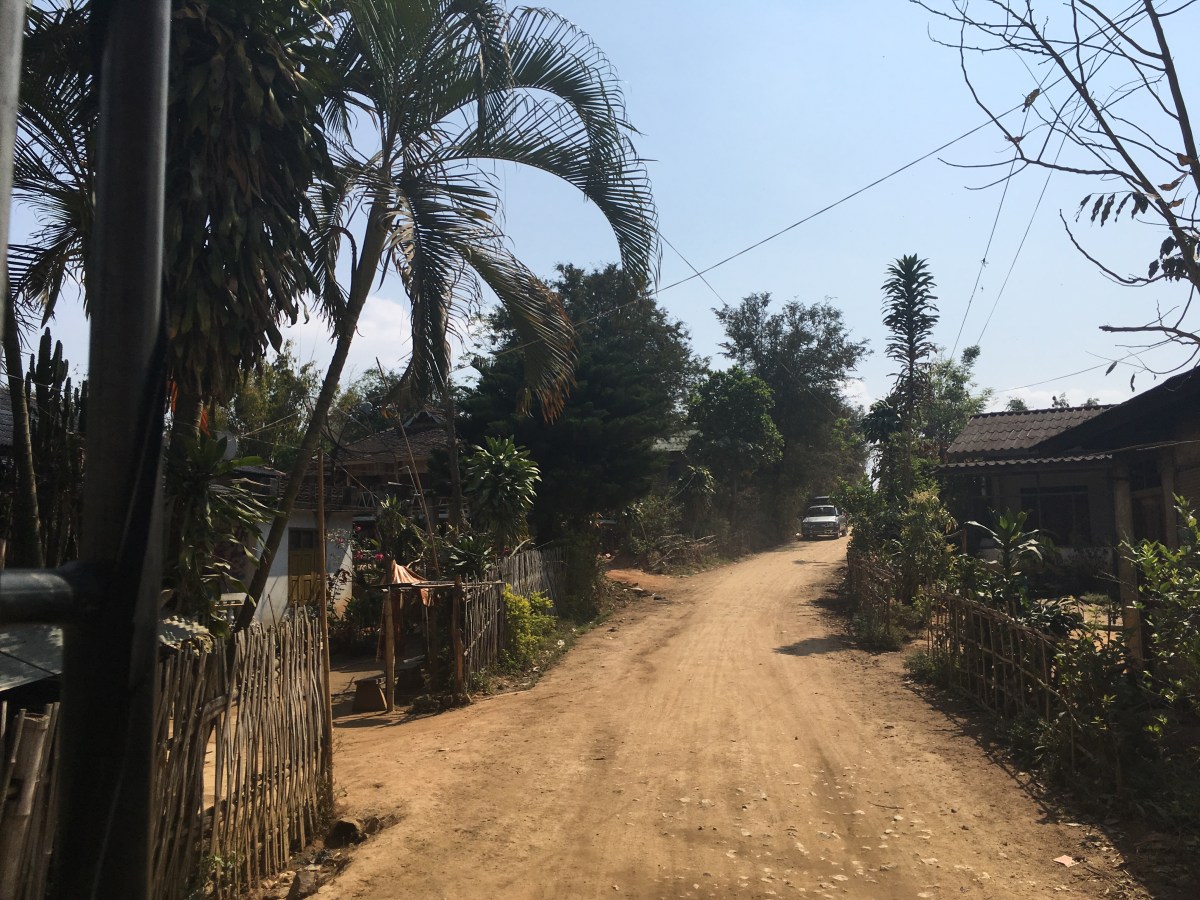
For our first day in Myanmar, we climbed into the back of pickup trucks, crawling slowly up hills, surrounded by green rice paddies enroute to visit the hill tribes.

A lot of the roads were in a bad state and roadwork is done without machinery – we passed several groups of women, tarmacing the roads by hand with tiny shovels, wearing flip flops. I was taken aback by how green and tropical the scenery is. Whilst the visible greenery was mostly sticky rice, fruit and vegetables, I should mention that Myanmar is apparently the 2nd biggest exporter of opium, albeit hidden out of sight.

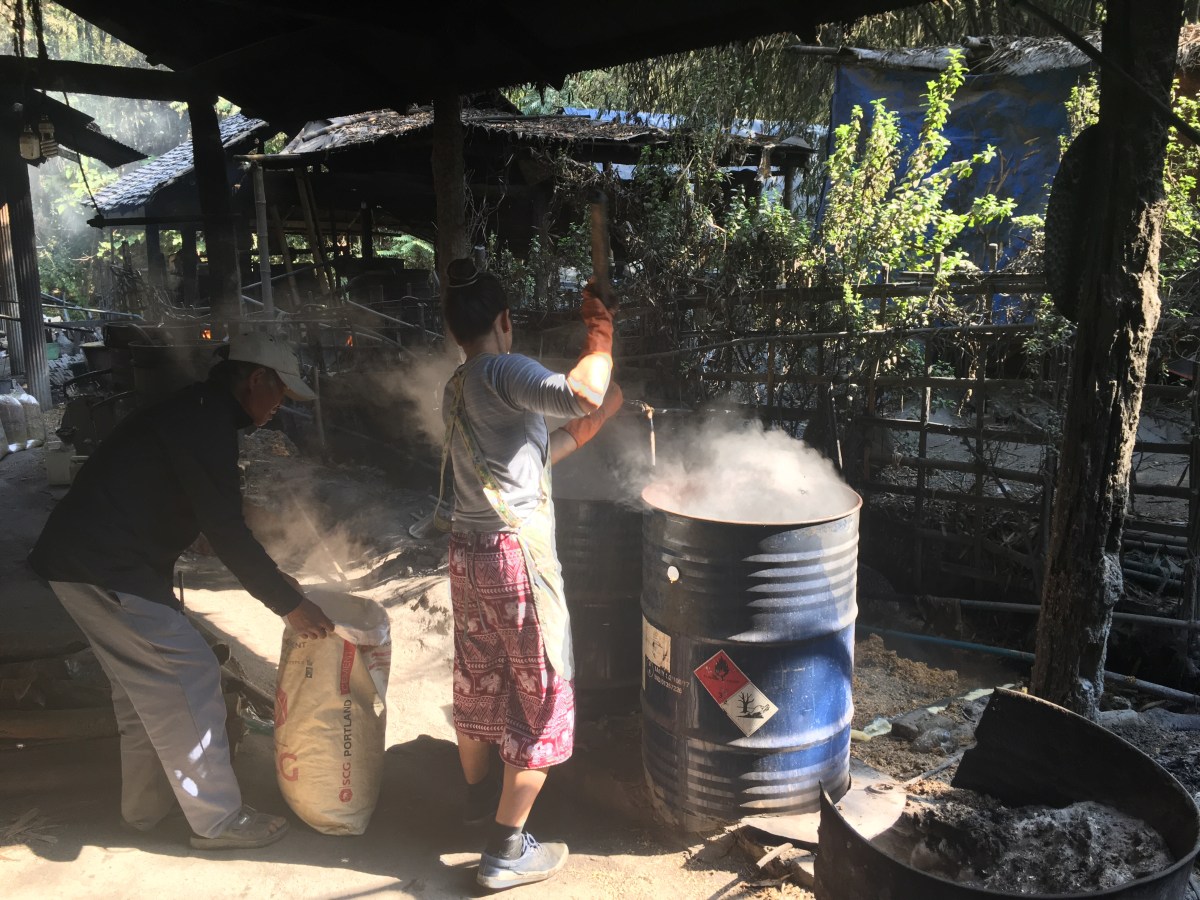
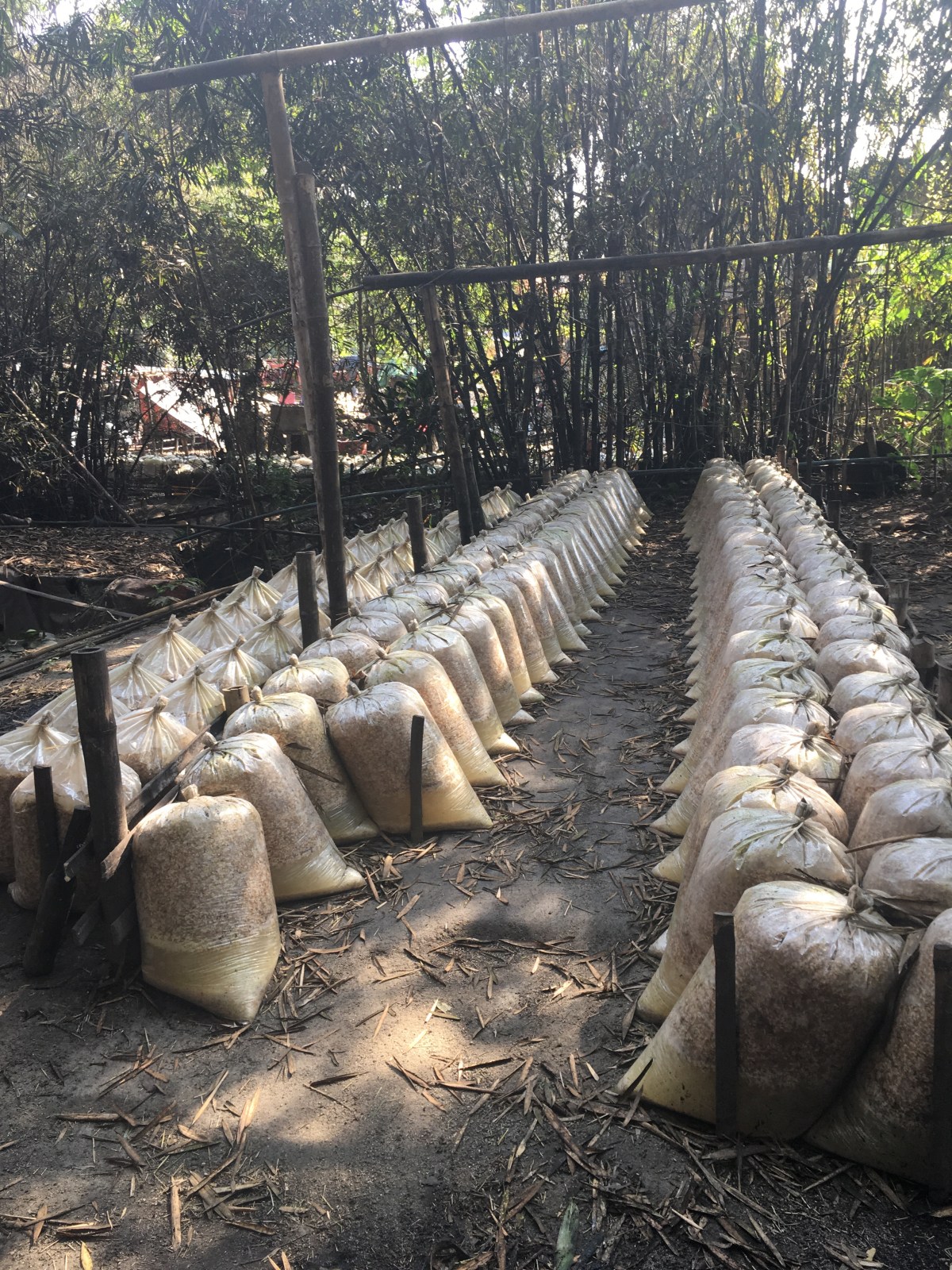
On a not totally unrelated note, the first stop of the day was a local farm producing ‘Moonshine’ rice liquor. This stuff is over 50% proof and just the smell of it is enough to get you drunk. The whole distillery process is done by hand of course.

The bags below are ready when the liquid has turned a certain colour :

The problem is that the alcohol is so cheap, at less than 30p a bottle, that the bottle it’s sold in costs more than the actual liquor. They say if you start drinking it as a teenager you’ll be dead by 50 😬

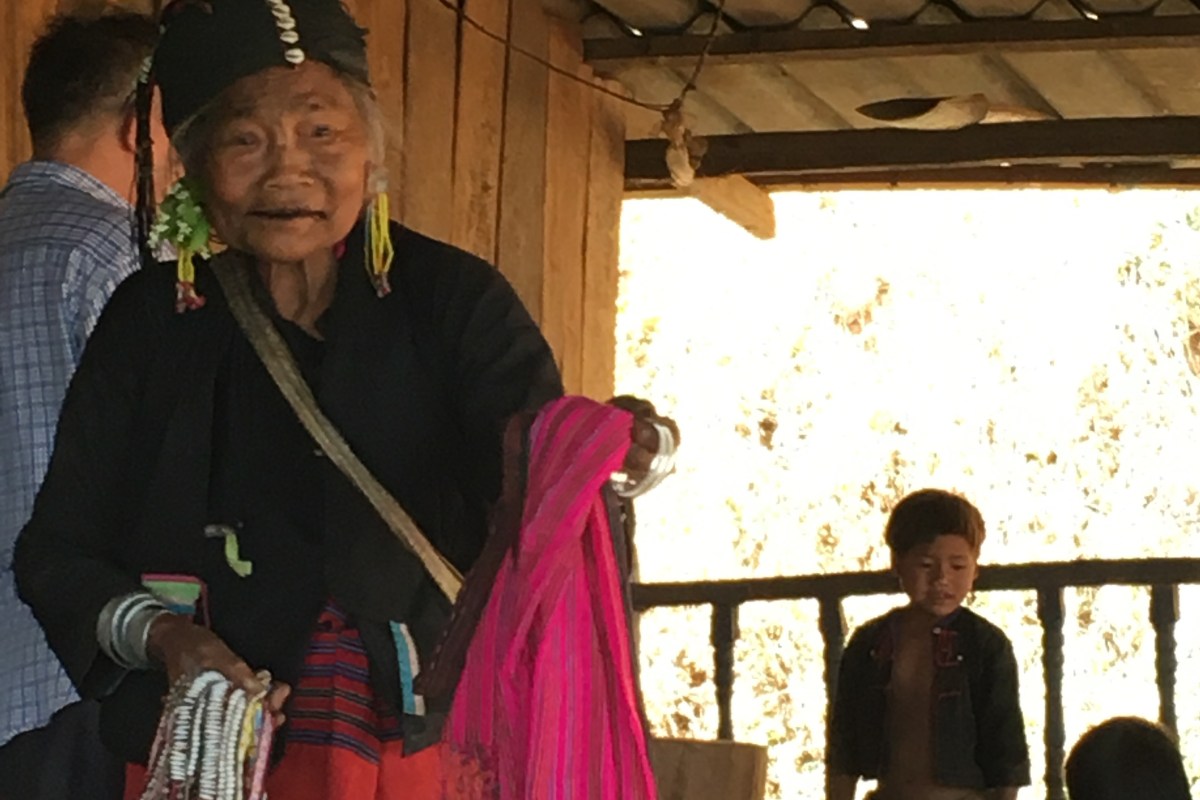
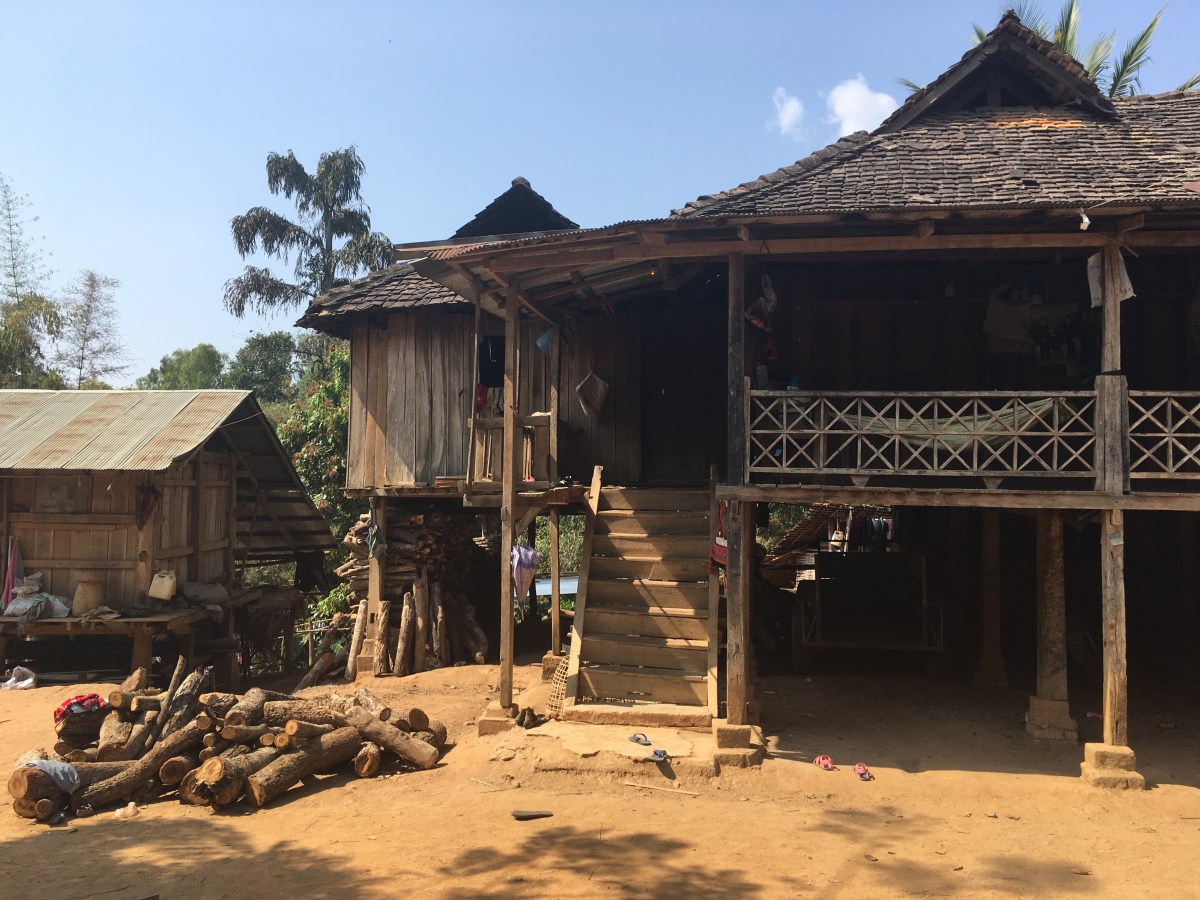
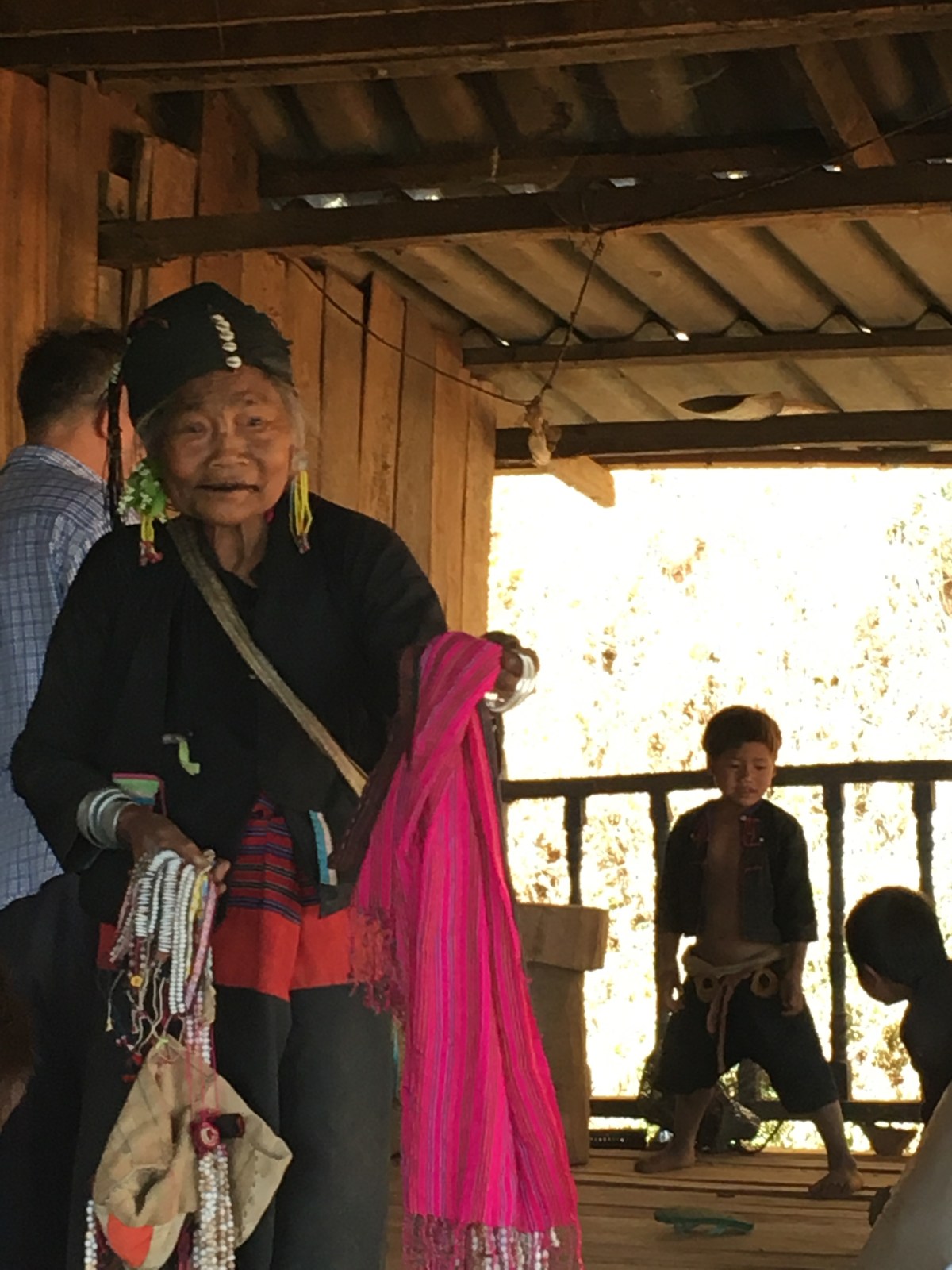
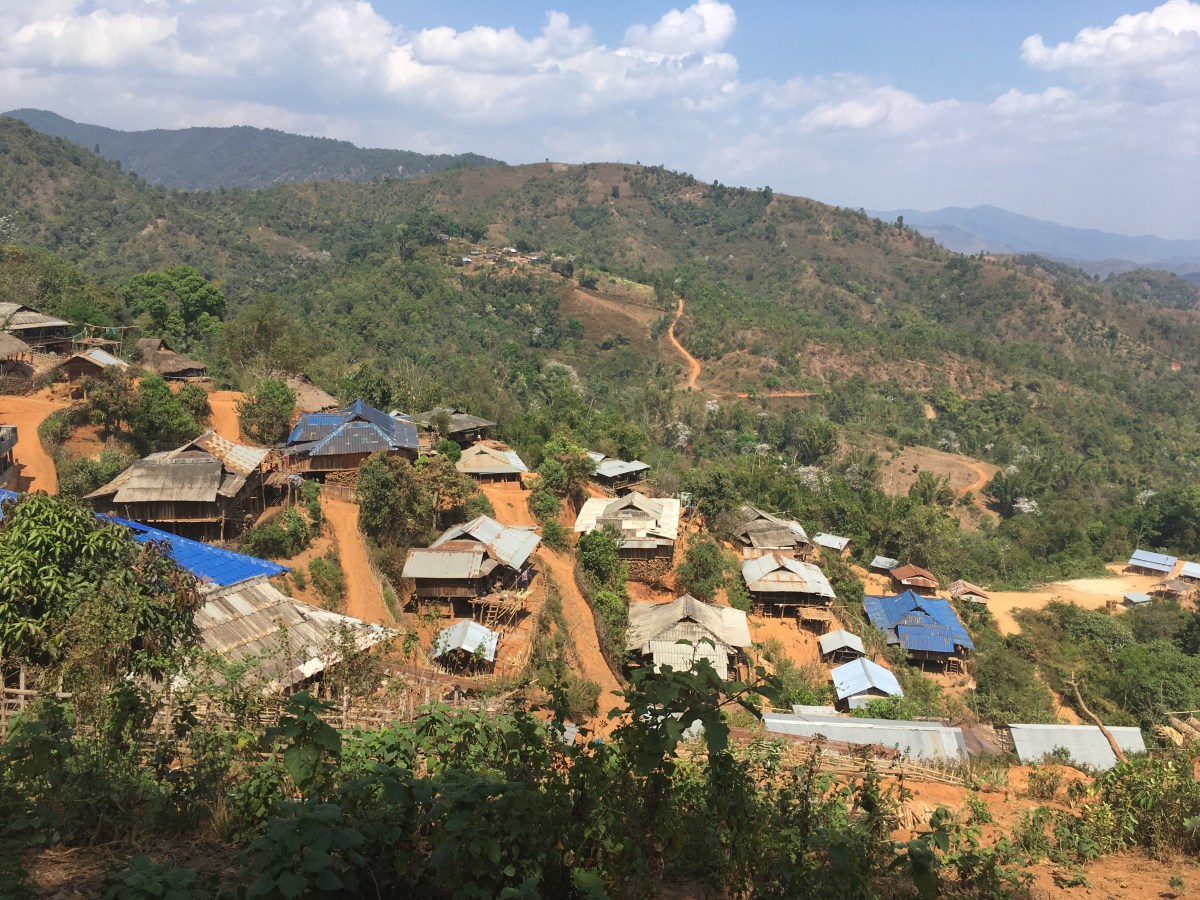
We visited some really interesting hill tribes in the Shan state, including the Akha and Ann tribes. Some of the women were sporting extravagant headwear – I didn’t take a photo unfortunately but someone else on Google images has. They have started to sell handicrafts as they are receiving visitors trekking through the area now – the women were very smiley and not pushy at all. But the kids on the other hand – it was a free for all as a group of them descended on us, each trying to win a sale. Ultimately most people bought something, as each bracelet cost only 50p and these villages are very, very poor. The pictures below show the houses, which do not have running water or much in the way of sanitation. The small school and toilet has been constructed by donations from the nearby town, which also pays for a teacher. We noticed that most of the older people have red / black stained mouths – this is from chewing the leaf from teak trees, in order to hide decaying teeth πŸ™Š. Arranged marriages are still the norm here even though these children don’t know their real age. In fact one of the purposes of the school is to teach the calendar. Families match girls and boys for marriage who appear to be of a similar age, within the same village.

We had a local guide accompany us, who could communicate with the locals, but we’d been warned he was old and might be slow. We’d also been told the trek was easy, ‘just walking around the villages’. Wrong on both counts! The guide didn’t change pace or break a sweat, powering up the steep hills as I was puffing at the back 😬

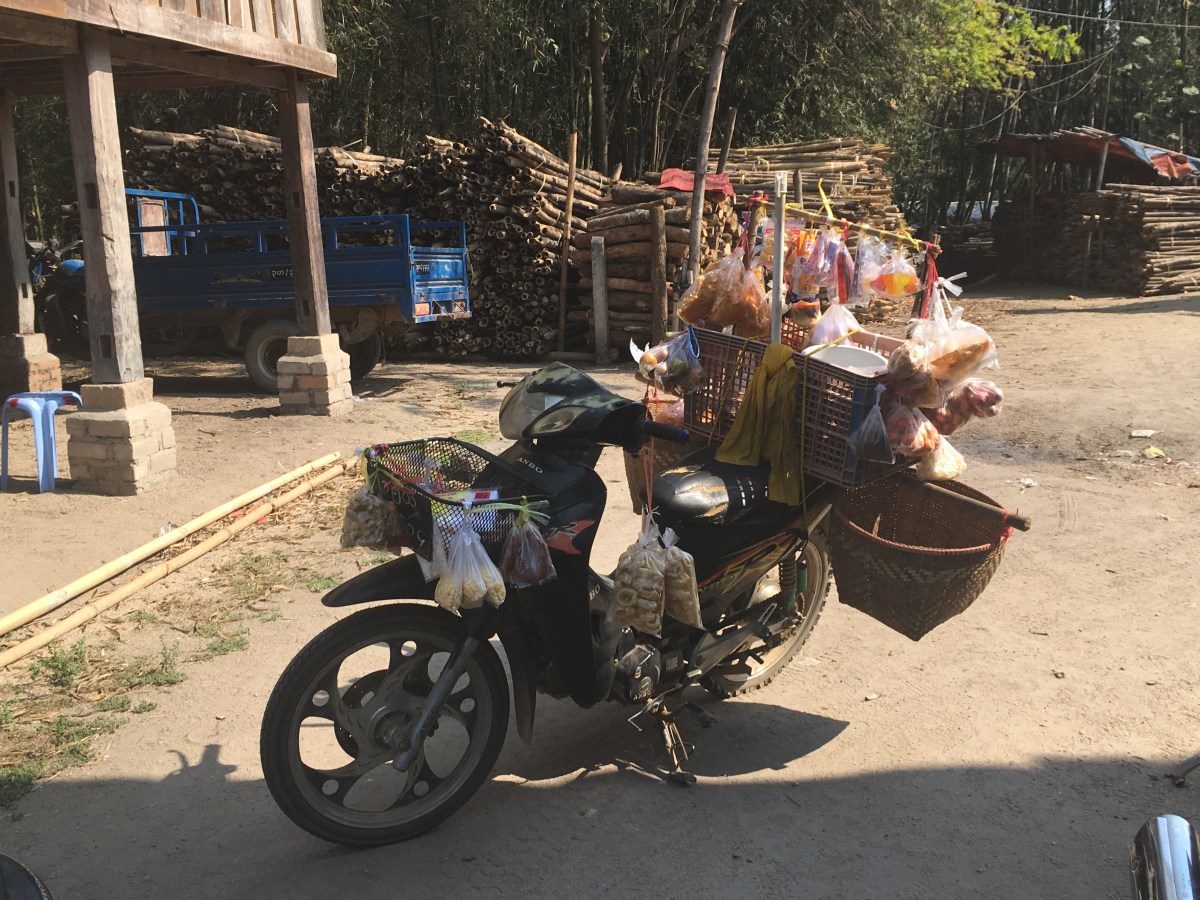
Local shop on wheels
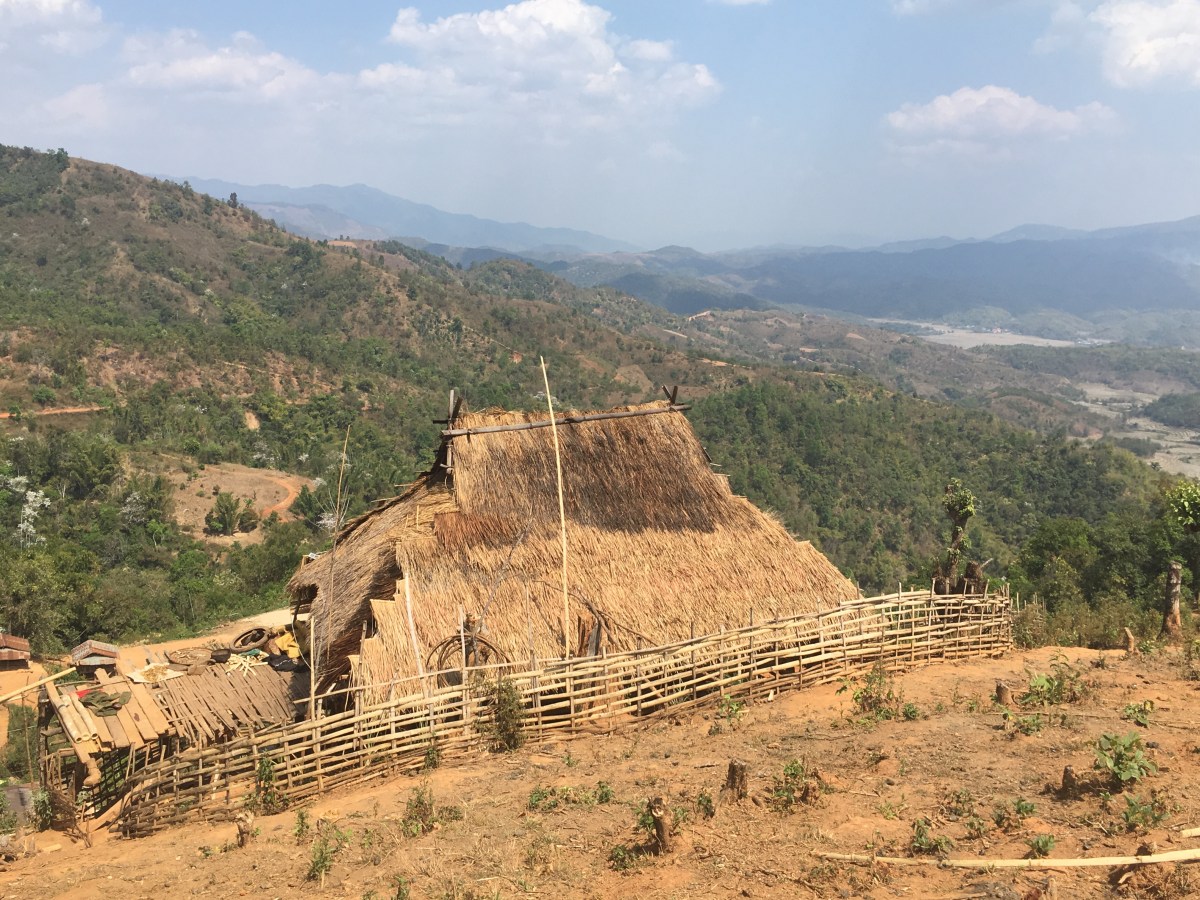
House on stilts

There was a tap that continually dripped water onto the ground, running down the hillside through a hosepipe. I thought it was drinking water for the village, but it’s actually for the spirits. The villagers believe that providing the spirits with water, and hanging signs over their doors, will keep the spirits out of their homes.

Local sales lady!

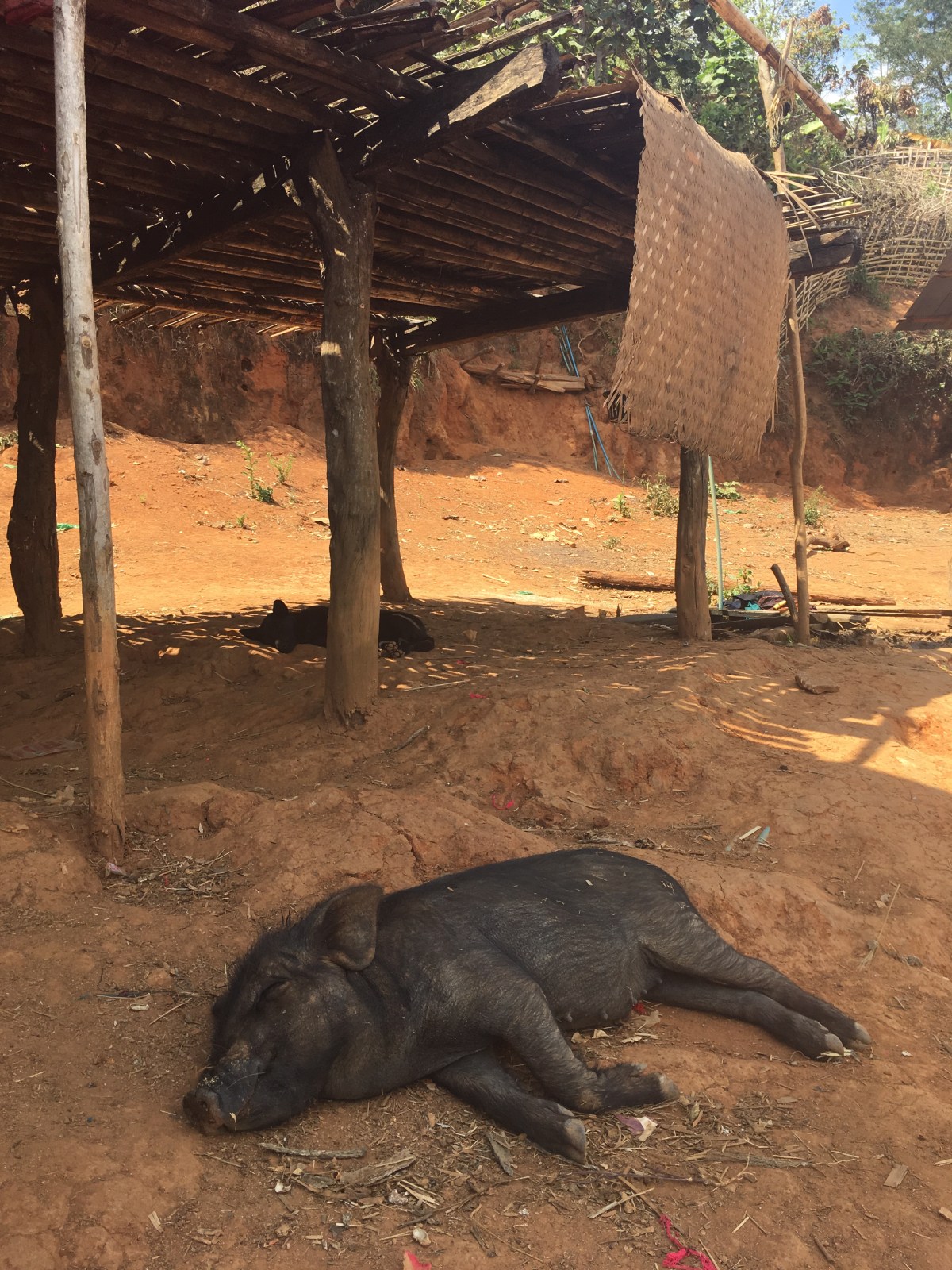
Pig or dog?

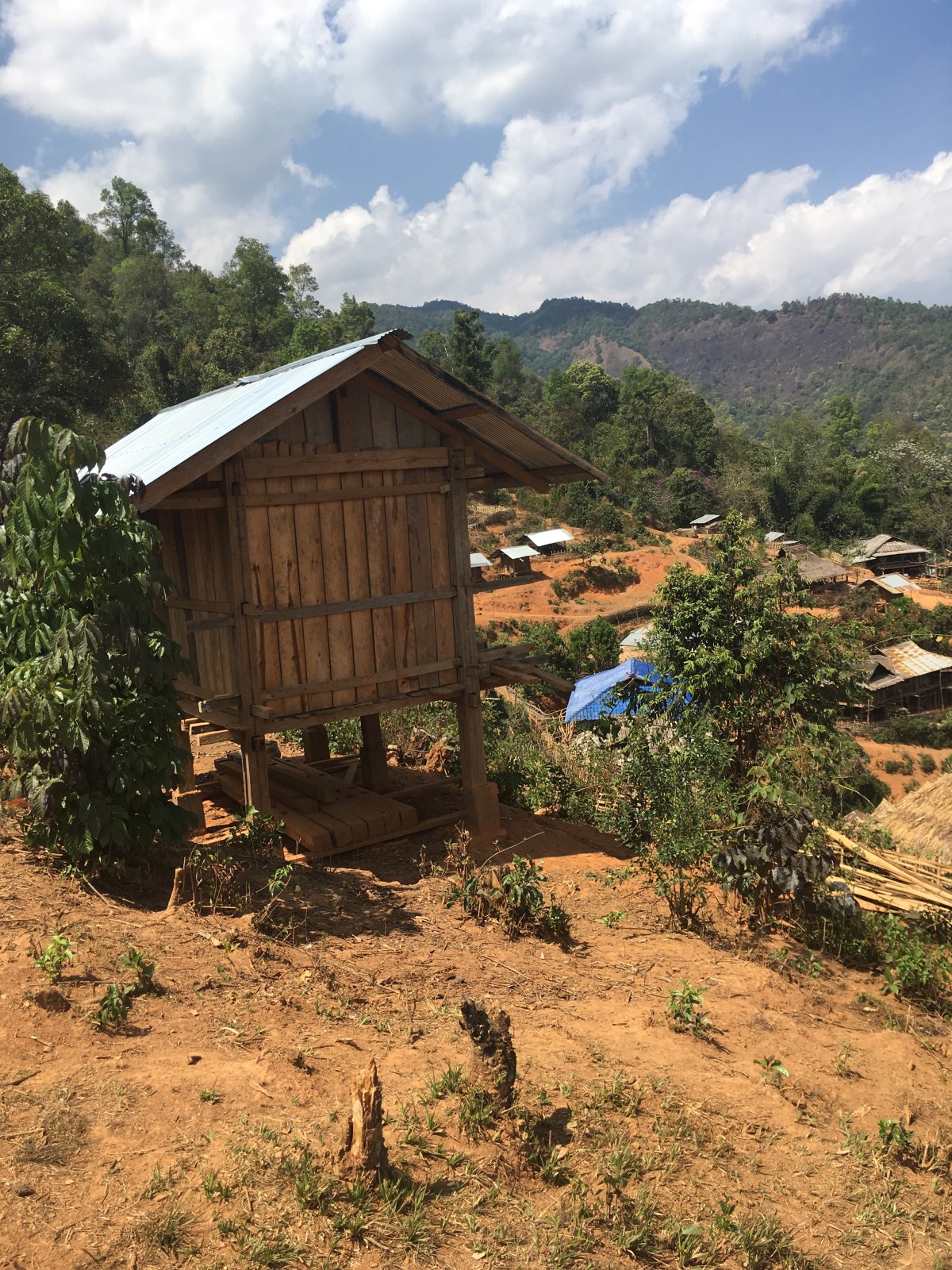
Looking down at the school

Everyone smiles, waves and says hello to us wherever we go. ‘Mingalabah’ is how the greeting sounds and we say it to everyone in return. The most important thing is to smile πŸ™‚ If we are on bus, people wave from the side of the road, especially children. One of my favourite memories is walking down the street, and seeing a woman’s wide smile from far away, before I could make out any other features.

Shan noodles

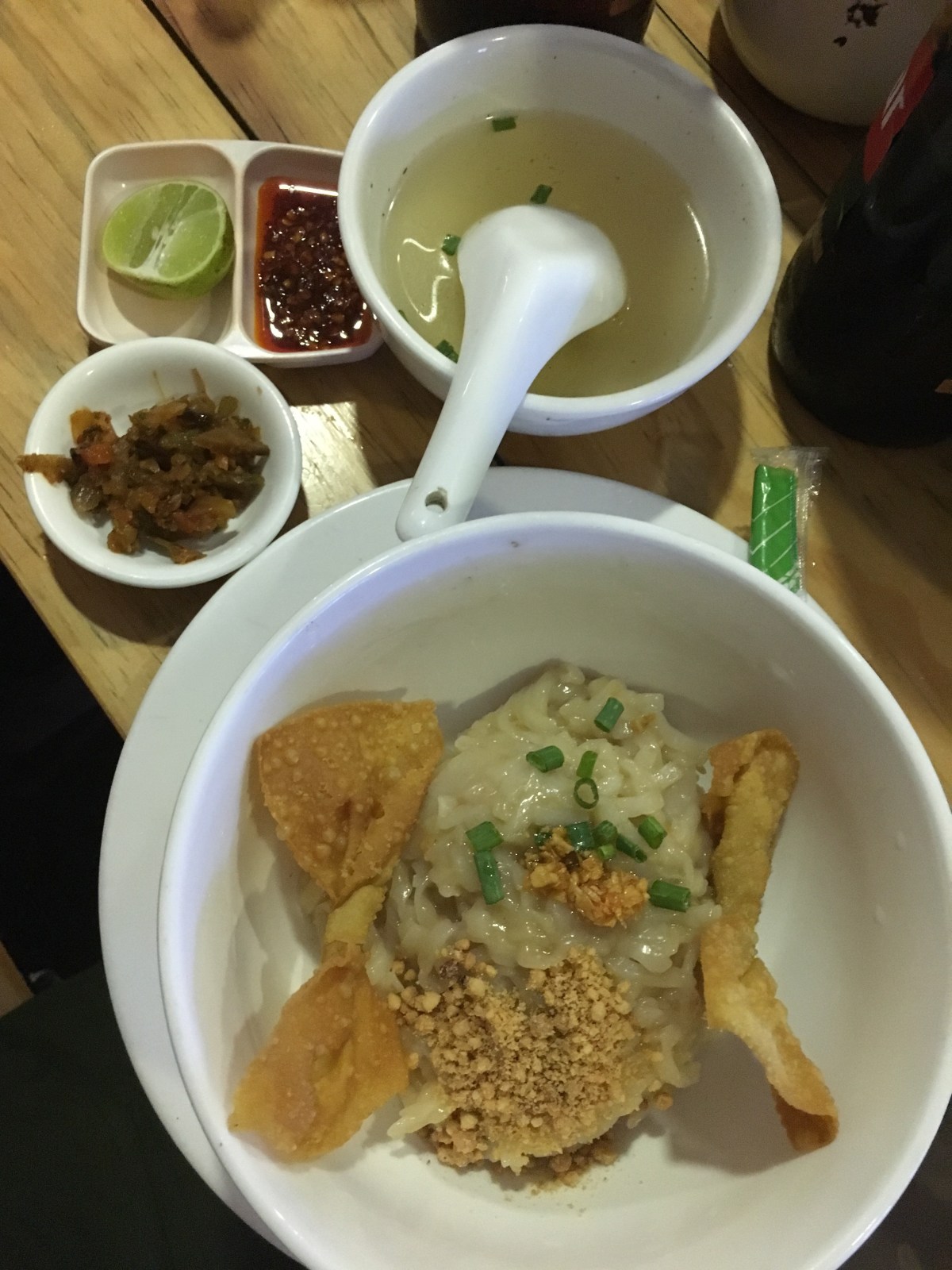
The only downside is the food… ‘Shan noodles’ to be precise. One of the few veggie options on the menu, after we had communicated that we did not want fish sauce (I’m trying not to think about the suspiciously pink coloured Pad Thai that three of us, all veg*n to some degree, had at the border when there was absolutely no time to order something else and we all took a bite and looked at each other in horror πŸ™‰). We have learned to say ‘Tatalo!’ for vegetarian followed by ‘Fish sauce no!’ which conveniently rhymes, and then we produce a photo of a bottle of fish sauce, and finally hammer the point home by making a cross sign with our arms like some kind of bizzare ritual. It seems to work! But Shan ‘sticky’ noodles were just nasty slimy noodles that I dont understand how anybody could eat, vegetarian or not 😬

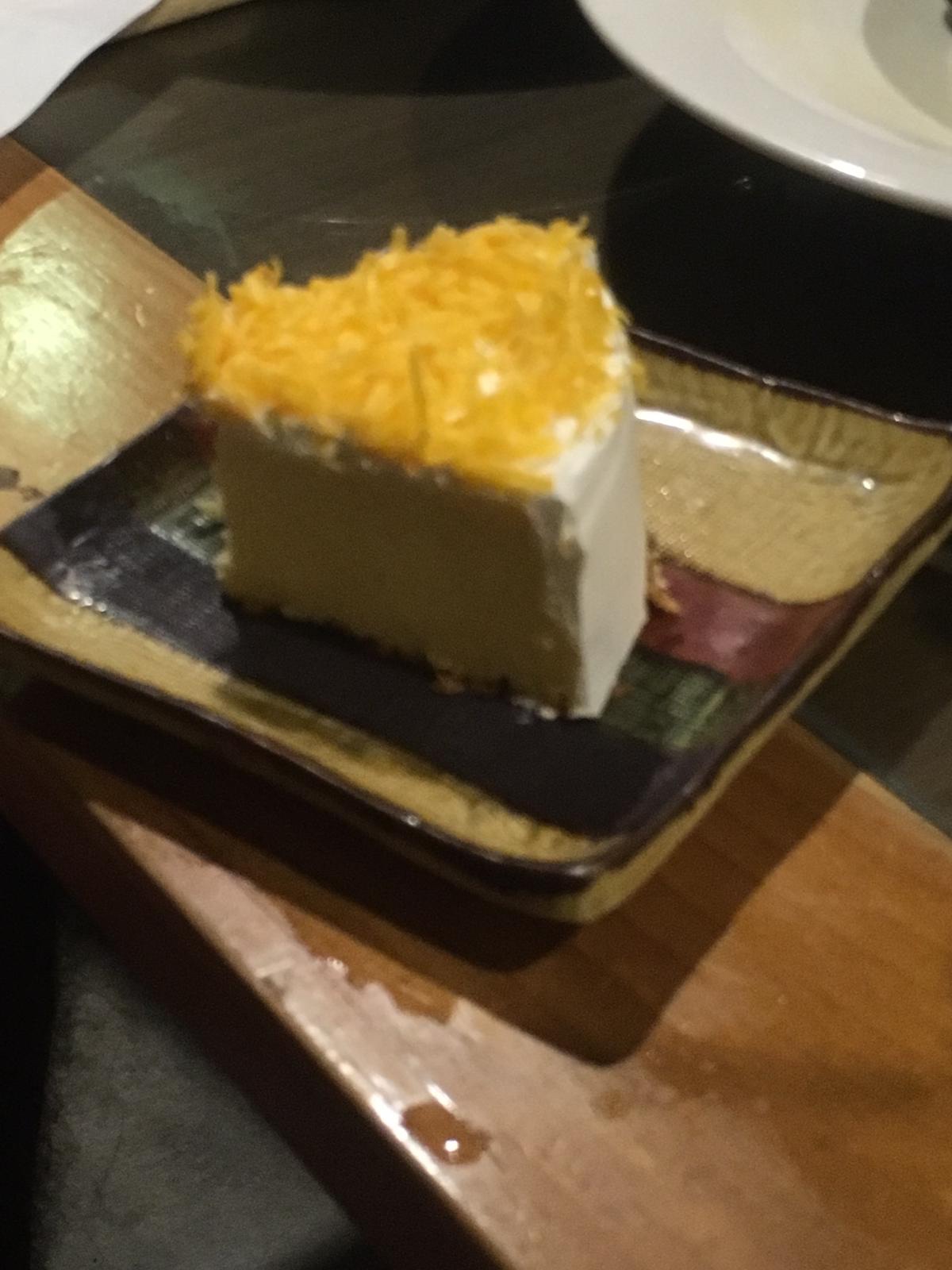
To illustrate how new tourism is in this state, which is geographically cut off from the more established tourist industry in, say, Mandalay, below is a photo of a cheesecake somebody ordered for dessert. It really is cheddar cheese on top of a sponge cake πŸ€” Nobody had the heart to tell them that’s not actually cheesecake.

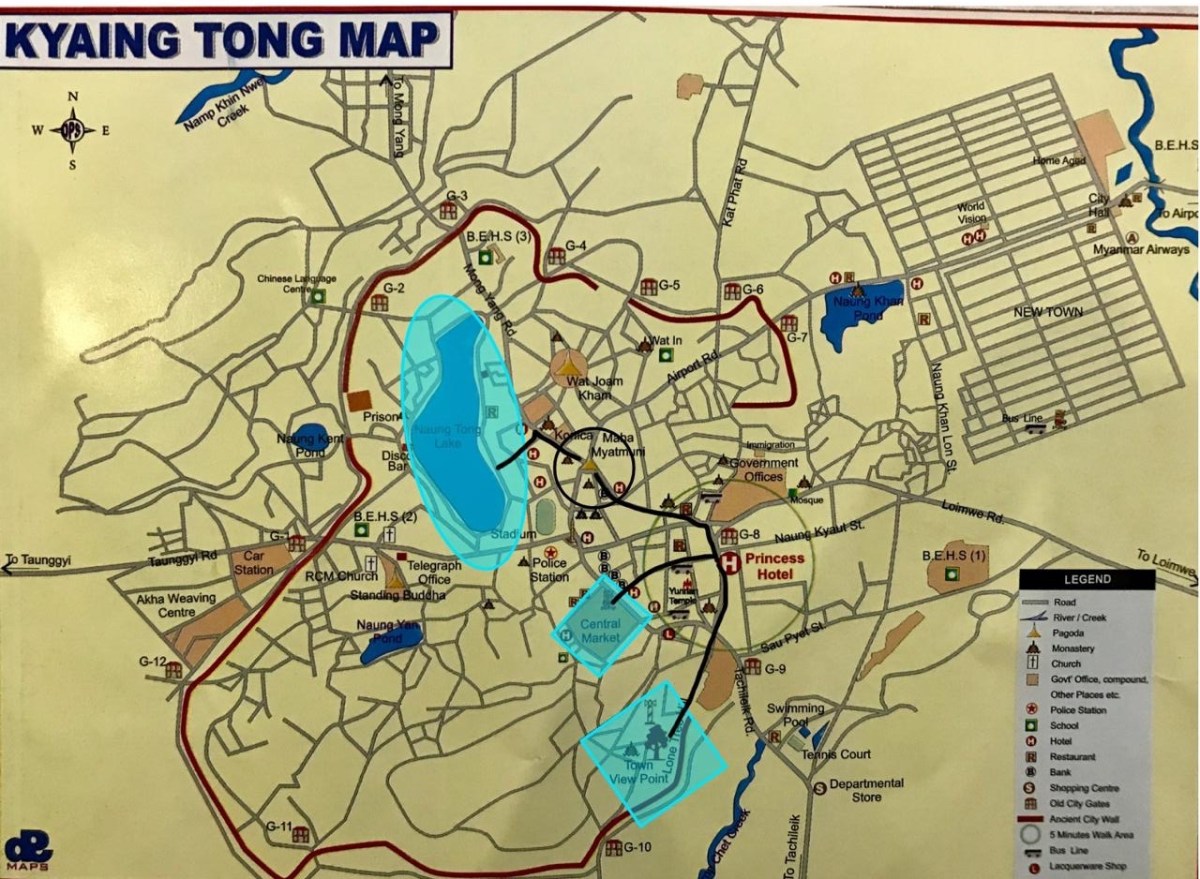
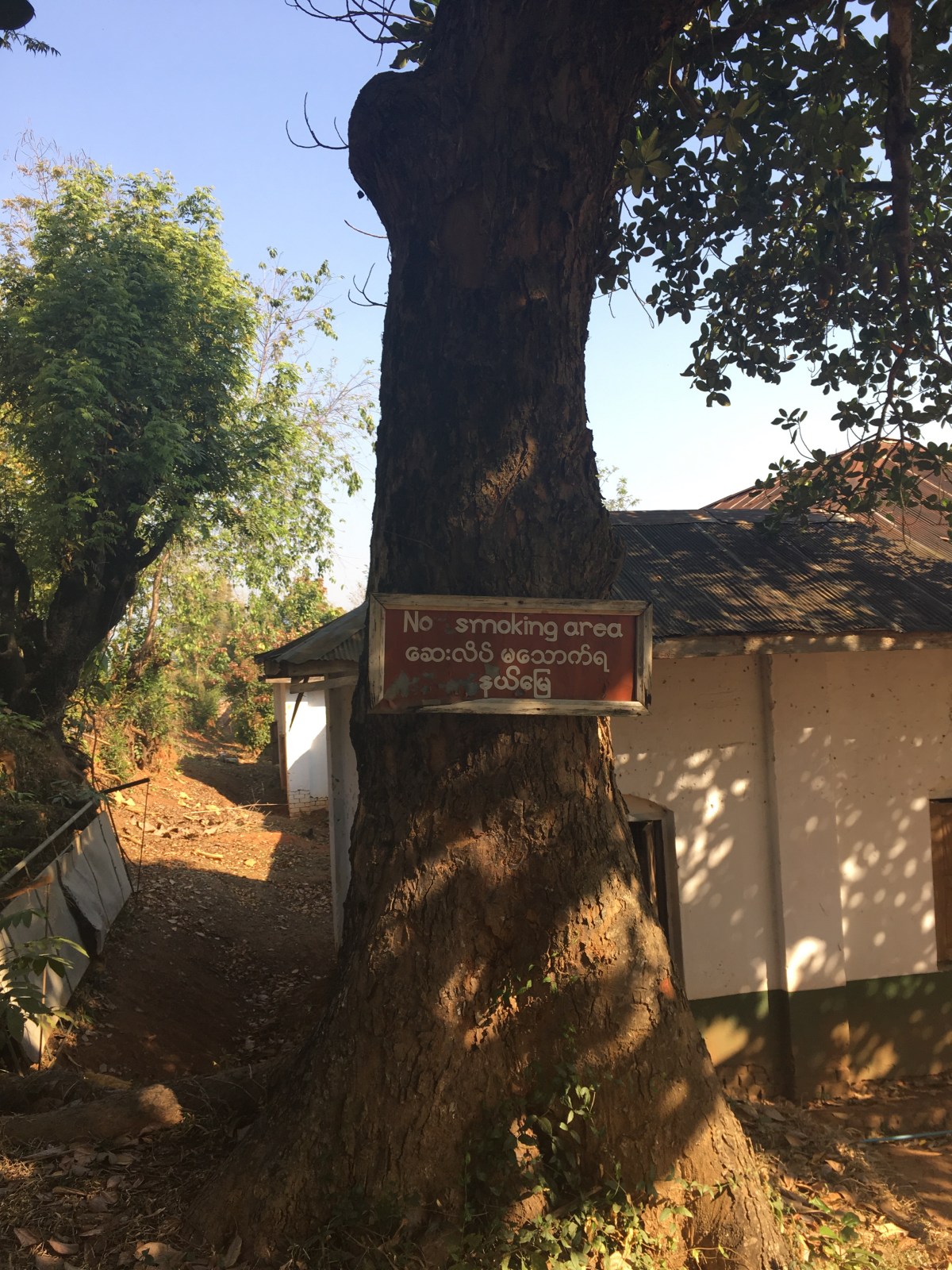
The next day our guide gave us a map and suggested we visit three places. 1- the oldest tree in the city. 2 – the temple. 3- the lake. What followed was one of the best days of my trip so far as Inke and I embarked on a treasure hunt / wild goose chase searching for this tree. We set off in the vague direction indicated by the map before realising we had no way to recognise this tree – but perhaps it was bigger than the others?! We wandered up a hill into a school that was closed for the weekend and spotted Tree #1 which had a sign on it – it looked promising until Inke pointed out it was a ‘no smoking’ sign πŸ™„

The Tree is somewhere in the bottom square

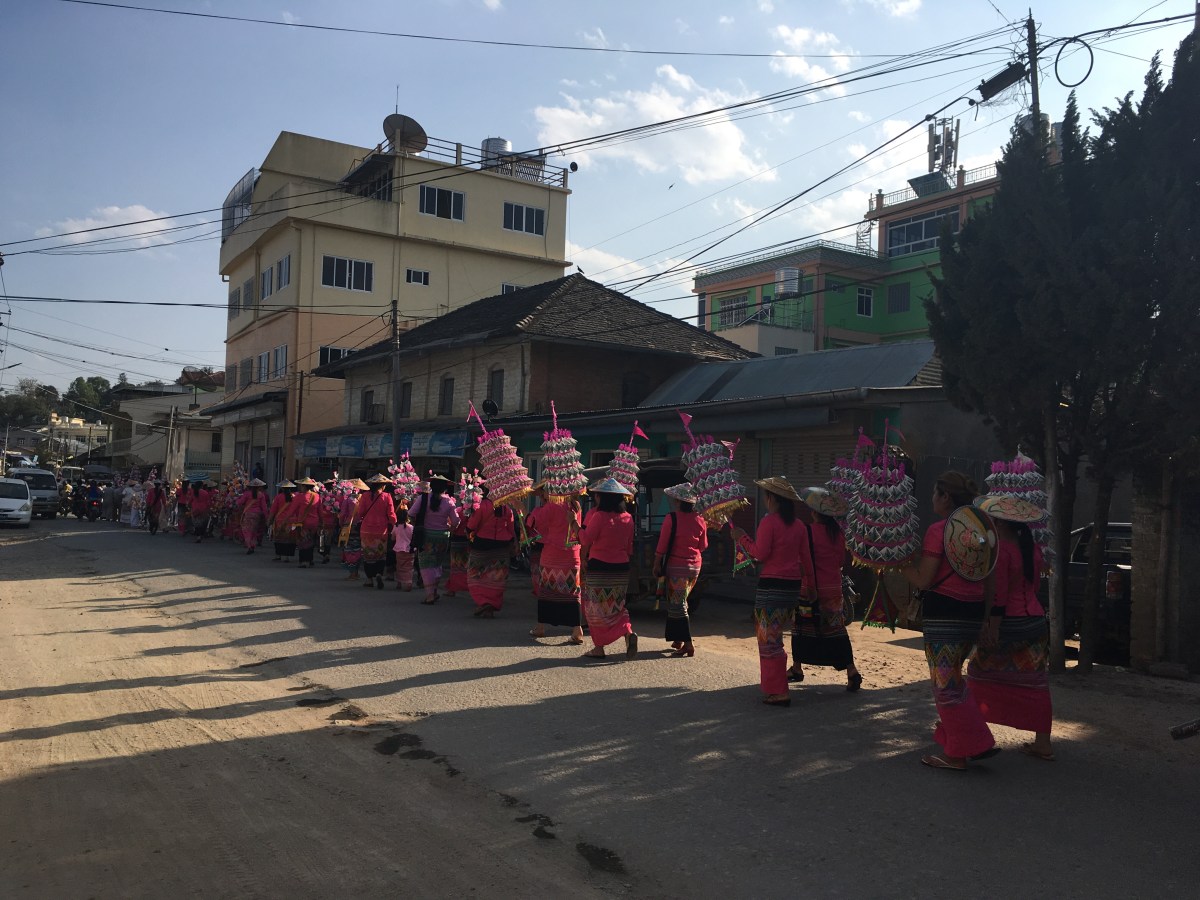
On the way we came across a street procession – which we later found out was a Kaaitan national ceremony to make offerings to the monks.

Tree #1
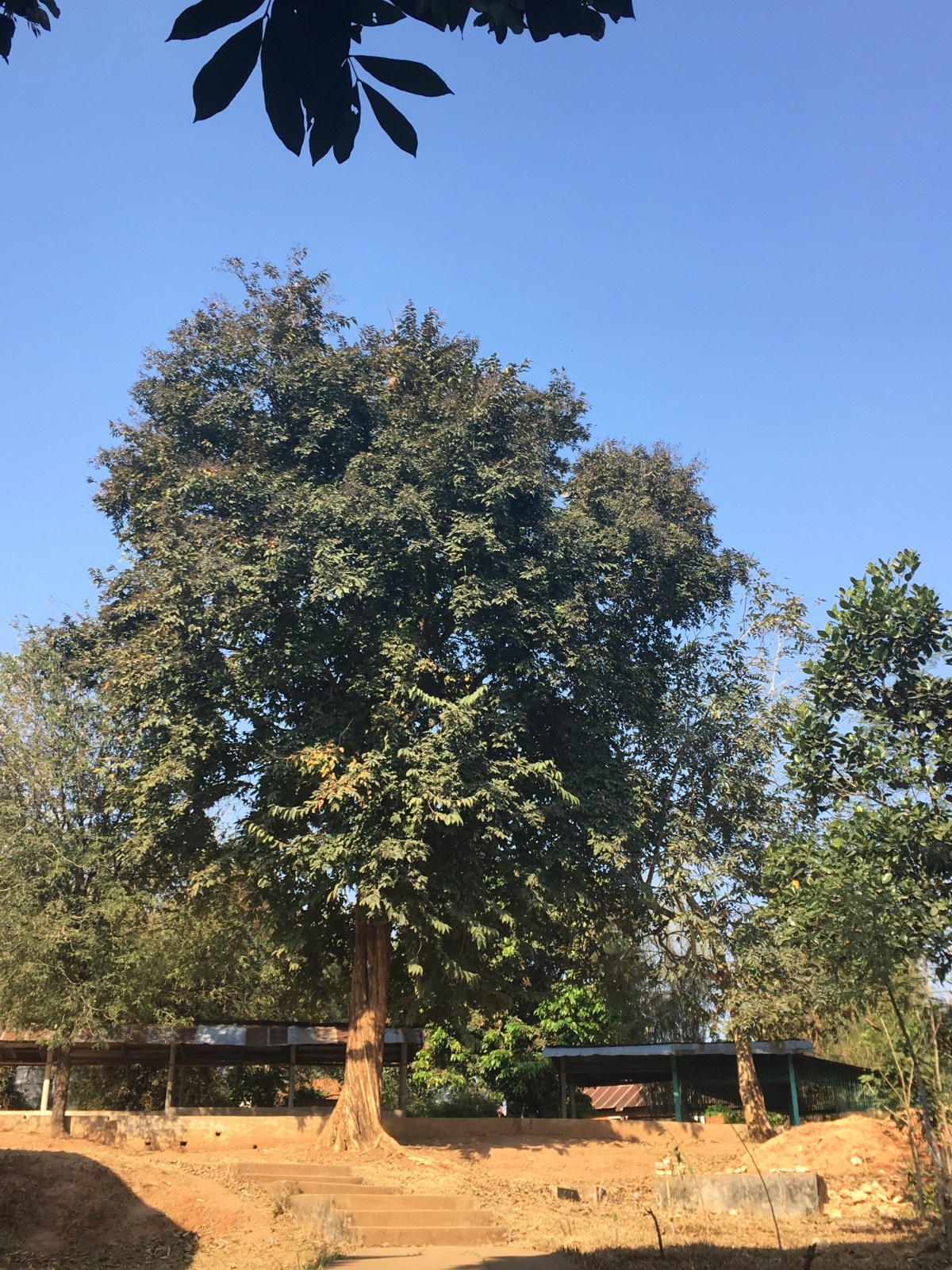
We carried on, trying every fork in the road until we spotted one tree that was a bit taller than the rest. We knew that was a long shot but I took a photo anyway!

Tree #2

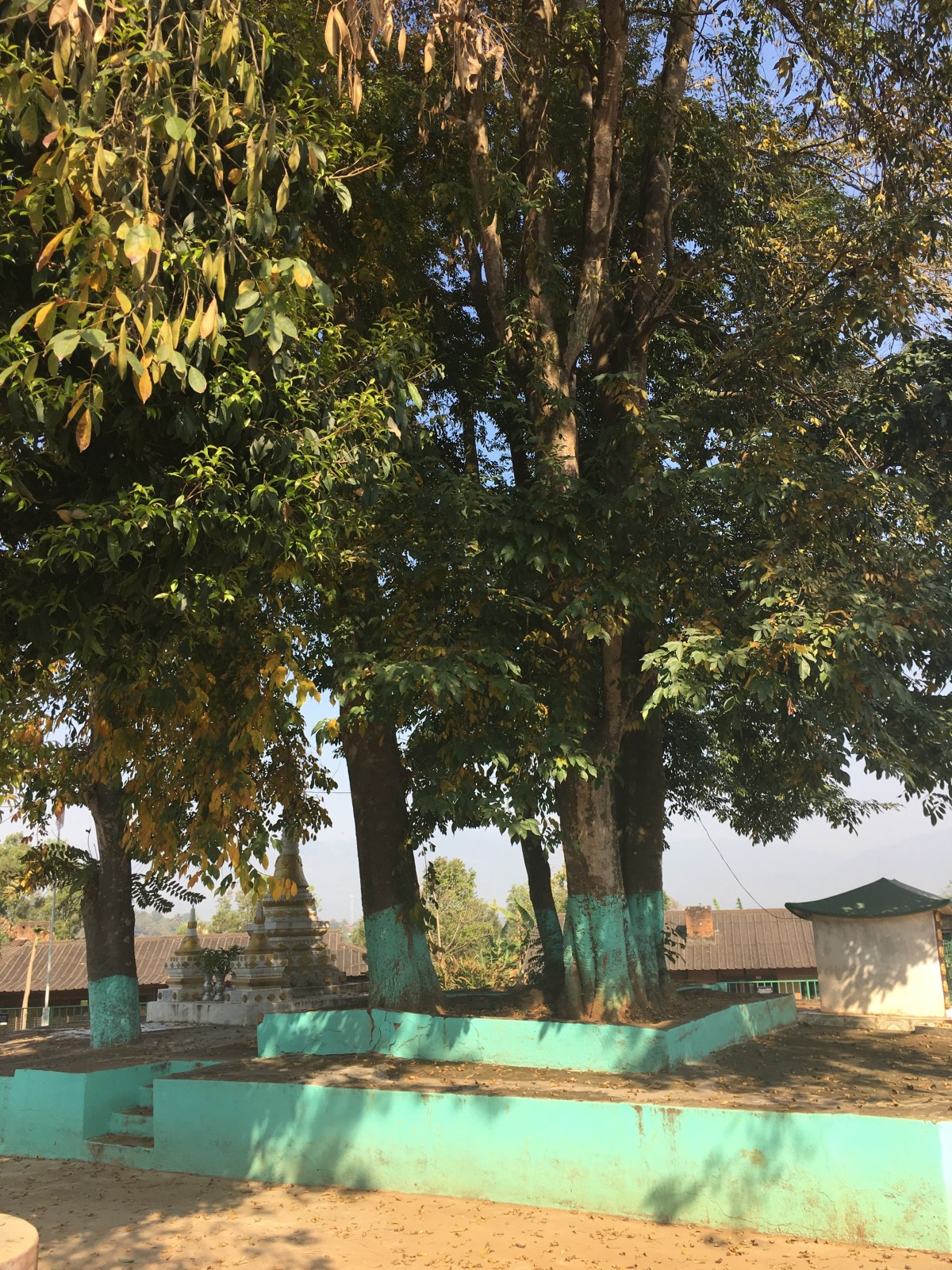
Half hour later, after climbing higher and enjoying the colourful houses below us, we thought tree #3 might be it – it was after all on top of a platform with a small shrine next to it.

Tree #3

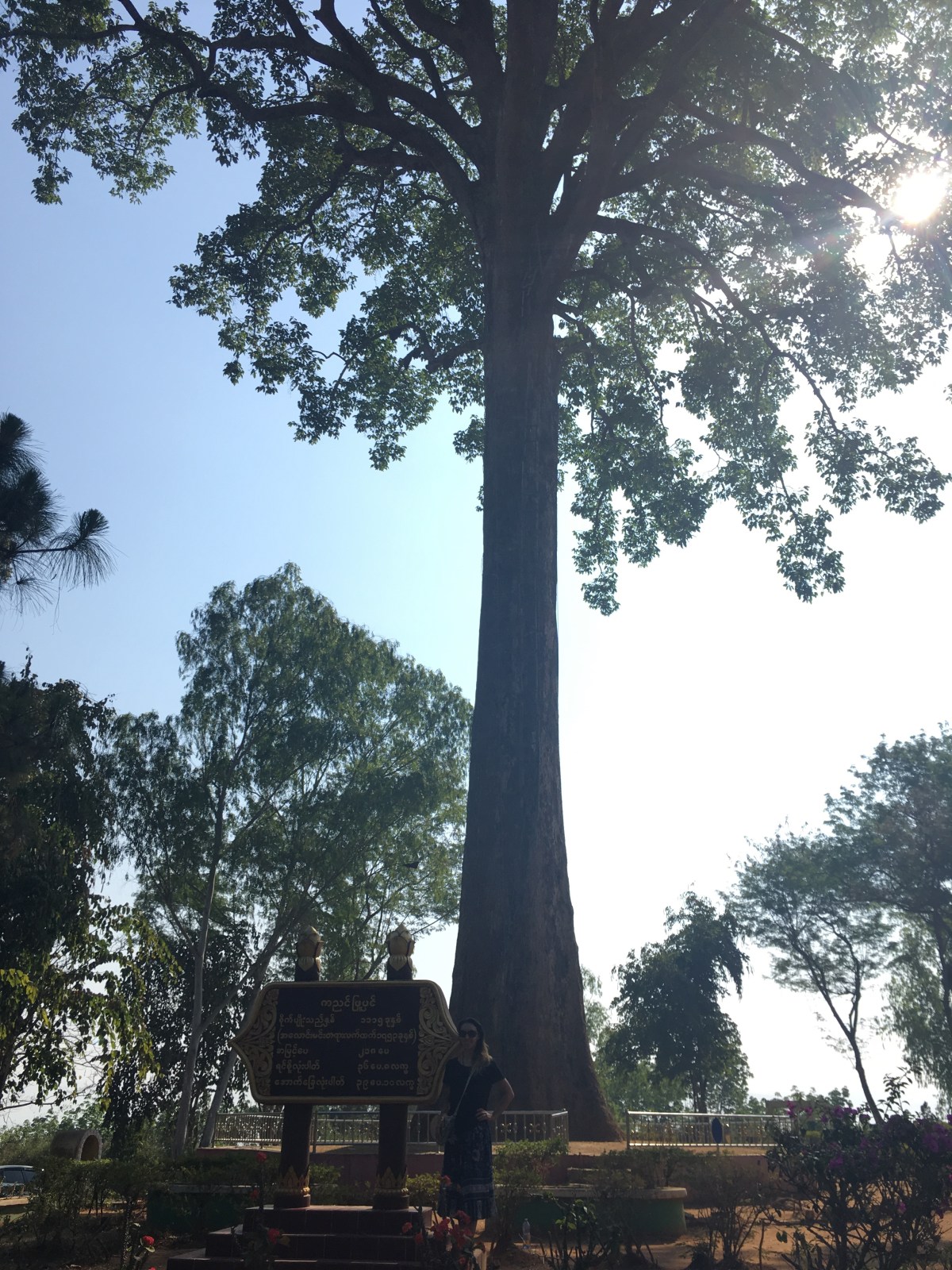
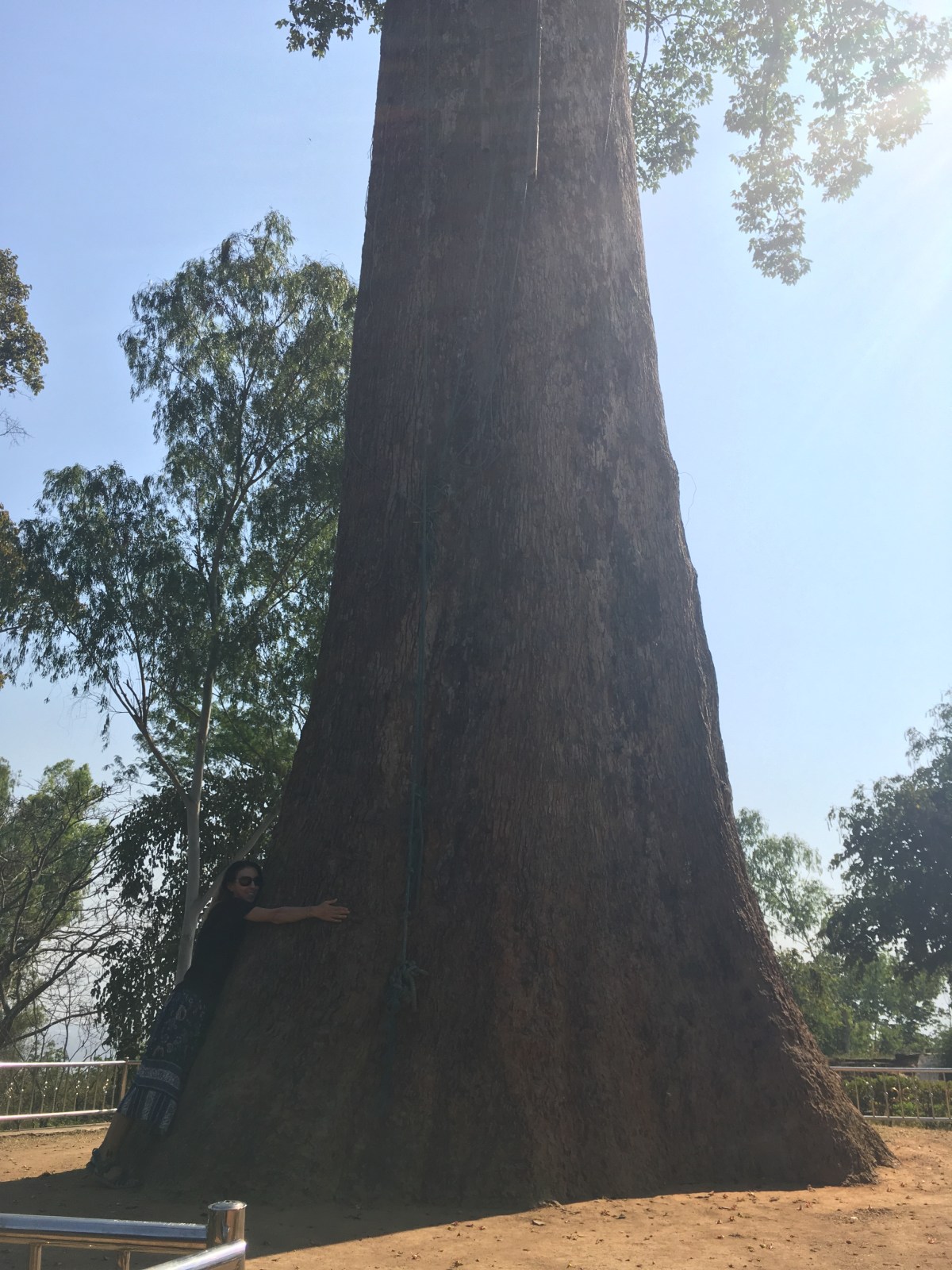
We were almost ready to call it quits when we hesitated at another fork in the road and a man came over to see if we needed help. ‘Tree?’ I said. ‘Yes! Tree!’ the man pointed to the right, looking very happy. Off we went and found the most enormous tree I’ve ever seen in my life. Wow.

Tree #4 – jackpot
Tree hugger

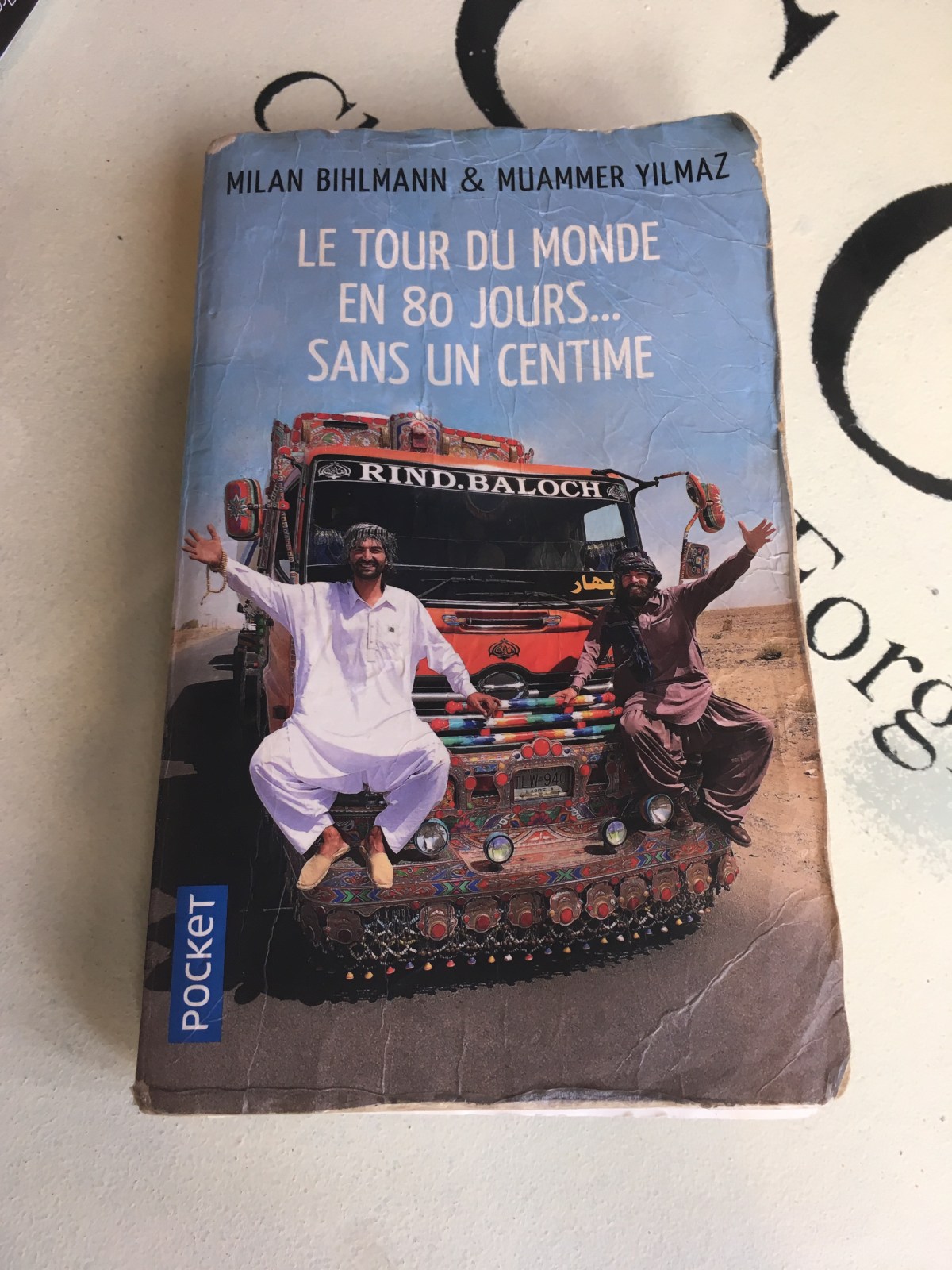
Feeling very happy we went for a coffee at a cute cafe with a swing for a table where we ran into two very interesting travellers. These guys are film makers, attempting to travel the world without money or many possessions. They claimed not to even have a change of clothes – relying on hitch hiking and the kindness of strangers offering them a bed. But this doesn’t work in Myanmar, where locals aren’t allowed to have foreigners stay and are reluctant to pick them up, plus the road to Inle Lake is currently closed to foreigners as it’s apparently unsafe. We helped them out by suggesting they follow our lead and try to get on a flight to Inle Lake instead, which they did the next day. We got a magic trick for our efforts (the massage and flowers sent to every members of Inkes family didn’t materialise funnily enough) πŸ‘

The two adventurers previous trip

And that concludes my first few days in Myanmar – I loved it already. Next stop Inle Lake via propeller plane….

Monks, Street Food and a Sak Yant

Thailand : Bangkok, Chiang Mai, Pai

After 8 years I was back in Bangkok, staying on the same part of the Phra-Arthit road as before, by coincidence or otherwise. This is just around the corner from the famous Khao San Road, backpacker central. Just like 8 years ago, when I arrived I hated it. The heat, the neon signs, the sheer number of tourists, mostly overweight fifty something men with bad tattoos and beer bellies.

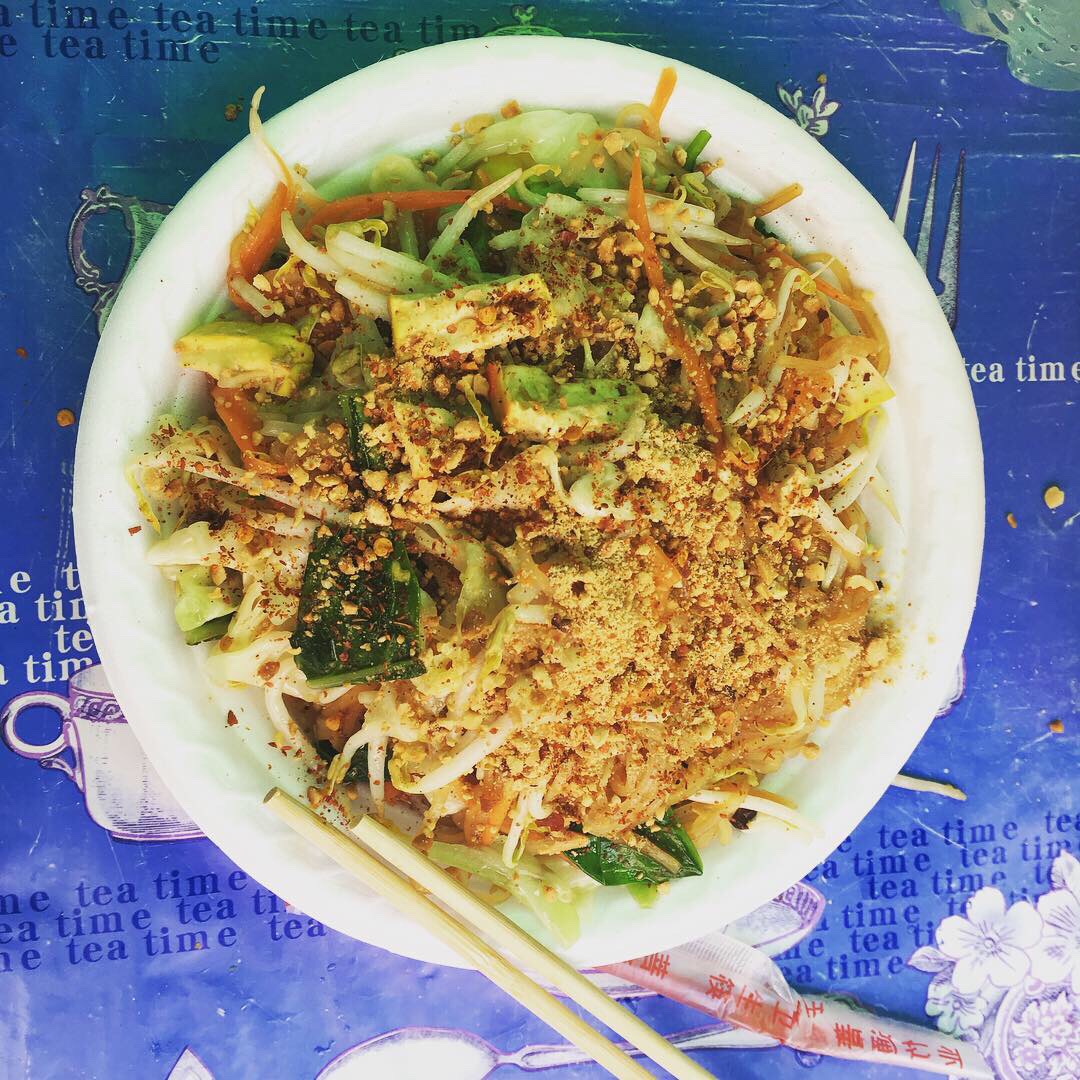
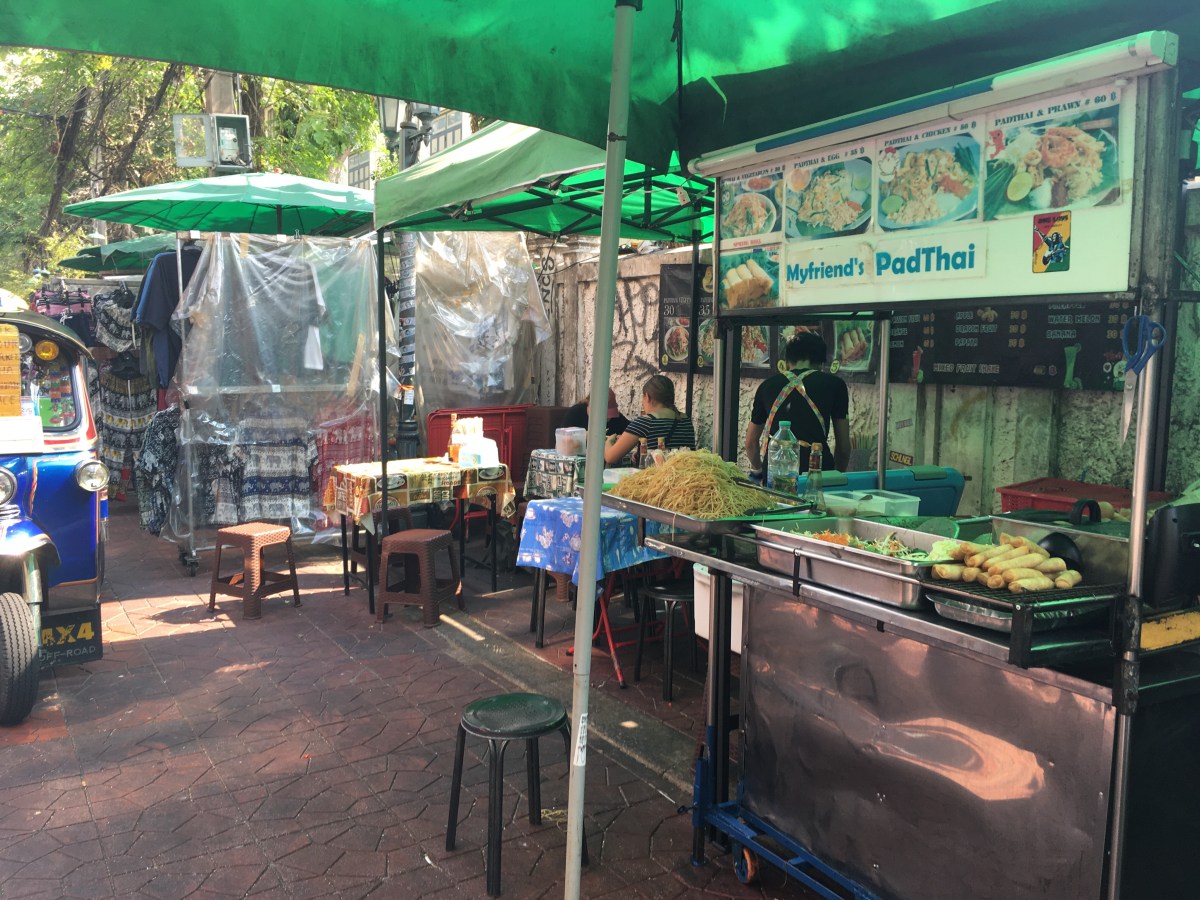
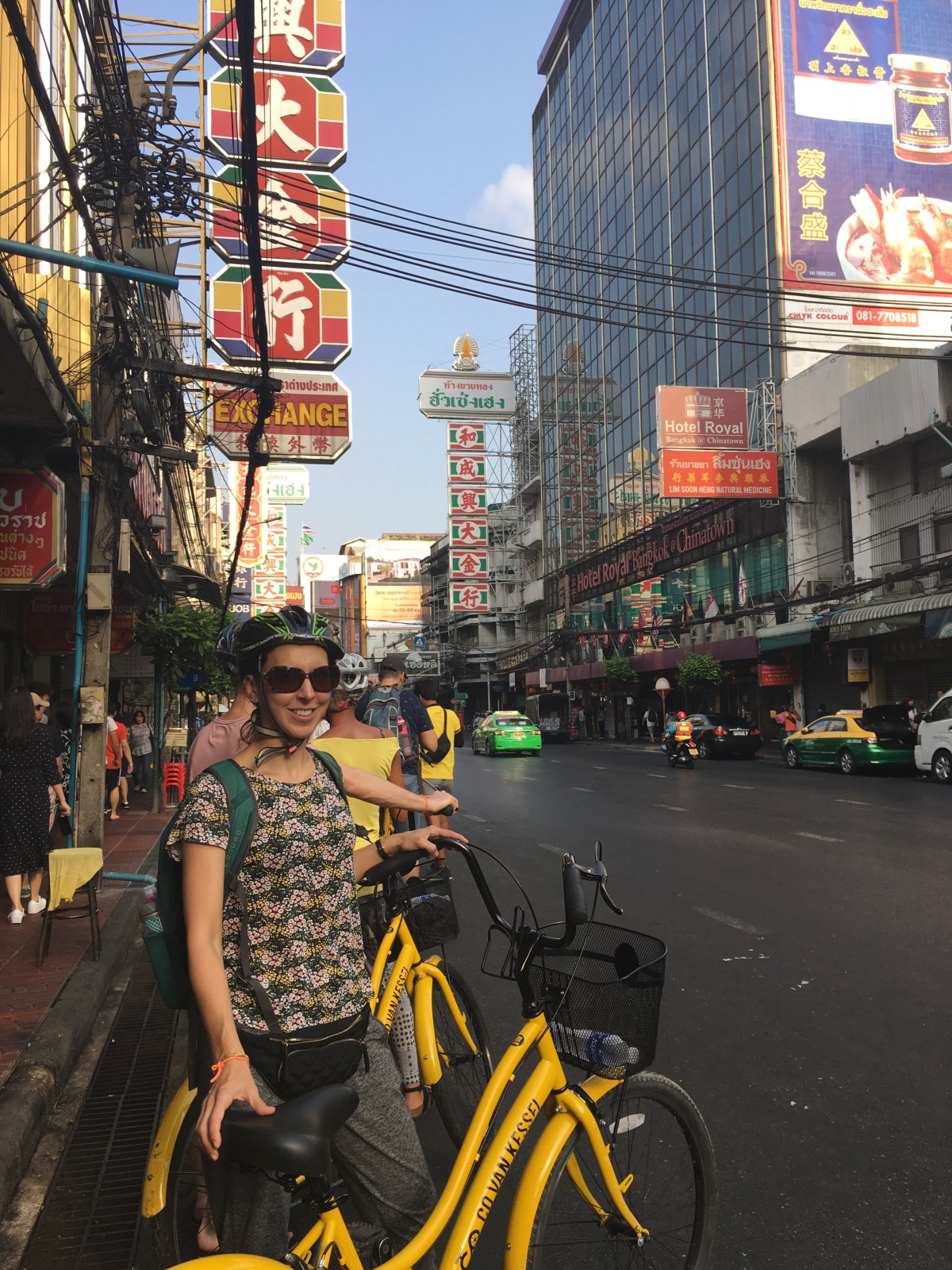
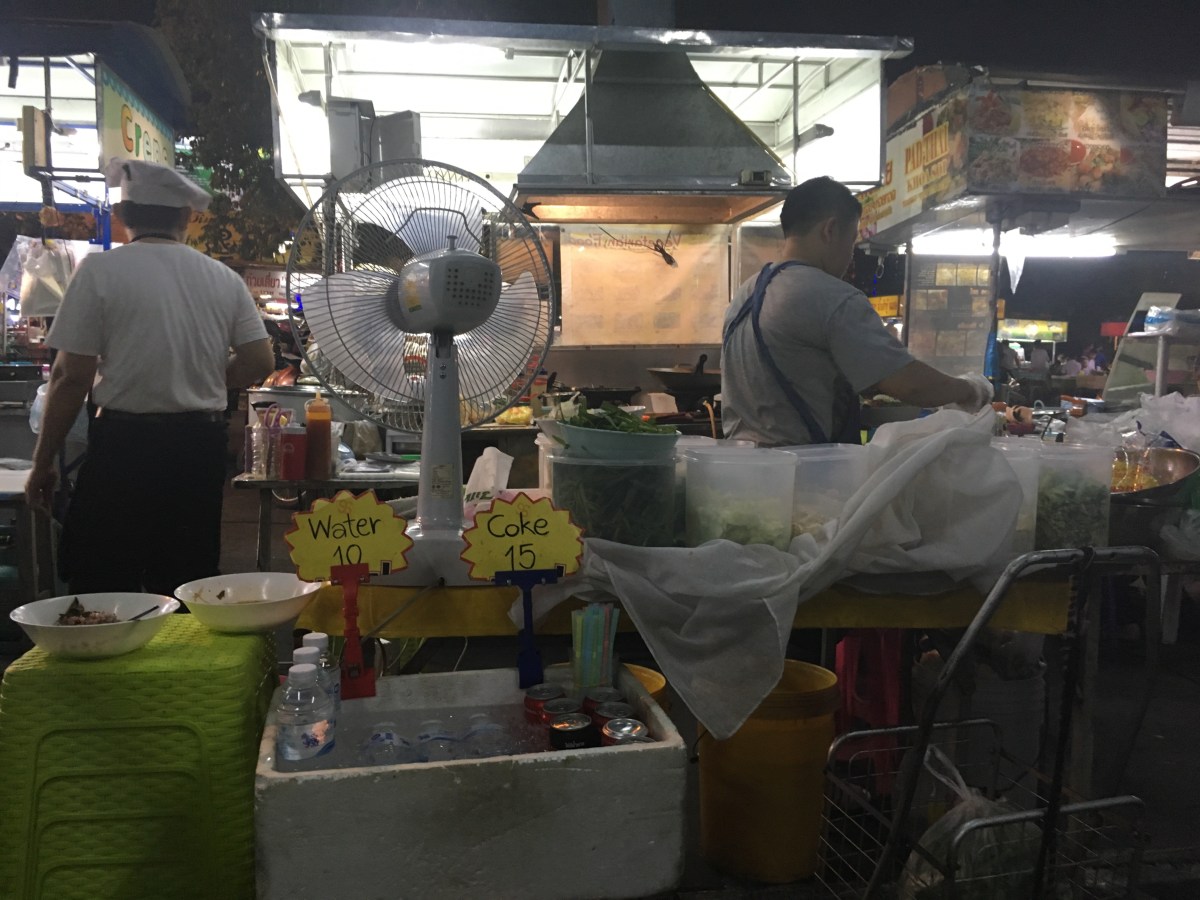
After getting my fix of Pad Thai from the street stalls, I did a bit of research for alternative things to do in Bangkok and found the perfect antidote, Van Kessel bicycle tours.

The next day I fell back in love with Thailand, just like last time. After India, Thailand seems clean and orderly. Even the traffic seems calm and there are no honking horns… πŸ€”

At 6am I got up and caught a taxi to th Riverside area. Started by a Dutch guy who now has a shrine where he is buried at a Buddhist temple, the morning cycle trip took a small group of us down tiny back alleys, so narrow we could barely squeeze our bikes through. What a lovely way to catch a glimpse of the real Bangkok. We rode past gorgeous white villas, past washing hanging on makeshift lines in the alleys, past women sitting on the floor sorting huge piles of red chillies and men preparing their food stalls. And through a school, just as the children were beginning their morning singsong.

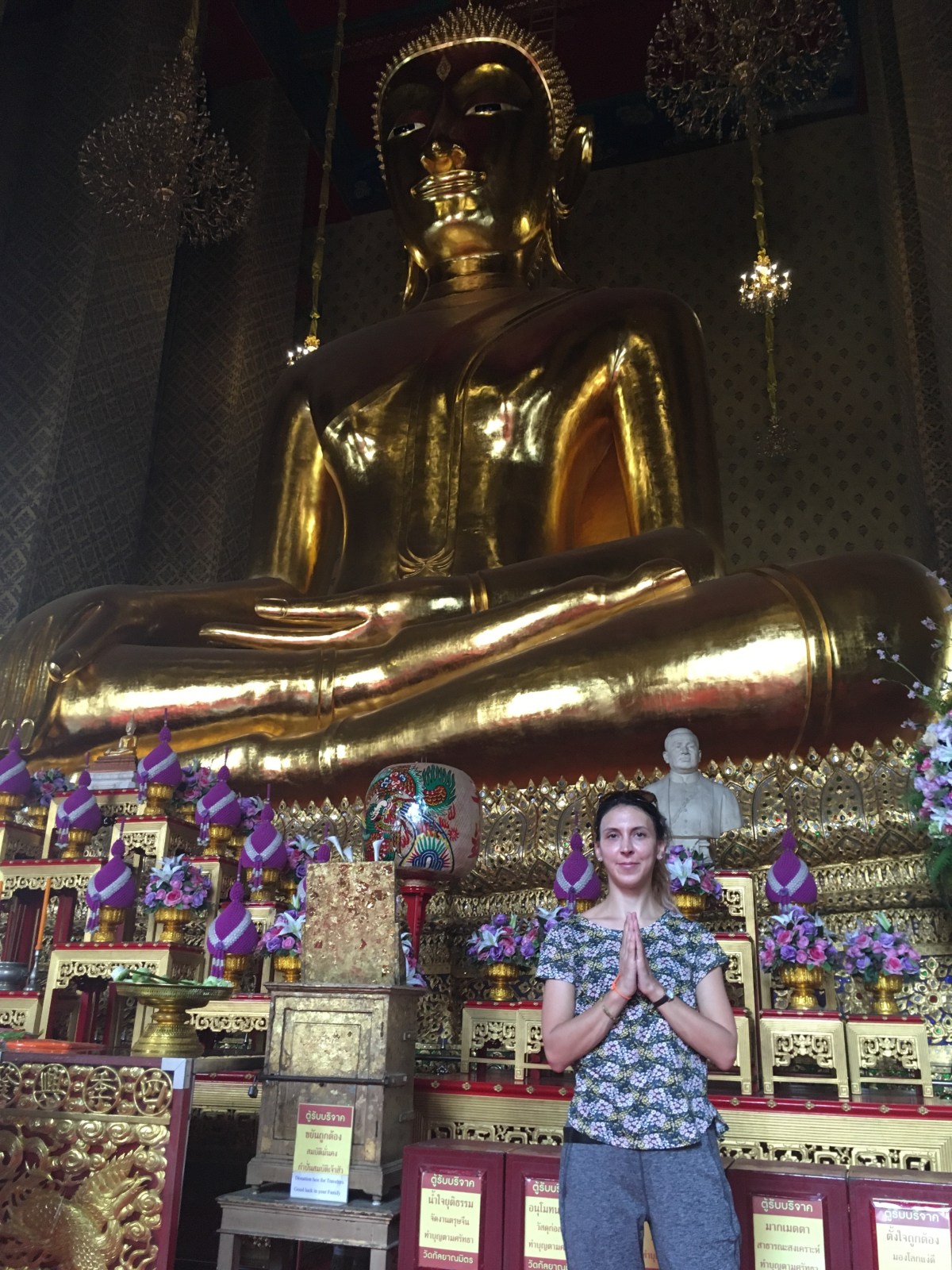
We visited the biggest seated Buddha in Bangkok at 16m (it looks fancy but it’s actually concrete painted gold), at a joint Thai and Chinese temple and I finally learned the difference between Thai and Chinese Buddhism.

You’re allowed to turn your back on the Buddha here

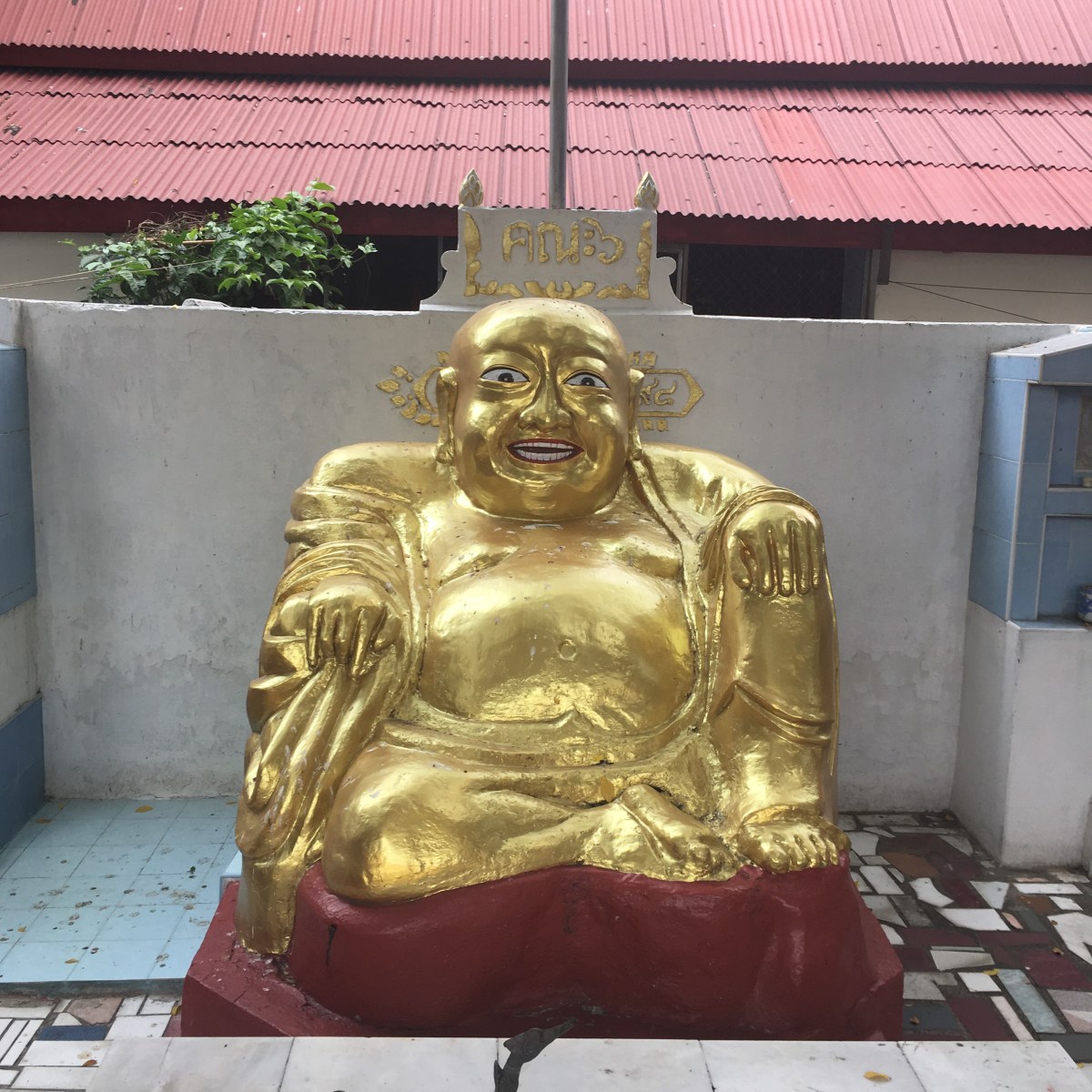
I also learned that the fat Laughing Buddha is the Chinese God of Happiness, something I’ve pondered since Sri Lanka. Most fun was having a go at ringing the huge bell although also enroute was the first Christian Church and a lovely rest stop in a park whilst some locals were focused on their thai chi. I also go to try a new local snack – sweet potato balls and mangosteen fruit.

I finished off the perfect day in Bangkok with veggie pad Thai at my favourite street stall and an afternoon doing some much needed admin with a good cup of coffee – Bangkok I love you again ❀️

Ringing the bell

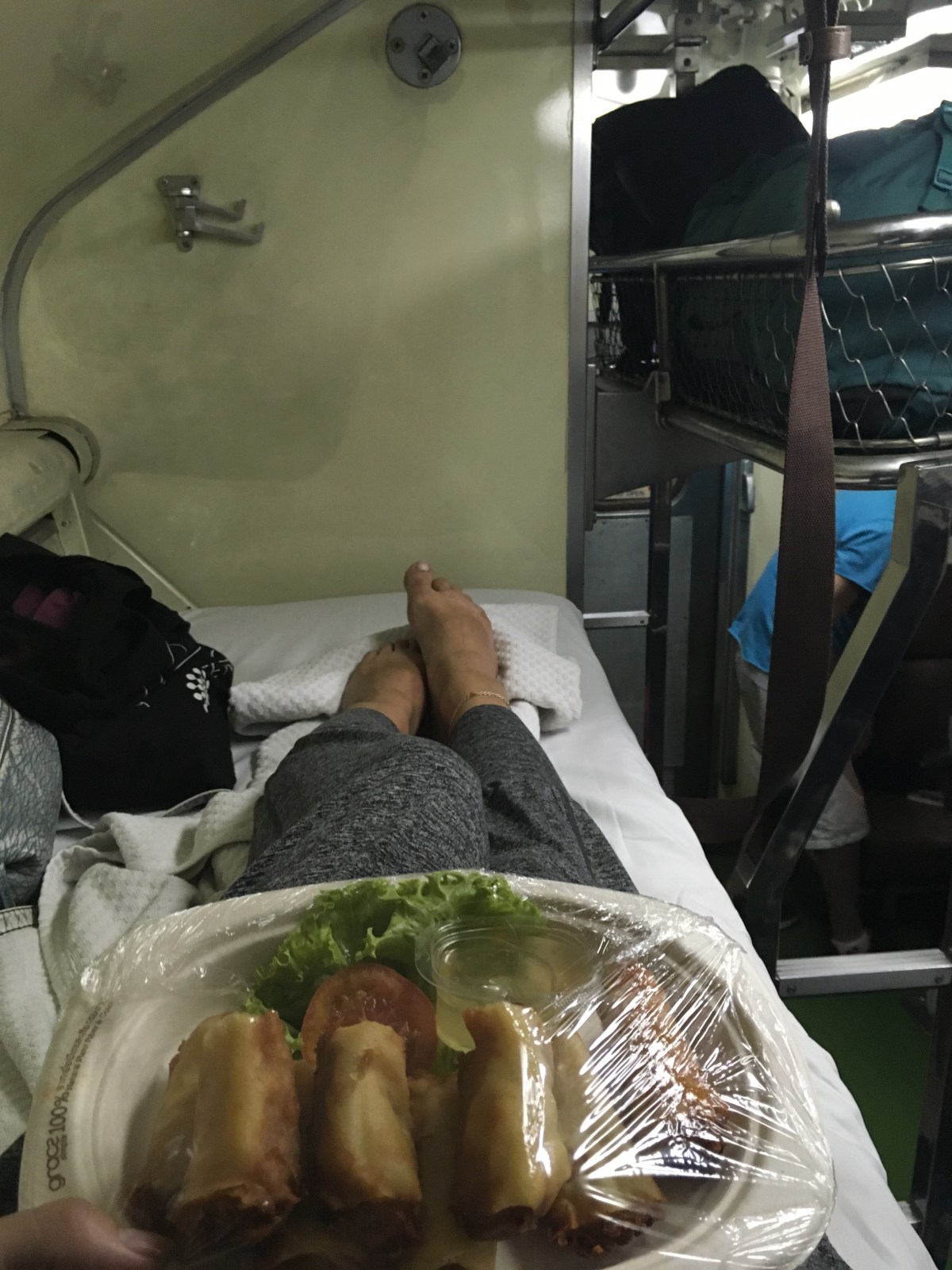
Still, two days in Bangkok is enough, so I hopped on an overnight train, heading north to Chiang Mai. Even though I had to take the old train (obviously I failed to book early enough to get a spot on the shiny new express) my 2nd class sleeper berth was luxury compared to the Indian trains. Although it did cost 20 times the price. I was welcomed on board by a lovely attendent and offered a choice for dinner – although I’d packed enough snacks for a week, who can resist late night spring rolls served in bed?! Security staff were going up and down checking that we were in our seats and the attendant made up our beds at 8pm – in stark contrast to India where every time I got on a night train there was somebody already tucked up in my bed πŸ™„

Dinner on the sleeper train

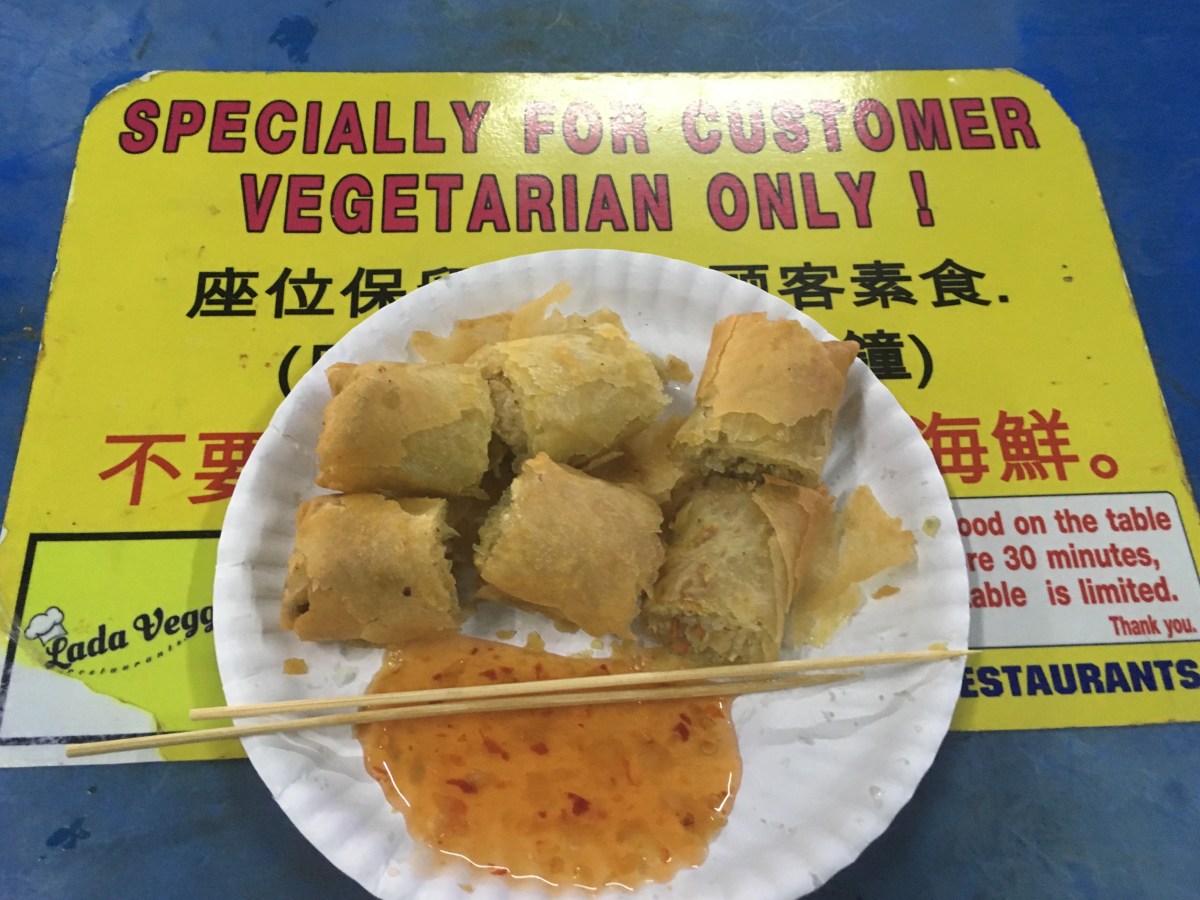
Chiang Mai is a lovely, real city. The old town is enclosed by the city walls – I stayed for almost a week in total, just outside the walls, in a cute little guesthouse opposite a garden cafe and a few minutes walk from an amazing street food market that is open every evening. I found a vegetarian stall that was so good I returned every day and got to know the friendly people running it.

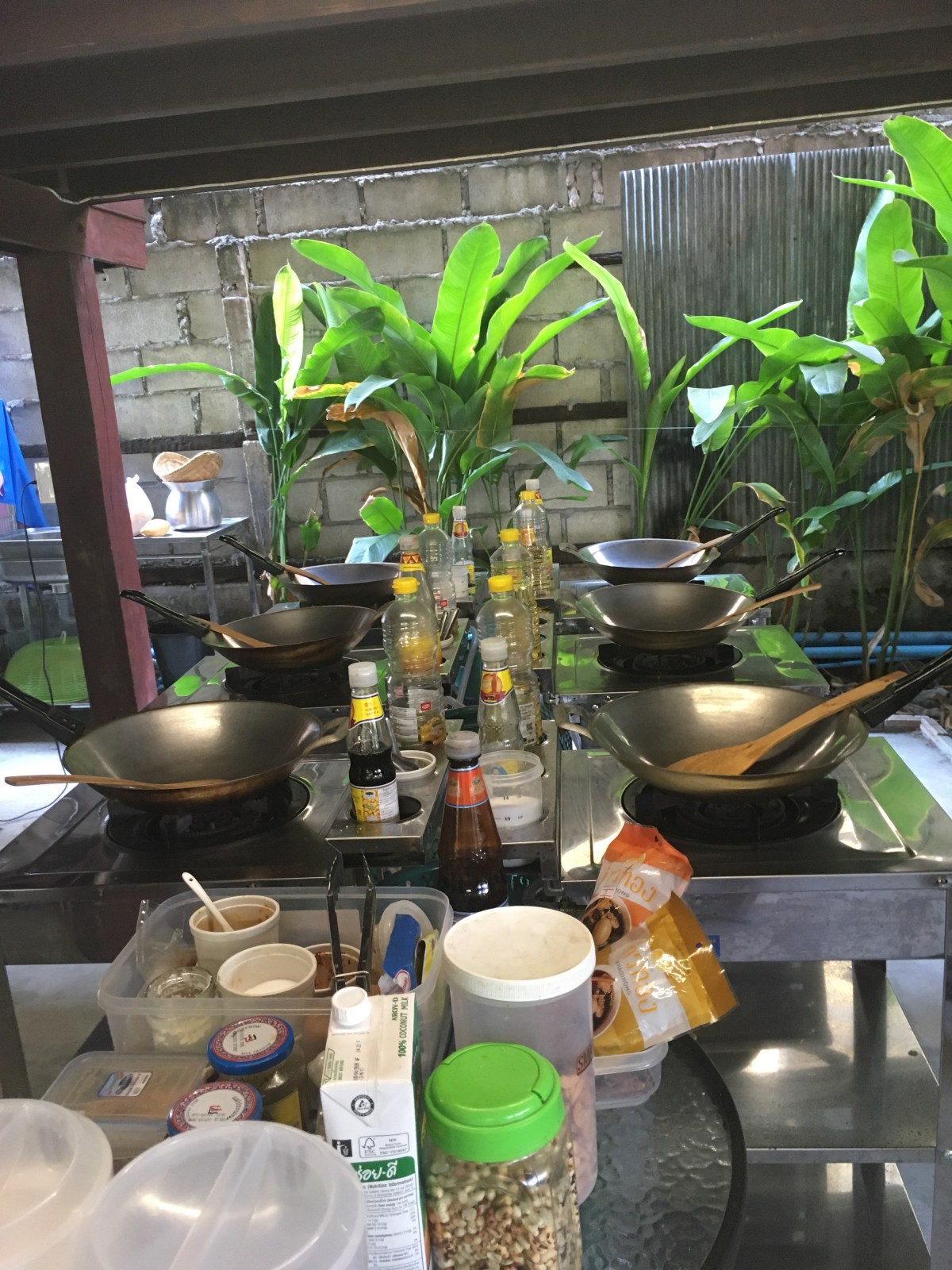
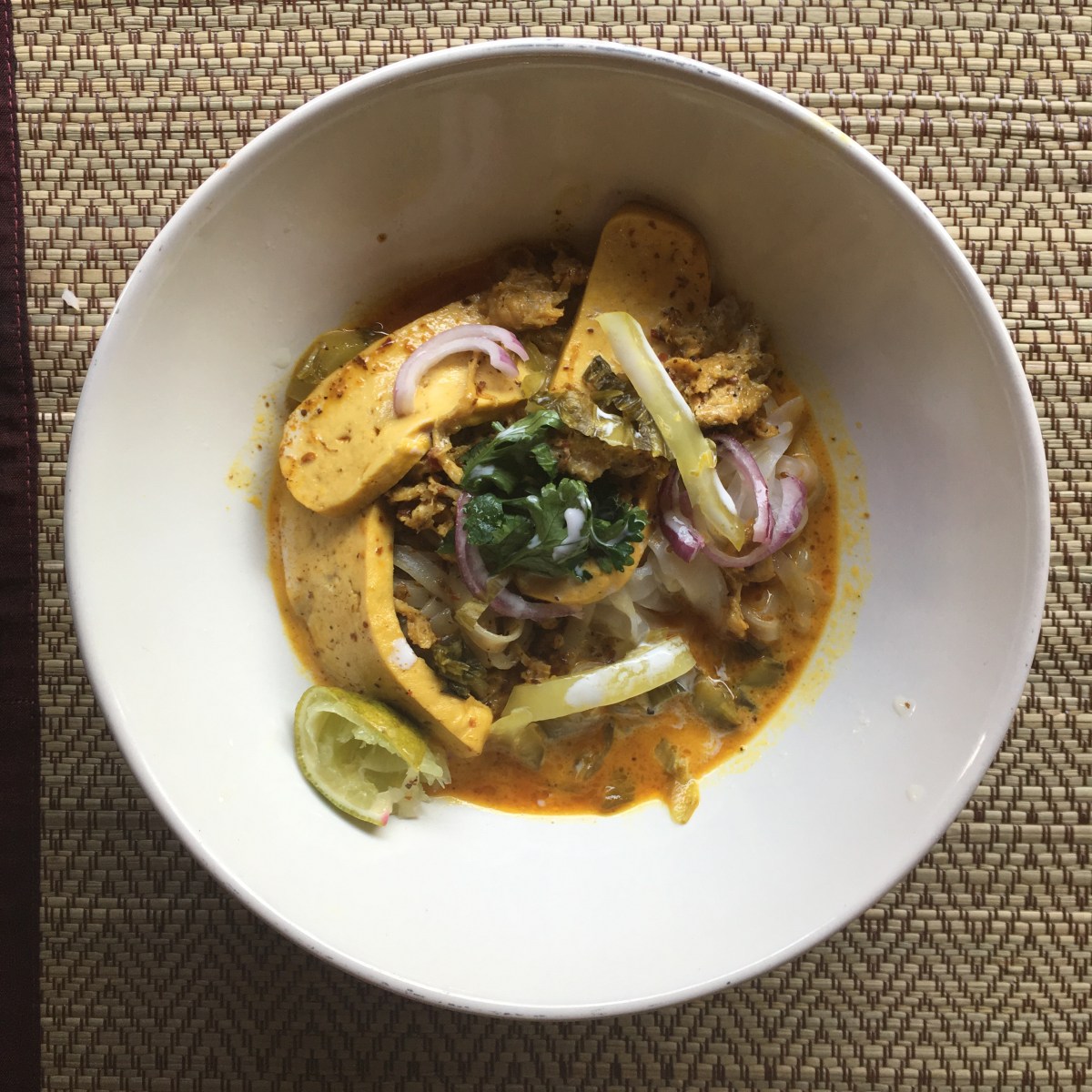
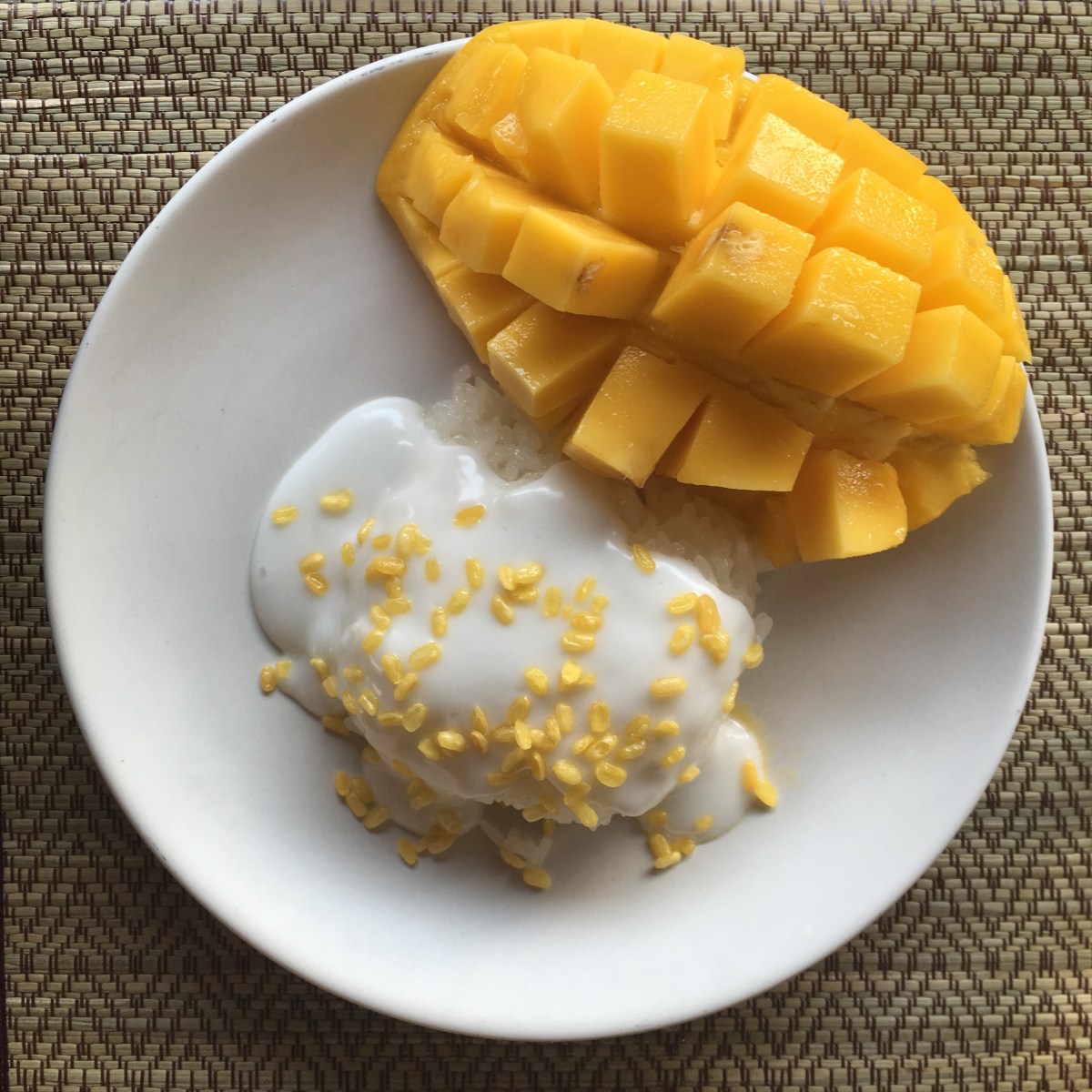
I continued my new yoga habit with some morning classes including one run by a very cool lady who also teaches vegan cooking – right up my street 😎 As well as learning to make green curry, papaya salad, fried rice, a vegan version of local dish Khao Soi and mango sticky rice, and eating each course, I made friends with Julia from Germany. Before indulging in Thai massages, Julia showed me a tattoo shop with beautiful Sak Yant designs (traditional bamboo stick tattoos done by hand) where an ex monk performs ceremonies to bless your new art work…. More on that later!

Cooking school!

Mango Sticky Rice

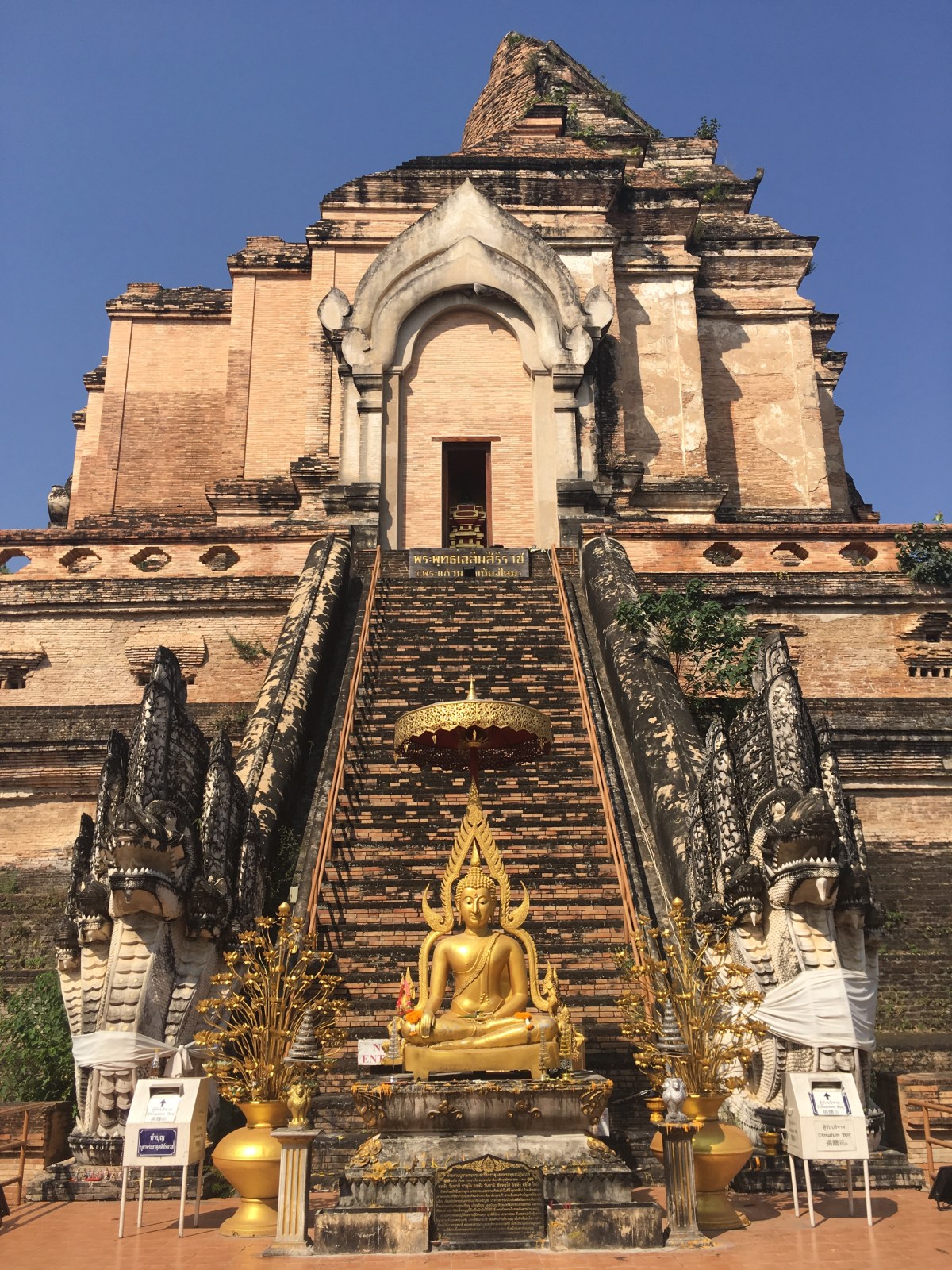
Chiang Mai has hundreds of temples, literally on each corner – below are just a few photos from visiting the biggest ones.

https://videos.files.wordpress.com/M4xHUFAu/img_4776.mov

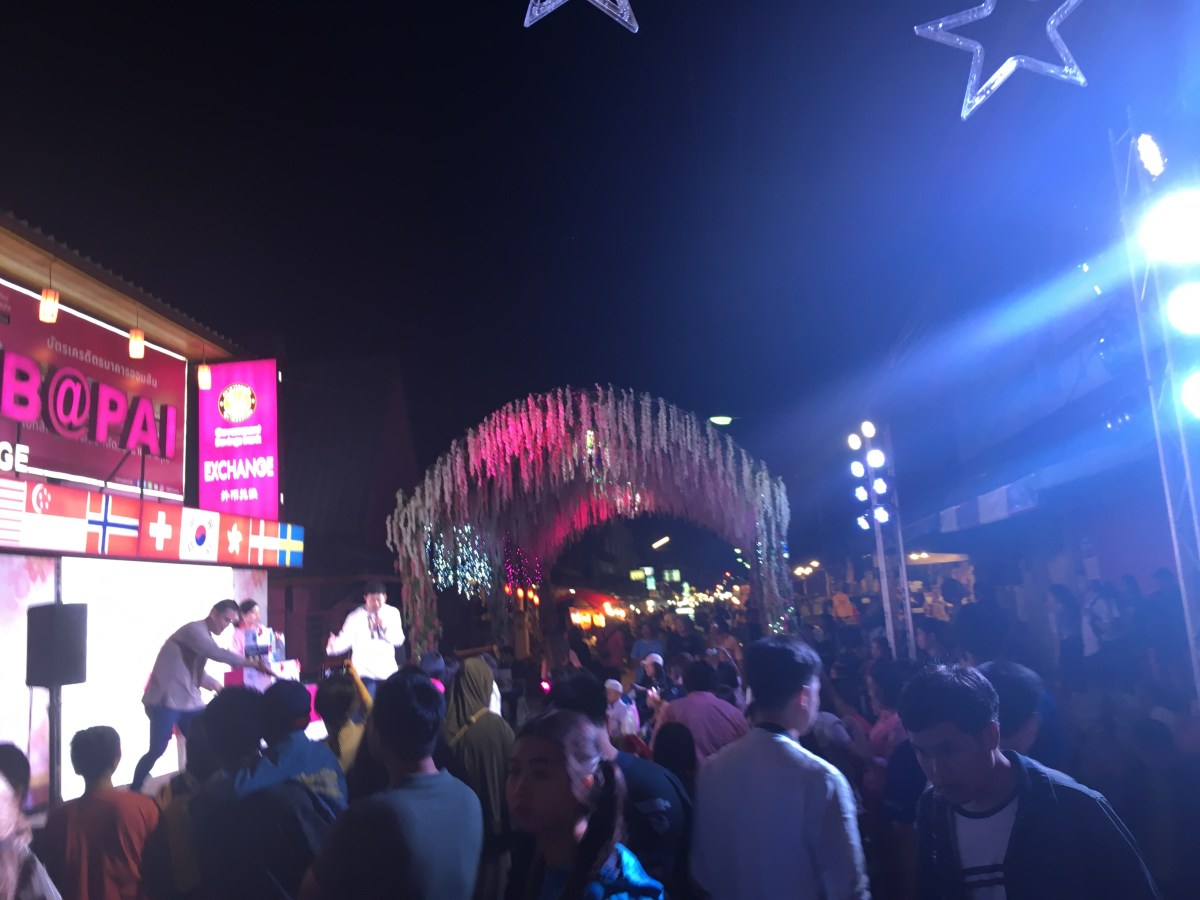
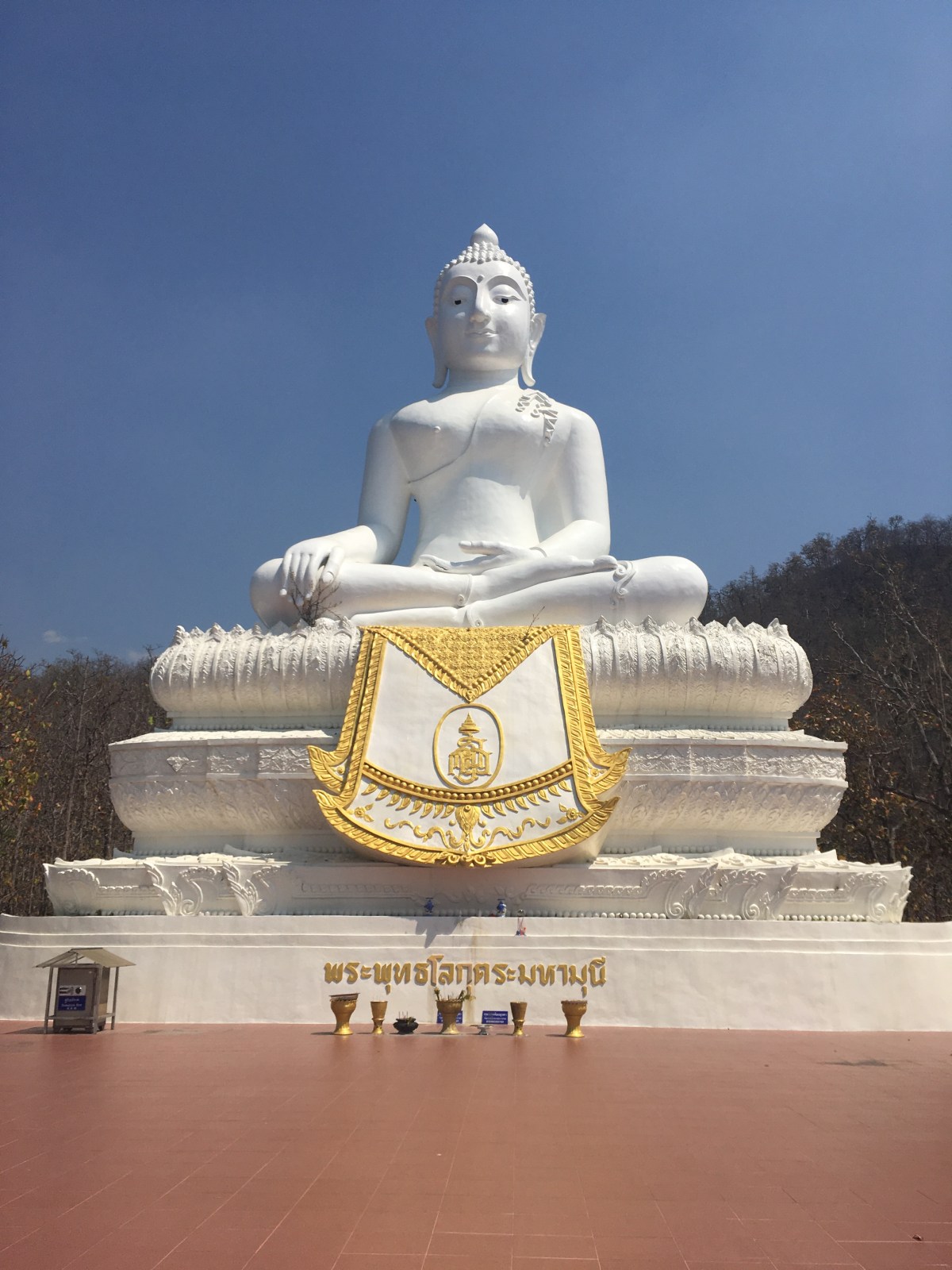
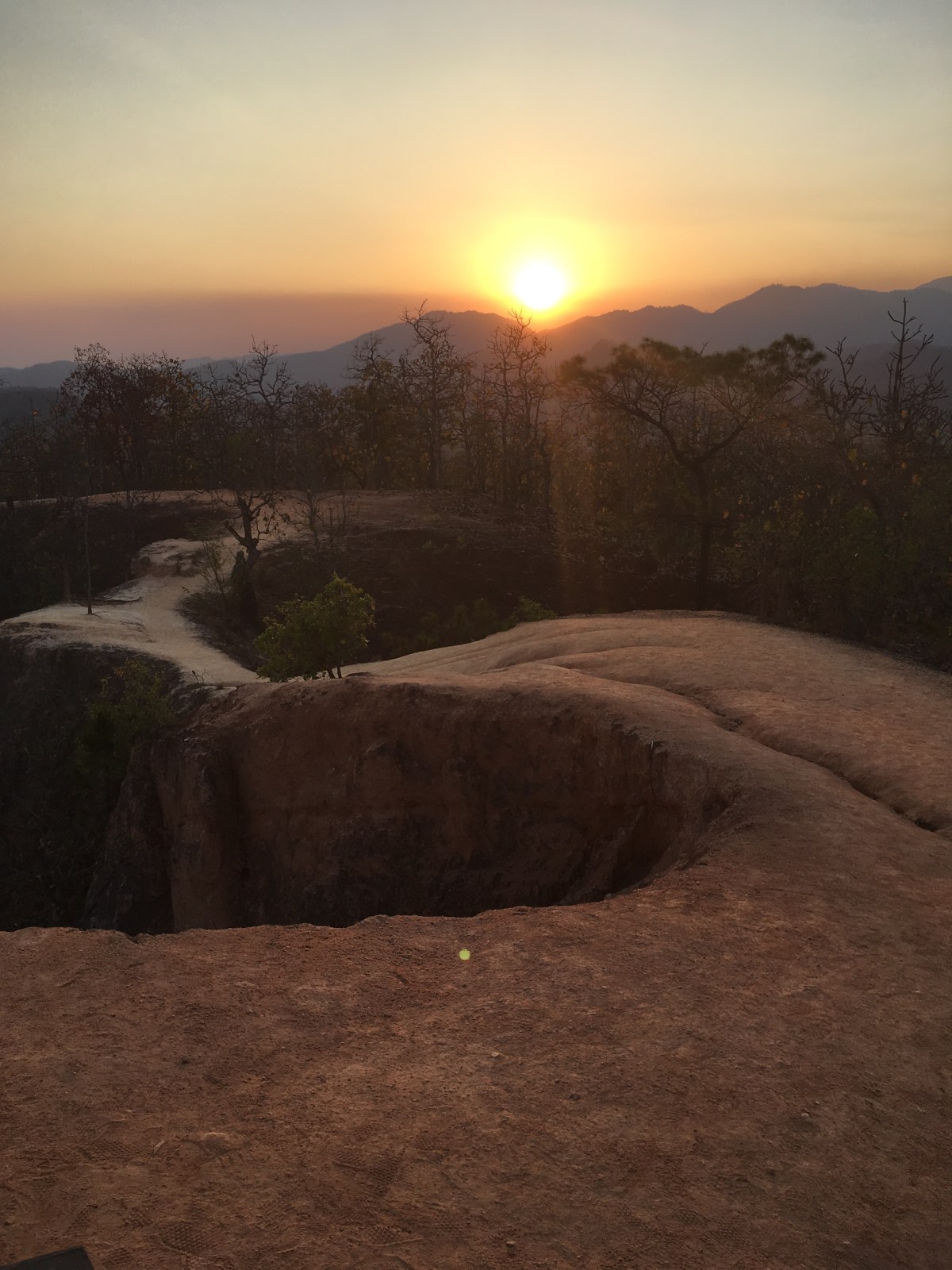
After a few days I took a minibus even further north towards the Myanmar border to the tiny town of Pai, a hippy hangout since the 1970s. The road to Pai has over 700 bends – one girl I met told me everyone on her bus was sick. Luckily I like hairpin bends so I enjoyed the ride. Pai is a one horse town where guesthouses outnumber actual houses and it’s definitely tourist central. Good for some western food and really easy to make friends as everyone goes to Walking Street in the evenings, it was nice enough for a few days. I found myself hanging out with a group of 18-21 year olds who were fascinated at how old I actually am πŸ˜‚ I didn’t trust myself to hire a scooter, or the other drivers on the road (no driving license required here!) so I took a day trip instead to see the sights. The scenery is beautiful… Highlight was the ‘land split’, where the earth opened up one day and the people who live there have turned it into an organic fruit farm and attraction where they provide exotic fruit juices and banana chips for a donation. For the real beauty you’d have to visit in the rainy season as it’s all pretty dry right now.

Walking Street

Video of the Pai Veggie Pad Thai master!

Error
This video doesn’t exist

In the Land Split
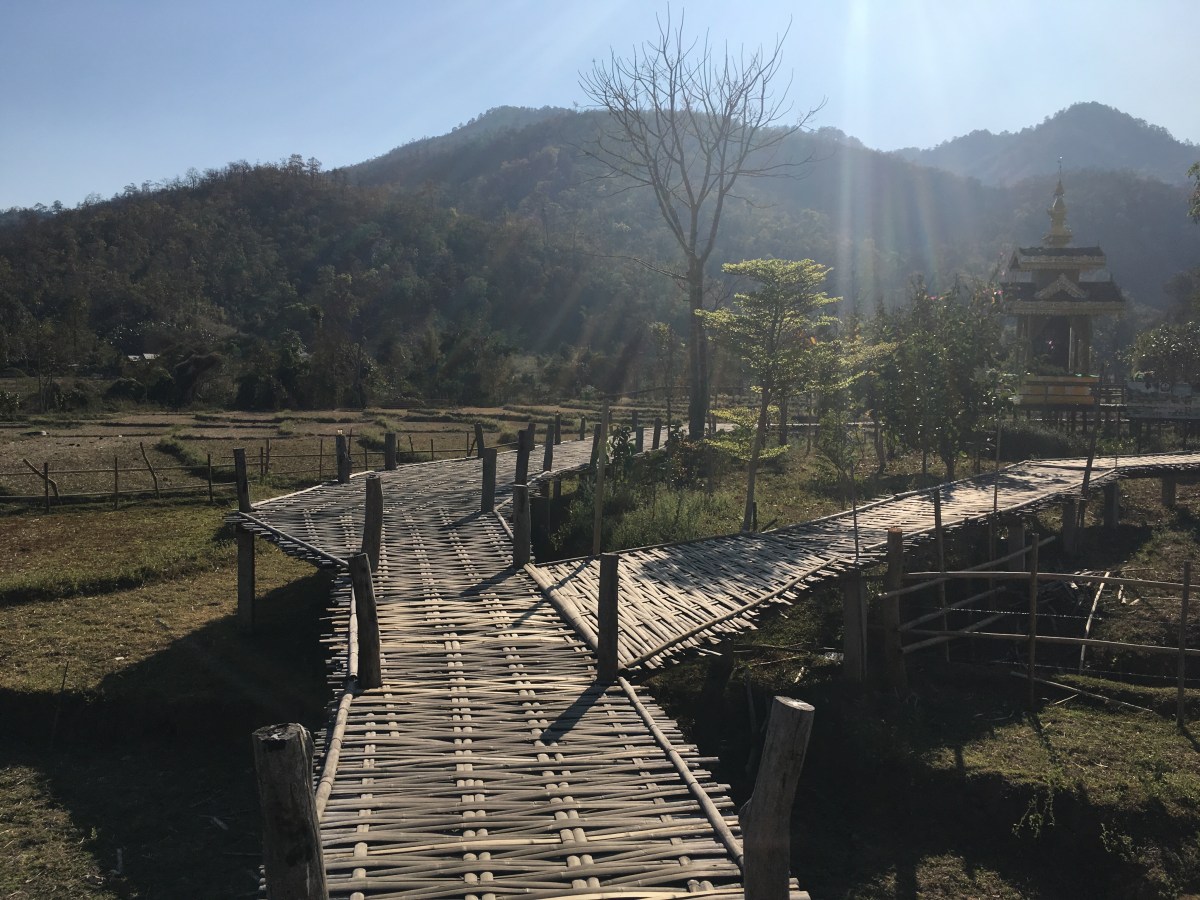
Pai Bamboo Bridges

There are only so many backpackers I can handle so after three days of yoga, food and 18 year olds I headed back on the windy road to Chiang Mai as I had decided to pick up a group trip into Myanmar, conveniently leaving from this very town. There was just time for one more yoga class with a 69 year old teacher known as ‘mama’, clad in leopard print skinny jeans and dreadlocks down to her waist. That’s inspiration!

There was also time to participate in ‘Monk Chat’, a lovely way for novice monks to learn English and visitors to learn about Buddhism. Some extremely cute 15 year old novices asked me questions from their crib sheets (‘do you like spicy food?’) and with the help of their teacher told me how they are at monk school where the rules are less strict and they are free to leave after graduating. 90% do leave, although some do return later on. I really enjoyed the chat before they had to go for lunch, and shyly asked me for a photo (keeping their distance as they are not allowed to touch a female nor directly pass her any objects, which made filling in their questionnaire a bit difficult!).

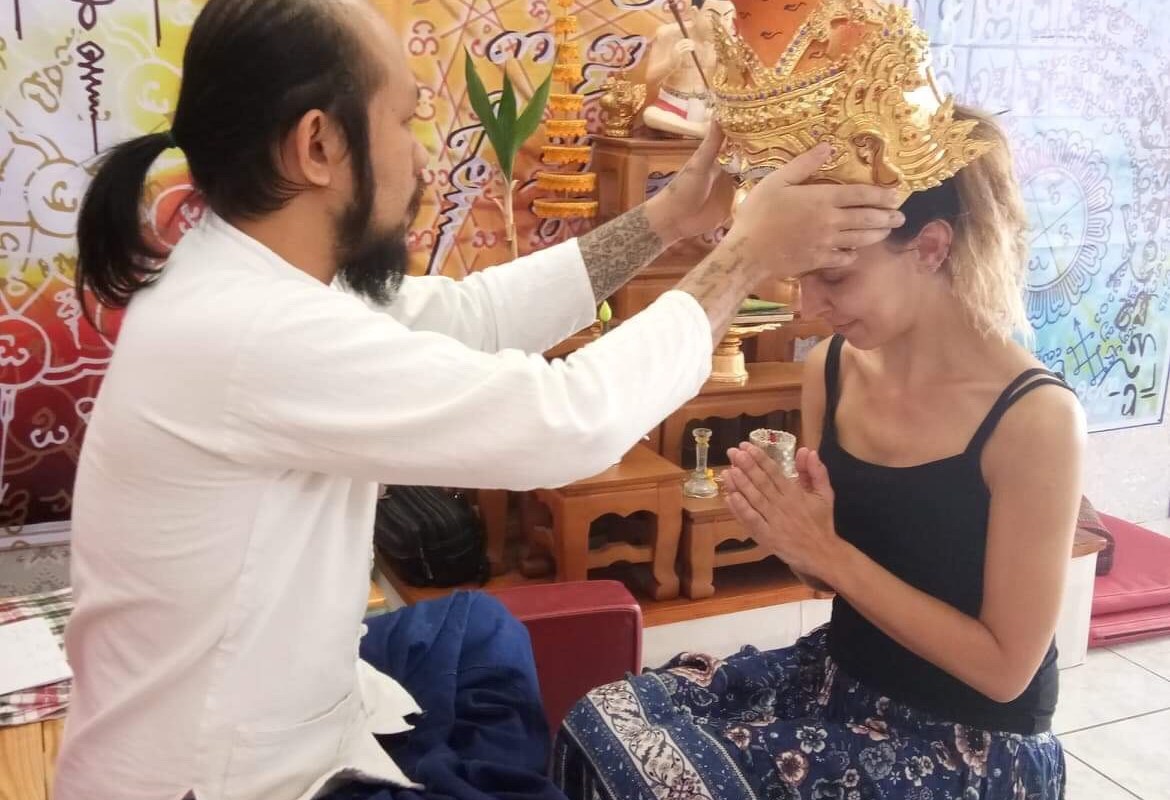
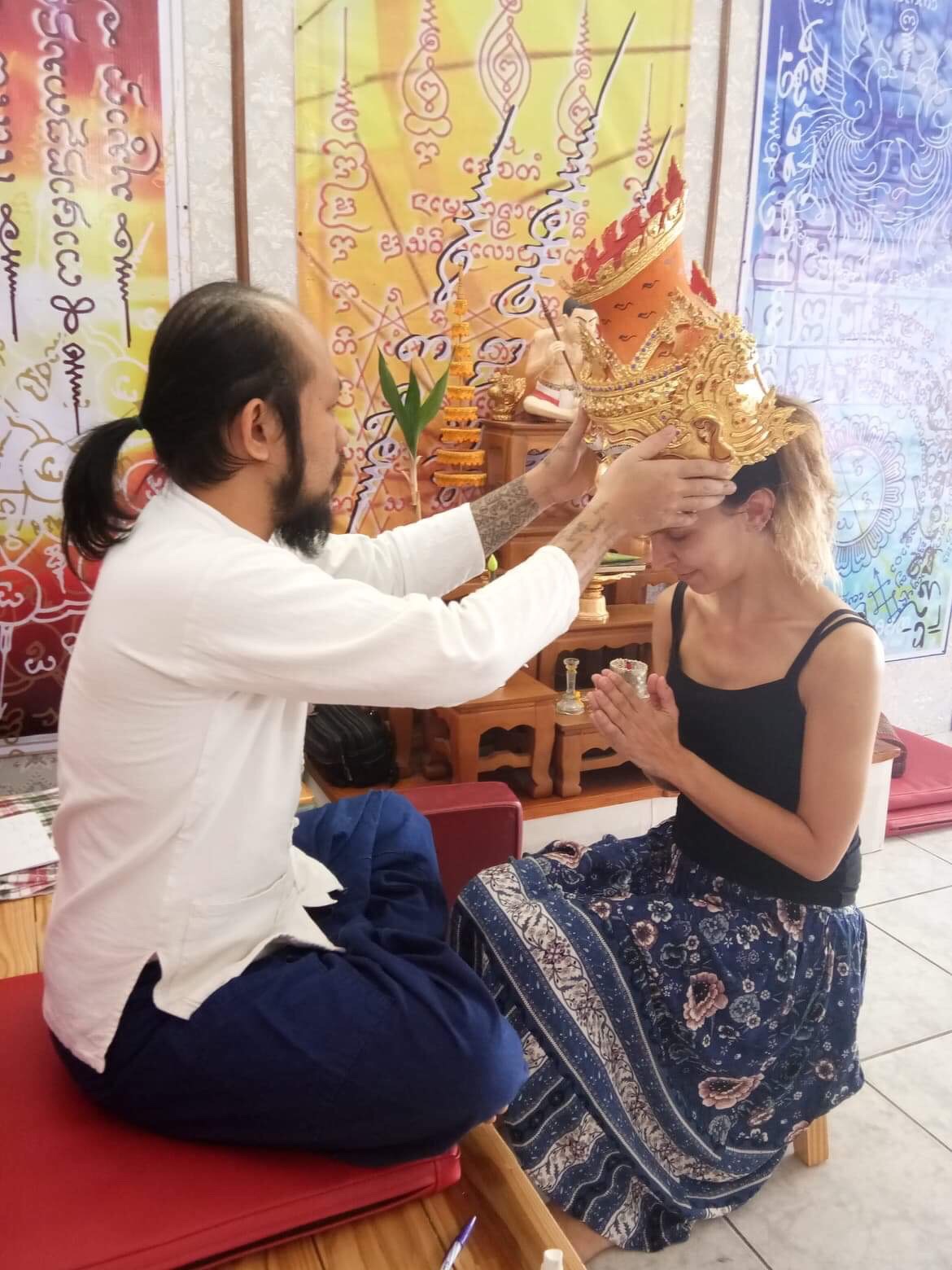
Last of all of course I returned to the Magic Sak Yant tattoo shop and decided on my design πŸ™ˆ When in Thailand, it just has to be done even if it is a bit of a clichΓ©! However, the actual monks in the temples, where this method originated, cannot tattoo a woman. Luckily an ex-monk has no problem – it only took ten minutes and wasn’t even painful, if you don’t mind being poked with a sharp stick over and over πŸ˜‚

Sak Yant Ceremony
Chatting to the novice monks
One of Chiang Mai’s many temples

And that concludes my second visit to Thailand. It is still the land of smiles and I’m sure I’ll be back again if only to eat the food 😎 Next stop, Myanmar….