The idea of a two week trip to South Korea was a last minute one, even by my standards. I have wanted to visit South Korea for a long time and imagined I’d spend at least a few weeks exploring this relatively small country as part of a bigger trip to Asia – but with two weeks to wait before starting a new job, staying at home was never an option. I have never planned a trip so quickly, booking a flight that departed just a few days later.

I got myself an old fashioned guide book and did some very quick research on the main areas in Seoul. Next was accommodation – budget wise I didn’t want to spend more than £40 per night as I ended up spending more than expected on flights (who knew the £350 return flights on Skyscanner didn’t actually exist 🤦🏻♀️). What was available within that budget at three days notice over the weekend was a dorm bed in the Seoul Cube Jongno, located in the prime area of Jongno-Gu meaning I could walk to a lot of places on foot.
On that note, this blog is usually just for friends and family to keep track of what I’ve been up to but in my rapid research I came across a lot of information that might actually be useful, so I have decided to make it a bit more informative this time! Scroll down if you have no intention of visiting ever. Things to be aware of:
- There is a name in South Korea for hidden cameras and miniature spy cameras in women’s toilets, changing rooms and hotels and it’s called “molka”! Probably best not to go for one of the cheap “love motels”.
- Google Maps does not work properly in Korea for navigation – you need to download the “Naver Maps” app and register as a user before you can save places to favourites. This often means using Google maps to find the Korean name then entering that into Naver to get directions.
- Get an eSIM so you can navigate on the go – “Saily” is working well for me. I’m all for going old school and having a break from being online but otherwise it’s going to be very hard to get around in South Korea.
- Uber does in fact work but it’s worth downloading the Korean taxi hailing app “Kakao-T” as well.
- Travelling on buses is easy but you need to buy a “T-card” at a convenience store and top it up with cash also at the convenience store before you can tap on and off the buses. The average ride costs ₩1500 – I messed up the money and put on 70,000 instead of 7,000 so I can travel for a very long time. Or I can spend it on weird and wonderful items in the 7/11 or failing that apparently you can get a refund of the balance at the end of your trip.
- Flying to Jeju Island is surprisingly cheap and worth it if you don’t want to spend a day travelling down by bus and ferry (£30 including checked baggage), but flights do actually get booked up particularly over the weekend.
- Download Korean into Google translate so you can use it offline. Waking up to a Public Safety Alert message on your phone is a lot less scary when you can immediately translate it and understand that the earthquake was a long way away!
After leaving home on Friday morning, after a couple of hours stopover in the ultra modern Qatar airport and two long haul flights, I arrived on Saturday evening at Incheon International Airport. There are LOTS of buses and trains from the airport to the city. I was just too tired after 24 hours of no sleep to figure it out so I took the easy option of an Uber, well worth the £30 at night for over an hours drive and no hassle.
The driver dropped me at the address but I couldn’t see the hostel anywhere. Then I realised you need to look up in Seoul – everything is multi story. I still needed help to find the entrance, which was through a 7/11 shop.

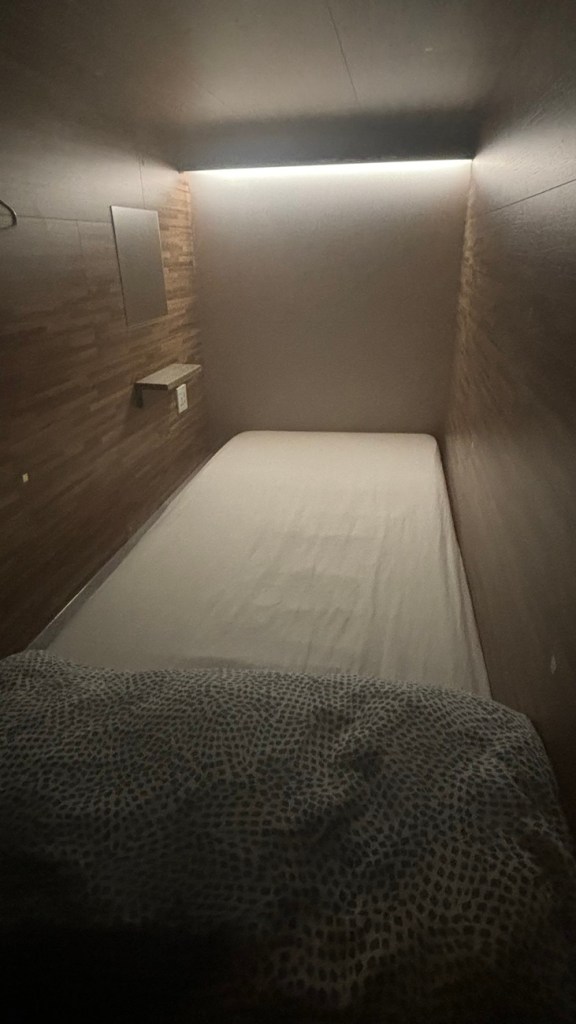
The Seoul Cube hostel was very clean and very quiet, with women only dorms – much appreciated when powering through jet lag means going to bed at 9pm. I was so tired I had a packet of crisps for dinner and managed a bit of polite conversation with some other travellers before going to my pod.

This hostel has A LOT of rules. The most annoying one is that you can’t take your luggage into the bedroom so everyone unpacks on the kitchen floor. You’re also under CCTV in the common area and at constant risk of having the police called on you – strictly no alcohol here, no opening the fridge after before 07.00 or after 10.00 and definitely NO fraternising with the opposite sex. All of this contributes to a general lack of atmosphere but I didn’t have time to hang around the hostel anyway so it made no difference to me.

On my first morning after a great nights sleep in my pod I headed straight to the closest Tourist Information – there was no point asking any questions in the hostel as they had another sign on the wall essentially stating that they are not tourist information so don’t ask. The real Tourist Information were extremely helpful – they gave me a map and sent me off down the “stream” in the direction of somewhere open to get coffee (most of the coffee shops in the area close for a “break” mid morning).

The Cheonggyecheon stream runs 11km through the city and comes alive in the evening, conveniently passing by my hostel. It’s actually a restoration of the stream from the Joseon Dynasty spanning 1392-1910. On Sunday morning it was home to the Seoul Outdoor Library, with lots of chairs set up with a stack of books ready for people to enjoy, which looked extremely inviting.
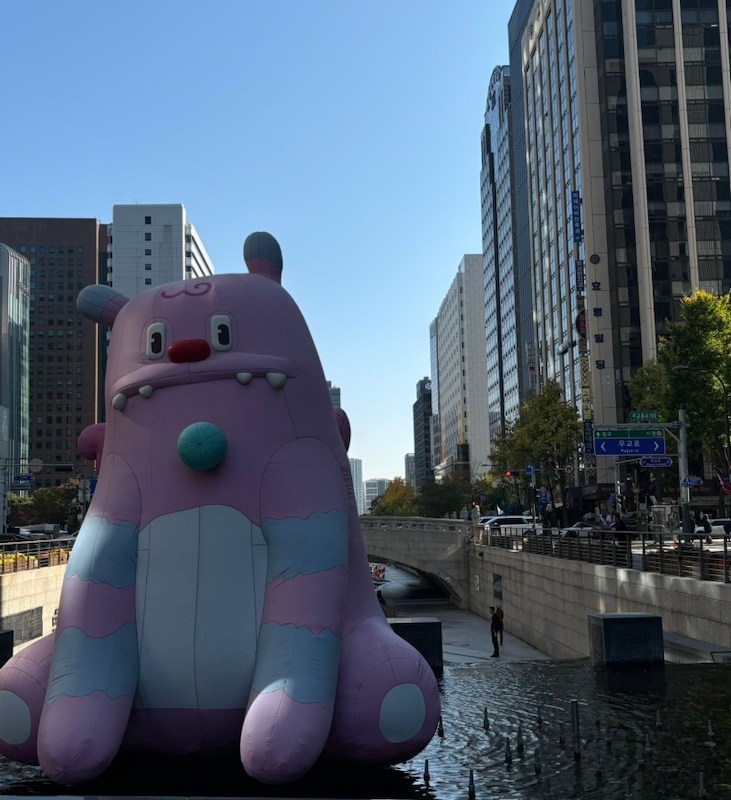
At the end of the stream is a huge bear like figure – this is Hechi, the mascot of Seoul. Mascots are popular here and this is one aspect that reminded me of Japan. Hechi sits overlooking the stream, infront of a huge speaker. There was some kind of rally going on with music blasting out and I couldn’t be sure where it was coming from.

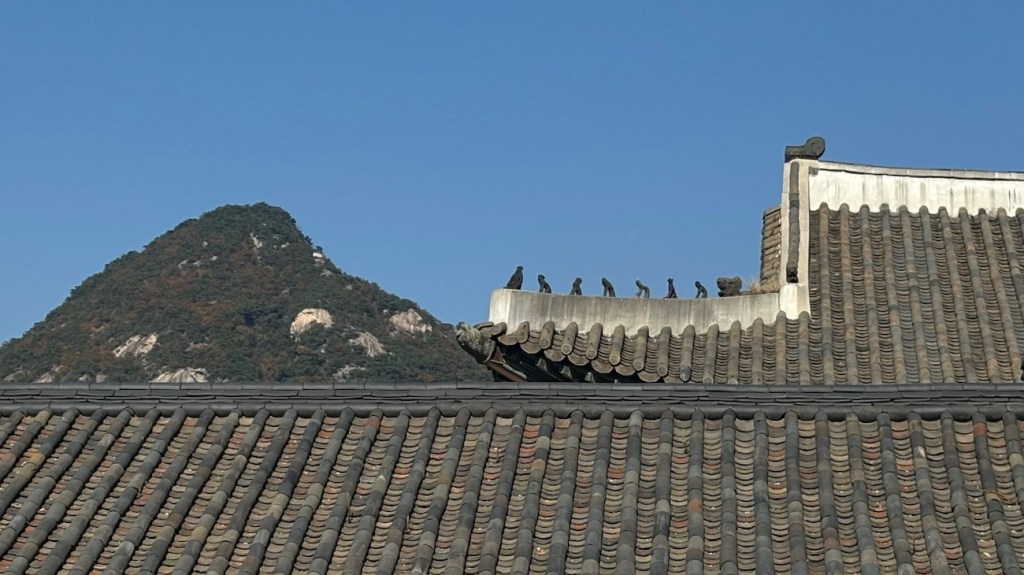
A short walk away from Cheonggyecheon is Gyeongbokgung Palace, meaning “The Palace Greatly Blessed By Heaven” and the largest of the five Grand Palaces. On my way there, Hechi and the outdoor library popped up again, this time with the Bugaksan mountain looming in the background.
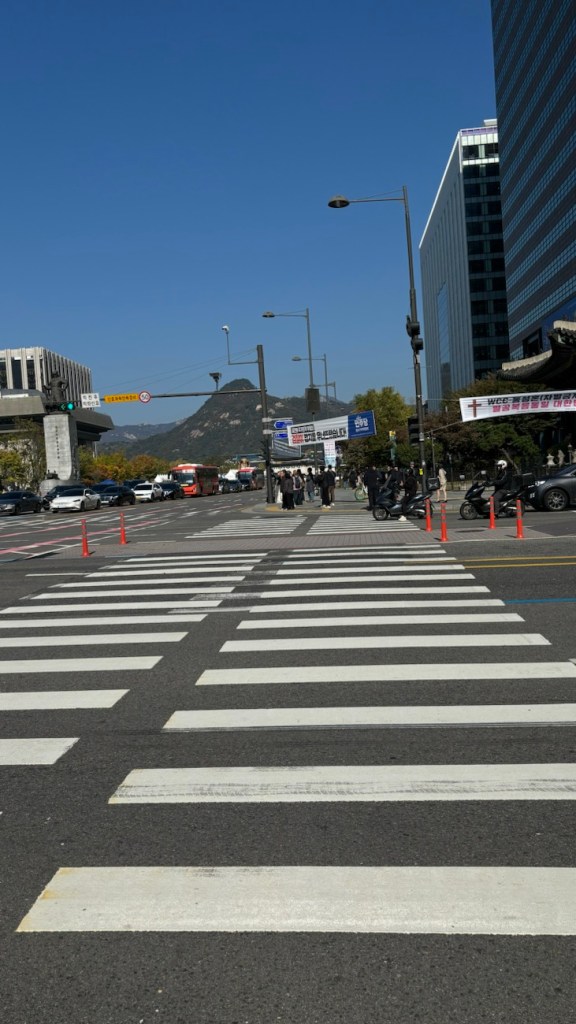
My first impression of Seoul in the daylight was the merging of nature and urban. Mountains tower over crosswalks and skyscrapers loom in the distance behind palaces. Even when you’re in the midst of the city, a temple appears.
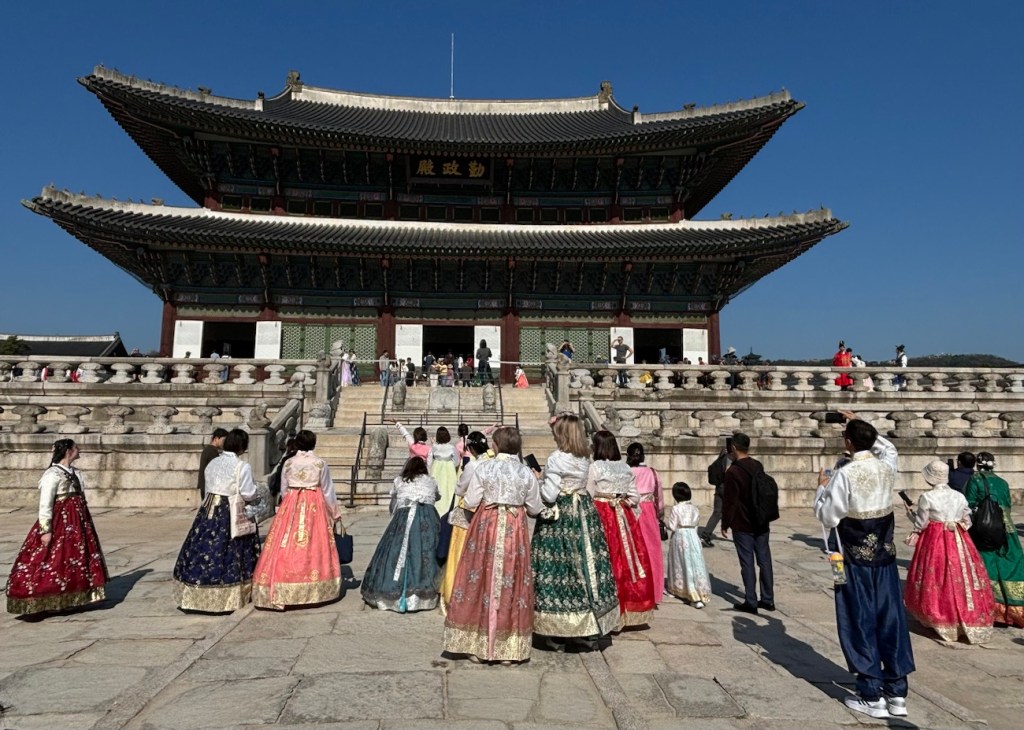
And the first thing that hit me when I entered the palace grounds through the Gwanghwamun Gate was the number of people in costume. This is positively encouraged in Seoul – you get in for free if you don the traditional costume known as Hanbok. Meanwhile I wandered around in my jeans and failed to get a good photo from anyone that I asked. Probably they make more effort for the Hanbok.
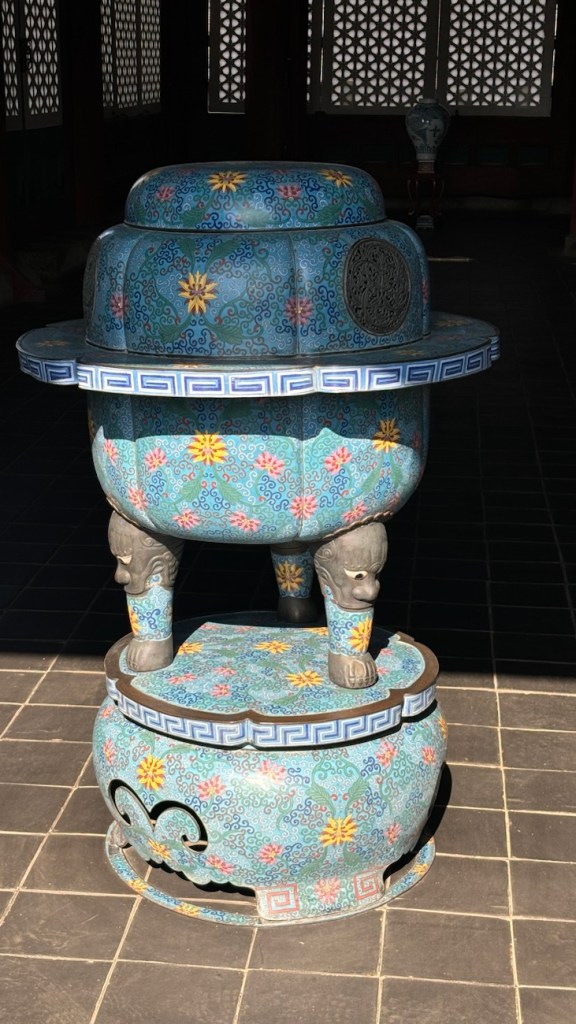
It’s a big complex of temple buildings, historically it acted as a small city, including separate King’s and Queen’s residences. The original palace dates back to 1395 and was the main royal palace of the Joseon dynasty. As well as the home of the royal family it was also the seat of government.

A brief history; All of the royal palaces were burned down during the Japanese Invasion of 1592-1598. In fact Gyeongbokgung Palace was left derelict for over 270 years and reconstruction began in 1867 with over 500 buildings. It was then torn down again in the Japanese Occupation and replaced by a huge Japanese Government building. Further restoration has been ongoing again since 1900 with the Gate and the residences of the King, Queen and Crown Prince being restored to their original state. That’s most of the history I gleaned from the signs around the palace – anything more is best found on Wikipedia.

I can’t take in too much information at once so I usually resort to taking photos of signs in the hope I’ll come back and read them at some point – here is one of them.

It’s definitely a good idea to learn some basic words in Korean and it’s much appreciated by the local people. Unfortunately this trip was so hurried that I only managed to half remember “thank you”. Something I regretted when I accidentally stepped on an old Korean man’s (full) coffee cup at the lake and was unable to even apologise properly. He did not see the funny side.

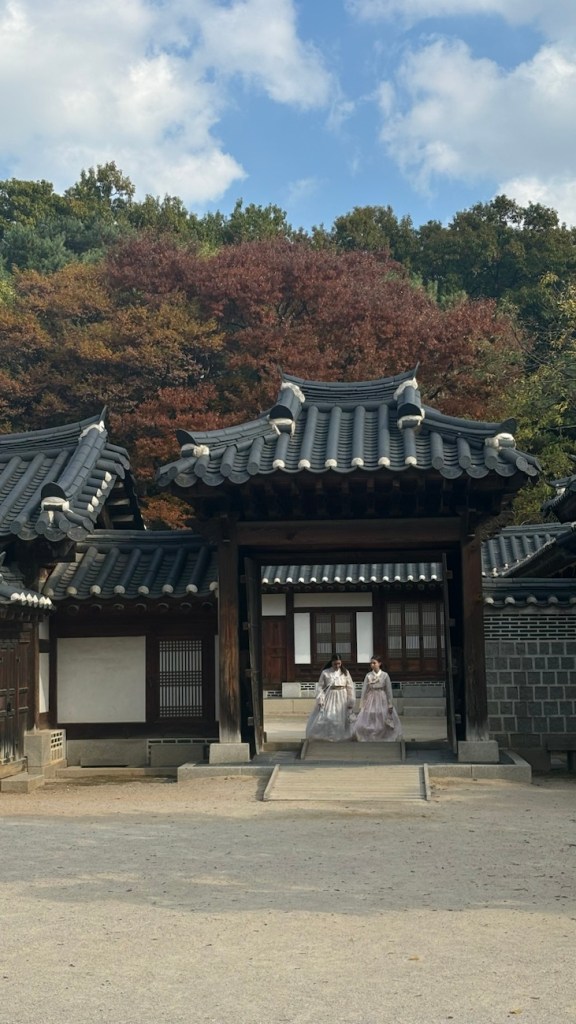
Coincidentally autumn is one of the best times to visit South Korea as the fall foliage is in full swing. Everything is orange and green and brown which only adds to the beauty of the temples.

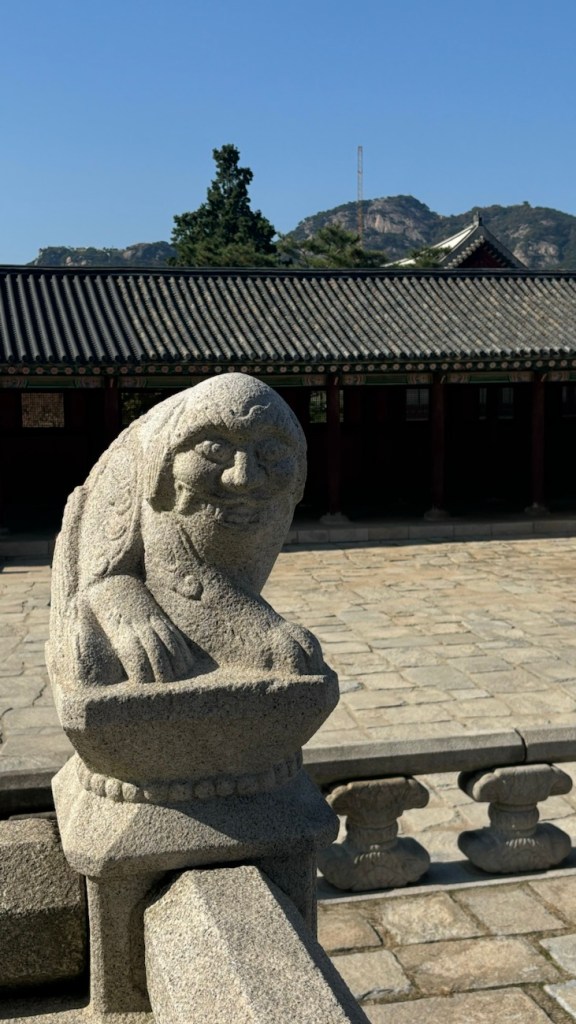
There are some free tours of the palace in English but I had just missed one and didn’t want to wait. It would probably be useful as there are so many corners to explore. A couple of hours wandering around was enough for me before I got hungry – many restaurants in Seoul also “take a break” between 15.00-17.00 so I went in search of a vegan friendly lunch while I could. I didn’t actually end up in the vegetarian restaurant I was aiming for (still a bit confused as to what happened), but the place I found myself in had a vegan menu with the biggest pancake I’ve ever seen.
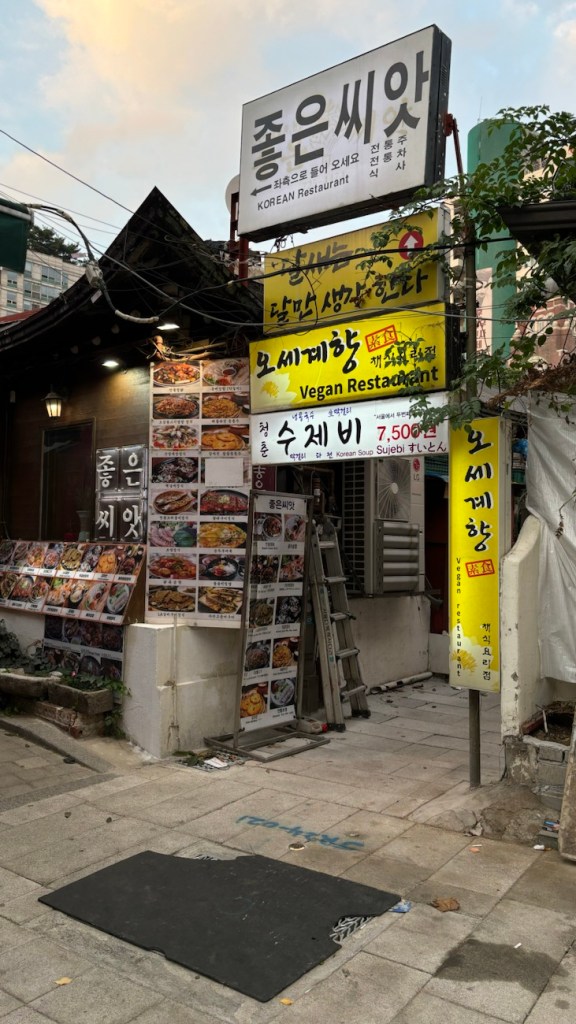
Apparently it can be hard to eat alone as restaurants here don’t like serving single portions but this seems to apply to the meat based Korean BBQs. A win for the veggies.

There is so much to do, see and experience in Seoul you could easily spend a couple of weeks here. My aim in the afternoon was to make the most of my limited time and visit the cultural Bukchon Hanok Village. I should have paid more attention to the Tourist Helpers who were handing out leaflets on the street – this place is a residential area and “closes” to tourists at 17.00. I had just got there when I was met by people holding sandwich board style placards, encouraging us all to leave in a very smiley and nice manner. Bukchon Hanok will just have to go on the list for when I come back to Seoul at the end of this trip.

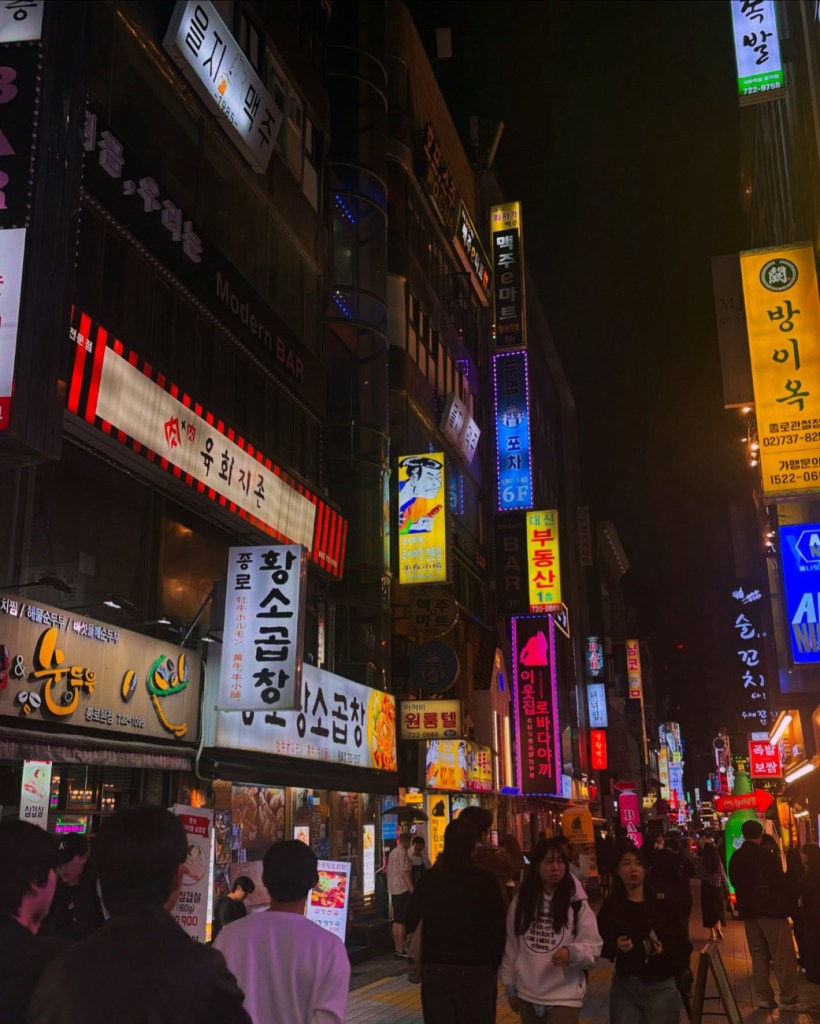
In the evening I took a walk over to Myeongdong with it’s neon signs and late night shops and street market. This felt like the Seoul I had imagined in my head. I’ll need to dedicate some time for shopping at the end of the trip as there is a whole K-Culture that I’ve not been aware of – K-Pop (Gangnam Style is just the beginning), K-Drama, K-Beauty…

Seoul at night is beautiful and it’s a safe city. I could have walked for miles but I had to be up at 5.30am the next day for my DMZ tour. I will be breaking the hostel rule of “no alarms in the dormitory” for this one. Visiting the DMZ area – the “De-Militarised Zone” – was something I really wanted to do, where you walk through one of the infiltration tunnels and then look at North Korea through binoculars, with a suspension bridge visit thrown in for some light relief.
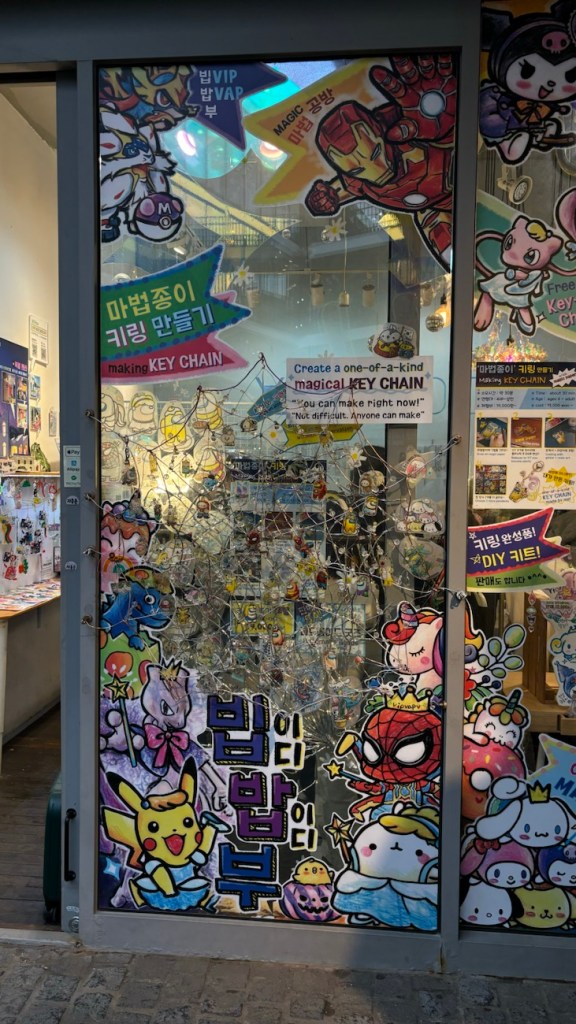

Next stop, as close to North Korea as it’s possible to get…
 Maz On The Road