
Welcome to Las Islas de Filipinas, named after the Spanish King Felipe and changed to The Philippines by the Americans who couldn’t get to grips with the name, the final destination of my four month trip and the place that people said I was mad to travel alone. They said it’s dangerous. That there are pirates. That I’ll get kidnapped. What they are missing is that there are over 7000 islands in this archepelago – yes seven thousand. And tourists usually visit the top 10. So it’s not too hard to avoid the tiny minority where it’s not advisable to travel.
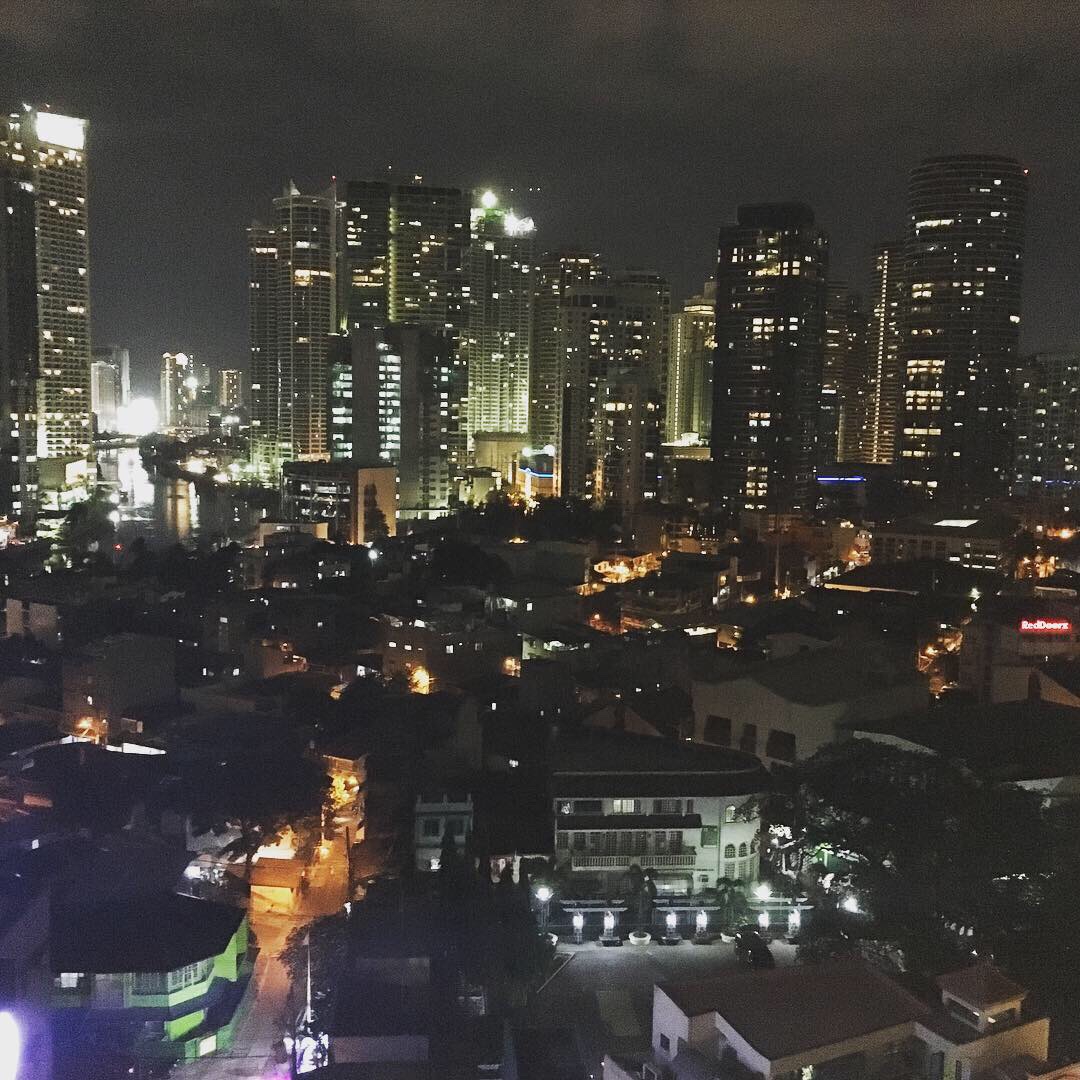
I landed in the capital, Manila, to a stifling 40 degree celcius heat (over 100F) and my body didn’t know what had hit it. Gone are the layers of clothes and covering knees and shoulders. The heat is exhausting and the air is hot and suffocating.
At the airport I approached the tourist information to ask where I could find an official taxi, prepared for an Indian style barrage of dodgy taxi drivers hustling for my business. The people behind the desk laughed out loud and pointed me to the ‘Grab station’. Grab is South East Asia’s version of Uber and at the airport they’ve gone one step further and set up a designated pick up area with friendly women ordering cabs for anyone without the Grab app or internet connection and generally keeping things in order. It was the easiest airport transport I’ve taken so far and cost me under £5.
I was also pleasantly surprised by my hostel, Lub D, which had Japanese style pod beds (even if the curtain did only go halfway across) and a cool rooftop bar, where I met Zoe from England and discovered that we’d actually been on the same flight from Osaka a few hours ago. We decided to check out the night life – why waste any time and it was a Friday night! With a recommendation from the barman and taking absolutely nothing with us apart from a concealed money belt with enough cash for the night (no phones felt very liberating!) just in case Manila lived up to it’s bad reputation, we began the ten minute walk. Unfortunately no phone also means no GPS and it wasn’t long before we were back asking for directions again after wandering into the red light district by mistake 🤦🏻♀️
We didn’t get back until 3am – it’s good to stay out until you’ve genuinely had enough rather than when you think you should stay out until / get home by. As it turns out nightlife in Manila involves alot of Ed Sheeran remixes (still nothing can beat the Hindi version I heard in India), a lot of dwarves and a lot of local guys telling us they are each other’s cousin. And watered down drinks – best stick to Red Horse beer!
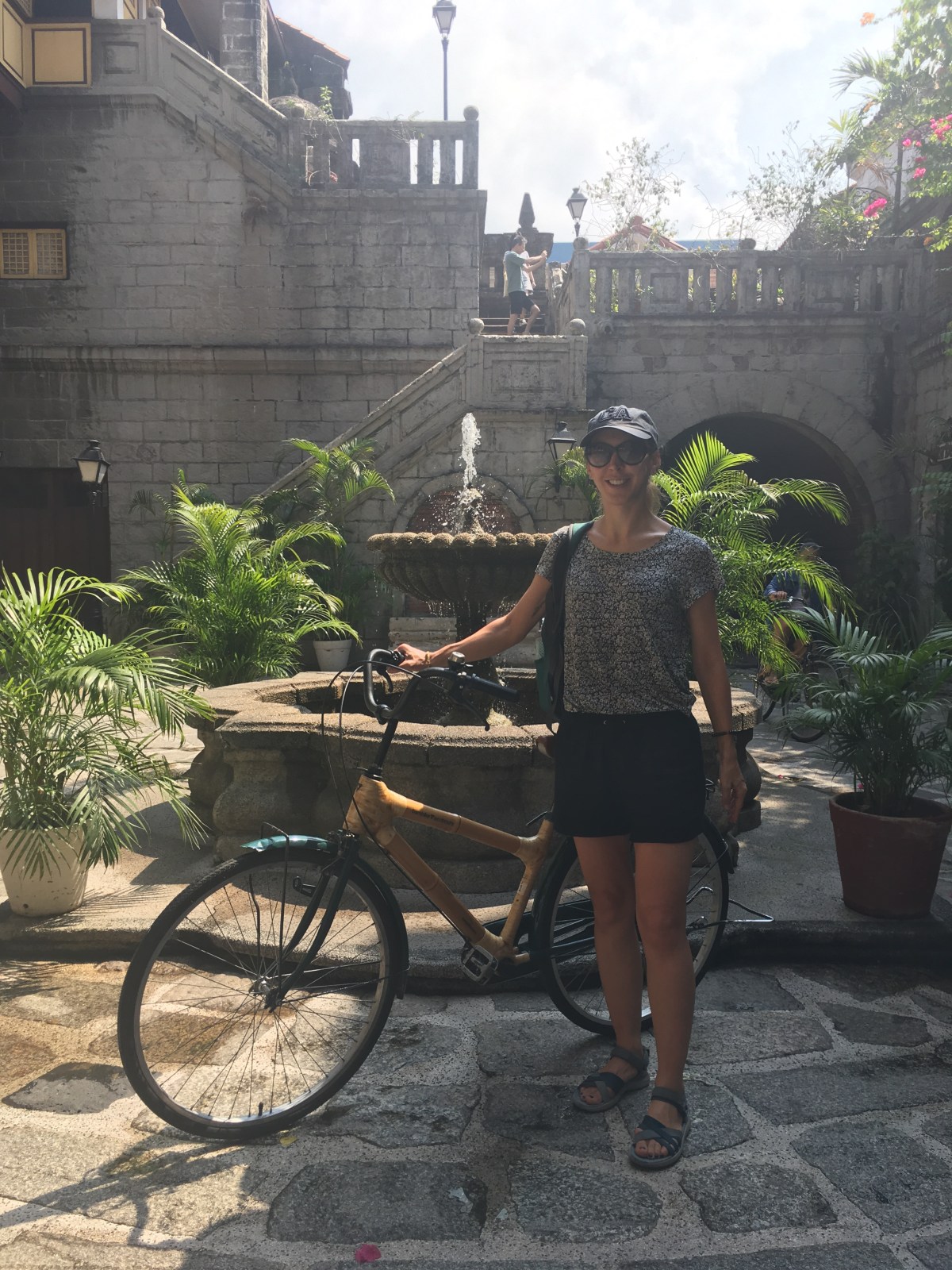
Despite the heat I wanted to see what the much maligned Manila was all about. So I signed up for a bicycle ride around the old walled city, Intramuros (Spanish for ‘within the walls’). And not any old bike – this is the Bambike, handmade from bamboo. They describe themselves as a socio-economic enterprise, providing work to poor communities who make the bikes and directing cash back into schools, education and other social programs. Our group of maybe 12 had three guides who thankfully stopped the crazy traffic when we had to cross the roads.
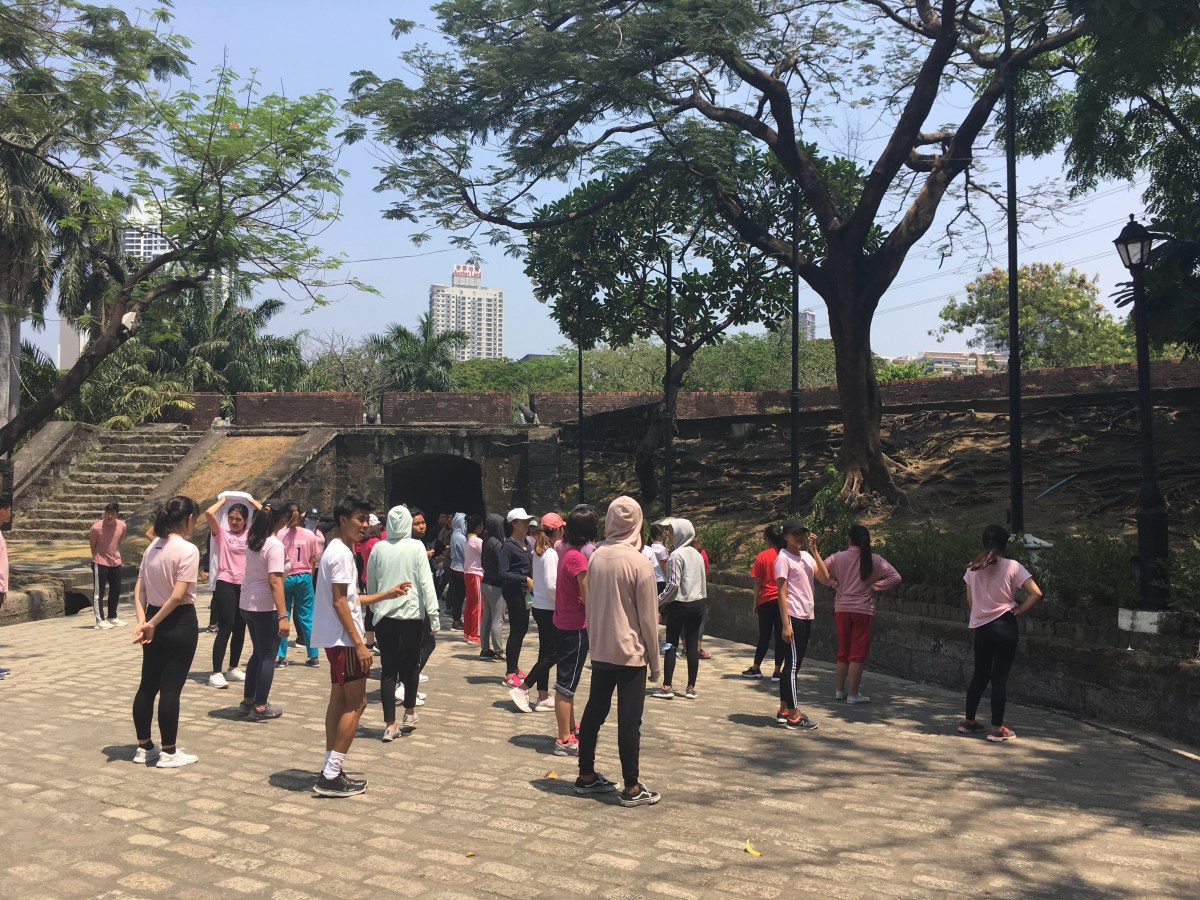
I really enjoyed it and learned a lot, combined with my visit to the Ayala Museum. Imelda Marcos is not just the woman with a thousand shoes! She was the Philippines first lady during the marshal law period under Ferdinand Marcos. The shoes were left behind when they fled to Hawaii in 1986 and the bulk of their $5-10 BILLION fortune was never found.
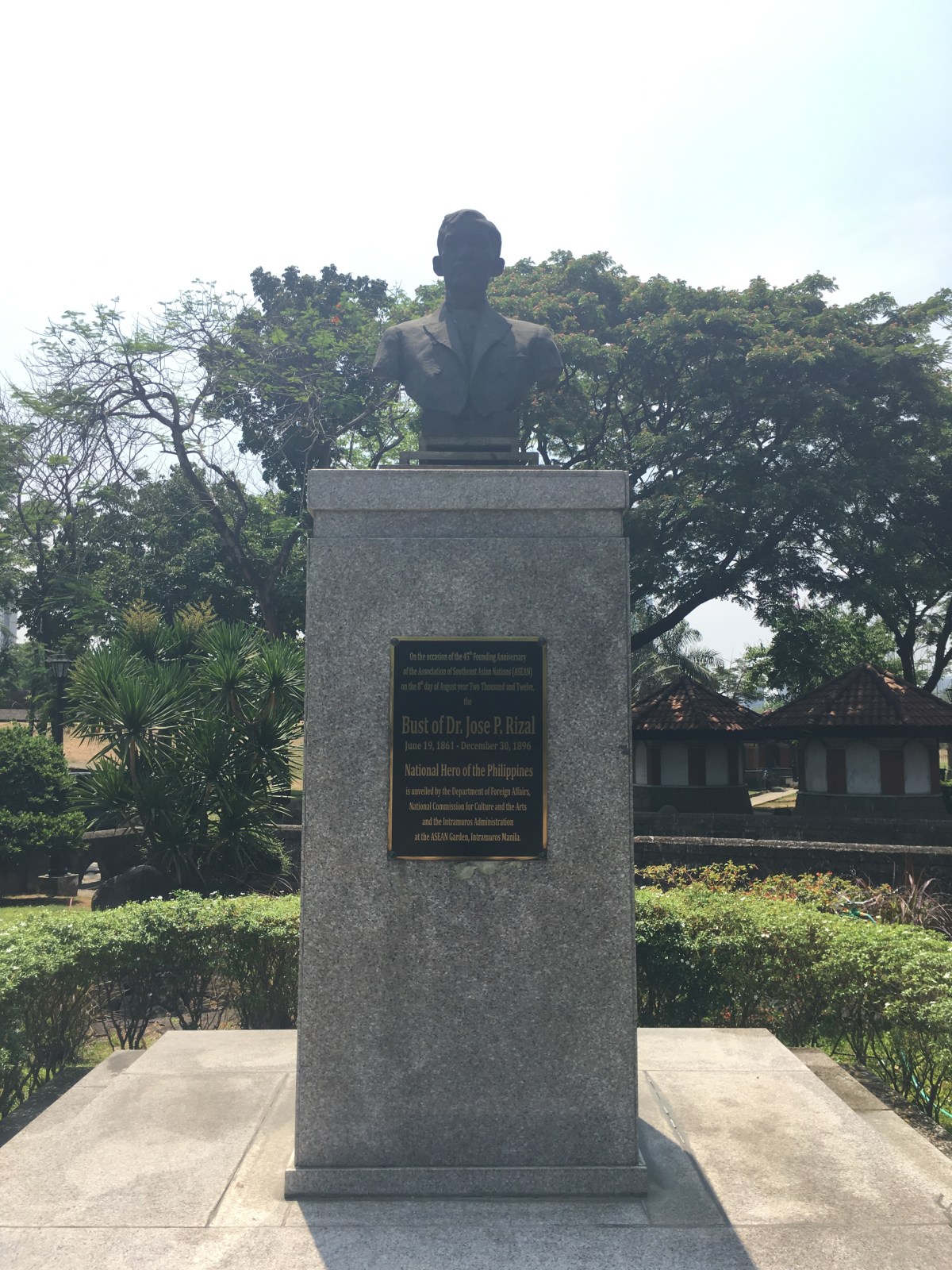
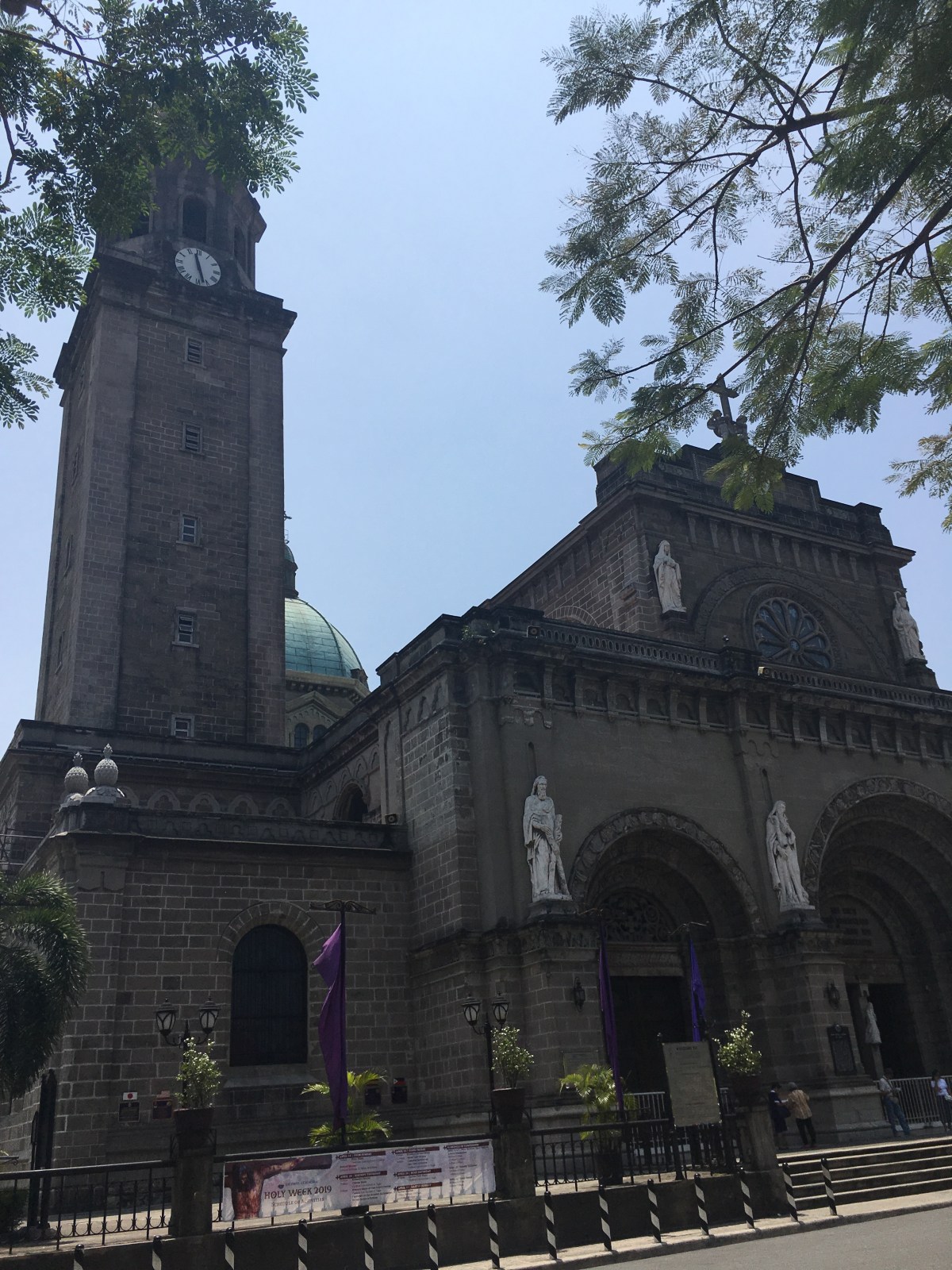
The old town was destroyed in the second world war but was rebuilt in an effort to preserve the history and also attract tourists. It felt a bit like an old Spanish town, not surprising as these islands have been ruled by the Spanish, English, Japanese and USA with Japanese rule being particularly brutal. And the Chinese influence can be seen on the Cathedral in the form of pineapples!
In fact Manila was the second most devastated allied city in WW2. The guide pointed out that the cannon inside the walls is pointed at the US embassy – it’s apparently still loaded. I haven’t been able to verify this fact yet!
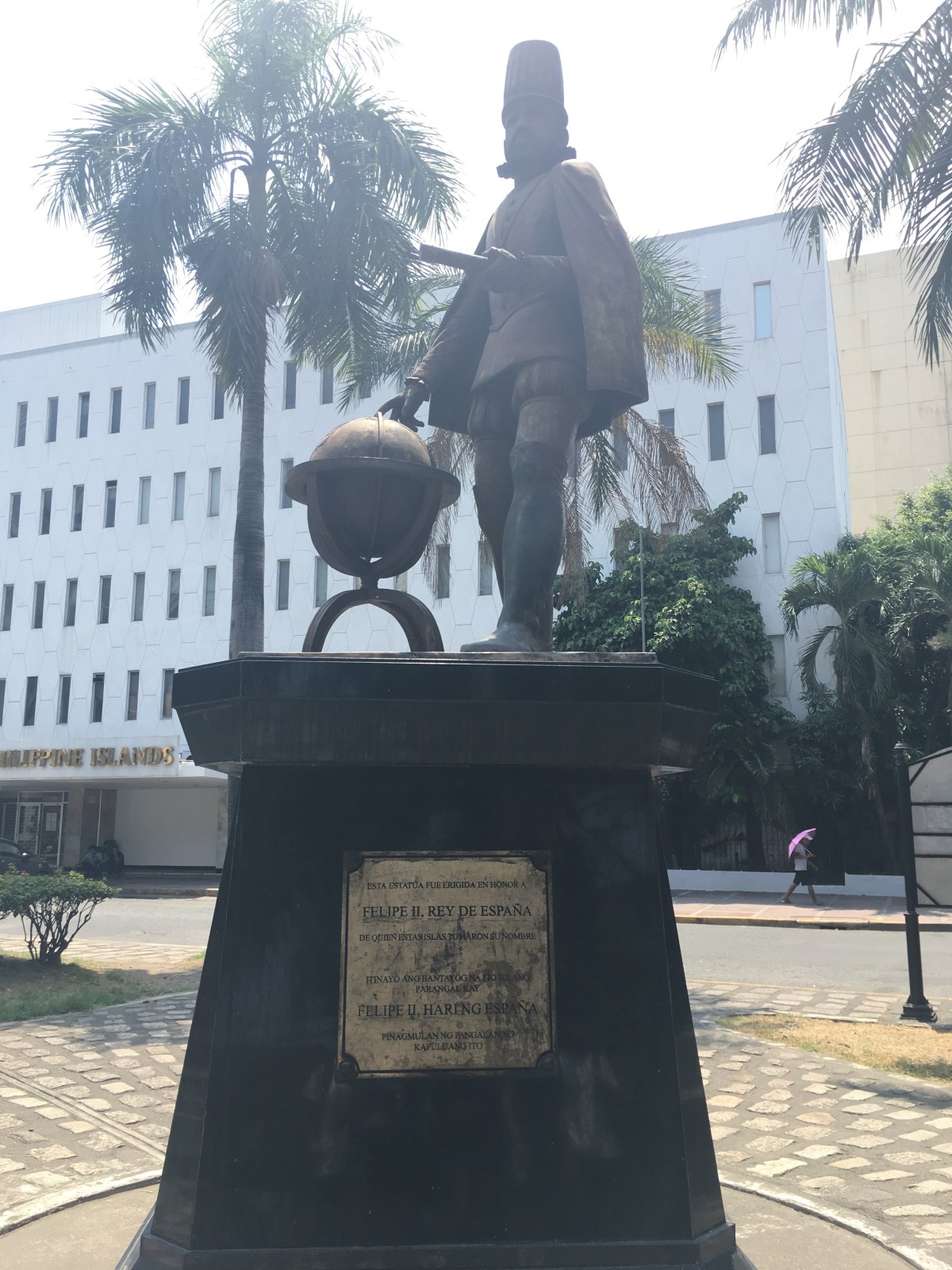
The history of these islands is fascinating. Dating back to when the Austronesians moved through The Philippines and Mariana Islands to Madagascar, it was a trading route from Acapulco, Mexico where boats traded Mexican silver. I won’t write too much on the history now as I don’t have a good enough Internet connection to verify all the facts – but even the Freemasons settled here.
The Philippines national hero is José Rizal, who like many of his South and Central American counterparts was a small man of just 4 foot 11 inches tall. In his short life before he was executed by firing squad at the age of 35, he apparently spoke 22 languages. He is credited with starting the movement that eventually lead to independence.
I heard horror stories of Japanese brutality direct from grandchildren of victims – locals I met in cafes or on tours. Filipinos are really open and friendly, especially the women. And they speak English with almost a Caribbean twang. The local language is a mix of Tagalog, Spanish and English words and differs by region. After getting lost in the complex history, including the Spanish selling the islands to the USA for $20 million, it left me thinking why can’t western countries just leave everyone else alone.
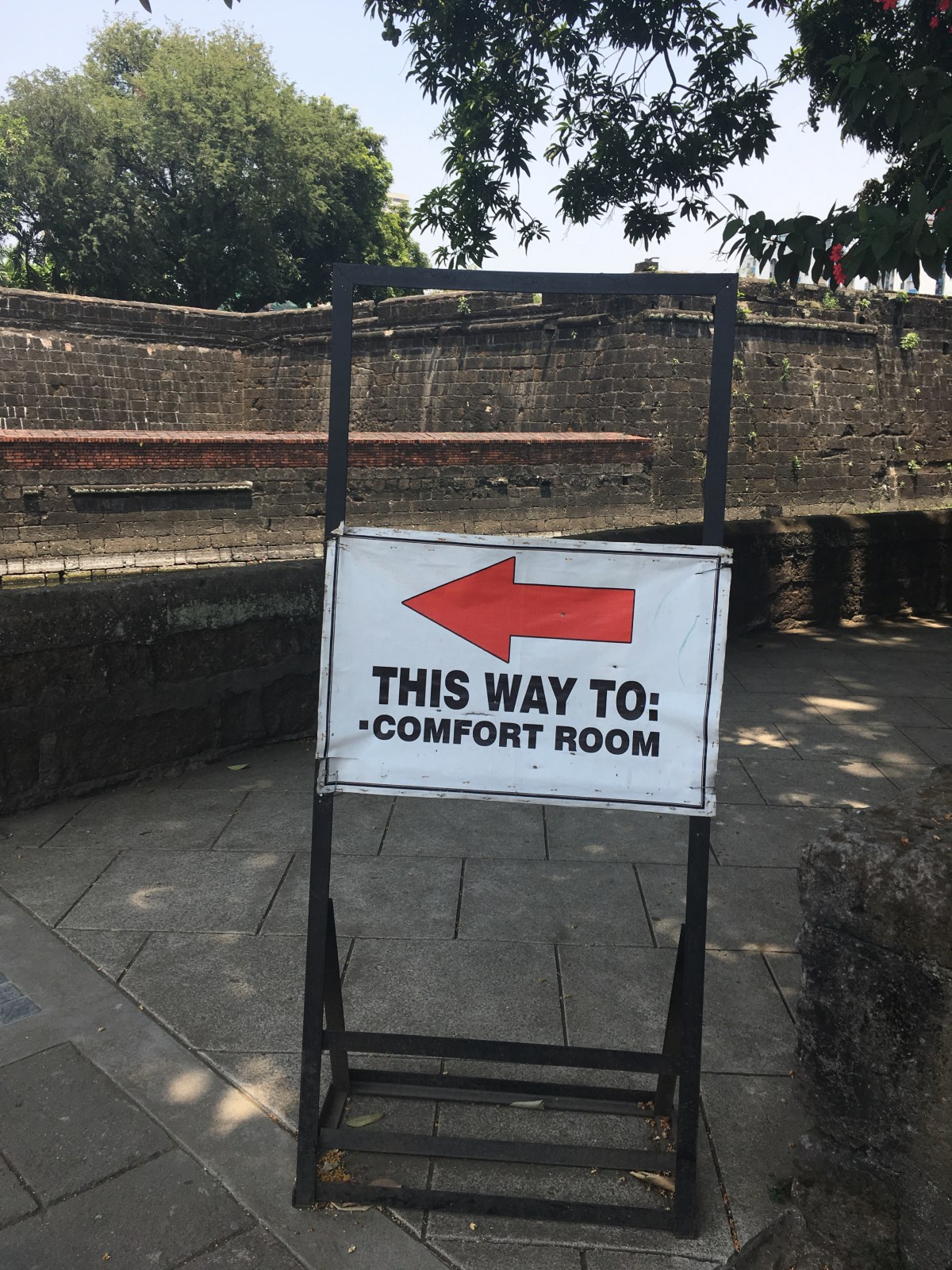
My hostel was in the Makati neighbourhood, like much of the accommodation, which is undoubtedly the upmarket end. Travelling is often a compromise between wanting to experience the real city but not wanting to be too scared to leave your accommodation!
Two days was enough before I found myself hiding out in an air conditioned shopping mall to escape the heat. Time to move on – via my first Filipino night bus heading 10 hours north to the rice terraces of Banaue. You know that gap in between seats on a bus, usually known as an aisle? It turns out that it can be filled with pull out seats. After I naively thought I might get a two seater to myself, the bus filled up. It was a little bit funny to watch some backpackers get on a few minutes before departure and see their faces when they realised they would be spending 10 hours on a fold out child sized seat 🙊
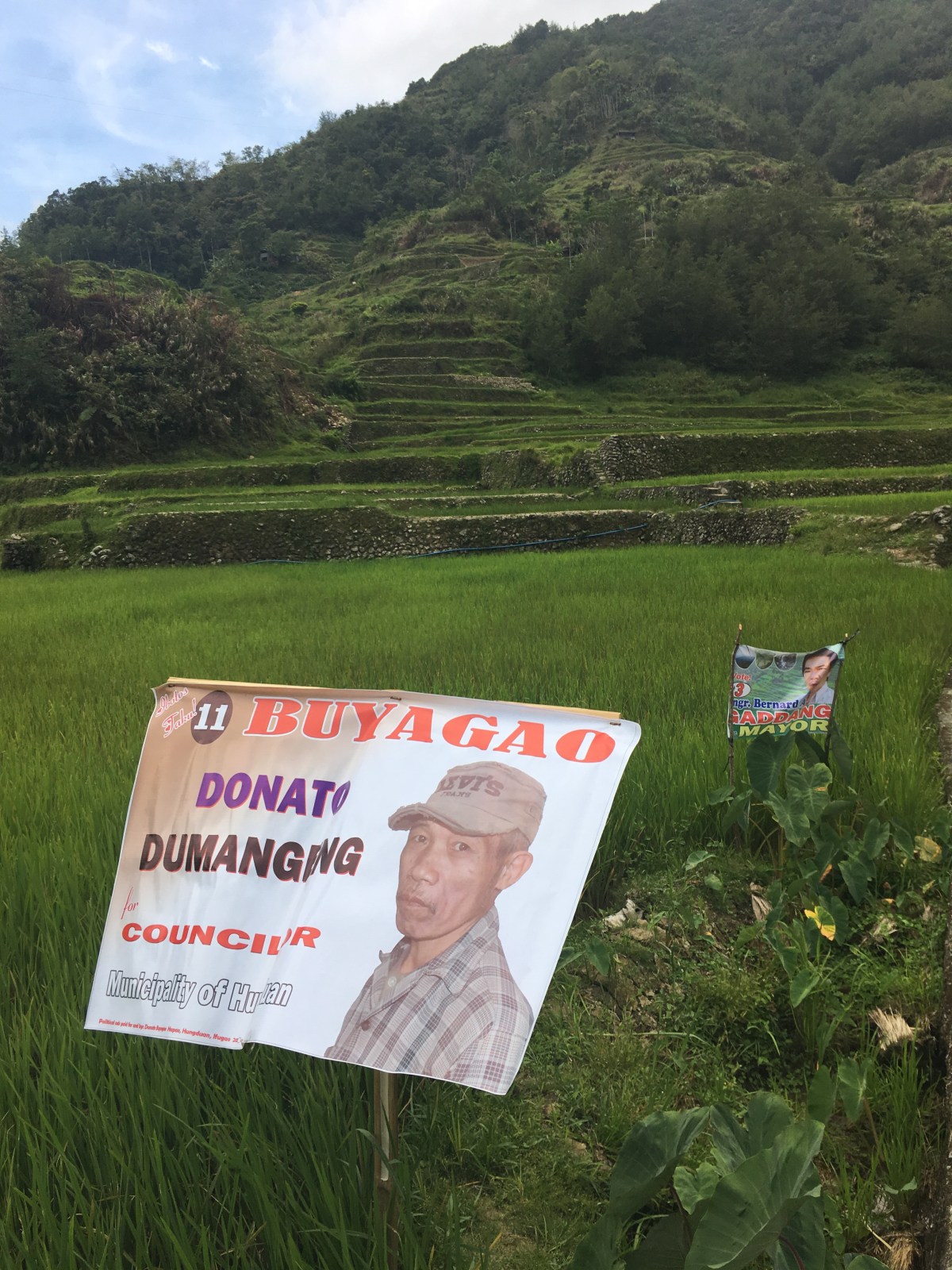
Crammed in between two Filipino lads either side of me (atleast I had a proper seat) and with the bus stopping every few hours I had no sleep yet again. I was wondering why I keep doing this to myself when I arrived in the lush green paradise that is Banaue. The views from my place, Bogah Homestay, were just beautiful.
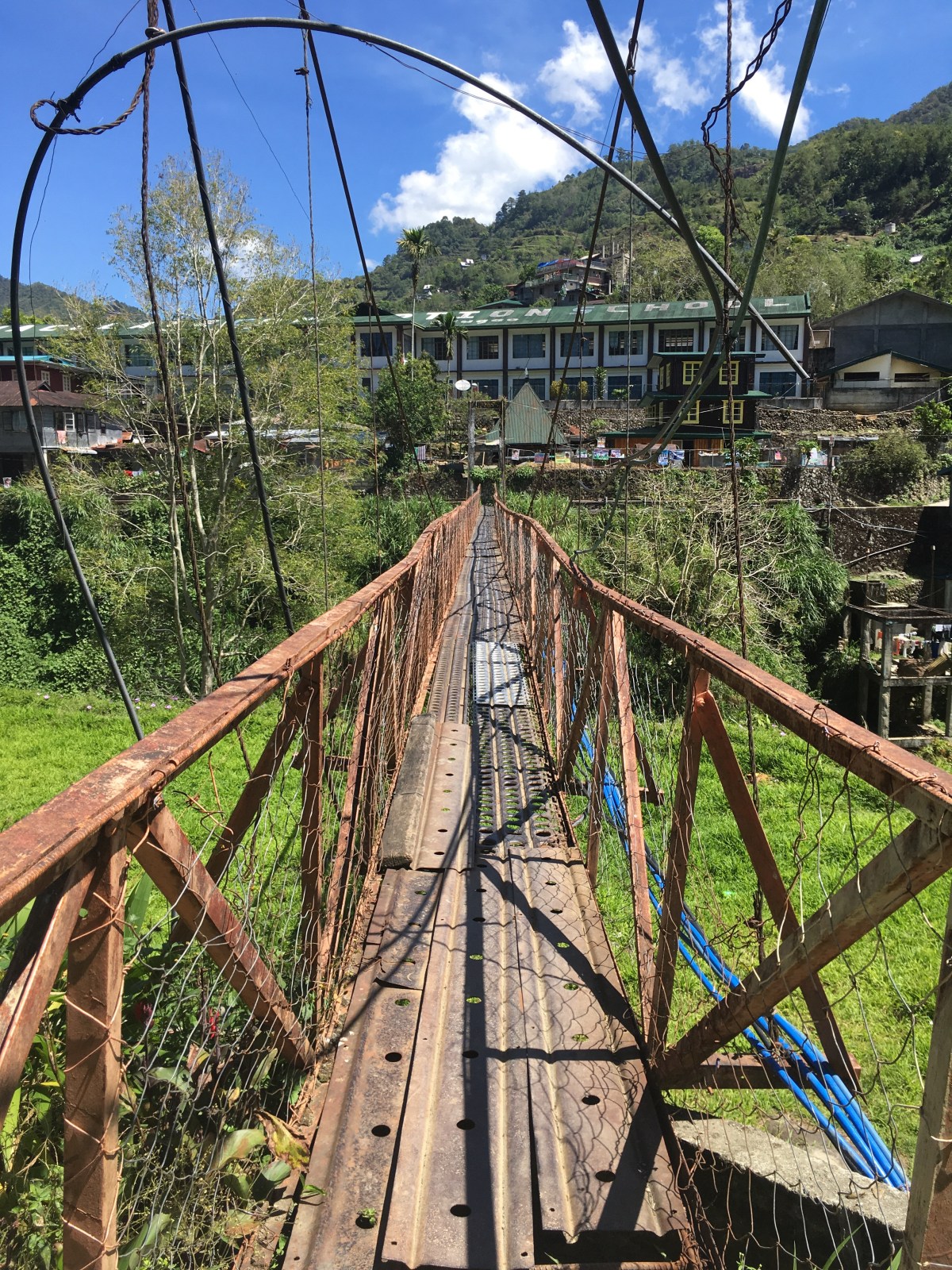
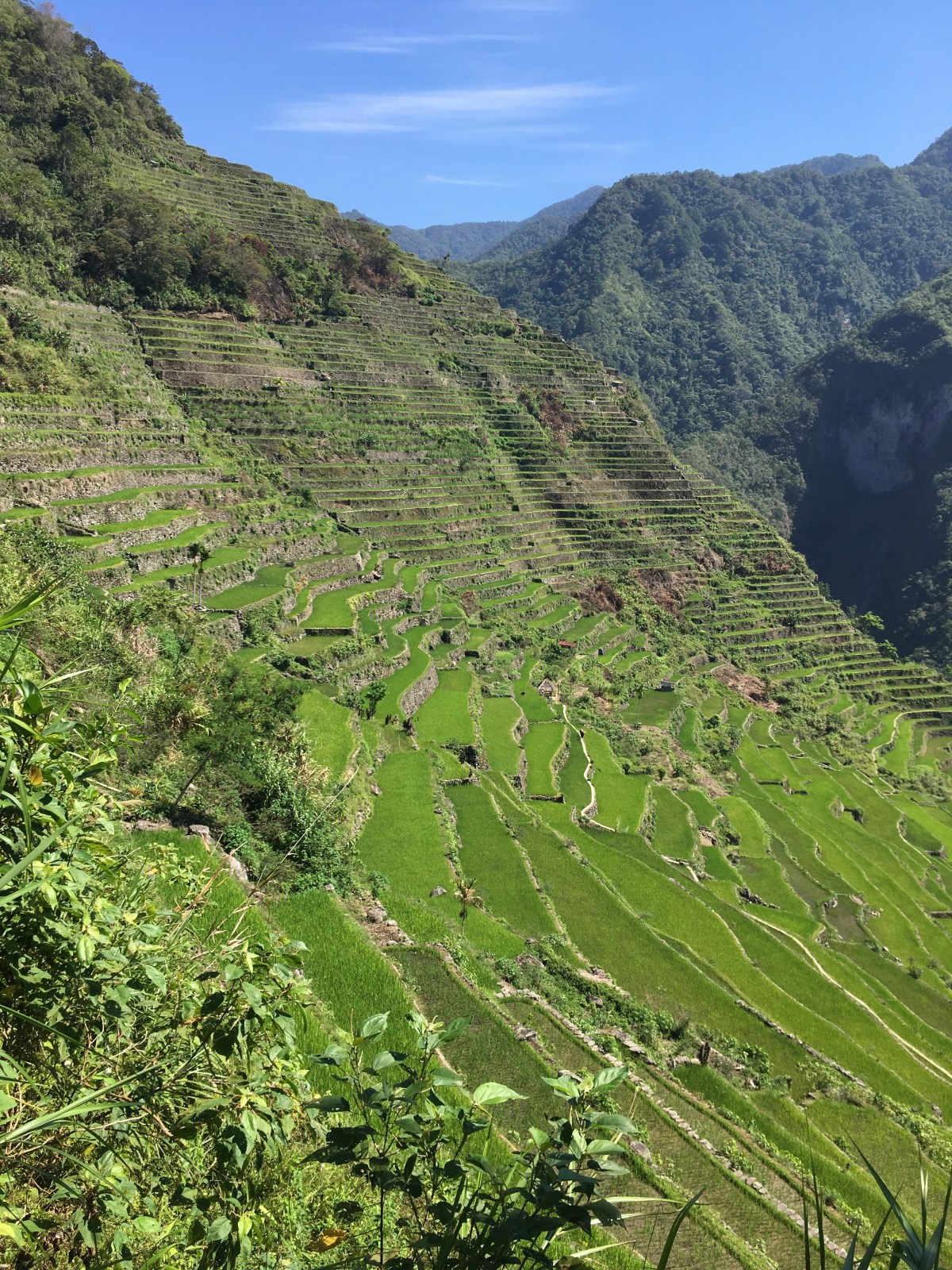
The locals call these rice terraces the 8th wonder of the world and when I got out on a guided tour later that day, after a couple of hours sleep and a local filter coffee, I understood why.
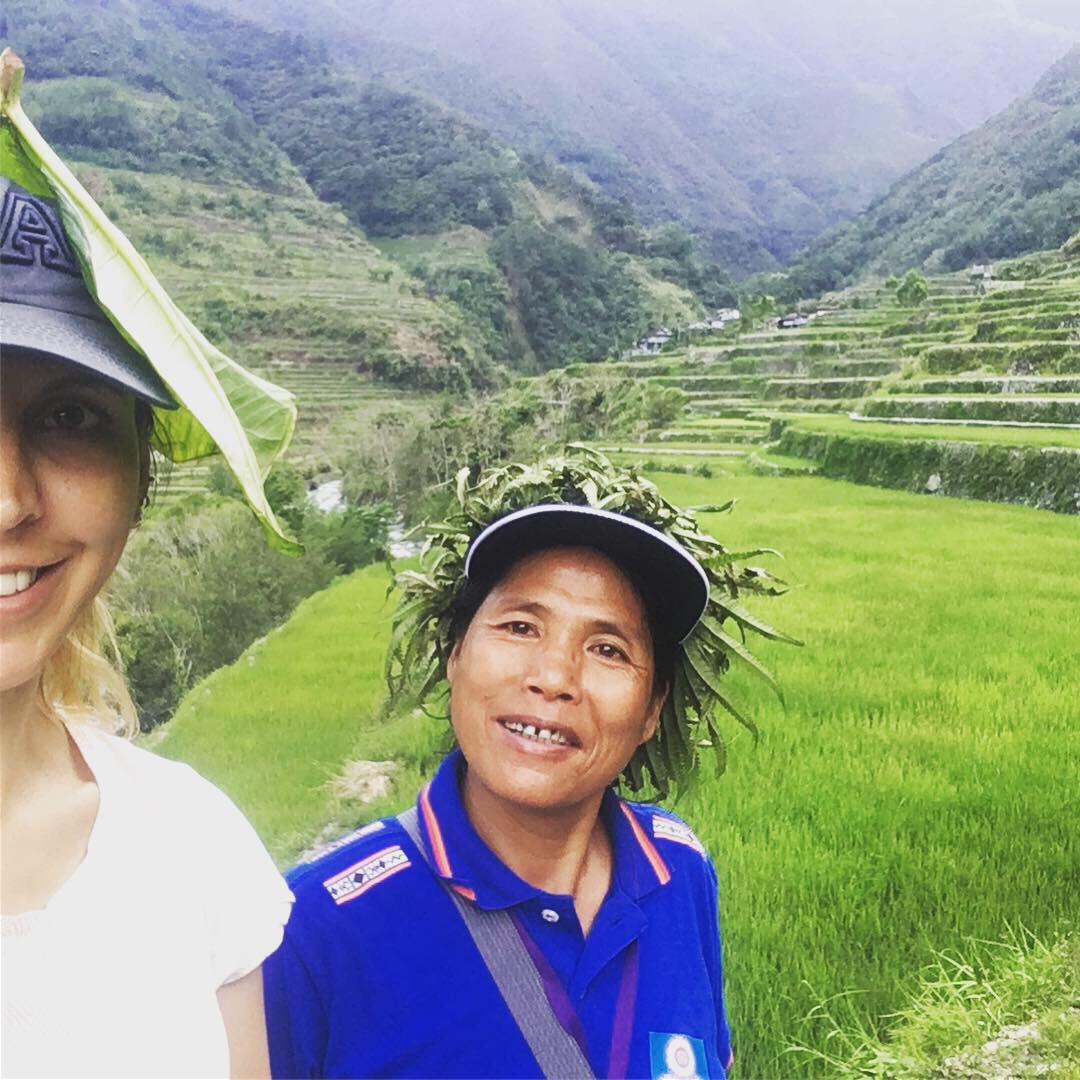
My lovely guide Conchita, with her hat of freshly picked leaves, asked if I wanted to walk a bit further via the festival that was happening in one of the villages. Of course I did! She picked a giant leaf to shade my own head and we set off through the rice fields. This means balancing on narrow ‘paths’ between the watery terraces at a brisk pace, trying to take in the views but not fall off. See video below before I put my phone away and concentrated on where I was going!
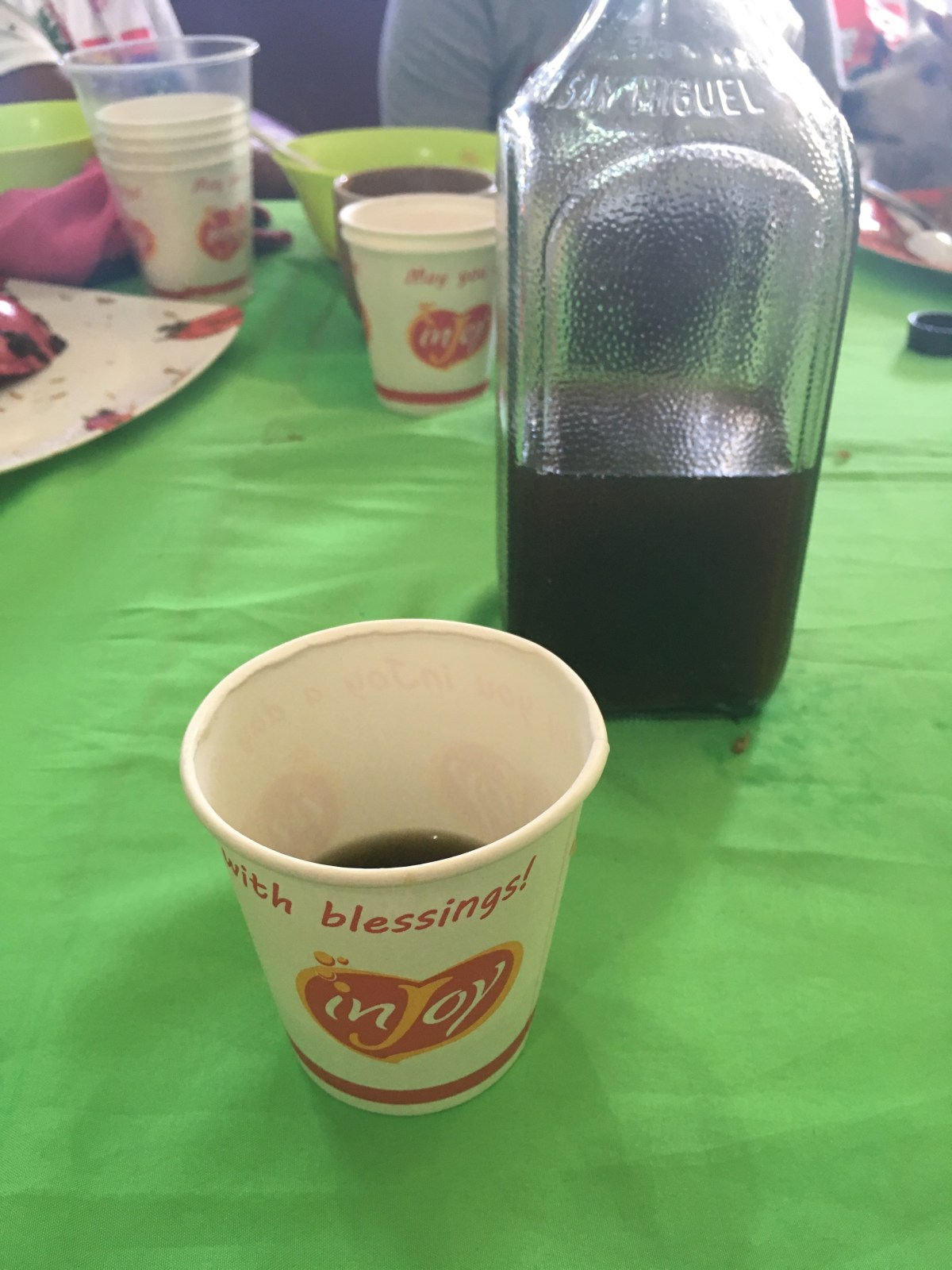
We stopped at a school which was closed for the festival and full of people eating and drinking. Soon some lukewarm rice and a plate of freshly picked lettuce was placed in front of me and a cup was filled with dark brown rice liquor – they don’t know the alcohol content of this local drink but claimed it was medicinal. I wasn’t planning on hiking after a few glasses of probably 50% proof but I couldn’t be rude and refuse 🤷🏻♀️
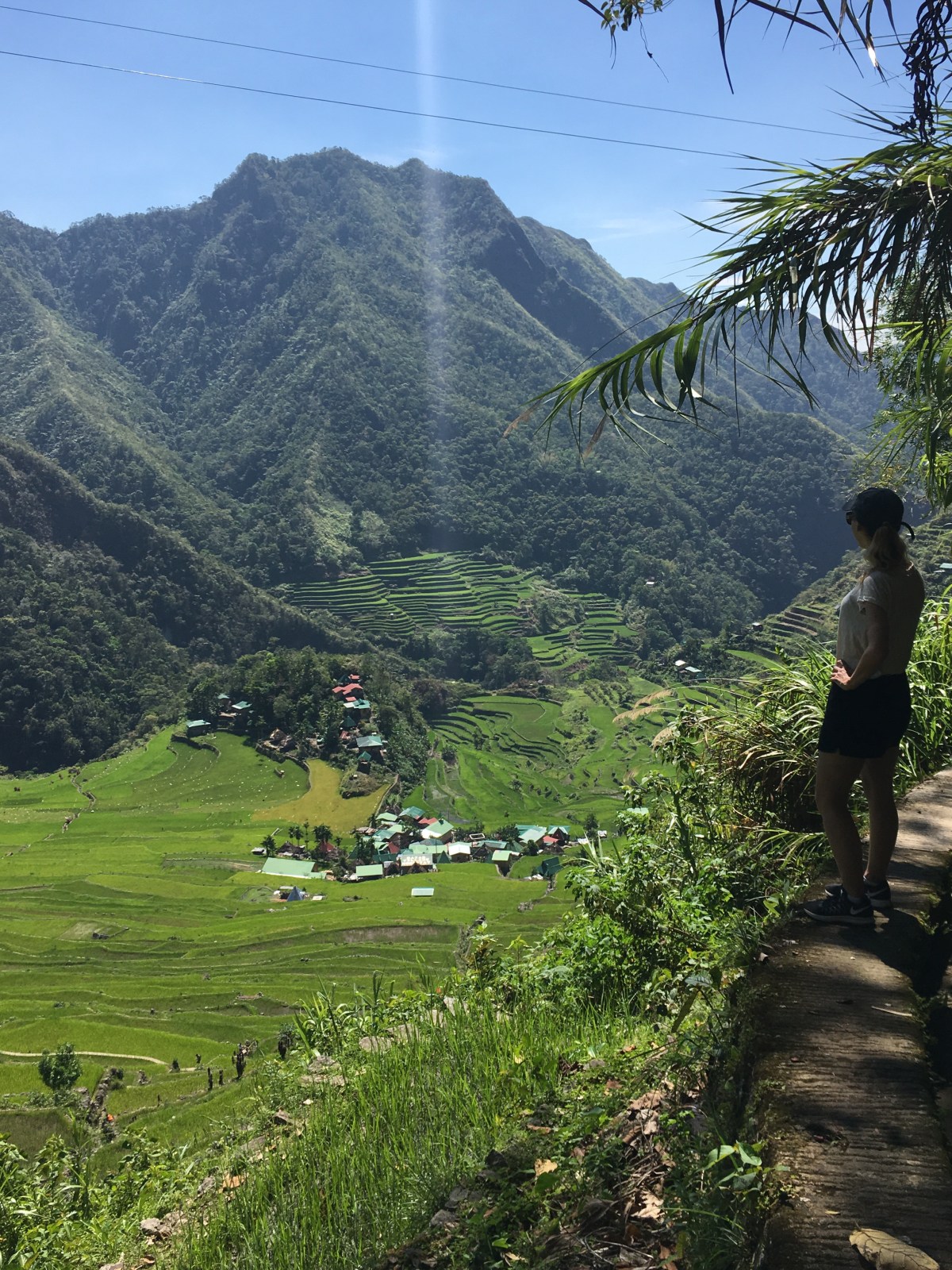
I couldn’t get over how GREEN everything is. Lush, tropical green. These huge rice fields are divided into smaller patches owned by different families, mostly to feed themselves rather than to sell. Rice is a stable of every meal. I can’t imagine the fitness required to live and work these terraces – my legs were aching and the heat is relentless. Tiny old ladies passed us in flip flops carrying heavy bags on their heads.
We stopped by a hot springs, which had a strong sulfur smell – this time bathing suit was definitely required!! Actually I was the only one in a bikini as the locals go in fully clothed. It was really nice and refreshing after the stairs up – these springs are only accessible on foot.
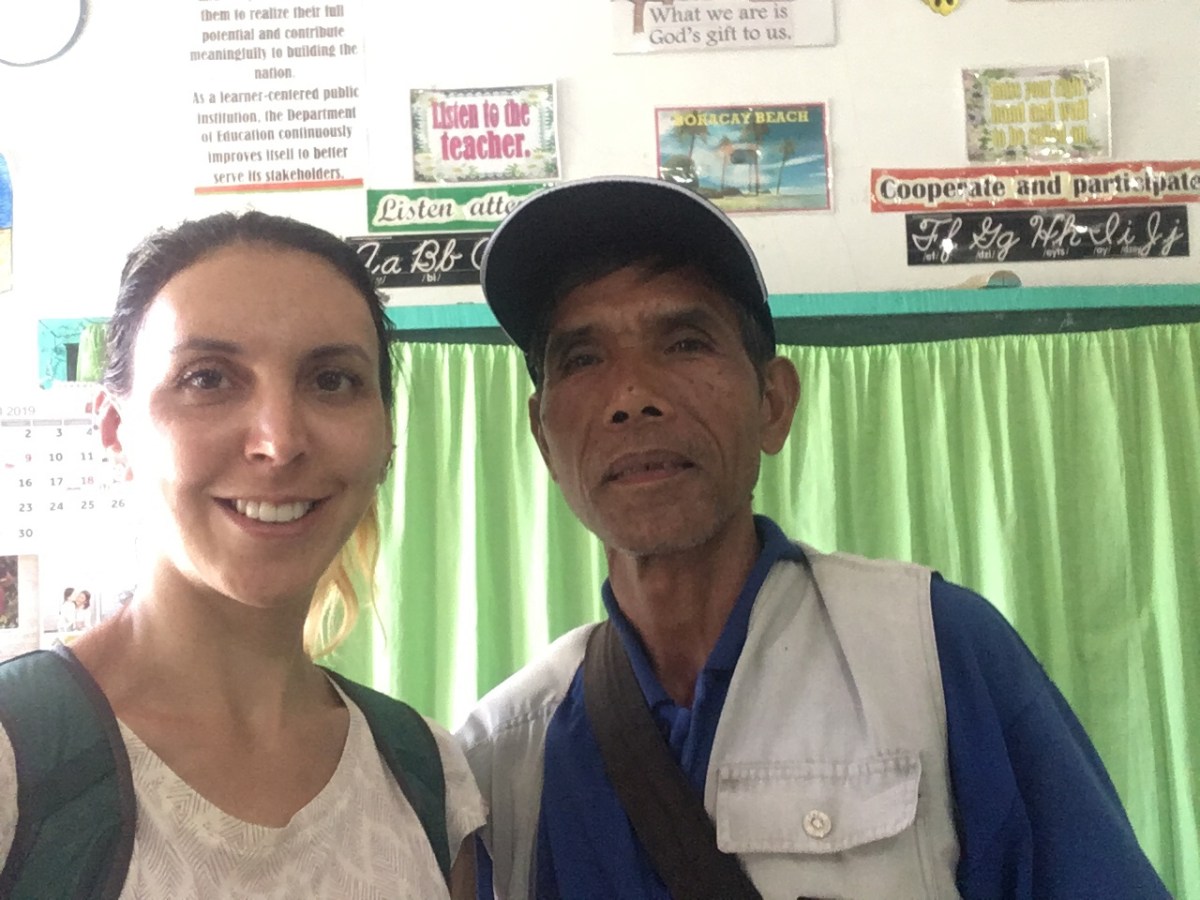
The way it works here is that you go on day or multi-day hikes with local guides. There is a lot of registering required where you have to write your name, age and marital status. ‘You’re alone? Where’s your husband?’ soon became the standard question 😂 In an effort to save money, the next day I hijacked a Middle Aged German man’s tour to some nearby rice terraces.
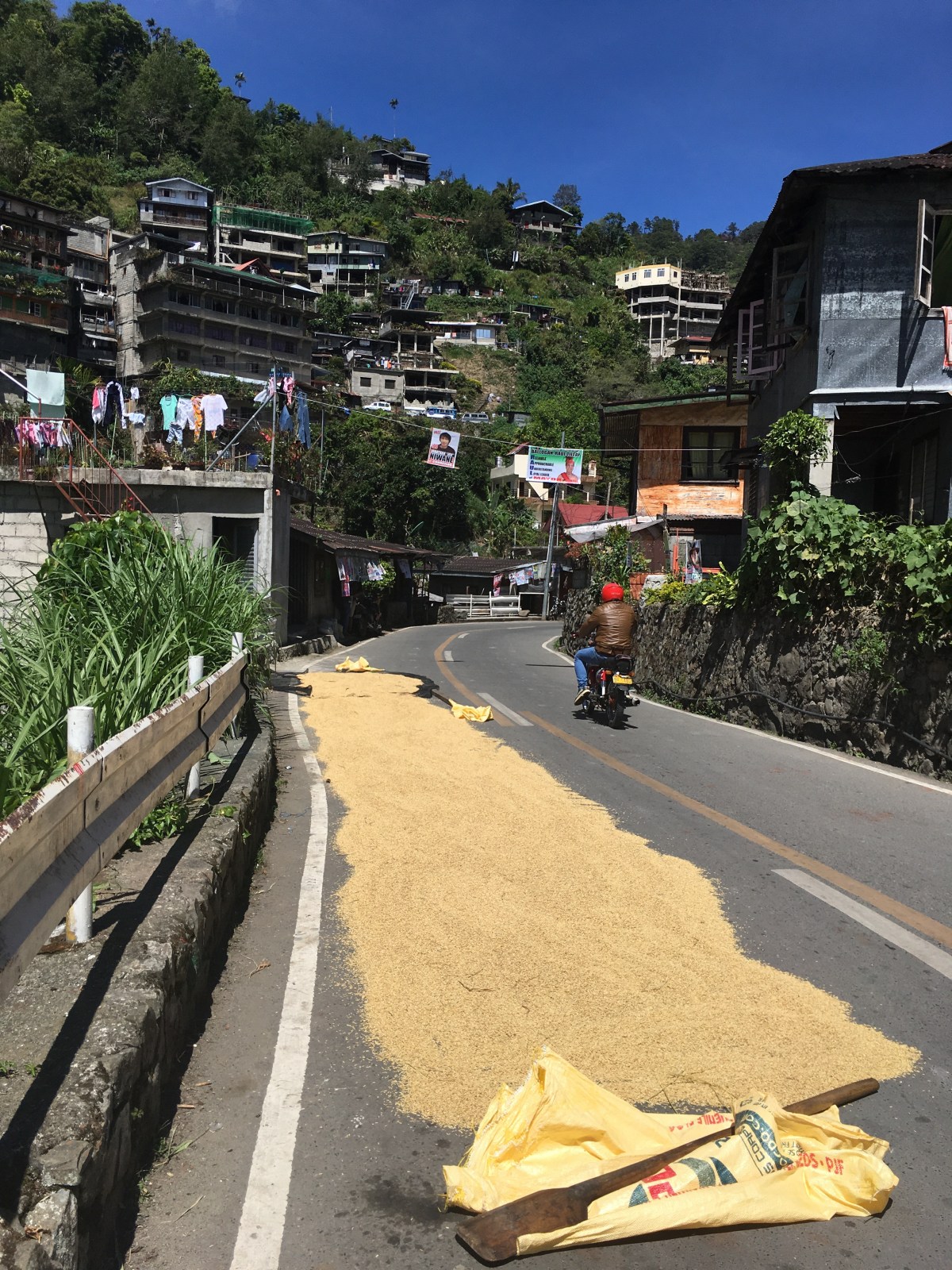
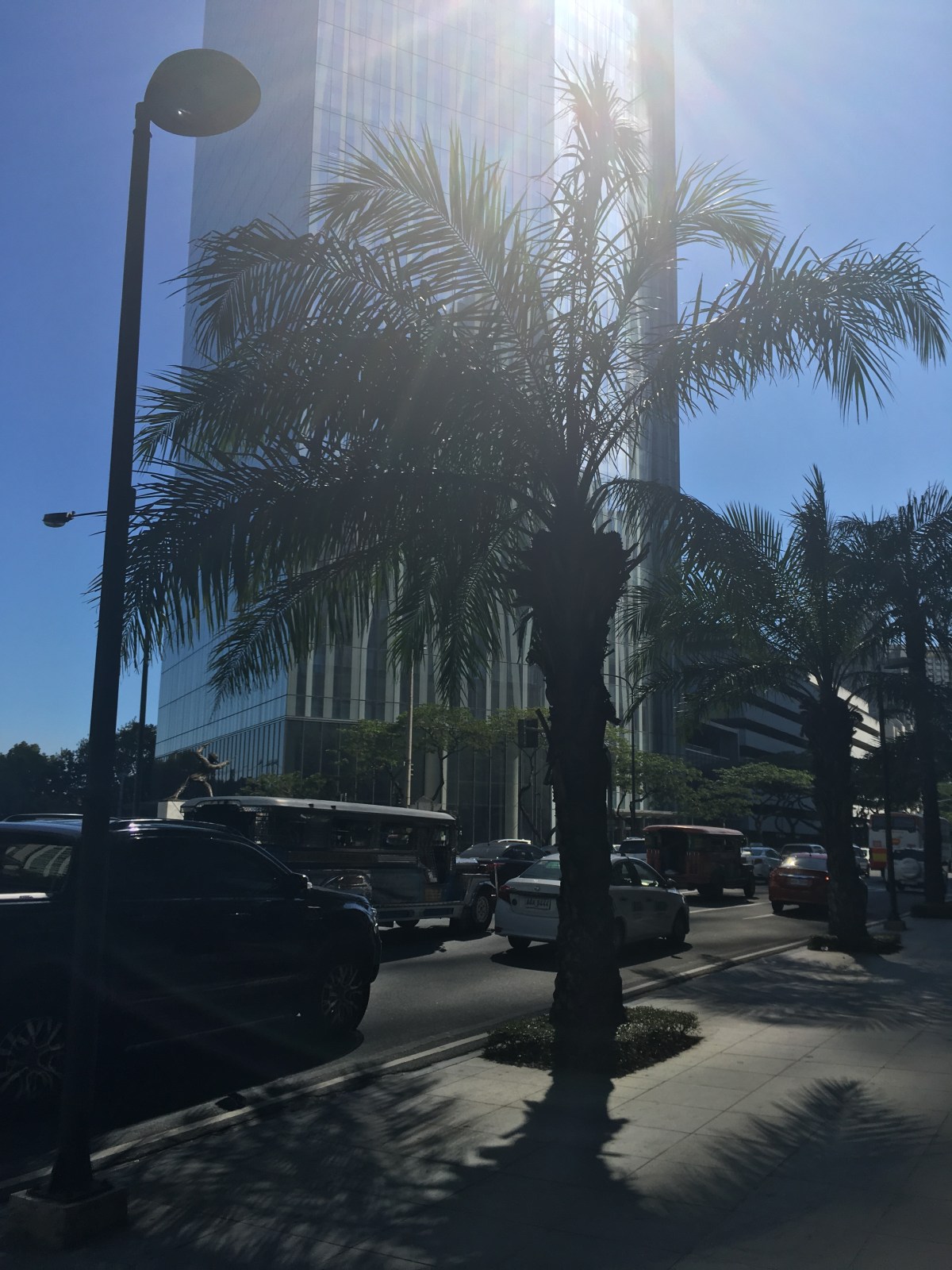
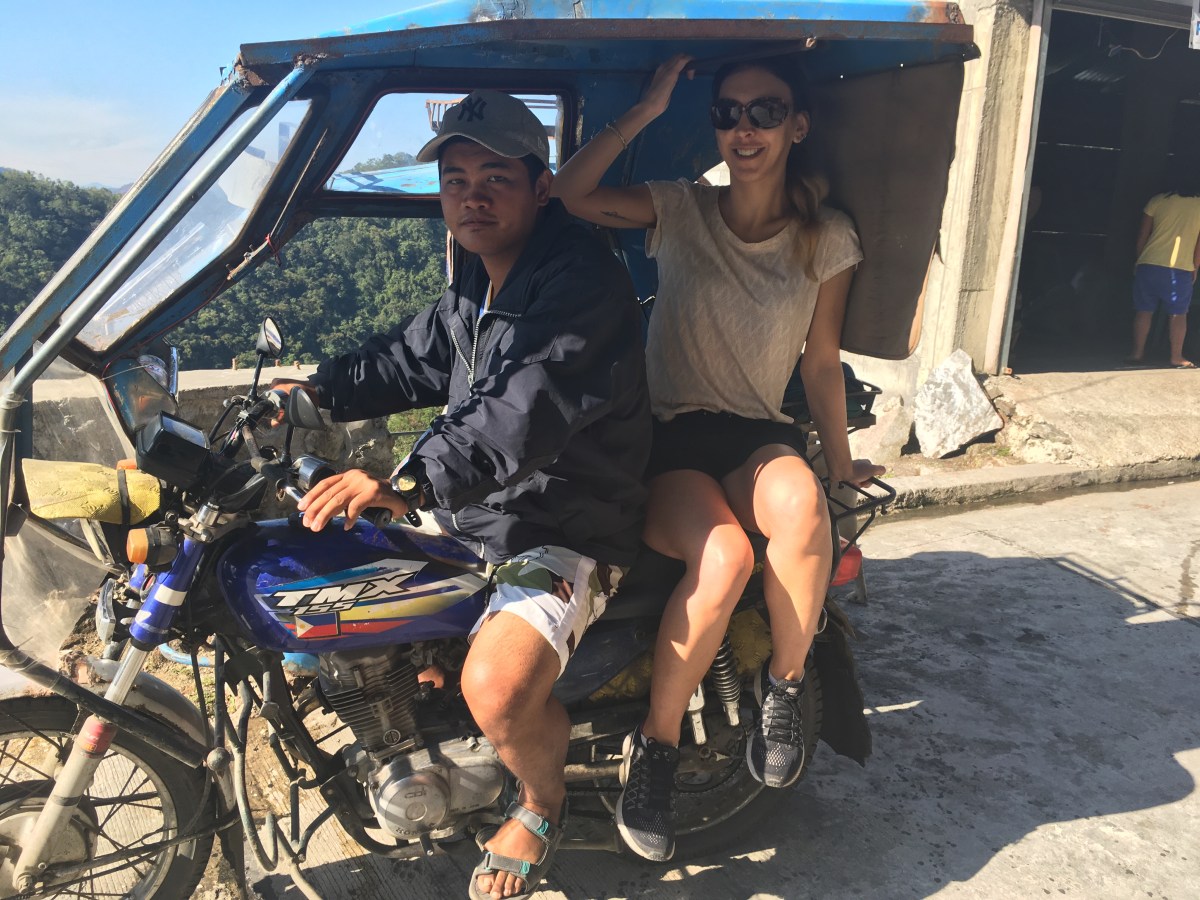
Let me introduce the new forms of transport I discovered in The Philippines – the tricycle and the jeepney. The tricycle is a moped with an attached side car, generally falling to bits and pieced together with bits of metal and plastic.
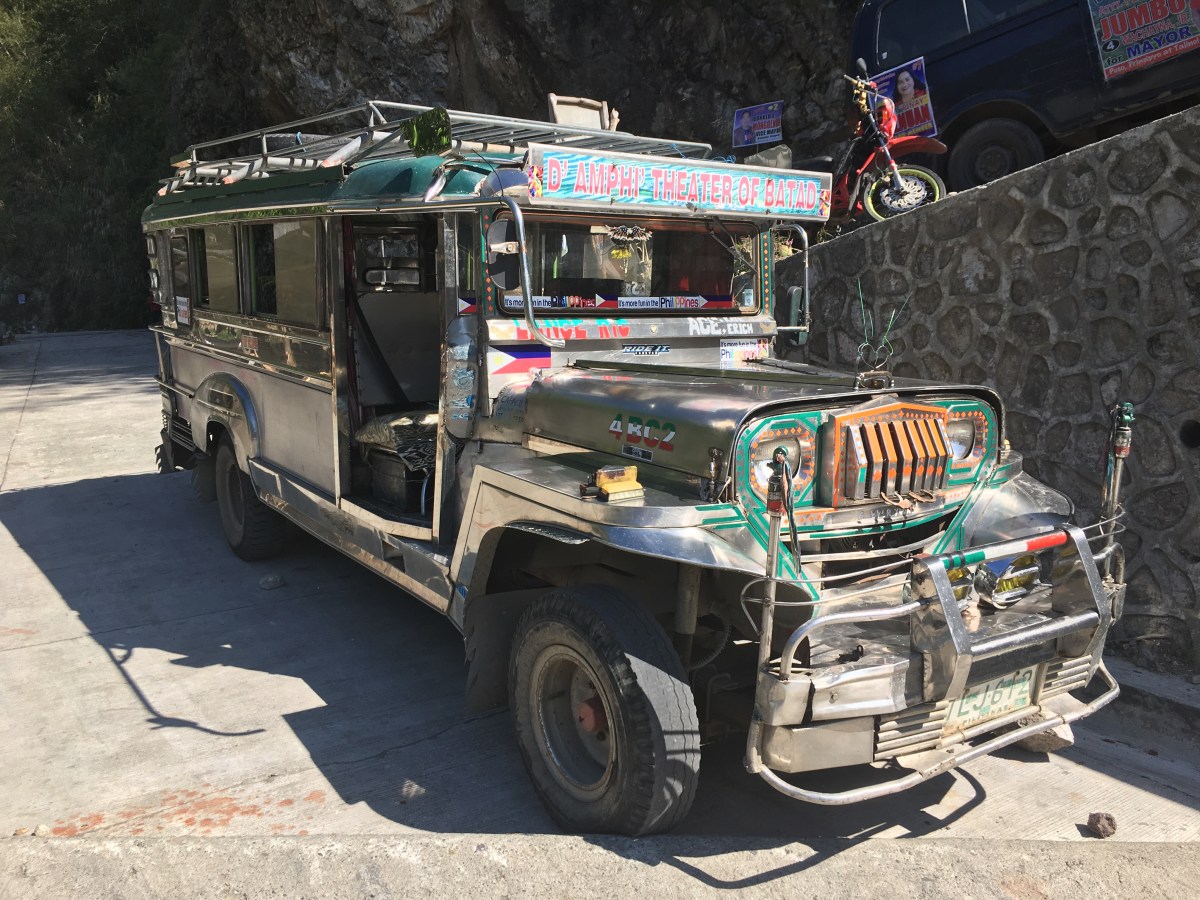
The jeepney is a throwback to the US occupation – these are old army jeeps that have been converted to carry a load of passengers in the back, and pimped up in the style of Indian buses. They actually manufacturer them now and apparently an electric jeepney exists.
Filipinos love kareoke and country music – I took the video below of a great country tune blasting out over the hillside 😎
The tiny village of Batad is also only accessible by foot, or a number of steps to be more accurate. It’s absolutely beautiful – the rice terraces are sky high. There is photo opportunity after photo opportunity. Our guide said only last week one of his guests fell off he edge (she survived). Consider that everything has to be carried up and down by hand, including building materials for houses – I saw many men carrying sacks of sand. Access to medical care is a problem as if a person is too sick to climb the steps to the main road they must be carried.
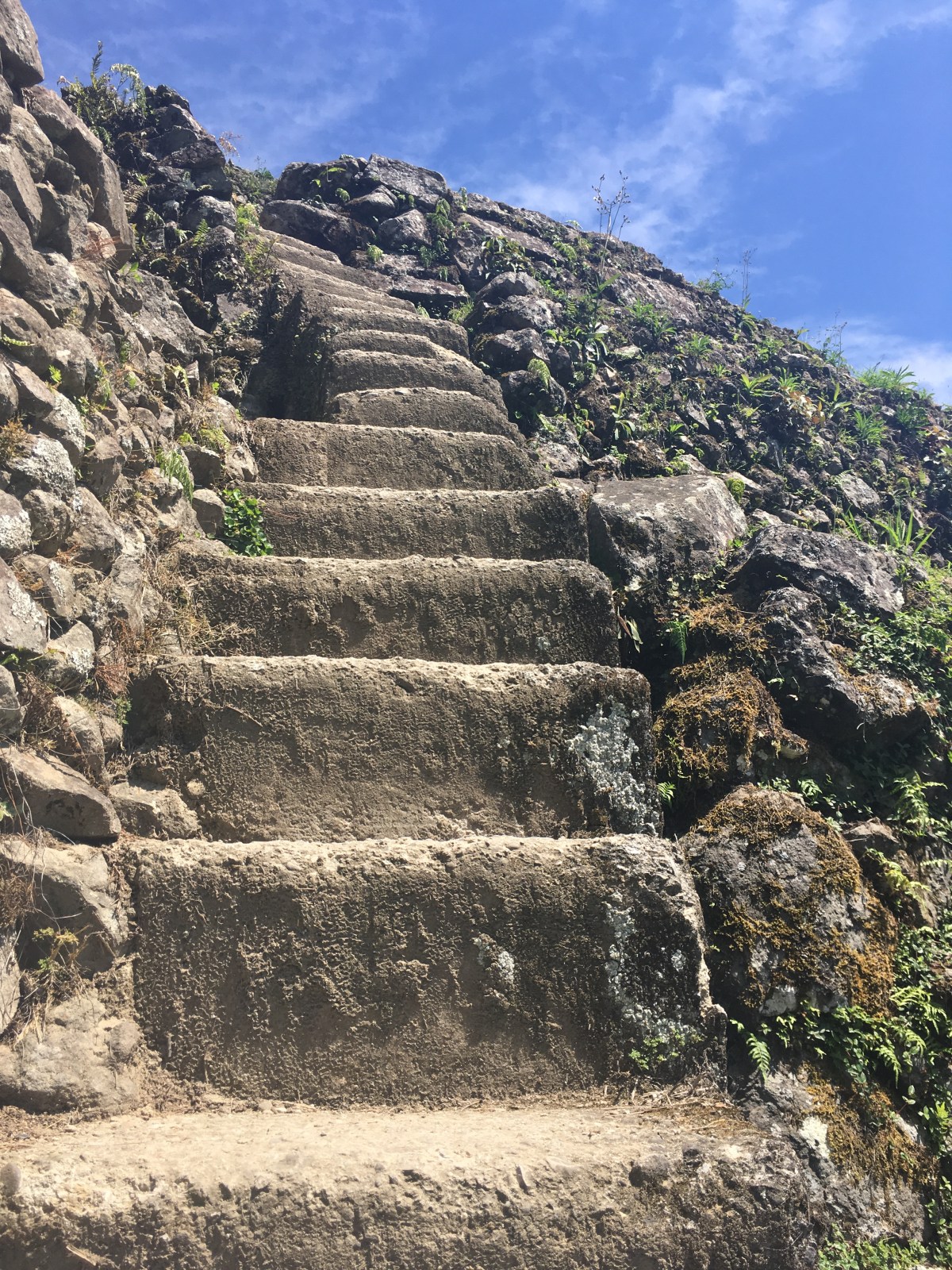
The steepest part of all was the Stairway to Heaven. Climbing down was a challenge and I was grateful for the stick the guide provided.
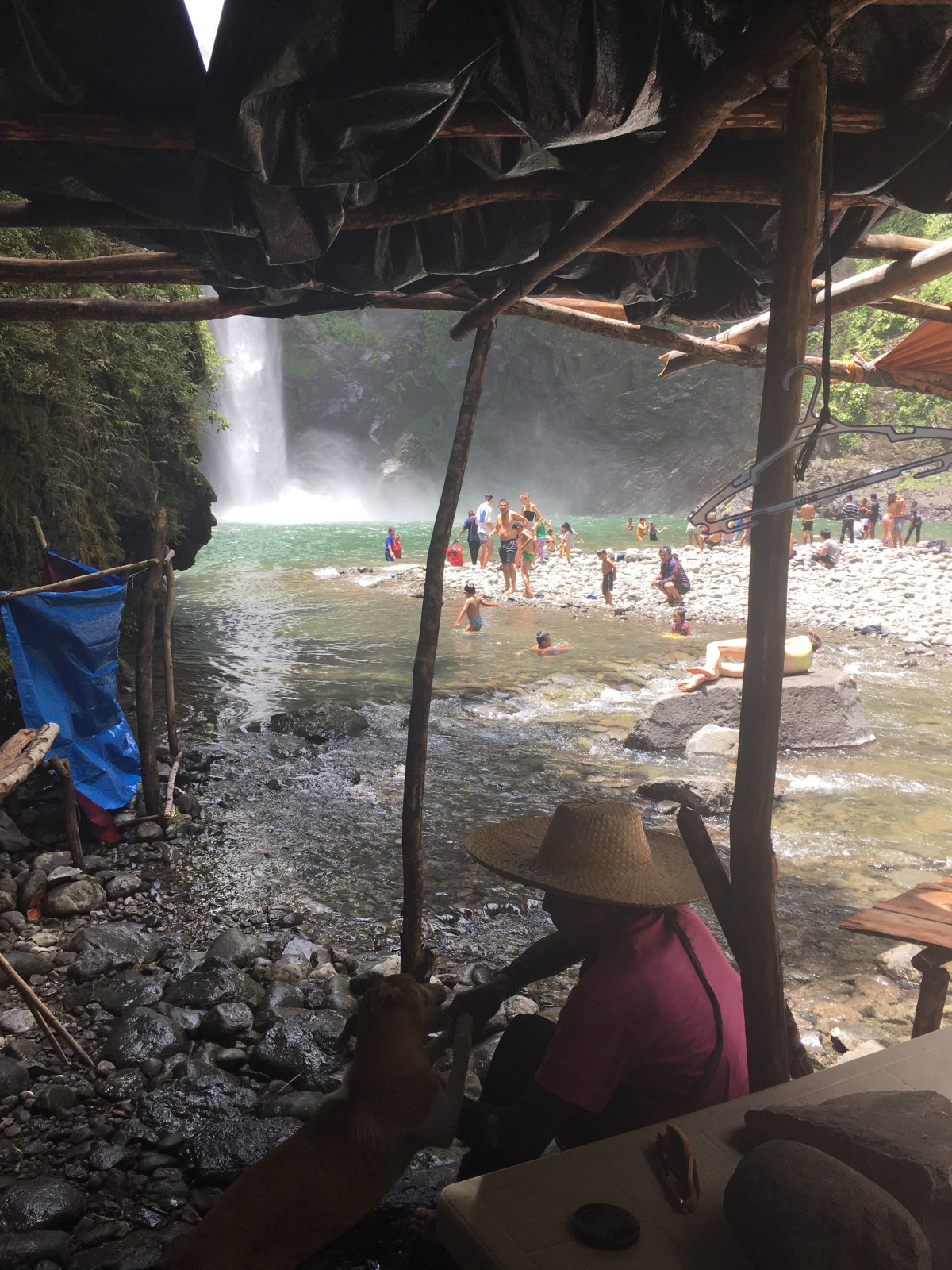
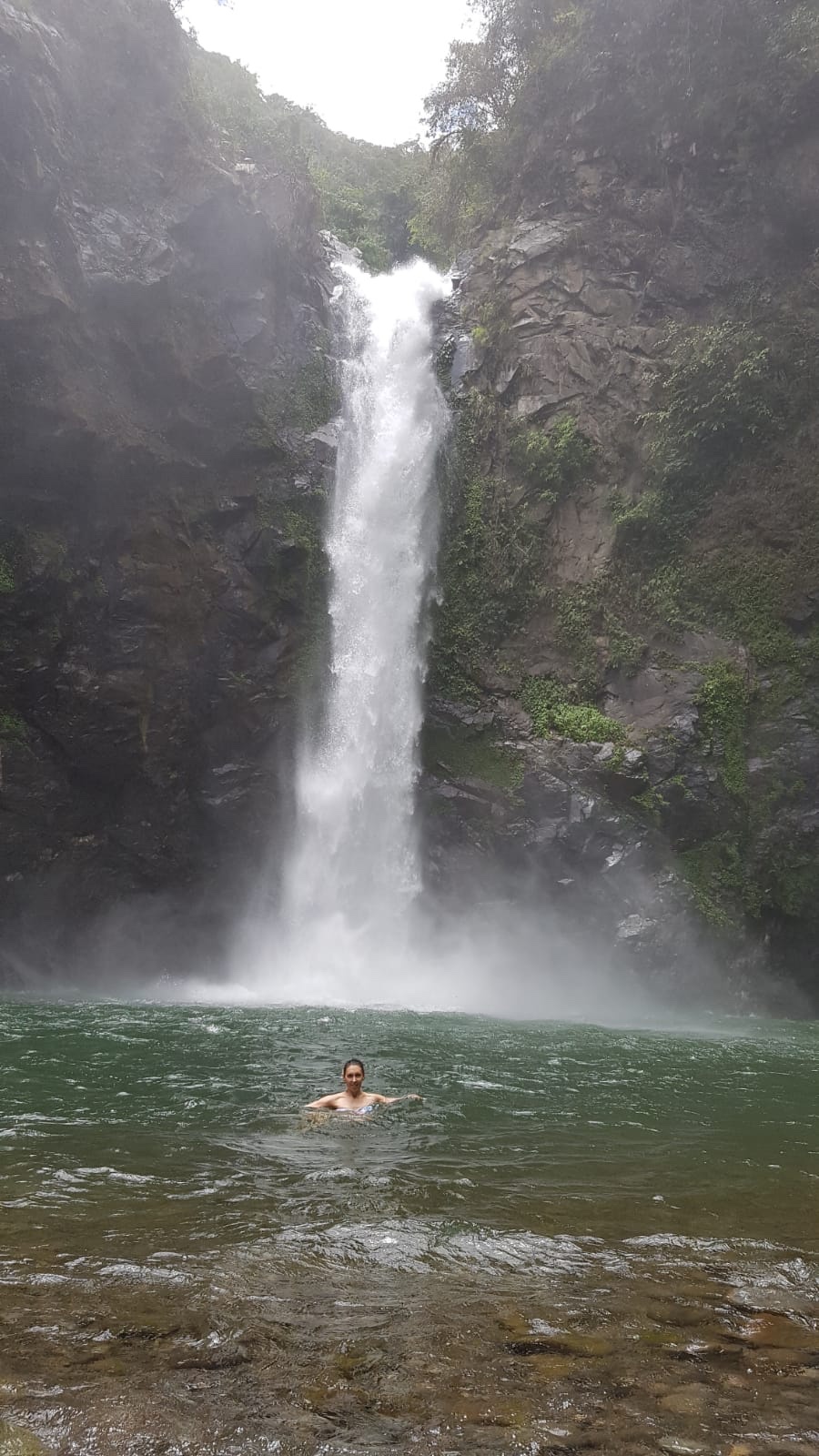
We stopped at a waterfall where we could swim. Unfortunately the changing room had recently been destroyed by rain so our guide pinned a sheet to some rocks to cover my modesty. Everybody in the vicinity smiled encouragingly and urged me to go and get changed. One woman even asked me to pose for a photo with her child. So I had no choice really, even if you could see my head sticking out the top and probably a lot more. Still, swimming under the waterfall made it all worth it, even the ridiculously steep climb back up.
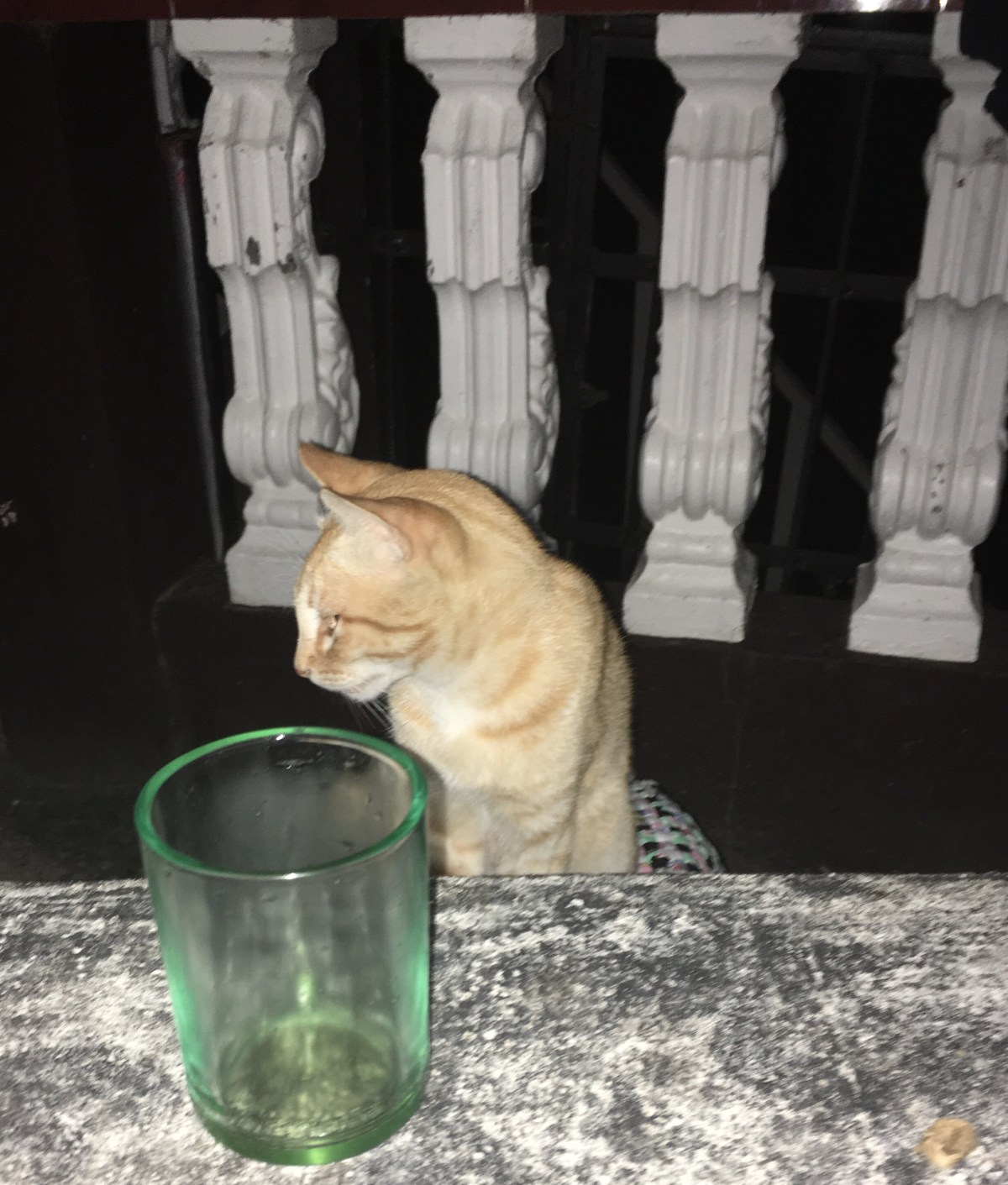
Evenings here are quiet. Apart from the kareoke which starts at 6am and never stops and the lurid green lime and gin 🤦🏻♀️
I could have stayed here for days but my time in The Philippines is limited and I needed to get to the island of Luzon to see the whale sharks….
 Maz On The Road