Myanmar : Tachileik, Kengtung, Shen State
I’ve wanted to visit Myanmar for a long time and I’m so glad I did. Don’t believe everything you read in the press – the vast majority of the country is incredibly safe to visit. Think lush tropical scenery, so many temples they don’t keep count and the most hospitable, friendly people you’ll likely ever encounter. I joined another GAdventures trip for two weeks as I wanted to see as much as possible in two weeks and it’s a little harder to get off the beaten track on your own here. Joining a tour meant we had our own transport for the more remote areas and could cross the Thai / Burmese border at Tachileik.
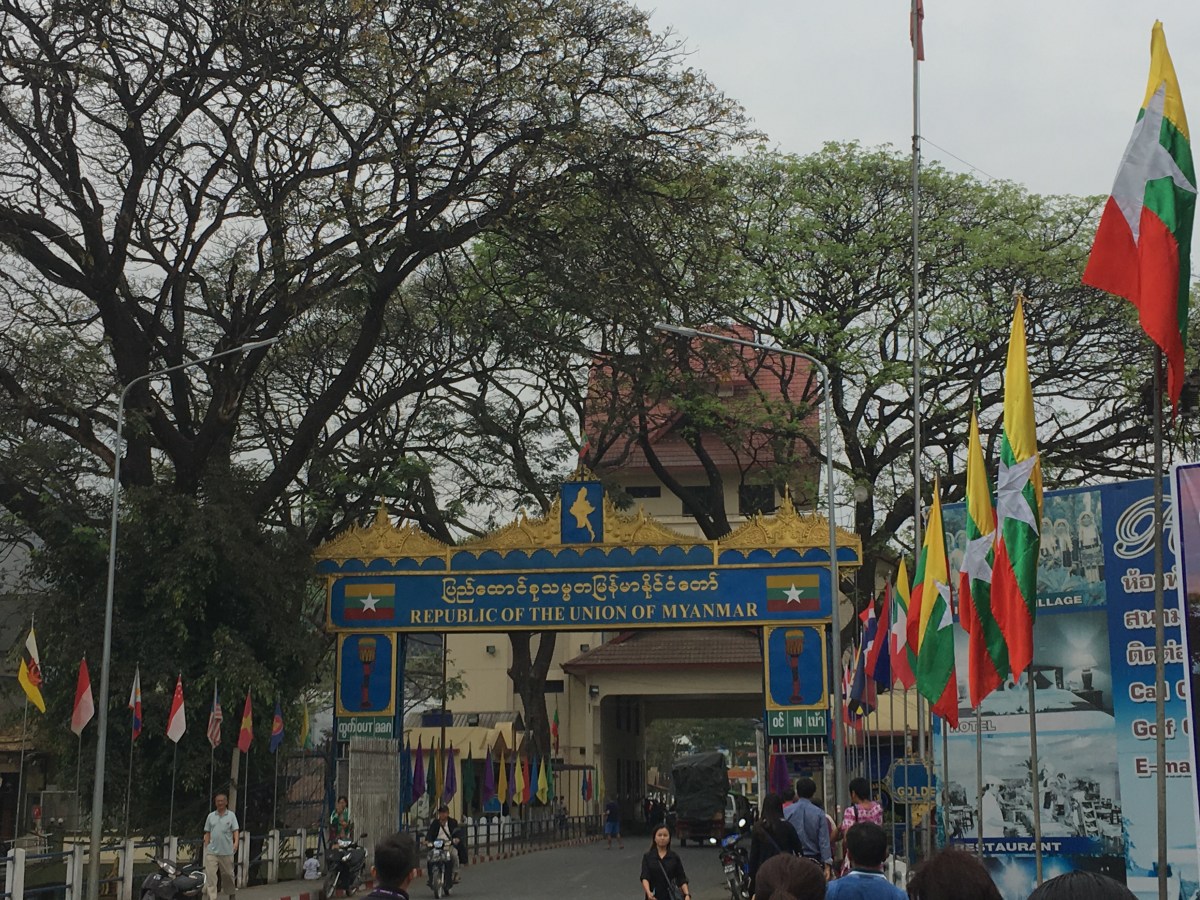
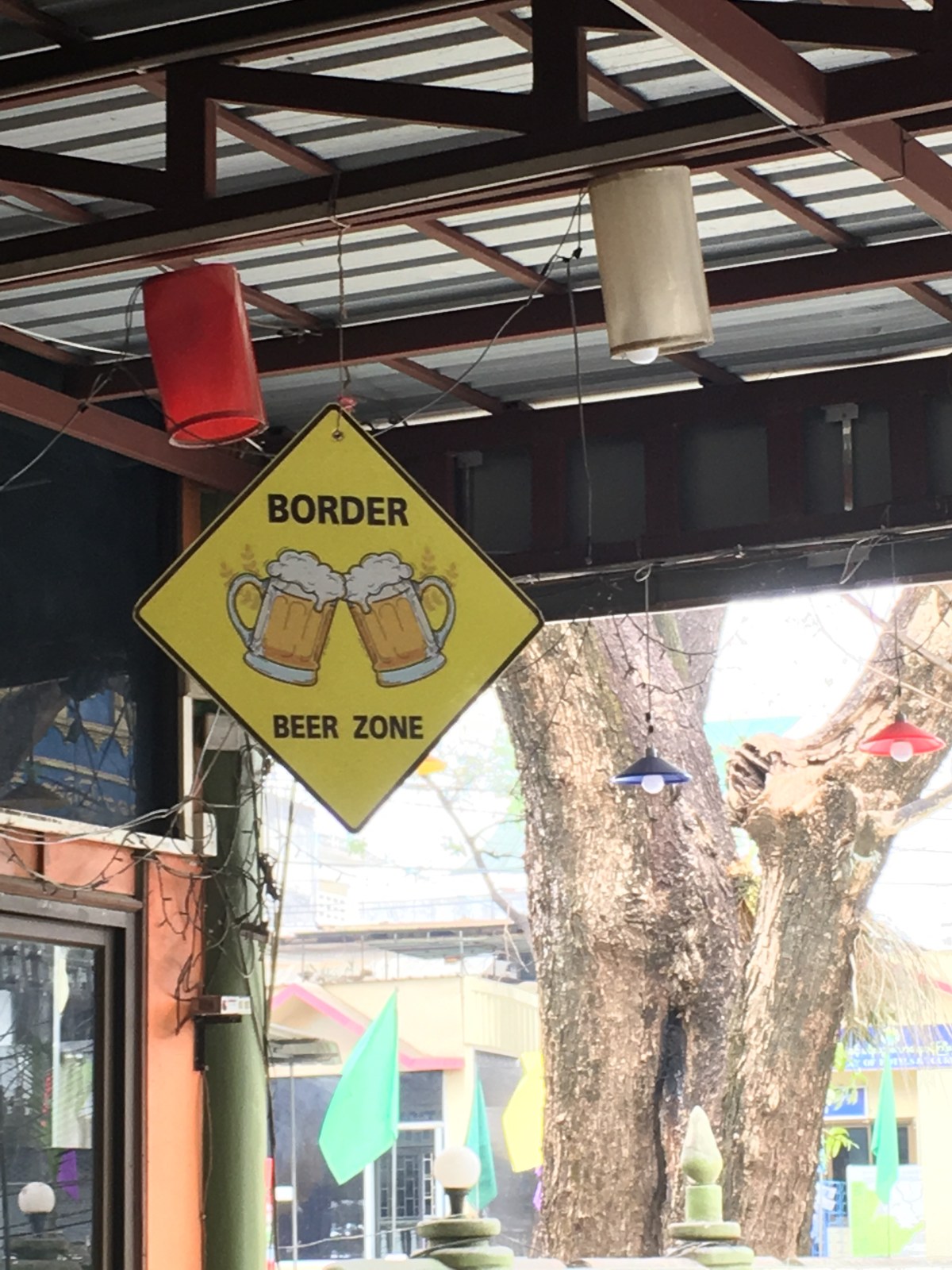
To cross the border you walk over a bridge, stopping at a little office / shack with some officials casually checking paperwork whilst eating their lunch. We left our bags in a big pile in the office while they finished their checks and went to sit on some plastic chairs under a sign for beers for a while 😂
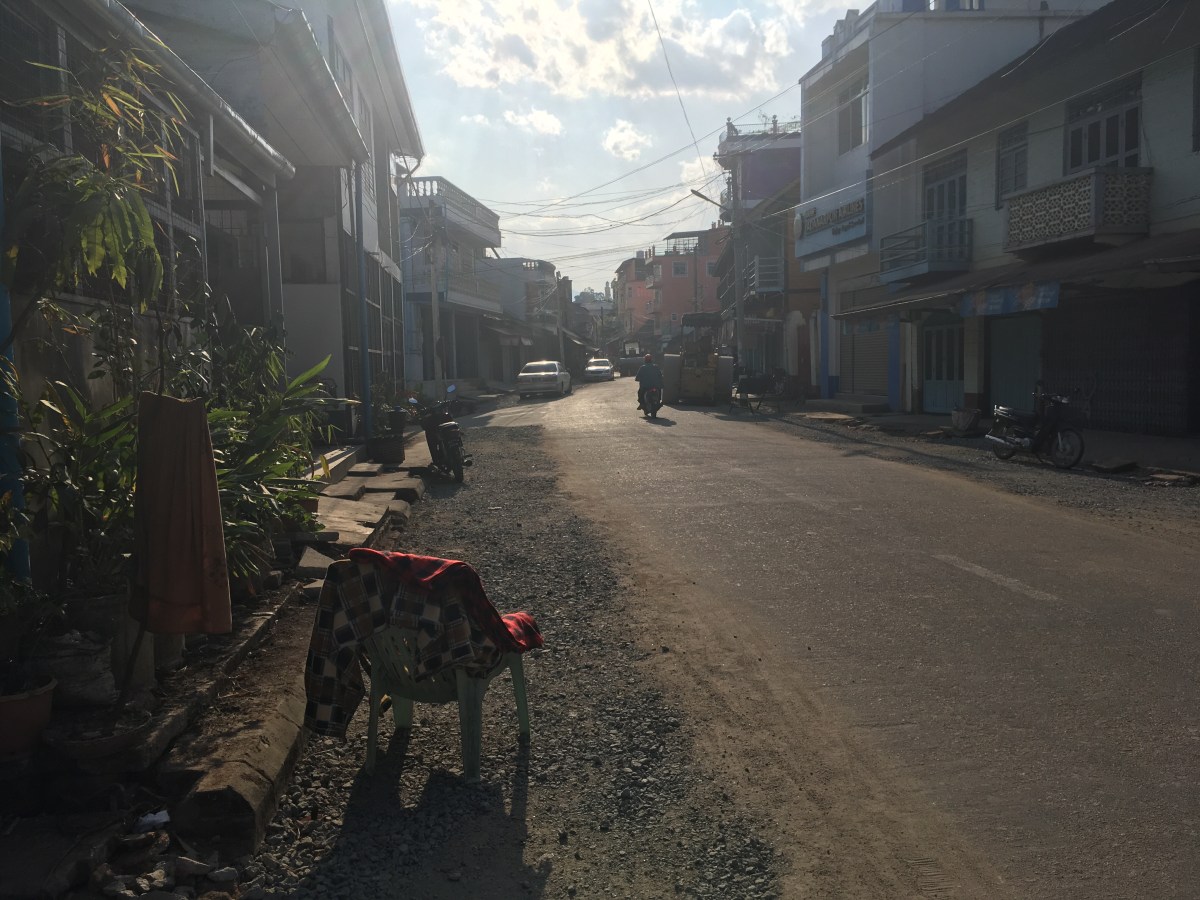
Once officially in the country we settled down for a four hour ride in our beat up old minivan. Our guide Leo, native to Myanmar and proudly wearing the traditional ‘longi’ dress, explained that due to sanctions, vehicles are generally second hand from Japan or China. This means they are very old and very slow. Many are also right hand drives even though they drive on the right. The roads were almost empty – we passed maybe three other vehicles all the way to our first stop of Kengtung. This is because the government often close this road and the bus to the border only runs a couple of times per day. Eventually we arrived at a mini version of Chiang Mai, Thailand, but 30 years in the past.

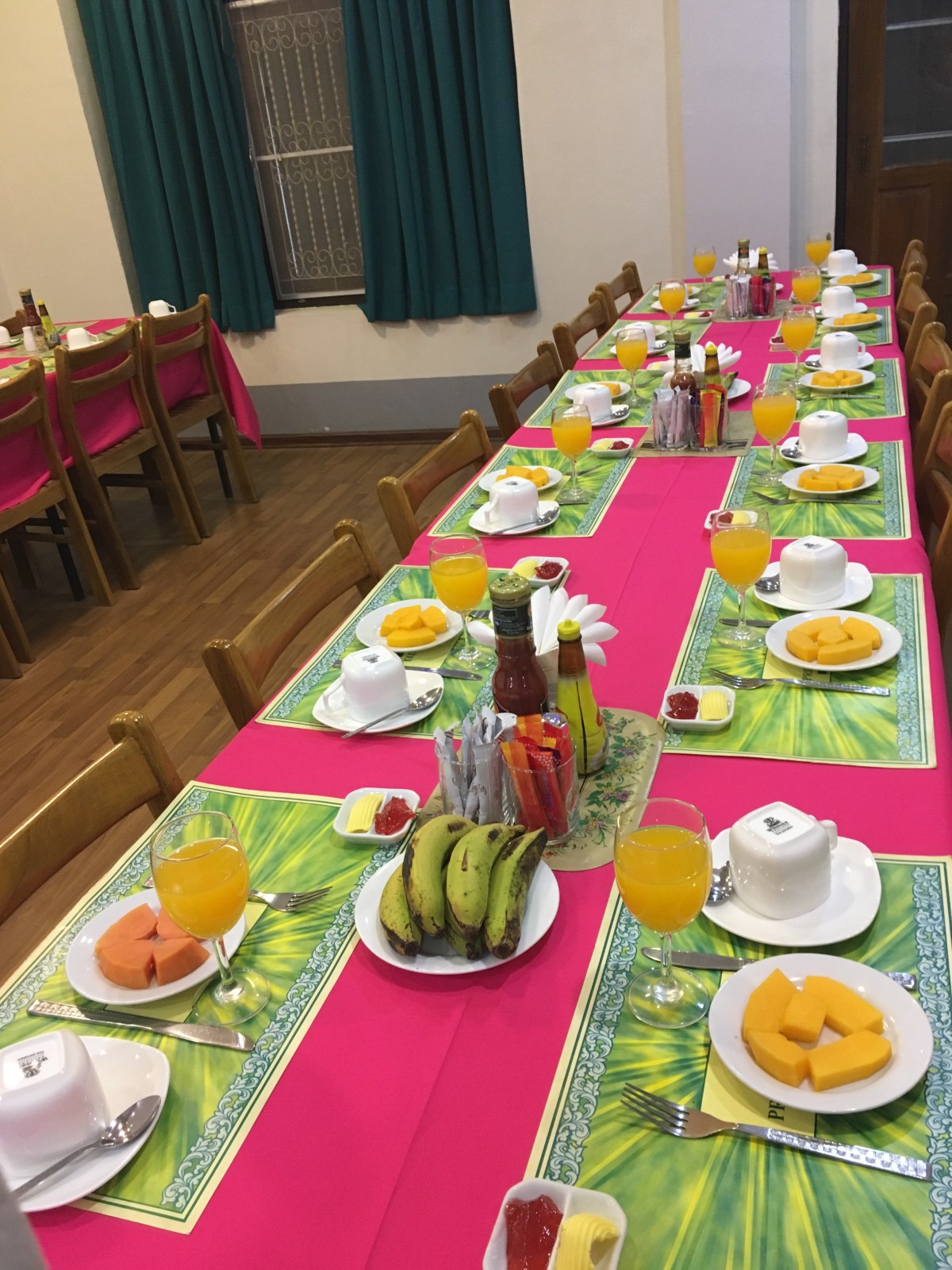
Hotels still have to be government approved but GAdventures favours locally owned, smaller businesses wherever possible. We stayed in old fashioned hotels where they tried so hard on the customer service front 🙂 It’s nice to be welcomed with a cold drink and a refreshing towel and have your backpack carried to your room! The next morning my new roommate Inke and I went down to breakfast and found the table set for us – despite this being a large hotel with several floors, we were the only guests. I soon realised fried food was going to be my staple diet…. Breakfast was fried samosas, some kind of fried donut, fried eggs, huge slices of white bread and instant coffee stewing in a pot 🤦🏻♀️ better stock up on those bananas!
For our first day in Myanmar, we climbed into the back of pickup trucks, crawling slowly up hills, surrounded by green rice paddies enroute to visit the hill tribes.
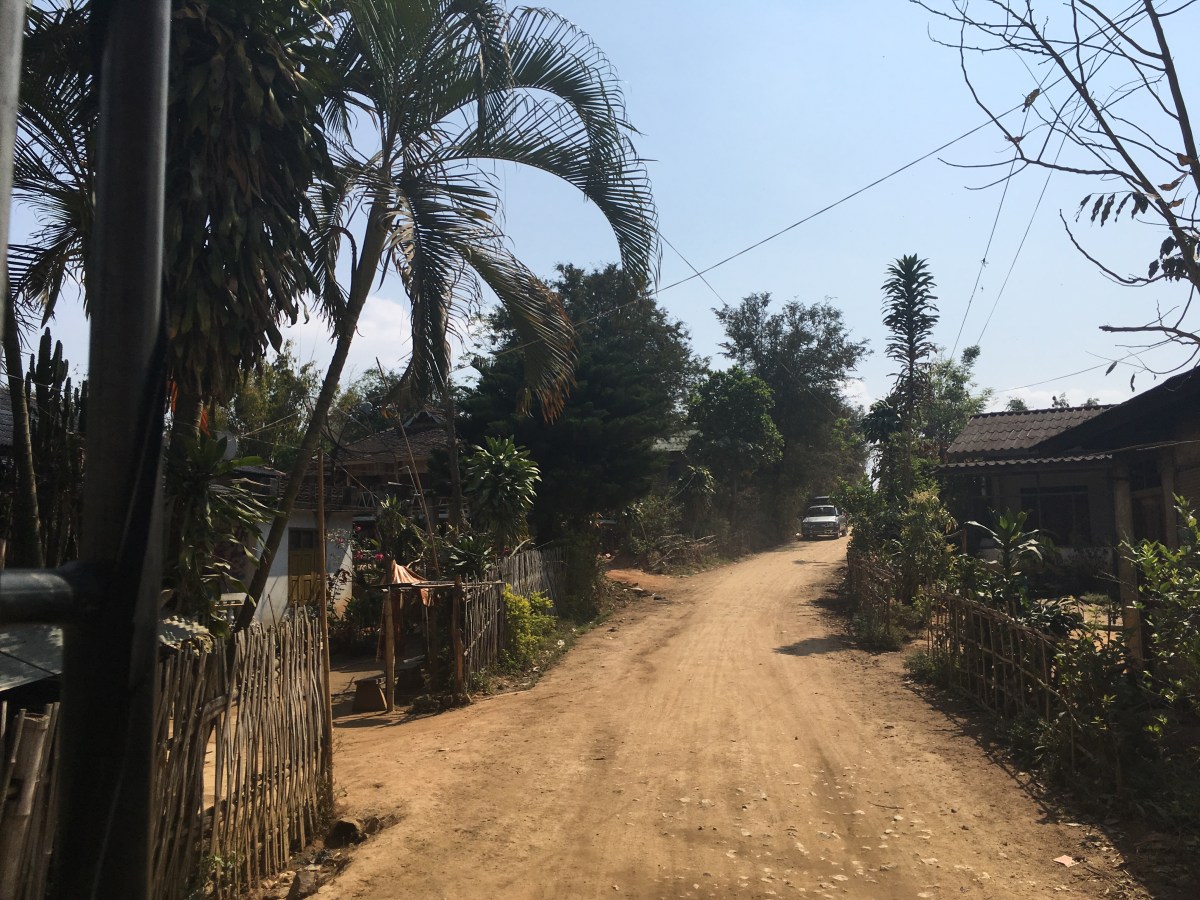
A lot of the roads were in a bad state and roadwork is done without machinery – we passed several groups of women, tarmacing the roads by hand with tiny shovels, wearing flip flops. I was taken aback by how green and tropical the scenery is. Whilst the visible greenery was mostly sticky rice, fruit and vegetables, I should mention that Myanmar is apparently the 2nd biggest exporter of opium, albeit hidden out of sight.
On a not totally unrelated note, the first stop of the day was a local farm producing ‘Moonshine’ rice liquor. This stuff is over 50% proof and just the smell of it is enough to get you drunk. The whole distillery process is done by hand of course.
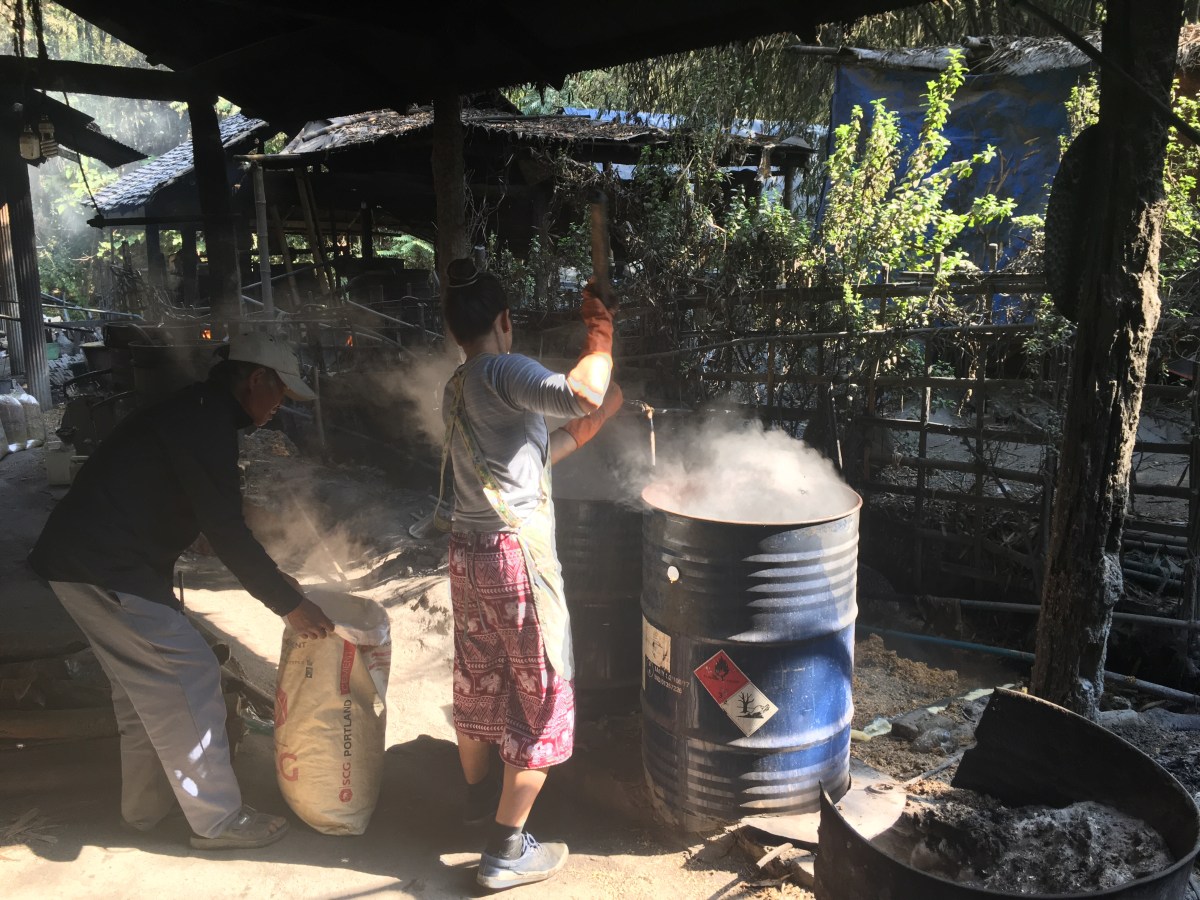
The bags below are ready when the liquid has turned a certain colour :
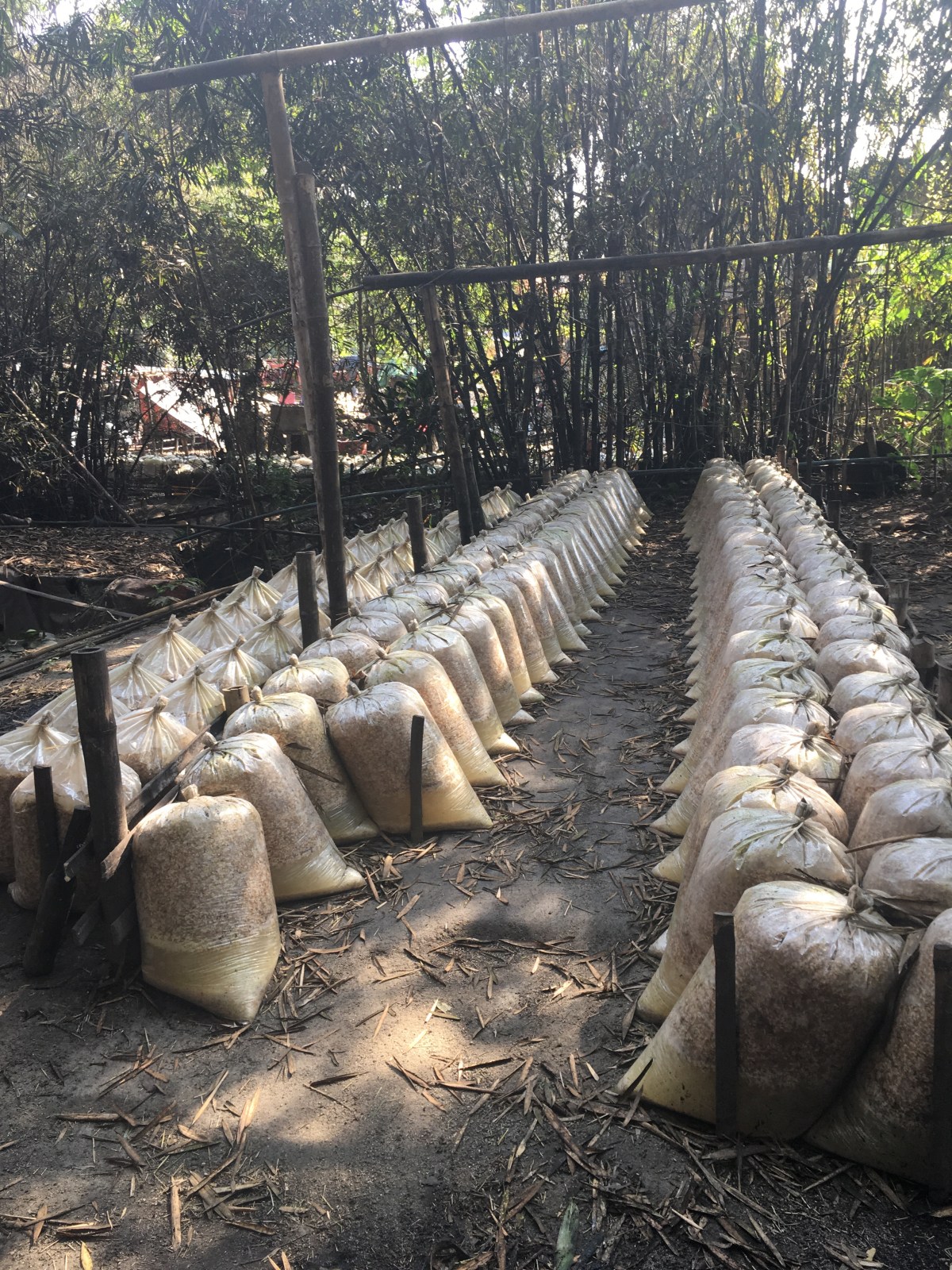
The problem is that the alcohol is so cheap, at less than 30p a bottle, that the bottle it’s sold in costs more than the actual liquor. They say if you start drinking it as a teenager you’ll be dead by 50 😬
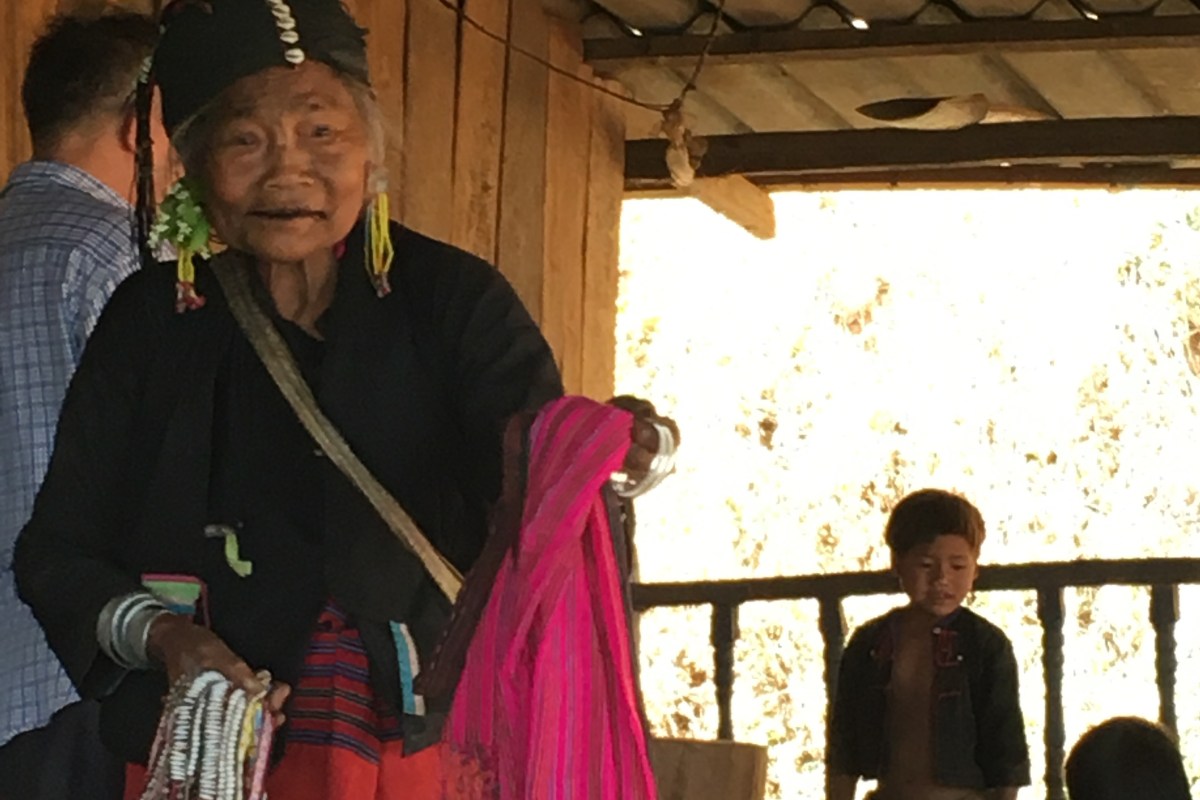
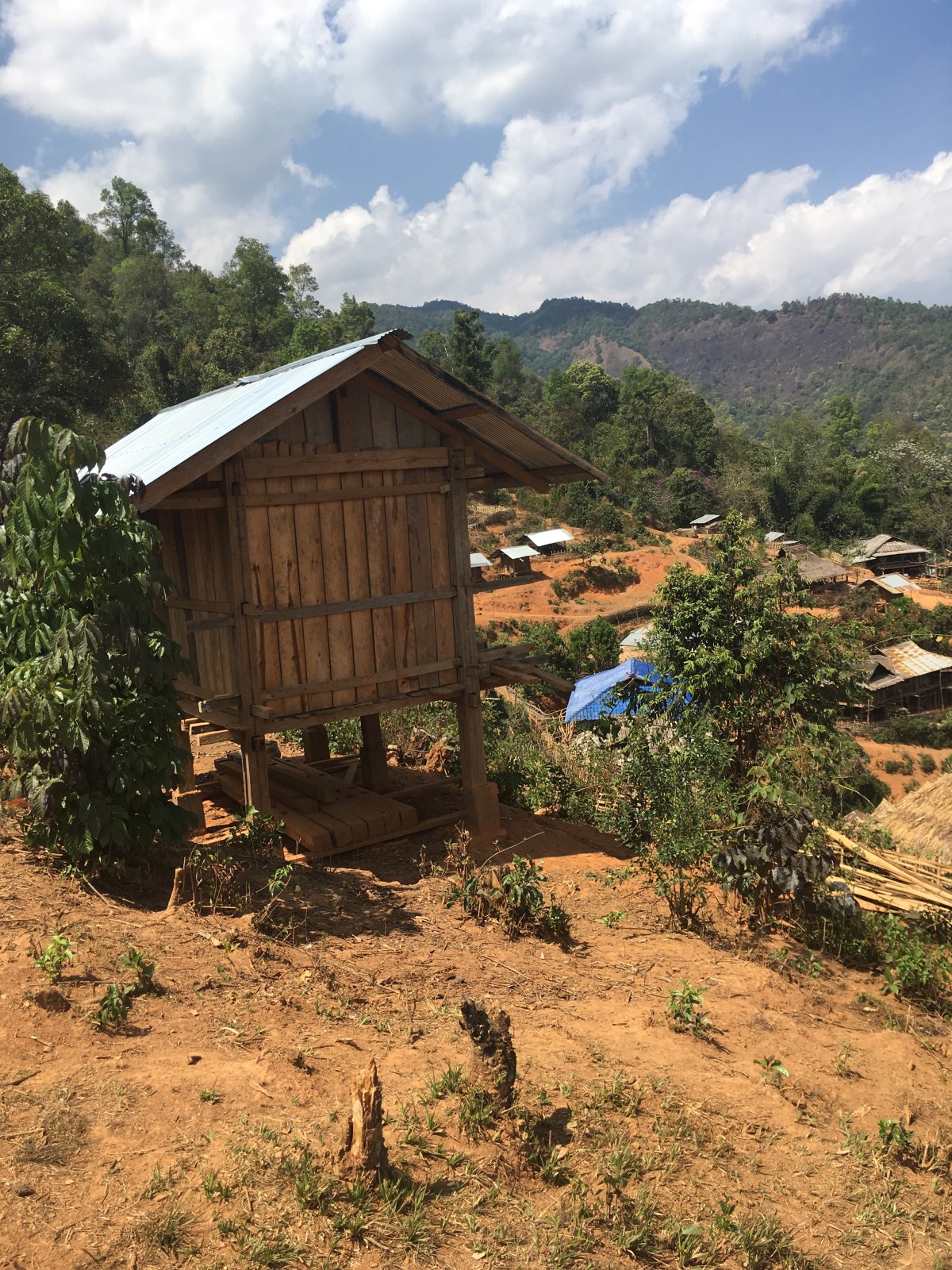
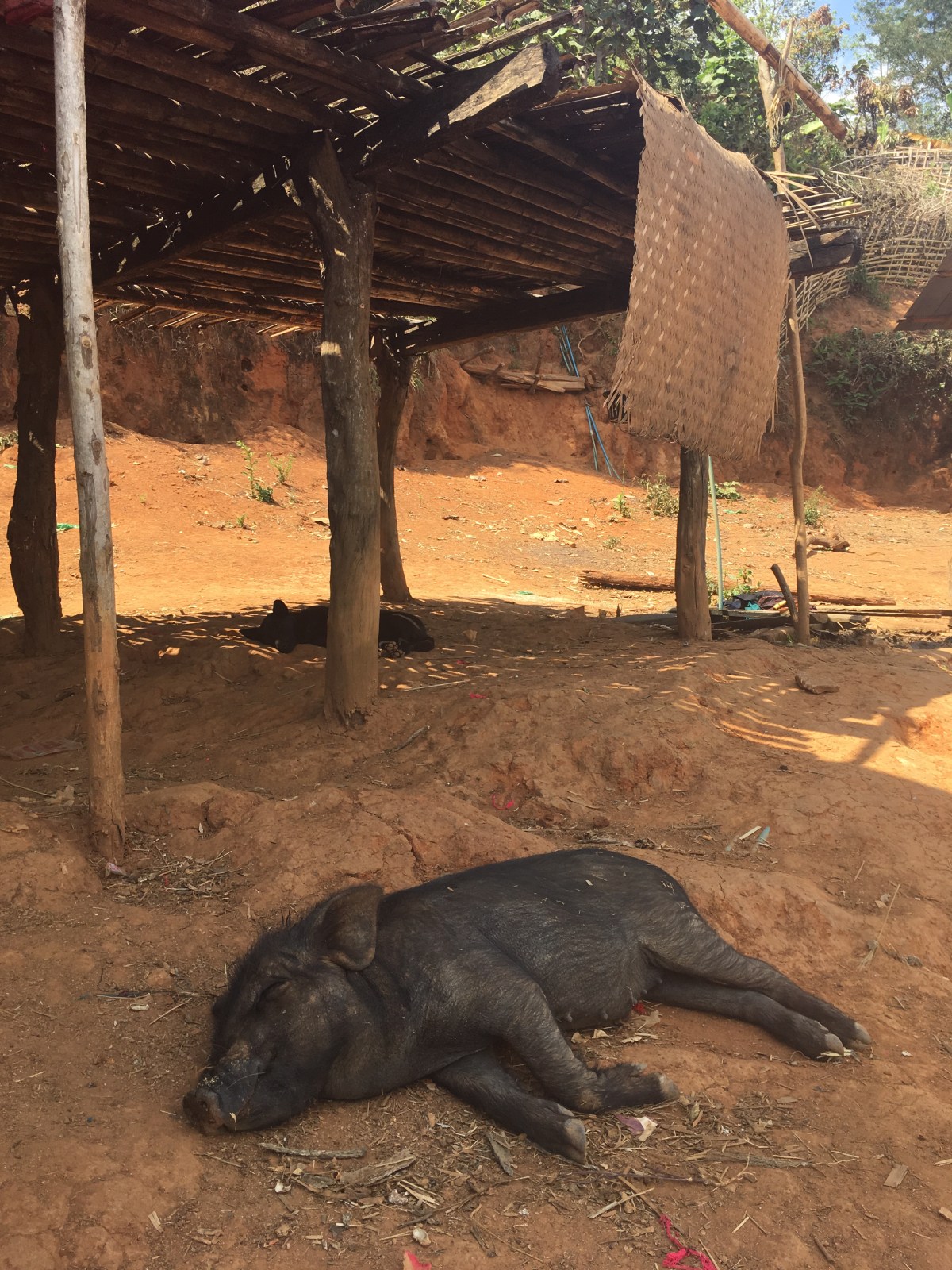
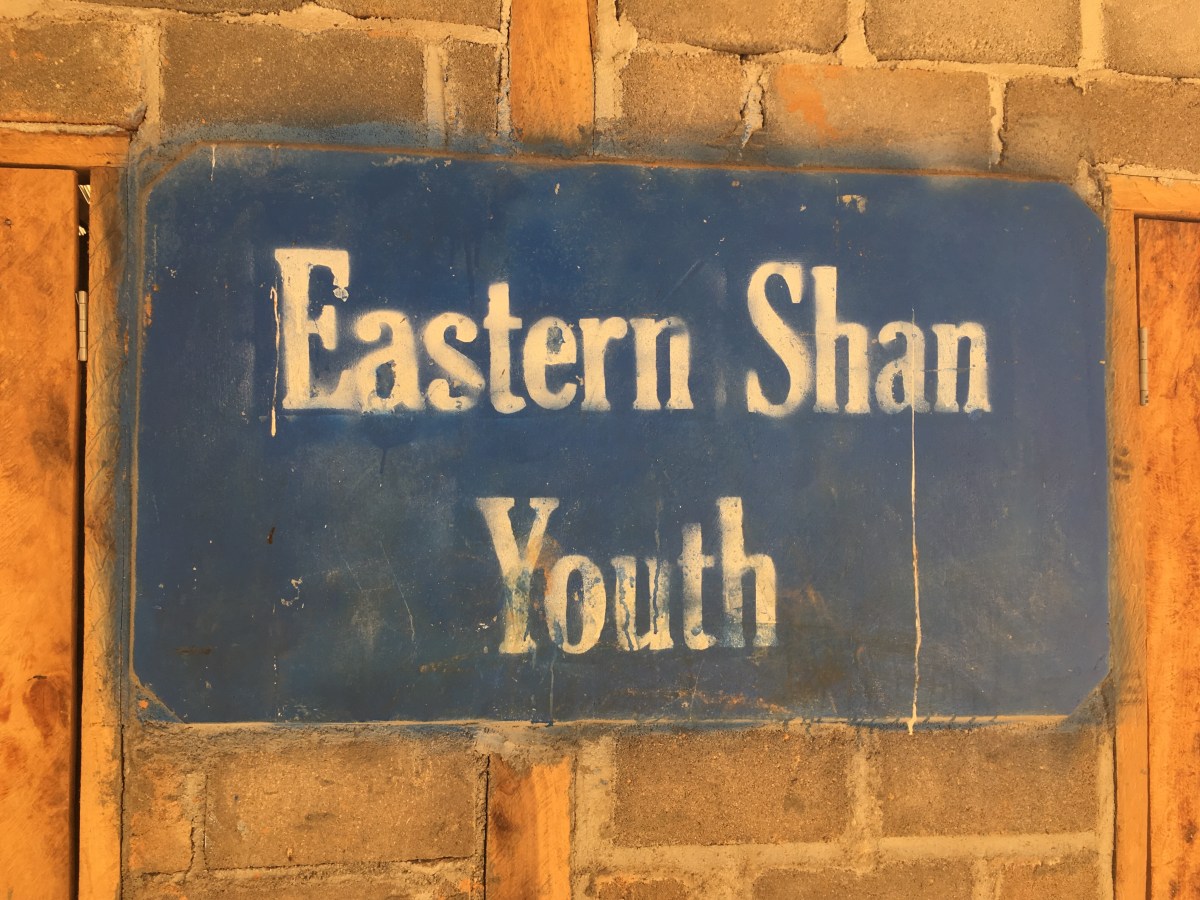
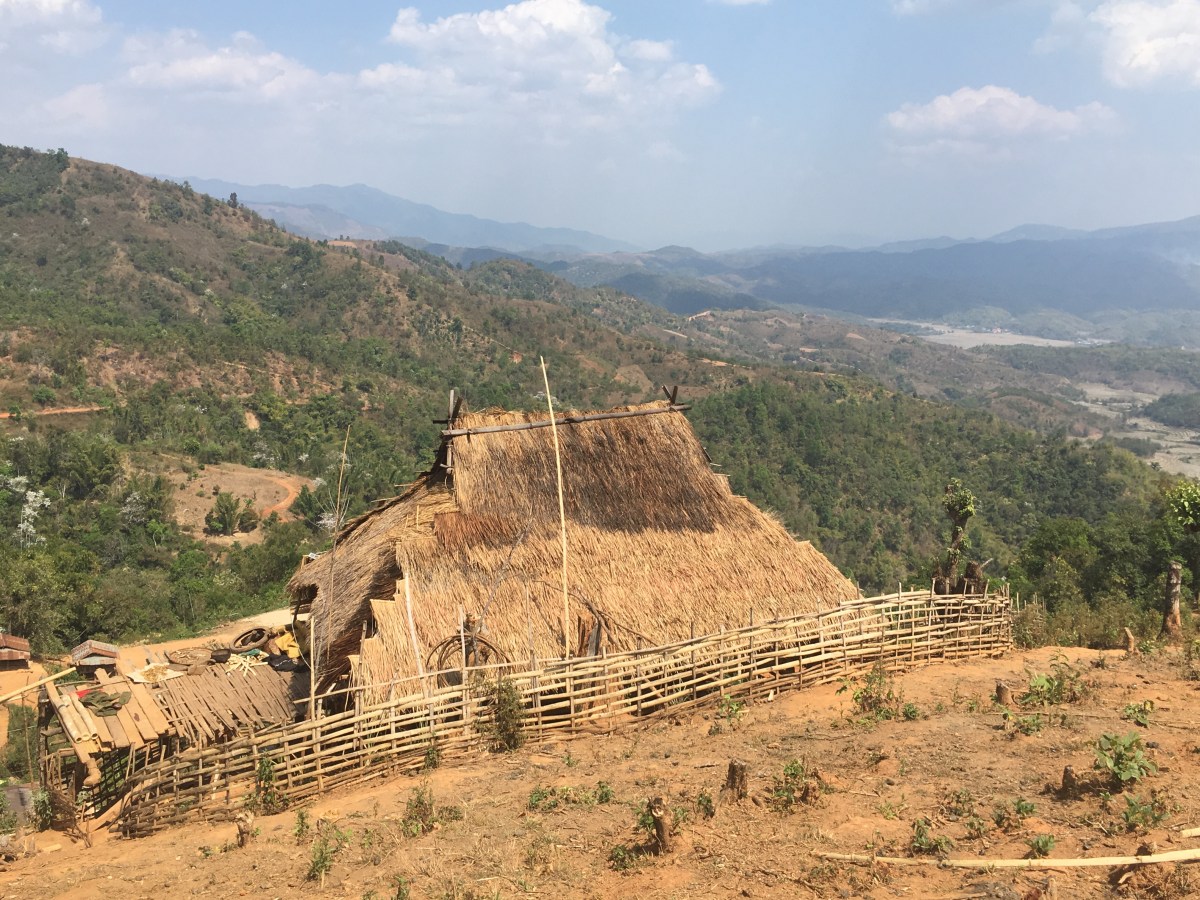
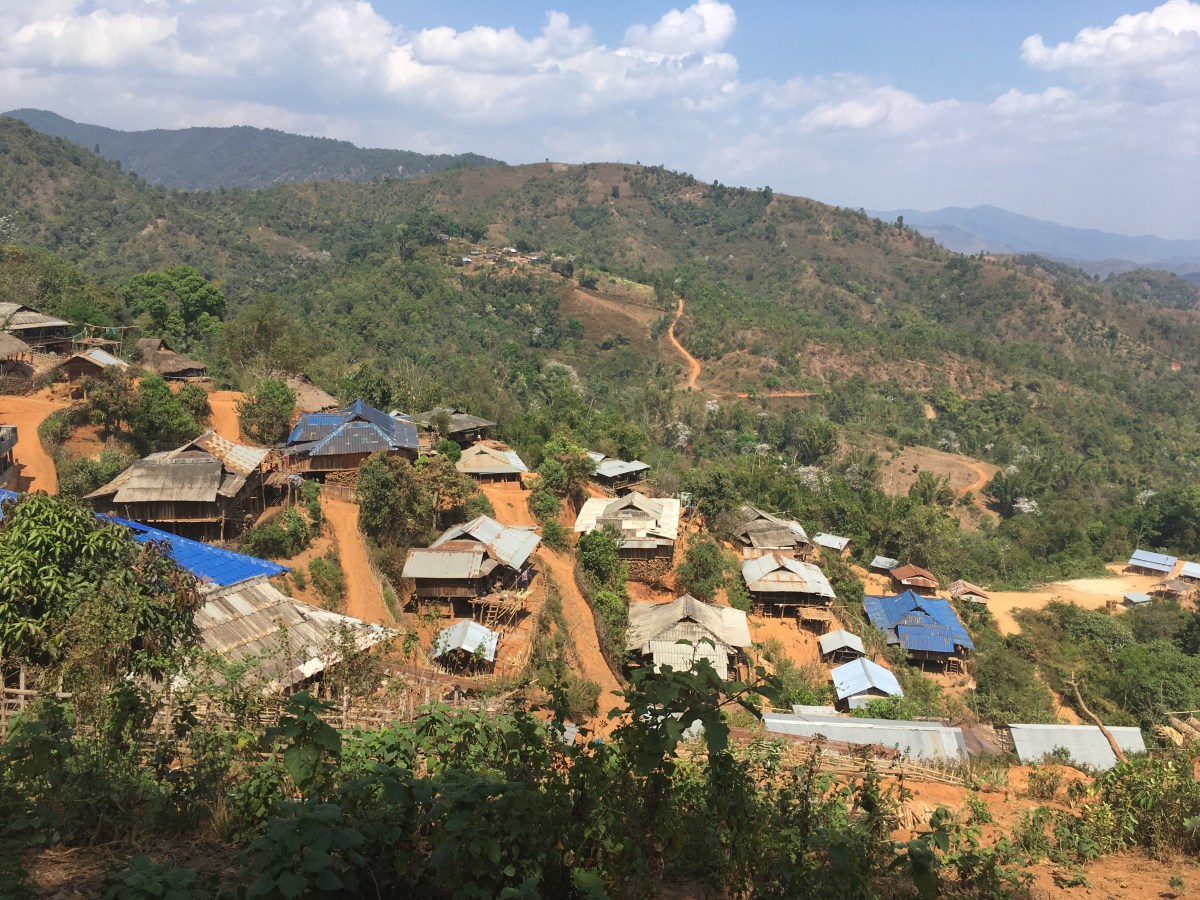
We visited some really interesting hill tribes in the Shan state, including the Akha and Ann tribes. Some of the women were sporting extravagant headwear – I didn’t take a photo unfortunately but someone else on Google images has. They have started to sell handicrafts as they are receiving visitors trekking through the area now – the women were very smiley and not pushy at all. But the kids on the other hand – it was a free for all as a group of them descended on us, each trying to win a sale. Ultimately most people bought something, as each bracelet cost only 50p and these villages are very, very poor. The pictures below show the houses, which do not have running water or much in the way of sanitation. The small school and toilet has been constructed by donations from the nearby town, which also pays for a teacher. We noticed that most of the older people have red / black stained mouths – this is from chewing the leaf from teak trees, in order to hide decaying teeth 🙊. Arranged marriages are still the norm here even though these children don’t know their real age. In fact one of the purposes of the school is to teach the calendar. Families match girls and boys for marriage who appear to be of a similar age, within the same village.
We had a local guide accompany us, who could communicate with the locals, but we’d been warned he was old and might be slow. We’d also been told the trek was easy, ‘just walking around the villages’. Wrong on both counts! The guide didn’t change pace or break a sweat, powering up the steep hills as I was puffing at the back 😬
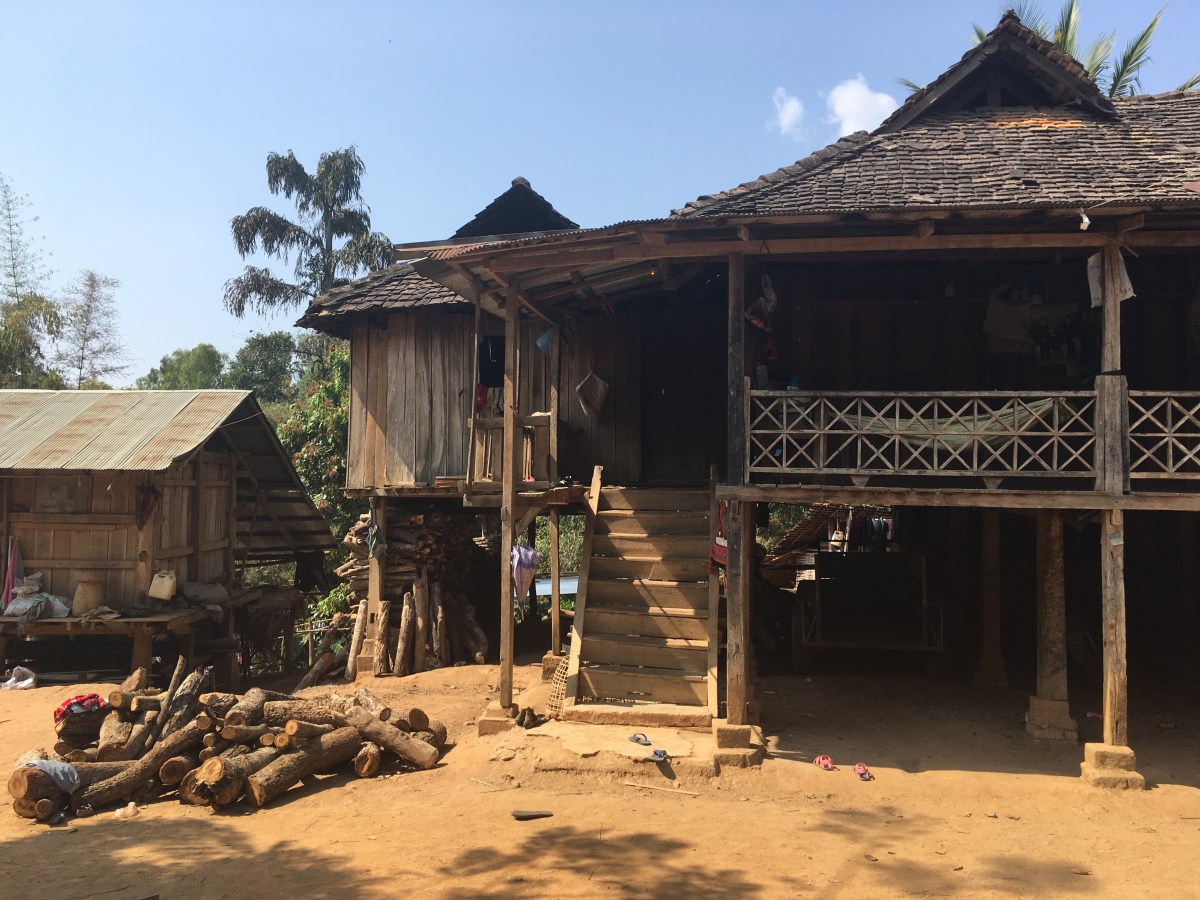

There was a tap that continually dripped water onto the ground, running down the hillside through a hosepipe. I thought it was drinking water for the village, but it’s actually for the spirits. The villagers believe that providing the spirits with water, and hanging signs over their doors, will keep the spirits out of their homes.
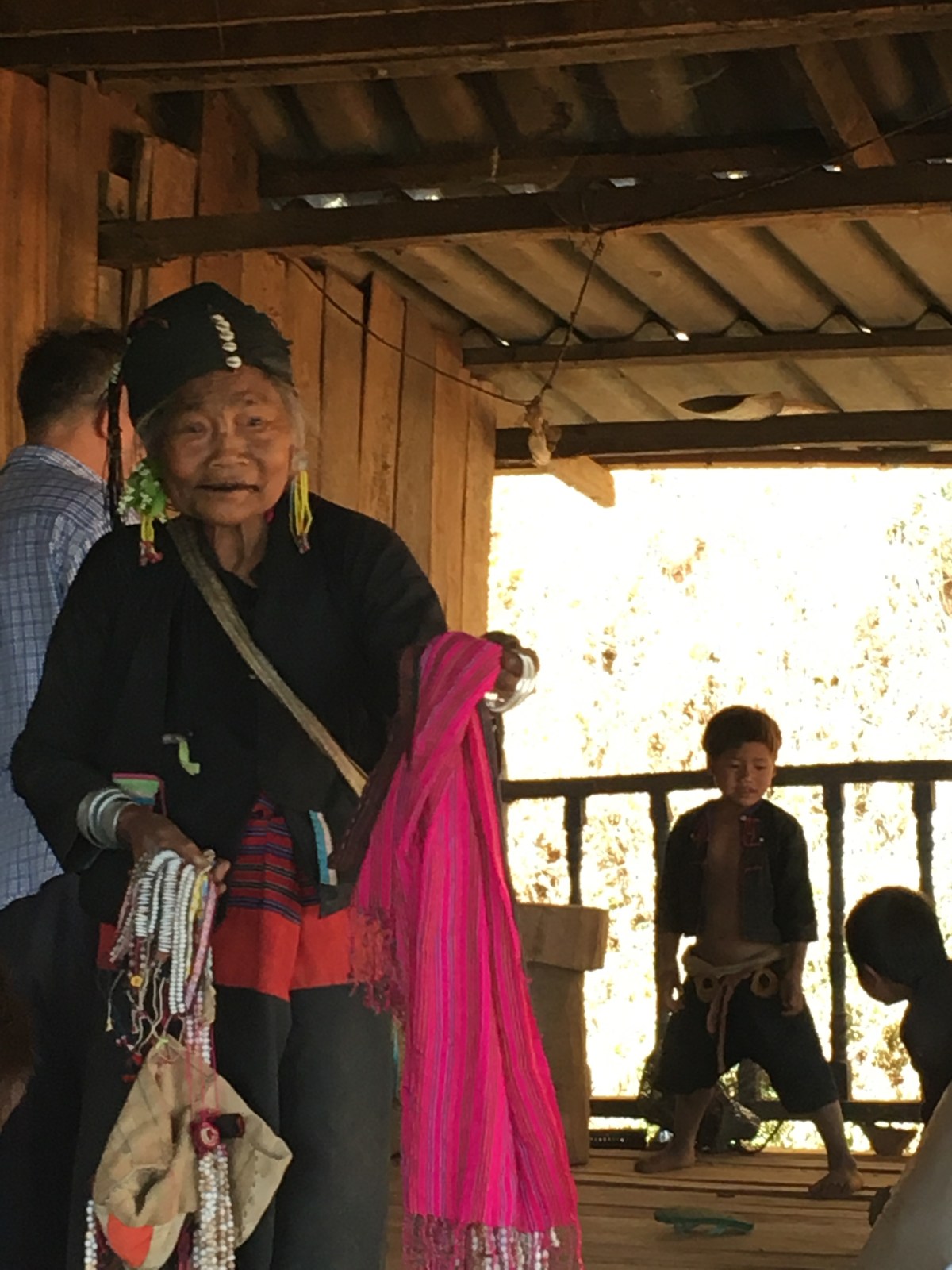
Everyone smiles, waves and says hello to us wherever we go. ‘Mingalabah’ is how the greeting sounds and we say it to everyone in return. The most important thing is to smile 🙂 If we are on bus, people wave from the side of the road, especially children. One of my favourite memories is walking down the street, and seeing a woman’s wide smile from far away, before I could make out any other features.
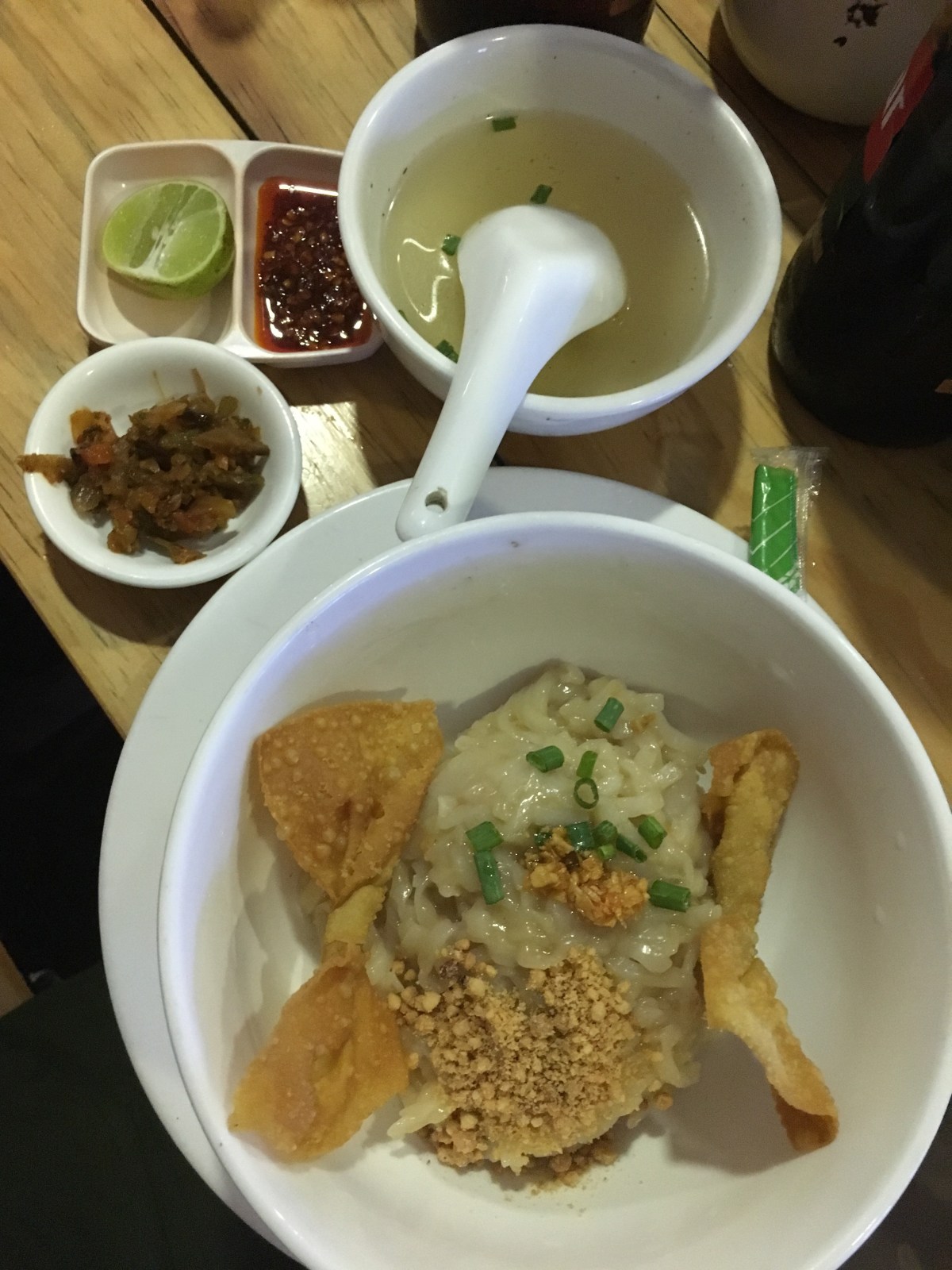
The only downside is the food… ‘Shan noodles’ to be precise. One of the few veggie options on the menu, after we had communicated that we did not want fish sauce (I’m trying not to think about the suspiciously pink coloured Pad Thai that three of us, all veg*n to some degree, had at the border when there was absolutely no time to order something else and we all took a bite and looked at each other in horror 🙉). We have learned to say ‘Tatalo!’ for vegetarian followed by ‘Fish sauce no!’ which conveniently rhymes, and then we produce a photo of a bottle of fish sauce, and finally hammer the point home by making a cross sign with our arms like some kind of bizzare ritual. It seems to work! But Shan ‘sticky’ noodles were just nasty slimy noodles that I dont understand how anybody could eat, vegetarian or not 😬
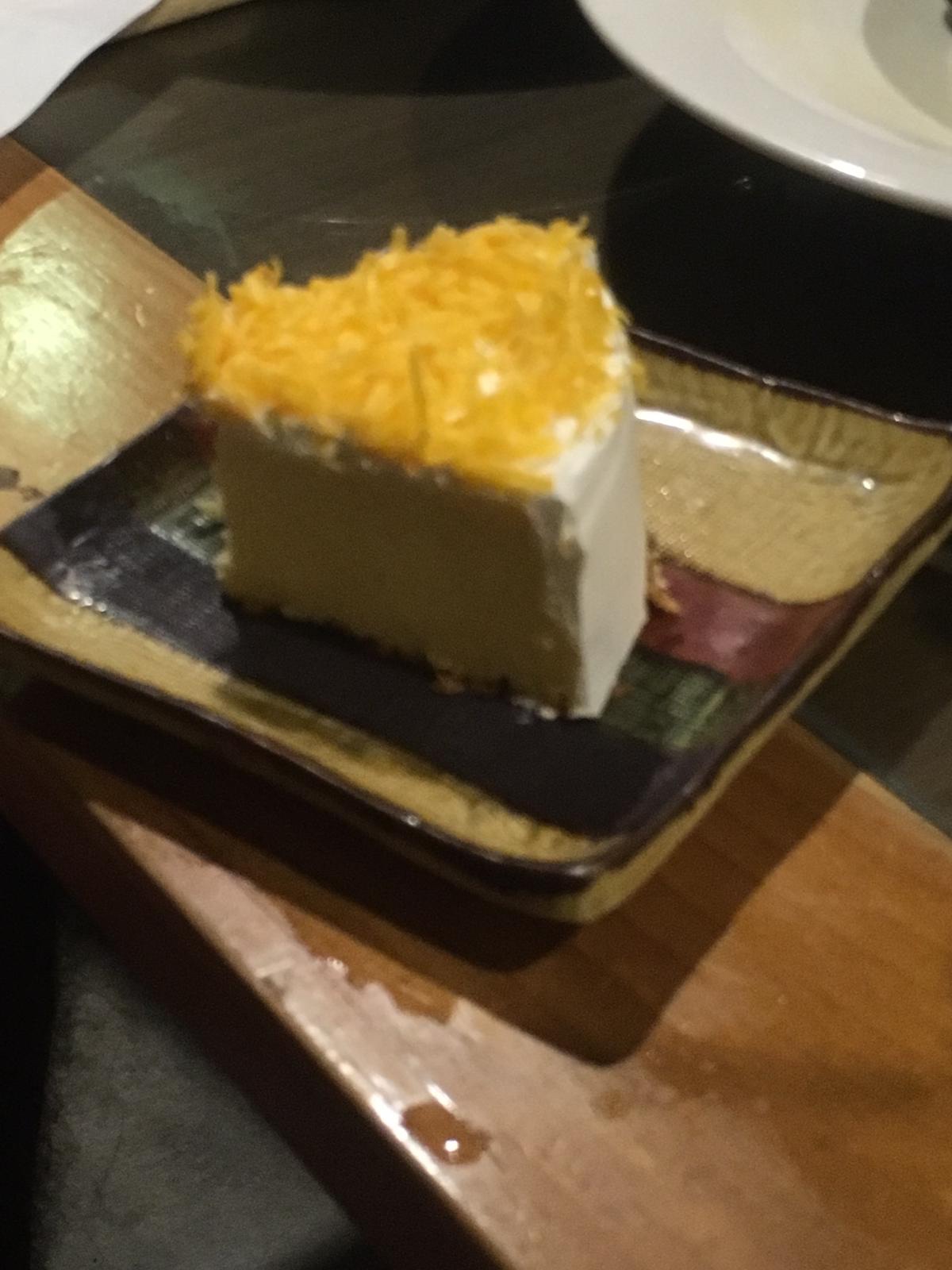
To illustrate how new tourism is in this state, which is geographically cut off from the more established tourist industry in, say, Mandalay, below is a photo of a cheesecake somebody ordered for dessert. It really is cheddar cheese on top of a sponge cake 🤔 Nobody had the heart to tell them that’s not actually cheesecake.
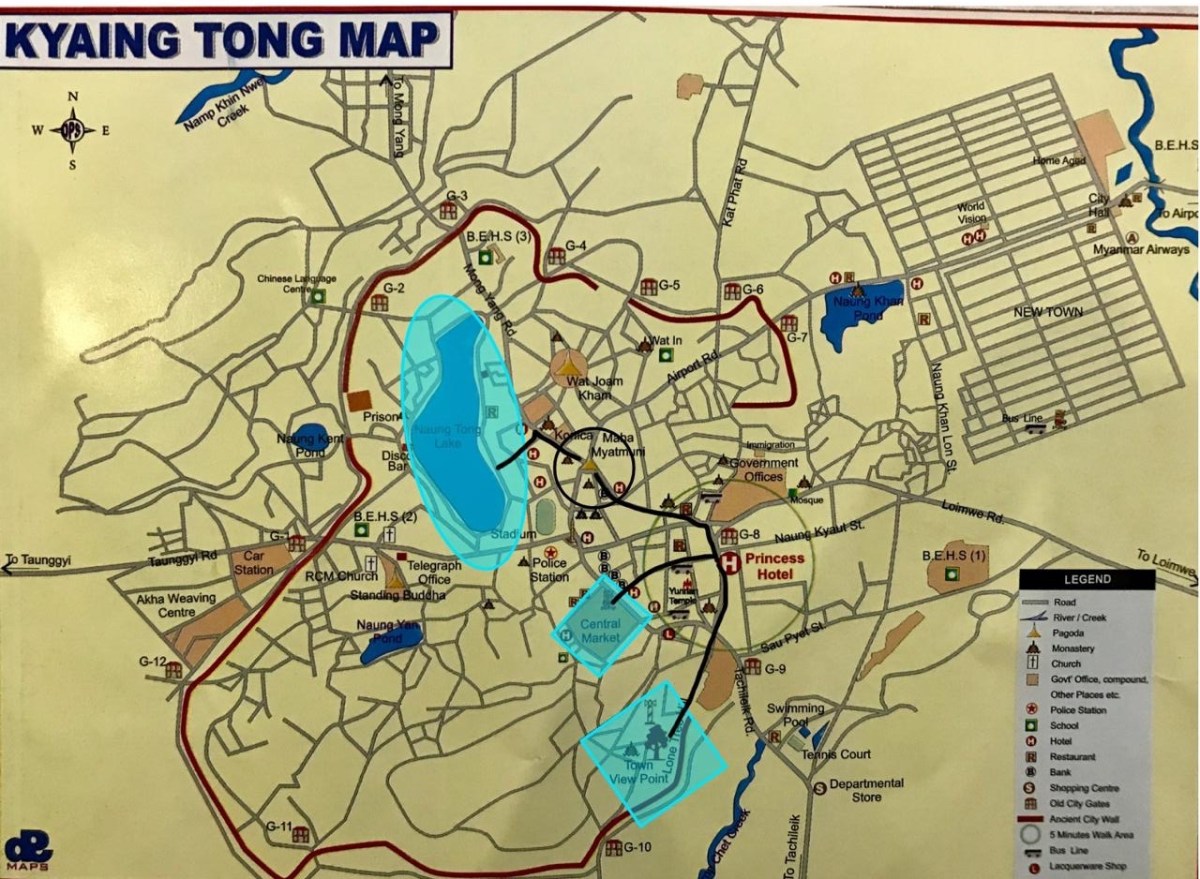
The next day our guide gave us a map and suggested we visit three places. 1- the oldest tree in the city. 2 – the temple. 3- the lake. What followed was one of the best days of my trip so far as Inke and I embarked on a treasure hunt / wild goose chase searching for this tree. We set off in the vague direction indicated by the map before realising we had no way to recognise this tree – but perhaps it was bigger than the others?! We wandered up a hill into a school that was closed for the weekend and spotted Tree #1 which had a sign on it – it looked promising until Inke pointed out it was a ‘no smoking’ sign 🙄
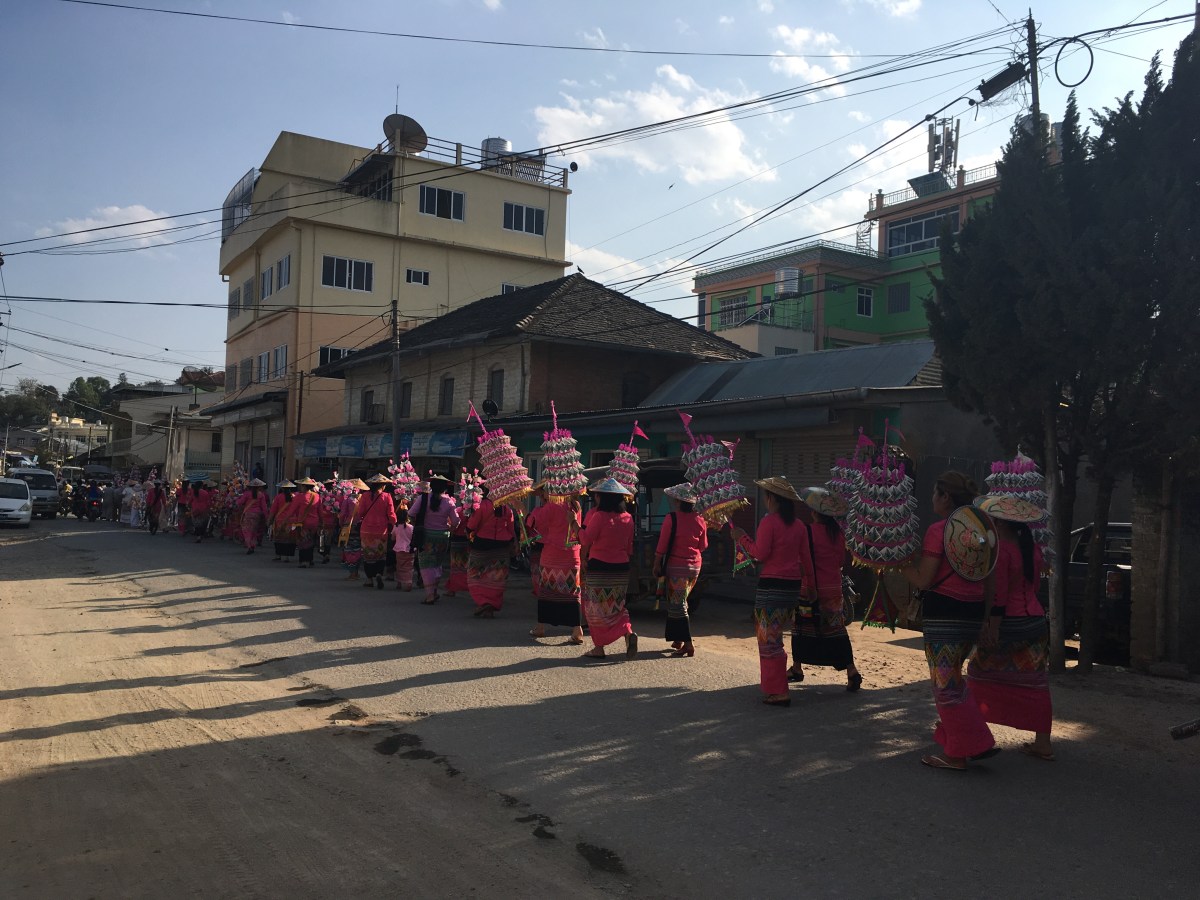
On the way we came across a street procession – which we later found out was a Kaaitan national ceremony to make offerings to the monks.
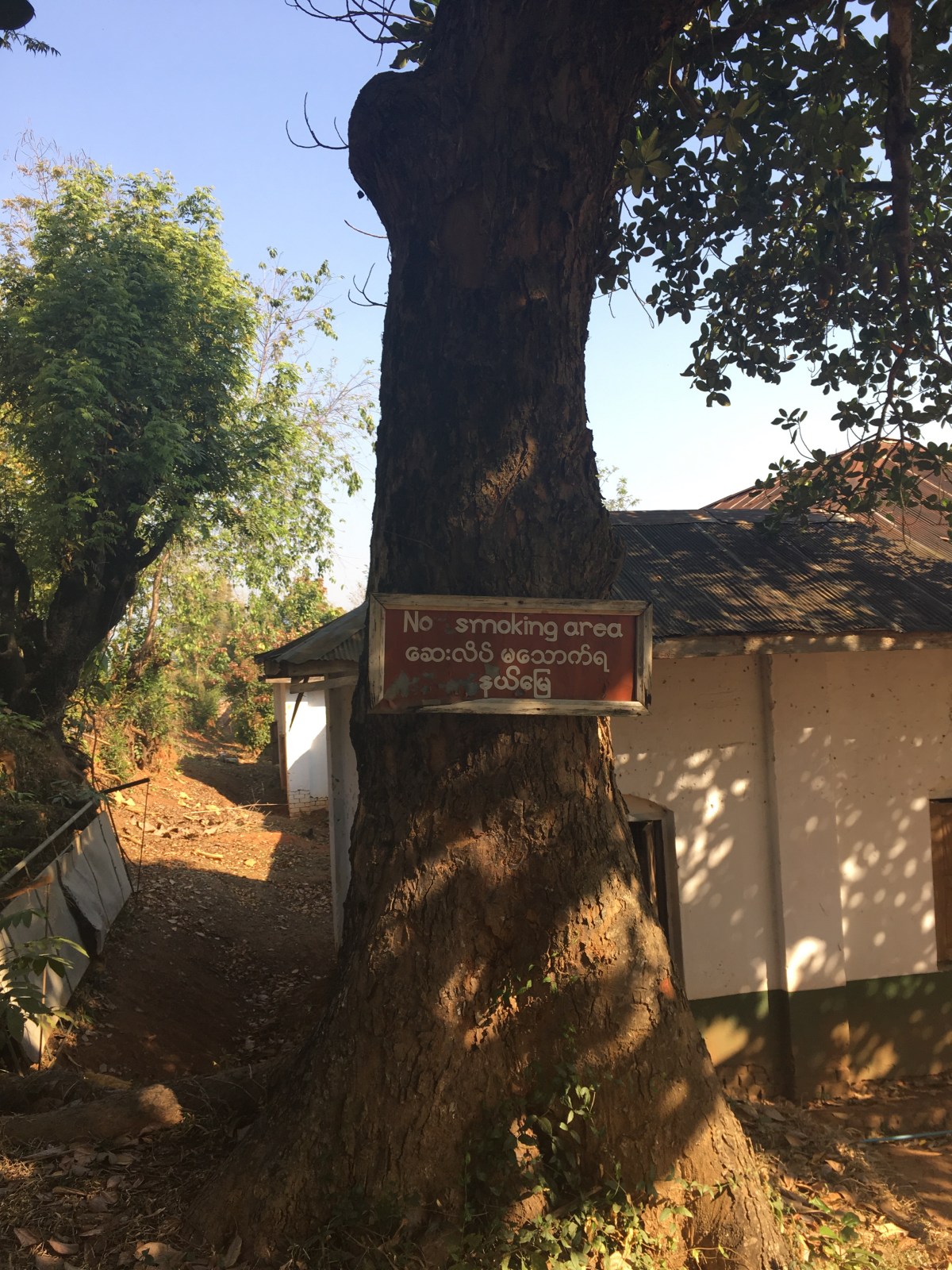 Tree #1
We carried on, trying every fork in the road until we spotted one tree that was a bit taller than the rest. We knew that was a long shot but I took a photo anyway!
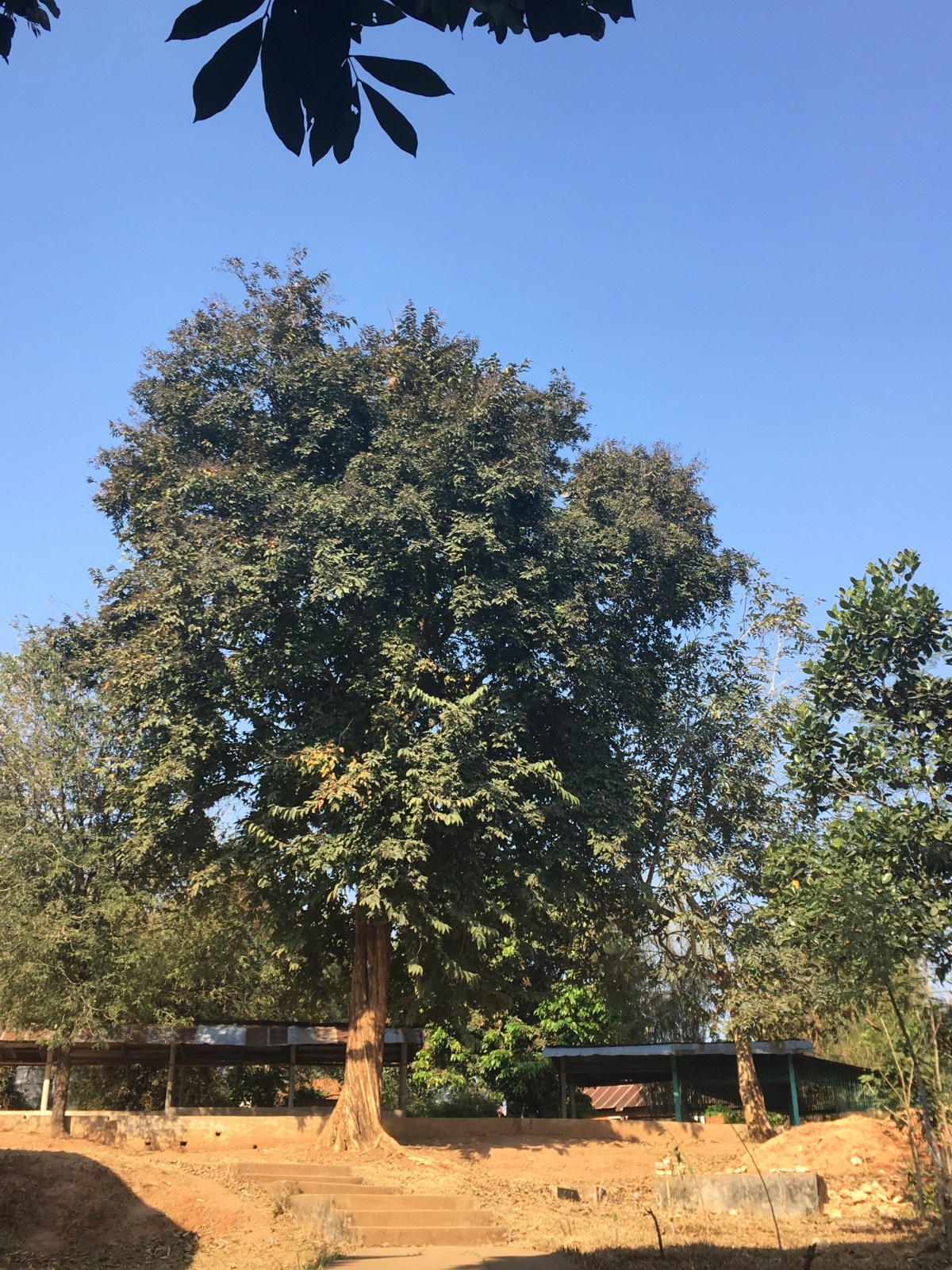
Half hour later, after climbing higher and enjoying the colourful houses below us, we thought tree #3 might be it – it was after all on top of a platform with a small shrine next to it.
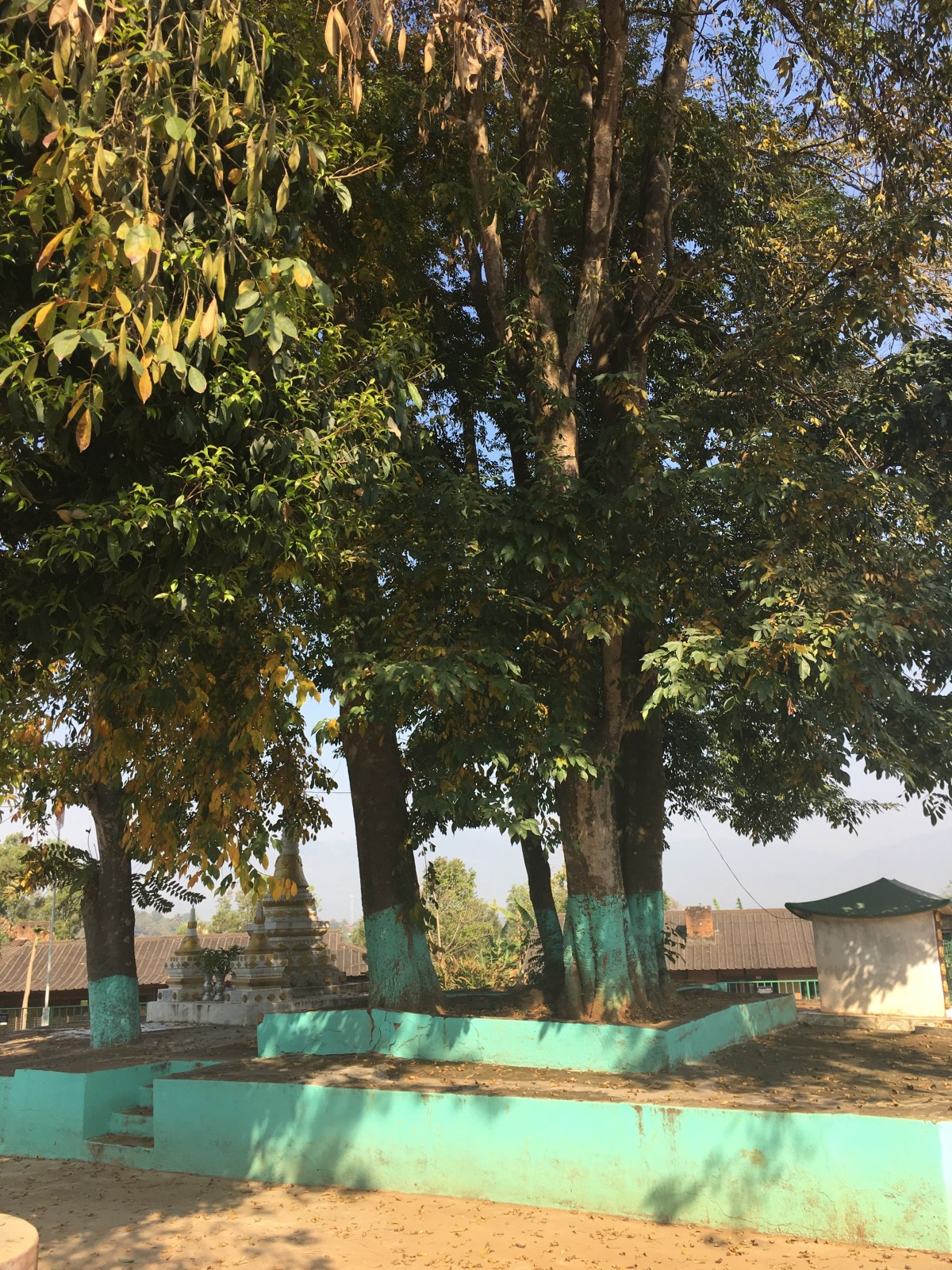
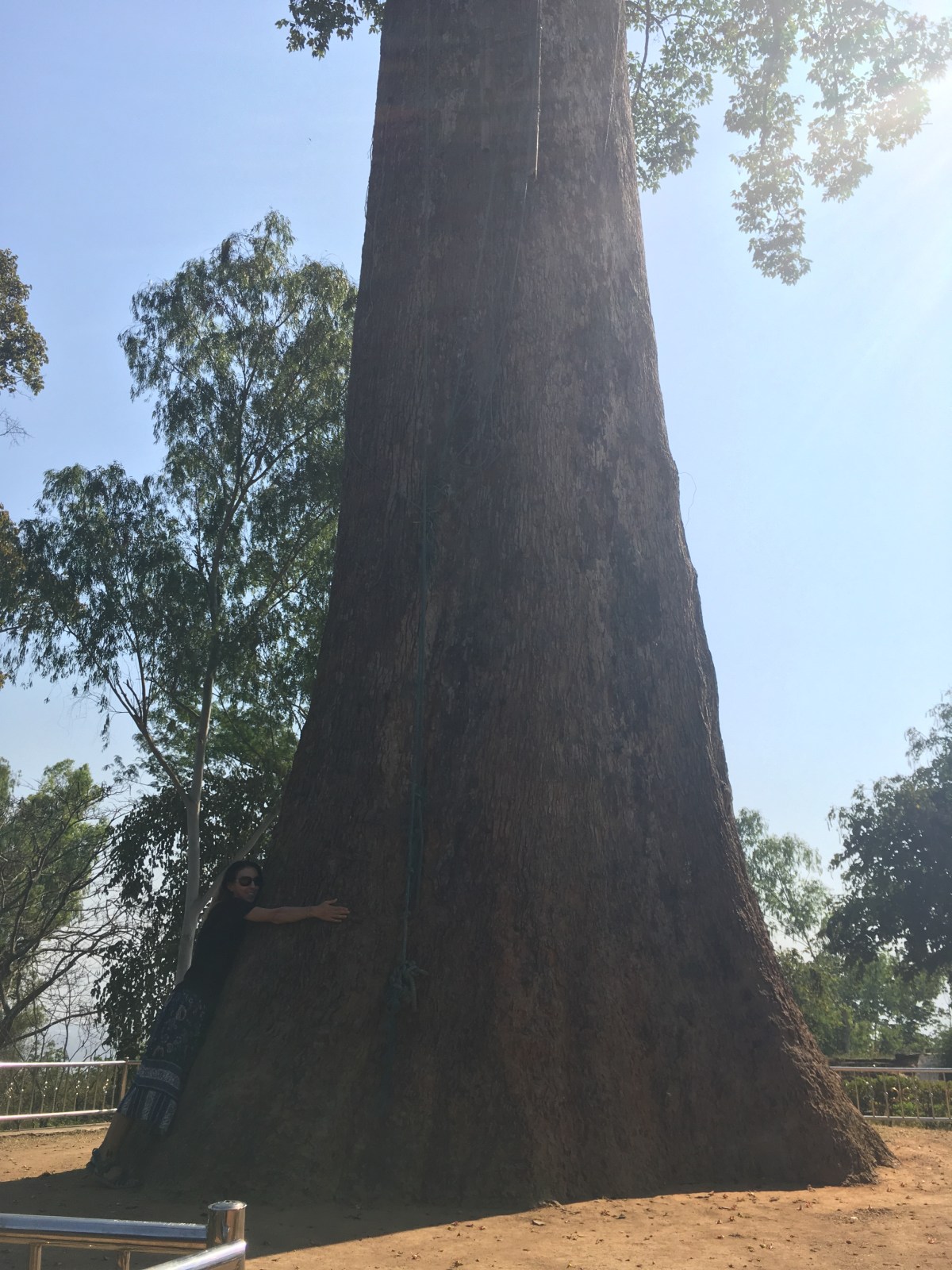
We were almost ready to call it quits when we hesitated at another fork in the road and a man came over to see if we needed help. ‘Tree?’ I said. ‘Yes! Tree!’ the man pointed to the right, looking very happy. Off we went and found the most enormous tree I’ve ever seen in my life. Wow.
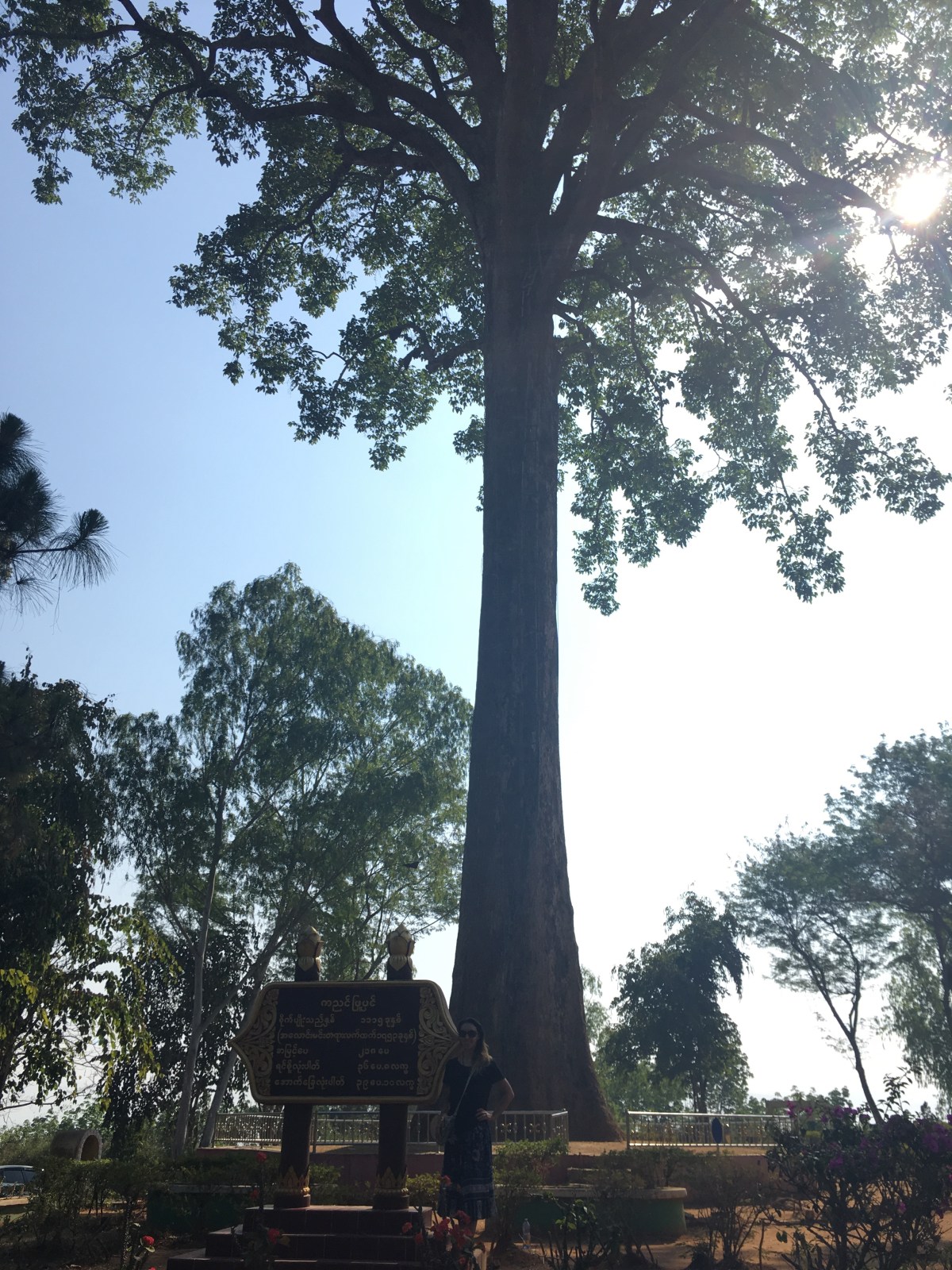
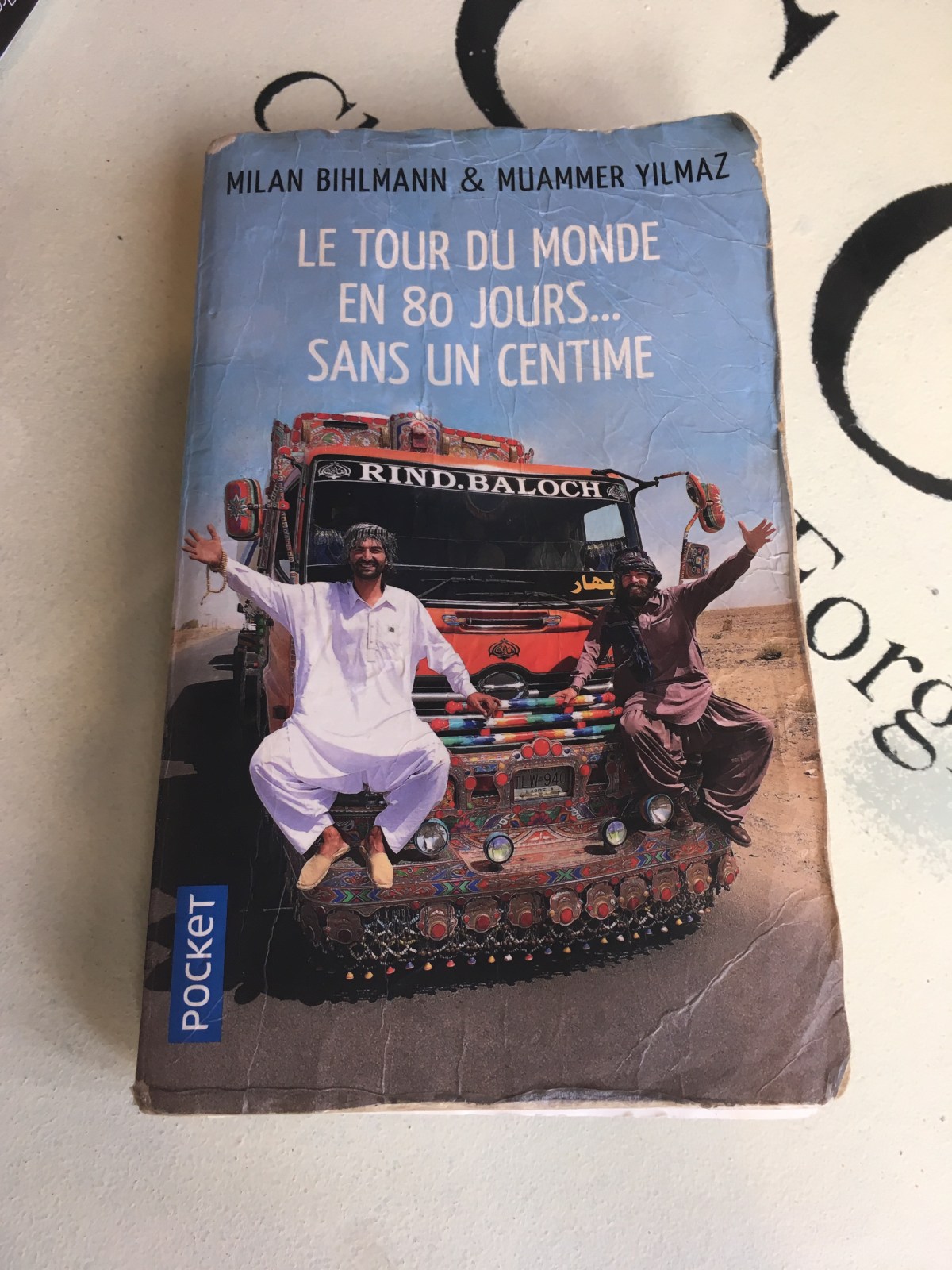
Feeling very happy we went for a coffee at a cute cafe with a swing for a table where we ran into two very interesting travellers. These guys are film makers, attempting to travel the world without money or many possessions. They claimed not to even have a change of clothes – relying on hitch hiking and the kindness of strangers offering them a bed. But this doesn’t work in Myanmar, where locals aren’t allowed to have foreigners stay and are reluctant to pick them up, plus the road to Inle Lake is currently closed to foreigners as it’s apparently unsafe. We helped them out by suggesting they follow our lead and try to get on a flight to Inle Lake instead, which they did the next day. We got a magic trick for our efforts (the massage and flowers sent to every members of Inkes family didn’t materialise funnily enough) 👏
And that concludes my first few days in Myanmar – I loved it already. Next stop Inle Lake via propeller plane….
 Maz On The Road