
San Juan de la Concepcion,Masaya, Nicaragua
Days 25-32
Accommodation: homestay
Nicaragua. Volcanoes. 17 to be precise and 5 of them active. The second poorest country in the Western hemisphere after Haiti. Civil war and the Sandinista Revolution of 1979. Hawaii was a holiday, Mexico was familiar but Nicaragua is neither.


I’m in Nicaragua for about a month, primarily to study Spanish. For the last week I’ve been living with a family in San Juan de la Concepción. This is a day to day life without running water, without comforts or ‘things’. The capital, Managua, was almost completely destroyed in 1972 by an earthquake. The frequent tremors account for the lack of proper buildings.

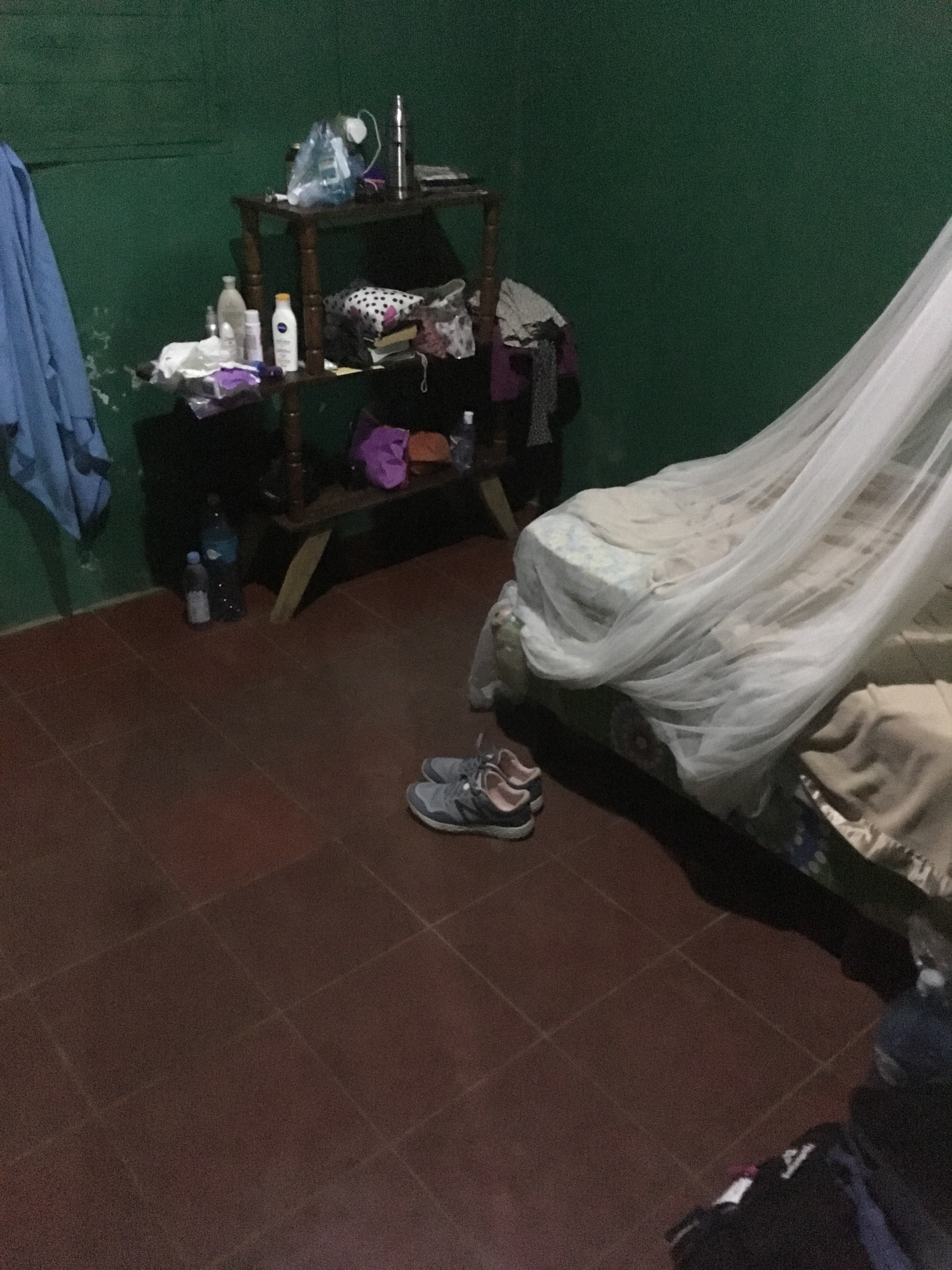
It’s exhausting at first – dusty, hot and noisy. Music blares from houses, shops and cars. There are street dogs everywhere and when they all start barking you know about it. Sleeping in the house is near impossible- there is about a foot gap between the top of the walls and the ceiling so I’m woken up by the noise of the birds (not by the noise of the couples, as I told my Spanish teacher – the words for bird and couple are very similar!), dogs, TVs, music, people leaving for work at 4am. Not ideal since it’s not advised to go out alone after dark and there isn’t anything else to do after dinner!

The village gets water twice a week so each house stores it in a large tank. My house has a western style toilet but it can only be flushed with a bucket of water. Even washing your face requires effort – lowering a bucket on a string into the tank and lugging it up again. A shower means pouring the bucket of water over your head.


The Hippy Junkyard of Hawaii seems like the utmost in luxury now! But people take pride in their appearance and appear clean with pressed clothes.

After a week I’m still not entirely sure who lives here (apparently 8 people do) and which child belongs to who – it’s become too late to ask now. There is a slightly crazy dog, possibly for security- the houses are open at the front until bars are pulled across at night.
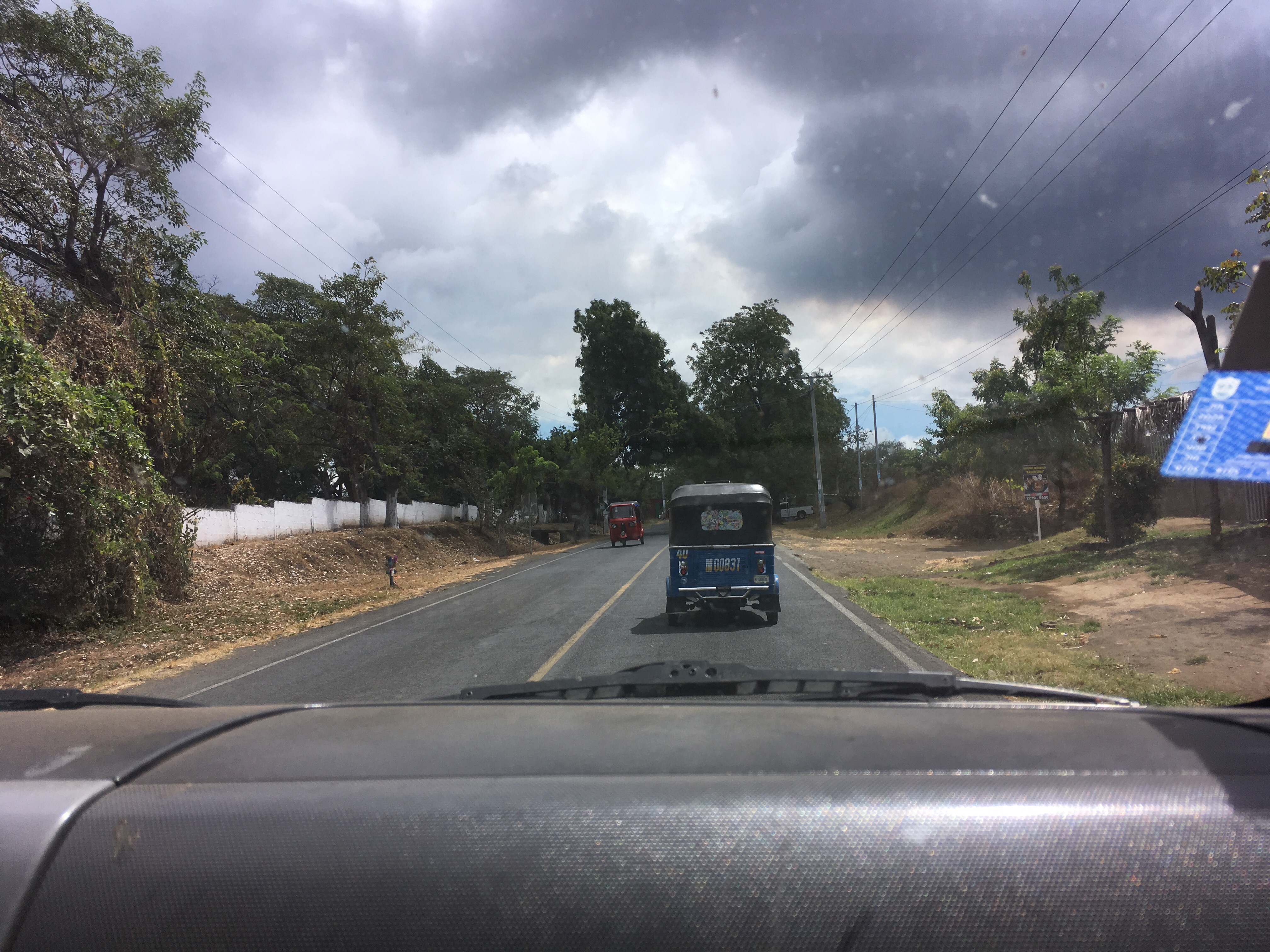
On the journey from the airport in Managua to the region of Masaya, we overtake and change lanes more than I’ve probably ever done in my driving life. Salsa music blares from the radio in the ancient truck and we pass an accident almost immediately. Public transport has three forms:
- Microbus – minivans crammed with people, some hanging out of the door.
- Moto taxi – aka the tuk tuks you see in Asia.
- Pickup trucks – people piled into the back.
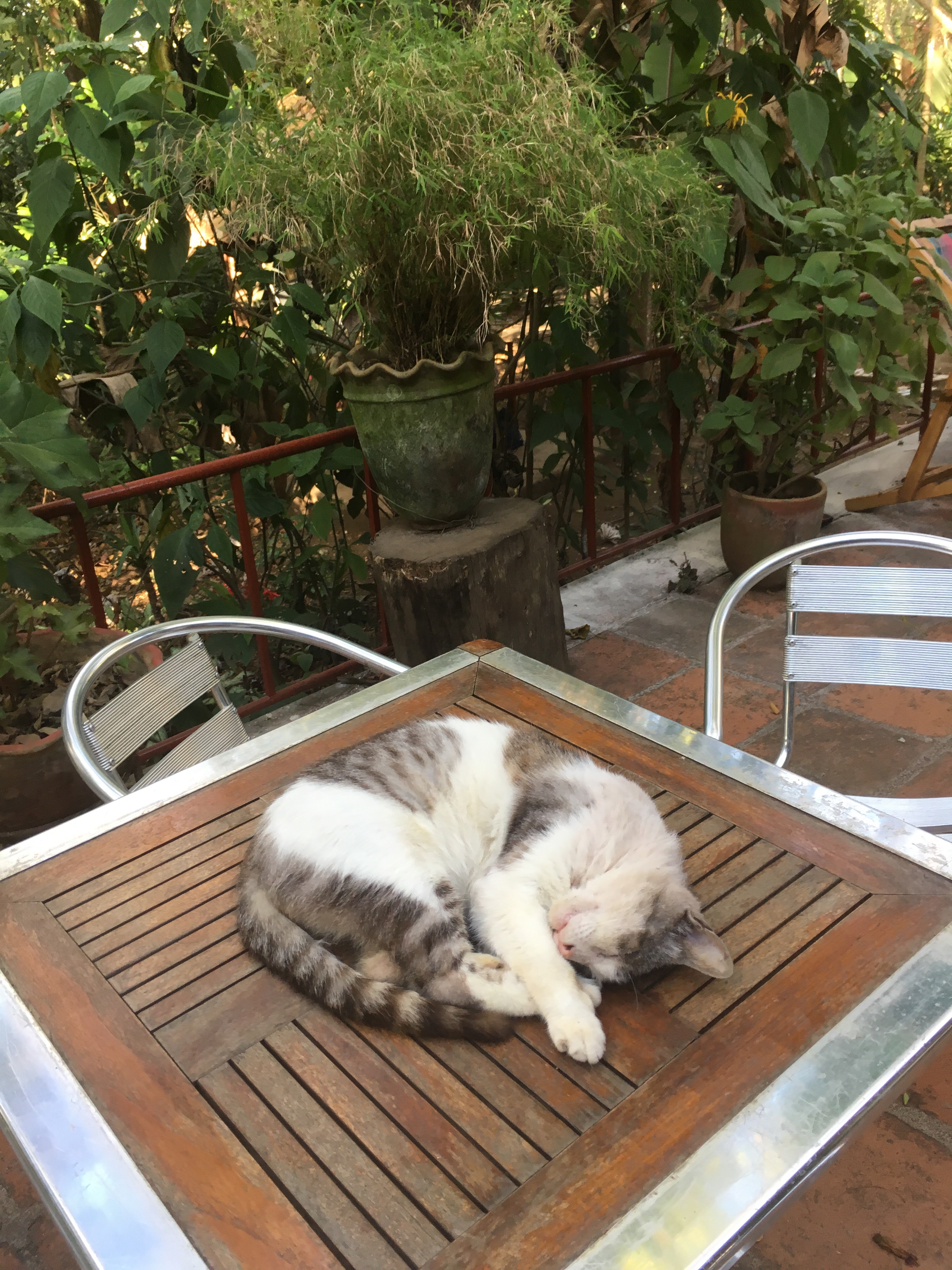
But The Mariposa Spanish School is an eco oasis of calm – set up by a British woman, all the proceeds go back into the projects. There are dozens of rescued street dogs and cats, monkeys and birds.


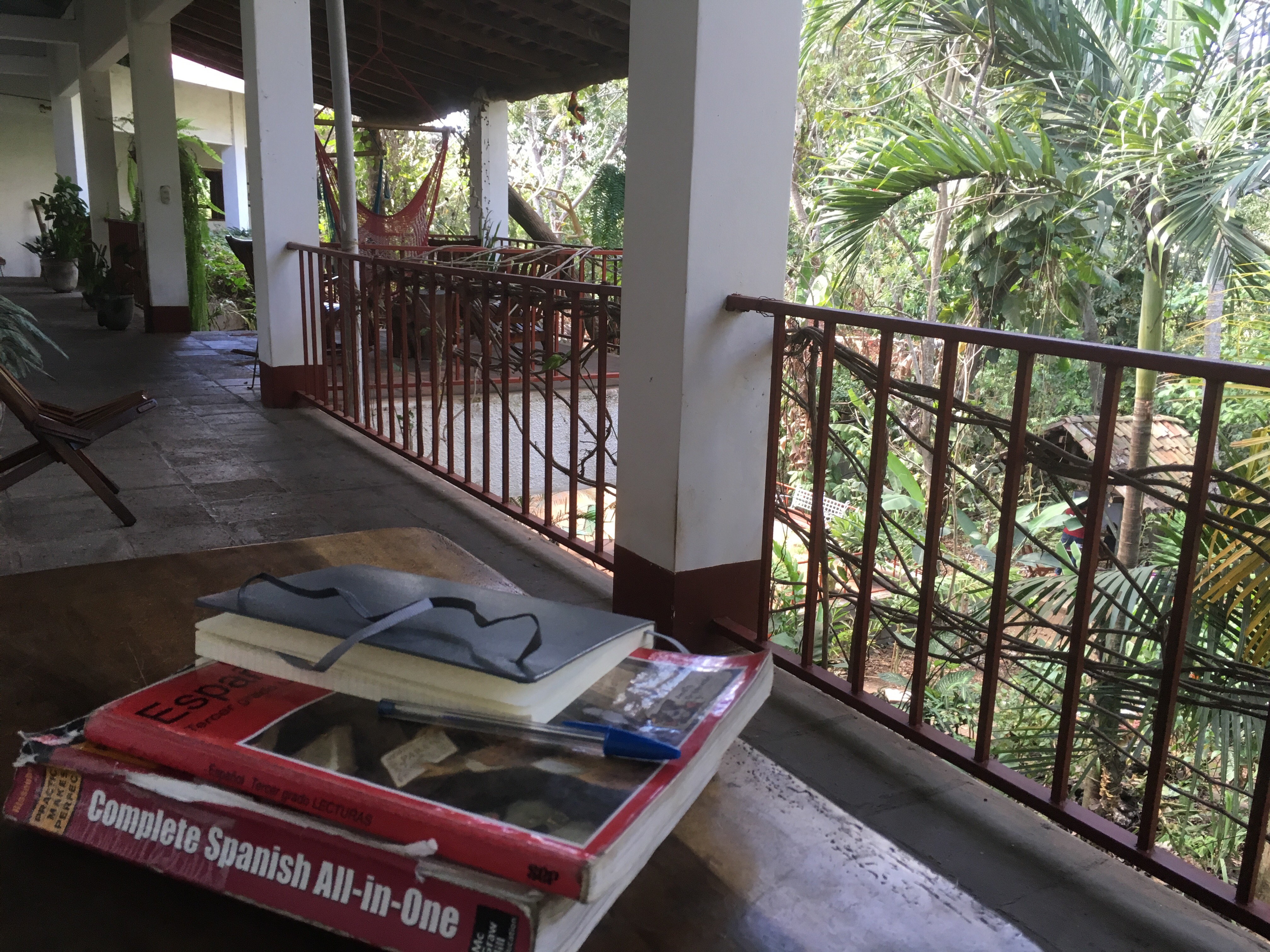
Food is freshly prepared with produce from the organic vegetable gardens where possible and it’s very vegan friendly. Students laze in hammocks when they aren’t deep in the one-on-one Spanish conversation and grammar lessons, volunteering at the various projects or out on organised excursions.
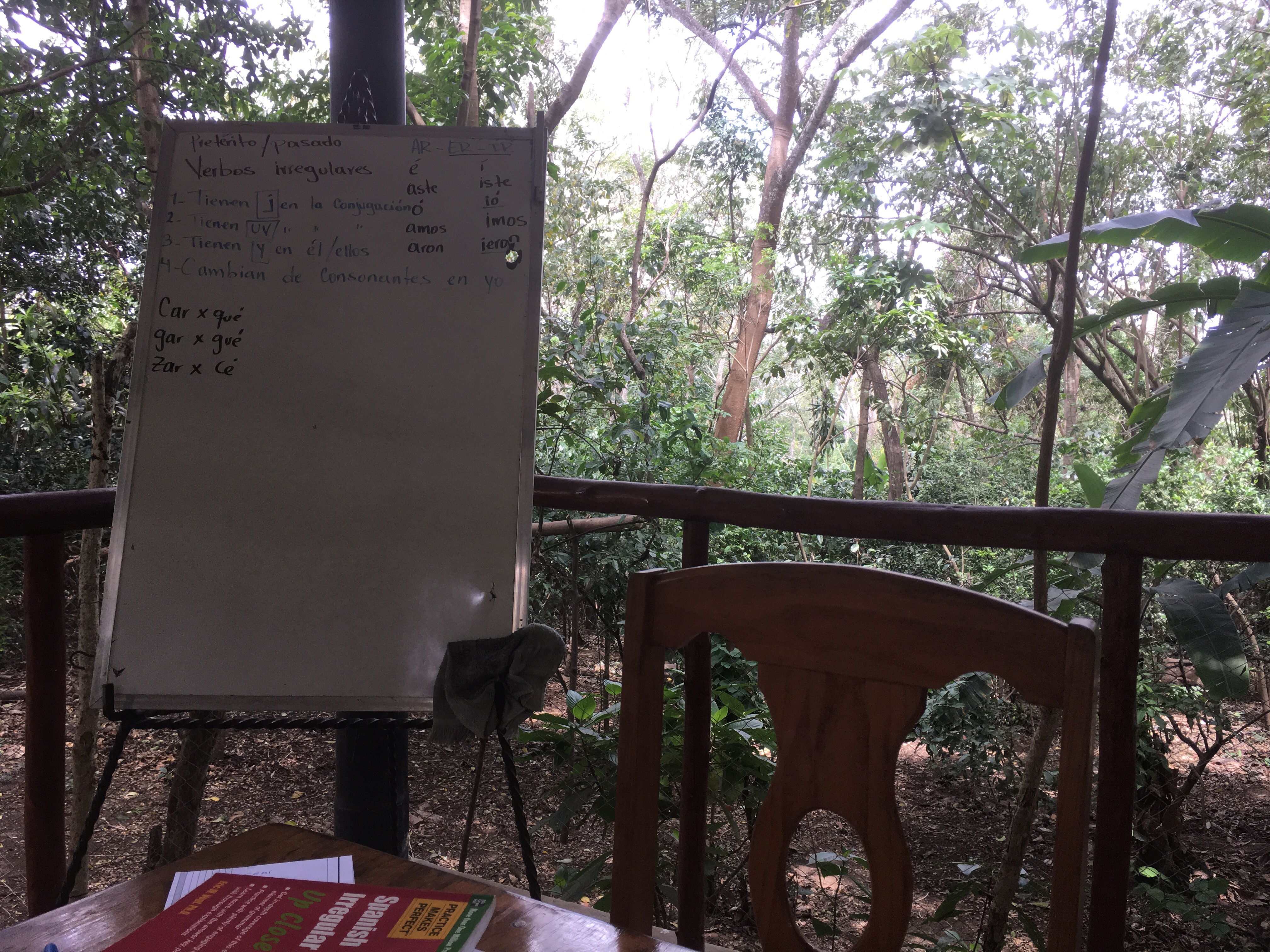
Whenever I introduce myself the response is ‘Ah, Mariana de la Noche!’ – a TV series that I clearly need to watch!

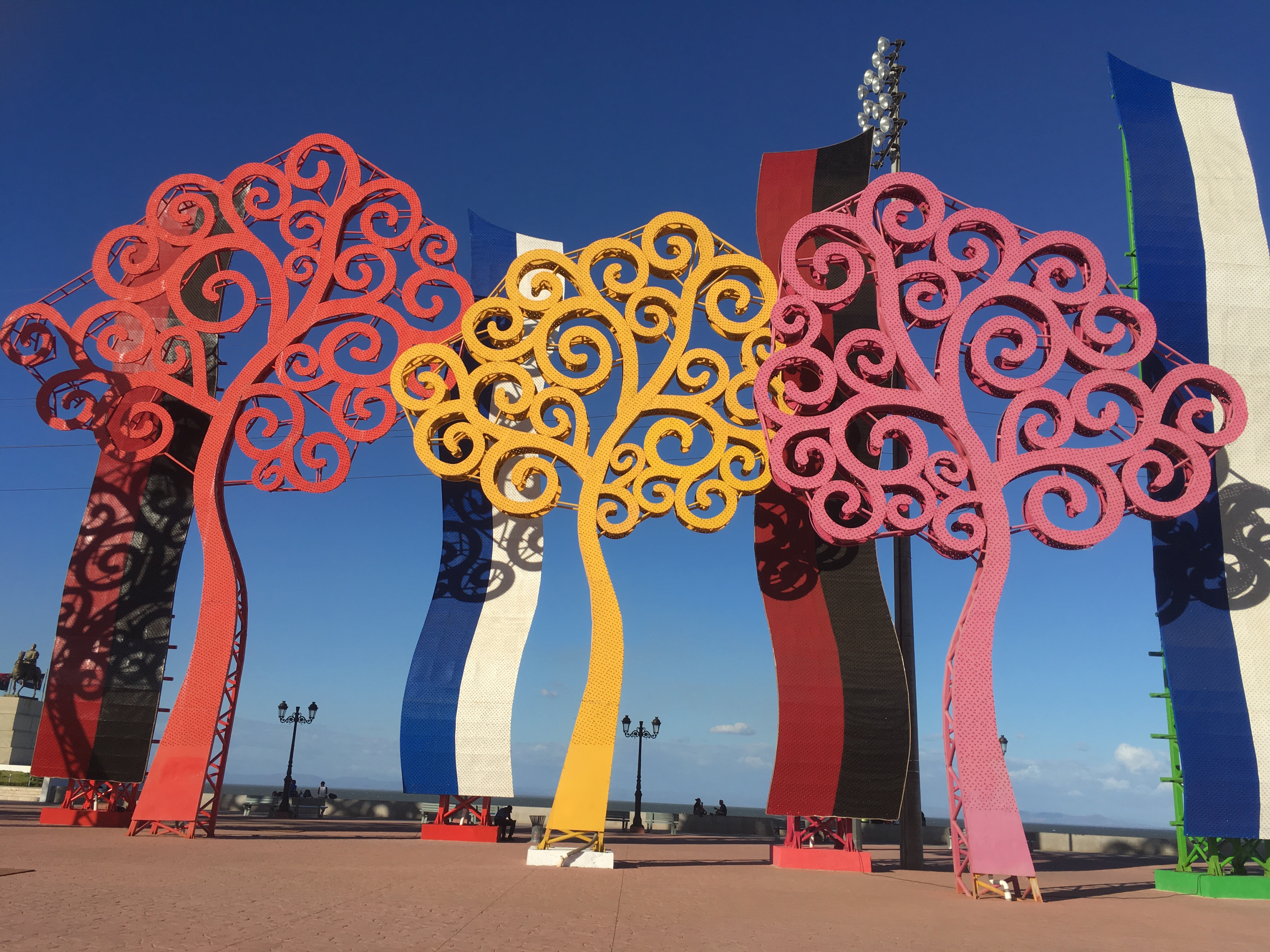
In the first week I’ve immersed myself in four hours of Spanish a day and visited the capital, Managua. Since the earthquake, the cathedral still hasn’t been restored and there isn’t a city centre to speak of. We visited the Revolution Square and saw the efforts to clean up the city first hand. The Sandinista government has transformed some no-go areas into family spots. The re-elected Daniel Ortega has installed hundreds of colourful ‘Trees of Life’ – huge metal structures lit up with lights at night. Controversial, since each cost $10,000 and this is not a rich country.
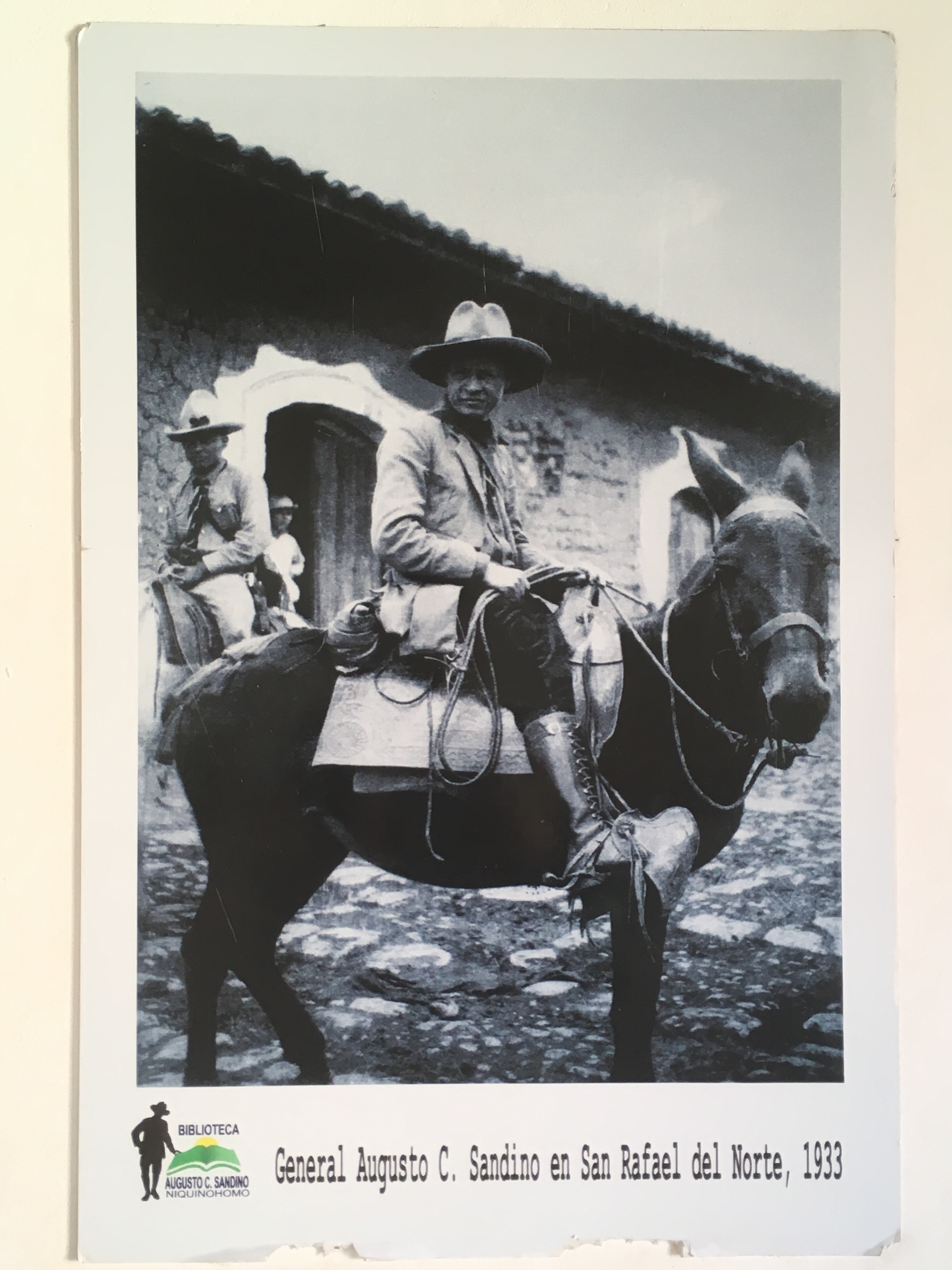
There are also replicas of famous people’s houses, the revolutionary Sandino of course and the poet Rubén Darío. There is not a single other visitor while we are there – just armed security and very friendly guides who recite Darío’s poems in Spanish.

There is an interesting mix of students at La Mariposa. Kids about to start university on a gap year, Middle Aged Retirees (seems I can’t get away from this demographic!?) and people like me taking time out to travel.
That’s all I have time to write before class – ¡hasta la proxima!
 Maz On The Road
Que buen muchas Besos y Carino.
LikeLike